Downloaded 76 times

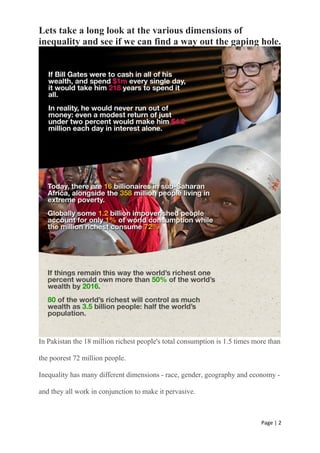
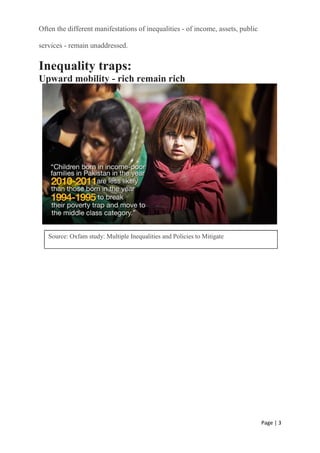
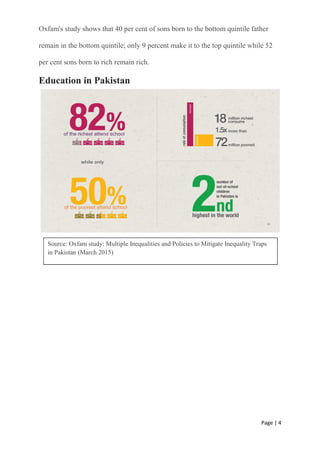
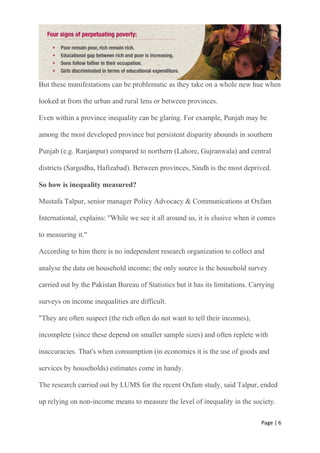
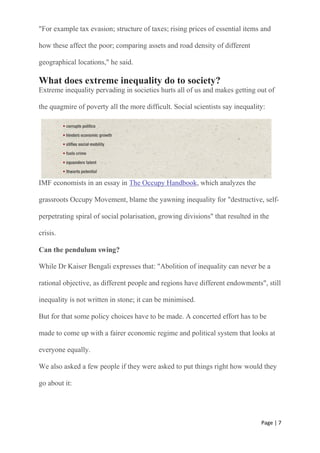
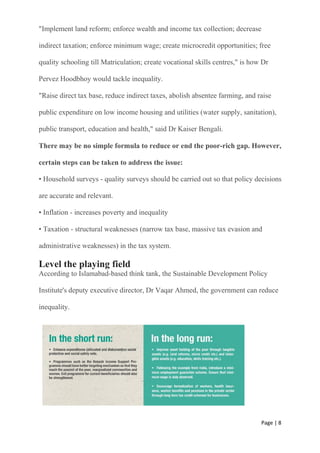
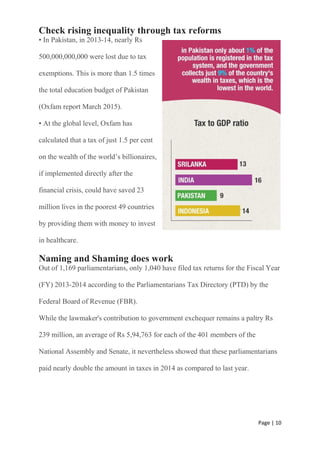
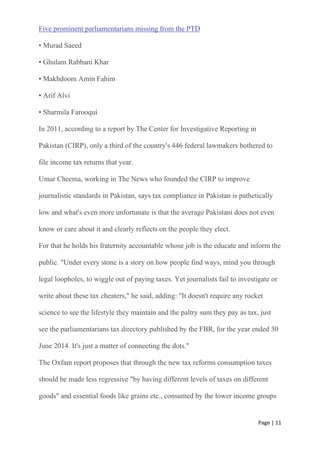

The document discusses inequality in Pakistan across multiple dimensions such as income, assets, access to services, education and gender. It notes that the richest 18 million people in Pakistan consume 1.5 times as much as the poorest 72 million. Inequality traps exist that prevent upward mobility, with only 9% of those born to the bottom income quintile making it to the top quintile as adults, while 52% of those born rich remain rich. Reducing inequality will require policy reforms like improving tax collection, increasing public services spending, enforcing minimum wage and undertaking land reforms. However, tackling inequality in all its forms will be an ongoing challenge.


