Considerations for
Individualized PLA
Portfolio Assessments
Presented by
Nan Travers, Ph.D.
SUNY Empire State College
Prior Learning Assessment Professional Development Series
Where do we see portfolio assessment
already?
• Institutional and program accreditation
• Academic program reviews
• Faculty tenure process
• Some academic programs
(e.g., teaching certification)
PLA Portfolio Assessments
• Usually an option when other forms of PLA are not
available
• Requires the student to create a portfolio of their learning
• Learning Description
• Learning Goals
• Documentation
• Student Advisement
• Portfolio Assessment
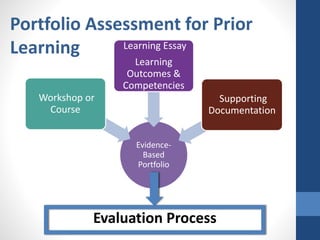
Evidence-
Based
Portfolio
Workshop or
Course
Learning Essay
Learning
Outcomes &
Competencies
Supporting
Documentation
Portfolio Assessment for Prior
Learning
Evaluation Process
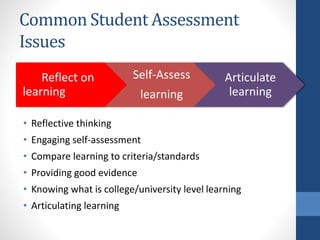
Common Student Assessment
Issues
• Reflective thinking
• Engaging self-assessment
• Compare learning to criteria/standards
• Providing good evidence
• Knowing what is college/university level learning
• Articulating learning
Reflect on
learning
Self-Assess
learning
Articulate
learning
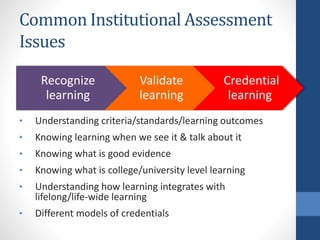
Common Institutional Assessment
Issues
Recognize
learning
Validate
learning
Credential
learning
• Understanding criteria/standards/learning outcomes
• Knowing learning when we see it & talk about it
• Knowing what is good evidence
• Knowing what is college/university level learning
• Understanding how learning integrates with
lifelong/life-wide learning
• Different models of credentials
Assessment Quality & Integrity
•What are the academic structures
used to ensure quality and integrity?
•In what ways are the assessment
processes aligned to assessment
criteria?
How is college-level learning measured?
• Match to own institution’s courses/Learning
Outcomes only
• Match to other institutions’ courses/Learning
Outcomes
• Assess learning without specific course match
but to outcomes or expectations
Global Learning Qualifications Framework
www.esc.edu/suny-real/global-learning-
qualifications-framework
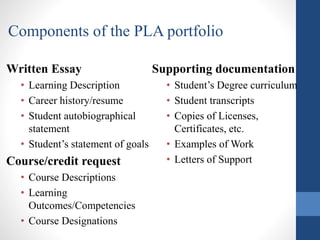
Written Essay
• Learning Description
• Career history/resume
• Student autobiographical
statement
• Student’s statement of goals
Course/credit request
• Course Descriptions
• Learning
Outcomes/Competencies
• Course Designations
Supporting documentation
• Student’s Degree curriculum
• Student transcripts
• Copies of Licenses,
Certificates, etc.
• Examples of Work
• Letters of Support
Components of the PLA portfolio
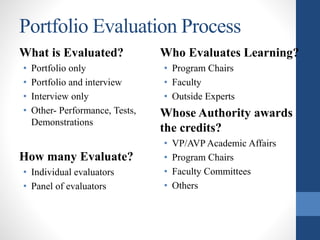
Portfolio Evaluation Process
What is Evaluated?
• Portfolio only
• Portfolio and interview
• Interview only
• Other- Performance, Tests,
Demonstrations
How many Evaluate?
• Individual evaluators
• Panel of evaluators
Who Evaluates Learning?
• Program Chairs
• Faculty
• Outside Experts
Whose Authority awards
the credits?
• VP/AVP Academic Affairs
• Program Chairs
• Faculty Committees
• Others
Evaluation Report
• What evidence of the student’s learning does an evaluator
use during the assessment process?
• What is required to be submitted to the institution?
• Recommendation Report, with justification
• Course title, credits, and credit recommendations
• How is the report used?
• How does it become part of the student’s academic record?
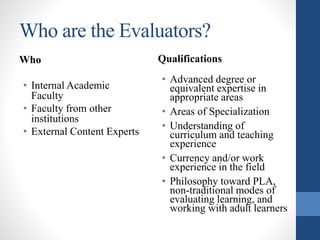
Who are the Evaluators?
Who
• Internal Academic
Faculty
• Faculty from other
institutions
• External Content Experts
Qualifications
• Advanced degree or
equivalent expertise in
appropriate areas
• Areas of Specialization
• Understanding of
curriculum and teaching
experience
• Currency and/or work
experience in the field
• Philosophy toward PLA,
non-traditional modes of
evaluating learning, and
working with adult learners
Evaluators
• How many evaluators conduct the PLA portfolio
assessment?
• What percent of the following are included in your pool
of evaluators? (Internal versus external evaluators)
• How does your program recruit evaluators?
• What qualifications do you look for in hiring evaluators?
Training
• How do you train your evaluators?
• What are your most common topics for evaluator
training?
• How do you maintain consistency and academic quality
across your across portfolio evaluations?
• How do you evaluate your evaluators?
Training Topics
• Introductions to Prior Learning Assessment
• Overview of whole process
• Expectations for each constituent
• Guiding & supporting the student
• Evaluating college-level learning
• Interviewing the student (if applicable)
• Documenting the learning
Other Considerations
• How do students learn about the portfolio process?
• Who all is involved in the portfolio process?
• Designated office
• Admissions/recruiters
• Faculty advisors
• How do you transcribe PLA credits?
• What technologies are in place to support the process?
Next steps for your program…
• What types of information and resources do you think
will be the most helpful for your institution to learn more
about different types of prior learning assessment?
• What areas of your prior learning assessment program
do you want to improve or expand?
• What information on assessment strategies would be
helpful to you and your faculty for evaluating collegelevel
learning?
THANK YOU!
Nan Travers, Ph.D.
SUNY Empire State College
Prior Learning Assessment Professional Development Series

Individualized Portfolio Assessment

  • 1.
    Considerations for Individualized PLA PortfolioAssessments Presented by Nan Travers, Ph.D. SUNY Empire State College Prior Learning Assessment Professional Development Series
  • 2.
    Where do wesee portfolio assessment already? • Institutional and program accreditation • Academic program reviews • Faculty tenure process • Some academic programs (e.g., teaching certification)
  • 3.
    PLA Portfolio Assessments •Usually an option when other forms of PLA are not available • Requires the student to create a portfolio of their learning • Learning Description • Learning Goals • Documentation • Student Advisement • Portfolio Assessment
  • 4.
    Evidence- Based Portfolio Workshop or Course Learning Essay Learning Outcomes& Competencies Supporting Documentation Portfolio Assessment for Prior Learning Evaluation Process
  • 5.
    Common Student Assessment Issues •Reflective thinking • Engaging self-assessment • Compare learning to criteria/standards • Providing good evidence • Knowing what is college/university level learning • Articulating learning Reflect on learning Self-Assess learning Articulate learning
  • 6.
    Common Institutional Assessment Issues Recognize learning Validate learning Credential learning •Understanding criteria/standards/learning outcomes • Knowing learning when we see it & talk about it • Knowing what is good evidence • Knowing what is college/university level learning • Understanding how learning integrates with lifelong/life-wide learning • Different models of credentials
  • 7.
    Assessment Quality &Integrity •What are the academic structures used to ensure quality and integrity? •In what ways are the assessment processes aligned to assessment criteria?
  • 8.
    How is college-levellearning measured? • Match to own institution’s courses/Learning Outcomes only • Match to other institutions’ courses/Learning Outcomes • Assess learning without specific course match but to outcomes or expectations Global Learning Qualifications Framework www.esc.edu/suny-real/global-learning- qualifications-framework
  • 9.
    Written Essay • LearningDescription • Career history/resume • Student autobiographical statement • Student’s statement of goals Course/credit request • Course Descriptions • Learning Outcomes/Competencies • Course Designations Supporting documentation • Student’s Degree curriculum • Student transcripts • Copies of Licenses, Certificates, etc. • Examples of Work • Letters of Support Components of the PLA portfolio
  • 10.
    Portfolio Evaluation Process Whatis Evaluated? • Portfolio only • Portfolio and interview • Interview only • Other- Performance, Tests, Demonstrations How many Evaluate? • Individual evaluators • Panel of evaluators Who Evaluates Learning? • Program Chairs • Faculty • Outside Experts Whose Authority awards the credits? • VP/AVP Academic Affairs • Program Chairs • Faculty Committees • Others
  • 11.
    Evaluation Report • Whatevidence of the student’s learning does an evaluator use during the assessment process? • What is required to be submitted to the institution? • Recommendation Report, with justification • Course title, credits, and credit recommendations • How is the report used? • How does it become part of the student’s academic record?
  • 12.
    Who are theEvaluators? Who • Internal Academic Faculty • Faculty from other institutions • External Content Experts Qualifications • Advanced degree or equivalent expertise in appropriate areas • Areas of Specialization • Understanding of curriculum and teaching experience • Currency and/or work experience in the field • Philosophy toward PLA, non-traditional modes of evaluating learning, and working with adult learners
  • 13.
    Evaluators • How manyevaluators conduct the PLA portfolio assessment? • What percent of the following are included in your pool of evaluators? (Internal versus external evaluators) • How does your program recruit evaluators? • What qualifications do you look for in hiring evaluators?
  • 14.
    Training • How doyou train your evaluators? • What are your most common topics for evaluator training? • How do you maintain consistency and academic quality across your across portfolio evaluations? • How do you evaluate your evaluators?
  • 15.
    Training Topics • Introductionsto Prior Learning Assessment • Overview of whole process • Expectations for each constituent • Guiding & supporting the student • Evaluating college-level learning • Interviewing the student (if applicable) • Documenting the learning
  • 16.
    Other Considerations • Howdo students learn about the portfolio process? • Who all is involved in the portfolio process? • Designated office • Admissions/recruiters • Faculty advisors • How do you transcribe PLA credits? • What technologies are in place to support the process?
  • 17.
    Next steps foryour program… • What types of information and resources do you think will be the most helpful for your institution to learn more about different types of prior learning assessment? • What areas of your prior learning assessment program do you want to improve or expand? • What information on assessment strategies would be helpful to you and your faculty for evaluating collegelevel learning?
  • 18.
    THANK YOU! Nan Travers,Ph.D. SUNY Empire State College Prior Learning Assessment Professional Development Series