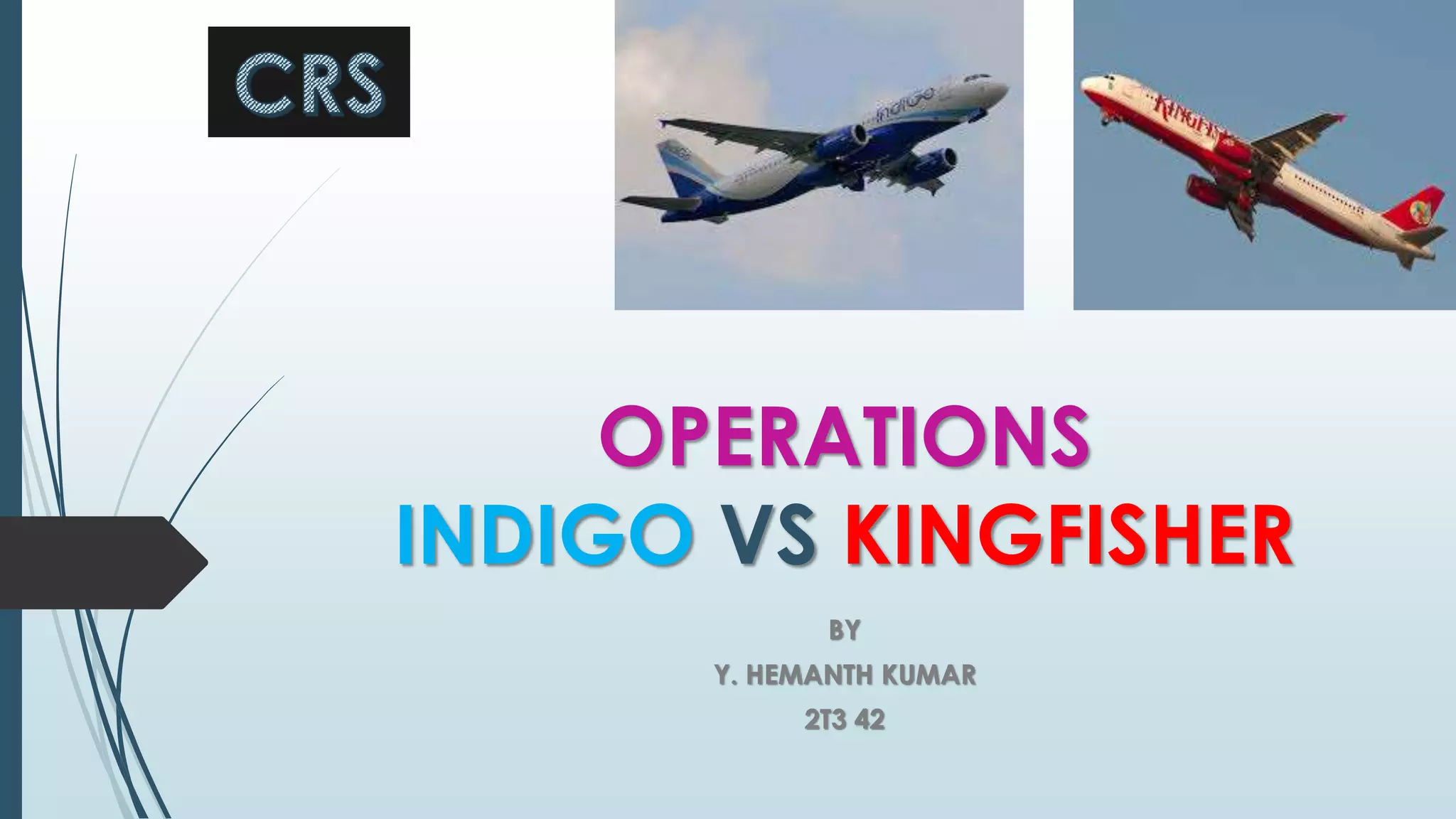
OPERATIONS
INDIGO VS KINGFISHER
BY
Y. HEMANTH KUMAR
2T3 42
DEMAND FORECASTING
 Airline Industry Forecast includes:
 Passenger Forecasts
 Freight Forecasts
 Airlines Expect 31% Rise in Passenger Demand by 2017.
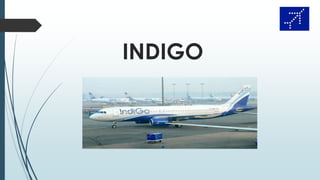
INDIGO
OPEARTIONS STRATEGY FOR FARE
REDUCTION
 Being a low-cost carrier, none of IndiGo's flights have Business class or First
class sections. It offers only Economy class seating.
 To keep fares low, IndiGo does not provide complimentary meals in any of
its flights, though it does have a buy-on board in-flight meal programme.
 IndiGo operates to 33 destinations in India and abroad with 399 daily flights.
 IndiGo uses a hub and spoke model used by full service airlines where the
airline flights to different destinations are routed through its hub.
HOW DID INDIGO BECAME A
SUCCESSFUL CARRIER???
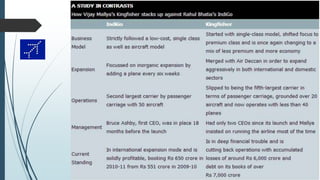
 Another difference between IndiGo and Kingfisher is in the former’s ability to
strike savvy deals—especially for its aircraft.
 “The 100 Airbus aircraft deal signed in 2005 was a game changer as they
managed to get an exceptional price and gave them the strategic ability
to leverage it significantly,” Kaul adds.
 The deal was to buy 100 Airbus 320 aircraft and every aircraft would be
returned after six years. The airline has already received 50 aircraft and the
rest is to join the fleet till 2015.
 However, the real upside in IndiGo’s deal was a clause that ensured that
Airbus would be responsible for anything going wrong with aircraft parts in
subsequent years.
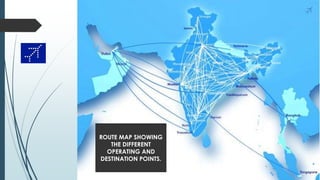
ROUTE MAP SHOWING
THE DIFFERENT
OPERATING AND
DESTINATION POINTS.
 Customer Focus ie., on time journey at reasonable rates.
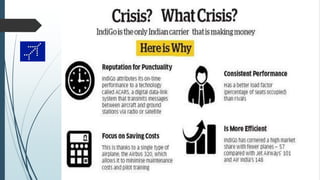
 Aircraft Communications Addressing and Reporting System (ACARS).
 Before every IndiGo flight departs an automatic message is triggered from
the aircraft to its operations control centre - and immediately the same
departure time gets recorded in the software.
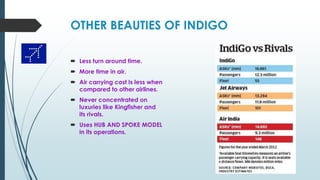
OTHER BEAUTIES OF INDIGO
 Less turn around time.
 More time in air.
 Air carrying cost Is less when
compared to other airlines.
 Never concentrated on
luxuries like Kingfisher and
its rivals.
 Uses HUB AND SPOKE MODEL
in its operations.
Advantages of Hub-and-spoke model
 Consolidation of passengers (economies of density)
 Decreased number of routes
 Increase demand (frequent flights)
 Consolidation of activities (personnel, maintenance, etc.)
 Decrease costs
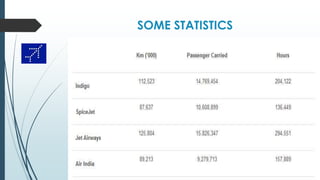
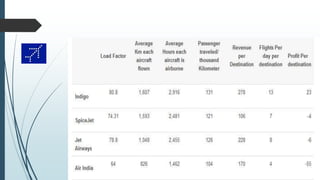
SOME STATISTICS
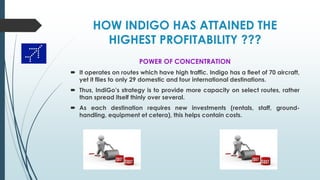
HOW INDIGO HAS ATTAINED THE
HIGHEST PROFITABILITY ???
POWER OF CONCENTRATION
 It operates on routes which have high traffic. Indigo has a fleet of 70 aircraft,
yet it flies to only 29 domestic and four international destinations.
 Thus, IndiGo’s strategy is to provide more capacity on select routes, rather
than spread itself thinly over several.
 As each destination requires new investments (rentals, staff, ground-
handling, equipment et cetera), this helps contain costs.
Keeping planes airborne as much as possible
 Indigo understands that a plane generates revenue as long as it is in the
air.
 Indigo gets an aircraft ready for its next flight in 31 minutes compared to 35
minutes a few years ago.
 This has helped the airline achieve its target of keeping the plane airborne
for 12 hours a day, despite the fact that it has been getting new aircraft on a
regular basis.
OTHER FACTORS
 VENDOR MANAGEMENT AND MANAGING FUEL COSTS.
 Special training is given to the pilots such that they can reduce the fuel
costs accordingly.
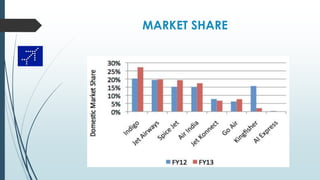
MARKET SHARE
KINGFIHSER
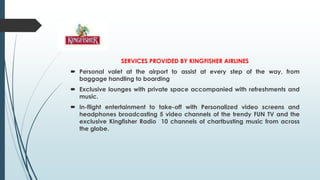
SERVICES PROVIDED BY KINGFISHER AIRLINES
 Personal valet at the airport to assist at every step of the way, from
baggage handling to boarding
 Exclusive lounges with private space accompanied with refreshments and
music.
 In-flight entertainment to take-off with Personalized video screens and
headphones broadcasting 5 video channels of the trendy FUN TV and the
exclusive Kingfisher Radio 10 channels of chartbusting music from across
the globe.
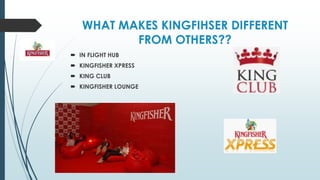
WHAT MAKES KINGFIHSER DIFFERENT
FROM OTHERS??
 IN FLIGHT HUB
 KINGFISHER XPRESS
 KING CLUB
 KINGFISHER LOUNGE
Indigo Operations
Indigo Operations

Indigo Operations

  • 1.
  • 4.
    DEMAND FORECASTING  AirlineIndustry Forecast includes:  Passenger Forecasts  Freight Forecasts  Airlines Expect 31% Rise in Passenger Demand by 2017.
  • 5.
  • 6.
    OPEARTIONS STRATEGY FORFARE REDUCTION  Being a low-cost carrier, none of IndiGo's flights have Business class or First class sections. It offers only Economy class seating.  To keep fares low, IndiGo does not provide complimentary meals in any of its flights, though it does have a buy-on board in-flight meal programme.  IndiGo operates to 33 destinations in India and abroad with 399 daily flights.  IndiGo uses a hub and spoke model used by full service airlines where the airline flights to different destinations are routed through its hub.
  • 7.
    HOW DID INDIGOBECAME A SUCCESSFUL CARRIER???  Another difference between IndiGo and Kingfisher is in the former’s ability to strike savvy deals—especially for its aircraft.  “The 100 Airbus aircraft deal signed in 2005 was a game changer as they managed to get an exceptional price and gave them the strategic ability to leverage it significantly,” Kaul adds.  The deal was to buy 100 Airbus 320 aircraft and every aircraft would be returned after six years. The airline has already received 50 aircraft and the rest is to join the fleet till 2015.  However, the real upside in IndiGo’s deal was a clause that ensured that Airbus would be responsible for anything going wrong with aircraft parts in subsequent years.
  • 8.
    ROUTE MAP SHOWING THEDIFFERENT OPERATING AND DESTINATION POINTS.
  • 9.
     Customer Focusie., on time journey at reasonable rates.  Aircraft Communications Addressing and Reporting System (ACARS).  Before every IndiGo flight departs an automatic message is triggered from the aircraft to its operations control centre - and immediately the same departure time gets recorded in the software.
  • 10.
    OTHER BEAUTIES OFINDIGO  Less turn around time.  More time in air.  Air carrying cost Is less when compared to other airlines.  Never concentrated on luxuries like Kingfisher and its rivals.  Uses HUB AND SPOKE MODEL in its operations.
  • 11.
    Advantages of Hub-and-spokemodel  Consolidation of passengers (economies of density)  Decreased number of routes  Increase demand (frequent flights)  Consolidation of activities (personnel, maintenance, etc.)  Decrease costs
  • 12.
  • 14.
    HOW INDIGO HASATTAINED THE HIGHEST PROFITABILITY ??? POWER OF CONCENTRATION  It operates on routes which have high traffic. Indigo has a fleet of 70 aircraft, yet it flies to only 29 domestic and four international destinations.  Thus, IndiGo’s strategy is to provide more capacity on select routes, rather than spread itself thinly over several.  As each destination requires new investments (rentals, staff, ground- handling, equipment et cetera), this helps contain costs.
  • 15.
    Keeping planes airborneas much as possible  Indigo understands that a plane generates revenue as long as it is in the air.  Indigo gets an aircraft ready for its next flight in 31 minutes compared to 35 minutes a few years ago.  This has helped the airline achieve its target of keeping the plane airborne for 12 hours a day, despite the fact that it has been getting new aircraft on a regular basis. OTHER FACTORS  VENDOR MANAGEMENT AND MANAGING FUEL COSTS.  Special training is given to the pilots such that they can reduce the fuel costs accordingly.
  • 16.
  • 19.
  • 20.
    SERVICES PROVIDED BYKINGFISHER AIRLINES  Personal valet at the airport to assist at every step of the way, from baggage handling to boarding  Exclusive lounges with private space accompanied with refreshments and music.  In-flight entertainment to take-off with Personalized video screens and headphones broadcasting 5 video channels of the trendy FUN TV and the exclusive Kingfisher Radio 10 channels of chartbusting music from across the globe.
  • 22.
    WHAT MAKES KINGFIHSERDIFFERENT FROM OTHERS??  IN FLIGHT HUB  KINGFISHER XPRESS  KING CLUB  KINGFISHER LOUNGE