Indigenous Knowledge Systems
• Course Code: MS 52010 (02:30/00)
• Sunday 1.30 pm – 3.30 pm
• P.B. Dharmasena
• 0777 - 613234, 0717 – 613234
• dharmasenapb@ymail.com , dharmasenapb@gmail.com
• Links to publications:
https://independent.academia.edu/PunchiBandageDharmasena
https://www.researchgate.net/profile/Punchi_Bandage_Dharmasena/contribu
tions
http://www.slideshare.net/DharmasenaPb
https://www.youtube.com/channel/UC_PFqwl0OqsrxH1wTm_jZeg
Green revolution and its impact on Sri Lankan traditional agricultural system
(biodiversity deterioration, inorganic substances for pest and disease
controlling, development of hybrid varieties etc.) (1hr)
Indigenous Knowledge Systems
2. Fundamental features of Sri Lankan Agriculture; climate, Soil, Genetic
resources, agro biodiversity (2 hrs)
3. History and the culture of Sri Lankan agriculture sector development (1 hr)
4. Green revolution and its impact on Sri Lankan traditional agricultural
system (biodiversity deterioration, inorganic substances for pest and disease
controlling, development of hybrid varieties etc.) (1hr)
5. Indigenous soil management practices (2hrs)
6. Indigenous Irrigation systems (cascade system, water harvesting concepts)
(2hrs)
9. Traditional practices for, weather forecasting, plant nutrient supplementing,
pest and disease control and indigenous agricultural machines and tools (2hrs)
13. Cultural dimensions of Agricultural rituals in Sri Lanka (1 hr)
14. Climate change and Indigenous Agricultural knowledge in Sri Lanka(1 hr)
Total: 12 hours)
List of lectures by P.B. Dharmasena
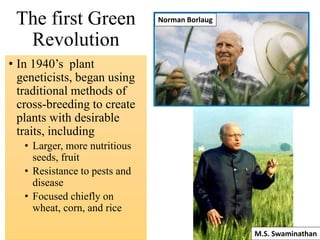
The first Green
Revolution
• In 1940’s plant
geneticists, began using
traditional methods of
cross-breeding to create
plants with desirable
traits, including
• Larger, more nutritious
seeds, fruit
• Resistance to pests and
disease
• Focused chiefly on
wheat, corn, and rice
Norman Borlaug
M.S. Swaminathan
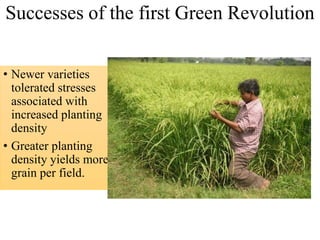
• Newer varieties
tolerated stresses
associated with
increased planting
density
• Greater planting
density yields more
grain per field.
Successes of the first Green Revolution
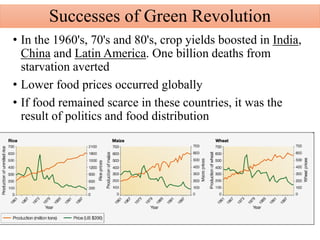
Successes of Green Revolution
• In the 1960's, 70's and 80's, crop yields boosted in India,
China and Latin America. One billion deaths from
starvation averted
• Lower food prices occurred globally
• If food remained scarce in these countries, it was the
result of politics and food distribution
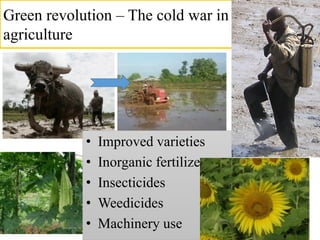
Green revolution – The cold war in
agriculture
• Improved varieties
• Inorganic fertilizer
• Insecticides
• Weedicides
• Machinery use
Other side of the coin
• Improved varieties – high input cost, pest and
diseases, susceptible to drought, salinity etc.
• Mechanization – damage to soil environment,
soil erosion, nutrient loss, water loss, insurgence
of weeds
• Inorganic fertilizer and agro-chemicals – soil
acidity, heavy metals, micro-nutrient deficiency,
poor microbial activity, health problems etc.
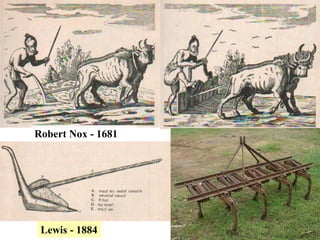
Robert Nox - 1681
Lewis - 1884
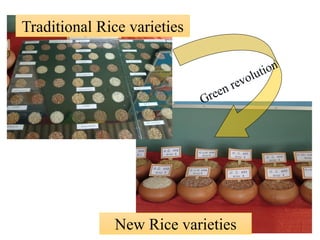
New Rice varieties
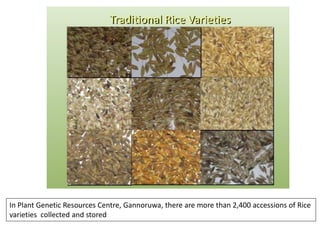
Traditional Rice varieties
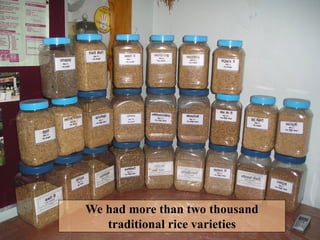
We had more than two thousand
traditional rice varieties
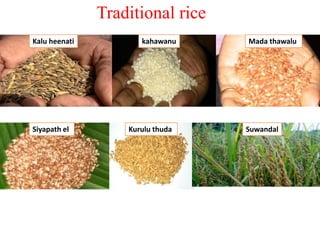
Kalu heenati kahawanu
Siyapath el Kurulu thuda
Traditional rice
Mada thawalu
Suwandal
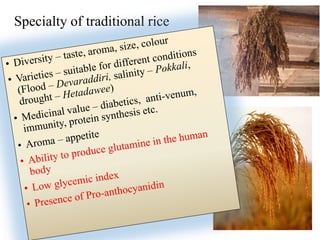
Specialty of traditional rice
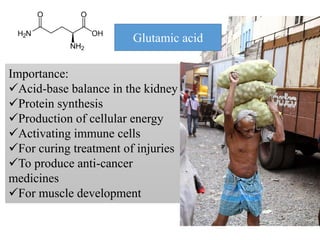
Importance:
Acid-base balance in the kidney
Protein synthesis
Production of cellular energy
Activating immune cells
For curing treatment of injuries
To produce anti-cancer
medicines
For muscle development
Glutamic acid
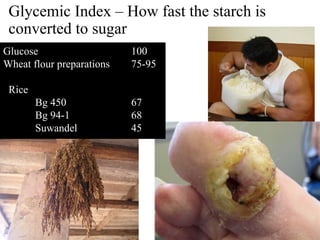
Glycemic Index – How fast the starch is
converted to sugar
Glucose 100
Wheat flour preparations 75-95
Rice
Bg 450 67
Bg 94-1 68
Suwandel 45
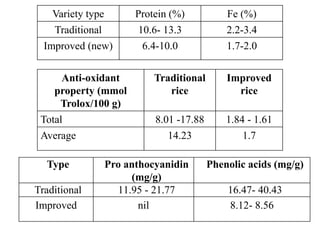
Variety type Protein (%) Fe (%)
Traditional 10.6- 13.3 2.2-3.4
Improved (new) 6.4-10.0 1.7-2.0
Anti-oxidant
property (mmol
Trolox/100 g)
Traditional
rice
Improved
rice
Total 8.01 -17.88 1.84 - 1.61
Average 14.23 1.7
Type Pro anthocyanidin
(mg/g)
Phenolic acids (mg/g)
Traditional 11.95 - 21.77 16.47- 40.43
Improved nil 8.12- 8.56
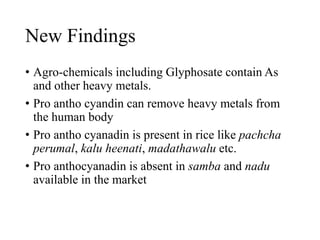
New Findings
• Agro-chemicals including Glyphosate contain As
and other heavy metals.
• Pro antho cyandin can remove heavy metals from
the human body
• Pro antho cyanadin is present in rice like pachcha
perumal, kalu heenati, madathawalu etc.
• Pro anthocyanadin is absent in samba and nadu
available in the market
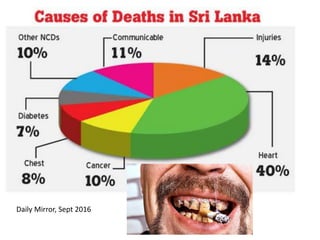
Daily Mirror, Sept 2016
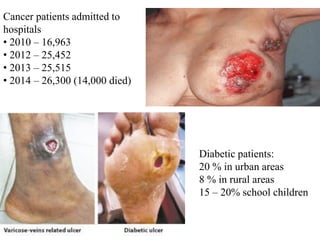
Cancer patients admitted to
hospitals
• 2010 – 16,963
• 2012 – 25,452
• 2013 – 25,515
• 2014 – 26,300 (14,000 died)
Diabetic patients:
20 % in urban areas
8 % in rural areas
15 – 20% school children
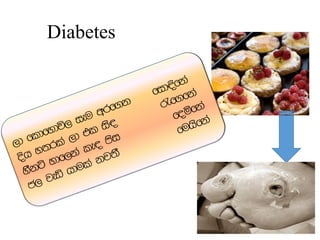
Diabetes
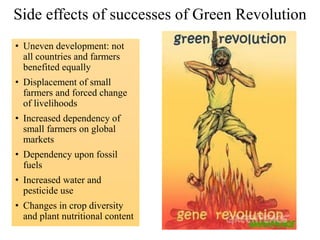
Side effects of successes of Green Revolution
• Uneven development: not
all countries and farmers
benefited equally
• Displacement of small
farmers and forced change
of livelihoods
• Increased dependency of
small farmers on global
markets
• Dependency upon fossil
fuels
• Increased water and
pesticide use
• Changes in crop diversity
and plant nutritional content
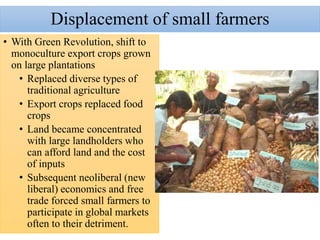
Displacement of small farmers
• With Green Revolution, shift to
monoculture export crops grown
on large plantations
• Replaced diverse types of
traditional agriculture
• Export crops replaced food
crops
• Land became concentrated
with large landholders who
can afford land and the cost
of inputs
• Subsequent neoliberal (new
liberal) economics and free
trade forced small farmers to
participate in global markets
often to their detriment.
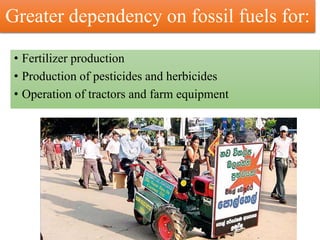
Greater dependency on fossil fuels for:
• Fertilizer production
• Production of pesticides and herbicides
• Operation of tractors and farm equipment
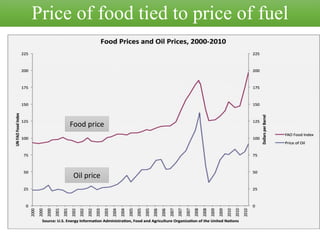
Price of food tied to price of fuel
Food price
Oil price
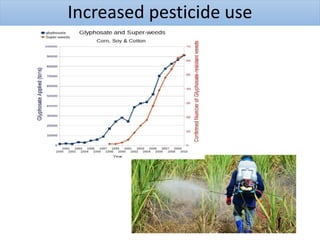
Increased pesticide use
Agro-chemicals
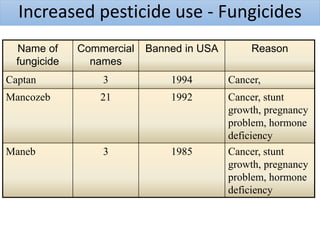
Name of
fungicide
Commercial
names
Banned in USA Reason
Captan 3 1994 Cancer,
Mancozeb 21 1992 Cancer, stunt
growth, pregnancy
problem, hormone
deficiency
Maneb 3 1985 Cancer, stunt
growth, pregnancy
problem, hormone
deficiency
Increased pesticide use - Fungicides
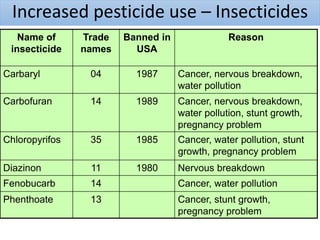
Name of
insecticide
Trade
names
Banned in
USA
Reason
Carbaryl 04 1987 Cancer, nervous breakdown,
water pollution
Carbofuran 14 1989 Cancer, nervous breakdown,
water pollution, stunt growth,
pregnancy problem
Chloropyrifos 35 1985 Cancer, water pollution, stunt
growth, pregnancy problem
Diazinon 11 1980 Nervous breakdown
Fenobucarb 14 Cancer, water pollution
Phenthoate 13 Cancer, stunt growth,
pregnancy problem
Increased pesticide use – Insecticides
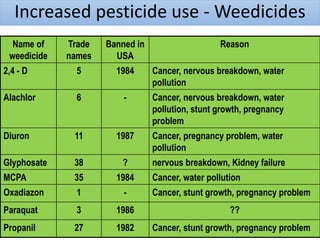
Name of
weedicide
Trade
names
Banned in
USA
Reason
2,4 - D 5 1984 Cancer, nervous breakdown, water
pollution
Alachlor 6 - Cancer, nervous breakdown, water
pollution, stunt growth, pregnancy
problem
Diuron 11 1987 Cancer, pregnancy problem, water
pollution
Glyphosate 38 ? nervous breakdown, Kidney failure
MCPA 35 1984 Cancer, water pollution
Oxadiazon 1 - Cancer, stunt growth, pregnancy problem
Paraquat 3 1986 ??
Propanil 27 1982 Cancer, stunt growth, pregnancy problem
Increased pesticide use - Weedicides
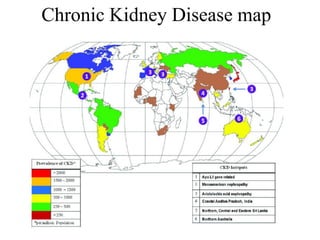
Chronic Kidney Disease map
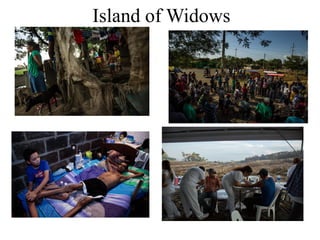
Island of Widows
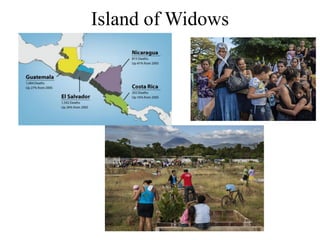
Island of Widows
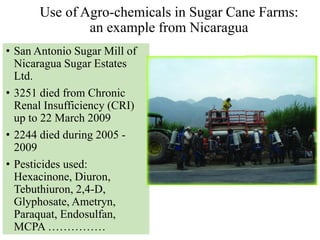
Use of Agro-chemicals in Sugar Cane Farms:
an example from Nicaragua
• San Antonio Sugar Mill of
Nicaragua Sugar Estates
Ltd.
• 3251 died from Chronic
Renal Insufficiency (CRI)
up to 22 March 2009
• 2244 died during 2005 -
2009
• Pesticides used:
Hexacinone, Diuron,
Tebuthiuron, 2,4-D,
Glyphosate, Ametryn,
Paraquat, Endosulfan,
MCPA ……………
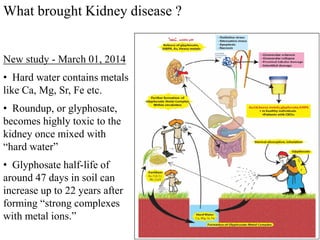
What brought Kidney disease ?
New study - March 01, 2014
• Hard water contains metals
like Ca, Mg, Sr, Fe etc.
• Roundup, or glyphosate,
becomes highly toxic to the
kidney once mixed with
“hard water”
• Glyphosate half-life of
around 47 days in soil can
increase up to 22 years after
forming “strong complexes
with metal ions.”
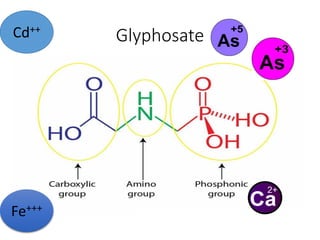
Glyphosate
Cd++
Fe+++
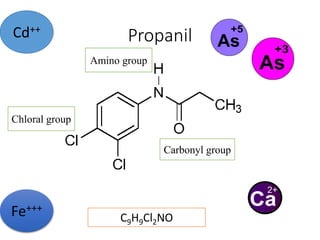
Propanil
Cd++
Fe+++
C9H9Cl2NO
Amino group
Chloral group
Carbonyl group
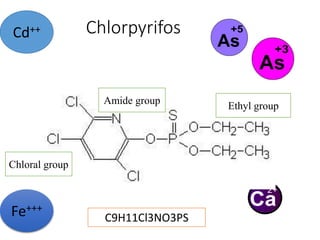
Chlorpyrifos
Cd++
Fe+++
C9H11Cl3NO3PS
Chloral group
Ethyl group
Amide group
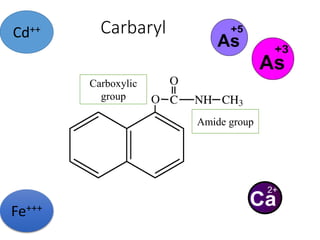
Carbaryl
Cd++
Fe+++
Amide group
Carboxylic
group
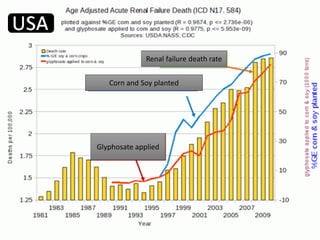
Renal failure death rate
Corn and Soy planted
Glyphosate applied
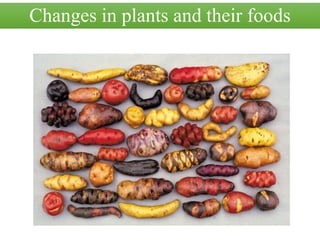
Changes in plants and their foods
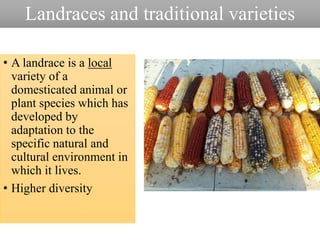
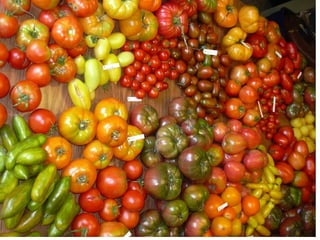
Landraces and traditional varieties
• A landrace is a local
variety of a
domesticated animal or
plant species which has
developed by
adaptation to the
specific natural and
cultural environment in
which it lives.
• Higher diversity
In Plant Genetic Resources Centre, Gannoruwa, there are more than 2,400 accessions of Rice
varieties collected and stored
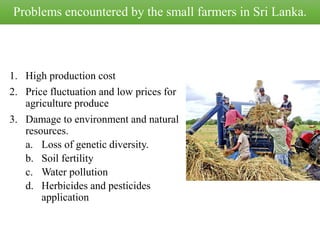
Problems encountered by the small farmers in Sri Lanka.
1. High production cost
2. Price fluctuation and low prices for
agriculture produce
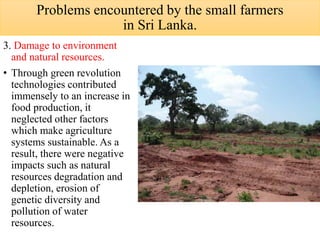
3. Damage to environment and natural
resources.
a. Loss of genetic diversity.
b. Soil fertility
c. Water pollution
d. Herbicides and pesticides
application
Problems encountered by the small farmers in Sri Lanka.
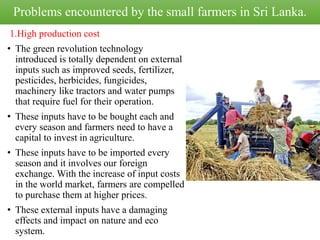
1.High production cost
• The green revolution technology
introduced is totally dependent on external
inputs such as improved seeds, fertilizer,
pesticides, herbicides, fungicides,
machinery like tractors and water pumps
that require fuel for their operation.
• These inputs have to be bought each and
every season and farmers need to have a
capital to invest in agriculture.
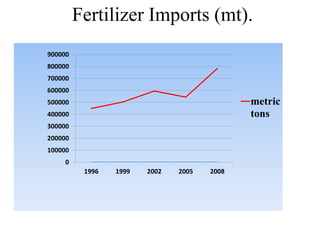
• These inputs have to be imported every
season and it involves our foreign
exchange. With the increase of input costs
in the world market, farmers are compelled
to purchase them at higher prices.
• These external inputs have a damaging
effects and impact on nature and eco
system.
Fertilizer Imports (mt).
0
100000
200000
300000
400000
500000
600000
700000
800000
900000
1996 1999 2002 2005 2008
metric
tons
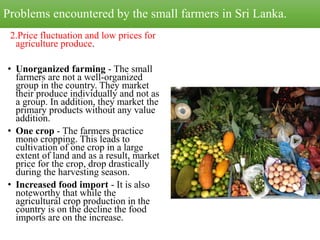
2.Price fluctuation and low prices for
agriculture produce.
• Unorganized farming - The small
farmers are not a well-organized
group in the country. They market
their produce individually and not as
a group. In addition, they market the
primary products without any value
addition.
• One crop - The farmers practice
mono cropping. This leads to
cultivation of one crop in a large
extent of land and as a result, market
price for the crop, drop drastically
during the harvesting season.
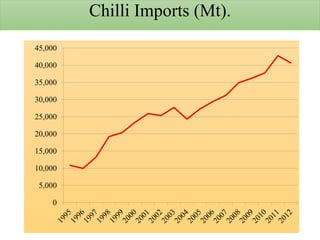
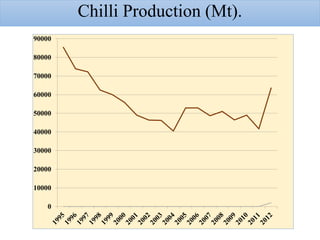
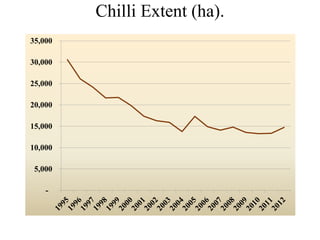
• Increased food import - It is also
noteworthy that while the
agricultural crop production in the
country is on the decline the food
imports are on the increase.
Problems encountered by the small farmers in Sri Lanka.
Chilli Imports (Mt).
0
5,000
10,000
15,000
20,000
25,000
30,000
35,000
40,000
45,000
Chilli Production (Mt).
0
10000
20000
30000
40000
50000
60000
70000
80000
90000
Chilli Extent (ha).
-
5,000
10,000
15,000
20,000
25,000
30,000
35,000
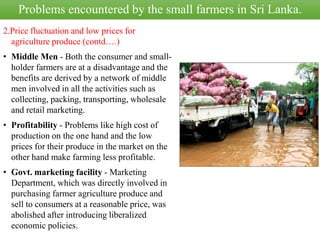
2.Price fluctuation and low prices for
agriculture produce (contd….)
• Middle Men - Both the consumer and small-
holder farmers are at a disadvantage and the
benefits are derived by a network of middle
men involved in all the activities such as
collecting, packing, transporting, wholesale
and retail marketing.
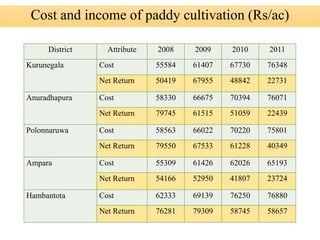
• Profitability - Problems like high cost of
production on the one hand and the low
prices for their produce in the market on the
other hand make farming less profitable.
• Govt. marketing facility - Marketing
Department, which was directly involved in
purchasing farmer agriculture produce and
sell to consumers at a reasonable price, was
abolished after introducing liberalized
economic policies.
Problems encountered by the small farmers in Sri Lanka.
Cost and income of paddy cultivation (Rs/ac)
District Attribute 2008 2009 2010 2011
Kurunegala Cost 55584 61407 67730 76348
Net Return 50419 67955 48842 22731
Anuradhapura Cost 58330 66675 70394 76071
Net Return 79745 61515 51059 22439
Polonnaruwa Cost 58563 66022 70220 75801
Net Return 79550 67533 61228 40349
Ampara Cost 55309 61426 62026 65193
Net Return 54166 52950 41807 23724
Hambantota Cost 62333 69139 76250 76880
Net Return 76281 79309 58745 58657
3. Damage to environment
and natural resources.
• Through green revolution
technologies contributed
immensely to an increase in
food production, it
neglected other factors
which make agriculture
systems sustainable. As a
result, there were negative
impacts such as natural
resources degradation and
depletion, erosion of
genetic diversity and
pollution of water
resources.
Problems encountered by the small farmers
in Sri Lanka.
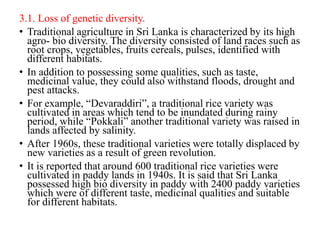
3.1. Loss of genetic diversity.
• Traditional agriculture in Sri Lanka is characterized by its high
agro- bio diversity. The diversity consisted of land races such as
root crops, vegetables, fruits cereals, pulses, identified with
different habitats.
• In addition to possessing some qualities, such as taste,
medicinal value, they could also withstand floods, drought and
pest attacks.
• For example, “Devaraddiri”, a traditional rice variety was
cultivated in areas which tend to be inundated during rainy
period, while “Pokkali” another traditional variety was raised in
lands affected by salinity.
• After 1960s, these traditional varieties were totally displaced by
new varieties as a result of green revolution.
• It is reported that around 600 traditional rice varieties were
cultivated in paddy lands in 1940s. It is said that Sri Lanka
possessed high bio diversity in paddy with 2400 paddy varieties
which were of different taste, medicinal qualities and suitable
for different habitats.
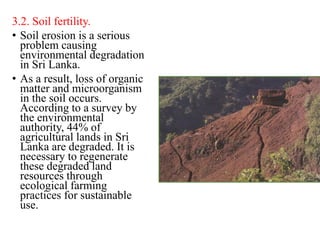
3.2. Soil fertility.
• Soil erosion is a serious
problem causing
environmental degradation
in Sri Lanka.
• As a result, loss of organic
matter and microorganism
in the soil occurs.
According to a survey by
the environmental
authority, 44% of
agricultural lands in Sri
Lanka are degraded. It is
necessary to regenerate
these degraded land
resources through
ecological farming
practices for sustainable
use.
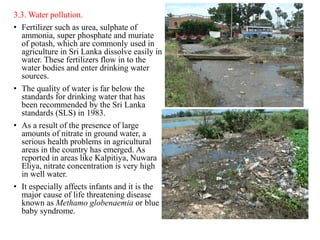
3.3. Water pollution.
• Fertilizer such as urea, sulphate of
ammonia, super phosphate and muriate
of potash, which are commonly used in
agriculture in Sri Lanka dissolve easily in
water. These fertilizers flow in to the
water bodies and enter drinking water
sources.
• The quality of water is far below the
standards for drinking water that has
been recommended by the Sri Lanka
standards (SLS) in 1983.
• As a result of the presence of large
amounts of nitrate in ground water, a
serious health problems in agricultural
areas in the country has emerged. As
reported in areas like Kalpitiya, Nuwara
Eliya, nitrate concentration is very high
in well water.
• It especially affects infants and it is the
major cause of life threatening disease
known as Methamo globenaemia or blue
baby syndrome.
3.3. Water pollution.
• In recent years, rapid spread of chronic kidney
disease (CKD) has been reported among the
farming communities in part of the North
Central Province and Kurunegala. It is
suspected to be due to the presence of traces
of Cadmium(Cd) leached into the water
sources mainly from the excessive use of low
quality super phosphate in cultivation.
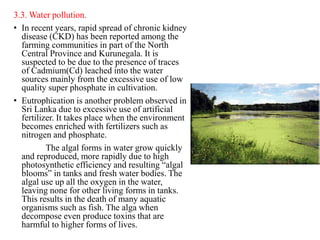
• Eutrophication is another problem observed in
Sri Lanka due to excessive use of artificial
fertilizer. It takes place when the environment
becomes enriched with fertilizers such as
nitrogen and phosphate.
The algal forms in water grow quickly
and reproduced, more rapidly due to high
photosynthetic efficiency and resulting “algal
blooms” in tanks and fresh water bodies. The
algal use up all the oxygen in the water,
leaving none for other living forms in tanks.
This results in the death of many aquatic
organisms such as fish. The alga when
decompose even produce toxins that are
harmful to higher forms of lives.
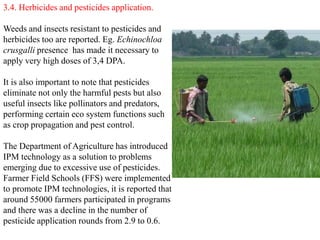
3.4. Herbicides and pesticides application.
Weeds and insects resistant to pesticides and
herbicides too are reported. Eg. Echinochloa
crusgalli presence has made it necessary to
apply very high doses of 3,4 DPA.
It is also important to note that pesticides
eliminate not only the harmful pests but also
useful insects like pollinators and predators,
performing certain eco system functions such
as crop propagation and pest control.
The Department of Agriculture has introduced
IPM technology as a solution to problems
emerging due to excessive use of pesticides.
Farmer Field Schools (FFS) were implemented
to promote IPM technologies, it is reported that
around 55000 farmers participated in programs
and there was a decline in the number of
pesticide application rounds from 2.9 to 0.6.

Indigenous Knowledge Systems 4

  • 1.
    Indigenous Knowledge Systems •Course Code: MS 52010 (02:30/00) • Sunday 1.30 pm – 3.30 pm • P.B. Dharmasena • 0777 - 613234, 0717 – 613234 • dharmasenapb@ymail.com , dharmasenapb@gmail.com • Links to publications: https://independent.academia.edu/PunchiBandageDharmasena https://www.researchgate.net/profile/Punchi_Bandage_Dharmasena/contribu tions http://www.slideshare.net/DharmasenaPb https://www.youtube.com/channel/UC_PFqwl0OqsrxH1wTm_jZeg Green revolution and its impact on Sri Lankan traditional agricultural system (biodiversity deterioration, inorganic substances for pest and disease controlling, development of hybrid varieties etc.) (1hr)
  • 2.
    Indigenous Knowledge Systems 2.Fundamental features of Sri Lankan Agriculture; climate, Soil, Genetic resources, agro biodiversity (2 hrs) 3. History and the culture of Sri Lankan agriculture sector development (1 hr) 4. Green revolution and its impact on Sri Lankan traditional agricultural system (biodiversity deterioration, inorganic substances for pest and disease controlling, development of hybrid varieties etc.) (1hr) 5. Indigenous soil management practices (2hrs) 6. Indigenous Irrigation systems (cascade system, water harvesting concepts) (2hrs) 9. Traditional practices for, weather forecasting, plant nutrient supplementing, pest and disease control and indigenous agricultural machines and tools (2hrs) 13. Cultural dimensions of Agricultural rituals in Sri Lanka (1 hr) 14. Climate change and Indigenous Agricultural knowledge in Sri Lanka(1 hr) Total: 12 hours) List of lectures by P.B. Dharmasena
  • 3.
    The first Green Revolution •In 1940’s plant geneticists, began using traditional methods of cross-breeding to create plants with desirable traits, including • Larger, more nutritious seeds, fruit • Resistance to pests and disease • Focused chiefly on wheat, corn, and rice Norman Borlaug M.S. Swaminathan
  • 4.
    • Newer varieties toleratedstresses associated with increased planting density • Greater planting density yields more grain per field. Successes of the first Green Revolution
  • 5.
    Successes of GreenRevolution • In the 1960's, 70's and 80's, crop yields boosted in India, China and Latin America. One billion deaths from starvation averted • Lower food prices occurred globally • If food remained scarce in these countries, it was the result of politics and food distribution
  • 6.
    Green revolution –The cold war in agriculture • Improved varieties • Inorganic fertilizer • Insecticides • Weedicides • Machinery use
  • 7.
    Other side ofthe coin • Improved varieties – high input cost, pest and diseases, susceptible to drought, salinity etc. • Mechanization – damage to soil environment, soil erosion, nutrient loss, water loss, insurgence of weeds • Inorganic fertilizer and agro-chemicals – soil acidity, heavy metals, micro-nutrient deficiency, poor microbial activity, health problems etc.
  • 8.
    Robert Nox -1681 Lewis - 1884
  • 9.
  • 10.
    We had morethan two thousand traditional rice varieties
  • 11.
    Kalu heenati kahawanu Siyapathel Kurulu thuda Traditional rice Mada thawalu Suwandal
  • 12.
  • 13.
    Importance: Acid-base balance inthe kidney Protein synthesis Production of cellular energy Activating immune cells For curing treatment of injuries To produce anti-cancer medicines For muscle development Glutamic acid
  • 14.
    Glycemic Index –How fast the starch is converted to sugar Glucose 100 Wheat flour preparations 75-95 Rice Bg 450 67 Bg 94-1 68 Suwandel 45
  • 15.
    Variety type Protein(%) Fe (%) Traditional 10.6- 13.3 2.2-3.4 Improved (new) 6.4-10.0 1.7-2.0 Anti-oxidant property (mmol Trolox/100 g) Traditional rice Improved rice Total 8.01 -17.88 1.84 - 1.61 Average 14.23 1.7 Type Pro anthocyanidin (mg/g) Phenolic acids (mg/g) Traditional 11.95 - 21.77 16.47- 40.43 Improved nil 8.12- 8.56
  • 16.
    New Findings • Agro-chemicalsincluding Glyphosate contain As and other heavy metals. • Pro antho cyandin can remove heavy metals from the human body • Pro antho cyanadin is present in rice like pachcha perumal, kalu heenati, madathawalu etc. • Pro anthocyanadin is absent in samba and nadu available in the market
  • 17.
  • 18.
    Cancer patients admittedto hospitals • 2010 – 16,963 • 2012 – 25,452 • 2013 – 25,515 • 2014 – 26,300 (14,000 died) Diabetic patients: 20 % in urban areas 8 % in rural areas 15 – 20% school children
  • 20.
  • 21.
    Side effects ofsuccesses of Green Revolution • Uneven development: not all countries and farmers benefited equally • Displacement of small farmers and forced change of livelihoods • Increased dependency of small farmers on global markets • Dependency upon fossil fuels • Increased water and pesticide use • Changes in crop diversity and plant nutritional content
  • 22.
    Displacement of smallfarmers • With Green Revolution, shift to monoculture export crops grown on large plantations • Replaced diverse types of traditional agriculture • Export crops replaced food crops • Land became concentrated with large landholders who can afford land and the cost of inputs • Subsequent neoliberal (new liberal) economics and free trade forced small farmers to participate in global markets often to their detriment.
  • 23.
    Greater dependency onfossil fuels for: • Fertilizer production • Production of pesticides and herbicides • Operation of tractors and farm equipment
  • 24.
    Price of foodtied to price of fuel Food price Oil price
  • 25.
  • 26.
  • 27.
    Name of fungicide Commercial names Banned inUSA Reason Captan 3 1994 Cancer, Mancozeb 21 1992 Cancer, stunt growth, pregnancy problem, hormone deficiency Maneb 3 1985 Cancer, stunt growth, pregnancy problem, hormone deficiency Increased pesticide use - Fungicides
  • 28.
    Name of insecticide Trade names Banned in USA Reason Carbaryl04 1987 Cancer, nervous breakdown, water pollution Carbofuran 14 1989 Cancer, nervous breakdown, water pollution, stunt growth, pregnancy problem Chloropyrifos 35 1985 Cancer, water pollution, stunt growth, pregnancy problem Diazinon 11 1980 Nervous breakdown Fenobucarb 14 Cancer, water pollution Phenthoate 13 Cancer, stunt growth, pregnancy problem Increased pesticide use – Insecticides
  • 29.
    Name of weedicide Trade names Banned in USA Reason 2,4- D 5 1984 Cancer, nervous breakdown, water pollution Alachlor 6 - Cancer, nervous breakdown, water pollution, stunt growth, pregnancy problem Diuron 11 1987 Cancer, pregnancy problem, water pollution Glyphosate 38 ? nervous breakdown, Kidney failure MCPA 35 1984 Cancer, water pollution Oxadiazon 1 - Cancer, stunt growth, pregnancy problem Paraquat 3 1986 ?? Propanil 27 1982 Cancer, stunt growth, pregnancy problem Increased pesticide use - Weedicides
  • 30.
  • 31.
  • 32.
  • 33.
    Use of Agro-chemicalsin Sugar Cane Farms: an example from Nicaragua • San Antonio Sugar Mill of Nicaragua Sugar Estates Ltd. • 3251 died from Chronic Renal Insufficiency (CRI) up to 22 March 2009 • 2244 died during 2005 - 2009 • Pesticides used: Hexacinone, Diuron, Tebuthiuron, 2,4-D, Glyphosate, Ametryn, Paraquat, Endosulfan, MCPA ……………
  • 34.
    What brought Kidneydisease ? New study - March 01, 2014 • Hard water contains metals like Ca, Mg, Sr, Fe etc. • Roundup, or glyphosate, becomes highly toxic to the kidney once mixed with “hard water” • Glyphosate half-life of around 47 days in soil can increase up to 22 years after forming “strong complexes with metal ions.”
  • 35.
  • 36.
  • 37.
  • 38.
  • 39.
    Renal failure deathrate Corn and Soy planted Glyphosate applied
  • 40.
    Changes in plantsand their foods
  • 41.
    Landraces and traditionalvarieties • A landrace is a local variety of a domesticated animal or plant species which has developed by adaptation to the specific natural and cultural environment in which it lives. • Higher diversity
  • 42.
    In Plant GeneticResources Centre, Gannoruwa, there are more than 2,400 accessions of Rice varieties collected and stored
  • 44.
    Problems encountered bythe small farmers in Sri Lanka. 1. High production cost 2. Price fluctuation and low prices for agriculture produce 3. Damage to environment and natural resources. a. Loss of genetic diversity. b. Soil fertility c. Water pollution d. Herbicides and pesticides application
  • 45.
    Problems encountered bythe small farmers in Sri Lanka. 1.High production cost • The green revolution technology introduced is totally dependent on external inputs such as improved seeds, fertilizer, pesticides, herbicides, fungicides, machinery like tractors and water pumps that require fuel for their operation. • These inputs have to be bought each and every season and farmers need to have a capital to invest in agriculture. • These inputs have to be imported every season and it involves our foreign exchange. With the increase of input costs in the world market, farmers are compelled to purchase them at higher prices. • These external inputs have a damaging effects and impact on nature and eco system.
  • 46.
  • 47.
    2.Price fluctuation andlow prices for agriculture produce. • Unorganized farming - The small farmers are not a well-organized group in the country. They market their produce individually and not as a group. In addition, they market the primary products without any value addition. • One crop - The farmers practice mono cropping. This leads to cultivation of one crop in a large extent of land and as a result, market price for the crop, drop drastically during the harvesting season. • Increased food import - It is also noteworthy that while the agricultural crop production in the country is on the decline the food imports are on the increase. Problems encountered by the small farmers in Sri Lanka.
  • 48.
  • 49.
  • 50.
  • 51.
    2.Price fluctuation andlow prices for agriculture produce (contd….) • Middle Men - Both the consumer and small- holder farmers are at a disadvantage and the benefits are derived by a network of middle men involved in all the activities such as collecting, packing, transporting, wholesale and retail marketing. • Profitability - Problems like high cost of production on the one hand and the low prices for their produce in the market on the other hand make farming less profitable. • Govt. marketing facility - Marketing Department, which was directly involved in purchasing farmer agriculture produce and sell to consumers at a reasonable price, was abolished after introducing liberalized economic policies. Problems encountered by the small farmers in Sri Lanka.
  • 52.
    Cost and incomeof paddy cultivation (Rs/ac) District Attribute 2008 2009 2010 2011 Kurunegala Cost 55584 61407 67730 76348 Net Return 50419 67955 48842 22731 Anuradhapura Cost 58330 66675 70394 76071 Net Return 79745 61515 51059 22439 Polonnaruwa Cost 58563 66022 70220 75801 Net Return 79550 67533 61228 40349 Ampara Cost 55309 61426 62026 65193 Net Return 54166 52950 41807 23724 Hambantota Cost 62333 69139 76250 76880 Net Return 76281 79309 58745 58657
  • 53.
    3. Damage toenvironment and natural resources. • Through green revolution technologies contributed immensely to an increase in food production, it neglected other factors which make agriculture systems sustainable. As a result, there were negative impacts such as natural resources degradation and depletion, erosion of genetic diversity and pollution of water resources. Problems encountered by the small farmers in Sri Lanka.
  • 54.
    3.1. Loss ofgenetic diversity. • Traditional agriculture in Sri Lanka is characterized by its high agro- bio diversity. The diversity consisted of land races such as root crops, vegetables, fruits cereals, pulses, identified with different habitats. • In addition to possessing some qualities, such as taste, medicinal value, they could also withstand floods, drought and pest attacks. • For example, “Devaraddiri”, a traditional rice variety was cultivated in areas which tend to be inundated during rainy period, while “Pokkali” another traditional variety was raised in lands affected by salinity. • After 1960s, these traditional varieties were totally displaced by new varieties as a result of green revolution. • It is reported that around 600 traditional rice varieties were cultivated in paddy lands in 1940s. It is said that Sri Lanka possessed high bio diversity in paddy with 2400 paddy varieties which were of different taste, medicinal qualities and suitable for different habitats.
  • 55.
    3.2. Soil fertility. •Soil erosion is a serious problem causing environmental degradation in Sri Lanka. • As a result, loss of organic matter and microorganism in the soil occurs. According to a survey by the environmental authority, 44% of agricultural lands in Sri Lanka are degraded. It is necessary to regenerate these degraded land resources through ecological farming practices for sustainable use.
  • 56.
    3.3. Water pollution. •Fertilizer such as urea, sulphate of ammonia, super phosphate and muriate of potash, which are commonly used in agriculture in Sri Lanka dissolve easily in water. These fertilizers flow in to the water bodies and enter drinking water sources. • The quality of water is far below the standards for drinking water that has been recommended by the Sri Lanka standards (SLS) in 1983. • As a result of the presence of large amounts of nitrate in ground water, a serious health problems in agricultural areas in the country has emerged. As reported in areas like Kalpitiya, Nuwara Eliya, nitrate concentration is very high in well water. • It especially affects infants and it is the major cause of life threatening disease known as Methamo globenaemia or blue baby syndrome.
  • 57.
    3.3. Water pollution. •In recent years, rapid spread of chronic kidney disease (CKD) has been reported among the farming communities in part of the North Central Province and Kurunegala. It is suspected to be due to the presence of traces of Cadmium(Cd) leached into the water sources mainly from the excessive use of low quality super phosphate in cultivation. • Eutrophication is another problem observed in Sri Lanka due to excessive use of artificial fertilizer. It takes place when the environment becomes enriched with fertilizers such as nitrogen and phosphate. The algal forms in water grow quickly and reproduced, more rapidly due to high photosynthetic efficiency and resulting “algal blooms” in tanks and fresh water bodies. The algal use up all the oxygen in the water, leaving none for other living forms in tanks. This results in the death of many aquatic organisms such as fish. The alga when decompose even produce toxins that are harmful to higher forms of lives.
  • 58.
    3.4. Herbicides andpesticides application. Weeds and insects resistant to pesticides and herbicides too are reported. Eg. Echinochloa crusgalli presence has made it necessary to apply very high doses of 3,4 DPA. It is also important to note that pesticides eliminate not only the harmful pests but also useful insects like pollinators and predators, performing certain eco system functions such as crop propagation and pest control. The Department of Agriculture has introduced IPM technology as a solution to problems emerging due to excessive use of pesticides. Farmer Field Schools (FFS) were implemented to promote IPM technologies, it is reported that around 55000 farmers participated in programs and there was a decline in the number of pesticide application rounds from 2.9 to 0.6.