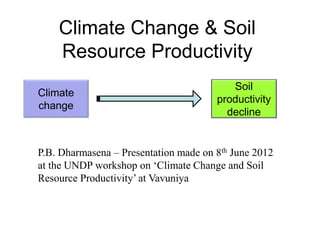
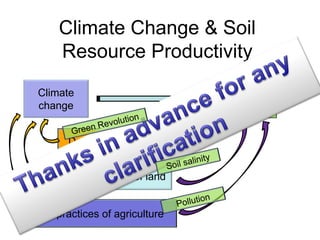
Climate Change & Soil
Resource Productivity
Climate
change
Soil
productivity
decline
P.B. Dharmasena – Presentation made on 8th June 2012
at the UNDP workshop on ‘Climate Change and Soil
Resource Productivity’ at Vavuniya
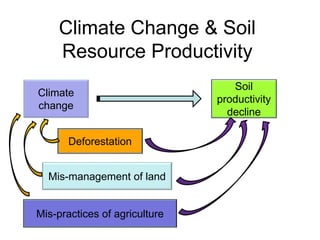
Climate Change & Soil
Resource Productivity
Climate
change
Soil
productivity
decline
Deforestation
Mis-management of land
Mis-practices of agriculture
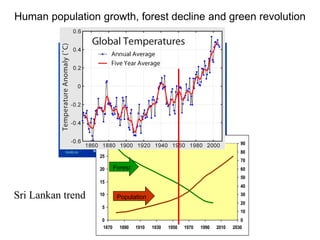
Human population growth, forest decline and green revolution
0
5
10
15
20
25
30
1870 1890 1910 1930 1950 1970 1990 2010 2030
0
10
20
30
40
50
60
70
80
90
Forest
Population
Sri Lankan trend
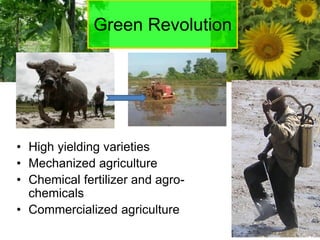
• High yielding varieties
• Mechanized agriculture
• Chemical fertilizer and agro-
chemicals
• Commercialized agriculture
Green Revolution
Impacts
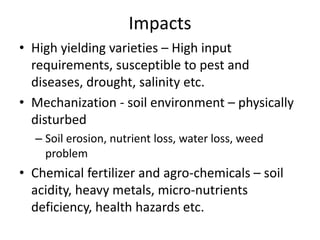
• High yielding varieties – High input
requirements, susceptible to pest and
diseases, drought, salinity etc.
• Mechanization - soil environment – physically
disturbed
– Soil erosion, nutrient loss, water loss, weed
problem
• Chemical fertilizer and agro-chemicals – soil
acidity, heavy metals, micro-nutrients
deficiency, health hazards etc.
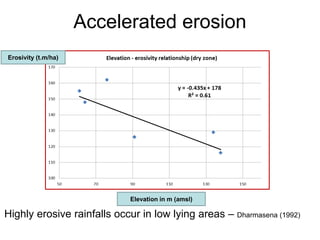
Highly erosive rainfalls occur in low lying areas – Dharmasena (1992)
Elevation in m (amsl)
Erosivity (t.m/ha)
Accelerated erosion
Location
Potential annual soil loss (mt./ha)
Land slope (%)
2 4 6
Anuradhapura
Galgamuwa
Horowpothana
Kantale
Mahailluppallama
Maradankadawala
Polonnaruwa
27
26
31
34
25
28
33
52
51
61
66
48
53
64
84
83
99
108
78
87
104
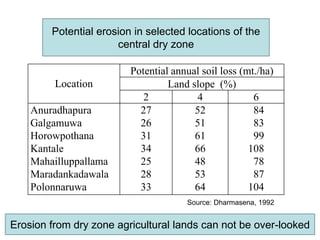
Potential erosion in selected locations of the
central dry zone
Source: Dharmasena, 1992
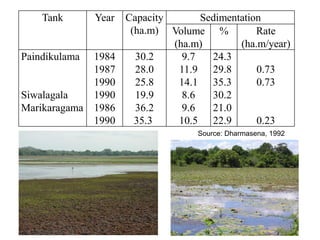
Erosion from dry zone agricultural lands can not be over-looked
Tank Year Capacity
(ha.m)
Sedimentation
Volume
(ha.m)
% Rate
(ha.m/year)
Paindikulama
Siwalagala
Marikaragama
1984
1987
1990
1990
1986
1990
30.2
28.0
25.8
19.9
36.2
35.3
9.7
11.9
14.1
8.6
9.6
10.5
24.3
29.8
35.3
30.2
21.0
22.9
0.73
0.73
0.23
Source: Dharmasena, 1992
Land
slope
(%)
Spacing
(m)
Runoff
(m3/hr)
Bund
height
(cm)
Drain
Depth
(cm)
Top width
(cm)
< 2
2 – 4
4 – 6
6 – 8
8 - 10
15
10
7
6
5
165
100
75
60
50
30
25
25
20
20
15
10
10
10
10
70
50
50
40
40
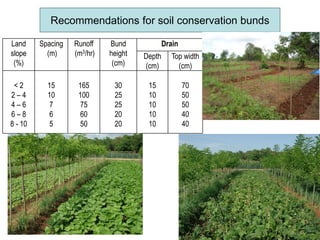
Recommendations for soil conservation bunds
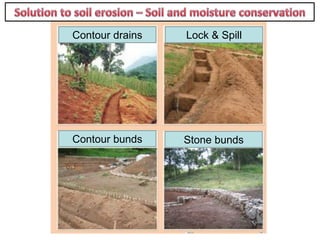
Contour drains Lock & Spill
Contour bunds Stone bunds
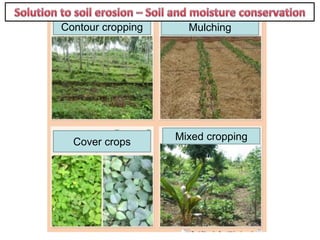
Contour cropping Mulching
Cover crops
Mixed cropping
Strip cropping Minimum tillage
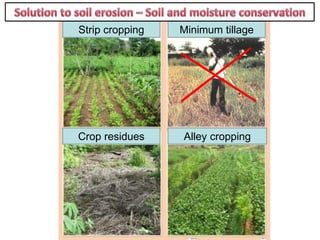
Crop residues Alley cropping
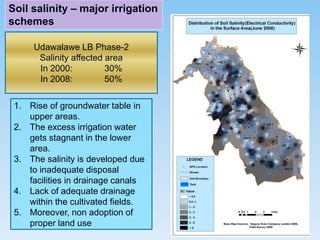
1. Rise of groundwater table in
upper areas.
2. The excess irrigation water
gets stagnant in the lower
area.
3. The salinity is developed due
to inadequate disposal
facilities in drainage canals
4. Lack of adequate drainage
within the cultivated fields.
5. Moreover, non adoption of
proper land use
Udawalawe LB Phase-2
Salinity affected area
In 2000: 30%
In 2008: 50%
Soil salinity – major irrigation
schemes
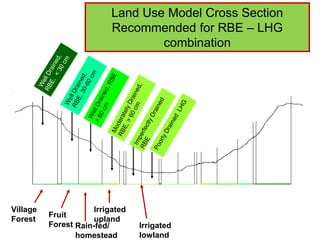
Land Use Model Cross Section
Recommended for RBE – LHG
combination
Village
Forest
Fruit
Forest Rain-fed/
homestead
Irrigated
upland
Irrigated
lowland
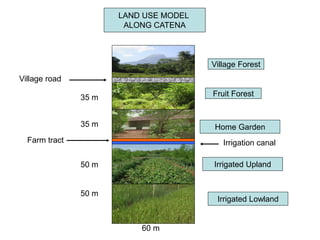
50 m
60 m
50 m
35 m
LAND USE MODEL
ALONG CATENA
Home Garden
Irrigated Upland
Farm tract
Village road
Fruit Forest
Village Forest
Irrigated Lowland
Irrigation canal
35 m
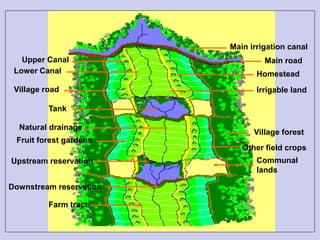
Main irrigation canal
Natural drainage
Irrigable land
Homestead
Other field crops
Village forest
Main road
Village road
Farm tract
Communal
lands
Tank
Lower Canal
Upper Canal
Fruit forest gardens
Upstream reservation
Downstream reservation
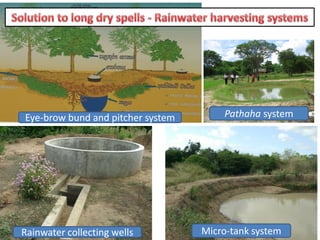
Eye-brow bund and pitcher system Pathaha system
Rainwater collecting wells Micro-tank system
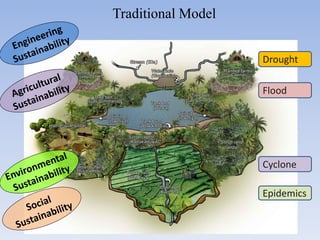
Traditional Model
Drought
Flood
Cyclone
Epidemics
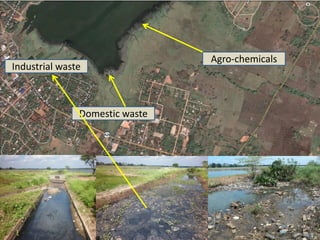
Industrial waste
Domestic waste
Agro-chemicals
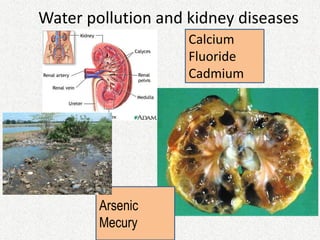
Water pollution and kidney diseases
Calcium
Fluoride
Cadmium
Arsenic
Mecury
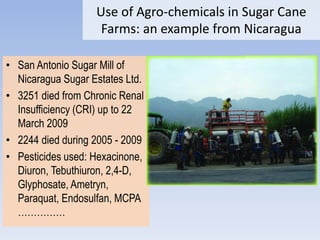
Use of Agro-chemicals in Sugar Cane
Farms: an example from Nicaragua
• San Antonio Sugar Mill of
Nicaragua Sugar Estates Ltd.
• 3251 died from Chronic Renal
Insufficiency (CRI) up to 22
March 2009
• 2244 died during 2005 - 2009
• Pesticides used: Hexacinone,
Diuron, Tebuthiuron, 2,4-D,
Glyphosate, Ametryn,
Paraquat, Endosulfan, MCPA
……………
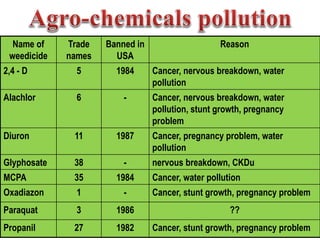
Name of
weedicide
Trade
names
Banned in
USA
Reason
2,4 - D 5 1984 Cancer, nervous breakdown, water
pollution
Alachlor 6 - Cancer, nervous breakdown, water
pollution, stunt growth, pregnancy
problem
Diuron 11 1987 Cancer, pregnancy problem, water
pollution
Glyphosate 38 - nervous breakdown, CKDu
MCPA 35 1984 Cancer, water pollution
Oxadiazon 1 - Cancer, stunt growth, pregnancy problem
Paraquat 3 1986 ??
Propanil 27 1982 Cancer, stunt growth, pregnancy problem
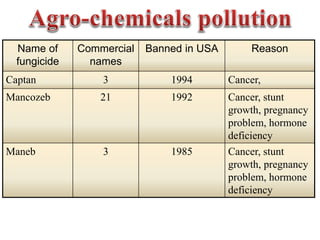
Name of
fungicide
Commercial
names
Banned in USA Reason
Captan 3 1994 Cancer,
Mancozeb 21 1992 Cancer, stunt
growth, pregnancy
problem, hormone
deficiency
Maneb 3 1985 Cancer, stunt
growth, pregnancy
problem, hormone
deficiency
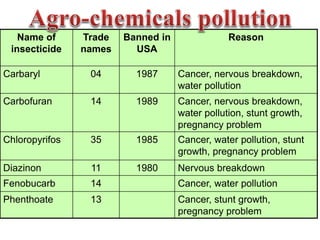
Name of
insecticide
Trade
names
Banned in
USA
Reason
Carbaryl 04 1987 Cancer, nervous breakdown,
water pollution
Carbofuran 14 1989 Cancer, nervous breakdown,
water pollution, stunt growth,
pregnancy problem
Chloropyrifos 35 1985 Cancer, water pollution, stunt
growth, pregnancy problem
Diazinon 11 1980 Nervous breakdown
Fenobucarb 14 Cancer, water pollution
Phenthoate 13 Cancer, stunt growth,
pregnancy problem
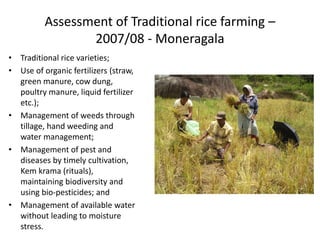
Assessment of Traditional rice farming –
2007/08 - Moneragala
• Traditional rice varieties;
• Use of organic fertilizers (straw,
green manure, cow dung,
poultry manure, liquid fertilizer
etc.);
• Management of weeds through
tillage, hand weeding and
water management;
• Management of pest and
diseases by timely cultivation,
Kem krama (rituals),
maintaining biodiversity and
using bio-pesticides; and
• Management of available water
without leading to moisture
stress.
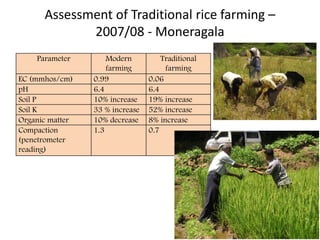
Assessment of Traditional rice farming –
2007/08 - Moneragala
Parameter Modern
farming
Traditional
farming
EC (mmhos/cm) 0.99 0.06
pH 6.4 6.4
Soil P 10% increase 19% increase
Soil K 33 % increase 52% increase
Organic matter 10% decrease 8% increase
Compaction
(penetrometer
reading)
1.3 0.7
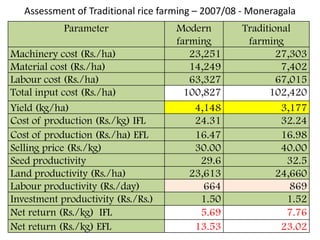
Assessment of Traditional rice farming – 2007/08 - Moneragala
Parameter Modern
farming
Traditional
farming
Machinery cost (Rs./ha) 23,251 27,303
Material cost (Rs./ha) 14,249 7,402
Labour cost (Rs./ha) 63,327 67,015
Total input cost (Rs./ha) 100,827 102,420
Yield (kg/ha) 4,148 3,177
Cost of production (Rs./kg) IFL 24.31 32.24
Cost of production (Rs./ha) EFL 16.47 16.98
Selling price (Rs./kg) 30.00 40.00
Seed productivity 29.6 32.5
Land productivity (Rs./ha) 23,613 24,660
Labour productivity (Rs./day) 664 869
Investment productivity (Rs./Rs.) 1.50 1.52
Net return (Rs./kg) IFL 5.69 7.76
Net return (Rs./kg) EFL 13.53 23.02
Climate Change & Soil
Resource Productivity
Climate
change
Soil
productivity
decline
Deforestation
Mis-management of land
Mis-practices of agriculture

Climate Change & Soil Resource Productivity

  • 1.
    Climate Change &Soil Resource Productivity Climate change Soil productivity decline P.B. Dharmasena – Presentation made on 8th June 2012 at the UNDP workshop on ‘Climate Change and Soil Resource Productivity’ at Vavuniya
  • 2.
    Climate Change &Soil Resource Productivity Climate change Soil productivity decline Deforestation Mis-management of land Mis-practices of agriculture
  • 3.
    Human population growth,forest decline and green revolution 0 5 10 15 20 25 30 1870 1890 1910 1930 1950 1970 1990 2010 2030 0 10 20 30 40 50 60 70 80 90 Forest Population Sri Lankan trend
  • 4.
    • High yieldingvarieties • Mechanized agriculture • Chemical fertilizer and agro- chemicals • Commercialized agriculture Green Revolution
  • 5.
    Impacts • High yieldingvarieties – High input requirements, susceptible to pest and diseases, drought, salinity etc. • Mechanization - soil environment – physically disturbed – Soil erosion, nutrient loss, water loss, weed problem • Chemical fertilizer and agro-chemicals – soil acidity, heavy metals, micro-nutrients deficiency, health hazards etc.
  • 6.
    Highly erosive rainfallsoccur in low lying areas – Dharmasena (1992) Elevation in m (amsl) Erosivity (t.m/ha) Accelerated erosion
  • 7.
    Location Potential annual soilloss (mt./ha) Land slope (%) 2 4 6 Anuradhapura Galgamuwa Horowpothana Kantale Mahailluppallama Maradankadawala Polonnaruwa 27 26 31 34 25 28 33 52 51 61 66 48 53 64 84 83 99 108 78 87 104 Potential erosion in selected locations of the central dry zone Source: Dharmasena, 1992 Erosion from dry zone agricultural lands can not be over-looked
  • 8.
    Tank Year Capacity (ha.m) Sedimentation Volume (ha.m) %Rate (ha.m/year) Paindikulama Siwalagala Marikaragama 1984 1987 1990 1990 1986 1990 30.2 28.0 25.8 19.9 36.2 35.3 9.7 11.9 14.1 8.6 9.6 10.5 24.3 29.8 35.3 30.2 21.0 22.9 0.73 0.73 0.23 Source: Dharmasena, 1992
  • 9.
    Land slope (%) Spacing (m) Runoff (m3/hr) Bund height (cm) Drain Depth (cm) Top width (cm) < 2 2– 4 4 – 6 6 – 8 8 - 10 15 10 7 6 5 165 100 75 60 50 30 25 25 20 20 15 10 10 10 10 70 50 50 40 40 Recommendations for soil conservation bunds
  • 10.
    Contour drains Lock& Spill Contour bunds Stone bunds
  • 11.
    Contour cropping Mulching Covercrops Mixed cropping
  • 12.
    Strip cropping Minimumtillage Crop residues Alley cropping
  • 13.
    1. Rise ofgroundwater table in upper areas. 2. The excess irrigation water gets stagnant in the lower area. 3. The salinity is developed due to inadequate disposal facilities in drainage canals 4. Lack of adequate drainage within the cultivated fields. 5. Moreover, non adoption of proper land use Udawalawe LB Phase-2 Salinity affected area In 2000: 30% In 2008: 50% Soil salinity – major irrigation schemes
  • 14.
    Land Use ModelCross Section Recommended for RBE – LHG combination Village Forest Fruit Forest Rain-fed/ homestead Irrigated upland Irrigated lowland
  • 15.
    50 m 60 m 50m 35 m LAND USE MODEL ALONG CATENA Home Garden Irrigated Upland Farm tract Village road Fruit Forest Village Forest Irrigated Lowland Irrigation canal 35 m
  • 16.
    Main irrigation canal Naturaldrainage Irrigable land Homestead Other field crops Village forest Main road Village road Farm tract Communal lands Tank Lower Canal Upper Canal Fruit forest gardens Upstream reservation Downstream reservation
  • 17.
    Eye-brow bund andpitcher system Pathaha system Rainwater collecting wells Micro-tank system
  • 18.
  • 19.
  • 20.
    Water pollution andkidney diseases Calcium Fluoride Cadmium Arsenic Mecury
  • 21.
    Use of Agro-chemicalsin Sugar Cane Farms: an example from Nicaragua • San Antonio Sugar Mill of Nicaragua Sugar Estates Ltd. • 3251 died from Chronic Renal Insufficiency (CRI) up to 22 March 2009 • 2244 died during 2005 - 2009 • Pesticides used: Hexacinone, Diuron, Tebuthiuron, 2,4-D, Glyphosate, Ametryn, Paraquat, Endosulfan, MCPA ……………
  • 22.
    Name of weedicide Trade names Banned in USA Reason 2,4- D 5 1984 Cancer, nervous breakdown, water pollution Alachlor 6 - Cancer, nervous breakdown, water pollution, stunt growth, pregnancy problem Diuron 11 1987 Cancer, pregnancy problem, water pollution Glyphosate 38 - nervous breakdown, CKDu MCPA 35 1984 Cancer, water pollution Oxadiazon 1 - Cancer, stunt growth, pregnancy problem Paraquat 3 1986 ?? Propanil 27 1982 Cancer, stunt growth, pregnancy problem
  • 23.
    Name of fungicide Commercial names Banned inUSA Reason Captan 3 1994 Cancer, Mancozeb 21 1992 Cancer, stunt growth, pregnancy problem, hormone deficiency Maneb 3 1985 Cancer, stunt growth, pregnancy problem, hormone deficiency
  • 24.
    Name of insecticide Trade names Banned in USA Reason Carbaryl04 1987 Cancer, nervous breakdown, water pollution Carbofuran 14 1989 Cancer, nervous breakdown, water pollution, stunt growth, pregnancy problem Chloropyrifos 35 1985 Cancer, water pollution, stunt growth, pregnancy problem Diazinon 11 1980 Nervous breakdown Fenobucarb 14 Cancer, water pollution Phenthoate 13 Cancer, stunt growth, pregnancy problem
  • 25.
    Assessment of Traditionalrice farming – 2007/08 - Moneragala • Traditional rice varieties; • Use of organic fertilizers (straw, green manure, cow dung, poultry manure, liquid fertilizer etc.); • Management of weeds through tillage, hand weeding and water management; • Management of pest and diseases by timely cultivation, Kem krama (rituals), maintaining biodiversity and using bio-pesticides; and • Management of available water without leading to moisture stress.
  • 26.
    Assessment of Traditionalrice farming – 2007/08 - Moneragala Parameter Modern farming Traditional farming EC (mmhos/cm) 0.99 0.06 pH 6.4 6.4 Soil P 10% increase 19% increase Soil K 33 % increase 52% increase Organic matter 10% decrease 8% increase Compaction (penetrometer reading) 1.3 0.7
  • 27.
    Assessment of Traditionalrice farming – 2007/08 - Moneragala Parameter Modern farming Traditional farming Machinery cost (Rs./ha) 23,251 27,303 Material cost (Rs./ha) 14,249 7,402 Labour cost (Rs./ha) 63,327 67,015 Total input cost (Rs./ha) 100,827 102,420 Yield (kg/ha) 4,148 3,177 Cost of production (Rs./kg) IFL 24.31 32.24 Cost of production (Rs./ha) EFL 16.47 16.98 Selling price (Rs./kg) 30.00 40.00 Seed productivity 29.6 32.5 Land productivity (Rs./ha) 23,613 24,660 Labour productivity (Rs./day) 664 869 Investment productivity (Rs./Rs.) 1.50 1.52 Net return (Rs./kg) IFL 5.69 7.76 Net return (Rs./kg) EFL 13.53 23.02
  • 28.
    Climate Change &Soil Resource Productivity Climate change Soil productivity decline Deforestation Mis-management of land Mis-practices of agriculture