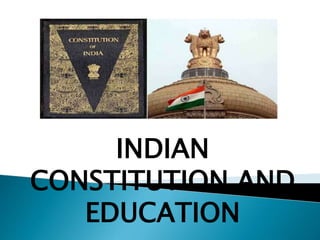
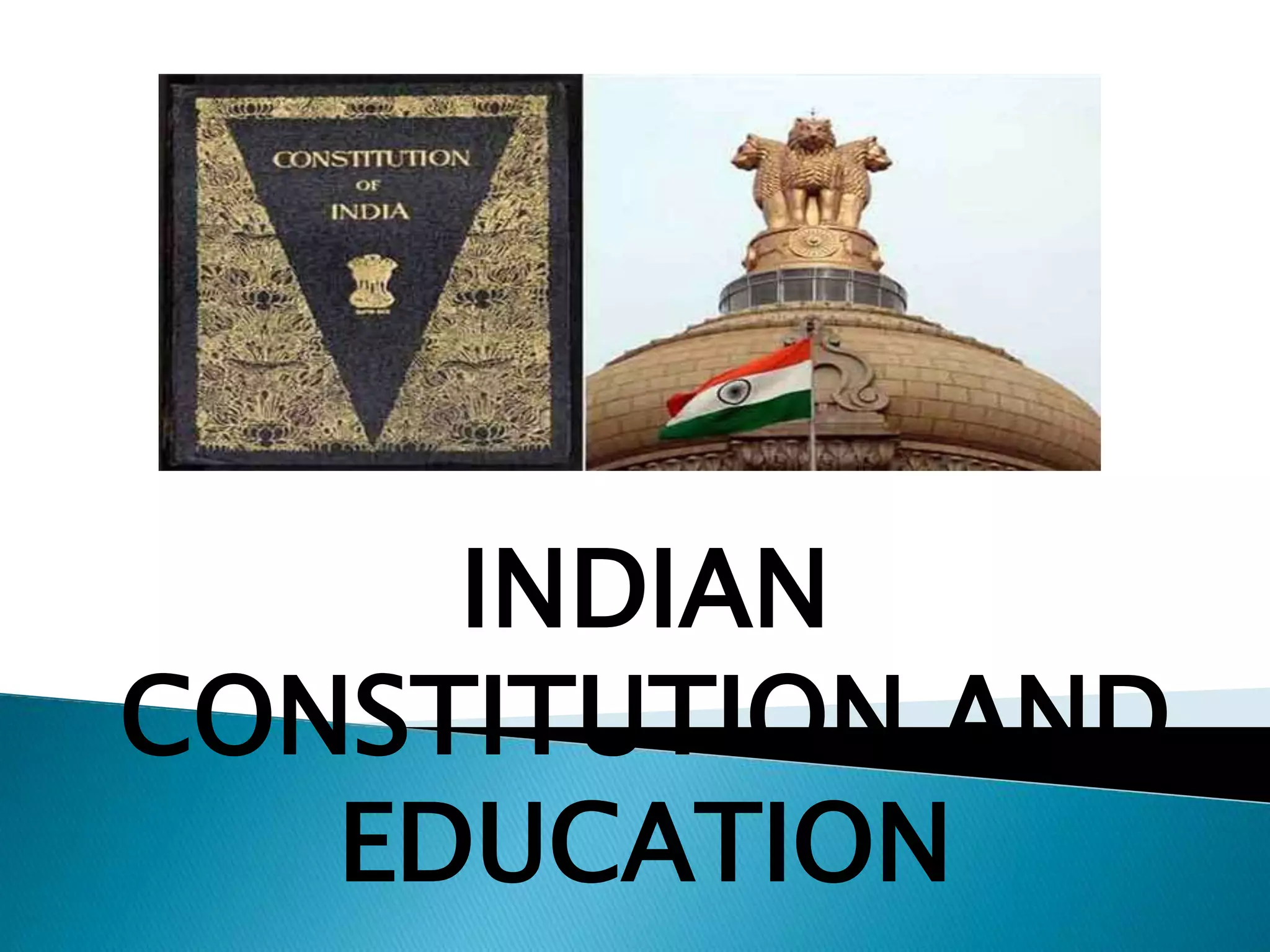
INDIAN
CONSTITUTION AND
EDUCATION
Preamble
WE, THE PEOPLE OF INDIA, having
solemnly resolved to constitute
India into a SOVEREIGN SOCIALIST
SECULAR DEMOCRATIC
REPUBLIC and to secure to all its
citizens:JUSTICE, social, economic
and political;
LIBERTY of thought, expression,
belief, faith and worship;
EQUALITY of status and of
opportunity; and to promote
among them all
FRATERNITY assuring the dignity of
the individual and the unity and
integrity of the Nation;
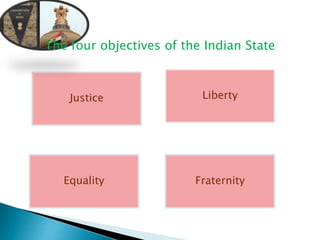
Justice Liberty
Equality Fraternity
The four objectives of the Indian State
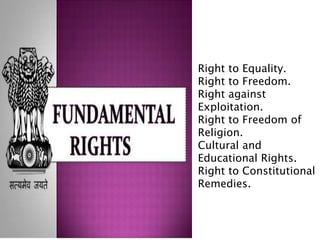
Right to Equality.
Right to Freedom.
Right against
Exploitation.
Right to Freedom of
Religion.
Cultural and
Educational Rights.
Right to Constitutional
Remedies.
 Socialistic Directives
 Gandhian Directives
 Liberal intellectual
directives
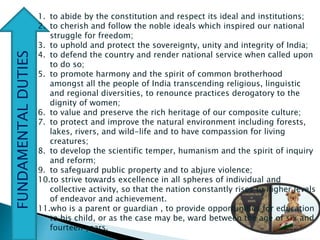
FUNDAMENTALDUTIES
1. to abide by the constitution and respect its ideal and institutions;
2. to cherish and follow the noble ideals which inspired our national
struggle for freedom;
3. to uphold and protect the sovereignty, unity and integrity of India;
4. to defend the country and render national service when called upon
to do so;
5. to promote harmony and the spirit of common brotherhood
amongst all the people of India transcending religious, linguistic
and regional diversities, to renounce practices derogatory to the
dignity of women;
6. to value and preserve the rich heritage of our composite culture;
7. to protect and improve the natural environment including forests,
lakes, rivers, and wild-life and to have compassion for living
creatures;
8. to develop the scientific temper, humanism and the spirit of inquiry
and reform;
9. to safeguard public property and to abjure violence;
10.to strive towards excellence in all spheres of individual and
collective activity, so that the nation constantly rises to higher levels
of endeavor and achievement.
11.who is a parent or guardian , to provide opportunities for education
to his child, or as the case may be, ward between the age of six and
fourteen years.
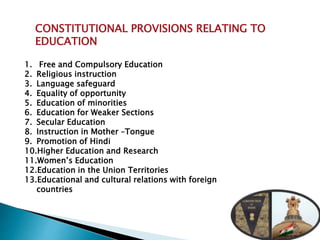
CONSTITUTIONAL PROVISIONS RELATING TO
EDUCATION
1. Free and Compulsory Education
2. Religious instruction
3. Language safeguard
4. Equality of opportunity
5. Education of minorities
6. Education for Weaker Sections
7. Secular Education
8. Instruction in Mother –Tongue
9. Promotion of Hindi
10.Higher Education and Research
11.Women’s Education
12.Education in the Union Territories
13.Educational and cultural relations with foreign
countries
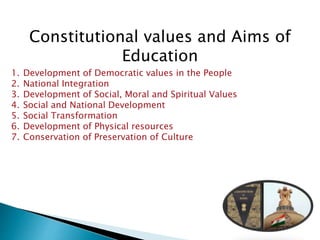
Constitutional values and Aims of
Education
1. Development of Democratic values in the People
2. National Integration
3. Development of Social, Moral and Spiritual Values
4. Social and National Development
5. Social Transformation
6. Development of Physical resources
7. Conservation of Preservation of Culture
LAYANA K
MATHEMATICS

Indian constitution and education

  • 1.
  • 2.
    Preamble WE, THE PEOPLEOF INDIA, having solemnly resolved to constitute India into a SOVEREIGN SOCIALIST SECULAR DEMOCRATIC REPUBLIC and to secure to all its citizens:JUSTICE, social, economic and political; LIBERTY of thought, expression, belief, faith and worship; EQUALITY of status and of opportunity; and to promote among them all FRATERNITY assuring the dignity of the individual and the unity and integrity of the Nation;
  • 3.
    Justice Liberty Equality Fraternity Thefour objectives of the Indian State
  • 4.
    Right to Equality. Rightto Freedom. Right against Exploitation. Right to Freedom of Religion. Cultural and Educational Rights. Right to Constitutional Remedies.
  • 5.
     Socialistic Directives Gandhian Directives  Liberal intellectual directives
  • 6.
    FUNDAMENTALDUTIES 1. to abideby the constitution and respect its ideal and institutions; 2. to cherish and follow the noble ideals which inspired our national struggle for freedom; 3. to uphold and protect the sovereignty, unity and integrity of India; 4. to defend the country and render national service when called upon to do so; 5. to promote harmony and the spirit of common brotherhood amongst all the people of India transcending religious, linguistic and regional diversities, to renounce practices derogatory to the dignity of women; 6. to value and preserve the rich heritage of our composite culture; 7. to protect and improve the natural environment including forests, lakes, rivers, and wild-life and to have compassion for living creatures; 8. to develop the scientific temper, humanism and the spirit of inquiry and reform; 9. to safeguard public property and to abjure violence; 10.to strive towards excellence in all spheres of individual and collective activity, so that the nation constantly rises to higher levels of endeavor and achievement. 11.who is a parent or guardian , to provide opportunities for education to his child, or as the case may be, ward between the age of six and fourteen years.
  • 7.
    CONSTITUTIONAL PROVISIONS RELATINGTO EDUCATION 1. Free and Compulsory Education 2. Religious instruction 3. Language safeguard 4. Equality of opportunity 5. Education of minorities 6. Education for Weaker Sections 7. Secular Education 8. Instruction in Mother –Tongue 9. Promotion of Hindi 10.Higher Education and Research 11.Women’s Education 12.Education in the Union Territories 13.Educational and cultural relations with foreign countries
  • 8.
    Constitutional values andAims of Education 1. Development of Democratic values in the People 2. National Integration 3. Development of Social, Moral and Spiritual Values 4. Social and National Development 5. Social Transformation 6. Development of Physical resources 7. Conservation of Preservation of Culture
  • 9.