Independent and Dependent Events ALCOS #12:  Determine the probability of an event.
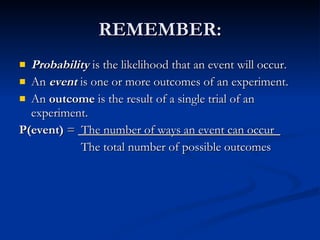
REMEMBER: Probability  is the likelihood that an event will occur. An  event  is one or more outcomes of an experiment.  An  outcome  is the result of a single trial of an experiment.  P(event)  =   The number of ways an event can occur     The total number of possible outcomes
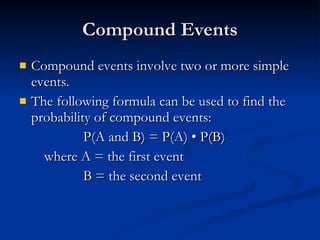
Compound Events Compound events involve two or more simple events. The following formula can be used to find the probability of compound events: P(A and B) = P(A) • P(B) where A = the first event B = the second event
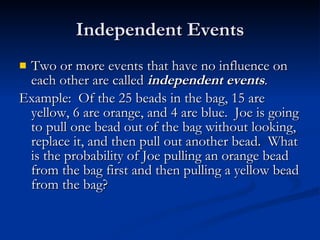
Independent Events Two or more events that have no influence on each other are called  independent events . Example:  Of the 25 beads in the bag, 15 are yellow, 6 are orange, and 4 are blue.  Joe is going to pull one bead out of the bag without looking, replace it, and then pull out another bead.  What is the probability of Joe pulling an orange bead from the bag first and then pulling a yellow bead from the bag?
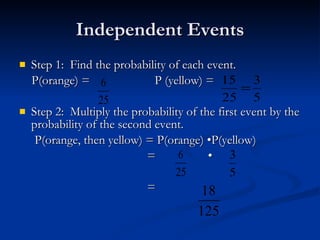
Independent Events Step 1:  Find the probability of each event. P(orange) =  P (yellow) =  Step 2:  Multiply the probability of the first event by the probability of the second event. P(orange, then yellow) = P(orange) •P(yellow) =  •  =
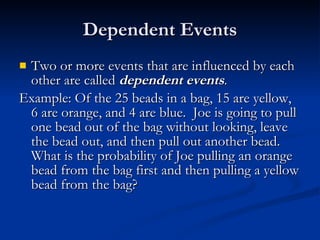
Dependent Events Two or more events that are influenced by each other are called  dependent events . Example: Of the 25 beads in a bag, 15 are yellow, 6 are orange, and 4 are blue.  Joe is going to pull one bead out of the bag without looking, leave the bead out, and then pull out another bead.  What is the probability of Joe pulling an orange bead from the bag first and then pulling a yellow bead from the bag?
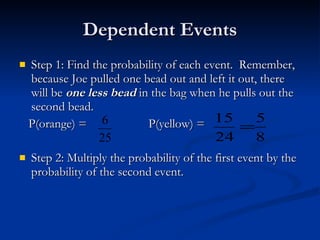
Dependent Events Step 1: Find the probability of each event.  Remember, because Joe pulled one bead out and left it out, there will be  one less bead  in the bag when he pulls out the second bead. P(orange) =  P(yellow) =  Step 2: Multiply the probability of the first event by the probability of the second event.
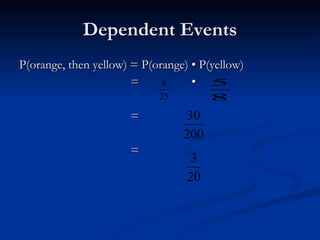
Dependent Events P(orange, then yellow) = P(orange) • P(yellow)   =    •    =    =
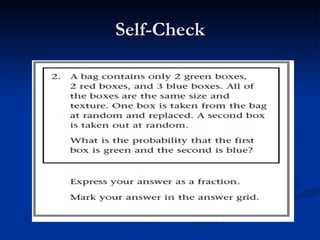
Self-Check
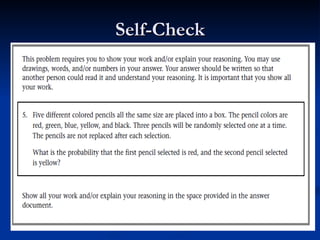
Self-Check

Independent and Dependent Events

  • 1.
    Independent and DependentEvents ALCOS #12: Determine the probability of an event.
  • 2.
    REMEMBER: Probability is the likelihood that an event will occur. An event is one or more outcomes of an experiment. An outcome is the result of a single trial of an experiment. P(event) =  The number of ways an event can occur   The total number of possible outcomes
  • 3.
    Compound Events Compoundevents involve two or more simple events. The following formula can be used to find the probability of compound events: P(A and B) = P(A) • P(B) where A = the first event B = the second event
  • 4.
    Independent Events Twoor more events that have no influence on each other are called independent events . Example: Of the 25 beads in the bag, 15 are yellow, 6 are orange, and 4 are blue. Joe is going to pull one bead out of the bag without looking, replace it, and then pull out another bead. What is the probability of Joe pulling an orange bead from the bag first and then pulling a yellow bead from the bag?
  • 5.
    Independent Events Step1: Find the probability of each event. P(orange) = P (yellow) = Step 2: Multiply the probability of the first event by the probability of the second event. P(orange, then yellow) = P(orange) •P(yellow) = • =
  • 6.
    Dependent Events Twoor more events that are influenced by each other are called dependent events . Example: Of the 25 beads in a bag, 15 are yellow, 6 are orange, and 4 are blue. Joe is going to pull one bead out of the bag without looking, leave the bead out, and then pull out another bead. What is the probability of Joe pulling an orange bead from the bag first and then pulling a yellow bead from the bag?
  • 7.
    Dependent Events Step1: Find the probability of each event. Remember, because Joe pulled one bead out and left it out, there will be one less bead in the bag when he pulls out the second bead. P(orange) = P(yellow) = Step 2: Multiply the probability of the first event by the probability of the second event.
  • 8.
    Dependent Events P(orange,then yellow) = P(orange) • P(yellow) = • = =
  • 9.
  • 10.