INTERNATIONAL CONFRENCE
on
EMERGING TRENDS IN EDUCATING PERSONS WITH DISABILITY
Organized By
DR.MGR INSTITUTE OF SPECIAL EDUCATION & RESEARCH
in collaboration with
TAMIL NADU TEACHERS EDUCATION UNIVERSITY
G.UMAMAGESWARI Dr . N. KALAI ARASI M.Sc.,M.Ed.,M.Phil.,Ph.D.(Edn)
Research scholar Associate Professor
N.K.T. National College of Education For Women- Triplicane. Chennai
PREPARING PROSPECTIVE TEACHERS FOR
INCLUSIVE EDUCATION
INTRODUCTION
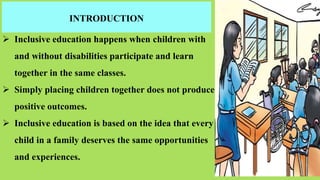
 Inclusive education happens when children with
and without disabilities participate and learn
together in the same classes.
 Simply placing children together does not produce
positive outcomes.
 Inclusive education is based on the idea that every
child in a family deserves the same opportunities
and experiences.
WHAT IS INCLUSIVE EDUCATION ?
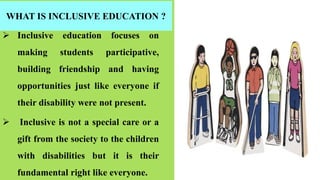
 Inclusive education focuses on
making students participative,
building friendship and having
opportunities just like everyone if
their disability were not present.
 Inclusive is not a special care or a
gift from the society to the children
with disabilities but it is their
fundamental right like everyone.
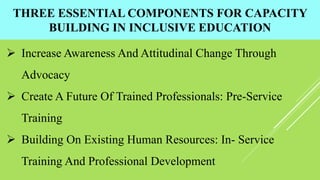
THREE ESSENTIAL COMPONENTS FOR CAPACITY
BUILDING IN INCLUSIVE EDUCATION
 Increase Awareness And Attitudinal Change Through
Advocacy
 Create A Future Of Trained Professionals: Pre-Service
Training
 Building On Existing Human Resources: In- Service
Training And Professional Development
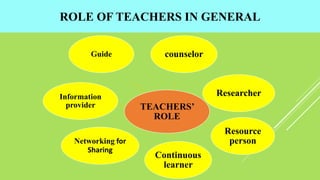
ROLE OF TEACHERS IN GENERAL
TEACHERS’
ROLE
counselor
Researcher
Resource
person
Continuous
learner
Networking for
Sharing
Information
provider
Guide
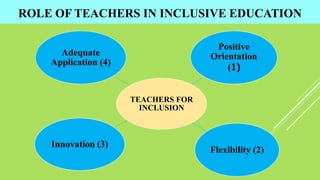
ROLE OF TEACHERS IN INCLUSIVE EDUCATION
TEACHERS FOR
INCLUSION
Positive
Orientation
(1)
Flexibility (2)
Innovation (3)
Adequate
Application (4)
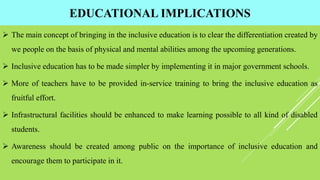
EDUCATIONAL IMPLICATIONS
 The main concept of bringing in the inclusive education is to clear the differentiation created by
we people on the basis of physical and mental abilities among the upcoming generations.
 Inclusive education has to be made simpler by implementing it in major government schools.
 More of teachers have to be provided in-service training to bring the inclusive education as
fruitful effort.
 Infrastructural facilities should be enhanced to make learning possible to all kind of disabled
students.
 Awareness should be created among public on the importance of inclusive education and
encourage them to participate in it.
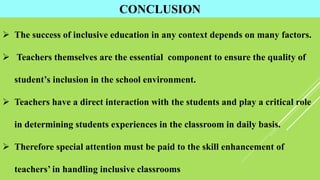
CONCLUSION
 The success of inclusive education in any context depends on many factors.
 Teachers themselves are the essential component to ensure the quality of
student’s inclusion in the school environment.
 Teachers have a direct interaction with the students and play a critical role
in determining students experiences in the classroom in daily basis.
 Therefore special attention must be paid to the skill enhancement of
teachers’ in handling inclusive classrooms
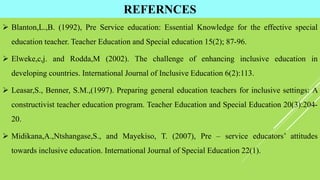
REFERNCES
 Blanton,L.,B. (1992), Pre Service education: Essential Knowledge for the effective special
education teacher. Teacher Education and Special education 15(2); 87-96.
 Elweke,c,j. and Rodda,M (2002). The challenge of enhancing inclusive education in
developing countries. International Journal of Inclusive Education 6(2):113.
 Leasar,S., Benner, S.M.,(1997). Preparing general education teachers for inclusive settings: A
constructivist teacher education program. Teacher Education and Special Education 20(3):204-
20.
 Midikana,A.,Ntshangase,S., and Mayekiso, T. (2007), Pre – service educators’ attitudes
towards inclusive education. International Journal of Special Education 22(1).
THANK YOU

Inclusive education

  • 1.
    INTERNATIONAL CONFRENCE on EMERGING TRENDSIN EDUCATING PERSONS WITH DISABILITY Organized By DR.MGR INSTITUTE OF SPECIAL EDUCATION & RESEARCH in collaboration with TAMIL NADU TEACHERS EDUCATION UNIVERSITY
  • 2.
    G.UMAMAGESWARI Dr .N. KALAI ARASI M.Sc.,M.Ed.,M.Phil.,Ph.D.(Edn) Research scholar Associate Professor N.K.T. National College of Education For Women- Triplicane. Chennai PREPARING PROSPECTIVE TEACHERS FOR INCLUSIVE EDUCATION
  • 3.
    INTRODUCTION  Inclusive educationhappens when children with and without disabilities participate and learn together in the same classes.  Simply placing children together does not produce positive outcomes.  Inclusive education is based on the idea that every child in a family deserves the same opportunities and experiences.
  • 4.
    WHAT IS INCLUSIVEEDUCATION ?  Inclusive education focuses on making students participative, building friendship and having opportunities just like everyone if their disability were not present.  Inclusive is not a special care or a gift from the society to the children with disabilities but it is their fundamental right like everyone.
  • 6.
    THREE ESSENTIAL COMPONENTSFOR CAPACITY BUILDING IN INCLUSIVE EDUCATION  Increase Awareness And Attitudinal Change Through Advocacy  Create A Future Of Trained Professionals: Pre-Service Training  Building On Existing Human Resources: In- Service Training And Professional Development
  • 7.
    ROLE OF TEACHERSIN GENERAL TEACHERS’ ROLE counselor Researcher Resource person Continuous learner Networking for Sharing Information provider Guide
  • 8.
    ROLE OF TEACHERSIN INCLUSIVE EDUCATION TEACHERS FOR INCLUSION Positive Orientation (1) Flexibility (2) Innovation (3) Adequate Application (4)
  • 10.
    EDUCATIONAL IMPLICATIONS  Themain concept of bringing in the inclusive education is to clear the differentiation created by we people on the basis of physical and mental abilities among the upcoming generations.  Inclusive education has to be made simpler by implementing it in major government schools.  More of teachers have to be provided in-service training to bring the inclusive education as fruitful effort.  Infrastructural facilities should be enhanced to make learning possible to all kind of disabled students.  Awareness should be created among public on the importance of inclusive education and encourage them to participate in it.
  • 11.
    CONCLUSION  The successof inclusive education in any context depends on many factors.  Teachers themselves are the essential component to ensure the quality of student’s inclusion in the school environment.  Teachers have a direct interaction with the students and play a critical role in determining students experiences in the classroom in daily basis.  Therefore special attention must be paid to the skill enhancement of teachers’ in handling inclusive classrooms
  • 12.
    REFERNCES  Blanton,L.,B. (1992),Pre Service education: Essential Knowledge for the effective special education teacher. Teacher Education and Special education 15(2); 87-96.  Elweke,c,j. and Rodda,M (2002). The challenge of enhancing inclusive education in developing countries. International Journal of Inclusive Education 6(2):113.  Leasar,S., Benner, S.M.,(1997). Preparing general education teachers for inclusive settings: A constructivist teacher education program. Teacher Education and Special Education 20(3):204- 20.  Midikana,A.,Ntshangase,S., and Mayekiso, T. (2007), Pre – service educators’ attitudes towards inclusive education. International Journal of Special Education 22(1).
  • 13.