Welcome
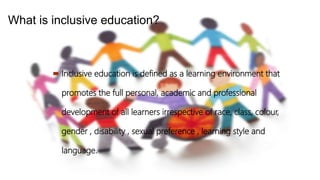
What is inclusive education?
 Inclusive education is defined as a learning environment that
promotes the full personal, academic and professional
development of all learners irrespective of race, class, colour,
gender , disability , sexual preference , learning style and
language.
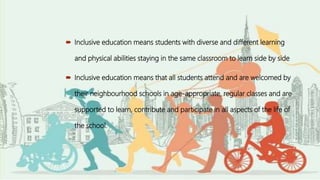
 Inclusive education means students with diverse and different learning
and physical abilities staying in the same classroom to learn side by side
 Inclusive education means that all students attend and are welcomed by
their neighbourhood schools in age-appropriate, regular classes and are
supported to learn, contribute and participate in all aspects of the life of
the school.
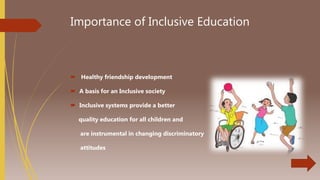
Importance of Inclusive Education
 Healthy friendship development
 A basis for an Inclusive society
 Inclusive systems provide a better
quality education for all children and
are instrumental in changing discriminatory
attitudes
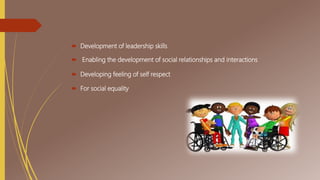
 Development of leadership skills
 Enabling the development of social relationships and interactions
 Developing feeling of self respect
 For social equality
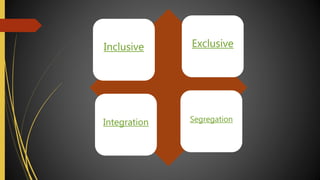
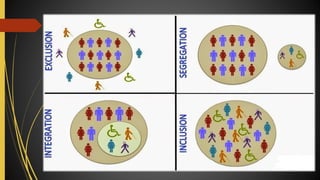
Inclusive Exclusive
Integration Segregation
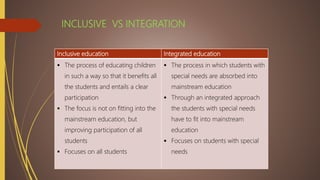
Inclusive education Integrated education
 The process of educating children
in such a way so that it benefits all
the students and entails a clear
participation
 The focus is not on fitting into the
mainstream education, but
improving participation of all
students
 Focuses on all students
 The process in which students with
special needs are absorbed into
mainstream education
 Through an integrated approach
the students with special needs
have to fit into mainstream
education
 Focuses on students with special
needs
INCLUSIVE VS INTEGRATION
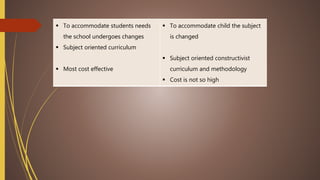
 To accommodate students needs
the school undergoes changes
 Subject oriented curriculum
 Most cost effective
 To accommodate child the subject
is changed
 Subject oriented constructivist
curriculum and methodology
 Cost is not so high
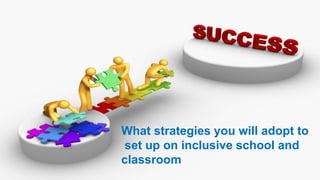
What strategies you will adopt to
set up on inclusive school and
classroom
 Ensure that educators have the
training, flexibility, and resources
to teach students with diverse
needs and learning styles
 Ensure that kindergartens and
schools receive adequate and
sustainable financial support
so that all activities and services
are fully inclusive
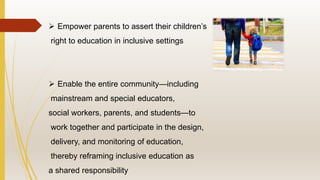
 Empower parents to assert their children’s
right to education in inclusive settings
 Enable the entire community—including
mainstream and special educators,
social workers, parents, and students—to
work together and participate in the design,
delivery, and monitoring of education,
thereby reframing inclusive education as
a shared responsibility
 hold governments accountable for
implementing antidiscrimination
legislation, legal mandates for inclusion,
and policies to remove barriers
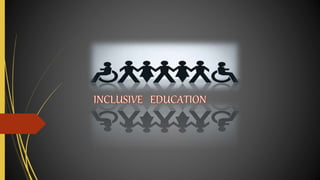
Inclusive education

Inclusive education

  • 1.
  • 3.
    What is inclusiveeducation?  Inclusive education is defined as a learning environment that promotes the full personal, academic and professional development of all learners irrespective of race, class, colour, gender , disability , sexual preference , learning style and language.
  • 4.
     Inclusive educationmeans students with diverse and different learning and physical abilities staying in the same classroom to learn side by side  Inclusive education means that all students attend and are welcomed by their neighbourhood schools in age-appropriate, regular classes and are supported to learn, contribute and participate in all aspects of the life of the school.
  • 5.
    Importance of InclusiveEducation  Healthy friendship development  A basis for an Inclusive society  Inclusive systems provide a better quality education for all children and are instrumental in changing discriminatory attitudes
  • 6.
     Development ofleadership skills  Enabling the development of social relationships and interactions  Developing feeling of self respect  For social equality
  • 9.
  • 11.
    Inclusive education Integratededucation  The process of educating children in such a way so that it benefits all the students and entails a clear participation  The focus is not on fitting into the mainstream education, but improving participation of all students  Focuses on all students  The process in which students with special needs are absorbed into mainstream education  Through an integrated approach the students with special needs have to fit into mainstream education  Focuses on students with special needs INCLUSIVE VS INTEGRATION
  • 12.
     To accommodatestudents needs the school undergoes changes  Subject oriented curriculum  Most cost effective  To accommodate child the subject is changed  Subject oriented constructivist curriculum and methodology  Cost is not so high
  • 15.
    What strategies youwill adopt to set up on inclusive school and classroom
  • 16.
     Ensure thateducators have the training, flexibility, and resources to teach students with diverse needs and learning styles  Ensure that kindergartens and schools receive adequate and sustainable financial support so that all activities and services are fully inclusive
  • 17.
     Empower parentsto assert their children’s right to education in inclusive settings  Enable the entire community—including mainstream and special educators, social workers, parents, and students—to work together and participate in the design, delivery, and monitoring of education, thereby reframing inclusive education as a shared responsibility
  • 18.
     hold governmentsaccountable for implementing antidiscrimination legislation, legal mandates for inclusion, and policies to remove barriers