Inclusion As An
Organizational Imperative
LULAC Federal Training Institute Partnership
September 22, 2015
Patrina M. Clark, SPHR, HSC, RACC
Pivotal Practices Consulting LLC
During Our Time Today
• Diversity vs. Inclusion
• Cornell University Dimensions of Inclusion
• Inclusion in the Federal Government
• Understanding Culture
• Roles of Beliefs and Needs
• You As a Change Agent
“Life is really simple, but we insist on making it complicated.”
Confucius
Quote to
Consider
Diversity and Inclusion
How, if at all, are diversity and inclusion
different?
Partner
Share
Diversity and Inclusion
Diversity is differences,
similarities, and multiple
perspectives.
Inclusion is leveraging
diversity to achieve full
participation and
optimum performance.
“Diversity is being invited to the party. Inclusivity is being asked
to dance.”
Quote to
Consider
DimensionsofDiversity
Internal Dimensions and External Dimensions are adapted from Marilyn Loden and Judy Rosener, Workforce America! (Business One Irwin, 1991)
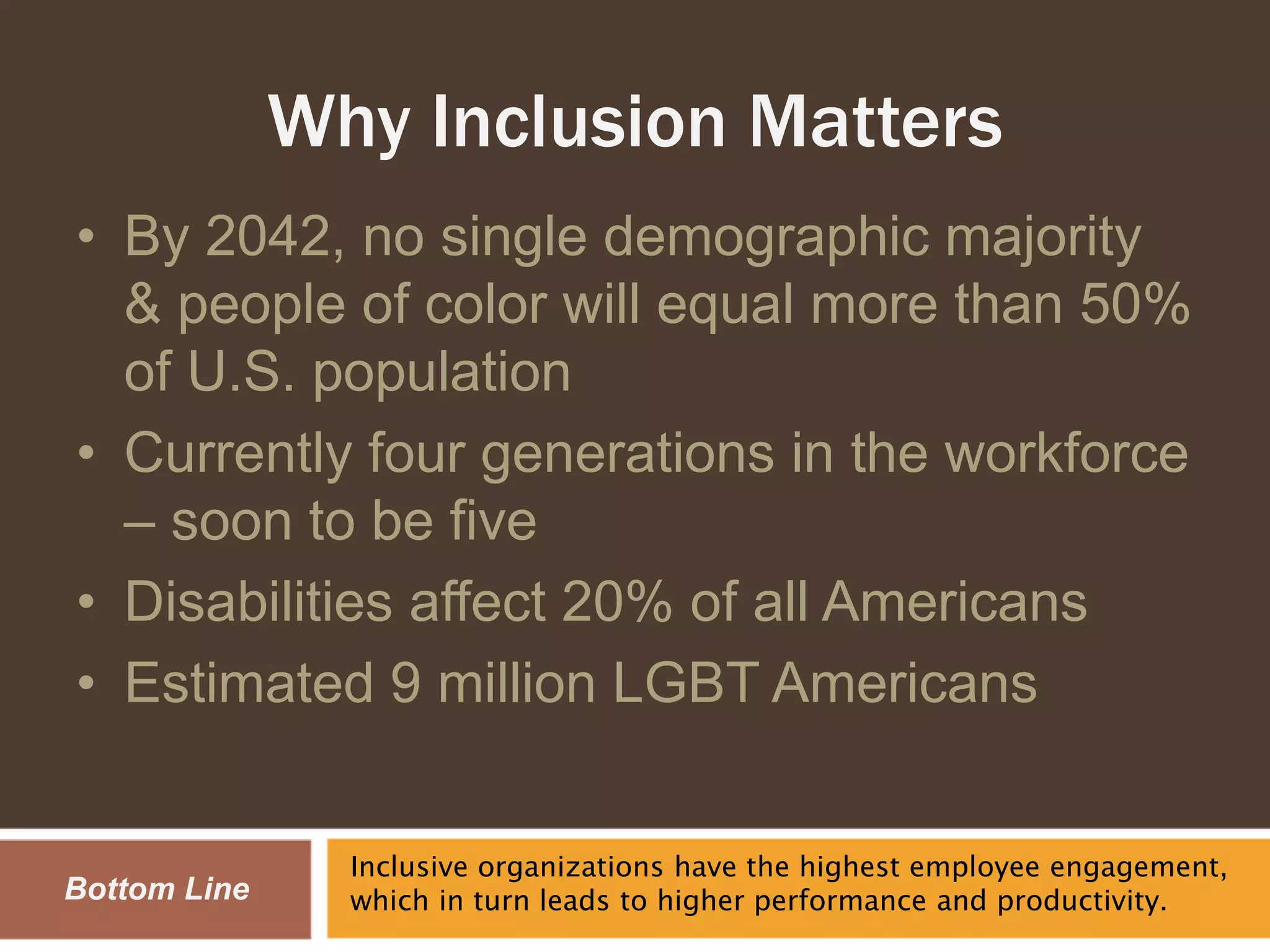
Why Inclusion Matters
• By 2042, no single demographic majority
& people of color will equal more than 50%
of U.S. population
• Currently four generations in the workforce
– soon to be five
• Disabilities affect 20% of all Americans
• Estimated 9 million LGBT Americans
Inclusive organizations have the highest employee engagement,
which in turn leads to higher performance and productivity.Bottom Line
CORNELL UNIVERSITY
DIMENSIONS OF INCLUSION
• Recruitment and Selection
• Career Opportunity and Representation
• Non-discrimination and equity
• Benefits policy and accommodation
Equity
Foundation of Fairness
• Identity expression and recognition
• One size doesn’t fit all
• Expressed value and willingness to learn
from diverse perspectives
Respect
Culture of Inclusion
• Work structure and processes
• Communication and information sharing
• Formal and informal participation in
decision-making
Value
Inclusion through
Participation
Cornell’s Three Dimensions of
Organizational Inclusion
Reference: Cornell University ILR School, Framework of Organizational Inclusion
Do We Say What We Mean and Mean What We Say?
Espoused vs. Experienced
Foundation of Fairness
(human resources policies and practices)
Organizational Culture of Inclusion
(openness to multiple perspectives)
Inclusion through Participation
(opportunity for engagement and influence)
Lo
w
High
Lo
w
High
Lo
w
High
Equity
Value
Respec
t
Reference: Cornell University ILR School, Framework of Organizational Inclusion
INCLUSION IN THE FEDERAL
GOVERNMENT
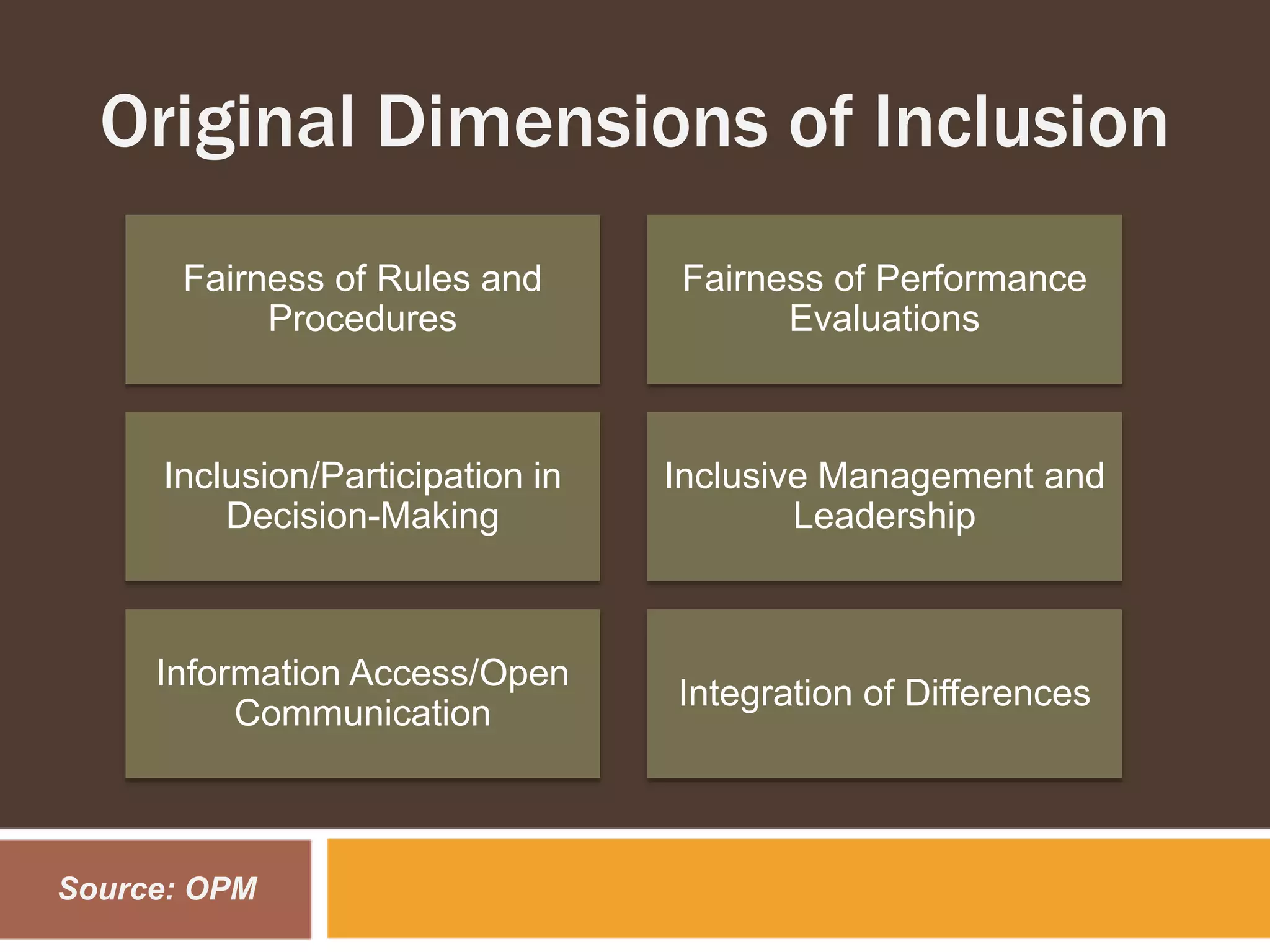
Original Dimensions of Inclusion
Source: OPM
Fairness of Rules and
Procedures
Fairness of Performance
Evaluations
Inclusion/Participation in
Decision-Making
Inclusive Management and
Leadership
Information Access/Open
Communication
Integration of Differences
The New IQ*
Source: OPM
InclusiveFair
Open
Cooperative
Supportive
Empowering
*Inclusion Quotient
Espoused vs. Experienced
How does your organization score?Reflection
Question
Low High
Fair
Open
Cooperative
Supportive
Empowerin
g
UNDERSTANDING CULTURE
What is Culture?
Integrated patterns of human behavior that
include the language, thoughts, communications,
actions, customs, beliefs, values, and institutions
of racial, ethnic, religious, or social groups.
The Joint Commission: Advancing Effective Communication, Cultural Competence, and
Patient- and Family-Centered Care: A Roadmap for Hospitals. Oakbrook Terrace, IL: The
Joint Commission, 2010.
Understanding Culture
THE ROLE OF BELIEFS AND NEEDS
Personal BeliefsReality Really
Freezer, Fleer, Fighter
You might be a freezer
if you . . .
You might be a fleer if
you . . .
You might be a fighter
if you . . .
• Get overwhelmed by
aggressive/offensive
people.
• Think of what you
“should” have said or
done after the
conversation/situation
is over.
• Feel anxious when
being confronted.
• Laugh it off – when
you’re really not
laughing inside.
• Just go along to get
along even though
your heart isn’t in it.
• Shut down – just
refuse to deal with the
situation.
• Have no reservations
about “getting in
someone’s face.”
• Readily speak up for
yourself when
confronted.
• Mentally plot ways to
get your “revenge” or
“pay someone back”
after the
conversation/situation
is over.
The Social Brain
Copyright David Rock – visit https://www.neuroleadership.com
Beliefs can be incredibly empowering or
falsely limiting.
YOU AS A CHANGE AGENT
Four Roles in Social Change
Helper
Advocate
Rebel
Change
Agent
Group
Activity
Tornado Warning
My Commitment
Accountability
Activity
• Review your Espoused vs. Experienced
ratings for your organization.
• Choose a New IQ dimension of focus.
• Identify one action you can take over the
next 30 days consistent with your most
comfortable role.
• Choose an accountability partner, share
your action, and exchange contact
information.
Reflection
Question
What is one key insight you are taking away from today’s
workshop?
Which ECQ?
Leading
Change
Leading
People
Results
Driven
Business
Acumen
Building
Coalitions
Which ECQs have a relationship to inclusion?Summary
Question
Patrina M Clark, President
Pivotal Practices Consulting
www.pivotalpractices.com
info@pivotalpractices.com
(301) 220-3179 office
www.linkedin.com/in/patrinaclark

Inclusion As An Organizational Imperative

  • 1.
    Inclusion As An OrganizationalImperative LULAC Federal Training Institute Partnership September 22, 2015 Patrina M. Clark, SPHR, HSC, RACC Pivotal Practices Consulting LLC
  • 2.
    During Our TimeToday • Diversity vs. Inclusion • Cornell University Dimensions of Inclusion • Inclusion in the Federal Government • Understanding Culture • Roles of Beliefs and Needs • You As a Change Agent “Life is really simple, but we insist on making it complicated.” Confucius Quote to Consider
  • 3.
    Diversity and Inclusion How,if at all, are diversity and inclusion different? Partner Share
  • 4.
    Diversity and Inclusion Diversityis differences, similarities, and multiple perspectives. Inclusion is leveraging diversity to achieve full participation and optimum performance. “Diversity is being invited to the party. Inclusivity is being asked to dance.” Quote to Consider
  • 5.
    DimensionsofDiversity Internal Dimensions andExternal Dimensions are adapted from Marilyn Loden and Judy Rosener, Workforce America! (Business One Irwin, 1991)
  • 6.
    Why Inclusion Matters •By 2042, no single demographic majority & people of color will equal more than 50% of U.S. population • Currently four generations in the workforce – soon to be five • Disabilities affect 20% of all Americans • Estimated 9 million LGBT Americans Inclusive organizations have the highest employee engagement, which in turn leads to higher performance and productivity.Bottom Line
  • 7.
  • 8.
    • Recruitment andSelection • Career Opportunity and Representation • Non-discrimination and equity • Benefits policy and accommodation Equity Foundation of Fairness • Identity expression and recognition • One size doesn’t fit all • Expressed value and willingness to learn from diverse perspectives Respect Culture of Inclusion • Work structure and processes • Communication and information sharing • Formal and informal participation in decision-making Value Inclusion through Participation Cornell’s Three Dimensions of Organizational Inclusion Reference: Cornell University ILR School, Framework of Organizational Inclusion
  • 9.
    Do We SayWhat We Mean and Mean What We Say?
  • 10.
    Espoused vs. Experienced Foundationof Fairness (human resources policies and practices) Organizational Culture of Inclusion (openness to multiple perspectives) Inclusion through Participation (opportunity for engagement and influence) Lo w High Lo w High Lo w High Equity Value Respec t Reference: Cornell University ILR School, Framework of Organizational Inclusion
  • 11.
    INCLUSION IN THEFEDERAL GOVERNMENT
  • 12.
    Original Dimensions ofInclusion Source: OPM Fairness of Rules and Procedures Fairness of Performance Evaluations Inclusion/Participation in Decision-Making Inclusive Management and Leadership Information Access/Open Communication Integration of Differences
  • 13.
    The New IQ* Source:OPM InclusiveFair Open Cooperative Supportive Empowering *Inclusion Quotient
  • 14.
    Espoused vs. Experienced Howdoes your organization score?Reflection Question Low High Fair Open Cooperative Supportive Empowerin g
  • 15.
  • 16.
    What is Culture? Integratedpatterns of human behavior that include the language, thoughts, communications, actions, customs, beliefs, values, and institutions of racial, ethnic, religious, or social groups. The Joint Commission: Advancing Effective Communication, Cultural Competence, and Patient- and Family-Centered Care: A Roadmap for Hospitals. Oakbrook Terrace, IL: The Joint Commission, 2010.
  • 17.
  • 18.
    THE ROLE OFBELIEFS AND NEEDS
  • 19.
  • 23.
    Freezer, Fleer, Fighter Youmight be a freezer if you . . . You might be a fleer if you . . . You might be a fighter if you . . . • Get overwhelmed by aggressive/offensive people. • Think of what you “should” have said or done after the conversation/situation is over. • Feel anxious when being confronted. • Laugh it off – when you’re really not laughing inside. • Just go along to get along even though your heart isn’t in it. • Shut down – just refuse to deal with the situation. • Have no reservations about “getting in someone’s face.” • Readily speak up for yourself when confronted. • Mentally plot ways to get your “revenge” or “pay someone back” after the conversation/situation is over.
  • 25.
  • 26.
    Copyright David Rock– visit https://www.neuroleadership.com
  • 27.
    Beliefs can beincredibly empowering or falsely limiting.
  • 28.
    YOU AS ACHANGE AGENT
  • 29.
    Four Roles inSocial Change Helper Advocate Rebel Change Agent Group Activity Tornado Warning
  • 30.
    My Commitment Accountability Activity • Reviewyour Espoused vs. Experienced ratings for your organization. • Choose a New IQ dimension of focus. • Identify one action you can take over the next 30 days consistent with your most comfortable role. • Choose an accountability partner, share your action, and exchange contact information.
  • 31.
    Reflection Question What is onekey insight you are taking away from today’s workshop?
  • 32.
  • 33.
    Patrina M Clark,President Pivotal Practices Consulting www.pivotalpractices.com info@pivotalpractices.com (301) 220-3179 office www.linkedin.com/in/patrinaclark

Editor's Notes

  • #3 Review the day’s agenda
  • #21 The mind plays tricks on us all of the time.
  • #22 How many legs does this elephant have?
  • #25 Now, let’s talk a bit more about the process for how we developed our beliefs.
  • #28 Since we get to choose, intentionally choose to believe things that make you feel good. Our lives are supposed to feel good to us.