Fostering public service excellence 
through fully engaged employees and 
committed, purposeful leadership 
Passionate Public Service® 
Public sector talent development solutions 
Constructively Engaging on 
Employee Engagement
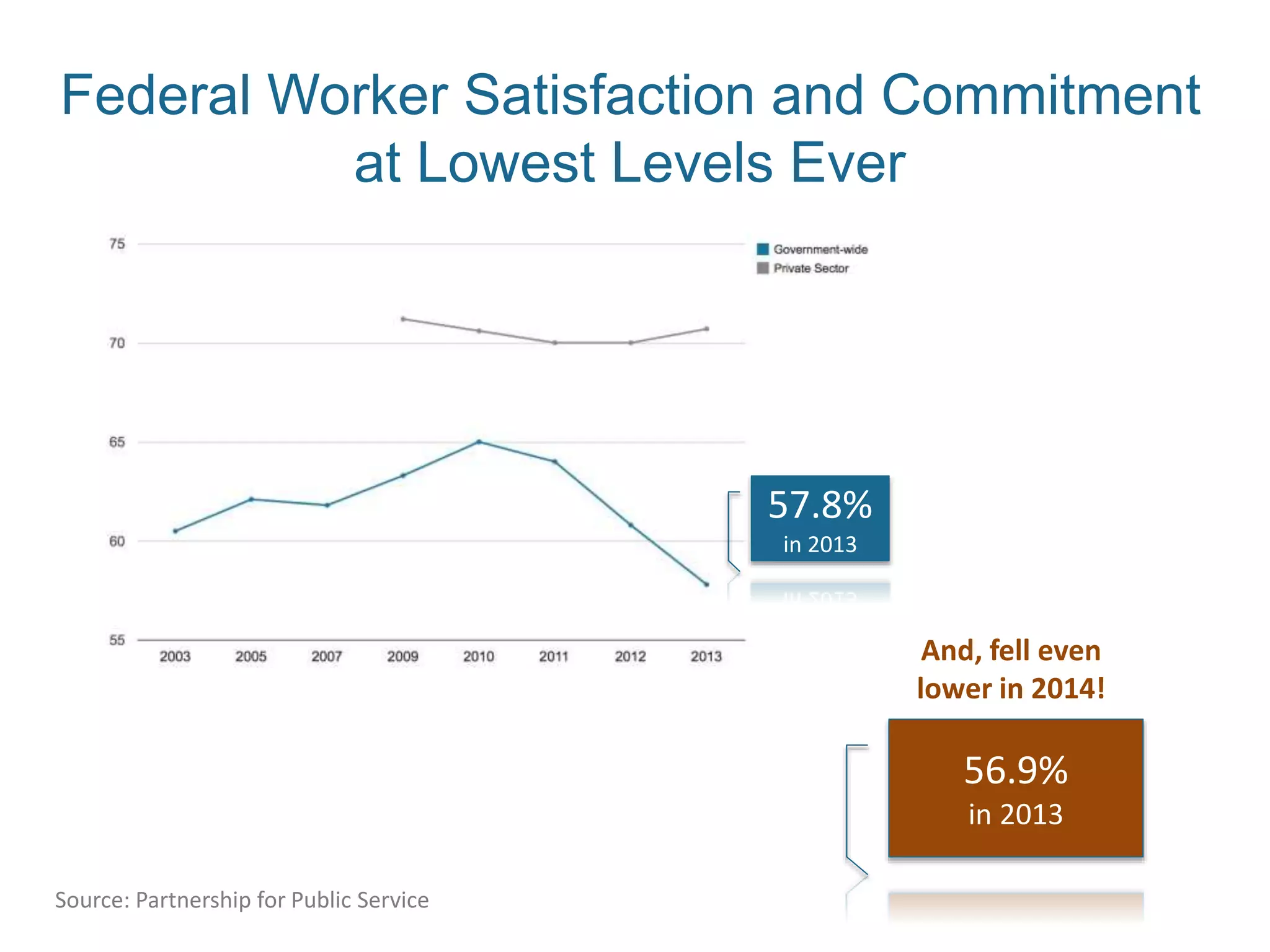
Federal Worker Satisfaction and Commitment 
at Lowest Levels Ever 
Source: Partnership for Public Service 
57.8% 
in 2013 
And, fell even 
lower in 2014! 
56.9% 
in 2013
Federal Employee Viewpoint Survey (FEVS) 
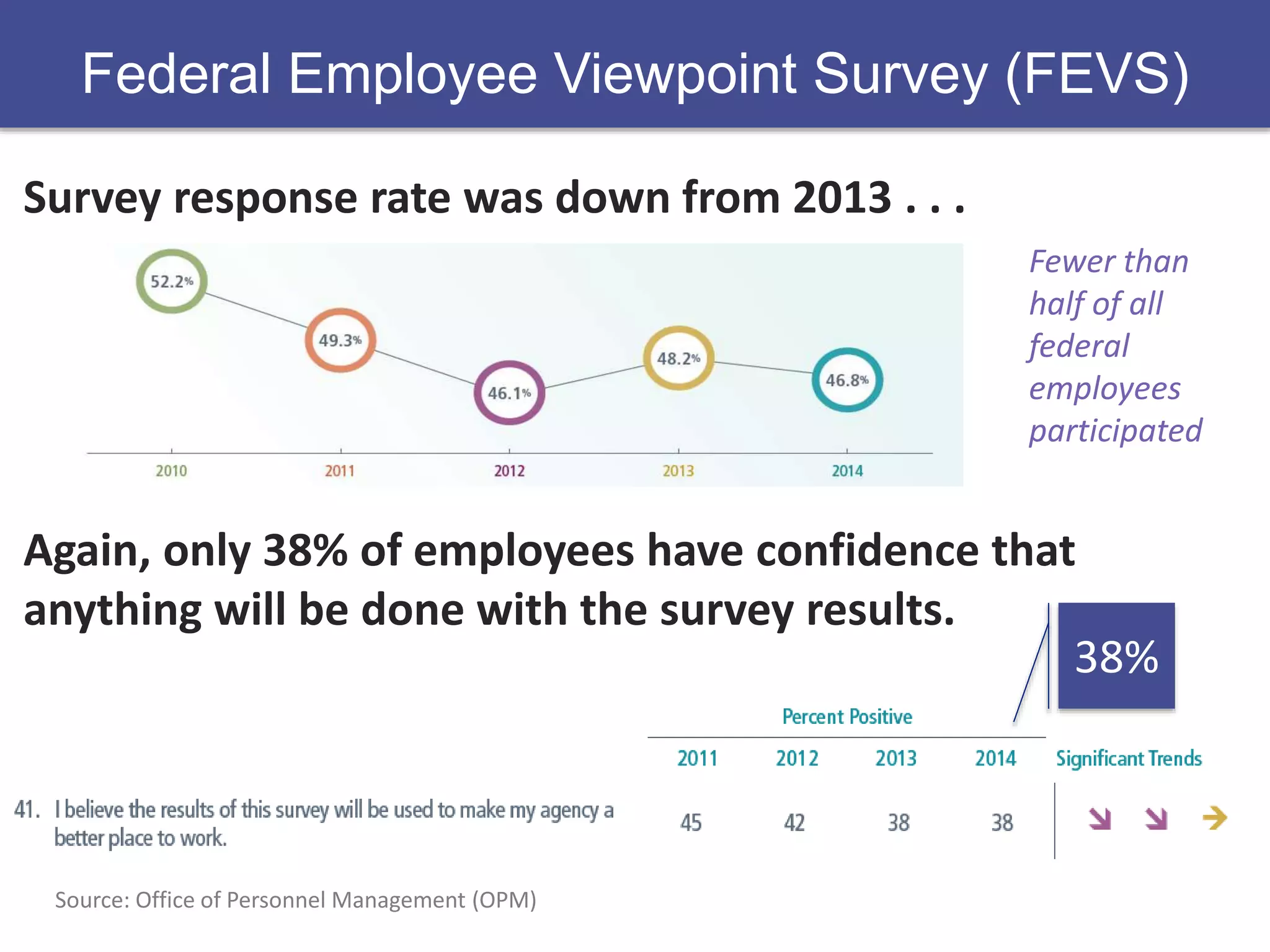
Survey response rate was down from 2013 . . . 
Fewer than 
half of all 
federal 
employees 
participated 
Again, only 38% of employees have confidence that 
anything will be done with the survey results. 
Source: Office of Personnel Management (OPM) 
38%
Declining Satisfaction with Organization 
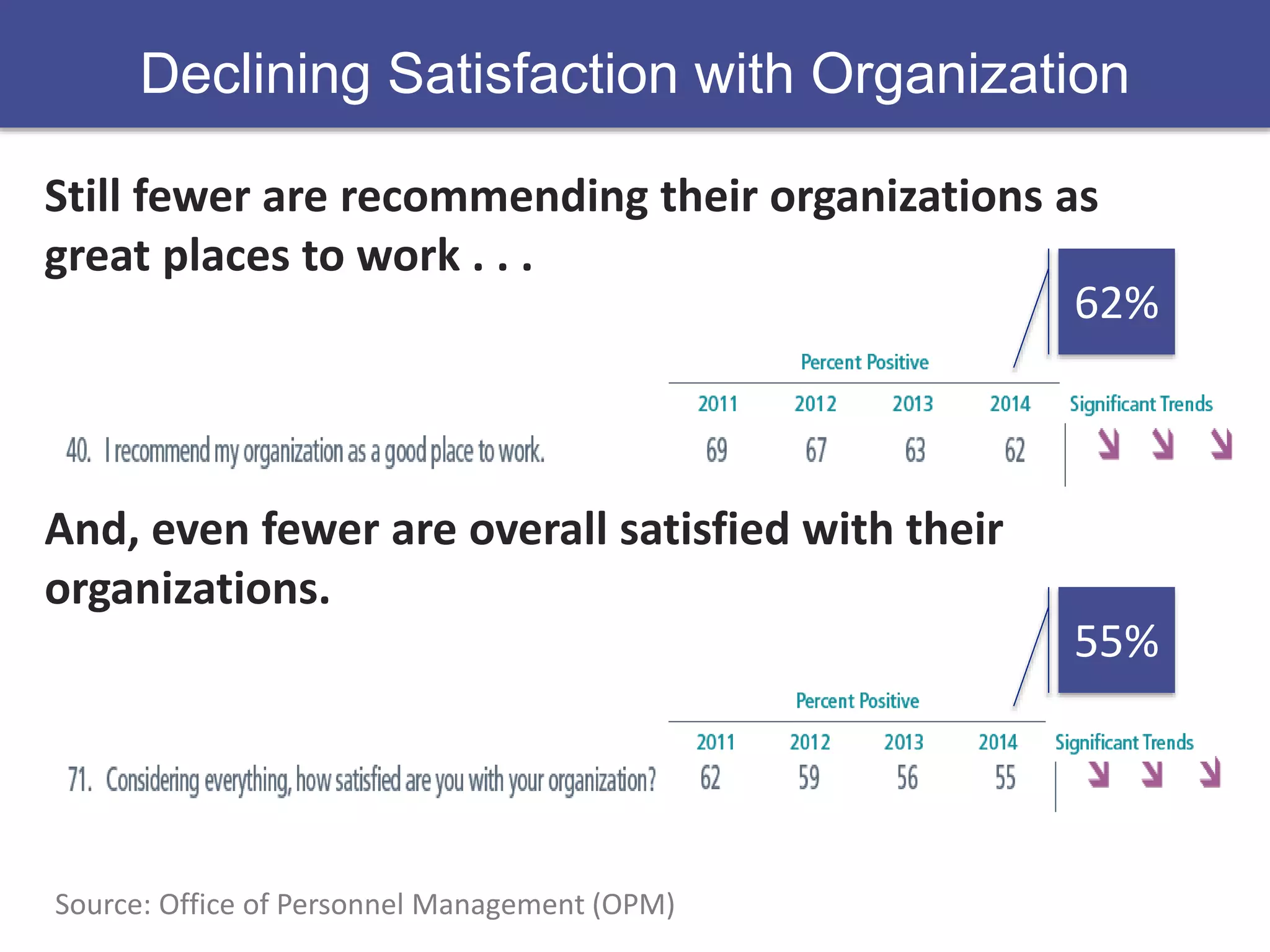
Still fewer are recommending their organizations as 
great places to work . . . 
And, even fewer are overall satisfied with their 
organizations. 
Source: Office of Personnel Management (OPM) 
62% 
55%
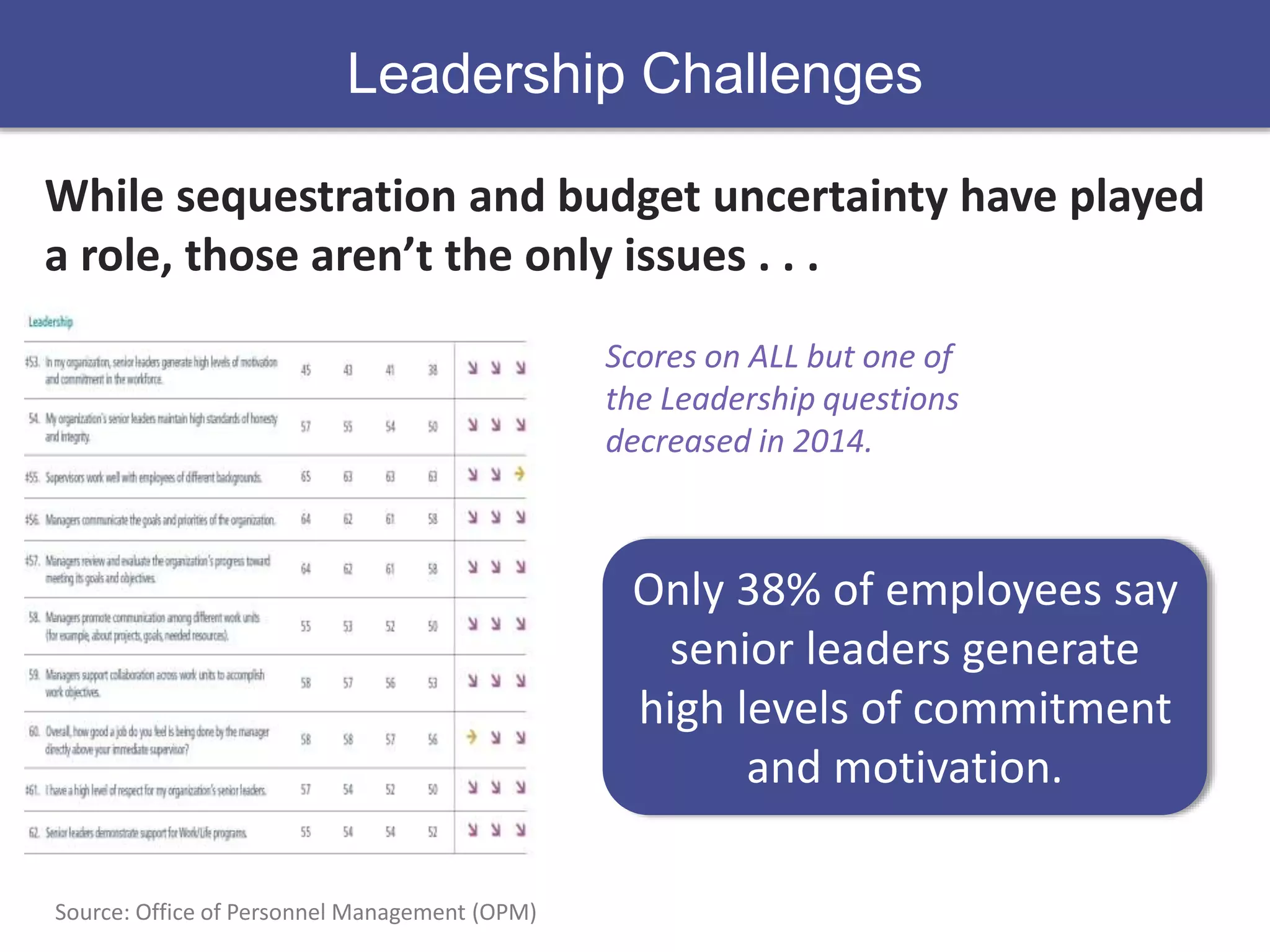
Leadership Challenges 
While sequestration and budget uncertainty have played 
a role, those aren’t the only issues . . . 
Source: Office of Personnel Management (OPM) 
Scores on ALL but one of 
the Leadership questions 
decreased in 2014. 
Only 38% of employees say 
senior leaders generate 
high levels of commitment 
and motivation.
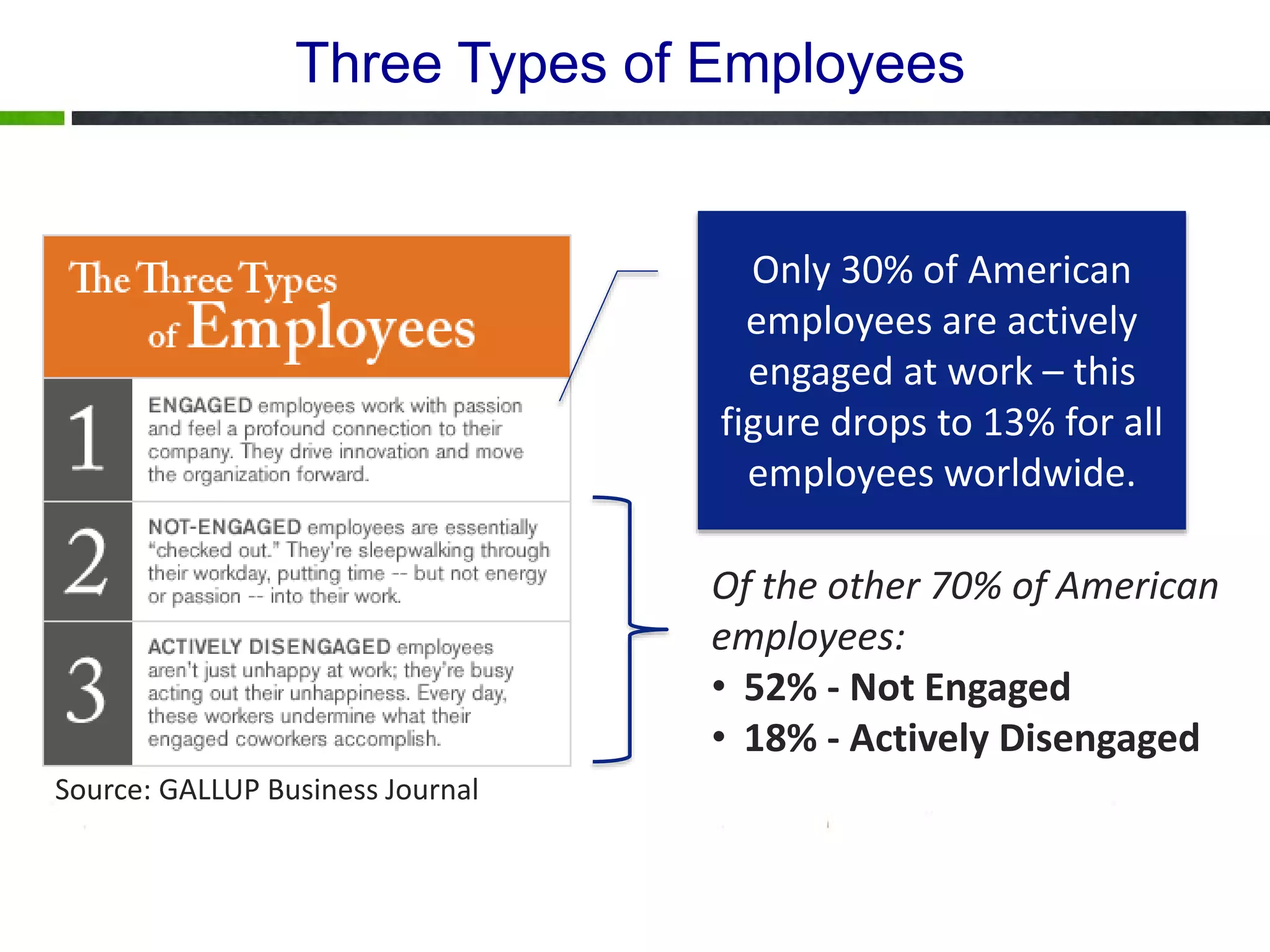
Three Types of Employees 
Source: GALLUP Business Journal 
Only 30% of American 
employees are actively 
engaged at work – this 
figure drops to 13% for all 
employees worldwide. 
Of the other 70% of American 
employees: 
• 52% - Not Engaged 
• 18% - Actively Disengaged
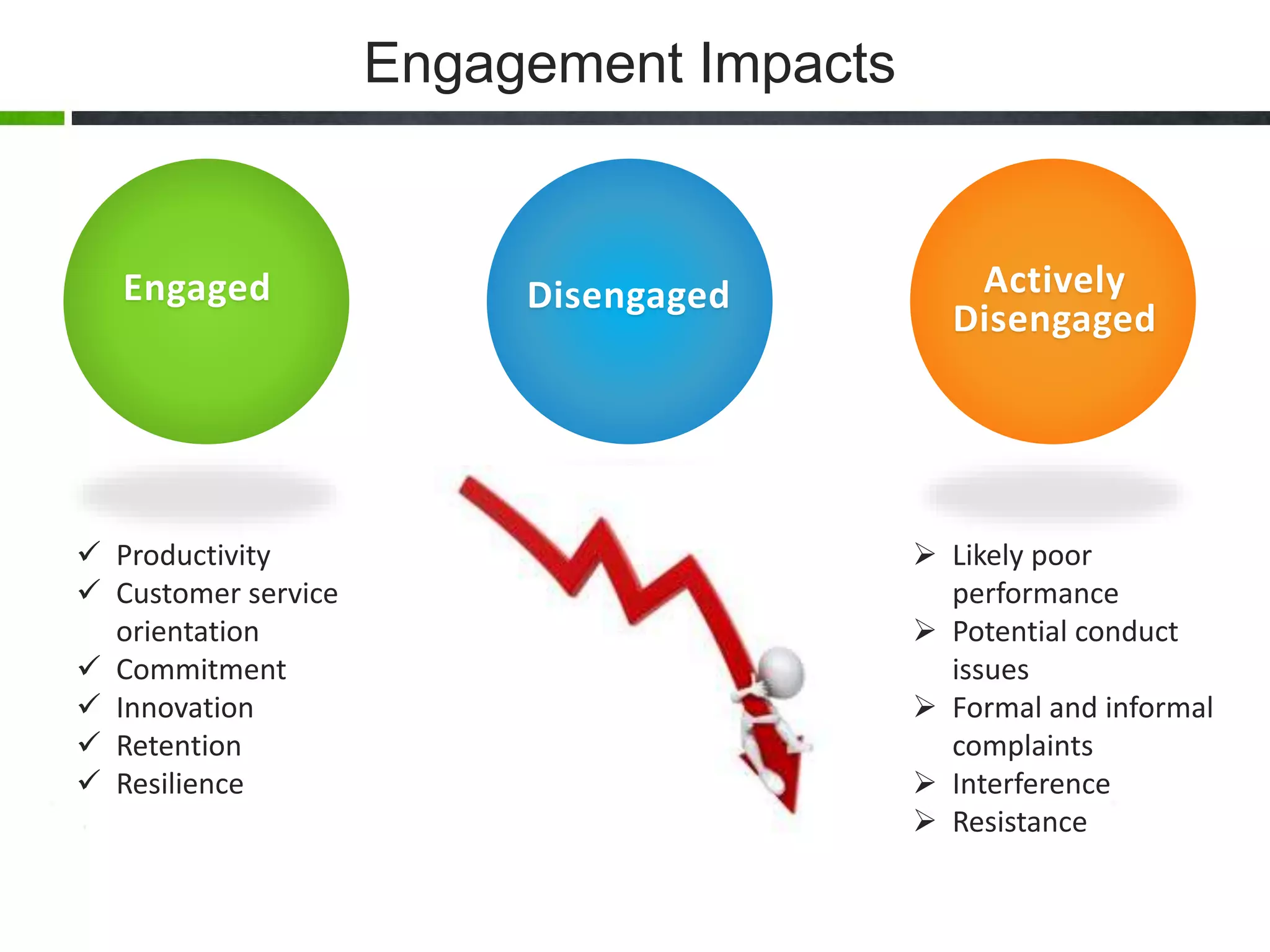
Engaged Disengaged 
 Productivity 
 Customer service 
orientation 
 Commitment 
 Innovation 
 Retention 
 Resilience 
Actively 
Disengaged 
 Likely poor 
performance 
 Potential conduct 
issues 
 Formal and informal 
complaints 
 Interference 
 Resistance 
Engagement Impacts
Ideas for Positively 
Impacting Employee 
Engagement 
“The greatest asset of any nation is the spirit of its people, and the 
greatest danger that can menace any nation is the breakdown of 
that spirit – the will to win and the courage to work.” 
-- George B. Cortelyou 
First Secretary of Labor and Commerce, 1903
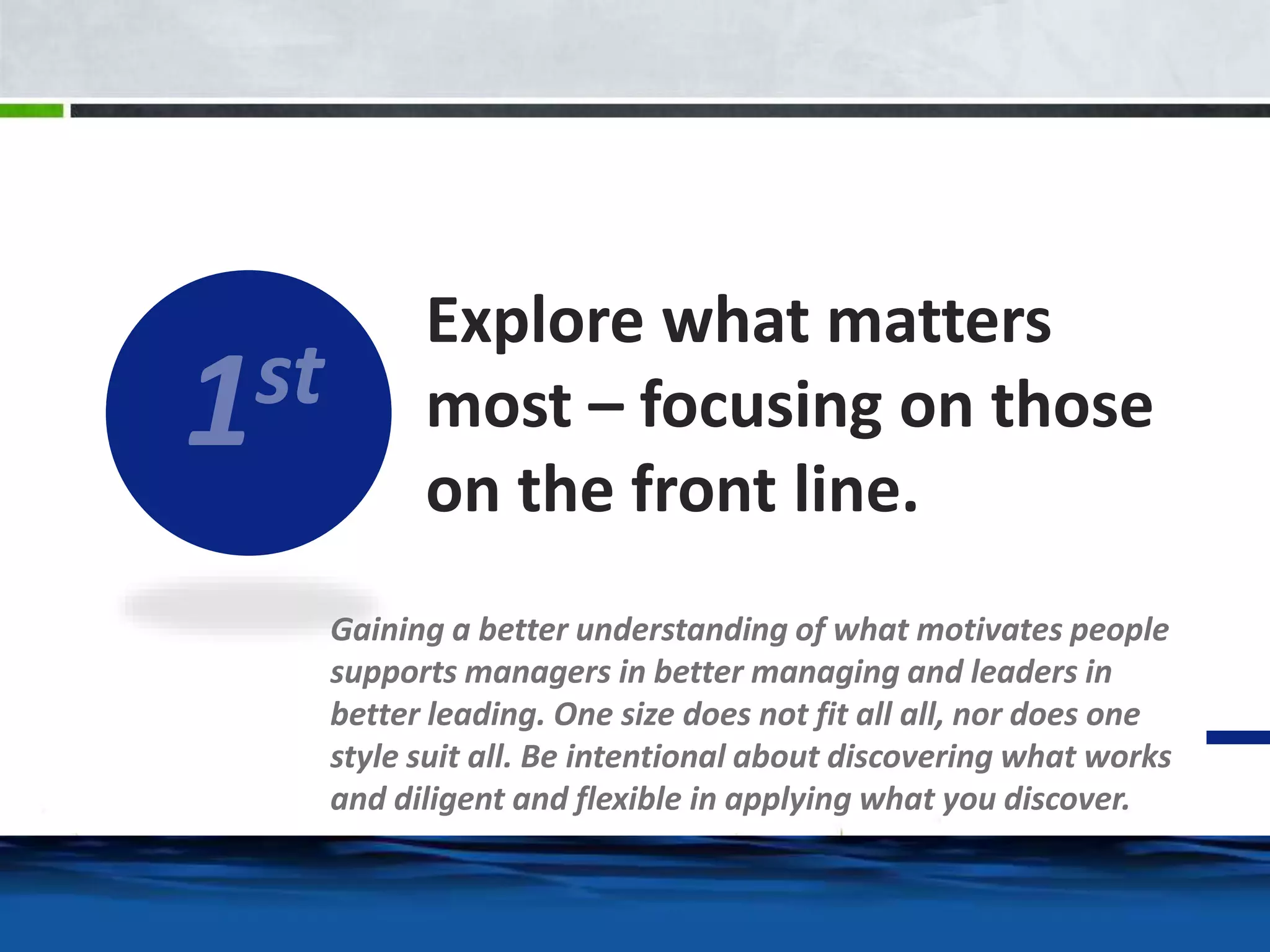
Explore what matters 
most – focusing on those 
on the front line. 
Gaining a better understanding of what motivates people 
supports managers in better managing and leaders in 
better leading. One size does not fit all all, nor does one 
style suit all. Be intentional about discovering what works 
and diligent and flexible in applying what you discover.
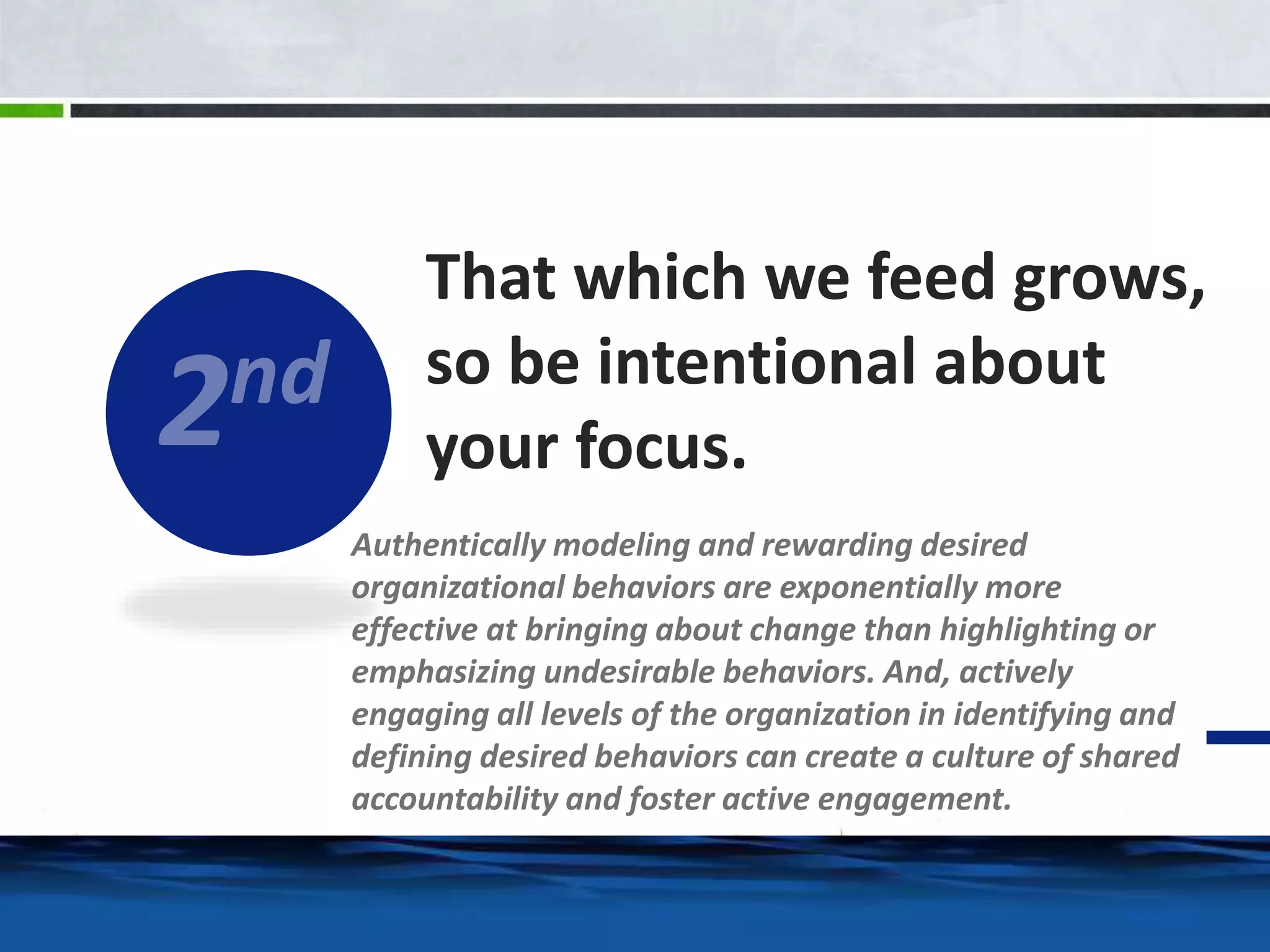
That which we feed grows, 
so be intentional about 
your focus. 
Authentically modeling and rewarding desired 
organizational behaviors are exponentially more 
effective at bringing about change than highlighting or 
emphasizing undesirable behaviors. And, actively 
engaging all levels of the organization in identifying and 
defining desired behaviors can create a culture of shared 
accountability and foster active engagement.
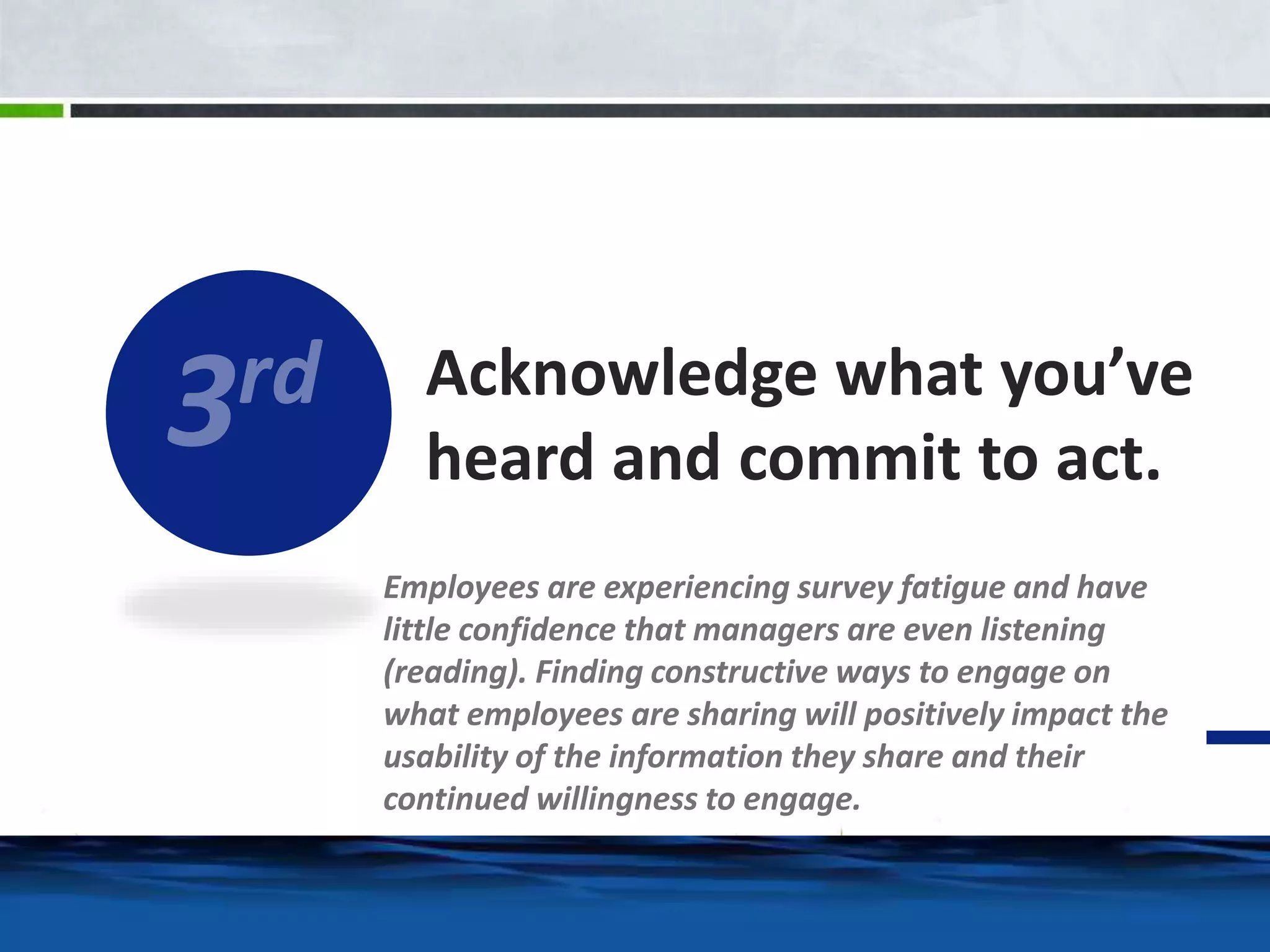
Acknowledge what you’ve 
heard and commit to act. 
Employees are experiencing survey fatigue and have 
little confidence that managers are even listening 
(reading). Finding constructive ways to engage on 
what employees are sharing will positively impact the 
usability of the information they share and their 
continued willingness to engage.
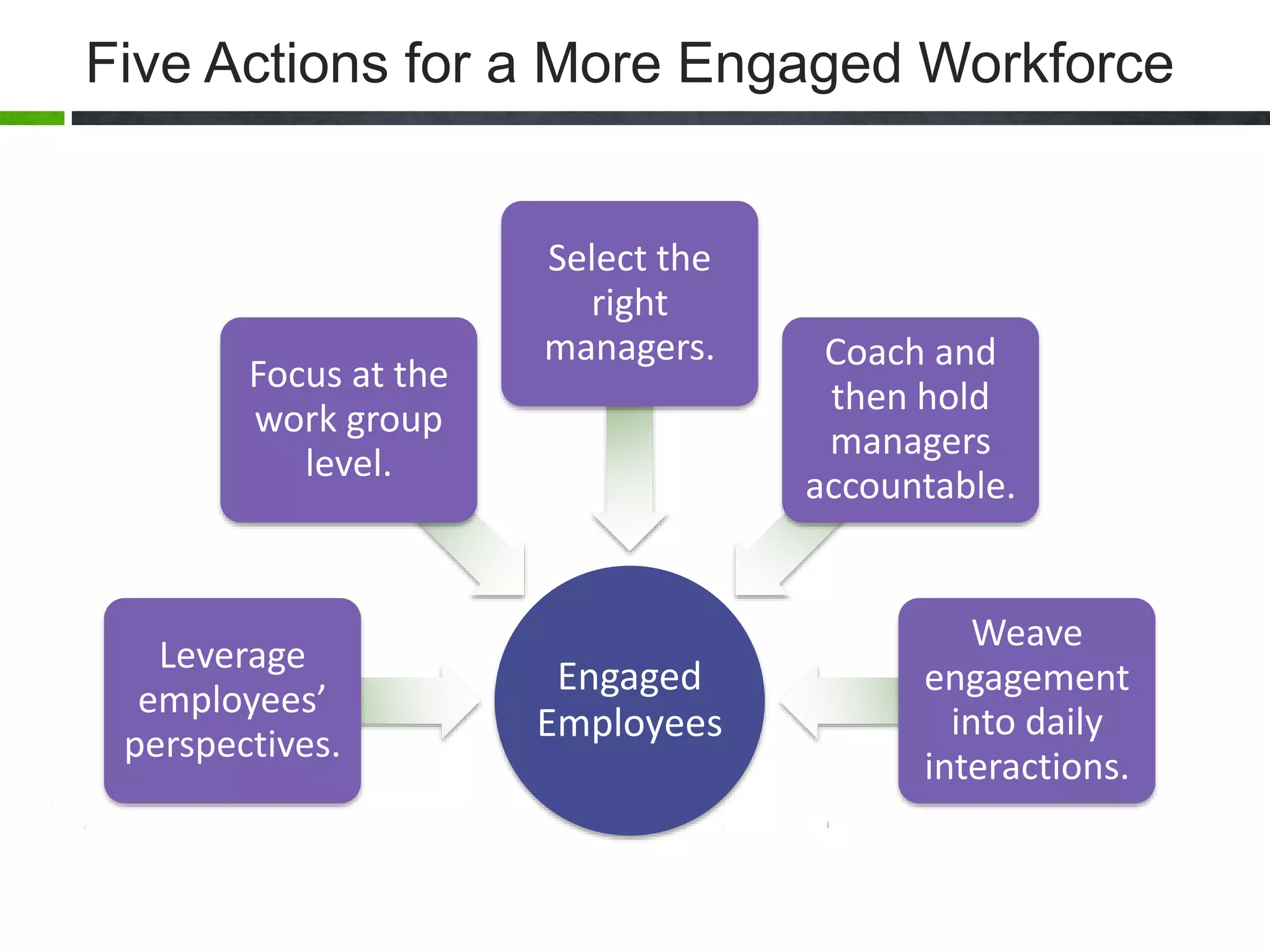
Five Actions for a More Engaged Workforce 
Engaged 
Employees 
Focus at the 
work group 
level. 
Leverage 
employees’ 
perspectives. 
Select the 
right 
managers. Coach and 
then hold 
managers 
accountable. 
Weave 
engagement 
into daily 
interactions.
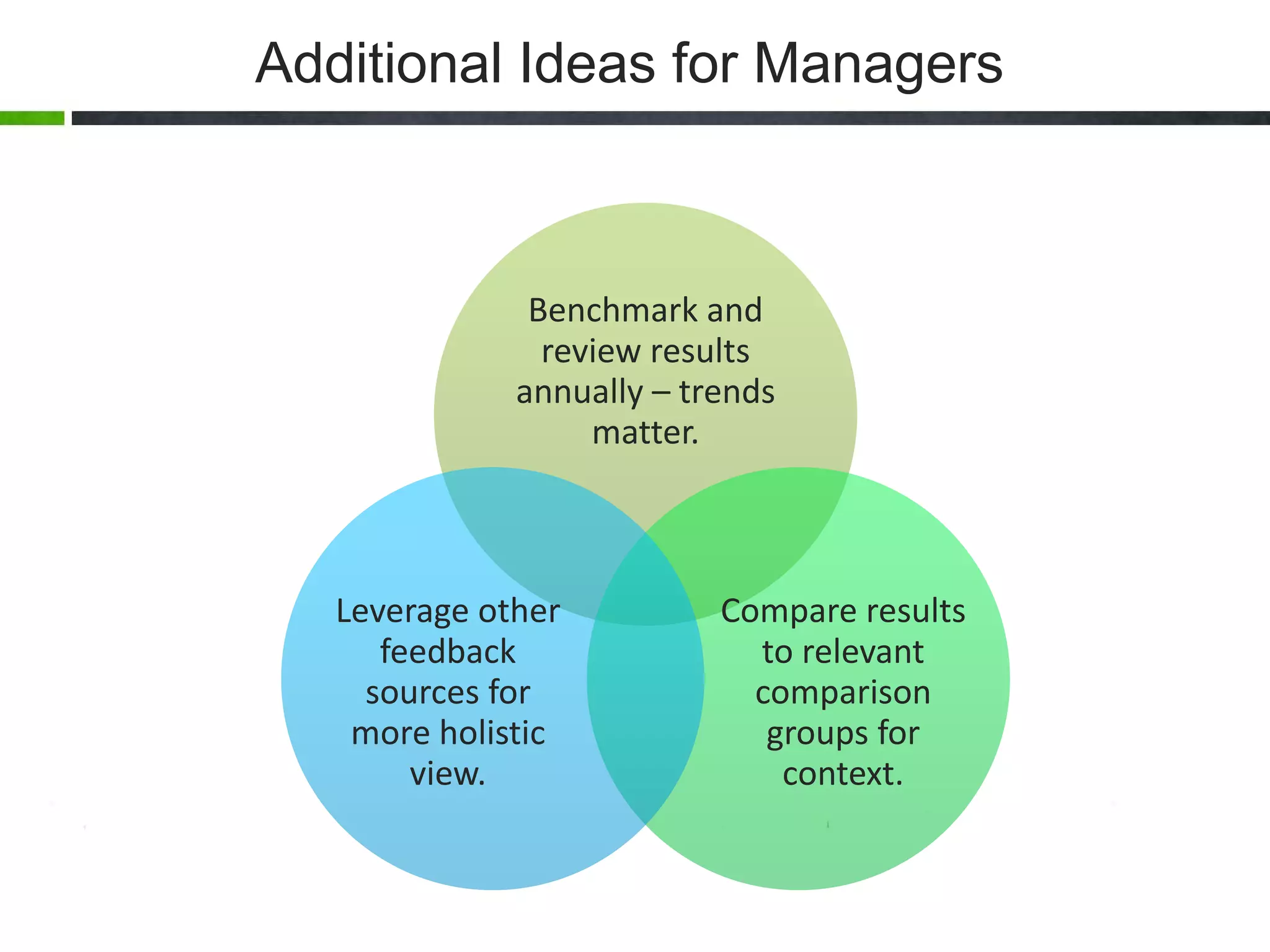
Additional Ideas for Managers 
Benchmark and 
review results 
annually – trends 
matter. 
Compare results 
to relevant 
comparison 
groups for 
context. 
Leverage other 
feedback 
sources for 
more holistic 
view.
Not engaging is not an option . . . and, how you engage matters. 
BE INTENTIONAL.
Pivotal Practices Consulting LLC 
“Organizational Consulting for Sustainable Performance Excellence” 
Please be in touch if we can support you in 
enhancing your organization’s engagement 
levels. We support agency leaders in creating 
and implementing solutions that drive 
sustainable performance excellence. 
(301) 220-3179 phone 
info@pivotalpractices.com email 
www.pivotalpractices.com

Federal Employee Viewpoint Survey 2014 - Engaging on Disengagement

  • 1.
    Fostering public serviceexcellence through fully engaged employees and committed, purposeful leadership Passionate Public Service® Public sector talent development solutions Constructively Engaging on Employee Engagement
  • 2.
    Federal Worker Satisfactionand Commitment at Lowest Levels Ever Source: Partnership for Public Service 57.8% in 2013 And, fell even lower in 2014! 56.9% in 2013
  • 3.
    Federal Employee ViewpointSurvey (FEVS) Survey response rate was down from 2013 . . . Fewer than half of all federal employees participated Again, only 38% of employees have confidence that anything will be done with the survey results. Source: Office of Personnel Management (OPM) 38%
  • 4.
    Declining Satisfaction withOrganization Still fewer are recommending their organizations as great places to work . . . And, even fewer are overall satisfied with their organizations. Source: Office of Personnel Management (OPM) 62% 55%
  • 5.
    Leadership Challenges Whilesequestration and budget uncertainty have played a role, those aren’t the only issues . . . Source: Office of Personnel Management (OPM) Scores on ALL but one of the Leadership questions decreased in 2014. Only 38% of employees say senior leaders generate high levels of commitment and motivation.
  • 6.
    Three Types ofEmployees Source: GALLUP Business Journal Only 30% of American employees are actively engaged at work – this figure drops to 13% for all employees worldwide. Of the other 70% of American employees: • 52% - Not Engaged • 18% - Actively Disengaged
  • 7.
    Engaged Disengaged Productivity  Customer service orientation  Commitment  Innovation  Retention  Resilience Actively Disengaged  Likely poor performance  Potential conduct issues  Formal and informal complaints  Interference  Resistance Engagement Impacts
  • 8.
    Ideas for Positively Impacting Employee Engagement “The greatest asset of any nation is the spirit of its people, and the greatest danger that can menace any nation is the breakdown of that spirit – the will to win and the courage to work.” -- George B. Cortelyou First Secretary of Labor and Commerce, 1903
  • 9.
    Explore what matters most – focusing on those on the front line. Gaining a better understanding of what motivates people supports managers in better managing and leaders in better leading. One size does not fit all all, nor does one style suit all. Be intentional about discovering what works and diligent and flexible in applying what you discover.
  • 10.
    That which wefeed grows, so be intentional about your focus. Authentically modeling and rewarding desired organizational behaviors are exponentially more effective at bringing about change than highlighting or emphasizing undesirable behaviors. And, actively engaging all levels of the organization in identifying and defining desired behaviors can create a culture of shared accountability and foster active engagement.
  • 11.
    Acknowledge what you’ve heard and commit to act. Employees are experiencing survey fatigue and have little confidence that managers are even listening (reading). Finding constructive ways to engage on what employees are sharing will positively impact the usability of the information they share and their continued willingness to engage.
  • 12.
    Five Actions fora More Engaged Workforce Engaged Employees Focus at the work group level. Leverage employees’ perspectives. Select the right managers. Coach and then hold managers accountable. Weave engagement into daily interactions.
  • 13.
    Additional Ideas forManagers Benchmark and review results annually – trends matter. Compare results to relevant comparison groups for context. Leverage other feedback sources for more holistic view.
  • 14.
    Not engaging isnot an option . . . and, how you engage matters. BE INTENTIONAL.
  • 15.
    Pivotal Practices ConsultingLLC “Organizational Consulting for Sustainable Performance Excellence” Please be in touch if we can support you in enhancing your organization’s engagement levels. We support agency leaders in creating and implementing solutions that drive sustainable performance excellence. (301) 220-3179 phone info@pivotalpractices.com email www.pivotalpractices.com

Editor's Notes

  • #4 With response rates this low, it is understandable why managers might find it easier to just ignore the results. However, the survey represents a potential communications gold mine for engaging employees on issues of greatest importance to them. And, studies show that honest communication is one the best ways to increase survey participation and improve worker engagement. This is most assuredly not the time to be summarily dismissive.
  • #5 Overall organizational satisfaction rates are lower than they have ever been and continuing to trend downward.
  • #8 Work units in the top quartile in employee engagement outperformed bottom-quartile units by 10% on customer ratings, 22% in profitability, and 21% in productivity. Work units in the top quartile also saw significantly less turnover (25% in high-turnover organizations and 65% in low-turnover organizations), shrinkage (28%), and absenteeism (37%) and fewer safety incidents (48%), patient safety incidents (41%), and quality defects (41%). (See graphic "Employee Engagement Affects Key Business Outcomes.")
  • #9 Theodore Roosevelt tasked Cortelyou with transforming the White House into a more professional organization. Cortelyou developed procedures and rules that guided White House protocol and established processes where there had been only personal prerogative. Cortelyou served as the first Secretary of Commerce and Labor from February 18, 1903 to June 30, 1904. He also served as Postmaster General from March 6, 1905 to January 14, 1907 and Secretary of Treasury from March 4, 1907 to March 7, 1909.
  • #13 Use the right employee engagement survey. When a company asks its employees for their opinions, those employees expect action to follow. But businesses often make the mistake of using employee surveys to collect data that are irrelevant or impossible to act on. Any survey data must be specific, relevant, and actionable for any team at any organizational level. Data should also be proven to influence key performance metrics. Focus on engagement at the local and organizational levels. Real change occurs at the local workgroup level, but it happens only when company leaders set the tone from the top. Companies realize the most benefit from engagement initiatives when leaders weave employee engagement into performance expectations for managers and enable them to execute on those expectations. Managers and employees must feel empowered to make a significant difference in their immediate environment. Leaders and managers should work with employees to identify barriers to engagement and opportunities to effect positive change. Employees are familiar with the company's processes, systems, products, and customers. They are also experts on themselves and their teams. So it makes sense that they will have the best ideas to maximize these elements and deliver improved performance, business innovation, and better workplace experiences. Select the right managers. The best managers understand that their success and that of the organization relies on employees' achievements. But not everyone can be a great manager. Great managers care about their people's success. They seek to understand each person's strengths and provide employees with every opportunity to use their strengths in their role. Great managers empower their employees, recognize and value their contributions, and actively seek their ideas and opinions. It takes talent to be a great manager, and selecting people who have this talent is important. Whether hiring from outside or promoting from within, businesses that scientifically select managers for the unique talents it takes to effectively manage people greatly increase the odds of engaging their employees. Companies should treat the manager role as unique, with distinct functional demands that require a specific talent set. Coach managers and hold them accountable for their employees' engagement. Gallup's research has found that managers are primarily responsible for their employees' engagement levels. Companies should coach managers to take an active role in building engagement plans with their employees, hold managers accountable, track their progress, and ensure that they continuously focus on emotionally engaging their employees. The most successful managers view the Q12 as the elements for great managing, not just questions for measuring. By doing so, they gain a powerful framework to guide the creation of a strong, engaged workplace. Define engagement goals in realistic, everyday terms. To bring engagement to life, leaders must make engagement goals meaningful to employees' day-to-day experiences. Describing what success looks like using powerful descriptions and emotive language helps give meaning to goals and builds commitment within a team. Make sure that managers discuss employee engagement at weekly meetings, in action-planning sessions, and in one-on-one meetings with employees to weave engagement into daily interactions and activities and to make it part of the workplace's DNA. http://businessjournal.gallup.com/content/166667/five-ways-improve-employee-engagement.aspx#2
  • #14 http://www.fedview.opm.gov/2013/Definitions/#Be