IMPROVING
FUNCTIONAL USABILITY
Yogesh Bhagchandani
USABILITY
What is it?
Definition
The extent to which a product can be used by specific users
to achieve specific goals with effectiveness, efficiency, and
satisfaction in a specified context of use.
Definition
The extent to which a product can be used by specific users
to achieve specific goals with effectiveness, efficiency, and
satisfaction in a specified context of use.
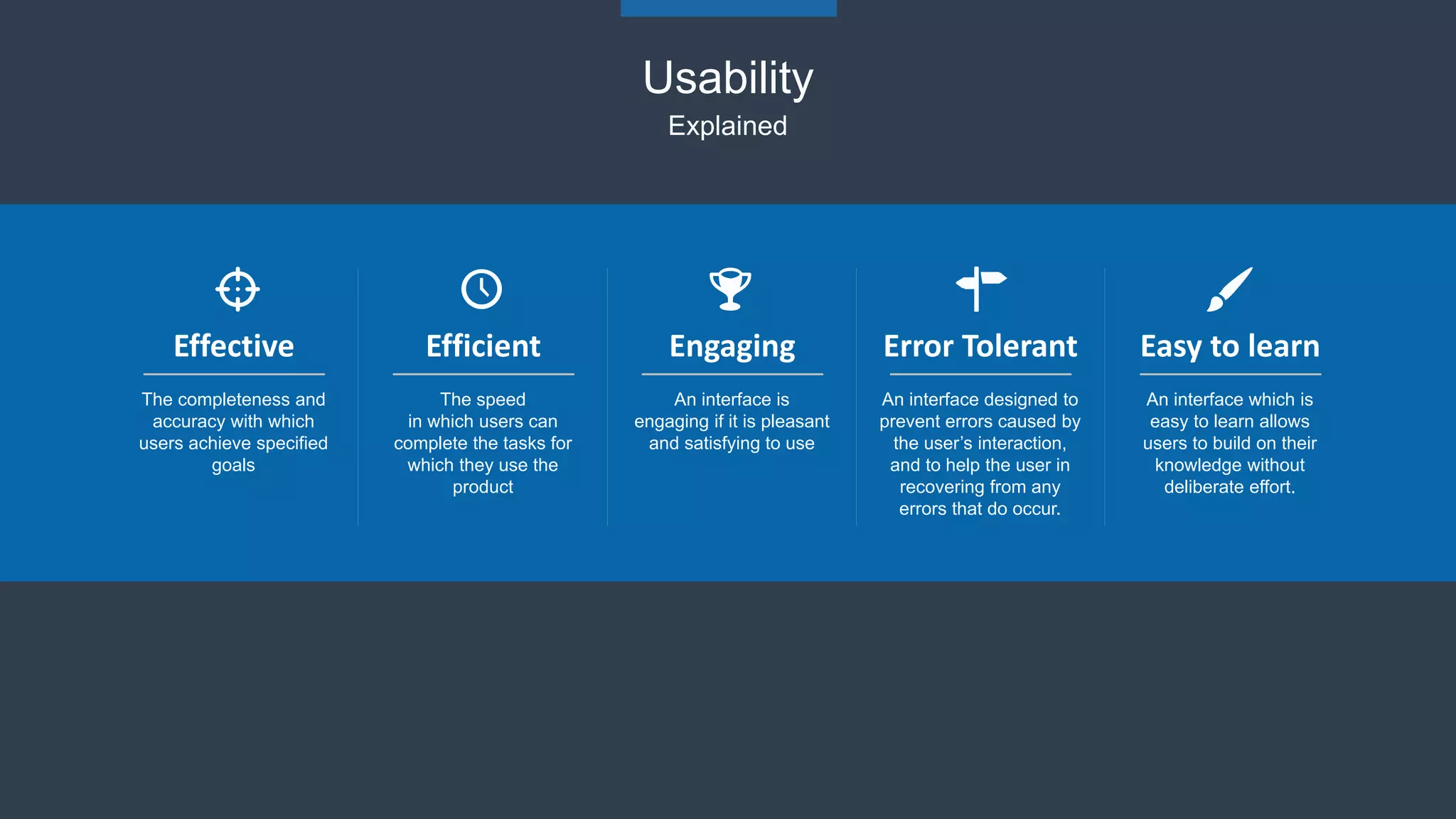
Usability
Explained
The completeness and
accuracy with which
users achieve specified
goals
Effective
The speed
in which users can
complete the tasks for
which they use the
product
Efficient
An interface is
engaging if it is pleasant
and satisfying to use
Engaging
An interface designed to
prevent errors caused by
the user’s interaction,
and to help the user in
recovering from any
errors that do occur.
Error Tolerant
An interface which is
easy to learn allows
users to build on their
knowledge without
deliberate effort.
Easy to learn
MISCONCEPTIONS
about usability
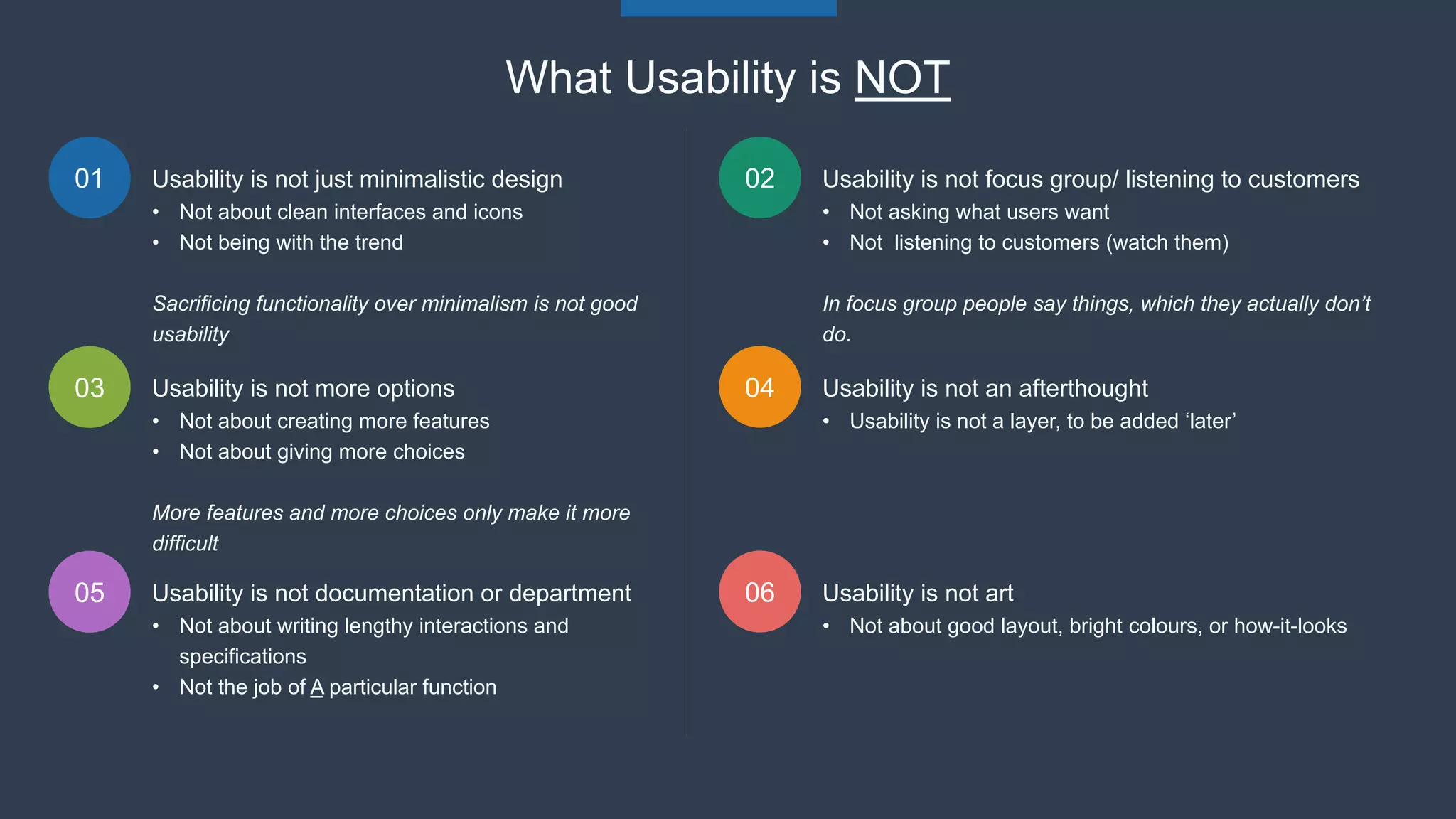
01 02
03 04
Usability is not just minimalistic design
• Not about clean interfaces and icons
• Not being with the trend
Sacrificing functionality over minimalism is not good
usability
What Usability is NOT
Usability is not focus group/ listening to customers
• Not asking what users want
• Not listening to customers (watch them)
In focus group people say things, which they actually don’t
do.
Usability is not more options
• Not about creating more features
• Not about giving more choices
More features and more choices only make it more
difficult
Usability is not an afterthought
• Usability is not a layer, to be added ‘later’
05 06Usability is not documentation or department
• Not about writing lengthy interactions and
specifications
• Not the job of A particular function
Usability is not art
• Not about good layout, bright colours, or how-it-looks
HOW DO WE DESIGN
PRODUCTS
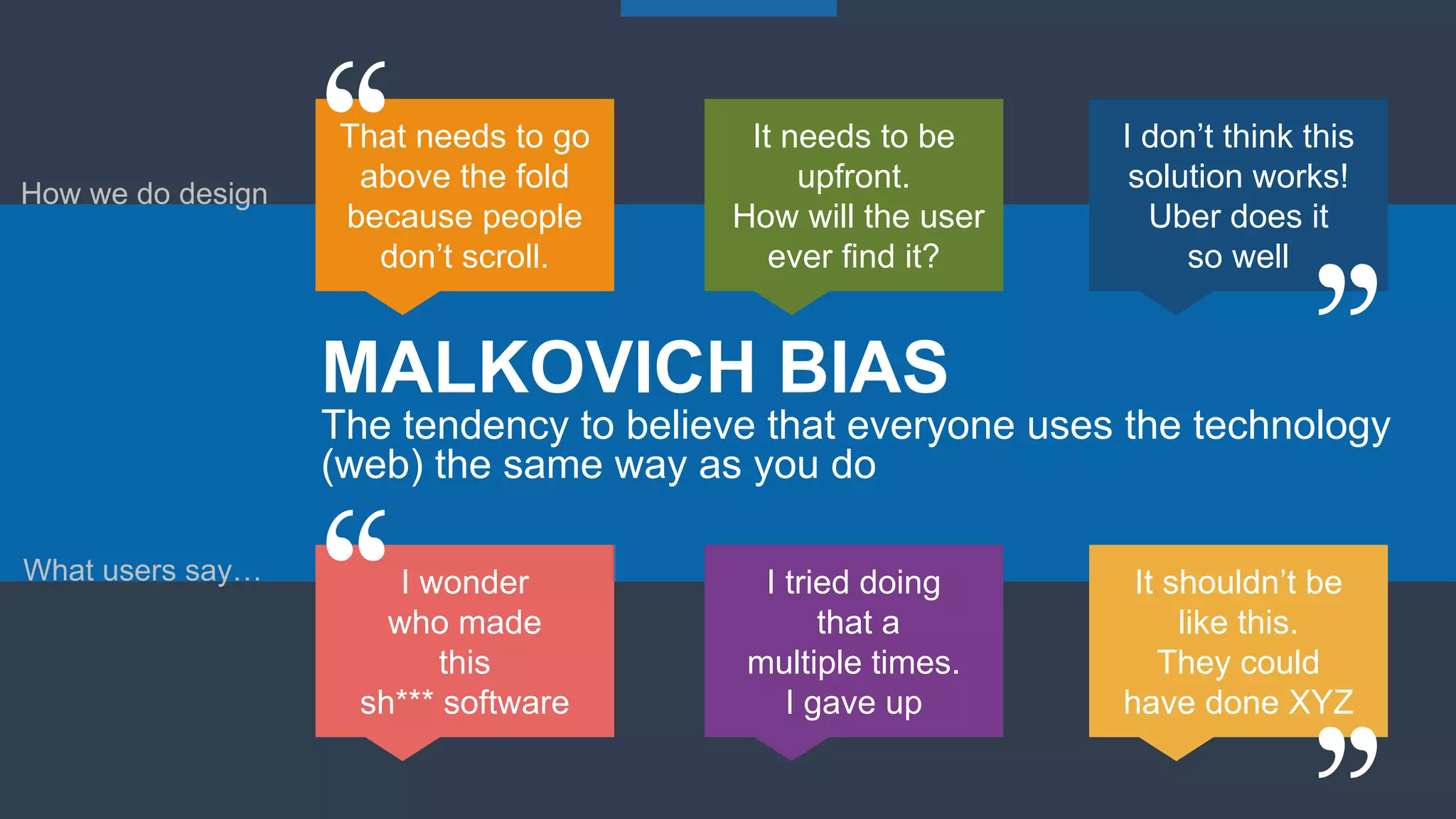
MALKOVICH BIAS
The tendency to believe that everyone uses the technology
(web) the same way as you do
That needs to go
above the fold
because people
don’t scroll.
It needs to be
upfront.
How will the user
ever find it?
I don’t think this
solution works!
Uber does it
so well
I wonder
who made
this
sh*** software
I tried doing
that a
multiple times.
I gave up
It shouldn’t be
like this.
They could
have done XYZ
How we do design
What users say…
BUYERS & USERS
Are they same?
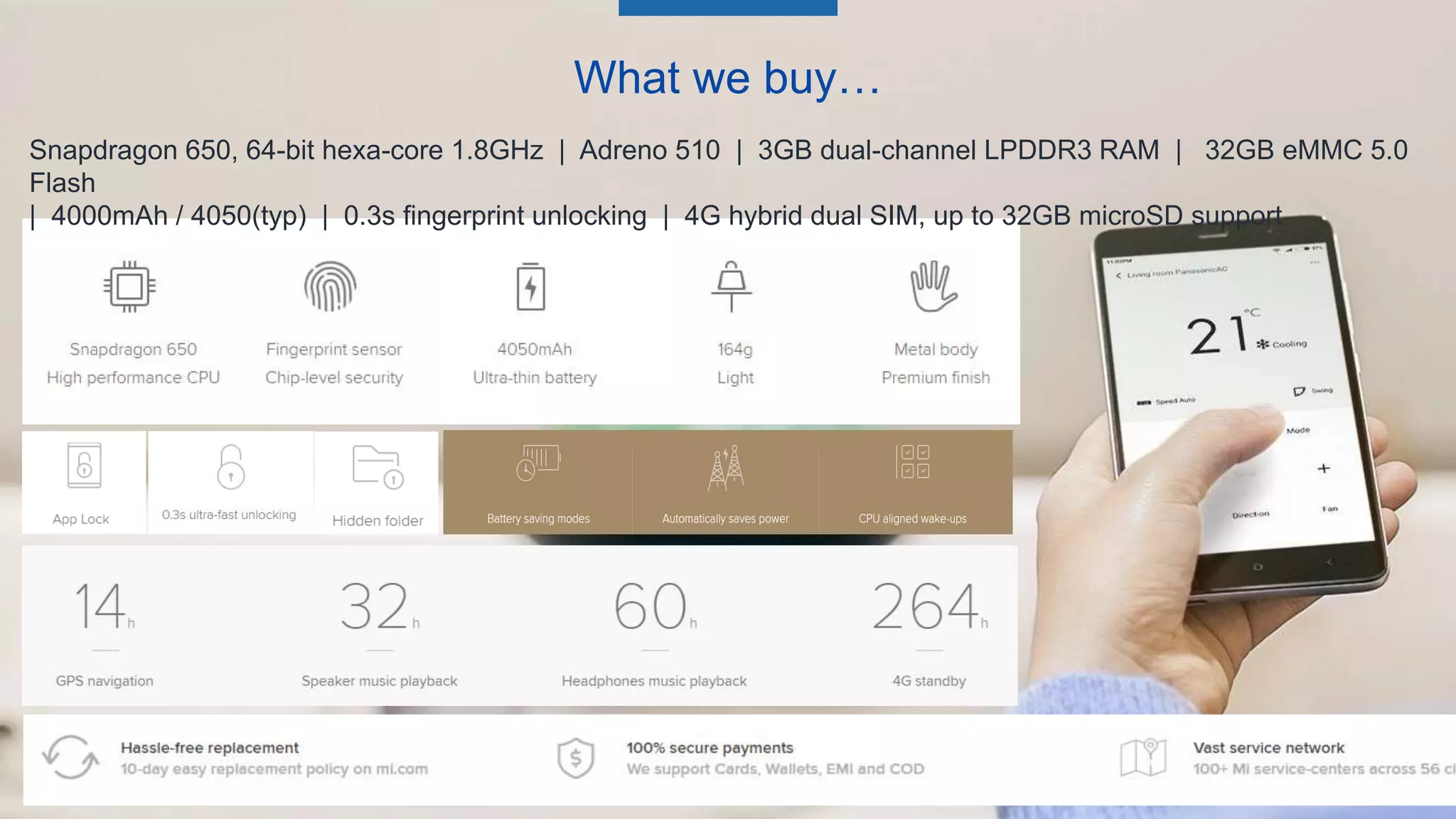
Snapdragon 650, 64-bit hexa-core 1.8GHz | Adreno 510 | 3GB dual-channel LPDDR3 RAM | 32GB eMMC 5.0
Flash
| 4000mAh / 4050(typ) | 0.3s fingerprint unlocking | 4G hybrid dual SIM, up to 32GB microSD support
What we buy…
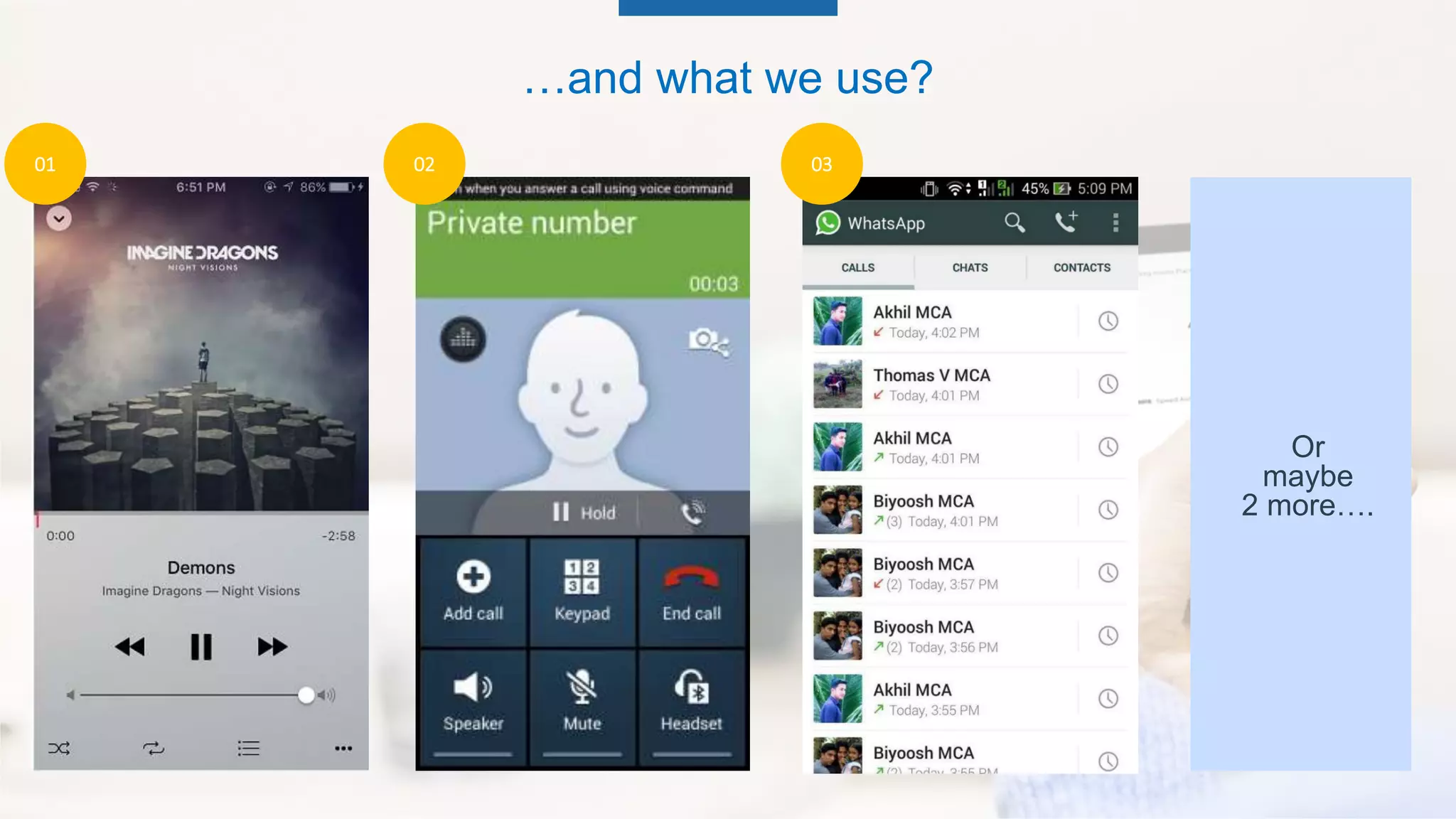
…and what we use?
Or
maybe
2 more….
01 02 03
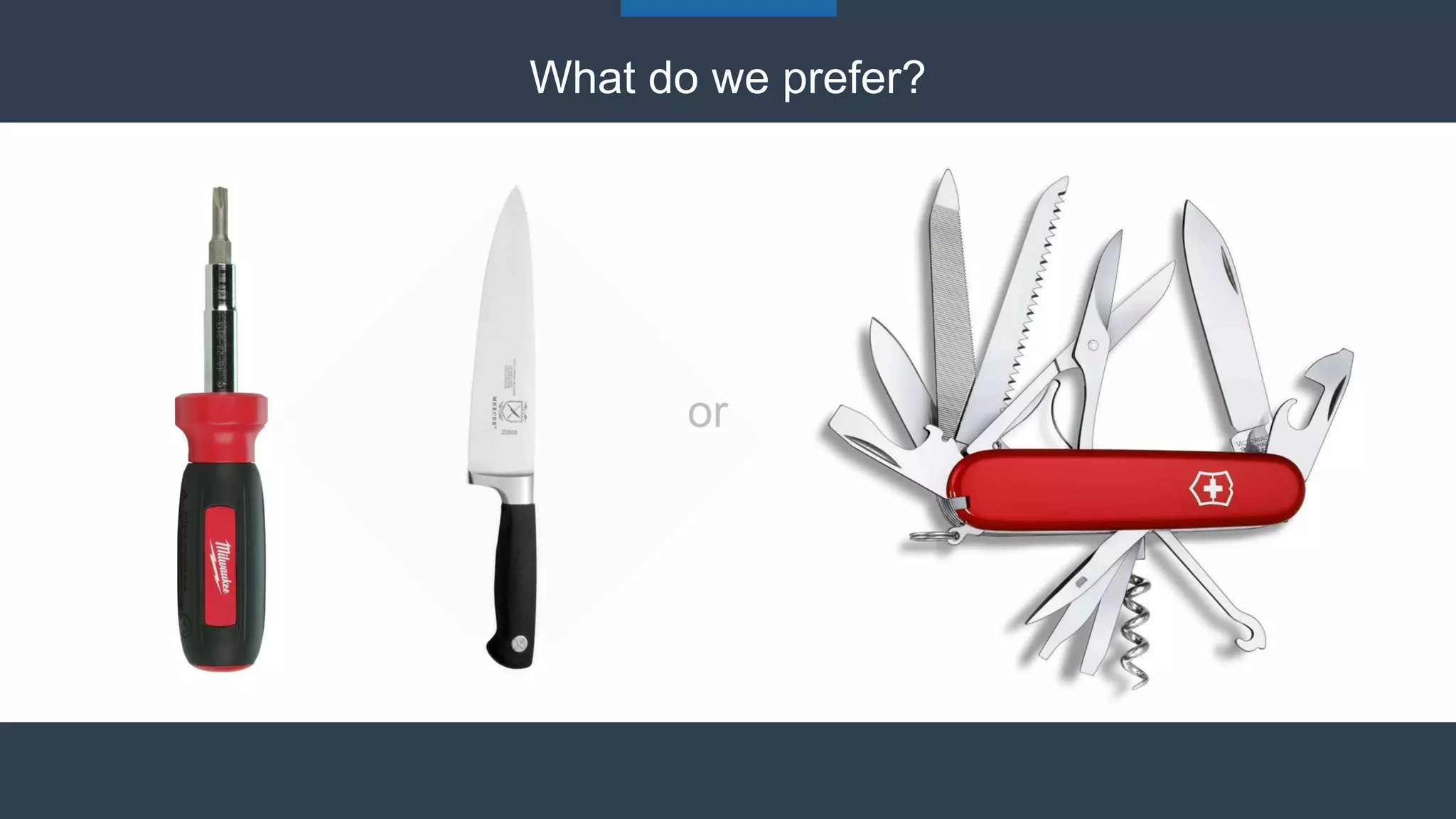
What do we prefer?
or
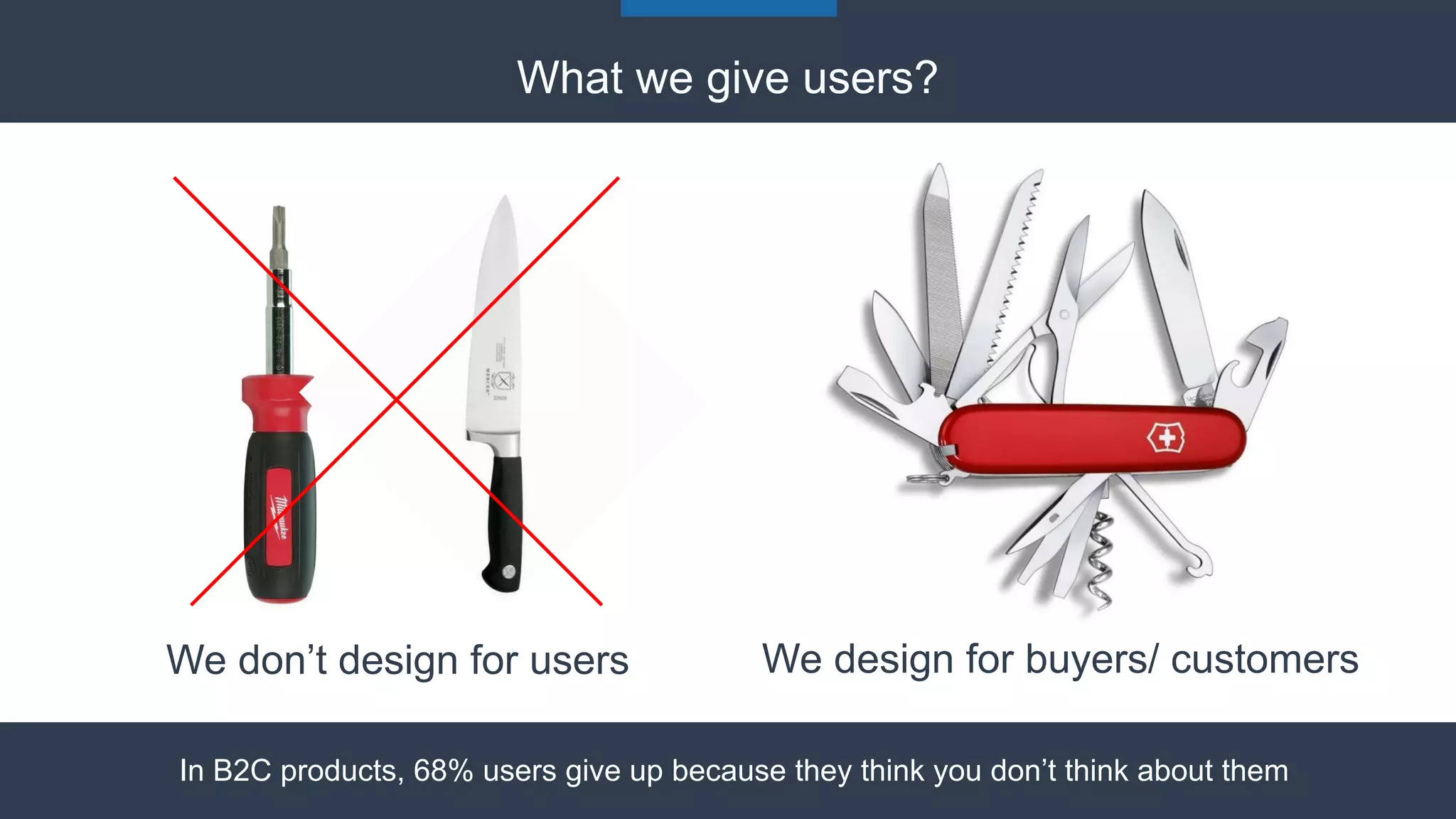
We design for buyers/ customersWe don’t design for users
In B2C products, 68% users give up because they think you don’t think about them
What we give users?
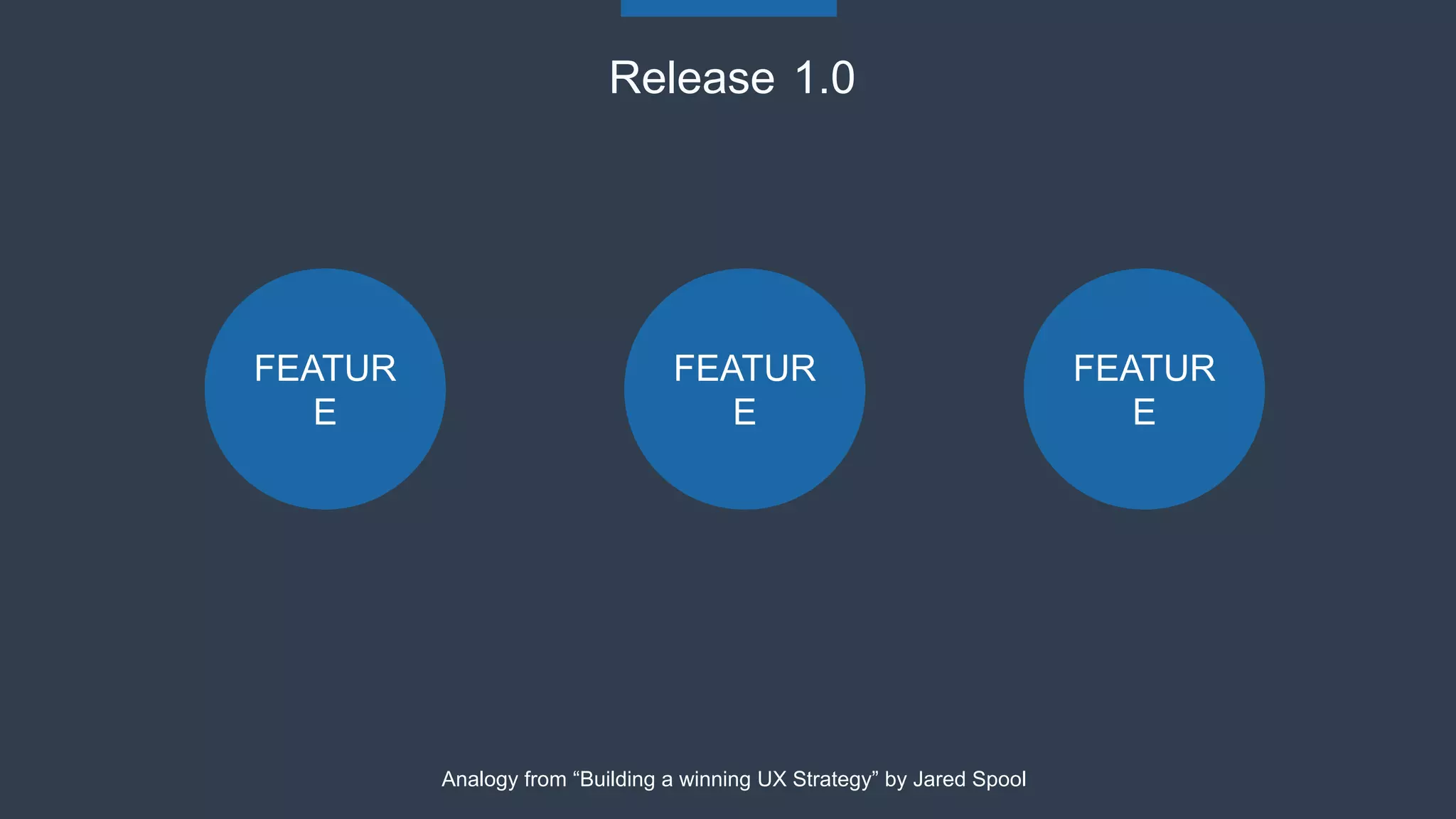
FEATUR
E
Release 1.0
Analogy from “Building a winning UX Strategy” by Jared Spool
FEATUR
E
FEATUR
E
FEATUR
E
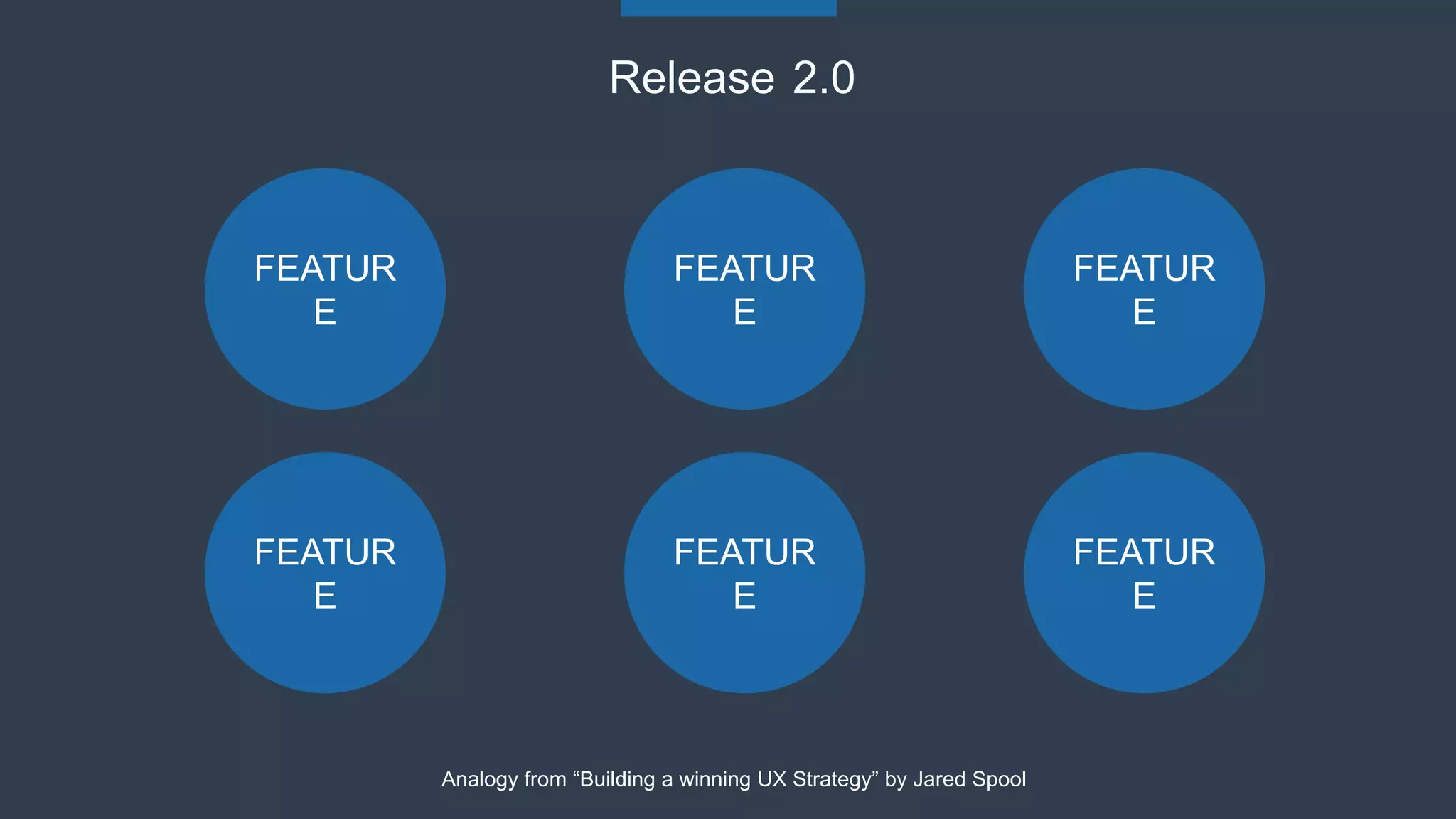
Release 2.0
FEATUR
E
FEATUR
E
FEATUR
E
FEATUR
E
FEATUR
E
Analogy from “Building a winning UX Strategy” by Jared Spool
FEATUR
E
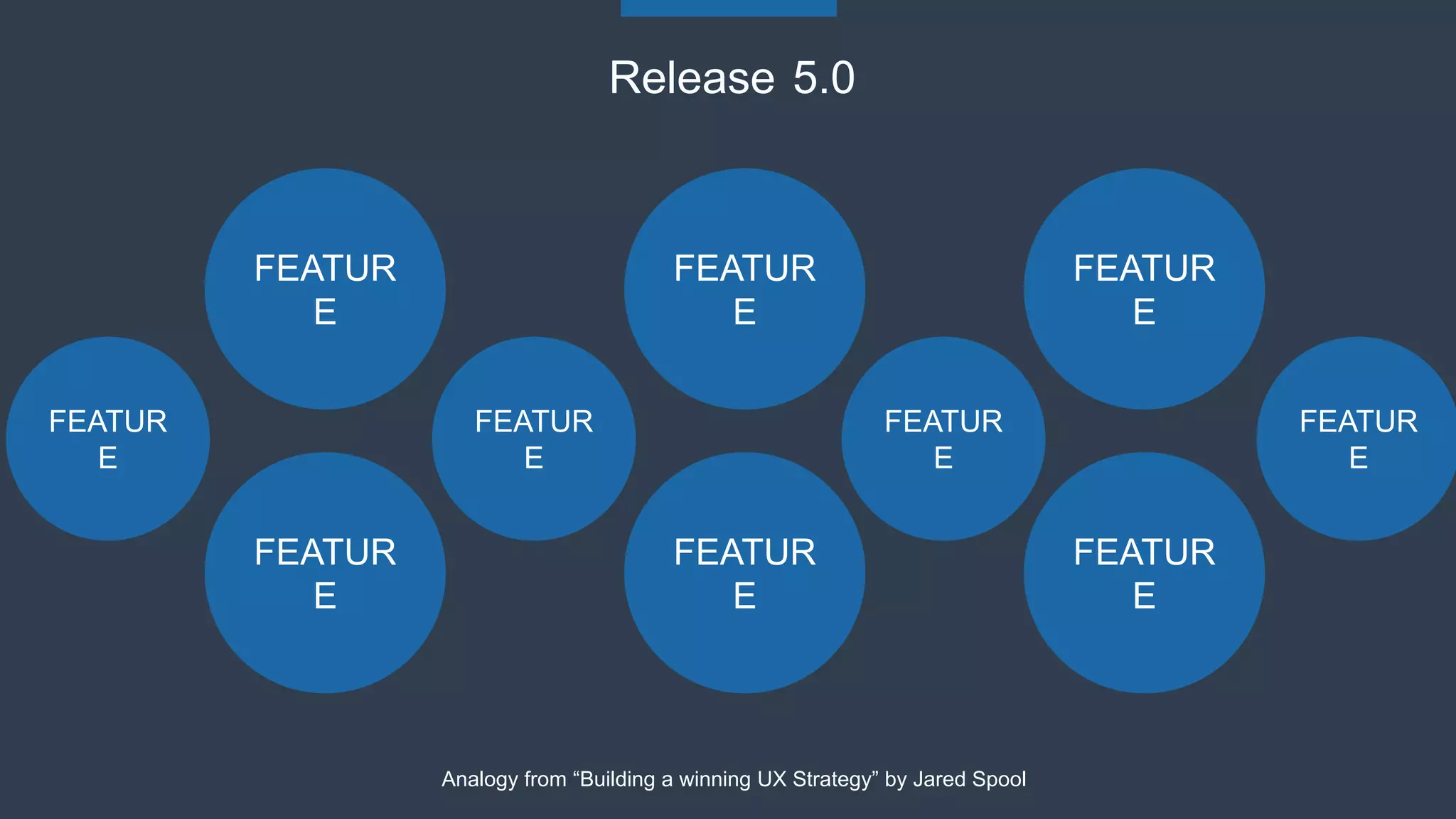
Release 5.0
FEATUR
E
FEATUR
E
FEATUR
E
FEATUR
E
FEATUR
E
FEATUR
E
FEATUR
E
FEATUR
E
FEATUR
E
Analogy from “Building a winning UX Strategy” by Jared Spool
FEATUR
E
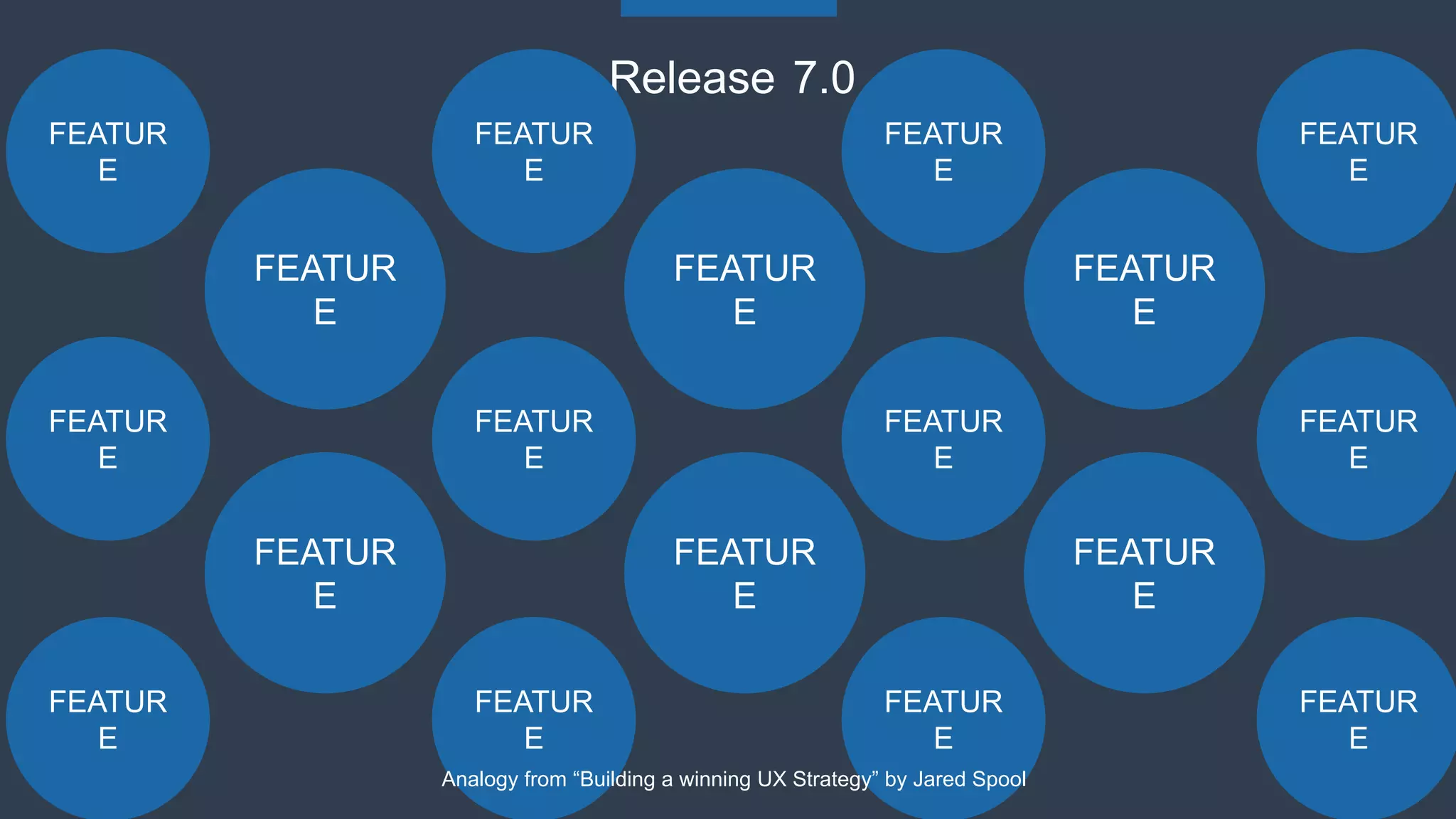
Release 7.0
FEATUR
E
FEATUR
E
FEATUR
E
FEATUR
E
FEATUR
E
FEATUR
E
FEATUR
E
FEATUR
E
FEATUR
E
FEATUR
E
FEATUR
E
FEATUR
E
FEATUR
E
FEATUR
E
FEATUR
E
FEATUR
E
FEATUR
E
Analogy from “Building a winning UX Strategy” by Jared Spool
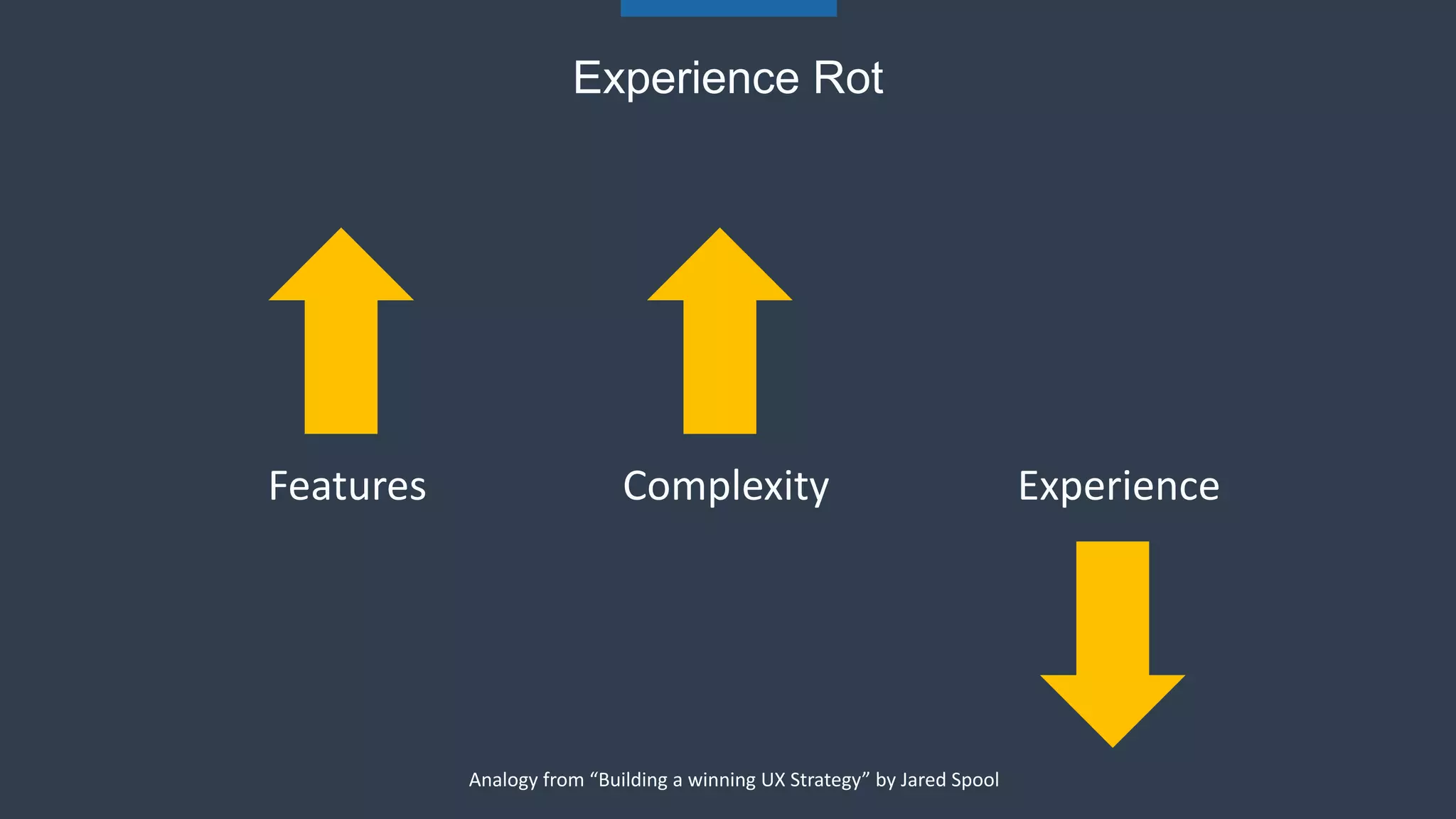
Experience Rot
Features Complexity Experience
Analogy from “Building a winning UX Strategy” by Jared Spool
EXAMPLES
from real world
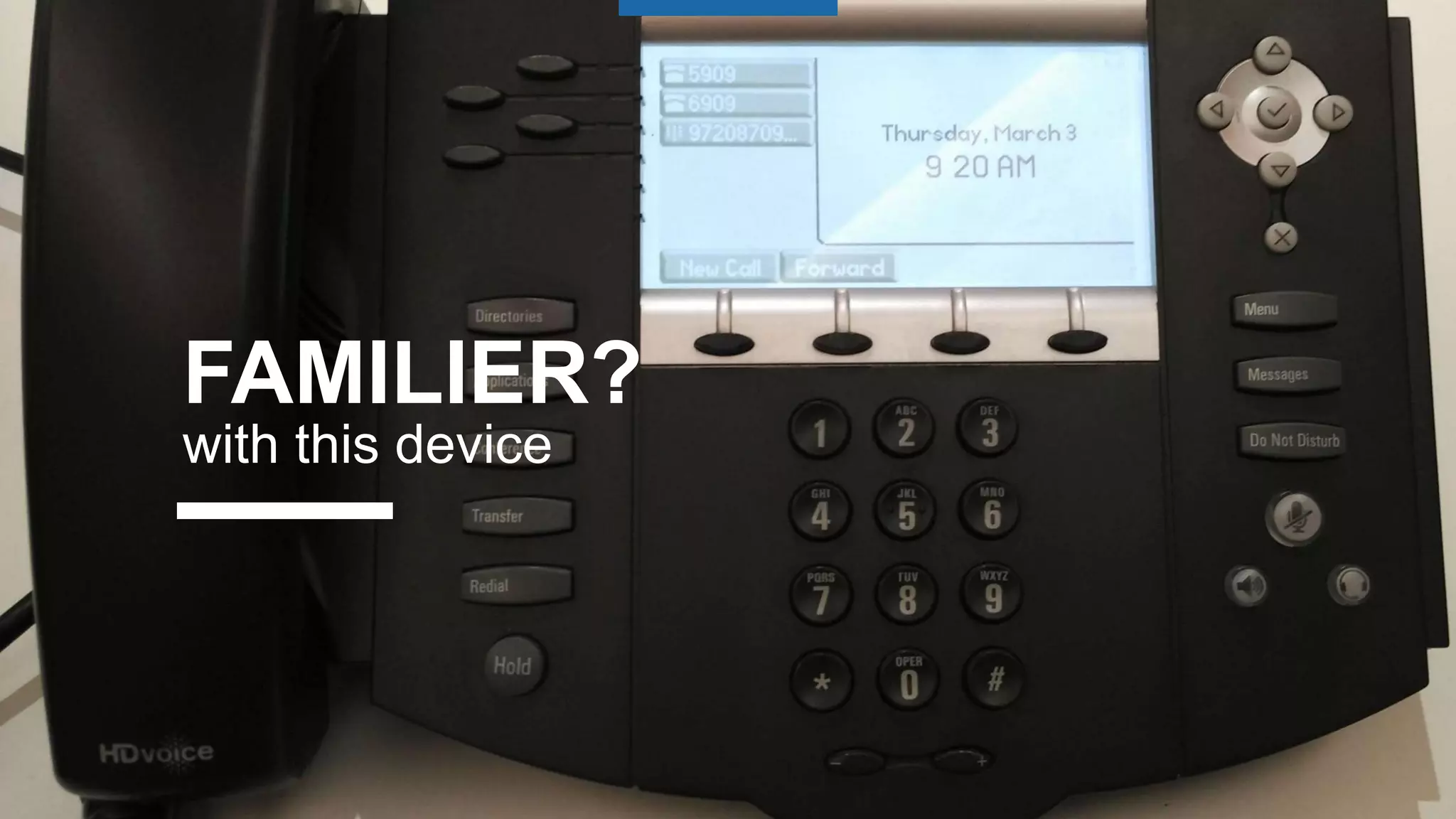
FAMILIER?
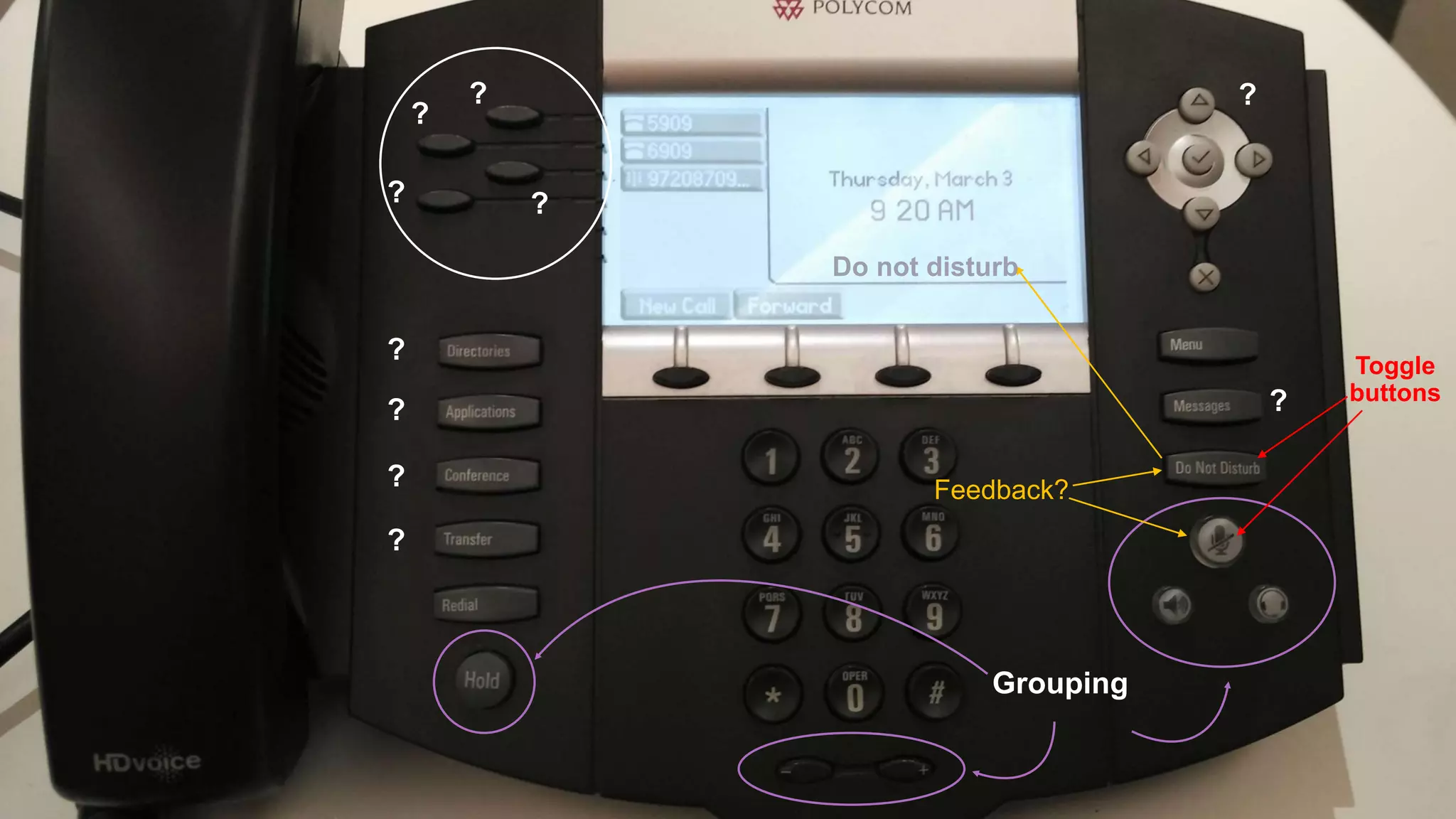
with this device
Grouping
Toggle
buttons
Feedback?
Do not disturb
?
?
?
?
??
?
?
?
?
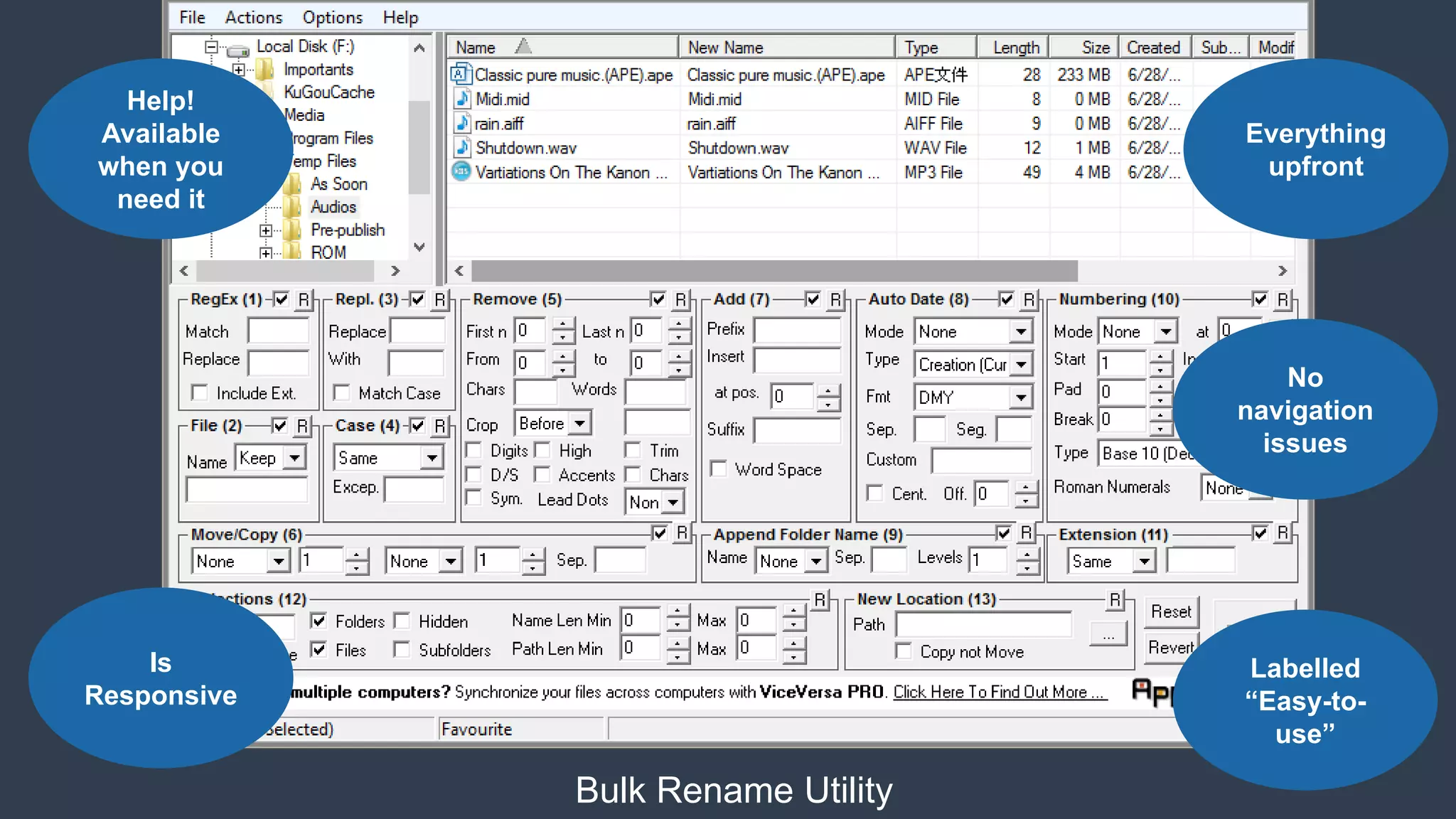
Everything
upfront
No
navigation
issues
Is
Responsive
Labelled
“Easy-to-
use”
Help!
Available
when you
need it
Bulk Rename Utility
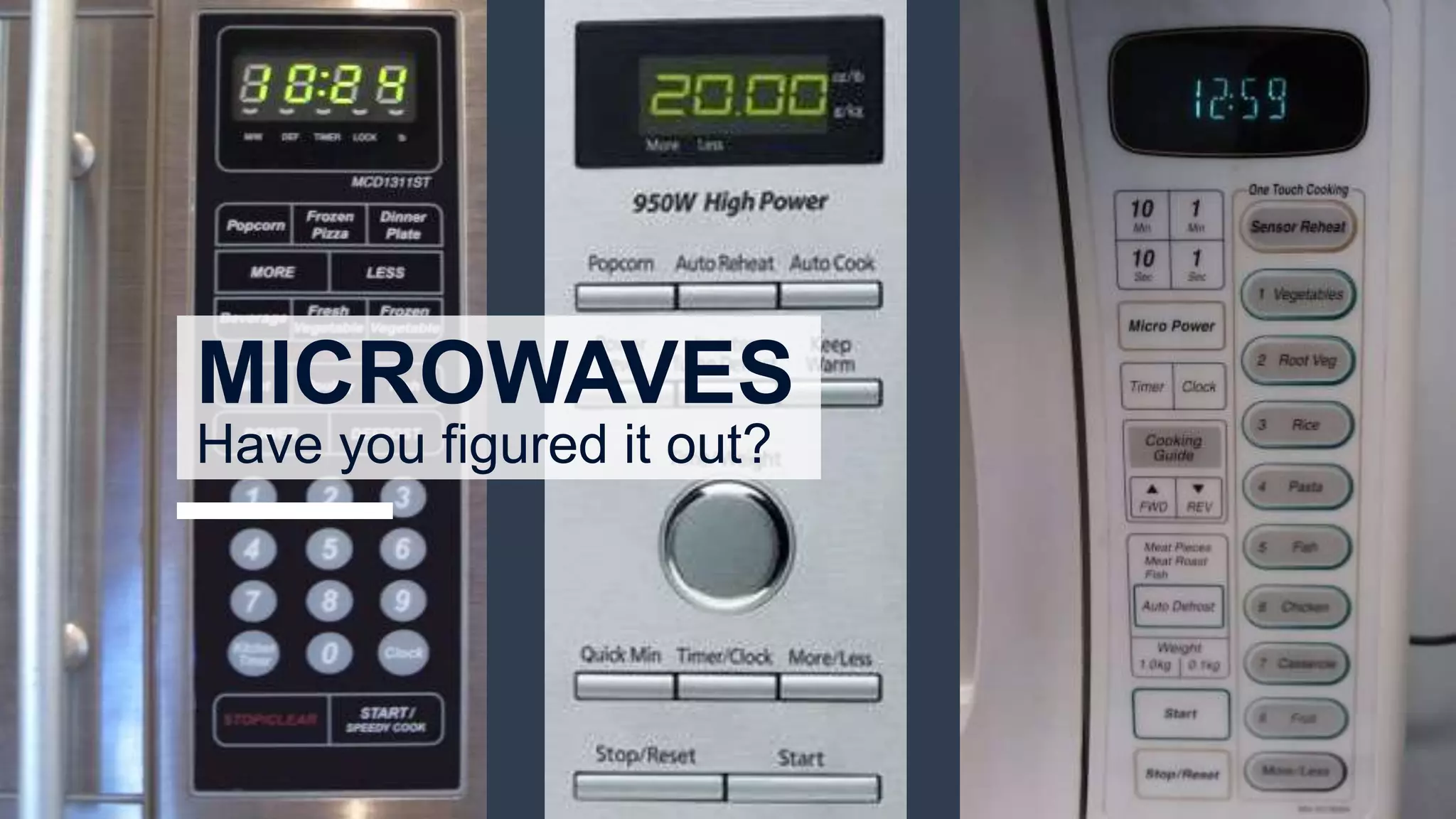
MICROWAVES
Have you figured it out?
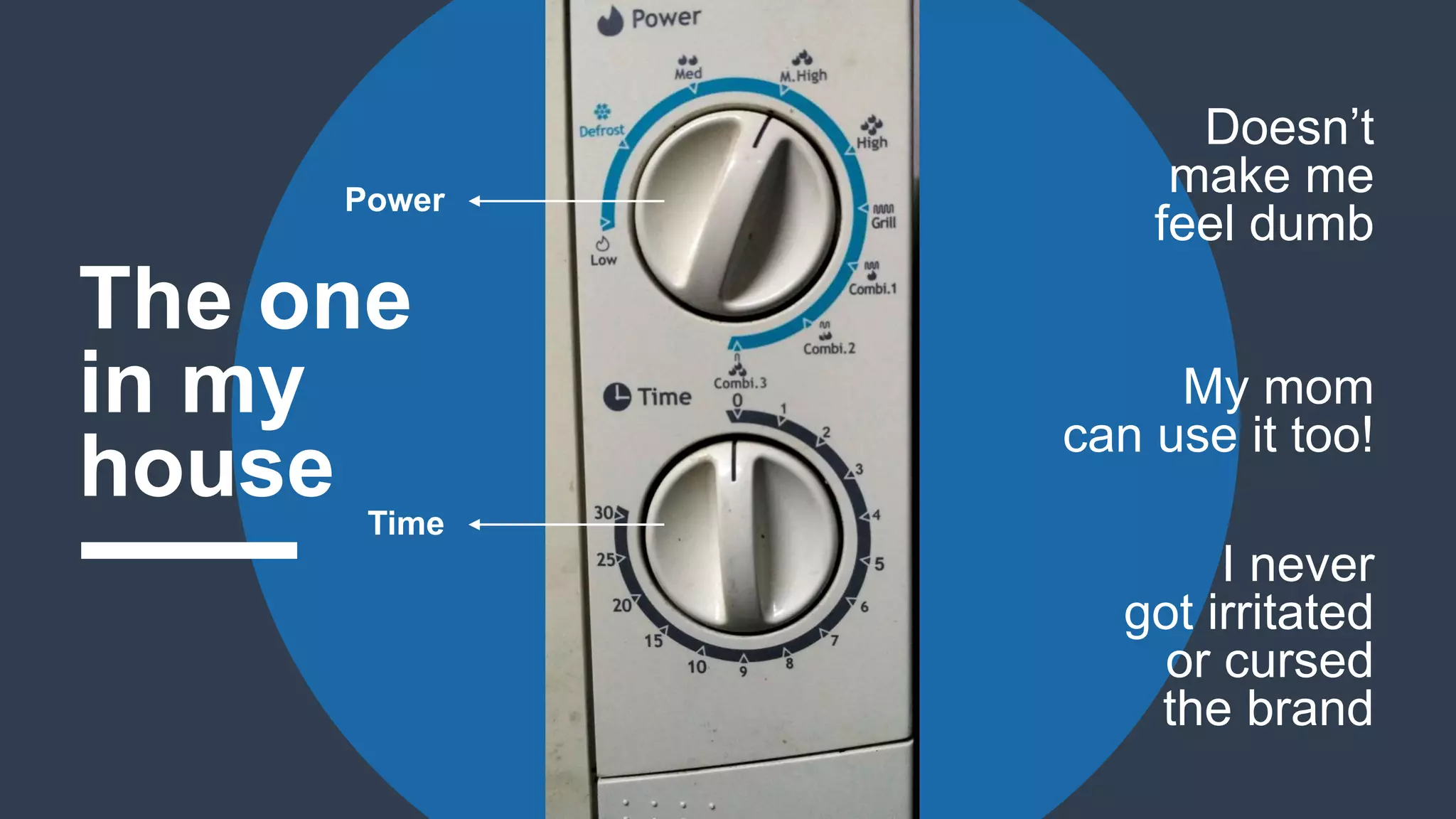
The one
in my
house
Power
Time
Doesn’t
make me
feel dumb
My mom
can use it too!
I never
got irritated
or cursed
the brand
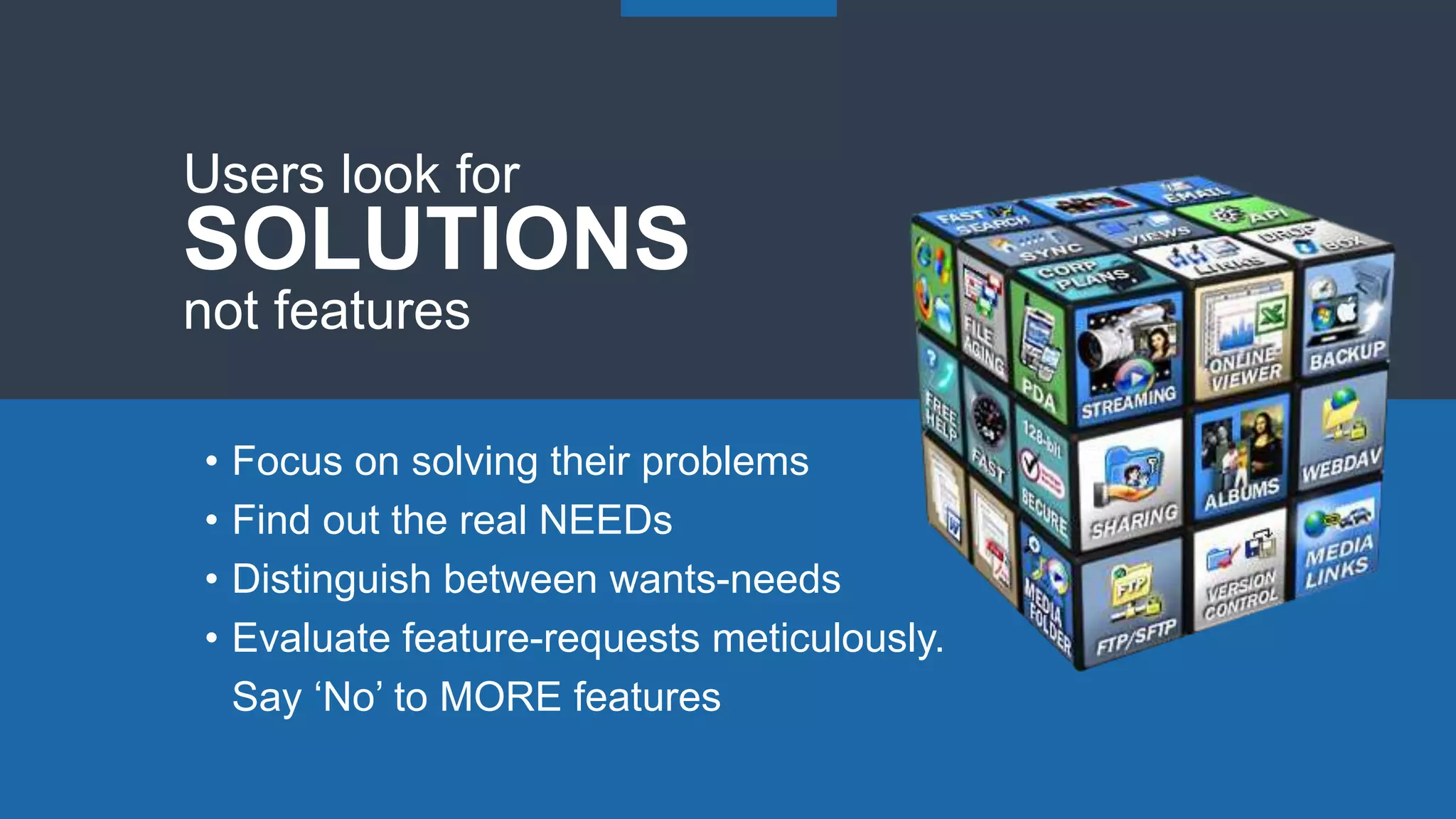
• Focus on solving their problems
• Find out the real NEEDs
• Distinguish between wants-needs
• Evaluate feature-requests meticulously.
Say ‘No’ to MORE features
Users look for
SOLUTIONS
not features
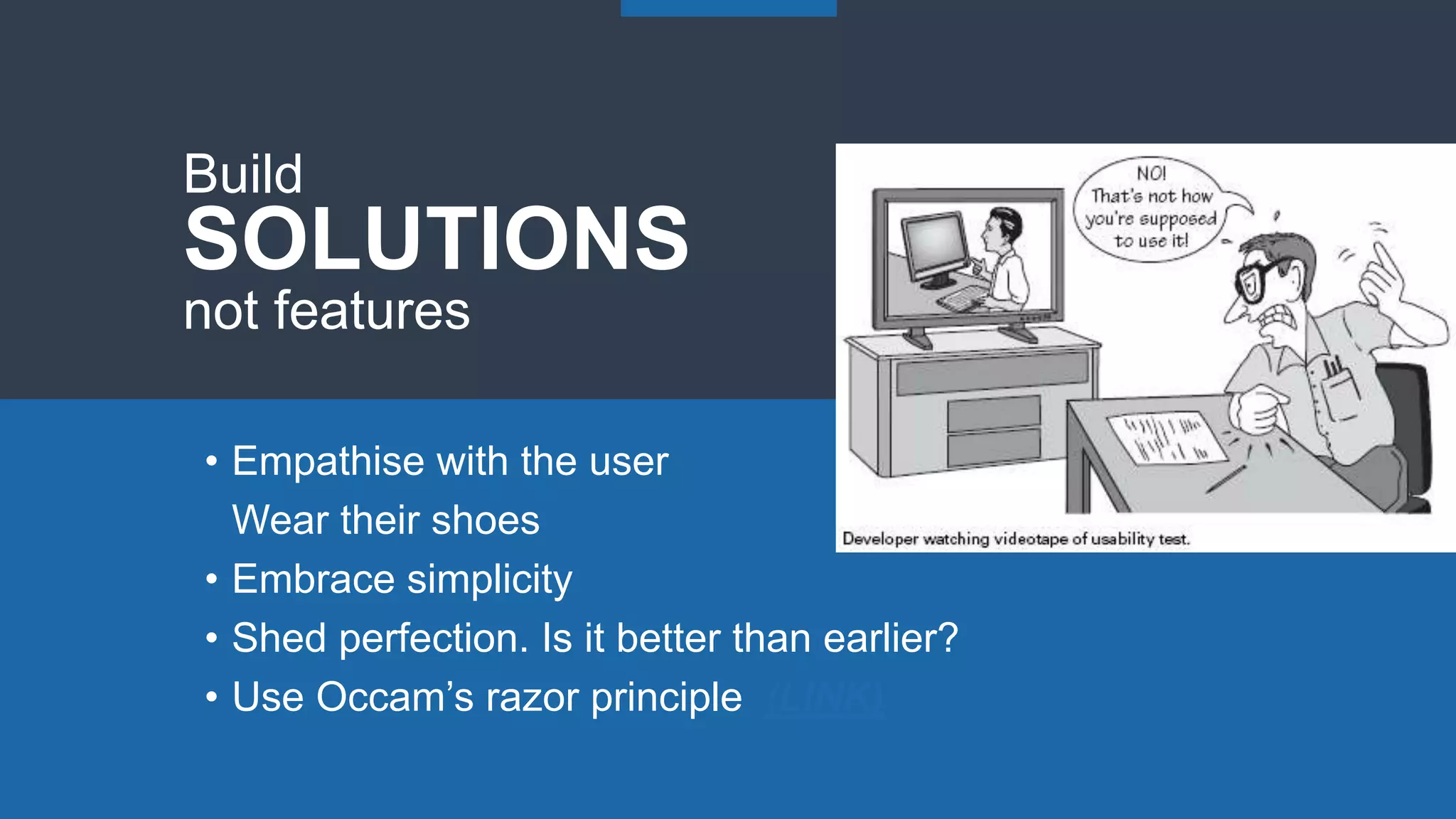
• Empathise with the user
Wear their shoes
• Embrace simplicity
• Shed perfection. Is it better than earlier?
• Use Occam’s razor principle (LINK)
Build
SOLUTIONS
not features
• Do competitive analysis but do not copy.
Create differentiators
• Time to build Vs Return on investment
• Prioritize. Priorotize. Priorotize.
Think
SOLUTIONS
not features
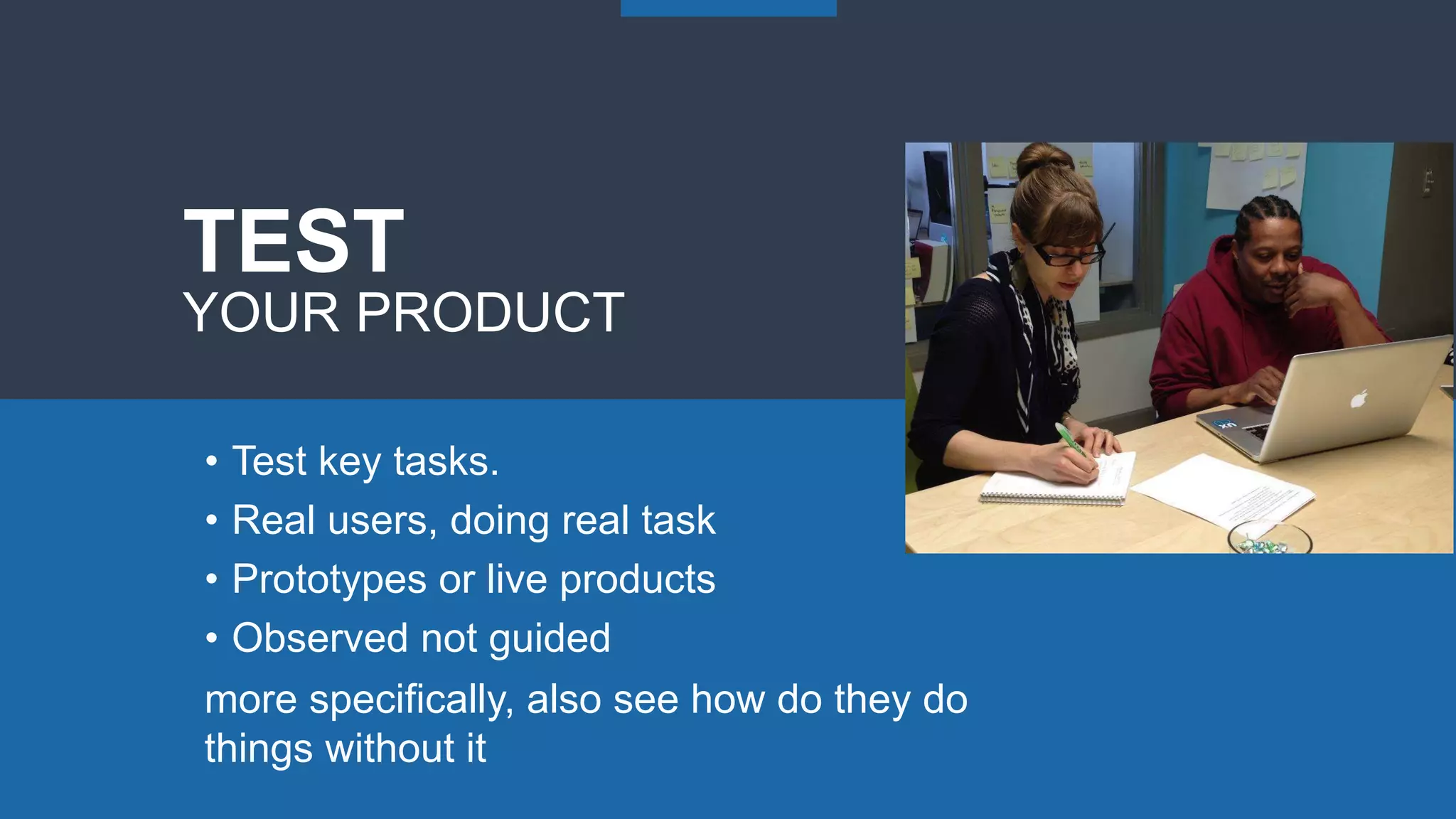
• Test key tasks.
• Real users, doing real task
• Prototypes or live products
• Observed not guided
TEST
YOUR PRODUCT
more specifically, also see how do they do
things without it
BENEFITS
• Reduce post-launch revision in software
• Increases user efficiency
• Reduces learning curve
• Increased user-satisfaction (builds loyalty towards the
brand)
FACTORS
to be considered
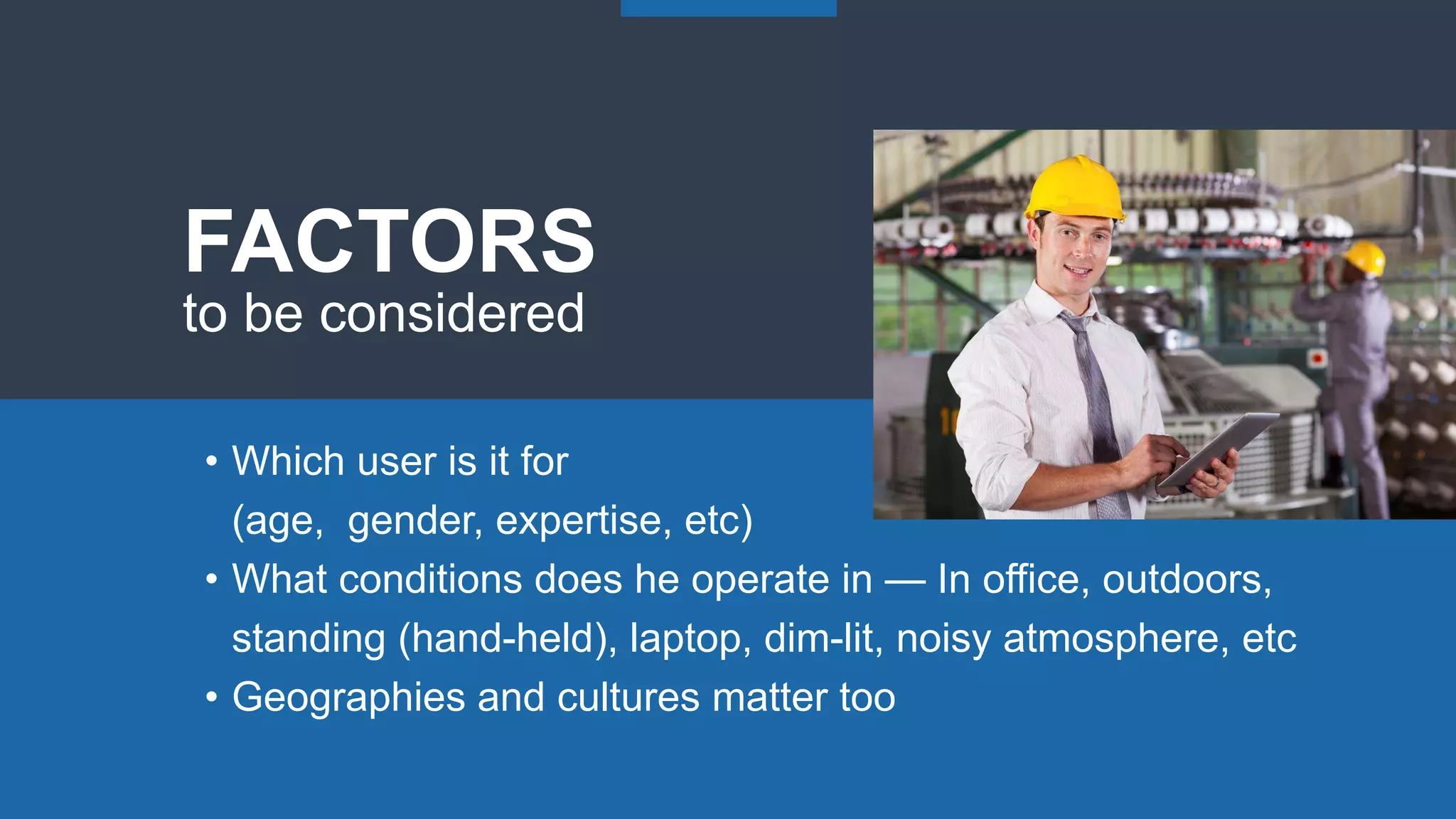
• Which user is it for
(age, gender, expertise, etc)
• What conditions does he operate in — In office, outdoors,
standing (hand-held), laptop, dim-lit, noisy atmosphere, etc
• Geographies and cultures matter too
• Product Managers
• UX Professionals
• Stake holders
• Developers
• Anyone who works on creating the product (software)
• Anyone who is concerned about the business
RESONSIBLITY
Who is responsible?
SOFTWARE BLOAT
Why it happens?
• Do it once, so that we never have to work on this again
• More features = more control
• Change requests will take time
• I (Product Owner/ Designer) am measured by the no. of features
• I am not doing justice to my job if I am not thinking of
features
THANK YOU
Feel free to mail us your queries: pixelfiesta@gmail.com
Questions

Improving Functional Usability