How to Make Journal Entries Using
the Double Entry System
The Accounting Equation:
Assets = Liabilities + Owner’s Equity
When making general ledger entries, it is essential to remember that
both debit and credits have to match for accurate record keeping.
Businesses will have a list of monthly transactions completed, and
these transactions must be recorded using the appropriate account
types in order to create accurate financial statements. The following
is a demonstration of how general ledger entries are recorded.
© 2014 UniversityNow. All Rights Reserved.
List of Business Transactions
On April 1, 2014, John Collins established a catering company, Collins Catering. During the month, John completed the following transactions
related to the business:
April 1. John transferred cash from a personal bank account to an account used for the business, $19,500.
2. Paid rent for period of April 5 to the end of the month, $2,550.
4. Purchased a used catering truck for $17,575, paying $9,865 cash and giving a note payable for the remainder.
5. Purchased supplies for cash, $2,200.
10. Received cash for job complete, $15,650.
15. Paid annual premiums on property and casualty insurance, $2,985.
16. Recorded jobs completed on account and sent invoices to customers, $7,950.
25. Received cash from customers on account, $4,250.
30. Paid wages of employees, $3,700.
30. Withdrew cash for personal use, $2,550.
© 2014 UniversityNow. All Rights Reserved.
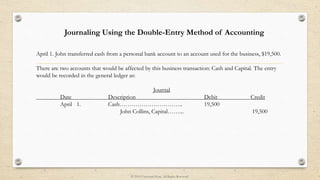
April 1. John transferred cash from a personal bank account to an account used for the business, $19,500.
There are two accounts that would be affected by this business transaction: Cash and Capital. The entry
would be recorded in the general ledger as:
Journal
Date Description Debit Credit
April 1. Cash………………………….. 19,500
John Collins, Capital……... 19,500
Journaling Using the Double-Entry Method of Accounting
© 2014 UniversityNow. All Rights Reserved.
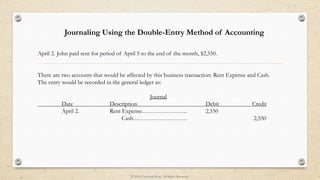
April 2. John paid rent for period of April 5 to the end of the month, $2,550.
There are two accounts that would be affected by this business transaction: Rent Expense and Cash.
The entry would be recorded in the general ledger as:
Journal
Date Description Debit Credit
April 2. Rent Expense………………….. 2,550
Cash……………………… 2,550
Journaling Using the Double-Entry Method of Accounting
© 2014 UniversityNow. All Rights Reserved.
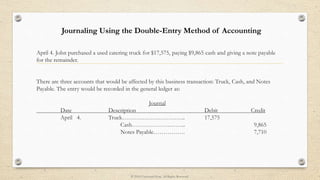
April 4. John purchased a used catering truck for $17,575, paying $9,865 cash and giving a note payable
for the remainder.
There are three accounts that would be affected by this business transaction: Truck, Cash, and Notes
Payable. The entry would be recorded in the general ledger as:
Journal
Date Description Debit Credit
April 4. Truck………………………….. 17,575
Cash……………….……... 9,865
Notes Payable……………. 7,710
Journaling Using the Double-Entry Method of Accounting
© 2014 UniversityNow. All Rights Reserved.
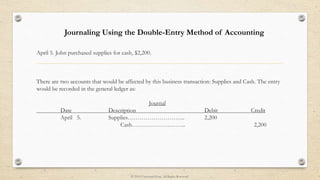
April 5. John purchased supplies for cash, $2,200.
There are two accounts that would be affected by this business transaction: Supplies and Cash. The entry
would be recorded in the general ledger as:
Journal
Date Description Debit Credit
April 5. Supplies……………………….. 2,200
Cash……………….……... 2,200
Journaling Using the Double-Entry Method of Accounting
© 2014 UniversityNow. All Rights Reserved.
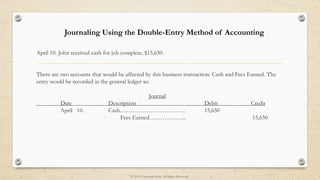
April 10. John received cash for job complete, $15,650.
There are two accounts that would be affected by this business transaction: Cash and Fees Earned. The
entry would be recorded in the general ledger as:
Journal
Date Description Debit Credit
April 10. Cash..………………………….. 15,650
Fees Earned….…….……... 15,650
Journaling Using the Double-Entry Method of Accounting
© 2014 UniversityNow. All Rights Reserved.
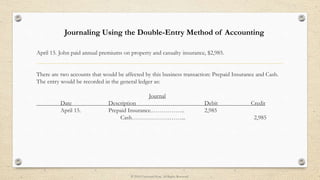
April 15. John paid annual premiums on property and casualty insurance, $2,985.
There are two accounts that would be affected by this business transaction: Prepaid Insurance and Cash.
The entry would be recorded in the general ledger as:
Journal
Date Description Debit Credit
April 15. Prepaid Insurance.…………….. 2,985
Cash……………….……... 2,985
Journaling Using the Double-Entry Method of Accounting
© 2014 UniversityNow. All Rights Reserved.
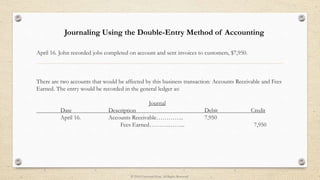
April 16. John recorded jobs completed on account and sent invoices to customers, $7,950.
There are two accounts that would be affected by this business transaction: Accounts Receivable and Fees
Earned. The entry would be recorded in the general ledger as:
Journal
Date Description Debit Credit
April 16. Accounts Receivable………….. 7,950
Fees Earned……….……... 7,950
Journaling Using the Double-Entry Method of Accounting
© 2014 UniversityNow. All Rights Reserved.
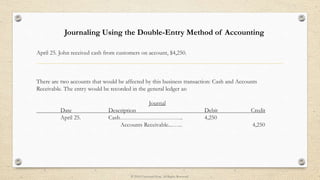
April 25. John received cash from customers on account, $4,250.
There are two accounts that would be affected by this business transaction: Cash and Accounts
Receivable. The entry would be recorded in the general ledger as:
Journal
Date Description Debit Credit
April 25. Cash………………………….. 4,250
Accounts Receivable...…... 4,250
Journaling Using the Double-Entry Method of Accounting
© 2014 UniversityNow. All Rights Reserved.
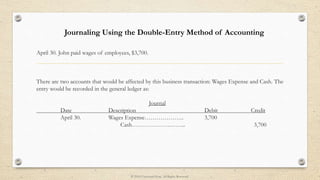
April 30. John paid wages of employees, $3,700.
There are two accounts that would be affected by this business transaction: Wages Expense and Cash. The
entry would be recorded in the general ledger as:
Journal
Date Description Debit Credit
April 30. Wages Expense……………….. 3,700
Cash……………….……... 3,700
Journaling Using the Double-Entry Method of Accounting
© 2014 UniversityNow. All Rights Reserved.
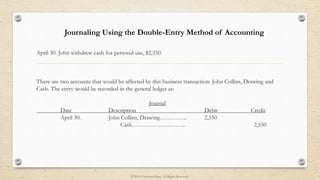
April 30. John withdrew cash for personal use, $2,550.
There are two accounts that would be affected by this business transaction: John Collins, Drawing and
Cash. The entry would be recorded in the general ledger as:
Journal
Date Description Debit Credit
April 30. John Collins, Drawing………….. 2,550
Cash……………….……... 2,550
Journaling Using the Double-Entry Method of Accounting
© 2014 UniversityNow. All Rights Reserved.

How to Make Journal Entries Using the Double Entry System

  • 1.
    How to MakeJournal Entries Using the Double Entry System
  • 2.
    The Accounting Equation: Assets= Liabilities + Owner’s Equity When making general ledger entries, it is essential to remember that both debit and credits have to match for accurate record keeping. Businesses will have a list of monthly transactions completed, and these transactions must be recorded using the appropriate account types in order to create accurate financial statements. The following is a demonstration of how general ledger entries are recorded. © 2014 UniversityNow. All Rights Reserved.
  • 3.
    List of BusinessTransactions On April 1, 2014, John Collins established a catering company, Collins Catering. During the month, John completed the following transactions related to the business: April 1. John transferred cash from a personal bank account to an account used for the business, $19,500. 2. Paid rent for period of April 5 to the end of the month, $2,550. 4. Purchased a used catering truck for $17,575, paying $9,865 cash and giving a note payable for the remainder. 5. Purchased supplies for cash, $2,200. 10. Received cash for job complete, $15,650. 15. Paid annual premiums on property and casualty insurance, $2,985. 16. Recorded jobs completed on account and sent invoices to customers, $7,950. 25. Received cash from customers on account, $4,250. 30. Paid wages of employees, $3,700. 30. Withdrew cash for personal use, $2,550. © 2014 UniversityNow. All Rights Reserved.
  • 4.
    April 1. Johntransferred cash from a personal bank account to an account used for the business, $19,500. There are two accounts that would be affected by this business transaction: Cash and Capital. The entry would be recorded in the general ledger as: Journal Date Description Debit Credit April 1. Cash………………………….. 19,500 John Collins, Capital……... 19,500 Journaling Using the Double-Entry Method of Accounting © 2014 UniversityNow. All Rights Reserved.
  • 5.
    April 2. Johnpaid rent for period of April 5 to the end of the month, $2,550. There are two accounts that would be affected by this business transaction: Rent Expense and Cash. The entry would be recorded in the general ledger as: Journal Date Description Debit Credit April 2. Rent Expense………………….. 2,550 Cash……………………… 2,550 Journaling Using the Double-Entry Method of Accounting © 2014 UniversityNow. All Rights Reserved.
  • 6.
    April 4. Johnpurchased a used catering truck for $17,575, paying $9,865 cash and giving a note payable for the remainder. There are three accounts that would be affected by this business transaction: Truck, Cash, and Notes Payable. The entry would be recorded in the general ledger as: Journal Date Description Debit Credit April 4. Truck………………………….. 17,575 Cash……………….……... 9,865 Notes Payable……………. 7,710 Journaling Using the Double-Entry Method of Accounting © 2014 UniversityNow. All Rights Reserved.
  • 7.
    April 5. Johnpurchased supplies for cash, $2,200. There are two accounts that would be affected by this business transaction: Supplies and Cash. The entry would be recorded in the general ledger as: Journal Date Description Debit Credit April 5. Supplies……………………….. 2,200 Cash……………….……... 2,200 Journaling Using the Double-Entry Method of Accounting © 2014 UniversityNow. All Rights Reserved.
  • 8.
    April 10. Johnreceived cash for job complete, $15,650. There are two accounts that would be affected by this business transaction: Cash and Fees Earned. The entry would be recorded in the general ledger as: Journal Date Description Debit Credit April 10. Cash..………………………….. 15,650 Fees Earned….…….……... 15,650 Journaling Using the Double-Entry Method of Accounting © 2014 UniversityNow. All Rights Reserved.
  • 9.
    April 15. Johnpaid annual premiums on property and casualty insurance, $2,985. There are two accounts that would be affected by this business transaction: Prepaid Insurance and Cash. The entry would be recorded in the general ledger as: Journal Date Description Debit Credit April 15. Prepaid Insurance.…………….. 2,985 Cash……………….……... 2,985 Journaling Using the Double-Entry Method of Accounting © 2014 UniversityNow. All Rights Reserved.
  • 10.
    April 16. Johnrecorded jobs completed on account and sent invoices to customers, $7,950. There are two accounts that would be affected by this business transaction: Accounts Receivable and Fees Earned. The entry would be recorded in the general ledger as: Journal Date Description Debit Credit April 16. Accounts Receivable………….. 7,950 Fees Earned……….……... 7,950 Journaling Using the Double-Entry Method of Accounting © 2014 UniversityNow. All Rights Reserved.
  • 11.
    April 25. Johnreceived cash from customers on account, $4,250. There are two accounts that would be affected by this business transaction: Cash and Accounts Receivable. The entry would be recorded in the general ledger as: Journal Date Description Debit Credit April 25. Cash………………………….. 4,250 Accounts Receivable...…... 4,250 Journaling Using the Double-Entry Method of Accounting © 2014 UniversityNow. All Rights Reserved.
  • 12.
    April 30. Johnpaid wages of employees, $3,700. There are two accounts that would be affected by this business transaction: Wages Expense and Cash. The entry would be recorded in the general ledger as: Journal Date Description Debit Credit April 30. Wages Expense……………….. 3,700 Cash……………….……... 3,700 Journaling Using the Double-Entry Method of Accounting © 2014 UniversityNow. All Rights Reserved.
  • 13.
    April 30. Johnwithdrew cash for personal use, $2,550. There are two accounts that would be affected by this business transaction: John Collins, Drawing and Cash. The entry would be recorded in the general ledger as: Journal Date Description Debit Credit April 30. John Collins, Drawing………….. 2,550 Cash……………….……... 2,550 Journaling Using the Double-Entry Method of Accounting © 2014 UniversityNow. All Rights Reserved.