Dr. S. S. Bhakar
Characteristics of a Good Measure
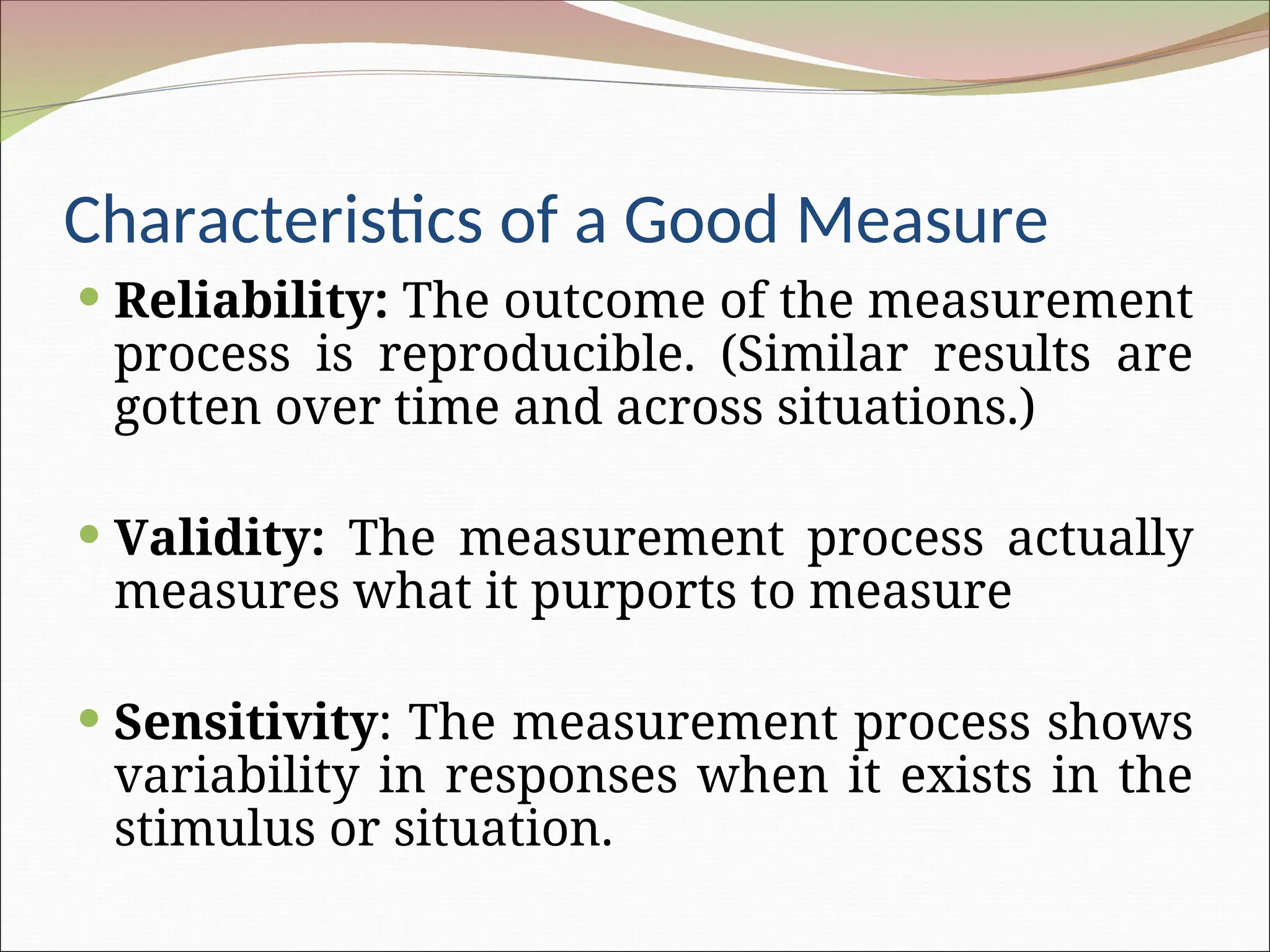
 Reliability: The outcome of the measurement
process is reproducible. (Similar results are
gotten over time and across situations.)
 Validity: The measurement process actually
measures what it purports to measure
 Sensitivity: The measurement process shows
variability in responses when it exists in the
stimulus or situation.
Reliability
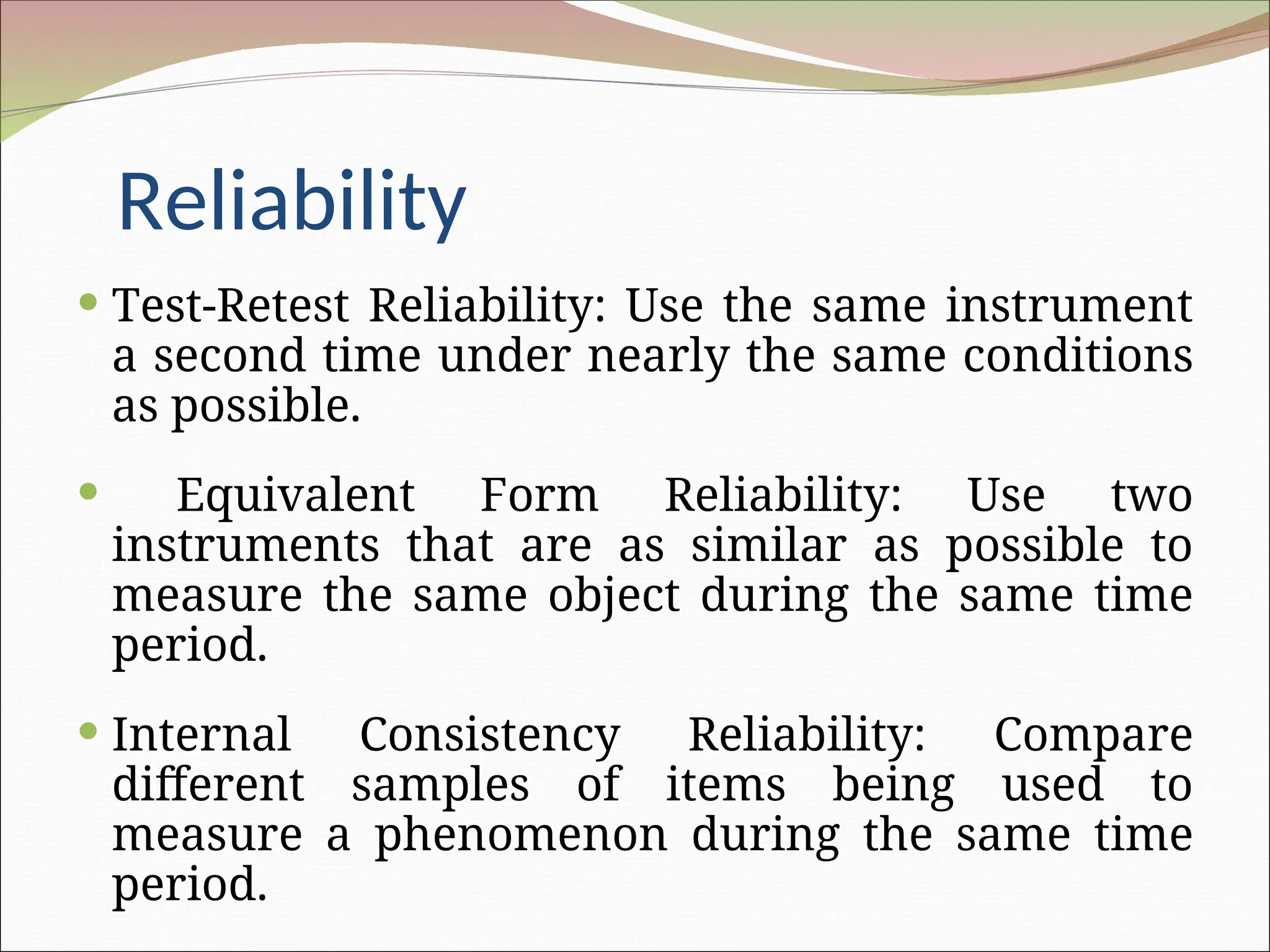
 Test-Retest Reliability: Use the same instrument
a second time under nearly the same conditions
as possible.
 Equivalent Form Reliability: Use two
instruments that are as similar as possible to
measure the same object during the same time
period.
 Internal Consistency Reliability: Compare
different samples of items being used to
measure a phenomenon during the same time
period.
VALIDITY
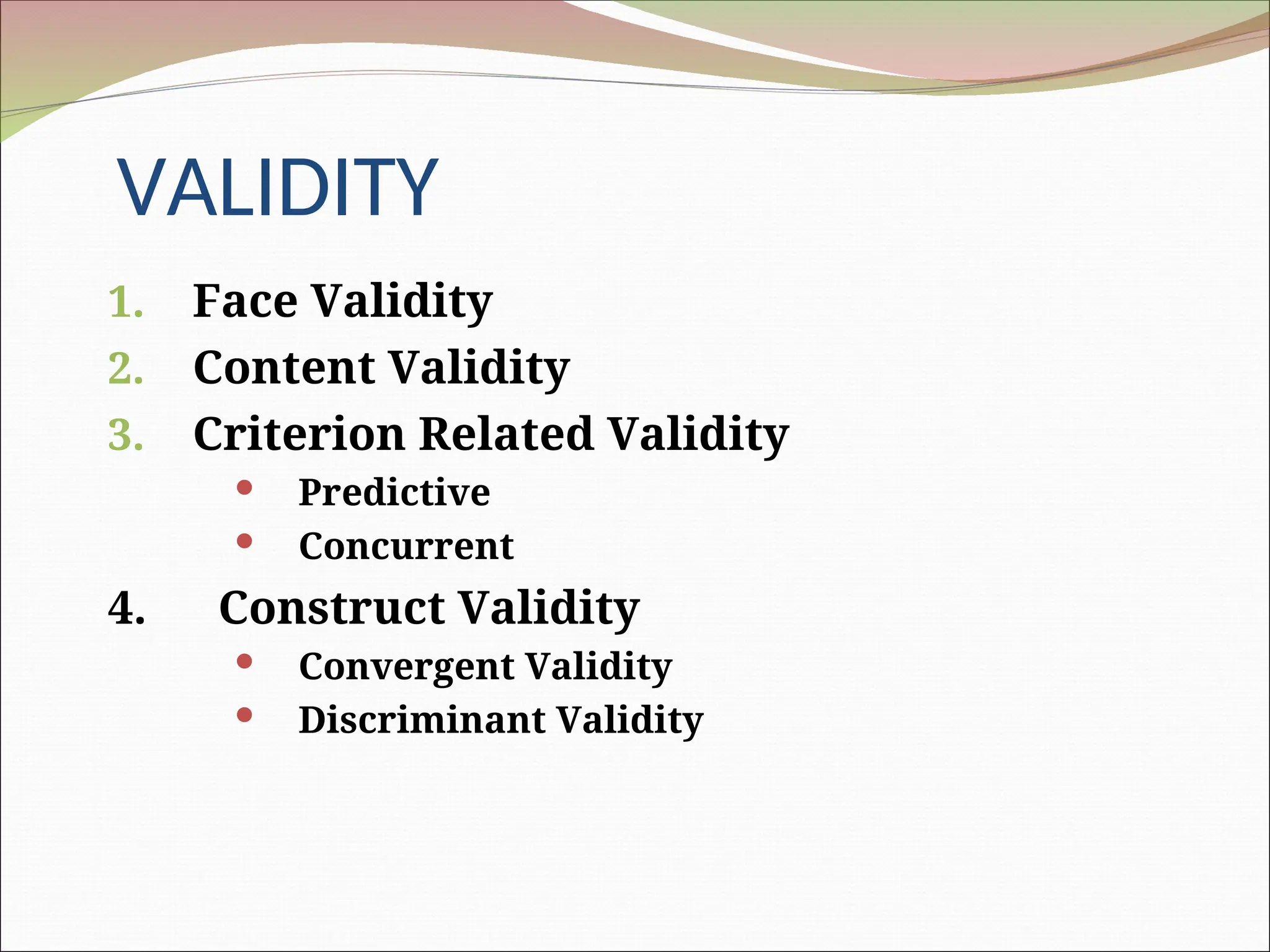
1. Face Validity
2. Content Validity
3. Criterion Related Validity
 Predictive
 Concurrent
4. Construct Validity
 Convergent Validity
 Discriminant Validity
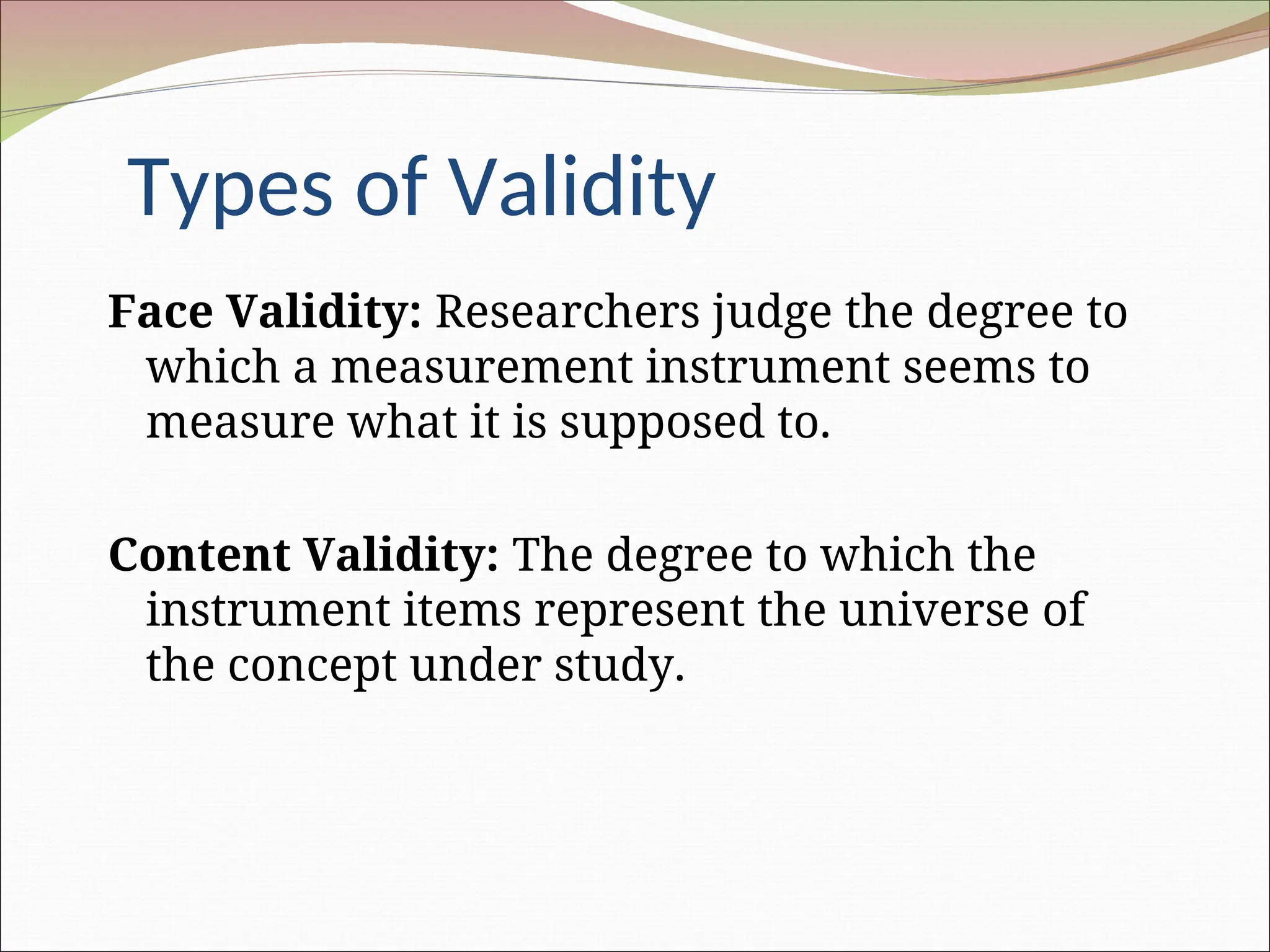
Types of Validity
Face Validity: Researchers judge the degree to
which a measurement instrument seems to
measure what it is supposed to.
Content Validity: The degree to which the
instrument items represent the universe of
the concept under study.
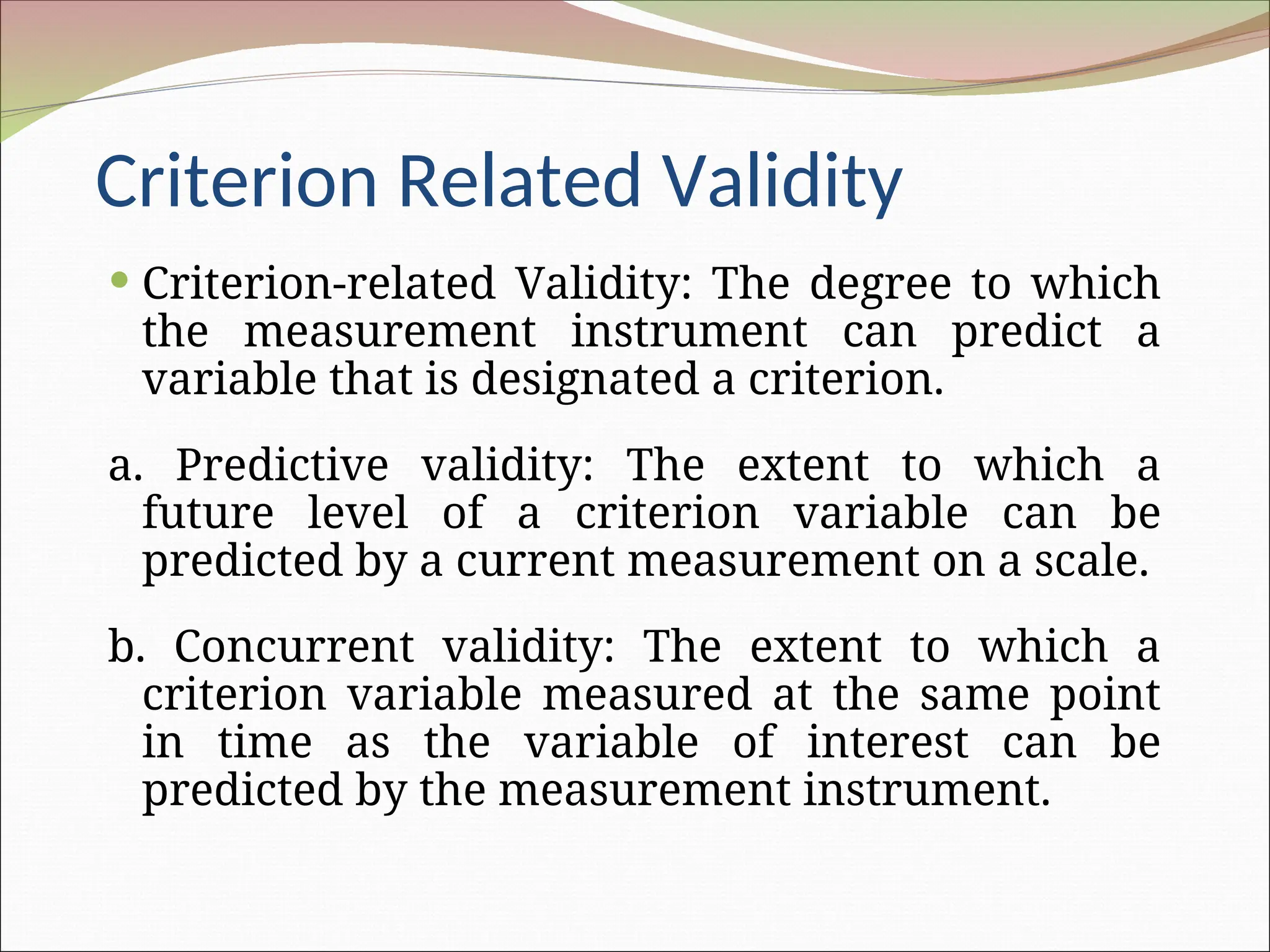
Criterion Related Validity
 Criterion-related Validity: The degree to which
the measurement instrument can predict a
variable that is designated a criterion.
a. Predictive validity: The extent to which a
future level of a criterion variable can be
predicted by a current measurement on a scale.
b. Concurrent validity: The extent to which a
criterion variable measured at the same point
in time as the variable of interest can be
predicted by the measurement instrument.
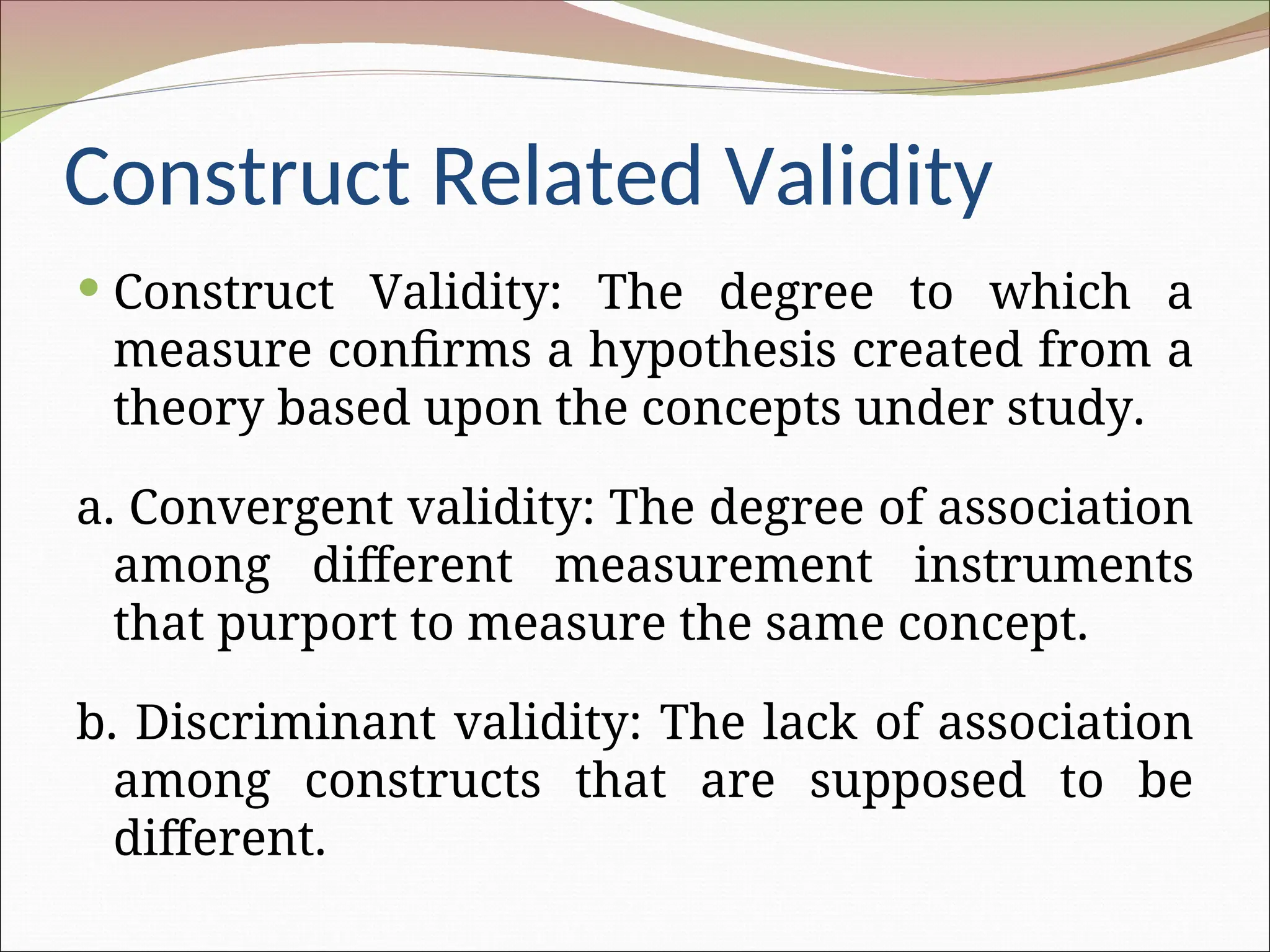
Construct Related Validity
 Construct Validity: The degree to which a
measure confirms a hypothesis created from a
theory based upon the concepts under study.
a. Convergent validity: The degree of association
among different measurement instruments
that purport to measure the same concept.
b. Discriminant validity: The lack of association
among constructs that are supposed to be
different.

Importance of Reliability and validity in Research

  • 1.
    Dr. S. S.Bhakar
  • 2.
    Characteristics of aGood Measure  Reliability: The outcome of the measurement process is reproducible. (Similar results are gotten over time and across situations.)  Validity: The measurement process actually measures what it purports to measure  Sensitivity: The measurement process shows variability in responses when it exists in the stimulus or situation.
  • 3.
    Reliability  Test-Retest Reliability:Use the same instrument a second time under nearly the same conditions as possible.  Equivalent Form Reliability: Use two instruments that are as similar as possible to measure the same object during the same time period.  Internal Consistency Reliability: Compare different samples of items being used to measure a phenomenon during the same time period.
  • 4.
    VALIDITY 1. Face Validity 2.Content Validity 3. Criterion Related Validity  Predictive  Concurrent 4. Construct Validity  Convergent Validity  Discriminant Validity
  • 5.
    Types of Validity FaceValidity: Researchers judge the degree to which a measurement instrument seems to measure what it is supposed to. Content Validity: The degree to which the instrument items represent the universe of the concept under study.
  • 6.
    Criterion Related Validity Criterion-related Validity: The degree to which the measurement instrument can predict a variable that is designated a criterion. a. Predictive validity: The extent to which a future level of a criterion variable can be predicted by a current measurement on a scale. b. Concurrent validity: The extent to which a criterion variable measured at the same point in time as the variable of interest can be predicted by the measurement instrument.
  • 7.
    Construct Related Validity Construct Validity: The degree to which a measure confirms a hypothesis created from a theory based upon the concepts under study. a. Convergent validity: The degree of association among different measurement instruments that purport to measure the same concept. b. Discriminant validity: The lack of association among constructs that are supposed to be different.