Immunologic Tolerance
prof.dr.ihsan edan alsaimary
department of microbiology – college of medicine –
university of basrah
Contents
• Part Ⅰ Introduction
• Part Ⅱ Development of Immunologic Tolerance
• Part Ⅲ Mechanism of Immunologic Tolerance
• Part Ⅳ Immunologic Tolerance and Clinic Medicine
• Definition: A type of specific unresponsiveness to
an antigen induced by the exposure of specific
lymphocytes to that antigen, but response to other
antigens normally.
• Tolerogens: antigens that induce tolerance
Part Ⅰ Introduction
General features of Immunologic tolerance
• Tolerance is antigenic specific and results from the
recognition of antigens by specific lymphocytes.
• Normal individuals are tolerant of their own
antigens(self antigen)----- Self-tolerance.
• Foreign antigens may be administered in ways that
preferentially inhibit immune response by inducing
tolerance in specific lymphocytes---antigen induction.
Immunologic features of tolerance
 It is an antigen-induced, active process
 Like immunologic memory, it is antigen specific
 Like immunologic memory, it can exist in B cells,
T cells or both
 Like immunologic memory, its easier to induce
and lasts longer in T cells than in B cell
Difference of Immuologic tolerance &
immunodeficiency, immunosuppression
Immunodeficiency: any condition in which there
is deficiency in the production of humoral and /or
cell-mediated immunity---non-specificity to Ag
Immunosuppression: The suppression of
immune responses to antigens. This can be
achieved by various means, including physical,
chemical----non-specificity to Ag
BASIC FACTS ABOUT TOLERANCE
• Tolerance – a state of
unresponsiveness specific for a given
antigen
• It is specific (negative) immune
response
• It is induced by prior exposure to that
antigen
BASIC FACTS ABOUT TOLERANCE-2
• Self tolerance – prevents the body to
elicit an immune attack against its own
tissues
• Mechanisms of active tolerance
prevent inflammatory reactions to many
innocuous airborne and food antigens
found at mucosal surfaces
Features of self-tolerance
• Self-non-self discrimination is learned
during development
• Tolerance is NOT genetically programmed
• The time of first encounter is critical in
determining responsiveness
FACTORS IMPORTANT IN THE
INDUCTION OF TOLERANCE
1. The stage of differentiation of lymphocytes
at the time of antigen confrontation
2. The site of encounter
3. The nature of cells presenting antigenic
epitopes
4. The number of lymphocytes able to respond
5. Microenvironment of encounter (expression
of cell adhesion molecules, influence of
cytokines etc.)
TOLERANCE – GENERAL PROPERTIES
1. Immature or developing lymphocyte is more
susceptible to tolerance induction than
mature one
2. Tolerance to foreign antigens is induced
even in mature lymphocytes under special
conditions
3. Tolerance of T lymphocytes is a particularly
effective for maintaining long-lived
unresponsiveness to self antigens
POSSIBLE WAYS OF PREVENTION OF
SELF-REACTIVITY
• Clonal deletion – physical elimination of cells
from the repertoire during their lifespan
• Clonal anergy – downregulating the intrinsic
mechanism of the immune response such as
lack of costimulatory molecules or insufficient
second signal for cell activation
• Suppression – inhibition of cellular activation
by interaction with other cells:
(Treg – CD4+, CD25+ T lymphocytes)
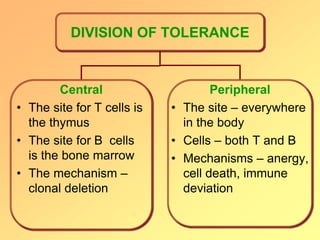
DIVISION OF TOLERANCE
Central
• The site for T cells is
the thymus
• The site for B cells
is the bone marrow
• The mechanism –
clonal deletion
Peripheral
• The site – everywhere
in the body
• Cells – both T and B
• Mechanisms – anergy,
cell death, immune
deviation
IMPORTANT OPPOSED TERMS
• Central tolerance (self-tolerance)
versus peripheral tolerance
• Active tolerance vs. passive tolerance
(ignorance)
• T-cell tolerance vs. B-cell tolerance
• Natural vs. artificial tolerance
• Complete vs. incomplete tolerance
IMMUNOLOGICALLY PRIVILEGED SITES
• Sites in the body where foreign
antigens or tissue grafts do not elicit
immune responses
• These antigens do interact with T cells,
but instead of destructive IR they
induce tolerance or a response
innocent to the tissue
IMMUNOLOGICALLY PRIVILEGED SITES - 2
• Immunosuppressive cytokines such as
TGF-beta seem to be resposible for
such unusual response
• The sites include: brain, eye, testis,
uterus (fetus)
IMPORTANT OPPOSED TERMS
• Central tolerance (self-tolerance)
versus peripheral tolerance
• Active tolerance vs. passive tolerance (ignorance)
• T-cell tolerance vs. B-cell tolerance
• Natural vs. artificial tolerance
IGNORANCE OF SELF ANTIGENS
• It is a passive form of immunological
tolerance
• It occurs when:
1. T cells can not contact with self –
antigens,
2. if self antigen is present in too low an
amount to be detected,
3. if it is present on cells with few or no MHC
molecules
4. if there are not enough T cells to respond
5. if there is the absence of co-stimulation
FEATURES OF B-CELL TOLERANCE
1. Binding soluble self antigens is tolerogenic
for B cells
2. Immature B cells that encounter self antigen
undergo clonal abortion
3. The fate of self-reactive B cells depends on
the affinity of the B cell antigen receptor and
the nature of the antigen
4. Receptor editing - autoreactive B cells
escape anergy or deletion by further
rearranging their immunoglobulin genes
IMPORTANT OPPOSED TERMS
• Central tolerance (self-tolerance)
versus peripheral tolerance
• Active tolerance vs. passive tolerance (ignorance)
• T-cell tolerance vs. B-cell tolerance
• Natural vs. artificial tolerance
ARTIFICIAL INDUCTION OF TOLERANCE
1. By chimerism in immunocompromized hosts
2. By antibodies to T cell receptors
3. By injection of soluble antigens
ARTIFICIAL INDUCTION OF TOLERANCE - 2
4. By oral administration of antigens
5. By clonal exhaustion via extensive clonal
proliferation after repeated antigenic
challenge
6. Anti-idiotypic antibody – partial result, affects
B cells only
FUTURE APPLICATIONS OF
TOLERANCE
• To promote tolerance to foreign tissue
grafts
• To control the damaging immune responses
in hypersensitivity states and autoimmune
diseases
--{ THANK YOU }—
and be tolerant to our
imperfections!
Part Ⅱ Development of Immunologic
Tolerance
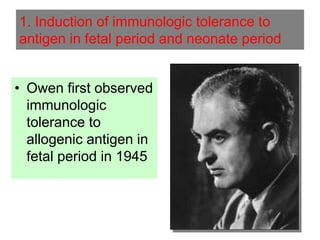
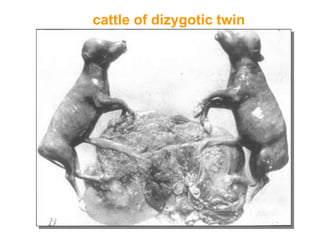
• Owen first observed
immunologic
tolerance to
allogenic antigen in
fetal period in 1945
1. Induction of immunologic tolerance to
antigen in fetal period and neonate period
cattle of dizygotic twin
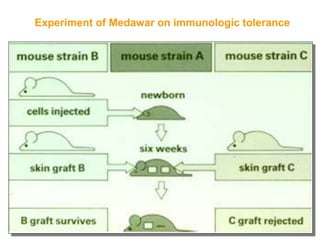
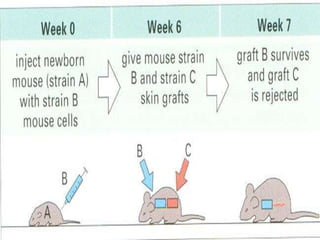
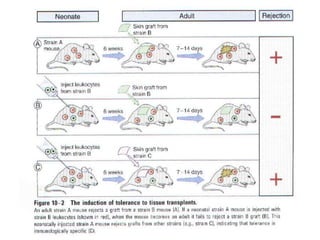
Experiment of Medawar on immunologic tolerance
2. Induction of immunologic tolerance to
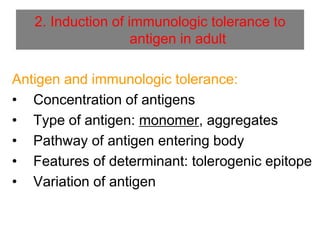
antigen in adult
Antigen and immunologic tolerance:
• Concentration of antigens
• Type of antigen: monomer, aggregates
• Pathway of antigen entering body
• Features of determinant: tolerogenic epitope
• Variation of antigen
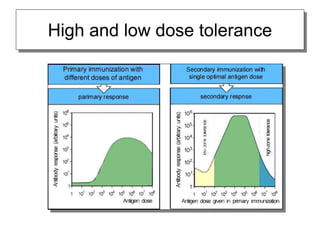
High and low dose tolerance
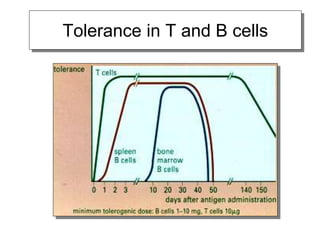
Tolerance in T and B cells
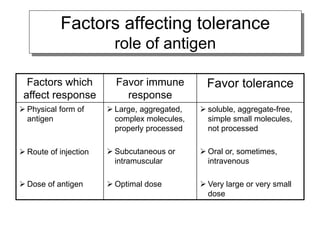
Factors affecting tolerance
role of antigen
Factors which
affect response
Favor immune
response
Favor tolerance
 Physical form of
antigen
 Route of injection
 Dose of antigen
 Large, aggregated,
complex molecules,
properly processed
 Subcutaneous or
intramuscular
 Optimal dose
 soluble, aggregate-free,
simple small molecules,
not processed
 Oral or, sometimes,
intravenous
 Very large or very small
dose
Individual and immunologic tolerance:
Heredity, Age, Gender, Health
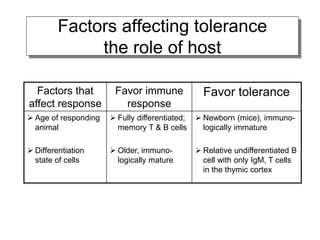
Factors affecting tolerance
the role of host
Factors that
affect response
Favor immune
response
Favor tolerance
 Age of responding
animal
 Differentiation
state of cells
 Fully differentiated;
memory T & B cells
 Older, immuno-
logically mature
 Newborn (mice), immuno-
logically immature
 Relative undifferentiated B
cell with only IgM, T cells
in the thymic cortex
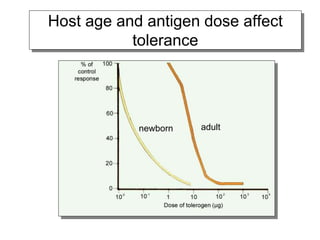
Host age and antigen dose affect
tolerance
newborn adult
Part Ⅲ Mechanism of Immunologic
Tolerance
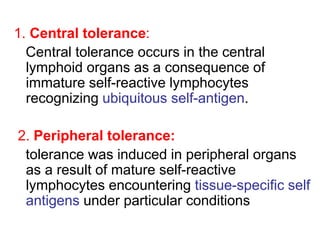
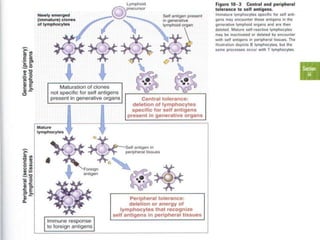
1. Central tolerance:
Central tolerance occurs in the central
lymphoid organs as a consequence of
immature self-reactive lymphocytes
recognizing ubiquitous self-antigen.
2. Peripheral tolerance:
tolerance was induced in peripheral organs
as a result of mature self-reactive
lymphocytes encountering tissue-specific self
antigens under particular conditions
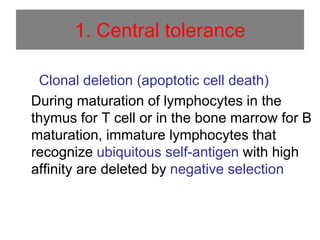
1. Central tolerance
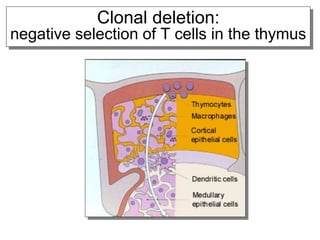
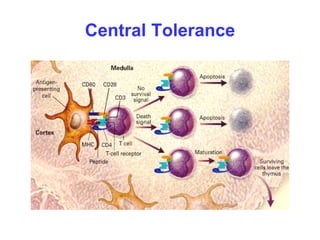
Clonal deletion (apoptotic cell death)
During maturation of lymphocytes in the
thymus for T cell or in the bone marrow for B
maturation, immature lymphocytes that
recognize ubiquitous self-antigen with high
affinity are deleted by negative selection
Clonal deletion:
negative selection of T cells in the thymus
Central Tolerance
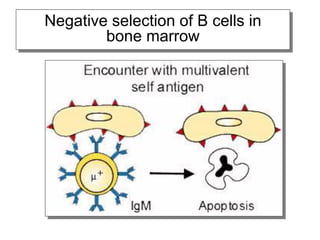
Negative selection of B cells in
bone marrow
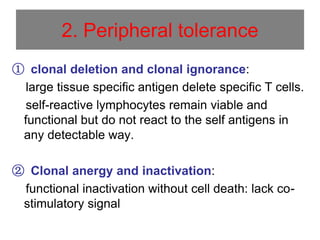
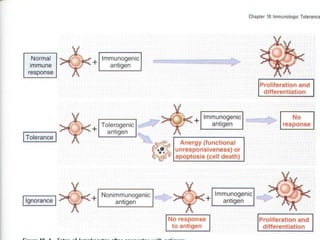
2. Peripheral tolerance
① clonal deletion and clonal ignorance:
large tissue specific antigen delete specific T cells.
self-reactive lymphocytes remain viable and
functional but do not react to the self antigens in
any detectable way.
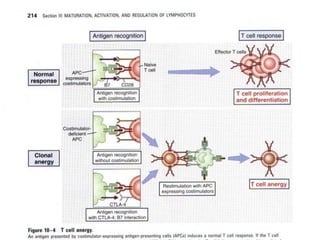
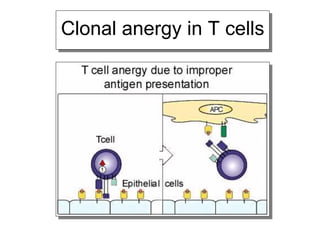
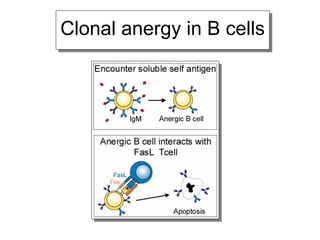
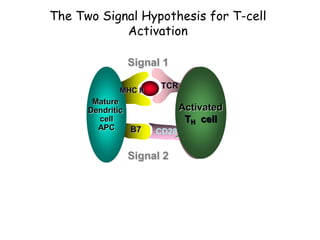
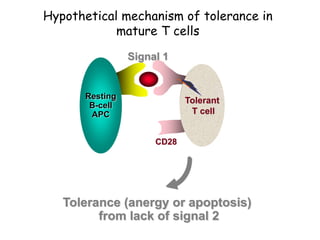
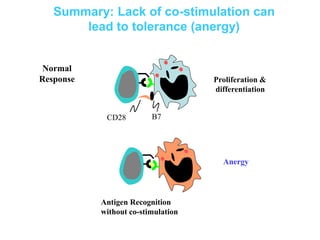
② Clonal anergy and inactivation:
functional inactivation without cell death: lack co-
stimulatory signal
Clonal anergy in T cells
Clonal anergy in B cells
③ Action of Suppressor lymphocyte (Ts)
④ Action of cytokines: TGF- , IL-10
⑤ Holdback in signal tranduction
⑥ Immunologically privileged sites
anatomic barrier: clonal ignorance
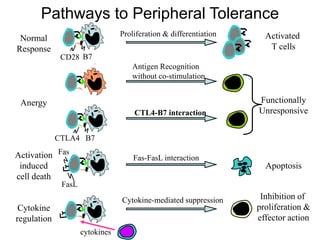
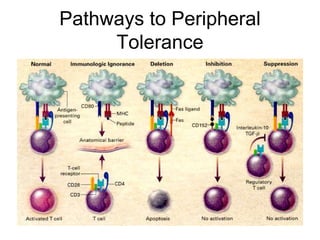
Fas
FasL
cytokines
Apoptosis
Inhibition of
proliferation &
effector action
Activated
T cells
Normal
Response
CD28 B7
Proliferation & differentiation
Antigen Recognition
without co-stimulation
Anergy
CTLA4 B7
Functionally
Unresponsive
CTL4-B7 interaction
Fas-FasL interaction
Cytokine-mediated suppression
Activation
induced
cell death
Cytokine
regulation
Pathways to Peripheral Tolerance
The Two Signal Hypothesis for T-cell
Activation
Mature
Dendritic
cell
APC
TH
cell
CD28
B7
MHC II
TCR
Signal 2
Signal 1
Activated
TH cell
Hypothetical mechanism of tolerance in
mature T cells
CD28
Resting
B-cell
APC
TH0 cell
Tolerance (anergy or apoptosis)
from lack of signal 2
Signal 1
Tolerant
T cell
Normal
Response
CD28 B7
Proliferation &
differentiation
Summary: Lack of co-stimulation can
lead to tolerance (anergy)
Antigen Recognition
without co-stimulation
Anergy
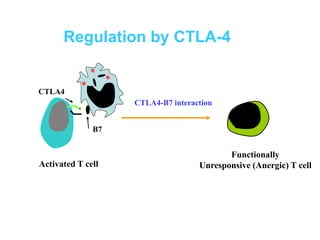
Regulation by CTLA-4
CTLA4
B7
Functionally
Unresponsive (Anergic) T cell
CTLA4-B7 interaction
Activated T cell
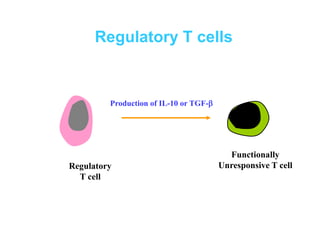
Regulatory T cells
Functionally
Unresponsive T cell
Production of IL-10 or TGF-
Regulatory
T cell
Pathways to Peripheral
Tolerance
Inhibition by Antibody Feedback
• Passively administered antibody can prevent an
antibody response
• Antibody produced during an immune responses
leads to elimination of antigen (stimulus)
–Less antigen available to stimulate specific
cells
–Immune complexes can bind to inhibitory
receptors
Application: RhoGam for Erythroblastosis
Fetalis
Major Immune Inhibitory
Receptors
• B cells
– FcgRII
• T cells
– CTLA4
• NK cells
– KIR (killer cell Ig-like receptors),
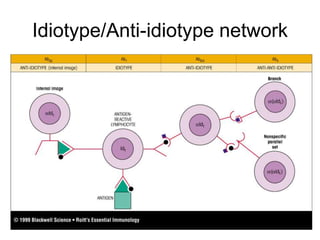
Anti-Idiotypes and Immune
Regulation
• Definition
– anti-idiotype response-antibody produced
against immunoglobulin or TCR idiotypes
that serve to down-regulate immune
response
– The epitope for an responsive anti-idiotype
molecule (antibody, BCR, or TCR) is the
internal image formed by the CDR region
of the respective epitopes antigen receptor
Idiotype/Anti-idiotype network
Part Ⅳ Immunologic Tolerance and
Clinic Medicine
• Prevent the rejection of organ allografts
and xenografts
• Treat autoimmune diseases
• Treat allergic diseases
1. To induce immunologic tolerance
2. To terminate immunologic
tolerance
• To treat tumor:
enhance first signal or second signal
• To treat infection diseases
And now for a clinical case….
• 6 year old male, ER with unexplained
bruising associated with minor trauma
• Patient has minimal clotting activity
• FVIII levels <1% of normal
• Patient given i.v. FVIII concentrate i.v.
and released but returns in two weeks
with same problem
• Repeated FVIII treatment
• However, FVIII is ineffective.
Patient Presentation
Issues
• Coagulation factor inhibitors (anti-FVIII
activity)
• Basis?
• Lack of tolerance. Why?
• Prevalence/impact
• 20-30% FVIII, less FIX
• Treatment/problems
• FVIII concentrate or rFVIII
• Inhibitors develop that neutralize FVIII
• Therapy?
• Porcine FVIII with less cross-reactivity
• Tolerance (high dose)
• Gene therapy
What are Inhibitors?
• IgG; commonly subclass 4, mixed 1 & 4
• Occur in
• Congenital factor deficiency = alloimmune
• Previously unaffected = autoimmune
• Associated with pregnancy, autoimmunity,
malignancy, multi-transfusion, advanced age etc.
Summary
Definition of immunologic tolerance
Features of immunologic tolerance
Induction of immunologic tolerance
Mechanism of immunologic tolerance
Clinical application of immunologic tolerance
Diagnostic Immunology
Topic: Immunological Tolerance
Objectives:
 Define Immunological tolerance
 Discuss mechanism of tolerance induction
 Know types of tolerance
 Central thymic
 Peripheral post thymic
 Explain B cell tolerance to self antigens
 Discuss artificial induction of tolerance
 Know therapeutic applications of tolerance
Immune tolerance or
immunological tolerance
 is the process by which the immune system
does not attack an antigen.
 It can be either :
1) Natural' or 'self tolerance', where the body
does not mount an immune response to self
antigens.
2) Induced tolerance', where tolerance to
external antigens can be created by
manipulating the immune system.
 It occurs in three forms: central tolerance,
peripheral tolerance and acquired tolerance.
Definitions:
 Tolerance is a state of unresponsiveness that is
specific for a particular antigen
 Self tolerance is the mechanisms by which the
body is prevented from mounting an immune
response against its own tissues.
 Self reactivity is prevented by processes during
development rather than being programmed.
Factors influencing tolerance
 Molecule structure
 Stage of differentiation when
lymphocyte first encounter the epitopes
 The site of the encounter
 The nature of the cell presenting the
epitopes
 Number of responding lymphocytes
Q. What is an epitope?
History
 Trub (1938):
Inutero mice against choriomeningitis virus
 Medawar (1953)
Induced immunological tolerance to skin allograft
 Burnet (1957)
Clonal selection theory: Particular immunocyte is
selected by an antigen and then divides to give rise to
clone of daughter cells with the same specificity
Leaderburg (1959)
Modification of Clonal selection theory ( Stage of cell
maturation)
Key discoveries of (1960)
a) Role of thymus in development of the immune system
a) Existence of two interacting subsets of lymphocytes
Types of Tolerance
 Central Tolerance :
It occurs during lymphocyte development.
[Thymus or Bone marrow]
 Peripheral Tolerance :
Occurs after lymphocytes leave the primary
organs.
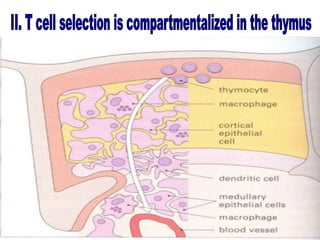
Central thymic Tolerance to Self Antigens
 The immune system generates a vast array of
TCRs
 T cells are not only effector cells but are also
regulators of the immune system
 T cells become “educated” in the thymus
 They become dependant on self MHC for
survival
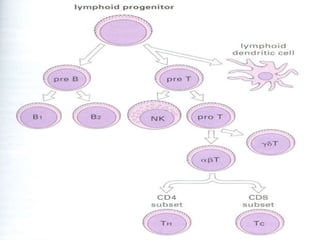
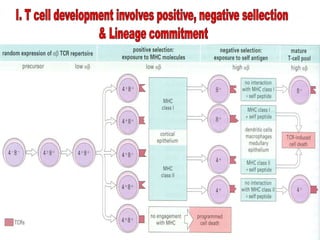
III-T cell development is subjected to several
checkpoints
 β selection checkpoint:
Only cells with a rearranged β chain mature from
double negative to double positive cells.
Independent on MHC
 α selection checkpoint:
Cells expressing an αβ complex must interact with
MHC molecules to survive
 Lineage commitment checkpoint:
Cells are instructed to repress expression of
either CD4 or CD8 and to develop into
single positive cells
 Negative selection checkpoint:
Cells that interact strongly with MHC and
antigen in the thymus are deleted
Peripheral or Post-Thymic Tolerance to Self
Antigens
Many auto-reactive T cells escape central tolerance
due to:
a) Antigens are absent
b) Antigens are insufficient
However, tolerance is maintained by mechanisms
in peripheral lymphoid organs
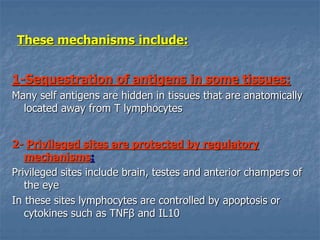
1-Sequestration of antigens in some tissues:
Many self antigens are hidden in tissues that are anatomically
located away from T lymphocytes
2- Privileged sites are protected by regulatory
mechanisms:
Privileged sites include brain, testes and anterior champers of
the eye
In these sites lymphocytes are controlled by apoptosis or
cytokines such as TNFβ and IL10
These mechanisms include:
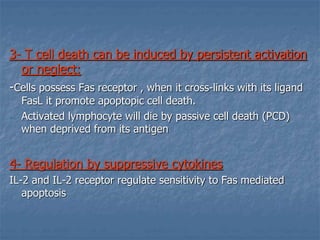
3- T cell death can be induced by persistent activation
or neglect:
-Cells possess Fas receptor , when it cross-links with its ligand
FasL it promote apoptopic cell death.
- Activated lymphocyte will die by passive cell death (PCD)
when deprived from its antigen
4- Regulation by suppressive cytokines
IL-2 and IL-2 receptor regulate sensitivity to Fas mediated
apoptosis
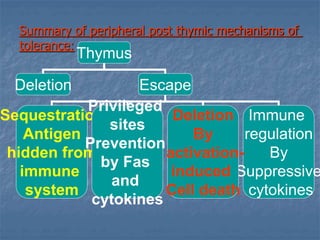
Summary of peripheral post thymic mechanisms of
tolerance:
Thymus
Deletion Escape
Immune
regulation
By
Suppressive
cytokines
Deletion
By
activation-
induced
Cell death
Sequestration
Antigen
hidden from
immune
system
Privileged
sites
Prevention
by Fas
and
cytokines
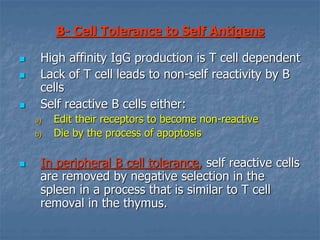
B- Cell Tolerance to Self Antigens
 High affinity IgG production is T cell dependent
 Lack of T cell leads to non-self reactivity by B
cells
 Self reactive B cells either:
a) Edit their receptors to become non-reactive
b) Die by the process of apoptosis
 In peripheral B cell tolerance, self reactive cells
are removed by negative selection in the
spleen in a process that is similar to T cell
removal in the thymus.
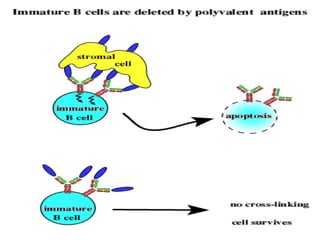
B cell tolerance in the BM
During B cell development in the bone marrow:
 The complete antigen receptor (IgM) is first expressed
on 'immature' B cells
 If those cells encounter their target antigen in a form
which can cross-link their IgM then such cells are
programmed to die
 The requirement for cross-linking means that the antigen
has to be polyvalent
Potential clinical applications for tolerance:
 Understanding of tolerance is valuable in many
ways:
 Promote tolerance to tissue graft
 Control damaging immune response in
hypersensitivity
 Control damaging in autoimmune disease
 Limit tumor growth

Immunological tolerance dr.ihsan alsaimary

  • 1.
    Immunologic Tolerance prof.dr.ihsan edanalsaimary department of microbiology – college of medicine – university of basrah
  • 2.
    Contents • Part ⅠIntroduction • Part Ⅱ Development of Immunologic Tolerance • Part Ⅲ Mechanism of Immunologic Tolerance • Part Ⅳ Immunologic Tolerance and Clinic Medicine
  • 3.
    • Definition: Atype of specific unresponsiveness to an antigen induced by the exposure of specific lymphocytes to that antigen, but response to other antigens normally. • Tolerogens: antigens that induce tolerance Part Ⅰ Introduction
  • 4.
    General features ofImmunologic tolerance • Tolerance is antigenic specific and results from the recognition of antigens by specific lymphocytes. • Normal individuals are tolerant of their own antigens(self antigen)----- Self-tolerance. • Foreign antigens may be administered in ways that preferentially inhibit immune response by inducing tolerance in specific lymphocytes---antigen induction.
  • 5.
    Immunologic features oftolerance  It is an antigen-induced, active process  Like immunologic memory, it is antigen specific  Like immunologic memory, it can exist in B cells, T cells or both  Like immunologic memory, its easier to induce and lasts longer in T cells than in B cell
  • 6.
    Difference of Immuologictolerance & immunodeficiency, immunosuppression Immunodeficiency: any condition in which there is deficiency in the production of humoral and /or cell-mediated immunity---non-specificity to Ag Immunosuppression: The suppression of immune responses to antigens. This can be achieved by various means, including physical, chemical----non-specificity to Ag
  • 7.
    BASIC FACTS ABOUTTOLERANCE • Tolerance – a state of unresponsiveness specific for a given antigen • It is specific (negative) immune response • It is induced by prior exposure to that antigen
  • 8.
    BASIC FACTS ABOUTTOLERANCE-2 • Self tolerance – prevents the body to elicit an immune attack against its own tissues • Mechanisms of active tolerance prevent inflammatory reactions to many innocuous airborne and food antigens found at mucosal surfaces
  • 9.
    Features of self-tolerance •Self-non-self discrimination is learned during development • Tolerance is NOT genetically programmed • The time of first encounter is critical in determining responsiveness
  • 10.
    FACTORS IMPORTANT INTHE INDUCTION OF TOLERANCE 1. The stage of differentiation of lymphocytes at the time of antigen confrontation 2. The site of encounter 3. The nature of cells presenting antigenic epitopes 4. The number of lymphocytes able to respond 5. Microenvironment of encounter (expression of cell adhesion molecules, influence of cytokines etc.)
  • 11.
    TOLERANCE – GENERALPROPERTIES 1. Immature or developing lymphocyte is more susceptible to tolerance induction than mature one 2. Tolerance to foreign antigens is induced even in mature lymphocytes under special conditions 3. Tolerance of T lymphocytes is a particularly effective for maintaining long-lived unresponsiveness to self antigens
  • 12.
    POSSIBLE WAYS OFPREVENTION OF SELF-REACTIVITY • Clonal deletion – physical elimination of cells from the repertoire during their lifespan • Clonal anergy – downregulating the intrinsic mechanism of the immune response such as lack of costimulatory molecules or insufficient second signal for cell activation • Suppression – inhibition of cellular activation by interaction with other cells: (Treg – CD4+, CD25+ T lymphocytes)
  • 13.
    DIVISION OF TOLERANCE Central •The site for T cells is the thymus • The site for B cells is the bone marrow • The mechanism – clonal deletion Peripheral • The site – everywhere in the body • Cells – both T and B • Mechanisms – anergy, cell death, immune deviation
  • 14.
    IMPORTANT OPPOSED TERMS •Central tolerance (self-tolerance) versus peripheral tolerance • Active tolerance vs. passive tolerance (ignorance) • T-cell tolerance vs. B-cell tolerance • Natural vs. artificial tolerance • Complete vs. incomplete tolerance
  • 15.
    IMMUNOLOGICALLY PRIVILEGED SITES •Sites in the body where foreign antigens or tissue grafts do not elicit immune responses • These antigens do interact with T cells, but instead of destructive IR they induce tolerance or a response innocent to the tissue
  • 16.
    IMMUNOLOGICALLY PRIVILEGED SITES- 2 • Immunosuppressive cytokines such as TGF-beta seem to be resposible for such unusual response • The sites include: brain, eye, testis, uterus (fetus)
  • 17.
    IMPORTANT OPPOSED TERMS •Central tolerance (self-tolerance) versus peripheral tolerance • Active tolerance vs. passive tolerance (ignorance) • T-cell tolerance vs. B-cell tolerance • Natural vs. artificial tolerance
  • 18.
    IGNORANCE OF SELFANTIGENS • It is a passive form of immunological tolerance • It occurs when: 1. T cells can not contact with self – antigens, 2. if self antigen is present in too low an amount to be detected, 3. if it is present on cells with few or no MHC molecules 4. if there are not enough T cells to respond 5. if there is the absence of co-stimulation
  • 19.
    FEATURES OF B-CELLTOLERANCE 1. Binding soluble self antigens is tolerogenic for B cells 2. Immature B cells that encounter self antigen undergo clonal abortion 3. The fate of self-reactive B cells depends on the affinity of the B cell antigen receptor and the nature of the antigen 4. Receptor editing - autoreactive B cells escape anergy or deletion by further rearranging their immunoglobulin genes
  • 20.
    IMPORTANT OPPOSED TERMS •Central tolerance (self-tolerance) versus peripheral tolerance • Active tolerance vs. passive tolerance (ignorance) • T-cell tolerance vs. B-cell tolerance • Natural vs. artificial tolerance
  • 21.
    ARTIFICIAL INDUCTION OFTOLERANCE 1. By chimerism in immunocompromized hosts 2. By antibodies to T cell receptors 3. By injection of soluble antigens
  • 22.
    ARTIFICIAL INDUCTION OFTOLERANCE - 2 4. By oral administration of antigens 5. By clonal exhaustion via extensive clonal proliferation after repeated antigenic challenge 6. Anti-idiotypic antibody – partial result, affects B cells only
  • 23.
    FUTURE APPLICATIONS OF TOLERANCE •To promote tolerance to foreign tissue grafts • To control the damaging immune responses in hypersensitivity states and autoimmune diseases
  • 24.
    --{ THANK YOU}— and be tolerant to our imperfections!
  • 25.
    Part Ⅱ Developmentof Immunologic Tolerance
  • 26.
    • Owen firstobserved immunologic tolerance to allogenic antigen in fetal period in 1945 1. Induction of immunologic tolerance to antigen in fetal period and neonate period
  • 27.
  • 28.
    Experiment of Medawaron immunologic tolerance
  • 30.
    2. Induction ofimmunologic tolerance to antigen in adult Antigen and immunologic tolerance: • Concentration of antigens • Type of antigen: monomer, aggregates • Pathway of antigen entering body • Features of determinant: tolerogenic epitope • Variation of antigen
  • 31.
    High and lowdose tolerance
  • 32.
    Tolerance in Tand B cells
  • 33.
    Factors affecting tolerance roleof antigen Factors which affect response Favor immune response Favor tolerance  Physical form of antigen  Route of injection  Dose of antigen  Large, aggregated, complex molecules, properly processed  Subcutaneous or intramuscular  Optimal dose  soluble, aggregate-free, simple small molecules, not processed  Oral or, sometimes, intravenous  Very large or very small dose
  • 34.
    Individual and immunologictolerance: Heredity, Age, Gender, Health
  • 35.
    Factors affecting tolerance therole of host Factors that affect response Favor immune response Favor tolerance  Age of responding animal  Differentiation state of cells  Fully differentiated; memory T & B cells  Older, immuno- logically mature  Newborn (mice), immuno- logically immature  Relative undifferentiated B cell with only IgM, T cells in the thymic cortex
  • 36.
    Host age andantigen dose affect tolerance newborn adult
  • 37.
    Part Ⅲ Mechanismof Immunologic Tolerance
  • 38.
    1. Central tolerance: Centraltolerance occurs in the central lymphoid organs as a consequence of immature self-reactive lymphocytes recognizing ubiquitous self-antigen. 2. Peripheral tolerance: tolerance was induced in peripheral organs as a result of mature self-reactive lymphocytes encountering tissue-specific self antigens under particular conditions
  • 40.
    1. Central tolerance Clonaldeletion (apoptotic cell death) During maturation of lymphocytes in the thymus for T cell or in the bone marrow for B maturation, immature lymphocytes that recognize ubiquitous self-antigen with high affinity are deleted by negative selection
  • 41.
    Clonal deletion: negative selectionof T cells in the thymus
  • 42.
  • 43.
    Negative selection ofB cells in bone marrow
  • 44.
    2. Peripheral tolerance ①clonal deletion and clonal ignorance: large tissue specific antigen delete specific T cells. self-reactive lymphocytes remain viable and functional but do not react to the self antigens in any detectable way. ② Clonal anergy and inactivation: functional inactivation without cell death: lack co- stimulatory signal
  • 47.
  • 48.
  • 49.
    ③ Action ofSuppressor lymphocyte (Ts) ④ Action of cytokines: TGF- , IL-10 ⑤ Holdback in signal tranduction ⑥ Immunologically privileged sites anatomic barrier: clonal ignorance
  • 50.
    Fas FasL cytokines Apoptosis Inhibition of proliferation & effectoraction Activated T cells Normal Response CD28 B7 Proliferation & differentiation Antigen Recognition without co-stimulation Anergy CTLA4 B7 Functionally Unresponsive CTL4-B7 interaction Fas-FasL interaction Cytokine-mediated suppression Activation induced cell death Cytokine regulation Pathways to Peripheral Tolerance
  • 51.
    The Two SignalHypothesis for T-cell Activation Mature Dendritic cell APC TH cell CD28 B7 MHC II TCR Signal 2 Signal 1 Activated TH cell
  • 52.
    Hypothetical mechanism oftolerance in mature T cells CD28 Resting B-cell APC TH0 cell Tolerance (anergy or apoptosis) from lack of signal 2 Signal 1 Tolerant T cell
  • 53.
    Normal Response CD28 B7 Proliferation & differentiation Summary:Lack of co-stimulation can lead to tolerance (anergy) Antigen Recognition without co-stimulation Anergy
  • 54.
    Regulation by CTLA-4 CTLA4 B7 Functionally Unresponsive(Anergic) T cell CTLA4-B7 interaction Activated T cell
  • 55.
    Regulatory T cells Functionally UnresponsiveT cell Production of IL-10 or TGF- Regulatory T cell
  • 56.
  • 57.
    Inhibition by AntibodyFeedback • Passively administered antibody can prevent an antibody response • Antibody produced during an immune responses leads to elimination of antigen (stimulus) –Less antigen available to stimulate specific cells –Immune complexes can bind to inhibitory receptors Application: RhoGam for Erythroblastosis Fetalis
  • 58.
    Major Immune Inhibitory Receptors •B cells – FcgRII • T cells – CTLA4 • NK cells – KIR (killer cell Ig-like receptors),
  • 59.
    Anti-Idiotypes and Immune Regulation •Definition – anti-idiotype response-antibody produced against immunoglobulin or TCR idiotypes that serve to down-regulate immune response – The epitope for an responsive anti-idiotype molecule (antibody, BCR, or TCR) is the internal image formed by the CDR region of the respective epitopes antigen receptor
  • 60.
  • 61.
    Part Ⅳ ImmunologicTolerance and Clinic Medicine
  • 62.
    • Prevent therejection of organ allografts and xenografts • Treat autoimmune diseases • Treat allergic diseases 1. To induce immunologic tolerance
  • 63.
    2. To terminateimmunologic tolerance • To treat tumor: enhance first signal or second signal • To treat infection diseases
  • 64.
    And now fora clinical case….
  • 66.
    • 6 yearold male, ER with unexplained bruising associated with minor trauma • Patient has minimal clotting activity • FVIII levels <1% of normal • Patient given i.v. FVIII concentrate i.v. and released but returns in two weeks with same problem • Repeated FVIII treatment • However, FVIII is ineffective. Patient Presentation
  • 67.
    Issues • Coagulation factorinhibitors (anti-FVIII activity) • Basis? • Lack of tolerance. Why? • Prevalence/impact • 20-30% FVIII, less FIX • Treatment/problems • FVIII concentrate or rFVIII • Inhibitors develop that neutralize FVIII • Therapy? • Porcine FVIII with less cross-reactivity • Tolerance (high dose) • Gene therapy
  • 68.
    What are Inhibitors? •IgG; commonly subclass 4, mixed 1 & 4 • Occur in • Congenital factor deficiency = alloimmune • Previously unaffected = autoimmune • Associated with pregnancy, autoimmunity, malignancy, multi-transfusion, advanced age etc.
  • 69.
    Summary Definition of immunologictolerance Features of immunologic tolerance Induction of immunologic tolerance Mechanism of immunologic tolerance Clinical application of immunologic tolerance
  • 70.
    Diagnostic Immunology Topic: ImmunologicalTolerance Objectives:  Define Immunological tolerance  Discuss mechanism of tolerance induction  Know types of tolerance  Central thymic  Peripheral post thymic  Explain B cell tolerance to self antigens  Discuss artificial induction of tolerance  Know therapeutic applications of tolerance
  • 71.
    Immune tolerance or immunologicaltolerance  is the process by which the immune system does not attack an antigen.  It can be either : 1) Natural' or 'self tolerance', where the body does not mount an immune response to self antigens. 2) Induced tolerance', where tolerance to external antigens can be created by manipulating the immune system.  It occurs in three forms: central tolerance, peripheral tolerance and acquired tolerance.
  • 72.
    Definitions:  Tolerance isa state of unresponsiveness that is specific for a particular antigen  Self tolerance is the mechanisms by which the body is prevented from mounting an immune response against its own tissues.  Self reactivity is prevented by processes during development rather than being programmed.
  • 73.
    Factors influencing tolerance Molecule structure  Stage of differentiation when lymphocyte first encounter the epitopes  The site of the encounter  The nature of the cell presenting the epitopes  Number of responding lymphocytes Q. What is an epitope?
  • 74.
    History  Trub (1938): Inuteromice against choriomeningitis virus  Medawar (1953) Induced immunological tolerance to skin allograft  Burnet (1957) Clonal selection theory: Particular immunocyte is selected by an antigen and then divides to give rise to clone of daughter cells with the same specificity
  • 75.
    Leaderburg (1959) Modification ofClonal selection theory ( Stage of cell maturation) Key discoveries of (1960) a) Role of thymus in development of the immune system a) Existence of two interacting subsets of lymphocytes
  • 78.
    Types of Tolerance Central Tolerance : It occurs during lymphocyte development. [Thymus or Bone marrow]  Peripheral Tolerance : Occurs after lymphocytes leave the primary organs.
  • 79.
    Central thymic Toleranceto Self Antigens  The immune system generates a vast array of TCRs  T cells are not only effector cells but are also regulators of the immune system  T cells become “educated” in the thymus  They become dependant on self MHC for survival
  • 83.
    III-T cell developmentis subjected to several checkpoints  β selection checkpoint: Only cells with a rearranged β chain mature from double negative to double positive cells. Independent on MHC  α selection checkpoint: Cells expressing an αβ complex must interact with MHC molecules to survive
  • 84.
     Lineage commitmentcheckpoint: Cells are instructed to repress expression of either CD4 or CD8 and to develop into single positive cells  Negative selection checkpoint: Cells that interact strongly with MHC and antigen in the thymus are deleted
  • 85.
    Peripheral or Post-ThymicTolerance to Self Antigens Many auto-reactive T cells escape central tolerance due to: a) Antigens are absent b) Antigens are insufficient However, tolerance is maintained by mechanisms in peripheral lymphoid organs
  • 86.
    1-Sequestration of antigensin some tissues: Many self antigens are hidden in tissues that are anatomically located away from T lymphocytes 2- Privileged sites are protected by regulatory mechanisms: Privileged sites include brain, testes and anterior champers of the eye In these sites lymphocytes are controlled by apoptosis or cytokines such as TNFβ and IL10 These mechanisms include:
  • 87.
    3- T celldeath can be induced by persistent activation or neglect: -Cells possess Fas receptor , when it cross-links with its ligand FasL it promote apoptopic cell death. - Activated lymphocyte will die by passive cell death (PCD) when deprived from its antigen 4- Regulation by suppressive cytokines IL-2 and IL-2 receptor regulate sensitivity to Fas mediated apoptosis
  • 88.
    Summary of peripheralpost thymic mechanisms of tolerance: Thymus Deletion Escape Immune regulation By Suppressive cytokines Deletion By activation- induced Cell death Sequestration Antigen hidden from immune system Privileged sites Prevention by Fas and cytokines
  • 89.
    B- Cell Toleranceto Self Antigens  High affinity IgG production is T cell dependent  Lack of T cell leads to non-self reactivity by B cells  Self reactive B cells either: a) Edit their receptors to become non-reactive b) Die by the process of apoptosis  In peripheral B cell tolerance, self reactive cells are removed by negative selection in the spleen in a process that is similar to T cell removal in the thymus.
  • 90.
    B cell tolerancein the BM During B cell development in the bone marrow:  The complete antigen receptor (IgM) is first expressed on 'immature' B cells  If those cells encounter their target antigen in a form which can cross-link their IgM then such cells are programmed to die  The requirement for cross-linking means that the antigen has to be polyvalent
  • 92.
    Potential clinical applicationsfor tolerance:  Understanding of tolerance is valuable in many ways:  Promote tolerance to tissue graft  Control damaging immune response in hypersensitivity  Control damaging in autoimmune disease  Limit tumor growth