Download as PDF, PPTX
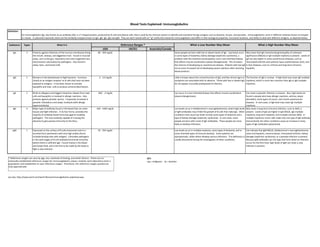

This document defines and provides information about the five main types of immunoglobulins (IgA, IgD, IgE, IgG, IgM), including their functions, typical levels in the blood, and what low or high levels may indicate. Immunoglobulins are antibody proteins that help fight infection and foreign antigens. Each type has a different function, such as protecting mucosal surfaces (IgA) or triggering allergic reactions (IgE). Abnormal levels can be a sign of infection, immune deficiency, cancer, or other medical conditions.


