Good morning
Dr Nidesh mds pedodontics
AUTO IMMUNE DISORDERS
Dr Nidesh mds pedodontics
Contents:
Introduction
Causes
Contributing factors
Organs
Tolerance
Disorders
Dr Nidesh mds pedodontics
Autoimmunity
 Breakdown of mechanisms responsible for self tolerance and
induction of specific adaptive immune response against
components of the self.
 Condition in which structural or functional damage is produced
by action of immunological component cells or antibodies
against the normal components of the body
Dr Nidesh mds pedodontics
 Earliest example by
 Metalnikoff(1900)
 Ehrlich (1901)- “horror autotoxicus”
 Donath and landsteiner-circulating auto antibodies in
paroxysomal cold hemaglobinema
 This is first description of an auto immune disease in human
beings.
Dr Nidesh mds pedodontics
 Dameshek and schwartz(1938) established the autoimmune
basis of acute hemolytic anemia
 The term auto immune disease is to those where autoimmune
process , humoral or cellular are shown to be responsible for
pathogenesis.
Dr Nidesh mds pedodontics
Sequestered or Hidden antigens
Neo antigens
Cessation of Tolerance
It may result when tolerance to the self-Ag is aborted.
Causes of autoimmune diseases
Loss of Immunoregulation
Loss of Self tolerance - caused by over activity or lowered
activity of T and B- cells
Dr Nidesh mds pedodontics
Cross reacting Antigens
A foreign Ag which resembles self a ag
Many species share organ specific Ags.
E.g. Ag of Human brain & Ag of sheep brain, Streptococcal
M protein & Heart muscles, Nephritogenic strains of
Streptococci Ags & Renal glomeruli shares similar epiotes.
Dr Nidesh mds pedodontics
Contributing Factors
 Defects in the immune system
 Influence of hormones
 Environmental conditions
Dr Nidesh mds pedodontics
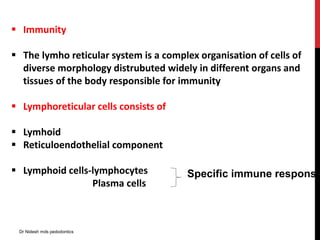
 Immunity
 The lymho reticular system is a complex organisation of cells of
diverse morphology distrubuted widely in different organs and
tissues of the body responsible for immunity
 Lymphoreticular cells consists of
 Lymhoid
 Reticuloendothelial component
 Lymphoid cells-lymphocytes
Plasma cells
Specific immune response
Dr Nidesh mds pedodontics
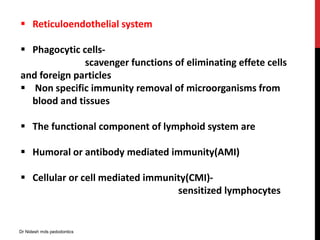
 Reticuloendothelial system
 Phagocytic cells-
scavenger functions of eliminating effete cells
and foreign particles
 Non specific immunity removal of microorganisms from
blood and tissues
 The functional component of lymphoid system are
 Humoral or antibody mediated immunity(AMI)
 Cellular or cell mediated immunity(CMI)-
sensitized lymphocytes
Dr Nidesh mds pedodontics
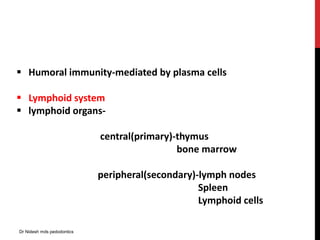
 Humoral immunity-mediated by plasma cells
 Lymphoid system
 lymphoid organs-
central(primary)-thymus
bone marrow
peripheral(secondary)-lymph nodes
Spleen
Lymphoid cells
Dr Nidesh mds pedodontics
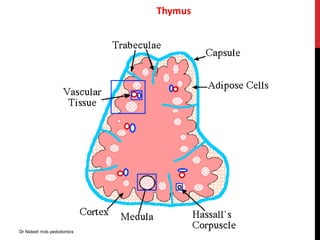
Thymus
Dr Nidesh mds pedodontics
 Digeorge syndrome-
deficient cmi seen in congenital aplasia of thymus
 T lymphocytes develop in thymus
 B lympho cytes develop in bone marrow
 RUNT disease-
 Lymphopenia
 deficient graft rejection
 neonatally thymectomised mice
Dr Nidesh mds pedodontics
 Lymphoid cells appear in spleen in 20th week of gestation
 Then fetus produces igM and igD
 It receives maternal igG
Dr Nidesh mds pedodontics
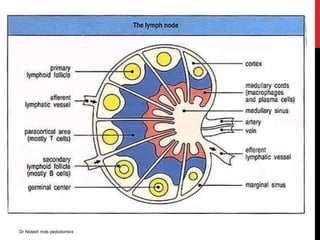
 Lymph node functions:
 As a filter for lymph , each of nodes draining a specific part of
body
 Functions-
 Phagocytose foreign materials including microorganisms
 In proliferation and circulation of t and b cells
Dr Nidesh mds pedodontics
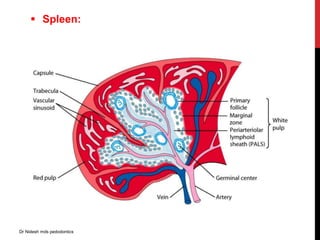
 Spleen:
Dr Nidesh mds pedodontics
 The resources such as iron hemoglobulin are recycled serving
as strong case for renaming this as green pulp
 Functions
 its graveyard
 Reserve tank and settling bed for blood and as a systemic
filter for trapping circulating blood borne foreign particles
 Primarly directed against blood borne antigens
Dr Nidesh mds pedodontics
 Lympho-reticular system
 According to their size-
 Classified into
 Small(5-8um)(numerous)
 Medium(8-12)
 Large(12-15)
 Based on life span
 Short lived-2 weeks
 Long lived-3 years or more
Dr Nidesh mds pedodontics
 B lymphocyte
 T lymhocytes
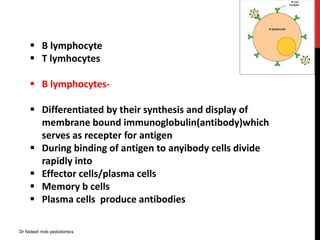
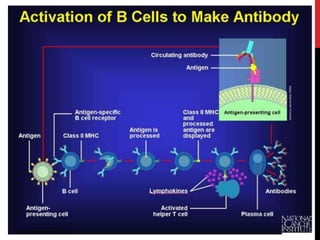
 B lymphocytes-
 Differentiated by their synthesis and display of
membrane bound immunoglobulin(antibody)which
serves as recepter for antigen
 During binding of antigen to anyibody cells divide
rapidly into
 Effector cells/plasma cells
 Memory b cells
 Plasma cells produce antibodies
Dr Nidesh mds pedodontics
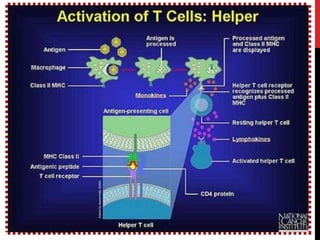
T lymphocyte
During maturation t cells exhibit unique antigen antibody
molecule called t cell receptor
T cell receptor only recognize the antigen that is bound to
cell membrane called MHC
Proliferates and differentiate into effector t cells
Memory t cells
Dr Nidesh mds pedodontics
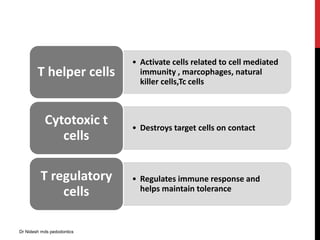
• Activate cells related to cell mediated
immunity , marcophages, natural
killer cells,Tc cells
T helper cells
• Destroys target cells on contact
Cytotoxic t
cells
• Regulates immune response and
helps maintain tolerance
T regulatory
cells
Dr Nidesh mds pedodontics
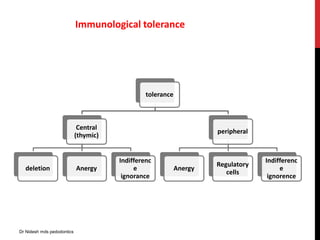
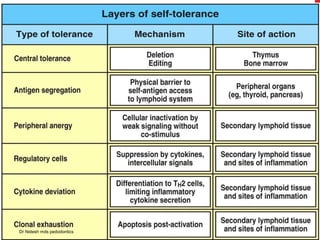
Immunological tolerance
tolerance
Central
(thymic)
deletion Anergy
Indifferenc
e
ignorance
peripheral
Anergy
Regulatory
cells
Indifferenc
e
ignorence
Dr Nidesh mds pedodontics
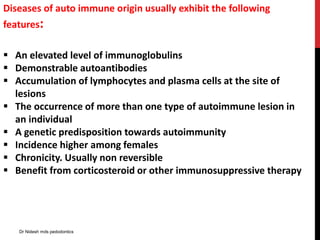
Diseases of auto immune origin usually exhibit the following
features:
 An elevated level of immunoglobulins
 Demonstrable autoantibodies
 Accumulation of lymphocytes and plasma cells at the site of
lesions
 The occurrence of more than one type of autoimmune lesion in
an individual
 A genetic predisposition towards autoimmunity
 Incidence higher among females
 Chronicity. Usually non reversible
 Benefit from corticosteroid or other immunosuppressive therapy
Dr Nidesh mds pedodontics
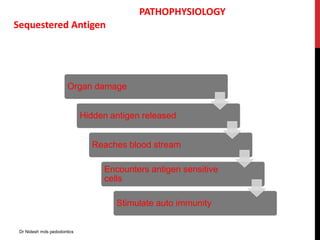
Sequestered Antigen
PATHOPHYSIOLOGY
Organ damage
Hidden antigen released
Reaches blood stream
Encounters antigen sensitive
cells
Stimulate auto immunity
Dr Nidesh mds pedodontics
Altered Antigen
Surface antigens on host altered by chemical, biological
or physical means.
This new antigenic determinant may be recognized as
foreign by the host.
Loss of immunoregulation
Loss of Self tolerance –
caused by over activity or lowered activity of T and B-
cells
Dr Nidesh mds pedodontics
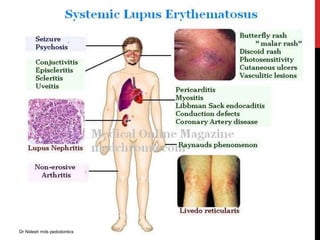
Systemic Lupus Erythematosus
Autoimmune disease characterized by
Autoantibodies
immune complex formation
immune dysregulation resulting in damage to kidney, skin, blood
cells and CNS.
Because of its protien manifestations lupus must be considered in
the differential diagnosis of many problems.
Dr Nidesh mds pedodontics
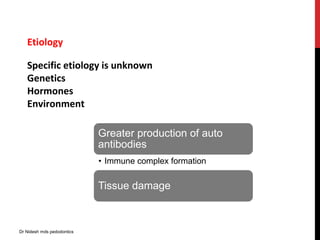
Etiology
Specific etiology is unknown
Genetics
Hormones
Environment
Greater production of auto
antibodies
• Immune complex formation
Tissue damage
Dr Nidesh mds pedodontics
Produce autoantibodies against DNA
Nuclear antigens
Ribosomes
Platelets
Erythrocytes
Leucocytes
Other tissue specific antigens
Dr Nidesh mds pedodontics
Clinical Manifestations
 Serious cutaneous – systemic disorder with repeated remissions
and exacerbations.
 Females – 30 years
 Males – 40 years
 Female to male ratio 2:1
 Before and after puberty-4:1
Dr Nidesh mds pedodontics
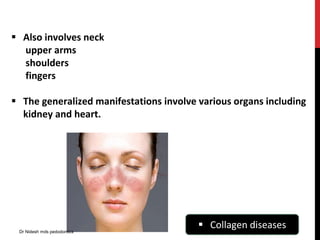
 Also involves neck
upper arms
shoulders
fingers
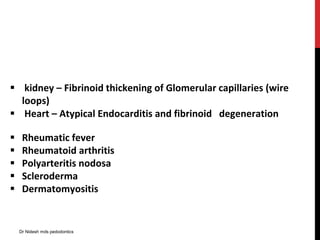
 The generalized manifestations involve various organs including
kidney and heart.
 Collagen diseasesDr Nidesh mds pedodontics
 Rheumatic fever
 Rheumatoid arthritis
 Polyarteritis nodosa
 Scleroderma
 Dermatomyositis
 kidney – Fibrinoid thickening of Glomerular capillaries (wire
loops)
 Heart – Atypical Endocarditis and fibrinoid degeneration
Dr Nidesh mds pedodontics
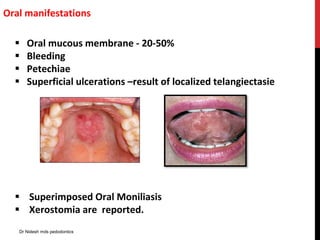
Oral manifestations
 Oral mucous membrane - 20-50%
 Bleeding
 Petechiae
 Superficial ulcerations –result of localized telangiectasie
 Superimposed Oral Moniliasis
 Xerostomia are reported.
Dr Nidesh mds pedodontics
 DIAGNOSIS
 Anemia
 Leukopenia
 Thrombocytopenia
 Elevated sedimentation rate
 LE cell inclusion phenomenon
 Formation of gamma globulin of serum
 Elevation of ESR with normal C reactive protein levels
 Detection of antinuclear antibodies (anas)
Dr Nidesh mds pedodontics
 Treatment
 Carefull and frequent clinical and laboratory evaluation –
corner stone of successful intervention.
 Corticosteriods are Useful in controlling disease flares.
 When symptomatic oral lesions present- potent topical
steroids such as
 Clobetasol Propionate gel – 0.05%
 Betamethasone dipropionate- 0.05% 2-3 times daily
 Fluticazzone propionate spray – 50 microgms
Dr Nidesh mds pedodontics
 For severe : a pulse IV Cyclophosphamide
 Other less toxic agents such as Mycophenolate mofetil (MMF)
and Azathioprine has been shown to possess efficacy
equivalent to that of quaterly Cyclophosphamide with fewer
side effect.
 NSAIDS are used for sympotomatic relief in arthritis.
Dr Nidesh mds pedodontics
 A complete blood count(CBC) is obtained prior to treatment.
 Elective oral surgical procedures with potential of Bacteremia
is delayed.
 Prophylactic antibiotics is often recommended if neutrophilic
count falls below 500-1000cells/mm3.
 Platelet transfusion recommended in surgical patients with
platelet count <50000cells/mm3 .
 Dental management
Dr Nidesh mds pedodontics
Systemic sclerosis
Scleroderma, Dermatosclerosis, Hidebound disease
 Is a systemic connective tissue disease characterized by
vasomotor disturbances
 Fibrosis
 Subsequent atrophy of the skin
 Sub cutaneous tissue
 Muscle
 Internal organs including alimentary tract,heart , lungs, kidney,
gastrointestinal tract.
Dr Nidesh mds pedodontics
Etiology
 Unclear etiology.
 Genetic
 Environmental
 vascular factors
 Human leukocyte antigens likeHLA-B8, HLA-DR5, HLA-DR3,HLA-
DR52 and HLA-DQB2.
Dr Nidesh mds pedodontics
 Apoptosis and generation of free radicals may be involved in
pathogenesis
 Increased collagen deposition in tissues is a characteristic
feature of systemic sclerosis
Dr Nidesh mds pedodontics
Clinical features
 begin in children or young adults.
 30 and 50 years
 Females>males
 Ultimate induration of the skin and fixation of the epidermis
to the deeper subcutaneous tissues.
Dr Nidesh mds pedodontics
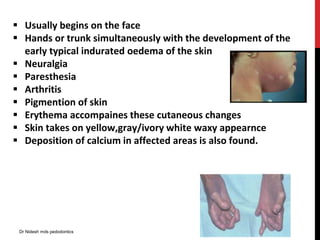
 Usually begins on the face
 Hands or trunk simultaneously with the development of the
early typical indurated oedema of the skin
 Neuralgia
 Paresthesia
 Arthritis
 Pigmention of skin
 Erythema accompaines these cutaneous changes
 Skin takes on yellow,gray/ivory white waxy appearnce
 Deposition of calcium in affected areas is also found.
Dr Nidesh mds pedodontics
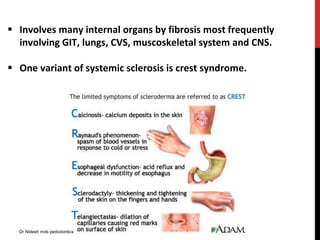
 Involves many internal organs by fibrosis most frequently
involving GIT, lungs, CVS, muscoskeletal system and CNS.
 One variant of systemic sclerosis is crest syndrome.
Dr Nidesh mds pedodontics
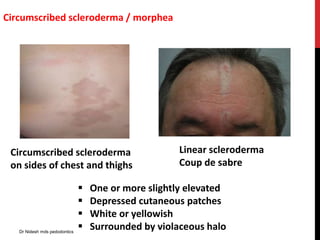
Circumscribed scleroderma / morphea
Circumscribed scleroderma
on sides of chest and thighs
Linear scleroderma
Coup de sabre
 One or more slightly elevated
 Depressed cutaneous patches
 White or yellowish
 Surrounded by violaceous haloDr Nidesh mds pedodontics
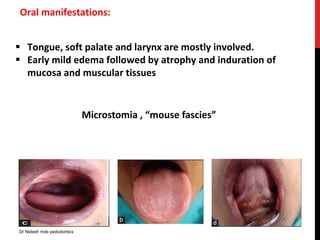
Oral manifestations:
 Tongue, soft palate and larynx are mostly involved.
 Early mild edema followed by atrophy and induration of
mucosa and muscular tissues
Microstomia , “mouse fascies”
Dr Nidesh mds pedodontics
•Gingival recession
•Dysphagia
•hypomobile (board like ) tongue
•Reduced mouth opening and fixation of jaw
•Xerostomia
 Alarcon-segovia-sjorgen disease with
 Lymphocyte infiltration
 Duct cell proliferation
 Collagen infiltration
 Weisman and calcatena-alterations in salivary gland
functions-sicca syndrome
Dr Nidesh mds pedodontics
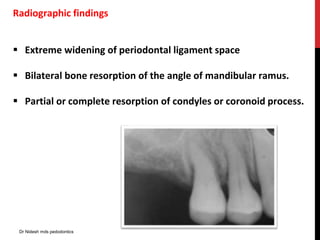
Radiographic findings
 Extreme widening of periodontal ligament space
 Bilateral bone resorption of the angle of mandibular ramus.
 Partial or complete resorption of condyles or coronoid process.
Dr Nidesh mds pedodontics
 Early diagnosis and treatment are advised.
 Calcium channel blockers
 D- penicillamine
 Cyclophosphamide
 Angiotensins
Treatment
Dr Nidesh mds pedodontics
Dental management
 Most common problem is physical limitation of oral aperture.
 Stretching Exercises
 Tongue Blades
 Bilateral Commissurotomy
 Customized tooth brush handles should be provided for patients
who cannot grip.
Dr Nidesh mds pedodontics
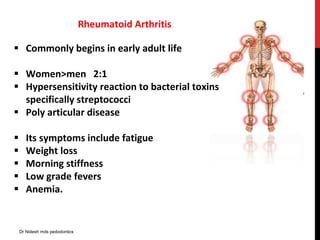
Rheumatoid Arthritis
 Commonly begins in early adult life
 Women>men 2:1
 Hypersensitivity reaction to bacterial toxins
specifically streptococci
 Poly articular disease
 Its symptoms include fatigue
 Weight loss
 Morning stiffness
 Low grade fevers
 Anemia.
Dr Nidesh mds pedodontics
Subtypes:
 Juvenile rheumatoid arthritis
children < 16 years
 Joint stiffness
 Decreased range of motion,
 Pain on range of motion
 Joint warmth for atleast 6 weeks without another cause.
Dr Nidesh mds pedodontics
Systemic (still’s disease): characterized by joint swelling, fever,
rash, and organ involvement
 Early stages may be manifested by slight fever, loss of weight
and fatigability.
 The joints affected are swollen.
 Movement of the jaw as during mastication or talking causes
pain and may be limited because of stiffness.
Clinical features
Dr Nidesh mds pedodontics
 Severe cases ankylosis of tmj
 Stills disease : class ii div i malocclusion, anterior open bite
 Deformation of the mandible characterized by shortening of the
body and reduction in the height of the ramus due to failure of
growth center in the condylar area
Dr Nidesh mds pedodontics
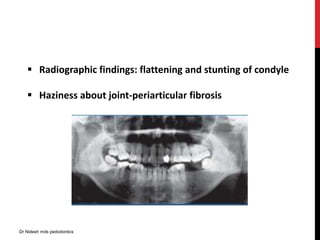
 Radiographic findings: flattening and stunting of condyle
 Haziness about joint-periarticular fibrosis
Dr Nidesh mds pedodontics
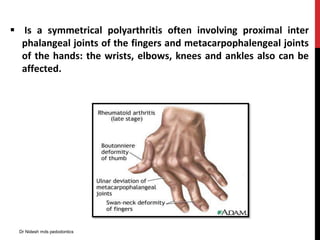
 Is a symmetrical polyarthritis often involving proximal inter
phalangeal joints of the fingers and metacarpophalengeal joints
of the hands: the wrists, elbows, knees and ankles also can be
affected.
Dr Nidesh mds pedodontics
 The treatment of causes oral manifestations, the long term use
of Methotrexate and other anti rheumatic agents such as D-
pencillamine and NSAIDS can cause Stomatitis.
 Minocycline may cause hyperpigmentation intraorally,
Oral manifestations
Dr Nidesh mds pedodontics
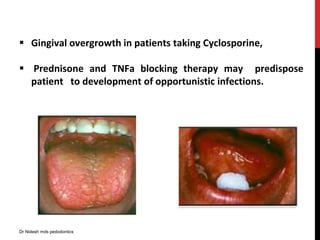
 Gingival overgrowth in patients taking Cyclosporine,
 Prednisone and TNFa blocking therapy may predispose
patient to development of opportunistic infections.
Dr Nidesh mds pedodontics
Dental management
 When treating RA patient it is important to understand the
 Mechanism of action
 Side effects
 Drug interactions of the current medications
Dr Nidesh mds pedodontics
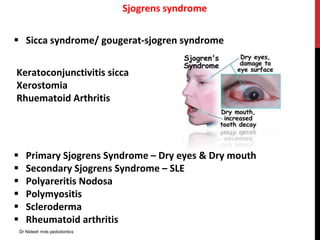
Sjogrens syndrome
 Sicca syndrome/ gougerat-sjogren syndrome
 Primary Sjogrens Syndrome – Dry eyes & Dry mouth
 Secondary Sjogrens Syndrome – SLE
 Polyareritis Nodosa
 Polymyositis
 Scleroderma
 Rheumatoid arthritis
Keratoconjunctivitis sicca
Xerostomia
Rhuematoid Arthritis
Dr Nidesh mds pedodontics
Etiology
 Genetic
 Hormonal
 Infectious
 immunological or combination of factors play a role in the
etiology of this condition.
 Most consider an altered immunological response to be the main
intrinsic factor which is responsible for the disease.
 Primary form-HLA-DR3,HLA-B8
 Hla-drw52 for both
 Sera anti salivary duct antibody
Dr Nidesh mds pedodontics
 Clinical manifestations:
 Predominantly in women over 40 years of age.
 Female to male ratio is 10:1
 Typical features are dryness of the mouth and eyes
 Various secretory glands of the nose, larynx, pharynx,
tracheobronchial tree are involved with this dryness
 Xerostomia
 Elevated levels of IgA,Potassium,sodium in saliva
 80% primary Sjogrens syndrome have parotid enlargement
 14% secondary Sjogrens syndrome have parotid enlargement
 Lymphadenopathy
Dr Nidesh mds pedodontics
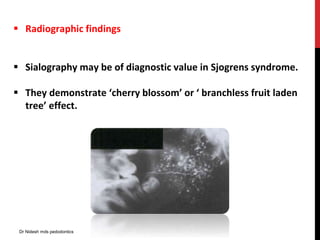
 Radiographic findings
 Sialography may be of diagnostic value in Sjogrens syndrome.
 They demonstrate ‘cherry blossom’ or ‘ branchless fruit laden
tree’ effect.
Dr Nidesh mds pedodontics
Treatment
 Most patients are treated symptomatically
 Occular lubricants – methylcellulose – to treat keratoconjunctivitis
sicca
 Saliva substitutes – to treat xerostomia
 Extensive dental caries and poor oral hygiene – frequent fluoride
application.
 Surgery and radiation therapy has been recommended to treat
enlarged salivary glands.
Dr Nidesh mds pedodontics
 A major complicating factor is development of the
pseudolymphoma and malignant lymphoma.
 The risk of lymphoma [non hodgkins] in sjogrens syndrome
patients is 6.4 cases for 100 cases.
Dr Nidesh mds pedodontics
Reiter’s syndrome
 Unknown etiology associated with urethritis
 Calanitis
 Conjuctivitis
 Mucocutaneous lesions
 It is a complication of nonspecific urethritis and clinically mimics
gonorrhea.
 Pleura-pneumonia like organisms have been implicated and
Mycoplasmal and Chlamydial species have also been suspected.
 HLA-B27
 Recent evidence suggests that this condition is also seen
frequently in HIV patients.
Dr Nidesh mds pedodontics
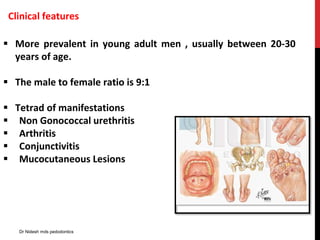
Clinical features
 More prevalent in young adult men , usually between 20-30
years of age.
 The male to female ratio is 9:1
 Tetrad of manifestations
 Non Gonococcal urethritis
 Arthritis
 Conjunctivitis
 Mucocutaneous Lesions
Dr Nidesh mds pedodontics
Oral manifestations
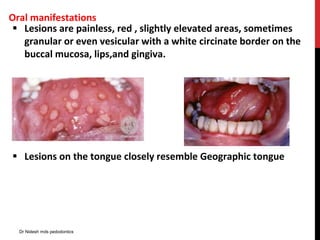
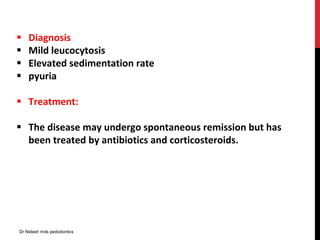
 Lesions are painless, red , slightly elevated areas, sometimes
granular or even vesicular with a white circinate border on the
buccal mucosa, lips,and gingiva.
 Lesions on the tongue closely resemble Geographic tongue
Dr Nidesh mds pedodontics
 Diagnosis
 Mild leucocytosis
 Elevated sedimentation rate
 pyuria
 Treatment:
 The disease may undergo spontaneous remission but has
been treated by antibiotics and corticosteroids.
Dr Nidesh mds pedodontics
Oral Lichen Planus
 lichen ruber planus
 It is a common mucocutaneous disease.
 Effects skin or mucosa or both
 It can cause bilateral white striations, papules, or plaques on
the buccal mucosa, tongue and gingiva.
 The involvement of the oral mucous membrane is so frequent
Dr Nidesh mds pedodontics
Etiology:
 T cell mediated autoimmune disease in which cytotoxic CD8+T
cell trigger the apoptosis of oral epithelial cells.
 The expression of the lichen planus antigen may be induced by
drugs - Lichenoid Drug Reaction
 Association of lichen planus, diabetes mellitus and vascular
hypertension has been described as Grinspans Syndrome.
Dr Nidesh mds pedodontics
Clinical manifestations
Female-male 1.4:1
At 40 years
Skin lesions-small
Angular
Flat toped papules few mm to cm
Early stages-red-reddish purpule or viloceous hue
Later dirty brownish colour develops
Dr Nidesh mds pedodontics
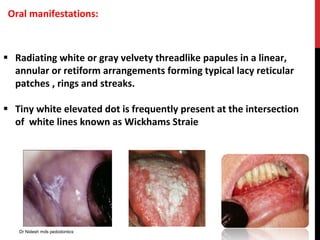
Oral manifestations:
 Radiating white or gray velvety threadlike papules in a linear,
annular or retiform arrangements forming typical lacy reticular
patches , rings and streaks.
 Tiny white elevated dot is frequently present at the intersection
of white lines known as Wickhams Straie
Dr Nidesh mds pedodontics
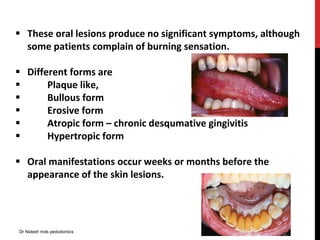
 These oral lesions produce no significant symptoms, although
some patients complain of burning sensation.
 Different forms are
 Plaque like,
 Bullous form
 Erosive form
 Atropic form – chronic desqumative gingivitis
 Hypertropic form
 Oral manifestations occur weeks or months before the
appearance of the skin lesions.
Dr Nidesh mds pedodontics
Differential diagnosis:
 Lichenoid reaction
 Leukoplakia
 Candidiasis
 Pemphigus
 Cicatrial pemphigoidsyphilis
 Lupus erythematosus
Malignant transformation
 Higher incidence of oral squamous cell carcinoma
 0.3% to 3%
 Erosive and atropic forms mostly undergo malignant
transformation.
Dr Nidesh mds pedodontics
 Treatment:
 At present there is no cure,
 Potential for malignant transformation is minimal, these
patients kept on long term follow-up.
 Principal aim is resolution of the painful symptoms, the lesion,
reduction of risk of cancer, and maintenance of good oral
hygiene.
 Corticosteroids are recommended
Dr Nidesh mds pedodontics
Psoriasis
 Noncontagious skin disorder
 Inflamed
 edematous skin lesions covered with a silvery white scale.
 Most common type is plaque psoriasis
 Nails are pitted/thickened
Dr Nidesh mds pedodontics
 The trigger event is unknown, but is an immunological event,
significant evidence of autoimmunity is present.
 Genetic predisposition
 Lesions of psoriasis are associated with increased activity of T
cells in underlying skin.
 Perceived stress
Etiology
Dr Nidesh mds pedodontics
 Clinical features:
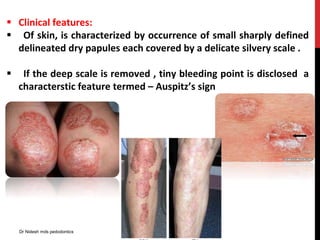
 Of skin, is characterized by occurrence of small sharply defined
delineated dry papules each covered by a delicate silvery scale .
 If the deep scale is removed , tiny bleeding point is disclosed a
characterstic feature termed – Auspitz’s sign
Dr Nidesh mds pedodontics
Oral manifestations
 Involvement of oral mucosa is rare.
 A study by buchner found none with oral lesions of dermal
psoriasis patients, however they did note 11%had angular
cheliosis, 6% fissured tongue, 5% benign migratory glossitis.
 They are yellowish-white plaques, as silvery white scaly lesions
with erythematous base .Or as multiple papular eruptions which
may be ulcerated
Dr Nidesh mds pedodontics
 Psoriasiform lesions of oral mucosa-
 Psoriasis
 Reiters syndrome
 Benign migratoey glossitis
 Ectopic geographic tongue
Dr Nidesh mds pedodontics
 Treatment:
 Lesions are benign but few cases are refractory to treatment.
 Treatment include UV-light , Psoralen plus UV-A light(PUVA),
Retinoids, methotrexate, cyclosporine.
Dr Nidesh mds pedodontics
Pemphigus vulgaris
 Is an autoimmune intraepithelial blistering disease
 Skin and mucous membrane
 Mediated by circulating IgG autoantibodies directed against
keratinocyte cell surface.
 Effects all races with equal gender prediction and mean age of
onset is 50-60 years
Dr Nidesh mds pedodontics
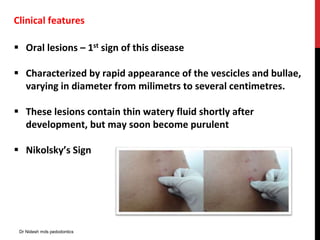
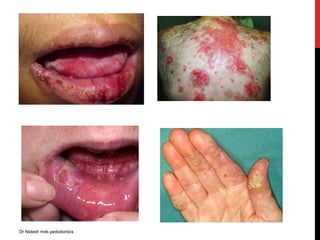
 Oral lesions – 1st sign of this disease
 Characterized by rapid appearance of the vescicles and bullae,
varying in diameter from milimetrs to several centimetres.
 These lesions contain thin watery fluid shortly after
development, but may soon become purulent
 Nikolsky’s Sign
Clinical features
Dr Nidesh mds pedodontics
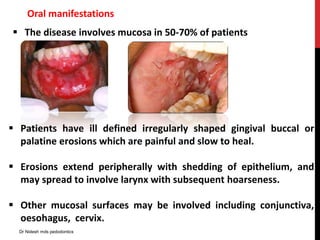
 The disease involves mucosa in 50-70% of patients
 Patients have ill defined irregularly shaped gingival buccal or
palatine erosions which are painful and slow to heal.
 Erosions extend peripherally with shedding of epithelium, and
may spread to involve larynx with subsequent hoarseness.
 Other mucosal surfaces may be involved including conjunctiva,
oesohagus, cervix.
Oral manifestations
Dr Nidesh mds pedodontics
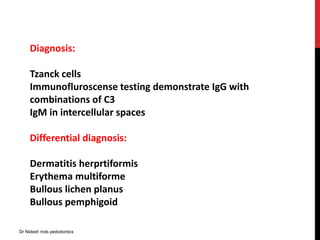
Diagnosis:
Tzanck cells
Immunofluroscense testing demonstrate IgG with
combinations of C3
IgM in intercellular spaces
Differential diagnosis:
Dermatitis herprtiformis
Erythema multiforme
Bullous lichen planus
Bullous pemphigoid
Dr Nidesh mds pedodontics
Treatment:
 Systemic Corticosteroids – main stay of treatment- 1-
2mg/kg/day
 Adjuvants – immunosuppresive drugs- mycofenolate mofetil,
azathioprine, cyclophosphamide
Dr Nidesh mds pedodontics
WEGNER’ S GRANULOMATOSIS
 Immunologically mediated multisystem disorder
 Vascular, renal and respiratory systems.
 It involves nose
 paranasal air sinuses
 lower respiratory tract
 Gut
 Joints
 Nervous system and kidneys.
 Etiology:
 It may be caused by an abnormal immune reaction secondary to
a nonspecific infection or a hyper sensitivity reaction to an
unknown antigen.
Dr Nidesh mds pedodontics
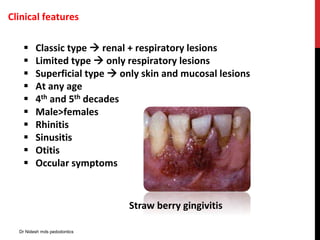
Clinical features
 Classic type  renal + respiratory lesions
 Limited type  only respiratory lesions
 Superficial type  only skin and mucosal lesions
 At any age
 4th and 5th decades
 Male>females
 Rhinitis
 Sinusitis
 Otitis
 Occular symptoms
Straw berry gingivitis
Dr Nidesh mds pedodontics
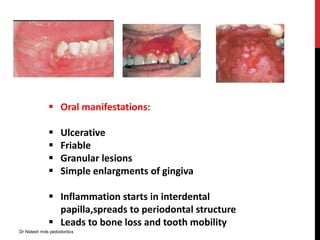
 Oral manifestations:
 Ulcerative
 Friable
 Granular lesions
 Simple enlargments of gingiva
 Inflammation starts in interdental
papilla,spreads to periodontal structure
 Leads to bone loss and tooth mobility
Dr Nidesh mds pedodontics
 Diagnosis:
 Anemia
 Leucocytosis
 Elevated sedimentation rate
 hyperglobulinemia
Dr Nidesh mds pedodontics
Treatment
 Majority of cases of wegners granulomatosis formerly
terminated fatally.
 However to prevent long term remissions cyclophosphamide
and prednisolone are recommended.
Dr Nidesh mds pedodontics
CONCLUSION
An autoimmune disease develops when our immune system,
which defends our body against disease, decides our healthy cells
are foreign. As a result, our immune system attacks healthy cells.
Dr Nidesh mds pedodontics
 Basics and clinical immunology-peakman,vergani-2nd edition
 Kuby immunology-6th edition
 Ananthanarayan and paniker text book of microbiology – 7th
edition
 Shafers textbook of oral patholgy -6th edition
 Burkitts oral medicine -11th edition
References
Dr Nidesh mds pedodontics

auto immune disorder seminar

  • 1.
    Good morning Dr Nideshmds pedodontics
  • 2.
    AUTO IMMUNE DISORDERS DrNidesh mds pedodontics
  • 3.
  • 4.
    Autoimmunity  Breakdown ofmechanisms responsible for self tolerance and induction of specific adaptive immune response against components of the self.  Condition in which structural or functional damage is produced by action of immunological component cells or antibodies against the normal components of the body Dr Nidesh mds pedodontics
  • 5.
     Earliest exampleby  Metalnikoff(1900)  Ehrlich (1901)- “horror autotoxicus”  Donath and landsteiner-circulating auto antibodies in paroxysomal cold hemaglobinema  This is first description of an auto immune disease in human beings. Dr Nidesh mds pedodontics
  • 6.
     Dameshek andschwartz(1938) established the autoimmune basis of acute hemolytic anemia  The term auto immune disease is to those where autoimmune process , humoral or cellular are shown to be responsible for pathogenesis. Dr Nidesh mds pedodontics
  • 7.
    Sequestered or Hiddenantigens Neo antigens Cessation of Tolerance It may result when tolerance to the self-Ag is aborted. Causes of autoimmune diseases Loss of Immunoregulation Loss of Self tolerance - caused by over activity or lowered activity of T and B- cells Dr Nidesh mds pedodontics
  • 8.
    Cross reacting Antigens Aforeign Ag which resembles self a ag Many species share organ specific Ags. E.g. Ag of Human brain & Ag of sheep brain, Streptococcal M protein & Heart muscles, Nephritogenic strains of Streptococci Ags & Renal glomeruli shares similar epiotes. Dr Nidesh mds pedodontics
  • 9.
    Contributing Factors  Defectsin the immune system  Influence of hormones  Environmental conditions Dr Nidesh mds pedodontics
  • 10.
     Immunity  Thelymho reticular system is a complex organisation of cells of diverse morphology distrubuted widely in different organs and tissues of the body responsible for immunity  Lymphoreticular cells consists of  Lymhoid  Reticuloendothelial component  Lymphoid cells-lymphocytes Plasma cells Specific immune response Dr Nidesh mds pedodontics
  • 11.
     Reticuloendothelial system Phagocytic cells- scavenger functions of eliminating effete cells and foreign particles  Non specific immunity removal of microorganisms from blood and tissues  The functional component of lymphoid system are  Humoral or antibody mediated immunity(AMI)  Cellular or cell mediated immunity(CMI)- sensitized lymphocytes Dr Nidesh mds pedodontics
  • 12.
     Humoral immunity-mediatedby plasma cells  Lymphoid system  lymphoid organs- central(primary)-thymus bone marrow peripheral(secondary)-lymph nodes Spleen Lymphoid cells Dr Nidesh mds pedodontics
  • 13.
  • 14.
     Digeorge syndrome- deficientcmi seen in congenital aplasia of thymus  T lymphocytes develop in thymus  B lympho cytes develop in bone marrow  RUNT disease-  Lymphopenia  deficient graft rejection  neonatally thymectomised mice Dr Nidesh mds pedodontics
  • 15.
     Lymphoid cellsappear in spleen in 20th week of gestation  Then fetus produces igM and igD  It receives maternal igG Dr Nidesh mds pedodontics
  • 16.
    Dr Nidesh mdspedodontics
  • 17.
     Lymph nodefunctions:  As a filter for lymph , each of nodes draining a specific part of body  Functions-  Phagocytose foreign materials including microorganisms  In proliferation and circulation of t and b cells Dr Nidesh mds pedodontics
  • 18.
     Spleen: Dr Nideshmds pedodontics
  • 19.
     The resourcessuch as iron hemoglobulin are recycled serving as strong case for renaming this as green pulp  Functions  its graveyard  Reserve tank and settling bed for blood and as a systemic filter for trapping circulating blood borne foreign particles  Primarly directed against blood borne antigens Dr Nidesh mds pedodontics
  • 20.
     Lympho-reticular system According to their size-  Classified into  Small(5-8um)(numerous)  Medium(8-12)  Large(12-15)  Based on life span  Short lived-2 weeks  Long lived-3 years or more Dr Nidesh mds pedodontics
  • 21.
     B lymphocyte T lymhocytes  B lymphocytes-  Differentiated by their synthesis and display of membrane bound immunoglobulin(antibody)which serves as recepter for antigen  During binding of antigen to anyibody cells divide rapidly into  Effector cells/plasma cells  Memory b cells  Plasma cells produce antibodies Dr Nidesh mds pedodontics
  • 22.
    T lymphocyte During maturationt cells exhibit unique antigen antibody molecule called t cell receptor T cell receptor only recognize the antigen that is bound to cell membrane called MHC Proliferates and differentiate into effector t cells Memory t cells Dr Nidesh mds pedodontics
  • 23.
    • Activate cellsrelated to cell mediated immunity , marcophages, natural killer cells,Tc cells T helper cells • Destroys target cells on contact Cytotoxic t cells • Regulates immune response and helps maintain tolerance T regulatory cells Dr Nidesh mds pedodontics
  • 24.
    Dr Nidesh mdspedodontics
  • 25.
    Dr Nidesh mdspedodontics
  • 26.
  • 27.
    Dr Nidesh mdspedodontics
  • 28.
    Diseases of autoimmune origin usually exhibit the following features:  An elevated level of immunoglobulins  Demonstrable autoantibodies  Accumulation of lymphocytes and plasma cells at the site of lesions  The occurrence of more than one type of autoimmune lesion in an individual  A genetic predisposition towards autoimmunity  Incidence higher among females  Chronicity. Usually non reversible  Benefit from corticosteroid or other immunosuppressive therapy Dr Nidesh mds pedodontics
  • 29.
    Sequestered Antigen PATHOPHYSIOLOGY Organ damage Hiddenantigen released Reaches blood stream Encounters antigen sensitive cells Stimulate auto immunity Dr Nidesh mds pedodontics
  • 30.
    Altered Antigen Surface antigenson host altered by chemical, biological or physical means. This new antigenic determinant may be recognized as foreign by the host. Loss of immunoregulation Loss of Self tolerance – caused by over activity or lowered activity of T and B- cells Dr Nidesh mds pedodontics
  • 31.
    Dr Nidesh mdspedodontics
  • 32.
    Systemic Lupus Erythematosus Autoimmunedisease characterized by Autoantibodies immune complex formation immune dysregulation resulting in damage to kidney, skin, blood cells and CNS. Because of its protien manifestations lupus must be considered in the differential diagnosis of many problems. Dr Nidesh mds pedodontics
  • 33.
    Etiology Specific etiology isunknown Genetics Hormones Environment Greater production of auto antibodies • Immune complex formation Tissue damage Dr Nidesh mds pedodontics
  • 34.
    Produce autoantibodies againstDNA Nuclear antigens Ribosomes Platelets Erythrocytes Leucocytes Other tissue specific antigens Dr Nidesh mds pedodontics
  • 35.
    Clinical Manifestations  Seriouscutaneous – systemic disorder with repeated remissions and exacerbations.  Females – 30 years  Males – 40 years  Female to male ratio 2:1  Before and after puberty-4:1 Dr Nidesh mds pedodontics
  • 36.
     Also involvesneck upper arms shoulders fingers  The generalized manifestations involve various organs including kidney and heart.  Collagen diseasesDr Nidesh mds pedodontics
  • 37.
     Rheumatic fever Rheumatoid arthritis  Polyarteritis nodosa  Scleroderma  Dermatomyositis  kidney – Fibrinoid thickening of Glomerular capillaries (wire loops)  Heart – Atypical Endocarditis and fibrinoid degeneration Dr Nidesh mds pedodontics
  • 38.
    Dr Nidesh mdspedodontics
  • 39.
    Oral manifestations  Oralmucous membrane - 20-50%  Bleeding  Petechiae  Superficial ulcerations –result of localized telangiectasie  Superimposed Oral Moniliasis  Xerostomia are reported. Dr Nidesh mds pedodontics
  • 40.
     DIAGNOSIS  Anemia Leukopenia  Thrombocytopenia  Elevated sedimentation rate  LE cell inclusion phenomenon  Formation of gamma globulin of serum  Elevation of ESR with normal C reactive protein levels  Detection of antinuclear antibodies (anas) Dr Nidesh mds pedodontics
  • 41.
     Treatment  Carefulland frequent clinical and laboratory evaluation – corner stone of successful intervention.  Corticosteriods are Useful in controlling disease flares.  When symptomatic oral lesions present- potent topical steroids such as  Clobetasol Propionate gel – 0.05%  Betamethasone dipropionate- 0.05% 2-3 times daily  Fluticazzone propionate spray – 50 microgms Dr Nidesh mds pedodontics
  • 42.
     For severe: a pulse IV Cyclophosphamide  Other less toxic agents such as Mycophenolate mofetil (MMF) and Azathioprine has been shown to possess efficacy equivalent to that of quaterly Cyclophosphamide with fewer side effect.  NSAIDS are used for sympotomatic relief in arthritis. Dr Nidesh mds pedodontics
  • 43.
     A completeblood count(CBC) is obtained prior to treatment.  Elective oral surgical procedures with potential of Bacteremia is delayed.  Prophylactic antibiotics is often recommended if neutrophilic count falls below 500-1000cells/mm3.  Platelet transfusion recommended in surgical patients with platelet count <50000cells/mm3 .  Dental management Dr Nidesh mds pedodontics
  • 44.
    Systemic sclerosis Scleroderma, Dermatosclerosis,Hidebound disease  Is a systemic connective tissue disease characterized by vasomotor disturbances  Fibrosis  Subsequent atrophy of the skin  Sub cutaneous tissue  Muscle  Internal organs including alimentary tract,heart , lungs, kidney, gastrointestinal tract. Dr Nidesh mds pedodontics
  • 45.
    Etiology  Unclear etiology. Genetic  Environmental  vascular factors  Human leukocyte antigens likeHLA-B8, HLA-DR5, HLA-DR3,HLA- DR52 and HLA-DQB2. Dr Nidesh mds pedodontics
  • 46.
     Apoptosis andgeneration of free radicals may be involved in pathogenesis  Increased collagen deposition in tissues is a characteristic feature of systemic sclerosis Dr Nidesh mds pedodontics
  • 47.
    Clinical features  beginin children or young adults.  30 and 50 years  Females>males  Ultimate induration of the skin and fixation of the epidermis to the deeper subcutaneous tissues. Dr Nidesh mds pedodontics
  • 48.
     Usually beginson the face  Hands or trunk simultaneously with the development of the early typical indurated oedema of the skin  Neuralgia  Paresthesia  Arthritis  Pigmention of skin  Erythema accompaines these cutaneous changes  Skin takes on yellow,gray/ivory white waxy appearnce  Deposition of calcium in affected areas is also found. Dr Nidesh mds pedodontics
  • 49.
     Involves manyinternal organs by fibrosis most frequently involving GIT, lungs, CVS, muscoskeletal system and CNS.  One variant of systemic sclerosis is crest syndrome. Dr Nidesh mds pedodontics
  • 50.
    Circumscribed scleroderma /morphea Circumscribed scleroderma on sides of chest and thighs Linear scleroderma Coup de sabre  One or more slightly elevated  Depressed cutaneous patches  White or yellowish  Surrounded by violaceous haloDr Nidesh mds pedodontics
  • 51.
    Oral manifestations:  Tongue,soft palate and larynx are mostly involved.  Early mild edema followed by atrophy and induration of mucosa and muscular tissues Microstomia , “mouse fascies” Dr Nidesh mds pedodontics
  • 52.
    •Gingival recession •Dysphagia •hypomobile (boardlike ) tongue •Reduced mouth opening and fixation of jaw •Xerostomia  Alarcon-segovia-sjorgen disease with  Lymphocyte infiltration  Duct cell proliferation  Collagen infiltration  Weisman and calcatena-alterations in salivary gland functions-sicca syndrome Dr Nidesh mds pedodontics
  • 53.
    Radiographic findings  Extremewidening of periodontal ligament space  Bilateral bone resorption of the angle of mandibular ramus.  Partial or complete resorption of condyles or coronoid process. Dr Nidesh mds pedodontics
  • 54.
     Early diagnosisand treatment are advised.  Calcium channel blockers  D- penicillamine  Cyclophosphamide  Angiotensins Treatment Dr Nidesh mds pedodontics
  • 55.
    Dental management  Mostcommon problem is physical limitation of oral aperture.  Stretching Exercises  Tongue Blades  Bilateral Commissurotomy  Customized tooth brush handles should be provided for patients who cannot grip. Dr Nidesh mds pedodontics
  • 56.
    Rheumatoid Arthritis  Commonlybegins in early adult life  Women>men 2:1  Hypersensitivity reaction to bacterial toxins specifically streptococci  Poly articular disease  Its symptoms include fatigue  Weight loss  Morning stiffness  Low grade fevers  Anemia. Dr Nidesh mds pedodontics
  • 57.
    Subtypes:  Juvenile rheumatoidarthritis children < 16 years  Joint stiffness  Decreased range of motion,  Pain on range of motion  Joint warmth for atleast 6 weeks without another cause. Dr Nidesh mds pedodontics
  • 58.
    Systemic (still’s disease):characterized by joint swelling, fever, rash, and organ involvement  Early stages may be manifested by slight fever, loss of weight and fatigability.  The joints affected are swollen.  Movement of the jaw as during mastication or talking causes pain and may be limited because of stiffness. Clinical features Dr Nidesh mds pedodontics
  • 59.
     Severe casesankylosis of tmj  Stills disease : class ii div i malocclusion, anterior open bite  Deformation of the mandible characterized by shortening of the body and reduction in the height of the ramus due to failure of growth center in the condylar area Dr Nidesh mds pedodontics
  • 60.
     Radiographic findings:flattening and stunting of condyle  Haziness about joint-periarticular fibrosis Dr Nidesh mds pedodontics
  • 61.
     Is asymmetrical polyarthritis often involving proximal inter phalangeal joints of the fingers and metacarpophalengeal joints of the hands: the wrists, elbows, knees and ankles also can be affected. Dr Nidesh mds pedodontics
  • 62.
     The treatmentof causes oral manifestations, the long term use of Methotrexate and other anti rheumatic agents such as D- pencillamine and NSAIDS can cause Stomatitis.  Minocycline may cause hyperpigmentation intraorally, Oral manifestations Dr Nidesh mds pedodontics
  • 63.
     Gingival overgrowthin patients taking Cyclosporine,  Prednisone and TNFa blocking therapy may predispose patient to development of opportunistic infections. Dr Nidesh mds pedodontics
  • 64.
    Dental management  Whentreating RA patient it is important to understand the  Mechanism of action  Side effects  Drug interactions of the current medications Dr Nidesh mds pedodontics
  • 65.
    Sjogrens syndrome  Siccasyndrome/ gougerat-sjogren syndrome  Primary Sjogrens Syndrome – Dry eyes & Dry mouth  Secondary Sjogrens Syndrome – SLE  Polyareritis Nodosa  Polymyositis  Scleroderma  Rheumatoid arthritis Keratoconjunctivitis sicca Xerostomia Rhuematoid Arthritis Dr Nidesh mds pedodontics
  • 66.
    Etiology  Genetic  Hormonal Infectious  immunological or combination of factors play a role in the etiology of this condition.  Most consider an altered immunological response to be the main intrinsic factor which is responsible for the disease.  Primary form-HLA-DR3,HLA-B8  Hla-drw52 for both  Sera anti salivary duct antibody Dr Nidesh mds pedodontics
  • 67.
     Clinical manifestations: Predominantly in women over 40 years of age.  Female to male ratio is 10:1  Typical features are dryness of the mouth and eyes  Various secretory glands of the nose, larynx, pharynx, tracheobronchial tree are involved with this dryness  Xerostomia  Elevated levels of IgA,Potassium,sodium in saliva  80% primary Sjogrens syndrome have parotid enlargement  14% secondary Sjogrens syndrome have parotid enlargement  Lymphadenopathy Dr Nidesh mds pedodontics
  • 68.
     Radiographic findings Sialography may be of diagnostic value in Sjogrens syndrome.  They demonstrate ‘cherry blossom’ or ‘ branchless fruit laden tree’ effect. Dr Nidesh mds pedodontics
  • 69.
    Treatment  Most patientsare treated symptomatically  Occular lubricants – methylcellulose – to treat keratoconjunctivitis sicca  Saliva substitutes – to treat xerostomia  Extensive dental caries and poor oral hygiene – frequent fluoride application.  Surgery and radiation therapy has been recommended to treat enlarged salivary glands. Dr Nidesh mds pedodontics
  • 70.
     A majorcomplicating factor is development of the pseudolymphoma and malignant lymphoma.  The risk of lymphoma [non hodgkins] in sjogrens syndrome patients is 6.4 cases for 100 cases. Dr Nidesh mds pedodontics
  • 71.
    Reiter’s syndrome  Unknownetiology associated with urethritis  Calanitis  Conjuctivitis  Mucocutaneous lesions  It is a complication of nonspecific urethritis and clinically mimics gonorrhea.  Pleura-pneumonia like organisms have been implicated and Mycoplasmal and Chlamydial species have also been suspected.  HLA-B27  Recent evidence suggests that this condition is also seen frequently in HIV patients. Dr Nidesh mds pedodontics
  • 72.
    Clinical features  Moreprevalent in young adult men , usually between 20-30 years of age.  The male to female ratio is 9:1  Tetrad of manifestations  Non Gonococcal urethritis  Arthritis  Conjunctivitis  Mucocutaneous Lesions Dr Nidesh mds pedodontics
  • 73.
    Oral manifestations  Lesionsare painless, red , slightly elevated areas, sometimes granular or even vesicular with a white circinate border on the buccal mucosa, lips,and gingiva.  Lesions on the tongue closely resemble Geographic tongue Dr Nidesh mds pedodontics
  • 74.
     Diagnosis  Mildleucocytosis  Elevated sedimentation rate  pyuria  Treatment:  The disease may undergo spontaneous remission but has been treated by antibiotics and corticosteroids. Dr Nidesh mds pedodontics
  • 75.
    Oral Lichen Planus lichen ruber planus  It is a common mucocutaneous disease.  Effects skin or mucosa or both  It can cause bilateral white striations, papules, or plaques on the buccal mucosa, tongue and gingiva.  The involvement of the oral mucous membrane is so frequent Dr Nidesh mds pedodontics
  • 76.
    Etiology:  T cellmediated autoimmune disease in which cytotoxic CD8+T cell trigger the apoptosis of oral epithelial cells.  The expression of the lichen planus antigen may be induced by drugs - Lichenoid Drug Reaction  Association of lichen planus, diabetes mellitus and vascular hypertension has been described as Grinspans Syndrome. Dr Nidesh mds pedodontics
  • 77.
    Clinical manifestations Female-male 1.4:1 At40 years Skin lesions-small Angular Flat toped papules few mm to cm Early stages-red-reddish purpule or viloceous hue Later dirty brownish colour develops Dr Nidesh mds pedodontics
  • 78.
    Oral manifestations:  Radiatingwhite or gray velvety threadlike papules in a linear, annular or retiform arrangements forming typical lacy reticular patches , rings and streaks.  Tiny white elevated dot is frequently present at the intersection of white lines known as Wickhams Straie Dr Nidesh mds pedodontics
  • 79.
     These orallesions produce no significant symptoms, although some patients complain of burning sensation.  Different forms are  Plaque like,  Bullous form  Erosive form  Atropic form – chronic desqumative gingivitis  Hypertropic form  Oral manifestations occur weeks or months before the appearance of the skin lesions. Dr Nidesh mds pedodontics
  • 80.
    Differential diagnosis:  Lichenoidreaction  Leukoplakia  Candidiasis  Pemphigus  Cicatrial pemphigoidsyphilis  Lupus erythematosus Malignant transformation  Higher incidence of oral squamous cell carcinoma  0.3% to 3%  Erosive and atropic forms mostly undergo malignant transformation. Dr Nidesh mds pedodontics
  • 81.
     Treatment:  Atpresent there is no cure,  Potential for malignant transformation is minimal, these patients kept on long term follow-up.  Principal aim is resolution of the painful symptoms, the lesion, reduction of risk of cancer, and maintenance of good oral hygiene.  Corticosteroids are recommended Dr Nidesh mds pedodontics
  • 82.
    Psoriasis  Noncontagious skindisorder  Inflamed  edematous skin lesions covered with a silvery white scale.  Most common type is plaque psoriasis  Nails are pitted/thickened Dr Nidesh mds pedodontics
  • 83.
     The triggerevent is unknown, but is an immunological event, significant evidence of autoimmunity is present.  Genetic predisposition  Lesions of psoriasis are associated with increased activity of T cells in underlying skin.  Perceived stress Etiology Dr Nidesh mds pedodontics
  • 84.
     Clinical features: Of skin, is characterized by occurrence of small sharply defined delineated dry papules each covered by a delicate silvery scale .  If the deep scale is removed , tiny bleeding point is disclosed a characterstic feature termed – Auspitz’s sign Dr Nidesh mds pedodontics
  • 85.
    Oral manifestations  Involvementof oral mucosa is rare.  A study by buchner found none with oral lesions of dermal psoriasis patients, however they did note 11%had angular cheliosis, 6% fissured tongue, 5% benign migratory glossitis.  They are yellowish-white plaques, as silvery white scaly lesions with erythematous base .Or as multiple papular eruptions which may be ulcerated Dr Nidesh mds pedodontics
  • 86.
     Psoriasiform lesionsof oral mucosa-  Psoriasis  Reiters syndrome  Benign migratoey glossitis  Ectopic geographic tongue Dr Nidesh mds pedodontics
  • 87.
     Treatment:  Lesionsare benign but few cases are refractory to treatment.  Treatment include UV-light , Psoralen plus UV-A light(PUVA), Retinoids, methotrexate, cyclosporine. Dr Nidesh mds pedodontics
  • 88.
    Pemphigus vulgaris  Isan autoimmune intraepithelial blistering disease  Skin and mucous membrane  Mediated by circulating IgG autoantibodies directed against keratinocyte cell surface.  Effects all races with equal gender prediction and mean age of onset is 50-60 years Dr Nidesh mds pedodontics
  • 89.
     Oral lesions– 1st sign of this disease  Characterized by rapid appearance of the vescicles and bullae, varying in diameter from milimetrs to several centimetres.  These lesions contain thin watery fluid shortly after development, but may soon become purulent  Nikolsky’s Sign Clinical features Dr Nidesh mds pedodontics
  • 90.
     The diseaseinvolves mucosa in 50-70% of patients  Patients have ill defined irregularly shaped gingival buccal or palatine erosions which are painful and slow to heal.  Erosions extend peripherally with shedding of epithelium, and may spread to involve larynx with subsequent hoarseness.  Other mucosal surfaces may be involved including conjunctiva, oesohagus, cervix. Oral manifestations Dr Nidesh mds pedodontics
  • 91.
    Dr Nidesh mdspedodontics
  • 92.
    Diagnosis: Tzanck cells Immunofluroscense testingdemonstrate IgG with combinations of C3 IgM in intercellular spaces Differential diagnosis: Dermatitis herprtiformis Erythema multiforme Bullous lichen planus Bullous pemphigoid Dr Nidesh mds pedodontics
  • 93.
    Treatment:  Systemic Corticosteroids– main stay of treatment- 1- 2mg/kg/day  Adjuvants – immunosuppresive drugs- mycofenolate mofetil, azathioprine, cyclophosphamide Dr Nidesh mds pedodontics
  • 94.
    WEGNER’ S GRANULOMATOSIS Immunologically mediated multisystem disorder  Vascular, renal and respiratory systems.  It involves nose  paranasal air sinuses  lower respiratory tract  Gut  Joints  Nervous system and kidneys.  Etiology:  It may be caused by an abnormal immune reaction secondary to a nonspecific infection or a hyper sensitivity reaction to an unknown antigen. Dr Nidesh mds pedodontics
  • 95.
    Clinical features  Classictype  renal + respiratory lesions  Limited type  only respiratory lesions  Superficial type  only skin and mucosal lesions  At any age  4th and 5th decades  Male>females  Rhinitis  Sinusitis  Otitis  Occular symptoms Straw berry gingivitis Dr Nidesh mds pedodontics
  • 96.
     Oral manifestations: Ulcerative  Friable  Granular lesions  Simple enlargments of gingiva  Inflammation starts in interdental papilla,spreads to periodontal structure  Leads to bone loss and tooth mobility Dr Nidesh mds pedodontics
  • 97.
     Diagnosis:  Anemia Leucocytosis  Elevated sedimentation rate  hyperglobulinemia Dr Nidesh mds pedodontics
  • 98.
    Treatment  Majority ofcases of wegners granulomatosis formerly terminated fatally.  However to prevent long term remissions cyclophosphamide and prednisolone are recommended. Dr Nidesh mds pedodontics
  • 99.
    CONCLUSION An autoimmune diseasedevelops when our immune system, which defends our body against disease, decides our healthy cells are foreign. As a result, our immune system attacks healthy cells. Dr Nidesh mds pedodontics
  • 100.
     Basics andclinical immunology-peakman,vergani-2nd edition  Kuby immunology-6th edition  Ananthanarayan and paniker text book of microbiology – 7th edition  Shafers textbook of oral patholgy -6th edition  Burkitts oral medicine -11th edition References Dr Nidesh mds pedodontics
  • 101.
    Dr Nidesh mdspedodontics