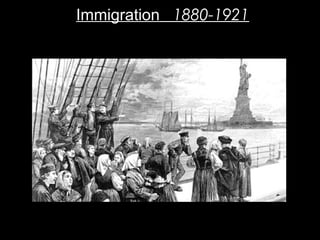
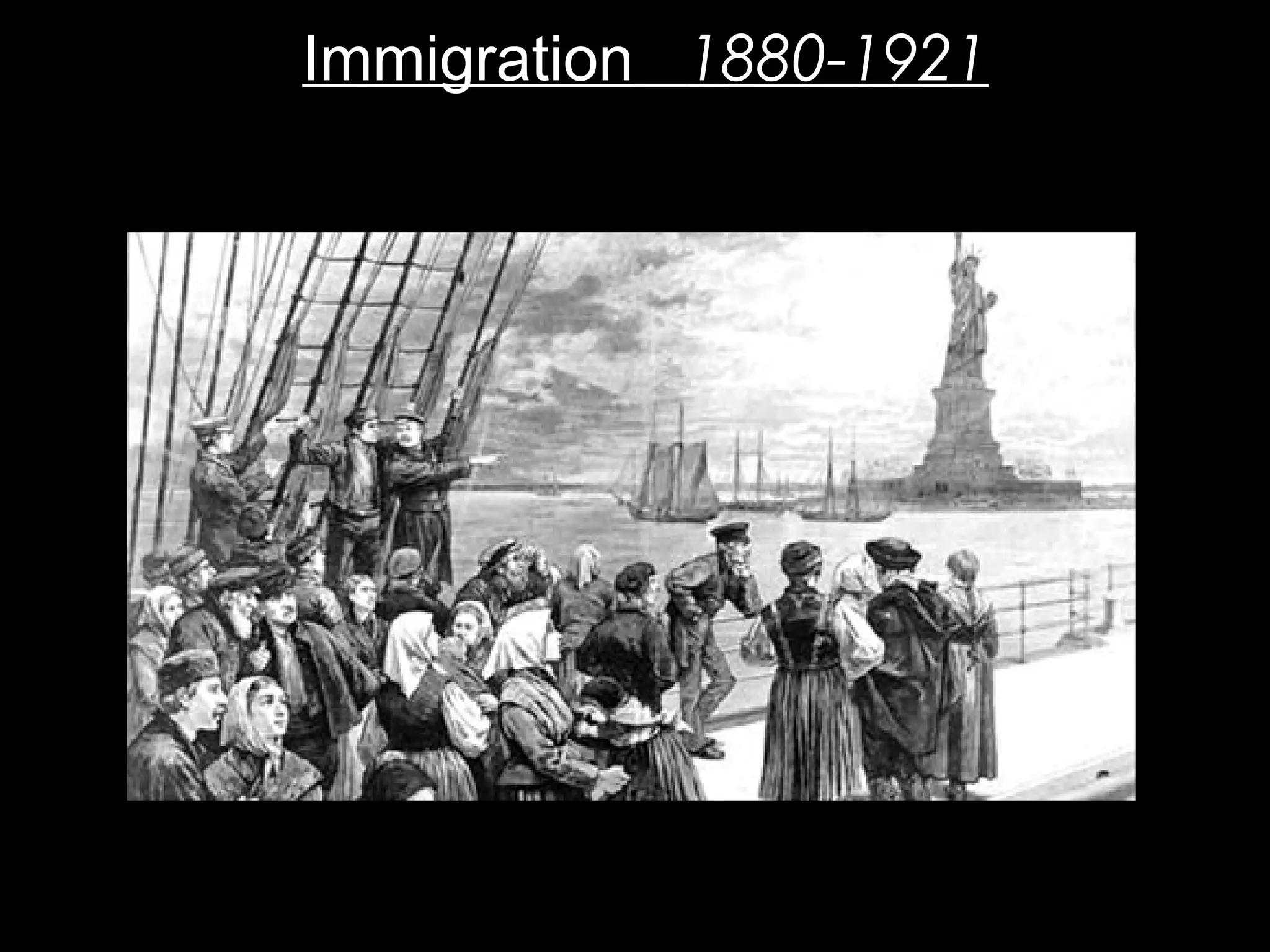
Immigration 1880-1921
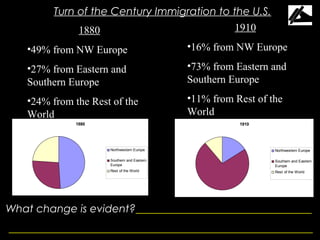
Turn of the Century Immigration to the U.S.
              1880                          1910

   •49% from NW Europe                      •16% from NW Europe

   •27% from Eastern and                    •73% from Eastern and
   Southern Europe                          Southern Europe

   •24% from the Rest of the                •11% from Rest of the
   World                                    World
             1880                                      1910


                     Northwestern Europe                       Northwestern Europe

                     Southern and Eastern                      Southern and Eastern
                     Europe                                    Europe
                     Rest of the World                         Rest of the World


What change is evident?_________________________________
_________________________________________________________
Characteristics of the “New Immigrant”

  • From Southern and Eastern
    Europe
  • Many young males
  • Many Catholics and Jews
  • Mostly unskilled agricultural
    laborers
  • Little money or education
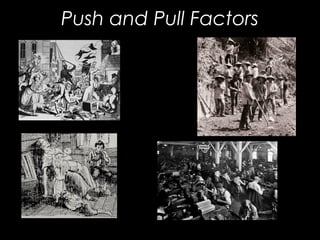
Push and Pull Factors
Push Factors (Get OUT!)
•   Economic Problems in Europe and Asia
     1. Poverty
     2. Drought and famine
     3. Rising populations

•   Political and Religious Persecution in
    Eastern Europe
     1. Religious persecution
        a. Pogroms=violent mob attacks
           directed towards Jews in Russia and
           Eastern Europe
     2. Wars and forced military service
Pull Factors (Come HERE!)
•   Economic Advantages in America
     1. Available and affordable land to farm
     2. Increasing number of factory jobs


•   Political and Religious Freedom in
    America
     1. Religious toleration
     2. No forced military service
     3. Democratic government
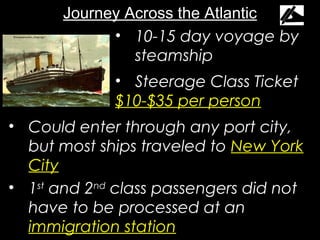
Journey Across the Atlantic
             • 10-15 day voyage by
                steamship
             • Steerage Class Ticket
             $10-$35 per person
• Could enter through any port city,
  but most ships traveled to New York
  City
• 1st and 2nd class passengers did not
  have to be processed at an
  immigration station
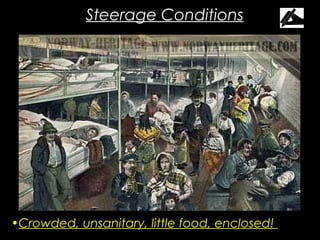
Steerage Conditions


•Crowded, unsanitary, little food, enclosed!
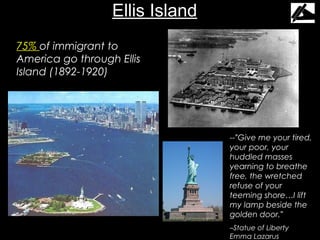
Ellis Island
75% of immigrant to
America go through Ellis
Island (1892-1920)


                                 --”Give me your tired,
                                 your poor, your
                                 huddled masses
                                 yearning to breathe
                                 free, the wretched
                                 refuse of your
                                 teeming shore…I lift
                                 my lamp beside the
                                 golden door.”
                                 –Statue of Liberty
                                 Emma Lazarus
Immigrants Assimilate Into
           Society
Assimilate = to fit in.

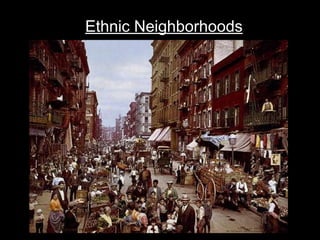
Most immigrants stayed in cities and lived in ethnic
 neighborhoods.

These neighborhoods would share the same
 language, religion, food, newspapers, clothing, and
 culture.

By 1890 many cities had a huge immigrant
 population. 4/5 people in NYC were immigrants.
Ethnic Neighborhoods
Americanization
• Americanization = helping newcomers learn American
  ways (language, customs, dress, and diet)

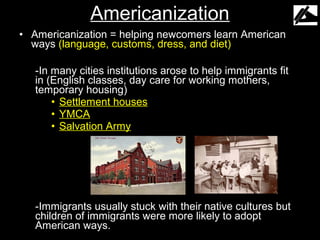
   -In many cities institutions arose to help immigrants fit
   in (English classes, day care for working mothers,
   temporary housing)
       • Settlement houses
       • YMCA
       • Salvation Army


   -Immigrants usually stuck with their native cultures but
   children of immigrants were more likely to adopt
   American ways.
Hardships
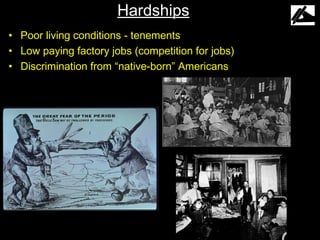
• Poor living conditions - tenements
• Low paying factory jobs (competition for jobs)
• Discrimination from “native-born” Americans
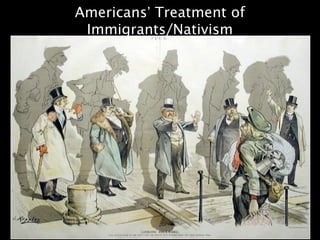
Americans’ Treatment of
 Immigrants/Nativism
Motivation For Nativism

• Fear, hostility, and suspicion
• Prejudices based on race,
  ethnicity, religion
• Old Immigrants vs. New Immigrants
  “The immigrants are an invasion of venomous reptiles…long-
  haired, wild-eyed bad-smelling, atheistic, reckless foreign
  wretches, who never did a day’s work in their lives.” –from a
  newspaper editorial
• Some similarities to today (i.e. jobs)
Restrictions on Immigration


• 1882 Chinese Exclusion Act excluded Chinese
  immigrants
• 1907 Gentlemen’s Agreement restricted Japanese
  immigrants
• 1917 Literacy tests required immigrants to prove
  they could read and write in their native language
• 1921 Quotas restrict immigration from eastern and
  southern Europe

Immigration 2012 2013

  • 1.
  • 2.
    Turn of theCentury Immigration to the U.S. 1880 1910 •49% from NW Europe •16% from NW Europe •27% from Eastern and •73% from Eastern and Southern Europe Southern Europe •24% from the Rest of the •11% from Rest of the World World 1880 1910 Northwestern Europe Northwestern Europe Southern and Eastern Southern and Eastern Europe Europe Rest of the World Rest of the World What change is evident?_________________________________ _________________________________________________________
  • 3.
    Characteristics of the“New Immigrant” • From Southern and Eastern Europe • Many young males • Many Catholics and Jews • Mostly unskilled agricultural laborers • Little money or education
  • 4.
  • 5.
    Push Factors (GetOUT!) • Economic Problems in Europe and Asia 1. Poverty 2. Drought and famine 3. Rising populations • Political and Religious Persecution in Eastern Europe 1. Religious persecution a. Pogroms=violent mob attacks directed towards Jews in Russia and Eastern Europe 2. Wars and forced military service
  • 6.
    Pull Factors (ComeHERE!) • Economic Advantages in America 1. Available and affordable land to farm 2. Increasing number of factory jobs • Political and Religious Freedom in America 1. Religious toleration 2. No forced military service 3. Democratic government
  • 7.
    Journey Across theAtlantic • 10-15 day voyage by steamship • Steerage Class Ticket $10-$35 per person • Could enter through any port city, but most ships traveled to New York City • 1st and 2nd class passengers did not have to be processed at an immigration station
  • 8.
  • 9.
    Ellis Island 75% ofimmigrant to America go through Ellis Island (1892-1920) --”Give me your tired, your poor, your huddled masses yearning to breathe free, the wretched refuse of your teeming shore…I lift my lamp beside the golden door.” –Statue of Liberty Emma Lazarus
  • 10.
    Immigrants Assimilate Into Society Assimilate = to fit in. Most immigrants stayed in cities and lived in ethnic neighborhoods. These neighborhoods would share the same language, religion, food, newspapers, clothing, and culture. By 1890 many cities had a huge immigrant population. 4/5 people in NYC were immigrants.
  • 11.
  • 12.
    Americanization • Americanization =helping newcomers learn American ways (language, customs, dress, and diet) -In many cities institutions arose to help immigrants fit in (English classes, day care for working mothers, temporary housing) • Settlement houses • YMCA • Salvation Army -Immigrants usually stuck with their native cultures but children of immigrants were more likely to adopt American ways.
  • 13.
    Hardships • Poor livingconditions - tenements • Low paying factory jobs (competition for jobs) • Discrimination from “native-born” Americans
  • 14.
    Americans’ Treatment of Immigrants/Nativism
  • 15.
    Motivation For Nativism •Fear, hostility, and suspicion • Prejudices based on race, ethnicity, religion • Old Immigrants vs. New Immigrants “The immigrants are an invasion of venomous reptiles…long- haired, wild-eyed bad-smelling, atheistic, reckless foreign wretches, who never did a day’s work in their lives.” –from a newspaper editorial • Some similarities to today (i.e. jobs)
  • 16.
    Restrictions on Immigration •1882 Chinese Exclusion Act excluded Chinese immigrants • 1907 Gentlemen’s Agreement restricted Japanese immigrants • 1917 Literacy tests required immigrants to prove they could read and write in their native language • 1921 Quotas restrict immigration from eastern and southern Europe