“Give me your tired, your poor,
Your huddled masses yearning to breathe free,
The Wretched refuse of your teeming shore.
Send these, the homeless, tempest-tost to me, I
lift my lamp beside the golden door!”
-Statue of Liberty
The Great Migration
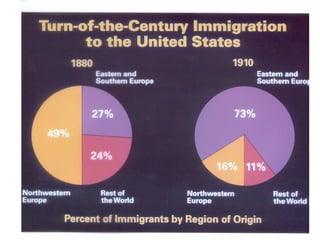
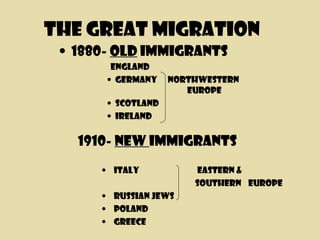
• 1880- Old Immigrants
England
• Germany Northwestern
Europe
• Scotland
• Ireland
• Italy Eastern &
Southern Europe
• Russian Jews
• Poland
• Greece
1910- New Immigrants
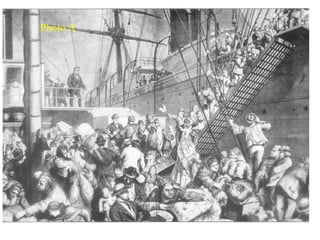
Photo A
Push & Pull Factors
1. Less work in their homelands b/c
machines replaced farmers
2. Believed America was a
“magic land”
Photo B
Journey Across the
Atlantic
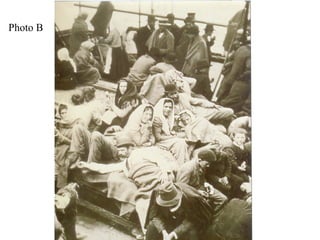
• 8-14 days on the sea.
• Lived in steerage compartments
• Few toilets
• Usually had to bring their own food
• Paid $65-$100 per ticket
(most used all of their saving for voyage)
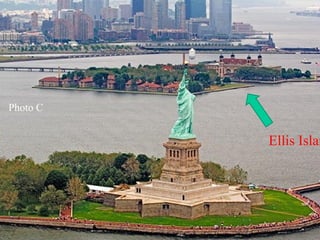
Ellis Islan
Photo C
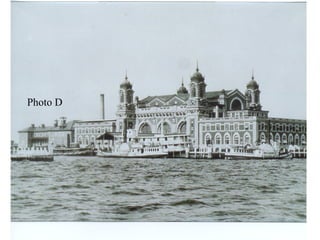
Photo D
Arrival in America
• Immigrants from Europe
arrived at Ellis Island
in New York
• Home of Statue of Liberty
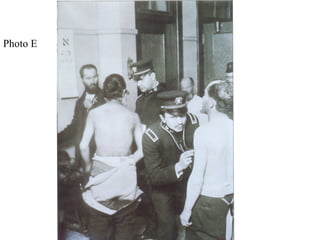
Photo E
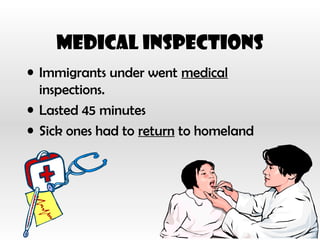
Medical Inspections
• Immigrants under went medical
inspections.
• Lasted 45 minutes
• Sick ones had to return to homeland
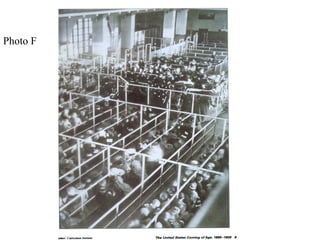
Photo F
Legal Inspections
• Asked questions by inspector
• Name & address of relative pinned to
immigrants
• Names misspelled i.e. Kapelovich to
Kaplowitz
Video Clip from The Godfather
• Click Here
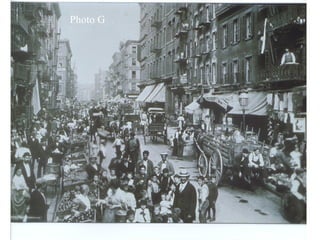
Photo G
The Reality
• Quote from Italian Immigrant:
“I came to America because I heard the
streets were paved with gold. When I got
here, found out three things: First, the
streets weren't paved with gold; second,
they weren't paved at all: and third, I was
expected to pave them.”
Ethnic Enclaves
• Immigrants settled in big cities- New York,
Chicago, Boston, Philadelphia
• Lived in neighborhoods w/ others from
their country
• Not enough affordable
housing in cities
• Still exist today (Little
Italy, Chinatown)
Tenements
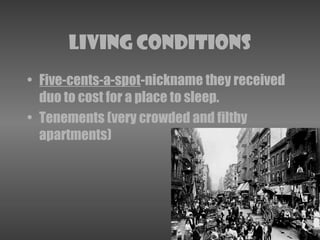
Living Conditions
• Five-cents-a-spot-nickname they received
duo to cost for a place to sleep.
• Tenements (very crowded and filthy
apartments)
Chinese Immigrants
• Chinese come to the U.S. via California in
the 1850s to find gold.
• As more Chinese emigrated to California,
white miners became frustrated.
• The California governor passed a tax that
took half of the Chinese miners earnings.
• The murder of Chinamen happened daily.
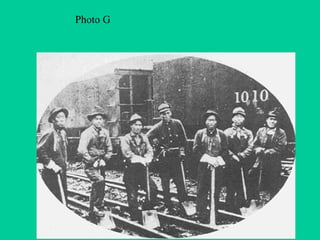
Photo G
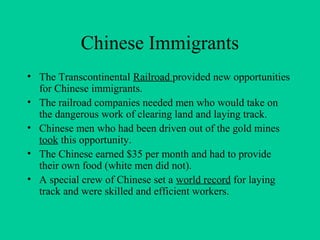
Chinese Immigrants
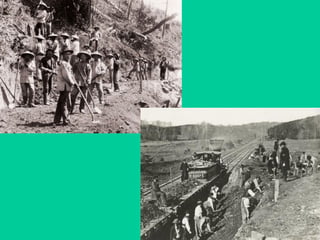
• The Transcontinental Railroad provided new opportunities
for Chinese immigrants.
• The railroad companies needed men who would take on
the dangerous work of clearing land and laying track.
• Chinese men who had been driven out of the gold mines
took this opportunity.
• The Chinese earned $35 per month and had to provide
their own food (white men did not).
• A special crew of Chinese set a world record for laying
track and were skilled and efficient workers.
Chinese Exclusion Act
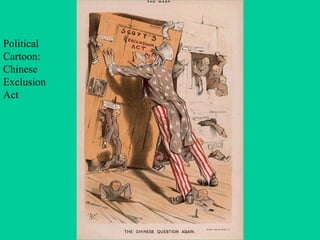
• On May 6, 1882, the Chinese Exclusion Act
placed a ban on Chinese immigrants
entering the United States
• In 1882 Congress passed the Chinese
Exclusion Act to stop immigration from
China.
• This act was not lifted until 1943.
Political
Cartoon:
Chinese
Exclusion
Act
Angel Island
Angel Island
• From 1910-1940 the Chinese immigrants
arrived on a tiny island in San Francisco
Bay called Angel Island.
• They were detained for weeks or sometimes
months as officials processed their papers.
The Immigration Act
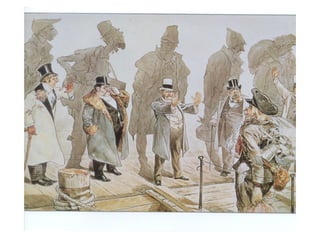
• Passed on May 26, 1924, the Immigration Act stemmed the
massive tide of immigration that had been flowing into the
United States since the mid-19th century.
• Of particular concern was the high number of nonwhite
and Eastern European immigrants who had been coming
into the country by the hundreds of thousands for decades.
• The law established a quota system for immigration that
highly favored Northern Europeans over all others and set
the standard for immigration policy until the 1960s.
Americans’ Treatment of
Immigrants
• Nativism- native born (Americans) good;
foreign born is bad.
Life as an Immigrant
• Now, you will imagine your life as an
immigrant.
– Write a 1 page letter home on a piece of
notebook paper to your family. Imagine you
are in the United States as an immigrant from
the 1800s. Tell them what life is like for you in
the United States and other things you are
experiencing.
– Put this in folder when complete.

Rising tide of_immigration_2013

  • 1.
    “Give me yourtired, your poor, Your huddled masses yearning to breathe free, The Wretched refuse of your teeming shore. Send these, the homeless, tempest-tost to me, I lift my lamp beside the golden door!” -Statue of Liberty
  • 3.
    The Great Migration •1880- Old Immigrants England • Germany Northwestern Europe • Scotland • Ireland • Italy Eastern & Southern Europe • Russian Jews • Poland • Greece 1910- New Immigrants
  • 4.
  • 5.
    Push & PullFactors 1. Less work in their homelands b/c machines replaced farmers 2. Believed America was a “magic land”
  • 6.
  • 7.
    Journey Across the Atlantic •8-14 days on the sea. • Lived in steerage compartments • Few toilets • Usually had to bring their own food • Paid $65-$100 per ticket (most used all of their saving for voyage)
  • 8.
  • 9.
  • 10.
    Arrival in America •Immigrants from Europe arrived at Ellis Island in New York • Home of Statue of Liberty
  • 11.
  • 12.
    Medical Inspections • Immigrantsunder went medical inspections. • Lasted 45 minutes • Sick ones had to return to homeland
  • 13.
  • 14.
    Legal Inspections • Askedquestions by inspector • Name & address of relative pinned to immigrants • Names misspelled i.e. Kapelovich to Kaplowitz
  • 15.
    Video Clip fromThe Godfather • Click Here
  • 16.
  • 17.
    The Reality • Quotefrom Italian Immigrant: “I came to America because I heard the streets were paved with gold. When I got here, found out three things: First, the streets weren't paved with gold; second, they weren't paved at all: and third, I was expected to pave them.”
  • 18.
    Ethnic Enclaves • Immigrantssettled in big cities- New York, Chicago, Boston, Philadelphia • Lived in neighborhoods w/ others from their country • Not enough affordable housing in cities • Still exist today (Little Italy, Chinatown)
  • 19.
  • 20.
    Living Conditions • Five-cents-a-spot-nicknamethey received duo to cost for a place to sleep. • Tenements (very crowded and filthy apartments)
  • 21.
    Chinese Immigrants • Chinesecome to the U.S. via California in the 1850s to find gold. • As more Chinese emigrated to California, white miners became frustrated. • The California governor passed a tax that took half of the Chinese miners earnings. • The murder of Chinamen happened daily.
  • 22.
  • 23.
    Chinese Immigrants • TheTranscontinental Railroad provided new opportunities for Chinese immigrants. • The railroad companies needed men who would take on the dangerous work of clearing land and laying track. • Chinese men who had been driven out of the gold mines took this opportunity. • The Chinese earned $35 per month and had to provide their own food (white men did not). • A special crew of Chinese set a world record for laying track and were skilled and efficient workers.
  • 25.
    Chinese Exclusion Act •On May 6, 1882, the Chinese Exclusion Act placed a ban on Chinese immigrants entering the United States • In 1882 Congress passed the Chinese Exclusion Act to stop immigration from China. • This act was not lifted until 1943.
  • 26.
  • 27.
  • 28.
    Angel Island • From1910-1940 the Chinese immigrants arrived on a tiny island in San Francisco Bay called Angel Island. • They were detained for weeks or sometimes months as officials processed their papers.
  • 29.
    The Immigration Act •Passed on May 26, 1924, the Immigration Act stemmed the massive tide of immigration that had been flowing into the United States since the mid-19th century. • Of particular concern was the high number of nonwhite and Eastern European immigrants who had been coming into the country by the hundreds of thousands for decades. • The law established a quota system for immigration that highly favored Northern Europeans over all others and set the standard for immigration policy until the 1960s.
  • 30.
    Americans’ Treatment of Immigrants •Nativism- native born (Americans) good; foreign born is bad.
  • 32.
    Life as anImmigrant • Now, you will imagine your life as an immigrant. – Write a 1 page letter home on a piece of notebook paper to your family. Imagine you are in the United States as an immigrant from the 1800s. Tell them what life is like for you in the United States and other things you are experiencing. – Put this in folder when complete.