IMMIGRATION AND
URBANIZATION
Immigration and
Urbanization
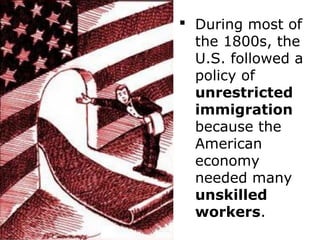
 During most of
the 1800s, the
U.S. followed a
policy of
unrestricted
immigration
because the
American
economy
needed many
unskilled
workers.
3 types of immigrants
There are 3 categories of groups of immigrants:
• Old immigrants 1600s-1850: from northwestern
Europe. They were light skinned and had light
eyes and hair. Most were also Protestant.
• New immigrants 1860-1920: from Eastern and
Southern Europe. These immigrants were
Russian, Polish, Jewish, Italians, Irish, and
Chinese. Their religions were different from the
Old Immigrants (Catholic and Jewish). They
were typically darker in color with darker hair
and eyes.
• Modern immigrants 1965-present: from Latin
America and Asia.
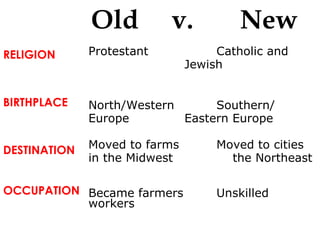
RELIGION
BIRTHPLACE
DESTINATION
OCCUPATION
Protestant Catholic and
Jewish
North/Western Southern/
Europe Eastern Europe
Moved to farms Moved to cities
in the Midwest the Northeast
Became farmers Unskilled
workers
Old v. New
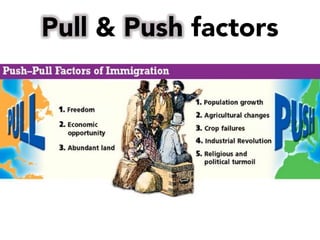
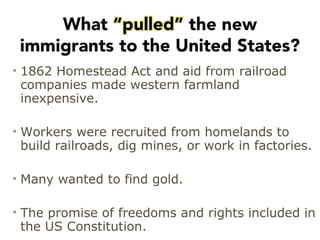
• 1862 Homestead Act and aid from railroad
companies made western farmland
inexpensive.
• Workers were recruited from homelands to
build railroads, dig mines, or work in factories.
• Many wanted to find gold.
• The promise of freedoms and rights included in
the US Constitution.
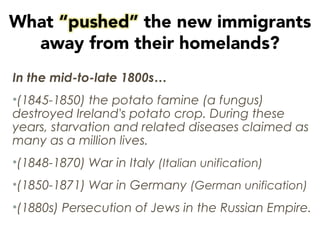
In the mid-to-late 1800s…
•(1845-1850) the potato famine (a fungus)
destroyed Ireland's potato crop. During these
years, starvation and related diseases claimed as
many as a million lives.
•(1848-1870) War in Italy (Italian unification)
•(1850-1871) War in Germany (German unification)
•(1880s) Persecution of Jews in the Russian Empire.
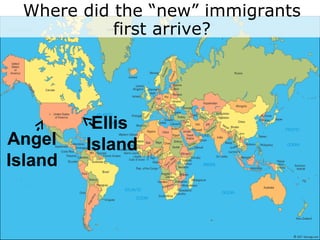
Angel
Island
Ellis
Island
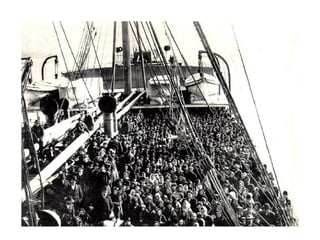
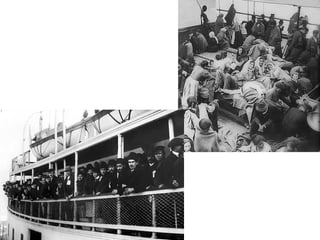
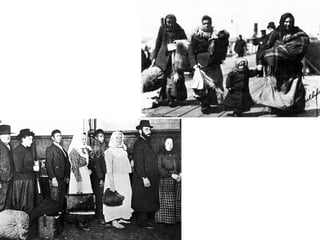
Where did the “new” immigrants
first arrive?
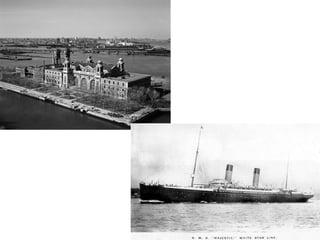
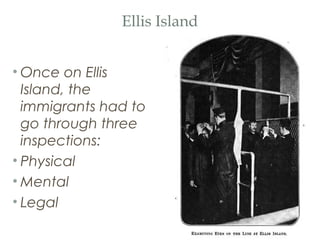
Ellis Island
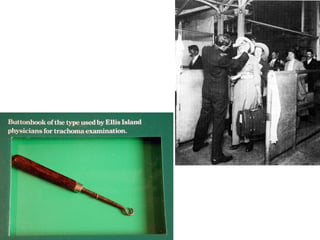
• Once on Ellis
Island, the
immigrants had to
go through three
inspections:
• Physical
• Mental
• Legal
Angel Island
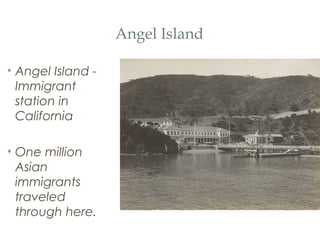
• Angel Island -
Immigrant
station in
California
• One million
Asian
immigrants
traveled
through here.
•Read Vartan’s statement below and list at least 3 of his
expectations
“Coming to America had meaning. I was a kid of seven and in contrast to
what I had gone through, Ellis Island was like not a haven but a heaven. I
don’t remember any fright when I got to Ellis Island. My father’s dream and
prayer was ‘I must get my family to America’…America was paradise, the
streets were covered with gold. And when we arrived here, and when we
landed form Ellis Island and [went} to Buffalo, it was as if God’s great
promise had been fulfilled that we would eventually find freedom”
Vartan Hartunian
Turkey (Armenian)
age 7
What did the ‘new immigrants’
expect when coming to America?
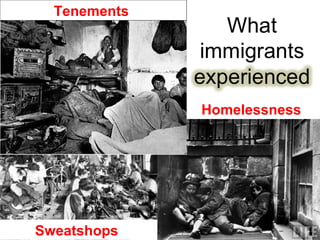
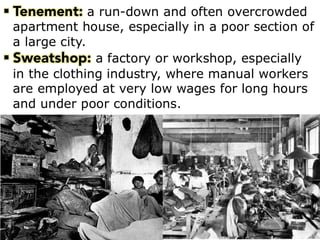
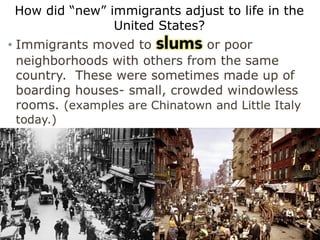
Tenements
Sweatshops
Homelessness
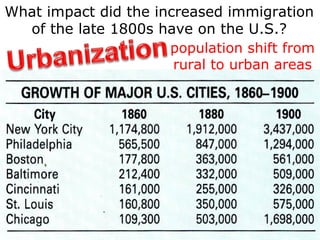
What impact did the increased immigration
of the late 1800s have on the U.S.?
population shift from
rural to urban areas
How did “new” immigrants adjust to life in the
United States?

Hw#31 immigration

  • 1.
  • 2.
     During mostof the 1800s, the U.S. followed a policy of unrestricted immigration because the American economy needed many unskilled workers.
  • 3.
    3 types ofimmigrants There are 3 categories of groups of immigrants: • Old immigrants 1600s-1850: from northwestern Europe. They were light skinned and had light eyes and hair. Most were also Protestant. • New immigrants 1860-1920: from Eastern and Southern Europe. These immigrants were Russian, Polish, Jewish, Italians, Irish, and Chinese. Their religions were different from the Old Immigrants (Catholic and Jewish). They were typically darker in color with darker hair and eyes. • Modern immigrants 1965-present: from Latin America and Asia.
  • 4.
    RELIGION BIRTHPLACE DESTINATION OCCUPATION Protestant Catholic and Jewish North/WesternSouthern/ Europe Eastern Europe Moved to farms Moved to cities in the Midwest the Northeast Became farmers Unskilled workers Old v. New
  • 6.
    • 1862 HomesteadAct and aid from railroad companies made western farmland inexpensive. • Workers were recruited from homelands to build railroads, dig mines, or work in factories. • Many wanted to find gold. • The promise of freedoms and rights included in the US Constitution.
  • 7.
    In the mid-to-late1800s… •(1845-1850) the potato famine (a fungus) destroyed Ireland's potato crop. During these years, starvation and related diseases claimed as many as a million lives. •(1848-1870) War in Italy (Italian unification) •(1850-1871) War in Germany (German unification) •(1880s) Persecution of Jews in the Russian Empire.
  • 8.
    Angel Island Ellis Island Where did the“new” immigrants first arrive?
  • 13.
    Ellis Island • Onceon Ellis Island, the immigrants had to go through three inspections: • Physical • Mental • Legal
  • 16.
    Angel Island • AngelIsland - Immigrant station in California • One million Asian immigrants traveled through here.
  • 17.
    •Read Vartan’s statementbelow and list at least 3 of his expectations “Coming to America had meaning. I was a kid of seven and in contrast to what I had gone through, Ellis Island was like not a haven but a heaven. I don’t remember any fright when I got to Ellis Island. My father’s dream and prayer was ‘I must get my family to America’…America was paradise, the streets were covered with gold. And when we arrived here, and when we landed form Ellis Island and [went} to Buffalo, it was as if God’s great promise had been fulfilled that we would eventually find freedom” Vartan Hartunian Turkey (Armenian) age 7 What did the ‘new immigrants’ expect when coming to America?
  • 18.
  • 20.
    What impact didthe increased immigration of the late 1800s have on the U.S.? population shift from rural to urban areas
  • 21.
    How did “new”immigrants adjust to life in the United States?