

ADVERTISING
WARS
PRESENTED BY
SRUTHY MOHAN
What Is Advertising War ?
 Comparative advertising or advertising
war is an advertisement in which a
particular product, or service, specifically
mentions a competitor by name for the
express purpose of showing why the
competitor is inferior to the product
naming it.
 Comparative advertising is a widely used
form of commercial advertising in many
countries.
Definition
 In the United States, the Federal Trade
Commission (FTC) defined comparative
advertising as “advertisement that
compares alternative brands on
objectively measurable attributes or price,
and identifies the alternative brand by
name, illustration or other distinctive
information.”
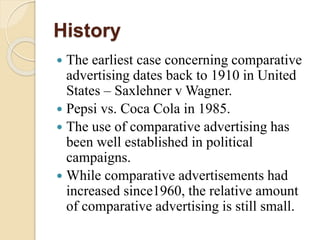
History
 The earliest case concerning comparative
advertising dates back to 1910 in United
States – Saxlehner v Wagner.
 Pepsi vs. Coca Cola in 1985.
 The use of comparative advertising has
been well established in political
campaigns.
 While comparative advertisements had
increased since1960, the relative amount
of comparative advertising is still small.
Objectives Of Comparative
Advertising
 Increase consumer’s information
 Influence or convince consumer
 Focus on the superiority of the
advertisers product over the
competitors
 Acceptance of brand
 Bring out negative aspects of the
competitor’s product
 Degrade competitor’s product
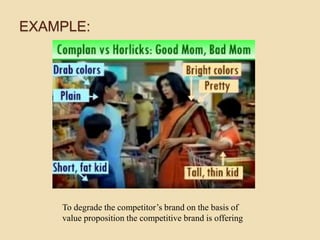
EXAMPLE:
To degrade the competitor’s brand on the basis of
value proposition the competitive brand is offering
Why Advertising Wars?
 Liberalisation and globalisation of
economy, and dismantling of “License-
permit” system.
 In a competitive environment, every
representation of a product or service, is
not about “what we are” but “ what
others are not”.
 These practices raise questions about
truthfulness and fairness of representation
of products and services.
Advertising Wars in India
The “Advertising Standards Council of India
(ASCI)” specifies that comparative
advertisement is permissible if:-
 The aspects of the products compared are
clear
 The comparisons do not confer artificial
advantages on the advertiser
 It is factual and substantial
 The consumer is unlikely to be mislead
 There is no unfair denigration of the
competing product.
Notable Brand Battles
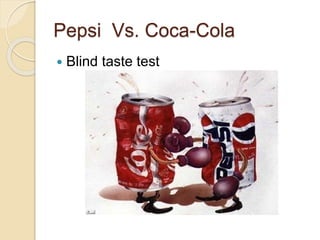
Pepsi Vs. Coca-Cola
 Blind taste test
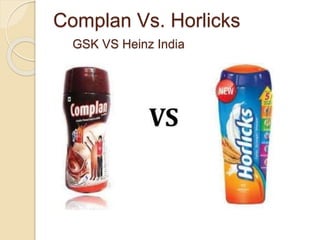
Complan Vs. Horlicks
GSK VS Heinz India
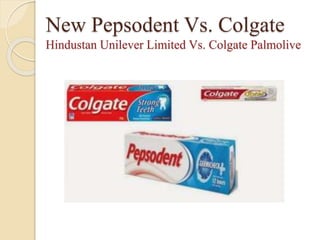
New Pepsodent Vs. Colgate
Hindustan Unilever Limited Vs. Colgate Palmolive
The Times of India Vs. The
Hindu
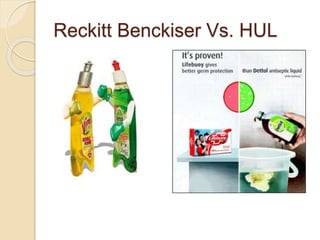
Reckitt Benckiser Vs. HUL
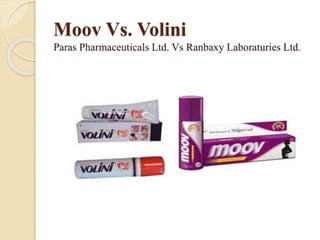
Moov Vs. Volini
Paras Pharmaceuticals Ltd. Vs Ranbaxy Laboraturies Ltd.
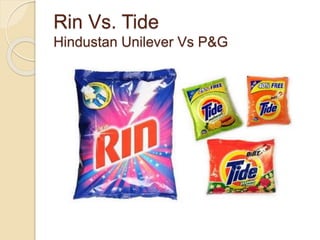
Rin Vs. Tide
Hindustan Unilever Vs P&G
Advantages of Advertising War
 Functional
Advantages
• Enables advertisers to
objectively demonstrate
the merits of their
products
• Promotes the
transparency of the
market
• Improves competition
 For Consumer
• An inevitable part
of the consumer
decision-making
process, particularly
at the evaluation
stage.
• Helps in keeping
down prices and
improving products
Risk Of Comparative Advertising
 There is a danger that once undertakings
address the merits and inadequacies
of competing goods or services, they may
be tempted to denigrate them or derive
unfair advantages from such inaccurate
comparisons.
 Consumer confusion and deception.
 Incomplete comparisons
Conclusion
• While it is true that comparative advertising is a
two-sided tool, with both potential and dangers (if
misused),it can develop into a powerful tool for the
marketer as well as for consumers if handled with
restraint and good judgement.
• Avoiding any negative references to competitive
products and showing both products
in a fair and equal manner will ensure that dual
mission of comparative advertising
is accomplished – that of educating the consumer
and selling the product.
THANK YOU

Ad war

  • 1.
  • 2.
    What Is AdvertisingWar ?  Comparative advertising or advertising war is an advertisement in which a particular product, or service, specifically mentions a competitor by name for the express purpose of showing why the competitor is inferior to the product naming it.  Comparative advertising is a widely used form of commercial advertising in many countries.
  • 3.
    Definition  In theUnited States, the Federal Trade Commission (FTC) defined comparative advertising as “advertisement that compares alternative brands on objectively measurable attributes or price, and identifies the alternative brand by name, illustration or other distinctive information.”
  • 4.
    History  The earliestcase concerning comparative advertising dates back to 1910 in United States – Saxlehner v Wagner.  Pepsi vs. Coca Cola in 1985.  The use of comparative advertising has been well established in political campaigns.  While comparative advertisements had increased since1960, the relative amount of comparative advertising is still small.
  • 5.
    Objectives Of Comparative Advertising Increase consumer’s information  Influence or convince consumer  Focus on the superiority of the advertisers product over the competitors  Acceptance of brand  Bring out negative aspects of the competitor’s product  Degrade competitor’s product
  • 6.
    EXAMPLE: To degrade thecompetitor’s brand on the basis of value proposition the competitive brand is offering
  • 7.
    Why Advertising Wars? Liberalisation and globalisation of economy, and dismantling of “License- permit” system.  In a competitive environment, every representation of a product or service, is not about “what we are” but “ what others are not”.  These practices raise questions about truthfulness and fairness of representation of products and services.
  • 8.
    Advertising Wars inIndia The “Advertising Standards Council of India (ASCI)” specifies that comparative advertisement is permissible if:-  The aspects of the products compared are clear  The comparisons do not confer artificial advantages on the advertiser  It is factual and substantial  The consumer is unlikely to be mislead  There is no unfair denigration of the competing product.
  • 9.
  • 10.
    Pepsi Vs. Coca-Cola Blind taste test
  • 11.
  • 12.
    New Pepsodent Vs.Colgate Hindustan Unilever Limited Vs. Colgate Palmolive
  • 13.
    The Times ofIndia Vs. The Hindu
  • 14.
  • 15.
    Moov Vs. Volini ParasPharmaceuticals Ltd. Vs Ranbaxy Laboraturies Ltd.
  • 16.
    Rin Vs. Tide HindustanUnilever Vs P&G
  • 17.
    Advantages of AdvertisingWar  Functional Advantages • Enables advertisers to objectively demonstrate the merits of their products • Promotes the transparency of the market • Improves competition  For Consumer • An inevitable part of the consumer decision-making process, particularly at the evaluation stage. • Helps in keeping down prices and improving products
  • 18.
    Risk Of ComparativeAdvertising  There is a danger that once undertakings address the merits and inadequacies of competing goods or services, they may be tempted to denigrate them or derive unfair advantages from such inaccurate comparisons.  Consumer confusion and deception.  Incomplete comparisons
  • 19.
    Conclusion • While itis true that comparative advertising is a two-sided tool, with both potential and dangers (if misused),it can develop into a powerful tool for the marketer as well as for consumers if handled with restraint and good judgement. • Avoiding any negative references to competitive products and showing both products in a fair and equal manner will ensure that dual mission of comparative advertising is accomplished – that of educating the consumer and selling the product.
  • 20.