IMAGINE A BETTER WAY
OpenCon 2016 | Washington, DC
Heather L. Coates, MLS, MS @IandPangurBan
Digital Scholarship & Data Management Librarian
IUPUI University Library Center for Digital Scholarship
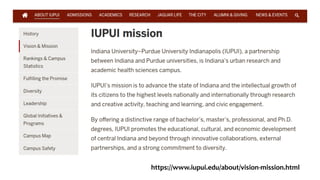
https://www.iupui.edu/about/vision-mission.html
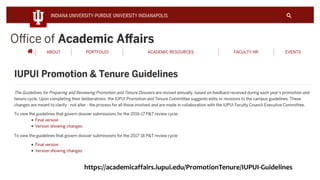
https://academicaffairs.iupui.edu/PromotionTenure/IUPUI-Guidelines
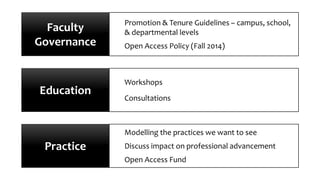
Faculty
Governance
Promotion & Tenure Guidelines – campus, school,
& departmental levels
Open Access Policy (Fall 2014)
Education
Workshops
Consultations
Practice
Modelling the practices we want to see
Discuss impact on professional advancement
Open Access Fund
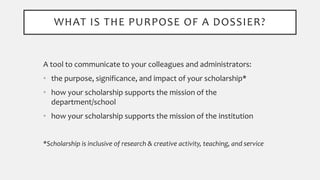
WHAT IS THE PURPOSE OF A DOSSIER?
A tool to communicate to your colleagues and administrators:
• the purpose, significance, and impact of your scholarship*
• how your scholarship supports the mission of the
department/school
• how your scholarship supports the mission of the institution
*Scholarship is inclusive of research & creative activity, teaching, and service
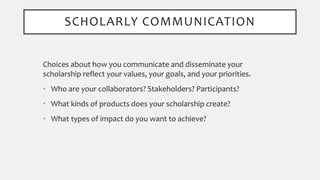
SCHOLARLY COMMUNICATION
Choices about how you communicate and disseminate your
scholarship reflect your values, your goals, and your priorities.
• Who are your collaborators? Stakeholders? Participants?
• What kinds of products does your scholarship create?
• What types of impact do you want to achieve?
Making informed choices requires knowledge of how scholarship can
be disseminated as well as clearly defined goals describing
• Who you want to reach [audience]
• What you want to communicate [message]
• In what venue or format [medium]
• To achieve what goal [category of impact]
SCHOLARLY COMMUNICATION
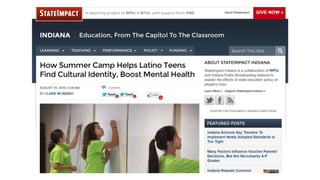
"Your Life. Your Story." includes a resilience-building curriculum, a mentoring component
with IUPUI undergraduates, physical activity and emotional expression activities including
art, music, storytelling, technology and dance, said Conrad, who serves as the program
director. All activities are designed to provide teenagers with outlets to further develop
their identities and sense of self, and to give them the ability to communicate their stories.
Preliminary results since the program started are promising, Conrad said. After a single
week of summer camp, the team found that participants had a statistically significant
increase in resilience and a statistically significant decrease in depressive symptoms. At
the end of the year, the researchers hope to see that those trends have continued, she said.
"The 'Your Life. Your Story.' program has the potential to create a large and lasting impact,
not only in Indianapolis, but across Indiana and even nationwide," Conrad said. "We think it
is something that could be tailored to other types of underserved or marginalized youth as
well, and we hope to expand it.“
Source: http://news.iu.edu/releases/iu/2014/11/apha-2014-iu-research.shtml
• Based on a communication and dissemination strategy
• Is about the scholar
• Story first
• Describes the types of impact sought and achieved
• Supported by a mix of quantitative and qualitative evidence
A MODEL DOSSIER?
• Equitable access, both technologically and culturally
• Integrity and long-term preservation of the scholarly record
• Incentives should balance importance of process and
products
• Engagement with communities outside of academia
• Support the next generation of scholars
VALUES
HOW DO WE CREATE THIS FUTURE?
• Engage in faculty governance
• Discuss research evaluation with your department chair,
Dean, colleagues, and campus administration
• Question and push the boundaries – don’t blindly accept
the status quo
• Be a champion of open
• Be honest about openness
MORE INFORMATION
• National Center for Faculty Development & Diversity:
http://www.facultydiversity.org/
• Inspiring Australia – Principles for Science Communication:
http://inspiringaustralia.net.au/toolkit/principles-for-science-
communication/
• Odell, J., Coates, H., & Palmer, K. (2016). Rewarding open access
scholarship in promotion and tenure: Driving institutional change. College
& Research Libraries News, 77(7), 322-325.
• Altmetrics for Team Science:
http://www.slideshare.net/goldenphizzwizards/metrics-for-team-science
• Coates, Heather (2016): Heather Coates dossier for promotion & tenure at
IUPUI (figshare). doi:10.6084/m9.figshare.3413698.v2
IMAGE CREDITS
• Publish: https://thenounproject.com/search/?q=article&i=74762
• Evaluate:
https://thenounproject.com/search/?q=peer+review&i=210141
• Article: https://thenounproject.com/search/?q=article&i=74762
• Book: https://thenounproject.com/search/?q=book&i=547809
• Binary code:
https://thenounproject.com/search/?q=binary+code&i=177042
• Data stream:
https://thenounproject.com/search/?q=data+stream&i=160443
QUESTIONS
• How do we support researchers in becoming effective
communicators about their research?
• How can we support researchers in planning the first and
subsequent chapters of their career?
• How can we develop clear P&T guidelines that offer
flexibility with regards to the mix of products, formats,
evidence, and impact?
• How can we support P&T review committees in evaluating
such a diverse range of evidence?

Imagine a Better Way - Heather Coates - OpenCon 2016

  • 1.
    IMAGINE A BETTERWAY OpenCon 2016 | Washington, DC Heather L. Coates, MLS, MS @IandPangurBan Digital Scholarship & Data Management Librarian IUPUI University Library Center for Digital Scholarship
  • 2.
  • 3.
  • 4.
    Faculty Governance Promotion & TenureGuidelines – campus, school, & departmental levels Open Access Policy (Fall 2014) Education Workshops Consultations Practice Modelling the practices we want to see Discuss impact on professional advancement Open Access Fund
  • 5.
    WHAT IS THEPURPOSE OF A DOSSIER? A tool to communicate to your colleagues and administrators: • the purpose, significance, and impact of your scholarship* • how your scholarship supports the mission of the department/school • how your scholarship supports the mission of the institution *Scholarship is inclusive of research & creative activity, teaching, and service
  • 6.
    SCHOLARLY COMMUNICATION Choices abouthow you communicate and disseminate your scholarship reflect your values, your goals, and your priorities. • Who are your collaborators? Stakeholders? Participants? • What kinds of products does your scholarship create? • What types of impact do you want to achieve?
  • 7.
    Making informed choicesrequires knowledge of how scholarship can be disseminated as well as clearly defined goals describing • Who you want to reach [audience] • What you want to communicate [message] • In what venue or format [medium] • To achieve what goal [category of impact] SCHOLARLY COMMUNICATION
  • 15.
    "Your Life. YourStory." includes a resilience-building curriculum, a mentoring component with IUPUI undergraduates, physical activity and emotional expression activities including art, music, storytelling, technology and dance, said Conrad, who serves as the program director. All activities are designed to provide teenagers with outlets to further develop their identities and sense of self, and to give them the ability to communicate their stories. Preliminary results since the program started are promising, Conrad said. After a single week of summer camp, the team found that participants had a statistically significant increase in resilience and a statistically significant decrease in depressive symptoms. At the end of the year, the researchers hope to see that those trends have continued, she said. "The 'Your Life. Your Story.' program has the potential to create a large and lasting impact, not only in Indianapolis, but across Indiana and even nationwide," Conrad said. "We think it is something that could be tailored to other types of underserved or marginalized youth as well, and we hope to expand it.“ Source: http://news.iu.edu/releases/iu/2014/11/apha-2014-iu-research.shtml
  • 17.
    • Based ona communication and dissemination strategy • Is about the scholar • Story first • Describes the types of impact sought and achieved • Supported by a mix of quantitative and qualitative evidence A MODEL DOSSIER?
  • 18.
    • Equitable access,both technologically and culturally • Integrity and long-term preservation of the scholarly record • Incentives should balance importance of process and products • Engagement with communities outside of academia • Support the next generation of scholars VALUES
  • 19.
    HOW DO WECREATE THIS FUTURE? • Engage in faculty governance • Discuss research evaluation with your department chair, Dean, colleagues, and campus administration • Question and push the boundaries – don’t blindly accept the status quo • Be a champion of open • Be honest about openness
  • 20.
    MORE INFORMATION • NationalCenter for Faculty Development & Diversity: http://www.facultydiversity.org/ • Inspiring Australia – Principles for Science Communication: http://inspiringaustralia.net.au/toolkit/principles-for-science- communication/ • Odell, J., Coates, H., & Palmer, K. (2016). Rewarding open access scholarship in promotion and tenure: Driving institutional change. College & Research Libraries News, 77(7), 322-325. • Altmetrics for Team Science: http://www.slideshare.net/goldenphizzwizards/metrics-for-team-science • Coates, Heather (2016): Heather Coates dossier for promotion & tenure at IUPUI (figshare). doi:10.6084/m9.figshare.3413698.v2
  • 21.
    IMAGE CREDITS • Publish:https://thenounproject.com/search/?q=article&i=74762 • Evaluate: https://thenounproject.com/search/?q=peer+review&i=210141 • Article: https://thenounproject.com/search/?q=article&i=74762 • Book: https://thenounproject.com/search/?q=book&i=547809 • Binary code: https://thenounproject.com/search/?q=binary+code&i=177042 • Data stream: https://thenounproject.com/search/?q=data+stream&i=160443
  • 22.
    QUESTIONS • How dowe support researchers in becoming effective communicators about their research? • How can we support researchers in planning the first and subsequent chapters of their career? • How can we develop clear P&T guidelines that offer flexibility with regards to the mix of products, formats, evidence, and impact? • How can we support P&T review committees in evaluating such a diverse range of evidence?