DR. ASHUTOSH RATH
DM RESIDENT(NEUROLOGY)
GMCH, GUWAHATI
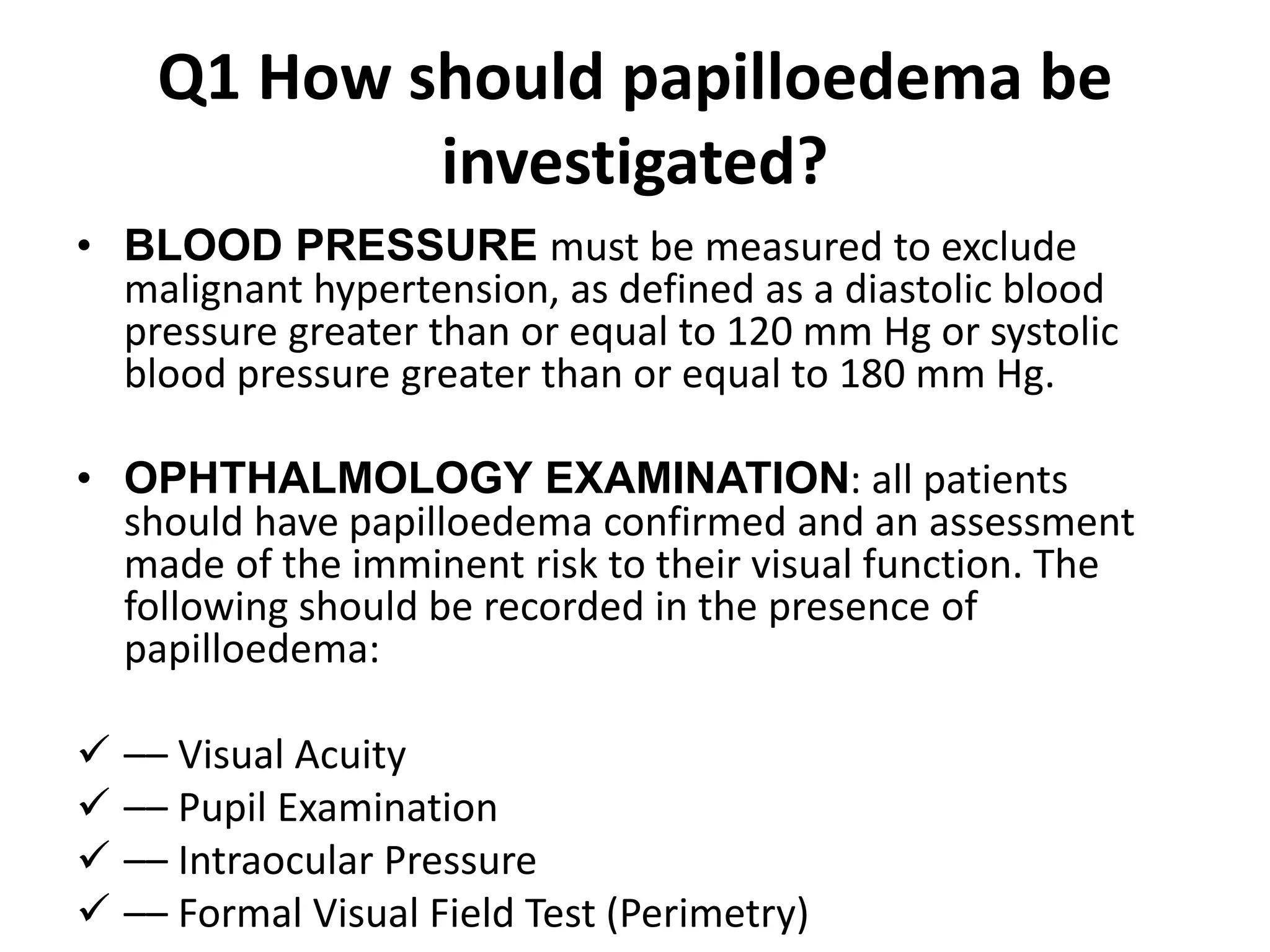
Q1 How should papilloedema be
investigated?
• BLOOD PRESSURE must be measured to exclude
malignant hypertension, as defined as a diastolic blood
pressure greater than or equal to 120 mm Hg or systolic
blood pressure greater than or equal to 180 mm Hg.
• OPHTHALMOLOGY EXAMINATION: all patients
should have papilloedema confirmed and an assessment
made of the imminent risk to their visual function. The
following should be recorded in the presence of
papilloedema:
 –– Visual Acuity
 –– Pupil Examination
 –– Intraocular Pressure
 –– Formal Visual Field Test (Perimetry)
NEUROLOGICAL EXAMINATION
• Record cranial nerve examination. Where IIH is suspected, typically
there should be no cranial nerve involvement other than sixth
cranial nerve palsy/palsies.
• Should other cranial nerves and/or other pathological findings be
involved, an alternative diagnosis should be considered.
NEUROIMAGING
• Urgent MRI brain within 24 hours; if unavailable within 24 hours,
then urgent CT brain with subsequent MRI brain if no lesion
identified.
• There should be no evidence of hydrocephalus, mass, structural,
vascular lesion and no abnormal meningeal enhancement.
• CT or MR venography is mandatory to exclude cerebral sinus
thrombosis within 24 hours.
• Characteristics of raised intracranial pressure may be seen on
neuroimaging (box 1)
LUMBAR PUNCTURE
• The lumboperitoneal (LP) opening pressure
 should be measured in the lateral decubitus position.
 pressure recording should occur with the patient relaxed and the legs
extended.
 The CSF level should be allowed to settle before taking the reading.
• The CSF analysis should at a minimum include CSF protein, glucose and
cell count.
• Should the LP not be successful, a guided LP could then be considered
(ultrasound or X-ray).
• The diagnostic criteria mandate a cut-off opening pressure of >25 cm CSF
for diagnosing IIH.
• The LP opening pressure should not be interpreted in isolation when
diagnosing IIH.
EXCLUSION OF ALL OTHER SECONDARY
CAUSES OF RAISED ICP
• All should have a CAREFUL HISTORY taken to exclude any possible
secondary causes that have previously been linked to raised
intracranial hypertension
• All patients should have a FULL BLOOD COUNT performed to
exclude anaemia.
• Where patients are deemed to be atypical (table 1), other
additional blood tests may be considered to exclude secondary
causes.
• Where patients are deemed to be atypical (table 1) ADDITIONAL
NEUROIMAGING might be considered. These may include more
proximal imaging of the neck vasculature to exclude internal jugular
obstruction.
Management principles
• For optimal management of patients with IIH, there must be clear
communication between clinicians for seamless joint care between
the various specialties (figure 3).
• Weight loss reduces ICP and has been shown to be effective in
improving papilloedema and headaches.
• The main principles of management of IIH are:
1. To treat the underlying disease
2. To protect the vision
3. To minimise the headache morbidity.
Twenty-three questions were formulated to cover the three principle
domains of management in IIH
Primary principle for IIH management: modify the
underlying
disease through weight loss
Q2 What is the best way to modify the disease to induce remission?
Weight loss is the only disease-modifying therapy in typical IIH.
• Once definite IIH is diagnosed, all patients with a BMI >30 kg/m2 should be
counselled about weight management at the earliest opportunity.
•
• The amount of weight loss required to put the disease into remission is not known.
• up to 15% of weight loss was required to put IIH into remission in one cohort.
• Patients should be referred to a community weight management programme or a
hospital-based weight programme.
• There is an increasing role for bariatric surgery
for sustained weight loss and for use in IIH.
• For those who are not obese secondary
causes should be revisited , and the role of
weight gain/loss remains uncertain.
Second principle for IIH management:
protect the vision
Q3 How should IIH be treated when there is imminent risk of visual loss?
Where there is evidence of declining visual function, the acute management to
preserve vision is surgical.
• A temporary measure of a lumbar drain could be useful to protect the vision while
planning urgent surgical treatment.
• There is evidence that many of the surgical procedures, such as CSF diversion and
optic nerve sheath fenestration (ONSF), work well in the short term.
• While they are working, the underlying disease should be modified with weight
loss
In the absence of high class evidence, we do not recommend the use of corticosteroids
for fulminant IIH at this time, and indeed a prolonged treatment course of
corticosteroids would not be recommended due to weight gain.
Q4 What is currently the best surgical procedure for
visual loss in IIH?
• In the UK, the preferred surgical procedure is neurosurgical CSF diversion
• Ventriculoperitoneal (VP) should be the preferred CSF diversion procedure for
visual deterioration in IIH, due to lower reported revisions per patient.
• An LP shunt could also be used.
.
• Adjustable valves with antigravity or antisiphon devices should be considered for
use to reduce the risk of low pressure headaches.
• A mortality rate although low but does exist.
• Complications of shunts include abdominal pain, shunt obstruction, migration and
infection, low pressure headaches, subdural haematoma and tonsillar herniation
Q5 What other surgical procedures are
performed for visual loss in
IIH?
• ONSF
• Less complications
• No report of mortality in literature
• Temporary adv. Effects: double vision , optic
nerve head hemorrhages
• Some consider as the first step in treatment of
malignant or fulminant IIH.
Q6 What is the current role of
neurovascular stenting in acute IIH to
prevent loss of vision?
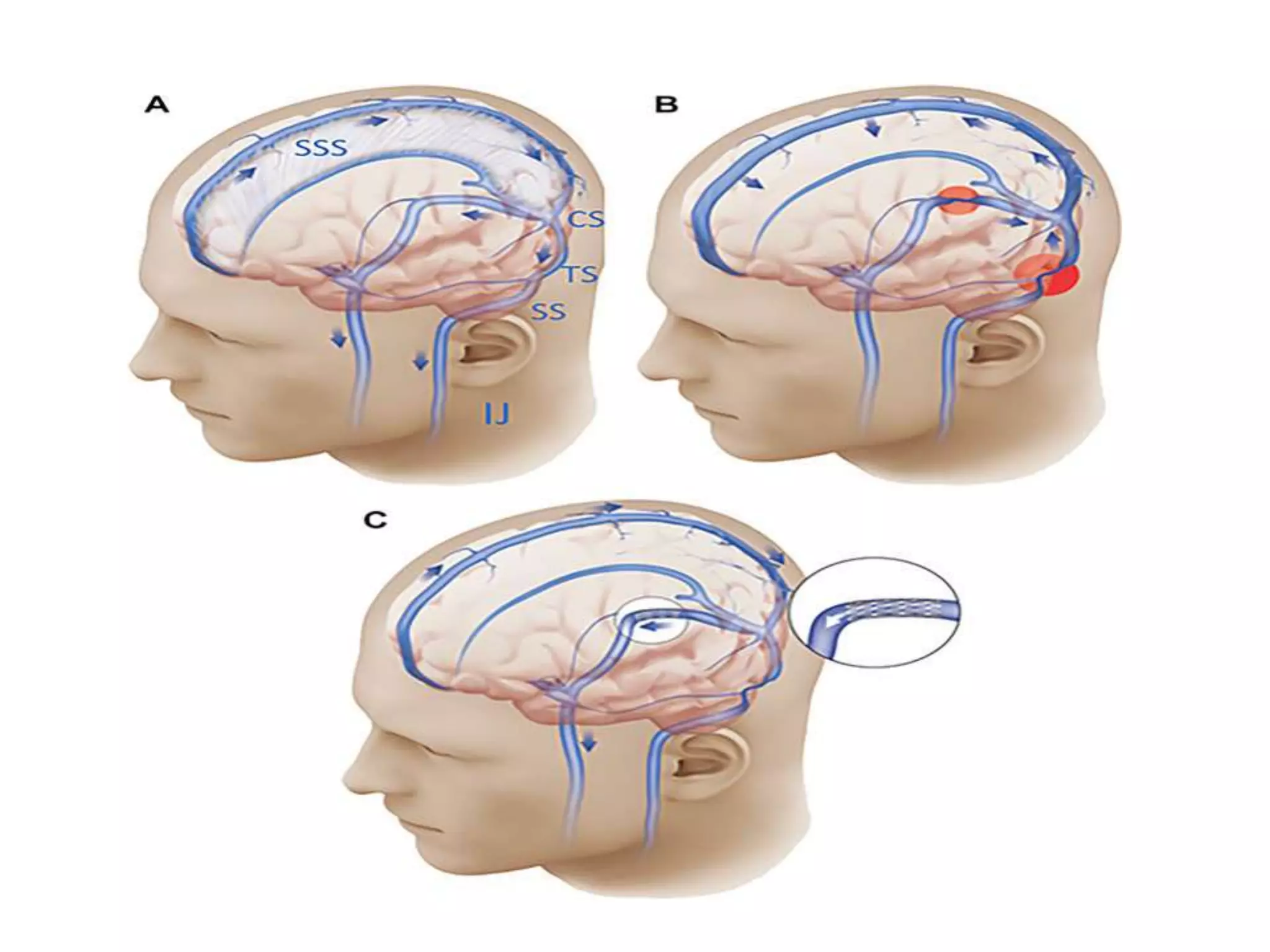
• Improvements in venography imaging now detail that many with IIH
have anatomical abnormalities of the cerebral venous sinus system.
• Eg.stenosis of the dominant or both transverse sinus.
• The stenosis may result from intrinsic dural sinus anatomy or
extrinsic compression by the increased intracranial pressure and
reducing ICP can led to resolution of stenosis.
• Neurovascular stenting has been reported, in a number of series, to
lead to an improvement in symptoms of intracranial hypertension.
Overall improvement of symptoms was noted in 16 patients (88.9%)
postprocedure, with 1 patient (5.6%) requiring shunt placement and 2 other
patients (11.1%) requiring postprocedural LP to monitor intracranial pressure
to determine candidacy for further
surgical interventions to treat residual symptoms.
After treatment, >75% exhibit an improvement in headaches,
~50% improvement in tinnitus, and ~50 % improvement in
ophthalmologic testing.
• Demerits of neurovascular stenting: long term anti-
thrombotic treament.
• The role of neurovascular stenting in IIH to preserve
rapidly deteriorating vision is not yet established, as
there is a lack of quality data in this area.
• It may be useful for highly selected patients with IIH
with venous sinus stenosis with an elevated pressure
gradient and elevated ICP in whom traditional
therapies have not worked.
Q7 What is the role of serial lumbar
punctures in IIH?
• The relief from a LP is typically short lived as CSF is
secreted from the choroid plexus at a rate of
25mL/hour and consequently the volume removed in a
so-called therapeutic tap is rapidly replaced.
Serial lumbar punctures are not recommended for
management of IIH.
• Despite the relief of headache in nearly three quarters
of patients, LPs are associated with significant anxiety
in many patients and can led to acute and chronic back
pain in some patients
Q8.What is the best drug treatment?
The IIHTT also reported improved quality of life
outcomes at 6 months with acetazolamide.
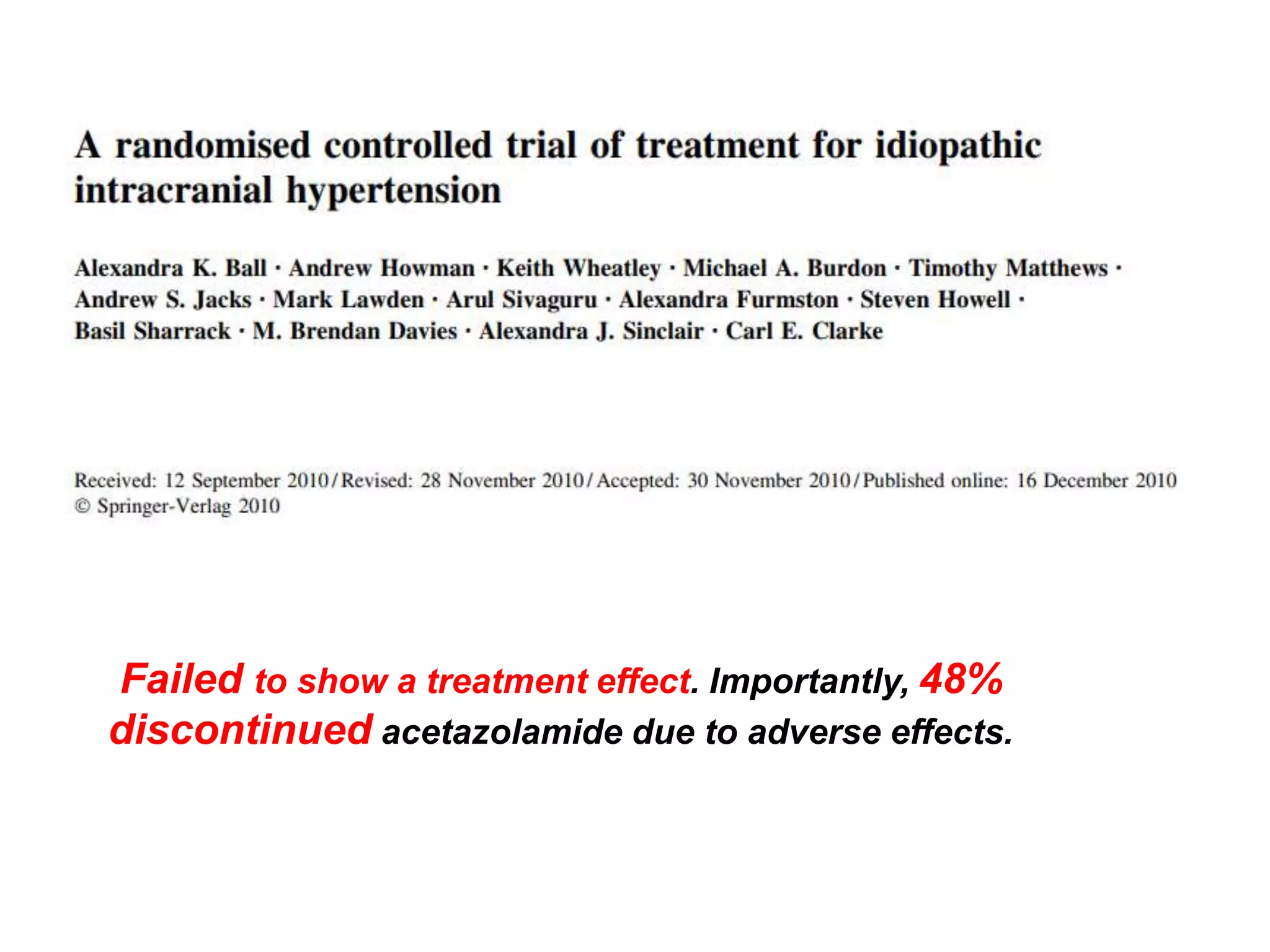
Failed to show a treatment effect. Importantly, 48%
discontinued acetazolamide due to adverse effects.
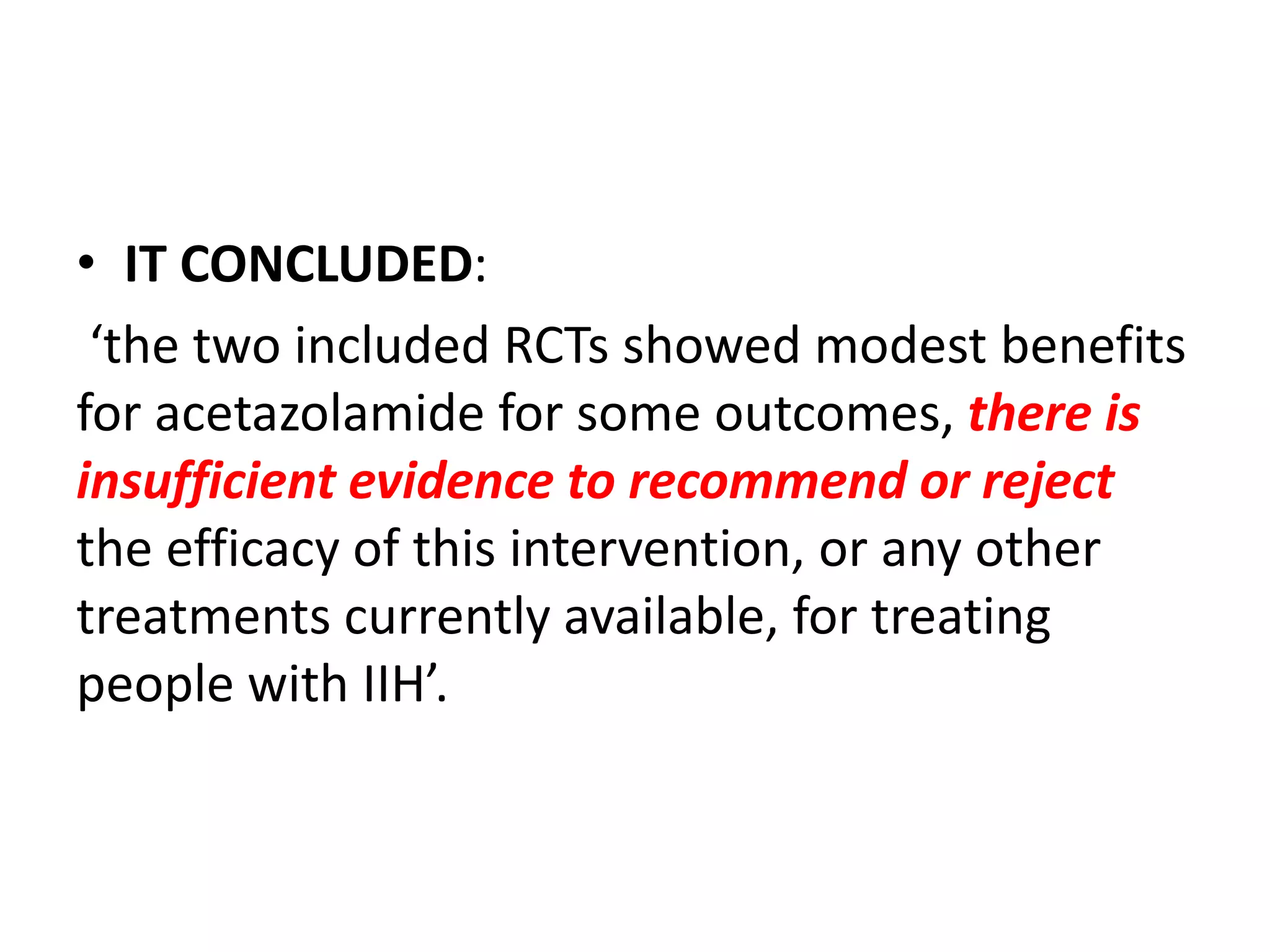
• IT CONCLUDED:
‘the two included RCTs showed modest benefits
for acetazolamide for some outcomes, there is
insufficient evidence to recommend or reject
the efficacy of this intervention, or any other
treatments currently available, for treating
people with IIH’.
Q9. How should acetazolamide be
prescribed?
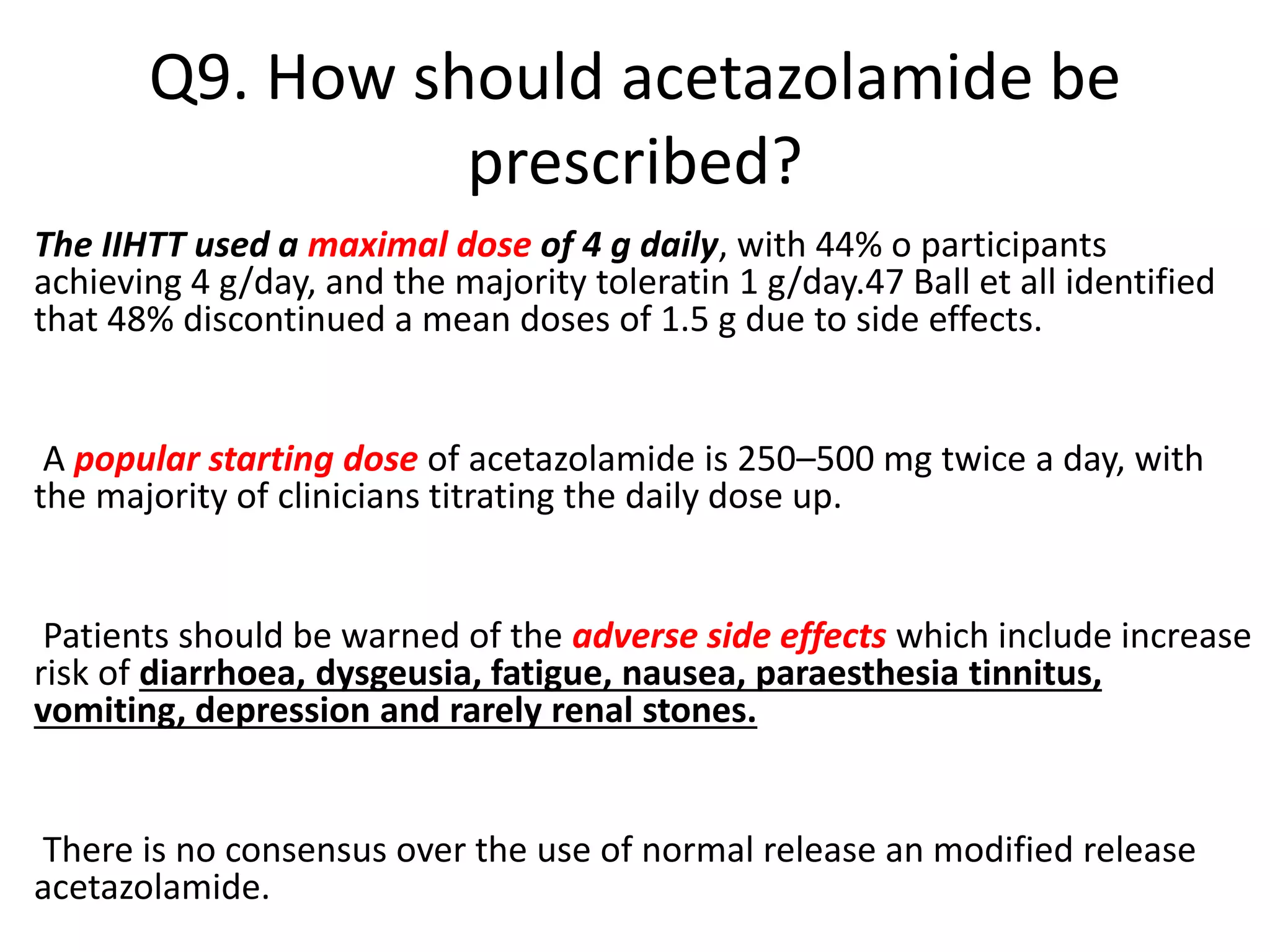
The IIHTT used a maximal dose of 4 g daily, with 44% o participants
achieving 4 g/day, and the majority toleratin 1 g/day.47 Ball et all identified
that 48% discontinued a mean doses of 1.5 g due to side effects.
A popular starting dose of acetazolamide is 250–500 mg twice a day, with
the majority of clinicians titrating the daily dose up.
Patients should be warned of the adverse side effects which include increase
risk of diarrhoea, dysgeusia, fatigue, nausea, paraesthesia tinnitus,
vomiting, depression and rarely renal stones.
There is no consensus over the use of normal release an modified release
acetazolamide.
Q10. What are the drugs helpful in IIH?
• Topiramate has carbonic anhydrase activity and can suppress appetite.
• There is evidence of efficacy of topiramate in treating migraine.
• may have a role with weekly dose escalation from 25 mg to 50 mg bd.
• caution: women must be informed that it can reduce the efficacy of the
contraceptive pill/oral contraceptives and other hormonal contraceptives.
• women must be counselled regarding side effects (including depression and
cognitive slowing) and potential teratogenetic risks.
Uncertainties
• The role of other diuretics such as furosemide, amiloride and coamilofruse
are not certain but are used by some as alternative therapies.
Q11. What is the best way to manage
headache in newly diagnosed IIH?
• Pt. to be informed about the risk of painkiller overuse.
• Simple analgesics in the first few weeks. (NSAIDs or paracetamol)
Indomethacin also reduces ICP
• Opioids not to be prescribed
• Greater occipital nerve blocks may be considered (evidence lacking)
• Acetazolamide alone is not helpful
• Repeated or solo LPs for this purpose are not recommended
Q12. Best approach for long term
management of headache?
• The pattern of headache in IIH changes over time and
needs careful assessment.
• There is frequently a mixed headache phenotype:
 Headache attributed to IIH,
 Migraine,
 Medication overuse headache,
 Tension-type headache,
 Headache attributed to low CSF pressure and headache
attributed to iatrogenic chiari malformation secondary to
CSF shunting
• Headache phenotype should be assessed
• Headache therapy to be tailored to the specific phenotype
• Early introduction of preventive therapies be considered.
(3-4 months are needed for efficacy)
• Pt s to be explained how their headaches may change their
character.
• Be careful enough not to develop MOH
Q13. what therapeutic strategies are
helpful for headache in IIH?
• Migrainous phenotype is the commonest (68%)
• Triptan ± NSAID/paracetamol + antiemetic
• Limit: 2 days per week / 10 days per month
• Migraine preventatives be tried( useful in IIH in ocular remission)
• Caution: drugs causing weight gain( b blocker, TCA, sod.
Valproate,flunarizine)
• Caution for depression: flunarizine, topiramate, b blocker
• Topiramate: migraine, wt. loss
but depression , cognition , decreased OCP efficacy and teratogenicity
are the downsides
• venlafaxine for depression. (weight neutral)
• Preventatives for a minimum duration of 3m for a trial.
Lifestyle modification:
 limit caffeine intake
 Ensure regular meals and
 adequate hydration,
 Exercise programme and
 sleep hygiene.
 Behavioural and stress management techniques can be implemented such as yoga,
cognitive–behavioural therapy and mindfulness.
Q14. How should MOH be
approached?
• Successfully removing excessive analgesic use significantly
improves headaches.
• if not addressed, MOH may prevent the optimisation and
effectiveness of preventative treatments.
• Non-opioids and triptan medications may be stopped
abruptly or weaned down within a month.
• Opioid medications should be gradually removed, with at
least 1 month painkiller free to determine effectiveness.
Q15 Should CSF diversion surgery be
used in patients with IIH with
headache alone?
• CSF diversion is generally not recommended as a
treatment for headache alone in IIH.
• Following CSF diversion
 68% will continue to have headaches at 6 months and
 79% by 2 years.
 28% can develop iatrogenic low pressure headaches
Q16 Should neurovascular stenting be
used in patients with IIH with
headache alone?
• Currently its not recommended as a treatment
for headache in IIH
MANAGEMENT OF HEADACHE IN
SHUNTED PATIENTS IN IIH
• Q17 How should an acute exacerbation of
headache be investigated in those who are
already shunted?
Q18 How should an acute exacerbation of headache be
treated in those who are already shunted?
• In shunted patients with deteriorating headaches, low
pressure headache and shunt over drainage should be
considered.
• In established overdrainage or low CSF pressure,
consideration should be given to the valve settings or tying
the shunt off.
• In the absence of shunt over drainage headache
management should follow the section above
• Consider medication overuse headache as a cause of acute
exacerbation in shunted patients.
Q19 Other chronic problems to be
dealt with?
• Pts with IIH have higher incidence of anxiety &
depression , and lower quality of life
• Sleep apnea
• PCOS may coexist
• Cognitive dysfunction may coexist
Q20 Pregnant pts. In IIH?
• Acetazolamide : limited evidence to make any
safety recommendations.
• Perinatal exposure in rodents have shown
teratogenicity.
• Topiramate : teratogenic
• If pregnancy takes place on topiramate , it is to be
reduced and stopped as soon as possible.
Q 21. acute exacerbation of IIH with
imminent risk to vision?
• Serial lumbar punctures as a temporary
measure may be considered till long term
measures as diversion or ONSF is available.
Q22. management of IIHWOP?
• without papilledema the risk of vision loss has
not been identified
• Headache is the principal morbidity
• Counsel about weight management
• Surgical management not to be considered
routinely
Q23. how should we monitor & follow
up these patients?
• All pts with papilledema should have the
following
1. visual acuity
2. pupil examination
3. formal visual field assessment
4. dilated fundal examination to grade the
papilloedema.
5. BMI calculation.
• In pts without papilledema :
Time to time assessment of headache character,
severity, frequency & frequency of analgesic
use.
THANK YOU

IDIOPATHIC INTRACRANIAL HYPERTENSION

  • 1.
    DR. ASHUTOSH RATH DMRESIDENT(NEUROLOGY) GMCH, GUWAHATI
  • 6.
    Q1 How shouldpapilloedema be investigated? • BLOOD PRESSURE must be measured to exclude malignant hypertension, as defined as a diastolic blood pressure greater than or equal to 120 mm Hg or systolic blood pressure greater than or equal to 180 mm Hg. • OPHTHALMOLOGY EXAMINATION: all patients should have papilloedema confirmed and an assessment made of the imminent risk to their visual function. The following should be recorded in the presence of papilloedema:  –– Visual Acuity  –– Pupil Examination  –– Intraocular Pressure  –– Formal Visual Field Test (Perimetry)
  • 7.
    NEUROLOGICAL EXAMINATION • Recordcranial nerve examination. Where IIH is suspected, typically there should be no cranial nerve involvement other than sixth cranial nerve palsy/palsies. • Should other cranial nerves and/or other pathological findings be involved, an alternative diagnosis should be considered. NEUROIMAGING • Urgent MRI brain within 24 hours; if unavailable within 24 hours, then urgent CT brain with subsequent MRI brain if no lesion identified. • There should be no evidence of hydrocephalus, mass, structural, vascular lesion and no abnormal meningeal enhancement. • CT or MR venography is mandatory to exclude cerebral sinus thrombosis within 24 hours. • Characteristics of raised intracranial pressure may be seen on neuroimaging (box 1)
  • 8.
    LUMBAR PUNCTURE • Thelumboperitoneal (LP) opening pressure  should be measured in the lateral decubitus position.  pressure recording should occur with the patient relaxed and the legs extended.  The CSF level should be allowed to settle before taking the reading. • The CSF analysis should at a minimum include CSF protein, glucose and cell count. • Should the LP not be successful, a guided LP could then be considered (ultrasound or X-ray). • The diagnostic criteria mandate a cut-off opening pressure of >25 cm CSF for diagnosing IIH. • The LP opening pressure should not be interpreted in isolation when diagnosing IIH.
  • 12.
    EXCLUSION OF ALLOTHER SECONDARY CAUSES OF RAISED ICP • All should have a CAREFUL HISTORY taken to exclude any possible secondary causes that have previously been linked to raised intracranial hypertension • All patients should have a FULL BLOOD COUNT performed to exclude anaemia. • Where patients are deemed to be atypical (table 1), other additional blood tests may be considered to exclude secondary causes. • Where patients are deemed to be atypical (table 1) ADDITIONAL NEUROIMAGING might be considered. These may include more proximal imaging of the neck vasculature to exclude internal jugular obstruction.
  • 13.
    Management principles • Foroptimal management of patients with IIH, there must be clear communication between clinicians for seamless joint care between the various specialties (figure 3). • Weight loss reduces ICP and has been shown to be effective in improving papilloedema and headaches. • The main principles of management of IIH are: 1. To treat the underlying disease 2. To protect the vision 3. To minimise the headache morbidity. Twenty-three questions were formulated to cover the three principle domains of management in IIH
  • 14.
    Primary principle forIIH management: modify the underlying disease through weight loss Q2 What is the best way to modify the disease to induce remission? Weight loss is the only disease-modifying therapy in typical IIH. • Once definite IIH is diagnosed, all patients with a BMI >30 kg/m2 should be counselled about weight management at the earliest opportunity. • • The amount of weight loss required to put the disease into remission is not known. • up to 15% of weight loss was required to put IIH into remission in one cohort. • Patients should be referred to a community weight management programme or a hospital-based weight programme.
  • 15.
    • There isan increasing role for bariatric surgery for sustained weight loss and for use in IIH. • For those who are not obese secondary causes should be revisited , and the role of weight gain/loss remains uncertain.
  • 16.
    Second principle forIIH management: protect the vision Q3 How should IIH be treated when there is imminent risk of visual loss? Where there is evidence of declining visual function, the acute management to preserve vision is surgical. • A temporary measure of a lumbar drain could be useful to protect the vision while planning urgent surgical treatment. • There is evidence that many of the surgical procedures, such as CSF diversion and optic nerve sheath fenestration (ONSF), work well in the short term. • While they are working, the underlying disease should be modified with weight loss In the absence of high class evidence, we do not recommend the use of corticosteroids for fulminant IIH at this time, and indeed a prolonged treatment course of corticosteroids would not be recommended due to weight gain.
  • 17.
    Q4 What iscurrently the best surgical procedure for visual loss in IIH? • In the UK, the preferred surgical procedure is neurosurgical CSF diversion • Ventriculoperitoneal (VP) should be the preferred CSF diversion procedure for visual deterioration in IIH, due to lower reported revisions per patient. • An LP shunt could also be used. . • Adjustable valves with antigravity or antisiphon devices should be considered for use to reduce the risk of low pressure headaches. • A mortality rate although low but does exist. • Complications of shunts include abdominal pain, shunt obstruction, migration and infection, low pressure headaches, subdural haematoma and tonsillar herniation
  • 18.
    Q5 What othersurgical procedures are performed for visual loss in IIH? • ONSF • Less complications • No report of mortality in literature • Temporary adv. Effects: double vision , optic nerve head hemorrhages • Some consider as the first step in treatment of malignant or fulminant IIH.
  • 19.
    Q6 What isthe current role of neurovascular stenting in acute IIH to prevent loss of vision? • Improvements in venography imaging now detail that many with IIH have anatomical abnormalities of the cerebral venous sinus system. • Eg.stenosis of the dominant or both transverse sinus. • The stenosis may result from intrinsic dural sinus anatomy or extrinsic compression by the increased intracranial pressure and reducing ICP can led to resolution of stenosis. • Neurovascular stenting has been reported, in a number of series, to lead to an improvement in symptoms of intracranial hypertension.
  • 21.
    Overall improvement ofsymptoms was noted in 16 patients (88.9%) postprocedure, with 1 patient (5.6%) requiring shunt placement and 2 other patients (11.1%) requiring postprocedural LP to monitor intracranial pressure to determine candidacy for further surgical interventions to treat residual symptoms.
  • 22.
    After treatment, >75%exhibit an improvement in headaches, ~50% improvement in tinnitus, and ~50 % improvement in ophthalmologic testing.
  • 23.
    • Demerits ofneurovascular stenting: long term anti- thrombotic treament. • The role of neurovascular stenting in IIH to preserve rapidly deteriorating vision is not yet established, as there is a lack of quality data in this area. • It may be useful for highly selected patients with IIH with venous sinus stenosis with an elevated pressure gradient and elevated ICP in whom traditional therapies have not worked.
  • 24.
    Q7 What isthe role of serial lumbar punctures in IIH? • The relief from a LP is typically short lived as CSF is secreted from the choroid plexus at a rate of 25mL/hour and consequently the volume removed in a so-called therapeutic tap is rapidly replaced. Serial lumbar punctures are not recommended for management of IIH. • Despite the relief of headache in nearly three quarters of patients, LPs are associated with significant anxiety in many patients and can led to acute and chronic back pain in some patients
  • 25.
    Q8.What is thebest drug treatment?
  • 26.
    The IIHTT alsoreported improved quality of life outcomes at 6 months with acetazolamide.
  • 27.
    Failed to showa treatment effect. Importantly, 48% discontinued acetazolamide due to adverse effects.
  • 28.
    • IT CONCLUDED: ‘thetwo included RCTs showed modest benefits for acetazolamide for some outcomes, there is insufficient evidence to recommend or reject the efficacy of this intervention, or any other treatments currently available, for treating people with IIH’.
  • 29.
    Q9. How shouldacetazolamide be prescribed? The IIHTT used a maximal dose of 4 g daily, with 44% o participants achieving 4 g/day, and the majority toleratin 1 g/day.47 Ball et all identified that 48% discontinued a mean doses of 1.5 g due to side effects. A popular starting dose of acetazolamide is 250–500 mg twice a day, with the majority of clinicians titrating the daily dose up. Patients should be warned of the adverse side effects which include increase risk of diarrhoea, dysgeusia, fatigue, nausea, paraesthesia tinnitus, vomiting, depression and rarely renal stones. There is no consensus over the use of normal release an modified release acetazolamide.
  • 30.
    Q10. What arethe drugs helpful in IIH? • Topiramate has carbonic anhydrase activity and can suppress appetite. • There is evidence of efficacy of topiramate in treating migraine. • may have a role with weekly dose escalation from 25 mg to 50 mg bd. • caution: women must be informed that it can reduce the efficacy of the contraceptive pill/oral contraceptives and other hormonal contraceptives. • women must be counselled regarding side effects (including depression and cognitive slowing) and potential teratogenetic risks. Uncertainties • The role of other diuretics such as furosemide, amiloride and coamilofruse are not certain but are used by some as alternative therapies.
  • 31.
    Q11. What isthe best way to manage headache in newly diagnosed IIH? • Pt. to be informed about the risk of painkiller overuse. • Simple analgesics in the first few weeks. (NSAIDs or paracetamol) Indomethacin also reduces ICP • Opioids not to be prescribed • Greater occipital nerve blocks may be considered (evidence lacking) • Acetazolamide alone is not helpful • Repeated or solo LPs for this purpose are not recommended
  • 32.
    Q12. Best approachfor long term management of headache? • The pattern of headache in IIH changes over time and needs careful assessment. • There is frequently a mixed headache phenotype:  Headache attributed to IIH,  Migraine,  Medication overuse headache,  Tension-type headache,  Headache attributed to low CSF pressure and headache attributed to iatrogenic chiari malformation secondary to CSF shunting
  • 33.
    • Headache phenotypeshould be assessed • Headache therapy to be tailored to the specific phenotype • Early introduction of preventive therapies be considered. (3-4 months are needed for efficacy) • Pt s to be explained how their headaches may change their character. • Be careful enough not to develop MOH
  • 34.
    Q13. what therapeuticstrategies are helpful for headache in IIH? • Migrainous phenotype is the commonest (68%) • Triptan ± NSAID/paracetamol + antiemetic • Limit: 2 days per week / 10 days per month • Migraine preventatives be tried( useful in IIH in ocular remission) • Caution: drugs causing weight gain( b blocker, TCA, sod. Valproate,flunarizine) • Caution for depression: flunarizine, topiramate, b blocker • Topiramate: migraine, wt. loss but depression , cognition , decreased OCP efficacy and teratogenicity are the downsides
  • 35.
    • venlafaxine fordepression. (weight neutral) • Preventatives for a minimum duration of 3m for a trial. Lifestyle modification:  limit caffeine intake  Ensure regular meals and  adequate hydration,  Exercise programme and  sleep hygiene.  Behavioural and stress management techniques can be implemented such as yoga, cognitive–behavioural therapy and mindfulness.
  • 36.
    Q14. How shouldMOH be approached? • Successfully removing excessive analgesic use significantly improves headaches. • if not addressed, MOH may prevent the optimisation and effectiveness of preventative treatments. • Non-opioids and triptan medications may be stopped abruptly or weaned down within a month. • Opioid medications should be gradually removed, with at least 1 month painkiller free to determine effectiveness.
  • 37.
    Q15 Should CSFdiversion surgery be used in patients with IIH with headache alone? • CSF diversion is generally not recommended as a treatment for headache alone in IIH. • Following CSF diversion  68% will continue to have headaches at 6 months and  79% by 2 years.  28% can develop iatrogenic low pressure headaches
  • 38.
    Q16 Should neurovascularstenting be used in patients with IIH with headache alone? • Currently its not recommended as a treatment for headache in IIH
  • 39.
    MANAGEMENT OF HEADACHEIN SHUNTED PATIENTS IN IIH • Q17 How should an acute exacerbation of headache be investigated in those who are already shunted?
  • 41.
    Q18 How shouldan acute exacerbation of headache be treated in those who are already shunted? • In shunted patients with deteriorating headaches, low pressure headache and shunt over drainage should be considered. • In established overdrainage or low CSF pressure, consideration should be given to the valve settings or tying the shunt off. • In the absence of shunt over drainage headache management should follow the section above • Consider medication overuse headache as a cause of acute exacerbation in shunted patients.
  • 42.
    Q19 Other chronicproblems to be dealt with? • Pts with IIH have higher incidence of anxiety & depression , and lower quality of life • Sleep apnea • PCOS may coexist • Cognitive dysfunction may coexist
  • 43.
    Q20 Pregnant pts.In IIH? • Acetazolamide : limited evidence to make any safety recommendations. • Perinatal exposure in rodents have shown teratogenicity. • Topiramate : teratogenic • If pregnancy takes place on topiramate , it is to be reduced and stopped as soon as possible.
  • 44.
    Q 21. acuteexacerbation of IIH with imminent risk to vision? • Serial lumbar punctures as a temporary measure may be considered till long term measures as diversion or ONSF is available.
  • 45.
    Q22. management ofIIHWOP? • without papilledema the risk of vision loss has not been identified • Headache is the principal morbidity • Counsel about weight management • Surgical management not to be considered routinely
  • 46.
    Q23. how shouldwe monitor & follow up these patients? • All pts with papilledema should have the following 1. visual acuity 2. pupil examination 3. formal visual field assessment 4. dilated fundal examination to grade the papilloedema. 5. BMI calculation.
  • 47.
    • In ptswithout papilledema : Time to time assessment of headache character, severity, frequency & frequency of analgesic use.
  • 48.

Editor's Notes

  • #26 Citing the conclusion of this cochrane review.
  • #27 Iih treatment trial. Showed a modest benefit
  • #30 Periodic monitoring of serum electrolytes is recommended
  • #31 Decreases weight
  • #32 MOH(use of simple analgesics on more than 15 days per month or opioids, combined preparations or triptan medication on greater than 10 days per month for more than 3 months)
  • #34 And that the drug which had once worked may not work later.
  • #35 Raised ICP is settling and papillledema has resolved