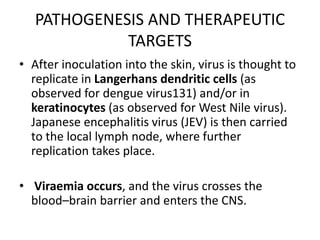
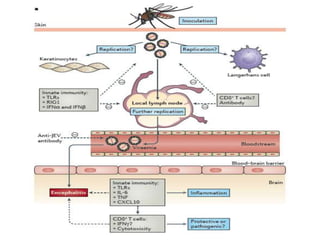
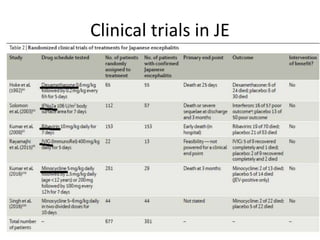
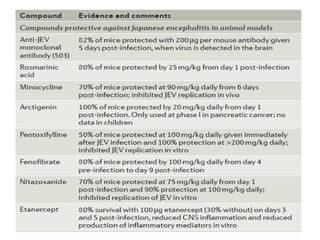
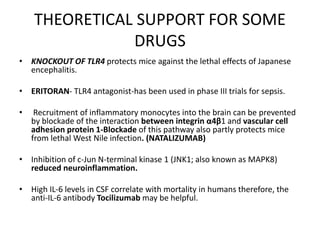
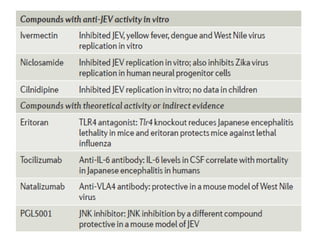
This document discusses Japanese encephalitis (JE), a mosquito-borne viral disease. It provides background on JE, noting it is a leading cause of viral encephalitis in Asia. The purpose is to review potential new treatment approaches, as vaccines are available but the disease persists and outbreaks are challenging to predict. The virus life cycle and transmission between mosquitoes and pigs/birds is described. While some treatment trials have occurred, none have proven effective due to small sample sizes. The document discusses the virus pathogenesis and potential immunological targets for treatment, such as reducing inflammation. It reviews existing compounds with anti-JE activity in animal models that could be tested in humans.










![Japanese encephalites virus [autosaved]](https://cdn.slidesharecdn.com/ss_thumbnails/japaneseencephalitesvirusautosaved-200810051638-thumbnail.jpg?width=640&height=640&fit=bounds)


