IDENTIFYING
DEFECTIVE TOOLS
For hand tools, you can easily identify their
defects when:
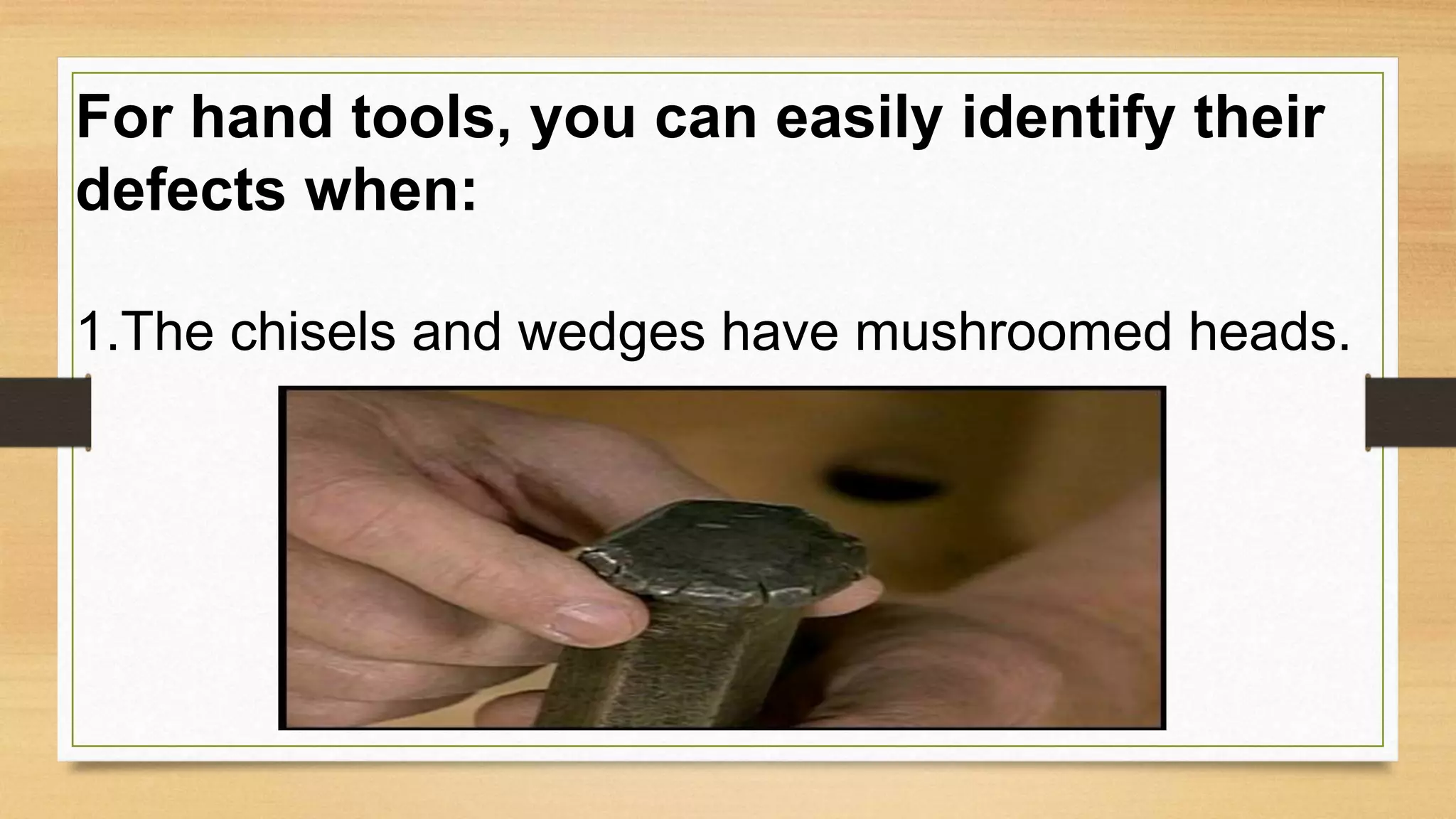
1.The chisels and wedges have mushroomed heads.
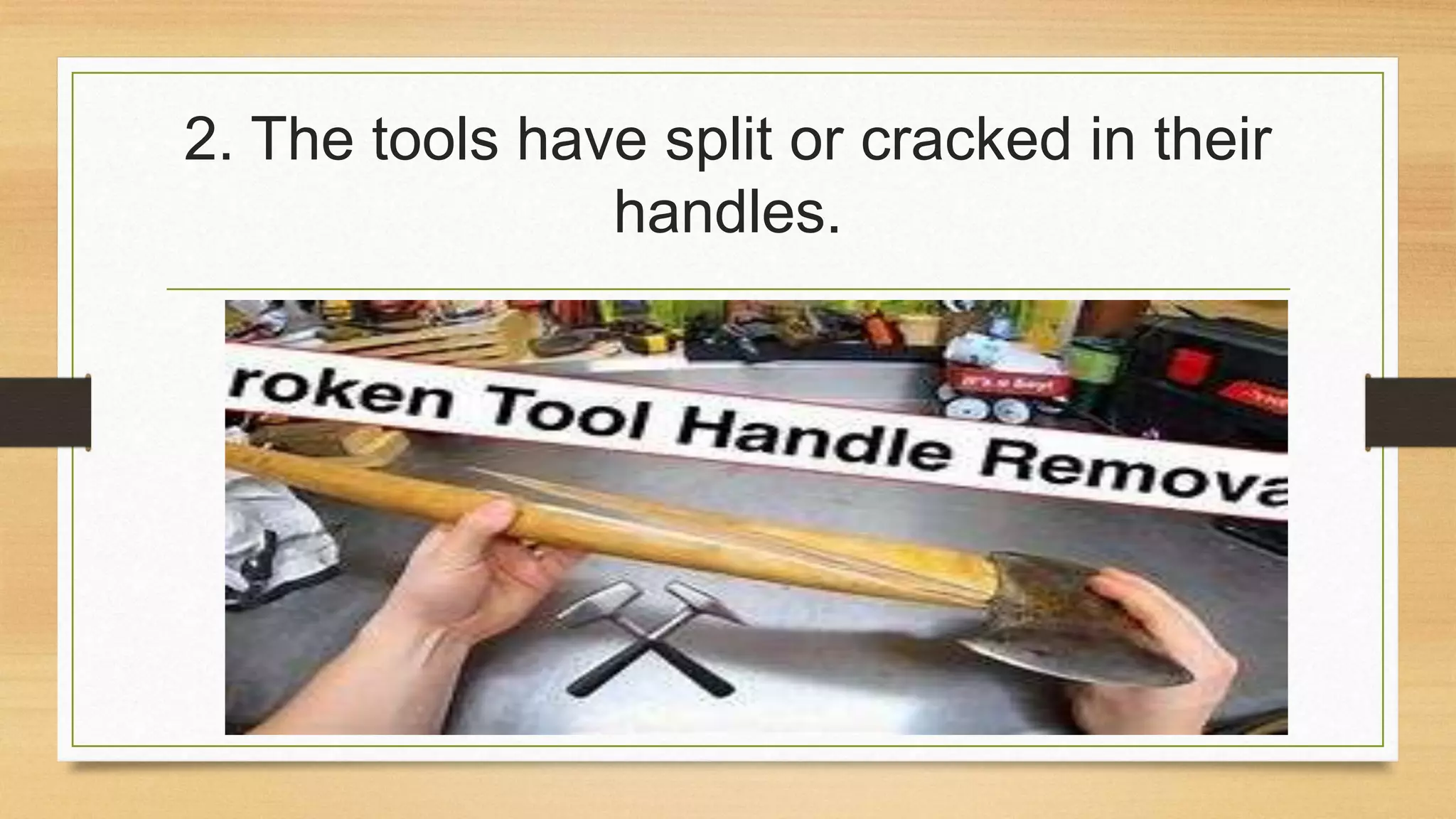
2. The tools have split or cracked in their
handles.
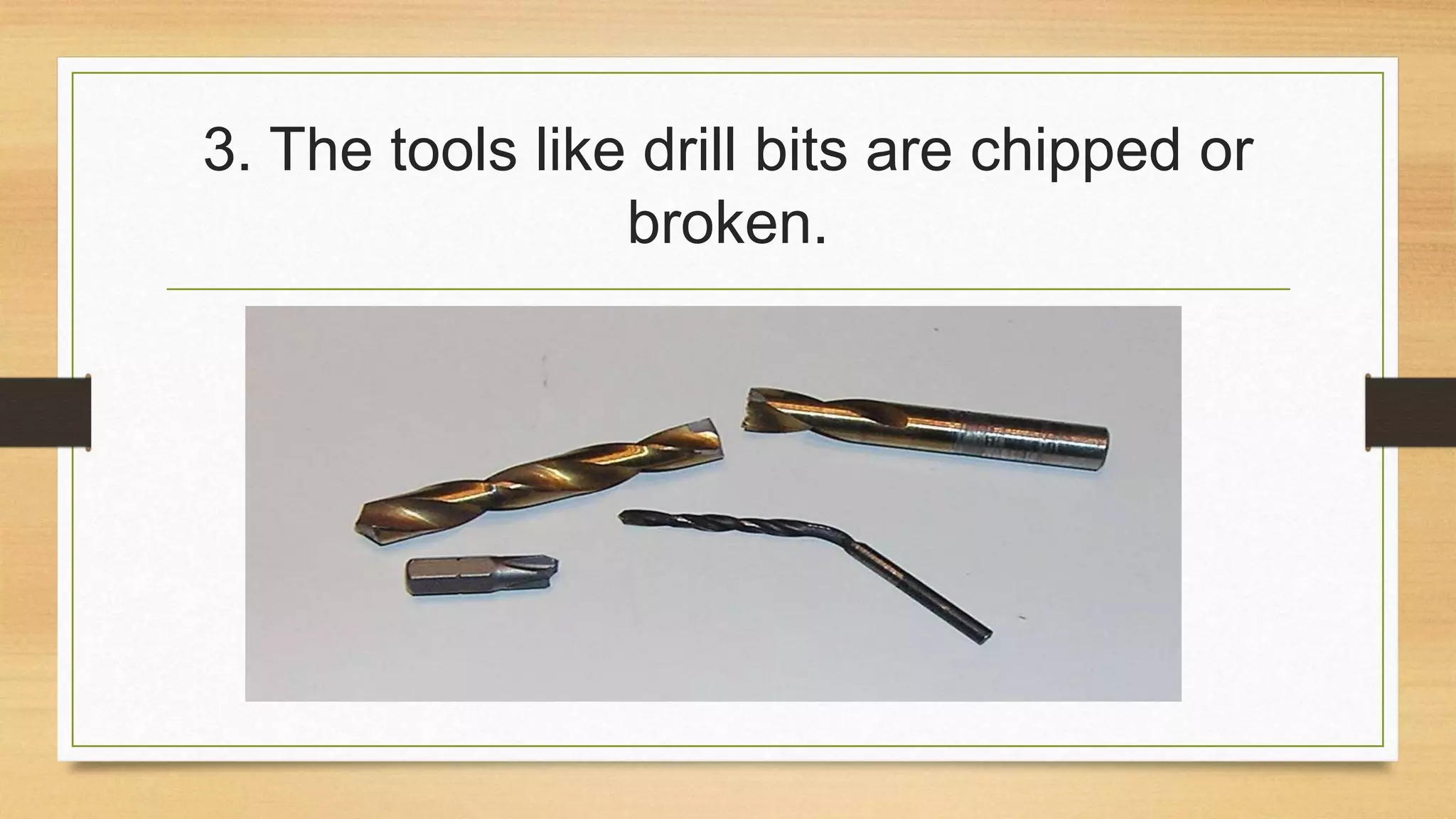
3. The tools like drill bits are chipped or
broken.
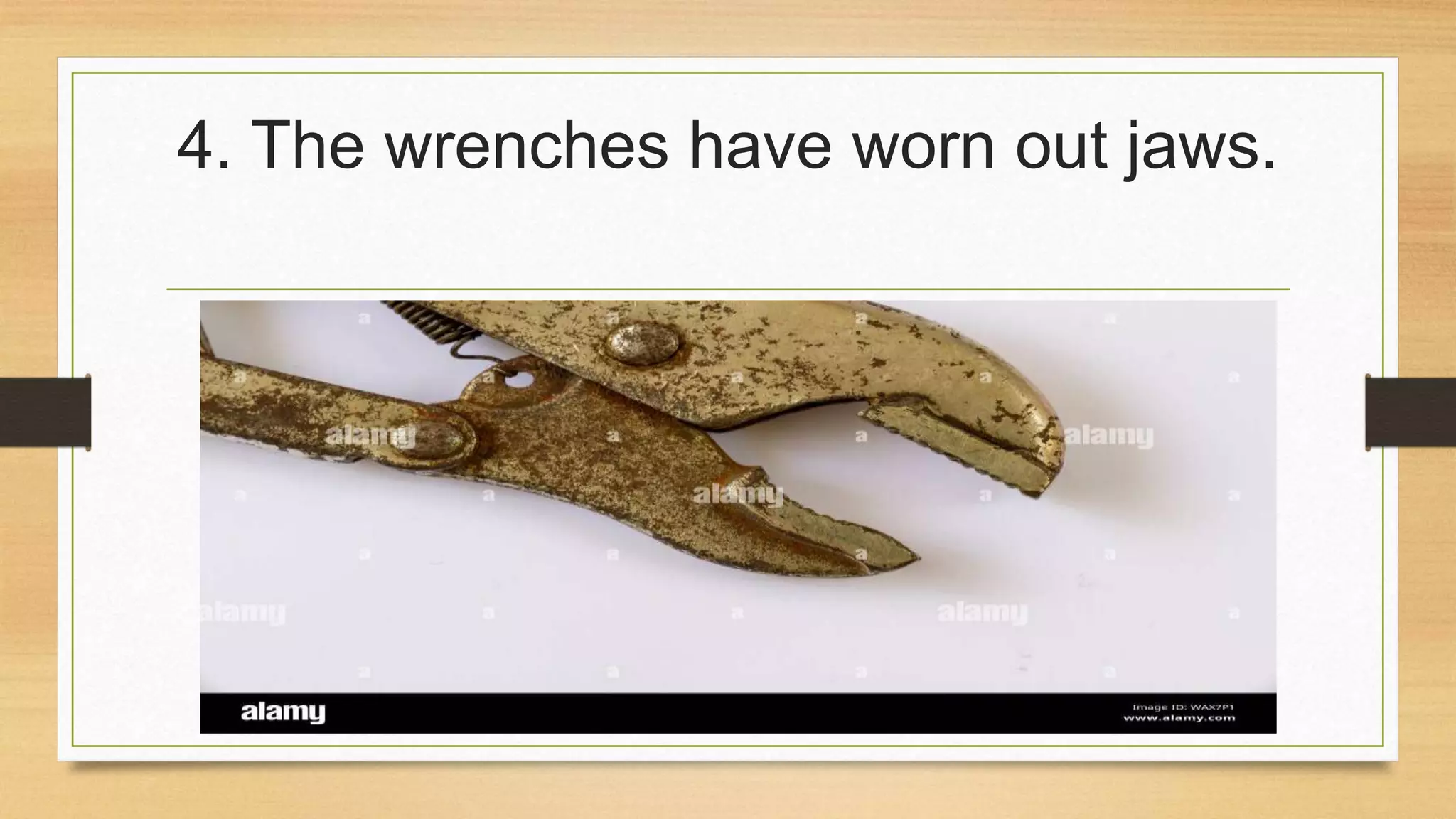
4. The wrenches have worn out jaws.
For air, gas, or electric power tools, you can easily
identify their defects when:
1. The tools have broken or dysfunctional guards.
2. The tools have insufficient or improper grounding due to damage
on double insulated tools.
3. The tools have ground wires, on plugs, or cords of standard tools.
4. The on and off switches of the tools are not in good conditions or
not functional.
5. The tool blades are cracked.
6. The guard is wedged back on the power saw after the wrong
grinder wheel is being used.
Procedure in Segregating and Labeling Non-functional
Tools and Equipment
1.Conduct an inventory of tools and equipment.
2.Record the number of non-functional tools and
equipment.
3.Segregate tools which are serviceable or unserviceable.
4.Report the number of tools and equipment that are non-
functional but subject for repair.
5. Label tools and equipment which are condemnable.
6. Return tools and equipment in the tool cabinet as per
operating procedures.
Procedure in Checking Condition of
Personal Protective Equipment
1. Inspect any damaged or defective Personal
Protective Equipment (PPE).
2. Test the functionality of each PPE.
3. Separate the non-functional and functional
PPE.
4. Repair/replace the non-functional PPE. 5.
Report the condition or status of PPE.

IDENTIFYING DEFECTIVE TOOLS.pptx

  • 1.
  • 2.
    For hand tools,you can easily identify their defects when: 1.The chisels and wedges have mushroomed heads.
  • 3.
    2. The toolshave split or cracked in their handles.
  • 4.
    3. The toolslike drill bits are chipped or broken.
  • 5.
    4. The wrencheshave worn out jaws.
  • 6.
    For air, gas,or electric power tools, you can easily identify their defects when: 1. The tools have broken or dysfunctional guards. 2. The tools have insufficient or improper grounding due to damage on double insulated tools. 3. The tools have ground wires, on plugs, or cords of standard tools. 4. The on and off switches of the tools are not in good conditions or not functional. 5. The tool blades are cracked. 6. The guard is wedged back on the power saw after the wrong grinder wheel is being used.
  • 7.
    Procedure in Segregatingand Labeling Non-functional Tools and Equipment 1.Conduct an inventory of tools and equipment. 2.Record the number of non-functional tools and equipment. 3.Segregate tools which are serviceable or unserviceable. 4.Report the number of tools and equipment that are non- functional but subject for repair. 5. Label tools and equipment which are condemnable. 6. Return tools and equipment in the tool cabinet as per operating procedures.
  • 8.
    Procedure in CheckingCondition of Personal Protective Equipment 1. Inspect any damaged or defective Personal Protective Equipment (PPE). 2. Test the functionality of each PPE. 3. Separate the non-functional and functional PPE. 4. Repair/replace the non-functional PPE. 5. Report the condition or status of PPE.