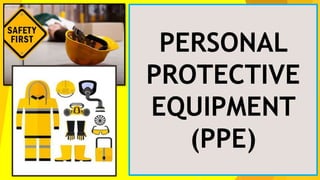
PERSONAL
PROTECTIVE
EQUIPMENT
(PPE)
Personal Protective
Equipment (PPE)
personal protective equipment
are gadgets used to protect
workers from injury or illness
caused by having contact to
the hazards in the workplace.
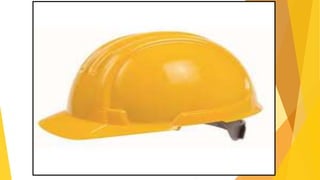
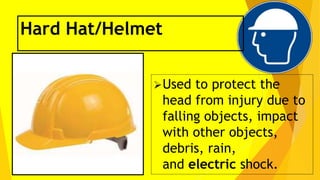
Hard Hat/Helmet
Used to protect the
head from injury due to
falling objects, impact
with other objects,
debris, rain,
and electric shock.
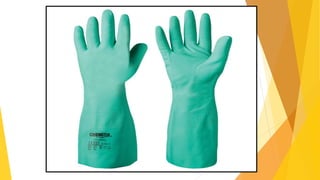
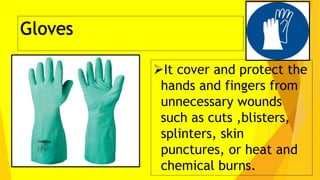
It cover and protect the
hands and fingers from
unnecessary wounds
such as cuts ,blisters,
splinters, skin
punctures, or heat and
chemical burns.
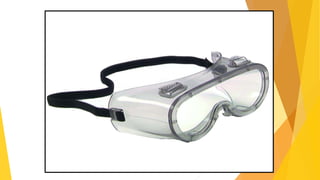
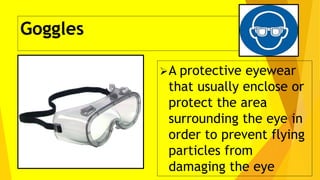
Goggles
A protective eyewear
that usually enclose or
protect the area
surrounding the eye in
order to prevent flying
particles from
damaging the eye
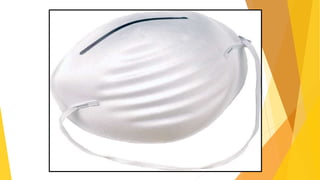
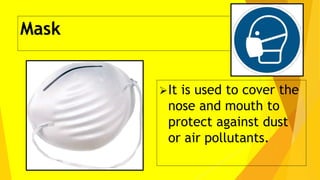
Mask
It is used to cover the
nose and mouth to
protect against dust
or air pollutants.
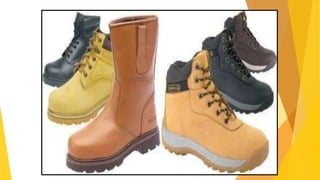
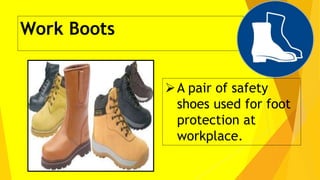
Work Boots
A pair of safety
shoes used for foot
protection at
workplace.
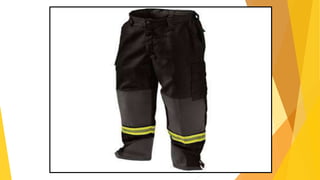
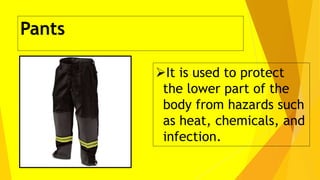
Pants
It is used to protect
the lower part of the
body from hazards such
as heat, chemicals, and
infection.
ASSIGNMENT
Find the definition of the following on a ½ sheet
of paper.
1. Chemical Hazards
2. Psychological hazards
3. Biological Hazards
4. Ergonomic Hazards
5. Physical Hazards
POGI SI SIR  <3
 Classification of Tools
 Tools are very useful to us. But tools that are no
longer functional may cause harm.
A. Make an inventory of functional and non-
functional tools in your shop.
B. Classify your tools according to their functions.
 Method of identifying non-functional tools and equipment
 1. Visual inspection. This refers to the visual observation of an
expert on the appearance of the tools and equipment.
 2. Functionality. Vibration or extra noise from the operation
means problems with parts and accessories are starting to
develop.
 3. Performance. When there is something wrong with the
performance of either hand tools or equipment they need
immediate repair or maintenance.
 4. Power supply (for electrically operated only). Failure to
meet the required power supply will result in a malfunction.
 5. Persons involved. It refers to the technical person who has
the knowledge and skills about the technology.
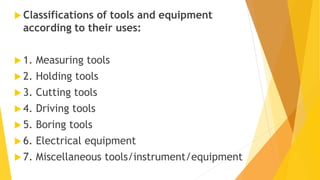
 Classifications of tools and equipment
according to their uses:
 1. Measuring tools
 2. Holding tools
 3. Cutting tools
 4. Driving tools
 5. Boring tools
 6. Electrical equipment
 7. Miscellaneous tools/instrument/equipment
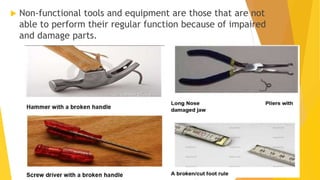
 Non-functional tools and equipment are those that are not
able to perform their regular function because of impaired
and damage parts.
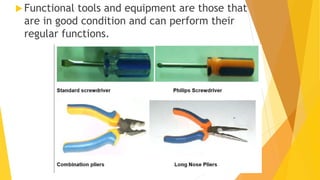
 Functional tools and equipment are those that
are in good condition and can perform their
regular functions.

PPE.pptx

  • 7.
  • 8.
    Personal Protective Equipment (PPE) personalprotective equipment are gadgets used to protect workers from injury or illness caused by having contact to the hazards in the workplace.
  • 9.
    Hard Hat/Helmet Used toprotect the head from injury due to falling objects, impact with other objects, debris, rain, and electric shock.
  • 10.
    It cover andprotect the hands and fingers from unnecessary wounds such as cuts ,blisters, splinters, skin punctures, or heat and chemical burns.
  • 11.
    Goggles A protective eyewear thatusually enclose or protect the area surrounding the eye in order to prevent flying particles from damaging the eye
  • 12.
    Mask It is usedto cover the nose and mouth to protect against dust or air pollutants.
  • 13.
    Work Boots A pairof safety shoes used for foot protection at workplace.
  • 14.
    Pants It is usedto protect the lower part of the body from hazards such as heat, chemicals, and infection.
  • 15.
    ASSIGNMENT Find the definitionof the following on a ½ sheet of paper. 1. Chemical Hazards 2. Psychological hazards 3. Biological Hazards 4. Ergonomic Hazards 5. Physical Hazards
  • 16.
  • 17.
     Classification ofTools  Tools are very useful to us. But tools that are no longer functional may cause harm. A. Make an inventory of functional and non- functional tools in your shop. B. Classify your tools according to their functions.
  • 18.
     Method ofidentifying non-functional tools and equipment  1. Visual inspection. This refers to the visual observation of an expert on the appearance of the tools and equipment.  2. Functionality. Vibration or extra noise from the operation means problems with parts and accessories are starting to develop.  3. Performance. When there is something wrong with the performance of either hand tools or equipment they need immediate repair or maintenance.  4. Power supply (for electrically operated only). Failure to meet the required power supply will result in a malfunction.  5. Persons involved. It refers to the technical person who has the knowledge and skills about the technology.
  • 19.
     Classifications oftools and equipment according to their uses:  1. Measuring tools  2. Holding tools  3. Cutting tools  4. Driving tools  5. Boring tools  6. Electrical equipment  7. Miscellaneous tools/instrument/equipment
  • 20.
     Non-functional toolsand equipment are those that are not able to perform their regular function because of impaired and damage parts.
  • 21.
     Functional toolsand equipment are those that are in good condition and can perform their regular functions.