Classification of
Tools and Equipment
A tool is a device that can
be used to produce an item
or accomplish a task, but
that is not consumed in the
process
1. Hand tools are tools
manipulated by hands without
using electrical energy such as:
puller, hacksaw, pull-push rule,
pliers, hammer, and others.
2. Machine/Power tools are tools manipulated
by our hands and with the use of electrical
energy such as: electric drill, grinding wheels,
vacuum cleaner and others.
3. Pneumatic tools are tools or
instruments activated by air pressure.
Pneumatic tools are designed around
basic devices: the air cylinder, the vane
motor, and the sprayer
A. Hand tools
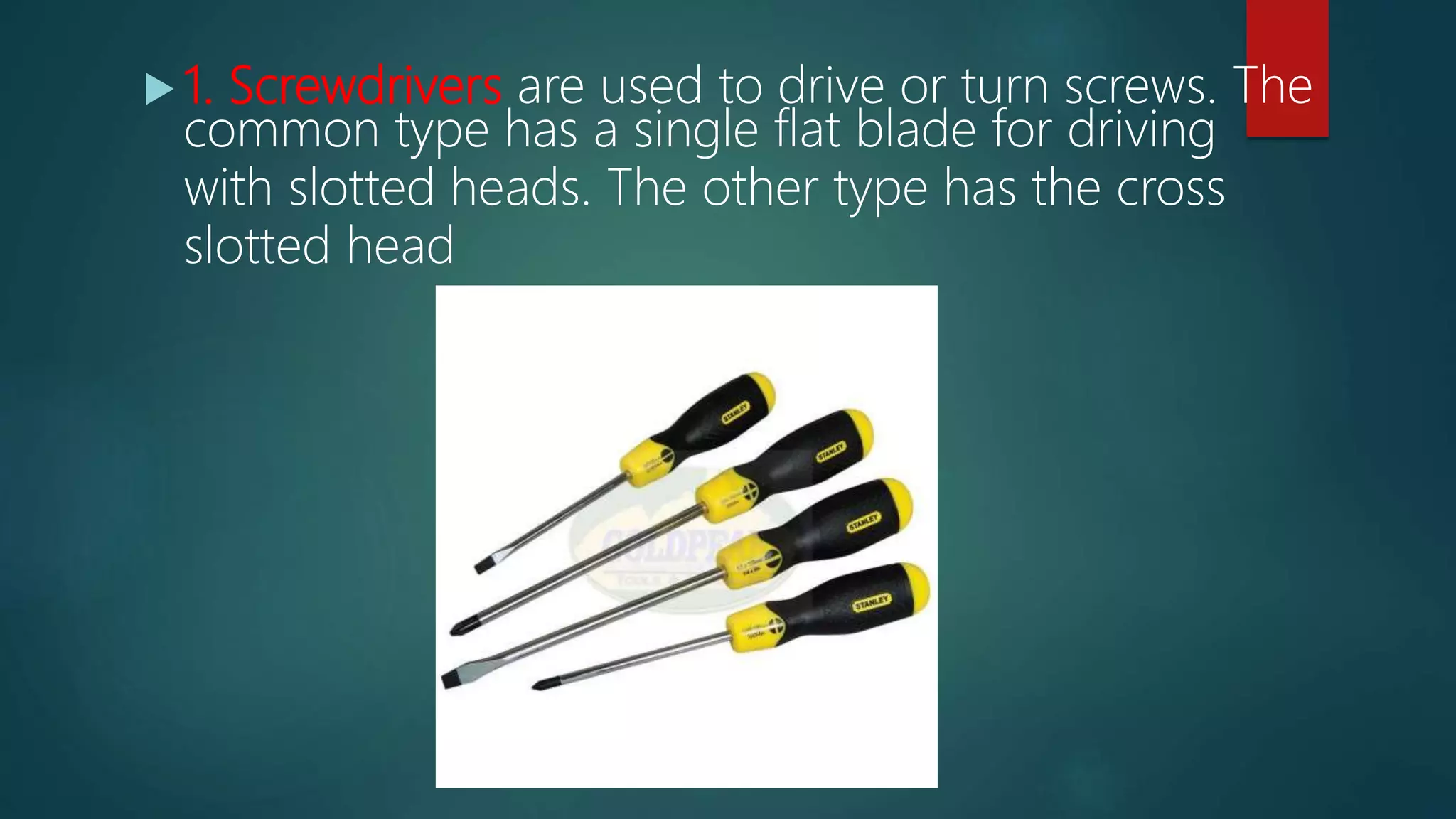
 1. Screwdrivers are used to drive or turn screws. The
common type has a single flat blade for driving
with slotted heads. The other type has the cross
slotted head
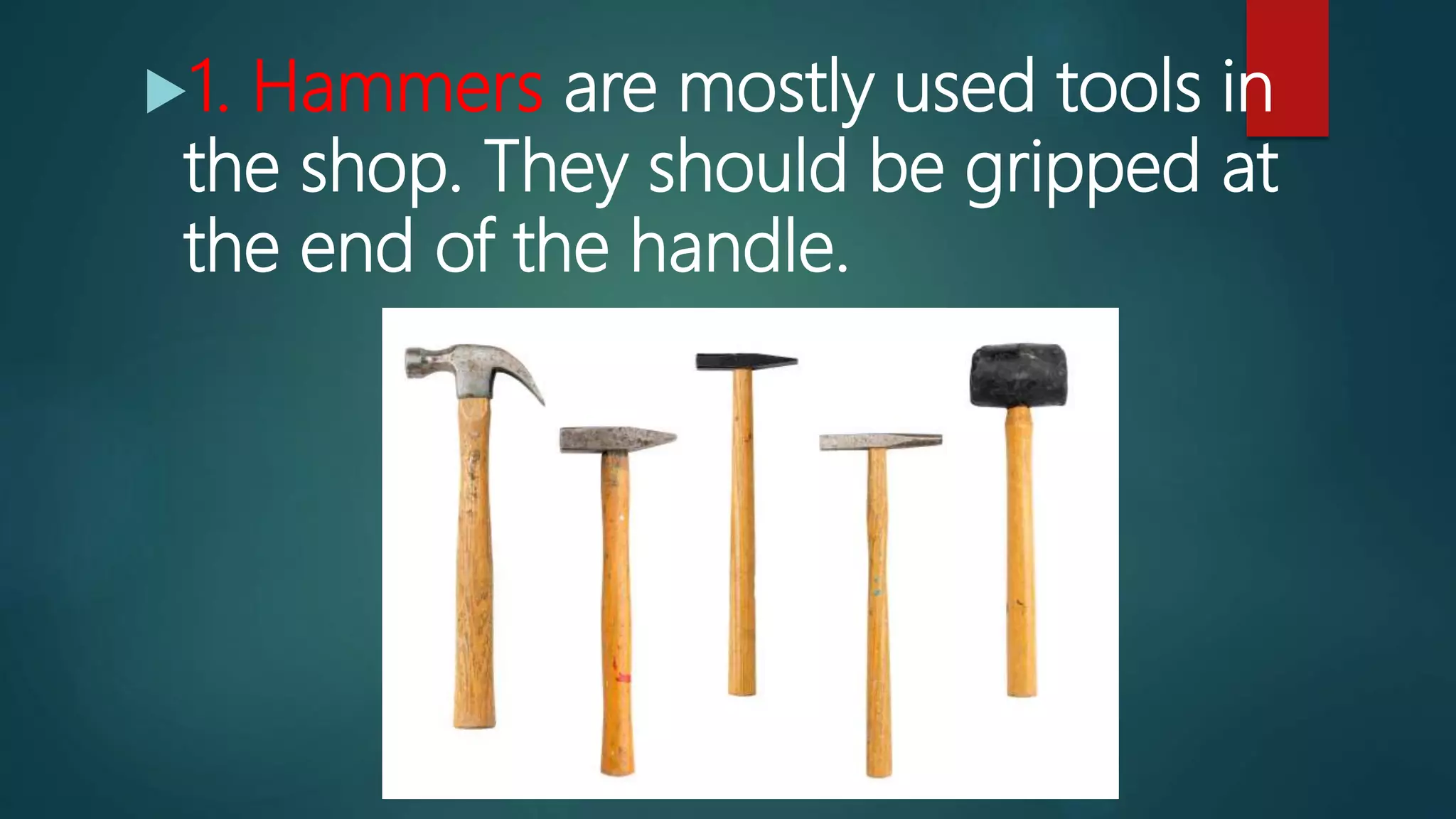
1. Hammers are mostly used tools in
the shop. They should be gripped at
the end of the handle.
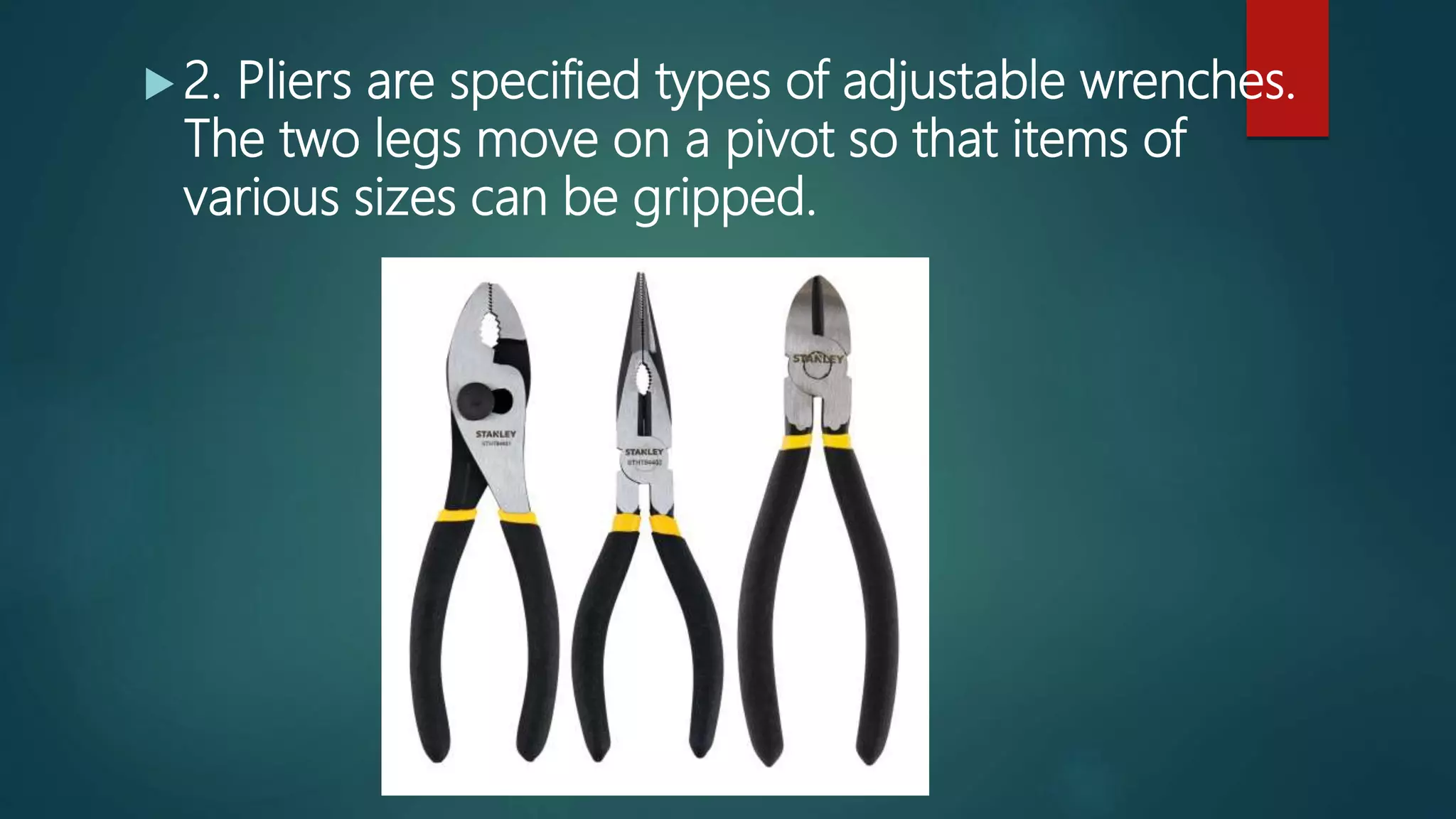
 2. Pliers are specified types of adjustable wrenches.
The two legs move on a pivot so that items of
various sizes can be gripped.
 3. Wrenches are used to turn screws, nuts and bolts
with hexagonal heads. ― Hexagonalǁ means six-
sided. A variety of wrenches are used in the shop.
 4. Pullers are used to remove gears and hubs from
shafts, bushings from blind holes, and cylinders’ liners
from the engine blocks.
B. Machine/Power Tools
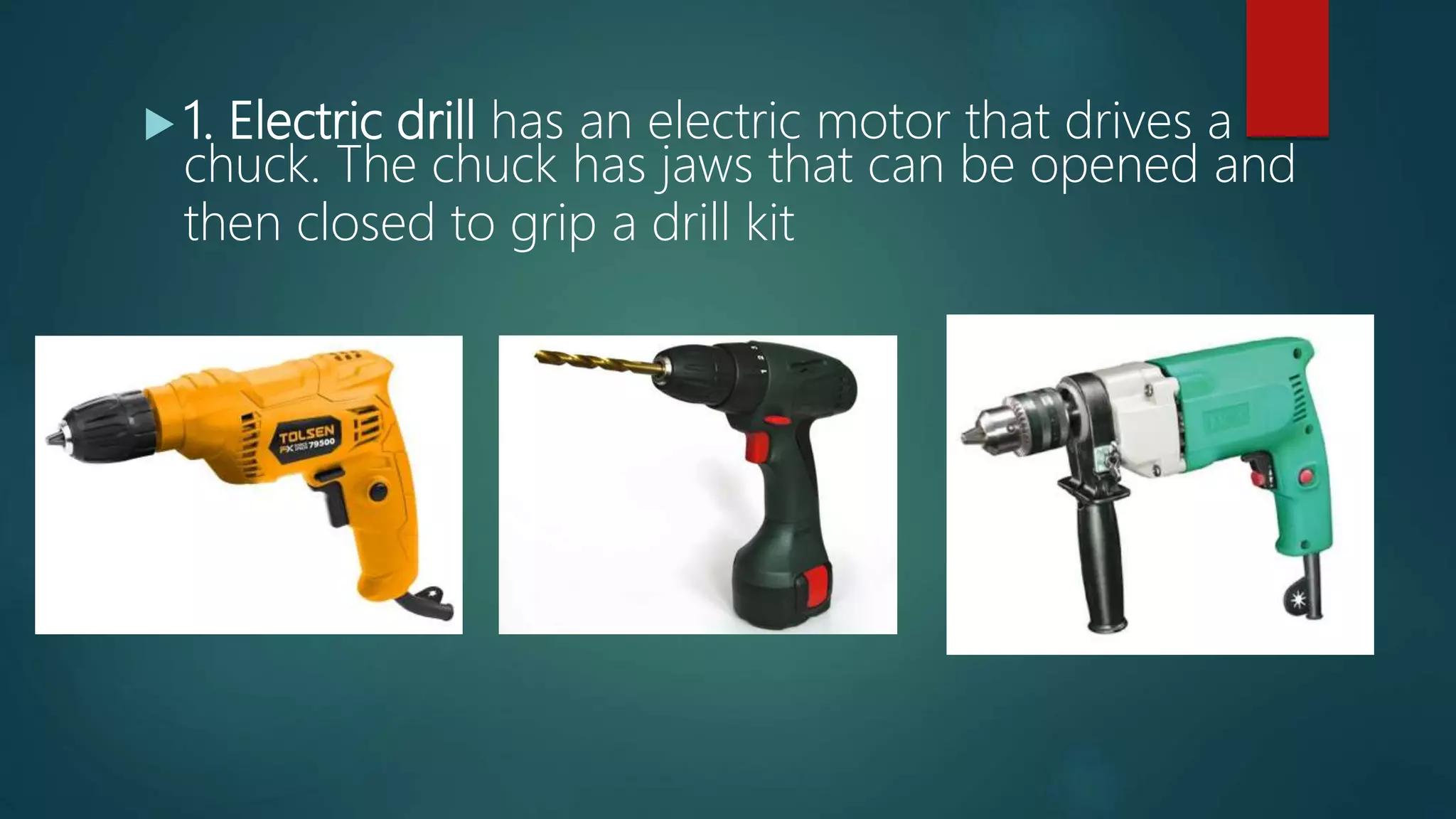
 1. Electric drill has an electric motor that drives a
chuck. The chuck has jaws that can be opened and
then closed to grip a drill kit
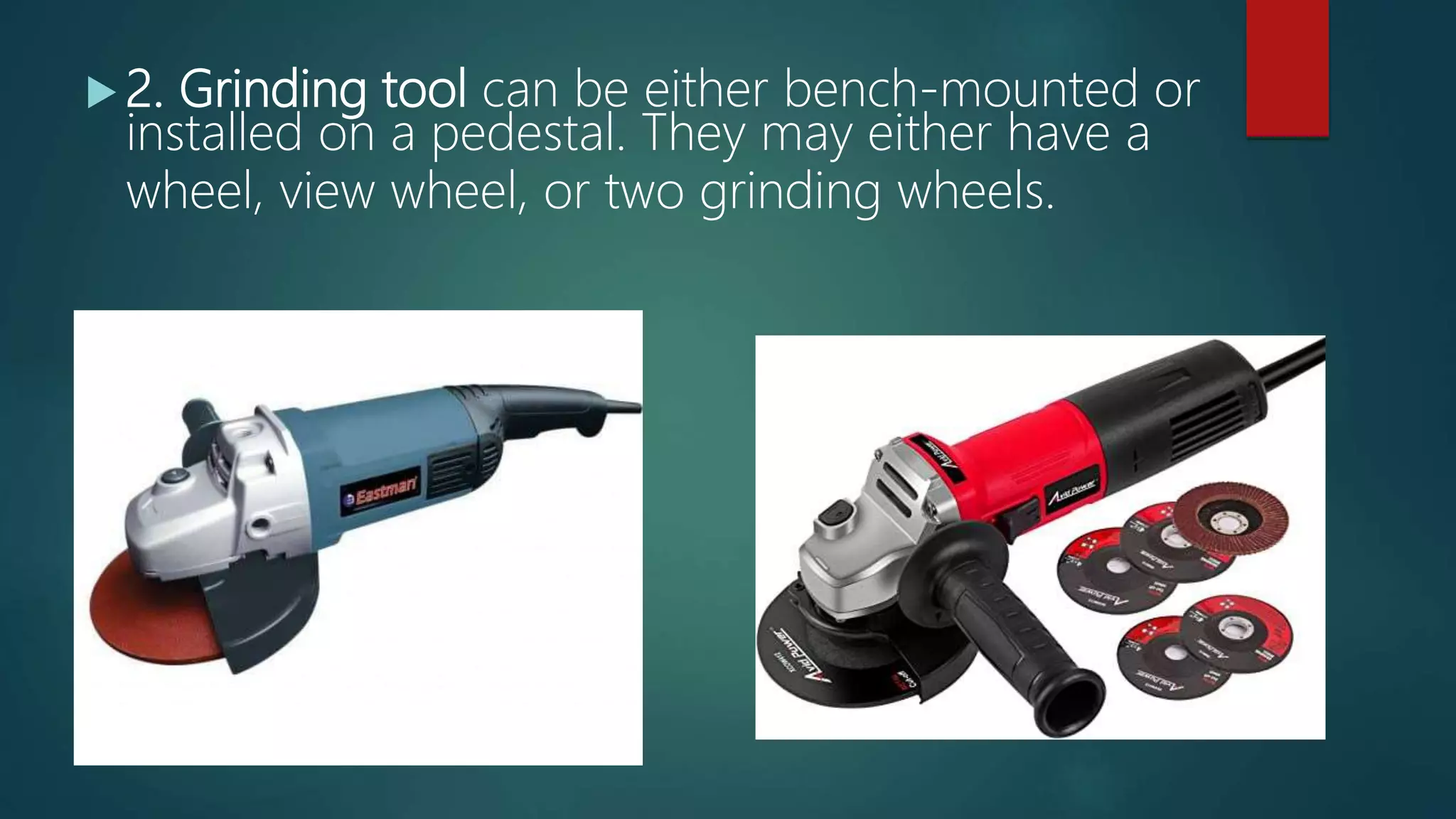
 2. Grinding tool can be either bench-mounted or
installed on a pedestal. They may either have a
wheel, view wheel, or two grinding wheels.
3. Vacuum cleaner is used for cleaning the
floor and car interiors after service.
C. Pneumatic tools
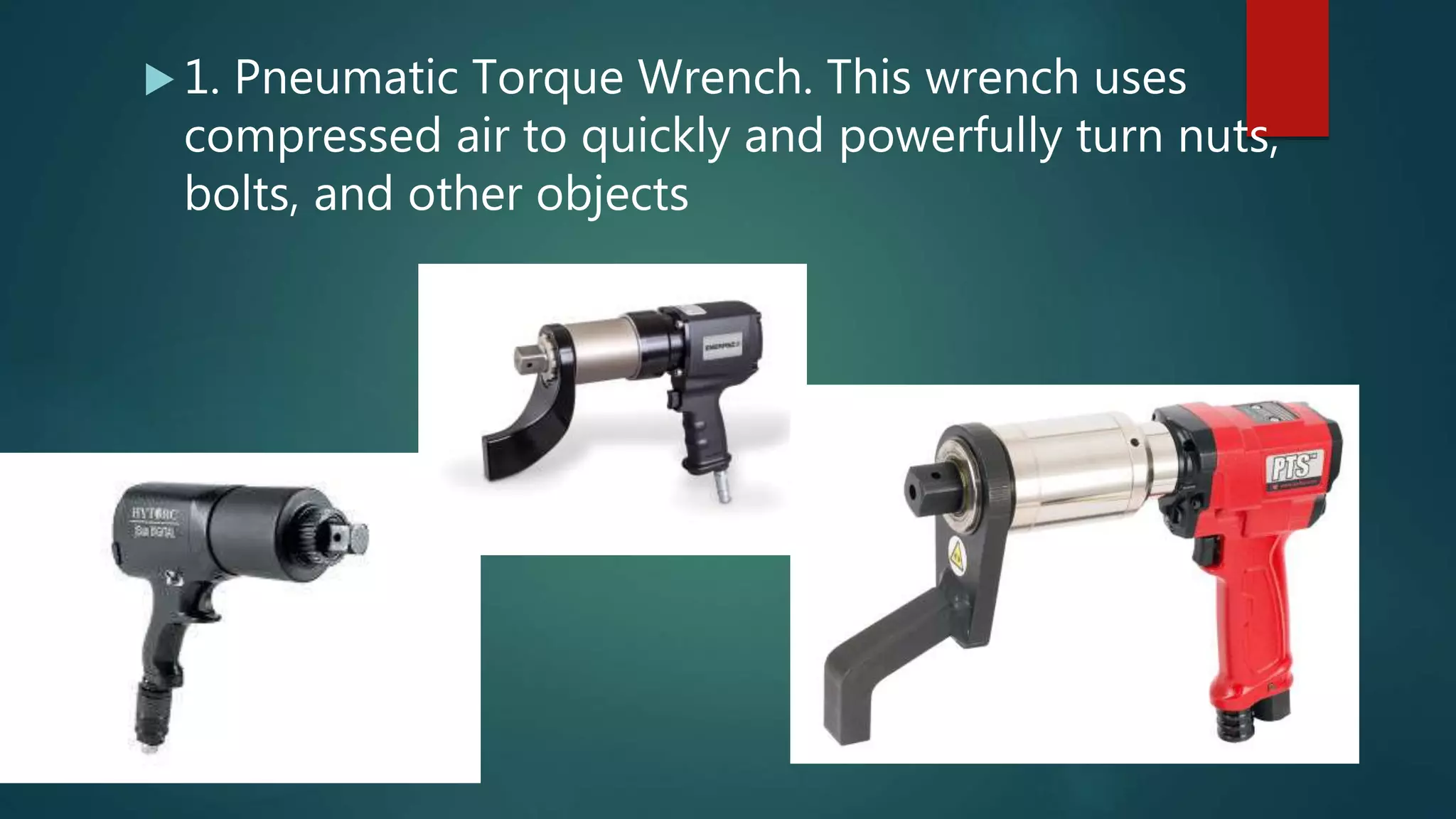
 1. Pneumatic Torque Wrench. This wrench uses
compressed air to quickly and powerfully turn nuts,
bolts, and other objects
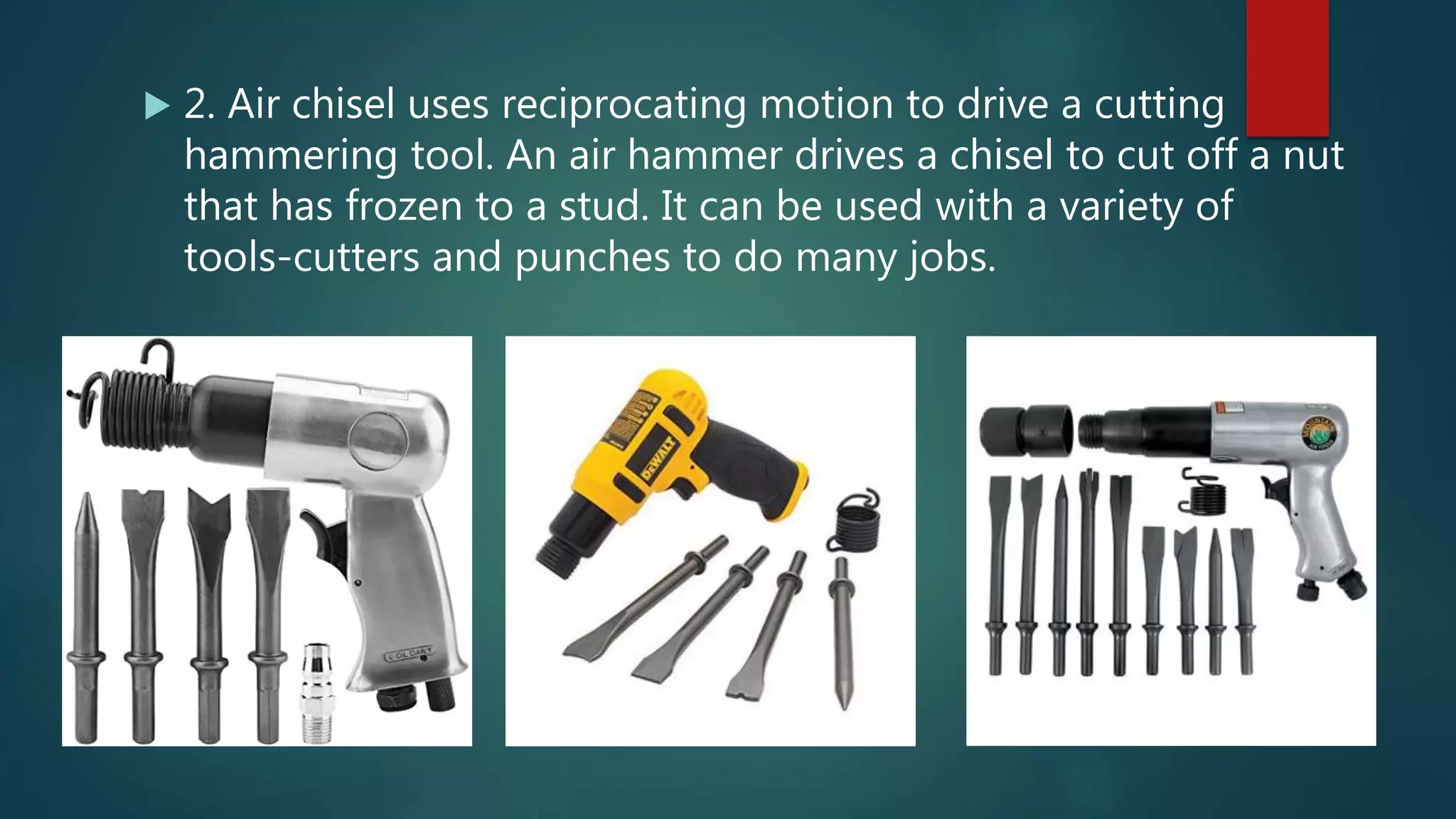
 2. Air chisel uses reciprocating motion to drive a cutting
hammering tool. An air hammer drives a chisel to cut off a nut
that has frozen to a stud. It can be used with a variety of
tools-cutters and punches to do many jobs.
 3. Air drill is lighter than a comparable electric drill. Repeatedly
stalling or overloading does not damage or overheat the air
drill
 4. Air racket uses the sockets and attachments from a standard socket set
 5. Pneumatic floor jack uses compressed air to flow into the jack cylinder
and causes the ram to extend and raise the vehicle.
Basic Maintenance of Electrical Tools
and Equipment
 1. Clean out the Dust. To make sure that your electric tools are ready to go
when you are, keep them clean and free of dust. Spend some time to clean
out the dust every once in a while on your tools while they are inactive in
storage.
 2. Check the Cords. Look for tear/cut insulator on the power cords on your
electric tools. This will ensure that your electric tool can get the power that
it needs to function without an accident
 3. Use the right tool correctly. Use tools correctly and for their intended
purposes. Follow the safety directions and operating procedures
recommended by the manufacturer. When working on a circuit, use
approved tools with insulated hand.
 4.Protect your Tools. Keep tools and cords away from heat, oil, and sharp
objects. These hazards can damage insulation. If a tool or cord heats up,
stop using it. Report the condition to a supervisor or instructor
immediately
 5. Use double-insulated tools - Portable electrical tools are classified by the
number of insulation barriers between the electrical conductors in the tool
and the worker.
 6. Storing Your Tools- Keep your electric tools stored in their original cases
and containers. This will keep them free of dust and dirt while they are not
being used.
Note: proper care of your electric tools
is the key to making sure that they last
for many years
 B. Personal Protective Equipment (PPE)
 REMEMBER
 1. Personal protective equipment should be taken
cared as of the other tools and equipment. Wipe your
helmets, gloves, safety shoes before keeping it.
 2. It should also be cleaned, kept in proper tool rack/
cabinet.
 3. It should be stored in dry places so that it will not
have mold build-up. 4. Over-all suites should be
washed regularly so that perspirations and other dirt
will be washed clean.
 C. Classification of non-functional and functional tools Tools are very
useful to us in our homes especially to our job. But tools that are no longer
functional may cause harm.
 A. Make an inventory of functional and non-functional tools in your shop.
 B. Classify your tools according to is function.
Method of identifying non-functional
tools and equipment
 1. Visual inspection. It refers to the visual observation of an expert
on the appearance of the tools and equipment.
 2. Functionality. Vibration or extra noise from the operation means
problems on parts and accessories started to develop.
 3. Performance. When there is something wrong with the
performance of either hand tools or equipment they need an
immediate repair or maintenance.
 4. Power supply (for electrically operated only). Failure to meet the
required power supply, malfunction will occurs in the part of hand
tools or equipment.
 5. Person’s involved. It refers to the technical person who has the
knowledge and skills about the technology.
 Classifications of tools and equipment according to
their uses:
 1. Measuring tools
 2. Holding tools
 3. Cutting tools
 4. Driving tools
 5. Boring tools
 6. Electrical equipment
 7. Miscellaneous tools/instrument/equipment
Non-functional tools and equipment are those
that are not able to perform its regular function
because of impaired and damage part. Examples
of these are the following
Hammer with a broken handle
Screw driver with a broken handle
Long Nose Pliers with damage jaw
A broken/cut foot rule
Electrical equipment with damage cord
Classification of Tools and Equipment.pptx

Classification of Tools and Equipment.pptx

  • 1.
  • 2.
    A tool isa device that can be used to produce an item or accomplish a task, but that is not consumed in the process
  • 3.
    1. Hand toolsare tools manipulated by hands without using electrical energy such as: puller, hacksaw, pull-push rule, pliers, hammer, and others.
  • 4.
    2. Machine/Power toolsare tools manipulated by our hands and with the use of electrical energy such as: electric drill, grinding wheels, vacuum cleaner and others.
  • 5.
    3. Pneumatic toolsare tools or instruments activated by air pressure. Pneumatic tools are designed around basic devices: the air cylinder, the vane motor, and the sprayer
  • 6.
  • 7.
     1. Screwdriversare used to drive or turn screws. The common type has a single flat blade for driving with slotted heads. The other type has the cross slotted head
  • 8.
    1. Hammers aremostly used tools in the shop. They should be gripped at the end of the handle.
  • 9.
     2. Pliersare specified types of adjustable wrenches. The two legs move on a pivot so that items of various sizes can be gripped.
  • 10.
     3. Wrenchesare used to turn screws, nuts and bolts with hexagonal heads. ― Hexagonalǁ means six- sided. A variety of wrenches are used in the shop.
  • 11.
     4. Pullersare used to remove gears and hubs from shafts, bushings from blind holes, and cylinders’ liners from the engine blocks.
  • 12.
  • 13.
     1. Electricdrill has an electric motor that drives a chuck. The chuck has jaws that can be opened and then closed to grip a drill kit
  • 14.
     2. Grindingtool can be either bench-mounted or installed on a pedestal. They may either have a wheel, view wheel, or two grinding wheels.
  • 15.
    3. Vacuum cleaneris used for cleaning the floor and car interiors after service.
  • 16.
  • 17.
     1. PneumaticTorque Wrench. This wrench uses compressed air to quickly and powerfully turn nuts, bolts, and other objects
  • 18.
     2. Airchisel uses reciprocating motion to drive a cutting hammering tool. An air hammer drives a chisel to cut off a nut that has frozen to a stud. It can be used with a variety of tools-cutters and punches to do many jobs.
  • 19.
     3. Airdrill is lighter than a comparable electric drill. Repeatedly stalling or overloading does not damage or overheat the air drill
  • 20.
     4. Airracket uses the sockets and attachments from a standard socket set
  • 21.
     5. Pneumaticfloor jack uses compressed air to flow into the jack cylinder and causes the ram to extend and raise the vehicle.
  • 22.
    Basic Maintenance ofElectrical Tools and Equipment
  • 23.
     1. Cleanout the Dust. To make sure that your electric tools are ready to go when you are, keep them clean and free of dust. Spend some time to clean out the dust every once in a while on your tools while they are inactive in storage.
  • 24.
     2. Checkthe Cords. Look for tear/cut insulator on the power cords on your electric tools. This will ensure that your electric tool can get the power that it needs to function without an accident
  • 25.
     3. Usethe right tool correctly. Use tools correctly and for their intended purposes. Follow the safety directions and operating procedures recommended by the manufacturer. When working on a circuit, use approved tools with insulated hand.
  • 26.
     4.Protect yourTools. Keep tools and cords away from heat, oil, and sharp objects. These hazards can damage insulation. If a tool or cord heats up, stop using it. Report the condition to a supervisor or instructor immediately
  • 27.
     5. Usedouble-insulated tools - Portable electrical tools are classified by the number of insulation barriers between the electrical conductors in the tool and the worker.
  • 28.
     6. StoringYour Tools- Keep your electric tools stored in their original cases and containers. This will keep them free of dust and dirt while they are not being used.
  • 29.
    Note: proper careof your electric tools is the key to making sure that they last for many years
  • 30.
     B. PersonalProtective Equipment (PPE)
  • 31.
     REMEMBER  1.Personal protective equipment should be taken cared as of the other tools and equipment. Wipe your helmets, gloves, safety shoes before keeping it.  2. It should also be cleaned, kept in proper tool rack/ cabinet.  3. It should be stored in dry places so that it will not have mold build-up. 4. Over-all suites should be washed regularly so that perspirations and other dirt will be washed clean.
  • 32.
     C. Classificationof non-functional and functional tools Tools are very useful to us in our homes especially to our job. But tools that are no longer functional may cause harm.  A. Make an inventory of functional and non-functional tools in your shop.  B. Classify your tools according to is function.
  • 33.
    Method of identifyingnon-functional tools and equipment
  • 34.
     1. Visualinspection. It refers to the visual observation of an expert on the appearance of the tools and equipment.  2. Functionality. Vibration or extra noise from the operation means problems on parts and accessories started to develop.  3. Performance. When there is something wrong with the performance of either hand tools or equipment they need an immediate repair or maintenance.  4. Power supply (for electrically operated only). Failure to meet the required power supply, malfunction will occurs in the part of hand tools or equipment.  5. Person’s involved. It refers to the technical person who has the knowledge and skills about the technology.
  • 35.
     Classifications oftools and equipment according to their uses:  1. Measuring tools  2. Holding tools  3. Cutting tools  4. Driving tools  5. Boring tools  6. Electrical equipment  7. Miscellaneous tools/instrument/equipment
  • 36.
    Non-functional tools andequipment are those that are not able to perform its regular function because of impaired and damage part. Examples of these are the following Hammer with a broken handle Screw driver with a broken handle Long Nose Pliers with damage jaw A broken/cut foot rule Electrical equipment with damage cord