LEARNING OBJECTIVES
A.Identify the functional and non-functional tools
and equipment
B.Share the importance of knowing the functional
and non-functional tools and equipment and;
C.Classify the functional and non-functional tools
and equipment.
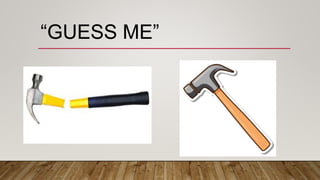
“GUESS ME”
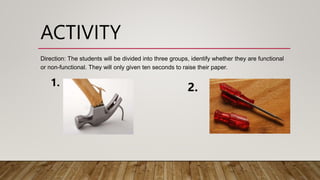
ACTIVITY
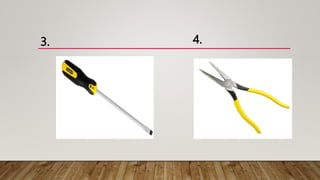
Direction: The students will be divided into three groups, identify whether they are functional
or non-functional. They will only given ten seconds to raise their paper.
1. 2.
3. 4.
QUESTIONS:
1. What is the importance of knowing if
the tools are functional or nonfunctional?
2. Why do we need to separate non-
functional tools from functional tools?
Functional and Non-functional tools and
equipment
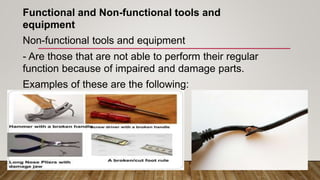
Non-functional tools and equipment
- Are those that are not able to perform their regular
function because of impaired and damage parts.
Examples of these are the following:
FUNCTIONAL TOOLS AND
EQUIPMENT
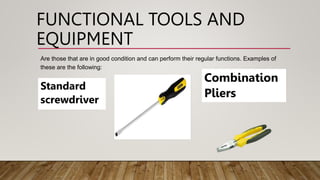
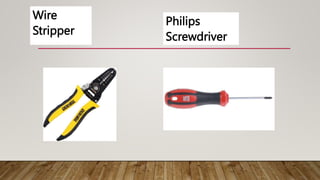
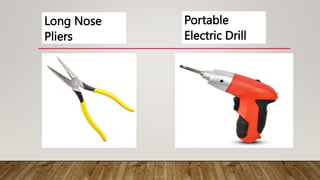
Are those that are in good condition and can perform their regular functions. Examples of
these are the following:
Standard
screwdriver
Combination
Pliers
Wire
Stripper
Philips
Screwdriver
Long Nose
Pliers
Portable
Electric Drill
METHOD OF IDENTIFYING NON-
FUNCTIONAL TOOLS AND EQUIPMENT
1. Image inspection. It refers to the image observation of the specialist on
the appearance of the tools and equipment.
2. Functionality. Vibration or extra noise from the operation means
problems on parts and accessories started to develop.
3. Performance. When there is something wrong with the performance of
either hand tools or equipment, they need an immediate repair or
maintenance.
4. Power supply (for electrically operated only). Failure to
meet the
required power supply, malfunction will occur in the part of
hand tools or
equipment.
5. Person involved. It refers to the technical person who has
the knowledge
and skills about the technology.
PROCEDURE IN SEGREGATING AND LABELING
OF NON
-FUNCTIONAL TOOLS AND EQUIPMENT
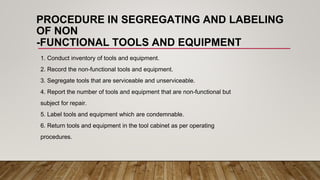
1. Conduct inventory of tools and equipment.
2. Record the non-functional tools and equipment.
3. Segregate tools that are serviceable and unserviceable.
4. Report the number of tools and equipment that are non-functional but
subject for repair.
5. Label tools and equipment which are condemnable.
6. Return tools and equipment in the tool cabinet as per operating
procedures.
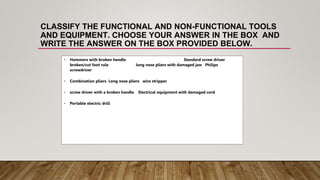
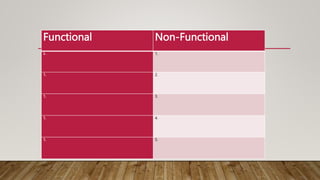
CLASSIFY THE FUNCTIONAL AND NON-FUNCTIONAL TOOLS
AND EQUIPMENT. CHOOSE YOUR ANSWER IN THE BOX AND
WRITE THE ANSWER ON THE BOX PROVIDED BELOW.
• Hammers with broken handle Standard screw driver
broken/cut foot rule long nose pliers with damaged jaw Philips
screwdriver
• Combination pliers Long nose pliers wire stripper
• screw driver with a broken handle Electrical equipment with damaged cord
• Portable electric drill
Functional Non-Functional
1. 1.
1. 2.
1. 3.
1. 4.
1. 5.
ASSIGNMENT:
STUDY IN ADVANCE THE TYPES AND
USES OF LUBRICANTS.
THANK YOU FOR LISTENING!

Presentation-1-2.pptx FUNCTIONAL AND NON FUNCTIONAL TOOLS

  • 1.
    LEARNING OBJECTIVES A.Identify thefunctional and non-functional tools and equipment B.Share the importance of knowing the functional and non-functional tools and equipment and; C.Classify the functional and non-functional tools and equipment.
  • 2.
  • 3.
    ACTIVITY Direction: The studentswill be divided into three groups, identify whether they are functional or non-functional. They will only given ten seconds to raise their paper. 1. 2.
  • 4.
  • 5.
    QUESTIONS: 1. What isthe importance of knowing if the tools are functional or nonfunctional? 2. Why do we need to separate non- functional tools from functional tools?
  • 6.
    Functional and Non-functionaltools and equipment Non-functional tools and equipment - Are those that are not able to perform their regular function because of impaired and damage parts. Examples of these are the following:
  • 7.
    FUNCTIONAL TOOLS AND EQUIPMENT Arethose that are in good condition and can perform their regular functions. Examples of these are the following: Standard screwdriver Combination Pliers
  • 8.
  • 9.
  • 10.
    METHOD OF IDENTIFYINGNON- FUNCTIONAL TOOLS AND EQUIPMENT 1. Image inspection. It refers to the image observation of the specialist on the appearance of the tools and equipment. 2. Functionality. Vibration or extra noise from the operation means problems on parts and accessories started to develop. 3. Performance. When there is something wrong with the performance of either hand tools or equipment, they need an immediate repair or maintenance.
  • 11.
    4. Power supply(for electrically operated only). Failure to meet the required power supply, malfunction will occur in the part of hand tools or equipment. 5. Person involved. It refers to the technical person who has the knowledge and skills about the technology.
  • 12.
    PROCEDURE IN SEGREGATINGAND LABELING OF NON -FUNCTIONAL TOOLS AND EQUIPMENT 1. Conduct inventory of tools and equipment. 2. Record the non-functional tools and equipment. 3. Segregate tools that are serviceable and unserviceable. 4. Report the number of tools and equipment that are non-functional but subject for repair. 5. Label tools and equipment which are condemnable. 6. Return tools and equipment in the tool cabinet as per operating procedures.
  • 13.
    CLASSIFY THE FUNCTIONALAND NON-FUNCTIONAL TOOLS AND EQUIPMENT. CHOOSE YOUR ANSWER IN THE BOX AND WRITE THE ANSWER ON THE BOX PROVIDED BELOW. • Hammers with broken handle Standard screw driver broken/cut foot rule long nose pliers with damaged jaw Philips screwdriver • Combination pliers Long nose pliers wire stripper • screw driver with a broken handle Electrical equipment with damaged cord • Portable electric drill
  • 14.
  • 15.
    ASSIGNMENT: STUDY IN ADVANCETHE TYPES AND USES OF LUBRICANTS.
  • 16.
    THANK YOU FORLISTENING!