Good Afternoon!
Have you ever had a
MENTOR? What made this
person a mentor?
FORM OF THE GOOD
IDEALISM
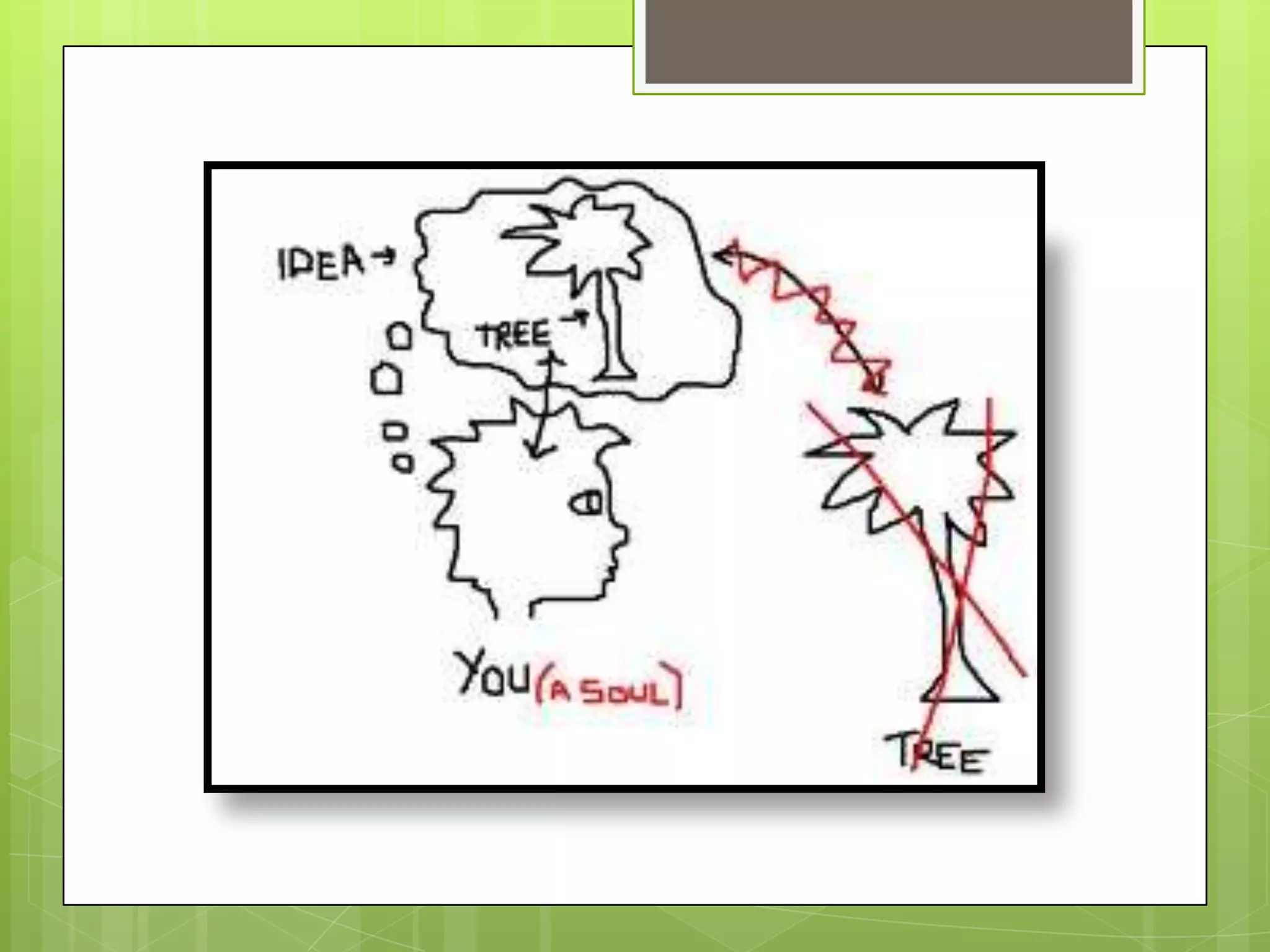
A philosophical belief and outlook that material things
do not exist independently in the physical world but
only in the mind.
NEO-PLATONISM
A philosophical system with mysticism and
Judeo-Christian ideas posting one source of
existence, developed by Plotinus and his
followers in the 3rd century AD
Georg Wilhelm Friedrich Hegel
(1770-1831)








He developed an idealist philosophy of history that
influenced western thought through the 19th and
early 20th centuries.
A professor of philosophy at the University of
Heidelbelrg and then at prestigious University of
Berlin.
His works were: The Science of Logic, The
Encyclopedia of philosophical sciences and the
philosophy of history .
He believe that as individuals our minds attuned to
and related to the divine mind called Absolute
Mind the mind of the creator.
Ralph Waldo Emerson
(1803-1882)
 19th

century’s most prominent American
intellectual.
 He was an unusual blending of essayist,
poet, mystics, orator and philosopher.
 His ideas about individualism and self
reliance.
 Emerson’s alma mater Harvard Divinity
School Address.
AMERICAN
TRANSCENDENTALISM
Idealism as a Systematic Philosophy
1)
2)
3)
4)

Metaphysics
Epistemology
Logic
Axiology
Is idealism GOOD or BAD?
Spanish Educators in the
Philippines
The educational system that was established
during the presence of the Spaniards was
absolutely idealist in nature.
Situation: students were passive learners,
while the teachers kept on talking to
consummate his lessons.
Idealism:
A philosophy of Education
Educational Implications of
Idealism
1.
2.
3.

4.
5.
6.

The educational goals of idealism.
The school.
The idealist curriculum.
The attitudinal dimension.
Idealist methodology.
Teacher-learner relationship.
Educational Goals
To

seek and find the truth
Education is to lead us on our
journey to the truth
ROLE OF THE SCHOOL
To

arrange knowledge as a
structured curriculum
To preserve knowledge by
transmitting the cultural
heritage
IDEALIST CURRICULUM
Designed

to prepare students
for adult life
It can be viewed as a hierarchy
in which the summit is occupied
by the most general disciplines:
Philosophy and Theology
Priorities in the curriculum:
Liberal Arts and Humanities
Literature
Classics
Arts
Music Appreciation
Philosophy
History
Elementary School Curriculum
Cultivates

the basic skills of
literacy, numeracy and civility
that prepare a person for more
advanced learning
IDEALIST METHODOLOGY
Teaching Methods
 Lectures

followed by recitation, writing,
rote memorization and assigned reading.
 Learners listen to the instruction of the
teacher and perform individual task
Role of Teacher
 To

interpret the law and will of God as well
as the authority
 Expected to be a charismatic persuader
and an inspiring academic leader expert
in the use of the words
 A model of cultural heritage
The Classroom
 The

center of attraction is the teacher’s
table and chair
 An elevated platform is found in front
where the podium is located, so that the
teacher can be seen and heard by the
learners
 Learners occupy their traditional seats by
rows facing the instructor
Value Education
Students

should be exposed to
worthy examples and models
and exemplars
Teacher-Learner
Relationship
Desired Qualities of a
Teacher
 Personify

culture and reality for the

student
 A specialist in human personality
 An expert in the learning process
 Merit student’s friendship
 Realize that teaching’s moral significance
lies in it’s goal of perfecting human
beings
 Aid in the cultural rebirth of each
generation
Concept of Mentoring
Preschool Education and Idealism
Thank
You!
End of Presentation

IDEALISM AND PRESCHOOL EDUCATION

  • 1.
  • 2.
    Have you everhad a MENTOR? What made this person a mentor?
  • 5.
  • 6.
  • 7.
    A philosophical beliefand outlook that material things do not exist independently in the physical world but only in the mind.
  • 9.
    NEO-PLATONISM A philosophical systemwith mysticism and Judeo-Christian ideas posting one source of existence, developed by Plotinus and his followers in the 3rd century AD
  • 10.
    Georg Wilhelm FriedrichHegel (1770-1831)     He developed an idealist philosophy of history that influenced western thought through the 19th and early 20th centuries. A professor of philosophy at the University of Heidelbelrg and then at prestigious University of Berlin. His works were: The Science of Logic, The Encyclopedia of philosophical sciences and the philosophy of history . He believe that as individuals our minds attuned to and related to the divine mind called Absolute Mind the mind of the creator.
  • 11.
    Ralph Waldo Emerson (1803-1882) 19th century’s most prominent American intellectual.  He was an unusual blending of essayist, poet, mystics, orator and philosopher.  His ideas about individualism and self reliance.  Emerson’s alma mater Harvard Divinity School Address.
  • 12.
  • 13.
    Idealism as aSystematic Philosophy 1) 2) 3) 4) Metaphysics Epistemology Logic Axiology
  • 14.
  • 15.
    Spanish Educators inthe Philippines The educational system that was established during the presence of the Spaniards was absolutely idealist in nature. Situation: students were passive learners, while the teachers kept on talking to consummate his lessons.
  • 16.
  • 17.
    Educational Implications of Idealism 1. 2. 3. 4. 5. 6. Theeducational goals of idealism. The school. The idealist curriculum. The attitudinal dimension. Idealist methodology. Teacher-learner relationship.
  • 18.
    Educational Goals To seek andfind the truth Education is to lead us on our journey to the truth
  • 19.
    ROLE OF THESCHOOL To arrange knowledge as a structured curriculum To preserve knowledge by transmitting the cultural heritage
  • 20.
    IDEALIST CURRICULUM Designed to preparestudents for adult life It can be viewed as a hierarchy in which the summit is occupied by the most general disciplines: Philosophy and Theology
  • 21.
    Priorities in thecurriculum: Liberal Arts and Humanities Literature Classics Arts Music Appreciation Philosophy History
  • 22.
    Elementary School Curriculum Cultivates thebasic skills of literacy, numeracy and civility that prepare a person for more advanced learning
  • 23.
  • 24.
    Teaching Methods  Lectures followedby recitation, writing, rote memorization and assigned reading.  Learners listen to the instruction of the teacher and perform individual task
  • 25.
    Role of Teacher To interpret the law and will of God as well as the authority  Expected to be a charismatic persuader and an inspiring academic leader expert in the use of the words  A model of cultural heritage
  • 26.
    The Classroom  The centerof attraction is the teacher’s table and chair  An elevated platform is found in front where the podium is located, so that the teacher can be seen and heard by the learners  Learners occupy their traditional seats by rows facing the instructor
  • 27.
    Value Education Students should beexposed to worthy examples and models and exemplars
  • 28.
  • 29.
    Desired Qualities ofa Teacher  Personify culture and reality for the student  A specialist in human personality  An expert in the learning process  Merit student’s friendship  Realize that teaching’s moral significance lies in it’s goal of perfecting human beings  Aid in the cultural rebirth of each generation
  • 30.
  • 31.
  • 32.