
 Sessions 1 to 5: Computer Basics
◦ Session 1 - Hardware and Software
◦ Session 2 – Inside a Computer and Word Processing
◦ Session 3 – Operating Systems and Multimedia
◦ Session 4 – Networks and Peripherals
◦ Session 5 – Recap and Test
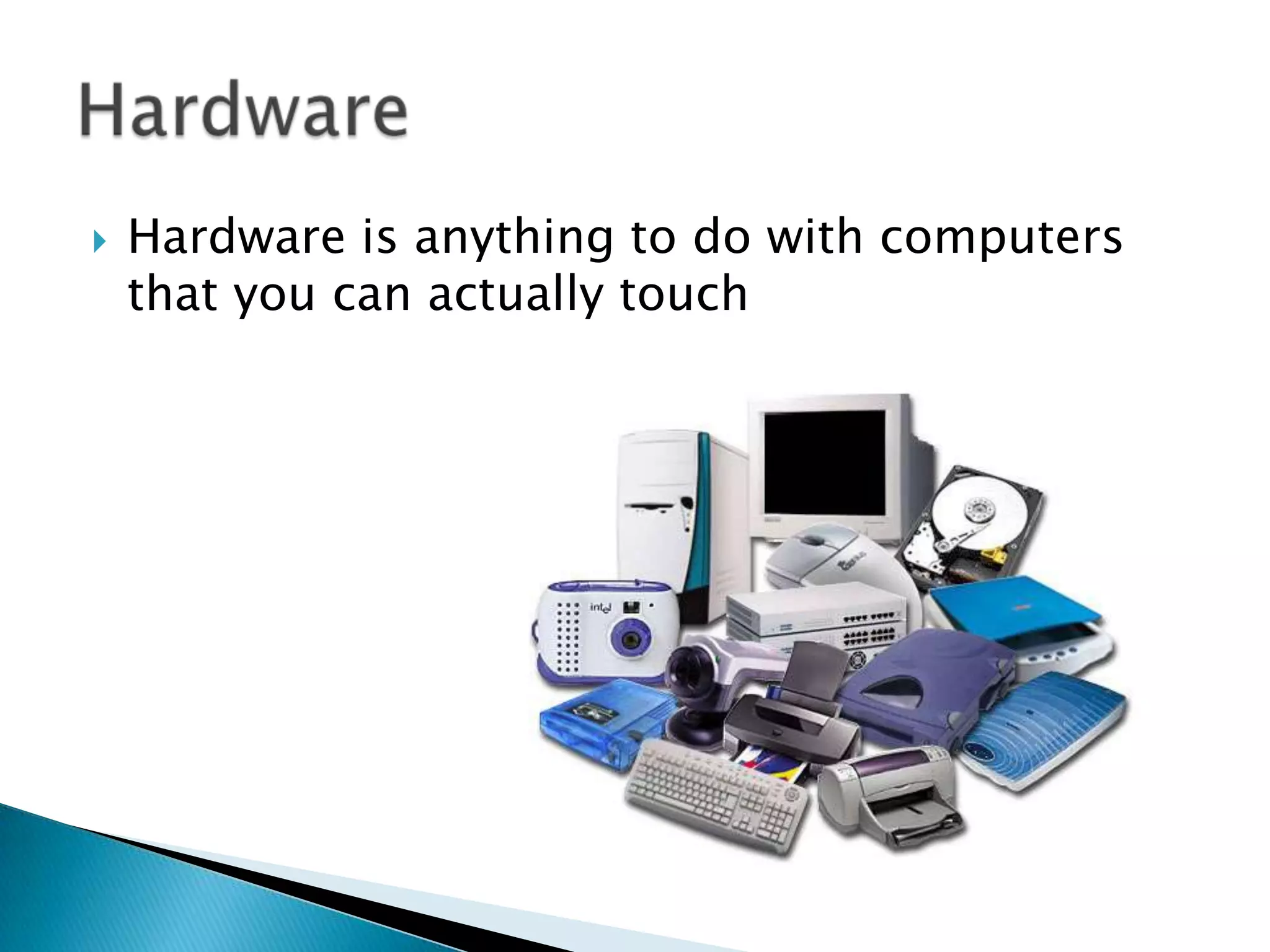
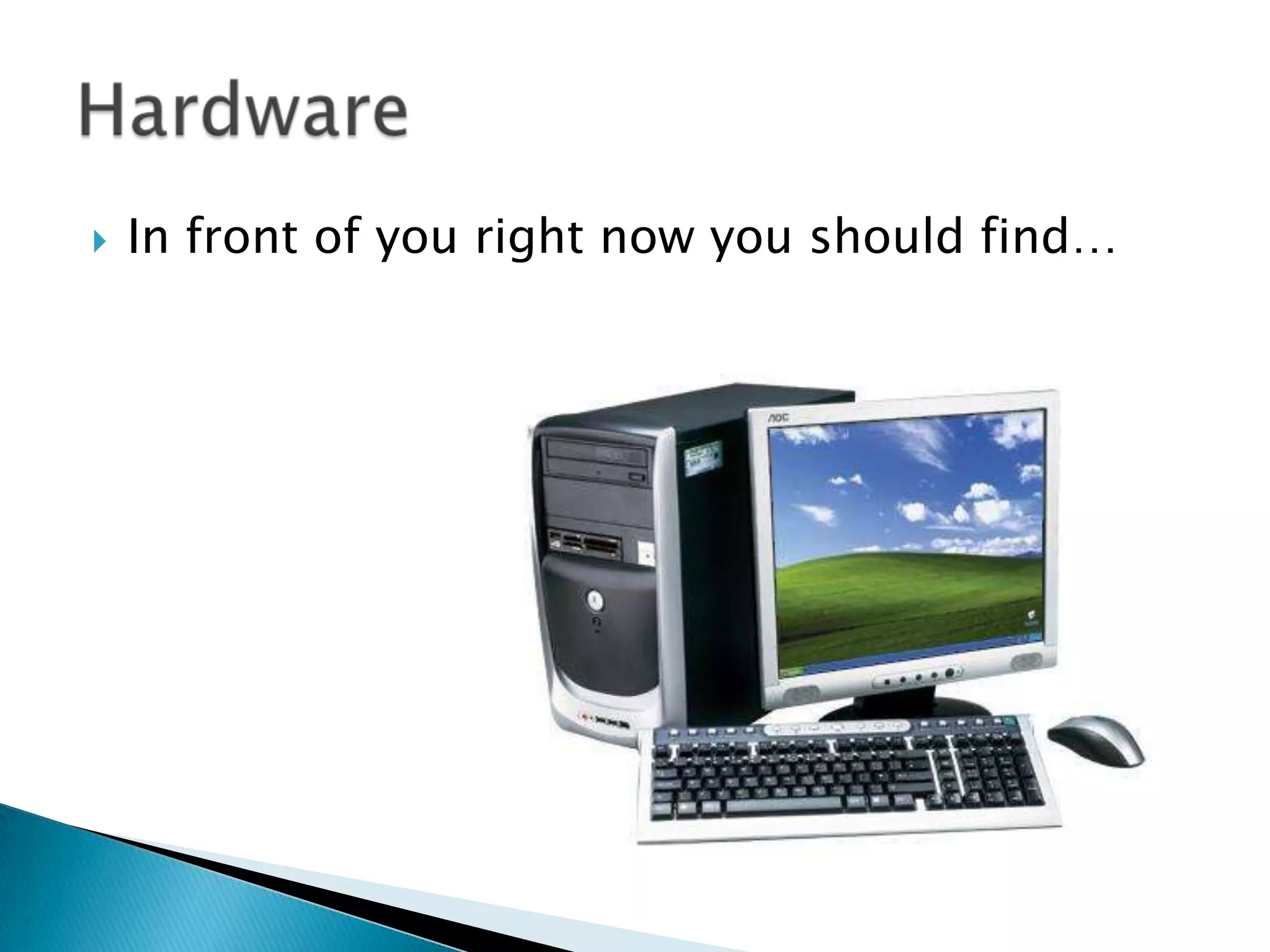
 Hardware is anything to do with computers
that you can actually touch
 In front of you right now you should find…
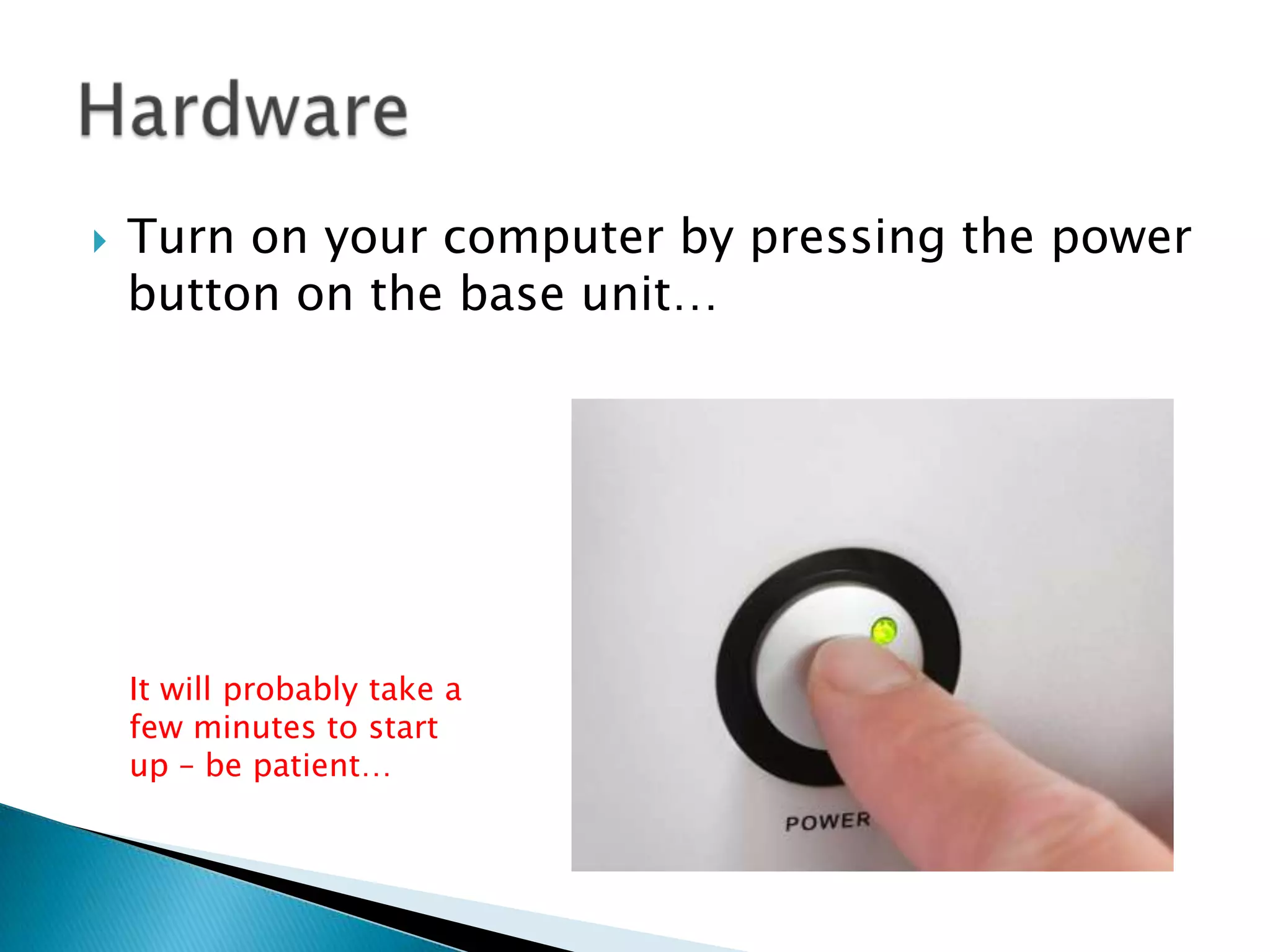
 Turn on your computer by pressing the power
button on the base unit…
It will probably take a
few minutes to start
up – be patient…
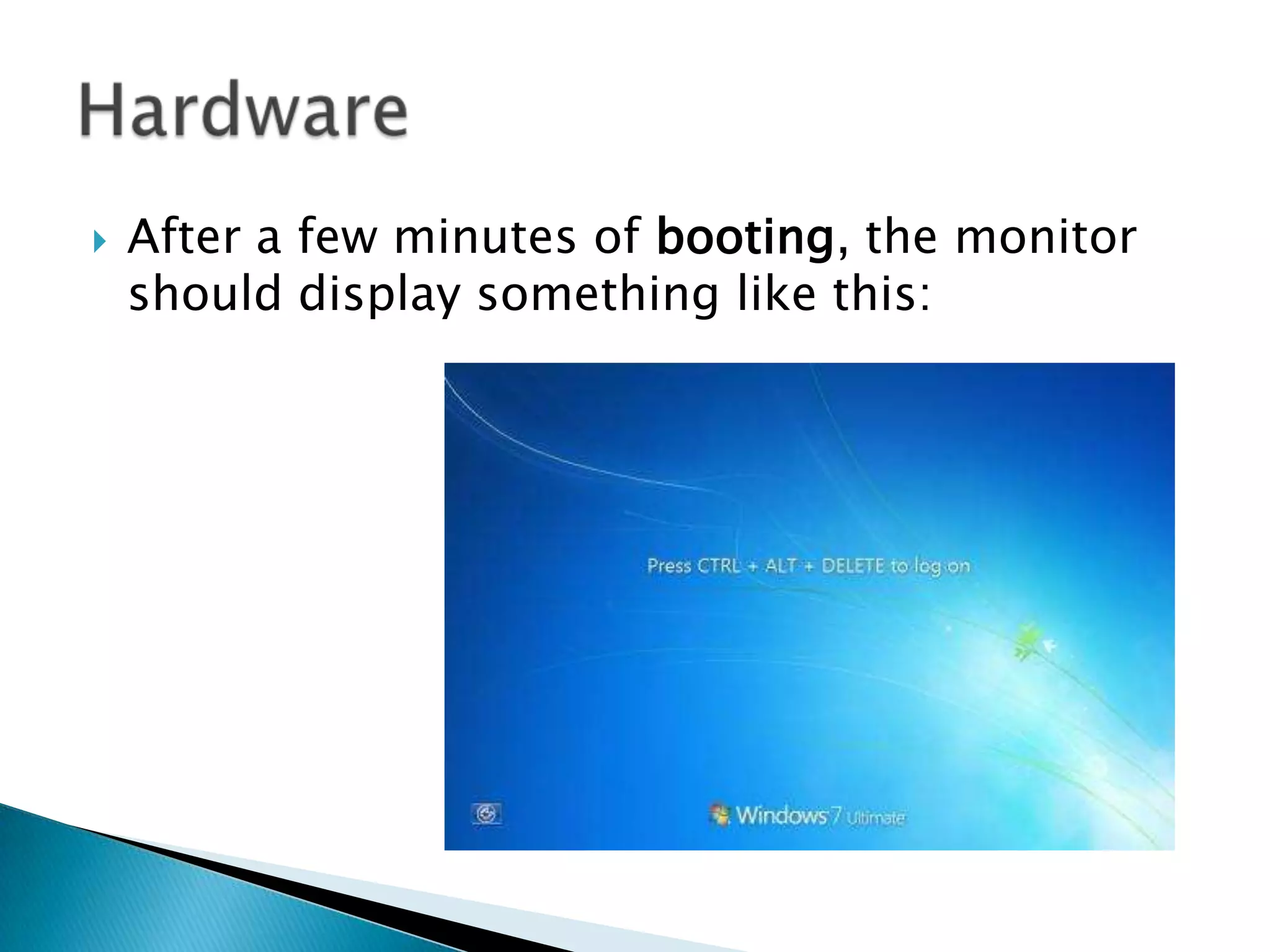
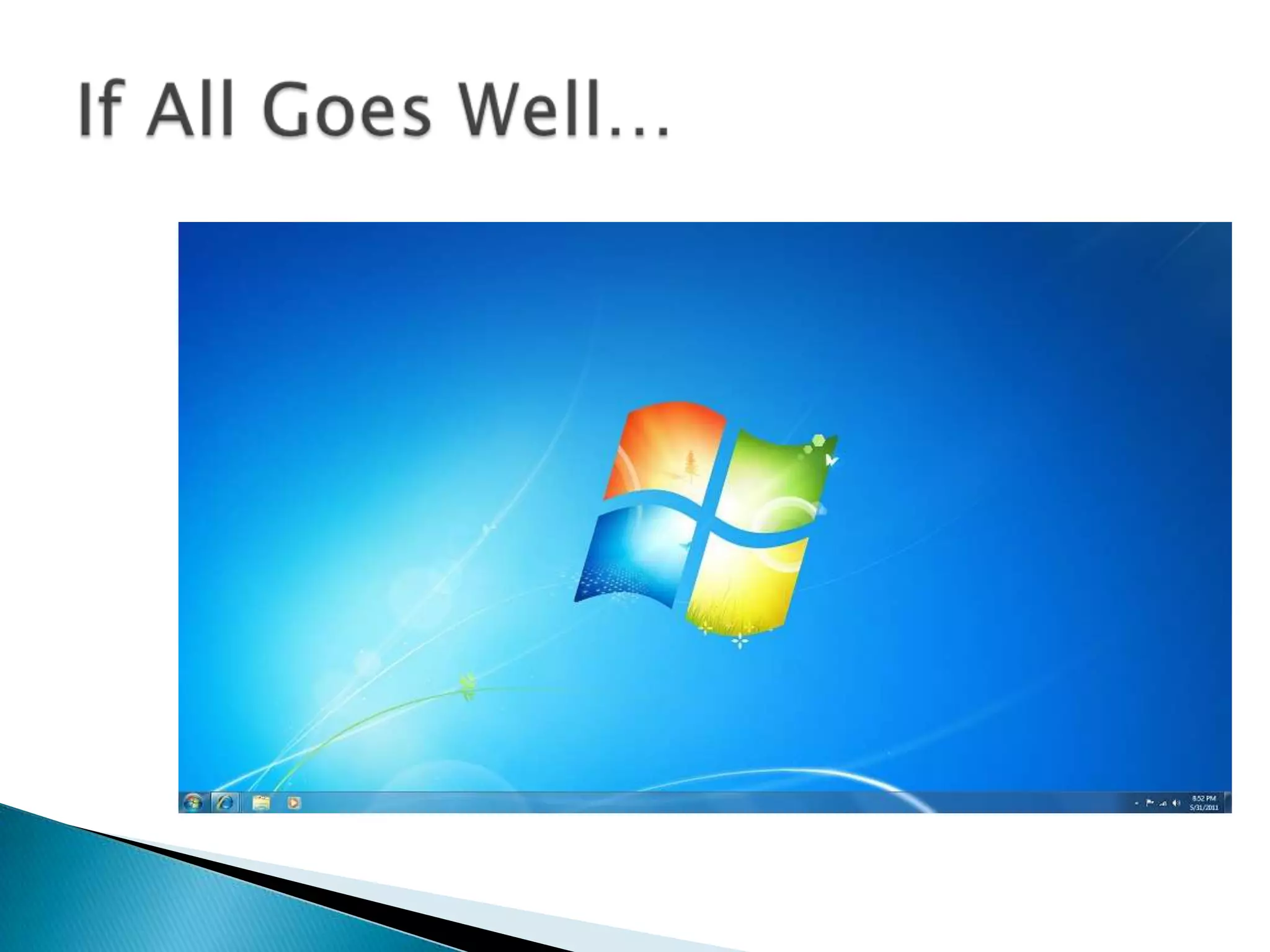
 After a few minutes of booting, the monitor
should display something like this:
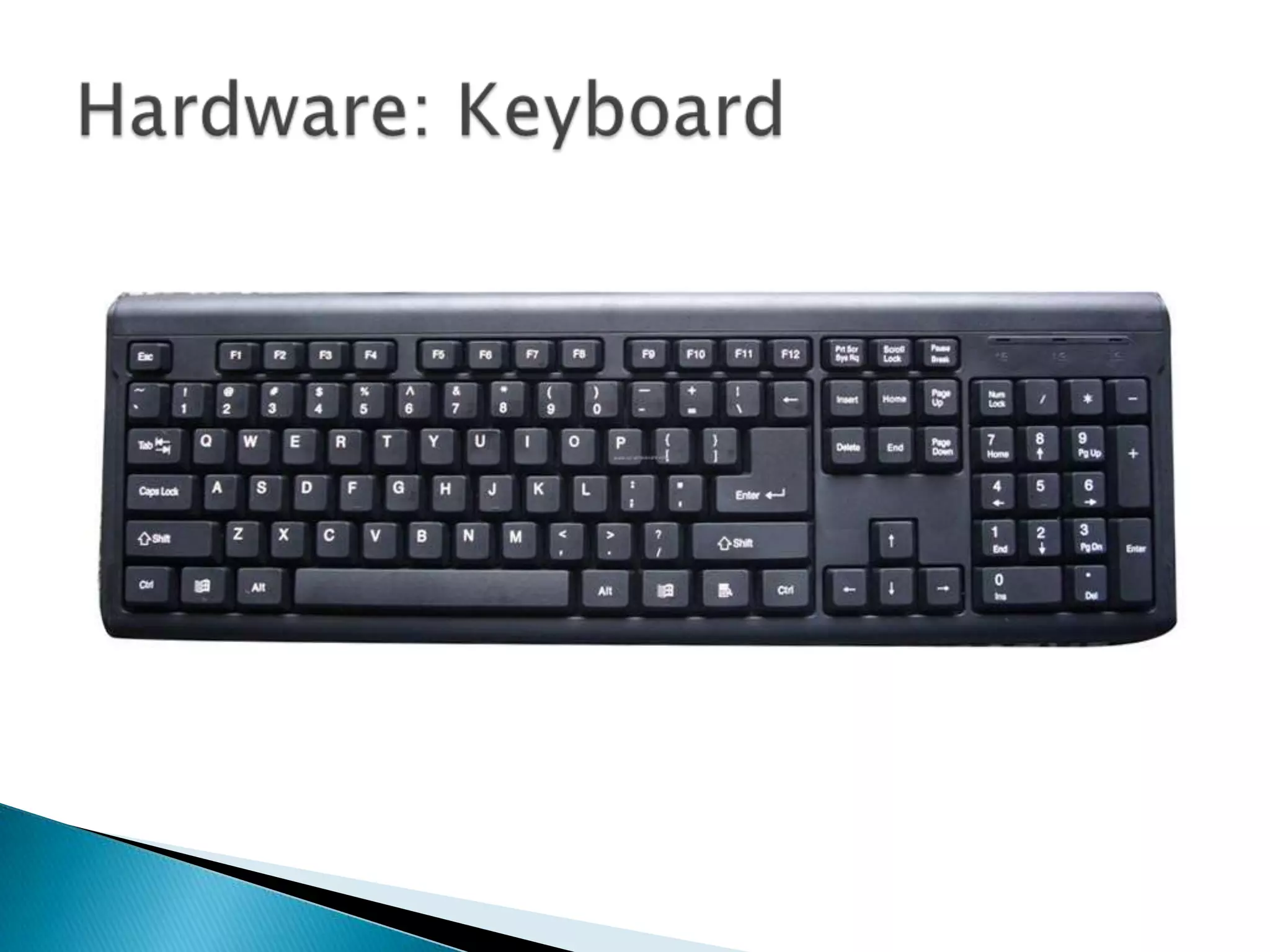
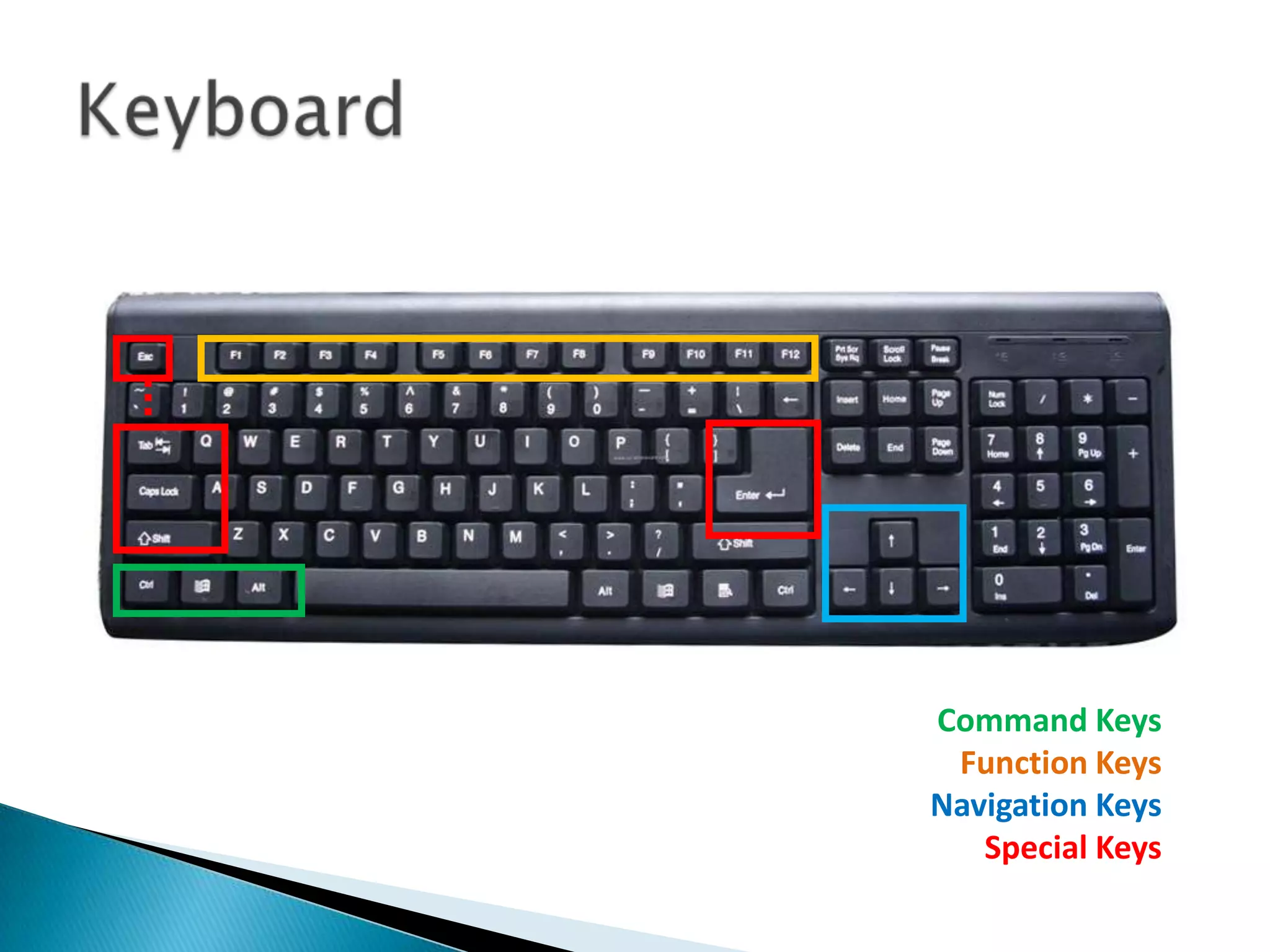
 Let’s look at the keyboard…
Command Keys
Function Keys
Navigation Keys
Special Keys
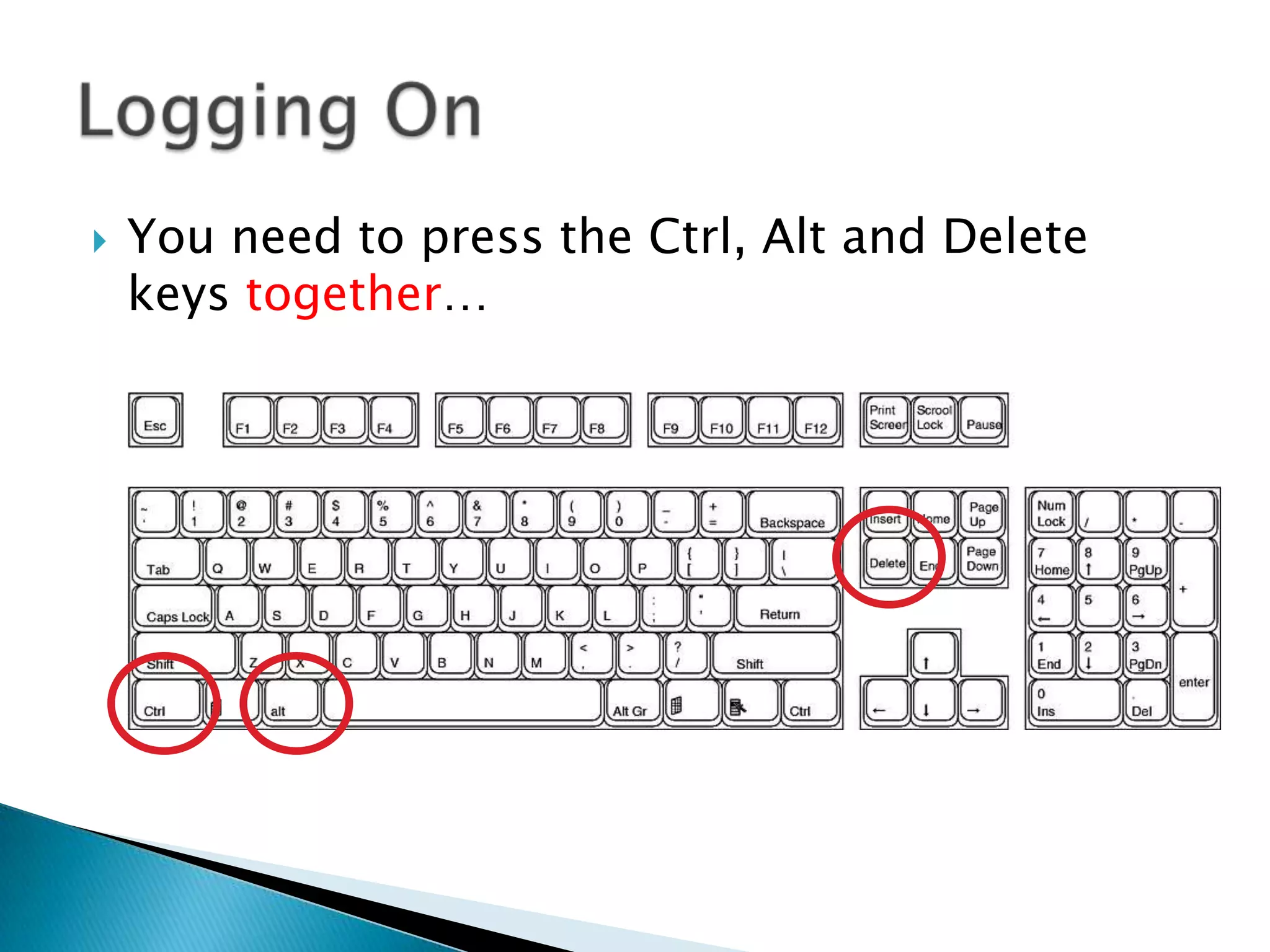
 You need to press the Ctrl, Alt and Delete
keys together…
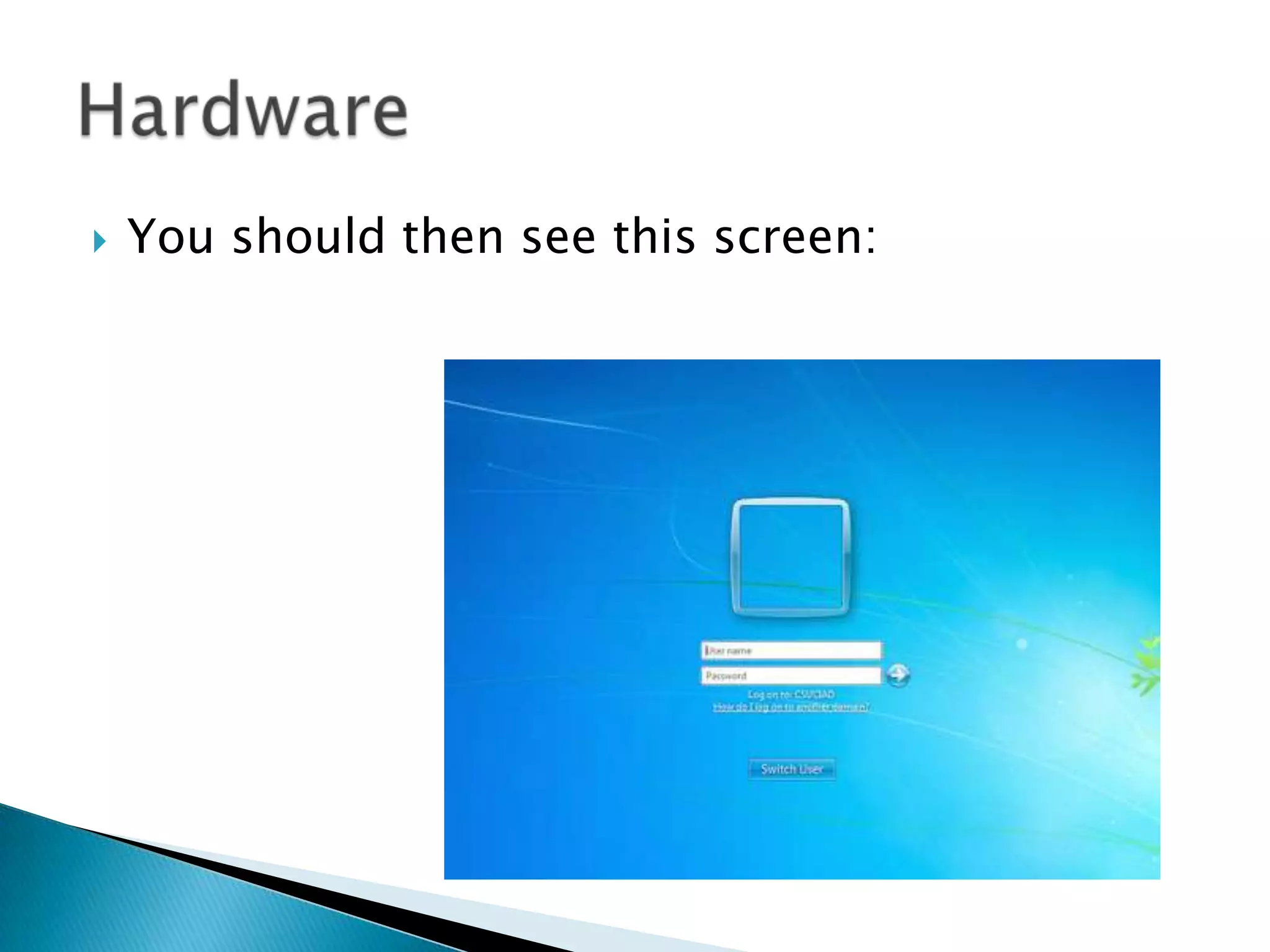
 You should then see this screen:
 A computer keyboard has all the letters of the
alphabet and the numbers 0 to 9
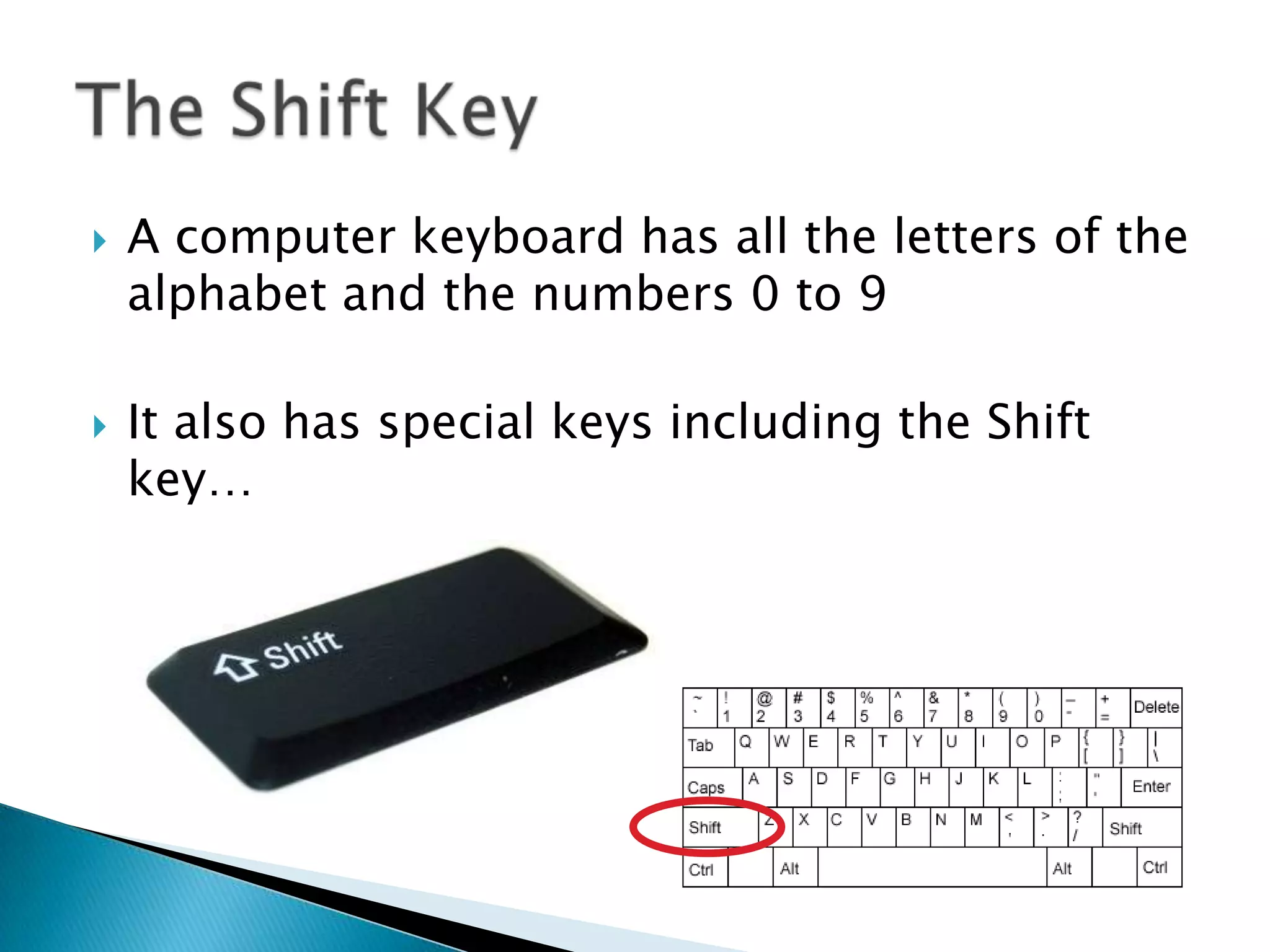
 It also has special keys including the Shift
key…
 The Shift key will change any letters you type
on the keyboard to capital letters (sometimes
called upper case):
 Without Shift: With Shift:
a, b, c ,d…. A, B, C, D…
 To use a computer you will have to log in
 This usually involves typing in:
◦ a user name
◦ …and a password
 These need to be carefully typed in using
upper case (capitals) and lower case letters
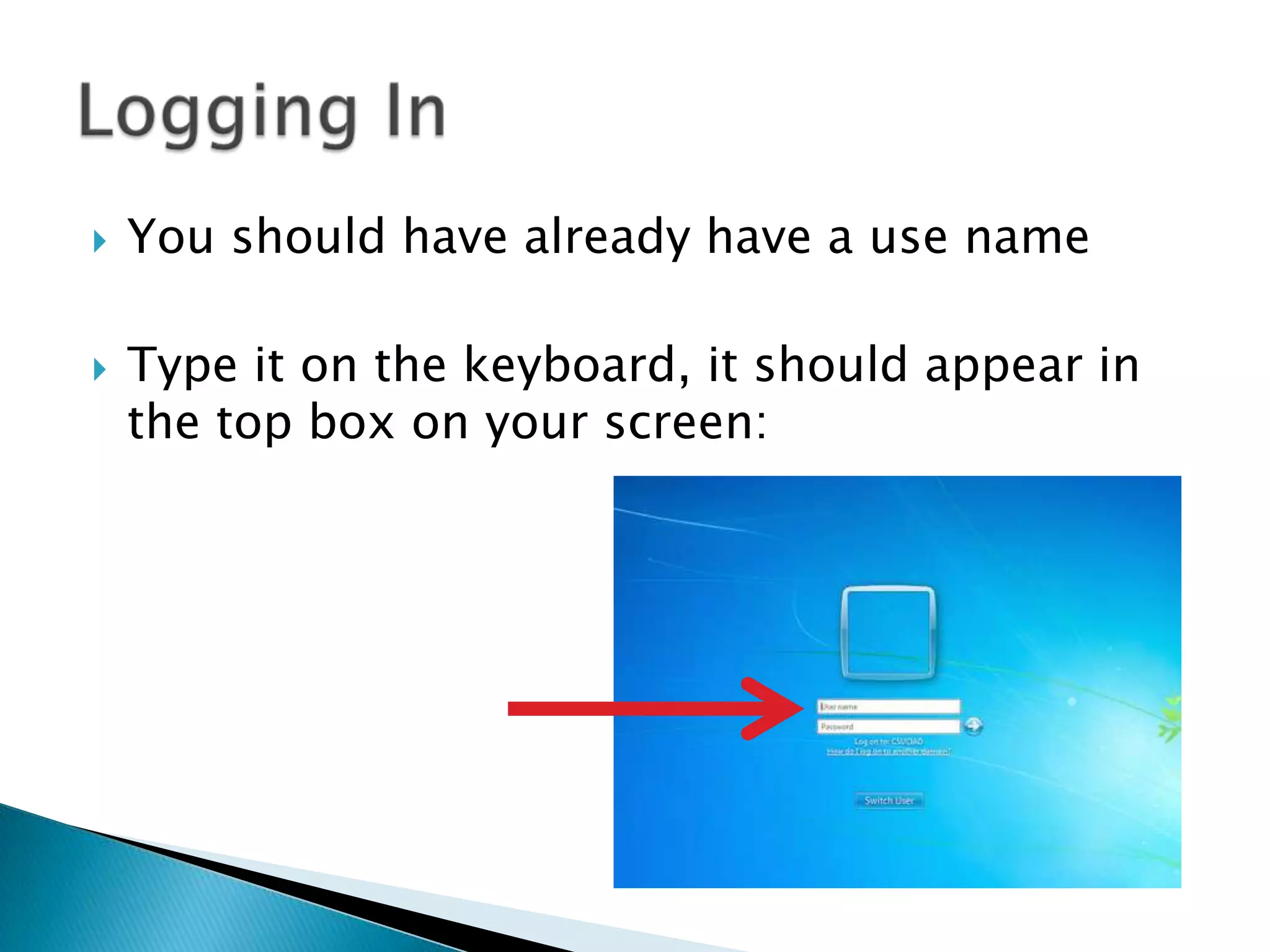
 You should have already have a use name
 Type it on the keyboard, it should appear in
the top box on your screen:
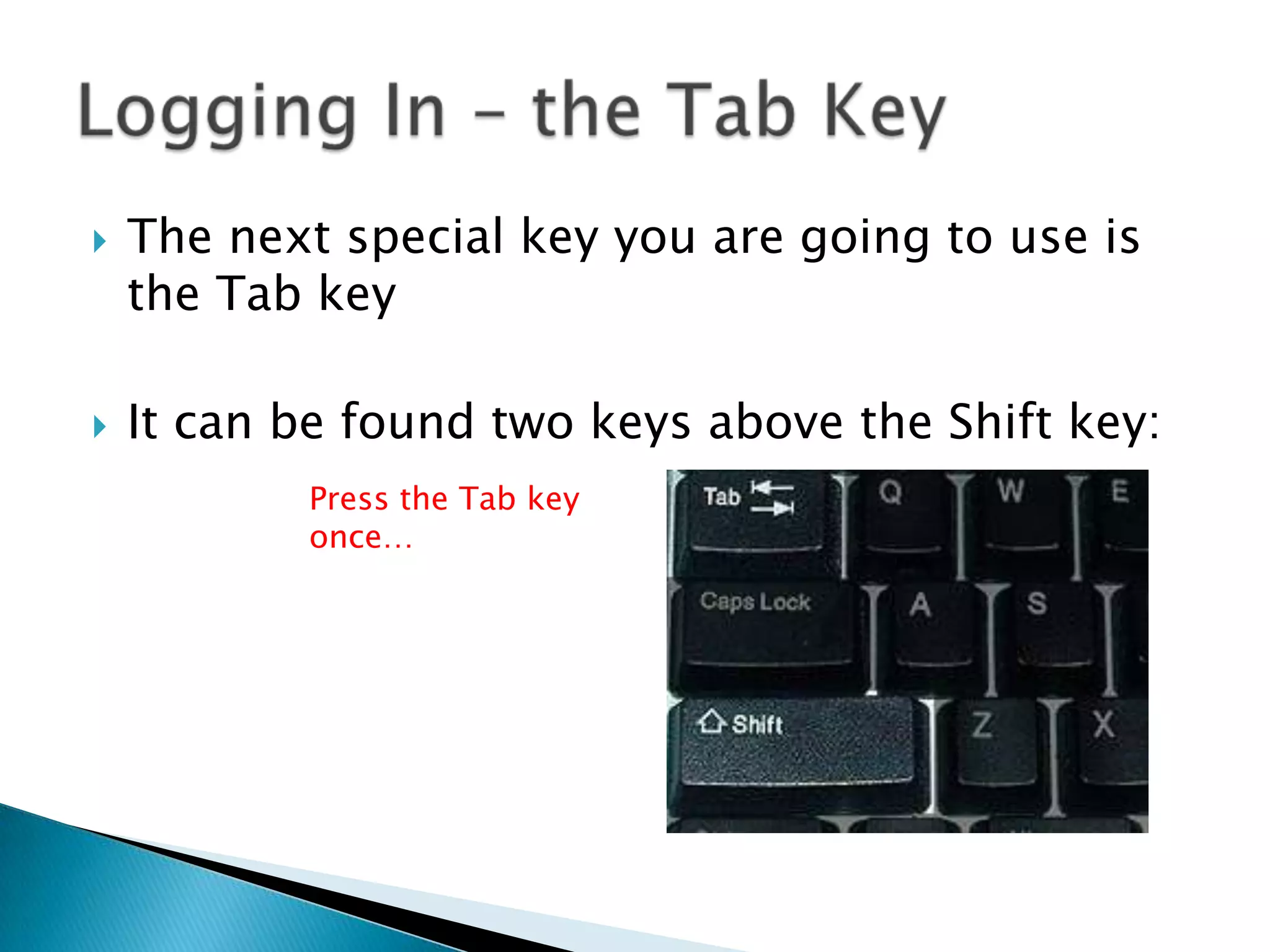
 The next special key you are going to use is
the Tab key
 It can be found two keys above the Shift key:
Press the Tab key
once…
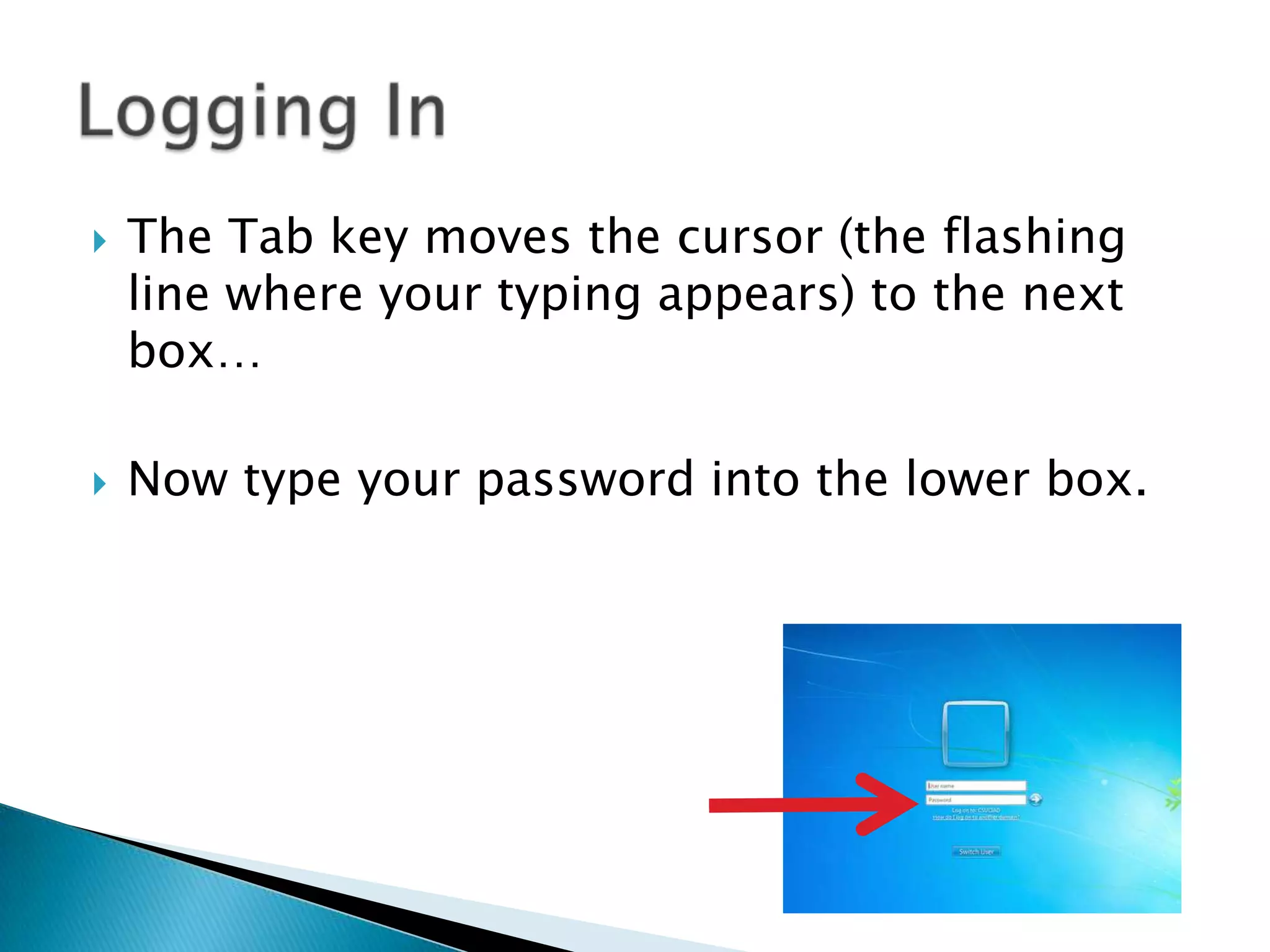
 The Tab key moves the cursor (the flashing
line where your typing appears) to the next
box…
 Now type your password into the lower box.
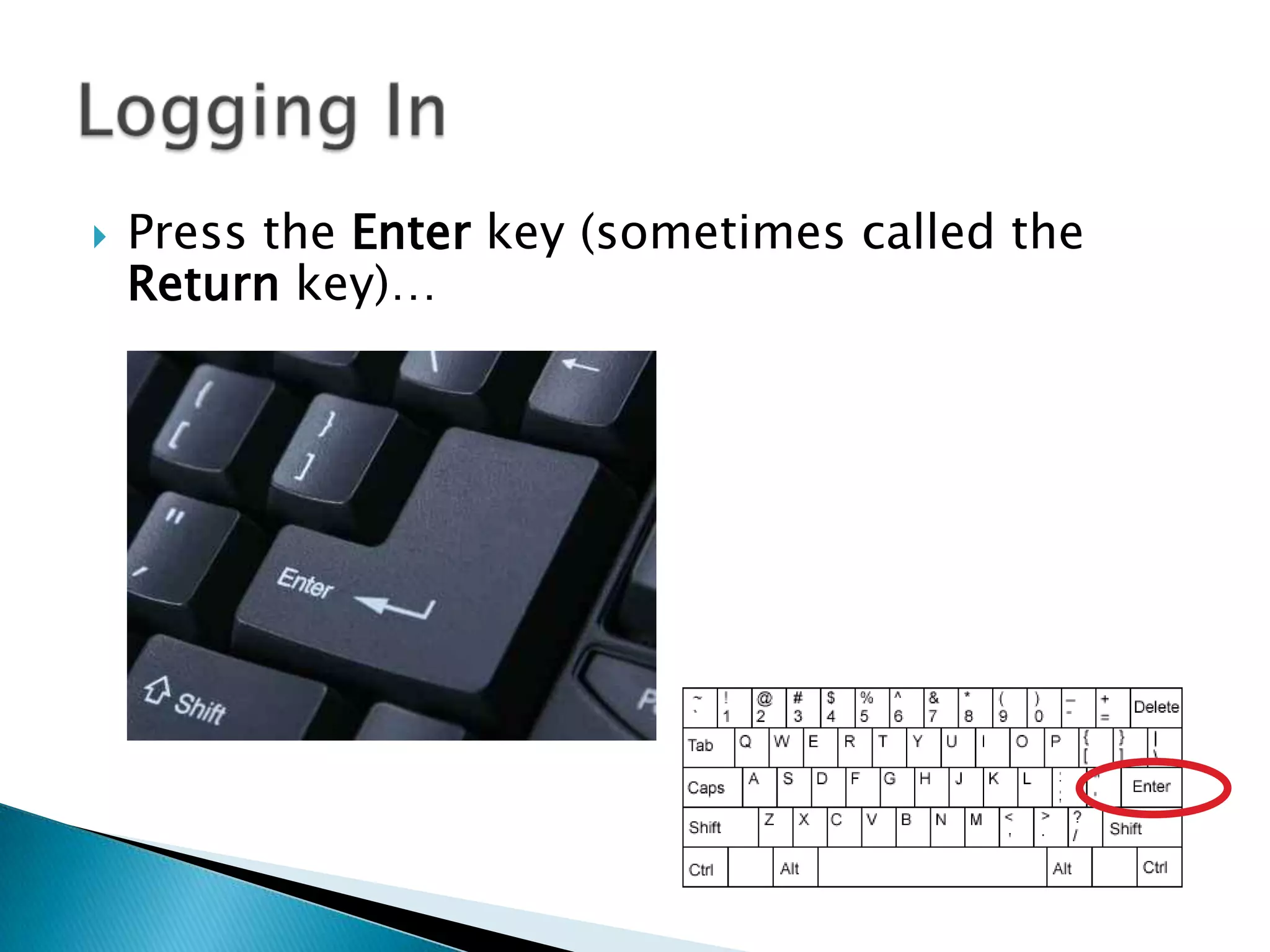
 Press the Enter key (sometimes called the
Return key)…
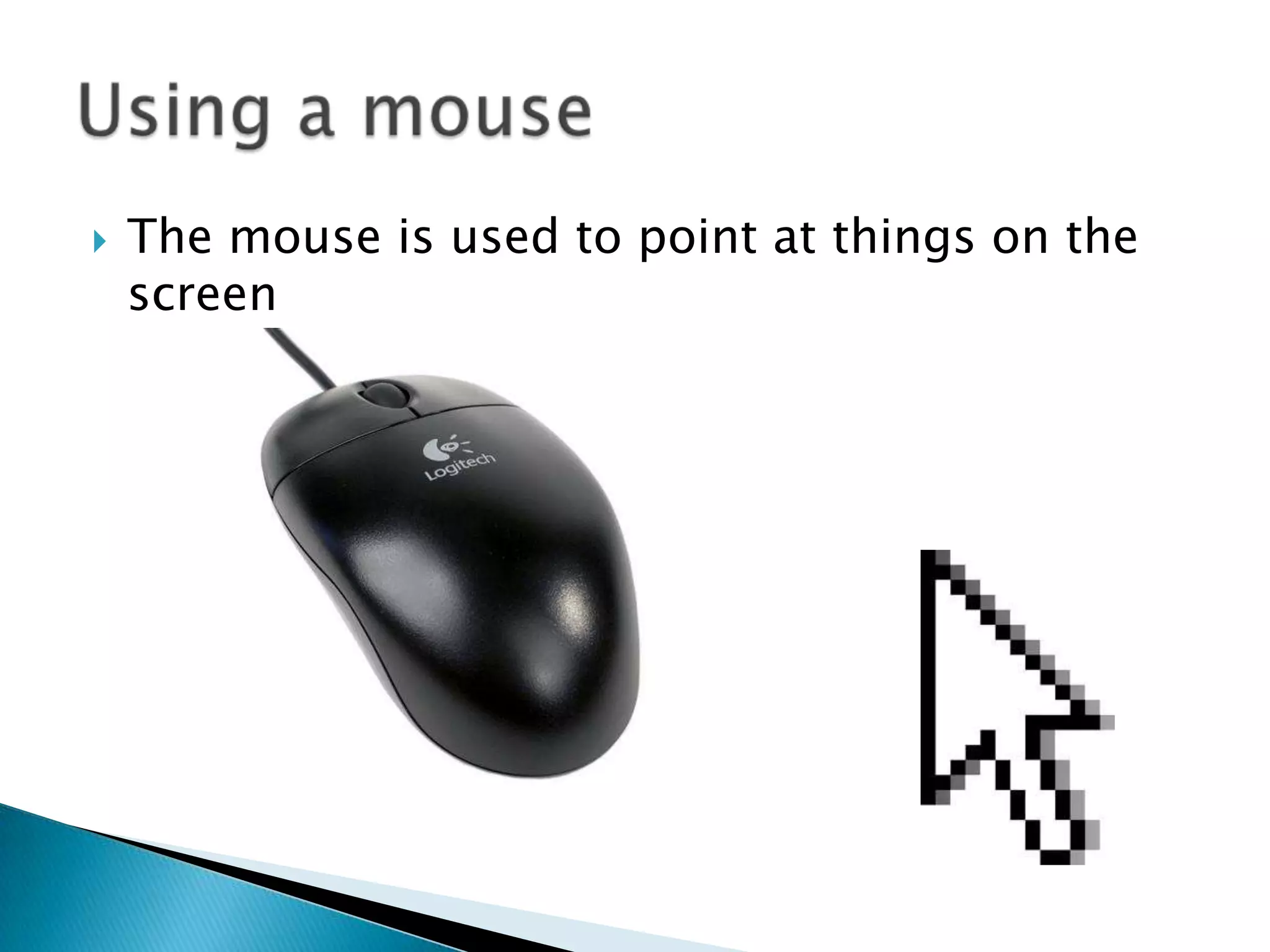
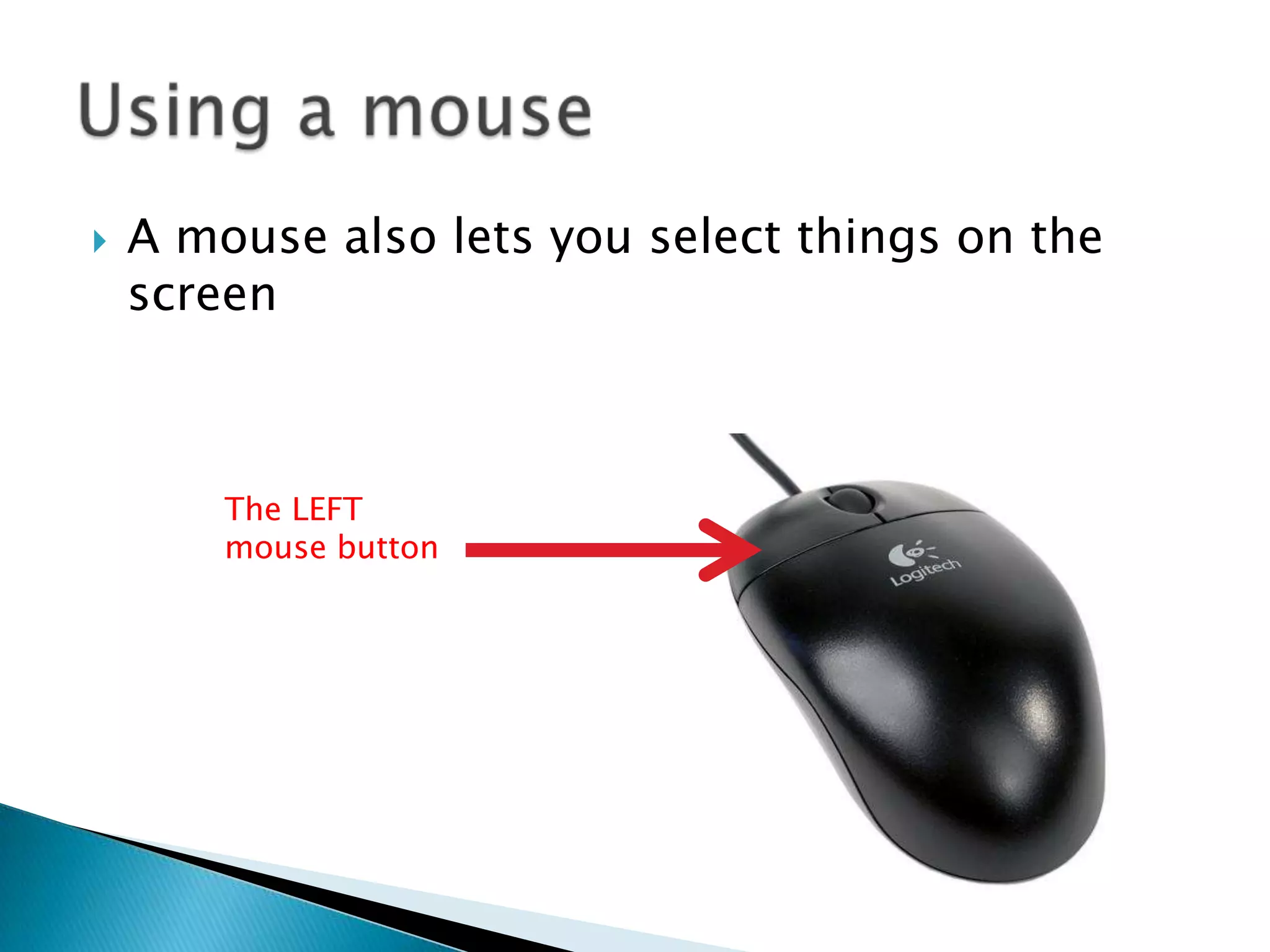
 The mouse is used to point at things on the
screen
 A mouse also lets you select things on the
screen
The LEFT
mouse button
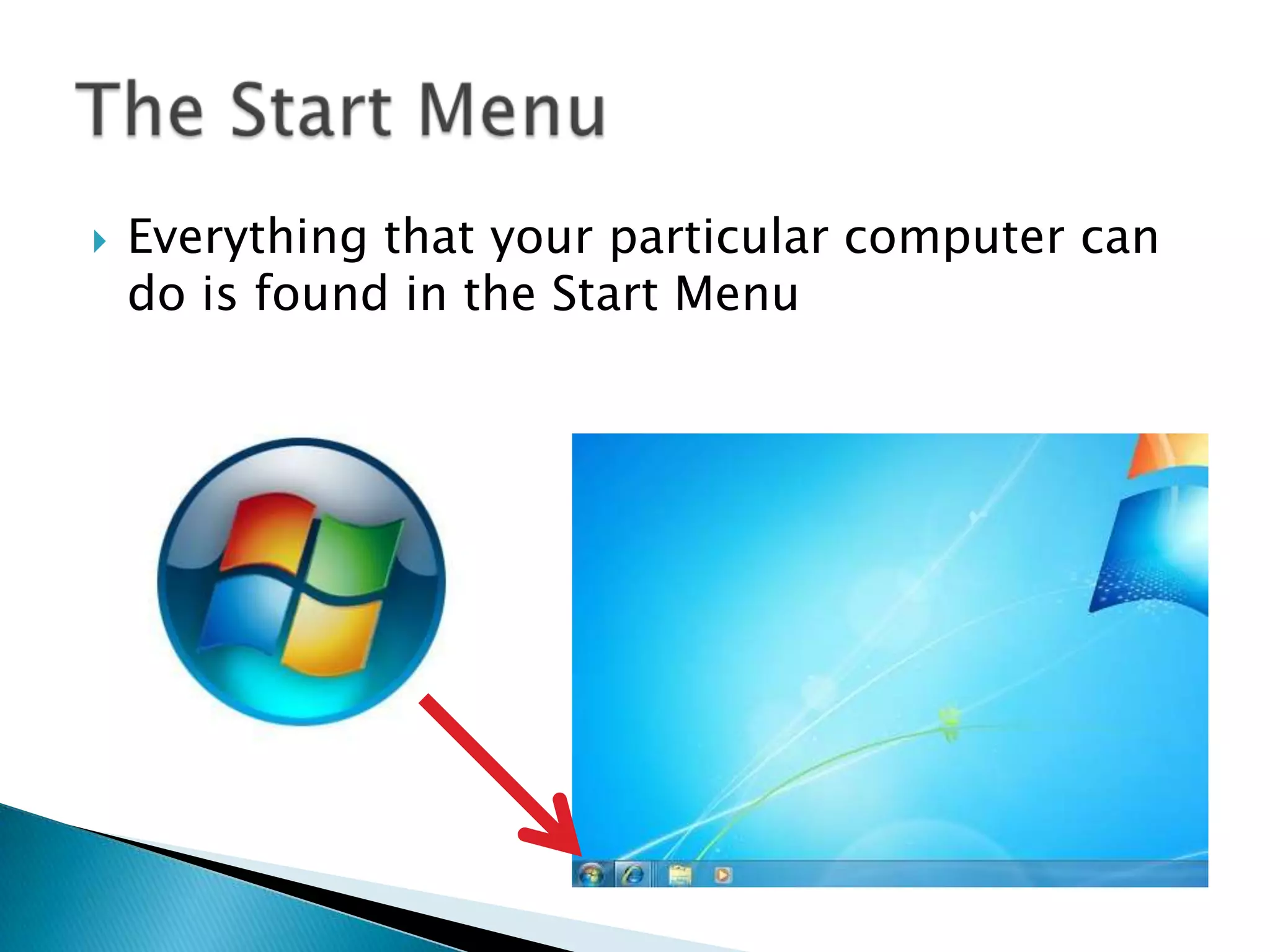
 Everything that your particular computer can
do is found in the Start Menu
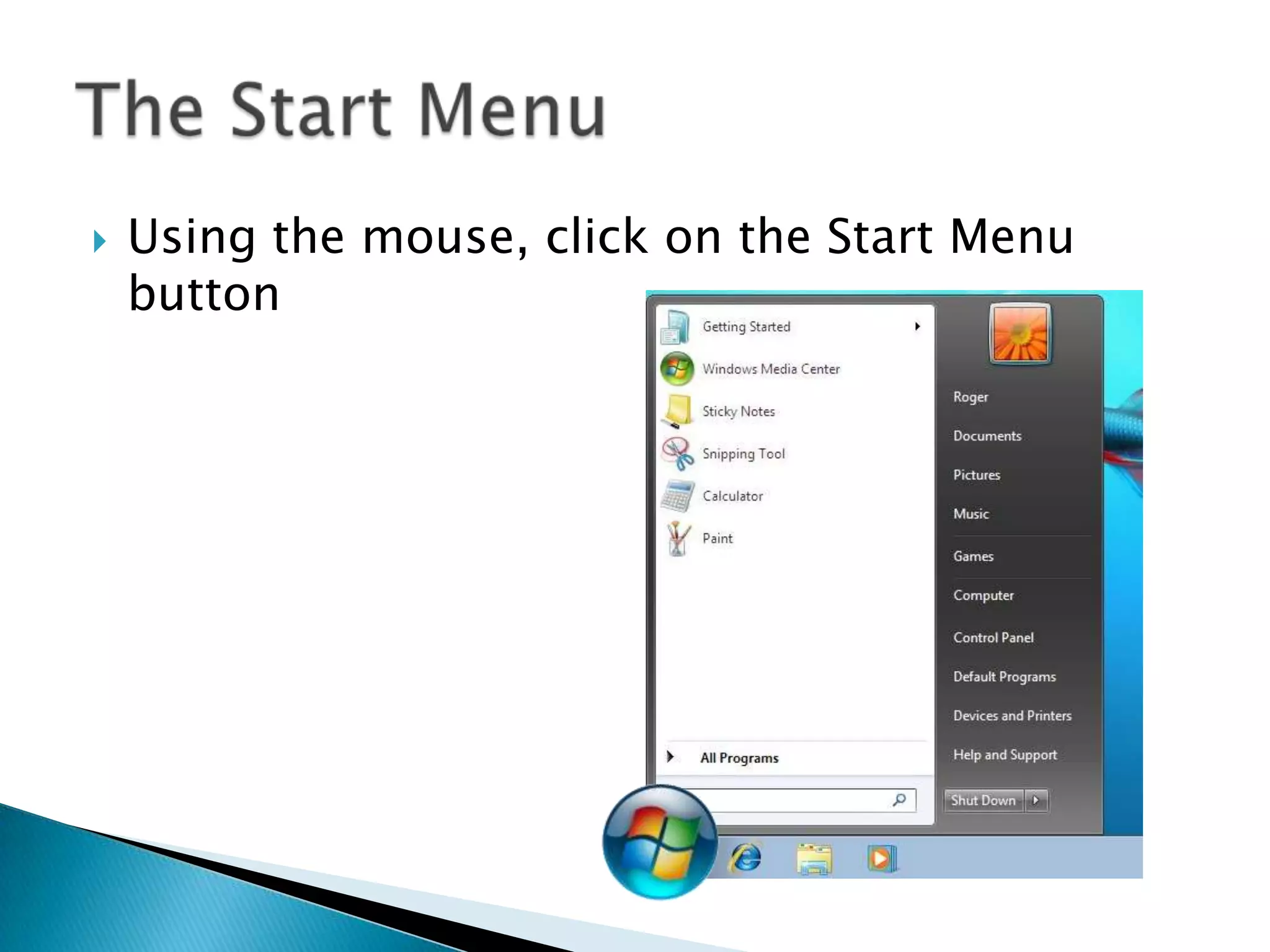
 Using the mouse, click on the Start Menu
button
 You are now going to use the Start Menu to
start the Calculator program
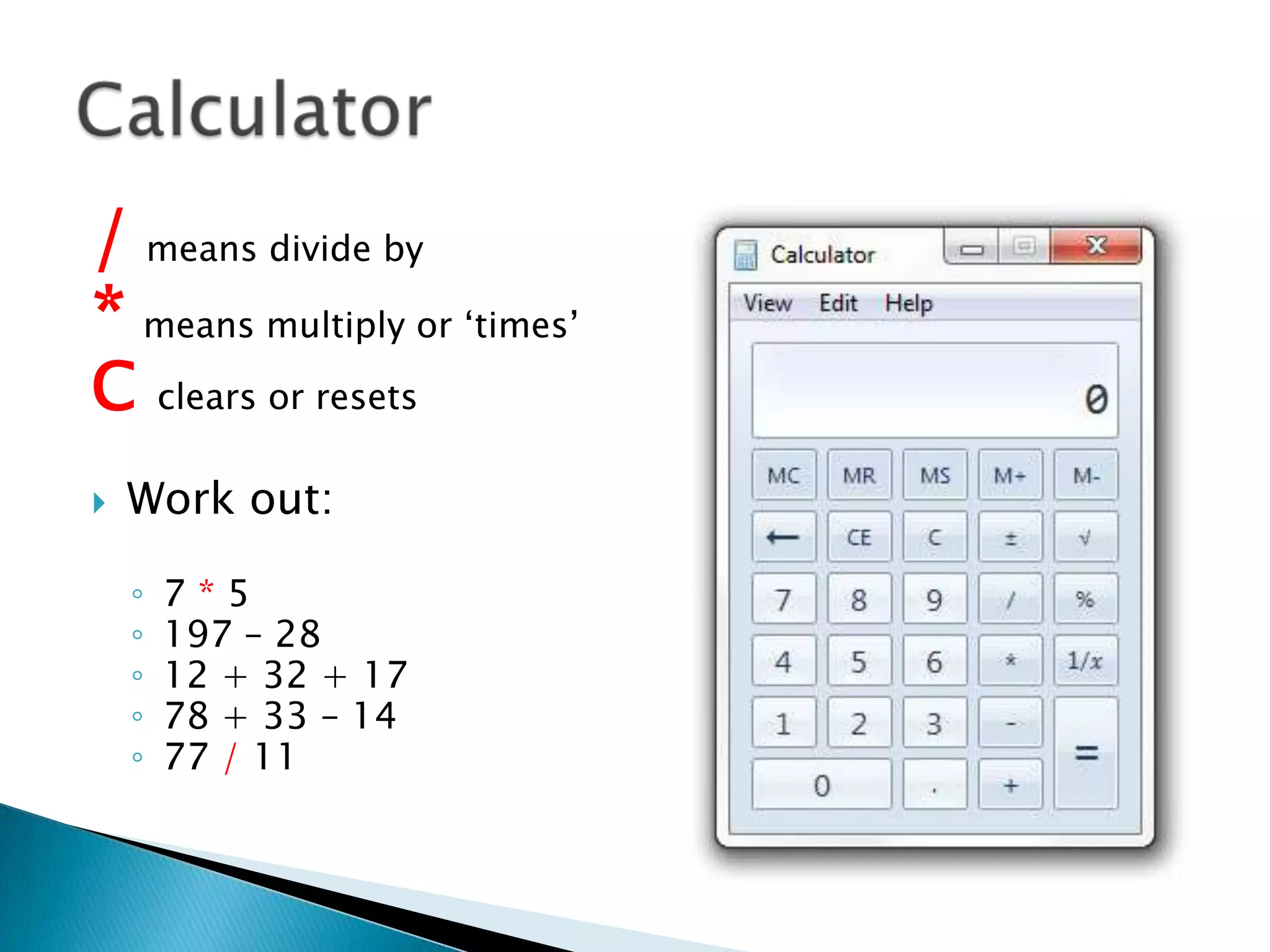
/ means divide by
* means multiply or ‘times’
C clears or resets
 Work out:
◦ 7 * 5
◦ 197 – 28
◦ 12 + 32 + 17
◦ 78 + 33 – 14
◦ 77 / 11
/
*
C
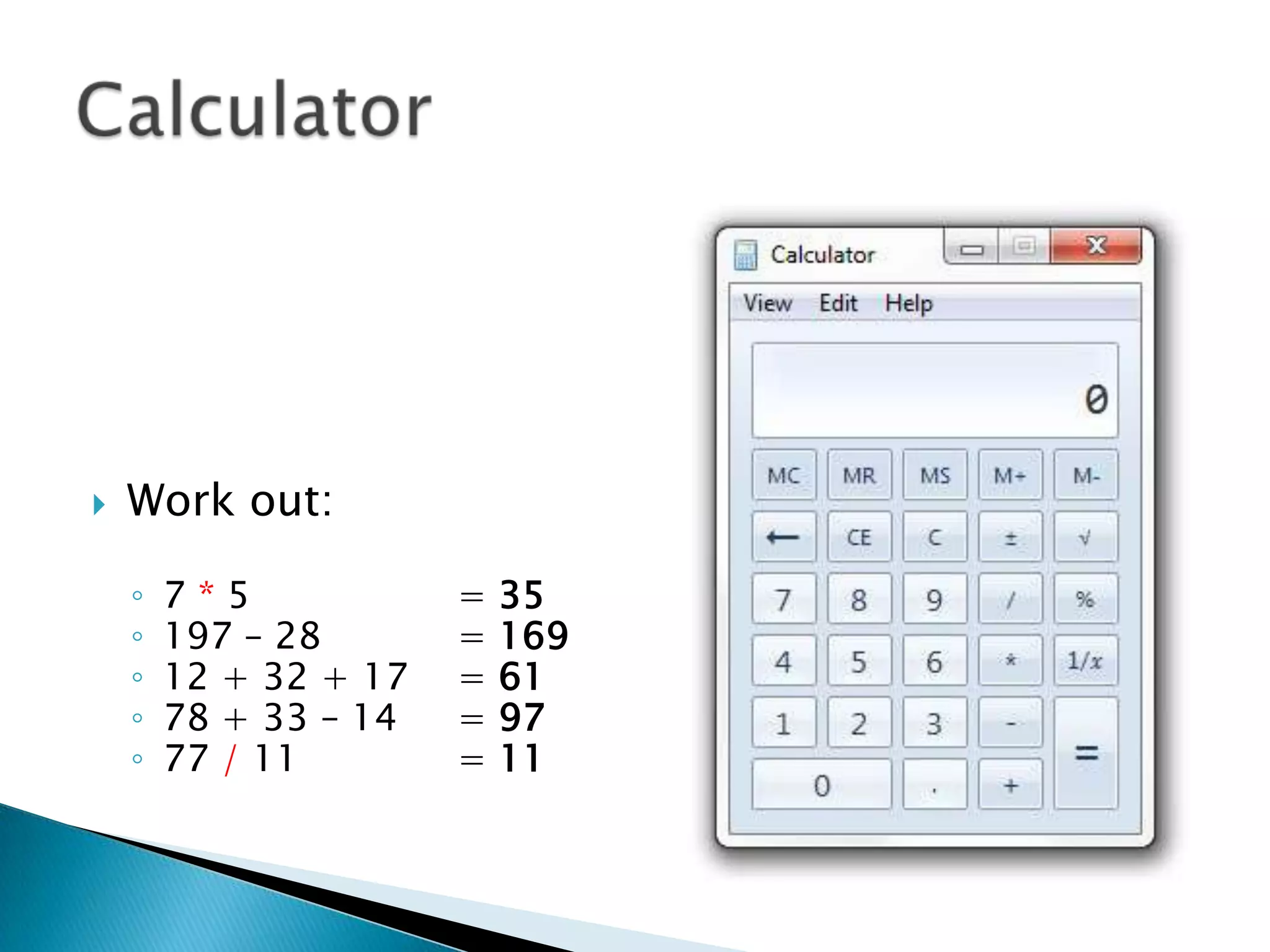
 Work out:
◦ 7 * 5 = 35
◦ 197 – 28 = 169
◦ 12 + 32 + 17 = 61
◦ 78 + 33 – 14 = 97
◦ 77 / 11 = 11
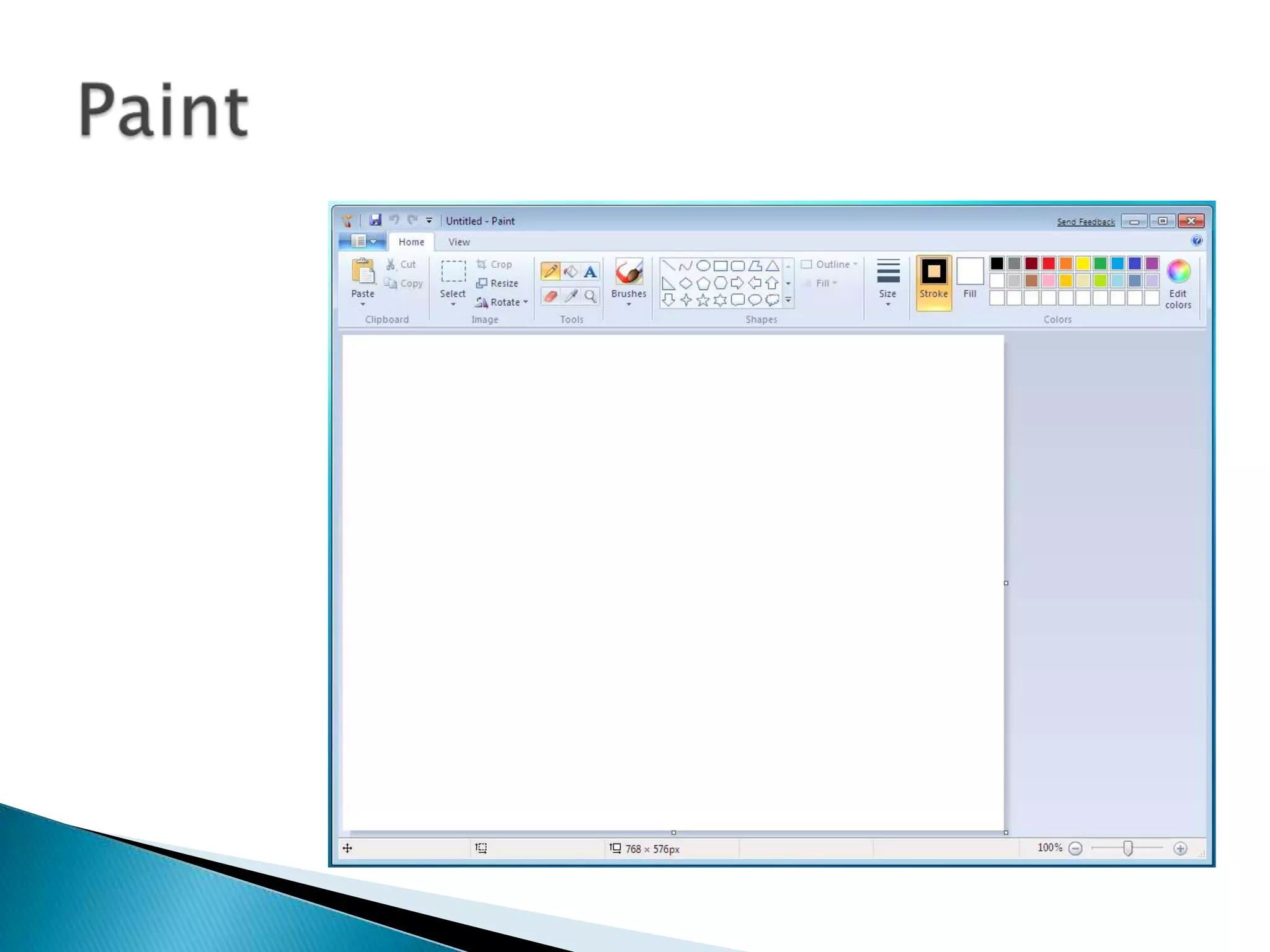
 You are now going to use the Start Menu to
start a program called Paint
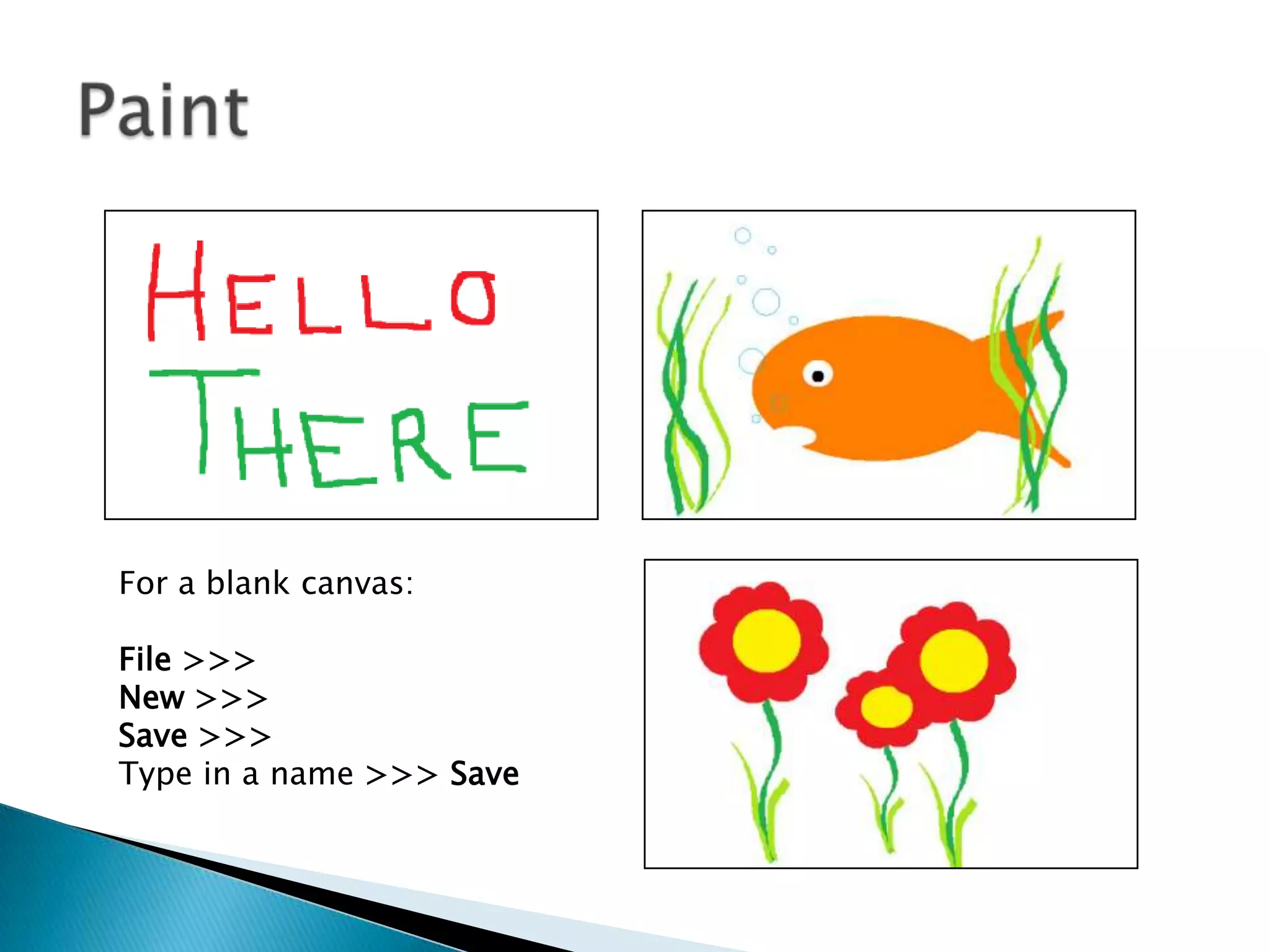
For a blank canvas:
File >>>
New >>>
Save >>>
Type in a name >>> Save
 Take 15 minutes
 It’s good (and healthy) to get away from the
computer every so often
 It’s the stuff you can’t physically touch
 Instructions that make hardware work
 Sometimes called:
◦ Programs
◦ Applications (or Apps for short)
Video on next slide…
 Word Processor
 Spreadsheet
 Database – used to store your data
 PowerPoint – what your watching now
…and many, many, many more!
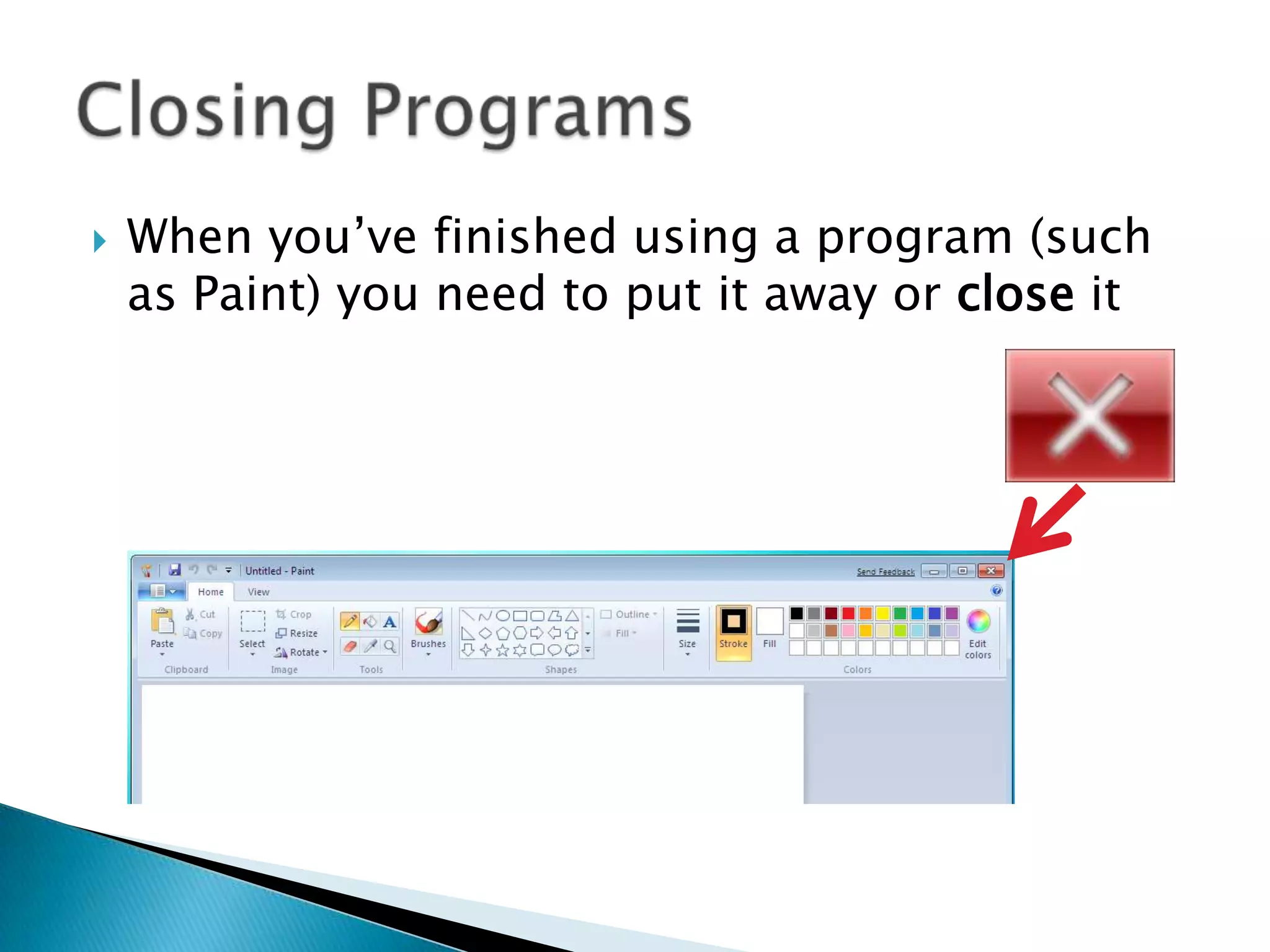
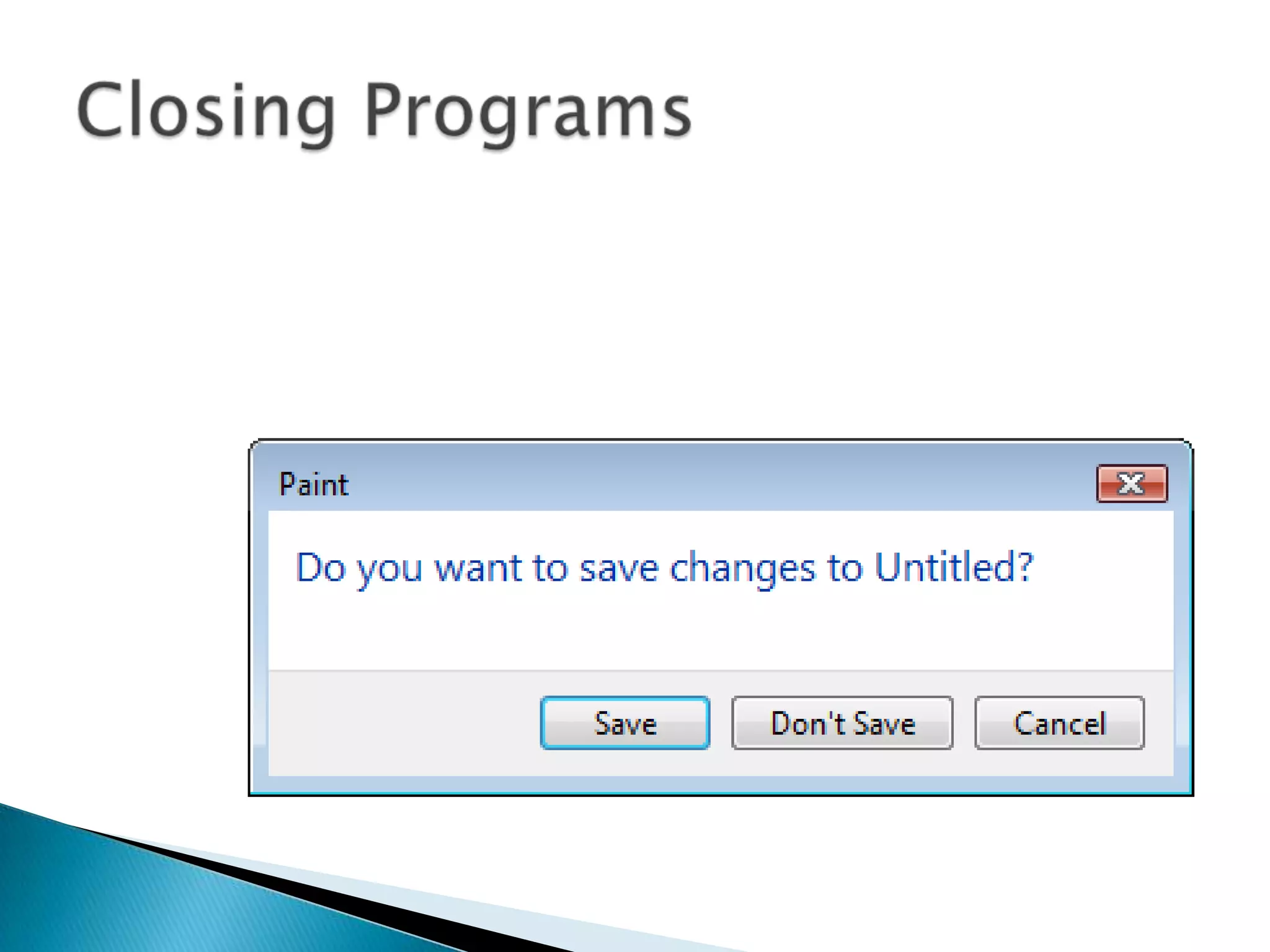
 When you’ve finished using a program (such
as Paint) you need to put it away or close it
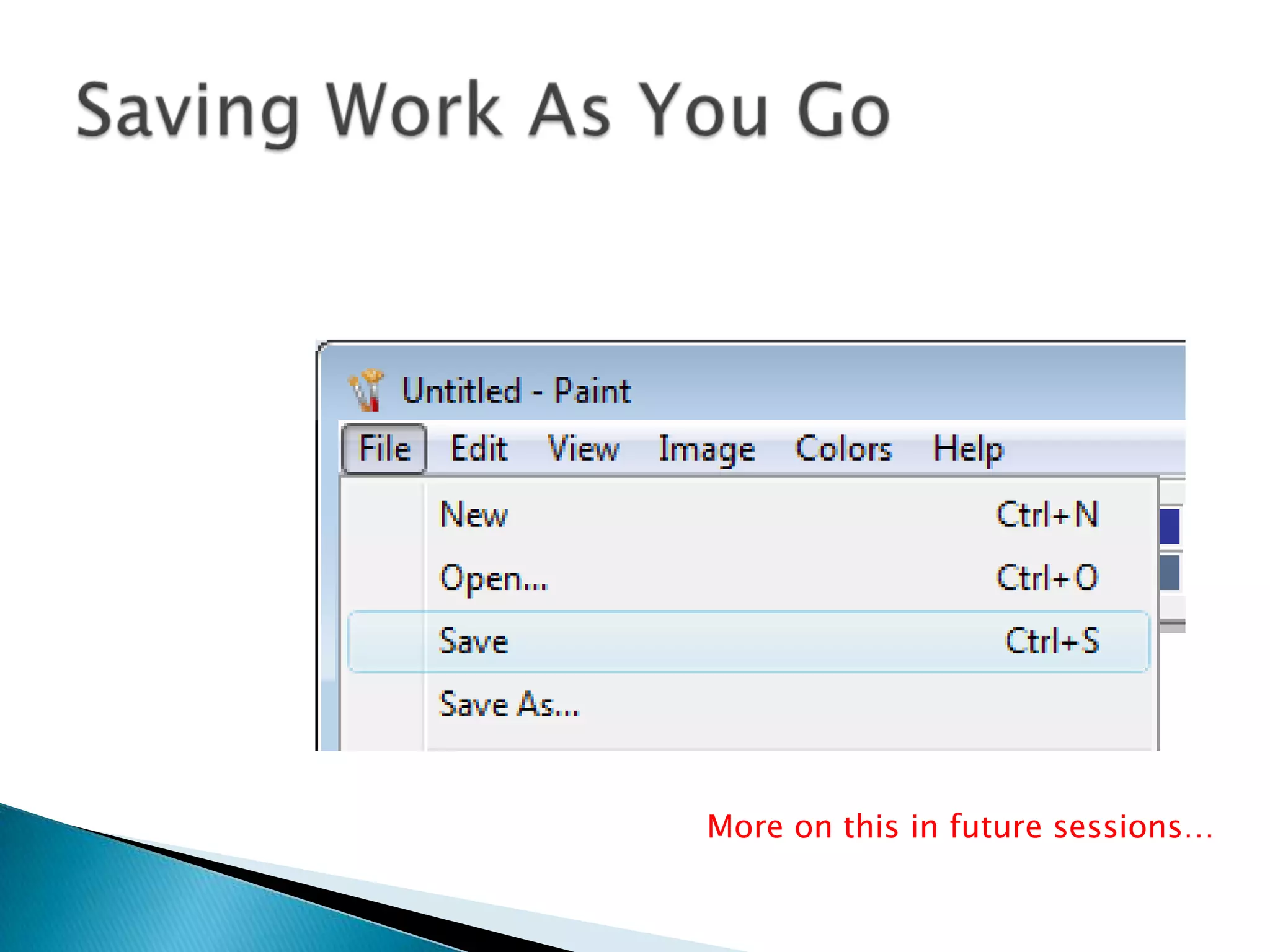
More on this in future sessions…
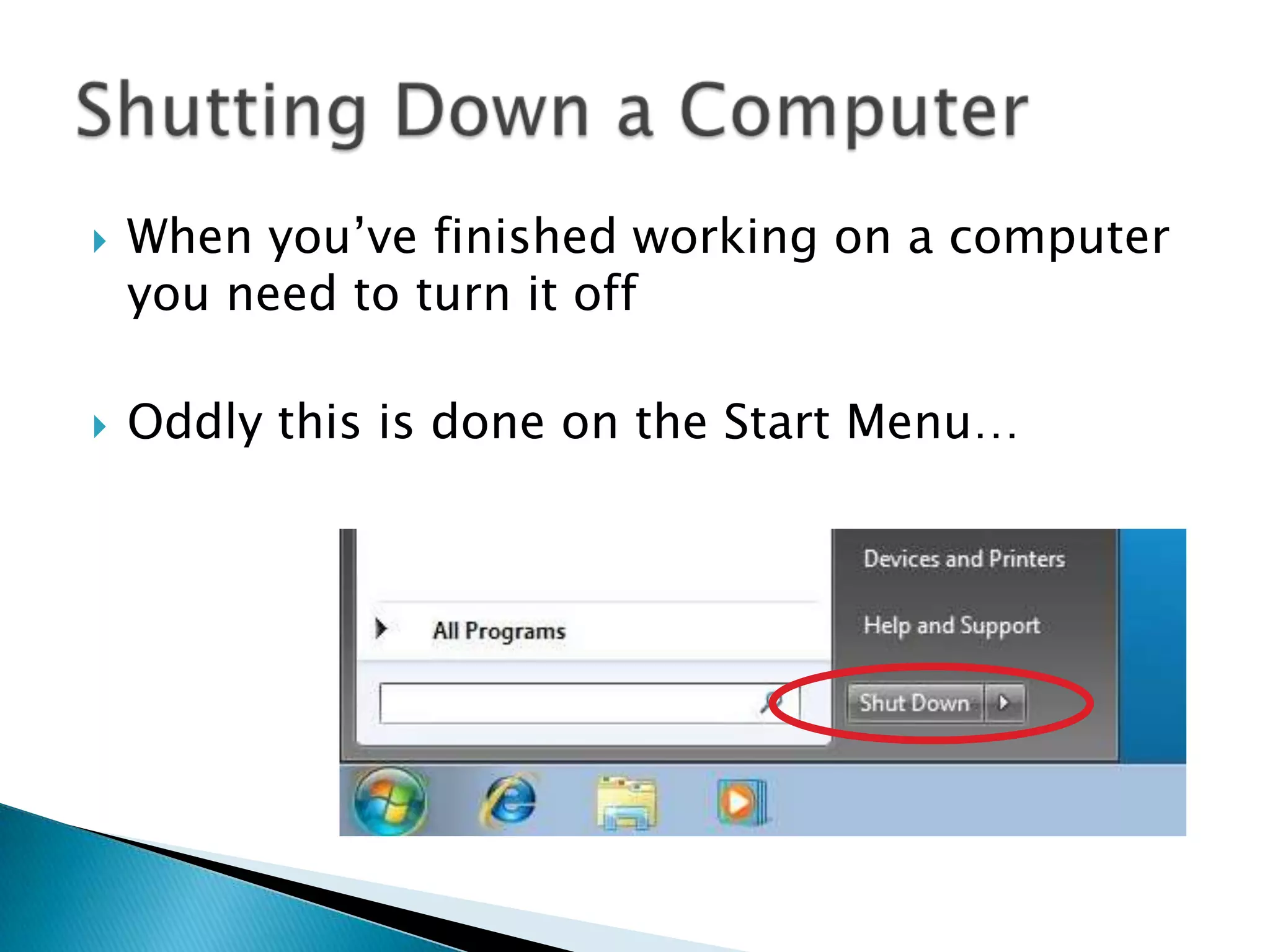
 When you’ve finished working on a computer
you need to turn it off
 Oddly this is done on the Start Menu…
 Next Week:
◦ Laptops vs Desktops
◦ What goes on inside the base unit
◦ Using the keyboard
◦ Intro to word processing
ICT for Beginners - session 1 (C&G 4249 iTQ) - Hardware

ICT for Beginners - session 1 (C&G 4249 iTQ) - Hardware

  • 2.
     Sessions 1to 5: Computer Basics ◦ Session 1 - Hardware and Software ◦ Session 2 – Inside a Computer and Word Processing ◦ Session 3 – Operating Systems and Multimedia ◦ Session 4 – Networks and Peripherals ◦ Session 5 – Recap and Test
  • 4.
     Hardware isanything to do with computers that you can actually touch
  • 5.
     In frontof you right now you should find…
  • 6.
     Turn onyour computer by pressing the power button on the base unit… It will probably take a few minutes to start up – be patient…
  • 7.
     After afew minutes of booting, the monitor should display something like this:
  • 8.
     Let’s lookat the keyboard…
  • 9.
  • 10.
     You needto press the Ctrl, Alt and Delete keys together…
  • 11.
     You shouldthen see this screen:
  • 12.
     A computerkeyboard has all the letters of the alphabet and the numbers 0 to 9  It also has special keys including the Shift key…
  • 13.
     The Shiftkey will change any letters you type on the keyboard to capital letters (sometimes called upper case):  Without Shift: With Shift: a, b, c ,d…. A, B, C, D…
  • 14.
     To usea computer you will have to log in  This usually involves typing in: ◦ a user name ◦ …and a password  These need to be carefully typed in using upper case (capitals) and lower case letters
  • 15.
     You shouldhave already have a use name  Type it on the keyboard, it should appear in the top box on your screen:
  • 16.
     The nextspecial key you are going to use is the Tab key  It can be found two keys above the Shift key: Press the Tab key once…
  • 17.
     The Tabkey moves the cursor (the flashing line where your typing appears) to the next box…  Now type your password into the lower box.
  • 18.
     Press theEnter key (sometimes called the Return key)…
  • 21.
     The mouseis used to point at things on the screen
  • 22.
     A mousealso lets you select things on the screen The LEFT mouse button
  • 23.
     Everything thatyour particular computer can do is found in the Start Menu
  • 24.
     Using themouse, click on the Start Menu button
  • 26.
     You arenow going to use the Start Menu to start the Calculator program
  • 27.
    / means divideby * means multiply or ‘times’ C clears or resets  Work out: ◦ 7 * 5 ◦ 197 – 28 ◦ 12 + 32 + 17 ◦ 78 + 33 – 14 ◦ 77 / 11
  • 28.
    / * C  Work out: ◦7 * 5 = 35 ◦ 197 – 28 = 169 ◦ 12 + 32 + 17 = 61 ◦ 78 + 33 – 14 = 97 ◦ 77 / 11 = 11
  • 29.
     You arenow going to use the Start Menu to start a program called Paint
  • 31.
    For a blankcanvas: File >>> New >>> Save >>> Type in a name >>> Save
  • 32.
     Take 15minutes  It’s good (and healthy) to get away from the computer every so often
  • 36.
     It’s thestuff you can’t physically touch  Instructions that make hardware work  Sometimes called: ◦ Programs ◦ Applications (or Apps for short) Video on next slide…
  • 37.
     Word Processor Spreadsheet  Database – used to store your data  PowerPoint – what your watching now …and many, many, many more!
  • 38.
     When you’vefinished using a program (such as Paint) you need to put it away or close it
  • 40.
    More on thisin future sessions…
  • 41.
     When you’vefinished working on a computer you need to turn it off  Oddly this is done on the Start Menu…
  • 42.
     Next Week: ◦Laptops vs Desktops ◦ What goes on inside the base unit ◦ Using the keyboard ◦ Intro to word processing