ICT solutions for good governance and growth : It is all about decisions …YannisCharalabidisAssistant Professor, University of the AegeanManager, Greek Interoperability CentreXII. BLED FORUM ON EUROPE, Bled 3-4 March 2011
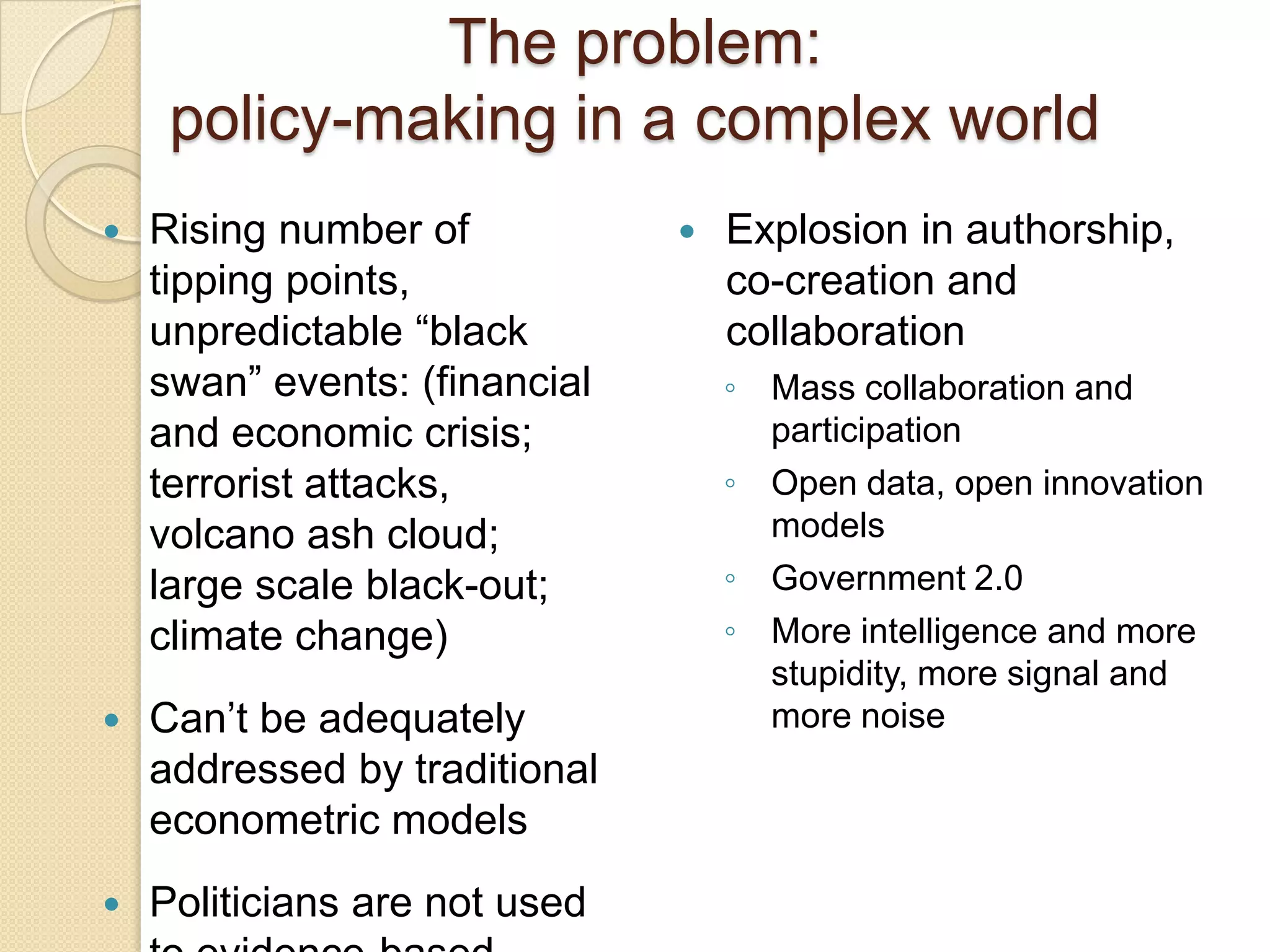
The problem: policy-making in a complex worldRising number of tipping points, unpredictable “black swan” events: (financial and economic crisis; terrorist attacks, volcano ash cloud; large scale black-out; climate change)Can’t be adequately addressed by traditional econometric modelsPoliticians are not used to evidence-based decisionsExplosion in authorship, co-creation and collaborationMass collaboration and participationOpen data, open innovation modelsGovernment 2.0More intelligence and more stupidity, more signal and more noise
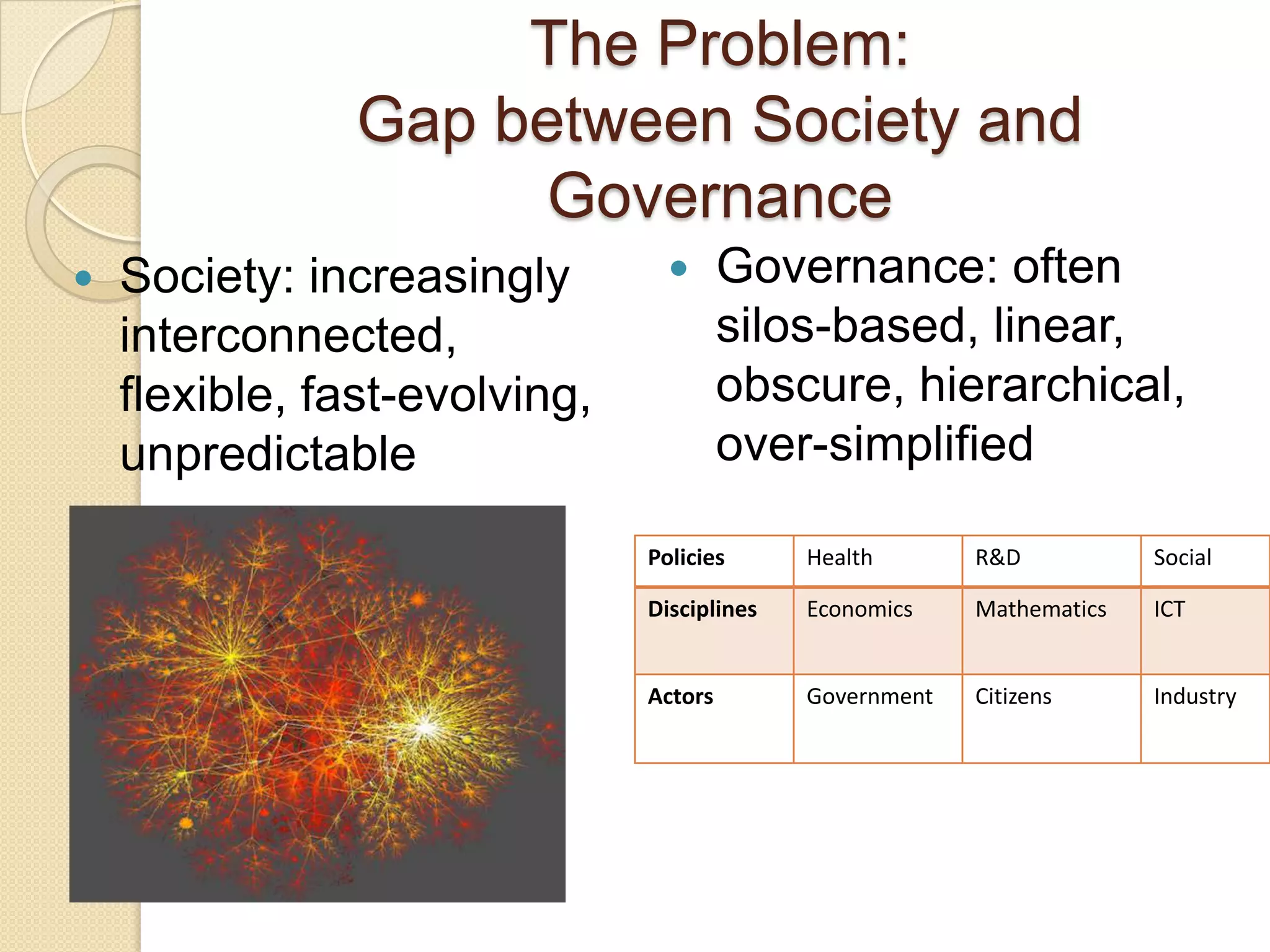
Governance: often silos-based, linear, obscure, hierarchical, over-simplifiedSociety: increasingly interconnected, flexible, fast-evolving, unpredictableThe Problem: Gap between Society and Governance
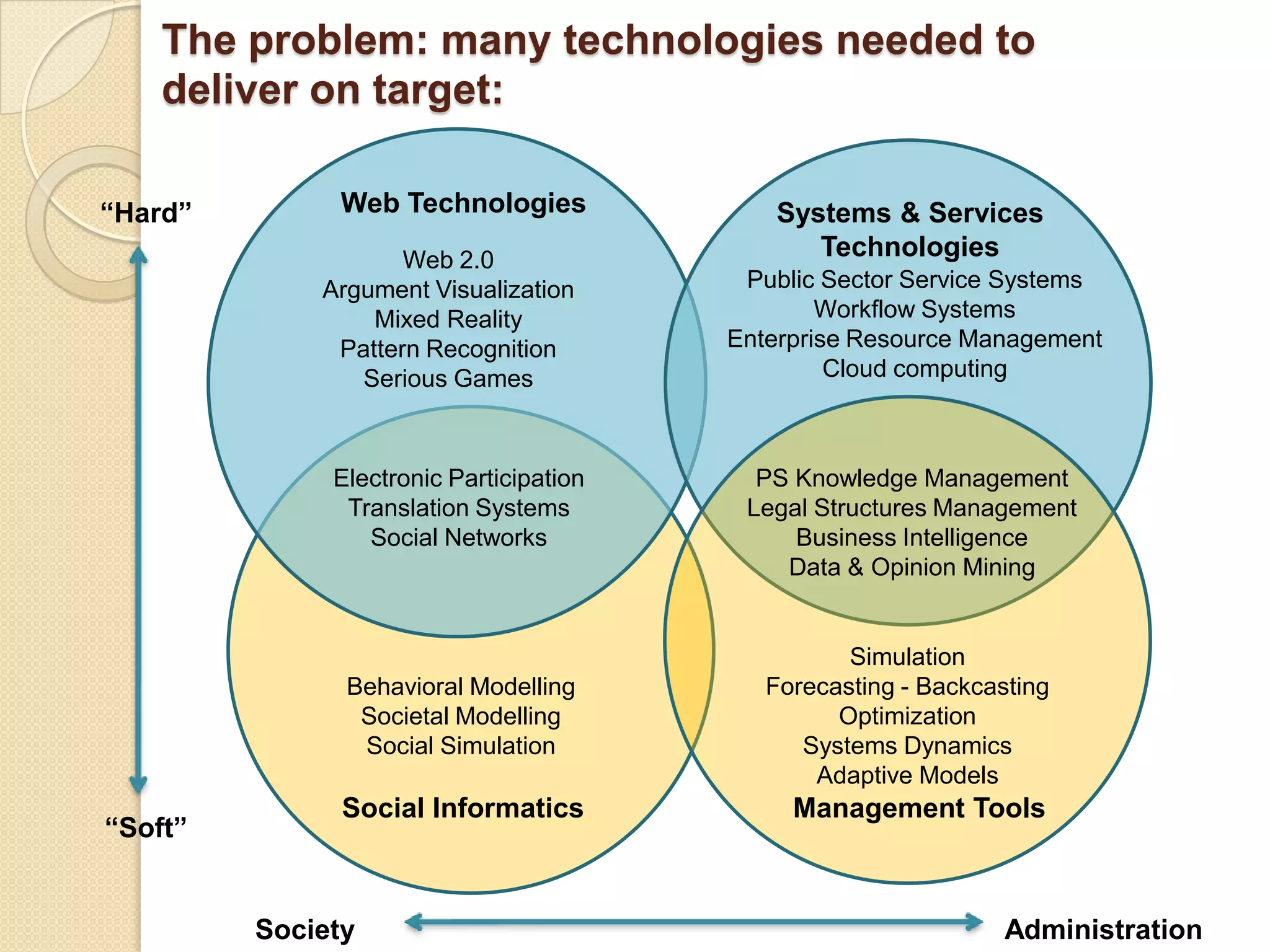
The problem: many technologies needed to deliver on target:Web TechnologiesSystems & Services Technologies“Hard”Public Sector Service Systems Workflow SystemsEnterprise Resource ManagementCloud computingWeb 2.0Argument VisualizationMixed Reality Pattern RecognitionSerious GamesElectronic ParticipationTranslation SystemsSocial NetworksPS Knowledge ManagementLegal Structures ManagementBusiness IntelligenceData & Opinion MiningSimulationForecasting - BackcastingOptimizationSystems DynamicsAdaptive ModelsBehavioral ModellingSocietal ModellingSocial SimulationSocial InformaticsManagement Tools“Soft”SocietyAdministration
"The problems that we have created cannot be solved at the level of  thinking that created them"  Albert EinsteinSo ?
A roadmap for ICT-enabled governance research, beyond 2010, to address global challenges: What are the new needed research directions ?
How should we team-up among governments, industry and citizens ?
When should we expect results ?www.crossroad-eu.net
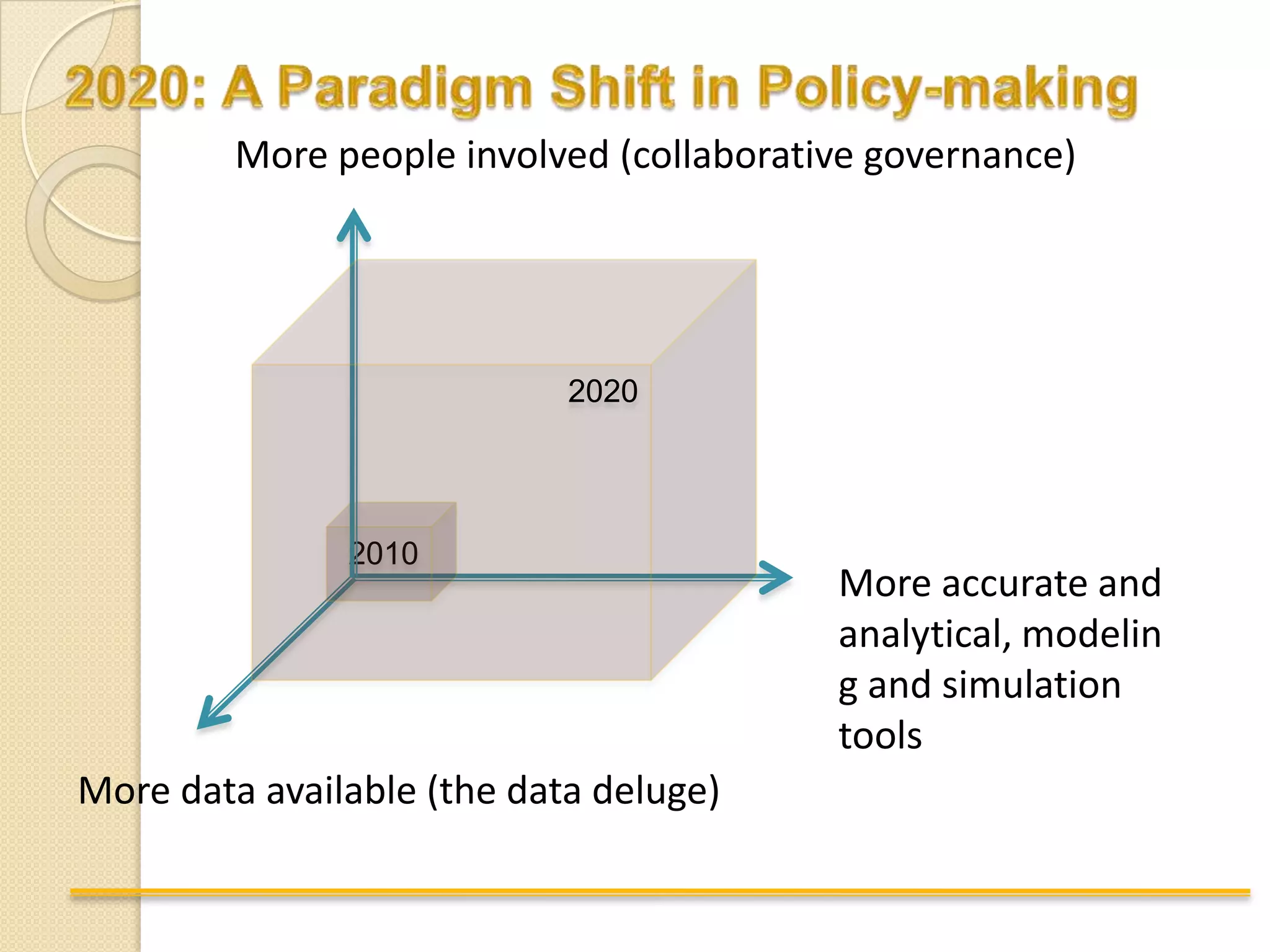
2020: A Paradigm Shift in Policy-makingMore people involved (collaborative governance)20202010More accurate and analytical, modeling and simulation tools More data available (the data deluge)
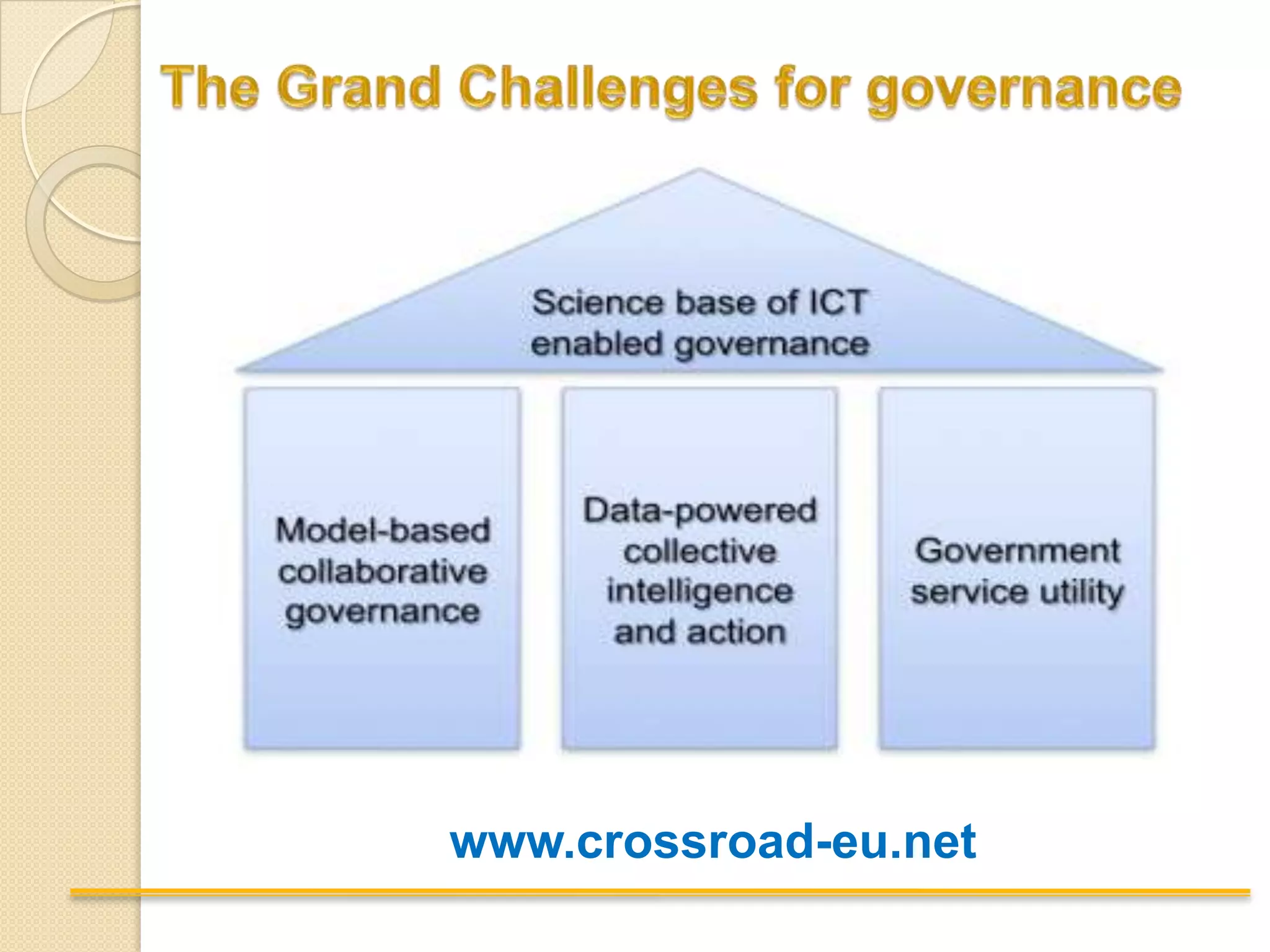
The Grand Challenges for governancewww.crossroad-eu.net
Model-based collaborative governanceResearch challengesIntegrated, composable and reusable models simulating large societal phenomenaInteractive, on-line and open simulation: the “objective function” is constantly evaluated so that action is takenCollaborative modelling: citizens, NGO’s, businesses and administrations together A massive campaign is needed for evidence-based decision making for governments
Research challengesData-powered collective intelligence and actionReal-time, high-quality, reusable open government data Privacy-compliant participatory sensing for real-time policy-makingPeer-to-peer public opinion miningIntuitive, collaborative visual analytics of data for policy-makingUser-generated simulation and gaming tools for public actionNew institutional design of collaborative governance
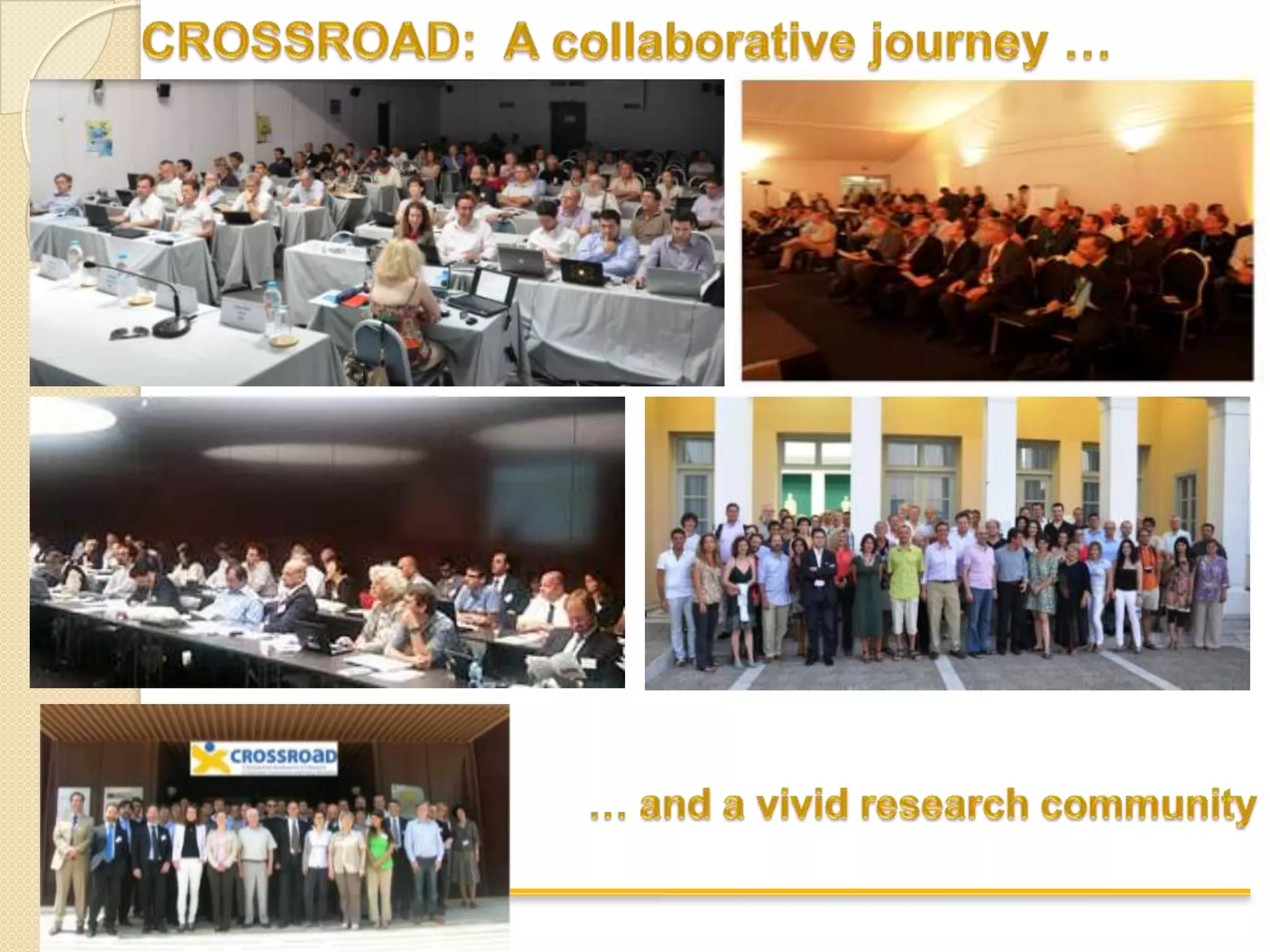
CROSSROAD:  A collaborative journey …… and a vivid research community
Next Steps in ICT-enabled GovernanceAn FP7 research project, utilising social media and widgets to reach citizens and discuss on policy-making through different media and devices and then process interactions through on-line simulation tools to support decisionswww.padgets.eu
Next Steps in ICT-enabled GovernanceModel-based governance:  A proposal for an IP project (10 M EUR) is under evaluation.  Slovenia / Western Balkans is one of the key pilots (climate change and growth)Open Governmental Data: A pan-european research project soon to start for Public Information curation and provision for governance scientists

ICT Solutions for Better Governance

  • 1.
    ICT solutions forgood governance and growth : It is all about decisions …YannisCharalabidisAssistant Professor, University of the AegeanManager, Greek Interoperability CentreXII. BLED FORUM ON EUROPE, Bled 3-4 March 2011
  • 2.
    The problem: policy-makingin a complex worldRising number of tipping points, unpredictable “black swan” events: (financial and economic crisis; terrorist attacks, volcano ash cloud; large scale black-out; climate change)Can’t be adequately addressed by traditional econometric modelsPoliticians are not used to evidence-based decisionsExplosion in authorship, co-creation and collaborationMass collaboration and participationOpen data, open innovation modelsGovernment 2.0More intelligence and more stupidity, more signal and more noise
  • 3.
    Governance: often silos-based,linear, obscure, hierarchical, over-simplifiedSociety: increasingly interconnected, flexible, fast-evolving, unpredictableThe Problem: Gap between Society and Governance
  • 4.
    The problem: manytechnologies needed to deliver on target:Web TechnologiesSystems & Services Technologies“Hard”Public Sector Service Systems Workflow SystemsEnterprise Resource ManagementCloud computingWeb 2.0Argument VisualizationMixed Reality Pattern RecognitionSerious GamesElectronic ParticipationTranslation SystemsSocial NetworksPS Knowledge ManagementLegal Structures ManagementBusiness IntelligenceData & Opinion MiningSimulationForecasting - BackcastingOptimizationSystems DynamicsAdaptive ModelsBehavioral ModellingSocietal ModellingSocial SimulationSocial InformaticsManagement Tools“Soft”SocietyAdministration
  • 5.
    "The problems thatwe have created cannot be solved at the level of thinking that created them" Albert EinsteinSo ?
  • 6.
    A roadmap forICT-enabled governance research, beyond 2010, to address global challenges: What are the new needed research directions ?
  • 7.
    How should weteam-up among governments, industry and citizens ?
  • 8.
    When should weexpect results ?www.crossroad-eu.net
  • 9.
    2020: A ParadigmShift in Policy-makingMore people involved (collaborative governance)20202010More accurate and analytical, modeling and simulation tools More data available (the data deluge)
  • 10.
    The Grand Challengesfor governancewww.crossroad-eu.net
  • 11.
    Model-based collaborative governanceResearchchallengesIntegrated, composable and reusable models simulating large societal phenomenaInteractive, on-line and open simulation: the “objective function” is constantly evaluated so that action is takenCollaborative modelling: citizens, NGO’s, businesses and administrations together A massive campaign is needed for evidence-based decision making for governments
  • 12.
    Research challengesData-powered collectiveintelligence and actionReal-time, high-quality, reusable open government data Privacy-compliant participatory sensing for real-time policy-makingPeer-to-peer public opinion miningIntuitive, collaborative visual analytics of data for policy-makingUser-generated simulation and gaming tools for public actionNew institutional design of collaborative governance
  • 13.
    CROSSROAD: Acollaborative journey …… and a vivid research community
  • 14.
    Next Steps inICT-enabled GovernanceAn FP7 research project, utilising social media and widgets to reach citizens and discuss on policy-making through different media and devices and then process interactions through on-line simulation tools to support decisionswww.padgets.eu
  • 15.
    Next Steps inICT-enabled GovernanceModel-based governance: A proposal for an IP project (10 M EUR) is under evaluation. Slovenia / Western Balkans is one of the key pilots (climate change and growth)Open Governmental Data: A pan-european research project soon to start for Public Information curation and provision for governance scientists
  • 16.
    As a conclusionWeneed a totally different set of tools for evidence-based decision making by governmentsSocietal Simulation and virtual reality will be the next “big thing” for governments that wish to make a differenceWe need to go beyond pure ICT approaches and embark in a multi-disciplinary journeyWe should not just “do things right”: we should “do the right things”
  • 17.
    ICT solutions forgood governance and growth : It is all about decisions …Stay tuned at:yannisx@aegean.grt-government.blogspot.com

Editor's Notes

  • #3 Power law distribution, Tipping points, Cascade effectsLiquid modernity, Flat world, Chaos theoryPermanent instability and critical state