progcity.maynoothuniversity.ie
Open/Big Urban Data
Dr Tracey P. Lauriault
Assistant Professor, Critical Media and Big Data
School of Journalism and Communication
Carleton University
@TraceyLauriault
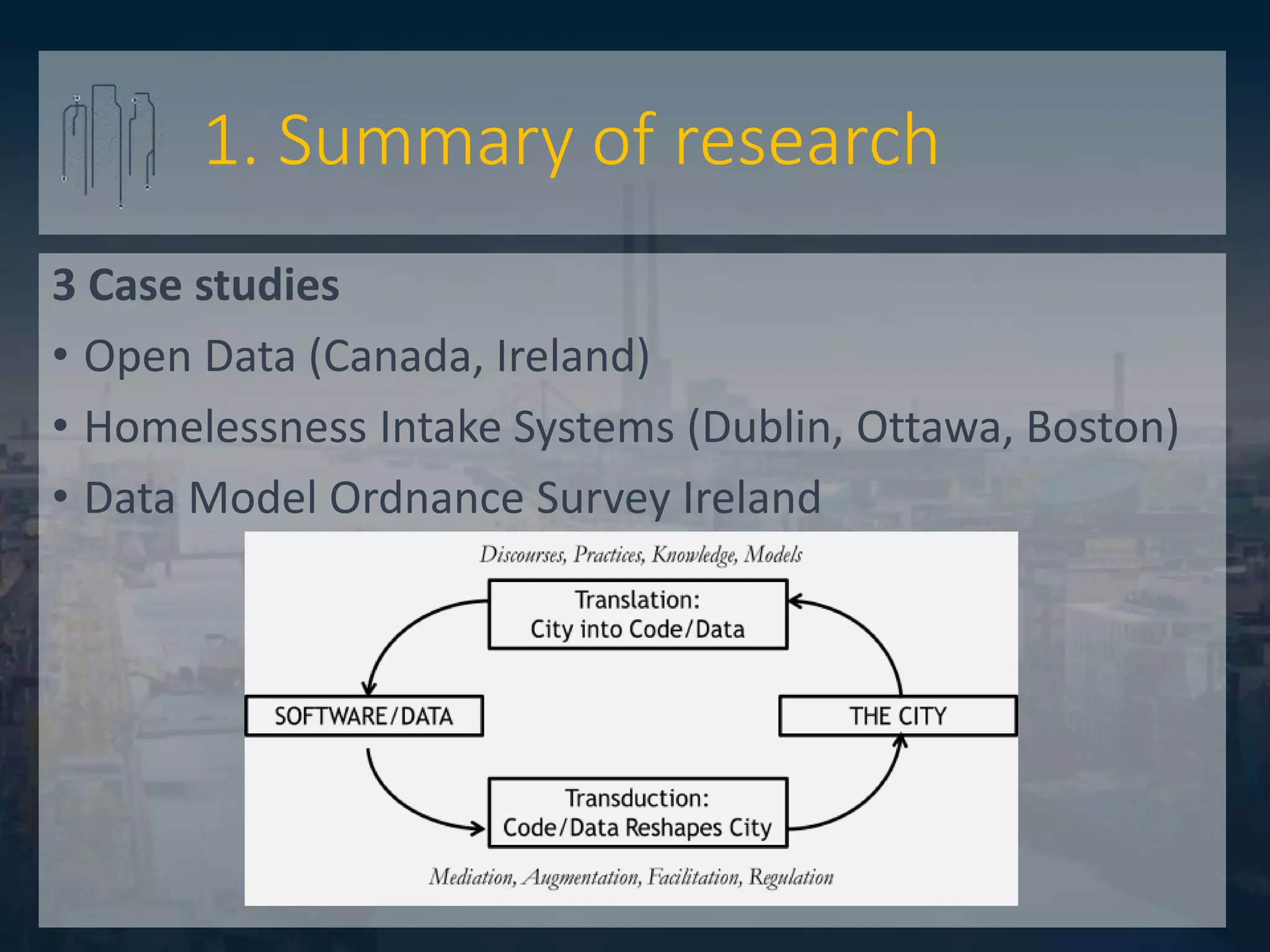
1. Summary of research
3 Case studies
• Open Data (Canada, Ireland)
• Homelessness Intake Systems (Dublin, Ottawa, Boston)
• Data Model Ordnance Survey Ireland
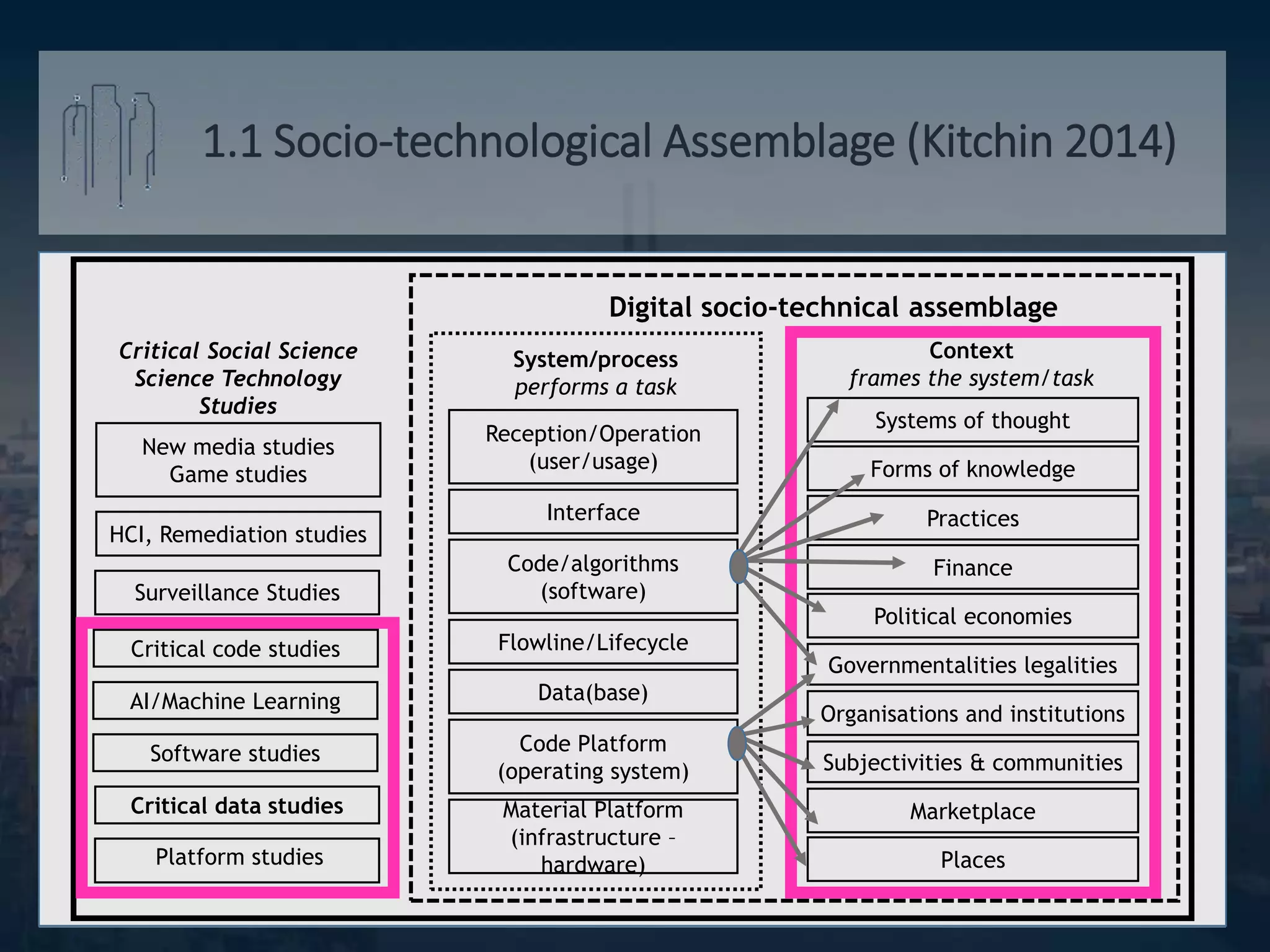
1.1 Socio-technological Assemblage (Kitchin 2014)
Material Platform
(infrastructure –
hardware)
Code Platform
(operating system)
Code/algorithms
(software)
Data(base)
Interface
Reception/Operation
(user/usage)
Systems of thought
Forms of knowledge
Finance
Political economies
Governmentalities legalities
Organisations and institutions
Subjectivities & communities
Marketplace
System/process
performs a task
Context
frames the system/task
Digital socio-technical assemblage
HCI, Remediation studies
Software studies
New media studies
Game studies
Critical Social Science
Science Technology
Studies
Platform studies Places
Practices
Flowline/Lifecycle
Surveillance Studies
Critical data studies
Critical code studies
AI/Machine Learning
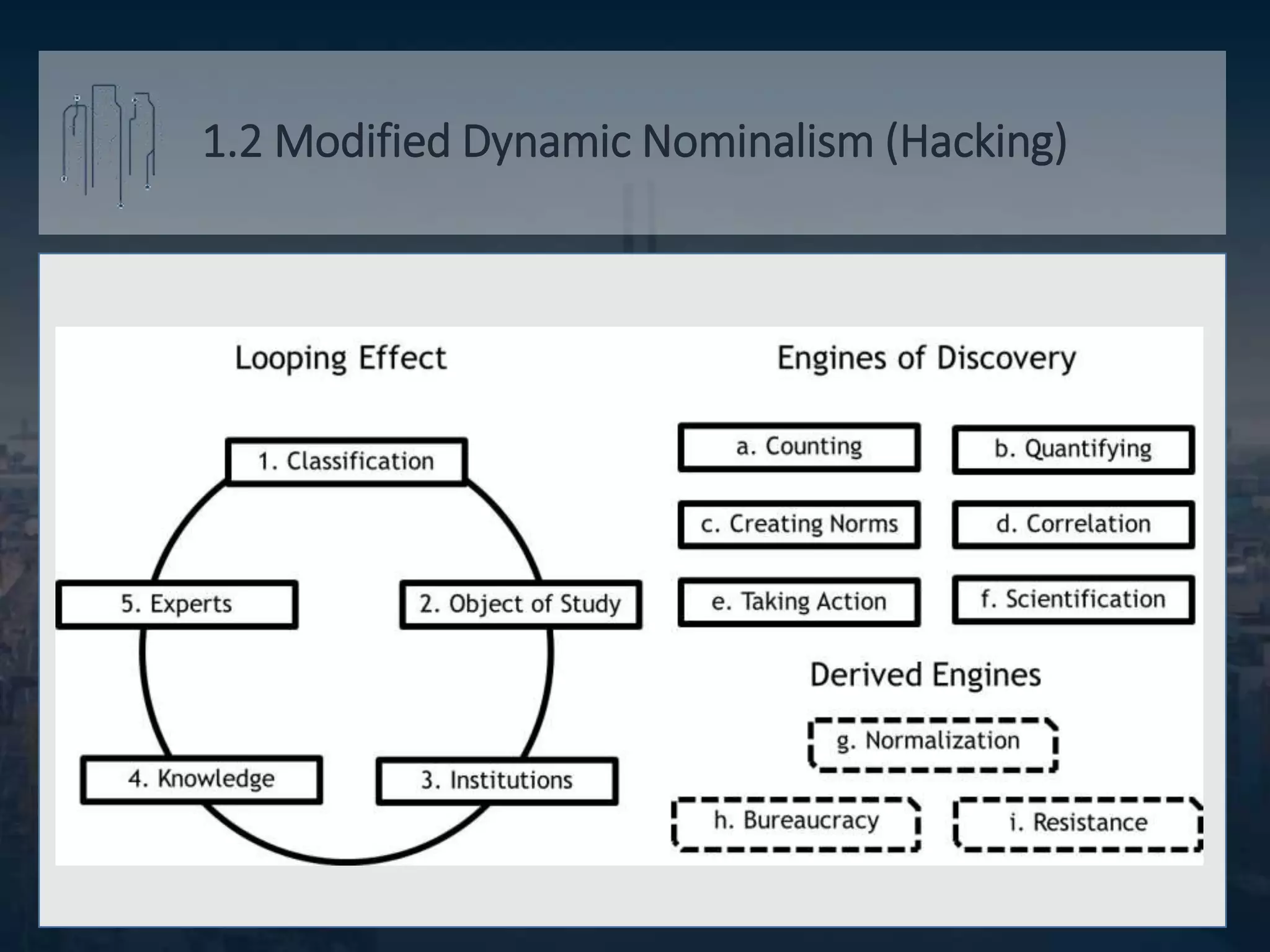
1.2 Modified Dynamic Nominalism (Hacking)
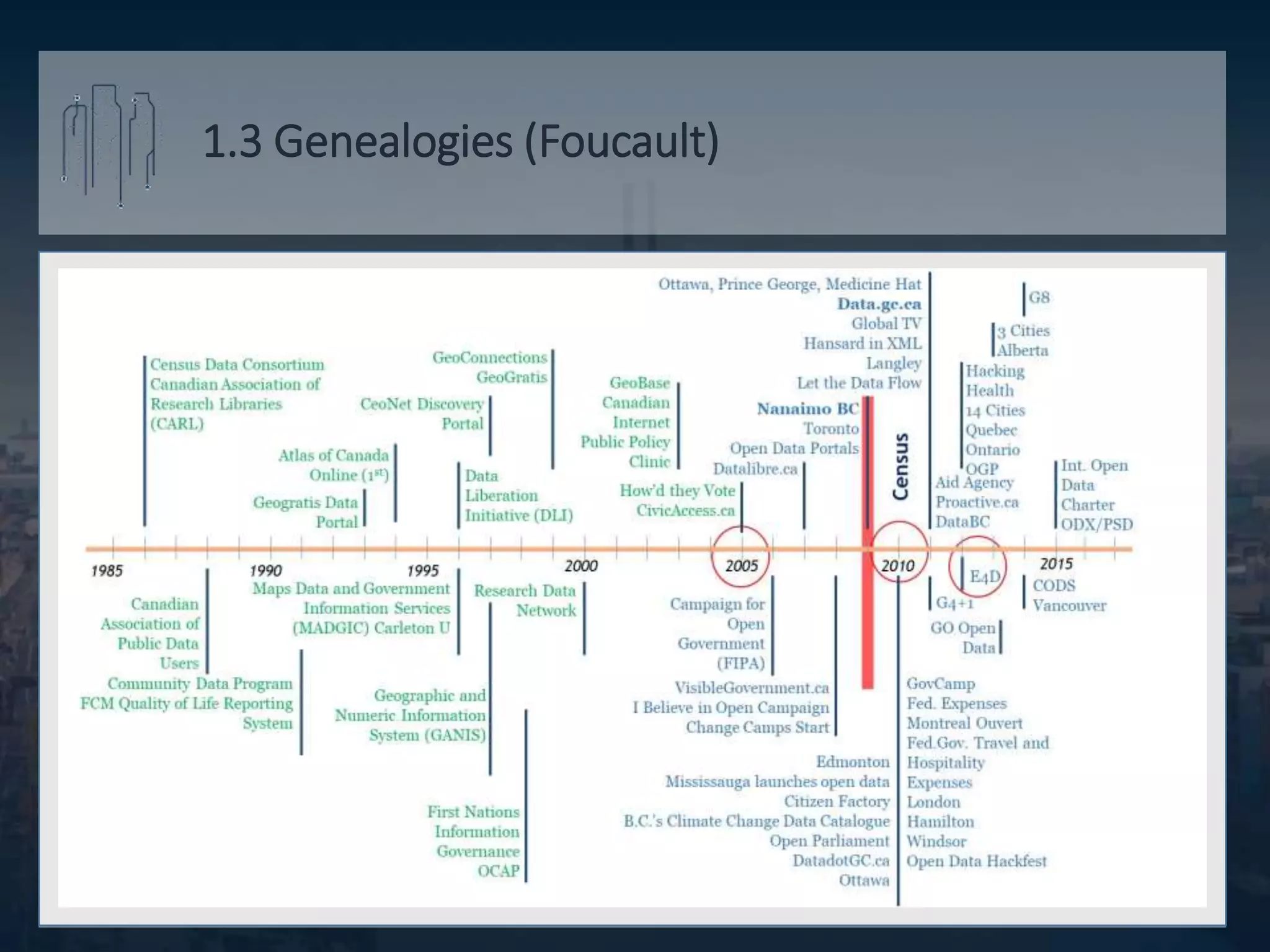
1.3 Genealogies (Foucault)
2. Key findings
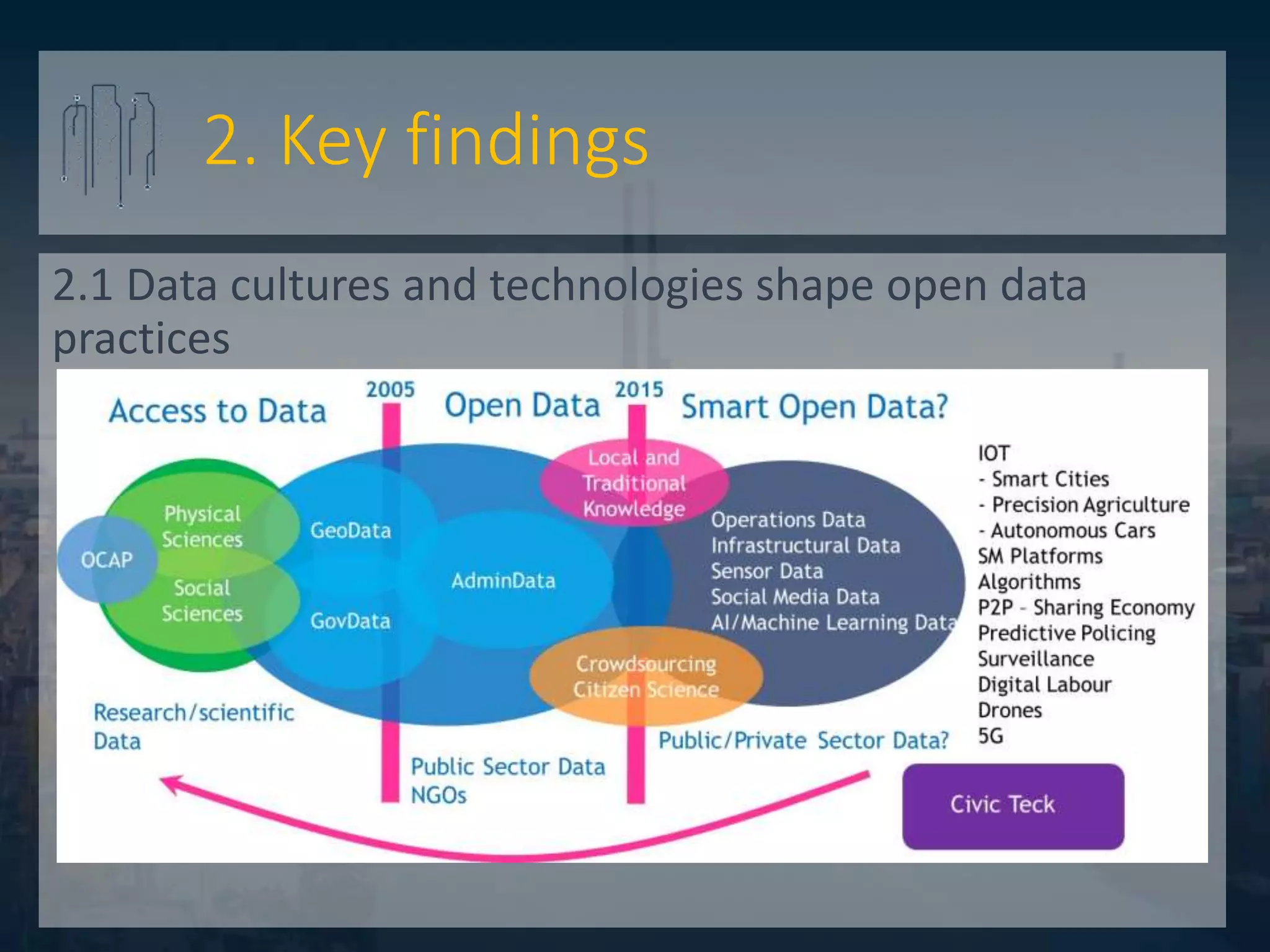
2.1 Data cultures and technologies shape open data
practices
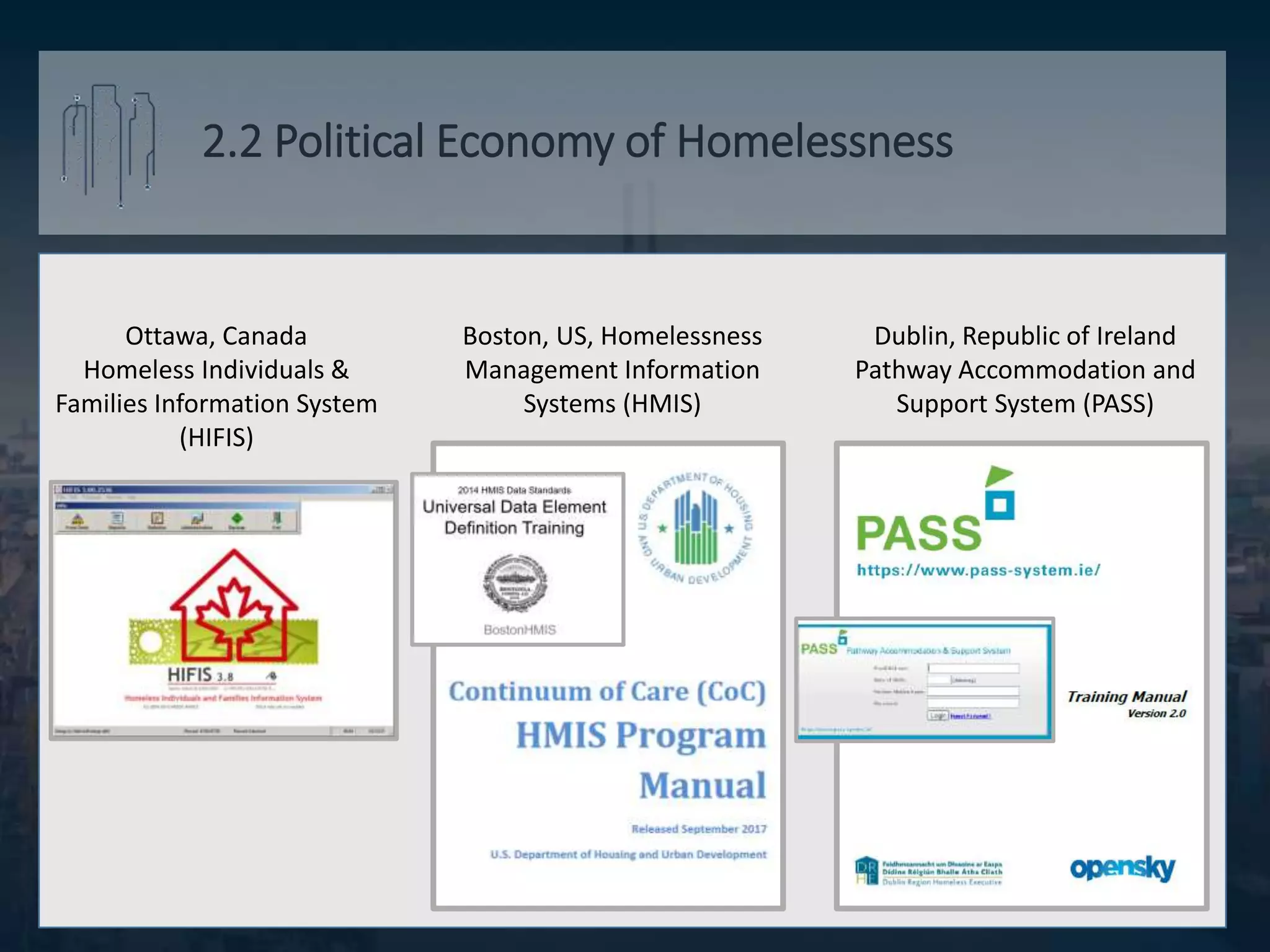
2.2 Political Economy of Homelessness
Ottawa, Canada
Homeless Individuals &
Families Information System
(HIFIS)
Dublin, Republic of Ireland
Pathway Accommodation and
Support System (PASS)
Boston, US, Homelessness
Management Information
Systems (HMIS)
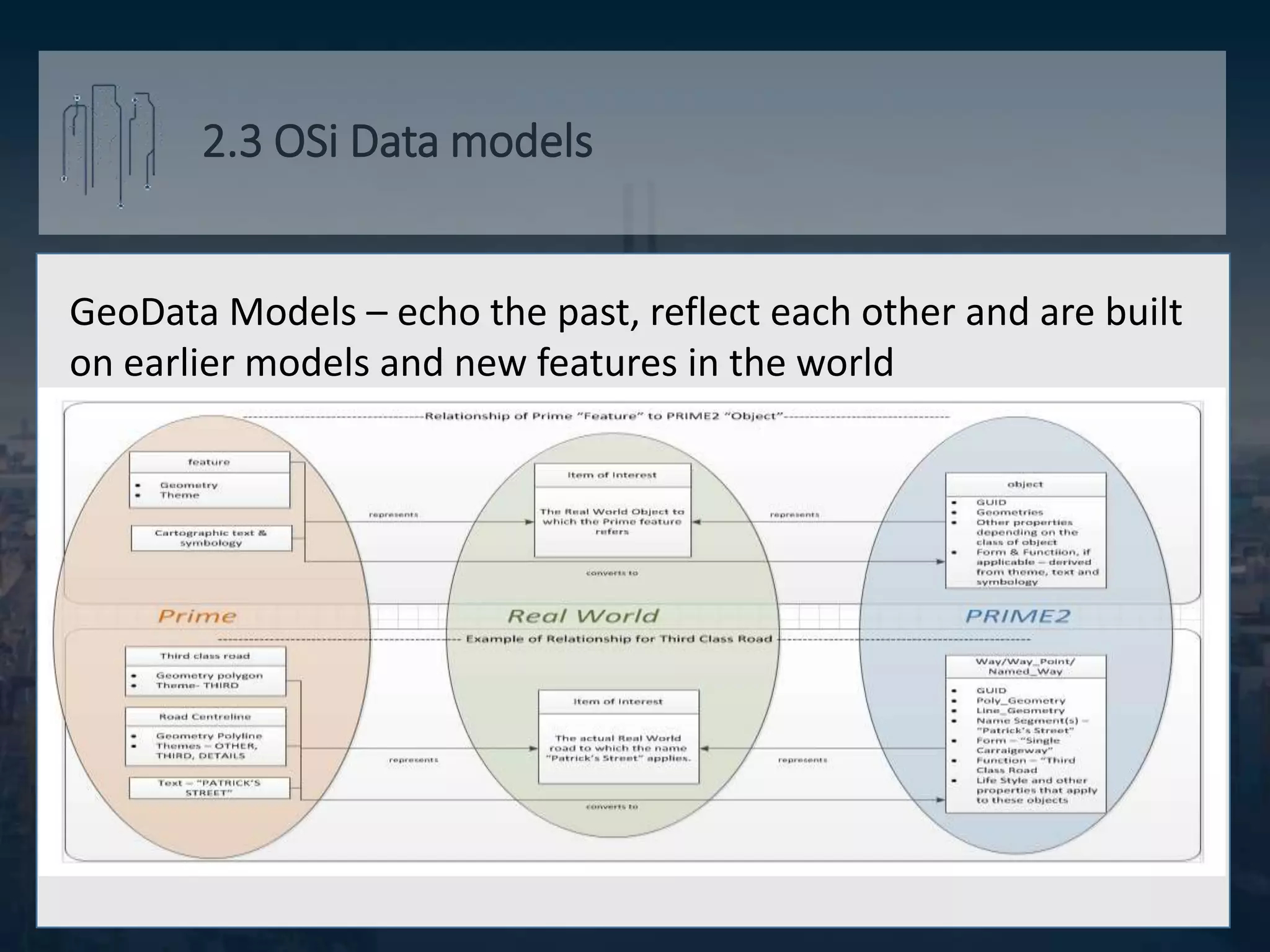
2.3 OSi Data models
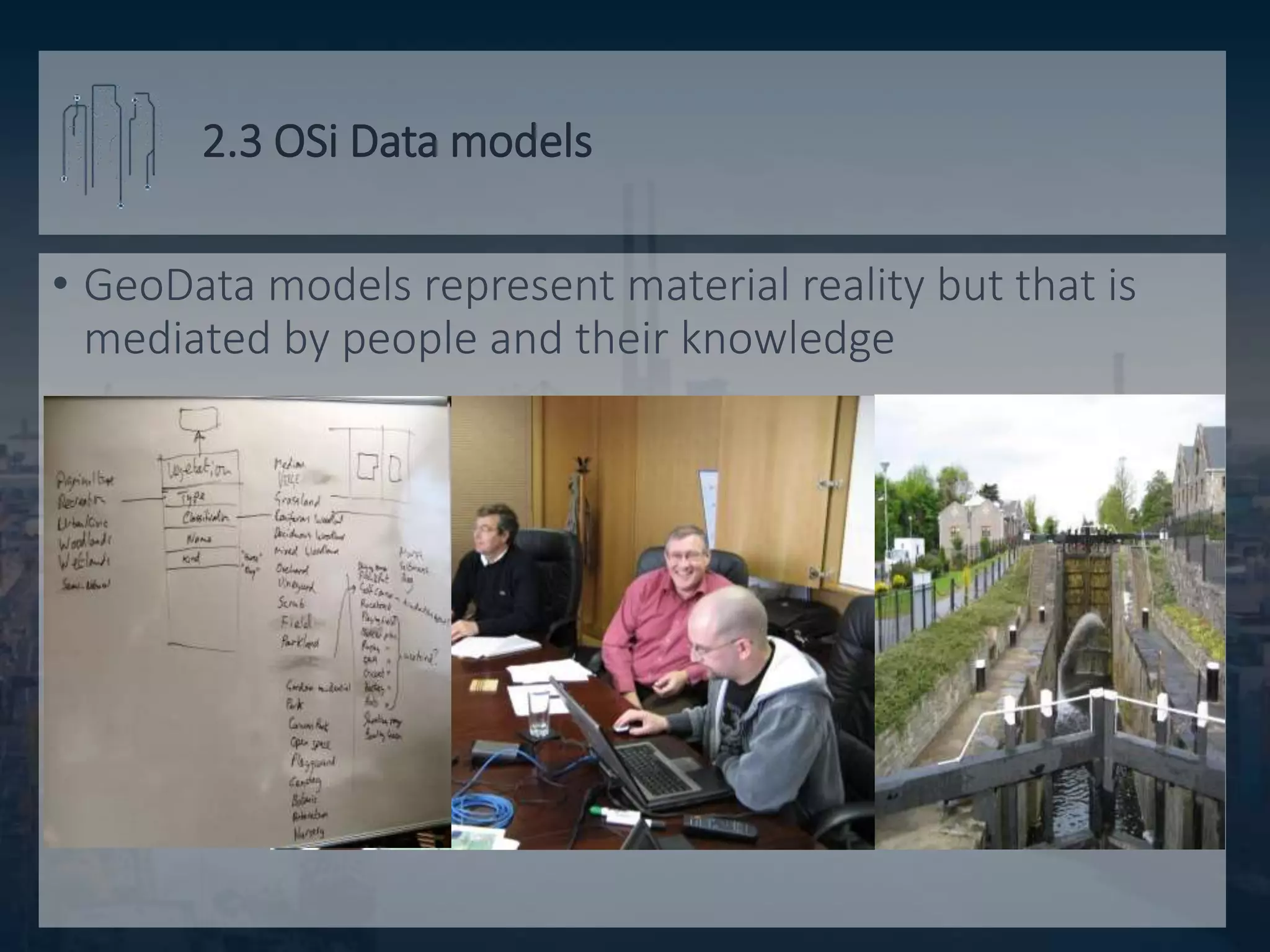
• GeoData models represent material reality but that is
mediated by people and their knowledge
2.3 OSi Data models
GeoData Models – echo the past, reflect each other and are built
on earlier models and new features in the world
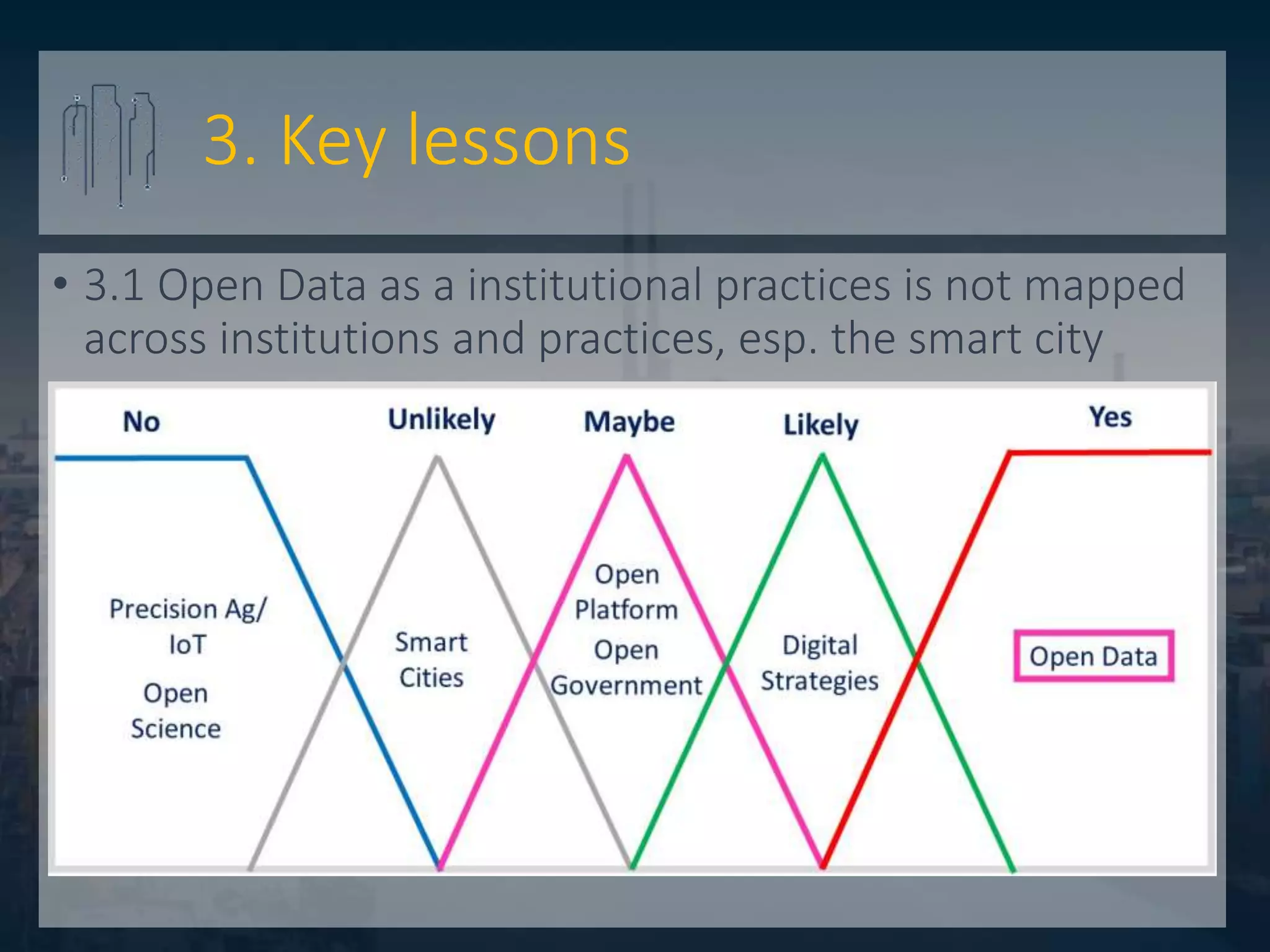
3. Key lessons
• 3.1 Open Data as a institutional practices is not mapped
across institutions and practices, esp. the smart city
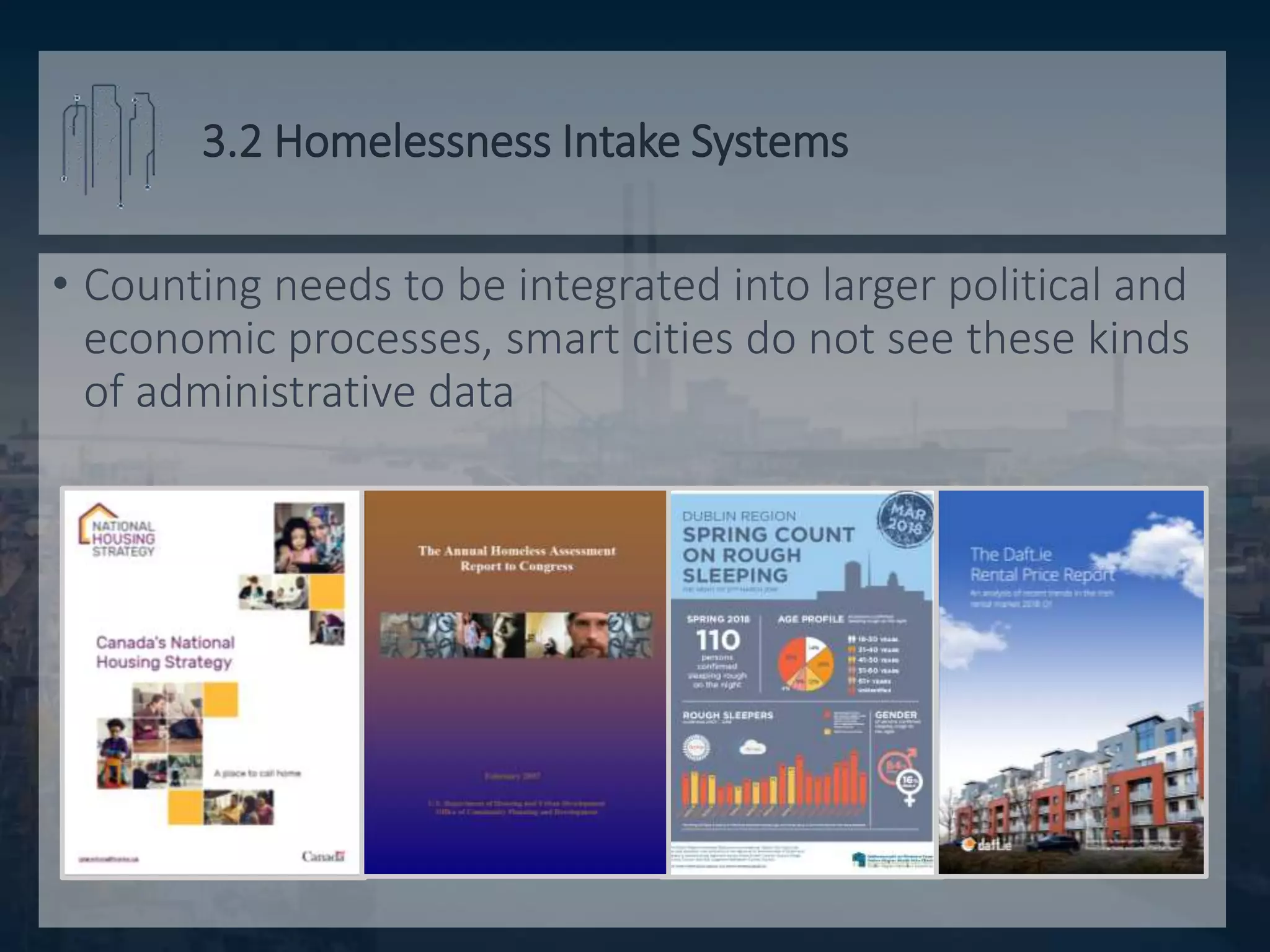
3.2 Homelessness Intake Systems
• Counting needs to be integrated into larger political and
economic processes, smart cities do not see these kinds
of administrative data
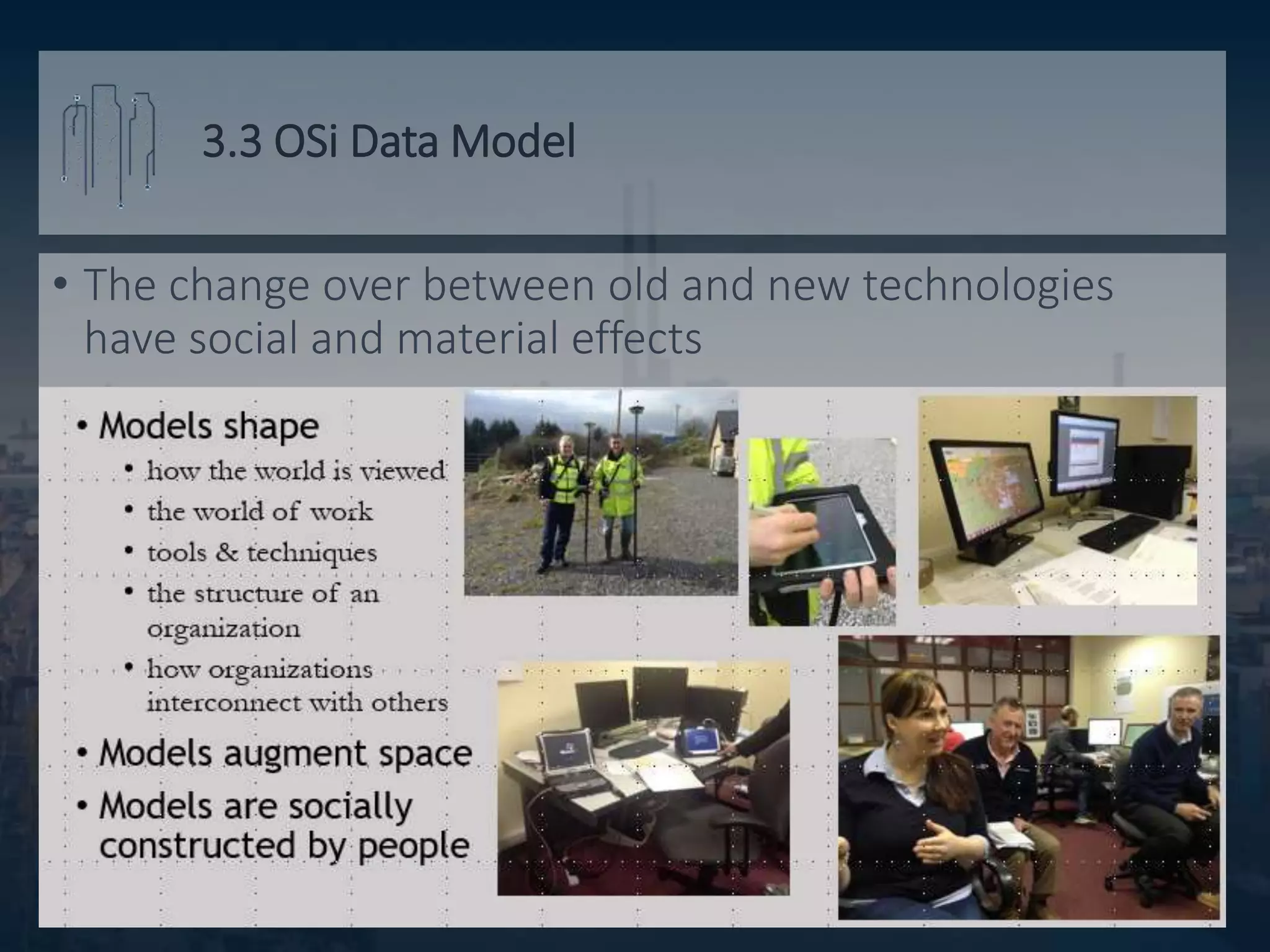
3.3 OSi Data Model
• The change over between old and new technologies
have social and material effects
4. Conclusion
Data and Technology are social, technical and political
artifacts, than are more than the unique arrangement of
objective and politically neutral facts & things
that do not exist independently of ideas, techniques,
technologies, systems, people and contexts regardless of
them being presented in that way.
We live in a technological society that is data driven,
and to be responsible technological citizens we need to
know about socio-technological assemblages so that we
may act as agents to better mobilize data and
technologies when warranted in an ethical, accountable
and transparent way to govern cities as a fair, viable and
liveable commons and balance economic development,
social progress and environmental responsibility
for all of us.
Tracey.Lauriault@Carleton.ca
@TraceyLauriault
https://carleton.ca/sjc/profile/lauriault-tracey/
progcity.maynoothuniversity.ie

Programmable City Open/Big Urban Data

  • 1.
    progcity.maynoothuniversity.ie Open/Big Urban Data DrTracey P. Lauriault Assistant Professor, Critical Media and Big Data School of Journalism and Communication Carleton University @TraceyLauriault
  • 2.
    1. Summary ofresearch 3 Case studies • Open Data (Canada, Ireland) • Homelessness Intake Systems (Dublin, Ottawa, Boston) • Data Model Ordnance Survey Ireland
  • 3.
    1.1 Socio-technological Assemblage(Kitchin 2014) Material Platform (infrastructure – hardware) Code Platform (operating system) Code/algorithms (software) Data(base) Interface Reception/Operation (user/usage) Systems of thought Forms of knowledge Finance Political economies Governmentalities legalities Organisations and institutions Subjectivities & communities Marketplace System/process performs a task Context frames the system/task Digital socio-technical assemblage HCI, Remediation studies Software studies New media studies Game studies Critical Social Science Science Technology Studies Platform studies Places Practices Flowline/Lifecycle Surveillance Studies Critical data studies Critical code studies AI/Machine Learning
  • 4.
    1.2 Modified DynamicNominalism (Hacking)
  • 5.
  • 6.
    2. Key findings 2.1Data cultures and technologies shape open data practices
  • 7.
    2.2 Political Economyof Homelessness Ottawa, Canada Homeless Individuals & Families Information System (HIFIS) Dublin, Republic of Ireland Pathway Accommodation and Support System (PASS) Boston, US, Homelessness Management Information Systems (HMIS)
  • 8.
    2.3 OSi Datamodels • GeoData models represent material reality but that is mediated by people and their knowledge
  • 9.
    2.3 OSi Datamodels GeoData Models – echo the past, reflect each other and are built on earlier models and new features in the world
  • 10.
    3. Key lessons •3.1 Open Data as a institutional practices is not mapped across institutions and practices, esp. the smart city
  • 11.
    3.2 Homelessness IntakeSystems • Counting needs to be integrated into larger political and economic processes, smart cities do not see these kinds of administrative data
  • 12.
    3.3 OSi DataModel • The change over between old and new technologies have social and material effects
  • 13.
    4. Conclusion Data andTechnology are social, technical and political artifacts, than are more than the unique arrangement of objective and politically neutral facts & things that do not exist independently of ideas, techniques, technologies, systems, people and contexts regardless of them being presented in that way.
  • 14.
    We live ina technological society that is data driven, and to be responsible technological citizens we need to know about socio-technological assemblages so that we may act as agents to better mobilize data and technologies when warranted in an ethical, accountable and transparent way to govern cities as a fair, viable and liveable commons and balance economic development, social progress and environmental responsibility for all of us.
  • 15.