How Information and Communications Technology can
Accelerate Action on the Sustainable Development Goals
ICT
&
SDGsFinalReport
How Information and Communications Technology can
Accelerate Action on the Sustainable Development Goals
ICT
&
SDGsFinalReport
AbouttheContributingOrganizations
This report was produced by
The Earth Institute, Columbia University
By blending scientific research, education and practical solu-
tions, The Earth Institute, Columbia University, is working to
help guide the world onto a path toward sustainability. The
Institute, under the direction of Professor Jeffrey D. Sachs,
comprises more than 30 research centers and some 850 scien-
tists, postdoctoral fellows, staff and students. Working across
many disciplines, The Earth Institute studies and creates solu-
tions for problems in public health, poverty, energy, ecosys-
tems, climate, natural hazards and urbanization. For more up-
dates on the work, follow @earthinstitute on Twitter.
Ericsson
Ericsson is the driving force behind the Networked Soci-
ety—a world leader in communications technology and ser-
vices. Our long-term relationships with every major telecom
operator in the world allow people, business and society to
fulfill their potential and create a more sustainable future.
Our services, software and infrastructure—especially in mobili-
ty, broadband and the cloud—are enabling the telecom industry
and other sectors to do better business, increase efficiency, im-
prove the user experience and capture new opportunities.
With approximately 115,000 professionals and customers in
180 countries, we combine global scale with technology and
services leadership. We support networks that connect more
than 2.5 billion subscribers. Forty percent of the world’s mo-
bile traffic is carried over Ericsson networks. And our invest-
ments in research and development ensure that our solu-
tions—and our customers—stay in front.
Founded in 1876, Ericsson has its headquarters in Stockholm,
Sweden. For more information, please visit www.ericsson.com.
Follow Ericsson on Twitter: @Ericsson.
Contributing organizations
GSMA
The GSMA represents the interests of mobile operators
worldwide, uniting nearly 800 operators with more than 250
companies in the broader mobile ecosystem, including hand-
set and device makers, software companies, equipment
providers and Internet companies, as well as organizations
in adjacent industry sectors.
GSMA Mobile for Development brings together our mobile oper-
ator members, the wider mobile industry and the development
communitytodrivecommercialmobileservicesforunderserved
peopleinemergingmarkets.Weidentifyopportunitiesforsocial,
economic and environmental impact and stimulate the develop-
ment of scalable, life-enhancing mobile services. Mobile is the
predominantinfrastructureinemergingmarkets.Webelieveitis
thetransformativetechnologythatenablesustoputrelevant,im-
pactful services into the hands of underserved people. Since the
creation of GSMA Mobile for Development we have partnered
with 50 mobile operators, rolling out 104 initiatives, impacting
tens of millions of people across 49 countries.
www.gsma.com. Twitter: @GSMA.
ITU
ITU (International Telecommunication Union) is the leading
United Nations agency for information and communication
technologies, driving innovation in ICT together with 193 Mem-
ber States and a membership of over 700 private sector entities
and academic institutions. Established over 150 years ago in
1865, ITU is the intergovernmental body responsible for coordi-
nating the shared global use of the radio spectrum, promoting
international cooperation in assigning satellite orbits, improving
communication infrastructure in the developing world, and es-
tablishing the worldwide standards that foster seamless inter-
connection of a vast range of communications systems. From
broadbandnetworkstocutting-edgewirelesstechnologies,aero-
nautical and maritime navigation, radio astronomy, oceano-
graphic and satellite-based earth monitoring as well as converg-
ing fixed-mobile phone, Internet and broadcasting technologies,
ITU is committed to connecting the world. For more informa-
tion, please visit www.itu.int. Follow ITU on Twitter: @ITU.
Acknowledgements
This report was compiled by a team from the Earth Institute
at Columbia University in collaboration with Ericsson, the
International Telecommunications Union (ITU) and the
GSMA. A variety of multidisciplinary experts in the academ-
ic and private sectors have contributed insights in order to
gain a thorough and rich understanding of the impacts of
Information and Communications Technology (ICT) on
achieving various Sustainable Development Goals (SDGs).
This report was researched, compiled, and written by:
Professor Jeffrey D. Sachs, Lead Author, Earth Institute at
Columbia University, New York
Professor Vijay Modi, Lead Technical Author, Earth Institute
at Columbia University, New York
Hernan Figueroa, Team Coordinator and Researcher (Energy
sector), Sustainable Engineering Lab
Mariela Machado Fantacchiotti, Researcher (Health sector),
Sustainable Engineering Lab
Kayhan Sanyal, Researcher (Education sector), Teacher’s
College at Columbia University, New York
Dr. Fahmida Khatun, Researcher (Financial Inclusion),
Centre for Policy Dialogue (CPD)
Sergio Lopez Ramos, Technology For Good, Program
Director, Ericsson, Sweden
Elaine Weidman-Grunewald, Vice President, Sustainability
and Corporate Responsibility, Ericsson, Sweden
Mats Pellbäck Scharp, Sustainability & CR, Head of H&S &
Environment, Ericsson, Sweden
Aditi Shah, Project Coordinator, Earth Institute at Columbia
University, New York
Vanessa Gray, Senior ICT Analyst, ITU
Philippa Biggs, Senior Policy Analyst and Coordinator of the
ITU/UNESCO Broadband Commission
Kyla Reid, Head of Digital Identity, Mobile for Development,
GSMA
Amy Brown, Editor, Founder and President, Amberwing
Media & Communications
Andrea Spencer-Cooke, Co-editor, Founding Partner, One
Stone Advisors
Design: John and Stephanie Stislow, Stislow Design
We wish to thank the following people for their kind
reviews and helpful guidance throughout the whole
report process.
Alexandre Tourre (SIPA-Columbia), Dr. Radhika Iyengar
(Earth Institute), Saloni Jain (Columbia), Ulf Ewaldsson
(Ericsson), Harald Edquist (Ericsson), Craig Donovan
(Ericsson), Matilda Gennvi Gustafsson (Ericsson), Shiv
Bakhshi (Ericsson), Linus Bengtsson (Flowminder), Dr. Silvia
Montoya (UIS), Monica K. Carty (SDSN), Kathy Zhang (SDSN),
Dr. David Hollow (Jigsaw Consult), Martin Schaaper (UIS),
Peter Wallet (UIS), Jim Teicher (CyberSmart Africa), Dr. Sonia
Sachs (Earth Institute), Elizabeth Zehe (Earth Institute),
and Debbie Creque (Earth Institute), Sunghee Kim
(Earth Institute).
TableofContents
Foreword
Executive Summary
Introduction
1.	 ICT: A catalyst for achieving the SDGs
2.	 Monitoring progress: ICT indicators for the SDGs
3.	 Connecting the unconnected
4.	 Digital identity and the SDGs
5.	 ICT and Financial inclusion
6.	 ICT and Education
7.	 ICT and Health
8.	 ICT and Energy
9.	 Issues and challenges
10.	Conclusions
11.	 Recommendations
References
6
8
12
18
20
24
28
32
46
60
76
88
92
96
100
Foreword
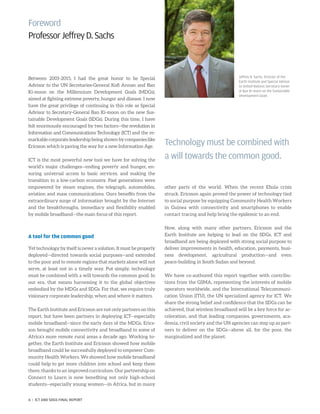
ProfessorJeffreyD.Sachs
Between 2001-2015, I had the great honor to be Special
Advisor to the UN Secretaries-General Kofi Annan and Ban
Ki-moon on the Millennium Development Goals (MDGs),
aimed at fighting extreme poverty, hunger and disease. I now
have the great privilege of continuing in this role as Special
Advisor to Secretary-General Ban Ki-moon on the new Sus-
tainable Development Goals (SDGs). During this time, I have
felt enormously encouraged by two factors—the revolution in
Information and Communications Technology (ICT) and the re-
markable corporate leadership being shown by companies like
Ericsson which is paving the way for a new Information Age.
ICT is the most powerful new tool we have for solving the
world’s major challenges—ending poverty and hunger, en-
suring universal access to basic services, and making the
transition to a low-carbon economy. Past generations were
empowered by steam engines, the telegraph, automobiles,
aviation and mass communications. Ours benefits from the
extraordinary surge of information brought by the Internet
and the breakthroughs, immediacy and flexibility enabled
by mobile broadband—the main focus of this report.
A tool for the common good
Yet technology by itself is never a solution. It must be properly
deployed—directed towards social purposes—and extended
to the poor and to remote regions that markets alone will not
serve, at least not in a timely way. Put simply, technology
must be combined with a will towards the common good. In
our era, that means harnessing it to the global objectives
embodied by the MDGs and SDGs. For that, we require truly
visionary corporate leadership, when and where it matters.
The Earth Institute and Ericsson are not only partners on this
report, but have been partners in deploying ICT—especially
mobile broadband—since the early days of the MDGs. Erics-
son brought mobile connectivity and broadband to some of
Africa’s more remote rural areas a decade ago. Working to-
gether, the Earth Institute and Ericsson showed how mobile
broadband could be successfully deployed to empower Com-
munity Health Workers. We showed how mobile broadband
could help to get more children into school and keep them
there, thanks to an improved curriculum. Our partnership on
Connect to Learn is now benefiting not only high-school
students—especially young women—in Africa, but in many
other parts of the world. When the recent Ebola crisis
struck, Ericsson again proved the power of technology tied
to social purpose by equipping Community Health Workers
in Guinea with connectivity and smartphones to enable
contact tracing and help bring the epidemic to an end.
Now, along with many other partners, Ericsson and the
Earth Institute are helping to lead on the SDGs. ICT and
broadband are being deployed with strong social purpose to
deliver improvements in health, education, payments, busi-
ness development, agricultural production—and even
peace-building in South Sudan and beyond.
We have co-authored this report together with contribu-
tions from the GSMA, representing the interests of mobile
operators worldwide, and the International Telecommuni-
cation Union (ITU), the UN specialized agency for ICT. We
share the strong belief and confidence that the SDGs can be
achieved, that wireless broadband will be a key force for ac-
celeration, and that leading companies, governments, aca-
demia, civil society and the UN agencies can step up as part-
ners to deliver on the SDGs—above all, for the poor, the
marginalized and the planet.
Technology must be combined with
a will towards the common good.
Jeffrey D. Sachs, Director of the
Earth Institute and Special Advisor
to United Nations Secretary-Gener-
al Ban Ki-moon on the Sustainable
Development Goals
6 | ICT AND SDGS FINAL REPORT
Foreword
HansVestberg
Digital transformation is enabling rapid change in every in-
dustry and across every aspect of our lives. As a direct result
of three fundamental ICT forces—mobility, broadband and
the cloud—a new service economy is emerging where value
chains are being reshaped, business models are becoming
digitalized, distance is being overcome and increasingly, peo-
ple can share goods and services instead of buying and own-
ing them—all examples of how the digital age is unleashing
innovative new business models and changing lives.
As innovation transforms the world around us, business is
changing too and among the most significant demonstrations
of this is the way companies like Ericsson are working with
others to achieve shared societal goals and collectively tackle
global challenges.
This year, Ericsson celebrates its 140th anniversary. During
our history we have transformed many times, from enabling
infrastructure which connected places with fixed phones, to
connecting people through mobile telephony, to envisioning
the architecture for today’s Networked Society where every-
one and everything is connected. But we have always been
driven by the same objective—using communication to im-
prove people’s lives. In the late 1890s our founding father,
Lars Magnus Ericsson coined the phrase that “access to com-
munication is a basic human need.” Today, this underpins our
vision of being a relevant and responsible driver of positive
change by using Technology for Good.
As an industry leader, our ideas, technology and people have
had real impact, helping to transform lives, industries and so-
ciety as a whole. As the world embarks on the ambitious jour-
ney of achieving the 17 Sustainable Development Goals
(SDGs), it is our responsibility to work with other stakehold-
ers to extend the benefits of communication by ensuring
they are affordable and accessible to all.
Information Communication Technology (ICT) offers an in-
credible platform for achieving the SDGs. Every goal—from
ending poverty and halting climate change to fighting injus-
tice and inequality—can be positively impacted by ICT. As we
suggest in this report, the digital revolution currently under-
way is paving the way for an Age of Sustainable Develop-
ment—a profound transformation of society where technolo-
gy is a key contributor to human and planetary wellbeing.
Thisreportispartofashared,ongoingefforttomakethebenefits
of broadband as a tool for sustainable development more widely
known. When the Millennium Development Goals were set in
2000, broadband was in its infancy, with just 750 million mobile
subscriptions worldwide. The latest Ericsson Mobility Report
showsthattherearenowover7billionmobilesubscriptionsglob-
ally and that over 90 percent of the world´s population will be
covered by mobile broadband networks by 2021.
As the inspiring case studies in this report show, universal
connectivity offers a powerful platform to deliver essential
services like e-governance, education, health, energy and fi-
nancial inclusion and ensure that no-one is left behind. The
report builds on the work of the Broadband Commission for
Sustainable Development, a forum Ericsson has been deeply
engaged in since its launch in 2010.
As argued in this report, ICT will be key to accelerating
achievement of the Global Goals. By embracing broadband as
a critical infrastructure for the 21st century, governments are
creating the foundations for unprecedented global social and
economic progress. Strong partnerships like our collabora-
tion with the Earth Institute at Columbia University and my
involvement in the newly formed Business Commission for
Sustainable Development illustrate the type of engagement
needed to reach the Goals.
Together, we can demonstrate that realizing significant long-
term economic rewards goes hand-in-hand with helping to
achieve the Sustainable Development Goals by 2030.
Information Communication
Technology offers an incredible
platform for achieving the SDGs.
Hans Vestberg
President and CEO, Ericsson
7 | ICT AND SDGS FINAL REPORT
An ambitious new global agenda
The new Sustainable Development Goals, or SDGs, set out a
shared global agenda for human development based on pros-
perity, social inclusion and environmental sustainability.
The SDGs include several bold objectives to be achieved by
the year 2030, including universal coverage in health, educa-
tion, poverty eradication and modern energy services. This is
the 2030 Agenda.
These global goals are even more ambitious than the Millen-
nium Development Goals (MDGs). The MDGs helped to halve
extreme poverty, the SDGs aim to end it. The MDGs focused
on the poorest countries, the SDGs engage all nations in a
shared, universal agenda. The MDGs prioritized prosperity
and inclusion: this time, environmental sustainability is also
addressed as a fundamental pillar of global wellbeing. These
goals are achievable, but they require a breakthrough in both
the speed and degree of progress.
Meeting these global ‘stretch’ goals calls for a transformation
of societies far deeper and faster than in the past—a rate of
change that a Business-As-Usual (BAU) approach simply can-
not deliver. The 2030 Agenda also requires far greater en-
gagement of the private sector, in particular in the provision
of technological solutions that can deliver change in priori-
tized areas. Governments need to harness all the tools at their
disposition—technology, investment, policy and partner-
ships—as key means of implementation to deliver the neces-
sary step change in trajectory.
ICT is a game-changer
The key accelerator technology that can get us off the BAU
path is Information and Communications Technology (ICT)—
notably mobile broadband—which has demonstrated the
fastest, most global technology uptake in human history. In
future rapid innovation around the Internet of Things, ad-
vanced robotics, artificial intelligence and big data promise
further substantial gains across the entire global economy.
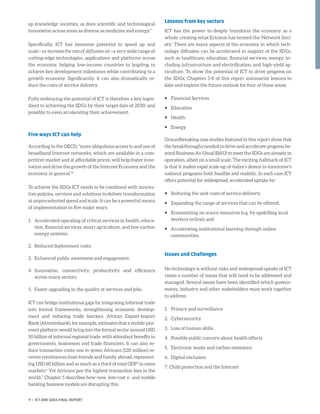
According to projections by Ericsson Mobility Report, mobile
broadband (3G or above) will cover more than 90 percent of
the world´s population, leaping from almost one billion sub-
scribers in 2010 to 7.7 billion subscriptions by 20211
(total mo-
bile subscriptions will be 9.1 billion). By the end of 2015, the
total number of mobile subscriptions had reached 100 per-
cent penetration at around 7.3 billion (see Figure 1)—the same
number of mobile subscriptions as people in the world.2
Despite the gains, 4 billion people from developing countries
were still not using the Internet.3
However, this staggering abili-
ty to scale fast will help overcome the challenges of ‘connecting
the unconnected’ and reaching the ‘last mile’ to deliver unprec-
edented social and economic inclusion—the focus of Chapter 3.
ICT, especially mobile broadband, will be the essential infra-
structure platform for the SDGs. While this is recognized in
the 2030 Agenda for Sustainable Development, where the
terms ‘technology’ and ‘technologies’ appear at least 50 times
and ICT is explicitly cited, the full potential of ICT is neither
systematically nor adequately reflected in the individual goals
and subsequent targets. Rapid action is needed to harness the
contribution that ICT can make toward the achievement of
the Global Goals. As Paragraph 15 of Agenda 2030 notes:
“The spread of information and communications technology
and global interconnectedness has great potential to acceler-
ate human progress, to bridge the digital divide and to devel-
ExecutiveSummary
Figure 1. The total number of mobile subscriptions
globally, 2015
Source: Ericsson Mobility Report, February 2016
8 | ICT AND SDGS FINAL REPORT
op knowledge societies, as does scientific and technological
innovation across areas as diverse as medicine and energy.”
Specifically, ICT has immense potential to speed up and
scale—or increase the rate of diffusion of—a very wide range of
cutting-edge technologies, applications and platforms across
the economy, helping low-income countries to leapfrog to
achieve key development milestones while contributing to a
growth economy. Significantly, it can also dramatically re-
duce the costs of service delivery.
Fully embracing the potential of ICT is therefore a key ingre-
dient to achieving the SDGs by their target date of 2030, and
possibly to even accelerating their achievement.
Five ways ICT can help
According to the OECD, “more ubiquitous access to and use of
broadband Internet networks, which are available in a com-
petitive market and at affordable prices, will help foster inno-
vation and drive the growth of the Internet Economy and the
economy in general.”4
To achieve the SDGs ICT needs to be combined with innova-
tive policies, services and solutions to deliver transformation
at unprecedented speed and scale. It can be a powerful means
of implementation in five major ways:
1.	Accelerated upscaling of critical services in health, educa-
tion, financial services, smart agriculture, and low-carbon
energy systems.
2.	 Reduced deployment costs.
3.	 Enhanced public awareness and engagement.
4.	Innovation, connectivity, productivity and efficiency
across many sectors.
5.	 Faster upgrading in the quality of services and jobs.
ICT can bridge institutional gaps by integrating informal trade
into formal frameworks, strengthening economic develop-
ment and reducing trade barriers. African Export-Import
Bank (Afreximbank), for example, estimates that a mobile pay-
ment platform would bring into the formal sector around USD
50 billion of informal regional trade, with attendant benefits to
governments, businesses and trade financiers. It can also re-
duce transaction costs: one in seven Africans (120 million) re-
ceives remittances from friends and family abroad, represent-
ing USD 60 billion and as much as a third of total GDP5
in some
markets.6
Yet Africans pay the highest transaction fees in the
world.7
Chapter 5 describes how new, low-cost e- and mobile
banking business models are disrupting this.
Lessons from key sectors
ICT has the power to deeply transform the economy as a
whole, creating what Ericsson has termed the ‘Network Soci-
ety’. There are many aspects of the economy in which tech-
nology diffusion can be accelerated in support of the SDGs,
such as healthcare, education, financial services, energy, in-
cluding infrastructure and electrification, and high-yield ag-
riculture. To show the potential of ICT to drive progress on
the SDGs, Chapters 5-8 of this report summarize lessons to
date and explore the future outlook for four of these areas:
ƒƒ Financial Services
ƒƒ Education
ƒƒ Health
ƒƒ Energy
Groundbreaking case studies featured in this report show that
the breakthroughs needed to drive and accelerate progress be-
yond Business-As-Usual (BAU) to meet the SDGs are already in
operation, albeit on a small scale. The exciting hallmark of ICT
is that it makes rapid scale-up of today’s demos to tomorrow’s
national programs both feasible and realistic. In each case ICT
offers potential for widespread, accelerated uptake by:
ƒƒ Reducing the unit costs of service delivery;
ƒƒ Expanding the range of services that can be offered;
ƒƒ Economizing on scarce resources (e.g. by upskilling local
workers online); and
ƒƒ Accelerating institutional learning through online
communities.
Issues and Challenges
No technology is without risks and widespread uptake of ICT
raises a number of issues that will need to be addressed and
managed. Several issues have been identified which govern-
ments, industry and other stakeholders must work together
to address:
1.	 Privacy and surveillance
2.	Cybersecurity
3.	 Loss of human skills
4.	 Possible public concern about health effects
5.	 Electronic waste and carbon emissions
6.	 Digital exclusion
7. Child protection and the Internet
9 | ICT AND SDGS FINAL REPORT
These are explored further in Chapter 9. With appropriate
public policies, the downsides of ICT can be mitigated to de-
liver substantial positive impact.
ICT-ready institutions
Governments, academic institutions, businesses and citizens
must prepare for this ICT-enabled transformation by adopt-
ing the right policies, investing in broadband connectivity,
ensuring adequate training, and innovating and partnering
to incubate scalable solutions. The central role of policymak-
ers in mobilizing national collective action to leverage ICT for
digital transformation is a core focus of this report8
.
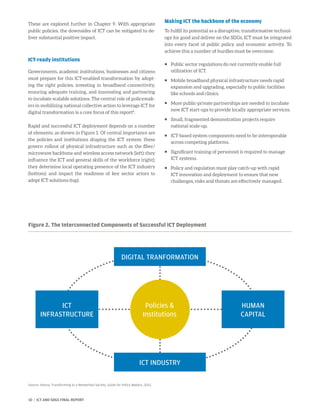
Rapid and successful ICT deployment depends on a number
of elements, as shown in Figure 1. Of central importance are
the policies and institutions shaping the ICT system: these
govern rollout of physical infrastructure such as the fiber/
microwave backbone and wireless access network (left); they
influence the ICT and general skills of the workforce (right);
they determine local operating presence of the ICT industry
(bottom); and impact the readiness of key sector actors to
adopt ICT solutions (top).
Making ICT the backbone of the economy
To fulfill its potential as a disruptive, transformative technol-
ogy for good and deliver on the SDGs, ICT must be integrated
into every facet of public policy and economic activity. To
achieve this a number of hurdles must be overcome:
ƒƒ Public sector regulations do not currently enable full
utilization of ICT.
ƒƒ Mobile broadband physical infrastructure needs rapid
expansion and upgrading, especially to public facilities
like schools and clinics.
ƒƒ More public-private partnerships are needed to incubate
new ICT start-ups to provide locally appropriate services.
ƒƒ Small, fragmented demonstration projects require
national scale-up.
ƒƒ ICT-based system components need to be interoperable
across competing platforms.
ƒƒ Significant training of personnel is required to manage
ICT systems.
ƒƒ Policy and regulation must play catch-up with rapid
ICT innovation and deployment to ensure that new
challenges, risks and threats are effectively managed.
ICT INDUSTRY
DIGITAL TRANFORMATION
HUMAN
CAPITAL
ICT
INFRASTRUCTURE
Policies 
Institutions
Figure 2. The Interconnected Components of Successful ICT Deployment
Source: Hanna, Transforming to a Networked Society, Guide for Policy Makers, 2015.
10 | ICT AND SDGS FINAL REPORT
Conclusions and recommendations
The main policy conclusion of this report is that to make the
leap from a BAU path to an SDG path and deliver on the
2030 vision, governments need to equip the entire public
sector—including service delivery in finance, education,
health, energy and transportation—with high-quality ICT
infrastructure. In addition to the recommendations in
Chapter 11, action in the following six areas is needed to
create an enabling framework:
1.	Broadband by 2020: Establish a timeline for universal
broadband connectivity of public facilities and services—
no later than 2020.
2.	Enabling policy framework: Adopt the 10 recommenda-
tions for multi-stakeholder action from the UN Broadband
Commission Task Force on Sustainable Development9
and
develop enabling policies that address supply- and de-
mand-side issues (see Chapter 11), while protecting the
right to privacy and freedom of speech.
3.	Rapid ICT rollout: Drive integration of ICT throughout the
public sector—across governance, public administration
and provision of public services, including health, educa-
tion and infrastructure to ensure the foundation for digi-
tal transformation.
4.	Public-Private Partnerships (PPP): New partnerships are
needed between government, international organizations
and industry in order to find sustainable business models
that support wide-scale ICT deployment. For example, to
connect the unconnected in areas that are not currently
profitable, or to accelerate the creation of innovation hubs
to develop new ICT applications—especially locally de-
signed and targeted ones. Sufficient public and private
investment needs to be actively targeted towards ICT.
5.	Upgrade STEM: Foster science, technology, engineering
and mathematics skills in primary and secondary educa-
tion to build long-term technology readiness and scale up
ICT training programs with universities.
6.	Harness big data: Create national online and open data-
bases using big data from public service provision and sat-
ellites, mobile networks, remote sensors and other con-
nected devices in the Internet of Things.
The SDGs represent a complex, global problem-solving exer-
cise that cuts across all sectors of society. To deliver on this
shared vision by 2030, we must deploy all available tools—in-
cluding ICT—by putting in place now the necessary frame-
works for success.
11 | ICT AND SDGS FINAL REPORT
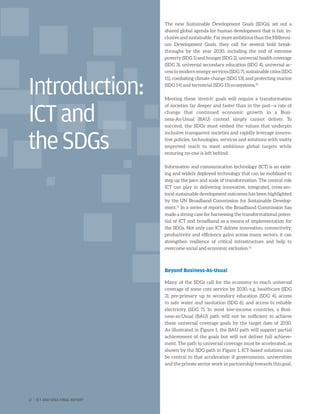
The new Sustainable Development Goals (SDGs), set out a
shared global agenda for human development that is fair, in-
clusive and sustainable. Far more ambitious than the Millenni-
um Development Goals, they call for several bold break-
throughs by the year 2030, including the end of extreme
poverty (SDG 1) and hunger (SDG 2), universal health coverage
(SDG 3), universal secondary education (SDG 4), universal ac-
cess to modern energy services (SDG 7), sustainable cities (SDG
11), combating climate change (SDG 13), and protecting marine
(SDG 14) and terrestrial (SDG 15) ecosystems.10
Meeting these ‘stretch’ goals will require a transformation
of societies far deeper and faster than in the past—a rate of
change that continued economic growth in a Busi-
ness-As-Usual (BAU) context simply cannot deliver. To
succeed, the SDGs must embed the values that underpin
inclusive transparent societies and rapidly leverage innova-
tive policies, technologies, services and solutions with vastly
improved reach to meet ambitious global targets while
ensuring no-one is left behind.
Information and communication technology (ICT) is an exist-
ing and widely deployed technology that can be mobilized to
step up the pace and scale of transformation. The central role
ICT can play in delivering innovative, integrated, cross-sec-
toral sustainable development outcomes has been highlighted
by the UN Broadband Commission for Sustainable Develop-
ment.11
In a series of reports, the Broadband Commission has
made a strong case for harnessing the transformational poten-
tial of ICT and broadband as a means of implementation for
the SDGs. Not only can ICT deliver innovation, connectivity,
productivity and efficiency gains across many sectors, it can
strengthen resilience of critical infrastructure and help to
overcome social and economic exclusion.12
Beyond Business-As-Usual
Many of the SDGs call for the economy to reach universal
coverage of some core service by 2030, e.g. healthcare (SDG
3), pre-primary up to secondary education (SDG 4), access
to safe water and sanitation (SDG 6), and access to reliable
electricity (SDG 7). In most low-income countries, a Busi-
ness-as-Usual (BAU) path will not be sufficient to achieve
these universal coverage goals by the target date of 2030.
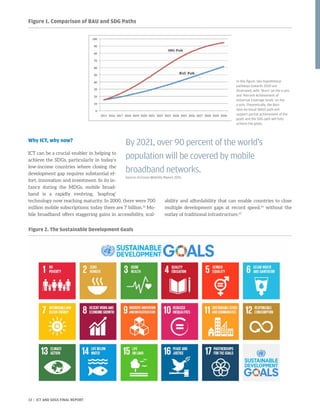
As illustrated in Figure 1, the BAU path will support partial
achievement of the goals but will not deliver full achieve-
ment. The path to universal coverage must be accelerated, as
shown by the SDG path in Figure 1. ICT-based solutions can
be central to that acceleration if governments, universities
and the private sector work in partnership towards this goal.
Introduction:
ICTand
theSDGs
12 | ICT AND SDGS FINAL REPORT
Why ICT, why now?
ICT can be a crucial enabler in helping to
achieve the SDGs, particularly in today’s
low-income countries where closing the
development gap requires substantial ef-
fort, innovation and investment. In its in-
fancy during the MDGs, mobile broad-
band is a rapidly evolving, ‘leapfrog’
technology now reaching maturity. In 2000, there were 700
million mobile subscriptions; today there are 7 billion.13
Mo-
bile broadband offers staggering gains in accessibility, scal-
ability and affordability that can enable countries to close
multiple development gaps at record speed,14
without the
outlay of traditional infrastructure.15
Figure 1. Comparison of BAU and SDG Paths
By 2021, over 90 percent of the world’s
population will be covered by mobile
broadband networks.
Source: Ericsson Mobility Report 2015
Figure 2. The Sustainable Development Goals
In this figure, two hypothetical
pathways towards 2030 are
illustrated, with ‘Years’ on the x-axis
and ‘Percent Achievement of
Universal Coverage Goals’ on the
y-axis. Theoretically, the Busi-
ness-As-Usual (BAU) path will
support partial achievement of the
goals and the SDG path will fully
achieve the goals.
13 | ICT AND SDGS FINAL REPORT
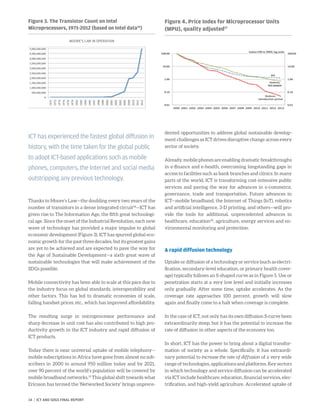
Thanks to Moore’s Law—the doubling every two years of the
number of transistors in a dense integrated circuit18
—ICT has
given rise to The Information Age, the fifth great technologi-
cal age. Since the onset of the Industrial Revolution, each new
wave of technology has provided a major impulse to global
economic development (Figure 3). ICT has spurred global eco-
nomic growth for the past three decades, but its greatest gains
are yet to be achieved and are expected to pave the way for
the Age of Sustainable Development—a sixth great wave of
sustainable technologies that will make achievement of the
SDGs possible.
Mobile connectivity has been able to scale at this pace due to
the industry focus on global standards, interoperability and
other factors. This has led to dramatic economies of scale,
falling handset prices, etc., which has improved affordability.
The resulting surge in microprocessor performance and
sharp decrease in unit cost has also contributed to high pro-
ductivity growth in the ICT industry and rapid diffusion of
ICT products.
Today there is near universal uptake of mobile telephony—
mobile subscriptions in Africa have gone from almost no sub-
scribers in 2000 to around 950 million today and by 2021,
over 90 percent of the world’s population will be covered by
mobile broadband networks.19
This global shift towards what
Ericsson has termed the ‘Networked Society’ brings unprece-
dented opportunities to address global sustainable develop-
ment challenges as ICT drives disruptive change across every
sector of society.
Already, mobile phones are enabling dramatic breakthroughs
in e-finance and e-health, overcoming longstanding gaps in
access to facilities such as bank branches and clinics. In many
parts of the world, ICT is transforming cost-intensive public
services and paving the way for advances in e-commerce,
governance, trade and transportation. Future advances in
ICT—mobile broadband, the Internet of Things (IoT), robotics
and artificial intelligence, 3-D printing, and others—will pro-
vide the tools for additional, unprecedented advances in
healthcare, education20
, agriculture, energy services and en-
vironmental monitoring and protection.
A rapid diffusion technology
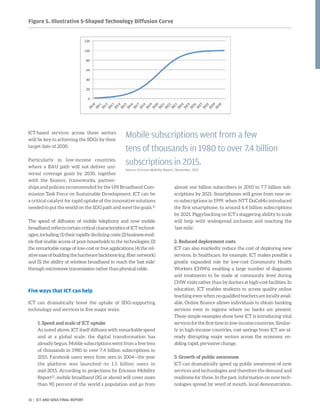
Uptake or diffusion of a technology or service (such as electri-
fication, secondary-level education, or primary health cover-
age) typically follows an S-shaped curve as in Figure 5. Use or
penetration starts at a very low level and initially increases
only gradually. After some time, uptake accelerates. As the
coverage rate approaches 100 percent, growth will slow
again and finally come to a halt when coverage is complete.
In the case of ICT, not only has its own diffusion S-curve been
extraordinarily steep, but it has the potential to increase the
rate of diffusion in other aspects of the economy too.
In short, ICT has the power to bring about a digital transfor-
mation of society as a whole. Specifically, it has extraordi-
nary potential to increase the rate of diffusion of a very wide
range of technologies, applications and platforms. Key sectors
in which technology and service diffusion can be accelerated
via ICT include healthcare, education, financial services, elec-
trification, and high-yield agriculture. Accelerated uptake of
Figure 3. The Transistor Count on Intel
Microprocessors, 1971-2012 (based on Intel data16
)
MOORE’S LAW IN OPERATION
Figure 4. Price Index for Microprocessor Units
(MPU), quality adjusted17
ICT has experienced the fastest global diffusion in
history, with the time taken for the global public
to adopt ICT-based applications such as mobile
phones, computers, the Internet and social media
outstripping any previous technology.
14 | ICT AND SDGS FINAL REPORT
ICT-based services across these sectors
will be key to achieving the SDGs by their
target date of 2030.
Particularly in low-income countries,
where a BAU path will not deliver uni-
versal coverage goals by 2030, together
with the finance, frameworks, partner-
ships and policies recommended by the UN Broadband Com-
mission Task Force on Sustainable Development, ICT can be
a critical catalyst for rapid uptake of the innovative solutions
needed to put the world on the SDG path and meet the goals.21
The speed of diffusion of mobile telephony and now mobile
broadband reflects certain critical characteristics of ICT technol-
ogies,including:(1)theirrapidlydecliningcosts;(2)businessmod-
els that enable access of poor households to the technologies; (3)
the remarkable range of low-cost or free applications; (4) the rel-
ativeeaseofbuildingthehardwarebackbone(e.g.fibernetwork)
and (5) the ability of wireless broadband to reach the ‘last mile’
through microwave transmission rather than physical cable.
Five ways that ICT can help
ICT can dramatically boost the uptake of SDG-supporting
technology and services in five major ways:
1. Speed and scale of ICT uptake
As noted above, ICT itself diffuses with remarkable speed
and at a global scale; the digital transformation has
already begun. Mobile subscriptions went from a few tens
of thousands in 1980 to over 7.4 billion subscriptions in
2015. Facebook users went from zero in 2004—the year
the platform was launched—to 1.5 billion users in
mid-2015. According to projections by Ericsson Mobility
Report22
, mobile broadband (3G or above) will cover more
than 90 percent of the world´s population and go from
almost one billion subscribers in 2010 to 7.7 billion sub-
scriptions by 2021. Smartphones will grow from near-ze-
ro subscriptions in 1999, when NTT DoCoMo introduced
the first smartphone, to around 6.4 billion subscriptions
by 2021. Piggybacking on ICT’s staggering ability to scale
will help with widespread inclusion and reaching the
‘last mile’.
2. Reduced deployment costs
ICT can also markedly reduce the cost of deploying new
services. In healthcare, for example, ICT makes possible a
greatly expanded role for low-cost Community Health
Workers (CHWs), enabling a large number of diagnoses
and treatments to be made at community level during
CHW visits rather than by doctors at high-cost facilities. In
education, ICT enables students to access quality online
teachingevenwhennoqualified teachersarelocallyavail-
able. Online finance allows individuals to obtain banking
services even in regions where no banks are present.
These simple examples show how ICT is introducing vital
servicesforthefirsttimeinlow-incomecountries.Similar-
ly in high-income countries, cost savings from ICT are al-
ready disrupting major sectors across the economy, en-
abling rapid, pervasive change.
3. Growth of public awareness
ICT can dramatically speed up public awareness of new
services and technologies and therefore the demand and
readiness for these. In the past, information on new tech-
nologies spread by word of mouth, local demonstration,
Mobile subscriptions went from a few
tens of thousands in 1980 to over 7.4 billion
subscriptions in 2015.
Source: Ericsson Mobility Report, November, 2015
Figure 5. Illustrative S-Shaped Technology Diffusion Curve
15 | ICT AND SDGS FINAL REPORT
and gradual scale-up of government programs and 	
services. Now, with torrents of information flowing in
real time through the Internet, social media, mobile com-
munications and other e-channels, information travels
instantly around the globe, bar in the handful of societies
isolated by closed regimes. News, music, fashion, fads
and new technologies ricochet around the world in days,
not decades, making it easier to reach more people in a
shorter timeframe.
4) Rapid upgrade rate
National and global information networks enable rapid
innovation and upgrading through new applications. All
new technologies go through a learning curve during
which they evolve incrementally through each genera-
tion of improvement. Every phase is marked in principle
by lower costs, greater resilience, easier use, and wider
applicability. ICT is speeding up these generational cy-
cles. Global information flows are enhanced and tech-
nology developers are much more attuned to advances
in other parts of the world. There is a trend towards
many ICT applications becoming open-source—or at
least interoperable—which enables gains made by a de-
veloper in one part of the world to be picked up and built
on by others on the other side of the globe, accelerating
the whole process of technology upgrade. The growing
speed of the global innovation cycle is shortening the
duration of each technology generation, especially for
ICT-based solutions, meaning progress happens faster.
5) Low-cost digital training
The final way that ICT can accelerate technology diffu-
sion is by providing low-cost online platforms for training
workers, students and others in these new technologies.
The revolution of Massive Open Online Courses (MOOCs),
for example, enables students anywhere to gain free ac-
cess to high-quality university courses, including courses
in design and use of ICT. Special training materials are also
being delivered conveniently over smart phones, tablets,
laptops and other devices. Deploying multiple channels
for training materials makes it easier to provide workers
with real-time, in-service training that does not disrupt
work schedules but integrates training into the work
itself. In this way, ICT-hosted training modules and courses
provide a means to train millions of workers, especially
young and under-employed workers, in the uses of new
ICT applications for SDG-oriented service delivery.
Lessons from Key Sectors
To illustrate the potential of ICT to drive and accelerate prog-
ress on the SDGs beyond Business-As-Usual (BAU), this
report summarizes lessons to date. Broadband is a key
enabling infrastructure for all aspects of the economy
and to illustrate how, this report explores the future outlook
for four key sectors: health, education, financial services, and
energy. In each case ICT offers potential for widespread, ac-
celerated uptake by:
ƒƒ reducing the unit costs of service delivery;
ƒƒ expanding the range of services that can be offered;
ƒƒ economizing on scarce resources (ICT can be used to
upskill local workers, who can be trained online rather
than having to send a trainer to a physical location; and
ƒƒ accelerating institutional learning through online
communities.
In general, the sector case studies point to an exciting
future. Many of the breakthroughs needed for the SDGs are
already in operation, albeit on a very small scale. The good
news is that ICT, by its very nature, makes rapid scale-up of
today’s demos to tomorrow’s national programs both feasible
and realistic.
The sector case studies also highlight the many practical
hurdles to effective large-scale implementation of state-of-
the-art e-health, m-health, m-commerce, e-education and
smart energy services, where:
ƒƒ public sector regulations do not yet enable full utilization
of ICT;
ƒƒ numerous small, fragmented demonstration projects
need to be successfully scaled into national-scale
programs;
ƒƒ the physical infrastructure for wireless broadband needs
rapid expansion and upgrading, especially to public
facilities like schools and clinics;
ƒƒ the various components of an ICT-based system need to
be interoperable across several competing platforms;
ƒƒ significant training of personnel is required to manage
the new systems; and
ƒƒ incubation of new ICT start-ups capable of providing
locally appropriate services needs to be nurtured under
public-private partnerships.
Creating an enabling environment
Fulfilling the SDGs calls for multi-sectoral partnerships, as de-
scribed in SDG 17, and governments, investors, academic insti-
tutions, businesses and citizens need to collaborate and prepare
for ICT-enabled transformation to a Networked Society. While
private-sectorapplicationsofICThavesoared,manyofthechal-
lenges of sustainable development—health, education, infra-
structure and environmental sustainability—require a deep role
forpolicymakersandthepublicsectortodriveprogressby2030.
16 | ICT AND SDGS FINAL REPORT
Governments and policymakers have a special responsibility
to ensure that ICT is included in urban and rural planning as
a basic infrastructure and that key public–sector agencies, in-
stitutions and policy frameworks are reformed to support
ICT-enabled transformation. Many government processes—
payments, tax collection, procurement, training, human re-
sources, program design, public deliberation, information
management, analytics, legislative drafting, even voting—
should be upgraded with the transformative capability of ICT
in focus. Institutional quality will increasingly be defined by
how effectively entities fulfill the vision of the SDGs by
adopting cutting-edge solutions that facilitate provision,
transparency, openness and efficiency, as well as high
throughput of public services. In a fully Networked Society,
more efficient, cost-effective ICT-enabled services and trans-
actions will lead to the transformation of skills and the cre-
ation of new jobs. Ensuring that no-one is left behind will be
critical in this period of transformation.
To harness ICT effectively for the 2030 Agenda and move
away from Business-As-Usual, governments need to ensure
that the entire public sector, including service delivery in
health, education and infrastructure, is fully supported by
high-quality ICT infrastructure. This could include:
ƒƒ Promoting ICT as a basic infrastructure in urban and
rural planning and investment
ƒƒ Broadband connectivity of all public facilities by 2020.
ƒƒ ICT training of all relevant public officials and service
providers.
ƒƒ ICT-based delivery systems for healthcare, education and
infrastructure.
ƒƒ Deployment of the Internet of Things (remote sensing
and control of connected devices) for public infrastruc-
ture and environmental management.
ƒƒ Encouragement of universities to scale up education and
incubation of ICT solutions, including through partner-
ships with the business sector.
ƒƒ Public-Private Partnerships (PPP) for ICT-enabled
systems.
ƒƒ Adoption of state-of-the-art indicators and real-time data
collection to track progress against the SDGs.
At the epicenter of the societal transformation process, na-
tional governments and policymakers have a key role to play
in ensuring effective uptake and adoption of ICT. Without
supportive government policy, the private sector cannot
drive rapid growth of ICT at scale. Governments are account-
able for the policies and legislative framework governing the
deployment of ICT. They oversee land use, allocation of spec-
trum, right-of-way for fiber and other infrastructure, and the
tax and regulatory policies that will ultimately determine the
speed of rollout of the ICT backbone and access networks, the
flourishing of service providers, and the uptake of ICT-based
solutions in essential public services as well as efficient gov-
ernmental funding systems.
Against a backdrop of pressing global challenges, an ambi-
tious global development agenda, and rapid ICT-enabled
transformation, standing still is the biggest enemy. Technology
has evolved much more rapidly than policy, underscoring
the need to close the gap, so that the technology can be fully
leveraged. From this perspective, policymakers need to act
rapidly to address the issues and challenges identified in
Chapter 9, and mobilize the investment, policies, technology
and partnerships needed to drive national collective action in
line with the conclusions and recommendations in Chapter 10
and Chapter 11.23
With the right frameworks and policies in
place, ICT can help deliver the transformative change the
world needs to meet our ambitious shared development goals
and ensure no-one is left behind.
17 | ICT AND SDGS FINAL REPORT
ICT:Acatalyst
forachieving
theSDGs
The 2030 Agenda for Sustainable Development fundamen-
tally recognizes that “the spread of information and commu-
nication technology and global interconnectedness has great
potential to accelerate human progress, to bridge the digital
divide and to develop knowledge societies”. While none of
the SDGs is specifically about ICT, several targets refer to ICT
and technology, and ICT will underpin the achievement of
every goal. All three pillars of sustainable development—eco-
nomic development, social inclusion and environmental pro-
tection—need ICT as a key catalyst; and ICT, particularly
broadband, will be absolutely crucial for achieving all 17
SDGs. Here are some of the ways we envision the role of ICT
in accelerating the achievement of the SDGs:
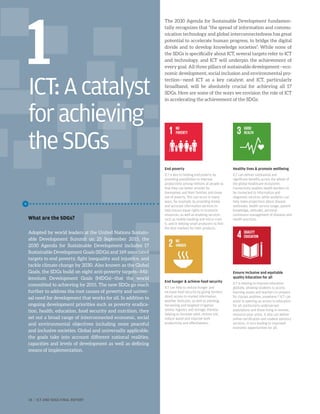
End poverty
ICT is key to helping end poverty by
providing possibilities to improve
productivity among millions of people so
that they can better provide for
themselves and their families and move
out of poverty. This can occur in many
ways, for example, by providing timely
and accurate information services to
help ensure equal rights to economic
resources, as well as enabling services
such as mobile banking and micro-cred-
it, and in helping small producers to find
the best markets for their products.
End hunger  achieve food security
ICT can help to reduce hunger and
increase food security by giving farmers
direct access to market information,
weather forecasts, as well as planting,
harvesting and targeted irrigation
advice, logistics and storage, thereby
helping to increase yield, restore soil,
reduce waste and improve both
productivity and effectiveness.
Healthy lives  promote wellbeing
ICT can deliver substantial and
significant benefits across the whole of
the global healthcare ecosystem.
Connectivity enables health workers to
be connected to information and
diagnostic services, while analytics can
help make projections about disease
outbreaks, health service usage, patient
knowledge, attitudes, personal
continuous management of diseases and
health practices.
Ensure inclusive and equitable
quality Education for all
ICT is helping to improve education
globally, allowing students to access
learning assets and teachers to prepare
for classes anytime, anywhere.24
ICT can
assist in opening up access to education
for all, particularly underserved
populations and those living in remote,
resource-poor areas. It also can deliver
online certification and student advisory
services, in turn leading to improved
economic opportunities for all.
What are the SDGs?
Adopted by world leaders at the United Nations Sustain-
able Development Summit on 25 September 2015, the
2030 Agenda for Sustainable Development includes 17
Sustainable Development Goals (SDGs) and 169 associated
targets to end poverty, fight inequality and injustice, and
tackle climate change by 2030. Also known as the Global
Goals, the SDGs build on eight anti-poverty targets—Mil-
lennium Development Goals (MDGs)—that the world
committed to achieving by 2015. The new SDGs go much
further to address the root causes of poverty and univer-
sal need for development that works for all. In addition to
ongoing development priorities such as poverty eradica-
tion, health, education, food security and nutrition, they
set out a broad range of interconnected economic, social
and environmental objectives including more peaceful
and inclusive societies. Global and universally applicable,
the goals take into account different national realities,
capacities and levels of development as well as defining
means of implementation.
1
18 | ICT AND SDGS FINAL REPORT
Achieve gender equality and
empower all women and girls
ICT can enhance gender equality and
gender empowerment, allowing women
and girls to access information of
importance to their productive,
reproductive and community roles as
well as involving women in urban
planning. Women’s sustainable
livelihoods can be enhanced through
expanded access to markets, education,
training and employment.
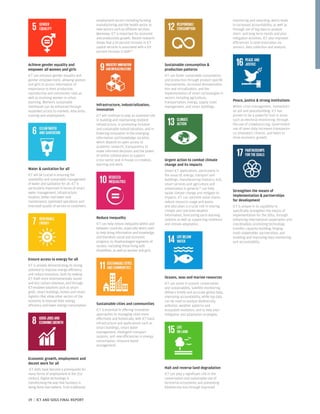
Water  sanitation for all
ICT will be crucial in ensuring the
availability and sustainable management
of water and sanitation for all. ICT is
particularly important in terms of smart
water management, infrastructure
location, better and lower-cost
maintenance, optimized operations and
improved quality of service to customers.
Ensure access to energy for all
ICT is already demonstrating its strong
potential to improve energy efficiency
and reduce emissions, both by making
ICT itself more environmentally sound
and less carbon-intensive, and through
ICT-enabled solutions such as smart
grids, smart buildings, homes and smart
logistics that allow other sectors of the
economy to improve their energy
efficiency and lower energy consumption.
Economic growth, employment and
decent work for all
ICT skills have become a prerequisite for
many forms of employment in the 21st
century. Digital technology is
transforming the way that business is
being done everywhere, from traditional
employment sectors including farming,
manufacturing and the health sector to
new sectors such as offshore services.
Moreover, ICT is important for economic
and productivity growth. Recent research
shows that a 10 percent increase in ICT
capital services is associated with a 0.9
percent increase in GDP.25
Infrastructure, industrialization,
innovation
ICT will continue to play an essential role
in building and maintaining resilient
infrastructure, in promoting inclusive
and sustainable industrialization, and in
fostering innovation in the emerging
information and knowledge societies
which depend on open access to
academic research, transparency to
make informed decisions and the power
of online collaboration to support
cross-sector and in-house co-creation,
learning and work.
Reduce inequality
ICT can help reduce inequality within and
between countries, especially when used
to help bring information and knowledge,
and therefore social and economic
progress, to disadvantaged segments of
society—including those living with
disabilities, as well as women and girls.
Sustainable cities and communities
ICT is essential in offering innovative
approaches to managing cities more
effectively and holistically, with ICT basic
infrastructure and applications such as
smart buildings, smart water
management, intelligent transport
systems, and new efficiencies in energy
consumption, resource waste
management.
Sustainable consumption 
production patterns
ICT can foster sustainable consumption
and production through product-specific
improvements, increased dematerializa-
tion and virtualization, and the
implementation of smart technologies in
sectors including agriculture,
transportation, energy, supply chain
management, and smart buildings.
Urgent action to combat climate
change and its impacts
Smart ICT applications, particularly in
the areas of, energy, transport and
buildings, manufacturing (Industry 4.0),
smart services and agriculture and
urbanization in general,26
can help
tackle climate change and mitigate its
impacts. ICT can optimize value chains,
reduce resource usage and waste,
and also plays a crucial role in sharing
climate and real-time weather
infor­mation, forecasting early warning
systems as well as supporting resilience
and climate adaptation.
Oceans, seas and marine resources
ICT can assist in oceanic conservation
and sustainability. Satellite monitoring
delivers timely and accurate global data,
improving accountability, while big data
can be used to analyze biodiversity,
pollution, weather patterns and
ecosystem evolution, and to help plan
mitigation and adaptation strategies.
Halt and reverse land degradation
ICT can play a significant role in the
conservation and sustainable use of
terrestrial ecosystems and preventing
biodiversity loss through improved
monitoring and reporting, which leads
to increased accountability, as well as
through use of big data to analyze
short- and long-term trends and plan
mitigation activities. ICT also improves
efficiencies in land restoration via
sensors, data collection and analysis.
Peace, justice  strong institutions
Within crisis management, humanitari-
an aid and peacebuilding, ICT has
proven to be a powerful tool in areas
such as electoral monitoring, through
the use of crowdsourcing. Government
use of open data increases transparen-
cy, empowers citizens, and helps to
drive economic growth.
Strengthen the means of
implementation  partnerships
for development
ICT is unique in its capability to
specifically strengthen the means of
implementation for the SDGs, through
enhancing international cooperation and
coordination; promoting technology
transfer; capacity-building; forging
multi-stakeholder partnerships; and
enabling and improving data monitoring
and accountability.
19 | ICT AND SDGS FINAL REPORT
Monitoring
progress:
ICTindicators
fortheSDGs
2
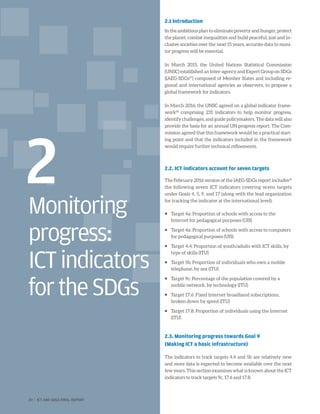
2.1 Introduction
In the ambitious plan to eliminate poverty and hunger, protect
the planet, combat inequalities and build peaceful, just and in-
clusive societies over the next 15 years, accurate data to moni-
tor progress will be essential.
In March 2015, the United Nations Statistical Commission
(UNSC) established an Inter-agency and Expert Group on SDGs
(IAEG-SDGs27
) composed of Member States and including re-
gional and international agencies as observers, to propose a
global framework for indicators.
In March 2016, the UNSC agreed on a global indicator frame-
work28
comprising 231 indicators to help monitor progress,
identify challenges, and guide policymakers. The data will also
provide the basis for an annual UN progress report. The Com-
mission agreed that this framework would be a practical start-
ing point and that the indicators included in the framework
would require further technical refinements.
2.2. ICT indicators account for seven targets
The February 2016 version of the IAEG-SDGs report includes29
the following seven ICT indicators covering seven targets
under Goals 4, 5, 9, and 17 (along with the lead organization
for tracking the indicator at the international level):
ƒƒ Target 4a: Proportion of schools with access to the
Internet for pedagogical purposes (UIS)
ƒƒ Target 4a: Proportion of schools with access to computers
for pedagogical purposes (UIS)
ƒƒ Target 4.4: Proportion of youth/adults with ICT skills, by
type of skills (ITU)
ƒƒ Target 5b: Proportion of individuals who own a mobile
telephone, by sex (ITU)
ƒƒ Target 9c: Percentage of the population covered by a
mobile network, by technology (ITU)
ƒƒ Target 17.6: Fixed Internet broadband subscriptions,
broken down by speed (ITU)
ƒƒ Target 17.8: Proportion of individuals using the Internet
(ITU)
2.3. Monitoring progress towards Goal 9
(Making ICT a basic infrastructure)
The indicators to track targets 4.4 and 5b are relatively new
and more data is expected to become available over the next
few years. This section examines what is known about the ICT
indicators to track targets 9c, 17.6 and 17.8.
20 | ICT AND SDGS FINAL REPORT
Technological progress and expanding networks, falling pric-
es, and growth in applications and content have accelerated
the growth of ICT. Mobile communications technology, in
particular, has spread much faster than anticipated, enabling
millions of people previously living in unconnected areas to
join the Networked Society.
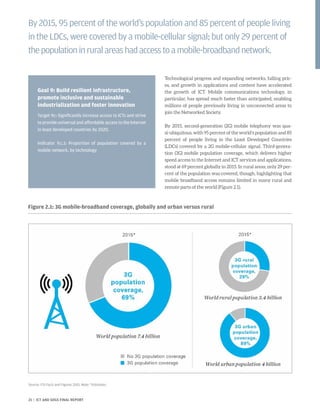
By 2015, second-generation (2G) mobile telephony was qua-
si-ubiquitous, with 95 percent of the world’s population and 85
percent of people living in the Least Developed Countries
(LDCs) covered by a 2G mobile-cellular signal. Third-genera-
tion (3G) mobile population coverage, which delivers higher
speed access to the Internet and ICT services and applications,
stood at 69 percent globally in 2015. In rural areas, only 29 per-
cent of the population was covered, though, highlighting that
mobile broadband access remains limited in many rural and
remote parts of the world (Figure 2.1).
By 2015, 95 percent of the world’s population and 85 percent of people living
in the LDCs, were covered by a mobile-cellular signal; but only 29 percent of
thepopulationinruralareashadaccesstoamobile-broadbandnetwork.
Goal 9: Build resilient infrastructure,
promote inclusive and sustainable
industrialization and foster innovation
Target 9c: Significantly increase access to ICTs and strive
to provide universal and affordable access to the Internet
in least developed countries by 2020.
Indicator 9.c.1: Proportion of population covered by a
mobile network, by technology
Source: ITU Facts and Figures 2015. Note: *Estimates.
Figure 2.1: 3G mobile-broadband coverage, globally and urban versus rural
21 | ICT AND SDGS FINAL REPORT
2.4. Monitoring progress towards Goal 17 (Global
Partnership for Development)
High-speed Internet access can enhance international coop-
eration on, and improve access to, science, technology and
innovation, and help share knowledge. However, limitations
in the capacity and speed of fixed-broadband connections
will affect the quality and functionality of this Internet ac-
cess. Mobile cellular and mobile-broadband networks have
spread rapidly across developed and developing regions, but
fixed-broadband services remain largely unaffordable and
unavailable across large segments of the developing world’s
population. With mobile broadband, it is possible to leapfrog
to new technologies that can overcome these challenges, at a
fraction of the cost.
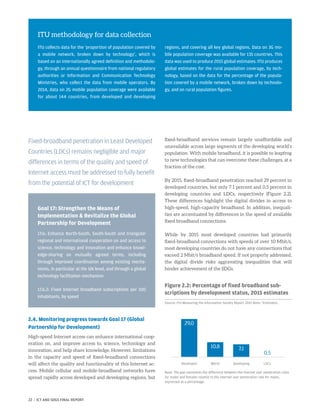
By 2015, fixed-broadband penetration reached 29 percent in
developed countries, but only 7.1 percent and 0.5 percent in
developing countries and LDCs, respectively (Figure 2.2).
These differences highlight the digital divides in access to
high-speed, high-capacity broadband. In addition, inequali-
ties are accentuated by differences in the speed of available
fixed broadband connections.
While by 2015 most developed countries had primarily
fixed-broadband connections with speeds of over 10 Mbit/s,
most developing countries do not have any connections that
exceed 2 Mbit/s broadband speed. If not properly addressed,
the digital divide risks aggravating inequalities that will
hinder achievement of the SDGs.
Figure 2.2: Percentage of fixed broadband sub-
scriptions by development status, 2015 estimates
Source: ITU Measuring the Information Society Report 2015 Note: *Estimates.
ITU methodology for data collection
ITU collects data for the ‘proportion of population covered by
a mobile network, broken down by technology’, which is
based on an internationally agreed definition and methodolo-
gy, through an annual questionnaire from national regulatory
authorities or Information and Communication Technology
Ministries, who collect the data from mobile operators. By
2014, data on 2G mobile population coverage were available
for about 144 countries, from developed and developing
regions, and covering all key global regions. Data on 3G mo-
bile population coverage was available for 135 countries. This
data was used to produce 2015 global estimates. ITU produces
global estimates for the rural population coverage, by tech-
nology, based on the data for the percentage of the popula-
tion covered by a mobile network, broken down by technolo-
gy, and on rural population figures.
Goal 17: Strengthen the Means of
Implementation  Revitalize the Global
Partnership for Development
17.6: Enhance North-South, South-South and triangular
regional and international cooperation on and access to
science, technology and innovation and enhance knowl-
edge-sharing on mutually agreed terms, including
through improved coordination among existing mecha-
nisms, in particular at the UN level, and through a global
technology facilitation mechanism
17.6.2: Fixed Internet broadband subscriptions per 100
inhabitants, by speed
Fixed-broadband penetration in Least Developed
Countries (LDCs) remains negligible and major
differences in terms of the quality and speed of
Internet access must be addressed to fully benefit
from the potential of ICT for development
Developed
29.0
World
10.8
Developing
7.1
LDCs
0.5
	
Note: The gap represents the difference between the Internet user penetration rates
for males and females relative to the Internet user penetration rate for males,
expressed as a percentage.
22 | ICT AND SDGS FINAL REPORT
17.8: Fully operationalize the technology bank and
science, technology and innovation capacity-building
mechanism for LDCs by 2017 and enhance the use of
enabling technology, in particular ICT
17.8.1: Proportion of individuals using the Internet
Internet access has grown substantially over the last decade
and by 2015, 3.2 billion people globally were online. While in
developed countries about 80 percent of the population was
using the Internet, one third of the population in developing
countries was online. Only one out of ten people in the LDCs
are currently using the Internet (Figure 2.3).
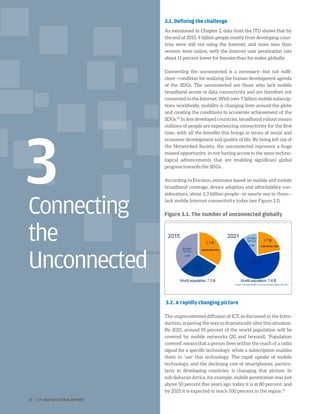
Sex-disaggregated data for Internet use shows that there is an
important gender digital divide. In 2015, the Internet user pen-
etration rate was about 11 percent lower for females than for
males, globally. The gap between the two rates is significantly
higher in developing countries and highest in LDCs (Figure 2.4).
ITU methodology for SDG 17 (Global Partnership for Development)
ITU collects data for this indicator through an annual ques-
tionnaire from national regulatory authorities or Information
and Communication Technology Ministries, who collect the
data from Internet service providers. 2014 data was available
for about 80 economies, from developed and developing regions,
and covering all key global regions. Data on fixed-broadband
subscriptions (not broken down by speed) exists for almost
200 economies in the world. 2014 country data was used to
produce 2015 global estimates.
In 2015, 4 billion people from developing countries
were still not using the Internet, and more men
than women were online, with Internet user
penetration rate about 11 percent lower for
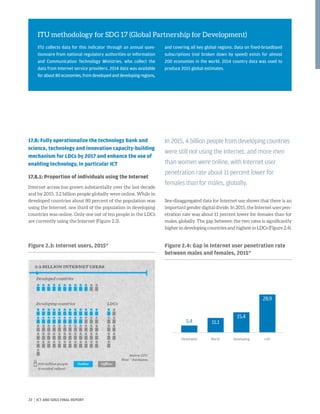
females than for males, globally.
Figure 2.3: Internet users, 2015* Figure 2.4: Gap in Internet user penetration rate
between males and females, 2015*
Developed World Developing LDC
	
15.4
28.9
11.15.4
23 | ICT AND SDGS FINAL REPORT
Connecting
the
Unconnected
3	
3.1. Defining the challenge
As mentioned in Chapter 2, data from the ITU shows that by
the end of 2015, 4 billion people mostly from developing coun-
tries were still not using the Internet, and more men than
women were online, with the Internet user penetration rate
about 11 percent lower for females than for males, globally.
Connecting the unconnected is a necessary—but not suffi-
cient—condition for realizing the human development agenda
of the SDGs. The unconnected are those who lack mobile
broadband access or data connectivity and are therefore not
connected to the Internet. With over 7 billion mobile subscrip-
tions worldwide, mobility is changing lives around the globe
and creating the conditions to accelerate achievement of the
SDGs.30
In less developed countries, broadband rollout means
millions of people are experiencing connectivity for the first
time, with all the benefits this brings in terms of social and
economic development and quality of life. By being left out of
the Networked Society, the unconnected represent a huge
missed opportunity in not having access to the same techno-
logical advancements that are enabling significant global
progress towards the SDGs.
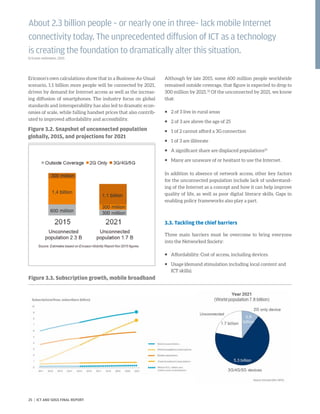
According to Ericsson, estimates based on mobile and mobile
broadband coverage, device adoption and affordability con-
siderations, about 2.3 billion people—or nearly one in three—
lack mobile Internet connectivity today (see Figure 3.1).
3.2. A rapidly changing picture
The unprecedented diffusion of ICT, as discussed in the Intro-
duction, is paving the way to dramatically alter this situation.
By 2021, around 95 percent of the world population will be
covered by mobile networks (2G and beyond). ‘Population
covered’ means that a person lives within the reach of a radio
signal for a specific technology, while a subscription enables
them to ‘use’ this technology. The rapid uptake of mobile
technology, and the declining cost of smartphones, particu-
larly in developing countries, is changing that picture. In
sub-Saharan Africa, for example, mobile penetration was just
above 50 percent five years ago: today it is at 80 percent, and
by 2021 it is expected to reach 100 percent in the region.31
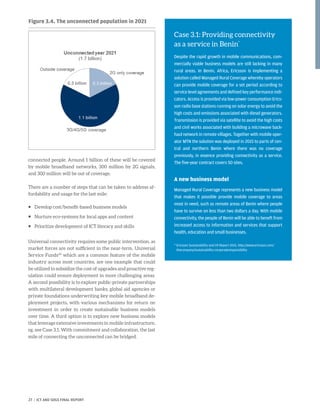
Figure 3.1. The number of unconnected globally
24 | ICT AND SDGS FINAL REPORT
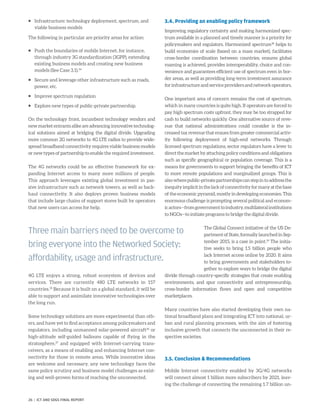
About 2.3 billion people – or nearly one in three– lack mobile Internet
connectivity today. The unprecedented diffusion of ICT as a technology
is creating the foundation to dramatically alter this situation.
Ericsson estimates, 2015
Ericsson’s own calculations show that in a Business-As-Usual
scenario, 1.1 billion more people will be connected by 2021,
driven by demand for Internet access as well as the increas-
ing diffusion of smartphones. The industry focus on global
standards and interoperability has also led to dramatic econ-
omies of scale, while falling handset prices that also contrib-
uted to improved affordability and accessibility.
Although by late 2015, some 600 million people worldwide
remained outside coverage, that figure is expected to drop to
300 million by 2021.32
Of the unconnected by 2021, we know
that:
ƒƒ 2 of 3 live in rural areas
ƒƒ 2 of 3 are above the age of 25
ƒƒ 1 of 2 cannot afford a 3G connection
ƒƒ 1 of 3 are illiterate
ƒƒ A significant share are displaced populations33
ƒƒ Many are unaware of or hesitant to use the Internet.
In addition to absence of network access, other key factors
for the unconnected population include lack of understand-
ing of the Internet as a concept and how it can help improve
quality of life, as well as poor digital literacy skills. Gaps in
enabling policy frameworks also play a part.
3.3. Tackling the chief barriers
Three main barriers must be overcome to bring everyone
into the Networked Society:
ƒƒ Affordability: Cost of access, including devices.
ƒƒ Usage (demand stimulation including local content and
ICT skills).
Figure 3.3. Subscription growth, mobile broadband
Figure 3.2. Snapshot of unconnected population
globally, 2015, and projections for 2021
25 | ICT AND SDGS FINAL REPORT
ƒƒ Infrastructure: technology deployment, spectrum, and
viable business models
The following in particular are priority areas for action:
ƒƒ Push the boundaries of mobile Internet, for instance,
through industry 3G standardization (3GPP), extending
existing business models and creating new business
models (See Case 3.1).34
ƒƒ Secure and leverage other infrastructure such as roads,
power, etc.
ƒƒ Improve spectrum regulation
ƒƒ Explore new types of public-private partnership.
On the technology front, incumbent technology vendors and
new market entrants alike are advancing innovative technolog-
ical solutions aimed at bridging the digital divide. Upgrading
more common 2G networks to 4G LTE radios to provide wide-
spread broadband connectivity requires viable business models
or new types of partnership to enable the required investment.
The 4G networks could be an effective framework for ex-
panding Internet access to many more millions of people.
This approach leverages existing global investment in pas-
sive infrastructure such as network towers, as well as back-
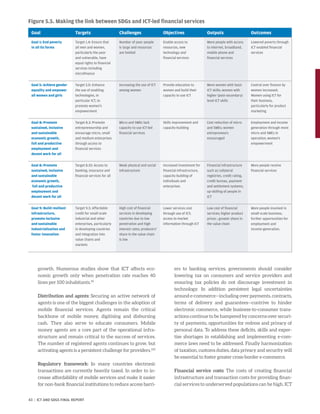
haul connectivity. It also deploys proven business models
that include large chains of support stores built by operators
that new users can access for help.
4G LTE enjoys a strong, robust ecosystem of devices and
services. There are currently 480 LTE networks in 157
countries.35
Because it is built on a global standard, it will be
able to support and assimilate innovative technologies over
the long run.
Some technology solutions are more experimental than oth-
ers, and have yet to find acceptance among policymakers and
regulators, including unmanned solar-powered aircraft36
or
high-altitude self-guided balloons capable of flying in the
stratosphere,37
and equipped with Internet-carrying trans-
ceivers, as a means of enabling and enhancing Internet con-
nectivity for those in remote areas. While innovative ideas
are welcome and necessary, any new technology faces the
same policy scrutiny and business model challenges as exist-
ing and well-proven forms of reaching the unconnected.
3.4. Providing an enabling policy framework
Improving regulatory certainty and making harmonized spec-
trum available in a planned and timely manner is a priority for
policymakers and regulators. Harmonized spectrum38
helps to
build economies of scale (based on a mass market), facilitates
cross-border coordination between countries, ensures global
roaming is achieved, provides interoperability, choice and con-
venience and guarantees efficient use of spectrum even in bor-
der areas, as well as providing long-term investment assurance
forinfrastructureandserviceprovidersandnetworkoperators.
One important area of concern remains the cost of spectrum,
which in many countries is quite high. If operators are forced to
pay high spectrum costs upfront, they may be too strapped for
cash to build networks quickly. One alternative source of reve-
nue that national administrations could consider is the in-
creased tax revenue that ensues from greater commercial activ-
ity following deployment of high-end networks. Through
licensed spectrum regulations, sector regulators have a lever to
direct the market by attaching policy conditions and obligations
such as specific geographical or population coverage. This is a
means for governments to support bringing the benefits of ICT
to more remote populations and marginalized groups. This is
alsowherepublic-privatepartnershipscanstepintoaddressthe
inequityimplicitinthelackofconnectivityformanyatthebase
of the economic pyramid, mostly in developing economies. This
enormous challenge is prompting several political and econom-
icactors—fromgovernmenttoindustry,multilateralinstitutions
to NGOs—to initiate programs to bridge the digital divide.
The Global Connect initiative of the US De-
partmentofState,formallylaunchedinSep-
tember 2015, is a case in point.39
The initia-
tive seeks to bring 1.5 billion people who
lack Internet access online by 2020. It aims
to bring governments and stakeholders to-
gether to explore ways to bridge the digital
divide through country-specific strategies that create enabling
environments, and spur connectivity and entrepreneurship,
cross-border information flows and open and competitive
­marketplaces.
Many countries have also started developing their own na-
tional broadband plans and integrating ICT into national, ur-
ban and rural planning processes, with the aim of fostering
inclusive growth that connects the unconnected in their re-
spective societies.
3.5. Conclusion  Recommendations
Mobile Internet connectivity enabled by 3G/4G networks
will connect almost 1 billion more subscribers by 2021, leav-
ing the challenge of connecting the remaining 1.7 billion un-
Three main barriers need to be overcome to
bring everyone into the Networked Society:
affordability, usage and infrastructure.
26 | ICT AND SDGS FINAL REPORT
connected people. Around 1 billion of these will be covered
by mobile broadband networks, 300 million by 2G signals,
and 300 million will be out of coverage.
There are a number of steps that can be taken to address af-
fordability and usage for the last mile:
ƒƒ Develop cost/benefit-based business models
ƒƒ Nurture eco-systems for local apps and content
ƒƒ Prioritize development of ICT literacy and skills
Universal connectivity requires some public intervention, as
market forces are not sufficient in the near-term. Universal
Service Funds40
which are a common feature of the mobile
industry across most countries, are one example that could
be utilized to subsidize the cost of upgrades and proactive reg-
ulation could ensure deployment in more challenging areas.
A second possibility is to explore public-private partnerships
with multilateral development banks, global aid agencies or
private foundations underwriting key mobile broadband de-
ployment projects, with various mechanisms for return on
investment in order to create sustainable business models
over time. A third option is to explore new business models
that leverage extensive investments in mobile infrastructure,
eg. see Case 3.1. With commitment and collaboration, the last
mile of connecting the unconnected can be bridged.
Case 3.1: Providing connectivity
as a service in Benin*
Despite the rapid growth in mobile communications, com-
mercially viable business models are still lacking in many
rural areas. In Benin, Africa, Ericsson is implementing a
solution called Managed Rural Coverage whereby operators
can provide mobile coverage for a set period according to
service level agreements and defined key performance indi-
cators. Access is provided via low-power consumption Erics-
son radio base stations running on solar energy to avoid the
high costs and emissions associated with diesel generators.
Transmission is provided via satellite to avoid the high costs
and civil works associated with building a microwave back-
haul network in remote villages. Together with mobile oper-
ator MTN the solution was deployed in 2015 to parts of cen-
tral and northern Benin where there was no coverage
previously, in essence providing connectivity as a service.
The five-year contract covers 50 sites.
A new business model
Managed Rural Coverage represents a new business model
that makes it possible provide mobile coverage to areas
most in need, such as remote areas of Benin where people
have to survive on less than two dollars a day. With mobile
connectivity, the people of Benin will be able to beneft from
increased access to information and services that support
health, education and small businesses.
* Ericsson Sustainability and CR Report 2015, http://www.ericsson.com/
thecompany/sustainability-corporateresponsibility
Figure 3.4. The unconnected population in 2021
27 | ICT AND SDGS FINAL REPORT
Digital
Identity
andthe
Sustainable
Development
Goals
4
4.1 Introduction
In order to measure progress towards the achievement of the
SDGs, comprehensive and accurate monitoring of how citizens
are being accounted for across the 17 targets is critical. The
challenge is that an estimated 1.5 billion people lack proof of
identification, and are ‘missing’ from government registries.
A number of leading global institutions have highlighted that
identification underpins many of the SDGs and is a prerequi-
site for success. Without proof of identification, a citizen’s
right to vote, open a bank account, go to school or access es-
sential health services such as vaccinations can be prohibi-
tively difficult. Achieving gender equality, good governance,
social participation and the protection of rights is equally
challenging. Additionally, there is a risk that “what is not
counted, doesn’t count” and the ability to measure the impact
and outcomes of the SDGs overall could be compromised.
SDG target 16.9 seeks to address this by setting a target to: “By
2030, provide legal identity for all, including birth registra-
tion ” and sets a high bar for the international community to
strive for. Achieving this, however, will require new
approaches, partnerships and technologies. Digital identity
offers the potential to leapfrog from analogue ID infrastruc-
tures and scale access to, and participation in, the digital
economy. Policy makers, private and public sector actors will
need innovative strategies to overcome barriers and deliver
on this opportunity and address issues of trust, privacy, and
data management, for example.
4.2 The Identification Gap and the SDGs
Many of us rely on some form of official identification in order
to navigate through daily life. From opening a bank account,
accessing services from the government, making online pay-
ments, or boarding a plane—the ability to prove who we are
can often be taken for granted. However, for the nearly 1.5 bil-
lion people globally whom the World Bank estimates do not
have proof of official identity, the risk of not being accounted
for is heightened.41
Proof of identity has long been a problem
for the poor, with low levels of birth registration particularly
in Africa and Asia hindering access to fundamental services
such as education and healthcare. The ID gap also dispropor-
tionately impacts women, compounding the challenge of as-
serting property rights, and gaining access to financial services
or subsidies, for example. The geopolitical concentration of
this issue in low and middle income countries underlines the
importance of developing new means of enabling access to of-
ficial identification for those who do not currently have it.
28 | ICT AND SDGS FINAL REPORT
A barrier for government interventions
For governments, low levels of birth and death registration
and a comprehensive identity system means that it is hard-
er to target and monitor development interventions, allo-
cate budget and ensure that the most vulnerable are not
excluded, for example from targeted social protection pro-
grams, vaccination campaigns or financial inclusion
schemes. Additionally, UNHCR estimates that there are 10
million stateless people globally, who, without a nationality,
have no legal identity or status and are therefore denied
their most basic human rights.42
If policy-makers and development actors don’t know who
the poor are, or where they live, development interventions
will not be able to reach the intended beneficiaries, leading to
leakages and inefficiencies.
Mobile operators have identified this challenge and have
played an active role in providing innovative solutions across
the identification lifecycle, from supporting enrollment
through enabling mobile birth registration, to offering inno-
vative authentication solutions.
A complex challenge
There are a number of complex factors that have contributed
to the identification gap. Some of the most commonly cited
challenges include:
ƒƒ Logistical challenges (covering rural and remote areas,
travelling to registration centers);
ƒƒ Efficiency challenges (e.g. with paper-based systems);
ƒƒ Social and cultural factors (poor awareness of the value of
identification documents and need to stimulate demand);
ƒƒ Governance issues (trust, oversight and political leadership);
ƒƒ Cost and sustainability (investing in the architecture
and capacity required to deliver a comprehensive ID
system); and
ƒƒ Technical (integrating existing systems, identifying the best
technology solutions for value, coverage and robustness).
ƒƒ Methodological (systems are built with privacy at the
fore, ensuring that personal data of citizens is protected,
and that rights to privacy are respected).
Despite these challenges, it is clear that identification is a key
enabler for citizens to participate in social, economic and po-
litical life throughout the course of their lives. It is partially
for this reason that the SDGs have highlighted the identifica-
tion gap, and rallied the global community around a goal of
universal legal ID coverage by 2030 as a core component of
promoting peace, justice and strong institutions.43
Identification eases path to SDGs
Leading think tanks such as the Centre for Global Develop-
ment and the World Bank’s Initiative ID4D suggest that
identification is core to achieving at least 10 of the SDGs in
the following areas:
ƒƒ Social protection, including for the most vulnerable.
ƒƒ Assistance in dealing with shocks and disasters.
ƒƒ Equal rights to economic resources, including property
and finance.
ƒƒ Empowerment of women.
ƒƒ Improvements in maternal and child health.
ƒƒ Coverage by vaccines and similar treatments.
ƒƒ Improving energy efficiency and eliminating harmful
energy subsidies.
ƒƒ Child protection, including the ending of harmful
child labor.
ƒƒ Reducing remittance costs.
ƒƒ Reducing corruption, fighting crime and terrorism and
strengthening and improving the equity of fiscal policy.
4.3 The current state of digital identity
The Centre for Global Development estimates that as of
2013, there were approximately 230 digital identity initia-
tives in 80 developing countries. Figure 4.1 (p. 31) shows
different types of digital ID systems across countries. Iden-
tification systems can be broadly grouped into two catego-
ries: Foundational (ID systems “which provide general iden-
tification covering the entire population (and can include civil
registries and unique national IDs) and Functional which
cover population subsets and are introduced in response
to a demand for a particular service or transaction (such as
voter registration44
).”
While there is no single approach to digital identity, fragmen-
tation between functional and foundational identity systems
and duplication have grown. Different models have been de-
veloped, depending on current levels of ID coverage, political
and cultural context, the needs of a particular country and
existing analogue and digital identity architecture. A grow-
ing number of successes stories are emerging, highlighting
the possibilities for citizens, governments and private sector
actors if these initiatives are designed with scale and sustain-
ability in mind.
For example, the impressive rollout of Aadhaar, India’s
unique digital identification program, which has now en-
rolled its one-billionth person, highlights the potential for
digital identity to reduce corruption and drive inclusion and
29 | ICT AND SDGS FINAL REPORT
efficiency. The World Bank estimates that India has saved
one billion dollars USD through linking Aadhaar numbers to
its government payment programs, reducing duplicate and
ghost payments, improving financial planning and manage-
ment and increasing transparency.45
In Estonia, citizens are able to use mobile and e-IDs to register
a business, declare their taxes and digitally sign documents.46
In countries such as Pakistan, the national identification
body, NADRA has enrolled upwards of 98 million people
through biometric technologies and has linked this to im-
proving targeted development programs for example for
women and for disaster-affected populations.47
In a number
of countries such as Tanzania, Uganda and Pakistan, mobile
network operators (MNOs) are partnering with government
and organizations such as UNICEF to accelerate birth regis-
tration through digital technology.
While there may not be a one-size fits all approach for ex-
panding identification and integrating ICT to deliver robust
and accessible digital identity systems, there are some com-
mon considerations and barriers that must be overcome to
unlock future opportunities. These considerations will en-
sure that digital ID systems are developed in a way that sup-
ports development outcomes.
4.4 Issues and Challenges
ICT offers an opportunity to bypass traditional approaches to
identity provision and management. Digital identity solutions,
through their potential for scale and reach, can lead to im-
proved efficiencies and accelerated economic, political and so-
cial inclusion. However, positive outcomes are not guaranteed,
and there are a number of considerations and challenges that
shouldbeaddressedandmitigatedbydifferentactorsinvolved
in design, funding and implementation of these initiatives:48
ƒƒ Inclusivity—ensuring that digital ID initiatives are
accessible, affordable and do not exacerbate exclusion.
ƒƒ Adoption—developing solutions that are fit for purpose,
are designed with the end-user in mind, and that consider
the levers for take-up by building awareness, and demon-
strating the value of digital identity.
ƒƒ Privacy and trust—ensuring data privacy and security
and building trust in digital identity solutions with
different stakeholders is essential to developing healthy
digital identity eco-systems.
ƒƒ Policy and regulation—ensuring that the policy environ-
ment is clear, and that there are robust frameworks to
encourage investment and build trust.
ƒƒ Leadership—political leadership, vision and a long-term
commitment are required to build digital identity
systems that can foster development outcomes.
ƒƒ Interoperability—identifying standards, agreements and
models for interoperability will be important for reduc-
ing fragmentation and building a seamless digital ID
ecosystem.
ƒƒ Coordination—alignment among the development
community, private sector, governments and other actors
is essential to reduce duplication and ensure that citizens
can benefit from the rollout of digital identity solutions.
It is clear that proof of identity is becoming increasingly cen-
tral to achieving development outcomes and enabling partic-
ipation in the digital societies of the future, and that ICT of-
fers a transformative opportunity to increase efficiency,
coverage and impact. New models of public-private sector
co-operation and coordination by global institutions and the
donor community will be needed, as will alignment and will-
ingness between different stakeholders to address the barri-
ers, in order to realize the transformative opportunity of dig-
ital identity.
Without proof of identification, a citizen’s right to
vote, open a bank account or access essential health
services may prove prohibitively difficult.
30 | ICT AND SDGS FINAL REPORT
Figure 4.1 Different types of digital ID schemes
across countries
Case 4.1: Digital ID aids financial inclusion
The GSMA estimates that there are now over 411 million
registered mobile money accounts globally.49
Digital
financial services are accelerating financial inclusion,
particularly for the poor, leading to promising gains in
social and economic development. However, proof of ID
is required to meet “know your customer” requirements
for opening bank accounts and meeting financial regula-
tion requirements both on- and off-line. Approximately
375 million people globally have cited not having access
to financial services because of a lack of recognized ID.50
In countries such as Pakistan, harmonizing KYC (Know
Your Customer) requirements and linking targeted pro-
grams such as the Benazir Income Support Programme
with national digital identity infrastructure are laying
the foundations to increase financial inclusion.51
Case 4.2: Mobile-enabled birth registration
Birth registration is identified as a critical stepping-stone
in ensuring provision of official identity and protecting
the rights of the child. International law specifies that
every child is entitled to birth registration.52
However,
UNICEF estimates that more than 230 million children
under the age of 5 have not been registered globally. In
Tanzania and Pakistan, Mobile operators are leveraging
the scale and reach of their networks to enable and ac-
celerate birth registration through partnerships with na-
tional authorities and organizations like UNICEF.53
In the
pilot region of Tanzania, Tigo, RITA and UNICEF have,
through their SMS platform, raised registration rates
from 8 to 45 percent and are targeting 1 million births to
be registered by the end of 2016.54
Case 4.3: Meeting the ID challenge
for refugees
The UN Refugee Agency, UNHCR, has integrated ICT solu-
tions to address the challenge of identifying the growing
and changing population of refugees and forcibly dis-
placed people under its protection. Through its newly
developed Biometric Identity Management System
(BIMS), UNCHR is able to provide a unique identity to
beneficiaries without documentation with the aim of as-
suring correct delivery of entitled services and benefits,
secure identity management and improved data and
monitoring to inform long-term and permanent solu-
tions.55
Global rollout of BIMS commenced in 2015 with
promising results. For example, in Chad, UNHCR is able to
enroll 2,500 people per day, linking those enrolled and
verified with ration cards and other services.56
31 | ICT AND SDGS FINAL REPORT
ICT
FinancialInclusion
Embracing the Goals
Financial inclusion is an important driver for attaining the
SDGs. Universal financial access can reduce poverty (SDG 1)
through employment and income-generating business
opportunities (SDG 8), including for small and medium enter-
prises (SDG 9). Availability of financial services such as credit,
savings and insurance can provide greater security for
people during crises due to natural disasters, financial crisis
or political turmoil (SDG 10). With higher income, families
can invest in education (SDG 4) and health (SDG 3) and, end
hunger, achieve food security and improved nutrition (SDG
2) and promote sustainable agriculture, as mobile payments
can enable access to water and energy and better crop yields
through connected agriculture (SDG 15). Not least, financial
inclusion can help empower women (SDG 5).
SDG target 8.10 calls specifically for the capacity of domestic
financial institutions to be strengthened to encourage and
expand access to banking, insurance and financial services
for all. SDG target 9.3 advocates greater access of small-scale
industrial and other enterprises to financial services—espe-
cially in developing countries—including affordable credit
and integration into value chains and markets. Finally, uni-
versal financial access will help in delivering SDG 10, which
calls for reducing inequalities within and between countries.
Even if several of these SDGs do not explicitly call for the role
of mobile money or digital financial innovation, it will be
fundamental to their achievement.
Facing the Challenge
Some 2 billion people around the world do not use formal fi-
nancial services and over half of adults in the poorest house-
holds remain unbanked. More than half of adults in the poor-
est 40 percent of households in developing countries were
still without bank accounts57
in 2014—primarily women.
Women’s participation in economically productive activities
is currently constrained by both limited access to finance
and lack of ICT skills.
Limited financial infrastructure is a major obstacle for many
countries. In regions where traditional financial service
points such as bank branches and automated teller machines
(ATMs) are lacking, the challenge of finding cost-effective
ways to make financial services available to citizens is a sig-
nificant barrier to inclusion.
The main barriers to having an account in a financial or mi-
cro-financial institution are high service costs (55%), lack of
money (54%), lack of confidence in financial institutions
(37%), distance from financial institution (23.7%) and not hav-
ing the documentation required (15.7%). ICT, and particularly
mobile money, is helping to overcome these obstacles on the
path to financial inclusion.
5
32 | ICT AND SDGS FINAL REPORT
5.1. Introduction
In a relatively short time, the link between
ICT and financial inclusion has become
clear: ICT offers a cost-effective way to over-
come the existing lack of banking infra-
structure faced by many countries. It can be
rapidly scaled, offers significant efficiency
gains, and entails low barriers to entry for
individual users.
The vision is that connectivity enables a world where financial
services are accessible to all and interconnected to each other,
where sending money is as easy and affordable as sending an
SMS, and where any device becomes a commercial device.
At its most basic level, mobile money is the provision of fi-
nancial services through a mobile device. It covers a range of
services including payments (person-to-person), finance
(such as insurance products), and banking, and is supported
by a network of agents who receive a small commission for
turning cash into electronic value. More than a technology,
mobile money comprises an ecosystem that includes the fi-
nance and ICT industry, mobile network operators and other
stakeholders—not least government, which must create the
appropriate regulatory environment.
Huge gaps persist between countries when they are ranked
based on bank account ownership (Figure 5.1). The top coun-
tries are all high-income countries with better access to mo-
bile and Internet services. In these countries almost every-
one has access to the Internet (on average 91 per 100 people)
and mobile phones (on average 120 subscriptions per 100
people).58
In low-scoring countries, average Internet and mo-
bile phone users per 100 people are 9 and 73 respectively, and
only 2-12 percent of people aged 15 or above are able to access
bank accounts. The relatively high penetration of mobile
phone subscriptions relative to bank account owners in these
countries shows there is great potential for mobile banking
services to help close the gap.
Rapid uptake and evolution of ICT in recent years has fuelled
innovation in financial services offering considerable poten-
tial to drive achievement of development goals around finan-
cial inclusion. Today there are a number of successful applica-
tions from around the world, many of which can be replicated
and scaled. Mobile money is most widespread in low-income
economies, compared to lower-middle-income and upper-mid-
dle-income economies. With 271 live services in 93 countries
and 64 percent of the developing world covered, mobile money
continues to deepen financial inclusion and is currently reach-
ing more than 411 million people globally.
One of the greatest advantages of using ICT to deliver ser-
vices is that access can be cost effectively scaled once the in-
frastructure is in place. This is particularly significant in the
Mobile money is available in 85 percent of coun-
tries where the vast majority of the population
lacks access to a formal financial institution.
Source: GSMA, State of the Industry Mobile Money Report 2015
Some 700 million adults worldwide became bank
account holders between 2011 and 2014, yet 2
billion are still unbanked.
World Bank Global Findex Database, 2014
Figure 5.1. Financial inclusion in select countries based on accounts, 2014
This graph shows the top five countries and lowest five countries in financial inclusion levels,
based on bank accounts, according to the World Bank. Source: Global Findex 2014 and ITU.
33 | ICT AND SDGS FINAL REPORT
context of achieving SDG target 1.4, which requires reaching
a large number of poor and vulnerable people in the goal of
reducing extreme poverty. SDG 1 aims to eradicate extreme
poverty for all people everywhere by 2030, with extreme
poverty currently measured by the World Bank as living on
less than USD 1.25 a day. From 1990-2015 the rate of extreme
poverty in developing countries fell from 43 percent to 14
percent in 2015 according to UN data, but the number of
global poor remains high: at present, about 800 million peo-
ple live in extreme poverty, and inequality within countries
and across regions continues to be a major challenge.
Through Internet, broadband and mobile phone-based ICT
infrastructure, people living in poverty gain the capability to
improve their economic situation by accessing reliable finan-
cial services that can provide a vital safety net. From obtain-
ing an account and conducting basic transactions such as
money transfers and bill payments, users can move on to ac-
cess more advanced financial services such as loans and in-
surance products (see Figure 5.4 on p. 37). The increased ac-
cess to financial services that ICT enables can in turn
encourage private investment, spurring job creation and eco-
nomic growth for vulnerable target populations.
The importance of financial innovation for economic growth
in Western countries cannot be understated. There is enor-
mous potential for developing countries to leapfrog in this
area based on new ICT technologies.
5.2 ICT in action: Banking the unbanked
Growing connectivity is spurring the growth of mobile
services, particularly in developing countries (see Figure 5.2).
As seen in Sub-Saharan Africa, mobile money accounts can
drive financial inclusion. While just 1 percent of adults glob-
ally say they use a mobile money account and nothing else,
in Sub-Saharan Africa, 12 percent of adults (64 million) have
mobile money accounts (compared to just 2 percent world-
wide); and 45 percent have only a mobile money account.59
When it comes to meeting the enormous challenge of rolling
out financial services to the unbanked by 2030, ICT can be a
powerful accelerator.
As well as improving access, mobile—or branchless—banking
also offers a number of quality and efficiency gains. It reduc-
SDG target 1.4 sets out that by 2030 all men and
women—particularly the poor and the vulnera-
ble—should have equal rights to economic
resources, as well as access to basic services,
ownership, and control over land and other
forms of property, inheritance, natural resources,
appropriate new technology, and financial
services including microfinance.
Figure 5.2. Percentage of developing markets with mobile money, by region and income level (GSMA, Dec 2015)60
34 | ICT AND SDGS FINAL REPORT
es the time and cost required for people to travel to bank loca-
tions and wait in line, for instance to pay bills. Information
flow and data collection through ICT can improve customer
service by facilitating deposits and transfers, and helping
banks make faster credit decisions. It also offers a means of
providing financial services to those who would otherwise
not be eligible for banking services due to low asset owner-
ship.
At a global level, mobile money remains dominated by nar-
row use cases (see Figure 5.3). In 2015, almost three-quarters
of the total value of transactions were person-to-person (P2P)
transfers. By volume, airtime top-ups accounted for two-
thirds of all transactions processed in 2015.61
Future expan-
sion of mobile banking services, types of use cases and higher
volume of mobile money will depend on the readiness of fi-
nancial institutions to adopt the technology and to collabo-
rate with mobile operators and other players in creating a
single platform (as illustrated in Case 5.1, Modelo Perú).
There are a growing number of examples of mobile money
initiatives that provide financial services to a vast population
formerly without access to banking services. Mobile technol-
ogy has enabled a platform for various types of mobile mon-
ey and services (Figure 5.4.) such as mobile finance, mobile
banking and mobile payment. As a result, people can send
and receive money, save money, check their account balance,
make payments for purchases, pay bills, perform bank
transactions and get access to lower cost credit and insurance
services. The reduction in use of cash has made such finan-
cial services more convenient, affordable, accessible, and
attractive. It also has major advantages over cash by eliminat-
ing the risk of theft.
One of the pioneers of mobile money is M-Pesa. Launched
in Kenya in 2007 through mobile operator Vodafone, it has
become the country’s largest service, counting over 15 mil-
lion account holders. Now in 10 countries including Egypt,
Fiji, India, Romania and Tanzania, M-Pesa has evolved from
a simple mobile transfer service between individuals to a
broader set of financial services allowing people to deposit
savings, pay bills, or purchase health insurance.63
Although still in the early stages, a robust mobile financial
ecosystem will help to ensure services become more relevant
and useful to consumers, and sustainable over the long term.
Four successful approaches are featured in the following cases:
Modelo Perú’s program Bim; EcoCash in Zimbabwe; EasyPaisa
in Pakistan, and Orange Money, which serves multiple
African countries.
Figure 5.3: Mobile money transactions by mix, volume (GSMA, 2015)62
When it comes to meeting the enormous challenge
of rolling out financial services to the unbanked
by 2030, ICT can be a powerful accelerator.
1.0bn
December 2015
Global product mix by volume and value (December 2015)
Airtime
top-up
Bulk
disbursement
International
remittance
Merchant
payment
Bill
payment
P2P
transfer
Transaction volumes Transaction values
66.0%
23.2%
6.8%
0.1%
1.9%
2.0%
US$ 18.9bn
December 2015
71.5%
4.1%
3.6%
1.0%
8.4%
11.4%
35 | ICT AND SDGS FINAL REPORT
Case 5.1: Modelo Perú is driving financial inclusion in Peru
In Peru, ASBANC, Peru’s National Bank Association, has
launched Modelo Perú, an initiative considered a model new
financial eco-system. The aim is to accelerate the transition
from cash to digital payments in order to reduce poverty and
drive inclusive growth, in line with Peru’s National Financial
Inclusion Strategy launched in 2015, in which the government
pledged that 75 percent of adults would have access to a
transaction account by 2021.64
With some 34 financial institu-
tions and three mobile network operators sharing one mobile
money platform, ASBANC wants to provide easy-to-use, se-
cure, next-generation mobile financial services. The goal is to
reach 2.1 million underserved Peruvians, about 7 percent of
the total population, within five years, especially those with-
out access to traditional banking services.
In 2015, Ericsson was selected as the partner to implement
the technology platform and provide operational and busi-
ness services. The program developed by the partners is
called Bim (short for Billetera Movil, or Mobile Wallet).
Lessons learned
By working together, Modelo Perú has built a strong base to
incentivize use. A shared brand, product offering, fee set, and
transactions all contribute to a higher value proposition for
the users. With a common national agent network, Bim users
have tens of thousands of access points and merchants should
soon come on board. The government gains a tool to disburse
payments while businesses can transition from cash to digital
payments. By developing a platform that works anywhere and
for everyone, government and businesses can begin to lower
costs and drive efficiencies—promoting the long-term shift
from cash to digital payments. Once acceptance is fully devel-
oped, customer behavior is expected to change, too.
Why is “Modelo Perú” innovative?
As the world´s first interoperable, shared mobile payment
platform targeting financial inclusion, the initiative is unique
in several ways: 1) It was necessary for the partners to collab-
orate in order to have the opportunity to compete and gener-
ate profit. More than a technological innovation, partners see
it as a new way of doing business. By working together, the
institutions in Perú realized they had a better chance to reach
the nearly 70 percent of Peru’s population65
that is unbanked.
2) All partners share a common technology platform, lowering
the cost of design, customization and implementation. New
features become available to all customers and providers at
the same time, which enables a common product across pro-
viders.
3) All institutions share a common brand, “Bim”, and thus all
customers see and recognize the same brand. There is also a
standard fee among providers which builds trust among cus-
tomers to increase adoption of the service. 4) The regulatory
environment enabled financial inclusion. In 2013, Peru ap-
proved e-money law no. 29985,66
which regulates the basic
features of electronic money as an instrument for financial
inclusion. While the partners behind Modelo Perú are aware
that regulation itself is not sufficient to create a market, this
allowed different players in the eco-system to collaborate
with clearly indentified roles.
Two months after the launch in Febuary 2016, Bim already
had 85,000 registered users and 55,000 of them were making
use of the services available to them as active users.
36 | ICT AND SDGS FINAL REPORT
Figure 5.4. Range of ICT-linked Financial Services
Case 5.2: EcoCash paves the way for digital economy in Zimbabwe
In Zimbabwe, EcoCash is one of the most rapidly growing
mobile money solutions in Africa. Just 18 months after the
launch in 2011, some 2.3 million Zimbabweans had registered
for EcoCash mobile money accounts, outnumbering all of
Zimbabwe’s traditional bank accounts combined,67
and today
that figure exceeds 3.5 million subscribers.68
EcoCash is part
of Econet Services, an independent company set up in 2012 by
Zimbabwe’s largest mobile network operator, Econet Wireless.69
It enables customers to complete simple financial transac-
tions on their mobile phones, such as sending money to loved
ones, buying prepaid airtime for themselves or other Econet
subscribers and paying for goods and services.
Lessons learned
EcoCash was able to fundamentally alter the financial land-
scape in Zimbabwe by starting with a simple use case that fills
a basic consumer need: sending and receiving money. It also
invested in a strong and committed network of agents to meet
demand. With some 60 percent of the population having
access to mobile phones and only 32 percent of the population
owning bank accounts,70
there is a robust foundation for the
growth of the digital economy—and mobile money—in Zimbabwe.
Mobile wallet
Money transfer
Payment
Other services
Deposit, withdraw,
payment, transfer
Remittances,
Government transfers,
Airtime recharge
Bill payment, Merchant
payment, E-commerce
Credit, Savings,
Insurance
Example: Smart phone
allowing in-store payment
Example: Domestic and international
remittances, salaries and pension
by the government, subsidies and
payment to farmers, allowances under
social safety net
Example: Water, gas and electricity
bills, school and college fees,
medical bills, ticket for transportation,
business payment, online payment
Example: Credit and savings for
education, health, marriage, old age,
emergencies; loans by microfinance
institutions, insurance for assets, crops,
illness, death
37 | ICT AND SDGS FINAL REPORT
Case 5.3: Orange is the color of mobile money across Africa
From cross-border remittances to payments to money trans-
fers and financial services—including insurance products tai-
lored to women—Orange Money is enabling greater financial
inclusion across Africa. A service of Orange, one of the largest
operators of mobile and Internet services in Europe and Afri-
ca, Orange Money has currently 17 million Orange Money us-
ers in 14 countries, representing more than 4.5 billion euros’
worth of transactions in 2014.71
From November to December
2014, the equivalent of 20 percent of the GDP of Mali passed
through Orange Money. Financial services such as saving, in-
surance and micro-credit solutions are offered in partnership
with banks and insurance companies.
In Mali, where insurance products are lacking, and fertility
and maternal mortality rates are some of the highest in the
world, Orange Money saw an opportunity to launch two new,
intertwined savings and insurance products targeted at Mali-
an women. Thanks to a GSMA Connected Women Innovation
Fund grant, Orange joined forces with NSIA, a microinsurance
company, the NGO Population Services International and
PlaNet Guarantee, an insurance mediator, to launch a savings
product (Sini Tonon) and an associated life/disability and ma-
ternal health insurance product (Tin Nogoya) on the Orange
Money platform.
Lessons learned
Although still in early stages, Sini Tonon and Tin Nogoya are al-
readydeliveringcommercialandsocialbenefitstoOrangeandits
customers. Sini Tonon is encouraging customers72
to save: 55 per-
cent of women and 48 percent of men did not save before using
Sini Tonon. Tin Nogoya is well positioned to foster first-time ac-
cess to insurance, especially for women, who are less likely than
men to be insured. 97 percent of female users have never been
insured before and 98 percent of surveyed users want to contin-
ue saving to reach the threshold for insurance activation.
Case 5.4: In Pakistan, EasyPaisa73
paves way for the unbanked
Launched in 2009 by Telenor Pakistan in collaboration with Ta-
meer Microfinance Bank, Easypaisa is Pakistan’s first and larg-
est branchless banking solution and one of the largest mobile
money deployments globally with more than 21 million active
consumers. The initiative aims to greatly expand financial inclu-
sion, as only 15 percent of Pakistan’s population are reported to
have a bank account. In May 2016 Easypaisa announced it is
deploying Ericsson Wallet Platform to replace its existing plat-
form. The partnership with Ericsson accelerates and increases
the availability of mobile money services for the country’s citi-
zens, while positioning banks to succeed in an expanding mo-
bile money ecosystem.
With a growing footprint of over 75,000 merchants in over 800
cities throughout the region including rural areas, Easypaisa is
providing numerous employment opportunities, while enabling
people to send and receive money from any Easypaisa shop in a
secure, efficient and convenient way.
Lessons learned
Easypaisa’s product portfolio includes bill payment, sending or
receiving money, purchasing airtime, salary disbursements, giv-
ing donations, disbursing social cash transfers, insurance and
savings. Anyone in Pakistan can use Easypaisa’s money transfer
service to send money from one city to another even if they don’t
own a Telenor connection. It enables those without bank ac-
counts to send their monthly salaries back to family members in
their home villages, or transfer tuition fees or personal funds to
their children at faraway educational institutions. Frequent trav-
elers who don’t want to carry cash can use the service to send
money to themselves for collection in another city. This kind of
mobile banking improves safety, reduces the need for lengthy
paperwork, and enables money transfer to be done outside nor-
mal business hours, eliminating the need to queue.
As part of its mission of empowering societies, Easypaisa is also
collaboratingwithNestléPakistaninprovidingfinancialaccessto
thousands of Pakistani dairy farmers to make disbursement of
milk collection payments swift, easy, and transparent.74
Easypai-
sa has won numerous awards, including ‘Best Mobile Money Ser-
vice and ‘Best Mobile Service for Women in Emerging Markets’ at
the GSMA awards 2014, as well as the Wall Street Journal’s ‘Fi-
nancial Inclusion Challenge People’s Choice Award’ 2015. Recent-
ly it was nominated at the GSMA Awards as ‘Best Mobile Money
service for Women in Emerging Markets 2015 and ‘Best Mobile
Money service for Women in Emerging Markets’ 2016.75
38 | ICT AND SDGS FINAL REPORT
5.3 Fostering enterprise productivity
through e-commerce
SDG target 8.3 calls for development-oriented policies that
support productive activities, decent job creation, entrepre-
neurship, creativity and innovation, and encourage formal-
ization and growth of micro, small and medium sized enter-
prises (SMEs) including through access to financial services.
SDG Target 9.3 also calls for an increase in the access of small-
scale industrial and other enterprises to financial services—
including affordable credit—and better integration into value
chains and markets.
Financial inclusion through e-commerce is a growing ICT ap-
plication that can have positive impact on business. Global
e-commerce is evolving fast, bringing new opportunities for
SMEs and rural enterprise. Prohibitive service costs, high in-
terest rates and too much of the profit going to middle men all
currently discourage small entrepreneurs from approaching
banks for capital to start and grow their businesses. ICT can
address these barriers by helping to reduce service costs.
Where the share of producers in both the local and global val-
ue chain remains low, ICT can increase access to market infor-
mation and new markets. Higher product prices and a greater
share of the value chain will make businesses more profitable
and increase income per capita, helping to reduce poverty.
Online market places have created platforms for sellers, cus-
tomer service, payment processing, and shipping, delivery
and return processing. Affordable Internet mechanisms en-
abling payment for goods and services are an effective en-
abler for delivery of goods through online transactions. SMEs
that are able to harness this technology can benefit from the
opportunity to enter international markets, export their
products and services and gain competitive advantage from
reduced costs of production and service delivery.
Research on the impact of ICT on SMEs is limited, but studies
indicate that linking SMEs to e-commerce to market their
products is a powerful way to boost productivity. In Nigeria77
ICT has been found to help SMEs make better decisions by
speeding up analysis of large volumes of data. A study of 14
European countries has shown that for firms engaged in
e-sales, labor productivity grew by 0.3 percentage points per
year between 2003-2010.78
The study also indicates that
small enterprises engaged in online sales enjoy greater pro-
ductivity, highlighting the importance of ICT-readiness and
access to ICT-led financial services for SMEs. This indicates
that industries with an increase in the proportion of firms
selling through computer networks experienced a higher
growth rate of labor productivity.79
But while large companies are generally well placed to reap
productivity gains through ICT and e-commerce, small enter-
prises tend to lag behind, with SMEs in developing countries
in particular facing a number of barriers. In addition to the
high cost of telecommunications, micro and SMEs often lack
the capacity to use ICT-led financial services due to poor com-
munication infrastructure and lack of regulatory support, are
hindered by the prevalence of obsolete technologies and pro-
hibitive cost of installing new technology, and suffer from a
lack of qualified staff and low digital literacy skills.80
Skills improvement and capacity-building are therefore pre-
conditions for these businesses to access ICT-financial services.
In developing countries where unemployment or under-em-
ployment of youth and women are a growing problem, expan-
sion of micro and small business can create vital employment
opportunities needed to eradicate poverty. By addressing low
digital literacy levels and promoting SME access to ICT-led fi-
nancial services, policymakers can provide a much-needed
boost to the small business development-related SDGs.
Case 5.5: In Sweden, banks unite behind Swish76
Efforts to develop Swish started as a collaboration between six
of Sweden’s largest banks: Danske Bank, Handelsbanken, Läns-
försäkringar, Nordea, SEB and Swedbank and the savings
banks. In December 2012 they launched Swish, a mobile pay-
ment solution between private individuals.
In the past few
years four other banks and financial institutions came on board,
and the hope is that more banks will join. In 2014, Swish
introduced the possibility for private customers to use Swish
payments to affiliated companies, associations and organiza-
tions.
Each bank is responsible for designing the offer, condi-
tions and any contributions to their respective customers. The
Swish brand and service is owned by Gets Wish AB, formed by
the founding banks. Swish is now the paid service that most
Swedes use and pay apps have emerged as the most common
way to make a payment to a friend, particularly among those 16
to 29 years old, where seven in ten surveyed use the service.
The “Swish effect” has seen use of cash decline markedly while
credit card payments have increased.
39 | ICT AND SDGS FINAL REPORT
5.4 Strengthening domestic institutions through
digital infrastructure
SDG target 8.10 calls for strengthening the capacity of domes-
tic financial institutions to encourage and to expand access to
banking, insurance and financial services for all. Increased in-
vestment in financial infrastructure and in the capacity build-
ing of individuals and enterprises is needed to achieve this
target. Once this target is achieved, it is expected that financial
infrastructure such as collateral registries, credit rating, credit
bureau and payment and settlement systems will be in place,
which along with greater digital literacy, will enable market
growth for financial services.
Some leading banks are recognizing the potential of ICT to
help strengthen economic development and financial inclu-
sion. In 2016, the African Export-Import Bank (Afreximbank)
has adopted a new Intra-African Trade Strategy aimed at driv-
ing industrialization across Africa and increasing intra-Afri-
can trade by at least 50 percent in the next five years. The
strategy will involve expanding existing trading activities
within Africa’s regional economic communities, integrating
informal trade into formal frameworks, reducing trade barri-
ers and minimizing the foreign exchange costs of intra-African
trade. About 40 percent of intra-African trade is done in the
informal sector, revealing institutional gaps.83
To this end, the bank is exploring the option of introducing a
mobile payment platform to support intra-African trade and
payments.84
The bank estimates that this would essentially
bring in around USD 50 billion of informal regional trade that
takes place on the continent into the formal sector, with atten-
dant benefits to governments, businesses and trade financiers
Making remittances more affordable and accessible
In 2013, more than 230 million people lived outside their coun-
tries of birth and more than 700 million migrated domestically.85
ThesefiguresfromtheUnitedNations86
highlightarealneedfor
lower-cost transfers of money, or remittances, from developed
to emerging markets. Mobile money can help by lowering costs.
TheWorldBankestimatesthatremittancestotaledUSD582bil-
lion in 2014, USD 435 billion of which went to developing coun-
tries, involving some 232 million migrants.87
Yet the cost of
sendingremittancesisstillveryhighinsomecountries,particu-
larly poor countries. For instance, from South Africa to Zambia,
the average cost was USD 19.35.
Case 5.6: Mobile commerce, grassroots to government-driven
To close the gap between rural and urban regions, in 2001
the Korean government established a mobile commerce
platform called INVIL (Information Network Village). With
close collaboration between the government, INVIL telecen-
ter operators and rural businesses, the experience has been
positive, product marketing and sales have risen and rural
e-commerce is thriving.81
Lessons learned
Intensive government support has been key to the nationwide
success of the platform. Success factors have included provid-
ing training opportunities, branding and marketing assistance
and encouraging the private sector to develop an up-to-date
e-commerce portal with links to other online portals around
the country. In addition, reliable payment and delivery sys-
tems, efficient logistics and high online shopping activity by
consumers have also played a key role.
In China, local government and small business owners in rural
villages have successfully leveraged the country’s leading mo-
bile commerce websites to sell their local products via the In-
ternet. For example, since 2006, the furniture and manufac-
turing industry has burgeoned due to the development of
online retailing, and in one province, entrepreneurs were
trained in mobile commerce to meet the growing demand for
agricultural products via e-commerce. The local government
assisted, upgrading transport infrastructure to allow for ease
of delivery of the province’s products.82
Significant growth potential
In both cases, entrepreneurs leveraged mobile commerce to
build national and international market demand for goods
produced from abundant local resources. As the Chinese
e-commerce market is the largest in the world, demand for
these rural products is healthy, with significant further growth
potential. Leveraging mobile commerce has also created a
wider positive feedback loop for these communities, through
the rise of supporting facilities such as delivery services, lo-
gistical backing, upstream crop revitalization and processing
and packaging industries.
Although the Chinese government was not directly involved in
this process, it provided indirect support through improved
infrastructure such as roads and highways, broadband Inter-
net facilities and by enabling the necessary certifications.
40 | ICT AND SDGS FINAL REPORT
Cross-border mobile money remittance was the fast-
est-growing mobile money product for the second year in a
row, with 29 initiatives connecting 19 countries. Cross-bor-
der transaction volumes grew by 51.8 percent and the medi-
an cost of sending USD 100 via mobile money reduced by
half to USD 2.00.91
With mobile money, on average, users pay around 2 percent
of the transaction value. This is substantially lower than the
fees charged by formal MTOs or informal remittance pro-
viders in these markets, which typically exceed 5 percent.92
With high transaction costs cutting into remittances, a life-
line for millions of Africans, lowering these costs can ad-
vance financial inclusion.
5.5 Empowering women through
financial participation
SDG target 5.b aims to enhance the use of
enabling technology, in particular infor-
mation and communications technology
(ICT), to promote the empowerment of
women. Women are often the household CFO (Chief Finan-
cial Officers), managing multiple financial streams within the
family, including income, expenses and savings—yet this is
typically cash only.93
ICT is a means to reach vulnerable
groups like underprivileged women currently excluded from
financial services and help fulfill the shared global commit-
ment to ensure that no-one is left behind.
Universal financial access will help women save their in-
come, access credit and benefit from a wide range other fi-
nancial services like insurance. As a result they will gain
greater control over their money to make investment and
spending decisions that can improve their standard of living.
Historically, women’s spending has been primarily directed
towards the welfare of their families, so female financial in-
clusion is likely to have a positive impact on the welfare of
entire communities.
Extensive research on the role of ICT for women’s empower-
ment indicates that women can benefit immensely from ICT-
led financial services.94
ICT helps women to access the capital
needed to establish and grow their businesses. As a result, by
2030, the share of women-owned business entities is expect-
ed to increase significantly from 30 percent of total registered
businesses worldwide, and the share of women entrepre-
neurs with access to capital will rise from its current level of
around 10 percent.95
Women’s participation in economically productive activities
is constrained by limited access to finance and lack of ICT
skills. Presently, women have less access than men to both
ICT education and financial services.
In order to increase the use of ICT among women, ICT educa-
tion and capacitybuilding are key. In addition to basic ICT
skills, higher (post-secondary) level ICT skills should be pro-
vided to help women take control of their own finances and
leverage ICT for business activities. Product marketing in
particular is a significant challenge for women entrepreneurs
in developing countries, and information about marketing
techniques and business affairs is not readily available. Once
they have connectivity and are confident in using ICT, wom-
en can access online marketing as well as online news and
information about business affairs.
These kinds of ICT-led financial services will reduce gender
disparity by enabling women entrepreneurs to integrate
their small businesses into local and global markets, helping
them to become part of the formal business sector.
International remittances are a major and stable source of income for people in many developing
markets. One in seven Africans (120 million) receives remittances from friends and family abroad,
representing USD 60 billion and as much as a third of total GDP88
in some African markets.89
Yet
Africans pay the highest transaction fees in the world.90
By 2030, one billion women currently
excluded from financial services can be
connected through technology.
41 | ICT AND SDGS FINAL REPORT
5.6. Issues and Challenges
Achievement of the financial inclusion-related SDGs through
ICT will not be without its challenges. While mobile banking
and money is more accessible than ever before, there is still
an opportunity to reach underserved segments, particularly
women and rural consumers. Although the importance of an
enabling regulatory environment is more widely recognized,
regulatory barriers remain a constraint. As of December
2015, an enabling regulatory approach was present in 51 of
the 93 countries where mobile money is available—up from
2014, where 47 out of 89 countries had enabling regulation.98
In their efforts to extend financial services to all through
technology, policymakers and other stakeholders need to
take the following issues into consideration (see Figure 5.5).
Education on digital finance: In poor countries where ba-
sic literacy levels are low, implementation of mobile mon-
ey requires large-scale efforts to build digital as well as fi-
nancial literacy. Even if the costs of ICT infrastructure and
financial services are lowered, it will be difficult for con-
sumers in developing countries to access and benefit from
ICT-led financial services without basic knowledge of mo-
bile platforms and financial products, special attention
should be on groups such as women, elder or other groups
not included in social systems .
Penetration rates: The experience of successful coun-
tries in increasing mobile financial services indicates
that the most difficult aspect of expanding ICT-led finan-
cial inclusion is the initial push to increase customer use
when penetration rates are low. Once a critical mass of
usage is reached, the benefits that flow from financial
services can yield a multiplier effect on economic
Case 5.7: Empowering Women for Financial Inclusion96
ICT must be leveraged to empower women through financial
participation and achieve SDG 5 (gender equality), yet women
face innumerable social, cultural, and broader systemic chal-
lenges that severely limit their demand for and thus use of
digital financial services. These challenges include de-
mand-side, technology, supply-side, and infrastructure barriers
that limit women’s financial participation—according to World
Bank research, approximately 2 billion people worldwide
currently lack access to formal financial services, and a
disproportionate amount of this group are women. Not only
are women on average less financially literate than men, thus
translating into lower financial autonomy, many are also
barred from accessing key identification documents needed
to open formal accounts and are not privy to viable and neces-
sary mobile technologies. Moreover, several social and cultur-
al sanctions in developing countries prevent women from
owning property or other physical assets, thereby unduly
orienting financial participation toward men rather than both
men and women.
ICT in the form of digital financial services can combat these
challenges to champion financial inclusion, bridge the gender
gap, and empower women through broad-based financial par-
ticipation. Indeed, ICT-driven financial services offer a transpar-
ent, accessible, and affordable environment for women, en-
couraging them to save formally and increase their formal
participation in the economy, further increasing women’s labor
force participation. Moreover, digital financial services allow
for an increase in women’s financial autonomy as they promote
women’s decision-making and greater control over
finances, coupled with enhanced privacy features and fewer
risks—travel and wait time for payments is reduced along with a
reduction in the risk of cash confiscation or cash travel.
Lessons learned
Going forward, governments, commercial businesses, the
technology and finance industries, and international donors
must expedite women’s financial inclusion via ICT by estab-
lishing a financial customer protection framework wherein
women’s financial participation is encouraged and further
ensured. New technologies must be leveraged to increase
female financial literacy, and favorable regulatory environ-
ments that work to reform discriminatory policies must be
instituted. Large businesses should digitize their payment
chains, paying wages through digital financial channels and
electronic payments and encouraging widespread ownership
of mobile devices, while international donors must fund this
digitization and support the design of financial products and
services to meet women’s specific needs. Leveraging ICT to
empower women through greater financial participation
offers the key to macroeconomic growth and stability, essen-
tial drivers to all of the Sustainable Development Goals.97
42 | ICT AND SDGS FINAL REPORT
growth. Numerous studies show that ICT affects eco-
nomic growth only when penetration rate reaches 40
lines per 100 inhabitants.99
Distribution and agents: Securing an active network of
agents is one of the biggest challenges in the adoption of
mobile financial services. Agents remain the critical
backbone of mobile money, digitising and disbursing
cash. They also serve to educate consumers. Mobile
money agents are a core part of the operational infra-
structure and remain critical to the success of services.
The number of registered agents continues to grow, but
activating agents is a persistent challenge for providers.100
Regulatory framework: In many countries electronic
transactions are currently heavily taxed. In order to in-
crease affordability of mobile services and make it easier
for non-bank financial institutions to reduce access barri-
ers to banking services, governments should consider
lowering tax on consumers and service providers and
ensuring tax policies do not discourage investment in
technology. In addition persistent legal uncertainties
around e-commerce—including over payments, contracts,
terms of delivery and guarantees—contrive to hinder
electronic commerce, while business-to-consumer trans-
actions continue to be hampered by concerns over securi-
ty of payments, opportunities for redress and privacy of
personal data. To address these deficits, skills and exper-
tise shortages in establishing and implementing e-com-
merce laws need to be addressed. Finally harmonization
of taxation, customs duties, data privacy and security will
be essential to foster greater cross-border e-commerce.
Financial service costs: The costs of creating financial
infrastructure and transaction costs for providing finan-
cial services to underserved populations can be high. ICT
Figure 5.5. Making the link between SDGs and ICT-led financial services
Goal Targets Challenges Objectives Outputs Outcomes
Goal 1: End poverty
in all its forms
Target 1.4: Ensure that
all men and women,
particularly the poor
and vulnerable, have
equal rights to financial
services including
microfinance
Number of poor people
is large and resources
are limited
Enable access to
resources, new
technology and
financial services
More people with access
to Internet, broadband,
mobile phone and
financial services
Lowered poverty through
ICT enabled financial
services
Goal 5: Achieve gender
equality and empower
all women and girls
Target 5.b: Enhance
the use of enabling
technologies, in
particular ICT, to
promote women’s
empowerment
Increasing the use of ICT
among women
Provide education to
women and build their
capacity to use ICT
More women with basic
ICT skills; women with
higher (post-secondary)
level ICT skills
Control over finance by
women increased;
Women using ICT for
their business,
particularly for product
marketing
Goal 8: Promote
sustained, inclusive
and sustainable
economic growth,
full and productive
employment and
decent work for all
Target 8.3: Promote
entrepreneurship and
encourage micro, small
and medium enterprises
through access to
financial services
Micro and SMEs lack
capacity to use ICT-led
financial services
Skills improvement and
capacity-building
Cost reduction of micro
and SMEs; women
entrepreneurs
encouraged
Employment and income
generation through more
micro and SMEs in
operation; women’s
empowerment
Goal 8: Promote
sustained, inclusive
and sustainable
economic growth,
full and productive
employment and
decent work for all
Target 8.10: Access to
banking, insurance and
financial services for all
Weak physical and social
infrastructure
Increased investment for
financial infrastructure,
capacity building of
individuals and
enterprises
Financial infrastructure
such as collateral
registries, credit rating,
credit bureau, payment
and settlement systems;
up-skilling of people in
ICT
More people receive
financial services
Goal 9: Build resilient
infrastructure,
promote inclusive
and sustainable
industrialization and
foster innovation
Target 9.3: Affordable
credit for small-scale
industrial and other
enterprises, particularly
in developing countries
and integration into
value chains and
markets
High cost of financial
services in developing
countries due to low
penetration and high
interest rates; producers'
share in the value chain
is low
Lower services cost
through use of ICT;
access to market
information through ICT
Low cost of financial
services; higher product
prices ; greater share in
the value chain
More people involved in
small-scale business;
further opportunities for
employment and
income-generation.
43 | ICT AND SDGS FINAL REPORT
can reduce the transaction costs of financial intermedi-
aries such as formal commercial banks and microfinance
institutions and expand their reach but markets have to
have sufficient scale to make investments cost-effective.
High investment for physical and social infrastructure:
Without investment in financial infrastructure financial
inclusion cannot be expanded. ICT can lower implemen-
tation costs significantly by reducing the physical infra-
structure required to provide financial services, but
making the necessary investment is difficult for poor
countries facing competing development priorities.
Product diversification: Product innovation is also es-
sential in realizing the full potential of mobile money. In
most countries there is a ‘product gap’ between the fi-
nancial services offered to the poor and the services
they actually want.101
According to the International Fi-
nance Corporation (IFC), examples of mobile money in
Brazil, Nigeria, Sri Lanka, and Thailand show that the
most popular uses for mobile money were essentially
moving money over distance but customers also want
the ability to move money ‘over time’ in the form of sav-
ings, insurance and credit.
Near Field Communications and biometrics: In coming
years, technological developments such as the rise of
smart-phones, contact-less technologies like near field
communications (NFC) and biometrics will have a signifi-
cant impact on financial services.102
NFC is a short-range
mobile connectivity standard that uses magnetic field in-
duction to enable communication between devices when
they’re touched together or brought within a few centi-
meters of each other. Through smart phones, more mobile
Case 5.8: SMART Rwanda leverages ICT for broad transformation
In a clear example of how a single country is embracing ICT to
transform society on the path towards achieving greater sus-
tainable development—and implementing many of the ICT-en-
abled solutions described in the previous chapters—Rwanda
began in 2015 to implement its SMART Rwanda vision to be-
come an information-rich and knowledge-based society and an
ICT hub for the region.
Led by the Rwanda Ministry of Youth and ICT, a roadmap is be-
ing designed and solutions and services deployed to create a
fully functioning knowledge-based society. The SMART Rwanda
Initiative is geared towards connecting, innovating and trans-
forming Rwanda into a knowledge and digital economy, thereby
driving Rwanda’s global competitiveness and job creation. The
initiative also aims at enabling Rwanda to become a highly
competitive, agile, open and innovative smart economy with
the most favorable business climate that attracts large-scale
investments, rewards entrepreneurship and enables fast
growth and exports, leveraging ICT innovation to transform the
nation into a smart society.
Ericssonisworkingcloselywithgovernmentandprivateagencies
in Rwanda in a public-private partnership to scope the roadmap
and implement solutions for SMART Rwanda, such as integrated
transport, financial interoperability, smart utilities, public safety
and security, to fully leverage the infrastructure investment and
empower the people of Rwanda to reach their full potential.
Rwanda is a member of the Smart Africa Alliance.
Among the objectives of SMART Rwanda:
•	 Increased access to financial services and information
•	Introduce meaningful products and services for the under-
banked and unbanked population
•	Create an interoperable domestic and global financial eco­
system
•	Increased government efficiency for collection and disburse-
ment, enhanced by ICT
•	Increased national competitiveness for growth and change in
Africa
Services will be developed in three major segments: mobile
financial services, banking and finance, and m-government
services. Over time, interoperability will create an efficient
financial system, will help connect a wider spectrum of financial
institutions and address remittances, increase financial inclu-
sion and government services, and drive the digital economy.
44 | ICT AND SDGS FINAL REPORT
applications will become available. The need for interop-
erability—which describes the extent to which systems
and devices can exchange data, and interpret that shared
data—will become more important.103
Contact less tech-
nologies will make transactions more efficient and secure,
and the deployment of NFC will require new infrastruc-
ture for payments. Biometric data (the measurement and
statistical analysis of people’s physical and behavioral
characteristics) of the global population will continue to
grow in the coming years and will help with solving chal-
lenges related to digital identity (see Chapter 4).104
Stakeholder collaboration: Partnerships between banks,
financial institutions, microfinance institutions (MFIs)
and mobile industry players should be further encour-
aged to help scale mobile financial services. A single,
interoperable integrated framework between financial
institutions and the mobile industry can cut costs while
delivering consumers the convenience of banking
remotely. The ASBANC Digital Mobile Money project in
Peru is a successful example of collaboration in next-gen-
eration mobile financial services (see Case 5.1.). Achiev-
ing financial inclusion by 2030 will require extensive
collaboration and partnerships of this nature (SDG 17).
5.7 Conclusions
The success of future efforts towards ICT-enabled financial
services will depend on a number of factors, as described in
this chapter. The need for interoperability will become more
important in order to secure nationwide scale up and
cross-nation transactions. The e-commerce landscape must
be enhanced for enterprises in developing and least devel-
oped countries so that businesses there can upgrade them-
selves to a technology-based business platform and remain
competitive. Additionally, these other considerations must
be taken into account:
First, there should be appropriate policies at the national lev-
els integrating financial institutions with mobile providers in
order to achieve financial inclusion through ICT. Given that
there are several security and privacy- related issues in deal-
ing with technology-enabled financial services, clearly spelt
out policies and a strong regulatory regime should be in place.
Second, the adoption of technology will have to be accelerat-
ed through adequate financial and technical resources. Af-
fordability of technology will determine use and uptake.
Third, dedicated efforts are needed to create the enabling eco-
systems such as developing conducive regulations between
banks, operators and agents, as illustrated by the Modelo Peru
initiative led by ASBANC (see Case 5.1). Capacity building of
agents is critical for distribution networks and integration in
local communities and businesses and other locations.
5.8 Recommendations
ICT will expand online banking, payments, and support pub-
lic-sector budgets and transfer payments. The 2030 Agenda
sees financial inclusion (banking, payments, insurance and
other risk protection, and other financial services) as vital for
ending poverty (SDG 1), hunger (SDG 2), universal health cov-
erage (SDG 3), gender equality (SDG 5), small businesses and
entrepreneurship (SDG 8), sustainable infrastructure (SDG 9),
and other Goals. Key elements include:
(1)	Unique online ID for all citizens, following the India (Aad-
haar) model or its equivalent.
(2)	Use of e-payments by government for all public-sector
transfers to households (paychecks, subsidies, reimburse-
ments, salaries, etc.).
(3)	E-payments for taxes and other fees.
(4)	Education programs for all students on e-payments,
e-Identity, e-governance.
(5)	Public outreach campaign.
(6)	Regulatory environment promoting e-payments by
­private companies.
45 | ICT AND SDGS FINAL REPORT
ICTand
Education
Embracing the Goals
SDG 4 sets out a bold education agenda with the aim of en-
suring “that all girls and boys complete free, equitable, and
quality primary and secondary education.” It is supported by
targets calling for:
ƒƒ Target 4.1: All girls and boys to have access to quality
early childhood development
ƒƒ Target 4.2: Equal access for all women and men to
affordable and quality technical, vocational, and tertiary
education
ƒƒ Target 4.3: That all youth and a substantial proportion of
adults achieve literacy and numeracy
ƒƒ Target 4.6: A substantial increase in the supply of
qualified teachers
SDG 4 extends beyond the Millennium Development Goals’
central focus on primary education enrollment. It emphasizes
the importance of early childhood development through to sec-
ondary education and advanced training in skills or tertiary
learning, and calls for universal secondary completion rates.
Five core values underpin the education-related SDGs: a) the
right to education, b) equity in education, c) inclusive
education, d) quality education and e) lifelong learning
opportunities.105
SDG 4 does not set out how its ambitious
objectives can be accomplished but the creative integration
of ICT into teaching, learning and education systems man-
agement will be essential.
Facing the Challenge
Education for all remains an elusive goal. Some 57 million
children106
ofprimaryschoolageareoutofschoolanduniversal
secondary education remains a huge challenge for many
low-income countries, notably in sub-Saharan Africa. Gross en-
rollment rates in secondary school remain below 50 percent in
much of the region, with gross enrollment rates for higher-sec-
ondary education lower still—often under 30 percent107
particu-
larly in the Least Developed Countries. Lack of basic infrastruc-
ture and conflict-prone areas are key issues preventing 100
percent enrollment and school survival in sub-Saharan Africa.
Adolescent pregnancy continues to be a key driver of dropouts
in the region, resulting in the exclusion of girls from secondary
schools.Evenwhengoodenrollmentandcompletionrateshave
6
46 | ICT AND SDGS FINAL REPORT
been achieved, this can be offset by natural disasters or political
uprising:inSyria,justtwoyearsofconflictafter2011effectively
erased 15 years of progress.108
The acceleration made possible by ICT has a key role to play in
overcoming these challenges by driving advances in all aspects
of education and helping to prepare stu-
dents to contribute meaningfully to the
Networked Society.
6.1 Introduction
Education is the single most important in-
vestment in long-term economic develop-
ment once basic issues of survival and es-
sential nutrition are addressed. Investing
in education and skills—often termed hu-
man capital—accounts for a significant
share of long-term economic growth109
and is now recognized to be even more
important than previously understood: quality education
throughout the lifecycle, from early childhood through
adulthood, is essential for achieving prosperous and inclu-
sive societies.
The MDGs recognized this, and the SDGs are carrying this
agenda further still. The MDGs made significant progress110
in paving the way for universal primary education with a 42
percent drop in out-of-school children of primary-school age
and an increase in the youth literacy rate from 89 to 91 per-
cent.111
Although the MDGs did not meet all their education
targets—and outcomes varied across regions—progress since
1999 in the net primary enrollment rate has been striking.
Between 1990 and 2012, the net enrollment ratio in primary
schools in sub-Saharan Africa more than doubled from 62 to
149 million children.112
Efforts to achieve MDG 2 have also
given the global community invaluable experience and in-
sight to draw on in achieving SDG 4.
UNESCO has underlined the importance of the education
sector for achieving sustainable development outcomes in all
other areas.113
To harness the potential of education, five key
areas for action were identified by global leaders at the World
Conference on Education for Sustainable Development in
­Japan114
in 2014: 1) advancing policy, 2) whole-institution
­approaches to learning and training environments, 3) in-
creasing capacities of educators and trainers, 4) empowering
and mobilizing youth, and 5) encouraging local communities
and municipal authorities to lead education for sustainable
development programs.
BAU won’t deliver the results
Conventional education programming—in which the num-
ber of classrooms, teachers and supplies grow at the busi-
ness-as-usual (BAU) rate—will not come close to achieving
SDG 4. In Africa, for example, the enrollment rate in upper
secondary education went from around 20 percent in 1999 to
35 percent in 2012.115
Continuing at that rate of improvement
might deliver a rise of 40-50 percent by 2030—far short of
the 100 percent rate envisioned in Target 4.1.
ICT’s accelerator role is a powerful mechanism in every as-
pect of education: teacher training, local curricula, local-lan-
guage instruction, monitoring and assessment of student
performance, education-systems management, coaching and
mentoring, and preparing students for a world in which ICT
is a necessity for successfully navigating their future careers
and lives and contributing to their national economies.
Education programs based on children’s home
languages have higher levels of participation,
success and enjoyment [As well as parental
involvement] and lower levels of repetition and
drop-out, especially among girls.”
(UIS and UNICEF, 2015)
With 3.1 billion people in the age group of 0–24,
the education sector will immediately impact the
lives of over 40 percent of the world’s population,
and will greatly affect the prospects for overall
economic development.
SOURCE: Data from the UNESCO Institute of Statistics website
47 | ICT AND SDGS FINAL REPORT
6.2 Education is central to achieving the SDGs
According to the World Bank Global Monitoring Report116
,
which tracks progress towards global development goals,
“Education’s unique power to act as a catalyst for wider de-
velopment goals can only be fully realized, however, if it is
equitable.” Beyond mere enrollment or completion rates, to
meet the SDGs it is therefore vital that countries focus on the
quality of teaching and learning in the classroom throughout
the education lifecycle. That is a serious financial investment
which is currently beyond the reach of most developing
countries; innovative solutions such as those offered by ICT
can go a long way in bridging the gap.
Quality of education is critical for long-term economic
growth. Cross-country and cross-regional patterns of eco-
nomic growth are strongly influenced not only by the num-
ber of years of schooling but also by the quality of schooling
as measured in international comparative testing.118
Studies
have shown that the stronger a country’s average test scores,
the faster its economic growth.119
Early childhood development (ECD) has the highest return of
all educational investment, providing an invaluable base for
subsequent learning.120
Experts have shown that deficits in
early childhood development are difficult—if not impossi-
ble—to surmount in later years:121
early childhood stress can
lead to lifelong debilities, while early structured play with
adults and other support in early childhood can improve ex-
ecutive function skills needed for lifelong learning, coping
and problem solving.122
To harness the potential of education as a driver of human
wellbeing and deliver the kind of progress envisioned by
SDG 4 requires an enabling environment where adequate fi-
nancial resources—including through private investment—
“Education is the fundamental method of social progress and reform.”
(John Dewey, 1897)
The total expenditure necessary to achieve the
SDG education targets by 2030 is USD340 billion
in developing countries with additional annual
funding of USD39 billion to provide 12 years of
free education.117
Source: Education for All Global Monitoring Report 2014, UNESCO
Learning Spaces
• 	Enhancing Performance: On-demand Access
	and Real Time Monitoring
• 	Augmenting Quality: Distance Learning and
	 Certification (National skills bank)
•	Synchronizing Efforts: Public-Private Partnerships
(Employment and e-Governance)
• 	Comprehensive Reach: Equity and Inclusivity
Teacher
Education
Institutes
ACCOUNTABILITY
Government
Schemes Public-Private
Collaboration
Industry
Community
School
Management
Committees
ACCOUNTABILITYACCOUNTABILITY
Teacher’s
Professional
Development
Policy Makers
School
Figure 6.1: Conceptual Framework for Learning Spaces (Source: Earth Institute)
48 | ICT AND SDGS FINAL REPORT
align with progressive policy, human capital and innovative
technology to allow rapid scaling of development goals.
Recent advances in ICT offer an attractive, innovative plat-
form for curriculum development, training of teachers and
other education workers, classroom instruction, mentoring,
tutoring and coaching, as well as real-time collaboration and
knowledge-sharing.
The framework shown in Figure 6.1 advocates a re-imagina-
tion of educational intervention and delivery, leveraging
ICT, social capital, public-private collaboration and active
participation of the community in decision-making to pro-
vide the necessary boost to achieve the SDGs by 2030.
‘Learning Spaces’ are educational environments that use
ICT while preserving the core themes of equitable, inclusive
and quality life-long learning opportunity.123
Key elements
of the ‘Learning Space’ include:
1)	Enhancing performance: on-demand access and real-time
monitoring.
2)	Augmenting quality: distance learning and certification
(national skills bank).
3)	Synchronizing efforts: public-private partnerships (em-
ployment and e-governance).
4)	Comprehensive reach: equity and inclusivity, including of
ICT-based educational services.
6.3. ICT in action: Transforming education
ICT-based innovation is occurring throughout the education
value chain. Recent ICT-based advances for educational sys-
tems include ICT for spatial planning, Massive Open Online
Courses (MOOCs), and distance training, tutoring, and men-
toring. Through ICT, the learning space is no longer limited to
a traditional classroom, shifting educational delivery to the
palms of every individual. ICT provides an unprecedented,
cost-effective platform for governments, schools, teachers,
communities and businesses to collaborate effectively and
accountably in pursuit of SDG 4.
ICT can enhance education performance in a multitude of
ways. It enables delivery of high quality content regardless of
location. It provides a mechanism for ongoing teacher peda-
gogy, professional development and communities of practice.
It can generate valuable data to assist with planning. Signifi-
cantly, it also enables substantial reduction of delivery costs.
6.4. A world-class education, anywhere in the world
ICT enables a unique opportunity for a world-class educa-
tion, anywhere in the world, by rapidly disseminating quali-
ty content to end-users at reduced cost. Gone are the days
when current curricula depended on printing and transport-
ing often-outdated books to schools. Cloud-based systems
with business models that require no or low upfront invest-
ments such as Connect To Learn lower barriers for schools to
introduce a quality education (see Case 6.1) especially in more
remote, rural, low-resource areas. The benefits accrue not
only in educational content but also in student learning and
teaching pedagogy and professional development.
Cloud-based platforms can also greatly reduce the operation-
al costs of maintenance and connectivity. Broadband con-
nectivity stands to enhance significantly the scale of digital
education. High-speed streaming and maintenance at little
cost can be a huge boon to service providers, creating multi-
ple channels for content dissemination and ensuring a quick
return on the fixed costs associated with content design and
development and technology deployment. Pratham Virtual
Open Schools (Case 6.2) showcases some of the salient issues
in the use of ICT for content provision.
Support for teachers
Bringing education to students everywhere, with the help of
ICT, is only part of the challenge. There must be sufficient
teaching resources as well, and in many countries this is se-
verely lacking. Sub-Saharan Africa faces the greatest challeng-
es, with a total of 2.7 million teachers needed in schools today
– and the situation will likely get worse as the region struggles
to accommodate a growing school-age population.124
Teachers have an important role in guiding students to use
ICT effectively. Increased access to professional development
support and improved classroom management techniques
help enhance teaching practice. In designing and implement-
ing ICT teachers’ training programs, the most successful out-
come is when teachers learn how to integrate tools into
teaching practice.
Teachers skilled in pedagogical uses of ICT can support quali-
ty, individualized learning opportunities for students. ICT
can also contribute toward teachers’ improved pedagogical
skill, including but not limited to ICT-integrated pedagogies.
While in-person support is always necessary for training
teachers, especially those new to technology, ICT can offer a
ThroughICT,thelearningspaceisnolongerlimitedto
atraditionalclassroom,shiftingeducationaldelivery
tothepalmsofeveryindividual.
49 | ICT AND SDGS FINAL REPORT
Case 6.1: Expanding access to quality education with Connect to Learn
Connect To Learn (CTL) is a partnership of the Earth Institute
at Columbia University, Ericsson and Millennium Promise,
whose mission is to address the lack of universal access to
quality education, with particular emphasis on the marginal-
ized (especially girls) in resource-poor settings globally. CTL
aims to achieve this mission by enabling access to quality in-
structional and learning resources through innovative teach-
ing practices and technology tools in schools. It aims to ensure
that each child is schooled at least to secondary level and
equipped with 21st century skills to help increase their profes-
sional opportunities and improve their quality of life.
Founded in 2010, CTL initially deployed technology solutions
in remote schools with few existing educational resources.
The technology solution was designed to use mobile commu-
nications networks to enable access to quality education re-
sources available via the Internet and to scale. The solution
was optimized to run on low bandwidth and to serve teachers
and students with little or no technical competence. The
cloud-based solution aims to remove the complexities of virus
protection, software updates, application installation and
maintenance. This is especially important in areas with inter-
mittent connectivity. A lack of ICT and pedagogical skills
among teachers proved significant barriers in uptake of ICT
integration in classrooms.
Lessons learned
A one-year Collaborative Action Research (CAR) study of sec-
ondary schools in Uganda and Kenya carried out by senior ed-
ucation researchers from the University of Nairobi in Kenya,
Kampala University in Uganda, and Teachers College of Co-
lumbia University in New York125
, set out to deepen under-
standing of how to best implement ICT tools in secondary
schools in resource-poor settings. By systematic implementa-
tion of ongoing teacher professional development to integrate
basic ICT skills into teaching preparation and classroom prac-
tice, the study found significant increases in teachers’ report-
ed skill and comfort with using ICT for educational purposes,
including in their observed use of ICT in the classroom. At the
beginning of the project only 21 percent of teachers consid-
ered themselves to be ‘advanced’ users of ICT; by the end,
45 percent reported themselves to be advanced users. There
was also an 18 percent increase in reported use of ICT in the
classroom.
Other key insights:
1) School leadership is vital to drive integration of ICT tools
and enabling environment for ICT in classrooms.
2) As teachers became more skilled, their perceived barriers
to using ICT in teaching shifted.
3) Weak connectivity severely hindered teachers’ efforts to
find online resources; school servers populated with resourc-
es can supplement wi-fi routers.
4) Building confidence and skill of teaching staff and encour-
aging innovation in teaching styles through integration of ICT
takes time and persistent effort. Sustaining progress requires
continued and consistent support for teachers.
Applying lessons learned in Myanmar
The largest Connect To Learn project to date, funded by Erics-
son and the UK’s Department for International Development,
is a partnership in Myanmar that includes Ericsson, UNESCO,
the Earth Institute, the Myanmar Ministry of Education, Qual-
comm, FinjaFive and EduEval. The program is being imple-
mented in 31 schools. New locally relevant digital content is
being created and delivered on a child-friendly interface and
Ministry of Education officials are being supported to provide
teacher professional development in ICT integration. The
monitoring and evaluation framework first developed during
the CAR study is now being extended and implemented in
Myanmar to monitor the program’s impact on student learn-
ing outcomes and girls’ empowerment, and the framework
will continue to guide all Connect To Learn projects going
­forward.
Source: Earth Institute and Ericsson
50 | ICT AND SDGS FINAL REPORT
Case 6.2: Pratham Virtual Open School
Pratham, India’s largest education NGO, in partnership with
the UN Sustainable Development Solutions Initiative (SDSN),
launched its Virtual Open School program “Open Schools
Online” in 2014, with the aim of leveraging technology to
improve quality of education at scale in low-resource set-
tings. Pratham’s Virtual Open Schools (PVOS) project devel-
ops and demonstrates low-cost technology and pedagogy
interventions that can be scaled to impact children’s ability
to learn, and thus their academic outcomes.
PVOS is an ‘out-of-the-box’ program to roll out Virtual
Learning Centers (VLCs) within schools and communities.
Designed as a two-year pilot aimed at 10-18 year olds, the
program provides ‘courses’ that schools, NGOs and local ed-
ucational entrepreneurs can offer to in-school and out-of-
school children. In 2015-16, foundation courses in Math, En-
glish and computer usage were offered across two states in
India (Rajasthan and Telengana) both in and outside schools,
reaching approximately 2,500 students. Each course re-
quires students to attend approximately thirty sessions of
ninety minutes each.
For students, the course includes interactive course content
to be accessed through a laptop or tablet and access to vir-
tual teachers over Skype during every class period.
For schools, NGOs and education entrepreneurs, benefits in-
clude a web portal to register students and track their learn-
ing progress and learning outcomes, training for VLC facili-
tators and hardware set-up guidelines and support.
Figure 6.2. Pratham Workflow Diagram
In order to be able undertake program such as the PVOS,
students must first have proficiency in basic Hindhi, Mathe-
matics and English. To date Ericsson has partnered with the
Pratham Education Foundation to support its Learning Ex-
cellence Program (LEP) in 28 schools in Gurgaon. The LEP
offers teacher training that assists 2,188 students in English,
Hindi and Math classes by training 55 teachers in these
schools. All teachers are given training throughout the year
with the intention of equipping them with the required skills
to take students from one learning goal to another. The proj-
ect also includes a library Program which provides assisted
reading to all pupils in the school. The basic skills provided
by this program are critical to ensuring their ability to effec-
tively communicate and partake in digital literacy training
and engaging with the digital economy.
Lessons learned
Initial results show powerful takeaways for educators and
policymakers. Among them:
•	Providing enough immersion time for students is essen-
tial to reap the benefits of the technology deployed.
•	Incorporating technology into self- and group-learning
instruction boosts self confidence of children , especially
those who otherwise perceive themselves to be poor
learners.
•	Customized content tailored to learning in local languag-
es and grade-appropriate levels is essential.
•	Some students benefit most from smaller groups in
which teacher interaction allows for individual tutoring
and support.
•	Interaction with the virtual teacher has removed tradi-
tional barriers to engagement in the classroom (such as
viewing teachers as figures of authority) This encourages
children to be more willing to ask questions.
•	Technology enables immediate and actionable feedback
for teachers, with every child’s progress mapped in real
time. This allows for faster response times from teachers
and schools.
The PVOS model shows that technology can help overcome
the initial barrier of learning, however this must be support-
ed by careful design integration to ensure that children con-
tinue to learn and sustain their engagement and perfor-
mance. The greatest potential of technology in education is
its power to deliver large-scale improvements in student
learning through a combination of self and group-learning
content, structured sessions and accessible teachers. With-
out carefully integrating technology in the design of educa-
tion delivery, its impact is likely to be limited. When intro-
duced thoughtfully, it can transform the entire structure of
the school system.
Students work
together on activities
and teach and learn
from one another
Virtual teachers
guide students over
video-calls throughout
the class session.
Students take
online quizzes to
measure progress
and take corrective
action
Students explore
and practice topics
using laptops, Internet
and worksheets.
Students study in
groups of 4 and attend
3 sessions/week per
course.
Courses are conducted in a
Virtual Learning Center (VLC):
A room that can comfortably
sit at least 10 students with
Internet and tables
51 | ICT AND SDGS FINAL REPORT
great opportunity for teachers to participate in blended
­models of teacher professional development.
Programs like Connect to Learn (Case 6.1.) are designed to ad-
dress barriers to teaching by removing technical hurdles
such as application updates, virus software etc. By managing
everything in the cloud, CTL ensures teachers don’t need to
be IT experts, and can focus on teaching.
Programs like Intel Teach offer teachers interactive profes-
sional development modules on teaching methods that inte-
grate ICT, as well as access to content and opportunities to
interact and share ideas with other teachers around the
world. The Teacher Education for sub-Saharan Africa (TES-
SA) initiative offers curriculum-aligned lesson plans, resourc-
es and opportunities for teacher interaction online, all de-
signed by faculty from African colleges of education.
6.5. Gathering the data insight
Insight into the outcome of different educational approaches
and investments will be instrumental in understanding
progress towards the SDGs, and ICT can greatly enhance data
generation and processing. In the last five years there has
been a surge in research on data for education, and availabil-
ity of timely and rich sustainability data is seen as a key tool
for mitigating challenges and achieving the SDGs by 2030.126
To reap the benefits of ICT’s data generation, teachers and
school leaders need to be able to access and analyze informa-
tion127
through continuous professional development train-
ing as well as data collection of relevant indicators. Armed
with that competence and insight, there is potential to great-
ly enhance educational capabilities in a region.
Access to quality assessment data in education is in its infancy
compared with other high-performing industries.128
Although
standardized tests such as PISA provide a comparison for
student performance, this information is of limited use in
classrooms as it is not timely enough to guide teachers’
instructional practice.
Continuous student monitoring, such as formative assess-
ments, immediately highlights gaps in student understand-
ing and supports instructional design. Access to real-time
data helps identify gaps, successes and resources required to
enhance strategic planning. Teachers using the Tanzania cur-
riculum-aligned eLearning platform Studi have noted that
the program helps them better understand where individual
students are struggling via gameified assessment exercises.
Online questionnaires and data mining algorithms will per-
mit much more accurate predictions of student performance
and dropout risks, paving the way for preventative or correc-
tive actions to keep girls and boys in school through second-
ary completion.129
6.6. Putting a better educational plan in place
Educational planning is integral to effective policymaking.
ICT-enabled data gathering and geospatial analysis greatly
increases the efficiency of the national planning process. One
critical aspect of this is to create a geographical distribution of
educational facilities that ensures equity in access and oppor-
tunity. Spatial data on education facilities can provide invalu-
able support for such educational planning. The Earth Insti-
tute worked with the Government of Nigeria to provide
spatially based systems information at the national scale, us-
ing ICT, as discussed in Case Study 6.3.
The importance of proximity to schools as regards teacher
presence, student school attendance and educational perfor-
mance has also been confirmed by an Earth Institute analysis
of a Millennium Development Village in Mali, where student
attendance is high in the area proximate to the schools, be-
yond which it drops markedly. Similar observations have
been made in Chile.130
6.7. Distancing learning and certification
Serving teachers and students in low-income rural areas is a
significant challenge. Teachers are at the core of delivering
and supporting education, especially with the ever-increas-
ing demand to reduce the global student-to-teacher ratio. Yet
the world faces a shortfall of teachers.
To meet SDG 4, strong emphasis needs to be placed on support-
ing professional development of teachers through teacher ed-
ucation and providing lifelong learning opportunities to create
Geography counts when it comes to teacher presence, student school atten-
dance and educational performance. When children in rural areas are far
from schools, they are much less likely to attend and teachers are also far
less likely to show up for work. ICT can pinpoint the geographical hotspots.
52 | ICT AND SDGS FINAL REPORT
a nurturing environment for high-risk students—no matter
where they live. ICT can be mobilized for large-scale, distance
student learning, teacher training and skill development.
The Indira Gandhi National Open University (IGNOU) in
India is a prominent example of large-scale distance educa-
tion.133
The coursework is designed by professors from lead-
ing national colleges, with IGNOU responsible for the dissem-
ination and testing of student work. MOOC-based
instructional delivery promises to add immense value to the
pedagogy of IGNOU and programs like it, as the MOOCs can
provide a structured learning path for students while foster-
ing communities of learners through the platform.
With the recent advent of Massive Open Online Courses
(MOOCs) education is now available at zero marginal cost for
anyone with an Internet connection. The total number of
students who signed up for at least one MOOC course crossed
35 million in 2015, more that doubling from the previous
year.134
Online education expands the ability to offer low-cost train-
ing to a much larger cohort of trainees, and may deliver edu-
cational benefits compared with traditional face-to-face in-
struction. There is evidence to suggest that blended
learning—combining the two forms—is most effective.135
The
MOOC approach, whether as stand-alone online courses or
blended courses, may provide the much-needed solution to
“affordable quality technical, vocational and tertiary educa-
tion, including universities” of SDG Target 4.3.
Importantly, ICT helps foster strong, online communities of
practice that enhance learners’ interaction.136
Such commu-
nities help individuals understand the importance of collab-
oration to support and transform their own learning, reduc-
ing isolation and reinforcing sharing, communication and
exchange of best practice with supervisors and peers.137
Online platforms such as Coursera, EdX, EdCast, and Udemy
host students from over 190 countries, including India, China,
Brazil and Mexico, and provide technical and vocational train-
ing through curated and structured content and enhanced
online social interaction. Coursera, the largest online course
provider in the world, had 17 million students in 2015.138
Case 6.3: Nigeria MDG Information System131
The Earth Institute in collaboration with the Nigerian Govern-
ment launched the Nigerian MDG Information System (NMIS),
a web-based platform to equip the authorities with data-driv-
en decision-making as a first step towards ensuring equitable
and quality educational opportunity promised by SDG 4.132
The NMIS provides useful data that can facilitate real-time de-
cision-making. Indicators such as spatial location of schools,
enrollment, infrastructure, school resources, student and
teacher attendance, school fees and school budgets provided
information on the health of the education system with re-
spect to the Millennium Development Goals.
Lessons learned
Integration of the NMIS increased the transparency of data and
processes, and ensured that grant and aid reached the places
that needed it most. The collection of data through ICT devices
such as mobile phones ensured quick turnaround in the avail-
ability of the latest information relevant to stakeholders.
The NMIS indicators were developed collaboratively with the Ni-
gerian government and sector specialists to ensure that the sys-
tem is grounded in the Nigerian context. The involvement of local
stakeholders was paramount as it ensured relevance of the sys-
tem in the context and increased participation in the program.
The key lesson learned is that a national-scale, high-quality
spatial inventory of facilities for a large country such as Nige-
ria can now be undertaken at low cost in a matter of months,
not years.
To meet SDG 4, various forms of blended teacher
training will be vital for upgrading both the
number and quality of teaching staff, given that
current rates of teacher education are inadequate
to achieve the goal.
Online learning platforms show great promise
for accelerating literacy and numeracy efforts as
large numbers of students can engage with the
content simultaneously.
53 | ICT AND SDGS FINAL REPORT
The Jokko program, for example, was launched in Senegal by
UNICEF in 2007 and aims to develop community literacy by
“increas[ing] communication and collaboration within com-
munities, with special emphasis on empowering women,
through a mobile phone-based group message system.”139
Blended or hybrid course design also affords students en-
gagement opportunities with a diverse student cohort.
For university-level online courses, the aim ultimately is to
ensure that the online programs offer at least the same quali-
ty and rigor of instruction as those in leading universities.
The UN Sustainable Development Solutions Network (UN
SDSN), for example, is developing an online curriculum in
sustainable development offered by world-leading academ-
ics, as discussed in Case 6.4.141
6.8. Leveraging public-private partnerships
ICT equips students, educators and administrators to perform
tasks more efficiently and at lower cost. Public-private part-
nerships and impact investing can provide a key source of
funding for global education, with private-sector educational
content providers and trainers teaming up with govern-
ments to devise novel, cost-effective delivery models. A
prominent example of how this works in action is the Con-
nect to Learn program on Myanmar (Case 6.1).
With the financing gap for basic education growing, and edu-
cation investments inefficiently allocated within countries,
urgent action is required to close the gaps and achieve the
SDG education targets by 2030. The International Commis-
sion on Financing Global Education Opportunity, led by for-
mer UK Prime Minister Gordon Brown, is tackling this by
The traditional model of brick-and-mortar
universities is running into supply constraints
with steeply rising tuition and operating costs.
Online courses or blended courses may provide
the much-needed solution
Case 6.4: Training sustainable development practitioners140
Over a hundred thousand people from around the world have
taken advantage of an online training platform on sustainable
development called SDSNedu (www.sdsnedu.org). Launched by
the Sustainable Development Solutions Network (SDSN), a
global network of over 300 universities, to support the UN in
promoting sustainable development, SDSNedu offers a set of
high-quality, online courses offered by renowned global ex-
perts. The courses bring together the best available evidence
and educational content on issues related to sustainable devel-
opment, hosted on an interactive platform integrating videos,
audio-visual and graphic elements to raise accessibility and
engagement. The platform allows for student discussions and
faculty engagement at a much more granular level than other-
wise possible. In addition, the courses are made available for
SDSN member institutions and other partners to use within
their academic and training programs as core content.
Lessons learned
Experience with the first few courses has demonstrated that
despite the rapid growth of online courses available through
multiple platforms, there is an enormous demand for focused,
high-quality courses that allow students to gain expertise and
awareness about a key field (in this case, sustainable develop-
ment) in a targeted, focused and interconnected manner. SDSN
edu has also identified an enormous unmet demand from edu-
cational institutions, particularly in emerging markets, for lo-
cally tailored programs on sustainable development. The need
for both global and locally specific content suggests the case for
blended learning where students are simultaneously part of a
global community while also being rooted in their local aca-
demic experience.
Transforming higher education
SDSNedu shows that higher education is poised for transforma-
tion—where global experts can reach several hundred thousand
students, where the per-student cost of creating and running
academic programs drops dramatically, and where connectivity
ensures that students, irrespective of location, have access to
high-quality learning materials. The success of technology in
higher education will depend on 1) how it is used to create
blended programs that are tailored to the specific needs of stu-
dents; 2) how accreditation can evolve to benchmark global and
locally relevant competencies; and 3) how well it can mimic the
interactivity of a small classroom setting. Technology has the
power to propel convergence in quality across institutions in
developing and developed countries by referencing common
learning standards—the SDSNedu experience is testimony to
this power of large-scale educational change.
54 | ICT AND SDGS FINAL REPORT
seeking out path-breaking research and policy analysis that
create best practices to increase investments in education,
and then motivating world leaders and private actors to com-
mit to bridging the gaps.142
6.9. Achieving gender parity
Women and girls are disproportionately affected by the glob-
al education gap.
Gender disparity is even more prevalent in secondary educa-
tion. In Angola, gender inequity has worsened from 76 girls
per 100 boys in 1999 to 65 in 2012, while in conflict areas such
as Chad there were roughly half as many girls as boys in sec-
ondary school in 2012.143
Child marriage and pregnancy of adolescent girls also con-
tribute to increased female dropout rates. Initiatives that per-
mit mothers to continue learning decrease dropout rates. As
shown in Figure 6.3, on current trends, girls are far behind
boys in finishing critical education milestones, and a BAU
path will be incompatible with achieving SDG 4.
ICT-based remote learning opportunities are one way for
girls to continue their education. The importance of ICT for
gender parity is acknowledged in SDG target 5.b, which calls
on development partners to “Enhance the use of enabling
technology, in particular information and communications
technology, to promote the empowerment of women.”
Sexual education, provision of youth-friendly health ser-
vices, counseling, gender awareness training and condom
distribution in Kenya have also helped reduce pregnancies in
targeted schools from 1 in 29 girls in 2006 to 1 in 97 girls in
2009.145
Community-wide campaigns helped facilitate the re-
duction of child marriage in the Amhara region from 74 to 56
percent between 2005 and 2011.
ICT can also offer an e-counseling component. The Girls Ex-
celing at Math and Science (GEMS) initiative, for instance,
links secondary school girls to female professionals over
Skype in order to engage in mentorship.
Various schemes and services aimed at educating girls and
women is more easily disseminated, thanks to ICT, through
web-based media, Internet radio and e-training initiatives led
Gender-based disparities will be a pressing challenge for the SDGs. Over 400 million women in the
world are unable to read full sentences. Of out-of-school children, 48 percent of the girls have never
been enrolled in a school.
Figure 6.3. The journey to complete education in sub-Saharan Africa144
55 | ICT AND SDGS FINAL REPORT
by trained local community facilitators at early childhood
centers, primary and secondary schools. ICT can also enable
continuing education of adolescent mothers through distance
learning platforms and ICT-based educational interventions.
Infrastructure also plays an important role in providing the
enabling environment identified in SDG Target 4.a. Enrol-
ment of girls in school is adversely impacted by an individu-
al’s distance from school: in Chad a study conducted in 179
villages showed that enrollment dropped dramatically when
schools were in other villages, with the drop in enrollment
significantly greater for girls than boys.146
Growth in enroll-
ment owing to the presence of a school in a child’s immediate
locality was also observed in Afghanistan, where villages
with primary schools saw a 42 percent increase in enroll-
ment with a greater proportionate increase among girls,
thereby reducing the gender gap. The Earth Institute in col-
laboration with the Sustainable Engineering Lab at Columbia
University have used GIS mapping of schools and children by
age category to analyze the best locations for new schools.
Figure 6.4a. Gender Disparities in Primary School map from the UNESCO eAtlas
Figure 6.4b. Gender Disparities in Secondary School map from the UNESCO eAtlas147
56 | ICT AND SDGS FINAL REPORT
6.10. Students with learning disabilities and
special needs
Promoting inclusive societies and institutions, as called for
under the SDGs, includes amplifying accessibility to persons
with disabilities (PwDs). This entails removing barriers—so
that persons with disabilities can use ICTs—and establishing
enabling environments for ICT accessibility, including web
accessibility. By offering alternative communications links,
broadband technologies and services can help promote equal
opportunities for PwDs.148
ICT and computers in general have been shown to help chil-
dren with learning disabilities to make significant improve-
ment in phonological awareness, word recognition and let-
ter-naming skills.149
Adaptive technologies such as language
recognition (e.g. Dragon Naturally Speaking 8.0) and Braillex
2D screens for the poor can be deployed
where needed through the cloud.
In Denmark, IT accessibility for people
with impaired functionality is an import-
ant focus area in the achievement of joint
public goals regarding full digital commu-
nication between citizens and the public
sector. However, a 2010 Danish IT and
Telecom Agency’s ‘Webtjek’ survey of ac-
cessibility of public websites showed that
there was room for improvement: only a
little under half (48 percent) had few or no serious accessibil-
ity problems, while a little over half of websites surveyed (52
percent) had several functionalities or content that were not
accessible. Following the survey, information and consultan-
cy provision has been tightened up, and new e-learning mod-
ules on IT accessibility have been developed for a wide range
of public employees.
Key success factors have included establishing a compre-
hensive monitoring framework based on industry-wide
metrics and indicators. This is an important aspect of broad-
band and ICT deployment to ensure equal access for all.
Government web accessibility includes surveying existing
government websites to measure their accessibility levels
in compliance with international standards, and setting tar-
gets for implementation of web accessibility guidelines by
all government websites, including training of web devel-
opers. Valuable insights gained from surveys can help shape
strategies to improve current policies and activities for over-
coming the digital divide.150
6.11. Issues and challenges
Many challenges persist in the current education climate,
ranging from inequalities in access, low quality of teacher
training and curriculum, budget constraints, unstable politi-
cal environments, local policy disconnects, lack of coordinat-
ed data systems to collect education statistics, and deficient
childcare. A few issues and challenges within these areas are
discussed below.
The majority of governments around the world still do not pri-
oritize education in their national budgets. Education initia-
tives and institutions require significant resources to build up
impactful education programs. If governments allocate less
than the 20 percent recommended budget line to the educa-
tion sector, many education policies likely will not be able to
move forward. Additionally, governments still need to evalu-
ate their education policies with regards to local context,
taking into account local languages and cultural differences.
As previously discussed, experts note that deficits in early
childhood development can lead to lifelong debilities. The
negative impact of deficient early childhood healthcare on
education development is therefore a challenge that still
needs to be bridged. Globally, one in four children are still
short for their age—a sign of chronic deficiency in essential
nutrients.151
A number of drivers influence school dropout
rates, from broader contextual factors in the family or com-
munity, to teasing, bullying, interpersonal relationships and
mental health.152
Holistic interventions that address these ar-
eas are therefore critical in achieving SDG 4.
Though the world has made great strides in advancing pri-
mary education for all, the challenge of post-primary educa-
tion remains. The transition from primary to secondary
school remains disparate, particularly for lower income fam-
ilies. According to UNESCO’s Education for All report, in the
Phillippines, “69 percent of primary school graduates from
the poorest families continued into lower secondary, com-
pared with 94 percent from the richest households.”153
Another increasingly urgent issue is the challenge to provide
education in conflict zones.154
The dearth of trained teachers,
Over the next 15 years, progress in SDG 4 will
greatly impact the achievement of other SDGs.
For example, the challenge of achieving health
for all is fundamentally intersected with the
challenge to achieve education for all.
57 | ICT AND SDGS FINAL REPORT
access to safe schools, and health issues all contribute to poor
education in conflict zones. Continued advocacy, interna-
tional action, as well as ICT initiatives such as remote learn-
ing, could be utilized as intermediary actions. However, the
unique challenges of bridging the gaps around providing sta-
ble education in conflict zones still need innovative solutions.
6.12. Conclusions
Innovative solutions that employ ICT will be fundamental
for empowering education leaders and communities to
achieve the goal of SDG 4, Education for all.
Achieving SDG 4 will require collaboration between local,
national and international stakeholders—both internal and
external to the schooling system—with shared accountability
and commitment to the common goal of universal, quality
education.
ICT services for remote distance learning and teacher train-
ing, education data collection, and other cases discussed in
this chapter will allow leaders and communities to address
issues of access and inequality in attaining human capital for
female, lower income, and special needs members of society.
Properly evaluated ICT interventions can enhance the po-
tential for a quality education by removing socio-economic
constraints, opportunity costs, language of instruction, and
preventing health deficiencies.
Greater focus on online learning must be matched with cred-
ible coursework certification to satisfy potential employers
and ensure entry into further education. Numerous organi-
zations are now attempting to provide credit equivalency or
certificates for online programs for acceptance by employers.
The success of SDG 4 will depend on innovative, multi-stake-
holder strategies to empower grassroots community leaders
to address the compelling shortages of trained teachers and
quality school curricula; to help curb dropout rates in second-
ary education by making it more affordable, practical and ac-
cessible; to improve access and quality of programs for early
childhood development; and to remove socio-economic con-
straints—such as disparity in gender roles, poverty, opportu-
nity costs of schooling, language of instruction and other in-
equities in educational opportunity based on ethnicity, local
violence and conflict, or special needs of individual children.
6.13. Recommendations
SDG 4 calls for the dramatic scale-up of quality education
from pre-K to secondary completion. This will be achievable
only with a powerful and intensive use of ICT for education,
by 2020 or earlier. With early and immediate targeted inter-
ventions, education can be transformed and SDG4 targets
achieved far more rapidly. Priority interventions include:
(1)	Connectivity of all schools, primary, secondary, and ter-
tiary, to mobile broadband.
(2)	National teacher training in ICT equipment and applica-
tions.
(3)	Development of online curriculum in local languages as
appropriate for lower levels, and national languages for
upper levels.
(4)	Training of students in ICTs (computers, coding, ICT appli-
cations, etc.) at all levels of schooling.
(5)	Development of and access to existing online courses
(MOOCs) for high-school and tertiary education, with ac-
companying print teaching materials.
(6)	Creation of free, online libraries with e-books, e-journals,
e-magazines for use in all low-income countries.
(7)	Introduction of online monitoring of schools (teacher par-
ticipation, student attendance, Internet usage, supplies
and inventory management).
(8)	E- or mobile payments for teacher salaries and other Min-
istry of Education outlays.
(9)	Deployment of Community Education Workers (CEWs)
akin to Community Health Workers (CHWs) to help
schoolchildren in need.
(10)	Use of video-linked classrooms to extend the reach of the
nation’s best teachers and schools.
(11)	 Online national testing of students at least once per year.
(12)	Real-time cloud-based policy dashboards for education
managers, including school enrollments, attendance,
and performance (including test scores).
(13)	ICT technologies for special needs, including voice recog-
nition, online Braille, and others.
(14)	Scholarships for students from developing countries, in-
cluding “vocational and information and communica-
tions technology, technical, engineering and scientific
programmes” (Target 4.b).
58 | ICT AND SDGS FINAL REPORT
59 | ICT AND SDGS FINAL REPORT
ICT
Health
Embracing the Goals
SDG 3: ‘Ensure healthy lives and promote wellbeing for all at
all ages’ not only targets access to basic health, but acknowl-
edges that health means enjoying wellbeing throughout
one’s life. It aims for an inclusive health delivery system in
which neither location, income, race nor gender represent
barriers for quality access to healthcare and wellbeing.155
Its 13 targets build on progress made under the MDGs and
reflect a new focus on non-communicable diseases (NCDs)
and the achievement of universal health coverage. While
SDG 3 is specifically focused on health, almost all the SDGs
are directly related to health or will contribute to health indi-
rectly—for example SDG 2 ‘end hunger, achieve food security
and improved nutrition …’, SDG 6, ‘to ensure availability and
sustainable management of water and sanitation for all’; SDG
13, ‘take urgent action to combat climate change and its im-
pacts’, and SDG 16, ‘peace, justice and strong institutions’, as
peace and stability positively impact the mental and physical
health of populations.
Facing the challenge
Over the past 15 years the MDGs advanced global health in
many areas, turning around the epidemics of HIV, malaria
and tuberculosis and increasing access to safe drinking water
as well as making substantial progress in reducing child
under-nutrition, maternal and child deaths and increasing
access to basic sanitation.156
But wide gaps still exist between—and within—countries,
and continuing effort is needed to reduce the rate of child
and maternal mortality. Over six million children still die
before their fifth birthday each year and the maternal mor-
tality ratio—the proportion of mothers that do not survive
childbirth compared to those who do—in developing regions
is 14 times higher than in developed regions.157
With new HIV infections on the decline, the target of
achieving universal access to treatment for HIV will be
more challenging. HIV is the leading cause of death for
women of reproductive age worldwide and adolescents
(aged 10–19) in Africa, and the second most common cause
of death among adolescents globally.158
7
60 | ICT AND SDGS FINAL REPORT
With NCDs such as heart disease, cancer and diabetes
accounting for two-thirds of deaths worldwide and on the
rise in both developed and developing countries, this is also
an enhanced focus area of the SDGs.159
Other serious challenges confronting the global healthcare
system include the unsustainable cost of care in many coun-
tries, lack of access to quality care, inadequate governance
structures making it difficult to respond to epidemics, and
regulatory frameworks that fail to keep pace with technolog-
ical advances and innovation.160
In all aspects of the global health challenge, ICT can play a
decisive role in accelerating progress towards SDG 3.
7.1. Introduction
Major strides have been made over the past two decades on
the state of global health, in areas such as child and maternal
health, communicable and non-communicable diseases. The
total number of deaths annually among children under five
has been halved over the past 40 years.161
Over 6.2 million
malaria deaths were averted between 2000 and 2015, the
global incidence rate has fallen by around 37 percent and
mortality rates by 58 percent.162
Between 2000 and 2013, tu-
berculosis prevention, diagnosis and treatment interventions
saved an estimated 37 million lives.163
Yet the scale of the challenge to achieve SDG 3 remains huge,
particularly in sub-Saharan Africa and parts of South-East
Asia. Malaria and other tropical diseases still present a signif-
icant challenge. According to the World Health Organisa-
tion165
the main causes of death have shifted from communi-
cable to non-communicable diseases (NCD) including
cardiovascular disease, cancer and obesity, among others.
Uneven burden
To achieve SDG 3, the global disease burden gap presents a
range of challenges to overcome. In low-income countries,
chief obstacles are insufficient human resources capacity, poor
infrastructure, low-quality healthcare delivery, mismanage-
ment of human resources and administrative processes, and
miscommunication across the health system. In middle- and
high-income countries, overcoming economic constraints to
upgrade quality and improve efficiency is needed.
Based on current GDP forecasts, global health care spending
should grow more than 6 percent annually over the next de-
cade.166
For emerging market and developing economies, the
health share of GDP is expected to rise by 1.7 percentage
points over the next 10 years.167
Investment in public health funding saves money when the
investments are well-targeted to meet the needs of a specific
country. One of the biggest challenges is how to maximize
resources and capabilities to improve efficiency and equity in
the health sector.
A challenge that applies to both developing and developed
countries is that governments and other institutions and or-
ganizations in the health sector are faced with reducing ex-
penditure and costs without affecting access to and quality of
healthcare delivery, and/or driving efficiency in the collec-
tion of income and revenue allocated to the healthcare bud-
Figure 7.1: Countries with persistent malaria burden. (Source: World Malaria Report 2014)164
61 | ICT AND SDGS FINAL REPORT
get. ICT can help find new ways to boost efficiency. Figure 7.2
shows the general increase in health expenditures as share of
GDP between 1960 and 2009. Given the still significant gaps
in healthcare spending, the increases may be explained by
ICT driving improvement in quality rather than lower costs.
Cost reduction through ICT
While ICT can help to reduce health costs over time, many
countries face budget constraints in making the initial ICT
investments. This presents a major hurdle, despite the major
savings that can accrue. For example, Eritrea, a Least Devel-
oped Country, spends USD 12 per person year on health (the
world’s lowest), making major investments in devices and
other types of technology prohibitive.169
Cost reduction can be achieved through disease surveillance,
preventive campaigns and treatment compliance to make
healthcare delivery more cost-efficient. Studies on the impact
of health information technology on quality, efficiency and
costs of medical care demonstrate three major benefits:
ƒƒ Increased adherence to guideline-based care and im-
proved targets for chronic diseases.
ƒƒ Enhanced surveillance and monitoring.
ƒƒ Decreased medication errors.170
Preventivehealthshowedthegreatestimprovement through
the use of ICT, since it decreased the need to use valuable
healthcare resources.171
A European Union analysis of the impact of mHealth on re-
ducing health costs showed that healthcare systems in the
EU could achieve the following:
ƒƒ Savings of EUR 99 billion in total annual healthcare
spend in 2017, after the cost of extra workforce to
support mHealth. These savings will translate to EUR 76
billion of public expenditure and EUR 23 billion of private
expenditure—which equates to treatment of an addition-
al 24.5 million patients against a constant number of
doctors and facilities.
ƒƒ Some 185 million patients helped to lead healthier lives
and gain 158,000 years of life.
ƒƒ Of the total 185 million patients who can potentially
benefit from mHealth, 141 million could improve their
lifestyle through changing how they manage their
medical conditions and successfully address one or more
lifestyle disorders. Another 54 million could avoid the
risk of developing them and a further 26 million patients,
who are ageing, could become more involved in manag-
ing their care and lifestyles.172
The EHAS Foundation in Latin America has also carried out
studies on the economic factors affected by using telemedi-
cine. It found that the net economic effect of pilot telemedi-
cine programs over a four-year period was clearly positive,
and that the savings produced for the healthcare network
thanks to the reduction in patient referrals and associated
costs were greater than the additional operational costs in-
curred by the telemedicine system.173
Figure 7.2 Health expenditure as share of GDP, 1960-2009, selected OECD countries168
62 | ICT AND SDGS FINAL REPORT
A number of cost benefit analyses confirm that savings
outweigh costs, indicating substantial potential savings from
electronic health records, healthcare information exchange
and interoperability. Quantifiable benefits are projected to
outweigh the investment costs, however, the predicted time
needed to break even varied from three to as many as 13 years.
Managing rising health costs will be a challenge for all coun-
tries, but particularly for developing countries already strug-
gling to meet their healthcare needs. Without the budget for
a world-class health system, developing countries need the
kind of leapfrog mechanism that ICT can deliver. Countries
that are experiencing a shift in disease burden and mortality
to NCDs, in line with an aging population, face a potentially
explosive growth in health spending due to the increasing
prevalence of chronic conditions.174
The innovative use of
technology can help.
ICT provides a pathway to better health
For countries and regions facing extreme poverty, the most ef-
fective health interventions are often the most basic, such as
washing hands, reducing indoor crowding, eliminating open
fires indoors, providing water, sanitation and nutrition, im-
proving women’s rights, fighting corruption, and addressing
cultural beliefs about health that may affect how an interven-
tion is received.
While much progress remains to be made in taking these ba-
sic steps in the poorest parts of the world, many governments
are starting to recognize ICT as an innovative and effective
means to maximize limited healthcare resources and deliver
high-quality health services a lower cost. Enhanced informa-
tion exchange, both between institutions as well as patient
and doctors, increased data availability and improved data
processing can help upgrade health systems worldwide.
Universal access to high quality information will improve
service delivery, encourage behavior change and empower
people to make informed health decisions.
In 2005 WHO urged member states to endorse eHealth as a
way to improve and strengthen healthcare access and deliv-
ery. Studies have shown positive impact on health systems in
developing countries where eHealth pilot projects have been
implemented. ICT-enabled solutions improve communica-
tion between patients, community health workers and
health facilities, particularly in remote and rural areas.175
They also enhance treatment compliance,176
maternal and
newborn health programs,177
monitoring and disease surveil-
lance systems, data collection for disease outbreaks;178
as well
as management and logistics179
efficiency.
Scaling up solutions
Successful pilot projects can be scaled up to plug gaps,
strengthen communication and information linkages, and
deliver better ways to evaluate impact across entire national
health systems.
Research180
highlights three areas where ICT could add sys-
tem-wide value in low-income settings:
ƒƒ Extend geographic access to healthcare.
ƒƒ Improve data management.
ƒƒ Enable communication between patients and physicians
outside health facilities.
By identifying key constraints in existing health interven-
tions, appropriate, human-centered eHealth strategies can be
designed and cost-effectively deployed.
7.2 ICT in action: Transforming health
To make real headway in achieving SDG 3 and its targets, na-
tional health systems need better integration—an area where
ICT can play a crucial role by improving linkages and making
good data available for continuous improvement of health
outcomes.
There are six main ways that ICT can help:
1.	Interconnectivity and efficient information flow between
different parts of the health system, exemplified by tele-
medicine and supply chain linkages.
2.	Upgraded quality of healthcare delivery for remote/rural
areas to create a ‘ubiquitous’ healthcare delivery system,
through interconnected national databases and greater
communication capability for community healthworkers
(CHW) via ICT.
3.	Increased access to quality data for accountability and
continuous improvement of health programs. Enhanced
exchange of data and best practices in health interven-
tions paves the way to learning societies where lessons
learned are shared across countries and regions.
4.	 Cost-effective healthcare systems where ICT-enabled
solutions reduce costs and improve efficiencies at national
or regional level, helping to extend health budgets.
5.	Empowered patients with basic primary healthcare
knowledge as well as self-assessment tools to improve
personal wellbeing and reduce healthcare costs through
preventive medicine.
63 | ICT AND SDGS FINAL REPORT
Figure 7.3 Using ICT to upgrade healthcare delivery181
6.	Efficient disease surveillance and reporting systems that
boost health outcomes and avoid the negative impacts of
disease outbreaks.
Thefutureofhealthsystemswillbeguidedbyhuman-centered
design technologies that use ICT to tackle constraints and target
efficiency gains to ensure universal quality healthcare.
7.3 Interconnectivity: Bringing it all together
The components of a national health system should work
closely together to deliver quality patient healthcare ser-
vices. ICT can help overcome the current disconnect between
different parts of the health system, directly benefiting target
3.8 of SDG 3, which aims to achieve universal health cover-
age (UHC) and includes access to quality essential healthcare
services and essential medicines and vaccines for all.
For health management at a district level, improved commu-
nication helps eliminate duplicate information, allowing bet-
ter information flow between different units, improving effi-
ciency. Health management at this level is particularly
important in developing countries where human capacity
and poor infrastructure typically mean decision-making is
centralized in urban centers, leaving rural areas with smaller
health management units.
Telemedicine plays a crucial role in healthcare coordination
between providers and patients. It has been shown to improve
planning and project management, increase accessibility of
up-to-date, real-time information about patients, raise the like-
lihood of detecting misdiagnoses in time, reduce errors from
healthproviders,andenhancepatients’treatmentcompliance.
Supply chain management
The medical supply chain presents a considerable challenge in
many parts of the world, due to broken linkages between the
supply chain system and healthcare providers. Tracking and
processing information on the supply and demand of medicine
is difficult, especially in rural and remote areas in low-income
settings. In addition, serious challenges such as counterfeit
drugs can pose potentially grave health risks to consumers.
Evidence suggests that electronic supply tracking has a posi-
tive impact on inventories.182
ICT systems could also support
cost reduction and cost-effectiveness through better utiliza-
tion of resources, since stock demand/supply mechanisms
can be tracked in real time—a benefit for middle and high-in-
come countries seeking new ways to optimize budgets and
healthcare expenditure and personal wellbeing.
Upgraded HR
Management
Systems
Telemedicine—
Remote
Diagnostics
Unified
Databases for
EMR  Vital
Registries
Connected
CHWs
EFFICIENCY
UBIQUITY
QUALITY
HEALTH
CARE
REDUCE
ERRORS
64 | ICT AND SDGS FINAL REPORT
One example of supply chain management in action is Tanza-
nia mHealth malaria stock tracking. A total of 130 clinics use
the SMS for Life mHealth supply chain system to prevent
stock-outs of essential malaria drugs.183
According to one
study,184
the proportion of malaria stock-outs in three Tanza-
nian districts declined from 78 percent in the first week to 26
percent by week 21. Additionally, the research showed stock
increased by as much as 64 percent.
Other possible solutions include utilizing barcode technology
to scan medical supplies at different points in the supply
chain and transmitting this information in real time through
the Internet. Barcode scanners are already present in the
market and extend to other areas of healthcare such as ad-
missions, point-of-care and specimen collection.
Telemedicine crucial in rural areas
There are countless examples of SMS-based telemedicine be-
ing used to improve healthcare delivery, especially in rural
areas between Community Health Workers (CHW) and
healthcare management units. One of the first such initia-
tives was in the Millennium Villages where Ericsson provid-
ed mobile connectivity to the villages, and then also provid-
ed some 2,000 mobile phones to CHWs between 2007-2009
in 10 countries where the project was running. In 2013, the
phones were upgraded to smart phones to enhance the qual-
ity of information and service provided by the CHWs.185
In Malawi, SMS has been used to improve health services at
community level to manage logistics, report events and ad-
dress emergencies.186
In Indonesia, use of mobile phones to
improve communication between midwives and CHWs in
rural areas was associated with an improvement in health-
care system processes: facilitation of communication, greater
time efficiency and better access to medical information.187
Such initiatives have greater impact when scaled up, as
demonstrated by NGO188
Switchboard, which has partnered
with telecom operators in Ghana, Liberia and Tanzania to
create a ‘closed user group’ network in which physicians can
call other healthcare providers for free or at reduced prices
for advice and referrals.
MazikCare, hellohealth platform189
and sensei190
are exam-
ples of unified solutions that channel telemedicine to boost
coordination within healthcare systems. They feature soft-
ware that can operate on tablets, smartphones and comput-
ers connected to the Internet, providing real-time updates on
patient health status and connecting all healthcare providers
on one platform. Additionally, it processes e-prescriptions
and sends them directly to the pharmacy. At present there
are several ICT-enabled products and solutions that provide
these functionalities. If scaled up at a national or regional lev-
el, with adequate infrastructure, they have significant poten-
tial to accelerate progress towards universal health coverage.
7.4. Increase health budgets through use of ICT
Most developing countries have budget constraints prevent-
ing them from increasing the amount of income allocated to
health in the short term. But ICT can deliver new ways to im-
prove efficiencies in health financing systems. New insur-
ance and tax collection tools are leading the way in providing
a sustainable mechanism to ensure health for all.
According to the World Health Organization (WHO), health
insurance is a promising means of achieving universal
healthcare coverage by giving191
a population access to pre-
payment and pooling mechanisms.192
Improved collection of
data through ICT helps to implement insurance for all in
three ways:
1. For an effective insurance system, patient specifics and
information are required.
2. ICT is essential for collection of information.
3. ID systems need to be in place to ensure consistency
and reliability of patient information.
Optimize tax revenues
Few least-developed countries are currently able to finance
a system of universal coverage—even with modest health
services—from their own domestic resources. To allow them
to scale up more rapidly, enhancement of tax collection sys-
tems should occur through use of ICT and data collection
mechanisms.193
Even in high-income countries, tax avoidance and inefficient
tax and insurance premium collection are serious problems.
The practical difficulties in collecting tax and health insur-
ance contributions, particularly in countries with a large in-
formal sector, are well documented. Improving the efficiency
of revenue collection will increase available funds to provide
services. Indonesia, for example, has totally revamped its tax
system with substantial benefits for overall government
spending, and spending on health in particular.194
7.5 Quality access: Improved provision of essential
services
Many health systems, particularly in developing countries,
face a considerable economic hurdle to achieve universal
health coverage (UHC) for all. Access to quality healthcare in
65 | ICT AND SDGS FINAL REPORT
many low-income countries around the world is stymied
by insufficient healthcare budgets, lack of human resources,
inadequate infrastructure and the lack of strong communica-
tion linkages within the health system.
Evidence suggests that information processing through ICT
could be key to accelerating provision of health for all at a
macro level. According to research conducted by WHO,195
the
chief barrier to achieving UHC is economic. A rise in income
level and economic growth are necessities, allowing the pri-
vate sector to provide insurance for workers while increas-
ing per capita tax revenues to ensure the sustainability of the
system. Labor force capability and information processing
capacity to ensure good administration and correct provision
of health services are also important.
In countries with profound differences in health infrastruc-
ture between urban and rural areas, improved information
systems are critical to accelerate access to quality healthcare.
The main challenge to provision of quality health services is
lack of infrastructure and a need for improved exchange,
quantity, quality and accuracy of information. Quality
healthcare access also includes access to safe and effective
medicines and vaccines, another current barrier in the devel-
oping world.
As well as telemedicine, ICT can boost access through remote
diagnostics, electronic medical records (EMR), vital registries,
unified databases, upgraded human resources methods and
communication systems to improve linkages and perfor-
mance of CHW in rural areas. Scaling such initiatives could
greatly impact progress on SDG 3.
Remote diagnostics
With high rates of mobile penetration
worldwide, telemedicine is a reality in
many parts of the world, allowing people
in remote villages to enjoy quality health-
care delivery. Maternal mortality indica-
tors have been positively impacted
through ICT, not only through better com-
munication between healthcare providers
and mothers, but also thanks to innova-
tive devices that can perform remote diag-
nostics. There is growing interest in adapt-
ing traditional medical instruments such
as microscopes, ultrasound scanners, etc.
to mobile operating systems such as an-
droid or iOS to enable remote consulta-
tion.
One example is the digital stethoscope,
where audio and video are sent in real time
to a remote doctor who can determine the
position of the stethoscope using sound and ask the technician
to change the stethoscope’s position and relay instructions to
the patient. This gives the doctor crucial information needed
to make a remote diagnosis. The stethoscope also allows sound
recording so files can be sent for a second opinion.196
Electronic medical records
Interconnected and unified databases that include electronic
medical records (EMR) and vital registries enabled by ICT are
another means to enhance quality access to healthcare.
Using technology to track spending and measure outcomes
will be increasingly important in managing cost-constrained
health budgets. Healthcare information technology, such as
EMR and analytics software, can help standardize care,
improve outcomes and influence healthcare reimbursement.
Singapore launched the first phase of its National Electronic
Health Record (NEHR) system,197
OpenMRS. This allows
frontline health workers to access information from a pa-
tient’s health record using a mobile device and to add infor-
mation to the health record—for example, about field-based
tuberculosis treatment. Other systems, such as RapidSMS or
ChildCount+, might not be linked to a clinical file but can
maintain longitudinal client histories, such as antenatal
care documentation, infant and child growth records, and
digital vaccine records.198
The ability of Electronic Health Records (EHRs) to improve
the quality of care in ambulatory care settings was demon-
strated in a small series of studies conducted at four sites
(three U.S. medical centers and one in the Netherlands), ac-
cording to the National Institutes of Health in the US. The
Doctor using the digital stethoscope developed by EHAS Foundation
Source: http://www.ncbi.nlm.nih.gov/pmc/articles/PMC4197650/
66 | ICT AND SDGS FINAL REPORT
studies demonstrated improvements in provider perfor-
mance when clinical information management and decision
support tools were made available within an EHR system,
particularly when the EHRs had the capacity to store data
with high fidelity, to make data readily accessible, and to help
translate this into context-specific information that can em-
power providers in their work.199
Electronic systems for vital registries and smart cards are
helping to overcome barriers to access to health. A growing
number of registries are mobile-based, such as the Mother
and Child Tracking System (MCTS) in India200
and UNICEF’s
birth registration system in Uganda.201
Researchers have
found that mobile phone-based registration systems facili-
tate identification and enumeration of eligible clients for spe-
cific services, not only to increase accountability of programs
in providing complete and timely care, but also to understand
and overcome disparities in health outcomes.202
In India, RSBY, a health insurance scheme for families living
below the poverty line, offers biometric smart card technology
that provides verifiable identification of the beneficiary, vali-
dation of available insurance coverage without documents,
use of a health insurance card across states and insurance pro-
viders, and a multi-network vendor for operations (see Chap-
ter 2, Digital Identity and the SDGs). The scheme can also easi-
ly be expanded to other social security schemes. RSBY’s robust
technology platform has helped to standardize operations
across all stakeholders.204
,,
Case 7.1: Effective outreach in
Latin America
The Enlace Hispano Americano de Salud(EHAS) is a
research and non-profit institution with the goal of im-
proving healthcare services in isolated rural areas in
developing countries, through appropriate design and
use of ICT. EHAS analyzed communication and informa-
tion needs in rural primary healthcare in developing
countries with the aim of improving diagnosis capabili-
ties of rural health centers or health posts using open
software and wireless devices. The intention was to allow
doctors to remotely support health technicians using
real-time communications tools based on voice and video.
EHAS found that remote consultation had great advantag-
es. Patients feel safer knowing that a doctor is helping with
their diagnosis. These systems increase patient willing-
ness to attend health posts in regions where reluctance to
use modern medicine is a challenge. In addition, health
technicians can improve their training and provide better
service to patients, which make the providers feel more
confident. A remote diagnosis allows many diseases to be
treated at the health post, making it unnecessary to trans-
fer the patient to another health center in an urban area,
saving costs for the patient and the health system.203
Case 7.2: Rapid diagnostics for
maternal health
Remote diagnostics through portable devices can play an
important role in improving maternal and child health
and quality of healthcare delivery in rural areas. Empow-
ering mothers through information and ICT will improve
national health standards and a number of small-scale
projects are showing good results using remote diagnos-
tics to improve maternal survival through on-time diag-
nosis of future complications.
The EHAS Foundation in Latin America is currently evalu-
ating an innovative and cost-effective technology in the
form of a backpack containing a small solar panel and
necessary equipment for blood testing and ultrasound
spot screening. The aim is to improve access to and qual-
ity of prenatal care in rural areas. Local nurses are
trained to use the tools and perform a basic check-up to
detect common obstetric complications. The information
is stored in the computer offline and synchronized with a
web platform when Internet connection is available.
In this way, the information can be reviewed by a special-
ist to confirm the diagnosis improving the nurses’ train-
ing. It is estimated such tests could detect 80 percent of
obstetric complications on time, at an average cost of
USD 25 per pregnant woman (including two ultrasounds,
two blood and two urine analyses). The aim is to convert
an obstetric emergency—with expensive transfers and
medical care which in many cases come too late—into a
referral to an appropriate health center with a routine
transfer one to two weeks before labor. First results from
a sample of 1,000 women are very promising: health
mortality has been reduced to zero and newborn mortal-
ity has decreased by 50 percent.205
67 | ICT AND SDGS FINAL REPORT
7.6. Training health providers
With growing populations requiring more healthcare, devel-
oped and developing countries face a gap in the number
of
trained, qualified health care professionals, especially physi-
cians and nurses, over the next 15 years. In South Africa, for
example, the number of doctors is just 0.6 per 1,000 people.207
Providing sufficient training to a limited number of health-
care workers—often working in remote areas—is a significant
challenge, but one that ICT is uniquely suited to address.
Telehealth and m-Health are changing the way healthcare
workers get the training they need. Emocha, a platform cre-
ated in 2008 by emocha Mobile Health Inc, allows frontline
health workers in rural Uganda to select streaming video
content as part of continuing health education.208
The com-
pany also recently released ‘TB Detect,’ a free application for
Android devices in the Google Play Store, allowing providers
to access continually updated educational content about tu-
berculosis prevention, detection and care.209
Mobile devices are also optimizing communication and sup-
porting frontline healthcare workers through multimedia
training programs and clinical decision support tools. Social
media is another powerful tool to educate and connect health
workers but it is yet to be fully mobilized to support health
workforce capacity-building. A number of benefits can result
from enhanced use of social media—from crowd-sourcing of
educational content, translations and localization (i.e. adapta-
tion of content to a particular region), to peer-to-peer learn-
ing, joint problem-solving and reflective practice. In addition,
ICT-enabled solutions can strengthen communication be-
tween providers and patients, increase community support
for health worker capacity-building and heighten demand
for high-quality clinical services.
To achieve SDG target 3.8 for universal health coverage, there
is an urgent need for applications and tools to improve effi-
ciency in resource management, especially among CHWs in
rural areas where resource shortages are most acute. Often
these tools are embedded within a number of mHealth ser-
Case 7.3: Uganda Health Information Network
The future of electronic health systems lies in unification and
interoperability of different databases into a single database
that contains not only electronic medical records but also vital
registries. Efforts by the Uganda Health Information Network to
unify information systems have delivered very promising re-
sults.206
A cost-effectiveness analysis showed that since 2003 the net-
work delivered a 24 percent savings per unit of spending over
traditional manual data collection and transmission ap-
proaches—a figure likely to increase as additional paper forms
are converted.
District Health Services reported obtaining close to a 100 per-
cent compliance rate on weekly disease surveillance reporting
using the network, compared to the national average of 63
percent. The districts reported benefits including improved
data quality at point of collection, more timely access to data
for analysis and decision-making, and more rapid response to
emerging situations.
Health workers at remote sites, even those with no fixed tele-
phone lines or regular supply of electricity, routinely accessed
critical information, including continuing medical education
materials, which had previously been unavailable. They no
longer had to travel long distances to district headquarters to
deliver data or receive feedback, conserving time and re-
sources for the health system.
In-country project partners not only acquired new staff and new
technical and training capabilities, but also developed realistic
strategic and business plans that forecast sustainability based on
their ability to deliver connectivity, training and content on a fee-
for-service basis to other NGOs, government agencies and insti-
tutions.Animpactassessmentindicatedthatconsistentaccessto
continuing professional development materials resulted in im-
proved quality of health service to the local population.
Health workers provided improved clinical care to patients
with malaria and diarrhea as a result of receiving health infor-
mation broadcast through the network. They also referred to
the literature available in their handheld devices, including
national treatment guidelines, in their daily practices.
Over 50 percent of health workers surveyed rated hand-
held-accessed information useful at all stages of patient care,
including diagnosis, treatment and advising patients on
home-care. There was also increased health worker and client
satisfaction with services provided at health facilities.
68 | ICT AND SDGS FINAL REPORT
Case 7.4: Empowering Community Health Workers210
Studies show that empowering community health workers
(CHWs) with appropriate technologies can address primary
healthcare needs in developing countries,211
and improving
the efficiency with which they perform health services can
have large-scale effect. ICT-driven initiatives allow rural popu-
lations to be connected to otherwise inaccessible expert
healthcare providers via equipped CHWs, increasing quality
care and health outcomes at large. The challenge is to develop
systems for CHWs that can scale with minimum additional
personnel—and ICT can play a decisive role here.
Connecting health workers is one part of a joint, continent-wide 1
Million Health Workers campaign led by the Earth Institute and
partners. The aim was to train, equip and deploy 1 million com-
munity healthcare workers throughout rural Sub-Saharan Africa
by the end of 2015, reaching millions of underserved people.
Lessons learned
As one of the main partners, Ericsson laid the foundation for
the campaign by providing connectivity to the Millennium Vil-
lages, along with more than 2,000 phones for CHWs to sup-
port mobile health applications and professional communica-
tion. Since the phones were first provided in 2007, mobility
has had a particularly high impact on healthcare, leading to
improved response times in emergency situations, reduced
isolation, and better training and equipment.212
Mobile phone-based health services such as Open Medical Re-
cord System and ChildCount+, a platform specifically aimed at
registering patients, monitoring nutrition, immunizations and
other aspects of care, have shown that community health work-
ers now deliver better-quality and more efficient healthcare ser-
vices. By distributing mobile phones to the villages’ community
health care providers, children under five, pregnant women and
newborns can now be monitored and patient records generated.
Within the 1Million Health Workers campaign, a unique data
platform, Operations Room, provides an online inventory of
CHW programs throughout the region to increase understand-
ing of the programs and the people they serve, with the aim of
advancing healthcare across the region. Operations Room en-
ables data-driven decision-making by and concerning CHWs,
filling a crucial gap—according to the WHO observatory, 14
countries in sub-Saharan Africa have missing data about
CHWs, while Operation Room has counted 47,526 CHWs in 10
countries lacking data.
Use of ICT has also been found to increase job satisfaction
among CHWs. A pilot smartphone app in Ghana, CNH on the Go
has improved motivation and job satisfaction among frontline
CHWs by combining virtual peer-to-peer support with improved
connectedness to a professional network for community health
officers, community health nurses and their supervisors.213
Case 7.5: Innovative app tracks child health indicators
Consisting of two interfaces—the MyChild App, which requires
reliable network coverage/electricity, and the MyChild Card,
which does not—SHIFO’s MyChild system is artfully designed to
address issues in preventative child health services in low-re-
source settings.
Lessons learned
With health centers in the Mukono and Wakiso districts of Uganda
and upcoming implementation in the Mehterlam District of
Afghanistan, the MyChild system has developed 63 indicators,
including child growth and nutrition, maternal healthcare, and
vaccinations, in order to identify key gaps in the regional health
delivery system. The system creates an electronic health record
for children under the age of five receiving preventative health
services, thus allowing for necessary follow-ups on registered
children. According to real-time indicators from the field, as of
April 2016, 52,007 children had registered and 12,084 children
had been fully immunized through the MyChild system. Figure
7.4 shows a MyChild report in Uganda that breaks down why
certain children had not received a vaccine.
69 | ICT AND SDGS FINAL REPORT
vice packages, such as Rwanda’s mUbuzima, which helps su-
pervisors monitor CHW performance and provide perfor-
mance-based incentives as well as UNICEF’s RapidSMS
program in Rwanda, which enables supervisors to monitor ex-
change of SMS messages between CHWs and a central
server to measure service accountability and responsiveness.214
Further ICT-enabled solutions that enhance CHW perfor-
mance abilities include digitized scheduling functions of Txt­
Alert as well as the MoTech ‘Mobile Midwife Service’ that
alerts nurses to clients due or overdue for care to prevent
missed appointments and delays in service provision.215
Fi-
nally, using ICT-driven solutions for support at point-of-care
can help ensure quality of care by reducing clinical errors—
for example, Commcare’s applications for smartphones at the
Millennium Villages use accurate electronic checklists to
improve CHWs’ performance and time management.
7.7 Accountability: Drilling down to the numbers
A big challenge for the SDGs is to address the lack of data that
made it difficult to track progress against the Millennium De-
velopment Goals to ensure existing initiatives can be moni-
tored and evaluated.219
Information and data processing en-
abled through ICT need to be available for all health initiatives
related to the SDGs, not only to evaluate outcomes by 2030,
but to constantly monitor the goals and take action when
needed to address problems and policy constraints if desired
milestones are not reached. Smart decision-making based on
Figure 7.4. Child Health status
An example of MyChild reporting in Uganda showing reasons why certain children had not received a vaccine.
Case 7.6: Making healthcare more efficient in Croatia with ICT216
Connecting 2,400 primary healthcare teams in the 20 counties
and capital of Croatia, Zagreb, the Healthcare Networking Infor-
mation System provides electronic reporting and booking, up-
dates patient records, and digitalizes prescriptions and refer-
rals, so they can be sent to pharmacies, hospitals and
laboratories without the need for printouts.
Lessons learned
Ericsson worked with the government of Croatia to provide a
solution to meet its aim of a more efficient health information
system. The government found that that the e-health system
met its aim of higher quality of healthcare in Croatia, health
services made available to all citizens and better utilization of
resources. Beside strict data security, the system offers re-
al-time accessibility to top quality information for all users and
it also achieved significant cost savings through dematerializa-
tion (for example, the e-prescription service can reduce paper
consumption by 50 percent)217
and makes more efficient use of
human resources. A lifecycle assessment of the system con-
ducted by Ericsson,218
found that taken together, the e-referral
and e-prescription services have the potential to reduce CO2
e
emissions by up to 15,000 tonnes per year while the two ser-
vices only add 330 tonnes of CO2
e/year from operation and
manufacturing activities.
70 | ICT AND SDGS FINAL REPORT
high quality data benefits all the stakeholders involved. The
SDG Target 17.18 calls for capacity-building support to devel-
oping countries by 2020, to increase significantly the availabil-
ity of high-quality, timely and reliable data,” in regards to
achievement of the SDGs.226
Through these reports, the reasons for low vaccination rates
can be detected, including variations in weeks, months or
years to inform better policies for improving health outcomes.
7.8 Patient empowerment: Promoting best practices
and health education
Patient empowerment through ICT tools can help achieve
target 3.7 by ensuring universal access to sexual and repro-
ductive healthcare services, including family planning
awareness and the integration of reproductive health into
national strategies and programs. Target 3.4 addressing nutri-
tion to prevent obesity and heart disease can also be acceler-
ated through ICT initiatives for patient empowerment.
Patient education and behavior change initiatives are deliv-
ering positive results for healthcare systems around the
world. Such programs also promise to reduce costs and
improve patient wellbeing. ICT can provide patients with
information to stay healthier, through treatment compliance
programs, nutrition programs, web health services, and
direct communication with healthcare providers. It can also
help patients with chronic diseases to attain greater control
Case 7.7: Remote monitoring helps patients manage chronic conditions
An estimated 117 million people in the US have one or more
chronic conditions, accounting for 75 percent of healthcare
costs. This puts intense pressure on the national healthcare sys-
tem both in human resources (exacerbated by a projected
shortage of doctors by 2025) and costs220
(21 million patients
with diabetes in the US have USD 176 billion in direct medical
costs). With aging baby boomers living longer, healthcare deliv-
ery is in dire need of a transformation. Remote patient monitor-
ing has been shown to be an effective solution.
A remote patient monitoring platform launched by a large
North American mobile operator is designed to care for
patients in the comfort of their own homes. A cloud-based
offering, it uses telemetry to remotely monitor patients with
chronic diseases like congestive heart failure (CHF) and diabetes.
The patients are provided a tablet that collects health data
from device sensors via bluetooth and sends data to servers
high-speed broadband connectivity. It also enables video calls
between caregivers and patients.
Lessons learned
IntwolocationsinTexaswherethesolutionwaspiloted,theresults
were extremely positive. In one pilot221
using remote patient moni-
toring, Texas Health Resources (THR) was able to lower CHF read-
missionsby27percent.222
Atmosthospitals,CHFisthemainreason
for hospital readmissions223
(typically one third of those cases).
This is costly. Currently one in five patients are readmitted to the
hospital within 30-days of discharge, at a cost of USD 14,000 (on
average) per re-admission. THR’s research arm, Texas Health Re-
search and Education Institute, began in 2011 to monitor CHF pa-
tients remotely for 90 days after their hospital discharge.
In another pilot,224
Christus Health, a healthcare system that
includes more than 40 hospitals and facilities in seven US
states, Chile and six states in Mexico,225
used the ATT Remote
Patient Monitoring platform and experienced a significant re-
turn on the investment, including a decrease in average inpa-
tient admissions from 1.31 to 0.25 post-program in the conges-
tive heart failure patient population, with a large reduction in
the average cost of care as a result, from USD 14,229 to USD
1,626. Patient satisfaction was also high, with 95 percent of the
45 patients in the initial pilot study extremely satisfied. That
has continued to be the case as the program has expanded to a
total of 140 patients. Patients’ engagement with their care rose
significantly, and they indicated that they felt healthier and ex-
perienced a greater connection to the care team at the hospital.
They said they felt secure knowing that the software monitors
their health at home but that at the touch of a button they can
still talk to their nurses, and that the remote monitoring system
means that their healthcare providers always have an overview
into their state of health.
Incentives from payers and insurance companies and national
health systems that support remote monitoring, and a shift to
performance-based payment models have helped increased
the rate of adoption. Close monitoring and engagement be-
tween patient and caregiver is effective with chronic condi-
tions, as these can be effectively managed with diet, activity
and medication. As the US and many other countries around
the world face an unprecedented rise in non-communicable dis-
eases, it is expected that the use of ICT in clinical tools that im-
prove quality and efficiency of patient care will be leveraged
across the entire health system.
71 | ICT AND SDGS FINAL REPORT
over their conditions by helping with continuous monitoring
and suggestions for treatment, improving patients’ quality of
life. One such innovation gaining popularity is remote moni-
toring (see case 7.7).
Remote patient monitoring allows for:
ƒƒ A clinician to monitor at-risk patients’ key vital signs at
home preventing initial hospitalizations.
ƒƒ Decrease in the rate of readmissions by detecting changes
in health status earlier and accelerating interventions,
improving the long-term health of the chronically ill and
effectively managing costs.
ƒƒ A caregiver to monitor the blood glucose readings and
weight of diabetes patients to identify compliance and
trends that could otherwise lead to complications.
ƒƒ At-risk pregnancy patient to decrease the number of
office visits while providing a regular stream of vital
information to their obstetrician.
ƒƒ Monitoring of “rising risk patients” that genetically or
otherwise are prone to health issues.
7.9. ICT enhances disease surveillance, reporting and
emergency and disaster response
Disease surveillance will be key for ending epidemics and
managing national and global health risks to reach SDG 3
Targets 3.3 and 3.d. To strengthen national capacity for early
warning and risk reduction of global health risks, and en-
hance timely, targeted medical response in the event of natu-
ral disasters and other emergencies, ICT is vital, given its
Case 7.8: Mobile phone data unlocks response to cholera epidemic227
In 2010 Haiti had an outbreak of cholera—the largest epidemic
to strike a single country in recent history—right on the heels of
the devastating earthquake which left hundreds of thousands
of people homeless and on the move. Haiti had not endured a
cholera outbreak for at least a hundred years. The population
had no immunity and the health system had no previous expe-
rience of large-scale epidemics.
The team behind the Flowminder Foundation, an NGO based in
Stockholm, with the mission of improving public health and
welfare in low-and middle-income countries, established a col-
laboration with mobile operator Digicel Haiti, providing analy-
ses to relief agencies on the distribution and movements of
displaced people after the earthquake. Working with govern-
ments, inter-governmental organizations and NGOs, Flowmind-
er collects, aggregates, integrates and analyzes anonymous
mobile operator, satellite and household survey data.
Lessons learned
The Flowminder team provided analyses on the movements of an-
onymisedmobilephonestoallreliefagencies,showingtheareasin
whichlargenumbersofpeopleweremovingsothehealthcaresys-
tem could respond more effectively. An analysis of the project
showed that mobile phone mobility patterns enabled prediction of
the epidemic spread more accurately than standard models of
population movement. As well as predicting risk of new outbreaks
in an area, Flowminder’s ensuing academic work showed that mo-
bile data was correlated to the size of an ensuing outbreak—vital
insight for strategic targeting of healthcare resources.
Such findings can help in preventing future spread of new pan-
demic strains of influenza or other emerging pathogens, crucial
in stopping new strains during the first critical phase of an epi-
demic when the outbreak is still confined to a small area. To scale
this method, resource-poor countries need support to establish
basic but robust disease notification systems. Here again, ICT
plays a vital role.
Following the Nepal earthquake 2015, Flowminder and mobile
operator Ncell, the largest in the country, responded with a sim-
ilar approach to population displacement228
thanks to a rap-
id-response capacity set up to deal with earthquakes just a
week before the quake struck. Flowminder used population
data in combination with Ncell anonymized data from 12 million
mobile phones in Nepal to quantify the impact of the earth-
quake on population movements.
The use of mobile communications data to support public
health and response to disease outbreak, disease surveillance
and reporting is becoming indispensable. In the case of the Hai-
ti earthquake, the Flowminder team analyzed the movements
of two million anonymous mobile phones, providing critical
support to the UN and other relief agencies. The team subse-
quently showed in academic research229
that these mobile
phone movements corresponded closely to the real mobility of
the population after the earthquake and that general popula-
tion mobility before the earthquake could be used to predict
post-earthquake population displacement patterns, providing a
valuable opportunity to prepare relief activities before disas-
ters strike.
72 | ICT AND SDGS FINAL REPORT
­capacity for real-time updates, data collection, reporting and
data analytics.
Mobile communication is particularly important in infec-
tious disease surveillance, since most infectious diseases
spread through human movement. By integrating large
numbers of data sources, including data from mobile phone
operators, it is possible to model and predict spread of infec-
tious diseases more effectively, without the limitations of la-
tency, high cost and financial barriers to care typical of estab-
lished sources. Crowdsourcing data allows researchers to
gather data in near-real time, as people are diagnosed or even
before diagnosis. Engaging people in infectious disease re-
porting also helps them become more aware of and involved
in their own health.230
Case 7.8 shows how use of mobile phone data helped battle
an outbreak of cholera in Haiti after the 2010 earthquake and
assisted health workers and humanitarian organizations to
respond to the Nepal earthquake in 2015.
Organizations have begun to use SMS as a method of infec-
tious disease reporting and surveillance. After a 2009 earth-
quake in Sichuan province, China, when regular public
health communication channels were damaged, the Chinese
Center for Disease Control and Prevention distributed solar
powered mobile phones231
to local healthcare agencies in af-
fected areas. The phones were pre-loaded with necessary
software and one week after delivery, the number of reports
being filed returned to pre-earthquake levels.
Unified SMS reporting systems have been recognized as in-
dispensable in the Ebola and Zika virus crises. The mobile
phone reporting platform, RapidPro, is an example of a cloud-
based, multi-language platform launched by UNICEF and
partners that pools SMS information from health providers
on the ground, to help immediately monitor, track and count-
er the Ebola epidemic. Since its launch, over 20 million mes-
sages have been sent to/from beneficiaries in more than a
dozen countries around the world.232
7.10. Issues and challenges
A concerted effort by countries is required to recognize and
overcome key challenges towards achieving the health-re-
lated SDGs.
The MDGs made significant progress in addressing some
major global health challenges, but there is still a great deal
of work to be done, particularly in developing regions of the
world. Maternal and child mortality, basic sanitation, HIV
infections, and child under-nutrition continue to require
serious attention.
Other challenges are currently being recognized as crucial to
tackle in the SDG era, such as the lack of data on global health
and the outcome of interventions. Without bridging the data
gap, the tracking of existing initiatives and forthcoming dis-
ease epidemics will continue to vary in effectiveness. Given
the increasing global migrations and movements of popula-
tions, diseases will continue to spread across the globe, and
therefore robust ICT-enabled disease tracking systems are
necessary to overcome this challenge.
Non-Communicable Diseases (NCDs) are growing in signifi-
cance as a challenge for achieving the SDGs. As previously
discussed, NCDs such as heart disease, cancer and diabetes
accounting for two-thirds of deaths worldwide. Additionally,
with more sedentary lifestyles becoming more prevalent in
many societies, NCDs could pose an even larger challenge in
the future.
Another persistent challenge is the lack of provision of qual-
ity health services in less developed regions, generally be-
cause of lack of infrastructure or government policy. Pub-
lic-private partnerships can play a decisive role in improving
provision of health services and medicines in these regions.
Linked to the above challenge is the issue of health manage-
ment, which is important at all levels, whether public or pri-
vate. In developing countries where proper infrastructure as
well as human capacity to deliver health services is scarce, it
is important for governments to create interconnected sys-
tems of health management. Special attention will need to be
focused on rural areas, since health management deci-
sion-making generally occurs in urban areas.
Meeting the SDG on health will also require concerted atten-
tion to the issues of human resource capacity, poor infra-
structure, mismanagement, disconnected health systems,
and lack of efficiency. Finally, lowering the cost of healthcare
in order to ensure universal health coverage will be a chief
barrier to overcome. A fundamental shift in health financing,
insurance provisions, and cost of health services will have to
occur in order to provide universal health coverage. Leverag-
ing ICT to improve efficiency within the health services sup-
ply chain and to lower costs will be fundamental in tackling
this challenge.
7.11. Conclusions
The journey to achieving the health SDGs is fraught with
many challenges for low-income and high-income countries,
ranging from poor infrastructure to the prevalence of
non-communicable diseases, as discussed above.
73 | ICT AND SDGS FINAL REPORT
In this chapter, six mains ways were identified where ICT can
play a crucial role to overcome those challenges and improve
health outcomes. Those paths were increasing interconnec-
tivity in the health system, upgrading quality of healthcare
delivery, increasing access to quality data for accountability,
ensuring cost-effective healthcare systems, and empowering
patients. All of these paths will require the appropriate lever-
aging of ICT in innovative ways.
Certain ICT-enabled services such as telemedicine are be-
coming far more prevalent in developing and developed re-
gions, and are helping to address the twin challenges of great-
er access to healthcare and lowering the cost of services.
Other ICT-based initiatives, such as Electronic Health Re-
cords, are adopted in many developed countries, but are yet
to be scaled in most developing countries. The majority of
countries still have a long way to go in meeting the ambition
of universal health coverage. Therefore, while each country
has specific issues and pathways to achieve SDG 3, ICT can
accelerate progress along the appropriate pathways.
7.12. Recommendations
SDG 3 calls for Universal Health Coverage (UHC) and rapid
and deep progress on mortality reduction from a wide range
of disease categories. These gains will depend on deploying
the rapidly growing range of ICT applications in health care
delivery.
(1)	 Unique ID for all patients (citizens) in the health system.
(2)	Community Health Workers empowered by smart-
phone-based systems.
(3)	E-health information system that seamlessly combines
CHW reports, facilities-based services, and electronic
medical records of patients.
(4)	Remote diagnostics, consultations, image-reading, and
other e-health telemedicine services.
(5)	Remote-monitoring of patients through meters, sensors,
medical treatments.
(6)	Training of doctors through online instruction.
(7)	Case management and training through online virtual
meetings and classes.
(8)	E-payments by government and the private sector for
health personnel (e.g. salary payments).
(9)	E-insurance and other e-financial services for risk protec-
tion.
(10)	Emergency transport services online (e.g. phone-based
call for ambulance services).
(11)	E-coaching and e-mentoring of doctors and nurses in
training.
(12)	Real-time health dashboards based on CHW reports,
facilities-based data, and vital events data (births, death).
(13)	Online facilities inventory management systems.
74 | ICT AND SDGS FINAL REPORT
75 | ICT AND SDGS FINAL REPORT
ICT
Energy8
Embracing the Goals
SDG 7, to “ensure access to affordable, reliable, sustainable
and modern energy for all,” recognizes the crucial impor-
tance of universal access to sustainable energy and the
de-carbonization of energy consumption. SDG 7 encompass-
es targets for universal energy access (target 7.1), renewable
energy growth (target 7.2), energy efficiency improvements
(target 7.3), international cooperation in sustainable energy
infrastructure development (target 7.a), and technology up-
grades and expansion of energy systems (target 7.b).
SDG target 7.1 recognizes that provision of energy access is
critical for social and economic progress and calls for “univer-
sal access to affordable, reliable and modern energy services.”
Energy access enables services like powering medical equip-
ment in hospitals, illuminating schools and businesses, cook-
ing meals, turning on water pumps, powering computers and
data centers, providing thermal comfort, and transporting
people and goods around the world.
SDG 13 calls for taking urgent action to combat climate
change and its impacts.
Facing the challenge
Access to energy is essential for human development and
economic growth, yet over one billion people worldwide lack
access to electricity—more than half in sub-Saharan Africa.
As many as 2.8 billion do not have access to clean and safe
cooking energy services,233
and available alternatives such as
kerosene and diesel have negative impacts on human health
as well as the environment.234
Not only do these energy ac-
cess gaps need to be bridged, but it must be done in ways that
minimize harm to human health, reduce global carbon emis-
sions and help to combat climate change, in line with SDG 13.
The transportation sector in particular is a large consumer of
energy, and accounts together with logistics for up to 40 per-
cent of air pollution.235
Transport infrastructure worldwide is
under pressure due to rising population, environmental chal-
lenges and urbanization. By 2050, 7 out of 10 people will live
in cities, which account for about 60 percent of global green-
house gas emissions and 75 percent of global energy con-
sumption, according to UN-Habitat.236
To address these challenges and achieve SDG7, easier access
to affordable, cleaner, low-carbon energy sources is needed
as well as major improvements in energy efficiency. ICT can
76 | ICT AND SDGS FINAL REPORT
help to deliver both. Moreover, existing lack of infrastructure
in many parts of Africa and Asia creates an opportunity for
such regions to leapfrog—via innovative technologies such as
ICT and renewable power generation—to achieve universal
energy access by 2030 and for building the foundation for
low-carbon cities of the future.
8.1. Introduction
Securing sustainable universal energy access is not only
about making greater use of renewables, but achieving better
energy efficiency and lower energy consumption in the ser-
vices delivered to consumers. If the global population were to
adopt the same energy consumption patterns as developed
countries—a Business-As-Usual energy scenario—economic
growth would be unsustainable. The amount of greenhouse
gases (GHGs) generated threaten the climate as depicted in
IPCC 6GS scenario237 and jeopardize achievement of SDG 13
to combat climate change.
An historic agreement to combat climate change and unleash
actions and investment towards a low-carbon, resilient and
sustainable future was agreed by 195 nations on December
12, 2015. The aim is to keep a global temperature rise this cen-
tury well below 2 degrees Celsius. Scientists believe that a
greater increase in temperature would be very dangerous.
The agreement even establishes, for the first time, that we
should be aiming for 1.5°C, to protect island states, which are
the most threatened by the rise in sea levels.238
To provide energy sustainably to hundreds of millions of new
users, address the cooking and heating needs of the world’s
least developed countries, ensure more efficient electricity
delivery in developed markets, and support overall conver-
sion to renewable power sources, harnessing new technolo-
gy to deliver efficient, low-carbon solutions is crucial. ICT can
help in three main ways—first, by catalyzing new business
models for improving energy access and promoting uptake of
renewables; second, by helping energy suppliers and other
sectors to reap significant efficiency gains and manage con-
sumer use; and third, by raising awareness and helping to
drive the necessary behavior change to support a universal,
low-carbon energy future.
Building new energy generation and distribution infrastruc-
ture would be cost-prohibitive. It would also impact achieve-
ment of other SDGs: cooking or heating with wood or coal,
for example, is responsible for about 4 million premature
deaths per year, undermining progress on SDG 3 on good
health.239
SDG target 7.2 states that the world should “increase substan-
tially the share of renewable energy in the global energy mix
by 2030.” With falling solar prices, wider-scale deployment is
becoming a feasible substitute for high-carbon power sourc-
es. In addition to enabling new business models for provision
of energy, ICT can help spur penetration of distributed re-
newable energy by allowing real-time measurement and
control to help manage variables such as intermittent wind
speed, solar irradiation and water flow.
ICT can also play an important role in delivering SDG target
7.3, which sets out to “double the global rate of improvement
in energy efficiency by 2030,” yet at present some 70 percent
of electricity is wasted before it reaches the end-user. This
highlights enormous potential for ICT to make the whole
electricity value chain ‘smarter’ and more efficient from ex-
traction and production to distribution and use. As well as
smarter operation of buildings, manufacturing facilities and
Figure 8.1. Number of people without access to electricity
Number of people without access to electricity and access to non-solid fuels.
Source: World Bank, Sustainable Energy for all (SE4ALL) database from WHO Global Household Energy database.
77 | ICT AND SDGS FINAL REPORT
appliances, growing connectivity between people, devices
and the Internet-of-Things is paving the way for new para-
digms in energy efficiency, as well as greater consumer
awareness. Of course the ICT industry itself must also con-
tinuously improve its energy performance (see Case 8.1.).
Accelerating the shift to a low-carbon economy
Among the biggest contributions of ICT is its unique potential
to enable other industrial sectors to reduce their environmen-
tal impact and improve sustainable urbanization. According to
the Ericsson Mobility Report,242
ICT solutions could help to
reduce GHG emissions by up to 15 percent by 2030, amounting
to around 10 gigatonnes of CO2
e—more than the current
carbon footprint of the EU and US combined.
ICT solutions are applicable across all sectors of the economy,
from transportation and logistics to buildings and utilities,
where innovations such as smart metering and smart grid
communications can enable higher levels of renewable elec-
tricity and reduced household energy consumption. In appli-
cations ranging from homes and commercial buildings to
parking and lighting, digital transformation can support en-
ergy efficiency and CO2
reduction through intelligent sensors
Case 8.1: Life-cyle impact of environmental impact of ICT241
In 2014, a national-level study of the lifecycle environmental
impact of ICT was published with mobile operator TeliaSonera
and KTH Royal Institute of Technology in Stockholm. This unique
study was based on available statistical data from 2010. Results
show that the ICT sector in Sweden consumed about 4,600 GWh
of electricity in 2010. The main electricity-consuming catego-
ries were user PCs, data centers (servers) and other user equip-
ment (customer premises equipment, CPE), as shown above.
These areas also offer the largest potential for reducing elec-
tricity consumption.
The ICT sector comprises everything from end-user equip-
ment to the access networks and data centers. The definition
of ‘ICT network’ for this study included mobile and fixed-ac-
cess networks (including broadband) to data transmission and
the IP core network. User equipment was defined as every-
thing from fixed and mobile phones to modems, computers
and set-top boxes for IPTV. To provide a more complete pic-
ture, the enterprise networks as well as operators’ own activ-
ities in terms of offices, stores, travel and vehicles were in-
cluded. Lifecycle assessment data were collected for the vast
majority of included products. The total GHG emissions of the
ICT sector in Sweden amounted to approximately 1.5 Mtonnes
CO2
ein 2010, corresponding to 1.2 percent of total Swedish
GHG emissions.
78 | ICT AND SDGS FINAL REPORT
and controls that tailor energy consumption more precisely
to demand. ICT also lowers operational costs and reduces
complexity, making it easier for consumers to pay for energy
and for utilities to receive payment.
Through ICT-enabled connectivity between commuters, logis-
tics operators and transport infrastructure such as roads, rail
and other public transport systems, more efficient traffic flows
can help to ease congestion, avoiding the need for new trans-
port infrastructure while providing efficient, safe and cost-ef-
fective transport of people and goods around the world.
Decoupling global GDP growth from energy consumption is
key to achieving SDG 7 and its targets. The important role of
ICT in ensuring sustainable and equitable access to energy was
emphasized in 2011 in a UN initiative called Sustainable Ener-
gy for All (SE4All), launched to promote collaboration and
partnership among governments, businesses and civil society.
Emerging economies such as Russia, South Africa, China, Bra-
zil have an opportunity to leapfrog to more sustainable energy
development by drawing from successful initiatives in devel-
oped countries, increasing their energy intensity while at the
same time spurring economic growth.
Monitoring energy consumption and energy efficiency, i.e., en-
ergy performance, is essential and it will be important to find
new ways to measure progress, along with building greater
societal awareness of the energy challenge to change habits
and stimulate more efficient ways of using a scarce resource.
Inshort,tomeetSDG7,theenergysectormustundergoadramat-
ictransformationinthewayenergyisdeliveredandutilized.Em-
bracing ICT-enabled solutions can—and already is—playing a
strong role in driving transformation of the energy sector.
Linkages to SDG 2 and SDG 6
SDG 2 which calls for ending hunger and includes areas such
as increasing yield in agriculture and the whole food value
chain, and SDG 6 (Water and sanitation for all) are two addi-
tional SDGs which are closely connected to climate change.
When parameters such as rate of evaporation vary a great
deal globally, depending on temperature and relative humid-
ity, distribution of precipitation in space and time is uneven,
and therefore the amount of water available to replenish
groundwater supplies will be impacted. Water and climate
are also connected to the production of
electricity from rivers and basins, among
other water sources.
Cities are socio-economic powerhouses,
generating over 80 percent of global GDP
according to the World Bank. They also
emit significant GHG emissions, rising
from about 67 percent today to 74 percent
by 2030 (International Energy Agency,
2008). This is a significant challenge—but
also fertile ground for applying ICT to en-
hance sustainable urbanization, as out-
lined in a 2015 report by Ericsson and UN-Habitat,243
“Infor-
mation and Communication Technology for Urban Climate
Action.”
Sweden’s Stockholm Royal Seaport, a sustainable urban
district with the goal to be carbon neutral by 2030, is a prime
example. It won the Sustainable Communities award in the
C40 Cities Awards at COP 21. (Case 8.2)
8.2. ICT in action: Transforming the energy sector
Connectivity is transforming the energy sector. ICT deliv-
ers synergies across different technologies: sensing and
control, automation of processes, energy storage, renew-
able energy generation, machine-to-human interactions,
and efficient use of energy by consumers. Smart metering
and smart grid communication are becoming essential for
stability in the grid, particularly given the volatile nature
of renewable energy sources, which benefit from greater
measurement and communications in power networks
than is typically needed with more predictable fossil fuel
or nuclear power generation.
By using ICT to gather and act on information, smart grids
give households greater control over their bills and environ-
mental impact, and allow renewable energy sources to be
better integrated into the power network. Real-time infor-
mation enables providers to repair faults as they occur, and
even to prevent them happening in the first place—hence ad-
dressing both SDG 7 and SDG 13.
This capability is already being demonstrated in today’s 4G
networks, and this will be enhanced by modern cellular net-
works that offer significantly higher throughput, lower laten-
cy, and more data capacity compared to previous generations
ICT solutions could help to reduce GHG
emissions by up to 15 percent by 2030,
amounting to around 10 gigatonnes of CO2
e—
more than the current carbon footprint of
the EU and US combined.
Source: Ericsson Mobility Report, November 2015x
79 | ICT AND SDGS FINAL REPORT
of mobile networks. This gives utilities more real-time control
of their networks and meets the growing need to analyze data
close to the collection point using private edge clouds.
8.3. New business models for energy access delivery
Multiple mini- grid installations around the world are success-
fully supplying rural communities with electricity from re-
newable or conventional power stations. These small energy
systems usually include a generation site and connections to
customers through a small electricity network. Mini-grid sys-
tems are important steps on the path to achieving SDG 7. The
SE4All Global Tracking Framework 2015 estimates that half of
the global rural population currently without energy access
could be served with electricity via mini-grids.
Mini-grid encompasses micro-grids (grid systems with less
than 10kW of power capacity) and mini-grids (grid systems
with 10kW-100kW of grid capacity). Renewable energy is
usually the power source of choice as it tends to be the most
affordable energy option for remote areas that are unconnect-
ed. Declining solar energy costs are also making solar energy
more affordable, fuelling exponential growth in solar energy
deployment. In the last five years244
the price of solar panels
has fallen by as much as 80 percent.
A major requirement for sustainability of mini-grid projects is
effective management of the mini-grid operation.245
Depend-
ing on the business model for the mini-grid operation, costs
related to building, operating and maintaining the mini-grid
are shared among different stakeholders in the system. ICT
can enable operators to monitor performance and identify and
troubleshoot problems remotely, reducing operational and
maintenance costs. With a network of smart meters, a knowl-
edgeable organization, e.g system manufacturer, can remotely
help local entrepreneurs to solve problems as they arise.
Making billing simpler
Innovative prepaid metering and mobile payment systems are
dramatically lowering transaction costs of meter reading and
bill collections, and bringing transparency to ‘last-mile’ utility
operations—just one example of how mobile financial services
are improving delivery of services in multiple sectors (see
Chapter 5, ICT and Financial Inclusion).
A number of successful mini-grid projects use a variety of ICT
tools to collect revenues. This includes smart meters, a meter-
ing device that not only measures electricity consumption but
can also enable communications between the customer and
the meter operator enabling data collection and control. In ad-
dition to smart meters, some systems also integrate mobile
payments into their revenue collection systems.
Mobile payments through ICT are dematerializing the way
people pay for energy services. As discussed in Chapter 5 on
Financial Inclusion, the number of mobile payments has
grown exponentially in many developing regions in the last
five years. Although cash payments in collection booths or
through rural agents are possible in many mini-grid systems,
mobile payments offer mini-grid operators the additional effi-
ciency and affordability that are key factors for the sustain-
ability of their operations.
Case 8.2: Energy-smart homes in Stockholm Royal Seaport
In 2015, a smart energy housing project with 150 new apart-
ments was launched at the Stockholm Royal Seaport. Ericsson
is part of a consortium of companies involved in the project,
including Fortum, ABB, Electrolux and the Swedish Energy
Agency and NCC, Erik Wallin and HEBA. The homes will be
equipped with state-of-the-art energy technologies and con-
nected appliances, so residents can monitor and control ener-
gy usage in real time. The aim is to develop smarter ways to
use energy and reduce the total amount required.
Apartment residents will have much better overview of their
energy use, while the companies will gain more knowledge
about energy use in the building, which can help shape future
development of smarter cities. The technology used in the
apartments aims to make ‘Demand Response’ possible. Resi-
dents will visualize their electricity usage via a display along-
side environmental and price signals and can allow the washing
machine or tumble dryer to automatically run at a time of day
when climate impact and/or price are lower. Residents will also
receive a special electricity contract that supports this.
80 | ICT AND SDGS FINAL REPORT
Cost-effective metering
Mini-grid operators working with remote, rural communities
are lowering operational costs for revenue collection by using
a metered and billing system that includes smart meters, such
as prepaid or pay-as-you-go (PAYG) meters. While mini-grids
are poised to provide 50 percent of new connections, individu-
al off-grid systems or household wind turbines will account
for 25 percent of new connections.246
Providers such as Azuri
Technologies, Brighterlite, M-Kopa Solar (see Case 7.2), Mobisol
and Simpa Networks are providing rural electrification to doz-
ens of remote communities across several countries in Africa
and Asia using ICT-based pay-as-you-go (PAYG) revenue col-
lection processes.
The pay-as-you-go model allows customers and companies to
remotely operate and manage off-grid projects. For custom-
ers, it means avoiding a long trip to an agent or office to top-
up their accounts. For companies, it eliminates the risk of
cash vanishing along the supply chain and enables collection
of installments without complex and costly operations. Mob-
isol acknowledges that ICT-based mobile money payments
are what make the company’s business model possible: with-
out basic ICT infrastructure in place, their enterprise could
not exist.
Diversified consumer base
One way to mitigate the operational risk of a mini-grid is to
diversify its consumer base, while ideally retaining one main
‘anchor’ customer, such as a hotel, hospital, or school that pro-
vides semi-stable revenue to the operation.248
Cellphone coverage in rural areas is often far more extensive
than electric service coverage. Of some 3 million mo-
bile-phone towers in operation in Africa, about 640,000 are
located in rural off-grid areas249
and many of these have to
generate their own power. Omnigrid Micropower Company
(OMC) in India has developed a model that provides electrici-
ty services to rural communities by using mobile-phone tow-
ers as ‘anchor’ customers. An estimated 150,000 of India’s
mobile telephone towers are located in off-grid areas, or areas
with unreliable electricity supply, showing significant poten-
tial to scale this model and accelerate rural access to energy.
8.4 Renewable energy in the grid
Renewable energy generation is key to providing clean elec-
tricity for the low-carbon economy.250
However, the variable
nature and current technology limitations of renewable en-
ergy are major barriers to increasing its share in the world’s
energy consumption mix. ICT can help overcome the chal-
lenges of integrating renewable energy sources into existing
energy systems by assisting energy utility operators to ac-
tively manage the variability of renewable energy genera-
tion. With active management, a large number of renewable
energy generators can be connected to the grid without ma-
jor electric network investment.
Case 8.3: In Africa, pay as you go with M-Kopa Solar247
M-Kopa Solar is a successful Pay-As-You-Go (PAYG) energy pro-
vider in Africa. Commercially launched in 2012, it has sold more
than 200,000 PAYG systems and sales are growing at a rate of
500 new systems a day.
Lessons learned
This success has been possible thanks to an ICT-enabled platform
called M-KOPAnet.
M-Kopa systems have embedded GSM (Global System for Mobile)
connectivity that enables them to collect revenues in real time
through mobile money systems, monitor performance and regu-
late usage based on payments. The systems are affordable and
small, with 8Wp (watt-peak), and can power three lights (two
fixed and one portable), a mobile phone charger and a radio.
Figure 8.2. Number of homes connected
with M-KOPA
81 | ICT AND SDGS FINAL REPORT
Although active management is enabled by ICT, the complete
solution requires other policy inputs: Targets for renewable
energy share, advanced commercial arrangements permitting
reduction of power generation, enabling regulations in both
the electricity and ICT spheres, and interoperability in the
communications protocol so that operators can easily integrate
their operations to the larger grid.
Enabling financing models for renewables
The previous section described how ICT can accelerate ener-
gy access growth and indirectly accelerate renewable energy
penetration, since most mini-grids and off-grid projects in-
clude renewable energy generation. Renewable energy is be-
coming cost-competitive with other forms of electricity gen-
eration, especially in remote areas where constantly
transporting fossil fuels is impractical.253
In the US and Europe, some companies offer solar photovol-
taic generation equipment with no initial payment as long as
customers commit to make payments over a 20-year agree-
ment. These payments are lower than the cost of grid elec-
tricity replaced by the equipment. ICT monitoring of the sys-
tem enables companies to monitor performance, meter the
Case 8.4: Affordable distributed energy in the UK
A pioneer installation of an ICT-based management system
called Active Network Management started operations in 2009
in the Orkney Islands, UK. By 2012, 20 MW (megawatts) of re-
newable generation was connected to the island smart grid,
with minimal electric network upgrades. The regional utility,
Scottish and Southern Energy Power Distribution, estimated
that an investment of GBP30 million would have been required
to connect the 20 MW of energy.251
The ICT-enabled solution cost
just GBP0.5 million to implement. In 2013, the Orkney Islands
started generating over 100 percent of their electricity through
renewable resources. Currently, the renewable capacity in-
stalled is estimated to be over 55kW (kilowatts).
Whitelee Wind Farm (Renewable Energy in Scotland)
This successful application in the Orkney Islands is now being
replicated by the utility operator, Scottish Power Energy Net-
works, with ARC (Accelerating Renewable Connections252
)
launched on the border between Scotland and England. The
project uses ICT to collect data and identify areas with poten-
tial for more renewable connections. The UK was Europe’s
fastest-growing solar market in 2014, with significant further
wind potential along the Scottish coast. The UK continues to
works towards its Low Carbon Transition Plan to produce 30
percent of its electricity from renewable sources by 2020 and
contribute to SDG target 7.2.
Creative Commons. https://commons.wikimedia.org/wiki/File:Whitelee_with_arran_in_the_background.jpg#filelinks
82 | ICT AND SDGS FINAL REPORT
service, analyze power demand and quickly respond to prob-
lems. As a result, people are reducing their electricity bills
and enjoying better service.
New financing models will become available in developing
country settings thanks to ICT-enabled solutions such as mobile
money for collecting payments and the ability to monitor the
system and counter non-payment through disabling a system.
Some models are tailored to give ownership to users after
enoughpaymentshavebeencollected,transformingtraditional
energy customers into independent small power producers.
8.5. Managing energy and tackling climate change
Recent trends in developed economies show that use of ICT
has led to decreasing amounts of energy consumption per
capita while GDP continued to grow, according to the
OECD.254
ICT is also key to building consumer awareness and
enabling advanced methods for improving energy efficiency.
ICT is providing individuals and organizations with innova-
tive ways to monitor their energy consumption and its relat-
ed cost. Data can be collected at multiple points and displayed
in different ways, through smart-phones, home displays,
computers, etc. so users can make informed decisions about
their energy consumption. Along with displaying energy us-
age, variable tariffs can also incentivize behavior change.
Indirectly, ICT can promote efficient use of energy by en-
abling mini-grid and off-grid solutions that improve the qual-
ity and efficiency of both energy services and products of-
fered to people in poverty. A LED lamp is much more efficient
than a kerosene lamp or incandescent bulb, for example. This
extra efficiency translates into the poor having to pay less to
cover the same lighting needs.
Monitoring consumption and building awareness
Among the benefits of smart meters is that online portals can
be accessed by users via in-home displays, mobile devices or
personal computers, increasing users’ awareness of their own
energy consumption patterns. Sharing energy consumption
measurements and analysis with energy consumers can spur
greater engagement on increasing energy efficiency.
A great example of how utilities can embrace innovation in
data analytics is the success E.ON UK is enjoying due to
Opower’s web-based solution. It provides personalized infor-
mation about energy consumption, neighborhood compari-
sons and tailored tips on how to control energy usage.
Through this solution, the utility has improved its customer
relationships tenfold.255
Governments are realizing the potential of smart meters and
a number of European countries are targeting large-scale (80
percent or more) smart meter rollouts by 2020. This includes
the UK, Sweden, Denmark, Finland, Spain, France, Italy, Ger-
many and several countries in Central and Eastern Europe.
To maximize success and effectiveness, the technology must
be accompanied by the right policy framework, public edu-
cation campaigns and incentives.
Smart metering deployments today are increasingly support-
ing richer services including connected home and smart build-
ing services. Utilities are offering incentives to customers that
allow utilities to temporarily control air conditioners or lights
to reduce demand peaks when the energy grid is stressed. An
ICT-enabled infrastructure is fostering collaboration among
stakeholders to increase overall system efficiency.
Real-time energy management for buildings
Adopting cost-effective standards for a wider range of tech-
nologies could, by 2030, reduce global projected electricity
consumption by buildings and industry by 14 percent, avoid-
ing construction of more than 1,000 mid-size power plants.256
During the last decade, ICT has been able to track manufac-
turing processes, so operation managers can identify energy
inefficiencies and where systems could be replaced or
upgraded with more efficient ones.257
For example, smart
buildings feature interconnected building systems (e.g. light-
ing, ventilation, heating, cooling, etc), so these systems can be
automatically or manually controlled to maximize energy
efficiency while still providing a comfortable and productive
environment for building occupants. Another benefit of
interconnected devices is the enhanced preventive mainte-
nance of equipment, which increases its lifecycle.
Availability of such solutions is not limited to developed
countries. Azuri Technologies, a pioneer provider of small
solar home systems in Africa, is now offering a Quad
HomeSmart system for controlling appliances in Ghana,
demonstrating that the technology can be tailored to devel-
oping country settings.
A scenario from IPCC 2014 suggests that the widespread im-
plementation of state-of-the-art policies, building design and
technologies, combined with behavior changes could deliver
reductions in energy demand of over 50 percent from new
and existing buildings compared to a Business-As-Usual
(BAU) scenario. ICT-enabled remote control and manage-
ment will be a key driver for achieving SDG target 7.3.
8.6. Government focus on the energy sector
ICT can improve decision-making processes for energy infra-
83 | ICT AND SDGS FINAL REPORT
structure. Extending electric grids has historically been the
main way to provide access to energy in China, India and
Kenya, and remains an important way to provide access to
unserved populations after mini-grids. Off-grid connections
will also remain crucial for scarcely populated areas where a
mini-grid would not be cost-effective.258
Electrification practitioners compare costs for different options
to identify the optimal solution, and consider information such
as distance of villages to existing grids, estimated electricity de-
mand, cost of materials and fuels, cost of operation and mainte-
nance, population density, geography and land ownership. Al-
though the calculations and methodology for comparing
electrification options are well-known, manually gathering the
requireddatainputswithoutICTsupportisimpractical,particu-
larly in remote areas of developing countries. Moreover per-
formingtheanalysisandcomparisonofelectrificationstrategies
for thousands of households could take months or years, and
can be prohibitive for many countries.
ICT can greatly assist governments, investors and utilities in
the planning stage of energy infrastructure development. In-
novative ICT and geospatial tools can reduce costs and time in
gathering and mapping energy system infrastructure, such as
the grid lines, electrical equipment, and demand points not
available in existing national databases. Also, ICT can shrink
the computational time from months to days by using
cloud-computing when running analysis of thousands of data
points of geospatial and demographic information (via census,
GIS, land-use and other data derived from satellite remote
sensing) to calculate accurate estimates of electricity demand.
Expanding access to ICT at regional and local levels can expe-
dite the data collection and computational processes described
above and can avoid travel between local offices and head-
quarters as well as enhance training of personnel at local level.
Enhancing transparency in energy subsidies
Governments provide different types of subsidy to boost ini-
tiatives that promote their economic or social policy. In the
case of energy, these subsidies are created to increase energy
access, energy security, and de-carbonization of the econo-
my, because these benefits are not adequately reflected in
free market prices. For example, subsidies for fuel and elec-
tricity for agricultural use aim to keep farmers competitive;
subsidies for Liquefied Petroleum Gas (LPG) attempt to in-
crease access to modern cooking fuels for poor customers;
and subsidies for deployment of renewable energy are in-
tended to achieve emissions reductions.
Governments, especially those in developing countries, have
limited budgets that should be wisely and carefully adminis-
trated. Although subsidies usually have good intentions, im-
plementation can be flawed and costly to taxpayers and can
interfere with commercially sustainable business models.
However, managed well, timely subsidies can help to scale
and to re-direct investments, for example, as with electric ve-
hicles, in Norway, or renewable energy for households in
Germany and Sweden. Sometimes subsidies fail to help tar-
geted beneficiaries due to subsidy leakage—where unscrupu-
lous citizens receive the benefit of a subsidy without being
legally entitled to it. ICT can help with the efficient distribu-
tion of subsidies by tracking and monitoring delivery. Gov-
ernments can use ICT-tools to ensure that budgets allocated
to improving energy access or efficiency actually serve this
purpose.259
8.7 Tackling supply reliability and losses in the grid
A report by the Asian Development Bank (2009) shows that
lack of reliable electricity supply was by far the most binding
constraint to doing business in Nigeria for more than 80 per-
cent of the firms surveyed.
The situation is improving: for example in Africa, virtually
every country has legally mandated regulators to set mini-
mum quality-of-service standards and monitor and enforce
these standards.
ICT advanced solutions can match generation supply and de-
mand and integrate variable renewable sources and energy
storage systems to control costs and ensure grid reliability. In
developed countries, outages are not frequent, and if they oc-
cur they are short in duration because customers support in-
vestment in grid quality and reliability with their willingness
to pay.260
Recent experience in smart-metered mini-grid op-
eration has shown that even the poor are willing to pay
cost-reflective tariffs for what they consume, if they are pro-
vided reliable electricity.261
In less developed areas, reliable
electricity is needed to support income-generating activities
that can pull people out of poverty.
ICT-enabled smart-grids allow real-time data to be collected
from different nodes of the grid by using computer-based re-
mote control and automation to operate the overall system.
The expansion of smart grids worldwide is influenced by a
growing number of customers requesting affordable and reli-
able supply and by operators looking to lower operational
costs. Governments are encouraging this trend and should also
set up enabling regulatory environments, requirements for in-
teroperability of devices and provision of universal ICT access
so that the benefits are realized by the general population.
Smartgrid.gov and smartgrid.eu are examples of this trend.262
Smart grids including e-transportation systems can allow for
storage of electricity to balance the grid and reduce peaks.
84 | ICT AND SDGS FINAL REPORT
Enforcing revenue collection
Losses that are not due to technical failure are a serious and
costly source of revenue loss for electricity grid operators.
This loss ranges from single digit percentage of total revenues
in developed countries (2 percent in Texas, USA, 1.5 percent
in Vancouver, BC) up to 50 percent in some developing re-
gions (South Asia, sub-Saharan Africa, and the former Soviet
Union).263
Every year in India alone, losses are estimated to be in the
billions of dollars. The gas industry in Bangladesh is also
prone to metering losses. Energy revenue lost from illegal
connections, unbilled consumption, and non-payment is dif-
ficult to quantify, but due to its impact on energy access deci-
sions, this loss should be curtailed. It prevents utilities and
governments from expanding energy access infrastructure,
due to the risk of energy pilferage, therefore it indirectly im-
pacts achievement of SDG Target 7.1.
ICT can enable effective distribution by transforming the
monitoring that helps locate theft and the technical losses
within distribution grids.264
In addition, smart meters and ICT
can enable accurate metering of user demand. The Electricity
Company of Ghana (EGC) instituted an automated meter
reading program and has already installed 350,000 smart
units in order to reduce losses through meter tampering in
Ghana. The Ugandan utility UMEME used data concentra-
tors to detect where the most non-technical energy losses
were coming from, and this initiative saved them USD1.5 mil-
lion within a year.265
8.8. Enhanced transportation with ICT
The transportation sector is a large consumer of energy; in
2014 the total share of US energy used for transportation was
28 percent.266
Transport and logistics are responsible for up to
40 percent of air pollution, and regulation is being imple-
mented to reduce transport’s impact on CO2
, NOx
and other
emissions.267
The transport infrastructure of many nations
are now coming under significant pressures due to urbaniza-
tion, rising global population and environmental challenges.
Energy efficiency improvement in the sector is not only com-
ing from new engine and motor technologies, but also from
the proper management of transportation assets. ICT use in
transportation could increase energy efficiency (and there-
fore accelerate access), as well as reduce carbon emissions.
Reducing transport impact in cities
In the world’s fast-growing cities in particular, solutions such
as Intelligent Transport Systems (ITS) are vital. ITS integrates
connected cars, public transport, and logistics operations,
bringing greater safety, efficiency, and sustainability to roads
and railways. The EU defines an ITS as a system in which in-
formation and communication technologies are applied in the
field of road transport, including infrastructure, vehicles and
users, and in traffic management and mobility management,
as well as for interfaces with other modes of transport.268
The manner in which transportation is ‘delivered’ needs to
change. ICT plays both a fundamental and transformative
role in the industry today. Use of technology may prove as
effective as doubling or tripling the physical road capacity in
some cities. Digital technologies, from modern control sys-
tems to sensor technologies, can create more capacity with-
out requiring additional physical infrastructure.269
Autonomous vehicles
Autonomous cars or ‘intelligent cars that assist drivers’ can
lead to dramatic reductions in vehicle weight and lower vehi-
cle speeds without compromising time of travel in otherwise
congested cities. This leads to greatly reduced energy con-
sumption.270
It also allows for greater human productivity
and comfort, leading to higher economic benefits, and at the
same time leverages scale-up of electric vehicles and reduces
carbon emissions.
More efficiency throughout value chains
Such innovation would be impossible without the pervasive
use of ICT that enables powerful sensing, computing and
communications. Moreover the same level of consumer mo-
bility experience can be provided through ICT with far fewer
vehicles on the road. Service-based pay-per-use models for
transportation could provide point-to-point transport (which
is a similar experience to owning one’s own car) without in-
curring the high costs of self-owned vehicles.
For developed countries, the link to transport and the links
between home heating and power generation (energy trans-
fer from power to heat or cooling) are increasingly becoming
the focus of policymakers. Major CO2
reductions are deliv-
ered when the economy can be dematerialized, e.g. by substi-
tuting services for products, or leapfrogging and changing
entire value chains. Another example is to use renewable
power within the transport sector, including charging of
electric cars, and to heat and cool homes and buildings.
8.9. Issues and challenges
Ensuring that ICT can help the world move off the BAU path
in enabling sustainable energy and achieving SDG 7 and SDG
13 by 2030, raises a number of issues and challenges, a few of
which are addressed here.
85 | ICT AND SDGS FINAL REPORT
Case 8.6.: Integrated Urban Transport in Varna, Bulgaria
In January 2016, Varna, the third largest city in Bulgaria,
launched an ambitious project for the modernization of its ur-
ban public transport system. It takes the success of Curitiba
and evolves the approach to include traffic Management with
traffic lights integration in order to provide priority to buses.
This system supports better bus flow and speed with lower
fuel consumption but also discourages the use of private cars
in the city center.
The main objective of this project is the implementation of an
Intelligent Transportation System (ITS) that fully supports the
public bus operation, which includes 220 buses. The Varna ITS
includes:
•	 An e-ticketing system.
•	 A system for automatic vehicle location.
•	 A real-time passenger information system.
•	 A traffic management system that provides priority to buses.
•	 A CCTV system at intersections and bus stops.
•	 Control rooms.
The ITS, being implemented by Ericsson, is designed to im-
prove the quality and availability of transportation services;
reduce traffic jams and increase the capacity and speed of
public urban transport, while decreasing greenhouse gas
emissions by optimizing bus routes. In addition, it will provide
real-time financial management and control of ticketing reve-
nue; the ability to offer new innovative ticketing plans and the
safety of public transport.
All the different elements of the transport ecosystem will be
connected—vehicles and the supporting infrastructure, like
roads, traffic lights and bus stops—through wireless sensors.
The citizens of Varna who use mass urban public transport are
expected to benefit in quality of life, including increased level
of service, quality and accessibility of transport, including for
people with disabilities. The estimated quantified benefits
from a climate perspective are reduced emissions of green-
house gases of 7,136 tonnes per year, the equivalent of 1,518
cars per year. This figure refers to the estimated benefits from
the full implementation—including introduction of new Euro 6
buses.
1. People-centered approach: inclusion of ICT in energy sys-
tems should keep people and communities in mind. For ex-
ample, remote controlled devices should involve people so
they can make informed decisions about their energy con-
sumption or at least access information when desired.
2. Data privacy: Measures must be taken to safeguard data pri-
vacy from smart meters to address emerging consumer con-
cerns and meet European smart meter regulations. For exam-
ple, the Trans-Atlantic Consumer Dialogue (TACD),272
a
coalition of consumer groups in Europe and North America,
adopted a report on privacy and electrical services in Brussels
in 2016. The Smart Meter White Paper273
warns that the “dra-
matic increase in the granularity of data available and fre-
quencyofcollectionofhouseholdenergyconsumptionmeans
that the smallest detail of household life can be revealed.”274
3. Cybersecurity: Solutions to strengthen cybersecurity mea-
sures are needed to ensure that the new interconnected
energy infrastructure is not exposed to hackers. Malicious
Case 8.5. Connected buses in Curitiba, Brazil
The city of Curitiba in Brazil was the first in the world to con-
nect public buses to a mobile-broadband network. A connect-
ed public-transport system makes for more efficient fuel us-
age and a corresponding reduction in CO2
e emissions.271
Earlier studies on the bus system have shown that people will
be attracted to public rather than private travel when provid-
ed with a more reliable bus service.
The Bus Rapid Transit (BRT) system adopted in Curitiba, which
is used for 70 percent of all types of public and private com-
muting, produces approximately 200,000 tonnes of direct CO2
emissions per year compared with 1,500,000 tonnes related
to annual car travel in the city. The ICT portion of the BRT sys-
tem adds about 500 tonnes of CO2
emissions per year. This
approach is now being implemented in Varna, Bulgaria (see
Case 8.6.).
86 | ICT AND SDGS FINAL REPORT
individuals can create blackouts if networks are not pro-
tected. Encryption and the use of dedicated communica-
tion protocols can reduce this risk. This concern is ad-
dressed further in Chapter 9, Issues and Challenges.
4. Industry transformation: To fully realize the potential of
ICT in the area of energy and climate requires industry
transformation to a low-carbon economy, including infra-
structure for electric vehicles, addressing shifts in the val-
ue chain to facilitate dematerialization, and an enabling
platform for new business models to thrive.
8.10 Conclusions
Ourenergysystemsarerapidlyevolving,driveninlargepartby
the inclusion of ICT to enable improved monitoring, control and
management of these systems through the dramatic cost reduc-
tion of distributed renewable energy generation systems. As a
result, new and alternative energy services are becoming more
affordable, efficient, reliable and sustainable. This energy revo-
lution is creating green tech jobs, promoting economic growth,
reducing greenhouse gas emissions, fostering economic growth
and improving energy security for countries that lack domestic
fossil fuel resources. However, this revolution is not occurring
evenly around the world due to differences in income, policy,
ICT availability and human capacity.
The inclusion of ICT in energy systems can accelerate the
rate of access to affordable, sustainable and modern energy
services for people in different parts of the world. ICT is al-
ready helping to modernize electricity grids by increasing
grid efficiency, cost effectiveness and integrating feed-in re-
newable energy resources. Other demonstrated advantages
of using ICT in energy systems include improving energy
subsidy distribution, enabling financing of clean energy tech-
nology and reducing the cost of revenue for energy services
With an appropriate mix of programs and policy recommen-
dations, ICT-enabled energy services can be scaled to achieve
the SDGs. After the UNFCC Paris climate meeting, it is also
time for action. The implementation of ICT as a technology to
reduce GHGs is vital.
8.11 Recommendations
SDG 7 calls for universal coverage of modern energy services
(electricity and clean cooking fuels) and major gains in ener-
gy efficiency. SDG 13 calls for the decarbonization of national
energy systems as well as for change throughout value
chains. For both goals, ICT will be vital for success, support-
ing the technical and business backbone of a clean-energy
system. Key measures include:
(1)	Promotion of mini-grid and off-grid solutions through
private entrepreneurship. New companies will benefit
from cloud-based monitoring, cashless payments, and
prepayment business models.
(2)	Detailed planning of coverage, costs, and reliability for
incorporating intermittent renewable energy into low-
cost energy systems.
(3)	Minimum standards on electricity supply for grid
operators to facilitate basic standards of service for
renewable providers.
(4)	ICT-based training and education for personnel in
e-Energy services.
(5)	Online tools to help households manage their electricity
usage.
(6)	Monitoring and managing of energy consumption
through smart metering and the Internet of Things.
(7)	Smart grid solutions as a fundamental building block for
the low-carbon economies of the future.
(8)	Secure that national targets on climate change and energy
performance are matched with National Broadband Plans.
Figure 8.3. Potential Saving from ICT, Curiba
(tonnes CO2
e)
87 | ICT AND SDGS FINAL REPORT
The role of ICT in the SDG era (2016-2030) will evolve rapidly
for two reasons. First, ICT will increasingly transform soci-
ety, including governments, industry, institutions and orga-
nizations, and civil society. It will also affect the provision of
every type of public service. Second, the underlying technol-
ogies themselves will continue to evolve swiftly, making way
for breakthrough capabilities. Four issues in particular
demon­strate the possibilities presented by new technologies:
Internet of Things (IoT): there are already 400 million cellu-
lar IoT subscriptions, forecast to reach some 28 billion con-
nected devices worldwide by 2021.275
The IoT will be a rich
platform for innovation and is projected to add around USD
11 trillion of market value globally by 2025276
across applica-
tions such as anomaly detection and control of complex
equipment and integrated systems; systems optimization;
prediction; data capture and analytics; and systems mainte-
nance.
Automation and innovation: Next-generation mobile broad-
band (5G), IoT, artificial intelligence, advanced robotics and
3D printing herald unprecedented advances in healthcare,
education, energy services, production, agriculture, and en-
vironmental monitoring and protection. But such innova-
tions also raise issues such as privacy and security around
protecting the integrity of individual data, and new areas of
concern are likely to come to light as technology evolves.
‘Big data’ and analytics: through big data, it will be possible to
produce in real time high-quality vital statistics (births,
deaths, population), indicators for health (e.g. epidemic out-
breaks), education (e.g. learning outcomes) and the environ-
ment (e.g. air and water quality). Both public and private sec-
tors are making use of big data analytics and any risks must
be balanced against the benefits to society, including the pos-
sibility to use big data for social good, such as improving re-
sponse to disease outbreaks. A core part of any nation’s ICT
strategy should therefore be upgraded information platforms
to harness the flow of big data in the service of public policy.
Advanced robotics: an industrial robot ‘revolution’ is already
transforming many industrial and service sectors, with
countries like China investing heavily in the RD and de-
ployment of advanced robotics and a surge in applications.
Machine learning algorithms are enabling breakthroughs in
robotics pattern recognition, voice recognition, natural lan-
guage capabilities, and problem-solving capacities. Robots
will be increasingly be used in the high-tech service econo-
my in legal analysis, medical diagnostics, and other areas of
complex problem solving.
Against this backdrop of rapid technological change, it is im-
portant that any possible downsides and risks that could
arise through digital transformation are addressed and man-
Issuesand
Challenges
9
88 | ICT AND SDGS FINAL REPORT
aged and that supporting policies reflect ICT’s exponential
uptake. By tying ICT to strong social purpose, proactively
mitigating issues and dealing effectively with threats, this
technology’s enormous potential for good can be maximized.
Possible concerns
A number of broad areas of concern have been identified
which governments, industry and other stakeholders must
work together to address:
1.	 Privacy and surveillance: The pervasive nature of ICT
could result in loss of privacy, growth of surveillance and
violations of human rights without adequate oversight
and boundaries.
2.	Cyber-security: A networked economy is more vulnera-
ble to systemic network failures of the Internet or power
grid, which could bring the economy to a grinding halt.
Disrupting the networked economy could become the fo-
cus of deliberate acts of cyber-warfare and terrorism.
3.	Loss of human skills: The online world will literally re-
shape brain development, possibly engendering loss of
‘human’ skills and the ‘crowding out’ of real communities,
undermining social interaction and trust.
4.	 Possible public concern about health effects: To protect
human health, radio wave exposure levels from products
and network solutions must be kept within established
safety limits, while sedentary lifestyles could contribute
to the growing global burden of Non-Communicable Dis-
eases (NCDs).
5.	Electronic waste and carbon emissions: Growth in global
ownership of digital devices, rapid product turnover and
inadequate waste processing have led to accumulation of
dangerous electronic waste; and while ICT can reduce car-
bon emissions in other sectors, it must also reduce it own
emissions, focusing on energy performance.
6.	Digital exclusion: As well as winners there will be losers
from digital transformation—due to age and generation
gaps, digital literacy, geography and industry sector. En-
suring no one is left behind is easier said than done.
7.	 Child protection and responsible use of the Internet:
Using the Internet provides children worldwide with
opportunities but also risks. The ICT industry has a role
to play in protecting child safety in the online world
including child sexual abuse.
1. Privacy and surveillance
Privacy is fundamental for building trust in the Networked
Society. It is recognized as a fundamental human right by the
United Nations in Article 12 of the Universal Declaration of
Human Rights and other UN conventions. ICT has the poten-
tial to positively transform how we innovate, collaborate and
socialize, but only if networks and services keep information
secure and protect the universal right to privacy and free-
dom of expression.
ICT and the right to privacy are increasingly in the spotlight
due to the exceptional growth in volume of personal data be-
ing handled by different entities, and the threat of potential
breach and misuse of this data. According to the Ericsson
ConsumerLab report, 69 percent of smartphone users share
and view more personal content than two years ago, and one
in two say protecting personal information should be a prior-
ity on the political agenda.277
Data security is therefore a top concern. As well as clear guid-
ance on good corporate conduct and due diligence on human
rights, appropriate limits must be set for government control
of communication services, with effective oversight of laws
on the interception and surveillance of data to preserve pub-
lic safety and national security interests (lawful intercep-
tion). Securing privacy in a connected world requires a sus-
tained cross-industry effort with continuous dialog between
industry, governments, regulators and civil society. The
OECD Recommendation on Internet Policy Making Princi-
ples aims to strike the right balance between effective regula-
tion and preserving the openness of the Internet.278
2. Cybersecurity
As well as protecting the privacy and safety of individual us-
ers, it is vital that potential threats to national security and
industrial competitiveness are minimized. The number of
cyberattacks around the world is rising, ranging from full-
scale nation-state commercial espionage and state-sponsored
hacking through to malware, ransomware, identity theft or
phishing, and scams. With increasing numbers of connected
people and devices, cybersecurity threats are multiplying,
with significant risks that data stored in the cloud may be
compromised or critical infrastructure like utilities, logistics
and telecommunications hacked.279
Underlining the serious-
ness of this threat, the US government has budgeted some
USD 14 billion for cybersecurity for the 2016 fiscal year.280
These developments are exciting, but carry with them some
degree of social and economic disruption as society adapts:
ICT is already causing shifts in income distribution in high-in-
come labor markets, for example, towards those with higher
education in management (ability to lead complex organiza-
89 | ICT AND SDGS FINAL REPORT
tions and systems) and STEM (science, technology, engineer-
ing and mathematics). Advances in robotics and smart
systems are also likely to displace certain occupations, partic-
ularly for workers without tertiary qualifications and social
policy will need to address this.
3. Loss of human skills
Questions are being posed over the long-term impacts of ICT
on human behavior and development—particularly among
children and teenagers who spend much of their free time
gaming or surfing the Internet. Research suggests this may
not only affect their social development and schoolwork, but
may result in structural and functional changes in the brain
in the regions that involve executive attention, decisionmak-
ing, emotional processing, and cognitive control.281
New con-
ditions like ‘Internet addiction’ are now being treated as clin-
ical disorders in China282
and there is concern that children
are losing interest in reading or going outside. Striking a bal-
ance between digital and real-life play is crucial.283
4.Possible public concern about health effects
In addition to the challenge of hazardous e-waste (see 5, be-
low), concerns have been raised over possible health effects
of electromagnetic fields and the sedentary lifestyles associ-
ated with digital activity. Reduced physical activity can
lead to health problems such as obesity, heart disease and
diabetes, and while many countries have workplace regula-
tions to prevent problems such as repetitive strain injury or
eyestrain, lack of physical exercise is rarely addressed as a
specific health hazard.284
To ensure that radio wave exposure levels from products and
network solutions are below established safety limits, rigid
product testing and installation procedures must be ob-
served. In particular for employees who work in environ-
ments where general public exposure limits may be exceed-
ed and occupational exposure limits and compliance
procedures need to be applied, e.g. near transmitting radio
base station antennas or in certain laboratories, special train-
ing and awareness is required.
5. Electronic waste, energy performance and carbon
emissions
Around the world, electronic waste—or e-waste—is growing
exponentially due to increasing consumer demand, high
product turnover and falling prices. Safe and easy disposal
and effective resource recovery of old electrical devices have
proved a challenge. In addition, e-waste can end up via illegal
shipments in informal processing centers in low-income
countries without adequate health and safety standards,
raising concerns for both human health and the environ-
ment in recipient countries.
Step (Solving the E-Waste Problem) is an international initia-
tive comprising manufacturers, recyclers, academics, gov-
ernments and other organizations committed to solving the
world’s e-waste problem. With the ultimate goal of eliminat-
ing e-waste, Step shares information and implements solu-
tions in the following areas:
ƒƒ Reducing the materials used in manufacturing,
ƒƒ Reusing equipment or components where practical,
ƒƒ Refurbishing where possible,
ƒƒ Recovering materials from obsolete equipment; and
ƒƒ Recycling the highest possible level of materials.285
By working together and employing the principles of the
Circular Economy, the problem of e-waste can be resolved.
According to the SMART2020 Study,286
the ICT sector con-
tributes around two percent of global carbon emissions—a
figure that will double by 2020. The industry therefore needs
to manage its own energy performance through better net-
work efficiency, new techniques and technologies, and
greater use of renewables.287
6. Digital Exclusion
To ensure the benefits of the Networked Society are equally
shared, it is crucial that special consideration is given to vul-
nerable groups, such as the elderly, those in remote commu-
nities where connectivity is poor as well as those who lack
digital skills. Certain ‘bricks and mortar’ businesses may also
suffer as trade migrates online and services are automated.
These groups may need additional support and capaci-
ty-building to ensure digital inclusion.
In addition to raising digital literacy, further challenges that
will need to be tackled include increasing mobile telephony
penetration in poor countries, and reducing access costs.
Affordability and accessibility are currently significant
obstacles to the acquisition and use of mobile phones and are
a key issue to resolve if, for example, the SDGs related to
­financial inclusion are to be achieved.288
90 | ICT AND SDGS FINAL REPORT
7. Child protection and responsible use
of the Internet
As a more vulnerable population, children require specific at-
tention to ensure safety online, including issues such as child
sexual abuse and cyberbullying. Initiatives such as the Global
Child Forum289
are platforms for informed, global dialogue
and partnerships between different sectors of society to in-
spire cross-sector action on children’s rights. The ICT indus-
try takes action against child sexual abuse (CSA) online in a
variety of ways, including designing tools which identify im-
ages verified by law enforcement authorities as CSA images.
Child Online Protection Guidelines,290
a multi-stakeholder
initiative, also promotes awareness and develops practical
tools for governments, industry and educators regarding
child safety in the online world.
Alongside every breakthrough made possible by ICT, we
therefore need to actively identify and manage the risks that
accompany rapid development of the Networked Society.
With appropriate public policies and strong multi-stakehold-
er commitment to a safe, dynamic, open Internet, the global
potential of ICT as an accelerator can be realized.
91 | ICT AND SDGS FINAL REPORT
Conclusions
10
The SDGs represent a complex, global-scale problem-solving
exercise that cuts across all sectors of the economy and en-
gages every country and region of the world. The world has
adopted the SDGs: we must now deploy all tools available—
especially the accelerated uptake of ICT—to act on our com-
mitment and deliver on the SDGs for the benefit of present
and future generations.
Hurdles remain
As well as outlining the incredible potential of ICT to drive
disruptive progress against the goals, this report showcases
the many practical barriers that remain to effective large-
scale implementation of e-health, m-health, mobile com-
merce, e-education, smart energy services, reducing carbon
emissions and connecting the unconnected. Digital transfor-
mation also addresses several other SDGs, as demonstrated
throughout this report, such as access to a clean and sustain-
able water supply, ending hunger, achieving food security,
improved nutrition and sustainable agriculture, and creating
smart, sustainable cities.
Among the hurdles we need to overcome are that:
ƒƒ Public sector policy frameworks and regulations do not
currently enable full utilization of ICT.
ƒƒ Mobile broadband physical infrastructure needs rapid
expansion and upgrading in order to bring the 4 billion
people that do not have access to the Internet online,287
especially to public facilities like schools and clinics.
ƒƒ More public-private partnerships are needed to leverage
the solutions, scale and resources that the private sector
can bring to sustainable development challenges, as well
as to stimulate innovation and growth among SMEs, for
example, incubate new ICT start-ups to provide locally
appropriate services.
ƒƒ Many ICT success cases exist, but there are still too many
small, fragmented demonstration projects that require
national scale-up.
ƒƒ ICT-based system components need to be interoperable
across multiple platforms in order to achieve scale.
ƒƒ Significant training of personnel is required to manage
ICT systems.
ƒƒ Policy and regulation must play catch-up with rapid ICT
innovation and deployment to ensure that new challeng-
es, risks and threats are effectively managed.
Bridging the gap
Many governments still have a long way to go to achieve
even the first step of ensuring broadband coverage of all pub-
92 | ICT AND SDGS FINAL REPORT
lic facilities. Many governments remain at least two or three
technology cycles behind the technology frontier in mobile
broadband, e.g. deploying CHWs without ICT support, or re-
lying on cellphones rather than smartphones in service de-
livery and data capture. Awareness of the promise of ICT in
improving public-sector service delivery remains limited.
Small-scale ICT demonstration projects often fail to scale up
or become interoperable with other projects. And donor and
UN agencies also have ground to make up in leveraging the
potential of ICT for human development.
To realize the potential of ICT for delivering progress on the
SDGs, it is vital that governments, academic and other insti-
tutions, business and citizens in developing and developed
countries prepare themselves for this ICT-enabled transfor-
mation: many are not ready today. The UN Broadband Com-
mission for Sustainable Development estimates that 148 gov-
ernments had national broadband plans or digital agendas by
mid-2015. Yet too few have adequately integrated their exist-
ing investments in ICT with their sustainable development
agendas, and thus are not fully leveraging the potential of
ICT.
In this, governments and policymakers have a special
responsibility to ensure that key public–sector agencies, in-
stitutions and policy frameworks are reformed to support
ICT-enabled transformation. Core government processes—
payment, tax collection, procurement, training, human
resources, program design, public deliberation, information
management, analytics, legislative drafting, even voting—
should be upgraded with the transformative capability of ICT
in focus.
To leverage ICT effectively to achieve the SDGs by the target
date of 2030, a number of things need to be put in place. For
technology and innovation to deliver transformational
change at the pace and scale required, three key supporting
aspects need to align—an enabling policy framework, strong
Public-Private Partnerships (PPP) and sufficient public and
private investment.
Governments must start by mapping current realities and
pace of change against the SDGs. They will find, with few ex-
ceptions, that the Business-as-Usual path is insufficient to
achieve the SDGs by 2030. A back-casting process can then
be used to determine what is needed to bridge the gap.
Universally this will require rapid acceleration of public in-
vestment and services in key areas—especially health, educa-
tion and infrastructure. This is where ICT comes in: timely
deployment can ensure faster technology upgrading and
wide-scale access to quality training and service provision at
low cost. With 2030 targets looming, this transition must be
fast: we simply do not have the luxury of cautious, incremen-
tal uptake of new approaches.
It is vital that governments, academic and
other institutions, business and citizens in
developing and developed countries prepare
themselves for this ICT-enabled transformation.
93 | ICT AND SDGS FINAL REPORT
Six key areas for action
To kickstart ICT-enabled transformation and realize its bene-
fits, policymakers need to take a broader, more coherent ICT
policymaking approach. In line with the recommendations
set out in Chapter 11, there are seven key areas where gov-
ernments can act to trigger ICT-enabled transformation of
the economy:
1.	Broadband by 2020: Establish a timeline for universal
broadband connectivity of public facilities and services—
no later than 2020. ICT infrastructure, especially mobile
broadband, needs to be urgently put in place in all regions,
across the public sector. Clinics, hospitals, schools, univer-
sities, infrastructure networks and public administration
should be connected to a high-speed broadband network
by 2020. If basic infrastructure is delayed, the 2030 SDG
targets will become impossible to achieve. With the right
incentives and enabling environment, private-sector op-
erators will engage to finance much of the needed infra-
structure. No industry has scaled like the mobile industry,
where fair competition, global standards and economies
of scale have driven down prices, secured inflow of capital
and improved accessibility.
2.	 Enabling policy framework: Adopt the 10 recommenda-
tions for multi-stakeholder action from the UN Broadband
Commission Task Force on Sustainable Development291
and develop enabling policies that address the supply- and
demand-side issues identified in the box below while pro-
tecting the right to privacy and freedom of speech.
Government policies must allocate spectrum; support and
facilitate right-of-way for the fiber backbone; allow easy
entry of ICT-based companies into the economy even
where existing business models and practices are disrupt-
ed; and ensure public administration is ICT-ready. Strong
commitment to the vision of a Networked Society is also
essential to facilitate rapid acceptance and diffusion of
ICT-backed systems.
3.	 Rapid ICT rollout: Drive integration of ICT throughout the
public sector—across governance, public administration,
and provision of public services including health, educa-
tion and infrastructure. E-governance and online delivery
of ICT-enabled public services like payments, transfers,
tax administration, vital registrations and documents, etc,
will lower the cost of public services, reduce opportunities
for corruption and create a flow of big data that can be col-
lected, processed and analyzed to improve public service
delivery and support evidence-based policymaking.
4.	Public-Private Partnerships (PPP): New partnerships
that are solutions oriented are needed between govern-
ment, international organizations and industry in order
to find sustainable business models that support wide-
scale ICT deployment. For example, to connect the un-
connected in areas that are not currently profitable, or to
accelerate the creation of innovation hubs (see 5), suffi-
cient public and private investment needs to be actively
targeted towards ICT.
5.	 Accelerate the creation of innovation hubs to develop
new ICT applications—especially locally designed and
targeted ones. National policies should encourage ICT in-
dustries, both local and international, to operate within
the country to provide solutions and apps designed for the
local context. To facilitate rapid diffusion of ICT-based
solutions, governments should work actively with ICT
companies to achieve the SDGs through PPPs.
6.	 Upgrade STEM: Foster science, technology, engineering
and mathematics skills in primary and secondary educa-
tion to build long-term technology readiness and scale up
ICT training programs with universities. Working with
universities and ICT businesses, government must also
Policymaking for ICT deployment
Supply-side ICT policy issues
	 National broadband policies
	 Network regulation
	 Spectrum management
Demand-side ICT policy issues
	 Industrial Internet/ Internet of things
	 Media/content regulation
	 Data protection
Horizontal policies impacting supply and
demand side
	 Internet governance
	 Trade policies
	 Intellectual Property Rights (IPR)
Emerging policies impacting supply and/or
demand side
	 Critical infrastructure and cybersecurity
	 Data-driven innovation
94 | ICT AND SDGS FINAL REPORT
ensure technical workers are equipped to write the apps
and manage the infrastructure of new ICT systems and
entrepreneurship skills are nurtured to spur new busi-
ness development.
7.	Harness big data and analytics: Create national online
and open databases using big data from public service pro-
vision and satellites, mobile networks, remote sensors and
other connected devices in the Internet of Things. This
real-time online data will be a critical resource for moni-
toring and evaluating the state of achievement of the
SDGs, for forecasting different scenarios, and promoting
investment by the private sector.
A broad, multi-stakeholder approach
Can national governments and other sectors of society pre-
pare for and implement this rapid ICT-led advance? The an-
swer is yes, provided there is a strong, shared vision of how to
proceed and new ICT-supporting policies are quickly put in
place. This requires unprecedented collaboration, as called
for by SDG 17, between national governments, the global ICT
sector, universities, and global donors, including philanthro-
pists and foundations.
The international ICT sector, represented for example by the
UN Broadband Commission for Sustainable Development,
will need to provide advice, expertise, financing and tools for
rapid scale-up. ICT companies, both large and small, should
endeavor to be good local citizens and commit to participate
actively in local partnerships to achieve the SDGs in all host
countries where they operate.
Cross sector integration of ICT is critical. All public and private
firms should actively drive digital transformation in their re-
spective sectors: construction companies, for example, should
facilitate wired or wireless broadband in all buildings; trans-
port and infrastructure firms should deploy ICT, including the
Internet of Things (IoT), smart metering of infrastructure and
remote sensing of environmental conditions.
Universities, in partnership with governments and business-
es, will have to undertake massive training programs, and
host new ICT business incubators. Universities and ICT busi-
nesses, working in cooperation with government, must de-
liver the appropriate training to prepare citizens for an
ICT-centered future. The UN Sustainable Development Solu-
tions Network, which includes hundreds of universities
around the world, is already gearing up to support higher
learning instutions to take on this ICT leadership role. Global
donors will have to provide quick seed funding to get these
activities underway and ensure a promising pipeline of scal-
able, evidence-based solutions.
Our 2030 legacy
The policy choices governments make today will have signif-
icant impact on RD investment (knowledge creation), value
creation (innovation), rollout (diffusion) and use (adoption) of
ICT. They will determine the capacity of ICT to drive trans-
formational change and deliver socio-economic benefit, both
in the short and long term. They will also shape the ability of
end-users (individuals, businesses and public services) to
benefit from ICT and enjoy the inclusion and empowerment
it brings. In short, by putting in place the right policies today,
governments have an unprecedented opportunity to deter-
mine the success of the 2030 Agenda.
95 | ICT AND SDGS FINAL REPORT
Recommendations
11
ICT, and especially mobile broadband, will be the essential
infrastructure platform for the SDGs. Technological develop-
ment of ICT is in line with earlier technology breakthroughs
like steam engines, electricity and the combustion engine.
Paragraph 15 of the 2030 Agenda for Sustainable Develop-
ment notes that ICT “has great potential to accelerate human
progress, to bridge the digital divide and to develop knowl-
edge societies” and Target 9.c and 17.8 call on SDG partners to
“significantly increase access to information and communica-
tions technology and to strive to provide universal and af-
fordable access to the Internet in least developed countries
by 2020.”292
Building on the excellent recommendations already set out
in the Broadband Commission report, ‘Means of Transforma-
tion: Harnessing Broadband for the Post-2015 Development
Agenda,” to capture the power of ICT to deliver the SDGs by
2030, we recommend the following:
ICT for Development
The ICT Platform must be designed to support an expanding
range of services and applications. Each country should
adopt—no later than 2020—the following platform elements:
(1)	National physical infrastructure for full connectivity to
broadband throughout the country.
(2)	Cyber infrastructure and policy frameworks that include
a unique biometric ID, privacy rules, rules for the collec-
tion and dissemination of cloud data.
(3)	Interoperability of the ID system, e-payments, e-gover-
nance tools (e.g. online registration, voting, receipt of pub-
lic documents, transfers, tax payments, etc.).
(4)	Close collaboration with the private sector, universities
and civil society in promoting the rapid uptake and im-
provement of ICT applications.
(5)	Integration of information systems that support service
delivery (e.g. schools, clinics, community health workers),
facilities management, public budgeting, e-payments, pol-
icy dashboards, and SDG data reporting.
(6)	Promotion of the Internet of Things, through extensive
metering, monitoring, and remote sensing of physical in-
frastructure (e.g. power grids) and the environment.
(7)	Integration of ICT applications in national strategies for
each SDG (e.g. e-health, e-education, e-energy, etc.).
96 | ICT AND SDGS FINAL REPORT
(8)	Partnership of national governments and private sector
members on sustainable business models that can support
rapid rollout of ICT national strategies, infrastructure and
monitoring tools (such as ICT scorecards).
ICT and Financial Services
ICT will expand online banking and commercial transactions
and support public-sector budgets and transfer payments. The
2030 Agenda sees financial inclusion (e.g. banking, payments,
insurance and other risk protection, etc.) as vital for ending
poverty (SDG 1) and hunger (SDG 2), and for delivering univer-
sal health coverage (SDG 3), gender equality (SDG 5), small
businesses and entrepreneurship (SDG 8), sustainable infra-
structure (SDG 9), and other goals. Key elements include:
(1)	 Unique online ID for all citizens
(2)	Enabling environment so that mobile banking can be
available to all citizens
(3)	Use of e-payments by government for all public-sector
transfers to households (paychecks, subsidies, reimburse-
ments, salaries, etc).
(4)	E-payments for taxes and other fees.
(5)	Education programs for all students on e-payments,
e-Identity, e-governance
(6)	Public outreach campaign.
(7)	Regulatory environment promoting e-payments by pri-
vate companies.
(8)	Regulatory environment promoting e-banking at the
household level.
ICT and Education
SDG 4 calls for the dramatic scale-up of universal quality ed-
ucation from pre-K to secondary completion. This will be
achievable only with intensive, innovative use of ICT for ed-
ucation, by 2020 or earlier. This must include:
(1)	Connectivity of all institutions—primary, secondary and
tertiary—to wireless broadband and video-link capacity.
(2)	National teacher training in ICT equipment and
applications.
(3)	Development of new online curriculum in appropriate lo-
cal languages at lower levels and national languages at
higher levels.
(4)	Training of teachers and students in ICT (computers, cod-
ing, ICT applications, etc) at all levels of schooling and de-
velopment of online courses (MOOCs) for high-school and
tertiary education, with accompanying print teaching
materials.
(5)	Creation of free, online libraries with e-books, e-journals
and e-magazines for use in all low-income countries, and
use of video-linked classrooms to extend the reach of the
nation’s best teachers and schools.
(6)	Online monitoring of schools (teacher participation, stu-
dent attendance, supplies and inventory management)
including real-time, cloud-based policy dashboards for ed-
ucation managers covering school enrolments, atten-
dance and performance, and online national testing of
students at least once per year.
(7)	E-payment of teacher salaries and other Ministry of Edu-
cation outlays.
(8)	Deployment of Community Education Workers (CEWs)
akin to Community Health Workers (CHWs) to help
schoolchildren in need.
(9)	ICT technologies for special needs, including voice recog-
nition, online Braille and others.
(10)	Scholarships for students from developing countries, in-
cluding “vocational and information and communica-
tions technology, technical, engineering and scientific
programmes”, as called for in Target 4.b.
ICT and Health
SDG 3 calls for Universal Health Coverage (UHC) and rapid
and deep progress on mortality reduction from a wide range
of disease categories. Gains will depend on deploying the rap-
idly growing range of ICT applications in healthcare delivery
and putting in place the following:
(1)	 A unique ID for all patients (citizens) in the health system.
(2)	Remote diagnostics, consultations, image-reading and oth-
er e-health telemedicine services, virtual case manage-
ment and remote-monitoring of patients through meters
and sensors (e.g. wearable technology).
97 | ICT AND SDGS FINAL REPORT
(3)	Training of doctors and other healthcare workers through
online instruction, virtual meetings and classes, with
e-coaching and e-mentoring.
(4)	E-payment by government and the private sector for
health personnel (e.g. salary payments) and e-insurance
and other e-financial services for risk protection.
(5)	Emergency transport services online such as mobile
phone-based calls for ambulance services.
(6)	Online facilities inventory management systems.
(7)	For Community Health Workers (CHW), provision of
smartphone-based systems and an e-health information
system that seamlessly combines CHW reports, facili-
ties-based services, and electronic medical records of pa-
tients. Additionally, real-time health dashboards based on
CHW reports, facilities-based data, and vital events data
(births and death).
ICT and Energy and Climate Change
SDG 7 calls for universal coverage of modern energy services
(electricity and clean cooking fuels) and major gains in ener-
gy efficiency. SDG 13 calls for the decarbonization of national
energy systems. For both Goals ICT will be vital for success,
providing the technical and business backbone of a clean-en-
ergy system. Key measures include:
(1)	Promotion of mini-grid and off-grid solutions through
private entrepreneurship using cloud-based monitoring,
cashless payments, and prepayment business models.
(2)	Detailed planning of coverage, costs and reliability for
incorporating intermittent renewable energy into low-
cost energy systems.
(3)	Minimum standards on electricity supply for grid opera-
tors to facilitate basic standards of service for renewable
providers.
(4)	ICT-based training and education for personnel in e-Ener-
gy services.
(5)	Online tools to help households manage electricity usage.
(6)	Monitoring and managing of energy consumption
through smart metering and the Internet of Things.
(7)	Smart grid solutions as a fundamental building block for
the low-carbon economies of the future.
ICT and Inclusion
Lastly, to address the digital divide and ensure that no-one is
left behind by digital transformation, special consideration
must be given to the last 300 million unconnected citizens
(see Chapter 3). Many initiatives are ongoing to connect the
unconnected, including the work of the Broadband Commis-
sion on Sustainable Development, The US Global Connect
initiative, the World Economic Forum Internet for All, and
the Alliance for Affordable Internet, to name a few. To go the
last mile of digital inclusion, the following issues must be ad-
dressed to ensure that Internet connectivity will be more
available, accessible, and affordable around the world:
(1)	ICT should be part of all national development strategies
and plans.
(2)	Provision of adequate infrastructure—including MBB,
roads, power, etc—including pushing the boundaries
of mobile Internet through 3GPP, improving spectrum
regulation, and leveraging innovative public-private part-
nerships.
(3)	Public-private partnerships to incentivize the build out of
connectivity in areas currently not profitable, and major
lending institutions need to increase funding toward ICT
as a key infrastructure for development
(4)	Continued focus on global standards and economies of
scale to continue to reduce, for example, the cost of devic-
es. Proven mobile 3GPP technologies, global standards,
harmonized spectrum are driving economies of scale
and hence affordability, factors that constitute key
­supply-side ingredients for success.
(5)	Target initiatives are needed to develop ICT literacy and
skills, both human and organizational, with a focus on in-
cluding women and youth.
(6)	Demand stimulation and support for emerging eco-sys-
tems for local apps and content.
ICT and the SDGs
This report is a call to action. It highlights the need for strong,
urgent government action and policy reform to leverage ex-
isting investments in broadband infrastructure to deliver on
our shared sustainable development goals.
To keep track and measure the impact of ICT-driven techno-
logical transformation in support of the SDGs, new indicators
will also be needed to evaluate productivity and growth, as
GDP alone is not an adequate measure to capture ICT trans-
98 | ICT AND SDGS FINAL REPORT
formation. These indicators must also meet the principles for
Global Monitoring Indicators proposed by the Sustainable
Solutions Development Network (SDSN):
(1)	 Limited in number,
(2)	Simple,
(3)	Intuitive,
(4)	Policy-relevant,
(5)	Consensus-based,
(6)	In line with international standards,
(7)	Relevant to all; and
(8)	Able to be aggregated.293
With these elements in place, making the shift from a BAU
path to achieving the SDGs by 2030 is definitely possible.
99 | ICT AND SDGS FINAL REPORT
1.	 http://www.ericsson.com/res/docs/2015/mobility-report/ericsson-mobility-re-
port-nov-2015.pdf
2.	 http://www.ericsson.com/res/docs/2015/mobility-report/ericsson-mobility-re-
port-nov-2015.pdf
3.	 http://www.broadbandcommission.org/Documents/reports/bb-annualre-
port2015.pdf
4.	 OECD 2014 OECD Principles for Internet Policy Making
5.	 “In all of Western Africa...70 per cent of payments are handled by one money
transfer operator”, IFAD, available at: http://www.ifad.org/remittances/maps/
africa.htm
6.	 IFAD, available at: http://www.ifad.org/remittances/maps/africa.htm
7.	 The World Bank, “Send Money Africa”, July 2014, available at: https://
sendmoneyafrica.worldbank.org/sites/default/files/SMA_Report_Jul2014.pdf
8.	 Transforming our World: the 2030 Agenda for Sustainable Development,”
https://sustainabledevelopment.un.org/post2015/transformingourworld
9.	 ITU/UNESCO, 2014, Means of Transformation: harnessing broadband for the
post-2015 development agenda, UN Broadband Commission Task Force on
Sustainable Development.
10.	 Means of Transformation: Harnessing Broadband for the Post-2015 Develop-
ment Agenda” (2014)
11.	 Broadband Commission, 2014, Means of Transformation, ITU/UNESCO
12.	 Broadband Commission, 2014, Means of Transformation, ITU/UNESCO
13.	 http://www.ericsson.com/res/docs/2015/mobility-report/ericsson-mobility-re-
port-nov-2015.pdf
14.	 http://reports.weforum.org/global-information
15.	 http://reports.weforum.org/global-information
16.	 Based on Intel data
17.	 Byrne et al. (2015).
18.	 https://en.wikipedia.org/wiki/Moore%27s_law
19.	 http://www.ericsson.com/res/docs/2015/mobility-report/ericsson-mobility-re-
port-nov-2015.pdfEricsson Mobility Report, November, 2015
20.	 Cross-country study results based on 59 countries, Niebel 2014
21.	 ITU/UNESCO, 2014, Means of Transformation: Harnessing Broadband for the
Post-2015 Development Agenda; UN Broadband Commission Task Force on
Sustainable Development; ITU/UNESCO, 2013, Transformative Solutions for 2015
and Beyond, UN Broadband Commission Task Force on Sustainable Develop-
ment; ITU/UNESCO, 2012; The Broadband Bridge: Linking ICT with Climate
Action for a Low-Carbon Economy, UN Broadband Commission.
22.	 Ericsson Mobility Report, November, 2015
23.	 For more inspiration on how to do that, please see: Transforming to an
Networked Society, Guide for Policy Makers available: http://www.amazon.com/
Transforming-Networked-Society-Policy-Makers/dp/1942916000/ref=sr_1_fkm-
r0_2?ie=UTF8qid=1442820856sr=8-2-fkmr0keywords=Han-
na%2C+Transforming+to+a+Newtorked+Society%2C+Guide+for+Policy+Makers
24.	 Report by the Working Group on Education of the Broadband Commission for
Digital Development, available at: http://www.broadbandcommission.org/
publications/Pages/bb-and-education.aspx
25.	 Cross-country study results based on 59 countries, Niebel 2014
26.	 The Role of ICT in the Proposed Urban Sustainable Development Goal and the
New Urban Agenda, UN-Habitat, Ericsson (April 2014), http://www.ericsson.
com/res/thecompany/docs/corporate-responsibility/ict-print-amended.pdf
27.	 http://unstats.un.org/sdgs/iaeg-sdgs/
28.	 Ericsson Mobility Report, November, 2015
29.	 http://unstats.un.org/unsd/statcom/47th-session/documents/2016-2-IAEG-
SDGs-E.pdf
30.	 http://www.ericsson.com/res/docs/2015/mobility-report/ericsson-mobility-re-
port-nov-2015.pdf
31.	 Ericsson Mobility Report, November, 2015
32.	 Ericsson Mobility Report, November, 2015
33.	 Estimates based on Ericsson Mobility Report, November, 2015 http://www.ericsson.
com/res/docs/2015/mobility-report/ericsson-mobility-report-nov-2015.pdf
34.	 http://www.3gpp.org/about-3gpp
35.	 http://gsacom.com/paper/gsa-evolution-to-lte-report-january-25-2016-480-lte-
networks-launched-in-157-countries/
36.	 http://www.wired.com/2015/07/facebook-poses-test-737-sized-solar-powered-
drone/
37.	 Project Loon: https://www.google.com/loon/
38.	 https://www.itu.int/ITU-D/treg/broadband/ITU-BB-Reports_SpectrumValue.pdf
39.	 https://share.america.gov/globalconnect/
40.	 https://www.itu.int/en/ITU-D/Conferences/GSR/Documents/ITU%20USF%20
Final%20Report.pdf
41.	 http://www.worldbank.org/en/programs/id4d
42.	 http://www.unhcr.org/ibelong/what-does-it-mean-to-be-stateless/
43.	 http://www.undp.org/content/undp/en/home/sdgoverview/post-2015-develop-
ment-agenda/goal-16.html
44.	 http://www.planetbiometrics.com/creo_files/upload/default/ID4D.pdf p.3
45.	 World Development Report 2016: Digital Dividends, http://www.worldbank.org/
en/publication/wdr2016
46.	 http://www.gsma.com/personaldata/estonian-mobile-id-driving-todays-e-ser-
vices-economy
47.	 http://www.cgdev.org/publication/ft/technology-service-development-nad-
ra-story
48.	 For further discussion see ex. World Bank, GSMA SIA discussion paper on digital
identity (forthcoming) and http://www.cgdev.org/publication/using-identifica-
tion-development-some-guiding-principles
49.	 http://www.gsma.com/newsroom/press-release/gsma-report-shows-regis-
tered-mobile-money-accounts-increased/
50.	 http://www.gsma.com/personaldata/wp-content/uploads/2016/02/
MWCB16-The-World-Bank-Mariana-Dahan.pdf
51.	 http://www.cgap.org/blog/working-poorest-women-pakistan
52.	 UN Convention on the Rights of the Child (Article 78) file:///Users/kreid/
Downloads/The%20Universal%20Birth%20Registration%20Campaign.pdf
53.	 https://www.telenor.com/sustainability/initiatives-worldwide/leveraging-mo-
bile-technology-to-improve-birth-registration-rates-in-pakistan/
54.	 http://www.millicom.com/media/millicom-blogs/blog-birth-registration/
55.	 https://www.accenture.com/t20160415T055940__w__/us-en/_acnmedia/
Accenture/Conversion-Assets/DotCom/Documents/Global/PDF/Dualpub_15/
Accenture-Unhcr-Innovative-Identity-Management-System.pdf
56.	 Ibid.
57.	 Demirguc-Kunt et al 2015
58.	 Global Findex, World Bank. Ref: http://www.worldbank.org/en/programs/
globalfindex
References
100 | ICT AND SDGS FINAL REPORT
59.	 Global Findex, World Bank. Ref: http://www.worldbank.org/en/programs/
globalfindex
60.	 http://www.gsma.com/mobilefordevelopment/programme/mobile-money/2015-
state-of-the-industry-report-on-mobile-money-now-available
61.	 http://www.gsma.com/mobilefordevelopment/programme/mobile-money/2015-
state-of-the-industry-report-on-mobile-money-now-available
62.	 http://www.gsma.com/mobilefordevelopment/programme/mobile-money/2015-
state-of-the-industry-report-on-mobile-money-now-available
63.	 http://foreignpolicy.com/2015/06/01/mobile-financial-services-cell-phone-mpesa/
64.	 peru-launches-national-financial-inclusion-strategy-to-expand-financial-inclusion
65.	 https://www.betterthancash.org/news/blogs-stories/modelo-peru-webinar,
Interview with Jeffrey Bower, Jeffrey Bower: https://www.linkedin.com/
pulse/20140925142251-51135429-the-asbanc-initiative-in-peru-moving-e-
payments-forwardhttp://www.gsma.com/mobilefordevelopment/programme/
mobile-money/2015-state-of-the-industry-report-on-mobile-money-now-available
66.	 http://www.worldbank.org/en/news/feature/2015/08/05/peru-launches-nation-
al-financial-inclusion-strategy-to-expand-financial-inclusion
67.	 http://www.gsma.com/mobilefordevelopment/wp-content/uploads/2013/07/
EcoCash-Zimbabwe.pdf
68.	 http://www.techzim.co.zw/2014/01/ecocash-mobile-money-subscribers-now-3-
5-million/#.VyKL2zZ96Cc
69.	 https://www.econet.co.zw/ecocash/
70.	 Global Findex 2014 for Zimbabwe,
http://datatopics.worldbank.org/financialinclusion/country/zimbabwe
71.	 http://www.orange.com/en/Press-and-medias/Thematic-features/2015/SFM/
In-Africa-Orange-Money-is-making-your-life-easier
72.	 http://www.gsma.com/connectedwomen/wp-content/uploads/2015/08/
Connected-Women-Orange-Mali-Case-Study-FINAL.pdf
73.	 https://www.easypaisa.com.pk/consumer/through-easypaisa-shop/mon-
ey-transfer-through-easypaisa-shop
74.	 https://www.easypaisa.com.pk/about/media-center/press-release
75.	 https://www.easypaisa.com.pk/about/awards
76.	 www.getswish.se,
77.	 Apulu  Latham 2011
78.	 Falk and Hagsten 2015
79.	 http://unctad.org/en/PublicationsLibrary/osgdp20152_en.pdf
80.	 Bazhenova et al 2012
81.	 http://www.invil.org/main/main.do
82.	 Information Economy Report 2015. UNCTAD. http://unctad.org/en/Publication-
sLibrary/ier2015_en.pdf
83.	 http://afreximbank.com/new-afreximbank-strategy-to-increase-intra-african-
trade-to-250-billion-by-2021/
84.	 http://naija247news.com/2014/11/afreximbank-econet-exploring-african-mo-
bile-payment-platform/
85.	 http://web.worldbank.org/WBSITE/EXTERNAL/NEWS/0,,contentMD-
K:20648762~pagePK:64257043~piPK:437376~theSitePK:4607,00.html
86.	 http://web.worldbank.org/WBSITE/EXTERNAL/NEWS/0,,contentMD-
K:20648762~pagePK:64257043~piPK:437376~theSitePK:4607,00.html
87.	 Remittance prices worldwide making markets more transparent, World Bank,
available at https://remittanceprices.worldbank.org/en/about-remittance-pric-
es-worldwide , accessed on 15 July 2015.
88.	 “In all of Western Africa...70 per cent of payments are handled by one money
transfer operator”, IFAD, available at: http://www.ifad.org/remittances/maps/
africa.htm
89.	 IFAD, available at: http://www.ifad.org/remittances/maps/africa.htm
90.	 The World Bank, “Send Money Africa”, July 2014, available at: https://
sendmoneyafrica.worldbank.org/sites/default/files/SMA_Report_Jul2014.pdf
91.	 http://www.gsma.com/mobilefordevelopment/programme/mobile-money/2015-
state-of-the-industry-report-on-mobile-money-now-available
92.	 http://www.gsma.com/mobilefordevelopment/wp-content/up-
loads/2015/04/2015_MMU_Mobile-money-crosses-borders_New-remit-
tance-models-in-West-Africa.pdf
93.	 http://www.ericsson.com/res/docs/2012/consumerlab/m-commerce_sub_saha-
ran_africa.pdf
94.	 Kenny 2002; Kelkar and Nathan 2002; Drucker 2001; Hafkin  Taggert 2001;,
Haflan 2002; Huyer 2002, 2005;, Mitter 2003;, Nath 2001; Sharma 2003,
Sharma 2004; and Ng 2005.
95.	 Banking on women changing the face of global economy, 255http://www.ifc.
org/wps/wcm/connect/9be5a00041346745b077b8df0d0e71af/BOW+-
FACT+SHEET+NOV+1+2013.pdf?MOD=AJPERES /
96.	 http://100under100.org/wp-content/uploads/2015/02/mobile-money-M-Pe-
sa-cash-transfer-GiveDirectly.jpg
97.	 Summarized from “Digital Financial Solutions to Advance Women’s Economic
Participation” (November 2015). World Bank Research Group, Better Than Cash
Alliance, Bill  Melinda Gates Foundation, Women’s World Banking. http://www.
womensworldbanking.org/wp-content/uploads/2015/11/Womens-Econom-
ic-Participation-Report-16-November-2015.pdf
98.	 http://www.gsma.com/mobilefordevelopment/programme/mobile-money/2015-
state-of-the-industry-report-on-mobile-money-now-available
99.	 http://www.gsma.com/mobilefordevelopment/programme/mobile-money/2015-
state-of-the-industry-report-on-mobile-money-now-available
100.	 http://www.gsma.com/mobilefordevelopment/programme/mobile-money/2015-
state-of-the-industry-report-on-mobile-money-now-available
101.	 Morawczynski and Krepp 2011
102.	 The Mobile Money Revolution, Part 1: NFC Mobile Payments, ITU-T Technology
Watch Report, May 2013
https://www.itu.int/dms_pub/itu-t/oth/23/01/T23010000200001PDFE.pdf
103.	 http://www.himss.org/library/interoperability-standards/what-is-interoperability-
104.	 http://searchsecurity.techtarget.com/definition/biometrics
105.	 2015 World Education Forum in Korea
106.	 UIS  UNICEF, 2015
107.	 According to UNESCO Institute of Statistics (UIS) data, enrolment in secondary
education in the Least Developed Countries (LDCs) is currently around 33
percent. Education for All Global Monitoring Report 2014, UNESCO, http://en.
unesco.org/gem-report/about
108.	 Syria: Progress in Education, UNESCO, http://en.unesco.org/gem-report/sites/
gem-report/files/SyriaEN_0.png
109.	 Mankiw, Romer, Weil (1992), at http://eml.berkeley.edu/~dromer/papers/
MRW_QJE1992.pdf
110.	 World Development Indicators, UIS 2015
111.	 Global Monitoring Report, World Bank, 2015
112.	 http://www.un.org/millenniumgoals/2015_MDG_Report/pdf/backgrounders/
MDG%202015%20PR%20Bg%20SSA.pdf
113.	 “Sustainable Development Begins with Education,”UNESCO, 2014, http://
unesdoc.unesco.org/images/0023/002305/230508e.pdf
114.	 http://www.unesco.org/new/en/unesco-world-conference-on-esd-2014/
115.	 http://en.unesco.org/gem-report/sites/gem-report/files/regional_overview_SSA_
en.pdf
116.	 Global Monitoring Report, World Bank, 2015
117.	 http://www.worldbank.org/en/publication/global-monitoring-report
118.	 “Sustainable Development Begins with Education,”UNESCO, 2014, http://
unesdoc.unesco.org/images/0023/002305/230508e.pdf
119.	 The Relationship of Test Scores and Growth, 1960-2000, Hanushek and
Woessmann (2015)
120.	 https://heckman.uchicago.edu/sites/heckman2013.uchicago.edu/files/uploads/
Heckman_2010_Effective%20Child%20Develt%20Strategies.pdf
121.	 https://heckman.uchicago.edu/sites/heckman2013.uchicago.edu/files/uploads/
Heckman_2010_Effective%20Child%20Develt%20Strategies.pdf
122.	 http://spotlightonpoverty.org/users/spotlight_on_poverty/documents/
Shonkoff_Spotlight_04042013%20to%20post.pdf
123.	 World Education Forum, 2015
101 | ICT AND SDGS FINAL REPORT
124.	 http://www.uis.unesco.org/Education/Pages/world-teachers-day-2015.aspx
125.	 https://www.ericsson.com/res/docs/2013/ict-in-education-study-spread.pdf
126.	 MDG Report, 2015; UIS  UNESCO, 2015
127.	 Reference: Tucker (2010)
128.	 Crawford et al., 2008; Tucker, 2010
129.	 Yukselturk, Ozekes,  Türel, 2014; Kabakchieva, 2012
130.	 De la Fuente et al. (2013)
131.	 OSSAP-MDGS  the Earth Institute 2012 in collaboration with the Sustainable
Engineering Lab, Columbia University
132.	 Iyengar, 2014
133.	 http://mhrd.gov.in/technology-enabled-learning-3
134.	 https://www.class-central.com/report/moocs-2015-stats/
135.	 Means et al, 2009
136.	 John Dewey (1938)
137.	 Hou, 2015; Bonk, Hara, Dennen, Malikowski,  Supplee, 2000; Hramiak, 2010;
Schlagal, Trathen,  Blanton, 1996
138.	 https://www.class-central.com/report/moocs-2015-stats/
139.	 http://www.unesco.org/uil/litbase/?menu=4programme=181
140.	 Sustainable Solutions Development Network, http://unsdsn.org/
141.	 http://unsdsn.org/what-we-do/education-initiatives/
142.	 http://educationcommission.org/about/
143.	 GMR EFA, 2015
144.	 Journey to Education Completion in Sub-Saharan Africa, © UNESCO, http://en.
unesco.org/gem-report/sites/gem-report/files/all_part2v2_no_pass2.png
145.	 RFSU, 2011
146.	 Lehman, 2003
147.	 UNESCO eAtlas of Out-of-School Children, http://tellmaps.com/uis/oosc/#!/
tellmap/131424561, Montreal: UNESCO Institute for Statistics.
148.	 Broadband Commission for Sustainable Development, 2015, Means of
Transformation, ITU/UNESCO.
149.	 MIODUSER, TUR‐KASPA  LEITNER, 2000
150.	 Broadband Commission for Sustainable Development, 2015, Means of
Transformation, ITU/UNESCO.
151.	 http://unesdoc.unesco.org/images/0023/002325/232565e.pdf
152.	 Fall  Roberts, 2012
153.	 unesdoc.unesco.org/images/0023/002325/232565e.pdf
154.	 unesdoc.unesco.org/images/0023/002325/232565e.pdf
155.	 https://sustainabledevelopment.un.org/?menu=1300
156.	 http://www.who.int/mediacentre/news/releases/2015/world-health-statis-
tics-2015/en/
157.	 https://sustainabledevelopment.un.org/?menu=1300
158.	 https://sustainabledevelopment.un.org/?menu=1300
159.	 http://www.who.int/mediacentre/news/releases/2015/world-health-statis-
tics-2015/en/
160.	 https://www.weforum.org/agenda/2016/01/what-are-the-10-biggest-global-
challenges/
161.	 http://www.ncbi.nlm.nih.gov/pmc/articles/PMC524951/
162.	 http://www.un.org/sustainabledevelopment/health/
163.	 http://www.un.org/sustainabledevelopment/health/
164.	 World Malaria Report 2014, World Health Organization. http://www.who.int/
malaria/publications/world_malaria_report/en/, http://www.heykickstand.com/
wp-content/uploads/2016/01/countries-with-ongoing-transmission-of-malar-
ia-2013.png
165.	 http://www.who.int/healthinfo/global_burden_disease/GlobalHealthRisks_re-
port_part2.pdf?ua=1
166.	 https://www.carlyle.com/sites/default/files/market-commentary/octo-
ber_2015_-_global_health_care_investment_outlook.pdf
167.	 https://www.carlyle.com/sites/default/files/market-commentary/octo-
ber_2015_-_global_health_care_investment_outlook.pdf
168.	 OECD Health Data 2011
169.	 http://www.oecd-ilibrary.org/docserver/download/8113161e.pdf?expires=1433889
021id=idaccname=guestchecksum=E57D796B207ED1536192ADED8B8EBF2C
170.	 http://www.ncbi.nlm.nih.gov/pmc/articles/PMC2723209/
171.	 http://www.ncbi.nlm.nih.gov/pubmed/16702590
172.	 http://www.gsma.com/connectedliving/wp-content/uploads/2013/06/
Socio-economic_impact-of-mHealth_EU_14062013V2.pdf
173.	 http://www.ncbi.nlm.nih.gov/pmc/articles/PMC4197650/
174.	 https://www.carlyle.com/sites/default/files/market-commentary/octo-
ber_2015_-_global_health_care_investment_outlook.pdf
175.	 Chib, A., Lwin, M., Ang, J., Lin, H.,  Santoso, F. (2008). Midwives and mobiles:
Using ICTs to improve healthcare in aceh besar, indonesia. Asian Journal of
Communication, 18(4), 348-364. doi:http://dx.doi.
org/10.1080/01292980802344182
176.	 Chib, Arul, et al. “You have an important message! Evaluating the effectiveness
of a text message HIV/AIDS campaign in Northwest Uganda.” Journal of health
communication 17.sup1 (2012): 146-157.
177.	 Tamrat, Tigest, and Stan Kachnowski. “Special delivery: an analysis of mHealth
in maternal and newborn health programs and their outcomes around the
world.” Maternal and child health journal 16.5 (2012): 1092-1101.
178.	 Rajatonirina, Soatiana, et al. “Short message service sentinel surveillance of
influenza-like illness in Madagascar, 2008-2012.” Bulletin of the World Health
Organization 90.5 (2012): 385-389.
179.	 Lemay, Nancy Vollmer, et al. “Reaching remote health workers in Malawi:
baseline assessment of a pilot mHealth intervention.” Journal of health
communication 17.sup1 (2012): 105-117.
180.	 http://www.scielosp.org/scielo.php?pid=S0042-96862012000500002scri
pt=sci_arttext
181.	 Earth Institute, Columbia University
182.	 Barrington, Jim, et al. “SMS for Life: a pilot project to improve anti-malarial
drug supply management in rural Tanzania using standard technology.” Malar
J9.298 (2010): 1-9.
183.	 Barrington, Jim, et al. “SMS for Life: a pilot project to improve anti-malarial
drug supply management in rural Tanzania using standard technology.” Malar
J9.298 (2010): 1-9.
184.	 https://www.malarianomore.org/news/blog/sms-for-life-improving-lives-
through-mobile-phones
185.	 http://www.ericsson.com/res/thecompany/docs/press/backgrounders/
background_millenniumvillages.pdf
186.	 Lemay, Nancy Vollmer, et al. “Reaching remote health workers in Malawi:
baseline assessment of a pilot mHealth intervention.” Journal of health
communication 17.sup1 (2012): 105-117.
187.	 Chib, A., Lwin, M., Ang, J., Lin, H.,  Santoso, F. (2008). Midwives and mobiles:
Using ICTs to improve healthcare in aceh besar, indonesia. Asian Journal of
Communication, 18(4), 348-364.
188.	 http://www.switchboard.org/work/
189.	 https://hellohealth.com/solutions/
190.	 http://www.sensei.com/clients.html
191.	 http://www.who.int/bulletin/volumes/90/9/12-102301/en/
192.	 http://www.who.int/whr/2010/10_message_summary_en.pdf
193.	 http://www.nber.org/papers/w17739
194.	 http://www.who.int/whr/2010/10_summary_en.pdf
195.	 http://www.who.int/health_financing/documents/shi_key_factors.pdf
196.	 http://www.ncbi.nlm.nih.gov/pmc/articles/PMC4197650/
197.	 https://www.moh.gov.sg/content/moh_web/home/pressRoom/Parliamentary_
QA/2010/Update_on_the_National_Electronic_Health_Records_System.html)
198.	 http://www.ghspjournal.org/content/1/2/160.full
199.	 http://www.ncbi.nlm.nih.gov/pubmed/17627328
200.	 http://nrhm-mcts.nic.in/mch/
102 | ICT AND SDGS FINAL REPORT
201.	 http://www.ghspjournal.org/content/1/2/160.full
202.	 http://www.ghspjournal.org/content/1/2/160.full
203.	 http://www.ncbi.nlm.nih.gov/pmc/articles/PMC4197650/
204.	 file:///C:/Users/Mariela/Downloads/giz2013-0456en-india-social-protec-
tion-programmes.pdf
205.	 http://www.ncbi.nlm.nih.gov/pmc/articles/PMC4197650/
206.	 http://files.givewell.org/files/Cause1-2/AED-SATELLIFE/AED-SATELLIFE%20
EIN%2022-3051191%20-%20Cause%201%20-%20Application.pdf
207.	 http://www2.deloitte.com/content/dam/Deloitte/global/Documents/
Life-Sciences-Health-Care/gx-lshc-2015-health-care-outlook-global.pdf
208.	 http://www.emocha.com/index.php/about
209.	 http://www.ghspjournal.org/content/1/2/160.full
210.	 http://www.researchgate.net/publication/257142951_Empowering_Communi-
ty_Health_Workers_with_Technology_Solutions
211.	 http://www.researchgate.net/publication/257142951_Empowering_Communi-
ty_Health_Workers_with_Technology_Solutions
212.	 http://www.ericsson.com/res/thecompany/docs/press/backgrounders/
background_millenniumvillages.pdf
213.	 http://innovationsformnch.org/finding-what-works/CCH
214.	 http://www.ghspjournal.org/content/1/2/160.full
215.	 http://www.ghspjournal.org/content/1/2/160.full
216.	 http://www.smart2020.org/case-studies/ehealth-croatia/
217.	 http://www.ericsson.com/article/e-health_croatia_1633598732_c
218.	 http://www.ericsson.com/article/e-health_croatia_1633598732_c
219.	 Source: American Hospital Association, Medicare
220.	 Source: American Hospital Association, Medicare
221.	 http://healthcare.dmagazine.com/2012/08/13/thr-pilot-study-wireless-monitor-
ing-cuts-heart-failure-readmissions-by-27-percent/
222.	 US Medicare’s Hospital Readmission Reduction Program
223.	 Health IT Outcomes Magazine http://shar.es/1XV5Iz
224.	 Health IT Outcomes Magazine http://shar.es/1XV5Iz
225.	 Health IT Outcomes Magazine http://shar.es/1XV5Iz
226.	 http://www.who.int/mediacentre/news/releases/2015/mdg-sdg-report/en/
227.	 http://www.flowminder.org/case-studies/haiti-cholera-outbreak-2010,
http://www.nature.com/articles/srep08923
228.	 http://www.flowminder.org/case-studies/nepal-earthquake-2015
229.	 http://www.pnas.org/content/109/29/11576.abstract
230.	 http://www.ncbi.nlm.nih.gov/pmc/articles/PMC3718458/
Why we need crowdsourced data in infectious disease surveillance.
231.	 http://www.ncbi.nlm.nih.gov/pmc/articles/PMC2733264/
232.	 http://www.unicef.org/infobycountry/sierraleone_81144.html
233.	 https://www.iea.org/publications/freepublications/publication/cooking.pdf
234.	 Bazilian, M., Nussbaumer, P., Eibs-Singer, C., Brew-Hammond, A., Modi, V.,
Sovacool, B., … Aqrawi, P.-K. (2012). Improving Access to Modern Energy
Services: Insights from Case Studies. The Electricity Journal, 25(1), 93–114.
http://doi.org/10.1016/j.tej.2012.01.007
235.	 http://www.ericsson.com/industry-transformation/wp-content/uploads/
sites/7/2014/09/ict-and-the-future-of-transport1.pdf
236.	 http://unhabitat.org/urban-themes/energy/
237.	 http://www.ipcc.ch/
238.	 https://unfccc.int/resource/docs/2015/cop21/eng/l09r01.pdf
239.	 http://www.who.int/mediacentre/factsheets/fs292/en/
240.	 (Gevelt, 2014) (Cabraal, 2005) (Kirubi, 2009) (Kebede, 2010) (Yadoo, 2011)
(Sanchez, 2015),
241.	 http://www.ericsson.com/res/docs/2014/ericsson-energy-and-carbon-report.pdf
242.	 http://www.ericsson.com/res/docs/2015/mobility-report/ericsson-mobility-re-
port-nov-2015.pdf
243.	 http://www.ericsson.com/res/docs/2015/151203-un-habitat-ericsson-climate-re-
port.pdf
244.	 http://www.economist.com/news/leaders/21696935-see-how-bright-future-so-
lar-energy-look-developing-world-new-sunbathers
245.	 “Tenenbaum, Bernard; Greacen, Chris; Siyambalapitiya, Tilak; Knuckles, James.
2014. From the Bottom Up : How Small Power Producers and Mini-Grids Can
Deliver Electrification and Renewable Energy in Africa. Directions in Develop-
ment--Energy and Mining;. Washington, DC: World Bank. © World Bank. https://
openknowledge.worldbank.org/handle/10986/16571 License: CC BY 3.0 IGO.”
246.	 “Tenenbaum, Bernard; Greacen, Chris; Siyambalapitiya, Tilak; Knuckles, James.
2014. From the Bottom Up : How Small Power Producers and Mini-Grids Can
Deliver Electrification and Renewable Energy in Africa. Directions in Develop-
ment--Energy and Mining;. Washington, DC: World Bank. © World Bank. https://
openknowledge.worldbank.org/handle/10986/16571 License: CC BY 3.0 IGO.”
247.	 http://www.m-kopa.com/
248.	 “Tenenbaum, Bernard; Greacen, Chris; Siyambalapitiya, Tilak; Knuckles, James.
2014. From the Bottom Up : How Small Power Producers and Mini-Grids Can
Deliver Electrification and Renewable Energy in Africa. Directions in Develop-
ment--Energy and Mining;. Washington, DC: World Bank. © World Bank. https://
openknowledge.worldbank.org/handle/10986/16571 License: CC BY 3.0 IGO.”
249.	 GSMA, 2013
250.	 http://deepdecarbonization.org/wp-content/uploads/2016/03/DDPP_2015_RE-
PORT.pdf
251.	 https://www.ssepd.co.uk/orkneysmartgrid/
252.	 http://www.spenergynetworks.co.uk/pages/arc_accelerating_renewable_connec-
tions.asp
253.	 https://www.irena.org/DocumentDownloads/Publications/Renewable_Power_
Generation_Costs.pdf
254.	 Environment at a Glance, OECD, 2013
255.	 Building Digital Trust Will Open Doors for Utilities, http://www.engerati.com/
article/building-digital-trust-will-open-doors-utilities.
256.	 http://www.se4all.org/our-vision/our-objectives/energy-efficiency/
257.	 Hong, 2014
258.	 “Tenenbaum, Bernard; Greacen, Chris; Siyambalapitiya, Tilak; Knuckles, James.
2014. From the Bottom Up : How Small Power Producers and Mini-Grids Can
Deliver Electrification and Renewable Energy in Africa. Directions in
Development--Energy and Mining;. Washington, DC: World Bank. © World Bank.
https://openknowledge.worldbank.org/handle/10986/16571 License: CC BY 3.0
IGO.”
259.	 World Energy Report 2014,.http://www.iea.org/publications/freepublications/
publication/WEO_2014_ES_English_WEB.pdf
260.	 Hensher, 2014
261.	 http://sharedsolar.org/
262.	 https://www.smartgrid.gov/grid_of_the_future.html
263.	 Reducing Technical and Non‐Technical Losses in the Power Sector , World Bank
Group Energy Sector Strategy, 2009. http://siteresources.worldbank.org/
EXTESC/Resources/Background_paper_Reducing_losses_in_the_power_sector.pdf
264.	 http://www.metering.com/wp-content/uploads/2014/05/MI-2-2014.pdf
265.	 http://www.metering.com/wp-content/uploads/2014/05/MI-2-2014.pdf
266.	 U.S. Energy Information Administration, Monthly Energy Review (March 2015),
table 2.1, preliminary data.
267.	 http://www.ericsson.com/industry-transformation/wp-content/uploads/
sites/7/2014/09/ict-and-the-future-of-transport1.pdf
268.	 EU Directive 2010/40/EU
269.	 http://www.ericsson.com/industry-transformation/wp-content/uploads/
sites/7/2014/09/ict-and-the-future-of-transport1.pdf
270.	 http://ensia.com/features/are-self-driving-vehicles-good-for-the-environment/
and http://www.scientificamerican.com/article/self-driving-cars-could-cut-
greenhouse-gas-pollution
271.	 Connected buses in Curitiba, Ericsson 2012, http://www.ericsson.com/res/
thecompany/docs/corporate-responsibility/2011/curibita_final.pdf
272.	 http://tacd.org/
273.	 https://epic.org/privacy/smartgrid/Smart_Meter_TACD_Resolution_FINAL.pdf
103 | ICT AND SDGS FINAL REPORT
274.	 https://epic.org/privacy/smartgrid/smartgrid.html
275.	 Ericsson Mobility Report, November, 2015
276.	 “The Internet of Things: Mapping the value beyond the hype”,
277.	 http://www.ericsson.com/res/docs/2015/consumerlab/ericsson-consumer-
lab-sharing-information.pdf
278.	 https://www.oecd.org/Internet/ieconomy/49258588.pdf
279.	 http://www.cnbc.com/2015/09/25/biggest-cyberthreats-to-watch-out-for-
in-2016.html
280.	 http://www.cnbc.com/2015/09/25/biggest-cyberthreats-to-watch-out-for-
in-2016.html
281.	 https://www.psychologytoday.com/blog/mental-wealth/201402/gray-matters-
too-much-screen-time-damages-the-brain
282.	 http://well.blogs.nytimes.com/2015/07/06/screen-addiction-is-taking-a-toll-on-
children/?_r=0
283.	 http://www.abc.net.au/news/2014-01-27/screen-addiction-experts-raise-con-
cerns/5221278
284.	 http://www.abc.net.au/news/2014-01-27/screen-addiction-experts-raise-con-
cerns/5221278
285.	 http://www.step-initiative.org/our-organisation.html
286.	 http://www.smart2020.org/_assets/files/02_smart2020Report.pdf
287.	 http://www.broadbandcommission.org/documents/reports/bb-annualre-
port2015.pdf
288.	 http://www.broadbandcommission.org/documents/reports/bb-annualre-
port2015.pdf
289.	 http://globalchildforum.org/
290.	 http://www.itu.int/en/cop/Pages/default.asp
291.	 ITU/UNESCO, 2014, Means of Transformation: harnessing broadband for the
post-2015 development agenda, UN Broadband Commission Task Force on
Sustainable Development.
292.	 Target 9.c, Sustainable Development Goals
293.	 http://unsdsn.org/wp-content/uploads/2015/03/150320-SDSN-Indicator-Report.pdf
104 | ICT AND SDGS FINAL REPORT
ICT & SDGs
ICT & SDGs

ICT & SDGs

  • 1.
    How Information andCommunications Technology can Accelerate Action on the Sustainable Development Goals ICT & SDGsFinalReport
  • 3.
    How Information andCommunications Technology can Accelerate Action on the Sustainable Development Goals ICT & SDGsFinalReport
  • 4.
    AbouttheContributingOrganizations This report wasproduced by The Earth Institute, Columbia University By blending scientific research, education and practical solu- tions, The Earth Institute, Columbia University, is working to help guide the world onto a path toward sustainability. The Institute, under the direction of Professor Jeffrey D. Sachs, comprises more than 30 research centers and some 850 scien- tists, postdoctoral fellows, staff and students. Working across many disciplines, The Earth Institute studies and creates solu- tions for problems in public health, poverty, energy, ecosys- tems, climate, natural hazards and urbanization. For more up- dates on the work, follow @earthinstitute on Twitter. Ericsson Ericsson is the driving force behind the Networked Soci- ety—a world leader in communications technology and ser- vices. Our long-term relationships with every major telecom operator in the world allow people, business and society to fulfill their potential and create a more sustainable future. Our services, software and infrastructure—especially in mobili- ty, broadband and the cloud—are enabling the telecom industry and other sectors to do better business, increase efficiency, im- prove the user experience and capture new opportunities. With approximately 115,000 professionals and customers in 180 countries, we combine global scale with technology and services leadership. We support networks that connect more than 2.5 billion subscribers. Forty percent of the world’s mo- bile traffic is carried over Ericsson networks. And our invest- ments in research and development ensure that our solu- tions—and our customers—stay in front. Founded in 1876, Ericsson has its headquarters in Stockholm, Sweden. For more information, please visit www.ericsson.com. Follow Ericsson on Twitter: @Ericsson. Contributing organizations GSMA The GSMA represents the interests of mobile operators worldwide, uniting nearly 800 operators with more than 250 companies in the broader mobile ecosystem, including hand- set and device makers, software companies, equipment providers and Internet companies, as well as organizations in adjacent industry sectors. GSMA Mobile for Development brings together our mobile oper- ator members, the wider mobile industry and the development communitytodrivecommercialmobileservicesforunderserved peopleinemergingmarkets.Weidentifyopportunitiesforsocial, economic and environmental impact and stimulate the develop- ment of scalable, life-enhancing mobile services. Mobile is the predominantinfrastructureinemergingmarkets.Webelieveitis thetransformativetechnologythatenablesustoputrelevant,im- pactful services into the hands of underserved people. Since the creation of GSMA Mobile for Development we have partnered with 50 mobile operators, rolling out 104 initiatives, impacting tens of millions of people across 49 countries. www.gsma.com. Twitter: @GSMA. ITU ITU (International Telecommunication Union) is the leading United Nations agency for information and communication technologies, driving innovation in ICT together with 193 Mem- ber States and a membership of over 700 private sector entities and academic institutions. Established over 150 years ago in 1865, ITU is the intergovernmental body responsible for coordi- nating the shared global use of the radio spectrum, promoting international cooperation in assigning satellite orbits, improving communication infrastructure in the developing world, and es- tablishing the worldwide standards that foster seamless inter- connection of a vast range of communications systems. From broadbandnetworkstocutting-edgewirelesstechnologies,aero- nautical and maritime navigation, radio astronomy, oceano- graphic and satellite-based earth monitoring as well as converg- ing fixed-mobile phone, Internet and broadcasting technologies, ITU is committed to connecting the world. For more informa- tion, please visit www.itu.int. Follow ITU on Twitter: @ITU.
  • 5.
    Acknowledgements This report wascompiled by a team from the Earth Institute at Columbia University in collaboration with Ericsson, the International Telecommunications Union (ITU) and the GSMA. A variety of multidisciplinary experts in the academ- ic and private sectors have contributed insights in order to gain a thorough and rich understanding of the impacts of Information and Communications Technology (ICT) on achieving various Sustainable Development Goals (SDGs). This report was researched, compiled, and written by: Professor Jeffrey D. Sachs, Lead Author, Earth Institute at Columbia University, New York Professor Vijay Modi, Lead Technical Author, Earth Institute at Columbia University, New York Hernan Figueroa, Team Coordinator and Researcher (Energy sector), Sustainable Engineering Lab Mariela Machado Fantacchiotti, Researcher (Health sector), Sustainable Engineering Lab Kayhan Sanyal, Researcher (Education sector), Teacher’s College at Columbia University, New York Dr. Fahmida Khatun, Researcher (Financial Inclusion), Centre for Policy Dialogue (CPD) Sergio Lopez Ramos, Technology For Good, Program Director, Ericsson, Sweden Elaine Weidman-Grunewald, Vice President, Sustainability and Corporate Responsibility, Ericsson, Sweden Mats Pellbäck Scharp, Sustainability & CR, Head of H&S & Environment, Ericsson, Sweden Aditi Shah, Project Coordinator, Earth Institute at Columbia University, New York Vanessa Gray, Senior ICT Analyst, ITU Philippa Biggs, Senior Policy Analyst and Coordinator of the ITU/UNESCO Broadband Commission Kyla Reid, Head of Digital Identity, Mobile for Development, GSMA Amy Brown, Editor, Founder and President, Amberwing Media & Communications Andrea Spencer-Cooke, Co-editor, Founding Partner, One Stone Advisors Design: John and Stephanie Stislow, Stislow Design We wish to thank the following people for their kind reviews and helpful guidance throughout the whole report process. Alexandre Tourre (SIPA-Columbia), Dr. Radhika Iyengar (Earth Institute), Saloni Jain (Columbia), Ulf Ewaldsson (Ericsson), Harald Edquist (Ericsson), Craig Donovan (Ericsson), Matilda Gennvi Gustafsson (Ericsson), Shiv Bakhshi (Ericsson), Linus Bengtsson (Flowminder), Dr. Silvia Montoya (UIS), Monica K. Carty (SDSN), Kathy Zhang (SDSN), Dr. David Hollow (Jigsaw Consult), Martin Schaaper (UIS), Peter Wallet (UIS), Jim Teicher (CyberSmart Africa), Dr. Sonia Sachs (Earth Institute), Elizabeth Zehe (Earth Institute), and Debbie Creque (Earth Institute), Sunghee Kim (Earth Institute).
  • 7.
    TableofContents Foreword Executive Summary Introduction 1. ICT:A catalyst for achieving the SDGs 2. Monitoring progress: ICT indicators for the SDGs 3. Connecting the unconnected 4. Digital identity and the SDGs 5. ICT and Financial inclusion 6. ICT and Education 7. ICT and Health 8. ICT and Energy 9. Issues and challenges 10. Conclusions 11. Recommendations References 6 8 12 18 20 24 28 32 46 60 76 88 92 96 100
  • 8.
    Foreword ProfessorJeffreyD.Sachs Between 2001-2015, Ihad the great honor to be Special Advisor to the UN Secretaries-General Kofi Annan and Ban Ki-moon on the Millennium Development Goals (MDGs), aimed at fighting extreme poverty, hunger and disease. I now have the great privilege of continuing in this role as Special Advisor to Secretary-General Ban Ki-moon on the new Sus- tainable Development Goals (SDGs). During this time, I have felt enormously encouraged by two factors—the revolution in Information and Communications Technology (ICT) and the re- markable corporate leadership being shown by companies like Ericsson which is paving the way for a new Information Age. ICT is the most powerful new tool we have for solving the world’s major challenges—ending poverty and hunger, en- suring universal access to basic services, and making the transition to a low-carbon economy. Past generations were empowered by steam engines, the telegraph, automobiles, aviation and mass communications. Ours benefits from the extraordinary surge of information brought by the Internet and the breakthroughs, immediacy and flexibility enabled by mobile broadband—the main focus of this report. A tool for the common good Yet technology by itself is never a solution. It must be properly deployed—directed towards social purposes—and extended to the poor and to remote regions that markets alone will not serve, at least not in a timely way. Put simply, technology must be combined with a will towards the common good. In our era, that means harnessing it to the global objectives embodied by the MDGs and SDGs. For that, we require truly visionary corporate leadership, when and where it matters. The Earth Institute and Ericsson are not only partners on this report, but have been partners in deploying ICT—especially mobile broadband—since the early days of the MDGs. Erics- son brought mobile connectivity and broadband to some of Africa’s more remote rural areas a decade ago. Working to- gether, the Earth Institute and Ericsson showed how mobile broadband could be successfully deployed to empower Com- munity Health Workers. We showed how mobile broadband could help to get more children into school and keep them there, thanks to an improved curriculum. Our partnership on Connect to Learn is now benefiting not only high-school students—especially young women—in Africa, but in many other parts of the world. When the recent Ebola crisis struck, Ericsson again proved the power of technology tied to social purpose by equipping Community Health Workers in Guinea with connectivity and smartphones to enable contact tracing and help bring the epidemic to an end. Now, along with many other partners, Ericsson and the Earth Institute are helping to lead on the SDGs. ICT and broadband are being deployed with strong social purpose to deliver improvements in health, education, payments, busi- ness development, agricultural production—and even peace-building in South Sudan and beyond. We have co-authored this report together with contribu- tions from the GSMA, representing the interests of mobile operators worldwide, and the International Telecommuni- cation Union (ITU), the UN specialized agency for ICT. We share the strong belief and confidence that the SDGs can be achieved, that wireless broadband will be a key force for ac- celeration, and that leading companies, governments, aca- demia, civil society and the UN agencies can step up as part- ners to deliver on the SDGs—above all, for the poor, the marginalized and the planet. Technology must be combined with a will towards the common good. Jeffrey D. Sachs, Director of the Earth Institute and Special Advisor to United Nations Secretary-Gener- al Ban Ki-moon on the Sustainable Development Goals 6 | ICT AND SDGS FINAL REPORT
  • 9.
    Foreword HansVestberg Digital transformation isenabling rapid change in every in- dustry and across every aspect of our lives. As a direct result of three fundamental ICT forces—mobility, broadband and the cloud—a new service economy is emerging where value chains are being reshaped, business models are becoming digitalized, distance is being overcome and increasingly, peo- ple can share goods and services instead of buying and own- ing them—all examples of how the digital age is unleashing innovative new business models and changing lives. As innovation transforms the world around us, business is changing too and among the most significant demonstrations of this is the way companies like Ericsson are working with others to achieve shared societal goals and collectively tackle global challenges. This year, Ericsson celebrates its 140th anniversary. During our history we have transformed many times, from enabling infrastructure which connected places with fixed phones, to connecting people through mobile telephony, to envisioning the architecture for today’s Networked Society where every- one and everything is connected. But we have always been driven by the same objective—using communication to im- prove people’s lives. In the late 1890s our founding father, Lars Magnus Ericsson coined the phrase that “access to com- munication is a basic human need.” Today, this underpins our vision of being a relevant and responsible driver of positive change by using Technology for Good. As an industry leader, our ideas, technology and people have had real impact, helping to transform lives, industries and so- ciety as a whole. As the world embarks on the ambitious jour- ney of achieving the 17 Sustainable Development Goals (SDGs), it is our responsibility to work with other stakehold- ers to extend the benefits of communication by ensuring they are affordable and accessible to all. Information Communication Technology (ICT) offers an in- credible platform for achieving the SDGs. Every goal—from ending poverty and halting climate change to fighting injus- tice and inequality—can be positively impacted by ICT. As we suggest in this report, the digital revolution currently under- way is paving the way for an Age of Sustainable Develop- ment—a profound transformation of society where technolo- gy is a key contributor to human and planetary wellbeing. Thisreportispartofashared,ongoingefforttomakethebenefits of broadband as a tool for sustainable development more widely known. When the Millennium Development Goals were set in 2000, broadband was in its infancy, with just 750 million mobile subscriptions worldwide. The latest Ericsson Mobility Report showsthattherearenowover7billionmobilesubscriptionsglob- ally and that over 90 percent of the world´s population will be covered by mobile broadband networks by 2021. As the inspiring case studies in this report show, universal connectivity offers a powerful platform to deliver essential services like e-governance, education, health, energy and fi- nancial inclusion and ensure that no-one is left behind. The report builds on the work of the Broadband Commission for Sustainable Development, a forum Ericsson has been deeply engaged in since its launch in 2010. As argued in this report, ICT will be key to accelerating achievement of the Global Goals. By embracing broadband as a critical infrastructure for the 21st century, governments are creating the foundations for unprecedented global social and economic progress. Strong partnerships like our collabora- tion with the Earth Institute at Columbia University and my involvement in the newly formed Business Commission for Sustainable Development illustrate the type of engagement needed to reach the Goals. Together, we can demonstrate that realizing significant long- term economic rewards goes hand-in-hand with helping to achieve the Sustainable Development Goals by 2030. Information Communication Technology offers an incredible platform for achieving the SDGs. Hans Vestberg President and CEO, Ericsson 7 | ICT AND SDGS FINAL REPORT
  • 10.
    An ambitious newglobal agenda The new Sustainable Development Goals, or SDGs, set out a shared global agenda for human development based on pros- perity, social inclusion and environmental sustainability. The SDGs include several bold objectives to be achieved by the year 2030, including universal coverage in health, educa- tion, poverty eradication and modern energy services. This is the 2030 Agenda. These global goals are even more ambitious than the Millen- nium Development Goals (MDGs). The MDGs helped to halve extreme poverty, the SDGs aim to end it. The MDGs focused on the poorest countries, the SDGs engage all nations in a shared, universal agenda. The MDGs prioritized prosperity and inclusion: this time, environmental sustainability is also addressed as a fundamental pillar of global wellbeing. These goals are achievable, but they require a breakthrough in both the speed and degree of progress. Meeting these global ‘stretch’ goals calls for a transformation of societies far deeper and faster than in the past—a rate of change that a Business-As-Usual (BAU) approach simply can- not deliver. The 2030 Agenda also requires far greater en- gagement of the private sector, in particular in the provision of technological solutions that can deliver change in priori- tized areas. Governments need to harness all the tools at their disposition—technology, investment, policy and partner- ships—as key means of implementation to deliver the neces- sary step change in trajectory. ICT is a game-changer The key accelerator technology that can get us off the BAU path is Information and Communications Technology (ICT)— notably mobile broadband—which has demonstrated the fastest, most global technology uptake in human history. In future rapid innovation around the Internet of Things, ad- vanced robotics, artificial intelligence and big data promise further substantial gains across the entire global economy. According to projections by Ericsson Mobility Report, mobile broadband (3G or above) will cover more than 90 percent of the world´s population, leaping from almost one billion sub- scribers in 2010 to 7.7 billion subscriptions by 20211 (total mo- bile subscriptions will be 9.1 billion). By the end of 2015, the total number of mobile subscriptions had reached 100 per- cent penetration at around 7.3 billion (see Figure 1)—the same number of mobile subscriptions as people in the world.2 Despite the gains, 4 billion people from developing countries were still not using the Internet.3 However, this staggering abili- ty to scale fast will help overcome the challenges of ‘connecting the unconnected’ and reaching the ‘last mile’ to deliver unprec- edented social and economic inclusion—the focus of Chapter 3. ICT, especially mobile broadband, will be the essential infra- structure platform for the SDGs. While this is recognized in the 2030 Agenda for Sustainable Development, where the terms ‘technology’ and ‘technologies’ appear at least 50 times and ICT is explicitly cited, the full potential of ICT is neither systematically nor adequately reflected in the individual goals and subsequent targets. Rapid action is needed to harness the contribution that ICT can make toward the achievement of the Global Goals. As Paragraph 15 of Agenda 2030 notes: “The spread of information and communications technology and global interconnectedness has great potential to acceler- ate human progress, to bridge the digital divide and to devel- ExecutiveSummary Figure 1. The total number of mobile subscriptions globally, 2015 Source: Ericsson Mobility Report, February 2016 8 | ICT AND SDGS FINAL REPORT
  • 11.
    op knowledge societies,as does scientific and technological innovation across areas as diverse as medicine and energy.” Specifically, ICT has immense potential to speed up and scale—or increase the rate of diffusion of—a very wide range of cutting-edge technologies, applications and platforms across the economy, helping low-income countries to leapfrog to achieve key development milestones while contributing to a growth economy. Significantly, it can also dramatically re- duce the costs of service delivery. Fully embracing the potential of ICT is therefore a key ingre- dient to achieving the SDGs by their target date of 2030, and possibly to even accelerating their achievement. Five ways ICT can help According to the OECD, “more ubiquitous access to and use of broadband Internet networks, which are available in a com- petitive market and at affordable prices, will help foster inno- vation and drive the growth of the Internet Economy and the economy in general.”4 To achieve the SDGs ICT needs to be combined with innova- tive policies, services and solutions to deliver transformation at unprecedented speed and scale. It can be a powerful means of implementation in five major ways: 1. Accelerated upscaling of critical services in health, educa- tion, financial services, smart agriculture, and low-carbon energy systems. 2. Reduced deployment costs. 3. Enhanced public awareness and engagement. 4. Innovation, connectivity, productivity and efficiency across many sectors. 5. Faster upgrading in the quality of services and jobs. ICT can bridge institutional gaps by integrating informal trade into formal frameworks, strengthening economic develop- ment and reducing trade barriers. African Export-Import Bank (Afreximbank), for example, estimates that a mobile pay- ment platform would bring into the formal sector around USD 50 billion of informal regional trade, with attendant benefits to governments, businesses and trade financiers. It can also re- duce transaction costs: one in seven Africans (120 million) re- ceives remittances from friends and family abroad, represent- ing USD 60 billion and as much as a third of total GDP5 in some markets.6 Yet Africans pay the highest transaction fees in the world.7 Chapter 5 describes how new, low-cost e- and mobile banking business models are disrupting this. Lessons from key sectors ICT has the power to deeply transform the economy as a whole, creating what Ericsson has termed the ‘Network Soci- ety’. There are many aspects of the economy in which tech- nology diffusion can be accelerated in support of the SDGs, such as healthcare, education, financial services, energy, in- cluding infrastructure and electrification, and high-yield ag- riculture. To show the potential of ICT to drive progress on the SDGs, Chapters 5-8 of this report summarize lessons to date and explore the future outlook for four of these areas: ƒƒ Financial Services ƒƒ Education ƒƒ Health ƒƒ Energy Groundbreaking case studies featured in this report show that the breakthroughs needed to drive and accelerate progress be- yond Business-As-Usual (BAU) to meet the SDGs are already in operation, albeit on a small scale. The exciting hallmark of ICT is that it makes rapid scale-up of today’s demos to tomorrow’s national programs both feasible and realistic. In each case ICT offers potential for widespread, accelerated uptake by: ƒƒ Reducing the unit costs of service delivery; ƒƒ Expanding the range of services that can be offered; ƒƒ Economizing on scarce resources (e.g. by upskilling local workers online); and ƒƒ Accelerating institutional learning through online communities. Issues and Challenges No technology is without risks and widespread uptake of ICT raises a number of issues that will need to be addressed and managed. Several issues have been identified which govern- ments, industry and other stakeholders must work together to address: 1. Privacy and surveillance 2. Cybersecurity 3. Loss of human skills 4. Possible public concern about health effects 5. Electronic waste and carbon emissions 6. Digital exclusion 7. Child protection and the Internet 9 | ICT AND SDGS FINAL REPORT
  • 12.
    These are exploredfurther in Chapter 9. With appropriate public policies, the downsides of ICT can be mitigated to de- liver substantial positive impact. ICT-ready institutions Governments, academic institutions, businesses and citizens must prepare for this ICT-enabled transformation by adopt- ing the right policies, investing in broadband connectivity, ensuring adequate training, and innovating and partnering to incubate scalable solutions. The central role of policymak- ers in mobilizing national collective action to leverage ICT for digital transformation is a core focus of this report8 . Rapid and successful ICT deployment depends on a number of elements, as shown in Figure 1. Of central importance are the policies and institutions shaping the ICT system: these govern rollout of physical infrastructure such as the fiber/ microwave backbone and wireless access network (left); they influence the ICT and general skills of the workforce (right); they determine local operating presence of the ICT industry (bottom); and impact the readiness of key sector actors to adopt ICT solutions (top). Making ICT the backbone of the economy To fulfill its potential as a disruptive, transformative technol- ogy for good and deliver on the SDGs, ICT must be integrated into every facet of public policy and economic activity. To achieve this a number of hurdles must be overcome: ƒƒ Public sector regulations do not currently enable full utilization of ICT. ƒƒ Mobile broadband physical infrastructure needs rapid expansion and upgrading, especially to public facilities like schools and clinics. ƒƒ More public-private partnerships are needed to incubate new ICT start-ups to provide locally appropriate services. ƒƒ Small, fragmented demonstration projects require national scale-up. ƒƒ ICT-based system components need to be interoperable across competing platforms. ƒƒ Significant training of personnel is required to manage ICT systems. ƒƒ Policy and regulation must play catch-up with rapid ICT innovation and deployment to ensure that new challenges, risks and threats are effectively managed. ICT INDUSTRY DIGITAL TRANFORMATION HUMAN CAPITAL ICT INFRASTRUCTURE Policies Institutions Figure 2. The Interconnected Components of Successful ICT Deployment Source: Hanna, Transforming to a Networked Society, Guide for Policy Makers, 2015. 10 | ICT AND SDGS FINAL REPORT
  • 13.
    Conclusions and recommendations Themain policy conclusion of this report is that to make the leap from a BAU path to an SDG path and deliver on the 2030 vision, governments need to equip the entire public sector—including service delivery in finance, education, health, energy and transportation—with high-quality ICT infrastructure. In addition to the recommendations in Chapter 11, action in the following six areas is needed to create an enabling framework: 1. Broadband by 2020: Establish a timeline for universal broadband connectivity of public facilities and services— no later than 2020. 2. Enabling policy framework: Adopt the 10 recommenda- tions for multi-stakeholder action from the UN Broadband Commission Task Force on Sustainable Development9 and develop enabling policies that address supply- and de- mand-side issues (see Chapter 11), while protecting the right to privacy and freedom of speech. 3. Rapid ICT rollout: Drive integration of ICT throughout the public sector—across governance, public administration and provision of public services, including health, educa- tion and infrastructure to ensure the foundation for digi- tal transformation. 4. Public-Private Partnerships (PPP): New partnerships are needed between government, international organizations and industry in order to find sustainable business models that support wide-scale ICT deployment. For example, to connect the unconnected in areas that are not currently profitable, or to accelerate the creation of innovation hubs to develop new ICT applications—especially locally de- signed and targeted ones. Sufficient public and private investment needs to be actively targeted towards ICT. 5. Upgrade STEM: Foster science, technology, engineering and mathematics skills in primary and secondary educa- tion to build long-term technology readiness and scale up ICT training programs with universities. 6. Harness big data: Create national online and open data- bases using big data from public service provision and sat- ellites, mobile networks, remote sensors and other con- nected devices in the Internet of Things. The SDGs represent a complex, global problem-solving exer- cise that cuts across all sectors of society. To deliver on this shared vision by 2030, we must deploy all available tools—in- cluding ICT—by putting in place now the necessary frame- works for success. 11 | ICT AND SDGS FINAL REPORT
  • 14.
    The new SustainableDevelopment Goals (SDGs), set out a shared global agenda for human development that is fair, in- clusive and sustainable. Far more ambitious than the Millenni- um Development Goals, they call for several bold break- throughs by the year 2030, including the end of extreme poverty (SDG 1) and hunger (SDG 2), universal health coverage (SDG 3), universal secondary education (SDG 4), universal ac- cess to modern energy services (SDG 7), sustainable cities (SDG 11), combating climate change (SDG 13), and protecting marine (SDG 14) and terrestrial (SDG 15) ecosystems.10 Meeting these ‘stretch’ goals will require a transformation of societies far deeper and faster than in the past—a rate of change that continued economic growth in a Busi- ness-As-Usual (BAU) context simply cannot deliver. To succeed, the SDGs must embed the values that underpin inclusive transparent societies and rapidly leverage innova- tive policies, technologies, services and solutions with vastly improved reach to meet ambitious global targets while ensuring no-one is left behind. Information and communication technology (ICT) is an exist- ing and widely deployed technology that can be mobilized to step up the pace and scale of transformation. The central role ICT can play in delivering innovative, integrated, cross-sec- toral sustainable development outcomes has been highlighted by the UN Broadband Commission for Sustainable Develop- ment.11 In a series of reports, the Broadband Commission has made a strong case for harnessing the transformational poten- tial of ICT and broadband as a means of implementation for the SDGs. Not only can ICT deliver innovation, connectivity, productivity and efficiency gains across many sectors, it can strengthen resilience of critical infrastructure and help to overcome social and economic exclusion.12 Beyond Business-As-Usual Many of the SDGs call for the economy to reach universal coverage of some core service by 2030, e.g. healthcare (SDG 3), pre-primary up to secondary education (SDG 4), access to safe water and sanitation (SDG 6), and access to reliable electricity (SDG 7). In most low-income countries, a Busi- ness-as-Usual (BAU) path will not be sufficient to achieve these universal coverage goals by the target date of 2030. As illustrated in Figure 1, the BAU path will support partial achievement of the goals but will not deliver full achieve- ment. The path to universal coverage must be accelerated, as shown by the SDG path in Figure 1. ICT-based solutions can be central to that acceleration if governments, universities and the private sector work in partnership towards this goal. Introduction: ICTand theSDGs 12 | ICT AND SDGS FINAL REPORT
  • 15.
    Why ICT, whynow? ICT can be a crucial enabler in helping to achieve the SDGs, particularly in today’s low-income countries where closing the development gap requires substantial ef- fort, innovation and investment. In its in- fancy during the MDGs, mobile broad- band is a rapidly evolving, ‘leapfrog’ technology now reaching maturity. In 2000, there were 700 million mobile subscriptions; today there are 7 billion.13 Mo- bile broadband offers staggering gains in accessibility, scal- ability and affordability that can enable countries to close multiple development gaps at record speed,14 without the outlay of traditional infrastructure.15 Figure 1. Comparison of BAU and SDG Paths By 2021, over 90 percent of the world’s population will be covered by mobile broadband networks. Source: Ericsson Mobility Report 2015 Figure 2. The Sustainable Development Goals In this figure, two hypothetical pathways towards 2030 are illustrated, with ‘Years’ on the x-axis and ‘Percent Achievement of Universal Coverage Goals’ on the y-axis. Theoretically, the Busi- ness-As-Usual (BAU) path will support partial achievement of the goals and the SDG path will fully achieve the goals. 13 | ICT AND SDGS FINAL REPORT
  • 16.
    Thanks to Moore’sLaw—the doubling every two years of the number of transistors in a dense integrated circuit18 —ICT has given rise to The Information Age, the fifth great technologi- cal age. Since the onset of the Industrial Revolution, each new wave of technology has provided a major impulse to global economic development (Figure 3). ICT has spurred global eco- nomic growth for the past three decades, but its greatest gains are yet to be achieved and are expected to pave the way for the Age of Sustainable Development—a sixth great wave of sustainable technologies that will make achievement of the SDGs possible. Mobile connectivity has been able to scale at this pace due to the industry focus on global standards, interoperability and other factors. This has led to dramatic economies of scale, falling handset prices, etc., which has improved affordability. The resulting surge in microprocessor performance and sharp decrease in unit cost has also contributed to high pro- ductivity growth in the ICT industry and rapid diffusion of ICT products. Today there is near universal uptake of mobile telephony— mobile subscriptions in Africa have gone from almost no sub- scribers in 2000 to around 950 million today and by 2021, over 90 percent of the world’s population will be covered by mobile broadband networks.19 This global shift towards what Ericsson has termed the ‘Networked Society’ brings unprece- dented opportunities to address global sustainable develop- ment challenges as ICT drives disruptive change across every sector of society. Already, mobile phones are enabling dramatic breakthroughs in e-finance and e-health, overcoming longstanding gaps in access to facilities such as bank branches and clinics. In many parts of the world, ICT is transforming cost-intensive public services and paving the way for advances in e-commerce, governance, trade and transportation. Future advances in ICT—mobile broadband, the Internet of Things (IoT), robotics and artificial intelligence, 3-D printing, and others—will pro- vide the tools for additional, unprecedented advances in healthcare, education20 , agriculture, energy services and en- vironmental monitoring and protection. A rapid diffusion technology Uptake or diffusion of a technology or service (such as electri- fication, secondary-level education, or primary health cover- age) typically follows an S-shaped curve as in Figure 5. Use or penetration starts at a very low level and initially increases only gradually. After some time, uptake accelerates. As the coverage rate approaches 100 percent, growth will slow again and finally come to a halt when coverage is complete. In the case of ICT, not only has its own diffusion S-curve been extraordinarily steep, but it has the potential to increase the rate of diffusion in other aspects of the economy too. In short, ICT has the power to bring about a digital transfor- mation of society as a whole. Specifically, it has extraordi- nary potential to increase the rate of diffusion of a very wide range of technologies, applications and platforms. Key sectors in which technology and service diffusion can be accelerated via ICT include healthcare, education, financial services, elec- trification, and high-yield agriculture. Accelerated uptake of Figure 3. The Transistor Count on Intel Microprocessors, 1971-2012 (based on Intel data16 ) MOORE’S LAW IN OPERATION Figure 4. Price Index for Microprocessor Units (MPU), quality adjusted17 ICT has experienced the fastest global diffusion in history, with the time taken for the global public to adopt ICT-based applications such as mobile phones, computers, the Internet and social media outstripping any previous technology. 14 | ICT AND SDGS FINAL REPORT
  • 17.
    ICT-based services acrossthese sectors will be key to achieving the SDGs by their target date of 2030. Particularly in low-income countries, where a BAU path will not deliver uni- versal coverage goals by 2030, together with the finance, frameworks, partner- ships and policies recommended by the UN Broadband Com- mission Task Force on Sustainable Development, ICT can be a critical catalyst for rapid uptake of the innovative solutions needed to put the world on the SDG path and meet the goals.21 The speed of diffusion of mobile telephony and now mobile broadband reflects certain critical characteristics of ICT technol- ogies,including:(1)theirrapidlydecliningcosts;(2)businessmod- els that enable access of poor households to the technologies; (3) the remarkable range of low-cost or free applications; (4) the rel- ativeeaseofbuildingthehardwarebackbone(e.g.fibernetwork) and (5) the ability of wireless broadband to reach the ‘last mile’ through microwave transmission rather than physical cable. Five ways that ICT can help ICT can dramatically boost the uptake of SDG-supporting technology and services in five major ways: 1. Speed and scale of ICT uptake As noted above, ICT itself diffuses with remarkable speed and at a global scale; the digital transformation has already begun. Mobile subscriptions went from a few tens of thousands in 1980 to over 7.4 billion subscriptions in 2015. Facebook users went from zero in 2004—the year the platform was launched—to 1.5 billion users in mid-2015. According to projections by Ericsson Mobility Report22 , mobile broadband (3G or above) will cover more than 90 percent of the world´s population and go from almost one billion subscribers in 2010 to 7.7 billion sub- scriptions by 2021. Smartphones will grow from near-ze- ro subscriptions in 1999, when NTT DoCoMo introduced the first smartphone, to around 6.4 billion subscriptions by 2021. Piggybacking on ICT’s staggering ability to scale will help with widespread inclusion and reaching the ‘last mile’. 2. Reduced deployment costs ICT can also markedly reduce the cost of deploying new services. In healthcare, for example, ICT makes possible a greatly expanded role for low-cost Community Health Workers (CHWs), enabling a large number of diagnoses and treatments to be made at community level during CHW visits rather than by doctors at high-cost facilities. In education, ICT enables students to access quality online teachingevenwhennoqualified teachersarelocallyavail- able. Online finance allows individuals to obtain banking services even in regions where no banks are present. These simple examples show how ICT is introducing vital servicesforthefirsttimeinlow-incomecountries.Similar- ly in high-income countries, cost savings from ICT are al- ready disrupting major sectors across the economy, en- abling rapid, pervasive change. 3. Growth of public awareness ICT can dramatically speed up public awareness of new services and technologies and therefore the demand and readiness for these. In the past, information on new tech- nologies spread by word of mouth, local demonstration, Mobile subscriptions went from a few tens of thousands in 1980 to over 7.4 billion subscriptions in 2015. Source: Ericsson Mobility Report, November, 2015 Figure 5. Illustrative S-Shaped Technology Diffusion Curve 15 | ICT AND SDGS FINAL REPORT
  • 18.
    and gradual scale-upof government programs and services. Now, with torrents of information flowing in real time through the Internet, social media, mobile com- munications and other e-channels, information travels instantly around the globe, bar in the handful of societies isolated by closed regimes. News, music, fashion, fads and new technologies ricochet around the world in days, not decades, making it easier to reach more people in a shorter timeframe. 4) Rapid upgrade rate National and global information networks enable rapid innovation and upgrading through new applications. All new technologies go through a learning curve during which they evolve incrementally through each genera- tion of improvement. Every phase is marked in principle by lower costs, greater resilience, easier use, and wider applicability. ICT is speeding up these generational cy- cles. Global information flows are enhanced and tech- nology developers are much more attuned to advances in other parts of the world. There is a trend towards many ICT applications becoming open-source—or at least interoperable—which enables gains made by a de- veloper in one part of the world to be picked up and built on by others on the other side of the globe, accelerating the whole process of technology upgrade. The growing speed of the global innovation cycle is shortening the duration of each technology generation, especially for ICT-based solutions, meaning progress happens faster. 5) Low-cost digital training The final way that ICT can accelerate technology diffu- sion is by providing low-cost online platforms for training workers, students and others in these new technologies. The revolution of Massive Open Online Courses (MOOCs), for example, enables students anywhere to gain free ac- cess to high-quality university courses, including courses in design and use of ICT. Special training materials are also being delivered conveniently over smart phones, tablets, laptops and other devices. Deploying multiple channels for training materials makes it easier to provide workers with real-time, in-service training that does not disrupt work schedules but integrates training into the work itself. In this way, ICT-hosted training modules and courses provide a means to train millions of workers, especially young and under-employed workers, in the uses of new ICT applications for SDG-oriented service delivery. Lessons from Key Sectors To illustrate the potential of ICT to drive and accelerate prog- ress on the SDGs beyond Business-As-Usual (BAU), this report summarizes lessons to date. Broadband is a key enabling infrastructure for all aspects of the economy and to illustrate how, this report explores the future outlook for four key sectors: health, education, financial services, and energy. In each case ICT offers potential for widespread, ac- celerated uptake by: ƒƒ reducing the unit costs of service delivery; ƒƒ expanding the range of services that can be offered; ƒƒ economizing on scarce resources (ICT can be used to upskill local workers, who can be trained online rather than having to send a trainer to a physical location; and ƒƒ accelerating institutional learning through online communities. In general, the sector case studies point to an exciting future. Many of the breakthroughs needed for the SDGs are already in operation, albeit on a very small scale. The good news is that ICT, by its very nature, makes rapid scale-up of today’s demos to tomorrow’s national programs both feasible and realistic. The sector case studies also highlight the many practical hurdles to effective large-scale implementation of state-of- the-art e-health, m-health, m-commerce, e-education and smart energy services, where: ƒƒ public sector regulations do not yet enable full utilization of ICT; ƒƒ numerous small, fragmented demonstration projects need to be successfully scaled into national-scale programs; ƒƒ the physical infrastructure for wireless broadband needs rapid expansion and upgrading, especially to public facilities like schools and clinics; ƒƒ the various components of an ICT-based system need to be interoperable across several competing platforms; ƒƒ significant training of personnel is required to manage the new systems; and ƒƒ incubation of new ICT start-ups capable of providing locally appropriate services needs to be nurtured under public-private partnerships. Creating an enabling environment Fulfilling the SDGs calls for multi-sectoral partnerships, as de- scribed in SDG 17, and governments, investors, academic insti- tutions, businesses and citizens need to collaborate and prepare for ICT-enabled transformation to a Networked Society. While private-sectorapplicationsofICThavesoared,manyofthechal- lenges of sustainable development—health, education, infra- structure and environmental sustainability—require a deep role forpolicymakersandthepublicsectortodriveprogressby2030. 16 | ICT AND SDGS FINAL REPORT
  • 19.
    Governments and policymakershave a special responsibility to ensure that ICT is included in urban and rural planning as a basic infrastructure and that key public–sector agencies, in- stitutions and policy frameworks are reformed to support ICT-enabled transformation. Many government processes— payments, tax collection, procurement, training, human re- sources, program design, public deliberation, information management, analytics, legislative drafting, even voting— should be upgraded with the transformative capability of ICT in focus. Institutional quality will increasingly be defined by how effectively entities fulfill the vision of the SDGs by adopting cutting-edge solutions that facilitate provision, transparency, openness and efficiency, as well as high throughput of public services. In a fully Networked Society, more efficient, cost-effective ICT-enabled services and trans- actions will lead to the transformation of skills and the cre- ation of new jobs. Ensuring that no-one is left behind will be critical in this period of transformation. To harness ICT effectively for the 2030 Agenda and move away from Business-As-Usual, governments need to ensure that the entire public sector, including service delivery in health, education and infrastructure, is fully supported by high-quality ICT infrastructure. This could include: ƒƒ Promoting ICT as a basic infrastructure in urban and rural planning and investment ƒƒ Broadband connectivity of all public facilities by 2020. ƒƒ ICT training of all relevant public officials and service providers. ƒƒ ICT-based delivery systems for healthcare, education and infrastructure. ƒƒ Deployment of the Internet of Things (remote sensing and control of connected devices) for public infrastruc- ture and environmental management. ƒƒ Encouragement of universities to scale up education and incubation of ICT solutions, including through partner- ships with the business sector. ƒƒ Public-Private Partnerships (PPP) for ICT-enabled systems. ƒƒ Adoption of state-of-the-art indicators and real-time data collection to track progress against the SDGs. At the epicenter of the societal transformation process, na- tional governments and policymakers have a key role to play in ensuring effective uptake and adoption of ICT. Without supportive government policy, the private sector cannot drive rapid growth of ICT at scale. Governments are account- able for the policies and legislative framework governing the deployment of ICT. They oversee land use, allocation of spec- trum, right-of-way for fiber and other infrastructure, and the tax and regulatory policies that will ultimately determine the speed of rollout of the ICT backbone and access networks, the flourishing of service providers, and the uptake of ICT-based solutions in essential public services as well as efficient gov- ernmental funding systems. Against a backdrop of pressing global challenges, an ambi- tious global development agenda, and rapid ICT-enabled transformation, standing still is the biggest enemy. Technology has evolved much more rapidly than policy, underscoring the need to close the gap, so that the technology can be fully leveraged. From this perspective, policymakers need to act rapidly to address the issues and challenges identified in Chapter 9, and mobilize the investment, policies, technology and partnerships needed to drive national collective action in line with the conclusions and recommendations in Chapter 10 and Chapter 11.23 With the right frameworks and policies in place, ICT can help deliver the transformative change the world needs to meet our ambitious shared development goals and ensure no-one is left behind. 17 | ICT AND SDGS FINAL REPORT
  • 20.
    ICT:Acatalyst forachieving theSDGs The 2030 Agendafor Sustainable Development fundamen- tally recognizes that “the spread of information and commu- nication technology and global interconnectedness has great potential to accelerate human progress, to bridge the digital divide and to develop knowledge societies”. While none of the SDGs is specifically about ICT, several targets refer to ICT and technology, and ICT will underpin the achievement of every goal. All three pillars of sustainable development—eco- nomic development, social inclusion and environmental pro- tection—need ICT as a key catalyst; and ICT, particularly broadband, will be absolutely crucial for achieving all 17 SDGs. Here are some of the ways we envision the role of ICT in accelerating the achievement of the SDGs: End poverty ICT is key to helping end poverty by providing possibilities to improve productivity among millions of people so that they can better provide for themselves and their families and move out of poverty. This can occur in many ways, for example, by providing timely and accurate information services to help ensure equal rights to economic resources, as well as enabling services such as mobile banking and micro-cred- it, and in helping small producers to find the best markets for their products. End hunger achieve food security ICT can help to reduce hunger and increase food security by giving farmers direct access to market information, weather forecasts, as well as planting, harvesting and targeted irrigation advice, logistics and storage, thereby helping to increase yield, restore soil, reduce waste and improve both productivity and effectiveness. Healthy lives promote wellbeing ICT can deliver substantial and significant benefits across the whole of the global healthcare ecosystem. Connectivity enables health workers to be connected to information and diagnostic services, while analytics can help make projections about disease outbreaks, health service usage, patient knowledge, attitudes, personal continuous management of diseases and health practices. Ensure inclusive and equitable quality Education for all ICT is helping to improve education globally, allowing students to access learning assets and teachers to prepare for classes anytime, anywhere.24 ICT can assist in opening up access to education for all, particularly underserved populations and those living in remote, resource-poor areas. It also can deliver online certification and student advisory services, in turn leading to improved economic opportunities for all. What are the SDGs? Adopted by world leaders at the United Nations Sustain- able Development Summit on 25 September 2015, the 2030 Agenda for Sustainable Development includes 17 Sustainable Development Goals (SDGs) and 169 associated targets to end poverty, fight inequality and injustice, and tackle climate change by 2030. Also known as the Global Goals, the SDGs build on eight anti-poverty targets—Mil- lennium Development Goals (MDGs)—that the world committed to achieving by 2015. The new SDGs go much further to address the root causes of poverty and univer- sal need for development that works for all. In addition to ongoing development priorities such as poverty eradica- tion, health, education, food security and nutrition, they set out a broad range of interconnected economic, social and environmental objectives including more peaceful and inclusive societies. Global and universally applicable, the goals take into account different national realities, capacities and levels of development as well as defining means of implementation. 1 18 | ICT AND SDGS FINAL REPORT
  • 21.
    Achieve gender equalityand empower all women and girls ICT can enhance gender equality and gender empowerment, allowing women and girls to access information of importance to their productive, reproductive and community roles as well as involving women in urban planning. Women’s sustainable livelihoods can be enhanced through expanded access to markets, education, training and employment. Water sanitation for all ICT will be crucial in ensuring the availability and sustainable management of water and sanitation for all. ICT is particularly important in terms of smart water management, infrastructure location, better and lower-cost maintenance, optimized operations and improved quality of service to customers. Ensure access to energy for all ICT is already demonstrating its strong potential to improve energy efficiency and reduce emissions, both by making ICT itself more environmentally sound and less carbon-intensive, and through ICT-enabled solutions such as smart grids, smart buildings, homes and smart logistics that allow other sectors of the economy to improve their energy efficiency and lower energy consumption. Economic growth, employment and decent work for all ICT skills have become a prerequisite for many forms of employment in the 21st century. Digital technology is transforming the way that business is being done everywhere, from traditional employment sectors including farming, manufacturing and the health sector to new sectors such as offshore services. Moreover, ICT is important for economic and productivity growth. Recent research shows that a 10 percent increase in ICT capital services is associated with a 0.9 percent increase in GDP.25 Infrastructure, industrialization, innovation ICT will continue to play an essential role in building and maintaining resilient infrastructure, in promoting inclusive and sustainable industrialization, and in fostering innovation in the emerging information and knowledge societies which depend on open access to academic research, transparency to make informed decisions and the power of online collaboration to support cross-sector and in-house co-creation, learning and work. Reduce inequality ICT can help reduce inequality within and between countries, especially when used to help bring information and knowledge, and therefore social and economic progress, to disadvantaged segments of society—including those living with disabilities, as well as women and girls. Sustainable cities and communities ICT is essential in offering innovative approaches to managing cities more effectively and holistically, with ICT basic infrastructure and applications such as smart buildings, smart water management, intelligent transport systems, and new efficiencies in energy consumption, resource waste management. Sustainable consumption production patterns ICT can foster sustainable consumption and production through product-specific improvements, increased dematerializa- tion and virtualization, and the implementation of smart technologies in sectors including agriculture, transportation, energy, supply chain management, and smart buildings. Urgent action to combat climate change and its impacts Smart ICT applications, particularly in the areas of, energy, transport and buildings, manufacturing (Industry 4.0), smart services and agriculture and urbanization in general,26 can help tackle climate change and mitigate its impacts. ICT can optimize value chains, reduce resource usage and waste, and also plays a crucial role in sharing climate and real-time weather infor­mation, forecasting early warning systems as well as supporting resilience and climate adaptation. Oceans, seas and marine resources ICT can assist in oceanic conservation and sustainability. Satellite monitoring delivers timely and accurate global data, improving accountability, while big data can be used to analyze biodiversity, pollution, weather patterns and ecosystem evolution, and to help plan mitigation and adaptation strategies. Halt and reverse land degradation ICT can play a significant role in the conservation and sustainable use of terrestrial ecosystems and preventing biodiversity loss through improved monitoring and reporting, which leads to increased accountability, as well as through use of big data to analyze short- and long-term trends and plan mitigation activities. ICT also improves efficiencies in land restoration via sensors, data collection and analysis. Peace, justice strong institutions Within crisis management, humanitari- an aid and peacebuilding, ICT has proven to be a powerful tool in areas such as electoral monitoring, through the use of crowdsourcing. Government use of open data increases transparen- cy, empowers citizens, and helps to drive economic growth. Strengthen the means of implementation partnerships for development ICT is unique in its capability to specifically strengthen the means of implementation for the SDGs, through enhancing international cooperation and coordination; promoting technology transfer; capacity-building; forging multi-stakeholder partnerships; and enabling and improving data monitoring and accountability. 19 | ICT AND SDGS FINAL REPORT
  • 22.
    Monitoring progress: ICTindicators fortheSDGs 2 2.1 Introduction In theambitious plan to eliminate poverty and hunger, protect the planet, combat inequalities and build peaceful, just and in- clusive societies over the next 15 years, accurate data to moni- tor progress will be essential. In March 2015, the United Nations Statistical Commission (UNSC) established an Inter-agency and Expert Group on SDGs (IAEG-SDGs27 ) composed of Member States and including re- gional and international agencies as observers, to propose a global framework for indicators. In March 2016, the UNSC agreed on a global indicator frame- work28 comprising 231 indicators to help monitor progress, identify challenges, and guide policymakers. The data will also provide the basis for an annual UN progress report. The Com- mission agreed that this framework would be a practical start- ing point and that the indicators included in the framework would require further technical refinements. 2.2. ICT indicators account for seven targets The February 2016 version of the IAEG-SDGs report includes29 the following seven ICT indicators covering seven targets under Goals 4, 5, 9, and 17 (along with the lead organization for tracking the indicator at the international level): ƒƒ Target 4a: Proportion of schools with access to the Internet for pedagogical purposes (UIS) ƒƒ Target 4a: Proportion of schools with access to computers for pedagogical purposes (UIS) ƒƒ Target 4.4: Proportion of youth/adults with ICT skills, by type of skills (ITU) ƒƒ Target 5b: Proportion of individuals who own a mobile telephone, by sex (ITU) ƒƒ Target 9c: Percentage of the population covered by a mobile network, by technology (ITU) ƒƒ Target 17.6: Fixed Internet broadband subscriptions, broken down by speed (ITU) ƒƒ Target 17.8: Proportion of individuals using the Internet (ITU) 2.3. Monitoring progress towards Goal 9 (Making ICT a basic infrastructure) The indicators to track targets 4.4 and 5b are relatively new and more data is expected to become available over the next few years. This section examines what is known about the ICT indicators to track targets 9c, 17.6 and 17.8. 20 | ICT AND SDGS FINAL REPORT
  • 23.
    Technological progress andexpanding networks, falling pric- es, and growth in applications and content have accelerated the growth of ICT. Mobile communications technology, in particular, has spread much faster than anticipated, enabling millions of people previously living in unconnected areas to join the Networked Society. By 2015, second-generation (2G) mobile telephony was qua- si-ubiquitous, with 95 percent of the world’s population and 85 percent of people living in the Least Developed Countries (LDCs) covered by a 2G mobile-cellular signal. Third-genera- tion (3G) mobile population coverage, which delivers higher speed access to the Internet and ICT services and applications, stood at 69 percent globally in 2015. In rural areas, only 29 per- cent of the population was covered, though, highlighting that mobile broadband access remains limited in many rural and remote parts of the world (Figure 2.1). By 2015, 95 percent of the world’s population and 85 percent of people living in the LDCs, were covered by a mobile-cellular signal; but only 29 percent of thepopulationinruralareashadaccesstoamobile-broadbandnetwork. Goal 9: Build resilient infrastructure, promote inclusive and sustainable industrialization and foster innovation Target 9c: Significantly increase access to ICTs and strive to provide universal and affordable access to the Internet in least developed countries by 2020. Indicator 9.c.1: Proportion of population covered by a mobile network, by technology Source: ITU Facts and Figures 2015. Note: *Estimates. Figure 2.1: 3G mobile-broadband coverage, globally and urban versus rural 21 | ICT AND SDGS FINAL REPORT
  • 24.
    2.4. Monitoring progresstowards Goal 17 (Global Partnership for Development) High-speed Internet access can enhance international coop- eration on, and improve access to, science, technology and innovation, and help share knowledge. However, limitations in the capacity and speed of fixed-broadband connections will affect the quality and functionality of this Internet ac- cess. Mobile cellular and mobile-broadband networks have spread rapidly across developed and developing regions, but fixed-broadband services remain largely unaffordable and unavailable across large segments of the developing world’s population. With mobile broadband, it is possible to leapfrog to new technologies that can overcome these challenges, at a fraction of the cost. By 2015, fixed-broadband penetration reached 29 percent in developed countries, but only 7.1 percent and 0.5 percent in developing countries and LDCs, respectively (Figure 2.2). These differences highlight the digital divides in access to high-speed, high-capacity broadband. In addition, inequali- ties are accentuated by differences in the speed of available fixed broadband connections. While by 2015 most developed countries had primarily fixed-broadband connections with speeds of over 10 Mbit/s, most developing countries do not have any connections that exceed 2 Mbit/s broadband speed. If not properly addressed, the digital divide risks aggravating inequalities that will hinder achievement of the SDGs. Figure 2.2: Percentage of fixed broadband sub- scriptions by development status, 2015 estimates Source: ITU Measuring the Information Society Report 2015 Note: *Estimates. ITU methodology for data collection ITU collects data for the ‘proportion of population covered by a mobile network, broken down by technology’, which is based on an internationally agreed definition and methodolo- gy, through an annual questionnaire from national regulatory authorities or Information and Communication Technology Ministries, who collect the data from mobile operators. By 2014, data on 2G mobile population coverage were available for about 144 countries, from developed and developing regions, and covering all key global regions. Data on 3G mo- bile population coverage was available for 135 countries. This data was used to produce 2015 global estimates. ITU produces global estimates for the rural population coverage, by tech- nology, based on the data for the percentage of the popula- tion covered by a mobile network, broken down by technolo- gy, and on rural population figures. Goal 17: Strengthen the Means of Implementation Revitalize the Global Partnership for Development 17.6: Enhance North-South, South-South and triangular regional and international cooperation on and access to science, technology and innovation and enhance knowl- edge-sharing on mutually agreed terms, including through improved coordination among existing mecha- nisms, in particular at the UN level, and through a global technology facilitation mechanism 17.6.2: Fixed Internet broadband subscriptions per 100 inhabitants, by speed Fixed-broadband penetration in Least Developed Countries (LDCs) remains negligible and major differences in terms of the quality and speed of Internet access must be addressed to fully benefit from the potential of ICT for development Developed 29.0 World 10.8 Developing 7.1 LDCs 0.5 Note: The gap represents the difference between the Internet user penetration rates for males and females relative to the Internet user penetration rate for males, expressed as a percentage. 22 | ICT AND SDGS FINAL REPORT
  • 25.
    17.8: Fully operationalizethe technology bank and science, technology and innovation capacity-building mechanism for LDCs by 2017 and enhance the use of enabling technology, in particular ICT 17.8.1: Proportion of individuals using the Internet Internet access has grown substantially over the last decade and by 2015, 3.2 billion people globally were online. While in developed countries about 80 percent of the population was using the Internet, one third of the population in developing countries was online. Only one out of ten people in the LDCs are currently using the Internet (Figure 2.3). Sex-disaggregated data for Internet use shows that there is an important gender digital divide. In 2015, the Internet user pen- etration rate was about 11 percent lower for females than for males, globally. The gap between the two rates is significantly higher in developing countries and highest in LDCs (Figure 2.4). ITU methodology for SDG 17 (Global Partnership for Development) ITU collects data for this indicator through an annual ques- tionnaire from national regulatory authorities or Information and Communication Technology Ministries, who collect the data from Internet service providers. 2014 data was available for about 80 economies, from developed and developing regions, and covering all key global regions. Data on fixed-broadband subscriptions (not broken down by speed) exists for almost 200 economies in the world. 2014 country data was used to produce 2015 global estimates. In 2015, 4 billion people from developing countries were still not using the Internet, and more men than women were online, with Internet user penetration rate about 11 percent lower for females than for males, globally. Figure 2.3: Internet users, 2015* Figure 2.4: Gap in Internet user penetration rate between males and females, 2015* Developed World Developing LDC 15.4 28.9 11.15.4 23 | ICT AND SDGS FINAL REPORT
  • 26.
    Connecting the Unconnected 3 3.1. Defining thechallenge As mentioned in Chapter 2, data from the ITU shows that by the end of 2015, 4 billion people mostly from developing coun- tries were still not using the Internet, and more men than women were online, with the Internet user penetration rate about 11 percent lower for females than for males, globally. Connecting the unconnected is a necessary—but not suffi- cient—condition for realizing the human development agenda of the SDGs. The unconnected are those who lack mobile broadband access or data connectivity and are therefore not connected to the Internet. With over 7 billion mobile subscrip- tions worldwide, mobility is changing lives around the globe and creating the conditions to accelerate achievement of the SDGs.30 In less developed countries, broadband rollout means millions of people are experiencing connectivity for the first time, with all the benefits this brings in terms of social and economic development and quality of life. By being left out of the Networked Society, the unconnected represent a huge missed opportunity in not having access to the same techno- logical advancements that are enabling significant global progress towards the SDGs. According to Ericsson, estimates based on mobile and mobile broadband coverage, device adoption and affordability con- siderations, about 2.3 billion people—or nearly one in three— lack mobile Internet connectivity today (see Figure 3.1). 3.2. A rapidly changing picture The unprecedented diffusion of ICT, as discussed in the Intro- duction, is paving the way to dramatically alter this situation. By 2021, around 95 percent of the world population will be covered by mobile networks (2G and beyond). ‘Population covered’ means that a person lives within the reach of a radio signal for a specific technology, while a subscription enables them to ‘use’ this technology. The rapid uptake of mobile technology, and the declining cost of smartphones, particu- larly in developing countries, is changing that picture. In sub-Saharan Africa, for example, mobile penetration was just above 50 percent five years ago: today it is at 80 percent, and by 2021 it is expected to reach 100 percent in the region.31 Figure 3.1. The number of unconnected globally 24 | ICT AND SDGS FINAL REPORT
  • 27.
    About 2.3 billionpeople – or nearly one in three– lack mobile Internet connectivity today. The unprecedented diffusion of ICT as a technology is creating the foundation to dramatically alter this situation. Ericsson estimates, 2015 Ericsson’s own calculations show that in a Business-As-Usual scenario, 1.1 billion more people will be connected by 2021, driven by demand for Internet access as well as the increas- ing diffusion of smartphones. The industry focus on global standards and interoperability has also led to dramatic econ- omies of scale, while falling handset prices that also contrib- uted to improved affordability and accessibility. Although by late 2015, some 600 million people worldwide remained outside coverage, that figure is expected to drop to 300 million by 2021.32 Of the unconnected by 2021, we know that: ƒƒ 2 of 3 live in rural areas ƒƒ 2 of 3 are above the age of 25 ƒƒ 1 of 2 cannot afford a 3G connection ƒƒ 1 of 3 are illiterate ƒƒ A significant share are displaced populations33 ƒƒ Many are unaware of or hesitant to use the Internet. In addition to absence of network access, other key factors for the unconnected population include lack of understand- ing of the Internet as a concept and how it can help improve quality of life, as well as poor digital literacy skills. Gaps in enabling policy frameworks also play a part. 3.3. Tackling the chief barriers Three main barriers must be overcome to bring everyone into the Networked Society: ƒƒ Affordability: Cost of access, including devices. ƒƒ Usage (demand stimulation including local content and ICT skills). Figure 3.3. Subscription growth, mobile broadband Figure 3.2. Snapshot of unconnected population globally, 2015, and projections for 2021 25 | ICT AND SDGS FINAL REPORT
  • 28.
    ƒƒ Infrastructure: technologydeployment, spectrum, and viable business models The following in particular are priority areas for action: ƒƒ Push the boundaries of mobile Internet, for instance, through industry 3G standardization (3GPP), extending existing business models and creating new business models (See Case 3.1).34 ƒƒ Secure and leverage other infrastructure such as roads, power, etc. ƒƒ Improve spectrum regulation ƒƒ Explore new types of public-private partnership. On the technology front, incumbent technology vendors and new market entrants alike are advancing innovative technolog- ical solutions aimed at bridging the digital divide. Upgrading more common 2G networks to 4G LTE radios to provide wide- spread broadband connectivity requires viable business models or new types of partnership to enable the required investment. The 4G networks could be an effective framework for ex- panding Internet access to many more millions of people. This approach leverages existing global investment in pas- sive infrastructure such as network towers, as well as back- haul connectivity. It also deploys proven business models that include large chains of support stores built by operators that new users can access for help. 4G LTE enjoys a strong, robust ecosystem of devices and services. There are currently 480 LTE networks in 157 countries.35 Because it is built on a global standard, it will be able to support and assimilate innovative technologies over the long run. Some technology solutions are more experimental than oth- ers, and have yet to find acceptance among policymakers and regulators, including unmanned solar-powered aircraft36 or high-altitude self-guided balloons capable of flying in the stratosphere,37 and equipped with Internet-carrying trans- ceivers, as a means of enabling and enhancing Internet con- nectivity for those in remote areas. While innovative ideas are welcome and necessary, any new technology faces the same policy scrutiny and business model challenges as exist- ing and well-proven forms of reaching the unconnected. 3.4. Providing an enabling policy framework Improving regulatory certainty and making harmonized spec- trum available in a planned and timely manner is a priority for policymakers and regulators. Harmonized spectrum38 helps to build economies of scale (based on a mass market), facilitates cross-border coordination between countries, ensures global roaming is achieved, provides interoperability, choice and con- venience and guarantees efficient use of spectrum even in bor- der areas, as well as providing long-term investment assurance forinfrastructureandserviceprovidersandnetworkoperators. One important area of concern remains the cost of spectrum, which in many countries is quite high. If operators are forced to pay high spectrum costs upfront, they may be too strapped for cash to build networks quickly. One alternative source of reve- nue that national administrations could consider is the in- creased tax revenue that ensues from greater commercial activ- ity following deployment of high-end networks. Through licensed spectrum regulations, sector regulators have a lever to direct the market by attaching policy conditions and obligations such as specific geographical or population coverage. This is a means for governments to support bringing the benefits of ICT to more remote populations and marginalized groups. This is alsowherepublic-privatepartnershipscanstepintoaddressthe inequityimplicitinthelackofconnectivityformanyatthebase of the economic pyramid, mostly in developing economies. This enormous challenge is prompting several political and econom- icactors—fromgovernmenttoindustry,multilateralinstitutions to NGOs—to initiate programs to bridge the digital divide. The Global Connect initiative of the US De- partmentofState,formallylaunchedinSep- tember 2015, is a case in point.39 The initia- tive seeks to bring 1.5 billion people who lack Internet access online by 2020. It aims to bring governments and stakeholders to- gether to explore ways to bridge the digital divide through country-specific strategies that create enabling environments, and spur connectivity and entrepreneurship, cross-border information flows and open and competitive ­marketplaces. Many countries have also started developing their own na- tional broadband plans and integrating ICT into national, ur- ban and rural planning processes, with the aim of fostering inclusive growth that connects the unconnected in their re- spective societies. 3.5. Conclusion Recommendations Mobile Internet connectivity enabled by 3G/4G networks will connect almost 1 billion more subscribers by 2021, leav- ing the challenge of connecting the remaining 1.7 billion un- Three main barriers need to be overcome to bring everyone into the Networked Society: affordability, usage and infrastructure. 26 | ICT AND SDGS FINAL REPORT
  • 29.
    connected people. Around1 billion of these will be covered by mobile broadband networks, 300 million by 2G signals, and 300 million will be out of coverage. There are a number of steps that can be taken to address af- fordability and usage for the last mile: ƒƒ Develop cost/benefit-based business models ƒƒ Nurture eco-systems for local apps and content ƒƒ Prioritize development of ICT literacy and skills Universal connectivity requires some public intervention, as market forces are not sufficient in the near-term. Universal Service Funds40 which are a common feature of the mobile industry across most countries, are one example that could be utilized to subsidize the cost of upgrades and proactive reg- ulation could ensure deployment in more challenging areas. A second possibility is to explore public-private partnerships with multilateral development banks, global aid agencies or private foundations underwriting key mobile broadband de- ployment projects, with various mechanisms for return on investment in order to create sustainable business models over time. A third option is to explore new business models that leverage extensive investments in mobile infrastructure, eg. see Case 3.1. With commitment and collaboration, the last mile of connecting the unconnected can be bridged. Case 3.1: Providing connectivity as a service in Benin* Despite the rapid growth in mobile communications, com- mercially viable business models are still lacking in many rural areas. In Benin, Africa, Ericsson is implementing a solution called Managed Rural Coverage whereby operators can provide mobile coverage for a set period according to service level agreements and defined key performance indi- cators. Access is provided via low-power consumption Erics- son radio base stations running on solar energy to avoid the high costs and emissions associated with diesel generators. Transmission is provided via satellite to avoid the high costs and civil works associated with building a microwave back- haul network in remote villages. Together with mobile oper- ator MTN the solution was deployed in 2015 to parts of cen- tral and northern Benin where there was no coverage previously, in essence providing connectivity as a service. The five-year contract covers 50 sites. A new business model Managed Rural Coverage represents a new business model that makes it possible provide mobile coverage to areas most in need, such as remote areas of Benin where people have to survive on less than two dollars a day. With mobile connectivity, the people of Benin will be able to beneft from increased access to information and services that support health, education and small businesses. * Ericsson Sustainability and CR Report 2015, http://www.ericsson.com/ thecompany/sustainability-corporateresponsibility Figure 3.4. The unconnected population in 2021 27 | ICT AND SDGS FINAL REPORT
  • 30.
    Digital Identity andthe Sustainable Development Goals 4 4.1 Introduction In orderto measure progress towards the achievement of the SDGs, comprehensive and accurate monitoring of how citizens are being accounted for across the 17 targets is critical. The challenge is that an estimated 1.5 billion people lack proof of identification, and are ‘missing’ from government registries. A number of leading global institutions have highlighted that identification underpins many of the SDGs and is a prerequi- site for success. Without proof of identification, a citizen’s right to vote, open a bank account, go to school or access es- sential health services such as vaccinations can be prohibi- tively difficult. Achieving gender equality, good governance, social participation and the protection of rights is equally challenging. Additionally, there is a risk that “what is not counted, doesn’t count” and the ability to measure the impact and outcomes of the SDGs overall could be compromised. SDG target 16.9 seeks to address this by setting a target to: “By 2030, provide legal identity for all, including birth registra- tion ” and sets a high bar for the international community to strive for. Achieving this, however, will require new approaches, partnerships and technologies. Digital identity offers the potential to leapfrog from analogue ID infrastruc- tures and scale access to, and participation in, the digital economy. Policy makers, private and public sector actors will need innovative strategies to overcome barriers and deliver on this opportunity and address issues of trust, privacy, and data management, for example. 4.2 The Identification Gap and the SDGs Many of us rely on some form of official identification in order to navigate through daily life. From opening a bank account, accessing services from the government, making online pay- ments, or boarding a plane—the ability to prove who we are can often be taken for granted. However, for the nearly 1.5 bil- lion people globally whom the World Bank estimates do not have proof of official identity, the risk of not being accounted for is heightened.41 Proof of identity has long been a problem for the poor, with low levels of birth registration particularly in Africa and Asia hindering access to fundamental services such as education and healthcare. The ID gap also dispropor- tionately impacts women, compounding the challenge of as- serting property rights, and gaining access to financial services or subsidies, for example. The geopolitical concentration of this issue in low and middle income countries underlines the importance of developing new means of enabling access to of- ficial identification for those who do not currently have it. 28 | ICT AND SDGS FINAL REPORT
  • 31.
    A barrier forgovernment interventions For governments, low levels of birth and death registration and a comprehensive identity system means that it is hard- er to target and monitor development interventions, allo- cate budget and ensure that the most vulnerable are not excluded, for example from targeted social protection pro- grams, vaccination campaigns or financial inclusion schemes. Additionally, UNHCR estimates that there are 10 million stateless people globally, who, without a nationality, have no legal identity or status and are therefore denied their most basic human rights.42 If policy-makers and development actors don’t know who the poor are, or where they live, development interventions will not be able to reach the intended beneficiaries, leading to leakages and inefficiencies. Mobile operators have identified this challenge and have played an active role in providing innovative solutions across the identification lifecycle, from supporting enrollment through enabling mobile birth registration, to offering inno- vative authentication solutions. A complex challenge There are a number of complex factors that have contributed to the identification gap. Some of the most commonly cited challenges include: ƒƒ Logistical challenges (covering rural and remote areas, travelling to registration centers); ƒƒ Efficiency challenges (e.g. with paper-based systems); ƒƒ Social and cultural factors (poor awareness of the value of identification documents and need to stimulate demand); ƒƒ Governance issues (trust, oversight and political leadership); ƒƒ Cost and sustainability (investing in the architecture and capacity required to deliver a comprehensive ID system); and ƒƒ Technical (integrating existing systems, identifying the best technology solutions for value, coverage and robustness). ƒƒ Methodological (systems are built with privacy at the fore, ensuring that personal data of citizens is protected, and that rights to privacy are respected). Despite these challenges, it is clear that identification is a key enabler for citizens to participate in social, economic and po- litical life throughout the course of their lives. It is partially for this reason that the SDGs have highlighted the identifica- tion gap, and rallied the global community around a goal of universal legal ID coverage by 2030 as a core component of promoting peace, justice and strong institutions.43 Identification eases path to SDGs Leading think tanks such as the Centre for Global Develop- ment and the World Bank’s Initiative ID4D suggest that identification is core to achieving at least 10 of the SDGs in the following areas: ƒƒ Social protection, including for the most vulnerable. ƒƒ Assistance in dealing with shocks and disasters. ƒƒ Equal rights to economic resources, including property and finance. ƒƒ Empowerment of women. ƒƒ Improvements in maternal and child health. ƒƒ Coverage by vaccines and similar treatments. ƒƒ Improving energy efficiency and eliminating harmful energy subsidies. ƒƒ Child protection, including the ending of harmful child labor. ƒƒ Reducing remittance costs. ƒƒ Reducing corruption, fighting crime and terrorism and strengthening and improving the equity of fiscal policy. 4.3 The current state of digital identity The Centre for Global Development estimates that as of 2013, there were approximately 230 digital identity initia- tives in 80 developing countries. Figure 4.1 (p. 31) shows different types of digital ID systems across countries. Iden- tification systems can be broadly grouped into two catego- ries: Foundational (ID systems “which provide general iden- tification covering the entire population (and can include civil registries and unique national IDs) and Functional which cover population subsets and are introduced in response to a demand for a particular service or transaction (such as voter registration44 ).” While there is no single approach to digital identity, fragmen- tation between functional and foundational identity systems and duplication have grown. Different models have been de- veloped, depending on current levels of ID coverage, political and cultural context, the needs of a particular country and existing analogue and digital identity architecture. A grow- ing number of successes stories are emerging, highlighting the possibilities for citizens, governments and private sector actors if these initiatives are designed with scale and sustain- ability in mind. For example, the impressive rollout of Aadhaar, India’s unique digital identification program, which has now en- rolled its one-billionth person, highlights the potential for digital identity to reduce corruption and drive inclusion and 29 | ICT AND SDGS FINAL REPORT
  • 32.
    efficiency. The WorldBank estimates that India has saved one billion dollars USD through linking Aadhaar numbers to its government payment programs, reducing duplicate and ghost payments, improving financial planning and manage- ment and increasing transparency.45 In Estonia, citizens are able to use mobile and e-IDs to register a business, declare their taxes and digitally sign documents.46 In countries such as Pakistan, the national identification body, NADRA has enrolled upwards of 98 million people through biometric technologies and has linked this to im- proving targeted development programs for example for women and for disaster-affected populations.47 In a number of countries such as Tanzania, Uganda and Pakistan, mobile network operators (MNOs) are partnering with government and organizations such as UNICEF to accelerate birth regis- tration through digital technology. While there may not be a one-size fits all approach for ex- panding identification and integrating ICT to deliver robust and accessible digital identity systems, there are some com- mon considerations and barriers that must be overcome to unlock future opportunities. These considerations will en- sure that digital ID systems are developed in a way that sup- ports development outcomes. 4.4 Issues and Challenges ICT offers an opportunity to bypass traditional approaches to identity provision and management. Digital identity solutions, through their potential for scale and reach, can lead to im- proved efficiencies and accelerated economic, political and so- cial inclusion. However, positive outcomes are not guaranteed, and there are a number of considerations and challenges that shouldbeaddressedandmitigatedbydifferentactorsinvolved in design, funding and implementation of these initiatives:48 ƒƒ Inclusivity—ensuring that digital ID initiatives are accessible, affordable and do not exacerbate exclusion. ƒƒ Adoption—developing solutions that are fit for purpose, are designed with the end-user in mind, and that consider the levers for take-up by building awareness, and demon- strating the value of digital identity. ƒƒ Privacy and trust—ensuring data privacy and security and building trust in digital identity solutions with different stakeholders is essential to developing healthy digital identity eco-systems. ƒƒ Policy and regulation—ensuring that the policy environ- ment is clear, and that there are robust frameworks to encourage investment and build trust. ƒƒ Leadership—political leadership, vision and a long-term commitment are required to build digital identity systems that can foster development outcomes. ƒƒ Interoperability—identifying standards, agreements and models for interoperability will be important for reduc- ing fragmentation and building a seamless digital ID ecosystem. ƒƒ Coordination—alignment among the development community, private sector, governments and other actors is essential to reduce duplication and ensure that citizens can benefit from the rollout of digital identity solutions. It is clear that proof of identity is becoming increasingly cen- tral to achieving development outcomes and enabling partic- ipation in the digital societies of the future, and that ICT of- fers a transformative opportunity to increase efficiency, coverage and impact. New models of public-private sector co-operation and coordination by global institutions and the donor community will be needed, as will alignment and will- ingness between different stakeholders to address the barri- ers, in order to realize the transformative opportunity of dig- ital identity. Without proof of identification, a citizen’s right to vote, open a bank account or access essential health services may prove prohibitively difficult. 30 | ICT AND SDGS FINAL REPORT
  • 33.
    Figure 4.1 Differenttypes of digital ID schemes across countries Case 4.1: Digital ID aids financial inclusion The GSMA estimates that there are now over 411 million registered mobile money accounts globally.49 Digital financial services are accelerating financial inclusion, particularly for the poor, leading to promising gains in social and economic development. However, proof of ID is required to meet “know your customer” requirements for opening bank accounts and meeting financial regula- tion requirements both on- and off-line. Approximately 375 million people globally have cited not having access to financial services because of a lack of recognized ID.50 In countries such as Pakistan, harmonizing KYC (Know Your Customer) requirements and linking targeted pro- grams such as the Benazir Income Support Programme with national digital identity infrastructure are laying the foundations to increase financial inclusion.51 Case 4.2: Mobile-enabled birth registration Birth registration is identified as a critical stepping-stone in ensuring provision of official identity and protecting the rights of the child. International law specifies that every child is entitled to birth registration.52 However, UNICEF estimates that more than 230 million children under the age of 5 have not been registered globally. In Tanzania and Pakistan, Mobile operators are leveraging the scale and reach of their networks to enable and ac- celerate birth registration through partnerships with na- tional authorities and organizations like UNICEF.53 In the pilot region of Tanzania, Tigo, RITA and UNICEF have, through their SMS platform, raised registration rates from 8 to 45 percent and are targeting 1 million births to be registered by the end of 2016.54 Case 4.3: Meeting the ID challenge for refugees The UN Refugee Agency, UNHCR, has integrated ICT solu- tions to address the challenge of identifying the growing and changing population of refugees and forcibly dis- placed people under its protection. Through its newly developed Biometric Identity Management System (BIMS), UNCHR is able to provide a unique identity to beneficiaries without documentation with the aim of as- suring correct delivery of entitled services and benefits, secure identity management and improved data and monitoring to inform long-term and permanent solu- tions.55 Global rollout of BIMS commenced in 2015 with promising results. For example, in Chad, UNHCR is able to enroll 2,500 people per day, linking those enrolled and verified with ration cards and other services.56 31 | ICT AND SDGS FINAL REPORT
  • 34.
    ICT FinancialInclusion Embracing the Goals Financialinclusion is an important driver for attaining the SDGs. Universal financial access can reduce poverty (SDG 1) through employment and income-generating business opportunities (SDG 8), including for small and medium enter- prises (SDG 9). Availability of financial services such as credit, savings and insurance can provide greater security for people during crises due to natural disasters, financial crisis or political turmoil (SDG 10). With higher income, families can invest in education (SDG 4) and health (SDG 3) and, end hunger, achieve food security and improved nutrition (SDG 2) and promote sustainable agriculture, as mobile payments can enable access to water and energy and better crop yields through connected agriculture (SDG 15). Not least, financial inclusion can help empower women (SDG 5). SDG target 8.10 calls specifically for the capacity of domestic financial institutions to be strengthened to encourage and expand access to banking, insurance and financial services for all. SDG target 9.3 advocates greater access of small-scale industrial and other enterprises to financial services—espe- cially in developing countries—including affordable credit and integration into value chains and markets. Finally, uni- versal financial access will help in delivering SDG 10, which calls for reducing inequalities within and between countries. Even if several of these SDGs do not explicitly call for the role of mobile money or digital financial innovation, it will be fundamental to their achievement. Facing the Challenge Some 2 billion people around the world do not use formal fi- nancial services and over half of adults in the poorest house- holds remain unbanked. More than half of adults in the poor- est 40 percent of households in developing countries were still without bank accounts57 in 2014—primarily women. Women’s participation in economically productive activities is currently constrained by both limited access to finance and lack of ICT skills. Limited financial infrastructure is a major obstacle for many countries. In regions where traditional financial service points such as bank branches and automated teller machines (ATMs) are lacking, the challenge of finding cost-effective ways to make financial services available to citizens is a sig- nificant barrier to inclusion. The main barriers to having an account in a financial or mi- cro-financial institution are high service costs (55%), lack of money (54%), lack of confidence in financial institutions (37%), distance from financial institution (23.7%) and not hav- ing the documentation required (15.7%). ICT, and particularly mobile money, is helping to overcome these obstacles on the path to financial inclusion. 5 32 | ICT AND SDGS FINAL REPORT
  • 35.
    5.1. Introduction In arelatively short time, the link between ICT and financial inclusion has become clear: ICT offers a cost-effective way to over- come the existing lack of banking infra- structure faced by many countries. It can be rapidly scaled, offers significant efficiency gains, and entails low barriers to entry for individual users. The vision is that connectivity enables a world where financial services are accessible to all and interconnected to each other, where sending money is as easy and affordable as sending an SMS, and where any device becomes a commercial device. At its most basic level, mobile money is the provision of fi- nancial services through a mobile device. It covers a range of services including payments (person-to-person), finance (such as insurance products), and banking, and is supported by a network of agents who receive a small commission for turning cash into electronic value. More than a technology, mobile money comprises an ecosystem that includes the fi- nance and ICT industry, mobile network operators and other stakeholders—not least government, which must create the appropriate regulatory environment. Huge gaps persist between countries when they are ranked based on bank account ownership (Figure 5.1). The top coun- tries are all high-income countries with better access to mo- bile and Internet services. In these countries almost every- one has access to the Internet (on average 91 per 100 people) and mobile phones (on average 120 subscriptions per 100 people).58 In low-scoring countries, average Internet and mo- bile phone users per 100 people are 9 and 73 respectively, and only 2-12 percent of people aged 15 or above are able to access bank accounts. The relatively high penetration of mobile phone subscriptions relative to bank account owners in these countries shows there is great potential for mobile banking services to help close the gap. Rapid uptake and evolution of ICT in recent years has fuelled innovation in financial services offering considerable poten- tial to drive achievement of development goals around finan- cial inclusion. Today there are a number of successful applica- tions from around the world, many of which can be replicated and scaled. Mobile money is most widespread in low-income economies, compared to lower-middle-income and upper-mid- dle-income economies. With 271 live services in 93 countries and 64 percent of the developing world covered, mobile money continues to deepen financial inclusion and is currently reach- ing more than 411 million people globally. One of the greatest advantages of using ICT to deliver ser- vices is that access can be cost effectively scaled once the in- frastructure is in place. This is particularly significant in the Mobile money is available in 85 percent of coun- tries where the vast majority of the population lacks access to a formal financial institution. Source: GSMA, State of the Industry Mobile Money Report 2015 Some 700 million adults worldwide became bank account holders between 2011 and 2014, yet 2 billion are still unbanked. World Bank Global Findex Database, 2014 Figure 5.1. Financial inclusion in select countries based on accounts, 2014 This graph shows the top five countries and lowest five countries in financial inclusion levels, based on bank accounts, according to the World Bank. Source: Global Findex 2014 and ITU. 33 | ICT AND SDGS FINAL REPORT
  • 36.
    context of achievingSDG target 1.4, which requires reaching a large number of poor and vulnerable people in the goal of reducing extreme poverty. SDG 1 aims to eradicate extreme poverty for all people everywhere by 2030, with extreme poverty currently measured by the World Bank as living on less than USD 1.25 a day. From 1990-2015 the rate of extreme poverty in developing countries fell from 43 percent to 14 percent in 2015 according to UN data, but the number of global poor remains high: at present, about 800 million peo- ple live in extreme poverty, and inequality within countries and across regions continues to be a major challenge. Through Internet, broadband and mobile phone-based ICT infrastructure, people living in poverty gain the capability to improve their economic situation by accessing reliable finan- cial services that can provide a vital safety net. From obtain- ing an account and conducting basic transactions such as money transfers and bill payments, users can move on to ac- cess more advanced financial services such as loans and in- surance products (see Figure 5.4 on p. 37). The increased ac- cess to financial services that ICT enables can in turn encourage private investment, spurring job creation and eco- nomic growth for vulnerable target populations. The importance of financial innovation for economic growth in Western countries cannot be understated. There is enor- mous potential for developing countries to leapfrog in this area based on new ICT technologies. 5.2 ICT in action: Banking the unbanked Growing connectivity is spurring the growth of mobile services, particularly in developing countries (see Figure 5.2). As seen in Sub-Saharan Africa, mobile money accounts can drive financial inclusion. While just 1 percent of adults glob- ally say they use a mobile money account and nothing else, in Sub-Saharan Africa, 12 percent of adults (64 million) have mobile money accounts (compared to just 2 percent world- wide); and 45 percent have only a mobile money account.59 When it comes to meeting the enormous challenge of rolling out financial services to the unbanked by 2030, ICT can be a powerful accelerator. As well as improving access, mobile—or branchless—banking also offers a number of quality and efficiency gains. It reduc- SDG target 1.4 sets out that by 2030 all men and women—particularly the poor and the vulnera- ble—should have equal rights to economic resources, as well as access to basic services, ownership, and control over land and other forms of property, inheritance, natural resources, appropriate new technology, and financial services including microfinance. Figure 5.2. Percentage of developing markets with mobile money, by region and income level (GSMA, Dec 2015)60 34 | ICT AND SDGS FINAL REPORT
  • 37.
    es the timeand cost required for people to travel to bank loca- tions and wait in line, for instance to pay bills. Information flow and data collection through ICT can improve customer service by facilitating deposits and transfers, and helping banks make faster credit decisions. It also offers a means of providing financial services to those who would otherwise not be eligible for banking services due to low asset owner- ship. At a global level, mobile money remains dominated by nar- row use cases (see Figure 5.3). In 2015, almost three-quarters of the total value of transactions were person-to-person (P2P) transfers. By volume, airtime top-ups accounted for two- thirds of all transactions processed in 2015.61 Future expan- sion of mobile banking services, types of use cases and higher volume of mobile money will depend on the readiness of fi- nancial institutions to adopt the technology and to collabo- rate with mobile operators and other players in creating a single platform (as illustrated in Case 5.1, Modelo Perú). There are a growing number of examples of mobile money initiatives that provide financial services to a vast population formerly without access to banking services. Mobile technol- ogy has enabled a platform for various types of mobile mon- ey and services (Figure 5.4.) such as mobile finance, mobile banking and mobile payment. As a result, people can send and receive money, save money, check their account balance, make payments for purchases, pay bills, perform bank transactions and get access to lower cost credit and insurance services. The reduction in use of cash has made such finan- cial services more convenient, affordable, accessible, and attractive. It also has major advantages over cash by eliminat- ing the risk of theft. One of the pioneers of mobile money is M-Pesa. Launched in Kenya in 2007 through mobile operator Vodafone, it has become the country’s largest service, counting over 15 mil- lion account holders. Now in 10 countries including Egypt, Fiji, India, Romania and Tanzania, M-Pesa has evolved from a simple mobile transfer service between individuals to a broader set of financial services allowing people to deposit savings, pay bills, or purchase health insurance.63 Although still in the early stages, a robust mobile financial ecosystem will help to ensure services become more relevant and useful to consumers, and sustainable over the long term. Four successful approaches are featured in the following cases: Modelo Perú’s program Bim; EcoCash in Zimbabwe; EasyPaisa in Pakistan, and Orange Money, which serves multiple African countries. Figure 5.3: Mobile money transactions by mix, volume (GSMA, 2015)62 When it comes to meeting the enormous challenge of rolling out financial services to the unbanked by 2030, ICT can be a powerful accelerator. 1.0bn December 2015 Global product mix by volume and value (December 2015) Airtime top-up Bulk disbursement International remittance Merchant payment Bill payment P2P transfer Transaction volumes Transaction values 66.0% 23.2% 6.8% 0.1% 1.9% 2.0% US$ 18.9bn December 2015 71.5% 4.1% 3.6% 1.0% 8.4% 11.4% 35 | ICT AND SDGS FINAL REPORT
  • 38.
    Case 5.1: ModeloPerú is driving financial inclusion in Peru In Peru, ASBANC, Peru’s National Bank Association, has launched Modelo Perú, an initiative considered a model new financial eco-system. The aim is to accelerate the transition from cash to digital payments in order to reduce poverty and drive inclusive growth, in line with Peru’s National Financial Inclusion Strategy launched in 2015, in which the government pledged that 75 percent of adults would have access to a transaction account by 2021.64 With some 34 financial institu- tions and three mobile network operators sharing one mobile money platform, ASBANC wants to provide easy-to-use, se- cure, next-generation mobile financial services. The goal is to reach 2.1 million underserved Peruvians, about 7 percent of the total population, within five years, especially those with- out access to traditional banking services. In 2015, Ericsson was selected as the partner to implement the technology platform and provide operational and busi- ness services. The program developed by the partners is called Bim (short for Billetera Movil, or Mobile Wallet). Lessons learned By working together, Modelo Perú has built a strong base to incentivize use. A shared brand, product offering, fee set, and transactions all contribute to a higher value proposition for the users. With a common national agent network, Bim users have tens of thousands of access points and merchants should soon come on board. The government gains a tool to disburse payments while businesses can transition from cash to digital payments. By developing a platform that works anywhere and for everyone, government and businesses can begin to lower costs and drive efficiencies—promoting the long-term shift from cash to digital payments. Once acceptance is fully devel- oped, customer behavior is expected to change, too. Why is “Modelo Perú” innovative? As the world´s first interoperable, shared mobile payment platform targeting financial inclusion, the initiative is unique in several ways: 1) It was necessary for the partners to collab- orate in order to have the opportunity to compete and gener- ate profit. More than a technological innovation, partners see it as a new way of doing business. By working together, the institutions in Perú realized they had a better chance to reach the nearly 70 percent of Peru’s population65 that is unbanked. 2) All partners share a common technology platform, lowering the cost of design, customization and implementation. New features become available to all customers and providers at the same time, which enables a common product across pro- viders. 3) All institutions share a common brand, “Bim”, and thus all customers see and recognize the same brand. There is also a standard fee among providers which builds trust among cus- tomers to increase adoption of the service. 4) The regulatory environment enabled financial inclusion. In 2013, Peru ap- proved e-money law no. 29985,66 which regulates the basic features of electronic money as an instrument for financial inclusion. While the partners behind Modelo Perú are aware that regulation itself is not sufficient to create a market, this allowed different players in the eco-system to collaborate with clearly indentified roles. Two months after the launch in Febuary 2016, Bim already had 85,000 registered users and 55,000 of them were making use of the services available to them as active users. 36 | ICT AND SDGS FINAL REPORT
  • 39.
    Figure 5.4. Rangeof ICT-linked Financial Services Case 5.2: EcoCash paves the way for digital economy in Zimbabwe In Zimbabwe, EcoCash is one of the most rapidly growing mobile money solutions in Africa. Just 18 months after the launch in 2011, some 2.3 million Zimbabweans had registered for EcoCash mobile money accounts, outnumbering all of Zimbabwe’s traditional bank accounts combined,67 and today that figure exceeds 3.5 million subscribers.68 EcoCash is part of Econet Services, an independent company set up in 2012 by Zimbabwe’s largest mobile network operator, Econet Wireless.69 It enables customers to complete simple financial transac- tions on their mobile phones, such as sending money to loved ones, buying prepaid airtime for themselves or other Econet subscribers and paying for goods and services. Lessons learned EcoCash was able to fundamentally alter the financial land- scape in Zimbabwe by starting with a simple use case that fills a basic consumer need: sending and receiving money. It also invested in a strong and committed network of agents to meet demand. With some 60 percent of the population having access to mobile phones and only 32 percent of the population owning bank accounts,70 there is a robust foundation for the growth of the digital economy—and mobile money—in Zimbabwe. Mobile wallet Money transfer Payment Other services Deposit, withdraw, payment, transfer Remittances, Government transfers, Airtime recharge Bill payment, Merchant payment, E-commerce Credit, Savings, Insurance Example: Smart phone allowing in-store payment Example: Domestic and international remittances, salaries and pension by the government, subsidies and payment to farmers, allowances under social safety net Example: Water, gas and electricity bills, school and college fees, medical bills, ticket for transportation, business payment, online payment Example: Credit and savings for education, health, marriage, old age, emergencies; loans by microfinance institutions, insurance for assets, crops, illness, death 37 | ICT AND SDGS FINAL REPORT
  • 40.
    Case 5.3: Orangeis the color of mobile money across Africa From cross-border remittances to payments to money trans- fers and financial services—including insurance products tai- lored to women—Orange Money is enabling greater financial inclusion across Africa. A service of Orange, one of the largest operators of mobile and Internet services in Europe and Afri- ca, Orange Money has currently 17 million Orange Money us- ers in 14 countries, representing more than 4.5 billion euros’ worth of transactions in 2014.71 From November to December 2014, the equivalent of 20 percent of the GDP of Mali passed through Orange Money. Financial services such as saving, in- surance and micro-credit solutions are offered in partnership with banks and insurance companies. In Mali, where insurance products are lacking, and fertility and maternal mortality rates are some of the highest in the world, Orange Money saw an opportunity to launch two new, intertwined savings and insurance products targeted at Mali- an women. Thanks to a GSMA Connected Women Innovation Fund grant, Orange joined forces with NSIA, a microinsurance company, the NGO Population Services International and PlaNet Guarantee, an insurance mediator, to launch a savings product (Sini Tonon) and an associated life/disability and ma- ternal health insurance product (Tin Nogoya) on the Orange Money platform. Lessons learned Although still in early stages, Sini Tonon and Tin Nogoya are al- readydeliveringcommercialandsocialbenefitstoOrangeandits customers. Sini Tonon is encouraging customers72 to save: 55 per- cent of women and 48 percent of men did not save before using Sini Tonon. Tin Nogoya is well positioned to foster first-time ac- cess to insurance, especially for women, who are less likely than men to be insured. 97 percent of female users have never been insured before and 98 percent of surveyed users want to contin- ue saving to reach the threshold for insurance activation. Case 5.4: In Pakistan, EasyPaisa73 paves way for the unbanked Launched in 2009 by Telenor Pakistan in collaboration with Ta- meer Microfinance Bank, Easypaisa is Pakistan’s first and larg- est branchless banking solution and one of the largest mobile money deployments globally with more than 21 million active consumers. The initiative aims to greatly expand financial inclu- sion, as only 15 percent of Pakistan’s population are reported to have a bank account. In May 2016 Easypaisa announced it is deploying Ericsson Wallet Platform to replace its existing plat- form. The partnership with Ericsson accelerates and increases the availability of mobile money services for the country’s citi- zens, while positioning banks to succeed in an expanding mo- bile money ecosystem. With a growing footprint of over 75,000 merchants in over 800 cities throughout the region including rural areas, Easypaisa is providing numerous employment opportunities, while enabling people to send and receive money from any Easypaisa shop in a secure, efficient and convenient way. Lessons learned Easypaisa’s product portfolio includes bill payment, sending or receiving money, purchasing airtime, salary disbursements, giv- ing donations, disbursing social cash transfers, insurance and savings. Anyone in Pakistan can use Easypaisa’s money transfer service to send money from one city to another even if they don’t own a Telenor connection. It enables those without bank ac- counts to send their monthly salaries back to family members in their home villages, or transfer tuition fees or personal funds to their children at faraway educational institutions. Frequent trav- elers who don’t want to carry cash can use the service to send money to themselves for collection in another city. This kind of mobile banking improves safety, reduces the need for lengthy paperwork, and enables money transfer to be done outside nor- mal business hours, eliminating the need to queue. As part of its mission of empowering societies, Easypaisa is also collaboratingwithNestléPakistaninprovidingfinancialaccessto thousands of Pakistani dairy farmers to make disbursement of milk collection payments swift, easy, and transparent.74 Easypai- sa has won numerous awards, including ‘Best Mobile Money Ser- vice and ‘Best Mobile Service for Women in Emerging Markets’ at the GSMA awards 2014, as well as the Wall Street Journal’s ‘Fi- nancial Inclusion Challenge People’s Choice Award’ 2015. Recent- ly it was nominated at the GSMA Awards as ‘Best Mobile Money service for Women in Emerging Markets 2015 and ‘Best Mobile Money service for Women in Emerging Markets’ 2016.75 38 | ICT AND SDGS FINAL REPORT
  • 41.
    5.3 Fostering enterpriseproductivity through e-commerce SDG target 8.3 calls for development-oriented policies that support productive activities, decent job creation, entrepre- neurship, creativity and innovation, and encourage formal- ization and growth of micro, small and medium sized enter- prises (SMEs) including through access to financial services. SDG Target 9.3 also calls for an increase in the access of small- scale industrial and other enterprises to financial services— including affordable credit—and better integration into value chains and markets. Financial inclusion through e-commerce is a growing ICT ap- plication that can have positive impact on business. Global e-commerce is evolving fast, bringing new opportunities for SMEs and rural enterprise. Prohibitive service costs, high in- terest rates and too much of the profit going to middle men all currently discourage small entrepreneurs from approaching banks for capital to start and grow their businesses. ICT can address these barriers by helping to reduce service costs. Where the share of producers in both the local and global val- ue chain remains low, ICT can increase access to market infor- mation and new markets. Higher product prices and a greater share of the value chain will make businesses more profitable and increase income per capita, helping to reduce poverty. Online market places have created platforms for sellers, cus- tomer service, payment processing, and shipping, delivery and return processing. Affordable Internet mechanisms en- abling payment for goods and services are an effective en- abler for delivery of goods through online transactions. SMEs that are able to harness this technology can benefit from the opportunity to enter international markets, export their products and services and gain competitive advantage from reduced costs of production and service delivery. Research on the impact of ICT on SMEs is limited, but studies indicate that linking SMEs to e-commerce to market their products is a powerful way to boost productivity. In Nigeria77 ICT has been found to help SMEs make better decisions by speeding up analysis of large volumes of data. A study of 14 European countries has shown that for firms engaged in e-sales, labor productivity grew by 0.3 percentage points per year between 2003-2010.78 The study also indicates that small enterprises engaged in online sales enjoy greater pro- ductivity, highlighting the importance of ICT-readiness and access to ICT-led financial services for SMEs. This indicates that industries with an increase in the proportion of firms selling through computer networks experienced a higher growth rate of labor productivity.79 But while large companies are generally well placed to reap productivity gains through ICT and e-commerce, small enter- prises tend to lag behind, with SMEs in developing countries in particular facing a number of barriers. In addition to the high cost of telecommunications, micro and SMEs often lack the capacity to use ICT-led financial services due to poor com- munication infrastructure and lack of regulatory support, are hindered by the prevalence of obsolete technologies and pro- hibitive cost of installing new technology, and suffer from a lack of qualified staff and low digital literacy skills.80 Skills improvement and capacity-building are therefore pre- conditions for these businesses to access ICT-financial services. In developing countries where unemployment or under-em- ployment of youth and women are a growing problem, expan- sion of micro and small business can create vital employment opportunities needed to eradicate poverty. By addressing low digital literacy levels and promoting SME access to ICT-led fi- nancial services, policymakers can provide a much-needed boost to the small business development-related SDGs. Case 5.5: In Sweden, banks unite behind Swish76 Efforts to develop Swish started as a collaboration between six of Sweden’s largest banks: Danske Bank, Handelsbanken, Läns- försäkringar, Nordea, SEB and Swedbank and the savings banks. In December 2012 they launched Swish, a mobile pay- ment solution between private individuals.
In the past few years four other banks and financial institutions came on board, and the hope is that more banks will join. In 2014, Swish introduced the possibility for private customers to use Swish payments to affiliated companies, associations and organiza- tions.
Each bank is responsible for designing the offer, condi- tions and any contributions to their respective customers. The Swish brand and service is owned by Gets Wish AB, formed by the founding banks. Swish is now the paid service that most Swedes use and pay apps have emerged as the most common way to make a payment to a friend, particularly among those 16 to 29 years old, where seven in ten surveyed use the service. The “Swish effect” has seen use of cash decline markedly while credit card payments have increased. 39 | ICT AND SDGS FINAL REPORT
  • 42.
    5.4 Strengthening domesticinstitutions through digital infrastructure SDG target 8.10 calls for strengthening the capacity of domes- tic financial institutions to encourage and to expand access to banking, insurance and financial services for all. Increased in- vestment in financial infrastructure and in the capacity build- ing of individuals and enterprises is needed to achieve this target. Once this target is achieved, it is expected that financial infrastructure such as collateral registries, credit rating, credit bureau and payment and settlement systems will be in place, which along with greater digital literacy, will enable market growth for financial services. Some leading banks are recognizing the potential of ICT to help strengthen economic development and financial inclu- sion. In 2016, the African Export-Import Bank (Afreximbank) has adopted a new Intra-African Trade Strategy aimed at driv- ing industrialization across Africa and increasing intra-Afri- can trade by at least 50 percent in the next five years. The strategy will involve expanding existing trading activities within Africa’s regional economic communities, integrating informal trade into formal frameworks, reducing trade barri- ers and minimizing the foreign exchange costs of intra-African trade. About 40 percent of intra-African trade is done in the informal sector, revealing institutional gaps.83 To this end, the bank is exploring the option of introducing a mobile payment platform to support intra-African trade and payments.84 The bank estimates that this would essentially bring in around USD 50 billion of informal regional trade that takes place on the continent into the formal sector, with atten- dant benefits to governments, businesses and trade financiers Making remittances more affordable and accessible In 2013, more than 230 million people lived outside their coun- tries of birth and more than 700 million migrated domestically.85 ThesefiguresfromtheUnitedNations86 highlightarealneedfor lower-cost transfers of money, or remittances, from developed to emerging markets. Mobile money can help by lowering costs. TheWorldBankestimatesthatremittancestotaledUSD582bil- lion in 2014, USD 435 billion of which went to developing coun- tries, involving some 232 million migrants.87 Yet the cost of sendingremittancesisstillveryhighinsomecountries,particu- larly poor countries. For instance, from South Africa to Zambia, the average cost was USD 19.35. Case 5.6: Mobile commerce, grassroots to government-driven To close the gap between rural and urban regions, in 2001 the Korean government established a mobile commerce platform called INVIL (Information Network Village). With close collaboration between the government, INVIL telecen- ter operators and rural businesses, the experience has been positive, product marketing and sales have risen and rural e-commerce is thriving.81 Lessons learned Intensive government support has been key to the nationwide success of the platform. Success factors have included provid- ing training opportunities, branding and marketing assistance and encouraging the private sector to develop an up-to-date e-commerce portal with links to other online portals around the country. In addition, reliable payment and delivery sys- tems, efficient logistics and high online shopping activity by consumers have also played a key role. In China, local government and small business owners in rural villages have successfully leveraged the country’s leading mo- bile commerce websites to sell their local products via the In- ternet. For example, since 2006, the furniture and manufac- turing industry has burgeoned due to the development of online retailing, and in one province, entrepreneurs were trained in mobile commerce to meet the growing demand for agricultural products via e-commerce. The local government assisted, upgrading transport infrastructure to allow for ease of delivery of the province’s products.82 Significant growth potential In both cases, entrepreneurs leveraged mobile commerce to build national and international market demand for goods produced from abundant local resources. As the Chinese e-commerce market is the largest in the world, demand for these rural products is healthy, with significant further growth potential. Leveraging mobile commerce has also created a wider positive feedback loop for these communities, through the rise of supporting facilities such as delivery services, lo- gistical backing, upstream crop revitalization and processing and packaging industries. Although the Chinese government was not directly involved in this process, it provided indirect support through improved infrastructure such as roads and highways, broadband Inter- net facilities and by enabling the necessary certifications. 40 | ICT AND SDGS FINAL REPORT
  • 43.
    Cross-border mobile moneyremittance was the fast- est-growing mobile money product for the second year in a row, with 29 initiatives connecting 19 countries. Cross-bor- der transaction volumes grew by 51.8 percent and the medi- an cost of sending USD 100 via mobile money reduced by half to USD 2.00.91 With mobile money, on average, users pay around 2 percent of the transaction value. This is substantially lower than the fees charged by formal MTOs or informal remittance pro- viders in these markets, which typically exceed 5 percent.92 With high transaction costs cutting into remittances, a life- line for millions of Africans, lowering these costs can ad- vance financial inclusion. 5.5 Empowering women through financial participation SDG target 5.b aims to enhance the use of enabling technology, in particular infor- mation and communications technology (ICT), to promote the empowerment of women. Women are often the household CFO (Chief Finan- cial Officers), managing multiple financial streams within the family, including income, expenses and savings—yet this is typically cash only.93 ICT is a means to reach vulnerable groups like underprivileged women currently excluded from financial services and help fulfill the shared global commit- ment to ensure that no-one is left behind. Universal financial access will help women save their in- come, access credit and benefit from a wide range other fi- nancial services like insurance. As a result they will gain greater control over their money to make investment and spending decisions that can improve their standard of living. Historically, women’s spending has been primarily directed towards the welfare of their families, so female financial in- clusion is likely to have a positive impact on the welfare of entire communities. Extensive research on the role of ICT for women’s empower- ment indicates that women can benefit immensely from ICT- led financial services.94 ICT helps women to access the capital needed to establish and grow their businesses. As a result, by 2030, the share of women-owned business entities is expect- ed to increase significantly from 30 percent of total registered businesses worldwide, and the share of women entrepre- neurs with access to capital will rise from its current level of around 10 percent.95 Women’s participation in economically productive activities is constrained by limited access to finance and lack of ICT skills. Presently, women have less access than men to both ICT education and financial services. In order to increase the use of ICT among women, ICT educa- tion and capacitybuilding are key. In addition to basic ICT skills, higher (post-secondary) level ICT skills should be pro- vided to help women take control of their own finances and leverage ICT for business activities. Product marketing in particular is a significant challenge for women entrepreneurs in developing countries, and information about marketing techniques and business affairs is not readily available. Once they have connectivity and are confident in using ICT, wom- en can access online marketing as well as online news and information about business affairs. These kinds of ICT-led financial services will reduce gender disparity by enabling women entrepreneurs to integrate their small businesses into local and global markets, helping them to become part of the formal business sector. International remittances are a major and stable source of income for people in many developing markets. One in seven Africans (120 million) receives remittances from friends and family abroad, representing USD 60 billion and as much as a third of total GDP88 in some African markets.89 Yet Africans pay the highest transaction fees in the world.90 By 2030, one billion women currently excluded from financial services can be connected through technology. 41 | ICT AND SDGS FINAL REPORT
  • 44.
    5.6. Issues andChallenges Achievement of the financial inclusion-related SDGs through ICT will not be without its challenges. While mobile banking and money is more accessible than ever before, there is still an opportunity to reach underserved segments, particularly women and rural consumers. Although the importance of an enabling regulatory environment is more widely recognized, regulatory barriers remain a constraint. As of December 2015, an enabling regulatory approach was present in 51 of the 93 countries where mobile money is available—up from 2014, where 47 out of 89 countries had enabling regulation.98 In their efforts to extend financial services to all through technology, policymakers and other stakeholders need to take the following issues into consideration (see Figure 5.5). Education on digital finance: In poor countries where ba- sic literacy levels are low, implementation of mobile mon- ey requires large-scale efforts to build digital as well as fi- nancial literacy. Even if the costs of ICT infrastructure and financial services are lowered, it will be difficult for con- sumers in developing countries to access and benefit from ICT-led financial services without basic knowledge of mo- bile platforms and financial products, special attention should be on groups such as women, elder or other groups not included in social systems . Penetration rates: The experience of successful coun- tries in increasing mobile financial services indicates that the most difficult aspect of expanding ICT-led finan- cial inclusion is the initial push to increase customer use when penetration rates are low. Once a critical mass of usage is reached, the benefits that flow from financial services can yield a multiplier effect on economic Case 5.7: Empowering Women for Financial Inclusion96 ICT must be leveraged to empower women through financial participation and achieve SDG 5 (gender equality), yet women face innumerable social, cultural, and broader systemic chal- lenges that severely limit their demand for and thus use of digital financial services. These challenges include de- mand-side, technology, supply-side, and infrastructure barriers that limit women’s financial participation—according to World Bank research, approximately 2 billion people worldwide currently lack access to formal financial services, and a disproportionate amount of this group are women. Not only are women on average less financially literate than men, thus translating into lower financial autonomy, many are also barred from accessing key identification documents needed to open formal accounts and are not privy to viable and neces- sary mobile technologies. Moreover, several social and cultur- al sanctions in developing countries prevent women from owning property or other physical assets, thereby unduly orienting financial participation toward men rather than both men and women. ICT in the form of digital financial services can combat these challenges to champion financial inclusion, bridge the gender gap, and empower women through broad-based financial par- ticipation. Indeed, ICT-driven financial services offer a transpar- ent, accessible, and affordable environment for women, en- couraging them to save formally and increase their formal participation in the economy, further increasing women’s labor force participation. Moreover, digital financial services allow for an increase in women’s financial autonomy as they promote women’s decision-making and greater control over finances, coupled with enhanced privacy features and fewer risks—travel and wait time for payments is reduced along with a reduction in the risk of cash confiscation or cash travel. Lessons learned Going forward, governments, commercial businesses, the technology and finance industries, and international donors must expedite women’s financial inclusion via ICT by estab- lishing a financial customer protection framework wherein women’s financial participation is encouraged and further ensured. New technologies must be leveraged to increase female financial literacy, and favorable regulatory environ- ments that work to reform discriminatory policies must be instituted. Large businesses should digitize their payment chains, paying wages through digital financial channels and electronic payments and encouraging widespread ownership of mobile devices, while international donors must fund this digitization and support the design of financial products and services to meet women’s specific needs. Leveraging ICT to empower women through greater financial participation offers the key to macroeconomic growth and stability, essen- tial drivers to all of the Sustainable Development Goals.97 42 | ICT AND SDGS FINAL REPORT
  • 45.
    growth. Numerous studiesshow that ICT affects eco- nomic growth only when penetration rate reaches 40 lines per 100 inhabitants.99 Distribution and agents: Securing an active network of agents is one of the biggest challenges in the adoption of mobile financial services. Agents remain the critical backbone of mobile money, digitising and disbursing cash. They also serve to educate consumers. Mobile money agents are a core part of the operational infra- structure and remain critical to the success of services. The number of registered agents continues to grow, but activating agents is a persistent challenge for providers.100 Regulatory framework: In many countries electronic transactions are currently heavily taxed. In order to in- crease affordability of mobile services and make it easier for non-bank financial institutions to reduce access barri- ers to banking services, governments should consider lowering tax on consumers and service providers and ensuring tax policies do not discourage investment in technology. In addition persistent legal uncertainties around e-commerce—including over payments, contracts, terms of delivery and guarantees—contrive to hinder electronic commerce, while business-to-consumer trans- actions continue to be hampered by concerns over securi- ty of payments, opportunities for redress and privacy of personal data. To address these deficits, skills and exper- tise shortages in establishing and implementing e-com- merce laws need to be addressed. Finally harmonization of taxation, customs duties, data privacy and security will be essential to foster greater cross-border e-commerce. Financial service costs: The costs of creating financial infrastructure and transaction costs for providing finan- cial services to underserved populations can be high. ICT Figure 5.5. Making the link between SDGs and ICT-led financial services Goal Targets Challenges Objectives Outputs Outcomes Goal 1: End poverty in all its forms Target 1.4: Ensure that all men and women, particularly the poor and vulnerable, have equal rights to financial services including microfinance Number of poor people is large and resources are limited Enable access to resources, new technology and financial services More people with access to Internet, broadband, mobile phone and financial services Lowered poverty through ICT enabled financial services Goal 5: Achieve gender equality and empower all women and girls Target 5.b: Enhance the use of enabling technologies, in particular ICT, to promote women’s empowerment Increasing the use of ICT among women Provide education to women and build their capacity to use ICT More women with basic ICT skills; women with higher (post-secondary) level ICT skills Control over finance by women increased; Women using ICT for their business, particularly for product marketing Goal 8: Promote sustained, inclusive and sustainable economic growth, full and productive employment and decent work for all Target 8.3: Promote entrepreneurship and encourage micro, small and medium enterprises through access to financial services Micro and SMEs lack capacity to use ICT-led financial services Skills improvement and capacity-building Cost reduction of micro and SMEs; women entrepreneurs encouraged Employment and income generation through more micro and SMEs in operation; women’s empowerment Goal 8: Promote sustained, inclusive and sustainable economic growth, full and productive employment and decent work for all Target 8.10: Access to banking, insurance and financial services for all Weak physical and social infrastructure Increased investment for financial infrastructure, capacity building of individuals and enterprises Financial infrastructure such as collateral registries, credit rating, credit bureau, payment and settlement systems; up-skilling of people in ICT More people receive financial services Goal 9: Build resilient infrastructure, promote inclusive and sustainable industrialization and foster innovation Target 9.3: Affordable credit for small-scale industrial and other enterprises, particularly in developing countries and integration into value chains and markets High cost of financial services in developing countries due to low penetration and high interest rates; producers' share in the value chain is low Lower services cost through use of ICT; access to market information through ICT Low cost of financial services; higher product prices ; greater share in the value chain More people involved in small-scale business; further opportunities for employment and income-generation. 43 | ICT AND SDGS FINAL REPORT
  • 46.
    can reduce thetransaction costs of financial intermedi- aries such as formal commercial banks and microfinance institutions and expand their reach but markets have to have sufficient scale to make investments cost-effective. High investment for physical and social infrastructure: Without investment in financial infrastructure financial inclusion cannot be expanded. ICT can lower implemen- tation costs significantly by reducing the physical infra- structure required to provide financial services, but making the necessary investment is difficult for poor countries facing competing development priorities. Product diversification: Product innovation is also es- sential in realizing the full potential of mobile money. In most countries there is a ‘product gap’ between the fi- nancial services offered to the poor and the services they actually want.101 According to the International Fi- nance Corporation (IFC), examples of mobile money in Brazil, Nigeria, Sri Lanka, and Thailand show that the most popular uses for mobile money were essentially moving money over distance but customers also want the ability to move money ‘over time’ in the form of sav- ings, insurance and credit. Near Field Communications and biometrics: In coming years, technological developments such as the rise of smart-phones, contact-less technologies like near field communications (NFC) and biometrics will have a signifi- cant impact on financial services.102 NFC is a short-range mobile connectivity standard that uses magnetic field in- duction to enable communication between devices when they’re touched together or brought within a few centi- meters of each other. Through smart phones, more mobile Case 5.8: SMART Rwanda leverages ICT for broad transformation In a clear example of how a single country is embracing ICT to transform society on the path towards achieving greater sus- tainable development—and implementing many of the ICT-en- abled solutions described in the previous chapters—Rwanda began in 2015 to implement its SMART Rwanda vision to be- come an information-rich and knowledge-based society and an ICT hub for the region. Led by the Rwanda Ministry of Youth and ICT, a roadmap is be- ing designed and solutions and services deployed to create a fully functioning knowledge-based society. The SMART Rwanda Initiative is geared towards connecting, innovating and trans- forming Rwanda into a knowledge and digital economy, thereby driving Rwanda’s global competitiveness and job creation. The initiative also aims at enabling Rwanda to become a highly competitive, agile, open and innovative smart economy with the most favorable business climate that attracts large-scale investments, rewards entrepreneurship and enables fast growth and exports, leveraging ICT innovation to transform the nation into a smart society. Ericssonisworkingcloselywithgovernmentandprivateagencies in Rwanda in a public-private partnership to scope the roadmap and implement solutions for SMART Rwanda, such as integrated transport, financial interoperability, smart utilities, public safety and security, to fully leverage the infrastructure investment and empower the people of Rwanda to reach their full potential. Rwanda is a member of the Smart Africa Alliance. Among the objectives of SMART Rwanda: • Increased access to financial services and information • Introduce meaningful products and services for the under- banked and unbanked population • Create an interoperable domestic and global financial eco­ system • Increased government efficiency for collection and disburse- ment, enhanced by ICT • Increased national competitiveness for growth and change in Africa Services will be developed in three major segments: mobile financial services, banking and finance, and m-government services. Over time, interoperability will create an efficient financial system, will help connect a wider spectrum of financial institutions and address remittances, increase financial inclu- sion and government services, and drive the digital economy. 44 | ICT AND SDGS FINAL REPORT
  • 47.
    applications will becomeavailable. The need for interop- erability—which describes the extent to which systems and devices can exchange data, and interpret that shared data—will become more important.103 Contact less tech- nologies will make transactions more efficient and secure, and the deployment of NFC will require new infrastruc- ture for payments. Biometric data (the measurement and statistical analysis of people’s physical and behavioral characteristics) of the global population will continue to grow in the coming years and will help with solving chal- lenges related to digital identity (see Chapter 4).104 Stakeholder collaboration: Partnerships between banks, financial institutions, microfinance institutions (MFIs) and mobile industry players should be further encour- aged to help scale mobile financial services. A single, interoperable integrated framework between financial institutions and the mobile industry can cut costs while delivering consumers the convenience of banking remotely. The ASBANC Digital Mobile Money project in Peru is a successful example of collaboration in next-gen- eration mobile financial services (see Case 5.1.). Achiev- ing financial inclusion by 2030 will require extensive collaboration and partnerships of this nature (SDG 17). 5.7 Conclusions The success of future efforts towards ICT-enabled financial services will depend on a number of factors, as described in this chapter. The need for interoperability will become more important in order to secure nationwide scale up and cross-nation transactions. The e-commerce landscape must be enhanced for enterprises in developing and least devel- oped countries so that businesses there can upgrade them- selves to a technology-based business platform and remain competitive. Additionally, these other considerations must be taken into account: First, there should be appropriate policies at the national lev- els integrating financial institutions with mobile providers in order to achieve financial inclusion through ICT. Given that there are several security and privacy- related issues in deal- ing with technology-enabled financial services, clearly spelt out policies and a strong regulatory regime should be in place. Second, the adoption of technology will have to be accelerat- ed through adequate financial and technical resources. Af- fordability of technology will determine use and uptake. Third, dedicated efforts are needed to create the enabling eco- systems such as developing conducive regulations between banks, operators and agents, as illustrated by the Modelo Peru initiative led by ASBANC (see Case 5.1). Capacity building of agents is critical for distribution networks and integration in local communities and businesses and other locations. 5.8 Recommendations ICT will expand online banking, payments, and support pub- lic-sector budgets and transfer payments. The 2030 Agenda sees financial inclusion (banking, payments, insurance and other risk protection, and other financial services) as vital for ending poverty (SDG 1), hunger (SDG 2), universal health cov- erage (SDG 3), gender equality (SDG 5), small businesses and entrepreneurship (SDG 8), sustainable infrastructure (SDG 9), and other Goals. Key elements include: (1) Unique online ID for all citizens, following the India (Aad- haar) model or its equivalent. (2) Use of e-payments by government for all public-sector transfers to households (paychecks, subsidies, reimburse- ments, salaries, etc.). (3) E-payments for taxes and other fees. (4) Education programs for all students on e-payments, e-Identity, e-governance. (5) Public outreach campaign. (6) Regulatory environment promoting e-payments by ­private companies. 45 | ICT AND SDGS FINAL REPORT
  • 48.
    ICTand Education Embracing the Goals SDG4 sets out a bold education agenda with the aim of en- suring “that all girls and boys complete free, equitable, and quality primary and secondary education.” It is supported by targets calling for: ƒƒ Target 4.1: All girls and boys to have access to quality early childhood development ƒƒ Target 4.2: Equal access for all women and men to affordable and quality technical, vocational, and tertiary education ƒƒ Target 4.3: That all youth and a substantial proportion of adults achieve literacy and numeracy ƒƒ Target 4.6: A substantial increase in the supply of qualified teachers SDG 4 extends beyond the Millennium Development Goals’ central focus on primary education enrollment. It emphasizes the importance of early childhood development through to sec- ondary education and advanced training in skills or tertiary learning, and calls for universal secondary completion rates. Five core values underpin the education-related SDGs: a) the right to education, b) equity in education, c) inclusive education, d) quality education and e) lifelong learning opportunities.105 SDG 4 does not set out how its ambitious objectives can be accomplished but the creative integration of ICT into teaching, learning and education systems man- agement will be essential. Facing the Challenge Education for all remains an elusive goal. Some 57 million children106 ofprimaryschoolageareoutofschoolanduniversal secondary education remains a huge challenge for many low-income countries, notably in sub-Saharan Africa. Gross en- rollment rates in secondary school remain below 50 percent in much of the region, with gross enrollment rates for higher-sec- ondary education lower still—often under 30 percent107 particu- larly in the Least Developed Countries. Lack of basic infrastruc- ture and conflict-prone areas are key issues preventing 100 percent enrollment and school survival in sub-Saharan Africa. Adolescent pregnancy continues to be a key driver of dropouts in the region, resulting in the exclusion of girls from secondary schools.Evenwhengoodenrollmentandcompletionrateshave 6 46 | ICT AND SDGS FINAL REPORT
  • 49.
    been achieved, thiscan be offset by natural disasters or political uprising:inSyria,justtwoyearsofconflictafter2011effectively erased 15 years of progress.108 The acceleration made possible by ICT has a key role to play in overcoming these challenges by driving advances in all aspects of education and helping to prepare stu- dents to contribute meaningfully to the Networked Society. 6.1 Introduction Education is the single most important in- vestment in long-term economic develop- ment once basic issues of survival and es- sential nutrition are addressed. Investing in education and skills—often termed hu- man capital—accounts for a significant share of long-term economic growth109 and is now recognized to be even more important than previously understood: quality education throughout the lifecycle, from early childhood through adulthood, is essential for achieving prosperous and inclu- sive societies. The MDGs recognized this, and the SDGs are carrying this agenda further still. The MDGs made significant progress110 in paving the way for universal primary education with a 42 percent drop in out-of-school children of primary-school age and an increase in the youth literacy rate from 89 to 91 per- cent.111 Although the MDGs did not meet all their education targets—and outcomes varied across regions—progress since 1999 in the net primary enrollment rate has been striking. Between 1990 and 2012, the net enrollment ratio in primary schools in sub-Saharan Africa more than doubled from 62 to 149 million children.112 Efforts to achieve MDG 2 have also given the global community invaluable experience and in- sight to draw on in achieving SDG 4. UNESCO has underlined the importance of the education sector for achieving sustainable development outcomes in all other areas.113 To harness the potential of education, five key areas for action were identified by global leaders at the World Conference on Education for Sustainable Development in ­Japan114 in 2014: 1) advancing policy, 2) whole-institution ­approaches to learning and training environments, 3) in- creasing capacities of educators and trainers, 4) empowering and mobilizing youth, and 5) encouraging local communities and municipal authorities to lead education for sustainable development programs. BAU won’t deliver the results Conventional education programming—in which the num- ber of classrooms, teachers and supplies grow at the busi- ness-as-usual (BAU) rate—will not come close to achieving SDG 4. In Africa, for example, the enrollment rate in upper secondary education went from around 20 percent in 1999 to 35 percent in 2012.115 Continuing at that rate of improvement might deliver a rise of 40-50 percent by 2030—far short of the 100 percent rate envisioned in Target 4.1. ICT’s accelerator role is a powerful mechanism in every as- pect of education: teacher training, local curricula, local-lan- guage instruction, monitoring and assessment of student performance, education-systems management, coaching and mentoring, and preparing students for a world in which ICT is a necessity for successfully navigating their future careers and lives and contributing to their national economies. Education programs based on children’s home languages have higher levels of participation, success and enjoyment [As well as parental involvement] and lower levels of repetition and drop-out, especially among girls.” (UIS and UNICEF, 2015) With 3.1 billion people in the age group of 0–24, the education sector will immediately impact the lives of over 40 percent of the world’s population, and will greatly affect the prospects for overall economic development. SOURCE: Data from the UNESCO Institute of Statistics website 47 | ICT AND SDGS FINAL REPORT
  • 50.
    6.2 Education iscentral to achieving the SDGs According to the World Bank Global Monitoring Report116 , which tracks progress towards global development goals, “Education’s unique power to act as a catalyst for wider de- velopment goals can only be fully realized, however, if it is equitable.” Beyond mere enrollment or completion rates, to meet the SDGs it is therefore vital that countries focus on the quality of teaching and learning in the classroom throughout the education lifecycle. That is a serious financial investment which is currently beyond the reach of most developing countries; innovative solutions such as those offered by ICT can go a long way in bridging the gap. Quality of education is critical for long-term economic growth. Cross-country and cross-regional patterns of eco- nomic growth are strongly influenced not only by the num- ber of years of schooling but also by the quality of schooling as measured in international comparative testing.118 Studies have shown that the stronger a country’s average test scores, the faster its economic growth.119 Early childhood development (ECD) has the highest return of all educational investment, providing an invaluable base for subsequent learning.120 Experts have shown that deficits in early childhood development are difficult—if not impossi- ble—to surmount in later years:121 early childhood stress can lead to lifelong debilities, while early structured play with adults and other support in early childhood can improve ex- ecutive function skills needed for lifelong learning, coping and problem solving.122 To harness the potential of education as a driver of human wellbeing and deliver the kind of progress envisioned by SDG 4 requires an enabling environment where adequate fi- nancial resources—including through private investment— “Education is the fundamental method of social progress and reform.” (John Dewey, 1897) The total expenditure necessary to achieve the SDG education targets by 2030 is USD340 billion in developing countries with additional annual funding of USD39 billion to provide 12 years of free education.117 Source: Education for All Global Monitoring Report 2014, UNESCO Learning Spaces • Enhancing Performance: On-demand Access and Real Time Monitoring • Augmenting Quality: Distance Learning and Certification (National skills bank) • Synchronizing Efforts: Public-Private Partnerships (Employment and e-Governance) • Comprehensive Reach: Equity and Inclusivity Teacher Education Institutes ACCOUNTABILITY Government Schemes Public-Private Collaboration Industry Community School Management Committees ACCOUNTABILITYACCOUNTABILITY Teacher’s Professional Development Policy Makers School Figure 6.1: Conceptual Framework for Learning Spaces (Source: Earth Institute) 48 | ICT AND SDGS FINAL REPORT
  • 51.
    align with progressivepolicy, human capital and innovative technology to allow rapid scaling of development goals. Recent advances in ICT offer an attractive, innovative plat- form for curriculum development, training of teachers and other education workers, classroom instruction, mentoring, tutoring and coaching, as well as real-time collaboration and knowledge-sharing. The framework shown in Figure 6.1 advocates a re-imagina- tion of educational intervention and delivery, leveraging ICT, social capital, public-private collaboration and active participation of the community in decision-making to pro- vide the necessary boost to achieve the SDGs by 2030. ‘Learning Spaces’ are educational environments that use ICT while preserving the core themes of equitable, inclusive and quality life-long learning opportunity.123 Key elements of the ‘Learning Space’ include: 1) Enhancing performance: on-demand access and real-time monitoring. 2) Augmenting quality: distance learning and certification (national skills bank). 3) Synchronizing efforts: public-private partnerships (em- ployment and e-governance). 4) Comprehensive reach: equity and inclusivity, including of ICT-based educational services. 6.3. ICT in action: Transforming education ICT-based innovation is occurring throughout the education value chain. Recent ICT-based advances for educational sys- tems include ICT for spatial planning, Massive Open Online Courses (MOOCs), and distance training, tutoring, and men- toring. Through ICT, the learning space is no longer limited to a traditional classroom, shifting educational delivery to the palms of every individual. ICT provides an unprecedented, cost-effective platform for governments, schools, teachers, communities and businesses to collaborate effectively and accountably in pursuit of SDG 4. ICT can enhance education performance in a multitude of ways. It enables delivery of high quality content regardless of location. It provides a mechanism for ongoing teacher peda- gogy, professional development and communities of practice. It can generate valuable data to assist with planning. Signifi- cantly, it also enables substantial reduction of delivery costs. 6.4. A world-class education, anywhere in the world ICT enables a unique opportunity for a world-class educa- tion, anywhere in the world, by rapidly disseminating quali- ty content to end-users at reduced cost. Gone are the days when current curricula depended on printing and transport- ing often-outdated books to schools. Cloud-based systems with business models that require no or low upfront invest- ments such as Connect To Learn lower barriers for schools to introduce a quality education (see Case 6.1) especially in more remote, rural, low-resource areas. The benefits accrue not only in educational content but also in student learning and teaching pedagogy and professional development. Cloud-based platforms can also greatly reduce the operation- al costs of maintenance and connectivity. Broadband con- nectivity stands to enhance significantly the scale of digital education. High-speed streaming and maintenance at little cost can be a huge boon to service providers, creating multi- ple channels for content dissemination and ensuring a quick return on the fixed costs associated with content design and development and technology deployment. Pratham Virtual Open Schools (Case 6.2) showcases some of the salient issues in the use of ICT for content provision. Support for teachers Bringing education to students everywhere, with the help of ICT, is only part of the challenge. There must be sufficient teaching resources as well, and in many countries this is se- verely lacking. Sub-Saharan Africa faces the greatest challeng- es, with a total of 2.7 million teachers needed in schools today – and the situation will likely get worse as the region struggles to accommodate a growing school-age population.124 Teachers have an important role in guiding students to use ICT effectively. Increased access to professional development support and improved classroom management techniques help enhance teaching practice. In designing and implement- ing ICT teachers’ training programs, the most successful out- come is when teachers learn how to integrate tools into teaching practice. Teachers skilled in pedagogical uses of ICT can support quali- ty, individualized learning opportunities for students. ICT can also contribute toward teachers’ improved pedagogical skill, including but not limited to ICT-integrated pedagogies. While in-person support is always necessary for training teachers, especially those new to technology, ICT can offer a ThroughICT,thelearningspaceisnolongerlimitedto atraditionalclassroom,shiftingeducationaldelivery tothepalmsofeveryindividual. 49 | ICT AND SDGS FINAL REPORT
  • 52.
    Case 6.1: Expandingaccess to quality education with Connect to Learn Connect To Learn (CTL) is a partnership of the Earth Institute at Columbia University, Ericsson and Millennium Promise, whose mission is to address the lack of universal access to quality education, with particular emphasis on the marginal- ized (especially girls) in resource-poor settings globally. CTL aims to achieve this mission by enabling access to quality in- structional and learning resources through innovative teach- ing practices and technology tools in schools. It aims to ensure that each child is schooled at least to secondary level and equipped with 21st century skills to help increase their profes- sional opportunities and improve their quality of life. Founded in 2010, CTL initially deployed technology solutions in remote schools with few existing educational resources. The technology solution was designed to use mobile commu- nications networks to enable access to quality education re- sources available via the Internet and to scale. The solution was optimized to run on low bandwidth and to serve teachers and students with little or no technical competence. The cloud-based solution aims to remove the complexities of virus protection, software updates, application installation and maintenance. This is especially important in areas with inter- mittent connectivity. A lack of ICT and pedagogical skills among teachers proved significant barriers in uptake of ICT integration in classrooms. Lessons learned A one-year Collaborative Action Research (CAR) study of sec- ondary schools in Uganda and Kenya carried out by senior ed- ucation researchers from the University of Nairobi in Kenya, Kampala University in Uganda, and Teachers College of Co- lumbia University in New York125 , set out to deepen under- standing of how to best implement ICT tools in secondary schools in resource-poor settings. By systematic implementa- tion of ongoing teacher professional development to integrate basic ICT skills into teaching preparation and classroom prac- tice, the study found significant increases in teachers’ report- ed skill and comfort with using ICT for educational purposes, including in their observed use of ICT in the classroom. At the beginning of the project only 21 percent of teachers consid- ered themselves to be ‘advanced’ users of ICT; by the end, 45 percent reported themselves to be advanced users. There was also an 18 percent increase in reported use of ICT in the classroom. Other key insights: 1) School leadership is vital to drive integration of ICT tools and enabling environment for ICT in classrooms. 2) As teachers became more skilled, their perceived barriers to using ICT in teaching shifted. 3) Weak connectivity severely hindered teachers’ efforts to find online resources; school servers populated with resourc- es can supplement wi-fi routers. 4) Building confidence and skill of teaching staff and encour- aging innovation in teaching styles through integration of ICT takes time and persistent effort. Sustaining progress requires continued and consistent support for teachers. Applying lessons learned in Myanmar The largest Connect To Learn project to date, funded by Erics- son and the UK’s Department for International Development, is a partnership in Myanmar that includes Ericsson, UNESCO, the Earth Institute, the Myanmar Ministry of Education, Qual- comm, FinjaFive and EduEval. The program is being imple- mented in 31 schools. New locally relevant digital content is being created and delivered on a child-friendly interface and Ministry of Education officials are being supported to provide teacher professional development in ICT integration. The monitoring and evaluation framework first developed during the CAR study is now being extended and implemented in Myanmar to monitor the program’s impact on student learn- ing outcomes and girls’ empowerment, and the framework will continue to guide all Connect To Learn projects going ­forward. Source: Earth Institute and Ericsson 50 | ICT AND SDGS FINAL REPORT
  • 53.
    Case 6.2: PrathamVirtual Open School Pratham, India’s largest education NGO, in partnership with the UN Sustainable Development Solutions Initiative (SDSN), launched its Virtual Open School program “Open Schools Online” in 2014, with the aim of leveraging technology to improve quality of education at scale in low-resource set- tings. Pratham’s Virtual Open Schools (PVOS) project devel- ops and demonstrates low-cost technology and pedagogy interventions that can be scaled to impact children’s ability to learn, and thus their academic outcomes. PVOS is an ‘out-of-the-box’ program to roll out Virtual Learning Centers (VLCs) within schools and communities. Designed as a two-year pilot aimed at 10-18 year olds, the program provides ‘courses’ that schools, NGOs and local ed- ucational entrepreneurs can offer to in-school and out-of- school children. In 2015-16, foundation courses in Math, En- glish and computer usage were offered across two states in India (Rajasthan and Telengana) both in and outside schools, reaching approximately 2,500 students. Each course re- quires students to attend approximately thirty sessions of ninety minutes each. For students, the course includes interactive course content to be accessed through a laptop or tablet and access to vir- tual teachers over Skype during every class period. For schools, NGOs and education entrepreneurs, benefits in- clude a web portal to register students and track their learn- ing progress and learning outcomes, training for VLC facili- tators and hardware set-up guidelines and support. Figure 6.2. Pratham Workflow Diagram In order to be able undertake program such as the PVOS, students must first have proficiency in basic Hindhi, Mathe- matics and English. To date Ericsson has partnered with the Pratham Education Foundation to support its Learning Ex- cellence Program (LEP) in 28 schools in Gurgaon. The LEP offers teacher training that assists 2,188 students in English, Hindi and Math classes by training 55 teachers in these schools. All teachers are given training throughout the year with the intention of equipping them with the required skills to take students from one learning goal to another. The proj- ect also includes a library Program which provides assisted reading to all pupils in the school. The basic skills provided by this program are critical to ensuring their ability to effec- tively communicate and partake in digital literacy training and engaging with the digital economy. Lessons learned Initial results show powerful takeaways for educators and policymakers. Among them: • Providing enough immersion time for students is essen- tial to reap the benefits of the technology deployed. • Incorporating technology into self- and group-learning instruction boosts self confidence of children , especially those who otherwise perceive themselves to be poor learners. • Customized content tailored to learning in local languag- es and grade-appropriate levels is essential. • Some students benefit most from smaller groups in which teacher interaction allows for individual tutoring and support. • Interaction with the virtual teacher has removed tradi- tional barriers to engagement in the classroom (such as viewing teachers as figures of authority) This encourages children to be more willing to ask questions. • Technology enables immediate and actionable feedback for teachers, with every child’s progress mapped in real time. This allows for faster response times from teachers and schools. The PVOS model shows that technology can help overcome the initial barrier of learning, however this must be support- ed by careful design integration to ensure that children con- tinue to learn and sustain their engagement and perfor- mance. The greatest potential of technology in education is its power to deliver large-scale improvements in student learning through a combination of self and group-learning content, structured sessions and accessible teachers. With- out carefully integrating technology in the design of educa- tion delivery, its impact is likely to be limited. When intro- duced thoughtfully, it can transform the entire structure of the school system. Students work together on activities and teach and learn from one another Virtual teachers guide students over video-calls throughout the class session. Students take online quizzes to measure progress and take corrective action Students explore and practice topics using laptops, Internet and worksheets. Students study in groups of 4 and attend 3 sessions/week per course. Courses are conducted in a Virtual Learning Center (VLC): A room that can comfortably sit at least 10 students with Internet and tables 51 | ICT AND SDGS FINAL REPORT
  • 54.
    great opportunity forteachers to participate in blended ­models of teacher professional development. Programs like Connect to Learn (Case 6.1.) are designed to ad- dress barriers to teaching by removing technical hurdles such as application updates, virus software etc. By managing everything in the cloud, CTL ensures teachers don’t need to be IT experts, and can focus on teaching. Programs like Intel Teach offer teachers interactive profes- sional development modules on teaching methods that inte- grate ICT, as well as access to content and opportunities to interact and share ideas with other teachers around the world. The Teacher Education for sub-Saharan Africa (TES- SA) initiative offers curriculum-aligned lesson plans, resourc- es and opportunities for teacher interaction online, all de- signed by faculty from African colleges of education. 6.5. Gathering the data insight Insight into the outcome of different educational approaches and investments will be instrumental in understanding progress towards the SDGs, and ICT can greatly enhance data generation and processing. In the last five years there has been a surge in research on data for education, and availabil- ity of timely and rich sustainability data is seen as a key tool for mitigating challenges and achieving the SDGs by 2030.126 To reap the benefits of ICT’s data generation, teachers and school leaders need to be able to access and analyze informa- tion127 through continuous professional development train- ing as well as data collection of relevant indicators. Armed with that competence and insight, there is potential to great- ly enhance educational capabilities in a region. Access to quality assessment data in education is in its infancy compared with other high-performing industries.128 Although standardized tests such as PISA provide a comparison for student performance, this information is of limited use in classrooms as it is not timely enough to guide teachers’ instructional practice. Continuous student monitoring, such as formative assess- ments, immediately highlights gaps in student understand- ing and supports instructional design. Access to real-time data helps identify gaps, successes and resources required to enhance strategic planning. Teachers using the Tanzania cur- riculum-aligned eLearning platform Studi have noted that the program helps them better understand where individual students are struggling via gameified assessment exercises. Online questionnaires and data mining algorithms will per- mit much more accurate predictions of student performance and dropout risks, paving the way for preventative or correc- tive actions to keep girls and boys in school through second- ary completion.129 6.6. Putting a better educational plan in place Educational planning is integral to effective policymaking. ICT-enabled data gathering and geospatial analysis greatly increases the efficiency of the national planning process. One critical aspect of this is to create a geographical distribution of educational facilities that ensures equity in access and oppor- tunity. Spatial data on education facilities can provide invalu- able support for such educational planning. The Earth Insti- tute worked with the Government of Nigeria to provide spatially based systems information at the national scale, us- ing ICT, as discussed in Case Study 6.3. The importance of proximity to schools as regards teacher presence, student school attendance and educational perfor- mance has also been confirmed by an Earth Institute analysis of a Millennium Development Village in Mali, where student attendance is high in the area proximate to the schools, be- yond which it drops markedly. Similar observations have been made in Chile.130 6.7. Distancing learning and certification Serving teachers and students in low-income rural areas is a significant challenge. Teachers are at the core of delivering and supporting education, especially with the ever-increas- ing demand to reduce the global student-to-teacher ratio. Yet the world faces a shortfall of teachers. To meet SDG 4, strong emphasis needs to be placed on support- ing professional development of teachers through teacher ed- ucation and providing lifelong learning opportunities to create Geography counts when it comes to teacher presence, student school atten- dance and educational performance. When children in rural areas are far from schools, they are much less likely to attend and teachers are also far less likely to show up for work. ICT can pinpoint the geographical hotspots. 52 | ICT AND SDGS FINAL REPORT
  • 55.
    a nurturing environmentfor high-risk students—no matter where they live. ICT can be mobilized for large-scale, distance student learning, teacher training and skill development. The Indira Gandhi National Open University (IGNOU) in India is a prominent example of large-scale distance educa- tion.133 The coursework is designed by professors from lead- ing national colleges, with IGNOU responsible for the dissem- ination and testing of student work. MOOC-based instructional delivery promises to add immense value to the pedagogy of IGNOU and programs like it, as the MOOCs can provide a structured learning path for students while foster- ing communities of learners through the platform. With the recent advent of Massive Open Online Courses (MOOCs) education is now available at zero marginal cost for anyone with an Internet connection. The total number of students who signed up for at least one MOOC course crossed 35 million in 2015, more that doubling from the previous year.134 Online education expands the ability to offer low-cost train- ing to a much larger cohort of trainees, and may deliver edu- cational benefits compared with traditional face-to-face in- struction. There is evidence to suggest that blended learning—combining the two forms—is most effective.135 The MOOC approach, whether as stand-alone online courses or blended courses, may provide the much-needed solution to “affordable quality technical, vocational and tertiary educa- tion, including universities” of SDG Target 4.3. Importantly, ICT helps foster strong, online communities of practice that enhance learners’ interaction.136 Such commu- nities help individuals understand the importance of collab- oration to support and transform their own learning, reduc- ing isolation and reinforcing sharing, communication and exchange of best practice with supervisors and peers.137 Online platforms such as Coursera, EdX, EdCast, and Udemy host students from over 190 countries, including India, China, Brazil and Mexico, and provide technical and vocational train- ing through curated and structured content and enhanced online social interaction. Coursera, the largest online course provider in the world, had 17 million students in 2015.138 Case 6.3: Nigeria MDG Information System131 The Earth Institute in collaboration with the Nigerian Govern- ment launched the Nigerian MDG Information System (NMIS), a web-based platform to equip the authorities with data-driv- en decision-making as a first step towards ensuring equitable and quality educational opportunity promised by SDG 4.132 The NMIS provides useful data that can facilitate real-time de- cision-making. Indicators such as spatial location of schools, enrollment, infrastructure, school resources, student and teacher attendance, school fees and school budgets provided information on the health of the education system with re- spect to the Millennium Development Goals. Lessons learned Integration of the NMIS increased the transparency of data and processes, and ensured that grant and aid reached the places that needed it most. The collection of data through ICT devices such as mobile phones ensured quick turnaround in the avail- ability of the latest information relevant to stakeholders. The NMIS indicators were developed collaboratively with the Ni- gerian government and sector specialists to ensure that the sys- tem is grounded in the Nigerian context. The involvement of local stakeholders was paramount as it ensured relevance of the sys- tem in the context and increased participation in the program. The key lesson learned is that a national-scale, high-quality spatial inventory of facilities for a large country such as Nige- ria can now be undertaken at low cost in a matter of months, not years. To meet SDG 4, various forms of blended teacher training will be vital for upgrading both the number and quality of teaching staff, given that current rates of teacher education are inadequate to achieve the goal. Online learning platforms show great promise for accelerating literacy and numeracy efforts as large numbers of students can engage with the content simultaneously. 53 | ICT AND SDGS FINAL REPORT
  • 56.
    The Jokko program,for example, was launched in Senegal by UNICEF in 2007 and aims to develop community literacy by “increas[ing] communication and collaboration within com- munities, with special emphasis on empowering women, through a mobile phone-based group message system.”139 Blended or hybrid course design also affords students en- gagement opportunities with a diverse student cohort. For university-level online courses, the aim ultimately is to ensure that the online programs offer at least the same quali- ty and rigor of instruction as those in leading universities. The UN Sustainable Development Solutions Network (UN SDSN), for example, is developing an online curriculum in sustainable development offered by world-leading academ- ics, as discussed in Case 6.4.141 6.8. Leveraging public-private partnerships ICT equips students, educators and administrators to perform tasks more efficiently and at lower cost. Public-private part- nerships and impact investing can provide a key source of funding for global education, with private-sector educational content providers and trainers teaming up with govern- ments to devise novel, cost-effective delivery models. A prominent example of how this works in action is the Con- nect to Learn program on Myanmar (Case 6.1). With the financing gap for basic education growing, and edu- cation investments inefficiently allocated within countries, urgent action is required to close the gaps and achieve the SDG education targets by 2030. The International Commis- sion on Financing Global Education Opportunity, led by for- mer UK Prime Minister Gordon Brown, is tackling this by The traditional model of brick-and-mortar universities is running into supply constraints with steeply rising tuition and operating costs. Online courses or blended courses may provide the much-needed solution Case 6.4: Training sustainable development practitioners140 Over a hundred thousand people from around the world have taken advantage of an online training platform on sustainable development called SDSNedu (www.sdsnedu.org). Launched by the Sustainable Development Solutions Network (SDSN), a global network of over 300 universities, to support the UN in promoting sustainable development, SDSNedu offers a set of high-quality, online courses offered by renowned global ex- perts. The courses bring together the best available evidence and educational content on issues related to sustainable devel- opment, hosted on an interactive platform integrating videos, audio-visual and graphic elements to raise accessibility and engagement. The platform allows for student discussions and faculty engagement at a much more granular level than other- wise possible. In addition, the courses are made available for SDSN member institutions and other partners to use within their academic and training programs as core content. Lessons learned Experience with the first few courses has demonstrated that despite the rapid growth of online courses available through multiple platforms, there is an enormous demand for focused, high-quality courses that allow students to gain expertise and awareness about a key field (in this case, sustainable develop- ment) in a targeted, focused and interconnected manner. SDSN edu has also identified an enormous unmet demand from edu- cational institutions, particularly in emerging markets, for lo- cally tailored programs on sustainable development. The need for both global and locally specific content suggests the case for blended learning where students are simultaneously part of a global community while also being rooted in their local aca- demic experience. Transforming higher education SDSNedu shows that higher education is poised for transforma- tion—where global experts can reach several hundred thousand students, where the per-student cost of creating and running academic programs drops dramatically, and where connectivity ensures that students, irrespective of location, have access to high-quality learning materials. The success of technology in higher education will depend on 1) how it is used to create blended programs that are tailored to the specific needs of stu- dents; 2) how accreditation can evolve to benchmark global and locally relevant competencies; and 3) how well it can mimic the interactivity of a small classroom setting. Technology has the power to propel convergence in quality across institutions in developing and developed countries by referencing common learning standards—the SDSNedu experience is testimony to this power of large-scale educational change. 54 | ICT AND SDGS FINAL REPORT
  • 57.
    seeking out path-breakingresearch and policy analysis that create best practices to increase investments in education, and then motivating world leaders and private actors to com- mit to bridging the gaps.142 6.9. Achieving gender parity Women and girls are disproportionately affected by the glob- al education gap. Gender disparity is even more prevalent in secondary educa- tion. In Angola, gender inequity has worsened from 76 girls per 100 boys in 1999 to 65 in 2012, while in conflict areas such as Chad there were roughly half as many girls as boys in sec- ondary school in 2012.143 Child marriage and pregnancy of adolescent girls also con- tribute to increased female dropout rates. Initiatives that per- mit mothers to continue learning decrease dropout rates. As shown in Figure 6.3, on current trends, girls are far behind boys in finishing critical education milestones, and a BAU path will be incompatible with achieving SDG 4. ICT-based remote learning opportunities are one way for girls to continue their education. The importance of ICT for gender parity is acknowledged in SDG target 5.b, which calls on development partners to “Enhance the use of enabling technology, in particular information and communications technology, to promote the empowerment of women.” Sexual education, provision of youth-friendly health ser- vices, counseling, gender awareness training and condom distribution in Kenya have also helped reduce pregnancies in targeted schools from 1 in 29 girls in 2006 to 1 in 97 girls in 2009.145 Community-wide campaigns helped facilitate the re- duction of child marriage in the Amhara region from 74 to 56 percent between 2005 and 2011. ICT can also offer an e-counseling component. The Girls Ex- celing at Math and Science (GEMS) initiative, for instance, links secondary school girls to female professionals over Skype in order to engage in mentorship. Various schemes and services aimed at educating girls and women is more easily disseminated, thanks to ICT, through web-based media, Internet radio and e-training initiatives led Gender-based disparities will be a pressing challenge for the SDGs. Over 400 million women in the world are unable to read full sentences. Of out-of-school children, 48 percent of the girls have never been enrolled in a school. Figure 6.3. The journey to complete education in sub-Saharan Africa144 55 | ICT AND SDGS FINAL REPORT
  • 58.
    by trained localcommunity facilitators at early childhood centers, primary and secondary schools. ICT can also enable continuing education of adolescent mothers through distance learning platforms and ICT-based educational interventions. Infrastructure also plays an important role in providing the enabling environment identified in SDG Target 4.a. Enrol- ment of girls in school is adversely impacted by an individu- al’s distance from school: in Chad a study conducted in 179 villages showed that enrollment dropped dramatically when schools were in other villages, with the drop in enrollment significantly greater for girls than boys.146 Growth in enroll- ment owing to the presence of a school in a child’s immediate locality was also observed in Afghanistan, where villages with primary schools saw a 42 percent increase in enroll- ment with a greater proportionate increase among girls, thereby reducing the gender gap. The Earth Institute in col- laboration with the Sustainable Engineering Lab at Columbia University have used GIS mapping of schools and children by age category to analyze the best locations for new schools. Figure 6.4a. Gender Disparities in Primary School map from the UNESCO eAtlas Figure 6.4b. Gender Disparities in Secondary School map from the UNESCO eAtlas147 56 | ICT AND SDGS FINAL REPORT
  • 59.
    6.10. Students withlearning disabilities and special needs Promoting inclusive societies and institutions, as called for under the SDGs, includes amplifying accessibility to persons with disabilities (PwDs). This entails removing barriers—so that persons with disabilities can use ICTs—and establishing enabling environments for ICT accessibility, including web accessibility. By offering alternative communications links, broadband technologies and services can help promote equal opportunities for PwDs.148 ICT and computers in general have been shown to help chil- dren with learning disabilities to make significant improve- ment in phonological awareness, word recognition and let- ter-naming skills.149 Adaptive technologies such as language recognition (e.g. Dragon Naturally Speaking 8.0) and Braillex 2D screens for the poor can be deployed where needed through the cloud. In Denmark, IT accessibility for people with impaired functionality is an import- ant focus area in the achievement of joint public goals regarding full digital commu- nication between citizens and the public sector. However, a 2010 Danish IT and Telecom Agency’s ‘Webtjek’ survey of ac- cessibility of public websites showed that there was room for improvement: only a little under half (48 percent) had few or no serious accessibil- ity problems, while a little over half of websites surveyed (52 percent) had several functionalities or content that were not accessible. Following the survey, information and consultan- cy provision has been tightened up, and new e-learning mod- ules on IT accessibility have been developed for a wide range of public employees. Key success factors have included establishing a compre- hensive monitoring framework based on industry-wide metrics and indicators. This is an important aspect of broad- band and ICT deployment to ensure equal access for all. Government web accessibility includes surveying existing government websites to measure their accessibility levels in compliance with international standards, and setting tar- gets for implementation of web accessibility guidelines by all government websites, including training of web devel- opers. Valuable insights gained from surveys can help shape strategies to improve current policies and activities for over- coming the digital divide.150 6.11. Issues and challenges Many challenges persist in the current education climate, ranging from inequalities in access, low quality of teacher training and curriculum, budget constraints, unstable politi- cal environments, local policy disconnects, lack of coordinat- ed data systems to collect education statistics, and deficient childcare. A few issues and challenges within these areas are discussed below. The majority of governments around the world still do not pri- oritize education in their national budgets. Education initia- tives and institutions require significant resources to build up impactful education programs. If governments allocate less than the 20 percent recommended budget line to the educa- tion sector, many education policies likely will not be able to move forward. Additionally, governments still need to evalu- ate their education policies with regards to local context, taking into account local languages and cultural differences. As previously discussed, experts note that deficits in early childhood development can lead to lifelong debilities. The negative impact of deficient early childhood healthcare on education development is therefore a challenge that still needs to be bridged. Globally, one in four children are still short for their age—a sign of chronic deficiency in essential nutrients.151 A number of drivers influence school dropout rates, from broader contextual factors in the family or com- munity, to teasing, bullying, interpersonal relationships and mental health.152 Holistic interventions that address these ar- eas are therefore critical in achieving SDG 4. Though the world has made great strides in advancing pri- mary education for all, the challenge of post-primary educa- tion remains. The transition from primary to secondary school remains disparate, particularly for lower income fam- ilies. According to UNESCO’s Education for All report, in the Phillippines, “69 percent of primary school graduates from the poorest families continued into lower secondary, com- pared with 94 percent from the richest households.”153 Another increasingly urgent issue is the challenge to provide education in conflict zones.154 The dearth of trained teachers, Over the next 15 years, progress in SDG 4 will greatly impact the achievement of other SDGs. For example, the challenge of achieving health for all is fundamentally intersected with the challenge to achieve education for all. 57 | ICT AND SDGS FINAL REPORT
  • 60.
    access to safeschools, and health issues all contribute to poor education in conflict zones. Continued advocacy, interna- tional action, as well as ICT initiatives such as remote learn- ing, could be utilized as intermediary actions. However, the unique challenges of bridging the gaps around providing sta- ble education in conflict zones still need innovative solutions. 6.12. Conclusions Innovative solutions that employ ICT will be fundamental for empowering education leaders and communities to achieve the goal of SDG 4, Education for all. Achieving SDG 4 will require collaboration between local, national and international stakeholders—both internal and external to the schooling system—with shared accountability and commitment to the common goal of universal, quality education. ICT services for remote distance learning and teacher train- ing, education data collection, and other cases discussed in this chapter will allow leaders and communities to address issues of access and inequality in attaining human capital for female, lower income, and special needs members of society. Properly evaluated ICT interventions can enhance the po- tential for a quality education by removing socio-economic constraints, opportunity costs, language of instruction, and preventing health deficiencies. Greater focus on online learning must be matched with cred- ible coursework certification to satisfy potential employers and ensure entry into further education. Numerous organi- zations are now attempting to provide credit equivalency or certificates for online programs for acceptance by employers. The success of SDG 4 will depend on innovative, multi-stake- holder strategies to empower grassroots community leaders to address the compelling shortages of trained teachers and quality school curricula; to help curb dropout rates in second- ary education by making it more affordable, practical and ac- cessible; to improve access and quality of programs for early childhood development; and to remove socio-economic con- straints—such as disparity in gender roles, poverty, opportu- nity costs of schooling, language of instruction and other in- equities in educational opportunity based on ethnicity, local violence and conflict, or special needs of individual children. 6.13. Recommendations SDG 4 calls for the dramatic scale-up of quality education from pre-K to secondary completion. This will be achievable only with a powerful and intensive use of ICT for education, by 2020 or earlier. With early and immediate targeted inter- ventions, education can be transformed and SDG4 targets achieved far more rapidly. Priority interventions include: (1) Connectivity of all schools, primary, secondary, and ter- tiary, to mobile broadband. (2) National teacher training in ICT equipment and applica- tions. (3) Development of online curriculum in local languages as appropriate for lower levels, and national languages for upper levels. (4) Training of students in ICTs (computers, coding, ICT appli- cations, etc.) at all levels of schooling. (5) Development of and access to existing online courses (MOOCs) for high-school and tertiary education, with ac- companying print teaching materials. (6) Creation of free, online libraries with e-books, e-journals, e-magazines for use in all low-income countries. (7) Introduction of online monitoring of schools (teacher par- ticipation, student attendance, Internet usage, supplies and inventory management). (8) E- or mobile payments for teacher salaries and other Min- istry of Education outlays. (9) Deployment of Community Education Workers (CEWs) akin to Community Health Workers (CHWs) to help schoolchildren in need. (10) Use of video-linked classrooms to extend the reach of the nation’s best teachers and schools. (11) Online national testing of students at least once per year. (12) Real-time cloud-based policy dashboards for education managers, including school enrollments, attendance, and performance (including test scores). (13) ICT technologies for special needs, including voice recog- nition, online Braille, and others. (14) Scholarships for students from developing countries, in- cluding “vocational and information and communica- tions technology, technical, engineering and scientific programmes” (Target 4.b). 58 | ICT AND SDGS FINAL REPORT
  • 61.
    59 | ICTAND SDGS FINAL REPORT
  • 62.
    ICT Health Embracing the Goals SDG3: ‘Ensure healthy lives and promote wellbeing for all at all ages’ not only targets access to basic health, but acknowl- edges that health means enjoying wellbeing throughout one’s life. It aims for an inclusive health delivery system in which neither location, income, race nor gender represent barriers for quality access to healthcare and wellbeing.155 Its 13 targets build on progress made under the MDGs and reflect a new focus on non-communicable diseases (NCDs) and the achievement of universal health coverage. While SDG 3 is specifically focused on health, almost all the SDGs are directly related to health or will contribute to health indi- rectly—for example SDG 2 ‘end hunger, achieve food security and improved nutrition …’, SDG 6, ‘to ensure availability and sustainable management of water and sanitation for all’; SDG 13, ‘take urgent action to combat climate change and its im- pacts’, and SDG 16, ‘peace, justice and strong institutions’, as peace and stability positively impact the mental and physical health of populations. Facing the challenge Over the past 15 years the MDGs advanced global health in many areas, turning around the epidemics of HIV, malaria and tuberculosis and increasing access to safe drinking water as well as making substantial progress in reducing child under-nutrition, maternal and child deaths and increasing access to basic sanitation.156 But wide gaps still exist between—and within—countries, and continuing effort is needed to reduce the rate of child and maternal mortality. Over six million children still die before their fifth birthday each year and the maternal mor- tality ratio—the proportion of mothers that do not survive childbirth compared to those who do—in developing regions is 14 times higher than in developed regions.157 With new HIV infections on the decline, the target of achieving universal access to treatment for HIV will be more challenging. HIV is the leading cause of death for women of reproductive age worldwide and adolescents (aged 10–19) in Africa, and the second most common cause of death among adolescents globally.158 7 60 | ICT AND SDGS FINAL REPORT
  • 63.
    With NCDs suchas heart disease, cancer and diabetes accounting for two-thirds of deaths worldwide and on the rise in both developed and developing countries, this is also an enhanced focus area of the SDGs.159 Other serious challenges confronting the global healthcare system include the unsustainable cost of care in many coun- tries, lack of access to quality care, inadequate governance structures making it difficult to respond to epidemics, and regulatory frameworks that fail to keep pace with technolog- ical advances and innovation.160 In all aspects of the global health challenge, ICT can play a decisive role in accelerating progress towards SDG 3. 7.1. Introduction Major strides have been made over the past two decades on the state of global health, in areas such as child and maternal health, communicable and non-communicable diseases. The total number of deaths annually among children under five has been halved over the past 40 years.161 Over 6.2 million malaria deaths were averted between 2000 and 2015, the global incidence rate has fallen by around 37 percent and mortality rates by 58 percent.162 Between 2000 and 2013, tu- berculosis prevention, diagnosis and treatment interventions saved an estimated 37 million lives.163 Yet the scale of the challenge to achieve SDG 3 remains huge, particularly in sub-Saharan Africa and parts of South-East Asia. Malaria and other tropical diseases still present a signif- icant challenge. According to the World Health Organisa- tion165 the main causes of death have shifted from communi- cable to non-communicable diseases (NCD) including cardiovascular disease, cancer and obesity, among others. Uneven burden To achieve SDG 3, the global disease burden gap presents a range of challenges to overcome. In low-income countries, chief obstacles are insufficient human resources capacity, poor infrastructure, low-quality healthcare delivery, mismanage- ment of human resources and administrative processes, and miscommunication across the health system. In middle- and high-income countries, overcoming economic constraints to upgrade quality and improve efficiency is needed. Based on current GDP forecasts, global health care spending should grow more than 6 percent annually over the next de- cade.166 For emerging market and developing economies, the health share of GDP is expected to rise by 1.7 percentage points over the next 10 years.167 Investment in public health funding saves money when the investments are well-targeted to meet the needs of a specific country. One of the biggest challenges is how to maximize resources and capabilities to improve efficiency and equity in the health sector. A challenge that applies to both developing and developed countries is that governments and other institutions and or- ganizations in the health sector are faced with reducing ex- penditure and costs without affecting access to and quality of healthcare delivery, and/or driving efficiency in the collec- tion of income and revenue allocated to the healthcare bud- Figure 7.1: Countries with persistent malaria burden. (Source: World Malaria Report 2014)164 61 | ICT AND SDGS FINAL REPORT
  • 64.
    get. ICT canhelp find new ways to boost efficiency. Figure 7.2 shows the general increase in health expenditures as share of GDP between 1960 and 2009. Given the still significant gaps in healthcare spending, the increases may be explained by ICT driving improvement in quality rather than lower costs. Cost reduction through ICT While ICT can help to reduce health costs over time, many countries face budget constraints in making the initial ICT investments. This presents a major hurdle, despite the major savings that can accrue. For example, Eritrea, a Least Devel- oped Country, spends USD 12 per person year on health (the world’s lowest), making major investments in devices and other types of technology prohibitive.169 Cost reduction can be achieved through disease surveillance, preventive campaigns and treatment compliance to make healthcare delivery more cost-efficient. Studies on the impact of health information technology on quality, efficiency and costs of medical care demonstrate three major benefits: ƒƒ Increased adherence to guideline-based care and im- proved targets for chronic diseases. ƒƒ Enhanced surveillance and monitoring. ƒƒ Decreased medication errors.170 Preventivehealthshowedthegreatestimprovement through the use of ICT, since it decreased the need to use valuable healthcare resources.171 A European Union analysis of the impact of mHealth on re- ducing health costs showed that healthcare systems in the EU could achieve the following: ƒƒ Savings of EUR 99 billion in total annual healthcare spend in 2017, after the cost of extra workforce to support mHealth. These savings will translate to EUR 76 billion of public expenditure and EUR 23 billion of private expenditure—which equates to treatment of an addition- al 24.5 million patients against a constant number of doctors and facilities. ƒƒ Some 185 million patients helped to lead healthier lives and gain 158,000 years of life. ƒƒ Of the total 185 million patients who can potentially benefit from mHealth, 141 million could improve their lifestyle through changing how they manage their medical conditions and successfully address one or more lifestyle disorders. Another 54 million could avoid the risk of developing them and a further 26 million patients, who are ageing, could become more involved in manag- ing their care and lifestyles.172 The EHAS Foundation in Latin America has also carried out studies on the economic factors affected by using telemedi- cine. It found that the net economic effect of pilot telemedi- cine programs over a four-year period was clearly positive, and that the savings produced for the healthcare network thanks to the reduction in patient referrals and associated costs were greater than the additional operational costs in- curred by the telemedicine system.173 Figure 7.2 Health expenditure as share of GDP, 1960-2009, selected OECD countries168 62 | ICT AND SDGS FINAL REPORT
  • 65.
    A number ofcost benefit analyses confirm that savings outweigh costs, indicating substantial potential savings from electronic health records, healthcare information exchange and interoperability. Quantifiable benefits are projected to outweigh the investment costs, however, the predicted time needed to break even varied from three to as many as 13 years. Managing rising health costs will be a challenge for all coun- tries, but particularly for developing countries already strug- gling to meet their healthcare needs. Without the budget for a world-class health system, developing countries need the kind of leapfrog mechanism that ICT can deliver. Countries that are experiencing a shift in disease burden and mortality to NCDs, in line with an aging population, face a potentially explosive growth in health spending due to the increasing prevalence of chronic conditions.174 The innovative use of technology can help. ICT provides a pathway to better health For countries and regions facing extreme poverty, the most ef- fective health interventions are often the most basic, such as washing hands, reducing indoor crowding, eliminating open fires indoors, providing water, sanitation and nutrition, im- proving women’s rights, fighting corruption, and addressing cultural beliefs about health that may affect how an interven- tion is received. While much progress remains to be made in taking these ba- sic steps in the poorest parts of the world, many governments are starting to recognize ICT as an innovative and effective means to maximize limited healthcare resources and deliver high-quality health services a lower cost. Enhanced informa- tion exchange, both between institutions as well as patient and doctors, increased data availability and improved data processing can help upgrade health systems worldwide. Universal access to high quality information will improve service delivery, encourage behavior change and empower people to make informed health decisions. In 2005 WHO urged member states to endorse eHealth as a way to improve and strengthen healthcare access and deliv- ery. Studies have shown positive impact on health systems in developing countries where eHealth pilot projects have been implemented. ICT-enabled solutions improve communica- tion between patients, community health workers and health facilities, particularly in remote and rural areas.175 They also enhance treatment compliance,176 maternal and newborn health programs,177 monitoring and disease surveil- lance systems, data collection for disease outbreaks;178 as well as management and logistics179 efficiency. Scaling up solutions Successful pilot projects can be scaled up to plug gaps, strengthen communication and information linkages, and deliver better ways to evaluate impact across entire national health systems. Research180 highlights three areas where ICT could add sys- tem-wide value in low-income settings: ƒƒ Extend geographic access to healthcare. ƒƒ Improve data management. ƒƒ Enable communication between patients and physicians outside health facilities. By identifying key constraints in existing health interven- tions, appropriate, human-centered eHealth strategies can be designed and cost-effectively deployed. 7.2 ICT in action: Transforming health To make real headway in achieving SDG 3 and its targets, na- tional health systems need better integration—an area where ICT can play a crucial role by improving linkages and making good data available for continuous improvement of health outcomes. There are six main ways that ICT can help: 1. Interconnectivity and efficient information flow between different parts of the health system, exemplified by tele- medicine and supply chain linkages. 2. Upgraded quality of healthcare delivery for remote/rural areas to create a ‘ubiquitous’ healthcare delivery system, through interconnected national databases and greater communication capability for community healthworkers (CHW) via ICT. 3. Increased access to quality data for accountability and continuous improvement of health programs. Enhanced exchange of data and best practices in health interven- tions paves the way to learning societies where lessons learned are shared across countries and regions. 4. Cost-effective healthcare systems where ICT-enabled solutions reduce costs and improve efficiencies at national or regional level, helping to extend health budgets. 5. Empowered patients with basic primary healthcare knowledge as well as self-assessment tools to improve personal wellbeing and reduce healthcare costs through preventive medicine. 63 | ICT AND SDGS FINAL REPORT
  • 66.
    Figure 7.3 UsingICT to upgrade healthcare delivery181 6. Efficient disease surveillance and reporting systems that boost health outcomes and avoid the negative impacts of disease outbreaks. Thefutureofhealthsystemswillbeguidedbyhuman-centered design technologies that use ICT to tackle constraints and target efficiency gains to ensure universal quality healthcare. 7.3 Interconnectivity: Bringing it all together The components of a national health system should work closely together to deliver quality patient healthcare ser- vices. ICT can help overcome the current disconnect between different parts of the health system, directly benefiting target 3.8 of SDG 3, which aims to achieve universal health cover- age (UHC) and includes access to quality essential healthcare services and essential medicines and vaccines for all. For health management at a district level, improved commu- nication helps eliminate duplicate information, allowing bet- ter information flow between different units, improving effi- ciency. Health management at this level is particularly important in developing countries where human capacity and poor infrastructure typically mean decision-making is centralized in urban centers, leaving rural areas with smaller health management units. Telemedicine plays a crucial role in healthcare coordination between providers and patients. It has been shown to improve planning and project management, increase accessibility of up-to-date, real-time information about patients, raise the like- lihood of detecting misdiagnoses in time, reduce errors from healthproviders,andenhancepatients’treatmentcompliance. Supply chain management The medical supply chain presents a considerable challenge in many parts of the world, due to broken linkages between the supply chain system and healthcare providers. Tracking and processing information on the supply and demand of medicine is difficult, especially in rural and remote areas in low-income settings. In addition, serious challenges such as counterfeit drugs can pose potentially grave health risks to consumers. Evidence suggests that electronic supply tracking has a posi- tive impact on inventories.182 ICT systems could also support cost reduction and cost-effectiveness through better utiliza- tion of resources, since stock demand/supply mechanisms can be tracked in real time—a benefit for middle and high-in- come countries seeking new ways to optimize budgets and healthcare expenditure and personal wellbeing. Upgraded HR Management Systems Telemedicine— Remote Diagnostics Unified Databases for EMR Vital Registries Connected CHWs EFFICIENCY UBIQUITY QUALITY HEALTH CARE REDUCE ERRORS 64 | ICT AND SDGS FINAL REPORT
  • 67.
    One example ofsupply chain management in action is Tanza- nia mHealth malaria stock tracking. A total of 130 clinics use the SMS for Life mHealth supply chain system to prevent stock-outs of essential malaria drugs.183 According to one study,184 the proportion of malaria stock-outs in three Tanza- nian districts declined from 78 percent in the first week to 26 percent by week 21. Additionally, the research showed stock increased by as much as 64 percent. Other possible solutions include utilizing barcode technology to scan medical supplies at different points in the supply chain and transmitting this information in real time through the Internet. Barcode scanners are already present in the market and extend to other areas of healthcare such as ad- missions, point-of-care and specimen collection. Telemedicine crucial in rural areas There are countless examples of SMS-based telemedicine be- ing used to improve healthcare delivery, especially in rural areas between Community Health Workers (CHW) and healthcare management units. One of the first such initia- tives was in the Millennium Villages where Ericsson provid- ed mobile connectivity to the villages, and then also provid- ed some 2,000 mobile phones to CHWs between 2007-2009 in 10 countries where the project was running. In 2013, the phones were upgraded to smart phones to enhance the qual- ity of information and service provided by the CHWs.185 In Malawi, SMS has been used to improve health services at community level to manage logistics, report events and ad- dress emergencies.186 In Indonesia, use of mobile phones to improve communication between midwives and CHWs in rural areas was associated with an improvement in health- care system processes: facilitation of communication, greater time efficiency and better access to medical information.187 Such initiatives have greater impact when scaled up, as demonstrated by NGO188 Switchboard, which has partnered with telecom operators in Ghana, Liberia and Tanzania to create a ‘closed user group’ network in which physicians can call other healthcare providers for free or at reduced prices for advice and referrals. MazikCare, hellohealth platform189 and sensei190 are exam- ples of unified solutions that channel telemedicine to boost coordination within healthcare systems. They feature soft- ware that can operate on tablets, smartphones and comput- ers connected to the Internet, providing real-time updates on patient health status and connecting all healthcare providers on one platform. Additionally, it processes e-prescriptions and sends them directly to the pharmacy. At present there are several ICT-enabled products and solutions that provide these functionalities. If scaled up at a national or regional lev- el, with adequate infrastructure, they have significant poten- tial to accelerate progress towards universal health coverage. 7.4. Increase health budgets through use of ICT Most developing countries have budget constraints prevent- ing them from increasing the amount of income allocated to health in the short term. But ICT can deliver new ways to im- prove efficiencies in health financing systems. New insur- ance and tax collection tools are leading the way in providing a sustainable mechanism to ensure health for all. According to the World Health Organization (WHO), health insurance is a promising means of achieving universal healthcare coverage by giving191 a population access to pre- payment and pooling mechanisms.192 Improved collection of data through ICT helps to implement insurance for all in three ways: 1. For an effective insurance system, patient specifics and information are required. 2. ICT is essential for collection of information. 3. ID systems need to be in place to ensure consistency and reliability of patient information. Optimize tax revenues Few least-developed countries are currently able to finance a system of universal coverage—even with modest health services—from their own domestic resources. To allow them to scale up more rapidly, enhancement of tax collection sys- tems should occur through use of ICT and data collection mechanisms.193 Even in high-income countries, tax avoidance and inefficient tax and insurance premium collection are serious problems. The practical difficulties in collecting tax and health insur- ance contributions, particularly in countries with a large in- formal sector, are well documented. Improving the efficiency of revenue collection will increase available funds to provide services. Indonesia, for example, has totally revamped its tax system with substantial benefits for overall government spending, and spending on health in particular.194 7.5 Quality access: Improved provision of essential services Many health systems, particularly in developing countries, face a considerable economic hurdle to achieve universal health coverage (UHC) for all. Access to quality healthcare in 65 | ICT AND SDGS FINAL REPORT
  • 68.
    many low-income countriesaround the world is stymied by insufficient healthcare budgets, lack of human resources, inadequate infrastructure and the lack of strong communica- tion linkages within the health system. Evidence suggests that information processing through ICT could be key to accelerating provision of health for all at a macro level. According to research conducted by WHO,195 the chief barrier to achieving UHC is economic. A rise in income level and economic growth are necessities, allowing the pri- vate sector to provide insurance for workers while increas- ing per capita tax revenues to ensure the sustainability of the system. Labor force capability and information processing capacity to ensure good administration and correct provision of health services are also important. In countries with profound differences in health infrastruc- ture between urban and rural areas, improved information systems are critical to accelerate access to quality healthcare. The main challenge to provision of quality health services is lack of infrastructure and a need for improved exchange, quantity, quality and accuracy of information. Quality healthcare access also includes access to safe and effective medicines and vaccines, another current barrier in the devel- oping world. As well as telemedicine, ICT can boost access through remote diagnostics, electronic medical records (EMR), vital registries, unified databases, upgraded human resources methods and communication systems to improve linkages and perfor- mance of CHW in rural areas. Scaling such initiatives could greatly impact progress on SDG 3. Remote diagnostics With high rates of mobile penetration worldwide, telemedicine is a reality in many parts of the world, allowing people in remote villages to enjoy quality health- care delivery. Maternal mortality indica- tors have been positively impacted through ICT, not only through better com- munication between healthcare providers and mothers, but also thanks to innova- tive devices that can perform remote diag- nostics. There is growing interest in adapt- ing traditional medical instruments such as microscopes, ultrasound scanners, etc. to mobile operating systems such as an- droid or iOS to enable remote consulta- tion. One example is the digital stethoscope, where audio and video are sent in real time to a remote doctor who can determine the position of the stethoscope using sound and ask the technician to change the stethoscope’s position and relay instructions to the patient. This gives the doctor crucial information needed to make a remote diagnosis. The stethoscope also allows sound recording so files can be sent for a second opinion.196 Electronic medical records Interconnected and unified databases that include electronic medical records (EMR) and vital registries enabled by ICT are another means to enhance quality access to healthcare. Using technology to track spending and measure outcomes will be increasingly important in managing cost-constrained health budgets. Healthcare information technology, such as EMR and analytics software, can help standardize care, improve outcomes and influence healthcare reimbursement. Singapore launched the first phase of its National Electronic Health Record (NEHR) system,197 OpenMRS. This allows frontline health workers to access information from a pa- tient’s health record using a mobile device and to add infor- mation to the health record—for example, about field-based tuberculosis treatment. Other systems, such as RapidSMS or ChildCount+, might not be linked to a clinical file but can maintain longitudinal client histories, such as antenatal care documentation, infant and child growth records, and digital vaccine records.198 The ability of Electronic Health Records (EHRs) to improve the quality of care in ambulatory care settings was demon- strated in a small series of studies conducted at four sites (three U.S. medical centers and one in the Netherlands), ac- cording to the National Institutes of Health in the US. The Doctor using the digital stethoscope developed by EHAS Foundation Source: http://www.ncbi.nlm.nih.gov/pmc/articles/PMC4197650/ 66 | ICT AND SDGS FINAL REPORT
  • 69.
    studies demonstrated improvementsin provider perfor- mance when clinical information management and decision support tools were made available within an EHR system, particularly when the EHRs had the capacity to store data with high fidelity, to make data readily accessible, and to help translate this into context-specific information that can em- power providers in their work.199 Electronic systems for vital registries and smart cards are helping to overcome barriers to access to health. A growing number of registries are mobile-based, such as the Mother and Child Tracking System (MCTS) in India200 and UNICEF’s birth registration system in Uganda.201 Researchers have found that mobile phone-based registration systems facili- tate identification and enumeration of eligible clients for spe- cific services, not only to increase accountability of programs in providing complete and timely care, but also to understand and overcome disparities in health outcomes.202 In India, RSBY, a health insurance scheme for families living below the poverty line, offers biometric smart card technology that provides verifiable identification of the beneficiary, vali- dation of available insurance coverage without documents, use of a health insurance card across states and insurance pro- viders, and a multi-network vendor for operations (see Chap- ter 2, Digital Identity and the SDGs). The scheme can also easi- ly be expanded to other social security schemes. RSBY’s robust technology platform has helped to standardize operations across all stakeholders.204 ,, Case 7.1: Effective outreach in Latin America The Enlace Hispano Americano de Salud(EHAS) is a research and non-profit institution with the goal of im- proving healthcare services in isolated rural areas in developing countries, through appropriate design and use of ICT. EHAS analyzed communication and informa- tion needs in rural primary healthcare in developing countries with the aim of improving diagnosis capabili- ties of rural health centers or health posts using open software and wireless devices. The intention was to allow doctors to remotely support health technicians using real-time communications tools based on voice and video. EHAS found that remote consultation had great advantag- es. Patients feel safer knowing that a doctor is helping with their diagnosis. These systems increase patient willing- ness to attend health posts in regions where reluctance to use modern medicine is a challenge. In addition, health technicians can improve their training and provide better service to patients, which make the providers feel more confident. A remote diagnosis allows many diseases to be treated at the health post, making it unnecessary to trans- fer the patient to another health center in an urban area, saving costs for the patient and the health system.203 Case 7.2: Rapid diagnostics for maternal health Remote diagnostics through portable devices can play an important role in improving maternal and child health and quality of healthcare delivery in rural areas. Empow- ering mothers through information and ICT will improve national health standards and a number of small-scale projects are showing good results using remote diagnos- tics to improve maternal survival through on-time diag- nosis of future complications. The EHAS Foundation in Latin America is currently evalu- ating an innovative and cost-effective technology in the form of a backpack containing a small solar panel and necessary equipment for blood testing and ultrasound spot screening. The aim is to improve access to and qual- ity of prenatal care in rural areas. Local nurses are trained to use the tools and perform a basic check-up to detect common obstetric complications. The information is stored in the computer offline and synchronized with a web platform when Internet connection is available. In this way, the information can be reviewed by a special- ist to confirm the diagnosis improving the nurses’ train- ing. It is estimated such tests could detect 80 percent of obstetric complications on time, at an average cost of USD 25 per pregnant woman (including two ultrasounds, two blood and two urine analyses). The aim is to convert an obstetric emergency—with expensive transfers and medical care which in many cases come too late—into a referral to an appropriate health center with a routine transfer one to two weeks before labor. First results from a sample of 1,000 women are very promising: health mortality has been reduced to zero and newborn mortal- ity has decreased by 50 percent.205 67 | ICT AND SDGS FINAL REPORT
  • 70.
    7.6. Training healthproviders With growing populations requiring more healthcare, devel- oped and developing countries face a gap in the number
of trained, qualified health care professionals, especially physi- cians and nurses, over the next 15 years. In South Africa, for example, the number of doctors is just 0.6 per 1,000 people.207 Providing sufficient training to a limited number of health- care workers—often working in remote areas—is a significant challenge, but one that ICT is uniquely suited to address. Telehealth and m-Health are changing the way healthcare workers get the training they need. Emocha, a platform cre- ated in 2008 by emocha Mobile Health Inc, allows frontline health workers in rural Uganda to select streaming video content as part of continuing health education.208 The com- pany also recently released ‘TB Detect,’ a free application for Android devices in the Google Play Store, allowing providers to access continually updated educational content about tu- berculosis prevention, detection and care.209 Mobile devices are also optimizing communication and sup- porting frontline healthcare workers through multimedia training programs and clinical decision support tools. Social media is another powerful tool to educate and connect health workers but it is yet to be fully mobilized to support health workforce capacity-building. A number of benefits can result from enhanced use of social media—from crowd-sourcing of educational content, translations and localization (i.e. adapta- tion of content to a particular region), to peer-to-peer learn- ing, joint problem-solving and reflective practice. In addition, ICT-enabled solutions can strengthen communication be- tween providers and patients, increase community support for health worker capacity-building and heighten demand for high-quality clinical services. To achieve SDG target 3.8 for universal health coverage, there is an urgent need for applications and tools to improve effi- ciency in resource management, especially among CHWs in rural areas where resource shortages are most acute. Often these tools are embedded within a number of mHealth ser- Case 7.3: Uganda Health Information Network The future of electronic health systems lies in unification and interoperability of different databases into a single database that contains not only electronic medical records but also vital registries. Efforts by the Uganda Health Information Network to unify information systems have delivered very promising re- sults.206 A cost-effectiveness analysis showed that since 2003 the net- work delivered a 24 percent savings per unit of spending over traditional manual data collection and transmission ap- proaches—a figure likely to increase as additional paper forms are converted. District Health Services reported obtaining close to a 100 per- cent compliance rate on weekly disease surveillance reporting using the network, compared to the national average of 63 percent. The districts reported benefits including improved data quality at point of collection, more timely access to data for analysis and decision-making, and more rapid response to emerging situations. Health workers at remote sites, even those with no fixed tele- phone lines or regular supply of electricity, routinely accessed critical information, including continuing medical education materials, which had previously been unavailable. They no longer had to travel long distances to district headquarters to deliver data or receive feedback, conserving time and re- sources for the health system. In-country project partners not only acquired new staff and new technical and training capabilities, but also developed realistic strategic and business plans that forecast sustainability based on their ability to deliver connectivity, training and content on a fee- for-service basis to other NGOs, government agencies and insti- tutions.Animpactassessmentindicatedthatconsistentaccessto continuing professional development materials resulted in im- proved quality of health service to the local population. Health workers provided improved clinical care to patients with malaria and diarrhea as a result of receiving health infor- mation broadcast through the network. They also referred to the literature available in their handheld devices, including national treatment guidelines, in their daily practices. Over 50 percent of health workers surveyed rated hand- held-accessed information useful at all stages of patient care, including diagnosis, treatment and advising patients on home-care. There was also increased health worker and client satisfaction with services provided at health facilities. 68 | ICT AND SDGS FINAL REPORT
  • 71.
    Case 7.4: EmpoweringCommunity Health Workers210 Studies show that empowering community health workers (CHWs) with appropriate technologies can address primary healthcare needs in developing countries,211 and improving the efficiency with which they perform health services can have large-scale effect. ICT-driven initiatives allow rural popu- lations to be connected to otherwise inaccessible expert healthcare providers via equipped CHWs, increasing quality care and health outcomes at large. The challenge is to develop systems for CHWs that can scale with minimum additional personnel—and ICT can play a decisive role here. Connecting health workers is one part of a joint, continent-wide 1 Million Health Workers campaign led by the Earth Institute and partners. The aim was to train, equip and deploy 1 million com- munity healthcare workers throughout rural Sub-Saharan Africa by the end of 2015, reaching millions of underserved people. Lessons learned As one of the main partners, Ericsson laid the foundation for the campaign by providing connectivity to the Millennium Vil- lages, along with more than 2,000 phones for CHWs to sup- port mobile health applications and professional communica- tion. Since the phones were first provided in 2007, mobility has had a particularly high impact on healthcare, leading to improved response times in emergency situations, reduced isolation, and better training and equipment.212 Mobile phone-based health services such as Open Medical Re- cord System and ChildCount+, a platform specifically aimed at registering patients, monitoring nutrition, immunizations and other aspects of care, have shown that community health work- ers now deliver better-quality and more efficient healthcare ser- vices. By distributing mobile phones to the villages’ community health care providers, children under five, pregnant women and newborns can now be monitored and patient records generated. Within the 1Million Health Workers campaign, a unique data platform, Operations Room, provides an online inventory of CHW programs throughout the region to increase understand- ing of the programs and the people they serve, with the aim of advancing healthcare across the region. Operations Room en- ables data-driven decision-making by and concerning CHWs, filling a crucial gap—according to the WHO observatory, 14 countries in sub-Saharan Africa have missing data about CHWs, while Operation Room has counted 47,526 CHWs in 10 countries lacking data. Use of ICT has also been found to increase job satisfaction among CHWs. A pilot smartphone app in Ghana, CNH on the Go has improved motivation and job satisfaction among frontline CHWs by combining virtual peer-to-peer support with improved connectedness to a professional network for community health officers, community health nurses and their supervisors.213 Case 7.5: Innovative app tracks child health indicators Consisting of two interfaces—the MyChild App, which requires reliable network coverage/electricity, and the MyChild Card, which does not—SHIFO’s MyChild system is artfully designed to address issues in preventative child health services in low-re- source settings. Lessons learned With health centers in the Mukono and Wakiso districts of Uganda and upcoming implementation in the Mehterlam District of Afghanistan, the MyChild system has developed 63 indicators, including child growth and nutrition, maternal healthcare, and vaccinations, in order to identify key gaps in the regional health delivery system. The system creates an electronic health record for children under the age of five receiving preventative health services, thus allowing for necessary follow-ups on registered children. According to real-time indicators from the field, as of April 2016, 52,007 children had registered and 12,084 children had been fully immunized through the MyChild system. Figure 7.4 shows a MyChild report in Uganda that breaks down why certain children had not received a vaccine. 69 | ICT AND SDGS FINAL REPORT
  • 72.
    vice packages, suchas Rwanda’s mUbuzima, which helps su- pervisors monitor CHW performance and provide perfor- mance-based incentives as well as UNICEF’s RapidSMS program in Rwanda, which enables supervisors to monitor ex- change of SMS messages between CHWs and a central server to measure service accountability and responsiveness.214 Further ICT-enabled solutions that enhance CHW perfor- mance abilities include digitized scheduling functions of Txt­ Alert as well as the MoTech ‘Mobile Midwife Service’ that alerts nurses to clients due or overdue for care to prevent missed appointments and delays in service provision.215 Fi- nally, using ICT-driven solutions for support at point-of-care can help ensure quality of care by reducing clinical errors— for example, Commcare’s applications for smartphones at the Millennium Villages use accurate electronic checklists to improve CHWs’ performance and time management. 7.7 Accountability: Drilling down to the numbers A big challenge for the SDGs is to address the lack of data that made it difficult to track progress against the Millennium De- velopment Goals to ensure existing initiatives can be moni- tored and evaluated.219 Information and data processing en- abled through ICT need to be available for all health initiatives related to the SDGs, not only to evaluate outcomes by 2030, but to constantly monitor the goals and take action when needed to address problems and policy constraints if desired milestones are not reached. Smart decision-making based on Figure 7.4. Child Health status An example of MyChild reporting in Uganda showing reasons why certain children had not received a vaccine. Case 7.6: Making healthcare more efficient in Croatia with ICT216 Connecting 2,400 primary healthcare teams in the 20 counties and capital of Croatia, Zagreb, the Healthcare Networking Infor- mation System provides electronic reporting and booking, up- dates patient records, and digitalizes prescriptions and refer- rals, so they can be sent to pharmacies, hospitals and laboratories without the need for printouts. Lessons learned Ericsson worked with the government of Croatia to provide a solution to meet its aim of a more efficient health information system. The government found that that the e-health system met its aim of higher quality of healthcare in Croatia, health services made available to all citizens and better utilization of resources. Beside strict data security, the system offers re- al-time accessibility to top quality information for all users and it also achieved significant cost savings through dematerializa- tion (for example, the e-prescription service can reduce paper consumption by 50 percent)217 and makes more efficient use of human resources. A lifecycle assessment of the system con- ducted by Ericsson,218 found that taken together, the e-referral and e-prescription services have the potential to reduce CO2 e emissions by up to 15,000 tonnes per year while the two ser- vices only add 330 tonnes of CO2 e/year from operation and manufacturing activities. 70 | ICT AND SDGS FINAL REPORT
  • 73.
    high quality databenefits all the stakeholders involved. The SDG Target 17.18 calls for capacity-building support to devel- oping countries by 2020, to increase significantly the availabil- ity of high-quality, timely and reliable data,” in regards to achievement of the SDGs.226 Through these reports, the reasons for low vaccination rates can be detected, including variations in weeks, months or years to inform better policies for improving health outcomes. 7.8 Patient empowerment: Promoting best practices and health education Patient empowerment through ICT tools can help achieve target 3.7 by ensuring universal access to sexual and repro- ductive healthcare services, including family planning awareness and the integration of reproductive health into national strategies and programs. Target 3.4 addressing nutri- tion to prevent obesity and heart disease can also be acceler- ated through ICT initiatives for patient empowerment. Patient education and behavior change initiatives are deliv- ering positive results for healthcare systems around the world. Such programs also promise to reduce costs and improve patient wellbeing. ICT can provide patients with information to stay healthier, through treatment compliance programs, nutrition programs, web health services, and direct communication with healthcare providers. It can also help patients with chronic diseases to attain greater control Case 7.7: Remote monitoring helps patients manage chronic conditions An estimated 117 million people in the US have one or more chronic conditions, accounting for 75 percent of healthcare costs. This puts intense pressure on the national healthcare sys- tem both in human resources (exacerbated by a projected shortage of doctors by 2025) and costs220 (21 million patients with diabetes in the US have USD 176 billion in direct medical costs). With aging baby boomers living longer, healthcare deliv- ery is in dire need of a transformation. Remote patient monitor- ing has been shown to be an effective solution. A remote patient monitoring platform launched by a large North American mobile operator is designed to care for patients in the comfort of their own homes. A cloud-based offering, it uses telemetry to remotely monitor patients with chronic diseases like congestive heart failure (CHF) and diabetes. The patients are provided a tablet that collects health data from device sensors via bluetooth and sends data to servers high-speed broadband connectivity. It also enables video calls between caregivers and patients. Lessons learned IntwolocationsinTexaswherethesolutionwaspiloted,theresults were extremely positive. In one pilot221 using remote patient moni- toring, Texas Health Resources (THR) was able to lower CHF read- missionsby27percent.222 Atmosthospitals,CHFisthemainreason for hospital readmissions223 (typically one third of those cases). This is costly. Currently one in five patients are readmitted to the hospital within 30-days of discharge, at a cost of USD 14,000 (on average) per re-admission. THR’s research arm, Texas Health Re- search and Education Institute, began in 2011 to monitor CHF pa- tients remotely for 90 days after their hospital discharge. In another pilot,224 Christus Health, a healthcare system that includes more than 40 hospitals and facilities in seven US states, Chile and six states in Mexico,225 used the ATT Remote Patient Monitoring platform and experienced a significant re- turn on the investment, including a decrease in average inpa- tient admissions from 1.31 to 0.25 post-program in the conges- tive heart failure patient population, with a large reduction in the average cost of care as a result, from USD 14,229 to USD 1,626. Patient satisfaction was also high, with 95 percent of the 45 patients in the initial pilot study extremely satisfied. That has continued to be the case as the program has expanded to a total of 140 patients. Patients’ engagement with their care rose significantly, and they indicated that they felt healthier and ex- perienced a greater connection to the care team at the hospital. They said they felt secure knowing that the software monitors their health at home but that at the touch of a button they can still talk to their nurses, and that the remote monitoring system means that their healthcare providers always have an overview into their state of health. Incentives from payers and insurance companies and national health systems that support remote monitoring, and a shift to performance-based payment models have helped increased the rate of adoption. Close monitoring and engagement be- tween patient and caregiver is effective with chronic condi- tions, as these can be effectively managed with diet, activity and medication. As the US and many other countries around the world face an unprecedented rise in non-communicable dis- eases, it is expected that the use of ICT in clinical tools that im- prove quality and efficiency of patient care will be leveraged across the entire health system. 71 | ICT AND SDGS FINAL REPORT
  • 74.
    over their conditionsby helping with continuous monitoring and suggestions for treatment, improving patients’ quality of life. One such innovation gaining popularity is remote moni- toring (see case 7.7). Remote patient monitoring allows for: ƒƒ A clinician to monitor at-risk patients’ key vital signs at home preventing initial hospitalizations. ƒƒ Decrease in the rate of readmissions by detecting changes in health status earlier and accelerating interventions, improving the long-term health of the chronically ill and effectively managing costs. ƒƒ A caregiver to monitor the blood glucose readings and weight of diabetes patients to identify compliance and trends that could otherwise lead to complications. ƒƒ At-risk pregnancy patient to decrease the number of office visits while providing a regular stream of vital information to their obstetrician. ƒƒ Monitoring of “rising risk patients” that genetically or otherwise are prone to health issues. 7.9. ICT enhances disease surveillance, reporting and emergency and disaster response Disease surveillance will be key for ending epidemics and managing national and global health risks to reach SDG 3 Targets 3.3 and 3.d. To strengthen national capacity for early warning and risk reduction of global health risks, and en- hance timely, targeted medical response in the event of natu- ral disasters and other emergencies, ICT is vital, given its Case 7.8: Mobile phone data unlocks response to cholera epidemic227 In 2010 Haiti had an outbreak of cholera—the largest epidemic to strike a single country in recent history—right on the heels of the devastating earthquake which left hundreds of thousands of people homeless and on the move. Haiti had not endured a cholera outbreak for at least a hundred years. The population had no immunity and the health system had no previous expe- rience of large-scale epidemics. The team behind the Flowminder Foundation, an NGO based in Stockholm, with the mission of improving public health and welfare in low-and middle-income countries, established a col- laboration with mobile operator Digicel Haiti, providing analy- ses to relief agencies on the distribution and movements of displaced people after the earthquake. Working with govern- ments, inter-governmental organizations and NGOs, Flowmind- er collects, aggregates, integrates and analyzes anonymous mobile operator, satellite and household survey data. Lessons learned The Flowminder team provided analyses on the movements of an- onymisedmobilephonestoallreliefagencies,showingtheareasin whichlargenumbersofpeopleweremovingsothehealthcaresys- tem could respond more effectively. An analysis of the project showed that mobile phone mobility patterns enabled prediction of the epidemic spread more accurately than standard models of population movement. As well as predicting risk of new outbreaks in an area, Flowminder’s ensuing academic work showed that mo- bile data was correlated to the size of an ensuing outbreak—vital insight for strategic targeting of healthcare resources. Such findings can help in preventing future spread of new pan- demic strains of influenza or other emerging pathogens, crucial in stopping new strains during the first critical phase of an epi- demic when the outbreak is still confined to a small area. To scale this method, resource-poor countries need support to establish basic but robust disease notification systems. Here again, ICT plays a vital role. Following the Nepal earthquake 2015, Flowminder and mobile operator Ncell, the largest in the country, responded with a sim- ilar approach to population displacement228 thanks to a rap- id-response capacity set up to deal with earthquakes just a week before the quake struck. Flowminder used population data in combination with Ncell anonymized data from 12 million mobile phones in Nepal to quantify the impact of the earth- quake on population movements. The use of mobile communications data to support public health and response to disease outbreak, disease surveillance and reporting is becoming indispensable. In the case of the Hai- ti earthquake, the Flowminder team analyzed the movements of two million anonymous mobile phones, providing critical support to the UN and other relief agencies. The team subse- quently showed in academic research229 that these mobile phone movements corresponded closely to the real mobility of the population after the earthquake and that general popula- tion mobility before the earthquake could be used to predict post-earthquake population displacement patterns, providing a valuable opportunity to prepare relief activities before disas- ters strike. 72 | ICT AND SDGS FINAL REPORT
  • 75.
    ­capacity for real-timeupdates, data collection, reporting and data analytics. Mobile communication is particularly important in infec- tious disease surveillance, since most infectious diseases spread through human movement. By integrating large numbers of data sources, including data from mobile phone operators, it is possible to model and predict spread of infec- tious diseases more effectively, without the limitations of la- tency, high cost and financial barriers to care typical of estab- lished sources. Crowdsourcing data allows researchers to gather data in near-real time, as people are diagnosed or even before diagnosis. Engaging people in infectious disease re- porting also helps them become more aware of and involved in their own health.230 Case 7.8 shows how use of mobile phone data helped battle an outbreak of cholera in Haiti after the 2010 earthquake and assisted health workers and humanitarian organizations to respond to the Nepal earthquake in 2015. Organizations have begun to use SMS as a method of infec- tious disease reporting and surveillance. After a 2009 earth- quake in Sichuan province, China, when regular public health communication channels were damaged, the Chinese Center for Disease Control and Prevention distributed solar powered mobile phones231 to local healthcare agencies in af- fected areas. The phones were pre-loaded with necessary software and one week after delivery, the number of reports being filed returned to pre-earthquake levels. Unified SMS reporting systems have been recognized as in- dispensable in the Ebola and Zika virus crises. The mobile phone reporting platform, RapidPro, is an example of a cloud- based, multi-language platform launched by UNICEF and partners that pools SMS information from health providers on the ground, to help immediately monitor, track and count- er the Ebola epidemic. Since its launch, over 20 million mes- sages have been sent to/from beneficiaries in more than a dozen countries around the world.232 7.10. Issues and challenges A concerted effort by countries is required to recognize and overcome key challenges towards achieving the health-re- lated SDGs. The MDGs made significant progress in addressing some major global health challenges, but there is still a great deal of work to be done, particularly in developing regions of the world. Maternal and child mortality, basic sanitation, HIV infections, and child under-nutrition continue to require serious attention. Other challenges are currently being recognized as crucial to tackle in the SDG era, such as the lack of data on global health and the outcome of interventions. Without bridging the data gap, the tracking of existing initiatives and forthcoming dis- ease epidemics will continue to vary in effectiveness. Given the increasing global migrations and movements of popula- tions, diseases will continue to spread across the globe, and therefore robust ICT-enabled disease tracking systems are necessary to overcome this challenge. Non-Communicable Diseases (NCDs) are growing in signifi- cance as a challenge for achieving the SDGs. As previously discussed, NCDs such as heart disease, cancer and diabetes accounting for two-thirds of deaths worldwide. Additionally, with more sedentary lifestyles becoming more prevalent in many societies, NCDs could pose an even larger challenge in the future. Another persistent challenge is the lack of provision of qual- ity health services in less developed regions, generally be- cause of lack of infrastructure or government policy. Pub- lic-private partnerships can play a decisive role in improving provision of health services and medicines in these regions. Linked to the above challenge is the issue of health manage- ment, which is important at all levels, whether public or pri- vate. In developing countries where proper infrastructure as well as human capacity to deliver health services is scarce, it is important for governments to create interconnected sys- tems of health management. Special attention will need to be focused on rural areas, since health management deci- sion-making generally occurs in urban areas. Meeting the SDG on health will also require concerted atten- tion to the issues of human resource capacity, poor infra- structure, mismanagement, disconnected health systems, and lack of efficiency. Finally, lowering the cost of healthcare in order to ensure universal health coverage will be a chief barrier to overcome. A fundamental shift in health financing, insurance provisions, and cost of health services will have to occur in order to provide universal health coverage. Leverag- ing ICT to improve efficiency within the health services sup- ply chain and to lower costs will be fundamental in tackling this challenge. 7.11. Conclusions The journey to achieving the health SDGs is fraught with many challenges for low-income and high-income countries, ranging from poor infrastructure to the prevalence of non-communicable diseases, as discussed above. 73 | ICT AND SDGS FINAL REPORT
  • 76.
    In this chapter,six mains ways were identified where ICT can play a crucial role to overcome those challenges and improve health outcomes. Those paths were increasing interconnec- tivity in the health system, upgrading quality of healthcare delivery, increasing access to quality data for accountability, ensuring cost-effective healthcare systems, and empowering patients. All of these paths will require the appropriate lever- aging of ICT in innovative ways. Certain ICT-enabled services such as telemedicine are be- coming far more prevalent in developing and developed re- gions, and are helping to address the twin challenges of great- er access to healthcare and lowering the cost of services. Other ICT-based initiatives, such as Electronic Health Re- cords, are adopted in many developed countries, but are yet to be scaled in most developing countries. The majority of countries still have a long way to go in meeting the ambition of universal health coverage. Therefore, while each country has specific issues and pathways to achieve SDG 3, ICT can accelerate progress along the appropriate pathways. 7.12. Recommendations SDG 3 calls for Universal Health Coverage (UHC) and rapid and deep progress on mortality reduction from a wide range of disease categories. These gains will depend on deploying the rapidly growing range of ICT applications in health care delivery. (1) Unique ID for all patients (citizens) in the health system. (2) Community Health Workers empowered by smart- phone-based systems. (3) E-health information system that seamlessly combines CHW reports, facilities-based services, and electronic medical records of patients. (4) Remote diagnostics, consultations, image-reading, and other e-health telemedicine services. (5) Remote-monitoring of patients through meters, sensors, medical treatments. (6) Training of doctors through online instruction. (7) Case management and training through online virtual meetings and classes. (8) E-payments by government and the private sector for health personnel (e.g. salary payments). (9) E-insurance and other e-financial services for risk protec- tion. (10) Emergency transport services online (e.g. phone-based call for ambulance services). (11) E-coaching and e-mentoring of doctors and nurses in training. (12) Real-time health dashboards based on CHW reports, facilities-based data, and vital events data (births, death). (13) Online facilities inventory management systems. 74 | ICT AND SDGS FINAL REPORT
  • 77.
    75 | ICTAND SDGS FINAL REPORT
  • 78.
    ICT Energy8 Embracing the Goals SDG7, to “ensure access to affordable, reliable, sustainable and modern energy for all,” recognizes the crucial impor- tance of universal access to sustainable energy and the de-carbonization of energy consumption. SDG 7 encompass- es targets for universal energy access (target 7.1), renewable energy growth (target 7.2), energy efficiency improvements (target 7.3), international cooperation in sustainable energy infrastructure development (target 7.a), and technology up- grades and expansion of energy systems (target 7.b). SDG target 7.1 recognizes that provision of energy access is critical for social and economic progress and calls for “univer- sal access to affordable, reliable and modern energy services.” Energy access enables services like powering medical equip- ment in hospitals, illuminating schools and businesses, cook- ing meals, turning on water pumps, powering computers and data centers, providing thermal comfort, and transporting people and goods around the world. SDG 13 calls for taking urgent action to combat climate change and its impacts. Facing the challenge Access to energy is essential for human development and economic growth, yet over one billion people worldwide lack access to electricity—more than half in sub-Saharan Africa. As many as 2.8 billion do not have access to clean and safe cooking energy services,233 and available alternatives such as kerosene and diesel have negative impacts on human health as well as the environment.234 Not only do these energy ac- cess gaps need to be bridged, but it must be done in ways that minimize harm to human health, reduce global carbon emis- sions and help to combat climate change, in line with SDG 13. The transportation sector in particular is a large consumer of energy, and accounts together with logistics for up to 40 per- cent of air pollution.235 Transport infrastructure worldwide is under pressure due to rising population, environmental chal- lenges and urbanization. By 2050, 7 out of 10 people will live in cities, which account for about 60 percent of global green- house gas emissions and 75 percent of global energy con- sumption, according to UN-Habitat.236 To address these challenges and achieve SDG7, easier access to affordable, cleaner, low-carbon energy sources is needed as well as major improvements in energy efficiency. ICT can 76 | ICT AND SDGS FINAL REPORT
  • 79.
    help to deliverboth. Moreover, existing lack of infrastructure in many parts of Africa and Asia creates an opportunity for such regions to leapfrog—via innovative technologies such as ICT and renewable power generation—to achieve universal energy access by 2030 and for building the foundation for low-carbon cities of the future. 8.1. Introduction Securing sustainable universal energy access is not only about making greater use of renewables, but achieving better energy efficiency and lower energy consumption in the ser- vices delivered to consumers. If the global population were to adopt the same energy consumption patterns as developed countries—a Business-As-Usual energy scenario—economic growth would be unsustainable. The amount of greenhouse gases (GHGs) generated threaten the climate as depicted in IPCC 6GS scenario237 and jeopardize achievement of SDG 13 to combat climate change. An historic agreement to combat climate change and unleash actions and investment towards a low-carbon, resilient and sustainable future was agreed by 195 nations on December 12, 2015. The aim is to keep a global temperature rise this cen- tury well below 2 degrees Celsius. Scientists believe that a greater increase in temperature would be very dangerous. The agreement even establishes, for the first time, that we should be aiming for 1.5°C, to protect island states, which are the most threatened by the rise in sea levels.238 To provide energy sustainably to hundreds of millions of new users, address the cooking and heating needs of the world’s least developed countries, ensure more efficient electricity delivery in developed markets, and support overall conver- sion to renewable power sources, harnessing new technolo- gy to deliver efficient, low-carbon solutions is crucial. ICT can help in three main ways—first, by catalyzing new business models for improving energy access and promoting uptake of renewables; second, by helping energy suppliers and other sectors to reap significant efficiency gains and manage con- sumer use; and third, by raising awareness and helping to drive the necessary behavior change to support a universal, low-carbon energy future. Building new energy generation and distribution infrastruc- ture would be cost-prohibitive. It would also impact achieve- ment of other SDGs: cooking or heating with wood or coal, for example, is responsible for about 4 million premature deaths per year, undermining progress on SDG 3 on good health.239 SDG target 7.2 states that the world should “increase substan- tially the share of renewable energy in the global energy mix by 2030.” With falling solar prices, wider-scale deployment is becoming a feasible substitute for high-carbon power sourc- es. In addition to enabling new business models for provision of energy, ICT can help spur penetration of distributed re- newable energy by allowing real-time measurement and control to help manage variables such as intermittent wind speed, solar irradiation and water flow. ICT can also play an important role in delivering SDG target 7.3, which sets out to “double the global rate of improvement in energy efficiency by 2030,” yet at present some 70 percent of electricity is wasted before it reaches the end-user. This highlights enormous potential for ICT to make the whole electricity value chain ‘smarter’ and more efficient from ex- traction and production to distribution and use. As well as smarter operation of buildings, manufacturing facilities and Figure 8.1. Number of people without access to electricity Number of people without access to electricity and access to non-solid fuels. Source: World Bank, Sustainable Energy for all (SE4ALL) database from WHO Global Household Energy database. 77 | ICT AND SDGS FINAL REPORT
  • 80.
    appliances, growing connectivitybetween people, devices and the Internet-of-Things is paving the way for new para- digms in energy efficiency, as well as greater consumer awareness. Of course the ICT industry itself must also con- tinuously improve its energy performance (see Case 8.1.). Accelerating the shift to a low-carbon economy Among the biggest contributions of ICT is its unique potential to enable other industrial sectors to reduce their environmen- tal impact and improve sustainable urbanization. According to the Ericsson Mobility Report,242 ICT solutions could help to reduce GHG emissions by up to 15 percent by 2030, amounting to around 10 gigatonnes of CO2 e—more than the current carbon footprint of the EU and US combined. ICT solutions are applicable across all sectors of the economy, from transportation and logistics to buildings and utilities, where innovations such as smart metering and smart grid communications can enable higher levels of renewable elec- tricity and reduced household energy consumption. In appli- cations ranging from homes and commercial buildings to parking and lighting, digital transformation can support en- ergy efficiency and CO2 reduction through intelligent sensors Case 8.1: Life-cyle impact of environmental impact of ICT241 In 2014, a national-level study of the lifecycle environmental impact of ICT was published with mobile operator TeliaSonera and KTH Royal Institute of Technology in Stockholm. This unique study was based on available statistical data from 2010. Results show that the ICT sector in Sweden consumed about 4,600 GWh of electricity in 2010. The main electricity-consuming catego- ries were user PCs, data centers (servers) and other user equip- ment (customer premises equipment, CPE), as shown above. These areas also offer the largest potential for reducing elec- tricity consumption. The ICT sector comprises everything from end-user equip- ment to the access networks and data centers. The definition of ‘ICT network’ for this study included mobile and fixed-ac- cess networks (including broadband) to data transmission and the IP core network. User equipment was defined as every- thing from fixed and mobile phones to modems, computers and set-top boxes for IPTV. To provide a more complete pic- ture, the enterprise networks as well as operators’ own activ- ities in terms of offices, stores, travel and vehicles were in- cluded. Lifecycle assessment data were collected for the vast majority of included products. The total GHG emissions of the ICT sector in Sweden amounted to approximately 1.5 Mtonnes CO2 ein 2010, corresponding to 1.2 percent of total Swedish GHG emissions. 78 | ICT AND SDGS FINAL REPORT
  • 81.
    and controls thattailor energy consumption more precisely to demand. ICT also lowers operational costs and reduces complexity, making it easier for consumers to pay for energy and for utilities to receive payment. Through ICT-enabled connectivity between commuters, logis- tics operators and transport infrastructure such as roads, rail and other public transport systems, more efficient traffic flows can help to ease congestion, avoiding the need for new trans- port infrastructure while providing efficient, safe and cost-ef- fective transport of people and goods around the world. Decoupling global GDP growth from energy consumption is key to achieving SDG 7 and its targets. The important role of ICT in ensuring sustainable and equitable access to energy was emphasized in 2011 in a UN initiative called Sustainable Ener- gy for All (SE4All), launched to promote collaboration and partnership among governments, businesses and civil society. Emerging economies such as Russia, South Africa, China, Bra- zil have an opportunity to leapfrog to more sustainable energy development by drawing from successful initiatives in devel- oped countries, increasing their energy intensity while at the same time spurring economic growth. Monitoring energy consumption and energy efficiency, i.e., en- ergy performance, is essential and it will be important to find new ways to measure progress, along with building greater societal awareness of the energy challenge to change habits and stimulate more efficient ways of using a scarce resource. Inshort,tomeetSDG7,theenergysectormustundergoadramat- ictransformationinthewayenergyisdeliveredandutilized.Em- bracing ICT-enabled solutions can—and already is—playing a strong role in driving transformation of the energy sector. Linkages to SDG 2 and SDG 6 SDG 2 which calls for ending hunger and includes areas such as increasing yield in agriculture and the whole food value chain, and SDG 6 (Water and sanitation for all) are two addi- tional SDGs which are closely connected to climate change. When parameters such as rate of evaporation vary a great deal globally, depending on temperature and relative humid- ity, distribution of precipitation in space and time is uneven, and therefore the amount of water available to replenish groundwater supplies will be impacted. Water and climate are also connected to the production of electricity from rivers and basins, among other water sources. Cities are socio-economic powerhouses, generating over 80 percent of global GDP according to the World Bank. They also emit significant GHG emissions, rising from about 67 percent today to 74 percent by 2030 (International Energy Agency, 2008). This is a significant challenge—but also fertile ground for applying ICT to en- hance sustainable urbanization, as out- lined in a 2015 report by Ericsson and UN-Habitat,243 “Infor- mation and Communication Technology for Urban Climate Action.” Sweden’s Stockholm Royal Seaport, a sustainable urban district with the goal to be carbon neutral by 2030, is a prime example. It won the Sustainable Communities award in the C40 Cities Awards at COP 21. (Case 8.2) 8.2. ICT in action: Transforming the energy sector Connectivity is transforming the energy sector. ICT deliv- ers synergies across different technologies: sensing and control, automation of processes, energy storage, renew- able energy generation, machine-to-human interactions, and efficient use of energy by consumers. Smart metering and smart grid communication are becoming essential for stability in the grid, particularly given the volatile nature of renewable energy sources, which benefit from greater measurement and communications in power networks than is typically needed with more predictable fossil fuel or nuclear power generation. By using ICT to gather and act on information, smart grids give households greater control over their bills and environ- mental impact, and allow renewable energy sources to be better integrated into the power network. Real-time infor- mation enables providers to repair faults as they occur, and even to prevent them happening in the first place—hence ad- dressing both SDG 7 and SDG 13. This capability is already being demonstrated in today’s 4G networks, and this will be enhanced by modern cellular net- works that offer significantly higher throughput, lower laten- cy, and more data capacity compared to previous generations ICT solutions could help to reduce GHG emissions by up to 15 percent by 2030, amounting to around 10 gigatonnes of CO2 e— more than the current carbon footprint of the EU and US combined. Source: Ericsson Mobility Report, November 2015x 79 | ICT AND SDGS FINAL REPORT
  • 82.
    of mobile networks.This gives utilities more real-time control of their networks and meets the growing need to analyze data close to the collection point using private edge clouds. 8.3. New business models for energy access delivery Multiple mini- grid installations around the world are success- fully supplying rural communities with electricity from re- newable or conventional power stations. These small energy systems usually include a generation site and connections to customers through a small electricity network. Mini-grid sys- tems are important steps on the path to achieving SDG 7. The SE4All Global Tracking Framework 2015 estimates that half of the global rural population currently without energy access could be served with electricity via mini-grids. Mini-grid encompasses micro-grids (grid systems with less than 10kW of power capacity) and mini-grids (grid systems with 10kW-100kW of grid capacity). Renewable energy is usually the power source of choice as it tends to be the most affordable energy option for remote areas that are unconnect- ed. Declining solar energy costs are also making solar energy more affordable, fuelling exponential growth in solar energy deployment. In the last five years244 the price of solar panels has fallen by as much as 80 percent. A major requirement for sustainability of mini-grid projects is effective management of the mini-grid operation.245 Depend- ing on the business model for the mini-grid operation, costs related to building, operating and maintaining the mini-grid are shared among different stakeholders in the system. ICT can enable operators to monitor performance and identify and troubleshoot problems remotely, reducing operational and maintenance costs. With a network of smart meters, a knowl- edgeable organization, e.g system manufacturer, can remotely help local entrepreneurs to solve problems as they arise. Making billing simpler Innovative prepaid metering and mobile payment systems are dramatically lowering transaction costs of meter reading and bill collections, and bringing transparency to ‘last-mile’ utility operations—just one example of how mobile financial services are improving delivery of services in multiple sectors (see Chapter 5, ICT and Financial Inclusion). A number of successful mini-grid projects use a variety of ICT tools to collect revenues. This includes smart meters, a meter- ing device that not only measures electricity consumption but can also enable communications between the customer and the meter operator enabling data collection and control. In ad- dition to smart meters, some systems also integrate mobile payments into their revenue collection systems. Mobile payments through ICT are dematerializing the way people pay for energy services. As discussed in Chapter 5 on Financial Inclusion, the number of mobile payments has grown exponentially in many developing regions in the last five years. Although cash payments in collection booths or through rural agents are possible in many mini-grid systems, mobile payments offer mini-grid operators the additional effi- ciency and affordability that are key factors for the sustain- ability of their operations. Case 8.2: Energy-smart homes in Stockholm Royal Seaport In 2015, a smart energy housing project with 150 new apart- ments was launched at the Stockholm Royal Seaport. Ericsson is part of a consortium of companies involved in the project, including Fortum, ABB, Electrolux and the Swedish Energy Agency and NCC, Erik Wallin and HEBA. The homes will be equipped with state-of-the-art energy technologies and con- nected appliances, so residents can monitor and control ener- gy usage in real time. The aim is to develop smarter ways to use energy and reduce the total amount required. Apartment residents will have much better overview of their energy use, while the companies will gain more knowledge about energy use in the building, which can help shape future development of smarter cities. The technology used in the apartments aims to make ‘Demand Response’ possible. Resi- dents will visualize their electricity usage via a display along- side environmental and price signals and can allow the washing machine or tumble dryer to automatically run at a time of day when climate impact and/or price are lower. Residents will also receive a special electricity contract that supports this. 80 | ICT AND SDGS FINAL REPORT
  • 83.
    Cost-effective metering Mini-grid operatorsworking with remote, rural communities are lowering operational costs for revenue collection by using a metered and billing system that includes smart meters, such as prepaid or pay-as-you-go (PAYG) meters. While mini-grids are poised to provide 50 percent of new connections, individu- al off-grid systems or household wind turbines will account for 25 percent of new connections.246 Providers such as Azuri Technologies, Brighterlite, M-Kopa Solar (see Case 7.2), Mobisol and Simpa Networks are providing rural electrification to doz- ens of remote communities across several countries in Africa and Asia using ICT-based pay-as-you-go (PAYG) revenue col- lection processes. The pay-as-you-go model allows customers and companies to remotely operate and manage off-grid projects. For custom- ers, it means avoiding a long trip to an agent or office to top- up their accounts. For companies, it eliminates the risk of cash vanishing along the supply chain and enables collection of installments without complex and costly operations. Mob- isol acknowledges that ICT-based mobile money payments are what make the company’s business model possible: with- out basic ICT infrastructure in place, their enterprise could not exist. Diversified consumer base One way to mitigate the operational risk of a mini-grid is to diversify its consumer base, while ideally retaining one main ‘anchor’ customer, such as a hotel, hospital, or school that pro- vides semi-stable revenue to the operation.248 Cellphone coverage in rural areas is often far more extensive than electric service coverage. Of some 3 million mo- bile-phone towers in operation in Africa, about 640,000 are located in rural off-grid areas249 and many of these have to generate their own power. Omnigrid Micropower Company (OMC) in India has developed a model that provides electrici- ty services to rural communities by using mobile-phone tow- ers as ‘anchor’ customers. An estimated 150,000 of India’s mobile telephone towers are located in off-grid areas, or areas with unreliable electricity supply, showing significant poten- tial to scale this model and accelerate rural access to energy. 8.4 Renewable energy in the grid Renewable energy generation is key to providing clean elec- tricity for the low-carbon economy.250 However, the variable nature and current technology limitations of renewable en- ergy are major barriers to increasing its share in the world’s energy consumption mix. ICT can help overcome the chal- lenges of integrating renewable energy sources into existing energy systems by assisting energy utility operators to ac- tively manage the variability of renewable energy genera- tion. With active management, a large number of renewable energy generators can be connected to the grid without ma- jor electric network investment. Case 8.3: In Africa, pay as you go with M-Kopa Solar247 M-Kopa Solar is a successful Pay-As-You-Go (PAYG) energy pro- vider in Africa. Commercially launched in 2012, it has sold more than 200,000 PAYG systems and sales are growing at a rate of 500 new systems a day. Lessons learned This success has been possible thanks to an ICT-enabled platform called M-KOPAnet. M-Kopa systems have embedded GSM (Global System for Mobile) connectivity that enables them to collect revenues in real time through mobile money systems, monitor performance and regu- late usage based on payments. The systems are affordable and small, with 8Wp (watt-peak), and can power three lights (two fixed and one portable), a mobile phone charger and a radio. Figure 8.2. Number of homes connected with M-KOPA 81 | ICT AND SDGS FINAL REPORT
  • 84.
    Although active managementis enabled by ICT, the complete solution requires other policy inputs: Targets for renewable energy share, advanced commercial arrangements permitting reduction of power generation, enabling regulations in both the electricity and ICT spheres, and interoperability in the communications protocol so that operators can easily integrate their operations to the larger grid. Enabling financing models for renewables The previous section described how ICT can accelerate ener- gy access growth and indirectly accelerate renewable energy penetration, since most mini-grids and off-grid projects in- clude renewable energy generation. Renewable energy is be- coming cost-competitive with other forms of electricity gen- eration, especially in remote areas where constantly transporting fossil fuels is impractical.253 In the US and Europe, some companies offer solar photovol- taic generation equipment with no initial payment as long as customers commit to make payments over a 20-year agree- ment. These payments are lower than the cost of grid elec- tricity replaced by the equipment. ICT monitoring of the sys- tem enables companies to monitor performance, meter the Case 8.4: Affordable distributed energy in the UK A pioneer installation of an ICT-based management system called Active Network Management started operations in 2009 in the Orkney Islands, UK. By 2012, 20 MW (megawatts) of re- newable generation was connected to the island smart grid, with minimal electric network upgrades. The regional utility, Scottish and Southern Energy Power Distribution, estimated that an investment of GBP30 million would have been required to connect the 20 MW of energy.251 The ICT-enabled solution cost just GBP0.5 million to implement. In 2013, the Orkney Islands started generating over 100 percent of their electricity through renewable resources. Currently, the renewable capacity in- stalled is estimated to be over 55kW (kilowatts). Whitelee Wind Farm (Renewable Energy in Scotland) This successful application in the Orkney Islands is now being replicated by the utility operator, Scottish Power Energy Net- works, with ARC (Accelerating Renewable Connections252 ) launched on the border between Scotland and England. The project uses ICT to collect data and identify areas with poten- tial for more renewable connections. The UK was Europe’s fastest-growing solar market in 2014, with significant further wind potential along the Scottish coast. The UK continues to works towards its Low Carbon Transition Plan to produce 30 percent of its electricity from renewable sources by 2020 and contribute to SDG target 7.2. Creative Commons. https://commons.wikimedia.org/wiki/File:Whitelee_with_arran_in_the_background.jpg#filelinks 82 | ICT AND SDGS FINAL REPORT
  • 85.
    service, analyze powerdemand and quickly respond to prob- lems. As a result, people are reducing their electricity bills and enjoying better service. New financing models will become available in developing country settings thanks to ICT-enabled solutions such as mobile money for collecting payments and the ability to monitor the system and counter non-payment through disabling a system. Some models are tailored to give ownership to users after enoughpaymentshavebeencollected,transformingtraditional energy customers into independent small power producers. 8.5. Managing energy and tackling climate change Recent trends in developed economies show that use of ICT has led to decreasing amounts of energy consumption per capita while GDP continued to grow, according to the OECD.254 ICT is also key to building consumer awareness and enabling advanced methods for improving energy efficiency. ICT is providing individuals and organizations with innova- tive ways to monitor their energy consumption and its relat- ed cost. Data can be collected at multiple points and displayed in different ways, through smart-phones, home displays, computers, etc. so users can make informed decisions about their energy consumption. Along with displaying energy us- age, variable tariffs can also incentivize behavior change. Indirectly, ICT can promote efficient use of energy by en- abling mini-grid and off-grid solutions that improve the qual- ity and efficiency of both energy services and products of- fered to people in poverty. A LED lamp is much more efficient than a kerosene lamp or incandescent bulb, for example. This extra efficiency translates into the poor having to pay less to cover the same lighting needs. Monitoring consumption and building awareness Among the benefits of smart meters is that online portals can be accessed by users via in-home displays, mobile devices or personal computers, increasing users’ awareness of their own energy consumption patterns. Sharing energy consumption measurements and analysis with energy consumers can spur greater engagement on increasing energy efficiency. A great example of how utilities can embrace innovation in data analytics is the success E.ON UK is enjoying due to Opower’s web-based solution. It provides personalized infor- mation about energy consumption, neighborhood compari- sons and tailored tips on how to control energy usage. Through this solution, the utility has improved its customer relationships tenfold.255 Governments are realizing the potential of smart meters and a number of European countries are targeting large-scale (80 percent or more) smart meter rollouts by 2020. This includes the UK, Sweden, Denmark, Finland, Spain, France, Italy, Ger- many and several countries in Central and Eastern Europe. To maximize success and effectiveness, the technology must be accompanied by the right policy framework, public edu- cation campaigns and incentives. Smart metering deployments today are increasingly support- ing richer services including connected home and smart build- ing services. Utilities are offering incentives to customers that allow utilities to temporarily control air conditioners or lights to reduce demand peaks when the energy grid is stressed. An ICT-enabled infrastructure is fostering collaboration among stakeholders to increase overall system efficiency. Real-time energy management for buildings Adopting cost-effective standards for a wider range of tech- nologies could, by 2030, reduce global projected electricity consumption by buildings and industry by 14 percent, avoid- ing construction of more than 1,000 mid-size power plants.256 During the last decade, ICT has been able to track manufac- turing processes, so operation managers can identify energy inefficiencies and where systems could be replaced or upgraded with more efficient ones.257 For example, smart buildings feature interconnected building systems (e.g. light- ing, ventilation, heating, cooling, etc), so these systems can be automatically or manually controlled to maximize energy efficiency while still providing a comfortable and productive environment for building occupants. Another benefit of interconnected devices is the enhanced preventive mainte- nance of equipment, which increases its lifecycle. Availability of such solutions is not limited to developed countries. Azuri Technologies, a pioneer provider of small solar home systems in Africa, is now offering a Quad HomeSmart system for controlling appliances in Ghana, demonstrating that the technology can be tailored to devel- oping country settings. A scenario from IPCC 2014 suggests that the widespread im- plementation of state-of-the-art policies, building design and technologies, combined with behavior changes could deliver reductions in energy demand of over 50 percent from new and existing buildings compared to a Business-As-Usual (BAU) scenario. ICT-enabled remote control and manage- ment will be a key driver for achieving SDG target 7.3. 8.6. Government focus on the energy sector ICT can improve decision-making processes for energy infra- 83 | ICT AND SDGS FINAL REPORT
  • 86.
    structure. Extending electricgrids has historically been the main way to provide access to energy in China, India and Kenya, and remains an important way to provide access to unserved populations after mini-grids. Off-grid connections will also remain crucial for scarcely populated areas where a mini-grid would not be cost-effective.258 Electrification practitioners compare costs for different options to identify the optimal solution, and consider information such as distance of villages to existing grids, estimated electricity de- mand, cost of materials and fuels, cost of operation and mainte- nance, population density, geography and land ownership. Al- though the calculations and methodology for comparing electrification options are well-known, manually gathering the requireddatainputswithoutICTsupportisimpractical,particu- larly in remote areas of developing countries. Moreover per- formingtheanalysisandcomparisonofelectrificationstrategies for thousands of households could take months or years, and can be prohibitive for many countries. ICT can greatly assist governments, investors and utilities in the planning stage of energy infrastructure development. In- novative ICT and geospatial tools can reduce costs and time in gathering and mapping energy system infrastructure, such as the grid lines, electrical equipment, and demand points not available in existing national databases. Also, ICT can shrink the computational time from months to days by using cloud-computing when running analysis of thousands of data points of geospatial and demographic information (via census, GIS, land-use and other data derived from satellite remote sensing) to calculate accurate estimates of electricity demand. Expanding access to ICT at regional and local levels can expe- dite the data collection and computational processes described above and can avoid travel between local offices and head- quarters as well as enhance training of personnel at local level. Enhancing transparency in energy subsidies Governments provide different types of subsidy to boost ini- tiatives that promote their economic or social policy. In the case of energy, these subsidies are created to increase energy access, energy security, and de-carbonization of the econo- my, because these benefits are not adequately reflected in free market prices. For example, subsidies for fuel and elec- tricity for agricultural use aim to keep farmers competitive; subsidies for Liquefied Petroleum Gas (LPG) attempt to in- crease access to modern cooking fuels for poor customers; and subsidies for deployment of renewable energy are in- tended to achieve emissions reductions. Governments, especially those in developing countries, have limited budgets that should be wisely and carefully adminis- trated. Although subsidies usually have good intentions, im- plementation can be flawed and costly to taxpayers and can interfere with commercially sustainable business models. However, managed well, timely subsidies can help to scale and to re-direct investments, for example, as with electric ve- hicles, in Norway, or renewable energy for households in Germany and Sweden. Sometimes subsidies fail to help tar- geted beneficiaries due to subsidy leakage—where unscrupu- lous citizens receive the benefit of a subsidy without being legally entitled to it. ICT can help with the efficient distribu- tion of subsidies by tracking and monitoring delivery. Gov- ernments can use ICT-tools to ensure that budgets allocated to improving energy access or efficiency actually serve this purpose.259 8.7 Tackling supply reliability and losses in the grid A report by the Asian Development Bank (2009) shows that lack of reliable electricity supply was by far the most binding constraint to doing business in Nigeria for more than 80 per- cent of the firms surveyed. The situation is improving: for example in Africa, virtually every country has legally mandated regulators to set mini- mum quality-of-service standards and monitor and enforce these standards. ICT advanced solutions can match generation supply and de- mand and integrate variable renewable sources and energy storage systems to control costs and ensure grid reliability. In developed countries, outages are not frequent, and if they oc- cur they are short in duration because customers support in- vestment in grid quality and reliability with their willingness to pay.260 Recent experience in smart-metered mini-grid op- eration has shown that even the poor are willing to pay cost-reflective tariffs for what they consume, if they are pro- vided reliable electricity.261 In less developed areas, reliable electricity is needed to support income-generating activities that can pull people out of poverty. ICT-enabled smart-grids allow real-time data to be collected from different nodes of the grid by using computer-based re- mote control and automation to operate the overall system. The expansion of smart grids worldwide is influenced by a growing number of customers requesting affordable and reli- able supply and by operators looking to lower operational costs. Governments are encouraging this trend and should also set up enabling regulatory environments, requirements for in- teroperability of devices and provision of universal ICT access so that the benefits are realized by the general population. Smartgrid.gov and smartgrid.eu are examples of this trend.262 Smart grids including e-transportation systems can allow for storage of electricity to balance the grid and reduce peaks. 84 | ICT AND SDGS FINAL REPORT
  • 87.
    Enforcing revenue collection Lossesthat are not due to technical failure are a serious and costly source of revenue loss for electricity grid operators. This loss ranges from single digit percentage of total revenues in developed countries (2 percent in Texas, USA, 1.5 percent in Vancouver, BC) up to 50 percent in some developing re- gions (South Asia, sub-Saharan Africa, and the former Soviet Union).263 Every year in India alone, losses are estimated to be in the billions of dollars. The gas industry in Bangladesh is also prone to metering losses. Energy revenue lost from illegal connections, unbilled consumption, and non-payment is dif- ficult to quantify, but due to its impact on energy access deci- sions, this loss should be curtailed. It prevents utilities and governments from expanding energy access infrastructure, due to the risk of energy pilferage, therefore it indirectly im- pacts achievement of SDG Target 7.1. ICT can enable effective distribution by transforming the monitoring that helps locate theft and the technical losses within distribution grids.264 In addition, smart meters and ICT can enable accurate metering of user demand. The Electricity Company of Ghana (EGC) instituted an automated meter reading program and has already installed 350,000 smart units in order to reduce losses through meter tampering in Ghana. The Ugandan utility UMEME used data concentra- tors to detect where the most non-technical energy losses were coming from, and this initiative saved them USD1.5 mil- lion within a year.265 8.8. Enhanced transportation with ICT The transportation sector is a large consumer of energy; in 2014 the total share of US energy used for transportation was 28 percent.266 Transport and logistics are responsible for up to 40 percent of air pollution, and regulation is being imple- mented to reduce transport’s impact on CO2 , NOx and other emissions.267 The transport infrastructure of many nations are now coming under significant pressures due to urbaniza- tion, rising global population and environmental challenges. Energy efficiency improvement in the sector is not only com- ing from new engine and motor technologies, but also from the proper management of transportation assets. ICT use in transportation could increase energy efficiency (and there- fore accelerate access), as well as reduce carbon emissions. Reducing transport impact in cities In the world’s fast-growing cities in particular, solutions such as Intelligent Transport Systems (ITS) are vital. ITS integrates connected cars, public transport, and logistics operations, bringing greater safety, efficiency, and sustainability to roads and railways. The EU defines an ITS as a system in which in- formation and communication technologies are applied in the field of road transport, including infrastructure, vehicles and users, and in traffic management and mobility management, as well as for interfaces with other modes of transport.268 The manner in which transportation is ‘delivered’ needs to change. ICT plays both a fundamental and transformative role in the industry today. Use of technology may prove as effective as doubling or tripling the physical road capacity in some cities. Digital technologies, from modern control sys- tems to sensor technologies, can create more capacity with- out requiring additional physical infrastructure.269 Autonomous vehicles Autonomous cars or ‘intelligent cars that assist drivers’ can lead to dramatic reductions in vehicle weight and lower vehi- cle speeds without compromising time of travel in otherwise congested cities. This leads to greatly reduced energy con- sumption.270 It also allows for greater human productivity and comfort, leading to higher economic benefits, and at the same time leverages scale-up of electric vehicles and reduces carbon emissions. More efficiency throughout value chains Such innovation would be impossible without the pervasive use of ICT that enables powerful sensing, computing and communications. Moreover the same level of consumer mo- bility experience can be provided through ICT with far fewer vehicles on the road. Service-based pay-per-use models for transportation could provide point-to-point transport (which is a similar experience to owning one’s own car) without in- curring the high costs of self-owned vehicles. For developed countries, the link to transport and the links between home heating and power generation (energy trans- fer from power to heat or cooling) are increasingly becoming the focus of policymakers. Major CO2 reductions are deliv- ered when the economy can be dematerialized, e.g. by substi- tuting services for products, or leapfrogging and changing entire value chains. Another example is to use renewable power within the transport sector, including charging of electric cars, and to heat and cool homes and buildings. 8.9. Issues and challenges Ensuring that ICT can help the world move off the BAU path in enabling sustainable energy and achieving SDG 7 and SDG 13 by 2030, raises a number of issues and challenges, a few of which are addressed here. 85 | ICT AND SDGS FINAL REPORT
  • 88.
    Case 8.6.: IntegratedUrban Transport in Varna, Bulgaria In January 2016, Varna, the third largest city in Bulgaria, launched an ambitious project for the modernization of its ur- ban public transport system. It takes the success of Curitiba and evolves the approach to include traffic Management with traffic lights integration in order to provide priority to buses. This system supports better bus flow and speed with lower fuel consumption but also discourages the use of private cars in the city center. The main objective of this project is the implementation of an Intelligent Transportation System (ITS) that fully supports the public bus operation, which includes 220 buses. The Varna ITS includes: • An e-ticketing system. • A system for automatic vehicle location. • A real-time passenger information system. • A traffic management system that provides priority to buses. • A CCTV system at intersections and bus stops. • Control rooms. The ITS, being implemented by Ericsson, is designed to im- prove the quality and availability of transportation services; reduce traffic jams and increase the capacity and speed of public urban transport, while decreasing greenhouse gas emissions by optimizing bus routes. In addition, it will provide real-time financial management and control of ticketing reve- nue; the ability to offer new innovative ticketing plans and the safety of public transport. All the different elements of the transport ecosystem will be connected—vehicles and the supporting infrastructure, like roads, traffic lights and bus stops—through wireless sensors. The citizens of Varna who use mass urban public transport are expected to benefit in quality of life, including increased level of service, quality and accessibility of transport, including for people with disabilities. The estimated quantified benefits from a climate perspective are reduced emissions of green- house gases of 7,136 tonnes per year, the equivalent of 1,518 cars per year. This figure refers to the estimated benefits from the full implementation—including introduction of new Euro 6 buses. 1. People-centered approach: inclusion of ICT in energy sys- tems should keep people and communities in mind. For ex- ample, remote controlled devices should involve people so they can make informed decisions about their energy con- sumption or at least access information when desired. 2. Data privacy: Measures must be taken to safeguard data pri- vacy from smart meters to address emerging consumer con- cerns and meet European smart meter regulations. For exam- ple, the Trans-Atlantic Consumer Dialogue (TACD),272 a coalition of consumer groups in Europe and North America, adopted a report on privacy and electrical services in Brussels in 2016. The Smart Meter White Paper273 warns that the “dra- matic increase in the granularity of data available and fre- quencyofcollectionofhouseholdenergyconsumptionmeans that the smallest detail of household life can be revealed.”274 3. Cybersecurity: Solutions to strengthen cybersecurity mea- sures are needed to ensure that the new interconnected energy infrastructure is not exposed to hackers. Malicious Case 8.5. Connected buses in Curitiba, Brazil The city of Curitiba in Brazil was the first in the world to con- nect public buses to a mobile-broadband network. A connect- ed public-transport system makes for more efficient fuel us- age and a corresponding reduction in CO2 e emissions.271 Earlier studies on the bus system have shown that people will be attracted to public rather than private travel when provid- ed with a more reliable bus service. The Bus Rapid Transit (BRT) system adopted in Curitiba, which is used for 70 percent of all types of public and private com- muting, produces approximately 200,000 tonnes of direct CO2 emissions per year compared with 1,500,000 tonnes related to annual car travel in the city. The ICT portion of the BRT sys- tem adds about 500 tonnes of CO2 emissions per year. This approach is now being implemented in Varna, Bulgaria (see Case 8.6.). 86 | ICT AND SDGS FINAL REPORT
  • 89.
    individuals can createblackouts if networks are not pro- tected. Encryption and the use of dedicated communica- tion protocols can reduce this risk. This concern is ad- dressed further in Chapter 9, Issues and Challenges. 4. Industry transformation: To fully realize the potential of ICT in the area of energy and climate requires industry transformation to a low-carbon economy, including infra- structure for electric vehicles, addressing shifts in the val- ue chain to facilitate dematerialization, and an enabling platform for new business models to thrive. 8.10 Conclusions Ourenergysystemsarerapidlyevolving,driveninlargepartby the inclusion of ICT to enable improved monitoring, control and management of these systems through the dramatic cost reduc- tion of distributed renewable energy generation systems. As a result, new and alternative energy services are becoming more affordable, efficient, reliable and sustainable. This energy revo- lution is creating green tech jobs, promoting economic growth, reducing greenhouse gas emissions, fostering economic growth and improving energy security for countries that lack domestic fossil fuel resources. However, this revolution is not occurring evenly around the world due to differences in income, policy, ICT availability and human capacity. The inclusion of ICT in energy systems can accelerate the rate of access to affordable, sustainable and modern energy services for people in different parts of the world. ICT is al- ready helping to modernize electricity grids by increasing grid efficiency, cost effectiveness and integrating feed-in re- newable energy resources. Other demonstrated advantages of using ICT in energy systems include improving energy subsidy distribution, enabling financing of clean energy tech- nology and reducing the cost of revenue for energy services With an appropriate mix of programs and policy recommen- dations, ICT-enabled energy services can be scaled to achieve the SDGs. After the UNFCC Paris climate meeting, it is also time for action. The implementation of ICT as a technology to reduce GHGs is vital. 8.11 Recommendations SDG 7 calls for universal coverage of modern energy services (electricity and clean cooking fuels) and major gains in ener- gy efficiency. SDG 13 calls for the decarbonization of national energy systems as well as for change throughout value chains. For both goals, ICT will be vital for success, support- ing the technical and business backbone of a clean-energy system. Key measures include: (1) Promotion of mini-grid and off-grid solutions through private entrepreneurship. New companies will benefit from cloud-based monitoring, cashless payments, and prepayment business models. (2) Detailed planning of coverage, costs, and reliability for incorporating intermittent renewable energy into low- cost energy systems. (3) Minimum standards on electricity supply for grid operators to facilitate basic standards of service for renewable providers. (4) ICT-based training and education for personnel in e-Energy services. (5) Online tools to help households manage their electricity usage. (6) Monitoring and managing of energy consumption through smart metering and the Internet of Things. (7) Smart grid solutions as a fundamental building block for the low-carbon economies of the future. (8) Secure that national targets on climate change and energy performance are matched with National Broadband Plans. Figure 8.3. Potential Saving from ICT, Curiba (tonnes CO2 e) 87 | ICT AND SDGS FINAL REPORT
  • 90.
    The role ofICT in the SDG era (2016-2030) will evolve rapidly for two reasons. First, ICT will increasingly transform soci- ety, including governments, industry, institutions and orga- nizations, and civil society. It will also affect the provision of every type of public service. Second, the underlying technol- ogies themselves will continue to evolve swiftly, making way for breakthrough capabilities. Four issues in particular demon­strate the possibilities presented by new technologies: Internet of Things (IoT): there are already 400 million cellu- lar IoT subscriptions, forecast to reach some 28 billion con- nected devices worldwide by 2021.275 The IoT will be a rich platform for innovation and is projected to add around USD 11 trillion of market value globally by 2025276 across applica- tions such as anomaly detection and control of complex equipment and integrated systems; systems optimization; prediction; data capture and analytics; and systems mainte- nance. Automation and innovation: Next-generation mobile broad- band (5G), IoT, artificial intelligence, advanced robotics and 3D printing herald unprecedented advances in healthcare, education, energy services, production, agriculture, and en- vironmental monitoring and protection. But such innova- tions also raise issues such as privacy and security around protecting the integrity of individual data, and new areas of concern are likely to come to light as technology evolves. ‘Big data’ and analytics: through big data, it will be possible to produce in real time high-quality vital statistics (births, deaths, population), indicators for health (e.g. epidemic out- breaks), education (e.g. learning outcomes) and the environ- ment (e.g. air and water quality). Both public and private sec- tors are making use of big data analytics and any risks must be balanced against the benefits to society, including the pos- sibility to use big data for social good, such as improving re- sponse to disease outbreaks. A core part of any nation’s ICT strategy should therefore be upgraded information platforms to harness the flow of big data in the service of public policy. Advanced robotics: an industrial robot ‘revolution’ is already transforming many industrial and service sectors, with countries like China investing heavily in the RD and de- ployment of advanced robotics and a surge in applications. Machine learning algorithms are enabling breakthroughs in robotics pattern recognition, voice recognition, natural lan- guage capabilities, and problem-solving capacities. Robots will be increasingly be used in the high-tech service econo- my in legal analysis, medical diagnostics, and other areas of complex problem solving. Against this backdrop of rapid technological change, it is im- portant that any possible downsides and risks that could arise through digital transformation are addressed and man- Issuesand Challenges 9 88 | ICT AND SDGS FINAL REPORT
  • 91.
    aged and thatsupporting policies reflect ICT’s exponential uptake. By tying ICT to strong social purpose, proactively mitigating issues and dealing effectively with threats, this technology’s enormous potential for good can be maximized. Possible concerns A number of broad areas of concern have been identified which governments, industry and other stakeholders must work together to address: 1. Privacy and surveillance: The pervasive nature of ICT could result in loss of privacy, growth of surveillance and violations of human rights without adequate oversight and boundaries. 2. Cyber-security: A networked economy is more vulnera- ble to systemic network failures of the Internet or power grid, which could bring the economy to a grinding halt. Disrupting the networked economy could become the fo- cus of deliberate acts of cyber-warfare and terrorism. 3. Loss of human skills: The online world will literally re- shape brain development, possibly engendering loss of ‘human’ skills and the ‘crowding out’ of real communities, undermining social interaction and trust. 4. Possible public concern about health effects: To protect human health, radio wave exposure levels from products and network solutions must be kept within established safety limits, while sedentary lifestyles could contribute to the growing global burden of Non-Communicable Dis- eases (NCDs). 5. Electronic waste and carbon emissions: Growth in global ownership of digital devices, rapid product turnover and inadequate waste processing have led to accumulation of dangerous electronic waste; and while ICT can reduce car- bon emissions in other sectors, it must also reduce it own emissions, focusing on energy performance. 6. Digital exclusion: As well as winners there will be losers from digital transformation—due to age and generation gaps, digital literacy, geography and industry sector. En- suring no one is left behind is easier said than done. 7. Child protection and responsible use of the Internet: Using the Internet provides children worldwide with opportunities but also risks. The ICT industry has a role to play in protecting child safety in the online world including child sexual abuse. 1. Privacy and surveillance Privacy is fundamental for building trust in the Networked Society. It is recognized as a fundamental human right by the United Nations in Article 12 of the Universal Declaration of Human Rights and other UN conventions. ICT has the poten- tial to positively transform how we innovate, collaborate and socialize, but only if networks and services keep information secure and protect the universal right to privacy and free- dom of expression. ICT and the right to privacy are increasingly in the spotlight due to the exceptional growth in volume of personal data be- ing handled by different entities, and the threat of potential breach and misuse of this data. According to the Ericsson ConsumerLab report, 69 percent of smartphone users share and view more personal content than two years ago, and one in two say protecting personal information should be a prior- ity on the political agenda.277 Data security is therefore a top concern. As well as clear guid- ance on good corporate conduct and due diligence on human rights, appropriate limits must be set for government control of communication services, with effective oversight of laws on the interception and surveillance of data to preserve pub- lic safety and national security interests (lawful intercep- tion). Securing privacy in a connected world requires a sus- tained cross-industry effort with continuous dialog between industry, governments, regulators and civil society. The OECD Recommendation on Internet Policy Making Princi- ples aims to strike the right balance between effective regula- tion and preserving the openness of the Internet.278 2. Cybersecurity As well as protecting the privacy and safety of individual us- ers, it is vital that potential threats to national security and industrial competitiveness are minimized. The number of cyberattacks around the world is rising, ranging from full- scale nation-state commercial espionage and state-sponsored hacking through to malware, ransomware, identity theft or phishing, and scams. With increasing numbers of connected people and devices, cybersecurity threats are multiplying, with significant risks that data stored in the cloud may be compromised or critical infrastructure like utilities, logistics and telecommunications hacked.279 Underlining the serious- ness of this threat, the US government has budgeted some USD 14 billion for cybersecurity for the 2016 fiscal year.280 These developments are exciting, but carry with them some degree of social and economic disruption as society adapts: ICT is already causing shifts in income distribution in high-in- come labor markets, for example, towards those with higher education in management (ability to lead complex organiza- 89 | ICT AND SDGS FINAL REPORT
  • 92.
    tions and systems)and STEM (science, technology, engineer- ing and mathematics). Advances in robotics and smart systems are also likely to displace certain occupations, partic- ularly for workers without tertiary qualifications and social policy will need to address this. 3. Loss of human skills Questions are being posed over the long-term impacts of ICT on human behavior and development—particularly among children and teenagers who spend much of their free time gaming or surfing the Internet. Research suggests this may not only affect their social development and schoolwork, but may result in structural and functional changes in the brain in the regions that involve executive attention, decisionmak- ing, emotional processing, and cognitive control.281 New con- ditions like ‘Internet addiction’ are now being treated as clin- ical disorders in China282 and there is concern that children are losing interest in reading or going outside. Striking a bal- ance between digital and real-life play is crucial.283 4.Possible public concern about health effects In addition to the challenge of hazardous e-waste (see 5, be- low), concerns have been raised over possible health effects of electromagnetic fields and the sedentary lifestyles associ- ated with digital activity. Reduced physical activity can lead to health problems such as obesity, heart disease and diabetes, and while many countries have workplace regula- tions to prevent problems such as repetitive strain injury or eyestrain, lack of physical exercise is rarely addressed as a specific health hazard.284 To ensure that radio wave exposure levels from products and network solutions are below established safety limits, rigid product testing and installation procedures must be ob- served. In particular for employees who work in environ- ments where general public exposure limits may be exceed- ed and occupational exposure limits and compliance procedures need to be applied, e.g. near transmitting radio base station antennas or in certain laboratories, special train- ing and awareness is required. 5. Electronic waste, energy performance and carbon emissions Around the world, electronic waste—or e-waste—is growing exponentially due to increasing consumer demand, high product turnover and falling prices. Safe and easy disposal and effective resource recovery of old electrical devices have proved a challenge. In addition, e-waste can end up via illegal shipments in informal processing centers in low-income countries without adequate health and safety standards, raising concerns for both human health and the environ- ment in recipient countries. Step (Solving the E-Waste Problem) is an international initia- tive comprising manufacturers, recyclers, academics, gov- ernments and other organizations committed to solving the world’s e-waste problem. With the ultimate goal of eliminat- ing e-waste, Step shares information and implements solu- tions in the following areas: ƒƒ Reducing the materials used in manufacturing, ƒƒ Reusing equipment or components where practical, ƒƒ Refurbishing where possible, ƒƒ Recovering materials from obsolete equipment; and ƒƒ Recycling the highest possible level of materials.285 By working together and employing the principles of the Circular Economy, the problem of e-waste can be resolved. According to the SMART2020 Study,286 the ICT sector con- tributes around two percent of global carbon emissions—a figure that will double by 2020. The industry therefore needs to manage its own energy performance through better net- work efficiency, new techniques and technologies, and greater use of renewables.287 6. Digital Exclusion To ensure the benefits of the Networked Society are equally shared, it is crucial that special consideration is given to vul- nerable groups, such as the elderly, those in remote commu- nities where connectivity is poor as well as those who lack digital skills. Certain ‘bricks and mortar’ businesses may also suffer as trade migrates online and services are automated. These groups may need additional support and capaci- ty-building to ensure digital inclusion. In addition to raising digital literacy, further challenges that will need to be tackled include increasing mobile telephony penetration in poor countries, and reducing access costs. Affordability and accessibility are currently significant obstacles to the acquisition and use of mobile phones and are a key issue to resolve if, for example, the SDGs related to ­financial inclusion are to be achieved.288 90 | ICT AND SDGS FINAL REPORT
  • 93.
    7. Child protectionand responsible use of the Internet As a more vulnerable population, children require specific at- tention to ensure safety online, including issues such as child sexual abuse and cyberbullying. Initiatives such as the Global Child Forum289 are platforms for informed, global dialogue and partnerships between different sectors of society to in- spire cross-sector action on children’s rights. The ICT indus- try takes action against child sexual abuse (CSA) online in a variety of ways, including designing tools which identify im- ages verified by law enforcement authorities as CSA images. Child Online Protection Guidelines,290 a multi-stakeholder initiative, also promotes awareness and develops practical tools for governments, industry and educators regarding child safety in the online world. Alongside every breakthrough made possible by ICT, we therefore need to actively identify and manage the risks that accompany rapid development of the Networked Society. With appropriate public policies and strong multi-stakehold- er commitment to a safe, dynamic, open Internet, the global potential of ICT as an accelerator can be realized. 91 | ICT AND SDGS FINAL REPORT
  • 94.
    Conclusions 10 The SDGs representa complex, global-scale problem-solving exercise that cuts across all sectors of the economy and en- gages every country and region of the world. The world has adopted the SDGs: we must now deploy all tools available— especially the accelerated uptake of ICT—to act on our com- mitment and deliver on the SDGs for the benefit of present and future generations. Hurdles remain As well as outlining the incredible potential of ICT to drive disruptive progress against the goals, this report showcases the many practical barriers that remain to effective large- scale implementation of e-health, m-health, mobile com- merce, e-education, smart energy services, reducing carbon emissions and connecting the unconnected. Digital transfor- mation also addresses several other SDGs, as demonstrated throughout this report, such as access to a clean and sustain- able water supply, ending hunger, achieving food security, improved nutrition and sustainable agriculture, and creating smart, sustainable cities. Among the hurdles we need to overcome are that: ƒƒ Public sector policy frameworks and regulations do not currently enable full utilization of ICT. ƒƒ Mobile broadband physical infrastructure needs rapid expansion and upgrading in order to bring the 4 billion people that do not have access to the Internet online,287 especially to public facilities like schools and clinics. ƒƒ More public-private partnerships are needed to leverage the solutions, scale and resources that the private sector can bring to sustainable development challenges, as well as to stimulate innovation and growth among SMEs, for example, incubate new ICT start-ups to provide locally appropriate services. ƒƒ Many ICT success cases exist, but there are still too many small, fragmented demonstration projects that require national scale-up. ƒƒ ICT-based system components need to be interoperable across multiple platforms in order to achieve scale. ƒƒ Significant training of personnel is required to manage ICT systems. ƒƒ Policy and regulation must play catch-up with rapid ICT innovation and deployment to ensure that new challeng- es, risks and threats are effectively managed. Bridging the gap Many governments still have a long way to go to achieve even the first step of ensuring broadband coverage of all pub- 92 | ICT AND SDGS FINAL REPORT
  • 95.
    lic facilities. Manygovernments remain at least two or three technology cycles behind the technology frontier in mobile broadband, e.g. deploying CHWs without ICT support, or re- lying on cellphones rather than smartphones in service de- livery and data capture. Awareness of the promise of ICT in improving public-sector service delivery remains limited. Small-scale ICT demonstration projects often fail to scale up or become interoperable with other projects. And donor and UN agencies also have ground to make up in leveraging the potential of ICT for human development. To realize the potential of ICT for delivering progress on the SDGs, it is vital that governments, academic and other insti- tutions, business and citizens in developing and developed countries prepare themselves for this ICT-enabled transfor- mation: many are not ready today. The UN Broadband Com- mission for Sustainable Development estimates that 148 gov- ernments had national broadband plans or digital agendas by mid-2015. Yet too few have adequately integrated their exist- ing investments in ICT with their sustainable development agendas, and thus are not fully leveraging the potential of ICT. In this, governments and policymakers have a special responsibility to ensure that key public–sector agencies, in- stitutions and policy frameworks are reformed to support ICT-enabled transformation. Core government processes— payment, tax collection, procurement, training, human resources, program design, public deliberation, information management, analytics, legislative drafting, even voting— should be upgraded with the transformative capability of ICT in focus. To leverage ICT effectively to achieve the SDGs by the target date of 2030, a number of things need to be put in place. For technology and innovation to deliver transformational change at the pace and scale required, three key supporting aspects need to align—an enabling policy framework, strong Public-Private Partnerships (PPP) and sufficient public and private investment. Governments must start by mapping current realities and pace of change against the SDGs. They will find, with few ex- ceptions, that the Business-as-Usual path is insufficient to achieve the SDGs by 2030. A back-casting process can then be used to determine what is needed to bridge the gap. Universally this will require rapid acceleration of public in- vestment and services in key areas—especially health, educa- tion and infrastructure. This is where ICT comes in: timely deployment can ensure faster technology upgrading and wide-scale access to quality training and service provision at low cost. With 2030 targets looming, this transition must be fast: we simply do not have the luxury of cautious, incremen- tal uptake of new approaches. It is vital that governments, academic and other institutions, business and citizens in developing and developed countries prepare themselves for this ICT-enabled transformation. 93 | ICT AND SDGS FINAL REPORT
  • 96.
    Six key areasfor action To kickstart ICT-enabled transformation and realize its bene- fits, policymakers need to take a broader, more coherent ICT policymaking approach. In line with the recommendations set out in Chapter 11, there are seven key areas where gov- ernments can act to trigger ICT-enabled transformation of the economy: 1. Broadband by 2020: Establish a timeline for universal broadband connectivity of public facilities and services— no later than 2020. ICT infrastructure, especially mobile broadband, needs to be urgently put in place in all regions, across the public sector. Clinics, hospitals, schools, univer- sities, infrastructure networks and public administration should be connected to a high-speed broadband network by 2020. If basic infrastructure is delayed, the 2030 SDG targets will become impossible to achieve. With the right incentives and enabling environment, private-sector op- erators will engage to finance much of the needed infra- structure. No industry has scaled like the mobile industry, where fair competition, global standards and economies of scale have driven down prices, secured inflow of capital and improved accessibility. 2. Enabling policy framework: Adopt the 10 recommenda- tions for multi-stakeholder action from the UN Broadband Commission Task Force on Sustainable Development291 and develop enabling policies that address the supply- and demand-side issues identified in the box below while pro- tecting the right to privacy and freedom of speech. Government policies must allocate spectrum; support and facilitate right-of-way for the fiber backbone; allow easy entry of ICT-based companies into the economy even where existing business models and practices are disrupt- ed; and ensure public administration is ICT-ready. Strong commitment to the vision of a Networked Society is also essential to facilitate rapid acceptance and diffusion of ICT-backed systems. 3. Rapid ICT rollout: Drive integration of ICT throughout the public sector—across governance, public administration, and provision of public services including health, educa- tion and infrastructure. E-governance and online delivery of ICT-enabled public services like payments, transfers, tax administration, vital registrations and documents, etc, will lower the cost of public services, reduce opportunities for corruption and create a flow of big data that can be col- lected, processed and analyzed to improve public service delivery and support evidence-based policymaking. 4. Public-Private Partnerships (PPP): New partnerships that are solutions oriented are needed between govern- ment, international organizations and industry in order to find sustainable business models that support wide- scale ICT deployment. For example, to connect the un- connected in areas that are not currently profitable, or to accelerate the creation of innovation hubs (see 5), suffi- cient public and private investment needs to be actively targeted towards ICT. 5. Accelerate the creation of innovation hubs to develop new ICT applications—especially locally designed and targeted ones. National policies should encourage ICT in- dustries, both local and international, to operate within the country to provide solutions and apps designed for the local context. To facilitate rapid diffusion of ICT-based solutions, governments should work actively with ICT companies to achieve the SDGs through PPPs. 6. Upgrade STEM: Foster science, technology, engineering and mathematics skills in primary and secondary educa- tion to build long-term technology readiness and scale up ICT training programs with universities. Working with universities and ICT businesses, government must also Policymaking for ICT deployment Supply-side ICT policy issues  National broadband policies  Network regulation  Spectrum management Demand-side ICT policy issues  Industrial Internet/ Internet of things  Media/content regulation  Data protection Horizontal policies impacting supply and demand side  Internet governance  Trade policies  Intellectual Property Rights (IPR) Emerging policies impacting supply and/or demand side  Critical infrastructure and cybersecurity  Data-driven innovation 94 | ICT AND SDGS FINAL REPORT
  • 97.
    ensure technical workersare equipped to write the apps and manage the infrastructure of new ICT systems and entrepreneurship skills are nurtured to spur new busi- ness development. 7. Harness big data and analytics: Create national online and open databases using big data from public service pro- vision and satellites, mobile networks, remote sensors and other connected devices in the Internet of Things. This real-time online data will be a critical resource for moni- toring and evaluating the state of achievement of the SDGs, for forecasting different scenarios, and promoting investment by the private sector. A broad, multi-stakeholder approach Can national governments and other sectors of society pre- pare for and implement this rapid ICT-led advance? The an- swer is yes, provided there is a strong, shared vision of how to proceed and new ICT-supporting policies are quickly put in place. This requires unprecedented collaboration, as called for by SDG 17, between national governments, the global ICT sector, universities, and global donors, including philanthro- pists and foundations. The international ICT sector, represented for example by the UN Broadband Commission for Sustainable Development, will need to provide advice, expertise, financing and tools for rapid scale-up. ICT companies, both large and small, should endeavor to be good local citizens and commit to participate actively in local partnerships to achieve the SDGs in all host countries where they operate. Cross sector integration of ICT is critical. All public and private firms should actively drive digital transformation in their re- spective sectors: construction companies, for example, should facilitate wired or wireless broadband in all buildings; trans- port and infrastructure firms should deploy ICT, including the Internet of Things (IoT), smart metering of infrastructure and remote sensing of environmental conditions. Universities, in partnership with governments and business- es, will have to undertake massive training programs, and host new ICT business incubators. Universities and ICT busi- nesses, working in cooperation with government, must de- liver the appropriate training to prepare citizens for an ICT-centered future. The UN Sustainable Development Solu- tions Network, which includes hundreds of universities around the world, is already gearing up to support higher learning instutions to take on this ICT leadership role. Global donors will have to provide quick seed funding to get these activities underway and ensure a promising pipeline of scal- able, evidence-based solutions. Our 2030 legacy The policy choices governments make today will have signif- icant impact on RD investment (knowledge creation), value creation (innovation), rollout (diffusion) and use (adoption) of ICT. They will determine the capacity of ICT to drive trans- formational change and deliver socio-economic benefit, both in the short and long term. They will also shape the ability of end-users (individuals, businesses and public services) to benefit from ICT and enjoy the inclusion and empowerment it brings. In short, by putting in place the right policies today, governments have an unprecedented opportunity to deter- mine the success of the 2030 Agenda. 95 | ICT AND SDGS FINAL REPORT
  • 98.
    Recommendations 11 ICT, and especiallymobile broadband, will be the essential infrastructure platform for the SDGs. Technological develop- ment of ICT is in line with earlier technology breakthroughs like steam engines, electricity and the combustion engine. Paragraph 15 of the 2030 Agenda for Sustainable Develop- ment notes that ICT “has great potential to accelerate human progress, to bridge the digital divide and to develop knowl- edge societies” and Target 9.c and 17.8 call on SDG partners to “significantly increase access to information and communica- tions technology and to strive to provide universal and af- fordable access to the Internet in least developed countries by 2020.”292 Building on the excellent recommendations already set out in the Broadband Commission report, ‘Means of Transforma- tion: Harnessing Broadband for the Post-2015 Development Agenda,” to capture the power of ICT to deliver the SDGs by 2030, we recommend the following: ICT for Development The ICT Platform must be designed to support an expanding range of services and applications. Each country should adopt—no later than 2020—the following platform elements: (1) National physical infrastructure for full connectivity to broadband throughout the country. (2) Cyber infrastructure and policy frameworks that include a unique biometric ID, privacy rules, rules for the collec- tion and dissemination of cloud data. (3) Interoperability of the ID system, e-payments, e-gover- nance tools (e.g. online registration, voting, receipt of pub- lic documents, transfers, tax payments, etc.). (4) Close collaboration with the private sector, universities and civil society in promoting the rapid uptake and im- provement of ICT applications. (5) Integration of information systems that support service delivery (e.g. schools, clinics, community health workers), facilities management, public budgeting, e-payments, pol- icy dashboards, and SDG data reporting. (6) Promotion of the Internet of Things, through extensive metering, monitoring, and remote sensing of physical in- frastructure (e.g. power grids) and the environment. (7) Integration of ICT applications in national strategies for each SDG (e.g. e-health, e-education, e-energy, etc.). 96 | ICT AND SDGS FINAL REPORT
  • 99.
    (8) Partnership of nationalgovernments and private sector members on sustainable business models that can support rapid rollout of ICT national strategies, infrastructure and monitoring tools (such as ICT scorecards). ICT and Financial Services ICT will expand online banking and commercial transactions and support public-sector budgets and transfer payments. The 2030 Agenda sees financial inclusion (e.g. banking, payments, insurance and other risk protection, etc.) as vital for ending poverty (SDG 1) and hunger (SDG 2), and for delivering univer- sal health coverage (SDG 3), gender equality (SDG 5), small businesses and entrepreneurship (SDG 8), sustainable infra- structure (SDG 9), and other goals. Key elements include: (1) Unique online ID for all citizens (2) Enabling environment so that mobile banking can be available to all citizens (3) Use of e-payments by government for all public-sector transfers to households (paychecks, subsidies, reimburse- ments, salaries, etc). (4) E-payments for taxes and other fees. (5) Education programs for all students on e-payments, e-Identity, e-governance (6) Public outreach campaign. (7) Regulatory environment promoting e-payments by pri- vate companies. (8) Regulatory environment promoting e-banking at the household level. ICT and Education SDG 4 calls for the dramatic scale-up of universal quality ed- ucation from pre-K to secondary completion. This will be achievable only with intensive, innovative use of ICT for ed- ucation, by 2020 or earlier. This must include: (1) Connectivity of all institutions—primary, secondary and tertiary—to wireless broadband and video-link capacity. (2) National teacher training in ICT equipment and applications. (3) Development of new online curriculum in appropriate lo- cal languages at lower levels and national languages at higher levels. (4) Training of teachers and students in ICT (computers, cod- ing, ICT applications, etc) at all levels of schooling and de- velopment of online courses (MOOCs) for high-school and tertiary education, with accompanying print teaching materials. (5) Creation of free, online libraries with e-books, e-journals and e-magazines for use in all low-income countries, and use of video-linked classrooms to extend the reach of the nation’s best teachers and schools. (6) Online monitoring of schools (teacher participation, stu- dent attendance, supplies and inventory management) including real-time, cloud-based policy dashboards for ed- ucation managers covering school enrolments, atten- dance and performance, and online national testing of students at least once per year. (7) E-payment of teacher salaries and other Ministry of Edu- cation outlays. (8) Deployment of Community Education Workers (CEWs) akin to Community Health Workers (CHWs) to help schoolchildren in need. (9) ICT technologies for special needs, including voice recog- nition, online Braille and others. (10) Scholarships for students from developing countries, in- cluding “vocational and information and communica- tions technology, technical, engineering and scientific programmes”, as called for in Target 4.b. ICT and Health SDG 3 calls for Universal Health Coverage (UHC) and rapid and deep progress on mortality reduction from a wide range of disease categories. Gains will depend on deploying the rap- idly growing range of ICT applications in healthcare delivery and putting in place the following: (1) A unique ID for all patients (citizens) in the health system. (2) Remote diagnostics, consultations, image-reading and oth- er e-health telemedicine services, virtual case manage- ment and remote-monitoring of patients through meters and sensors (e.g. wearable technology). 97 | ICT AND SDGS FINAL REPORT
  • 100.
    (3) Training of doctorsand other healthcare workers through online instruction, virtual meetings and classes, with e-coaching and e-mentoring. (4) E-payment by government and the private sector for health personnel (e.g. salary payments) and e-insurance and other e-financial services for risk protection. (5) Emergency transport services online such as mobile phone-based calls for ambulance services. (6) Online facilities inventory management systems. (7) For Community Health Workers (CHW), provision of smartphone-based systems and an e-health information system that seamlessly combines CHW reports, facili- ties-based services, and electronic medical records of pa- tients. Additionally, real-time health dashboards based on CHW reports, facilities-based data, and vital events data (births and death). ICT and Energy and Climate Change SDG 7 calls for universal coverage of modern energy services (electricity and clean cooking fuels) and major gains in ener- gy efficiency. SDG 13 calls for the decarbonization of national energy systems. For both Goals ICT will be vital for success, providing the technical and business backbone of a clean-en- ergy system. Key measures include: (1) Promotion of mini-grid and off-grid solutions through private entrepreneurship using cloud-based monitoring, cashless payments, and prepayment business models. (2) Detailed planning of coverage, costs and reliability for incorporating intermittent renewable energy into low- cost energy systems. (3) Minimum standards on electricity supply for grid opera- tors to facilitate basic standards of service for renewable providers. (4) ICT-based training and education for personnel in e-Ener- gy services. (5) Online tools to help households manage electricity usage. (6) Monitoring and managing of energy consumption through smart metering and the Internet of Things. (7) Smart grid solutions as a fundamental building block for the low-carbon economies of the future. ICT and Inclusion Lastly, to address the digital divide and ensure that no-one is left behind by digital transformation, special consideration must be given to the last 300 million unconnected citizens (see Chapter 3). Many initiatives are ongoing to connect the unconnected, including the work of the Broadband Commis- sion on Sustainable Development, The US Global Connect initiative, the World Economic Forum Internet for All, and the Alliance for Affordable Internet, to name a few. To go the last mile of digital inclusion, the following issues must be ad- dressed to ensure that Internet connectivity will be more available, accessible, and affordable around the world: (1) ICT should be part of all national development strategies and plans. (2) Provision of adequate infrastructure—including MBB, roads, power, etc—including pushing the boundaries of mobile Internet through 3GPP, improving spectrum regulation, and leveraging innovative public-private part- nerships. (3) Public-private partnerships to incentivize the build out of connectivity in areas currently not profitable, and major lending institutions need to increase funding toward ICT as a key infrastructure for development (4) Continued focus on global standards and economies of scale to continue to reduce, for example, the cost of devic- es. Proven mobile 3GPP technologies, global standards, harmonized spectrum are driving economies of scale and hence affordability, factors that constitute key ­supply-side ingredients for success. (5) Target initiatives are needed to develop ICT literacy and skills, both human and organizational, with a focus on in- cluding women and youth. (6) Demand stimulation and support for emerging eco-sys- tems for local apps and content. ICT and the SDGs This report is a call to action. It highlights the need for strong, urgent government action and policy reform to leverage ex- isting investments in broadband infrastructure to deliver on our shared sustainable development goals. To keep track and measure the impact of ICT-driven techno- logical transformation in support of the SDGs, new indicators will also be needed to evaluate productivity and growth, as GDP alone is not an adequate measure to capture ICT trans- 98 | ICT AND SDGS FINAL REPORT
  • 101.
    formation. These indicatorsmust also meet the principles for Global Monitoring Indicators proposed by the Sustainable Solutions Development Network (SDSN): (1) Limited in number, (2) Simple, (3) Intuitive, (4) Policy-relevant, (5) Consensus-based, (6) In line with international standards, (7) Relevant to all; and (8) Able to be aggregated.293 With these elements in place, making the shift from a BAU path to achieving the SDGs by 2030 is definitely possible. 99 | ICT AND SDGS FINAL REPORT
  • 102.
    1. http://www.ericsson.com/res/docs/2015/mobility-report/ericsson-mobility-re- port-nov-2015.pdf 2. http://www.ericsson.com/res/docs/2015/mobility-report/ericsson-mobility-re- port-nov-2015.pdf 3. http://www.broadbandcommission.org/Documents/reports/bb-annualre- port2015.pdf 4. OECD 2014 OECD Principles for Internet Policy Making 5. “In all of Western Africa...70 per cent of payments are handled by one money transfer operator”, IFAD, available at: http://www.ifad.org/remittances/maps/ africa.htm 6. IFAD, available at: http://www.ifad.org/remittances/maps/africa.htm 7. The World Bank, “Send Money Africa”, July 2014, available at: https:// sendmoneyafrica.worldbank.org/sites/default/files/SMA_Report_Jul2014.pdf 8. Transforming our World: the 2030 Agenda for Sustainable Development,” https://sustainabledevelopment.un.org/post2015/transformingourworld 9. ITU/UNESCO, 2014, Means of Transformation: harnessing broadband for the post-2015 development agenda, UN Broadband Commission Task Force on Sustainable Development. 10. Means of Transformation: Harnessing Broadband for the Post-2015 Develop- ment Agenda” (2014) 11. Broadband Commission, 2014, Means of Transformation, ITU/UNESCO 12. Broadband Commission, 2014, Means of Transformation, ITU/UNESCO 13. http://www.ericsson.com/res/docs/2015/mobility-report/ericsson-mobility-re- port-nov-2015.pdf 14. http://reports.weforum.org/global-information 15. http://reports.weforum.org/global-information 16. Based on Intel data 17. Byrne et al. (2015). 18. https://en.wikipedia.org/wiki/Moore%27s_law 19. http://www.ericsson.com/res/docs/2015/mobility-report/ericsson-mobility-re- port-nov-2015.pdfEricsson Mobility Report, November, 2015 20. Cross-country study results based on 59 countries, Niebel 2014 21. ITU/UNESCO, 2014, Means of Transformation: Harnessing Broadband for the Post-2015 Development Agenda; UN Broadband Commission Task Force on Sustainable Development; ITU/UNESCO, 2013, Transformative Solutions for 2015 and Beyond, UN Broadband Commission Task Force on Sustainable Develop- ment; ITU/UNESCO, 2012; The Broadband Bridge: Linking ICT with Climate Action for a Low-Carbon Economy, UN Broadband Commission. 22. Ericsson Mobility Report, November, 2015 23. For more inspiration on how to do that, please see: Transforming to an Networked Society, Guide for Policy Makers available: http://www.amazon.com/ Transforming-Networked-Society-Policy-Makers/dp/1942916000/ref=sr_1_fkm- r0_2?ie=UTF8qid=1442820856sr=8-2-fkmr0keywords=Han- na%2C+Transforming+to+a+Newtorked+Society%2C+Guide+for+Policy+Makers 24. Report by the Working Group on Education of the Broadband Commission for Digital Development, available at: http://www.broadbandcommission.org/ publications/Pages/bb-and-education.aspx 25. Cross-country study results based on 59 countries, Niebel 2014 26. The Role of ICT in the Proposed Urban Sustainable Development Goal and the New Urban Agenda, UN-Habitat, Ericsson (April 2014), http://www.ericsson. com/res/thecompany/docs/corporate-responsibility/ict-print-amended.pdf 27. http://unstats.un.org/sdgs/iaeg-sdgs/ 28. Ericsson Mobility Report, November, 2015 29. http://unstats.un.org/unsd/statcom/47th-session/documents/2016-2-IAEG- SDGs-E.pdf 30. http://www.ericsson.com/res/docs/2015/mobility-report/ericsson-mobility-re- port-nov-2015.pdf 31. Ericsson Mobility Report, November, 2015 32. Ericsson Mobility Report, November, 2015 33. Estimates based on Ericsson Mobility Report, November, 2015 http://www.ericsson. com/res/docs/2015/mobility-report/ericsson-mobility-report-nov-2015.pdf 34. http://www.3gpp.org/about-3gpp 35. http://gsacom.com/paper/gsa-evolution-to-lte-report-january-25-2016-480-lte- networks-launched-in-157-countries/ 36. http://www.wired.com/2015/07/facebook-poses-test-737-sized-solar-powered- drone/ 37. Project Loon: https://www.google.com/loon/ 38. https://www.itu.int/ITU-D/treg/broadband/ITU-BB-Reports_SpectrumValue.pdf 39. https://share.america.gov/globalconnect/ 40. https://www.itu.int/en/ITU-D/Conferences/GSR/Documents/ITU%20USF%20 Final%20Report.pdf 41. http://www.worldbank.org/en/programs/id4d 42. http://www.unhcr.org/ibelong/what-does-it-mean-to-be-stateless/ 43. http://www.undp.org/content/undp/en/home/sdgoverview/post-2015-develop- ment-agenda/goal-16.html 44. http://www.planetbiometrics.com/creo_files/upload/default/ID4D.pdf p.3 45. World Development Report 2016: Digital Dividends, http://www.worldbank.org/ en/publication/wdr2016 46. http://www.gsma.com/personaldata/estonian-mobile-id-driving-todays-e-ser- vices-economy 47. http://www.cgdev.org/publication/ft/technology-service-development-nad- ra-story 48. For further discussion see ex. World Bank, GSMA SIA discussion paper on digital identity (forthcoming) and http://www.cgdev.org/publication/using-identifica- tion-development-some-guiding-principles 49. http://www.gsma.com/newsroom/press-release/gsma-report-shows-regis- tered-mobile-money-accounts-increased/ 50. http://www.gsma.com/personaldata/wp-content/uploads/2016/02/ MWCB16-The-World-Bank-Mariana-Dahan.pdf 51. http://www.cgap.org/blog/working-poorest-women-pakistan 52. UN Convention on the Rights of the Child (Article 78) file:///Users/kreid/ Downloads/The%20Universal%20Birth%20Registration%20Campaign.pdf 53. https://www.telenor.com/sustainability/initiatives-worldwide/leveraging-mo- bile-technology-to-improve-birth-registration-rates-in-pakistan/ 54. http://www.millicom.com/media/millicom-blogs/blog-birth-registration/ 55. https://www.accenture.com/t20160415T055940__w__/us-en/_acnmedia/ Accenture/Conversion-Assets/DotCom/Documents/Global/PDF/Dualpub_15/ Accenture-Unhcr-Innovative-Identity-Management-System.pdf 56. Ibid. 57. Demirguc-Kunt et al 2015 58. Global Findex, World Bank. Ref: http://www.worldbank.org/en/programs/ globalfindex References 100 | ICT AND SDGS FINAL REPORT
  • 103.
    59. Global Findex,World Bank. Ref: http://www.worldbank.org/en/programs/ globalfindex 60. http://www.gsma.com/mobilefordevelopment/programme/mobile-money/2015- state-of-the-industry-report-on-mobile-money-now-available 61. http://www.gsma.com/mobilefordevelopment/programme/mobile-money/2015- state-of-the-industry-report-on-mobile-money-now-available 62. http://www.gsma.com/mobilefordevelopment/programme/mobile-money/2015- state-of-the-industry-report-on-mobile-money-now-available 63. http://foreignpolicy.com/2015/06/01/mobile-financial-services-cell-phone-mpesa/ 64. peru-launches-national-financial-inclusion-strategy-to-expand-financial-inclusion 65. https://www.betterthancash.org/news/blogs-stories/modelo-peru-webinar, Interview with Jeffrey Bower, Jeffrey Bower: https://www.linkedin.com/ pulse/20140925142251-51135429-the-asbanc-initiative-in-peru-moving-e- payments-forwardhttp://www.gsma.com/mobilefordevelopment/programme/ mobile-money/2015-state-of-the-industry-report-on-mobile-money-now-available 66. http://www.worldbank.org/en/news/feature/2015/08/05/peru-launches-nation- al-financial-inclusion-strategy-to-expand-financial-inclusion 67. http://www.gsma.com/mobilefordevelopment/wp-content/uploads/2013/07/ EcoCash-Zimbabwe.pdf 68. http://www.techzim.co.zw/2014/01/ecocash-mobile-money-subscribers-now-3- 5-million/#.VyKL2zZ96Cc 69. https://www.econet.co.zw/ecocash/ 70. Global Findex 2014 for Zimbabwe, http://datatopics.worldbank.org/financialinclusion/country/zimbabwe 71. http://www.orange.com/en/Press-and-medias/Thematic-features/2015/SFM/ In-Africa-Orange-Money-is-making-your-life-easier 72. http://www.gsma.com/connectedwomen/wp-content/uploads/2015/08/ Connected-Women-Orange-Mali-Case-Study-FINAL.pdf 73. https://www.easypaisa.com.pk/consumer/through-easypaisa-shop/mon- ey-transfer-through-easypaisa-shop 74. https://www.easypaisa.com.pk/about/media-center/press-release 75. https://www.easypaisa.com.pk/about/awards 76. www.getswish.se, 77. Apulu Latham 2011 78. Falk and Hagsten 2015 79. http://unctad.org/en/PublicationsLibrary/osgdp20152_en.pdf 80. Bazhenova et al 2012 81. http://www.invil.org/main/main.do 82. Information Economy Report 2015. UNCTAD. http://unctad.org/en/Publication- sLibrary/ier2015_en.pdf 83. http://afreximbank.com/new-afreximbank-strategy-to-increase-intra-african- trade-to-250-billion-by-2021/ 84. http://naija247news.com/2014/11/afreximbank-econet-exploring-african-mo- bile-payment-platform/ 85. http://web.worldbank.org/WBSITE/EXTERNAL/NEWS/0,,contentMD- K:20648762~pagePK:64257043~piPK:437376~theSitePK:4607,00.html 86. http://web.worldbank.org/WBSITE/EXTERNAL/NEWS/0,,contentMD- K:20648762~pagePK:64257043~piPK:437376~theSitePK:4607,00.html 87. Remittance prices worldwide making markets more transparent, World Bank, available at https://remittanceprices.worldbank.org/en/about-remittance-pric- es-worldwide , accessed on 15 July 2015. 88. “In all of Western Africa...70 per cent of payments are handled by one money transfer operator”, IFAD, available at: http://www.ifad.org/remittances/maps/ africa.htm 89. IFAD, available at: http://www.ifad.org/remittances/maps/africa.htm 90. The World Bank, “Send Money Africa”, July 2014, available at: https:// sendmoneyafrica.worldbank.org/sites/default/files/SMA_Report_Jul2014.pdf 91. http://www.gsma.com/mobilefordevelopment/programme/mobile-money/2015- state-of-the-industry-report-on-mobile-money-now-available 92. http://www.gsma.com/mobilefordevelopment/wp-content/up- loads/2015/04/2015_MMU_Mobile-money-crosses-borders_New-remit- tance-models-in-West-Africa.pdf 93. http://www.ericsson.com/res/docs/2012/consumerlab/m-commerce_sub_saha- ran_africa.pdf 94. Kenny 2002; Kelkar and Nathan 2002; Drucker 2001; Hafkin Taggert 2001;, Haflan 2002; Huyer 2002, 2005;, Mitter 2003;, Nath 2001; Sharma 2003, Sharma 2004; and Ng 2005. 95. Banking on women changing the face of global economy, 255http://www.ifc. org/wps/wcm/connect/9be5a00041346745b077b8df0d0e71af/BOW+- FACT+SHEET+NOV+1+2013.pdf?MOD=AJPERES / 96. http://100under100.org/wp-content/uploads/2015/02/mobile-money-M-Pe- sa-cash-transfer-GiveDirectly.jpg 97. Summarized from “Digital Financial Solutions to Advance Women’s Economic Participation” (November 2015). World Bank Research Group, Better Than Cash Alliance, Bill Melinda Gates Foundation, Women’s World Banking. http://www. womensworldbanking.org/wp-content/uploads/2015/11/Womens-Econom- ic-Participation-Report-16-November-2015.pdf 98. http://www.gsma.com/mobilefordevelopment/programme/mobile-money/2015- state-of-the-industry-report-on-mobile-money-now-available 99. http://www.gsma.com/mobilefordevelopment/programme/mobile-money/2015- state-of-the-industry-report-on-mobile-money-now-available 100. http://www.gsma.com/mobilefordevelopment/programme/mobile-money/2015- state-of-the-industry-report-on-mobile-money-now-available 101. Morawczynski and Krepp 2011 102. The Mobile Money Revolution, Part 1: NFC Mobile Payments, ITU-T Technology Watch Report, May 2013 https://www.itu.int/dms_pub/itu-t/oth/23/01/T23010000200001PDFE.pdf 103. http://www.himss.org/library/interoperability-standards/what-is-interoperability- 104. http://searchsecurity.techtarget.com/definition/biometrics 105. 2015 World Education Forum in Korea 106. UIS UNICEF, 2015 107. According to UNESCO Institute of Statistics (UIS) data, enrolment in secondary education in the Least Developed Countries (LDCs) is currently around 33 percent. Education for All Global Monitoring Report 2014, UNESCO, http://en. unesco.org/gem-report/about 108. Syria: Progress in Education, UNESCO, http://en.unesco.org/gem-report/sites/ gem-report/files/SyriaEN_0.png 109. Mankiw, Romer, Weil (1992), at http://eml.berkeley.edu/~dromer/papers/ MRW_QJE1992.pdf 110. World Development Indicators, UIS 2015 111. Global Monitoring Report, World Bank, 2015 112. http://www.un.org/millenniumgoals/2015_MDG_Report/pdf/backgrounders/ MDG%202015%20PR%20Bg%20SSA.pdf 113. “Sustainable Development Begins with Education,”UNESCO, 2014, http:// unesdoc.unesco.org/images/0023/002305/230508e.pdf 114. http://www.unesco.org/new/en/unesco-world-conference-on-esd-2014/ 115. http://en.unesco.org/gem-report/sites/gem-report/files/regional_overview_SSA_ en.pdf 116. Global Monitoring Report, World Bank, 2015 117. http://www.worldbank.org/en/publication/global-monitoring-report 118. “Sustainable Development Begins with Education,”UNESCO, 2014, http:// unesdoc.unesco.org/images/0023/002305/230508e.pdf 119. The Relationship of Test Scores and Growth, 1960-2000, Hanushek and Woessmann (2015) 120. https://heckman.uchicago.edu/sites/heckman2013.uchicago.edu/files/uploads/ Heckman_2010_Effective%20Child%20Develt%20Strategies.pdf 121. https://heckman.uchicago.edu/sites/heckman2013.uchicago.edu/files/uploads/ Heckman_2010_Effective%20Child%20Develt%20Strategies.pdf 122. http://spotlightonpoverty.org/users/spotlight_on_poverty/documents/ Shonkoff_Spotlight_04042013%20to%20post.pdf 123. World Education Forum, 2015 101 | ICT AND SDGS FINAL REPORT
  • 104.
    124. http://www.uis.unesco.org/Education/Pages/world-teachers-day-2015.aspx 125. https://www.ericsson.com/res/docs/2013/ict-in-education-study-spread.pdf 126. MDG Report, 2015; UIS UNESCO, 2015 127. Reference: Tucker (2010) 128. Crawford et al., 2008; Tucker, 2010 129. Yukselturk, Ozekes, Türel, 2014; Kabakchieva, 2012 130. De la Fuente et al. (2013) 131. OSSAP-MDGS the Earth Institute 2012 in collaboration with the Sustainable Engineering Lab, Columbia University 132. Iyengar, 2014 133. http://mhrd.gov.in/technology-enabled-learning-3 134. https://www.class-central.com/report/moocs-2015-stats/ 135. Means et al, 2009 136. John Dewey (1938) 137. Hou, 2015; Bonk, Hara, Dennen, Malikowski, Supplee, 2000; Hramiak, 2010; Schlagal, Trathen, Blanton, 1996 138. https://www.class-central.com/report/moocs-2015-stats/ 139. http://www.unesco.org/uil/litbase/?menu=4programme=181 140. Sustainable Solutions Development Network, http://unsdsn.org/ 141. http://unsdsn.org/what-we-do/education-initiatives/ 142. http://educationcommission.org/about/ 143. GMR EFA, 2015 144. Journey to Education Completion in Sub-Saharan Africa, © UNESCO, http://en. unesco.org/gem-report/sites/gem-report/files/all_part2v2_no_pass2.png 145. RFSU, 2011 146. Lehman, 2003 147. UNESCO eAtlas of Out-of-School Children, http://tellmaps.com/uis/oosc/#!/ tellmap/131424561, Montreal: UNESCO Institute for Statistics. 148. Broadband Commission for Sustainable Development, 2015, Means of Transformation, ITU/UNESCO. 149. MIODUSER, TUR‐KASPA LEITNER, 2000 150. Broadband Commission for Sustainable Development, 2015, Means of Transformation, ITU/UNESCO. 151. http://unesdoc.unesco.org/images/0023/002325/232565e.pdf 152. Fall Roberts, 2012 153. unesdoc.unesco.org/images/0023/002325/232565e.pdf 154. unesdoc.unesco.org/images/0023/002325/232565e.pdf 155. https://sustainabledevelopment.un.org/?menu=1300 156. http://www.who.int/mediacentre/news/releases/2015/world-health-statis- tics-2015/en/ 157. https://sustainabledevelopment.un.org/?menu=1300 158. https://sustainabledevelopment.un.org/?menu=1300 159. http://www.who.int/mediacentre/news/releases/2015/world-health-statis- tics-2015/en/ 160. https://www.weforum.org/agenda/2016/01/what-are-the-10-biggest-global- challenges/ 161. http://www.ncbi.nlm.nih.gov/pmc/articles/PMC524951/ 162. http://www.un.org/sustainabledevelopment/health/ 163. http://www.un.org/sustainabledevelopment/health/ 164. World Malaria Report 2014, World Health Organization. http://www.who.int/ malaria/publications/world_malaria_report/en/, http://www.heykickstand.com/ wp-content/uploads/2016/01/countries-with-ongoing-transmission-of-malar- ia-2013.png 165. http://www.who.int/healthinfo/global_burden_disease/GlobalHealthRisks_re- port_part2.pdf?ua=1 166. https://www.carlyle.com/sites/default/files/market-commentary/octo- ber_2015_-_global_health_care_investment_outlook.pdf 167. https://www.carlyle.com/sites/default/files/market-commentary/octo- ber_2015_-_global_health_care_investment_outlook.pdf 168. OECD Health Data 2011 169. http://www.oecd-ilibrary.org/docserver/download/8113161e.pdf?expires=1433889 021id=idaccname=guestchecksum=E57D796B207ED1536192ADED8B8EBF2C 170. http://www.ncbi.nlm.nih.gov/pmc/articles/PMC2723209/ 171. http://www.ncbi.nlm.nih.gov/pubmed/16702590 172. http://www.gsma.com/connectedliving/wp-content/uploads/2013/06/ Socio-economic_impact-of-mHealth_EU_14062013V2.pdf 173. http://www.ncbi.nlm.nih.gov/pmc/articles/PMC4197650/ 174. https://www.carlyle.com/sites/default/files/market-commentary/octo- ber_2015_-_global_health_care_investment_outlook.pdf 175. Chib, A., Lwin, M., Ang, J., Lin, H., Santoso, F. (2008). Midwives and mobiles: Using ICTs to improve healthcare in aceh besar, indonesia. Asian Journal of Communication, 18(4), 348-364. doi:http://dx.doi. org/10.1080/01292980802344182 176. Chib, Arul, et al. “You have an important message! Evaluating the effectiveness of a text message HIV/AIDS campaign in Northwest Uganda.” Journal of health communication 17.sup1 (2012): 146-157. 177. Tamrat, Tigest, and Stan Kachnowski. “Special delivery: an analysis of mHealth in maternal and newborn health programs and their outcomes around the world.” Maternal and child health journal 16.5 (2012): 1092-1101. 178. Rajatonirina, Soatiana, et al. “Short message service sentinel surveillance of influenza-like illness in Madagascar, 2008-2012.” Bulletin of the World Health Organization 90.5 (2012): 385-389. 179. Lemay, Nancy Vollmer, et al. “Reaching remote health workers in Malawi: baseline assessment of a pilot mHealth intervention.” Journal of health communication 17.sup1 (2012): 105-117. 180. http://www.scielosp.org/scielo.php?pid=S0042-96862012000500002scri pt=sci_arttext 181. Earth Institute, Columbia University 182. Barrington, Jim, et al. “SMS for Life: a pilot project to improve anti-malarial drug supply management in rural Tanzania using standard technology.” Malar J9.298 (2010): 1-9. 183. Barrington, Jim, et al. “SMS for Life: a pilot project to improve anti-malarial drug supply management in rural Tanzania using standard technology.” Malar J9.298 (2010): 1-9. 184. https://www.malarianomore.org/news/blog/sms-for-life-improving-lives- through-mobile-phones 185. http://www.ericsson.com/res/thecompany/docs/press/backgrounders/ background_millenniumvillages.pdf 186. Lemay, Nancy Vollmer, et al. “Reaching remote health workers in Malawi: baseline assessment of a pilot mHealth intervention.” Journal of health communication 17.sup1 (2012): 105-117. 187. Chib, A., Lwin, M., Ang, J., Lin, H., Santoso, F. (2008). Midwives and mobiles: Using ICTs to improve healthcare in aceh besar, indonesia. Asian Journal of Communication, 18(4), 348-364. 188. http://www.switchboard.org/work/ 189. https://hellohealth.com/solutions/ 190. http://www.sensei.com/clients.html 191. http://www.who.int/bulletin/volumes/90/9/12-102301/en/ 192. http://www.who.int/whr/2010/10_message_summary_en.pdf 193. http://www.nber.org/papers/w17739 194. http://www.who.int/whr/2010/10_summary_en.pdf 195. http://www.who.int/health_financing/documents/shi_key_factors.pdf 196. http://www.ncbi.nlm.nih.gov/pmc/articles/PMC4197650/ 197. https://www.moh.gov.sg/content/moh_web/home/pressRoom/Parliamentary_ QA/2010/Update_on_the_National_Electronic_Health_Records_System.html) 198. http://www.ghspjournal.org/content/1/2/160.full 199. http://www.ncbi.nlm.nih.gov/pubmed/17627328 200. http://nrhm-mcts.nic.in/mch/ 102 | ICT AND SDGS FINAL REPORT
  • 105.
    201. http://www.ghspjournal.org/content/1/2/160.full 202. http://www.ghspjournal.org/content/1/2/160.full 203. http://www.ncbi.nlm.nih.gov/pmc/articles/PMC4197650/ 204. file:///C:/Users/Mariela/Downloads/giz2013-0456en-india-social-protec- tion-programmes.pdf 205. http://www.ncbi.nlm.nih.gov/pmc/articles/PMC4197650/ 206. http://files.givewell.org/files/Cause1-2/AED-SATELLIFE/AED-SATELLIFE%20 EIN%2022-3051191%20-%20Cause%201%20-%20Application.pdf 207. http://www2.deloitte.com/content/dam/Deloitte/global/Documents/ Life-Sciences-Health-Care/gx-lshc-2015-health-care-outlook-global.pdf 208. http://www.emocha.com/index.php/about 209. http://www.ghspjournal.org/content/1/2/160.full 210. http://www.researchgate.net/publication/257142951_Empowering_Communi- ty_Health_Workers_with_Technology_Solutions 211. http://www.researchgate.net/publication/257142951_Empowering_Communi- ty_Health_Workers_with_Technology_Solutions 212. http://www.ericsson.com/res/thecompany/docs/press/backgrounders/ background_millenniumvillages.pdf 213. http://innovationsformnch.org/finding-what-works/CCH 214. http://www.ghspjournal.org/content/1/2/160.full 215. http://www.ghspjournal.org/content/1/2/160.full 216. http://www.smart2020.org/case-studies/ehealth-croatia/ 217. http://www.ericsson.com/article/e-health_croatia_1633598732_c 218. http://www.ericsson.com/article/e-health_croatia_1633598732_c 219. Source: American Hospital Association, Medicare 220. Source: American Hospital Association, Medicare 221. http://healthcare.dmagazine.com/2012/08/13/thr-pilot-study-wireless-monitor- ing-cuts-heart-failure-readmissions-by-27-percent/ 222. US Medicare’s Hospital Readmission Reduction Program 223. Health IT Outcomes Magazine http://shar.es/1XV5Iz 224. Health IT Outcomes Magazine http://shar.es/1XV5Iz 225. Health IT Outcomes Magazine http://shar.es/1XV5Iz 226. http://www.who.int/mediacentre/news/releases/2015/mdg-sdg-report/en/ 227. http://www.flowminder.org/case-studies/haiti-cholera-outbreak-2010, http://www.nature.com/articles/srep08923 228. http://www.flowminder.org/case-studies/nepal-earthquake-2015 229. http://www.pnas.org/content/109/29/11576.abstract 230. http://www.ncbi.nlm.nih.gov/pmc/articles/PMC3718458/ Why we need crowdsourced data in infectious disease surveillance. 231. http://www.ncbi.nlm.nih.gov/pmc/articles/PMC2733264/ 232. http://www.unicef.org/infobycountry/sierraleone_81144.html 233. https://www.iea.org/publications/freepublications/publication/cooking.pdf 234. Bazilian, M., Nussbaumer, P., Eibs-Singer, C., Brew-Hammond, A., Modi, V., Sovacool, B., … Aqrawi, P.-K. (2012). Improving Access to Modern Energy Services: Insights from Case Studies. The Electricity Journal, 25(1), 93–114. http://doi.org/10.1016/j.tej.2012.01.007 235. http://www.ericsson.com/industry-transformation/wp-content/uploads/ sites/7/2014/09/ict-and-the-future-of-transport1.pdf 236. http://unhabitat.org/urban-themes/energy/ 237. http://www.ipcc.ch/ 238. https://unfccc.int/resource/docs/2015/cop21/eng/l09r01.pdf 239. http://www.who.int/mediacentre/factsheets/fs292/en/ 240. (Gevelt, 2014) (Cabraal, 2005) (Kirubi, 2009) (Kebede, 2010) (Yadoo, 2011) (Sanchez, 2015), 241. http://www.ericsson.com/res/docs/2014/ericsson-energy-and-carbon-report.pdf 242. http://www.ericsson.com/res/docs/2015/mobility-report/ericsson-mobility-re- port-nov-2015.pdf 243. http://www.ericsson.com/res/docs/2015/151203-un-habitat-ericsson-climate-re- port.pdf 244. http://www.economist.com/news/leaders/21696935-see-how-bright-future-so- lar-energy-look-developing-world-new-sunbathers 245. “Tenenbaum, Bernard; Greacen, Chris; Siyambalapitiya, Tilak; Knuckles, James. 2014. From the Bottom Up : How Small Power Producers and Mini-Grids Can Deliver Electrification and Renewable Energy in Africa. Directions in Develop- ment--Energy and Mining;. Washington, DC: World Bank. © World Bank. https:// openknowledge.worldbank.org/handle/10986/16571 License: CC BY 3.0 IGO.” 246. “Tenenbaum, Bernard; Greacen, Chris; Siyambalapitiya, Tilak; Knuckles, James. 2014. From the Bottom Up : How Small Power Producers and Mini-Grids Can Deliver Electrification and Renewable Energy in Africa. Directions in Develop- ment--Energy and Mining;. Washington, DC: World Bank. © World Bank. https:// openknowledge.worldbank.org/handle/10986/16571 License: CC BY 3.0 IGO.” 247. http://www.m-kopa.com/ 248. “Tenenbaum, Bernard; Greacen, Chris; Siyambalapitiya, Tilak; Knuckles, James. 2014. From the Bottom Up : How Small Power Producers and Mini-Grids Can Deliver Electrification and Renewable Energy in Africa. Directions in Develop- ment--Energy and Mining;. Washington, DC: World Bank. © World Bank. https:// openknowledge.worldbank.org/handle/10986/16571 License: CC BY 3.0 IGO.” 249. GSMA, 2013 250. http://deepdecarbonization.org/wp-content/uploads/2016/03/DDPP_2015_RE- PORT.pdf 251. https://www.ssepd.co.uk/orkneysmartgrid/ 252. http://www.spenergynetworks.co.uk/pages/arc_accelerating_renewable_connec- tions.asp 253. https://www.irena.org/DocumentDownloads/Publications/Renewable_Power_ Generation_Costs.pdf 254. Environment at a Glance, OECD, 2013 255. Building Digital Trust Will Open Doors for Utilities, http://www.engerati.com/ article/building-digital-trust-will-open-doors-utilities. 256. http://www.se4all.org/our-vision/our-objectives/energy-efficiency/ 257. Hong, 2014 258. “Tenenbaum, Bernard; Greacen, Chris; Siyambalapitiya, Tilak; Knuckles, James. 2014. From the Bottom Up : How Small Power Producers and Mini-Grids Can Deliver Electrification and Renewable Energy in Africa. Directions in Development--Energy and Mining;. Washington, DC: World Bank. © World Bank. https://openknowledge.worldbank.org/handle/10986/16571 License: CC BY 3.0 IGO.” 259. World Energy Report 2014,.http://www.iea.org/publications/freepublications/ publication/WEO_2014_ES_English_WEB.pdf 260. Hensher, 2014 261. http://sharedsolar.org/ 262. https://www.smartgrid.gov/grid_of_the_future.html 263. Reducing Technical and Non‐Technical Losses in the Power Sector , World Bank Group Energy Sector Strategy, 2009. http://siteresources.worldbank.org/ EXTESC/Resources/Background_paper_Reducing_losses_in_the_power_sector.pdf 264. http://www.metering.com/wp-content/uploads/2014/05/MI-2-2014.pdf 265. http://www.metering.com/wp-content/uploads/2014/05/MI-2-2014.pdf 266. U.S. Energy Information Administration, Monthly Energy Review (March 2015), table 2.1, preliminary data. 267. http://www.ericsson.com/industry-transformation/wp-content/uploads/ sites/7/2014/09/ict-and-the-future-of-transport1.pdf 268. EU Directive 2010/40/EU 269. http://www.ericsson.com/industry-transformation/wp-content/uploads/ sites/7/2014/09/ict-and-the-future-of-transport1.pdf 270. http://ensia.com/features/are-self-driving-vehicles-good-for-the-environment/ and http://www.scientificamerican.com/article/self-driving-cars-could-cut- greenhouse-gas-pollution 271. Connected buses in Curitiba, Ericsson 2012, http://www.ericsson.com/res/ thecompany/docs/corporate-responsibility/2011/curibita_final.pdf 272. http://tacd.org/ 273. https://epic.org/privacy/smartgrid/Smart_Meter_TACD_Resolution_FINAL.pdf 103 | ICT AND SDGS FINAL REPORT
  • 106.
    274. https://epic.org/privacy/smartgrid/smartgrid.html 275. EricssonMobility Report, November, 2015 276. “The Internet of Things: Mapping the value beyond the hype”, 277. http://www.ericsson.com/res/docs/2015/consumerlab/ericsson-consumer- lab-sharing-information.pdf 278. https://www.oecd.org/Internet/ieconomy/49258588.pdf 279. http://www.cnbc.com/2015/09/25/biggest-cyberthreats-to-watch-out-for- in-2016.html 280. http://www.cnbc.com/2015/09/25/biggest-cyberthreats-to-watch-out-for- in-2016.html 281. https://www.psychologytoday.com/blog/mental-wealth/201402/gray-matters- too-much-screen-time-damages-the-brain 282. http://well.blogs.nytimes.com/2015/07/06/screen-addiction-is-taking-a-toll-on- children/?_r=0 283. http://www.abc.net.au/news/2014-01-27/screen-addiction-experts-raise-con- cerns/5221278 284. http://www.abc.net.au/news/2014-01-27/screen-addiction-experts-raise-con- cerns/5221278 285. http://www.step-initiative.org/our-organisation.html 286. http://www.smart2020.org/_assets/files/02_smart2020Report.pdf 287. http://www.broadbandcommission.org/documents/reports/bb-annualre- port2015.pdf 288. http://www.broadbandcommission.org/documents/reports/bb-annualre- port2015.pdf 289. http://globalchildforum.org/ 290. http://www.itu.int/en/cop/Pages/default.asp 291. ITU/UNESCO, 2014, Means of Transformation: harnessing broadband for the post-2015 development agenda, UN Broadband Commission Task Force on Sustainable Development. 292. Target 9.c, Sustainable Development Goals 293. http://unsdsn.org/wp-content/uploads/2015/03/150320-SDSN-Indicator-Report.pdf 104 | ICT AND SDGS FINAL REPORT