JSS MAHAVIDYAPEETHA MYSORE-04
JSS INSTITUTE OF EDUCATION SAKALESHPUR-
573134
SEMINAR PRESENTATION
SUBJECT:-METHODS TECHNIQUES AND
APPROACHES OF PEDAGOGY
TOPIC:-ICT BASED VIRTUAL CLASSROOM
SUBMITTED BY SUBMITTED TO
MANVITHA M DR PRABHUSWAMY
1BED 2ND SEM. ASSITANT PROFESSOR
REG NO:-ED211633
Contents
• Introduction
• Objectives of virtual classroom
• Meaning of virtual classroom
• Features of virtual classroom
• Accessories
• Advantages
• Disadvantages
• Conclusion
• References
Introduction
Explosion of the knowledge age has
changed the context of what is learnt and
how it is learnt the concept of virtual
classrooms is a manifestation of this
knowledge revolution
Virtual learning in the space of just a few
years, has greatly enhanced its position as
a learning solution among a growing
number of organizations.
Behind virtual learning’s rise in such a
short span of time is better ,more
reliable delivery technology and an
increasing number of tech-savvy
learners.in addition the great
economic meltdown that began in
late2007 forced companies to find
cost-saving alternatives to traditional
classroom training
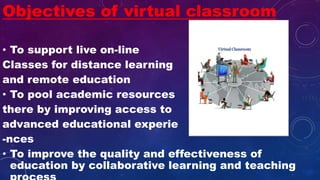
Objectives of virtual classroom
• To support live on-line
Classes for distance learning
and remote education
• To pool academic resources
there by improving access to
advanced educational experie
-nces
• To improve the quality and effectiveness of
education by collaborative learning and teaching
• To hold and Participate in the meetings
webinars,conferences/symposium/workshop,intervi
ews, etc through video conferencing
• To increase and improve the accessibility of
educational resources to the persons with
disabilities.
Meaning of virtual classroom
Virtual classroom is a place where learning happens.
Educators facilitate while learners actively engage
with the material and interact with one another.
Virtual education is a term describing on-line
education using the Internet. This term is primarily
used in higher education. Some so called virtual
universities have also been established.
Features of virtual classroom
• Live video streaming presentation with powerful
functionality that delivers easy viewing of slides
and other documents, shared internet
access,virtual white board, and a media center.
• All through an easy to use toolbar. Application, file
and desktop sharing enable you to view live
demonstrations.
• Instructor can view each students session when
you perform your hands on labs,the instructor can
access your remote system to demonstrate and
assist while you sit back to absorb the classroom
style mentoring you expect
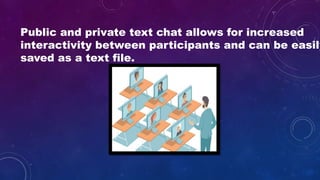
Public and private text chat allows for increased
interactivity between participants and can be easily
saved as a text file.
• Virtual classroom Accessories
1. Projector
2. LCDs
3. Server machine
4. Video conferencing system and its
accessories
5. High definition multimedia visualize
6. Interactive whiteboard or touch
panel
Advantages of virtual classroom
• Offer anytime Access:offer live classes, office
hours,and group discussions at times that are
convenient for instructors and students, not just when
the physical facilities are available.
• Flexible content area:A beauty therapy class teaches
very different information from a computing class.
• A variety of content types can be viewed such as power
point, word,excel,HTML,Web pages,images,movie clips,
PDF,flash,CMS pages.
• Recordings of the class: It would be great
if you could study for an exam by going
back in time to the original class.
Disadvantages of virtual classroom
• Highly expensive
• Computer knowledge is needed
• All school can’t afford this facilities
• It does not create a formal classroom atmosphere
Conclusion
It is true that ICT is playing a vital role in teaching
and learning but at same time there are many
opportunities and challenges that are to be
addressed for smooth functioning of various services
that are to be implemented for its learners and other
public provided through ICT.
References
Techniques methods and
approaches of pedagogy-Dr
Malini L
https://sites.google.com
ICT based virtual classroom

ICT based virtual classroom

  • 1.
    JSS MAHAVIDYAPEETHA MYSORE-04 JSSINSTITUTE OF EDUCATION SAKALESHPUR- 573134 SEMINAR PRESENTATION SUBJECT:-METHODS TECHNIQUES AND APPROACHES OF PEDAGOGY TOPIC:-ICT BASED VIRTUAL CLASSROOM SUBMITTED BY SUBMITTED TO MANVITHA M DR PRABHUSWAMY 1BED 2ND SEM. ASSITANT PROFESSOR REG NO:-ED211633
  • 2.
    Contents • Introduction • Objectivesof virtual classroom • Meaning of virtual classroom • Features of virtual classroom • Accessories • Advantages • Disadvantages • Conclusion • References
  • 3.
    Introduction Explosion of theknowledge age has changed the context of what is learnt and how it is learnt the concept of virtual classrooms is a manifestation of this knowledge revolution Virtual learning in the space of just a few years, has greatly enhanced its position as a learning solution among a growing number of organizations.
  • 4.
    Behind virtual learning’srise in such a short span of time is better ,more reliable delivery technology and an increasing number of tech-savvy learners.in addition the great economic meltdown that began in late2007 forced companies to find cost-saving alternatives to traditional classroom training
  • 5.
    Objectives of virtualclassroom • To support live on-line Classes for distance learning and remote education • To pool academic resources there by improving access to advanced educational experie -nces • To improve the quality and effectiveness of education by collaborative learning and teaching
  • 6.
    • To holdand Participate in the meetings webinars,conferences/symposium/workshop,intervi ews, etc through video conferencing • To increase and improve the accessibility of educational resources to the persons with disabilities.
  • 7.
    Meaning of virtualclassroom Virtual classroom is a place where learning happens. Educators facilitate while learners actively engage with the material and interact with one another. Virtual education is a term describing on-line education using the Internet. This term is primarily used in higher education. Some so called virtual universities have also been established.
  • 8.
    Features of virtualclassroom • Live video streaming presentation with powerful functionality that delivers easy viewing of slides and other documents, shared internet access,virtual white board, and a media center. • All through an easy to use toolbar. Application, file and desktop sharing enable you to view live demonstrations. • Instructor can view each students session when you perform your hands on labs,the instructor can access your remote system to demonstrate and assist while you sit back to absorb the classroom style mentoring you expect
  • 9.
    Public and privatetext chat allows for increased interactivity between participants and can be easily saved as a text file.
  • 10.
    • Virtual classroomAccessories 1. Projector 2. LCDs 3. Server machine 4. Video conferencing system and its accessories 5. High definition multimedia visualize 6. Interactive whiteboard or touch panel
  • 11.
    Advantages of virtualclassroom • Offer anytime Access:offer live classes, office hours,and group discussions at times that are convenient for instructors and students, not just when the physical facilities are available. • Flexible content area:A beauty therapy class teaches very different information from a computing class. • A variety of content types can be viewed such as power point, word,excel,HTML,Web pages,images,movie clips, PDF,flash,CMS pages.
  • 12.
    • Recordings ofthe class: It would be great if you could study for an exam by going back in time to the original class.
  • 13.
    Disadvantages of virtualclassroom • Highly expensive • Computer knowledge is needed • All school can’t afford this facilities • It does not create a formal classroom atmosphere
  • 14.
    Conclusion It is truethat ICT is playing a vital role in teaching and learning but at same time there are many opportunities and challenges that are to be addressed for smooth functioning of various services that are to be implemented for its learners and other public provided through ICT.
  • 15.
    References Techniques methods and approachesof pedagogy-Dr Malini L https://sites.google.com