
1
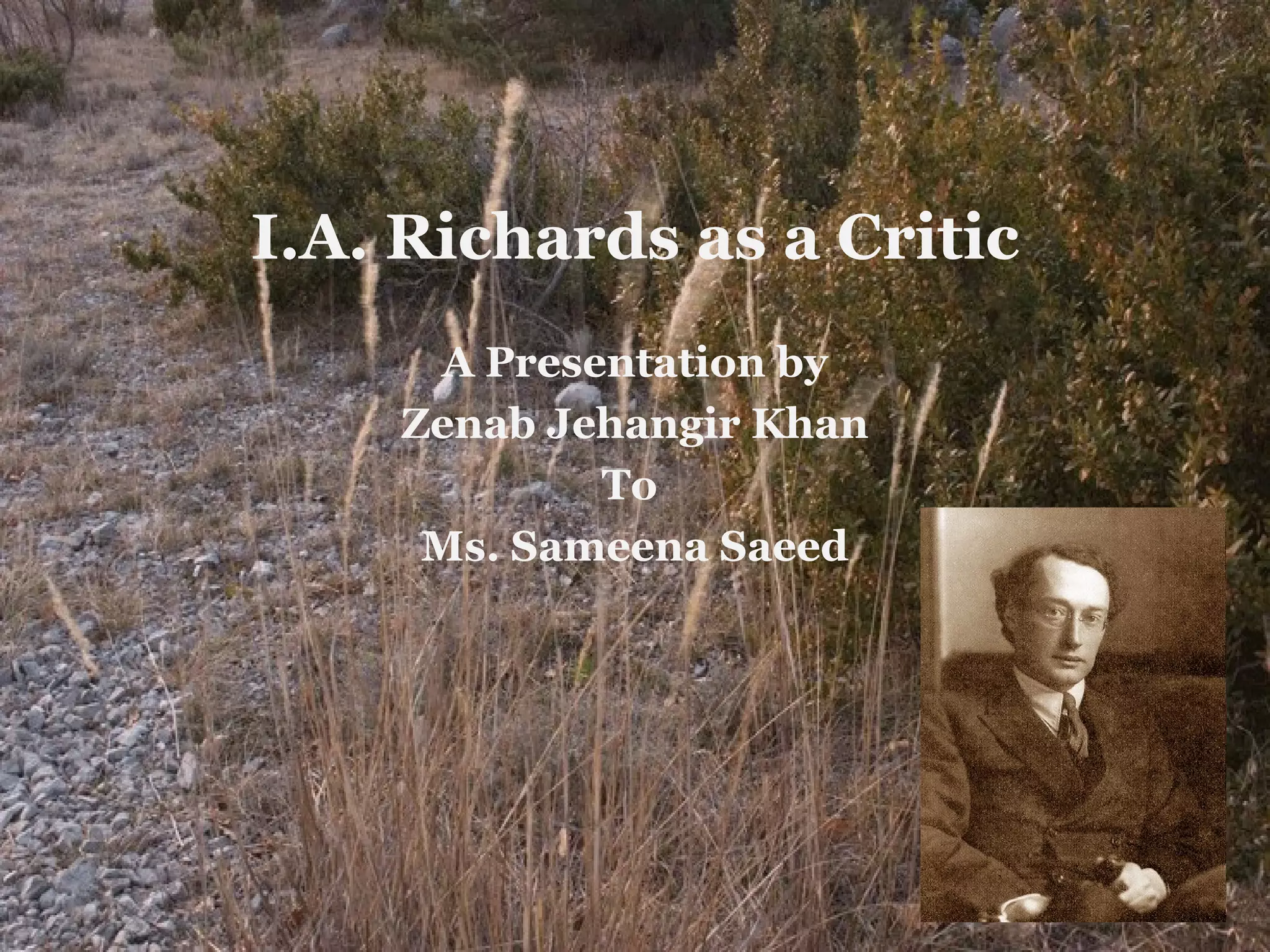
I.A. Richards as a Critic
A Presentation by
Zenab Jehangir Khan
To
Ms. Sameena Saeed
2
Contents
• Literary Background
• Theory of Literary Criticism
• Iconoclast
• New Criticism
• Close Reading
• Views Regarding a Critic
• Imaginative Literature
• His Conception of Poetry
• Definition of a Poem
• Conclusion
3
Literary Background
• A psychologist
• No formal education in literature
• His keen interest in literary criticism lead him
to formulate new concepts
4
Theory of Literary Criticism
• His work mainly deals with poetry
• Dismisses all visual imageries from poetic
criticism
• Meaning of the words is important
• Judgment should be made on the basis of
experience
• Richards has tried to use science to remove
the scientist's objections to poetry
5
Iconoclast
• Staunch advocate of close textual and verbal
analysis
• Unhistorical method of criticism
• Made criticism factual, scientific and
complete
• Criticism is not mere application of set rules
or intuition
6
New Criticism
• Richards is pioneer of New Criticism.
• Claims that the text is adequate for
interpretation
• Examines the formal elements, i.e.
characterization, plot, images, setting etc
• Linguistic elements, i.e. ambiguity, paradox
etc
• Unique and universal theme in a work of art
• Objective criticism
7
Close Reading
• Text works as a unified whole
• Main theme is established through formal or
stylistic elements
• First step is to read text carefully
• Second is to look for patterns
• Third is to ask the questions of “why” and
“how”
• Authorial intentions are avoided
8
Views Regarding a Critic
• “Adept at experiencing”
• “must be able to distinguish experiences
from one another”
• “he must be a sound judge of values”
- “The Analysis of a Poem”
• Adequate knowledge of psychology is
important for a critic.
9
Imaginative Literature
• A kind of psychological adjustment in the
author which is valuable for personality
• The reader can have this adjustment
communicated to him by reading the work
• “scientific imagination”
• “Reconciliation” of “discordant impulses”
- “The Imagination”
10
His Conception of Poetry
• Meaning as the starting point of poetry
• Words determine the meaning
• Technical features like rhyme and rhythm
adds to the aesthetic of a poem
• “…experience is valuable” in poetry
• Experience is composed of two parts, i.e.
“technical part” and “critical part”
- “The Language of Criticism”
•
11
Definition of a Poem
• He has defined poem as:
…as a class of experience which do not differ
in any character more then a certain amount
varying for each character, from a standard
experience. We may take as this standard
experience the relevant experience of the
poet when contemplating the completed
composition.
- “The Definition of a Poem”
12
Conclusion
• Richards’ criticism is scientific
• His emphasis on experience seems abstract.
• Psychological approach to literary criticism
makes it too technical and dull a subject
• Can psychological criticism ever explain the
mystic nature of poetic experience?
13

I. A. Richards as a critic

  • 1.
    1 I.A. Richards asa Critic A Presentation by Zenab Jehangir Khan To Ms. Sameena Saeed
  • 2.
    2 Contents • Literary Background •Theory of Literary Criticism • Iconoclast • New Criticism • Close Reading • Views Regarding a Critic • Imaginative Literature • His Conception of Poetry • Definition of a Poem • Conclusion
  • 3.
    3 Literary Background • Apsychologist • No formal education in literature • His keen interest in literary criticism lead him to formulate new concepts
  • 4.
    4 Theory of LiteraryCriticism • His work mainly deals with poetry • Dismisses all visual imageries from poetic criticism • Meaning of the words is important • Judgment should be made on the basis of experience • Richards has tried to use science to remove the scientist's objections to poetry
  • 5.
    5 Iconoclast • Staunch advocateof close textual and verbal analysis • Unhistorical method of criticism • Made criticism factual, scientific and complete • Criticism is not mere application of set rules or intuition
  • 6.
    6 New Criticism • Richardsis pioneer of New Criticism. • Claims that the text is adequate for interpretation • Examines the formal elements, i.e. characterization, plot, images, setting etc • Linguistic elements, i.e. ambiguity, paradox etc • Unique and universal theme in a work of art • Objective criticism
  • 7.
    7 Close Reading • Textworks as a unified whole • Main theme is established through formal or stylistic elements • First step is to read text carefully • Second is to look for patterns • Third is to ask the questions of “why” and “how” • Authorial intentions are avoided
  • 8.
    8 Views Regarding aCritic • “Adept at experiencing” • “must be able to distinguish experiences from one another” • “he must be a sound judge of values” - “The Analysis of a Poem” • Adequate knowledge of psychology is important for a critic.
  • 9.
    9 Imaginative Literature • Akind of psychological adjustment in the author which is valuable for personality • The reader can have this adjustment communicated to him by reading the work • “scientific imagination” • “Reconciliation” of “discordant impulses” - “The Imagination”
  • 10.
    10 His Conception ofPoetry • Meaning as the starting point of poetry • Words determine the meaning • Technical features like rhyme and rhythm adds to the aesthetic of a poem • “…experience is valuable” in poetry • Experience is composed of two parts, i.e. “technical part” and “critical part” - “The Language of Criticism” •
  • 11.
    11 Definition of aPoem • He has defined poem as: …as a class of experience which do not differ in any character more then a certain amount varying for each character, from a standard experience. We may take as this standard experience the relevant experience of the poet when contemplating the completed composition. - “The Definition of a Poem”
  • 12.
    12 Conclusion • Richards’ criticismis scientific • His emphasis on experience seems abstract. • Psychological approach to literary criticism makes it too technical and dull a subject • Can psychological criticism ever explain the mystic nature of poetic experience?
  • 13.