Physiology of hypoxia
Definition
▪ Reduced oxygen supply to the tissues
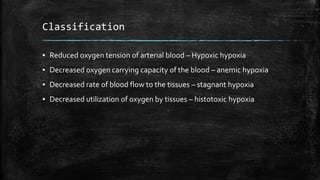
Classification
▪ Reduced oxygen tension of arterial blood – Hypoxic hypoxia
▪ Decreased oxygen carrying capacity of the blood – anemic hypoxia
▪ Decreased rate of blood flow to the tissues – stagnant hypoxia
▪ Decreased utilization of oxygen by tissues – histotoxic hypoxia
But first
▪ Arterial Po2
▪ Oxygen carrying capacity of blood (Hb value )
▪ A –V difference of Po2
▪ Percentage saturation of hemoglobin SaO2
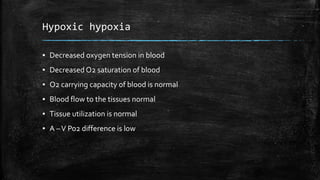
Hypoxic hypoxia
▪ Decreased oxygen tension in blood
▪ Decreased O2 saturation of blood
▪ O2 carrying capacity of blood is normal
▪ Blood flow to the tissues normal
▪ Tissue utilization is normal
▪ A –V Po2 difference is low
Causes
▪ Low oxygen tension of inspire air
– High altitude
– Closed spaces
– Artificial gas breathing
▪ Hypoventilation
– Obstruction to respiratory passages
– Decreased lung compliance
– Paralysis of respiratory muscles
– Respiratory depression
▪ Reduced diffusion of O2 across respiratory membrane
– Emphysema , pulmonary edema , fibrosis
Anemic hypoxia
▪ Basic problem is decreased oxygen carrying capacity of blood
▪ Causes
– Anemia – bone marrow depression
– CO poisoning
– Met-haemoglobinemia
Characteristic features
▪ Arterial Po2 is normal
▪ O2 carrying capacity of blood is reduced ( SaO2 reduced)
▪ A –V difference is normal
▪ Normal tissue utilization
2,3 DBG significance
▪ Increases O2 delivery to tissues
▪ Hbo2 + 2, 3 DBG Hb 2, 3 DBG + O2
Stagnant hypoxia
▪ Problem – decreased blood flow to tissues (stagnation)
▪ Normal Po2 , SaO2 , Hb , normal tissues
▪ Causes – generalized , localized
– Shock , CHF
– Thrombosis , embolism, atherosclerosis
Characteristic Features
▪ Normal pO2
▪ Normal SaO2
▪ A –V pO2 is high than normal
Histotoxic Hypoxia
▪ Problem with tissues
▪ Tissues not able to use the oxygen
▪ Inhibition of cellular respiration (ETC) by poisons
▪ Cyanide , sulphide poisoning
▪ Normal pO2
▪ SaO2 normal
▪ A –V difference is nil
Effects of hypoxia
▪ Hypoxia mainly affects CNS , specially the higher centers
▪ Fulminant hypoxia , acute hypoxia , chronic hypoxia
▪ Effects depends on the severity , duration and type , and
compensatory mech of body
Important Symptoms And Signs
▪ Cyanosis
▪ Tachycardia
▪ Tachypnoea
▪ Acute hypoxia resembles alcohol intoxication
▪ Anaerobic glycolysis
▪ Metabolic acidosis with respiratory alkalosis
▪ Angiogenisis
▪ Polycythemia
▪ Pulmonary hypertension
Hypoxia

Hypoxia

  • 1.
  • 2.
    Definition ▪ Reduced oxygensupply to the tissues
  • 3.
    Classification ▪ Reduced oxygentension of arterial blood – Hypoxic hypoxia ▪ Decreased oxygen carrying capacity of the blood – anemic hypoxia ▪ Decreased rate of blood flow to the tissues – stagnant hypoxia ▪ Decreased utilization of oxygen by tissues – histotoxic hypoxia
  • 4.
    But first ▪ ArterialPo2 ▪ Oxygen carrying capacity of blood (Hb value ) ▪ A –V difference of Po2 ▪ Percentage saturation of hemoglobin SaO2
  • 5.
    Hypoxic hypoxia ▪ Decreasedoxygen tension in blood ▪ Decreased O2 saturation of blood ▪ O2 carrying capacity of blood is normal ▪ Blood flow to the tissues normal ▪ Tissue utilization is normal ▪ A –V Po2 difference is low
  • 6.
    Causes ▪ Low oxygentension of inspire air – High altitude – Closed spaces – Artificial gas breathing ▪ Hypoventilation – Obstruction to respiratory passages – Decreased lung compliance – Paralysis of respiratory muscles – Respiratory depression ▪ Reduced diffusion of O2 across respiratory membrane – Emphysema , pulmonary edema , fibrosis
  • 7.
    Anemic hypoxia ▪ Basicproblem is decreased oxygen carrying capacity of blood ▪ Causes – Anemia – bone marrow depression – CO poisoning – Met-haemoglobinemia
  • 8.
    Characteristic features ▪ ArterialPo2 is normal ▪ O2 carrying capacity of blood is reduced ( SaO2 reduced) ▪ A –V difference is normal ▪ Normal tissue utilization
  • 9.
    2,3 DBG significance ▪Increases O2 delivery to tissues ▪ Hbo2 + 2, 3 DBG Hb 2, 3 DBG + O2
  • 10.
    Stagnant hypoxia ▪ Problem– decreased blood flow to tissues (stagnation) ▪ Normal Po2 , SaO2 , Hb , normal tissues ▪ Causes – generalized , localized – Shock , CHF – Thrombosis , embolism, atherosclerosis
  • 11.
    Characteristic Features ▪ NormalpO2 ▪ Normal SaO2 ▪ A –V pO2 is high than normal
  • 12.
    Histotoxic Hypoxia ▪ Problemwith tissues ▪ Tissues not able to use the oxygen ▪ Inhibition of cellular respiration (ETC) by poisons ▪ Cyanide , sulphide poisoning ▪ Normal pO2 ▪ SaO2 normal ▪ A –V difference is nil
  • 13.
    Effects of hypoxia ▪Hypoxia mainly affects CNS , specially the higher centers ▪ Fulminant hypoxia , acute hypoxia , chronic hypoxia ▪ Effects depends on the severity , duration and type , and compensatory mech of body
  • 14.
    Important Symptoms AndSigns ▪ Cyanosis ▪ Tachycardia ▪ Tachypnoea ▪ Acute hypoxia resembles alcohol intoxication ▪ Anaerobic glycolysis ▪ Metabolic acidosis with respiratory alkalosis ▪ Angiogenisis ▪ Polycythemia ▪ Pulmonary hypertension