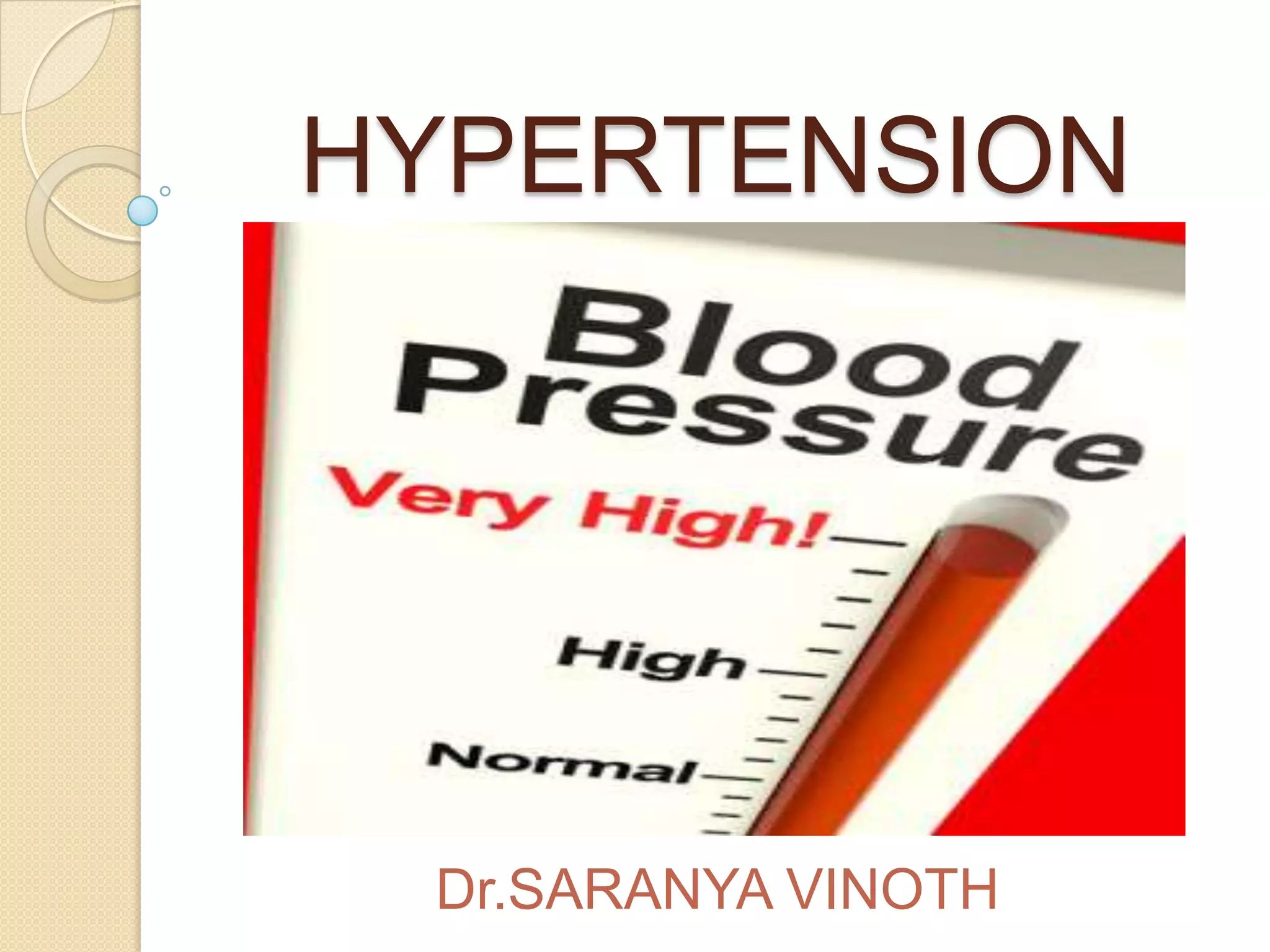



HYPERTENSION
Dr.SARANYA VINOTH
INTRODUCTION
• Hypertension (high blood preassure) also
called silent killer is a chronic medical condition
characterized by constant elevation of the systolic
or diastolic pressure above 140/90 mmHg.
• Because hypertension is almost
without symptoms except for headaches in some
patients, it hides in the body without knowing it.
•The fact that hypertension is asymptomatic makes it
difficult for patients to accept the diagnosis and comply
with treatment.
 In India more than over 140 million people
are believed to be suffering from high blood
pressure in the country and the number is
expected to cross the 214 million mark in
2030.
 Hypertension is a major risk factor for
cardio-vascular diseases.
INTRODUCTION
OBJECTIVES
 At the end of this presentation you should
understand
 Define,classify and diagnosis of
hypertension
 Types of HT
 Identify risk factors &complications
 Treatment guidelines
 Complications and prevention methods
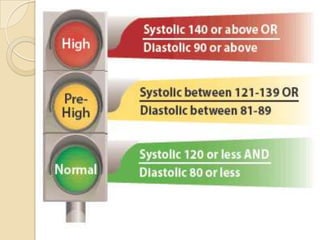
DEFINITION
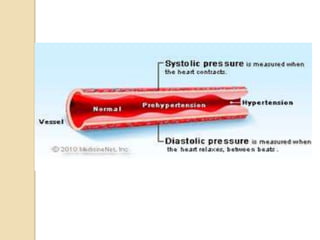
 Hypertension is defined as a systolic blood
pressure (SBP) of 140 mm Hg or more, or a
diastolic blood pressure (DBP) of 90 mm
Hg.
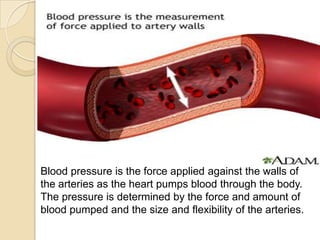
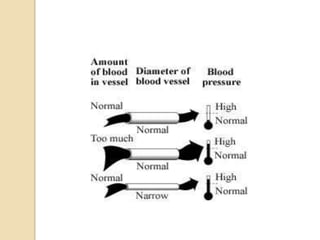
Blood pressure is the force applied against the walls of
the arteries as the heart pumps blood through the body.
The pressure is determined by the force and amount of
blood pumped and the size and flexibility of the arteries.
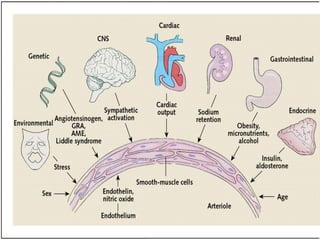
PATHOPHYSIOLOGY
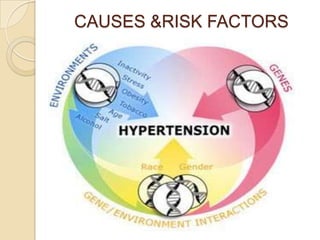
CAUSES &RISK FACTORS
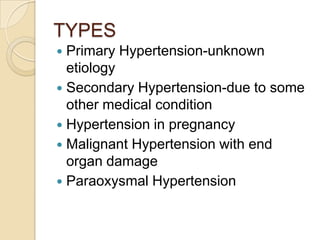
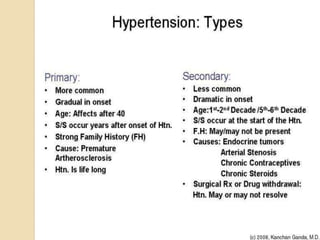
TYPES
 Primary Hypertension-unknown
etiology
 Secondary Hypertension-due to some
other medical condition
 Hypertension in pregnancy
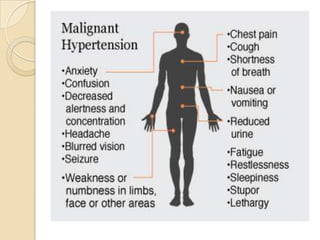
 Malignant Hypertension with end
organ damage
 Paraoxysmal Hypertension
SIGNS AND SYMPTOMS
 Severe headache
 Nausea or vomiting
 Bad headache
 Confusion
 Changes in your vision
 Nosebleeds
Investigations
 Blood pressure evaluation
 Fasting Blood Sugar (FBS) – To
diagnose diabetes
 Lipid Profile – To diagnose
dyslipidaemia
 Renal Profile- Serum Urea, Albumin,
Creatinine
Measurement of BP
 The patient must be properly prepared
and positioned
 Caffeine,exercise and smoking should
be avoided for atleast 30 minutes
before.
 Average of atleast three readings on
three different occassions should be
recorded.
MANAGEMENT
MANAGEMENT
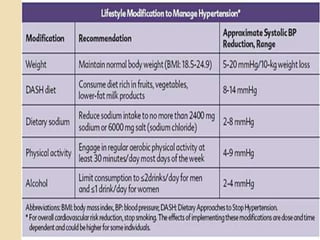
LIFE STYLE MODIFICATION
 Regular physical activity
 Smoking cessation
 Salt restriction
 Alcohol cessation
 Weight loss
MANAGEMENT
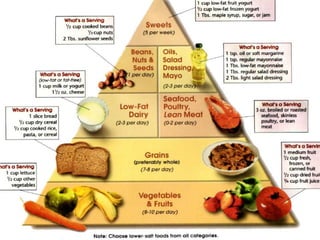
DIETARY PLAN
 DASH-Dietary Approach to Stop
Hypertension
MEDICATIONS
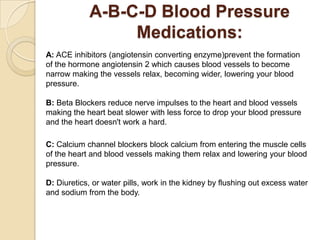
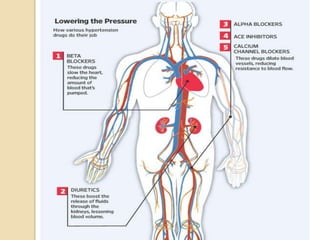
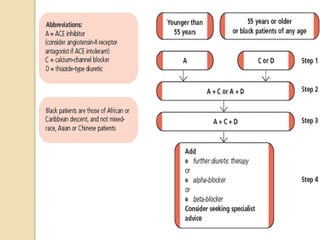
A-B-C-D Blood Pressure
Medications:
A: ACE inhibitors (angiotensin converting enzyme)prevent the formation
of the hormone angiotensin 2 which causes blood vessels to become
narrow making the vessels relax, becoming wider, lowering your blood
pressure.
B: Beta Blockers reduce nerve impulses to the heart and blood vessels
making the heart beat slower with less force to drop your blood pressure
and the heart doesn't work a hard.
C: Calcium channel blockers block calcium from entering the muscle cells
of the heart and blood vessels making them relax and lowering your blood
pressure.
D: Diuretics, or water pills, work in the kidney by flushing out excess water
and sodium from the body.
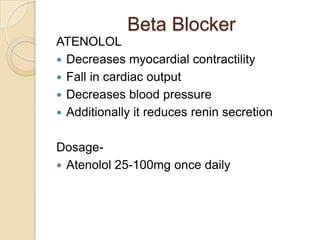
Beta Blocker
ATENOLOL
 Decreases myocardial contractility
 Fall in cardiac output
 Decreases blood pressure
 Additionally it reduces renin secretion
Dosage-
 Atenolol 25-100mg once daily
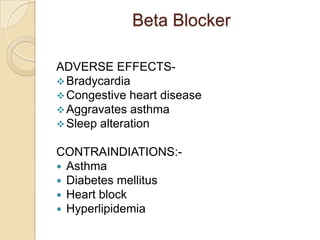
ADVERSE EFFECTS-
Bradycardia
Congestive heart disease
Aggravates asthma
Sleep alteration
CONTRAINDIATIONS:-
 Asthma
 Diabetes mellitus
 Heart block
 Hyperlipidemia
Beta Blocker
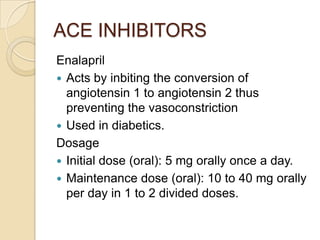
ACE INHIBITORS
Enalapril
 Acts by inbiting the conversion of
angiotensin 1 to angiotensin 2 thus
preventing the vasoconstriction
 Used in diabetics.
Dosage
 Initial dose (oral): 5 mg orally once a day.
 Maintenance dose (oral): 10 to 40 mg orally
per day in 1 to 2 divided doses.
Side effects-
 First dose hypotension
 Dry cough
 Urticaria
Contraindiation
 Renal failure
 Pregnancy
ACE INHIBITORS
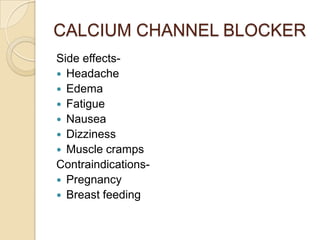
CALCIUM CHANNEL BLOCKER
Amlodipine
 Acts by relaxing the smooth muscle in
the arterial wall, decreasing total peripheral
resistance thereby reducing blood pressure;
in angina, amlodipine increases blood flow
to the heart muscle.
 Initial dose: 2.5 -5 mg orally once a day
Maintenance dose: 5 to 10 mg orally once a
day
Side effects-
 Headache
 Edema
 Fatigue
 Nausea
 Dizziness
 Muscle cramps
Contraindications-
 Pregnancy
 Breast feeding
CALCIUM CHANNEL BLOCKER
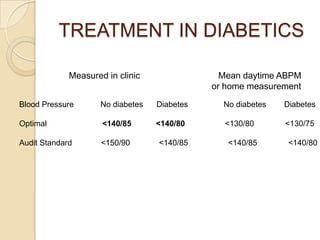
TREATMENT IN DIABETICS
Blood Pressure No diabetes Diabetes No diabetes Diabetes
Optimal <140/85 <140/80 <130/80 <130/75
Audit Standard <150/90 <140/85 <140/85 <140/80
Measured in clinic Mean daytime ABPM
or home measurement
FOLLOW UP
 Urine analysis-albumin,sugar
 Complete blood count
 Lipid profile
 Glucose levels
 Ophthalmic examination
 ECG
THANK YOU

Hypertension cme -dr.saranya

  • 1.
  • 2.
    INTRODUCTION • Hypertension (highblood preassure) also called silent killer is a chronic medical condition characterized by constant elevation of the systolic or diastolic pressure above 140/90 mmHg. • Because hypertension is almost without symptoms except for headaches in some patients, it hides in the body without knowing it. •The fact that hypertension is asymptomatic makes it difficult for patients to accept the diagnosis and comply with treatment.
  • 3.
     In Indiamore than over 140 million people are believed to be suffering from high blood pressure in the country and the number is expected to cross the 214 million mark in 2030.  Hypertension is a major risk factor for cardio-vascular diseases. INTRODUCTION
  • 4.
    OBJECTIVES  At theend of this presentation you should understand  Define,classify and diagnosis of hypertension  Types of HT  Identify risk factors &complications  Treatment guidelines  Complications and prevention methods
  • 5.
    DEFINITION  Hypertension isdefined as a systolic blood pressure (SBP) of 140 mm Hg or more, or a diastolic blood pressure (DBP) of 90 mm Hg.
  • 6.
    Blood pressure isthe force applied against the walls of the arteries as the heart pumps blood through the body. The pressure is determined by the force and amount of blood pumped and the size and flexibility of the arteries.
  • 8.
  • 14.
  • 15.
    TYPES  Primary Hypertension-unknown etiology Secondary Hypertension-due to some other medical condition  Hypertension in pregnancy  Malignant Hypertension with end organ damage  Paraoxysmal Hypertension
  • 19.
    SIGNS AND SYMPTOMS Severe headache  Nausea or vomiting  Bad headache  Confusion  Changes in your vision  Nosebleeds
  • 20.
    Investigations  Blood pressureevaluation  Fasting Blood Sugar (FBS) – To diagnose diabetes  Lipid Profile – To diagnose dyslipidaemia  Renal Profile- Serum Urea, Albumin, Creatinine
  • 21.
    Measurement of BP The patient must be properly prepared and positioned  Caffeine,exercise and smoking should be avoided for atleast 30 minutes before.  Average of atleast three readings on three different occassions should be recorded.
  • 23.
  • 24.
    MANAGEMENT LIFE STYLE MODIFICATION Regular physical activity  Smoking cessation  Salt restriction  Alcohol cessation  Weight loss
  • 25.
    MANAGEMENT DIETARY PLAN  DASH-DietaryApproach to Stop Hypertension
  • 28.
  • 29.
    A-B-C-D Blood Pressure Medications: A:ACE inhibitors (angiotensin converting enzyme)prevent the formation of the hormone angiotensin 2 which causes blood vessels to become narrow making the vessels relax, becoming wider, lowering your blood pressure. B: Beta Blockers reduce nerve impulses to the heart and blood vessels making the heart beat slower with less force to drop your blood pressure and the heart doesn't work a hard. C: Calcium channel blockers block calcium from entering the muscle cells of the heart and blood vessels making them relax and lowering your blood pressure. D: Diuretics, or water pills, work in the kidney by flushing out excess water and sodium from the body.
  • 31.
    Beta Blocker ATENOLOL  Decreasesmyocardial contractility  Fall in cardiac output  Decreases blood pressure  Additionally it reduces renin secretion Dosage-  Atenolol 25-100mg once daily
  • 32.
    ADVERSE EFFECTS- Bradycardia Congestive heartdisease Aggravates asthma Sleep alteration CONTRAINDIATIONS:-  Asthma  Diabetes mellitus  Heart block  Hyperlipidemia Beta Blocker
  • 33.
    ACE INHIBITORS Enalapril  Actsby inbiting the conversion of angiotensin 1 to angiotensin 2 thus preventing the vasoconstriction  Used in diabetics. Dosage  Initial dose (oral): 5 mg orally once a day.  Maintenance dose (oral): 10 to 40 mg orally per day in 1 to 2 divided doses.
  • 34.
    Side effects-  Firstdose hypotension  Dry cough  Urticaria Contraindiation  Renal failure  Pregnancy ACE INHIBITORS
  • 35.
    CALCIUM CHANNEL BLOCKER Amlodipine Acts by relaxing the smooth muscle in the arterial wall, decreasing total peripheral resistance thereby reducing blood pressure; in angina, amlodipine increases blood flow to the heart muscle.  Initial dose: 2.5 -5 mg orally once a day Maintenance dose: 5 to 10 mg orally once a day
  • 36.
    Side effects-  Headache Edema  Fatigue  Nausea  Dizziness  Muscle cramps Contraindications-  Pregnancy  Breast feeding CALCIUM CHANNEL BLOCKER
  • 39.
    TREATMENT IN DIABETICS BloodPressure No diabetes Diabetes No diabetes Diabetes Optimal <140/85 <140/80 <130/80 <130/75 Audit Standard <150/90 <140/85 <140/85 <140/80 Measured in clinic Mean daytime ABPM or home measurement
  • 41.
    FOLLOW UP  Urineanalysis-albumin,sugar  Complete blood count  Lipid profile  Glucose levels  Ophthalmic examination  ECG
  • 43.