DIAGNOSTIC MEDICIE-2
CHOs in training-Year 3
Diagnosis and management of
Hypertension.
Dr. Brima Bobson Sesay
Medicine Department
Njala University-Bo Campus
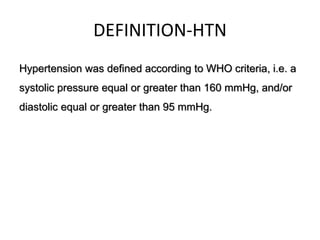
DEFINITION-HTN
Hypertension was defined according to WHO criteria, i.e. a
systolic pressure equal or greater than 160 mmHg, and/or
diastolic equal or greater than 95 mmHg.
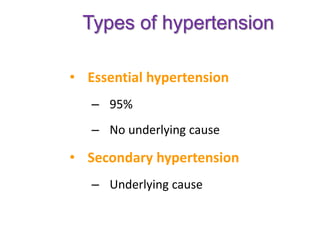
Types of hypertension
• Essential hypertension
– 95%
– No underlying cause
• Secondary hypertension
– Underlying cause
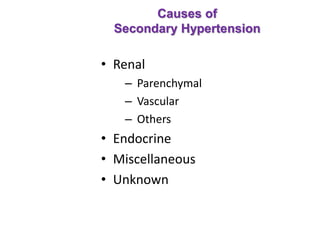
Causes of
Secondary Hypertension
• Renal
– Parenchymal
– Vascular
– Others
• Endocrine
• Miscellaneous
• Unknown
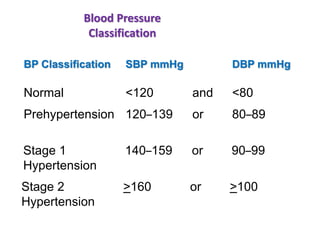
Blood Pressure
Classification
Normal <120 and <80
Prehypertension 120–139 or 80–89
Stage 1
Hypertension
140–159 or 90–99
Stage 2
Hypertension
>160 or >100
BP Classification SBP mmHg DBP mmHg
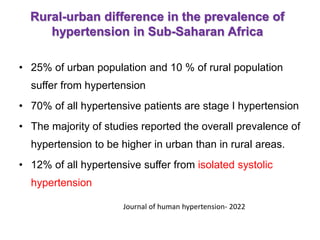
Rural-urban difference in the prevalence of
hypertension in Sub-Saharan Africa
• 25% of urban population and 10 % of rural population
suffer from hypertension
• 70% of all hypertensive patients are stage I hypertension
• The majority of studies reported the overall prevalence of
hypertension to be higher in urban than in rural areas.
• 12% of all hypertensive suffer from isolated systolic
hypertension
Journal of human hypertension- 2022
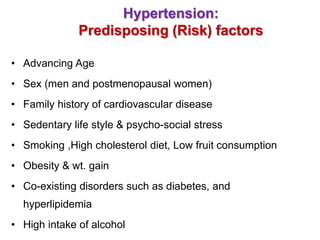
Hypertension:
Predisposing (Risk) factors
• Advancing Age
• Sex (men and postmenopausal women)
• Family history of cardiovascular disease
• Sedentary life style & psycho-social stress
• Smoking ,High cholesterol diet, Low fruit consumption
• Obesity & wt. gain
• Co-existing disorders such as diabetes, and
hyperlipidemia
• High intake of alcohol
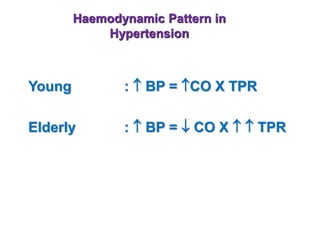
Haemodynamic Pattern in
Hypertension
Young :  BP = CO X TPR
Elderly :  BP =  CO X   TPR
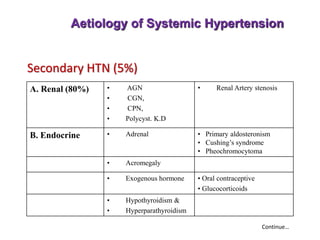
Aetiology of Systemic Hypertension
Secondary HTN (5%)
A. Renal (80%) • AGN
• CGN,
• CPN,
• Polycyst. K.D
• Renal Artery stenosis
B. Endocrine • Adrenal • Primary aldosteronism
• Cushing’s syndrome
• Pheochromocytoma
• Acromegaly
• Exogenous hormone • Oral contraceptive
• Glucocorticoids
• Hypothyroidism &
• Hyperparathyroidism
Continue…
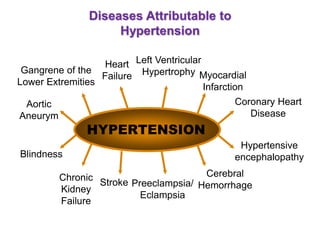
Diseases Attributable to
Hypertension
HYPERTENSION
Gangrene of the
Lower Extremities
Heart
Failure
Left Ventricular
Hypertrophy Myocardial
Infarction
Coronary Heart
Disease
Aortic
Aneurym
Blindness
Chronic
Kidney
Failure
Stroke Preeclampsia/
Eclampsia
Cerebral
Hemorrhage
Hypertensive
encephalopathy
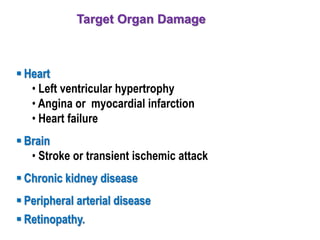
Target Organ Damage
 Heart
• Left ventricular hypertrophy
• Angina or myocardial infarction
• Heart failure
 Brain
• Stroke or transient ischemic attack
 Chronic kidney disease
 Peripheral arterial disease
 Retinopathy.
Clinical manifestations
• No specific complains or manifestations other than
elevated systolic and/or diastolic BP (Silent Killer )
• Morning occipital headache
• Dizziness
• Fatigue
• In severe hypertension, epistaxis or blurred vision
Self-Measurement of BP
 Provides information on:
1. Response to antihypertensive therapy
2. Improving adherence with therapy
3. Evaluating white-coat HTN
 Home measurement of >135/85 mmHg is generally
considered to be hypertensive.
 Home measurement devices should be checked regularly.
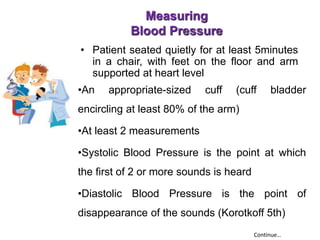
Measuring
Blood Pressure
• Patient seated quietly for at least 5minutes
in a chair, with feet on the floor and arm
supported at heart level
•An appropriate-sized cuff (cuff bladder
encircling at least 80% of the arm)
•At least 2 measurements
•Systolic Blood Pressure is the point at which
the first of 2 or more sounds is heard
•Diastolic Blood Pressure is the point of
disappearance of the sounds (Korotkoff 5th)
Continue…
Laboratory Tests
 Routine Tests
• Electrocardiogram
• Urinalysis
• Blood glucose,
• Serum potassium, creatinine, or the corresponding estimated GFR,
and calcium
• Lipid profile, after 9- to 12-hour fast, that includes high-density and
low-density lipoprotein cholesterol, and triglycerides
 Optional tests
• Measurement of urinary albumin excretion or albumin/creatinine
ratio
 More extensive testing for identifiable causes is not generally indicated
unless BP control is not achieved
Treatment Overview
Goals of therapy
Lifestyle modification
Pharmacologic treatment
 Algorithm for treatment of hypertension
Follow up and monitoring
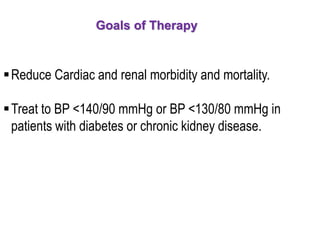
Goals of Therapy
Reduce Cardiac and renal morbidity and mortality.
Treat to BP <140/90 mmHg or BP <130/80 mmHg in
patients with diabetes or chronic kidney disease.
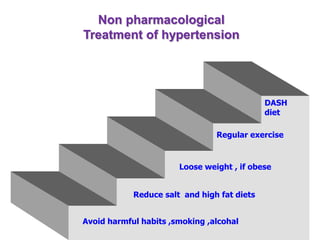
Non pharmacological
Treatment of hypertension
Avoid harmful habits ,smoking ,alcohal
Reduce salt and high fat diets
Loose weight , if obese
Regular exercise
DASH
diet
Life style modifications
• Lose weight, if overweight
• Increase physical activity
• Reduce salt intake
• Stop smoking
• Limit intake of foods rich in fats and
cholesterol
• increase consumption of fruits and
vegetables
• Limit alcohol intake
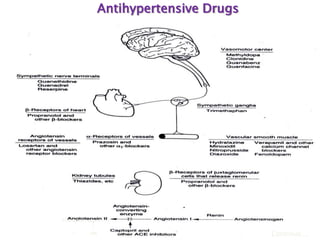
Antihypertensive Drugs
Continue….
AT1 receptor
ARB
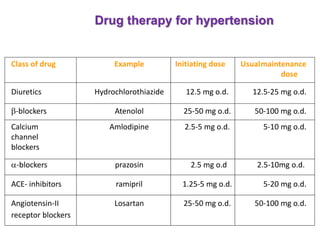
Drug therapy for hypertension
Class of drug Example Initiating dose Usualmaintenance
dose
Diuretics Hydrochlorothiazide 12.5 mg o.d. 12.5-25 mg o.d.
-blockers Atenolol 25-50 mg o.d. 50-100 mg o.d.
Calcium Amlodipine 2.5-5 mg o.d. 5-10 mg o.d.
channel
blockers
-blockers prazosin 2.5 mg o.d 2.5-10mg o.d.
ACE- inhibitors ramipril 1.25-5 mg o.d. 5-20 mg o.d.
Angiotensin-II Losartan 25-50 mg o.d. 50-100 mg o.d.
receptor blockers
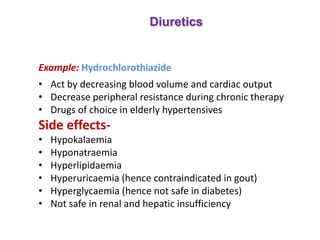
Diuretics
Example: Hydrochlorothiazide
• Act by decreasing blood volume and cardiac output
• Decrease peripheral resistance during chronic therapy
• Drugs of choice in elderly hypertensives
Side effects-
• Hypokalaemia
• Hyponatraemia
• Hyperlipidaemia
• Hyperuricaemia (hence contraindicated in gout)
• Hyperglycaemia (hence not safe in diabetes)
• Not safe in renal and hepatic insufficiency
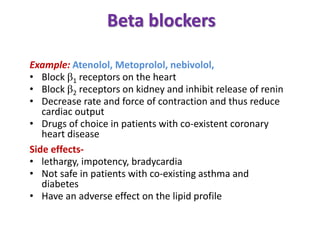
Beta blockers
Example: Atenolol, Metoprolol, nebivolol,
• Block 1 receptors on the heart
• Block 2 receptors on kidney and inhibit release of renin
• Decrease rate and force of contraction and thus reduce
cardiac output
• Drugs of choice in patients with co-existent coronary
heart disease
Side effects-
• lethargy, impotency, bradycardia
• Not safe in patients with co-existing asthma and
diabetes
• Have an adverse effect on the lipid profile
Calcium channel blockers
Example: Amlodipine
• Block entry of calcium through calcium
channels
• Cause vasodilation and reduce peripheral
resistance
• Drugs of choice in elderly hypertensives and
those with co-existing asthma
• Neutral effect on glucose and lipid levels
Side effects
Flushing, headache, Pedal edema
ACE inhibitors
Example: Ramipril, Lisinopril, Enalapril
• Inhibit ACE and formation of
angiotensin II and block its effects
• Drugs of choice in co-existent diabetes
mellitus, Heart failure
Side effects-
dry cough, hypotension, angioedema
Angiotensin II receptor blockers
Example: Losartan
• Block the angiotensin II receptor
and inhibit effects of angiotensin
II
• Drugs of choice in patients with
co-existing diabetes mellitus
Side effects-
safer than ACEI, hypotension,
Alpha blockers
Example: prazosin
• Block -1 receptors and cause
vasodilation
• Reduce peripheral resistance and venous
return
• Exert beneficial effects on lipids and
insulin sensitivity
• Drugs of choice in patients with co-
existing BPH
Side effects-
Postural hypotension,
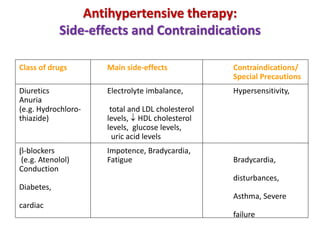
Antihypertensive therapy:
Side-effects and Contraindications
Class of drugs Main side-effects Contraindications/
Special Precautions
Diuretics Electrolyte imbalance, Hypersensitivity,
Anuria
(e.g. Hydrochloro- total and LDL cholesterol
thiazide) levels, HDL cholesterol
levels, glucose levels,
uric acid levels
-blockers Impotence, Bradycardia,
(e.g. Atenolol) Fatigue Bradycardia,
Conduction
disturbances,
Diabetes,
Asthma, Severe
cardiac
failure
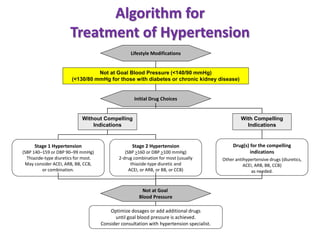
Algorithm for
Treatment of Hypertension
Not at Goal Blood Pressure (<140/90 mmHg)
(<130/80 mmHg for those with diabetes or chronic kidney disease)
Initial Drug Choices
Drug(s) for the compelling
indications
Other antihypertensive drugs (diuretics,
ACEI, ARB, BB, CCB)
as needed.
With Compelling
Indications
Lifestyle Modifications
Stage 2 Hypertension
(SBP >160 or DBP >100 mmHg)
2-drug combination for most (usually
thiazide-type diuretic and
ACEI, or ARB, or BB, or CCB)
Stage 1 Hypertension
(SBP 140–159 or DBP 90–99 mmHg)
Thiazide-type diuretics for most.
May consider ACEI, ARB, BB, CCB,
or combination.
Without Compelling
Indications
Not at Goal
Blood Pressure
Optimize dosages or add additional drugs
until goal blood pressure is achieved.
Consider consultation with hypertension specialist.
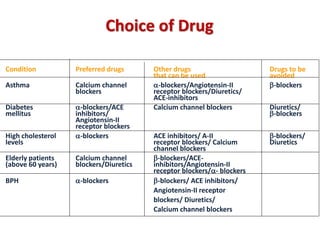
Choice of Drug
Condition Preferred drugs Other drugs Drugs to be
that can be used avoided
Asthma Calcium channel -blockers/Angiotensin-II -blockers
blockers receptor blockers/Diuretics/
ACE-inhibitors
Diabetes -blockers/ACE Calcium channel blockers Diuretics/
mellitus inhibitors/ -blockers
Angiotensin-II
receptor blockers
High cholesterol -blockers ACE inhibitors/ A-II -blockers/
levels receptor blockers/ Calcium Diuretics
channel blockers
Elderly patients Calcium channel -blockers/ACE-
(above 60 years) blockers/Diuretics inhibitors/Angiotensin-II
receptor blockers/- blockers
BPH -blockers -blockers/ ACE inhibitors/
Angiotensin-II receptor
blockers/ Diuretics/
Calcium channel blockers
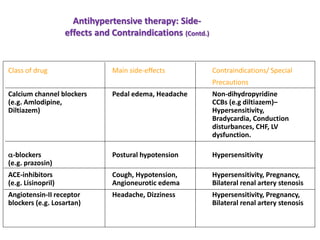
Class of drug Main side-effects Contraindications/ Special
Precautions
Calcium channel blockers Pedal edema, Headache Non-dihydropyridine
(e.g. Amlodipine, CCBs (e.g diltiazem)–
Diltiazem) Hypersensitivity,
Bradycardia, Conduction
disturbances, CHF, LV
dysfunction.
-blockers Postural hypotension Hypersensitivity
(e.g. prazosin)
ACE-inhibitors Cough, Hypotension, Hypersensitivity, Pregnancy,
(e.g. Lisinopril) Angioneurotic edema Bilateral renal artery stenosis
Angiotensin-II receptor Headache, Dizziness Hypersensitivity, Pregnancy,
blockers (e.g. Losartan) Bilateral renal artery stenosis
Antihypertensive therapy: Side-
effects and Contraindications (Contd.)
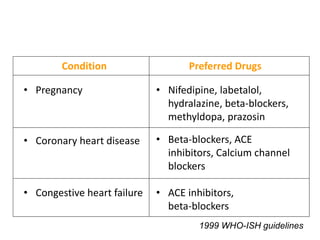
Condition
• Pregnancy
• Coronary heart disease
• Congestive heart failure
Preferred Drugs
• Nifedipine, labetalol,
hydralazine, beta-blockers,
methyldopa, prazosin
• Beta-blockers, ACE
inhibitors, Calcium channel
blockers
• ACE inhibitors,
beta-blockers
1999 WHO-ISH guidelines
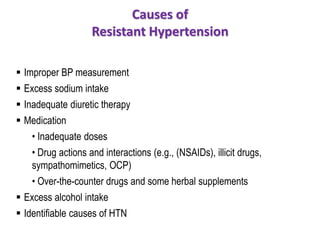
Causes of
Resistant Hypertension
 Improper BP measurement
 Excess sodium intake
 Inadequate diuretic therapy
 Medication
• Inadequate doses
• Drug actions and interactions (e.g., (NSAIDs), illicit drugs,
sympathomimetics, OCP)
• Over-the-counter drugs and some herbal supplements
 Excess alcohol intake
 Identifiable causes of HTN
THE END!

Hypertension Presentation CHOs 2022.pptx

  • 1.
    DIAGNOSTIC MEDICIE-2 CHOs intraining-Year 3 Diagnosis and management of Hypertension. Dr. Brima Bobson Sesay Medicine Department Njala University-Bo Campus
  • 2.
    DEFINITION-HTN Hypertension was definedaccording to WHO criteria, i.e. a systolic pressure equal or greater than 160 mmHg, and/or diastolic equal or greater than 95 mmHg.
  • 3.
    Types of hypertension •Essential hypertension – 95% – No underlying cause • Secondary hypertension – Underlying cause
  • 4.
    Causes of Secondary Hypertension •Renal – Parenchymal – Vascular – Others • Endocrine • Miscellaneous • Unknown
  • 5.
    Blood Pressure Classification Normal <120and <80 Prehypertension 120–139 or 80–89 Stage 1 Hypertension 140–159 or 90–99 Stage 2 Hypertension >160 or >100 BP Classification SBP mmHg DBP mmHg
  • 6.
    Rural-urban difference inthe prevalence of hypertension in Sub-Saharan Africa • 25% of urban population and 10 % of rural population suffer from hypertension • 70% of all hypertensive patients are stage I hypertension • The majority of studies reported the overall prevalence of hypertension to be higher in urban than in rural areas. • 12% of all hypertensive suffer from isolated systolic hypertension Journal of human hypertension- 2022
  • 7.
    Hypertension: Predisposing (Risk) factors •Advancing Age • Sex (men and postmenopausal women) • Family history of cardiovascular disease • Sedentary life style & psycho-social stress • Smoking ,High cholesterol diet, Low fruit consumption • Obesity & wt. gain • Co-existing disorders such as diabetes, and hyperlipidemia • High intake of alcohol
  • 8.
    Haemodynamic Pattern in Hypertension Young:  BP = CO X TPR Elderly :  BP =  CO X   TPR
  • 9.
    Aetiology of SystemicHypertension Secondary HTN (5%) A. Renal (80%) • AGN • CGN, • CPN, • Polycyst. K.D • Renal Artery stenosis B. Endocrine • Adrenal • Primary aldosteronism • Cushing’s syndrome • Pheochromocytoma • Acromegaly • Exogenous hormone • Oral contraceptive • Glucocorticoids • Hypothyroidism & • Hyperparathyroidism Continue…
  • 10.
    Diseases Attributable to Hypertension HYPERTENSION Gangreneof the Lower Extremities Heart Failure Left Ventricular Hypertrophy Myocardial Infarction Coronary Heart Disease Aortic Aneurym Blindness Chronic Kidney Failure Stroke Preeclampsia/ Eclampsia Cerebral Hemorrhage Hypertensive encephalopathy
  • 11.
    Target Organ Damage Heart • Left ventricular hypertrophy • Angina or myocardial infarction • Heart failure  Brain • Stroke or transient ischemic attack  Chronic kidney disease  Peripheral arterial disease  Retinopathy.
  • 12.
    Clinical manifestations • Nospecific complains or manifestations other than elevated systolic and/or diastolic BP (Silent Killer ) • Morning occipital headache • Dizziness • Fatigue • In severe hypertension, epistaxis or blurred vision
  • 13.
    Self-Measurement of BP Provides information on: 1. Response to antihypertensive therapy 2. Improving adherence with therapy 3. Evaluating white-coat HTN  Home measurement of >135/85 mmHg is generally considered to be hypertensive.  Home measurement devices should be checked regularly.
  • 14.
    Measuring Blood Pressure • Patientseated quietly for at least 5minutes in a chair, with feet on the floor and arm supported at heart level •An appropriate-sized cuff (cuff bladder encircling at least 80% of the arm) •At least 2 measurements •Systolic Blood Pressure is the point at which the first of 2 or more sounds is heard •Diastolic Blood Pressure is the point of disappearance of the sounds (Korotkoff 5th) Continue…
  • 15.
    Laboratory Tests  RoutineTests • Electrocardiogram • Urinalysis • Blood glucose, • Serum potassium, creatinine, or the corresponding estimated GFR, and calcium • Lipid profile, after 9- to 12-hour fast, that includes high-density and low-density lipoprotein cholesterol, and triglycerides  Optional tests • Measurement of urinary albumin excretion or albumin/creatinine ratio  More extensive testing for identifiable causes is not generally indicated unless BP control is not achieved
  • 16.
    Treatment Overview Goals oftherapy Lifestyle modification Pharmacologic treatment  Algorithm for treatment of hypertension Follow up and monitoring
  • 17.
    Goals of Therapy ReduceCardiac and renal morbidity and mortality. Treat to BP <140/90 mmHg or BP <130/80 mmHg in patients with diabetes or chronic kidney disease.
  • 18.
    Non pharmacological Treatment ofhypertension Avoid harmful habits ,smoking ,alcohal Reduce salt and high fat diets Loose weight , if obese Regular exercise DASH diet
  • 19.
    Life style modifications •Lose weight, if overweight • Increase physical activity • Reduce salt intake • Stop smoking • Limit intake of foods rich in fats and cholesterol • increase consumption of fruits and vegetables • Limit alcohol intake
  • 20.
  • 21.
    Drug therapy forhypertension Class of drug Example Initiating dose Usualmaintenance dose Diuretics Hydrochlorothiazide 12.5 mg o.d. 12.5-25 mg o.d. -blockers Atenolol 25-50 mg o.d. 50-100 mg o.d. Calcium Amlodipine 2.5-5 mg o.d. 5-10 mg o.d. channel blockers -blockers prazosin 2.5 mg o.d 2.5-10mg o.d. ACE- inhibitors ramipril 1.25-5 mg o.d. 5-20 mg o.d. Angiotensin-II Losartan 25-50 mg o.d. 50-100 mg o.d. receptor blockers
  • 22.
    Diuretics Example: Hydrochlorothiazide • Actby decreasing blood volume and cardiac output • Decrease peripheral resistance during chronic therapy • Drugs of choice in elderly hypertensives Side effects- • Hypokalaemia • Hyponatraemia • Hyperlipidaemia • Hyperuricaemia (hence contraindicated in gout) • Hyperglycaemia (hence not safe in diabetes) • Not safe in renal and hepatic insufficiency
  • 23.
    Beta blockers Example: Atenolol,Metoprolol, nebivolol, • Block 1 receptors on the heart • Block 2 receptors on kidney and inhibit release of renin • Decrease rate and force of contraction and thus reduce cardiac output • Drugs of choice in patients with co-existent coronary heart disease Side effects- • lethargy, impotency, bradycardia • Not safe in patients with co-existing asthma and diabetes • Have an adverse effect on the lipid profile
  • 24.
    Calcium channel blockers Example:Amlodipine • Block entry of calcium through calcium channels • Cause vasodilation and reduce peripheral resistance • Drugs of choice in elderly hypertensives and those with co-existing asthma • Neutral effect on glucose and lipid levels Side effects Flushing, headache, Pedal edema
  • 25.
    ACE inhibitors Example: Ramipril,Lisinopril, Enalapril • Inhibit ACE and formation of angiotensin II and block its effects • Drugs of choice in co-existent diabetes mellitus, Heart failure Side effects- dry cough, hypotension, angioedema
  • 26.
    Angiotensin II receptorblockers Example: Losartan • Block the angiotensin II receptor and inhibit effects of angiotensin II • Drugs of choice in patients with co-existing diabetes mellitus Side effects- safer than ACEI, hypotension,
  • 27.
    Alpha blockers Example: prazosin •Block -1 receptors and cause vasodilation • Reduce peripheral resistance and venous return • Exert beneficial effects on lipids and insulin sensitivity • Drugs of choice in patients with co- existing BPH Side effects- Postural hypotension,
  • 28.
    Antihypertensive therapy: Side-effects andContraindications Class of drugs Main side-effects Contraindications/ Special Precautions Diuretics Electrolyte imbalance, Hypersensitivity, Anuria (e.g. Hydrochloro- total and LDL cholesterol thiazide) levels, HDL cholesterol levels, glucose levels, uric acid levels -blockers Impotence, Bradycardia, (e.g. Atenolol) Fatigue Bradycardia, Conduction disturbances, Diabetes, Asthma, Severe cardiac failure
  • 29.
    Algorithm for Treatment ofHypertension Not at Goal Blood Pressure (<140/90 mmHg) (<130/80 mmHg for those with diabetes or chronic kidney disease) Initial Drug Choices Drug(s) for the compelling indications Other antihypertensive drugs (diuretics, ACEI, ARB, BB, CCB) as needed. With Compelling Indications Lifestyle Modifications Stage 2 Hypertension (SBP >160 or DBP >100 mmHg) 2-drug combination for most (usually thiazide-type diuretic and ACEI, or ARB, or BB, or CCB) Stage 1 Hypertension (SBP 140–159 or DBP 90–99 mmHg) Thiazide-type diuretics for most. May consider ACEI, ARB, BB, CCB, or combination. Without Compelling Indications Not at Goal Blood Pressure Optimize dosages or add additional drugs until goal blood pressure is achieved. Consider consultation with hypertension specialist.
  • 30.
    Choice of Drug ConditionPreferred drugs Other drugs Drugs to be that can be used avoided Asthma Calcium channel -blockers/Angiotensin-II -blockers blockers receptor blockers/Diuretics/ ACE-inhibitors Diabetes -blockers/ACE Calcium channel blockers Diuretics/ mellitus inhibitors/ -blockers Angiotensin-II receptor blockers High cholesterol -blockers ACE inhibitors/ A-II -blockers/ levels receptor blockers/ Calcium Diuretics channel blockers Elderly patients Calcium channel -blockers/ACE- (above 60 years) blockers/Diuretics inhibitors/Angiotensin-II receptor blockers/- blockers BPH -blockers -blockers/ ACE inhibitors/ Angiotensin-II receptor blockers/ Diuretics/ Calcium channel blockers
  • 31.
    Class of drugMain side-effects Contraindications/ Special Precautions Calcium channel blockers Pedal edema, Headache Non-dihydropyridine (e.g. Amlodipine, CCBs (e.g diltiazem)– Diltiazem) Hypersensitivity, Bradycardia, Conduction disturbances, CHF, LV dysfunction. -blockers Postural hypotension Hypersensitivity (e.g. prazosin) ACE-inhibitors Cough, Hypotension, Hypersensitivity, Pregnancy, (e.g. Lisinopril) Angioneurotic edema Bilateral renal artery stenosis Angiotensin-II receptor Headache, Dizziness Hypersensitivity, Pregnancy, blockers (e.g. Losartan) Bilateral renal artery stenosis Antihypertensive therapy: Side- effects and Contraindications (Contd.)
  • 32.
    Condition • Pregnancy • Coronaryheart disease • Congestive heart failure Preferred Drugs • Nifedipine, labetalol, hydralazine, beta-blockers, methyldopa, prazosin • Beta-blockers, ACE inhibitors, Calcium channel blockers • ACE inhibitors, beta-blockers 1999 WHO-ISH guidelines
  • 33.
    Causes of Resistant Hypertension Improper BP measurement  Excess sodium intake  Inadequate diuretic therapy  Medication • Inadequate doses • Drug actions and interactions (e.g., (NSAIDs), illicit drugs, sympathomimetics, OCP) • Over-the-counter drugs and some herbal supplements  Excess alcohol intake  Identifiable causes of HTN
  • 34.