Blood pressure is the product of cardiac output
multiplied by peripheral resistance. Cardiac output is the
product of the heart rate multiplied by the stroke
volume. In normal circulation, pressure is exerted by the
flow of blood through the heart and blood vessels. High
blood pressure known as hypertension, can result from a
change in cardiac output, a change in peripheral
resistance or both. The medications used for treating
hypertension decrease peripheral resistance, blood
volume or the strength and rate of myocardial
contraction.
INRODUCTION
Hypertension is a systolic blood pressure
greater than 140mmHg and diastolic pressure
greater than 90mmHg over a sustained period,
based on the average of two or more blood
pressure measurements taken in two or more
contacts with the health care provider after an
initial screening.
-Joint National Committee 1997
DEFINITION
Maximum (systolic) pressure
pressure in the artery when the left
ventricle is contracting to force the blood
into the Aorta and other arteries.
Minimum (diastolic) pressure
pressure in the artery when the ventricles
are relaxing and the heart is filling up,
receiving blood from veins.
Force exerted by circulating
blood on the arterial walls
 Age
 Sedentary lifestyle
 Obesity
 Salt sensitivity
 Alcohol, smoking
 Family history
 Race (blacks)
 Too little potassium in diet
 Too little vitamin D in diet.
 Stress.
RISK FACORS
PRIMARY HYPERTENSION
For most adults, there’s no
identifiable cause of high blood
pressure. This type of high blood
pressure called essential hypertension or
primary hypertension, tends to develop
gradually over many years.
CAUSES
Adrenal cortical abnormalities:
 Cushing’s syndrome (Adrenal glands overproduce
the hormone cortisol)
 Primary aldosteronism (over production of
aldosterone by adrenal cortex)
 Aldosteronism causes sodium and water
retention, potassium excretion in the kidneys
Diseases of the kidney (polycystic kidney disease)
SECONDARY HYPERTENSION
 Disease of the renal arteries supplying the
kidney RENOVASCULAR
HYPERTENSION
 Neuroendocrine tumors
 Medication side effects (NSAID)
 Kidney problems
 Adrenal gland tumors
 Certain defects in blood vessels (congenital)
 Thyroid problems
 Certain medications, such as birth
control pills, cold remedies, over-the-
counter pain relievers and some
prescription drugs.
 Illegal drugs such as cocaine and
amphetamines
 Alcohol abuse or chronic alcohol use
 Obstructive sleep apnea.
CLASSIFICATION
Primary hypertension
Secondary hypertension
Isolated systolic hypertension
Pseudo hypertension
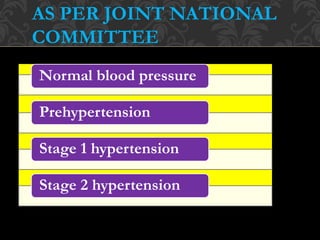
Normal blood pressure
Prehypertension
Stage 1 hypertension
Stage 2 hypertension
AS PER JOINT NATIONAL
COMMITTEE
Category
Optimal
Normal
High-normal
Hypertension
Stage 1
Stage 2
Stage 3
Systolic BP
<120
<130
130-139
140-159
160-179
180
Diastolic BP
<80
<85
85-89
90-99
100-109
110
AS PER WHO
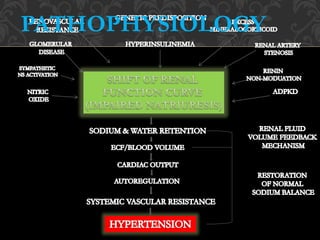
PATHOPHYSIOLOGY
MILD SYMPTOMS
 Headache
 Morning headache
 Tinnitus – ringing in ears
 Dizziness
 Confusion
 Fatique
 Shortness of breath
 Changes in vision – blindness
 Nausea
CLINICAL MANIFESTATION
History collection
Family history of hypertension
Physical examination
Check the vital signs
Through the physical examination found that
how much blood pressure
Obesity
Assess the sweating
DIAGNOSTIC EVALUATION
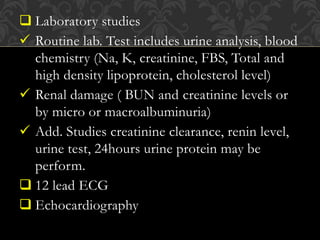
 Laboratory studies
 Routine lab. Test includes urine analysis, blood
chemistry (Na, K, creatinine, FBS, Total and
high density lipoprotein, cholesterol level)
 Renal damage ( BUN and creatinine levels or
by micro or macroalbuminuria)
 Add. Studies creatinine clearance, renin level,
urine test, 24hours urine protein may be
perform.
 12 lead ECG
 Echocardiography
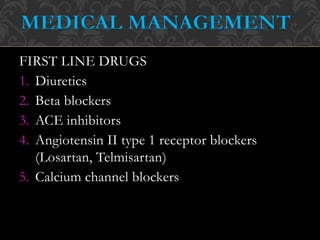
FIRST LINE DRUGS
1. Diuretics
2. Beta blockers
3. ACE inhibitors
4. Angiotensin II type 1 receptor blockers
(Losartan, Telmisartan)
5. Calcium channel blockers
MEDICAL MANAGEMENT
II LINE DRUGS
Alpha I sympatholytic
Alpha II sympathomimetics
Direct vasodilators
Kallium channel openers
Agonist of II receptors in CNS
DIURETICS AND RELATED DRUGS
Loop diuretics (Lasix)
Blocks Reabsorption of Na, Cl & water
Thiazide diuretics ( Chlorothiazide)
 Decrease of blood volume, renal blood flow and
cardiac output depletion of ECF.
 Negative Na balance, mild hypokalemia directly affect
vascular smooth muscle volume.
Potassium – Sparing diuretics (Spironolactone or
Aldactone)
Competitive inhibitor of aldosterone acts on distal
tubule independently of aldosterone.
Beta blockers (Propanolol, Metaprolol
Block the sympathetic nervous system, producing a
slower HR and lower HR
Alpha blockers (Prazosin Hydrochloride or Minipress)
Peripheral vasodilators acting directly on the blood
vessel.
Combined Alpha and Beta blockers (Labetalol)
Peripheral dilatation and decreases peripheral
vascular resistance.
 vasodilators (Nitropress)
Decreases peripheral resistance but concurrently
elevates cardiac output, acts directly on smooth muscle
of blood vessels.
 ACE inhibitors
Inhibit conversion of angiotensin I to angiotensin II
lower total peripheal resistance.
Example – Captopril, Enalapril, Ramipril.
 Calcium Antagonists
Inhibits calcium in influx reduces cardiac afterload
Example – Cardizem SR
Inhibits calcium ion influx slows velocity of
conduction of cardiac impulse.
Example – Verapamil.
Lose weight if overweight
Limit alcohol
Increase aerobic physical activity
Reduce sodium intake
Maintain adequate intake of dietary potassium,
calcium and magnesium for general health
Stop smoking and reduce intake of dietary
saturated fat and cholesterol.
NURSING MANAGEMENT
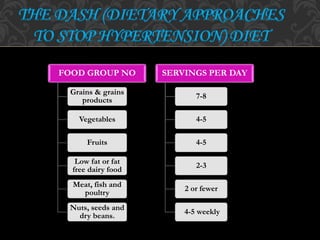
FOOD GROUP NO
Grains & grains
products
Vegetables
Fruits
Low fat or fat
free dairy food
Meat, fish and
poultry
Nuts, seeds and
dry beans.
SERVINGS PER DAY
7-8
4-5
4-5
2-3
2 or fewer
4-5 weekly
THE DASH (DIETARY APPROACHES
TO STOP HYPERTENSION) DIET
Take medication properly
• If side effects or cost problem, do not stop medication
• Ask doctor about other problem
Schedule regular doctor visit
• It takes a team effort to treat high BP successfully.
Mange stress
Release negative thoughts,
Maintain good relationship.
Adopt healthy habits
• Loss excess weight & get regular physical activity
• Limits alcohol & if you smoke, quit
LIFE STYLE MODIFICATION
Fiber, such as blond psyllium and wheat bran
Minerals such as calcium and potassium
Supplements that increase nitric oxide or widen blood
vessels such as cocoa, coenzyme Q10 or garlic
Omega-3 fatty acids found in fatty fish, fish oil
supplements or flaxseed
Probiotics found in fermented dairy products such as
cultured yogurt, buttermilk, acidophilus milk, cultured
sour cream and cheese.
Alternative medicine
NURSING DIAGNOSIS
1.Decreased cardiac output related to
o Increased vascular resistance, vasoconstriction
o Myocardial ischemia
o Ventricular hypertrophy/rigidity
2. Activity intolerance related
o Generalized weakness
o Sedentary life style
o Imbalance between oxygen supply and demand
NURSING PROCESS
3. Ineffective coping related to
o Situational /maturational crisis; multiple life
changes
o Inadequate relaxation; little or no exercise,
work overload
o Inadequate support system
o Poor nutrition
o Unmet expectation; unrealistic perceptions
o Inadequate coping methods
o Gender differences in coping strategies
4. Acute pain (Headache) related to increased
vascular pressure
5. Nutrition imbalanced more than body
requirements related to
o Excessive intake in relation to metabolic need
o Sedentary activity level
o Cultural preferences

HYPERTENSION - SLIDE SHARE PRESENTATION.

  • 2.
    Blood pressure isthe product of cardiac output multiplied by peripheral resistance. Cardiac output is the product of the heart rate multiplied by the stroke volume. In normal circulation, pressure is exerted by the flow of blood through the heart and blood vessels. High blood pressure known as hypertension, can result from a change in cardiac output, a change in peripheral resistance or both. The medications used for treating hypertension decrease peripheral resistance, blood volume or the strength and rate of myocardial contraction. INRODUCTION
  • 3.
    Hypertension is asystolic blood pressure greater than 140mmHg and diastolic pressure greater than 90mmHg over a sustained period, based on the average of two or more blood pressure measurements taken in two or more contacts with the health care provider after an initial screening. -Joint National Committee 1997 DEFINITION
  • 4.
    Maximum (systolic) pressure pressurein the artery when the left ventricle is contracting to force the blood into the Aorta and other arteries. Minimum (diastolic) pressure pressure in the artery when the ventricles are relaxing and the heart is filling up, receiving blood from veins. Force exerted by circulating blood on the arterial walls
  • 5.
     Age  Sedentarylifestyle  Obesity  Salt sensitivity  Alcohol, smoking  Family history  Race (blacks)  Too little potassium in diet  Too little vitamin D in diet.  Stress. RISK FACORS
  • 6.
    PRIMARY HYPERTENSION For mostadults, there’s no identifiable cause of high blood pressure. This type of high blood pressure called essential hypertension or primary hypertension, tends to develop gradually over many years. CAUSES
  • 7.
    Adrenal cortical abnormalities: Cushing’s syndrome (Adrenal glands overproduce the hormone cortisol)  Primary aldosteronism (over production of aldosterone by adrenal cortex)  Aldosteronism causes sodium and water retention, potassium excretion in the kidneys Diseases of the kidney (polycystic kidney disease) SECONDARY HYPERTENSION
  • 8.
     Disease ofthe renal arteries supplying the kidney RENOVASCULAR HYPERTENSION  Neuroendocrine tumors  Medication side effects (NSAID)  Kidney problems  Adrenal gland tumors  Certain defects in blood vessels (congenital)  Thyroid problems
  • 9.
     Certain medications,such as birth control pills, cold remedies, over-the- counter pain relievers and some prescription drugs.  Illegal drugs such as cocaine and amphetamines  Alcohol abuse or chronic alcohol use  Obstructive sleep apnea.
  • 10.
  • 11.
    Normal blood pressure Prehypertension Stage1 hypertension Stage 2 hypertension AS PER JOINT NATIONAL COMMITTEE
  • 12.
    Category Optimal Normal High-normal Hypertension Stage 1 Stage 2 Stage3 Systolic BP <120 <130 130-139 140-159 160-179 180 Diastolic BP <80 <85 85-89 90-99 100-109 110 AS PER WHO
  • 13.
  • 14.
    MILD SYMPTOMS  Headache Morning headache  Tinnitus – ringing in ears  Dizziness  Confusion  Fatique  Shortness of breath  Changes in vision – blindness  Nausea CLINICAL MANIFESTATION
  • 15.
    History collection Family historyof hypertension Physical examination Check the vital signs Through the physical examination found that how much blood pressure Obesity Assess the sweating DIAGNOSTIC EVALUATION
  • 16.
     Laboratory studies Routine lab. Test includes urine analysis, blood chemistry (Na, K, creatinine, FBS, Total and high density lipoprotein, cholesterol level)  Renal damage ( BUN and creatinine levels or by micro or macroalbuminuria)  Add. Studies creatinine clearance, renin level, urine test, 24hours urine protein may be perform.  12 lead ECG  Echocardiography
  • 17.
    FIRST LINE DRUGS 1.Diuretics 2. Beta blockers 3. ACE inhibitors 4. Angiotensin II type 1 receptor blockers (Losartan, Telmisartan) 5. Calcium channel blockers MEDICAL MANAGEMENT
  • 18.
    II LINE DRUGS AlphaI sympatholytic Alpha II sympathomimetics Direct vasodilators Kallium channel openers Agonist of II receptors in CNS
  • 19.
    DIURETICS AND RELATEDDRUGS Loop diuretics (Lasix) Blocks Reabsorption of Na, Cl & water Thiazide diuretics ( Chlorothiazide)  Decrease of blood volume, renal blood flow and cardiac output depletion of ECF.  Negative Na balance, mild hypokalemia directly affect vascular smooth muscle volume. Potassium – Sparing diuretics (Spironolactone or Aldactone) Competitive inhibitor of aldosterone acts on distal tubule independently of aldosterone.
  • 20.
    Beta blockers (Propanolol,Metaprolol Block the sympathetic nervous system, producing a slower HR and lower HR Alpha blockers (Prazosin Hydrochloride or Minipress) Peripheral vasodilators acting directly on the blood vessel. Combined Alpha and Beta blockers (Labetalol) Peripheral dilatation and decreases peripheral vascular resistance.  vasodilators (Nitropress) Decreases peripheral resistance but concurrently elevates cardiac output, acts directly on smooth muscle of blood vessels.
  • 21.
     ACE inhibitors Inhibitconversion of angiotensin I to angiotensin II lower total peripheal resistance. Example – Captopril, Enalapril, Ramipril.  Calcium Antagonists Inhibits calcium in influx reduces cardiac afterload Example – Cardizem SR Inhibits calcium ion influx slows velocity of conduction of cardiac impulse. Example – Verapamil.
  • 22.
    Lose weight ifoverweight Limit alcohol Increase aerobic physical activity Reduce sodium intake Maintain adequate intake of dietary potassium, calcium and magnesium for general health Stop smoking and reduce intake of dietary saturated fat and cholesterol. NURSING MANAGEMENT
  • 23.
    FOOD GROUP NO Grains& grains products Vegetables Fruits Low fat or fat free dairy food Meat, fish and poultry Nuts, seeds and dry beans. SERVINGS PER DAY 7-8 4-5 4-5 2-3 2 or fewer 4-5 weekly THE DASH (DIETARY APPROACHES TO STOP HYPERTENSION) DIET
  • 24.
    Take medication properly •If side effects or cost problem, do not stop medication • Ask doctor about other problem Schedule regular doctor visit • It takes a team effort to treat high BP successfully. Mange stress Release negative thoughts, Maintain good relationship. Adopt healthy habits • Loss excess weight & get regular physical activity • Limits alcohol & if you smoke, quit LIFE STYLE MODIFICATION
  • 25.
    Fiber, such asblond psyllium and wheat bran Minerals such as calcium and potassium Supplements that increase nitric oxide or widen blood vessels such as cocoa, coenzyme Q10 or garlic Omega-3 fatty acids found in fatty fish, fish oil supplements or flaxseed Probiotics found in fermented dairy products such as cultured yogurt, buttermilk, acidophilus milk, cultured sour cream and cheese. Alternative medicine
  • 26.
    NURSING DIAGNOSIS 1.Decreased cardiacoutput related to o Increased vascular resistance, vasoconstriction o Myocardial ischemia o Ventricular hypertrophy/rigidity 2. Activity intolerance related o Generalized weakness o Sedentary life style o Imbalance between oxygen supply and demand NURSING PROCESS
  • 27.
    3. Ineffective copingrelated to o Situational /maturational crisis; multiple life changes o Inadequate relaxation; little or no exercise, work overload o Inadequate support system o Poor nutrition o Unmet expectation; unrealistic perceptions o Inadequate coping methods o Gender differences in coping strategies
  • 28.
    4. Acute pain(Headache) related to increased vascular pressure 5. Nutrition imbalanced more than body requirements related to o Excessive intake in relation to metabolic need o Sedentary activity level o Cultural preferences