Educ.17 Activity
Presented By:
Dyna Mae Italia
Dany Be Manocan
Daisy Dalisay
BSED III-C
Presented To:
Mrs. Cezan Singson
(Teacher)
What is Hypermedia?
-An application which uses associative
relationships among information
contained within multiple media data for
the purpose of facilitating access to, and
manipulation of, the information
encapsulated by the data.
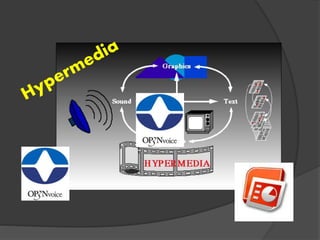
Hypermedia, an extension of the term
hypertext, is a nonlinear medium of
information which includes graphics, audio,
video, plain text and hyperlinks. This
contrasts with the broader term multimedia,
which may include non-interactive linear
presentations as well as hypermedia. It is
also related to the field of electronic
literature. The term was first used in a 1965
article by Ted Nelson
 The World Wide Web is a classic
example of hypermedia, whereas a non-
interactive cinema presentation is an
example of standard multimedia due to
the absence of hyperlinks.
Hypermedia also define
as…
 "A memex is a device in which an individual
stores all his books, records and
communications and which is mechanized
so that it may be consulted with exceeding
speed and flexibility. It is an enlarged
intimate supplement to his memory."
 Hypertext: "a combination of natural
languages text with the computer�s
capacity for branching, or dynamic display"
 Hypertext: "a database that has active
cross-references and allows the reader
to "jump" to other parts of the database
as desired"
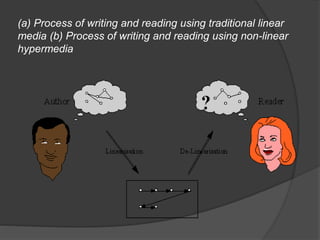
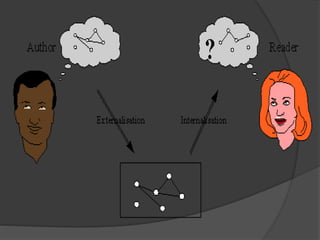
(a) Process of writing and reading using traditional linear
media (b) Process of writing and reading using non-linear
hypermedia
Hypermedia and Human
Memory
Human memory is associative. We associate
pieces of information with other information
and create complex knowledge structures. We
often remember information via association.
That is a person starts with an idea which
reminds them of a related idea or a concept
which triggers another idea. The order in
which a human associates an idea with
another idea depends on the context under
which the person wants information. That is a
person can start with a common idea and can
end up associating it to completely different
sequences of ideas on different occasions
The reading process can be seen as a
transformation of external information into an
internal knowledge representation combined
with integration into existing knowledge
structures. These processes are shown in
Figure 2-1a. For this the reader breaks the
information into smaller chunks and
rearranges these based on the readers
information requirement. We rarely read a text
book or a scientific paper from start to end. We
tend to browse through the information and
then follow the information trails that are
interesting to us
Hypermedia development
tools
Hypermedia may be developed a number of ways. Any
programming tool can be used to write programs that
link data from internal variables and nodes for
external data files. Multimedia development software
such as Adobe Flash, Adobe Director, Macromedia
Authorware, and MatchWare Mediator may be used
to create stand-alone hypermedia applications, with
emphasis on entertainment content. Some database
software such as Visual FoxPro and FileMaker
DeveloperFileMaker Developer may be used to
develop stand-alone hypermedia applications, with
emphasis on educational and business content
management.
Hypermedia and learning
There have been a number of theories
concerning hypermedia and learning. One
important claim in the literature on hypermedia
and learning is that it offers more control over
the instructional environment to the reader or
student. Another claim is that it makes level
the playing field among students of varying
abilities and enhances collaborative learning. A
claim from psychology includes the notion that
hypermedia more closely models the structure
of the brain, in comparison with printed text
Hypermedia and language
learning
Hypermedia has found a place in foreign language
instruction as well. Hypermedia reading texts can be
purchased or prepared so that students can click on
unfamiliar words or phrases in a foreign language
and then access all the information needed to
understand the word or phrase. Information can be in
any medium, for example, text-based translations,
definitions, grammatical explanations, and cultural
references. Also, audio recordings of the
pronunciation as well as images, animations and
video for visualization. Some of the innovations in
this area were the original products from Transparent
Language as well as Ottmar Foelsche's Annotext
and Thom Thibeault's hypermedia editor, FLAn.
Current State of Hypermedia
If we look at the current state of hypermedia
applications, we can identify at least two major
limitations. Firstly, we have yet to satisfactorily
address problems of effective location of
information. In order to be able to use
information we must be able to identify or
locate the information we need. Our current
applications typically rely on primitive manual
authoring of static links, with little subsequent
assistance to a user. Similarly current
applications rarely attempt to develop an
understanding of the users context and how to
respond to this.

Hypermedia

  • 1.
    Educ.17 Activity Presented By: DynaMae Italia Dany Be Manocan Daisy Dalisay BSED III-C Presented To: Mrs. Cezan Singson (Teacher)
  • 3.
    What is Hypermedia? -Anapplication which uses associative relationships among information contained within multiple media data for the purpose of facilitating access to, and manipulation of, the information encapsulated by the data.
  • 4.
    Hypermedia, an extensionof the term hypertext, is a nonlinear medium of information which includes graphics, audio, video, plain text and hyperlinks. This contrasts with the broader term multimedia, which may include non-interactive linear presentations as well as hypermedia. It is also related to the field of electronic literature. The term was first used in a 1965 article by Ted Nelson
  • 5.
     The WorldWide Web is a classic example of hypermedia, whereas a non- interactive cinema presentation is an example of standard multimedia due to the absence of hyperlinks.
  • 6.
    Hypermedia also define as… "A memex is a device in which an individual stores all his books, records and communications and which is mechanized so that it may be consulted with exceeding speed and flexibility. It is an enlarged intimate supplement to his memory."  Hypertext: "a combination of natural languages text with the computer�s capacity for branching, or dynamic display"
  • 7.
     Hypertext: "adatabase that has active cross-references and allows the reader to "jump" to other parts of the database as desired"
  • 8.
    (a) Process ofwriting and reading using traditional linear media (b) Process of writing and reading using non-linear hypermedia
  • 10.
    Hypermedia and Human Memory Humanmemory is associative. We associate pieces of information with other information and create complex knowledge structures. We often remember information via association. That is a person starts with an idea which reminds them of a related idea or a concept which triggers another idea. The order in which a human associates an idea with another idea depends on the context under which the person wants information. That is a person can start with a common idea and can end up associating it to completely different sequences of ideas on different occasions
  • 11.
    The reading processcan be seen as a transformation of external information into an internal knowledge representation combined with integration into existing knowledge structures. These processes are shown in Figure 2-1a. For this the reader breaks the information into smaller chunks and rearranges these based on the readers information requirement. We rarely read a text book or a scientific paper from start to end. We tend to browse through the information and then follow the information trails that are interesting to us
  • 12.
    Hypermedia development tools Hypermedia maybe developed a number of ways. Any programming tool can be used to write programs that link data from internal variables and nodes for external data files. Multimedia development software such as Adobe Flash, Adobe Director, Macromedia Authorware, and MatchWare Mediator may be used to create stand-alone hypermedia applications, with emphasis on entertainment content. Some database software such as Visual FoxPro and FileMaker DeveloperFileMaker Developer may be used to develop stand-alone hypermedia applications, with emphasis on educational and business content management.
  • 13.
    Hypermedia and learning Therehave been a number of theories concerning hypermedia and learning. One important claim in the literature on hypermedia and learning is that it offers more control over the instructional environment to the reader or student. Another claim is that it makes level the playing field among students of varying abilities and enhances collaborative learning. A claim from psychology includes the notion that hypermedia more closely models the structure of the brain, in comparison with printed text
  • 14.
    Hypermedia and language learning Hypermediahas found a place in foreign language instruction as well. Hypermedia reading texts can be purchased or prepared so that students can click on unfamiliar words or phrases in a foreign language and then access all the information needed to understand the word or phrase. Information can be in any medium, for example, text-based translations, definitions, grammatical explanations, and cultural references. Also, audio recordings of the pronunciation as well as images, animations and video for visualization. Some of the innovations in this area were the original products from Transparent Language as well as Ottmar Foelsche's Annotext and Thom Thibeault's hypermedia editor, FLAn.
  • 15.
    Current State ofHypermedia If we look at the current state of hypermedia applications, we can identify at least two major limitations. Firstly, we have yet to satisfactorily address problems of effective location of information. In order to be able to use information we must be able to identify or locate the information we need. Our current applications typically rely on primitive manual authoring of static links, with little subsequent assistance to a user. Similarly current applications rarely attempt to develop an understanding of the users context and how to respond to this.