PAN-TRK
‫פרידריך‬ ‫דניאל‬
General information
◦Pan-TRK is directed against the C-terminal region of
TRK (tropomyosin receptor kinase) A, B, and C
proteins, which are encoded by NTRK1, NTRK2, and
NTRK3 genes respectively. Pan-TRK IHC staining is
a useful screen for identification of NTRK protein
overexpression caused by gene fusions.
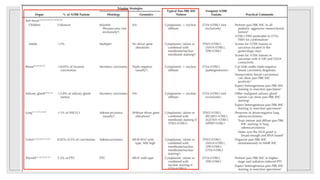
• NTRK gene fusions (NTRK1/2/3) have been reported in >20 tumor types and they are to be
considered oncogenic drivers
• In some tumor morphologies, NTRK fusions occur at a high frequency:
• Infantile fibrosarcoma and other pediatric NTRK rearranged mesenchymal tumors
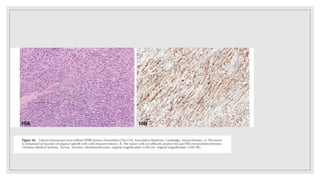
• Cellular congenital mesoblastic nephroma
• Secretory carcinomas (breast, salivary gland mammary analog secretory carcinoma and
skin)
• Lipofibromatosis-like neural tumor
• Uterine sarcomas with NTRK fusions resembling fibromatosis
• In some pediatric tumors, NTRK fusions occur with intermediate frequency:
• Pediatric gliomas, pediatric papillary thyroid carcinoma, Spitz nevi
• In other tumors, NTRK fusions occur very infrequently:
• Adult gliomas, adult papillary thyroid carcinoma, colorectal carcinoma, lung
adenocarcinoma, melanoma, leukemia and less commonly others
• Recognition of NTRK fusion tumors had become increasingly important with the advent of
targeted Trk inhibitors (entrectinib and larotrectinib= response rate >75%)
interpretation
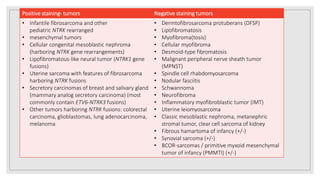
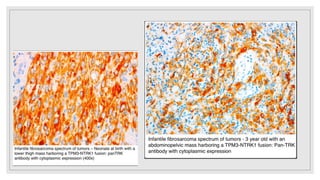
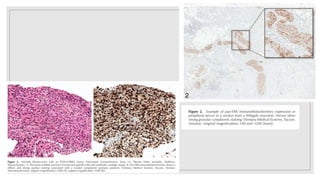
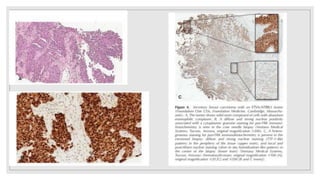
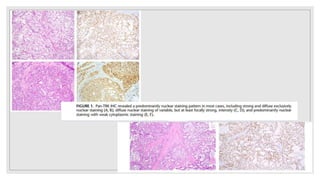
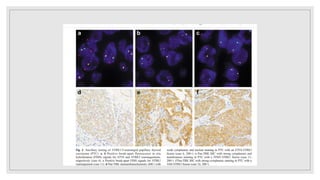
•Tumors harboring NTRK1/2 fusions demonstrate
cytoplasmic expression; rare perinuclear and nuclear
membrane staining has been reported
•Tumors harboring NTRK3 fusions demonstrate
cytoplasmic or nuclear expression
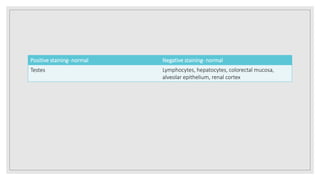
Negative staining- normalPositive staining- normal
Lymphocytes, hepatocytes, colorectal mucosa,
alveolar epithelium, renal cortex
Testes
Negative staining tumorsPositive staining- tumors
• Dermtofibrosarcoma protuberans (DFSP)
• Lipofibromatosis
• Myofibroma(tosis)
• Cellular myofibroma
• Desmoid-type fibromatosis
• Malignant peripheral nerve sheath tumor
(MPNST)
• Spindle cell rhabdomyosarcoma
• Nodular fasciitis
• Schwannoma
• Neurofibroma
• Inflammatory myofibroblastic tumor (IMT)
• Uterine leiomyosarcoma
• Classic mesoblastic nephroma, metanephric
stromal tumor, clear cell sarcoma of kidney
• Fibrous hamartoma of infancy (+/-)
• Synovial sarcoma (+/-)
• BCOR-sarcomas / primitive myxoid mesenchymal
tumor of infancy (PMMTI) (+/-)
• Infantile fibrosarcoma and other
pediatric NTRK rearranged
• mesenchymal tumors
• Cellular congenital mesoblastic nephroma
(harboring NTRK gene rearrangements)
• Lipofibromatous-like neural tumor (NTRK1 gene
fusions)
• Uterine sarcoma with features of fibrosarcoma
harboring NTRK fusions
• Secretory carcinomas of breast and salivary gland
(mammary analog secretory carcinoma) (most
commonly contain ETV6-NTRK3 fusions)
• Other tumors harboring NTRK fusions: colorectal
carcinoma, glioblastomas, lung adenocarcinoma,
melanoma
◦ NTRK fusions have been observed in 0.31% of adult tumors and 0.34% of pediatric tumors.
◦ In clinical series, the most common partners have been NTRK 1+3
◦ The most frequent fusion is ETV6 + NTRK 3
◦ NTRK 2 fusions appear to be restricted to isolated exmples of sarcomas or lung
adenocarcinomas.
◦ The largest series to date showed an overall sensitivity of 87.9% and specificity of 81.1%
◦ Positive cut-off: staining above background in at least 1% of tumor cells
◦ there are 3 questions that pathologists ask most frequently when scoring pan-TRK IHC:
(1) Do I need to trigger orthogonal testing based on this level of positivity?
(2) The confirmatory method result came back negative after a clearly positive pan-TRK IHC; is
there something else I need to do?
(3) Are there any histologic or molecular features that can help me suspect a pan-TRK IHC false
negative result? In other words, when do we need to persevere after a negative or inconclusive
pan-TRK IHC result?
To sum up…
◦ pan-TRK IHC is a sensitive and specific marker for secretory carcinoma that provides a more rapid and cost-effective test than
ETV6 FISH or NGS-based assays. A definitive diagnosis can be rendered for most cases based on the distinctive morphology of
the tumor in combination with this staining pattern. For cases in which the histomorphology is not straightforward or in which
IHC is negative, ETV6 FISH is still recommended
◦ Until NGS becomes the main testing methodology on all advanced cancer, algorithm considerations should include feasibility,
cost, sample size, and pretest probability of NTRK fusions
Bibliography
◦ Conde E, Hernandez S, Sanchez E, Regojo RM, Camacho C, Alonso M, Martinez R, Lopez-Rios F. Pan-TRK
Immunohistochemistry. Arch Pathol Lab Med. 2020 Oct 28. doi: 10.5858/arpa.2020-0400-RA. Epub ahead of print.
PMID: 33112951.
◦ Lee, YC., Chen, JY., Huang, CJ. et al. Detection of NTRK1/3 Rearrangements in Papillary Thyroid Carcinoma
Using Immunohistochemistry, Fluorescent In Situ Hybridization, and Next-Generation Sequencing. Endocr
Pathol 31, 348–358 (2020).
◦ Harrison BT, Fowler E, Krings G, Chen YY, Bean GR, Vincent-Salomon A, Fuhrmann L, Barnick SE, Chen B,
Hosfield EM, Hornick JL, Schnitt SJ. Pan-TRK Immunohistochemistry: A Useful Diagnostic Adjunct For Secretory
Carcinoma of the Breast. Am J Surg Pathol. 2019 Dec;43(12):1693-1700. doi: 10.1097/PAS.0000000000001366.
PMID: 31498178.
◦ Pathologyoutlines.com
◦ Neogenomics.com

Pan trk IHC

  • 1.
  • 2.
    General information ◦Pan-TRK isdirected against the C-terminal region of TRK (tropomyosin receptor kinase) A, B, and C proteins, which are encoded by NTRK1, NTRK2, and NTRK3 genes respectively. Pan-TRK IHC staining is a useful screen for identification of NTRK protein overexpression caused by gene fusions.
  • 3.
    • NTRK genefusions (NTRK1/2/3) have been reported in >20 tumor types and they are to be considered oncogenic drivers • In some tumor morphologies, NTRK fusions occur at a high frequency: • Infantile fibrosarcoma and other pediatric NTRK rearranged mesenchymal tumors • Cellular congenital mesoblastic nephroma • Secretory carcinomas (breast, salivary gland mammary analog secretory carcinoma and skin) • Lipofibromatosis-like neural tumor • Uterine sarcomas with NTRK fusions resembling fibromatosis • In some pediatric tumors, NTRK fusions occur with intermediate frequency: • Pediatric gliomas, pediatric papillary thyroid carcinoma, Spitz nevi • In other tumors, NTRK fusions occur very infrequently: • Adult gliomas, adult papillary thyroid carcinoma, colorectal carcinoma, lung adenocarcinoma, melanoma, leukemia and less commonly others • Recognition of NTRK fusion tumors had become increasingly important with the advent of targeted Trk inhibitors (entrectinib and larotrectinib= response rate >75%)
  • 4.
    interpretation •Tumors harboring NTRK1/2fusions demonstrate cytoplasmic expression; rare perinuclear and nuclear membrane staining has been reported •Tumors harboring NTRK3 fusions demonstrate cytoplasmic or nuclear expression
  • 5.
    Negative staining- normalPositivestaining- normal Lymphocytes, hepatocytes, colorectal mucosa, alveolar epithelium, renal cortex Testes
  • 6.
    Negative staining tumorsPositivestaining- tumors • Dermtofibrosarcoma protuberans (DFSP) • Lipofibromatosis • Myofibroma(tosis) • Cellular myofibroma • Desmoid-type fibromatosis • Malignant peripheral nerve sheath tumor (MPNST) • Spindle cell rhabdomyosarcoma • Nodular fasciitis • Schwannoma • Neurofibroma • Inflammatory myofibroblastic tumor (IMT) • Uterine leiomyosarcoma • Classic mesoblastic nephroma, metanephric stromal tumor, clear cell sarcoma of kidney • Fibrous hamartoma of infancy (+/-) • Synovial sarcoma (+/-) • BCOR-sarcomas / primitive myxoid mesenchymal tumor of infancy (PMMTI) (+/-) • Infantile fibrosarcoma and other pediatric NTRK rearranged • mesenchymal tumors • Cellular congenital mesoblastic nephroma (harboring NTRK gene rearrangements) • Lipofibromatous-like neural tumor (NTRK1 gene fusions) • Uterine sarcoma with features of fibrosarcoma harboring NTRK fusions • Secretory carcinomas of breast and salivary gland (mammary analog secretory carcinoma) (most commonly contain ETV6-NTRK3 fusions) • Other tumors harboring NTRK fusions: colorectal carcinoma, glioblastomas, lung adenocarcinoma, melanoma
  • 14.
    ◦ NTRK fusionshave been observed in 0.31% of adult tumors and 0.34% of pediatric tumors. ◦ In clinical series, the most common partners have been NTRK 1+3 ◦ The most frequent fusion is ETV6 + NTRK 3 ◦ NTRK 2 fusions appear to be restricted to isolated exmples of sarcomas or lung adenocarcinomas. ◦ The largest series to date showed an overall sensitivity of 87.9% and specificity of 81.1% ◦ Positive cut-off: staining above background in at least 1% of tumor cells
  • 16.
    ◦ there are3 questions that pathologists ask most frequently when scoring pan-TRK IHC: (1) Do I need to trigger orthogonal testing based on this level of positivity? (2) The confirmatory method result came back negative after a clearly positive pan-TRK IHC; is there something else I need to do? (3) Are there any histologic or molecular features that can help me suspect a pan-TRK IHC false negative result? In other words, when do we need to persevere after a negative or inconclusive pan-TRK IHC result?
  • 17.
    To sum up… ◦pan-TRK IHC is a sensitive and specific marker for secretory carcinoma that provides a more rapid and cost-effective test than ETV6 FISH or NGS-based assays. A definitive diagnosis can be rendered for most cases based on the distinctive morphology of the tumor in combination with this staining pattern. For cases in which the histomorphology is not straightforward or in which IHC is negative, ETV6 FISH is still recommended ◦ Until NGS becomes the main testing methodology on all advanced cancer, algorithm considerations should include feasibility, cost, sample size, and pretest probability of NTRK fusions
  • 18.
    Bibliography ◦ Conde E,Hernandez S, Sanchez E, Regojo RM, Camacho C, Alonso M, Martinez R, Lopez-Rios F. Pan-TRK Immunohistochemistry. Arch Pathol Lab Med. 2020 Oct 28. doi: 10.5858/arpa.2020-0400-RA. Epub ahead of print. PMID: 33112951. ◦ Lee, YC., Chen, JY., Huang, CJ. et al. Detection of NTRK1/3 Rearrangements in Papillary Thyroid Carcinoma Using Immunohistochemistry, Fluorescent In Situ Hybridization, and Next-Generation Sequencing. Endocr Pathol 31, 348–358 (2020). ◦ Harrison BT, Fowler E, Krings G, Chen YY, Bean GR, Vincent-Salomon A, Fuhrmann L, Barnick SE, Chen B, Hosfield EM, Hornick JL, Schnitt SJ. Pan-TRK Immunohistochemistry: A Useful Diagnostic Adjunct For Secretory Carcinoma of the Breast. Am J Surg Pathol. 2019 Dec;43(12):1693-1700. doi: 10.1097/PAS.0000000000001366. PMID: 31498178. ◦ Pathologyoutlines.com ◦ Neogenomics.com

Editor's Notes

  • #12 breast
  • #15 PTC= NTRK 1+3 rearrangement was detected in 2.3-3.4%, but the sensitivity was 60%
  • #17 PCR, NGS= these methodologies may be compromised by suboptimal RNA quality of the formalin fixed paraffin embedded tissue, not available, expensive… IHC using pan-trk Ab to detect NTRK gene fusions in various tumor types has been wildly discussed and mainly focused on secretory carcinoma of the salivary g and soft tissue tumors