   Sudden penetrating pain in the legs, lower back or
    abdomen
   Severe vomiting and diarrhea, resulting in dehydration
   Low blood pressure, Unexplained shock, usually refractory
    to fluid and pressor resuscitation
   Syncope (loss of consciousness)
   Hypoglycemia
   Confusion, psychosis, slurred speech
   Severe lethargy
   Hypercalcemia
   Convulsions
   Fever
   Rapid withdrawal of long-term steroid therapy
   Hyperthermia or hypothermia
   Meningococcemia & Organisms associated with adrenal crisis e.g
    Haemophilus influenzae, Staphylococcus aureus,Streptococcus
    pneumonia, fungi
   Severe physiologic stress
   Azotemia
   Anticoagulants, hemorrhagic diathesis
   Adrenocorticotropin therapy, known primary or secondary
    adrenocortical insufficiency
   AIDS
   Invasive or infiltrative disorders
   Tuberculosis
   Prior steroid use
   Topical steroids : large surface, long periods of use
   Inhaled steroids : > 8 mg/dl for long time, Fluticasone even at
    lower dose
 Serum cortisol: <20 mcg/dL in severe stress
  or after ACTH stimulation is indicative of
  adrenal insufficiency
 ACTH test : diagnostic
 Serum chemistry, ↓Na, ↑K, metabolic
  acidosis, Hypoglycemia
 CBC: Anemia, lymphocytosis, and
  eosinophilia (highly suggestive)
 Cultures, Infection is a common cause of
  acute adrenal crisis.
 Chest radiography: Assess for tuberculosis,
  histoplasmosis, malignant disease, sarcoid,
  and lymphoma.
 Abdominal CT scanning: Visualize adrenal
  glands for hemorrhage, atrophy, infiltrative
  disorders, and metastatic disease.
 Electrocardiography
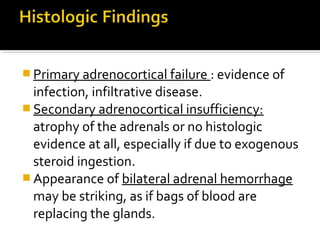
 Primary adrenocortical failure : evidence of
  infection, infiltrative disease.
 Secondary adrenocortical insufficiency:
  atrophy of the adrenals or no histologic
  evidence at all, especially if due to exogenous
  steroid ingestion.
 Appearance of bilateral adrenal hemorrhage
  may be striking, as if bags of blood are
  replacing the glands.
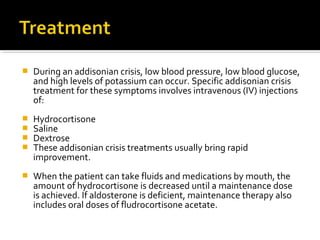
   During an addisonian crisis, low blood pressure, low blood glucose,
    and high levels of potassium can occur. Specific addisonian crisis
    treatment for these symptoms involves intravenous (IV) injections
    of:
   Hydrocortisone
   Saline
   Dextrose
   These addisonian crisis treatments usually bring rapid
    improvement.
   When the patient can take fluids and medications by mouth, the
    amount of hydrocortisone is decreased until a maintenance dose
    is achieved. If aldosterone is deficient, maintenance therapy also
    includes oral doses of fludrocortisone acetate.
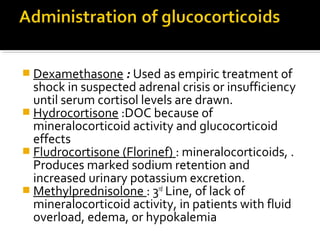
 Dexamethasone : Used as empiric treatment of
  shock in suspected adrenal crisis or insufficiency
  until serum cortisol levels are drawn.
 Hydrocortisone :DOC because of
  mineralocorticoid activity and glucocorticoid
  effects
 Fludrocortisone (Florinef) : mineralocorticoids, .
  Produces marked sodium retention and
  increased urinary potassium excretion.
 Methylprednisolone : 3rd Line, of lack of
  mineralocorticoid activity, in patients with fluid
  overload, edema, or hypokalemia
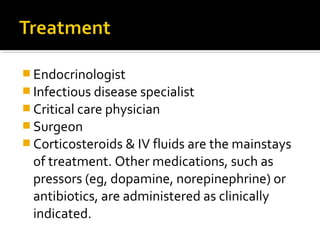
 Endocrinologist
 Infectious disease specialist
 Critical care physician
 Surgeon
 Corticosteroids & IV fluids are the mainstays
  of treatment. Other medications, such as
  pressors (eg, dopamine, norepinephrine) or
  antibiotics, are administered as clinically
  indicated.

Addisonion crisis

  • 1.
    Sudden penetrating pain in the legs, lower back or abdomen  Severe vomiting and diarrhea, resulting in dehydration  Low blood pressure, Unexplained shock, usually refractory to fluid and pressor resuscitation  Syncope (loss of consciousness)  Hypoglycemia  Confusion, psychosis, slurred speech  Severe lethargy  Hypercalcemia  Convulsions  Fever  Rapid withdrawal of long-term steroid therapy  Hyperthermia or hypothermia
  • 2.
    Meningococcemia & Organisms associated with adrenal crisis e.g Haemophilus influenzae, Staphylococcus aureus,Streptococcus pneumonia, fungi  Severe physiologic stress  Azotemia  Anticoagulants, hemorrhagic diathesis  Adrenocorticotropin therapy, known primary or secondary adrenocortical insufficiency  AIDS  Invasive or infiltrative disorders  Tuberculosis  Prior steroid use  Topical steroids : large surface, long periods of use  Inhaled steroids : > 8 mg/dl for long time, Fluticasone even at lower dose
  • 3.
     Serum cortisol:<20 mcg/dL in severe stress or after ACTH stimulation is indicative of adrenal insufficiency  ACTH test : diagnostic  Serum chemistry, ↓Na, ↑K, metabolic acidosis, Hypoglycemia  CBC: Anemia, lymphocytosis, and eosinophilia (highly suggestive)  Cultures, Infection is a common cause of acute adrenal crisis.
  • 4.
     Chest radiography:Assess for tuberculosis, histoplasmosis, malignant disease, sarcoid, and lymphoma.  Abdominal CT scanning: Visualize adrenal glands for hemorrhage, atrophy, infiltrative disorders, and metastatic disease.  Electrocardiography
  • 5.
     Primary adrenocorticalfailure : evidence of infection, infiltrative disease.  Secondary adrenocortical insufficiency: atrophy of the adrenals or no histologic evidence at all, especially if due to exogenous steroid ingestion.  Appearance of bilateral adrenal hemorrhage may be striking, as if bags of blood are replacing the glands.
  • 6.
    During an addisonian crisis, low blood pressure, low blood glucose, and high levels of potassium can occur. Specific addisonian crisis treatment for these symptoms involves intravenous (IV) injections of:  Hydrocortisone  Saline  Dextrose  These addisonian crisis treatments usually bring rapid improvement.  When the patient can take fluids and medications by mouth, the amount of hydrocortisone is decreased until a maintenance dose is achieved. If aldosterone is deficient, maintenance therapy also includes oral doses of fludrocortisone acetate.
  • 7.
     Dexamethasone :Used as empiric treatment of shock in suspected adrenal crisis or insufficiency until serum cortisol levels are drawn.  Hydrocortisone :DOC because of mineralocorticoid activity and glucocorticoid effects  Fludrocortisone (Florinef) : mineralocorticoids, . Produces marked sodium retention and increased urinary potassium excretion.  Methylprednisolone : 3rd Line, of lack of mineralocorticoid activity, in patients with fluid overload, edema, or hypokalemia
  • 8.
     Endocrinologist  Infectiousdisease specialist  Critical care physician  Surgeon  Corticosteroids & IV fluids are the mainstays of treatment. Other medications, such as pressors (eg, dopamine, norepinephrine) or antibiotics, are administered as clinically indicated.