Composition & Structure of the
Atmosphere
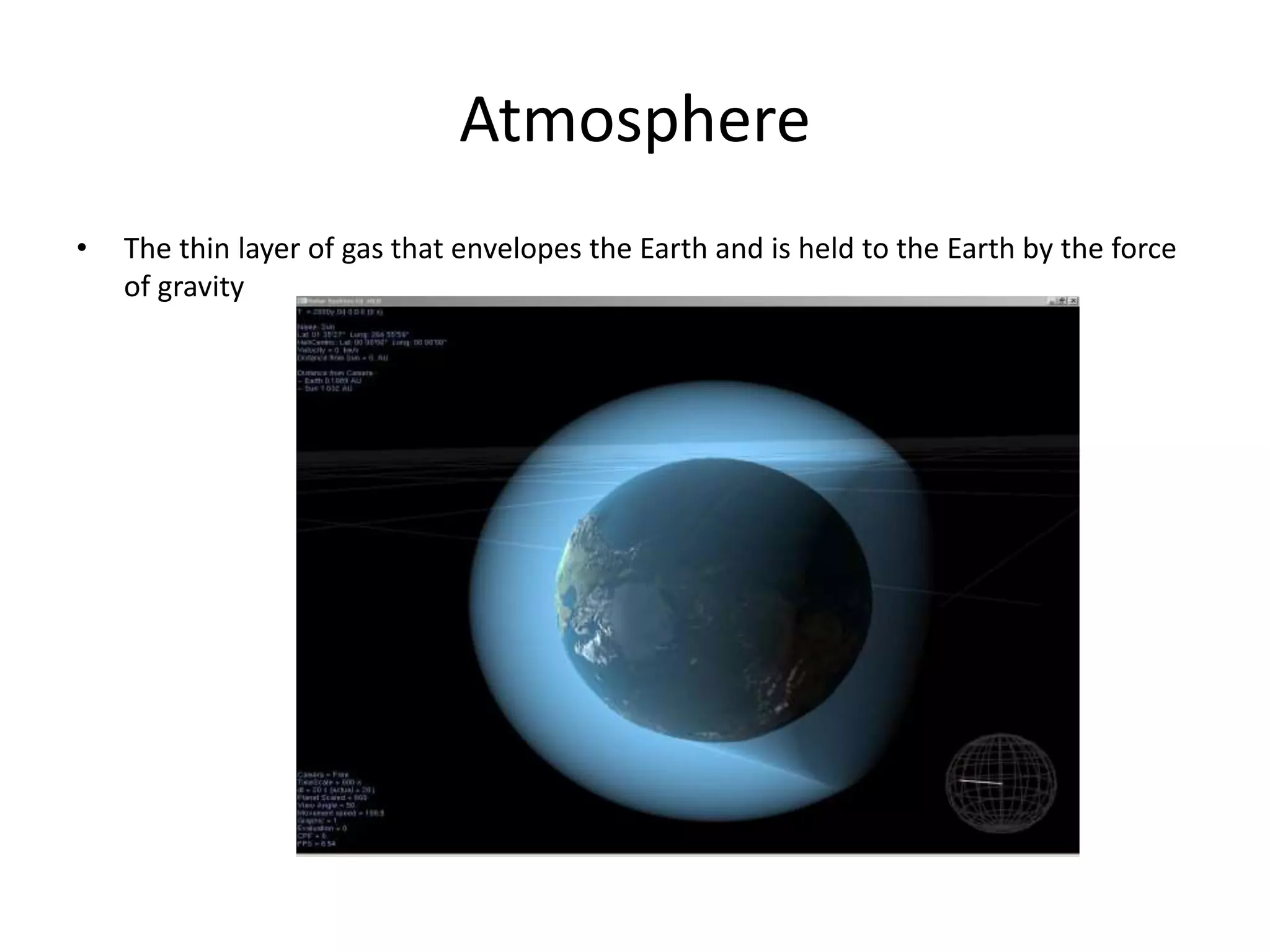
Atmosphere
• The thin layer of gas that envelopes the Earth and is held to the Earth by the force
of gravity
Composition of Atmosphere
• 1.Constant Gases
• 78% Nitrogen
• 21% Oxygen
• 2. Variable gases
• CO2= 0.04% of air
• Water Vapours
• Ozone
Layered Structure
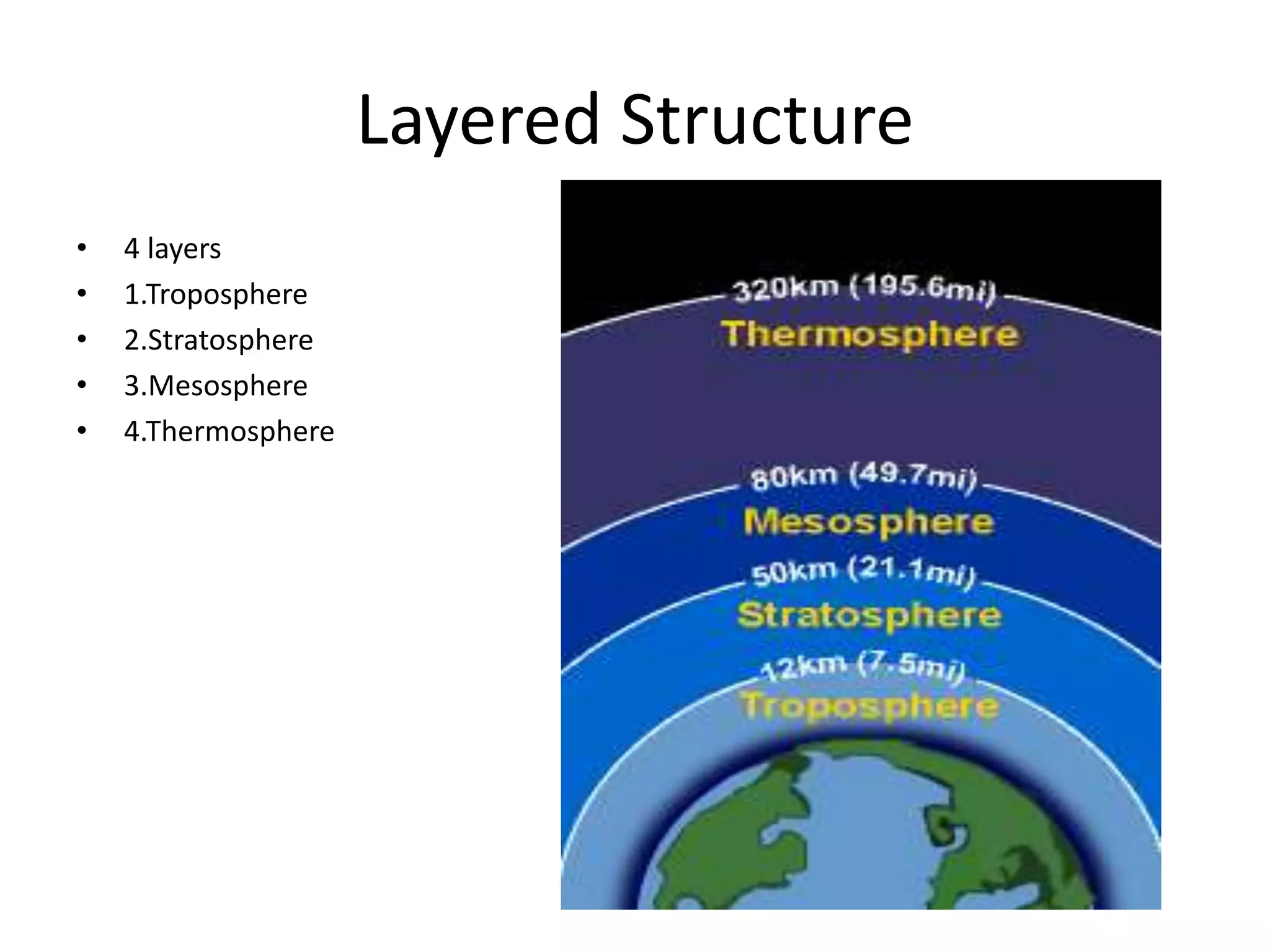
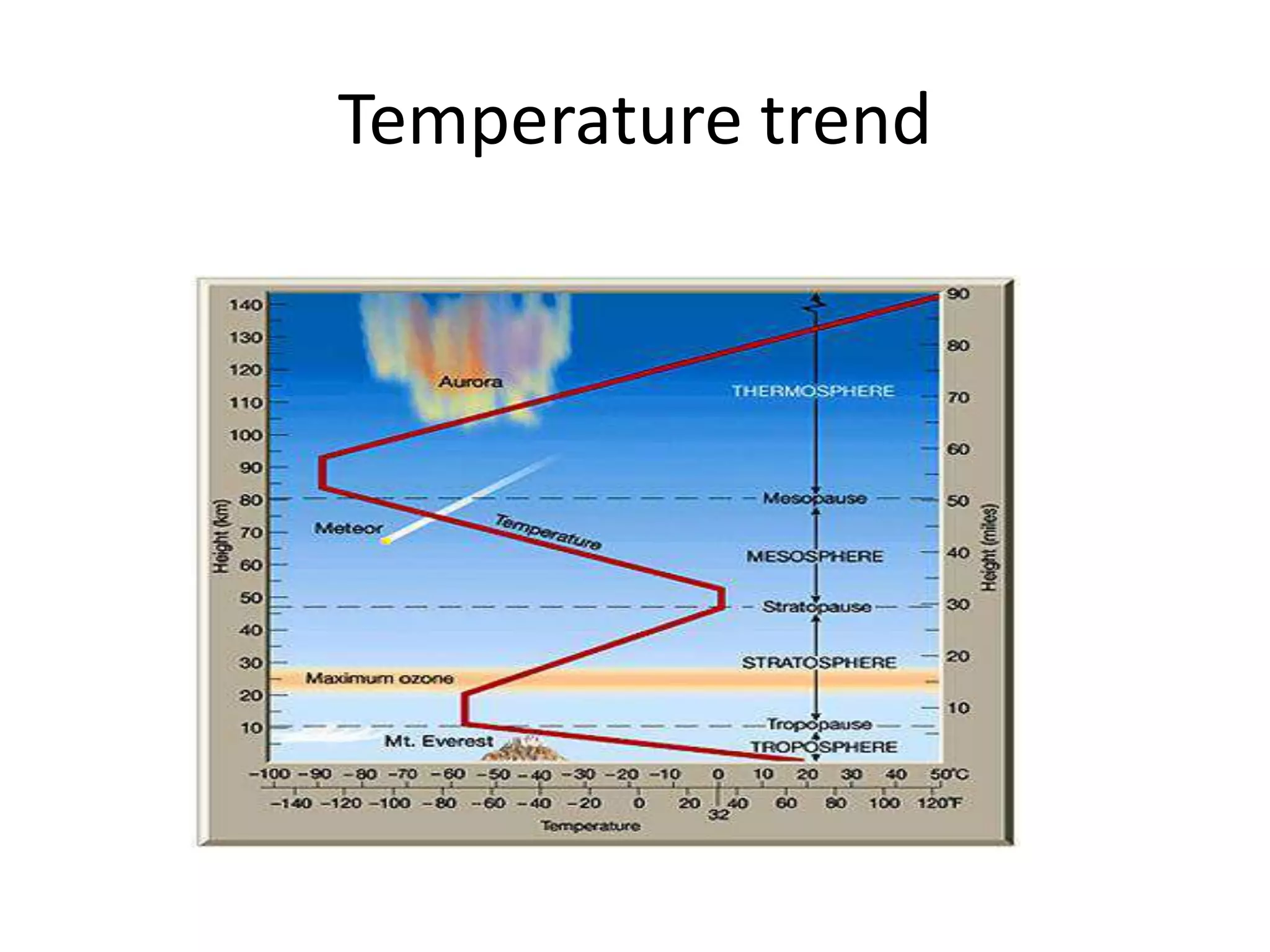
• 4 layers
• 1.Troposphere
• 2.Stratosphere
• 3.Mesosphere
• 4.Thermosphere
Temperature trend
Troposphere
• •Bottom layer
• •Average height=12km
• •Temperature decreases with altitude
• •Lapse rate (rate of decline in
temperature)=6.5◦C/1000m
• •The upper boundary is called tropopause
Stratosphere
• Extends from 12km-50km
• •Exhibits positive lapse rate (called inversion)
• •It has calm, thin and clear air
• •Jets and aircrafts fly in the stratosphere
• •It contains ozone
Mesosphere
• Extends from 50km-80km above the Earth’s
surface
• •Temperature again increases with height
• •Here sunlight can form ionized particles and
it is called a D-layer
• •D layer is used for radio communication
Thermosphere
• Extended from 80km to the edge of space
• •Temperature increases very sharply
• •Ionization forms E and F layers
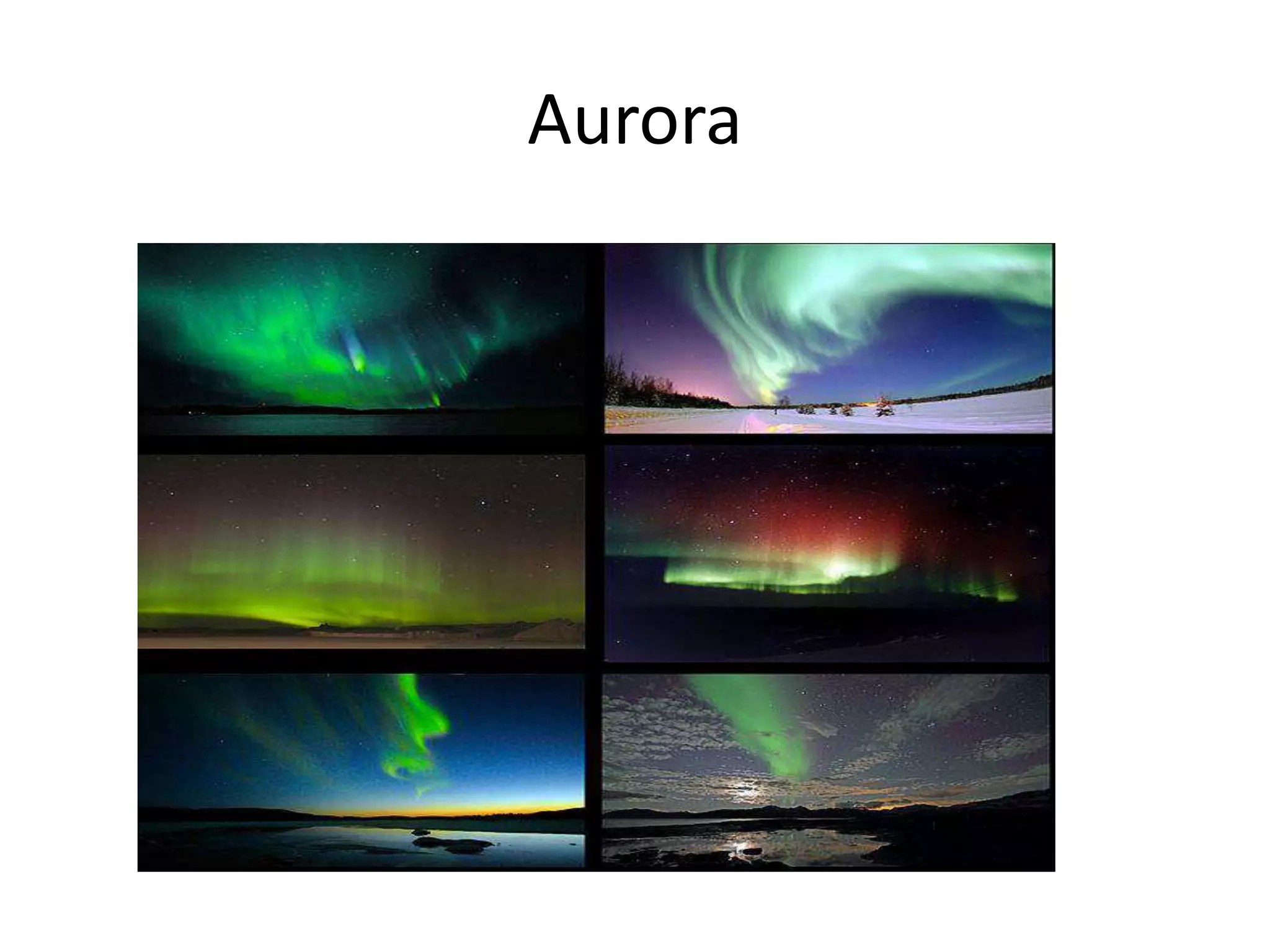
• •These ions can form Auroras due to their
movement
Aurora

Composition & structure of the atmosphere

  • 1.
    Composition & Structureof the Atmosphere
  • 2.
    Atmosphere • The thinlayer of gas that envelopes the Earth and is held to the Earth by the force of gravity
  • 3.
    Composition of Atmosphere •1.Constant Gases • 78% Nitrogen • 21% Oxygen • 2. Variable gases • CO2= 0.04% of air • Water Vapours • Ozone
  • 4.
    Layered Structure • 4layers • 1.Troposphere • 2.Stratosphere • 3.Mesosphere • 4.Thermosphere
  • 5.
  • 6.
    Troposphere • •Bottom layer ••Average height=12km • •Temperature decreases with altitude • •Lapse rate (rate of decline in temperature)=6.5◦C/1000m • •The upper boundary is called tropopause
  • 7.
    Stratosphere • Extends from12km-50km • •Exhibits positive lapse rate (called inversion) • •It has calm, thin and clear air • •Jets and aircrafts fly in the stratosphere • •It contains ozone
  • 8.
    Mesosphere • Extends from50km-80km above the Earth’s surface • •Temperature again increases with height • •Here sunlight can form ionized particles and it is called a D-layer • •D layer is used for radio communication
  • 9.
    Thermosphere • Extended from80km to the edge of space • •Temperature increases very sharply • •Ionization forms E and F layers • •These ions can form Auroras due to their movement
  • 10.