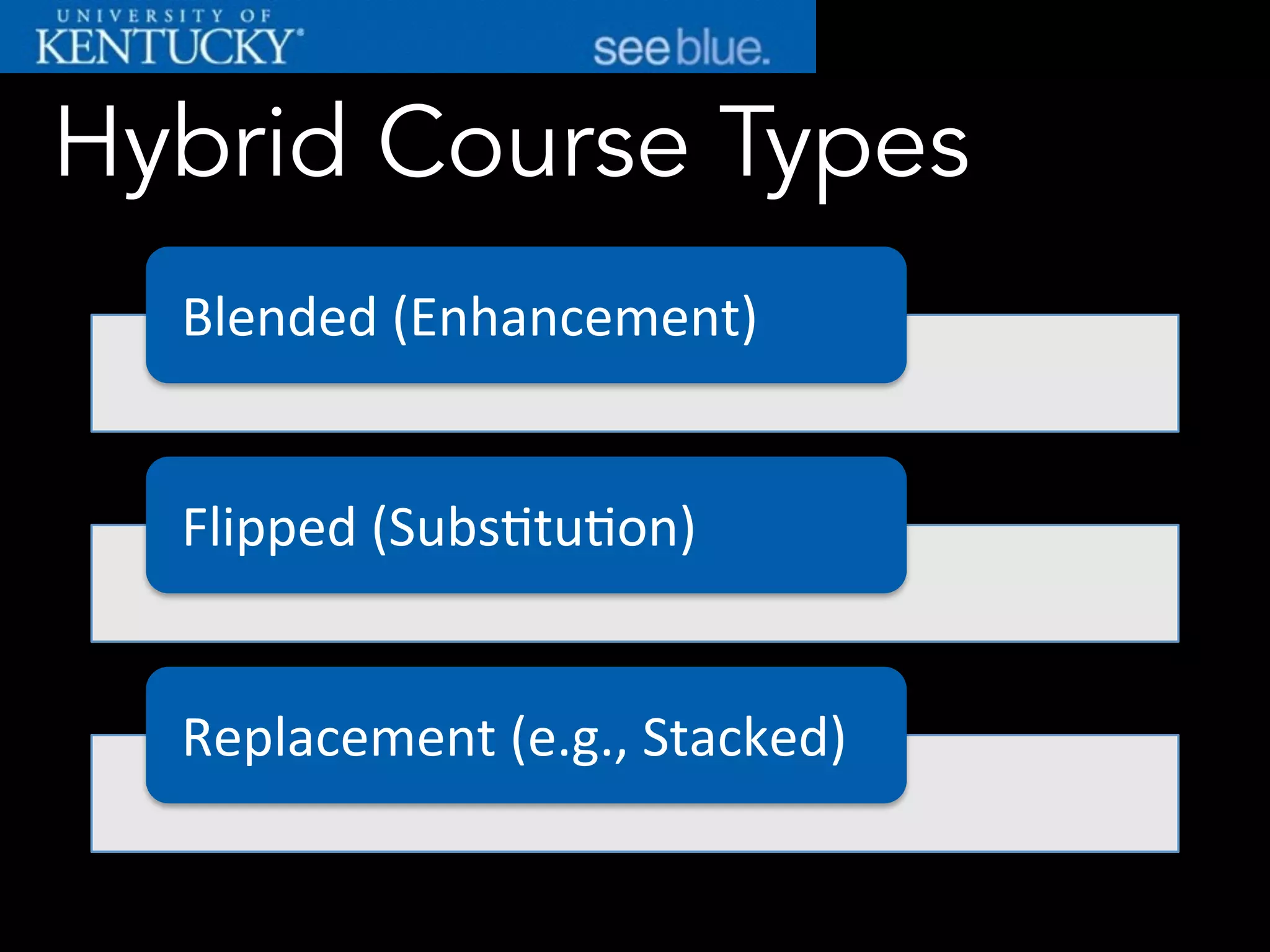


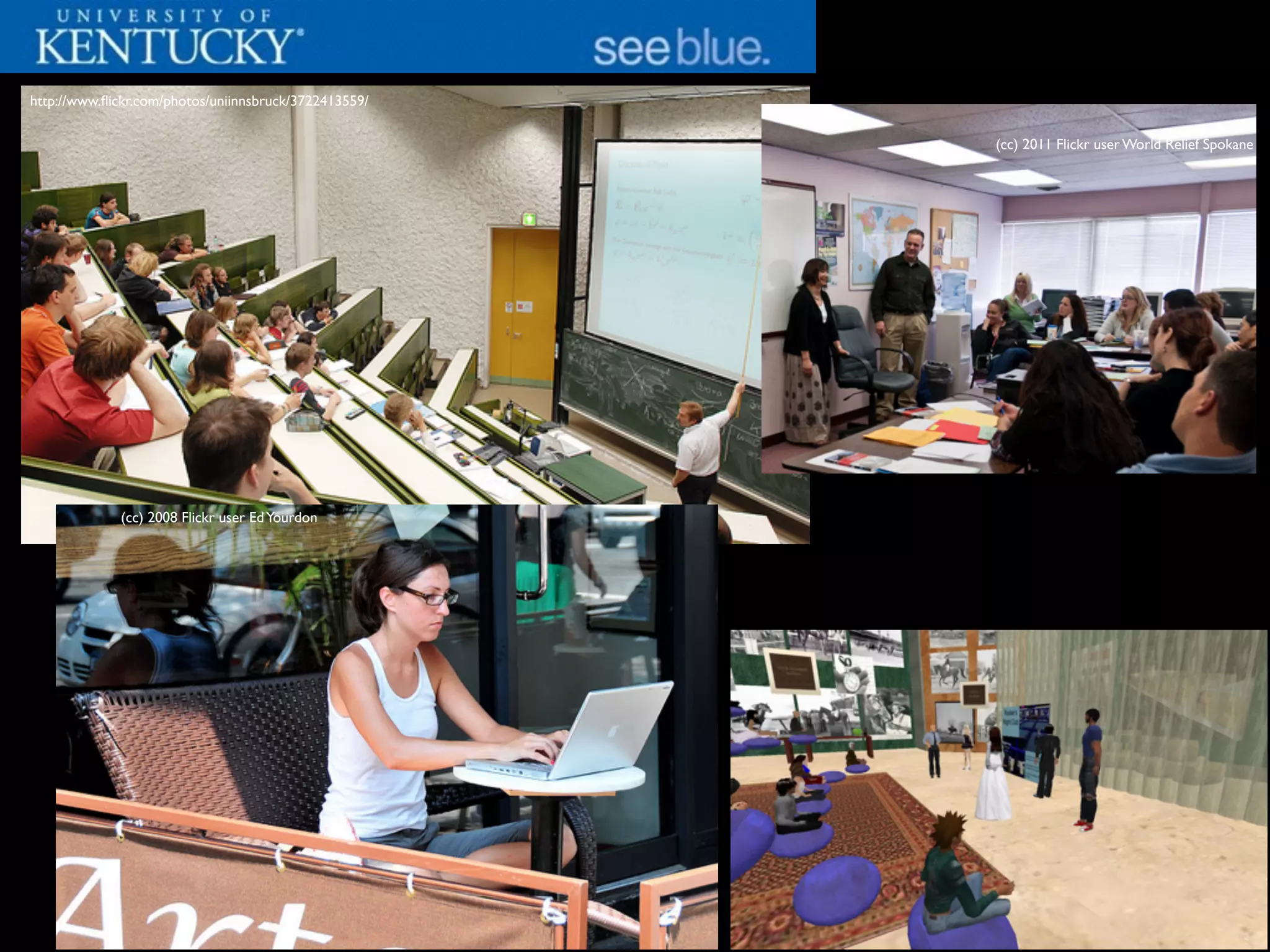
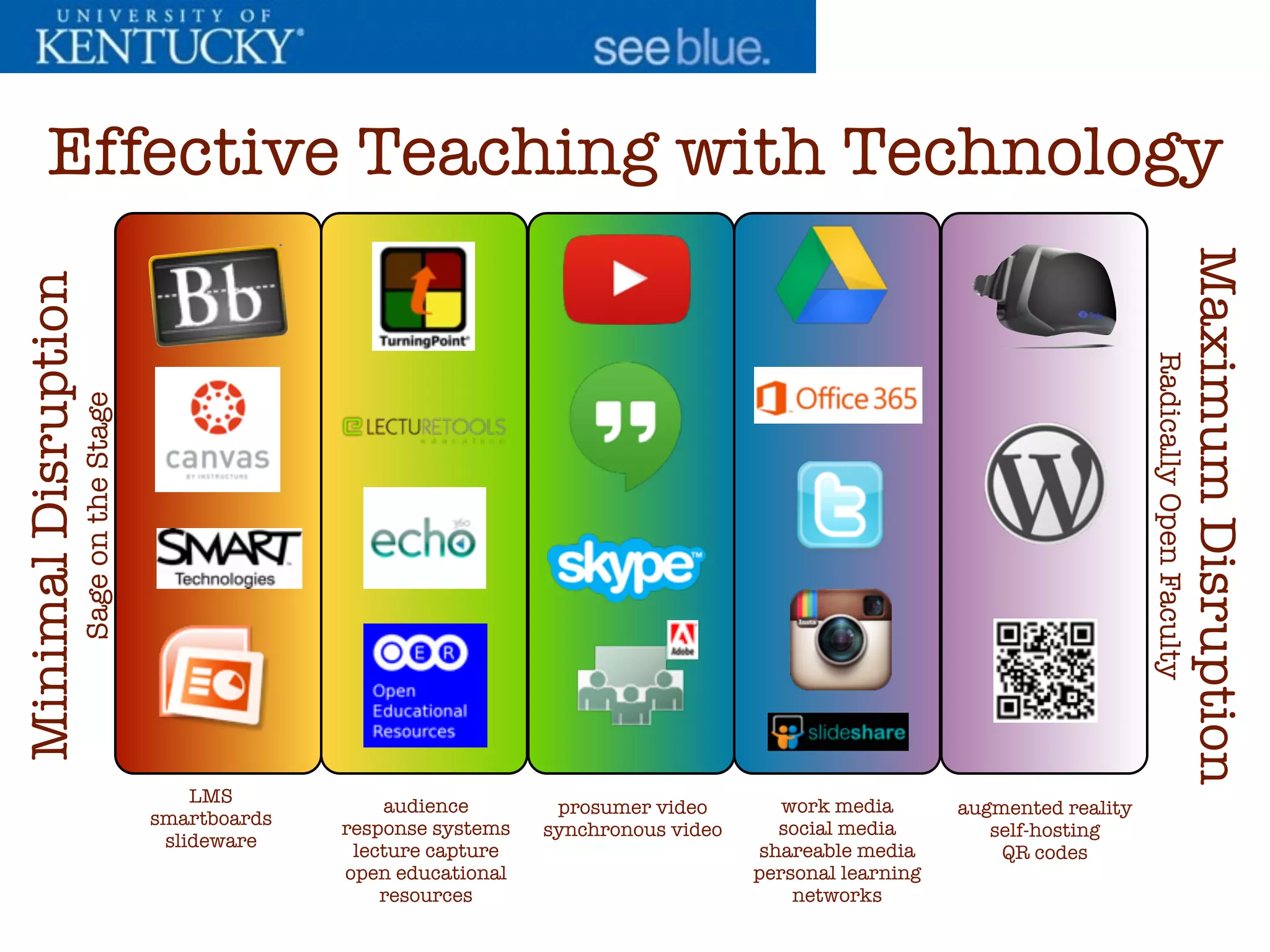
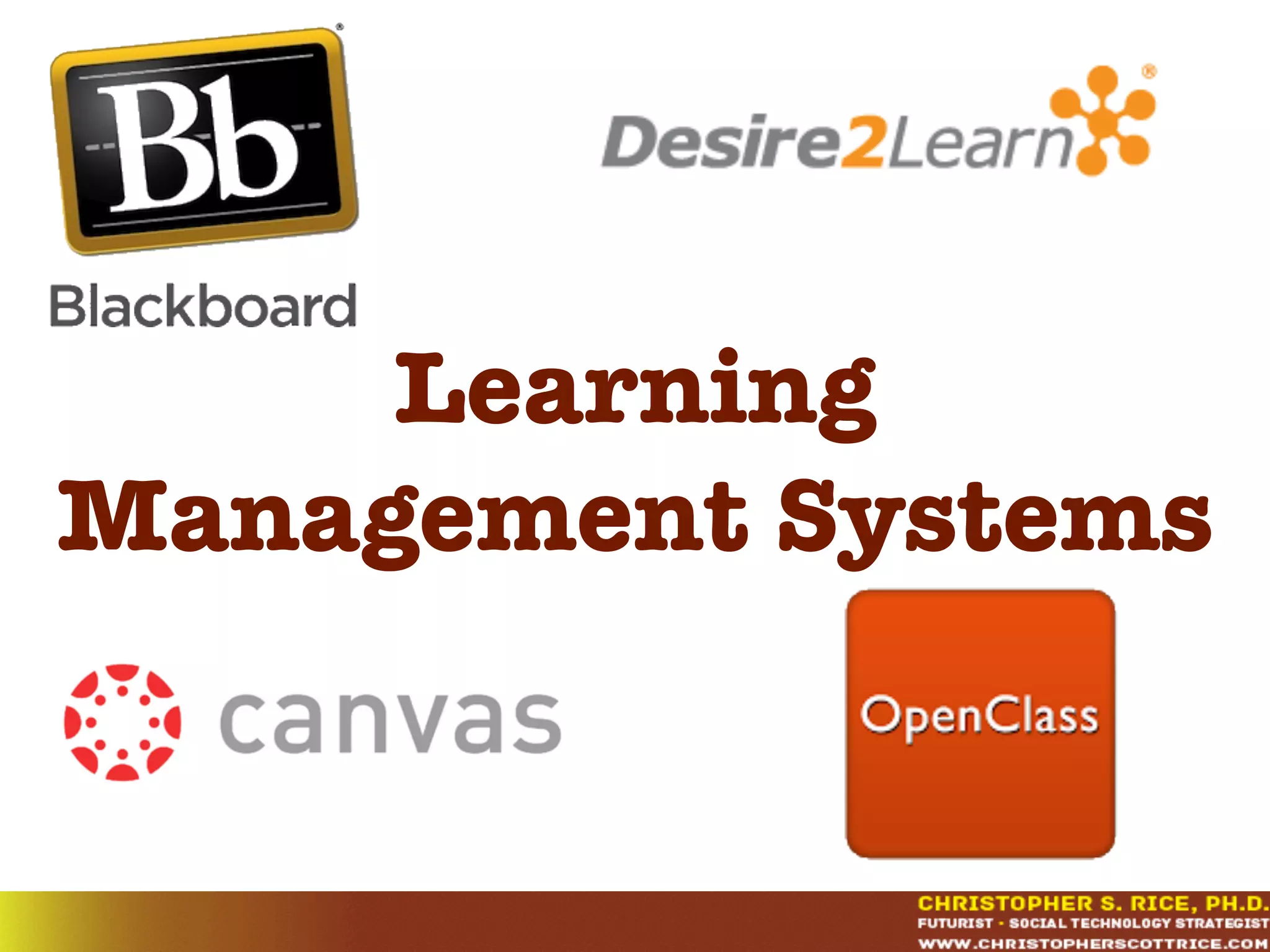

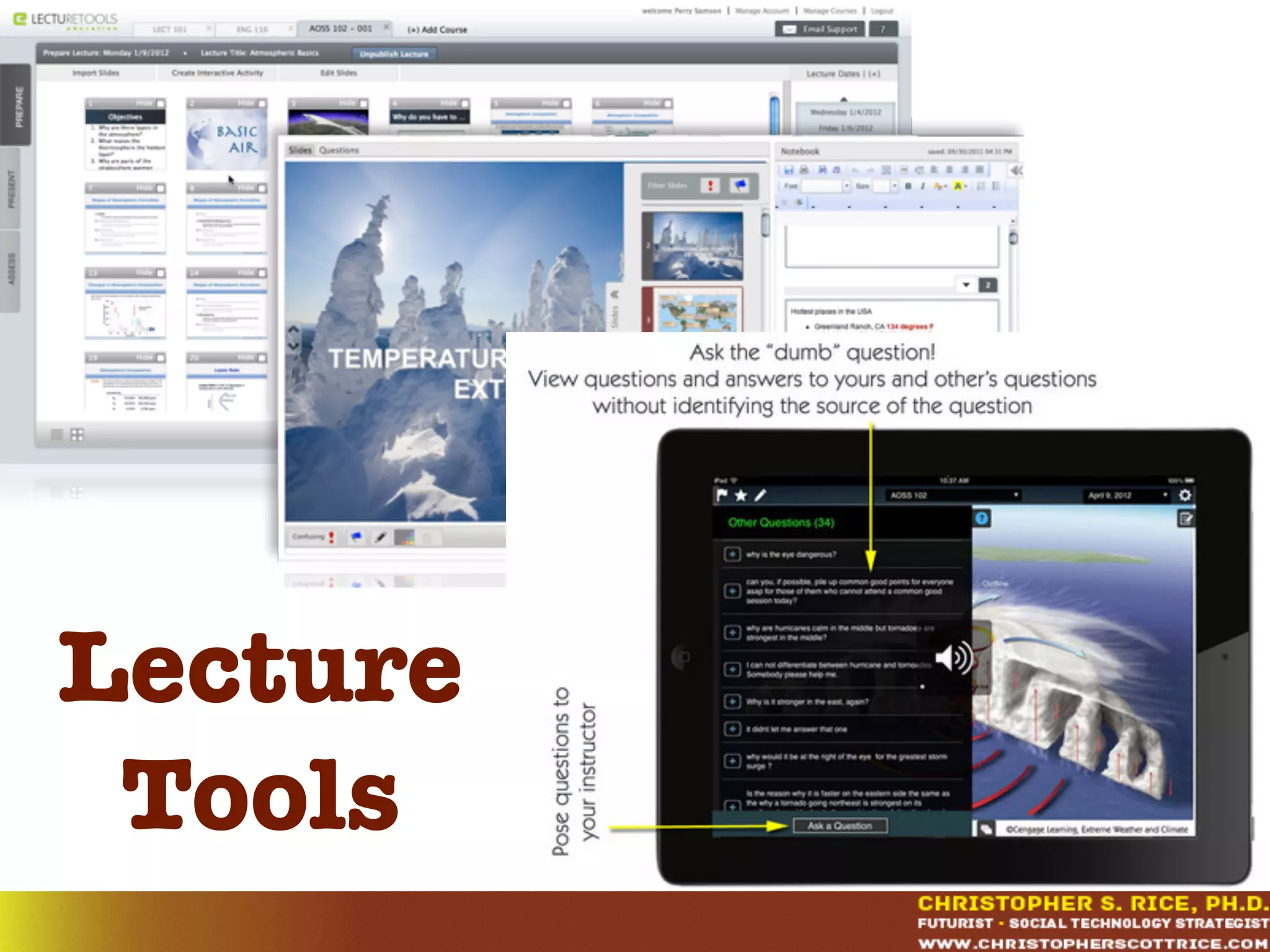
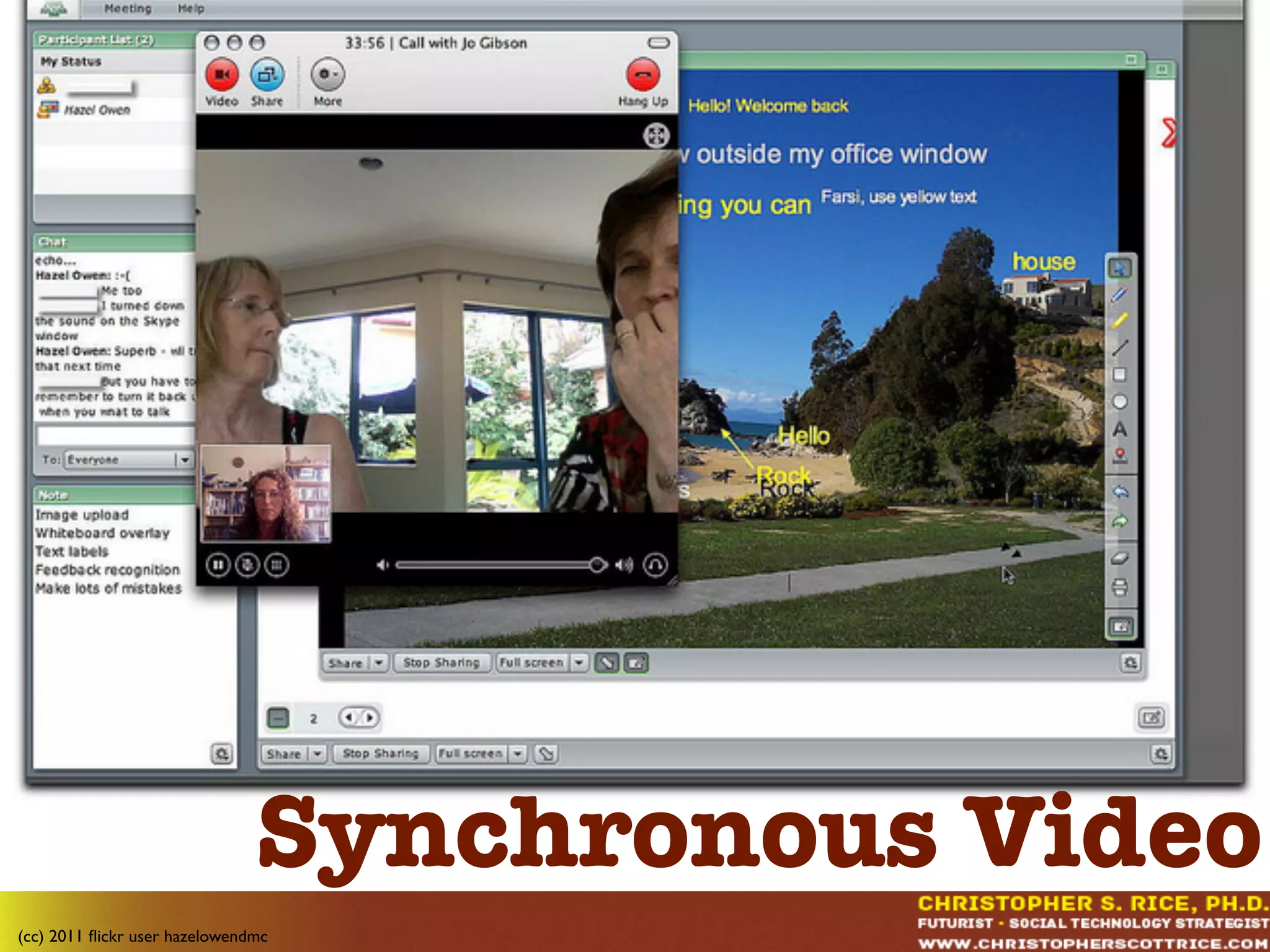
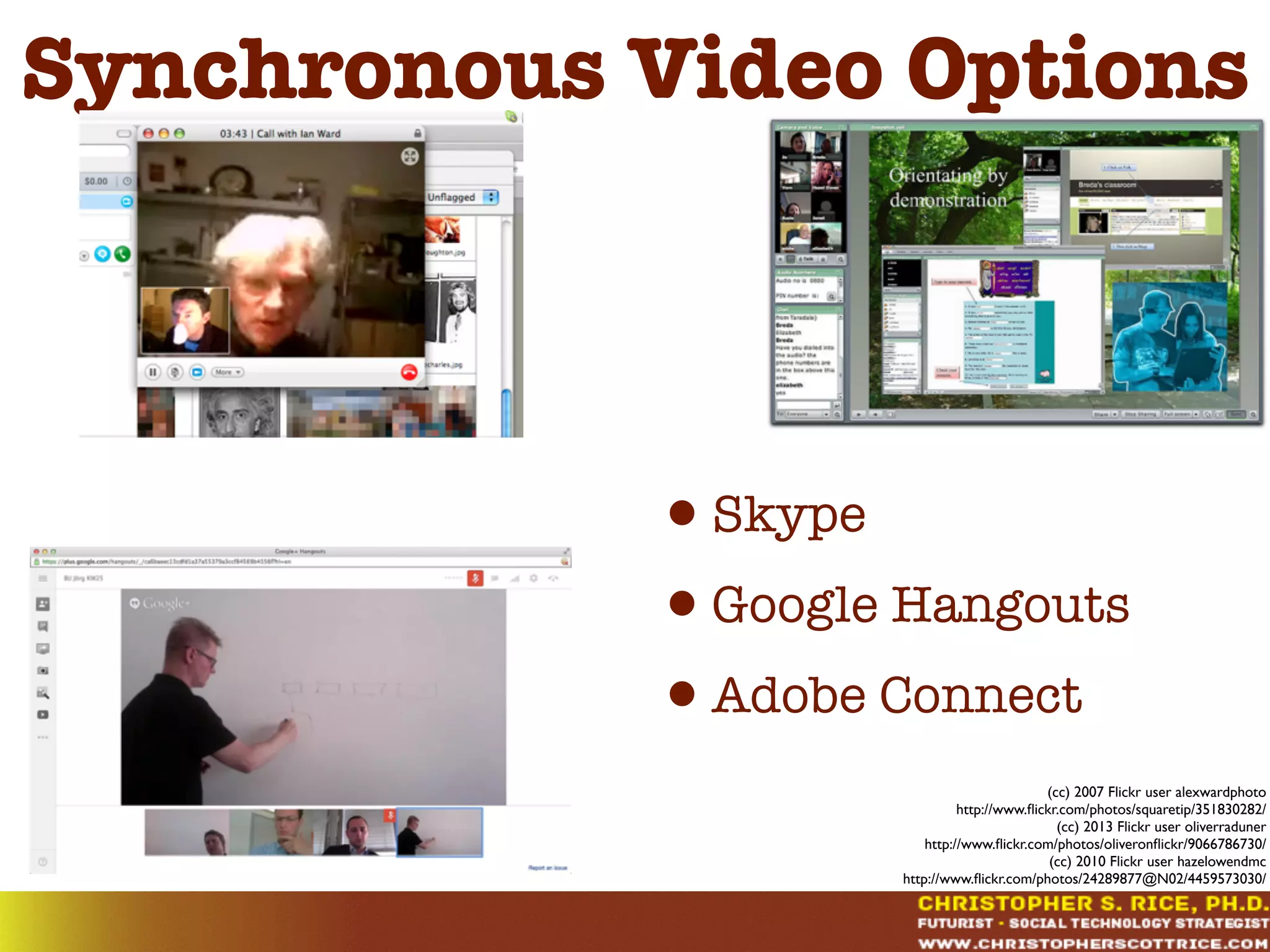
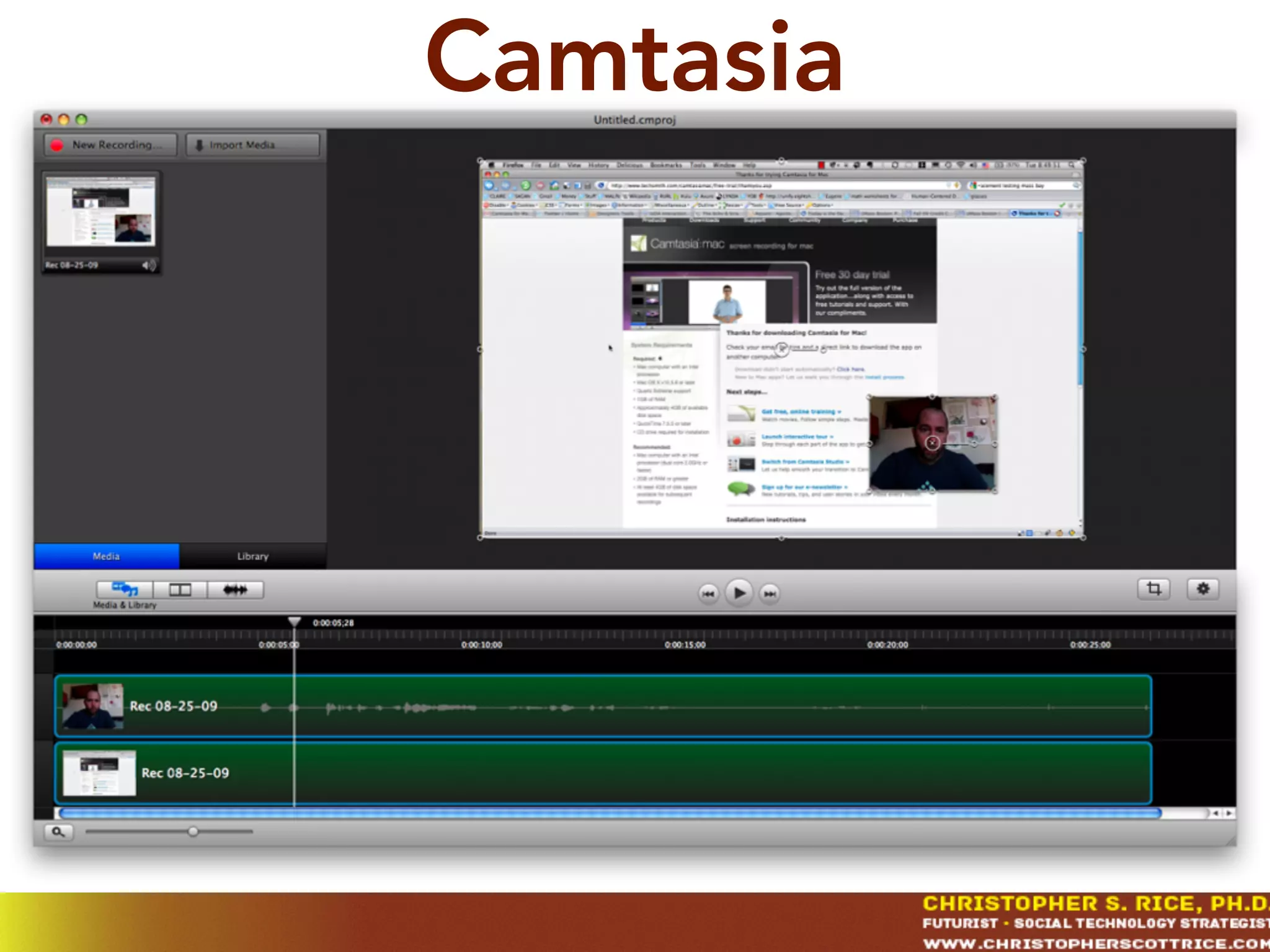

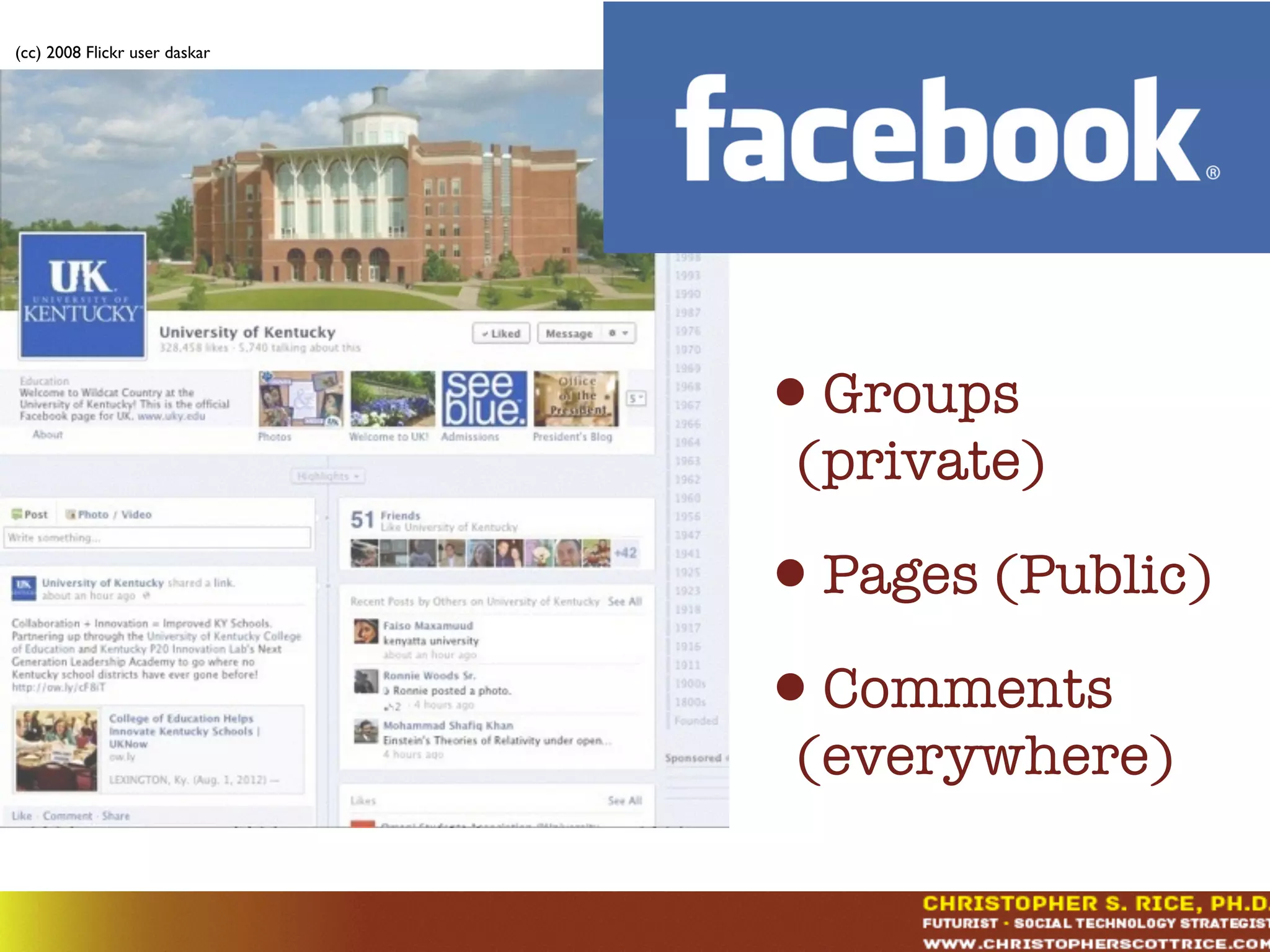



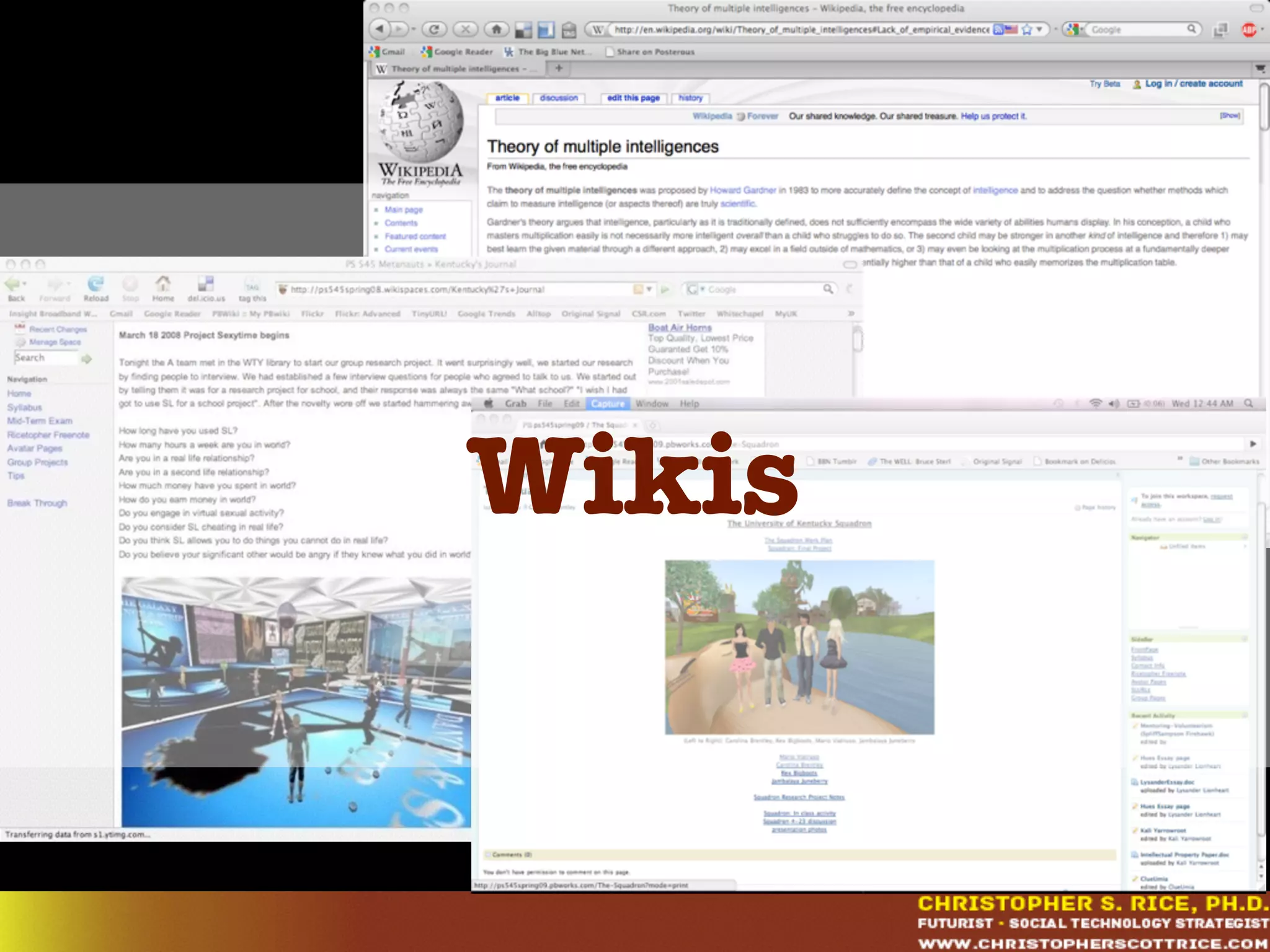



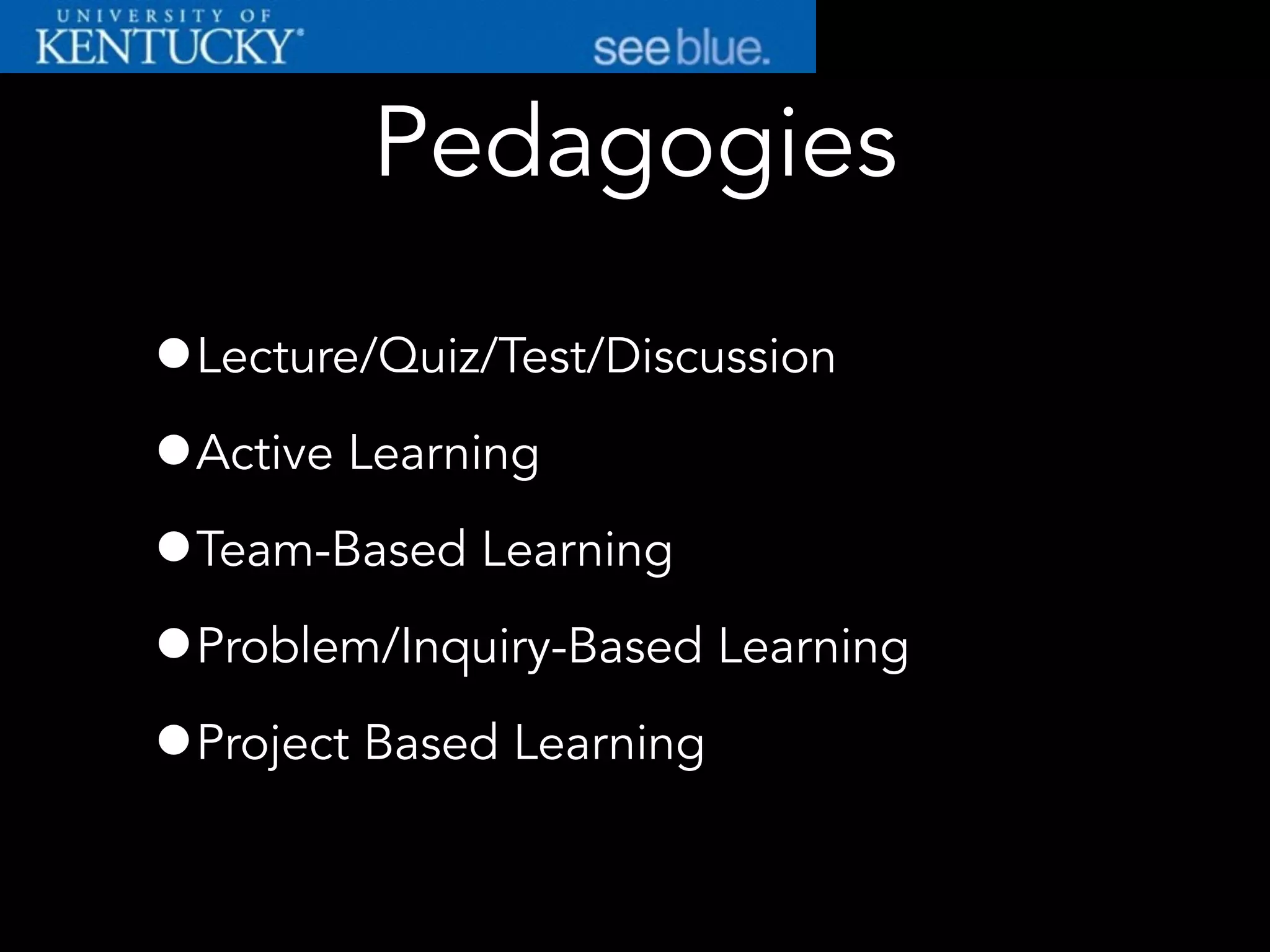
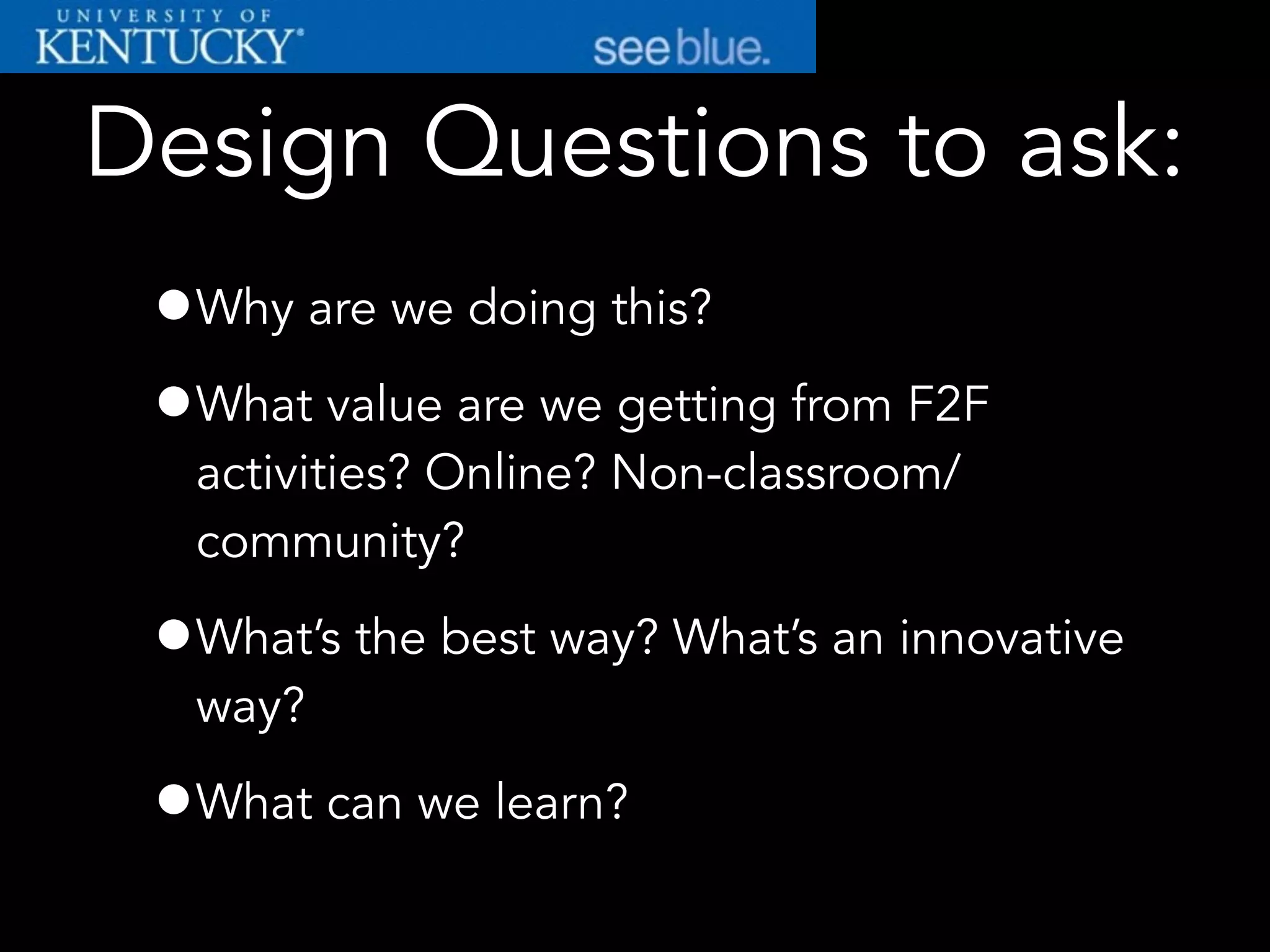

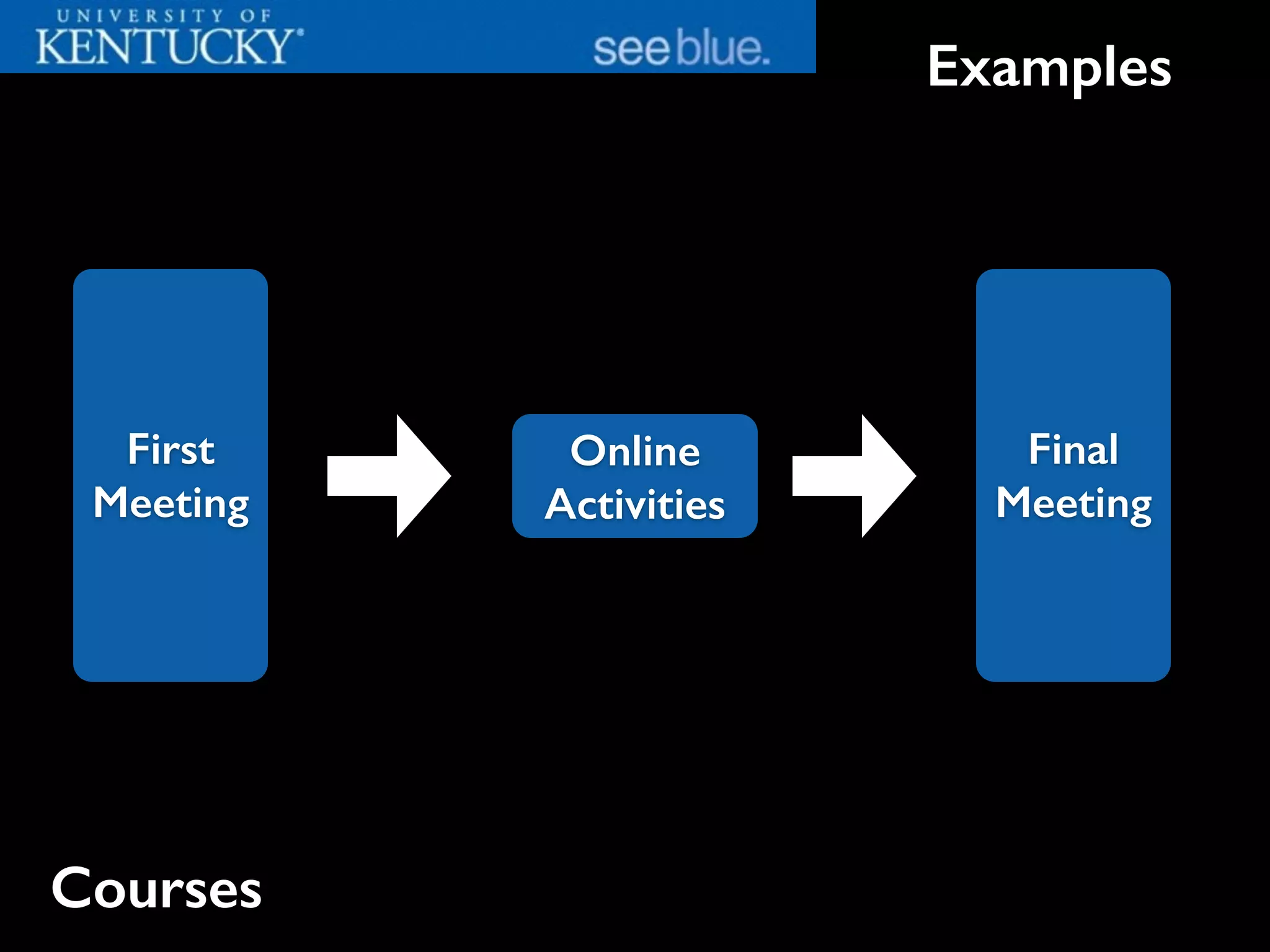
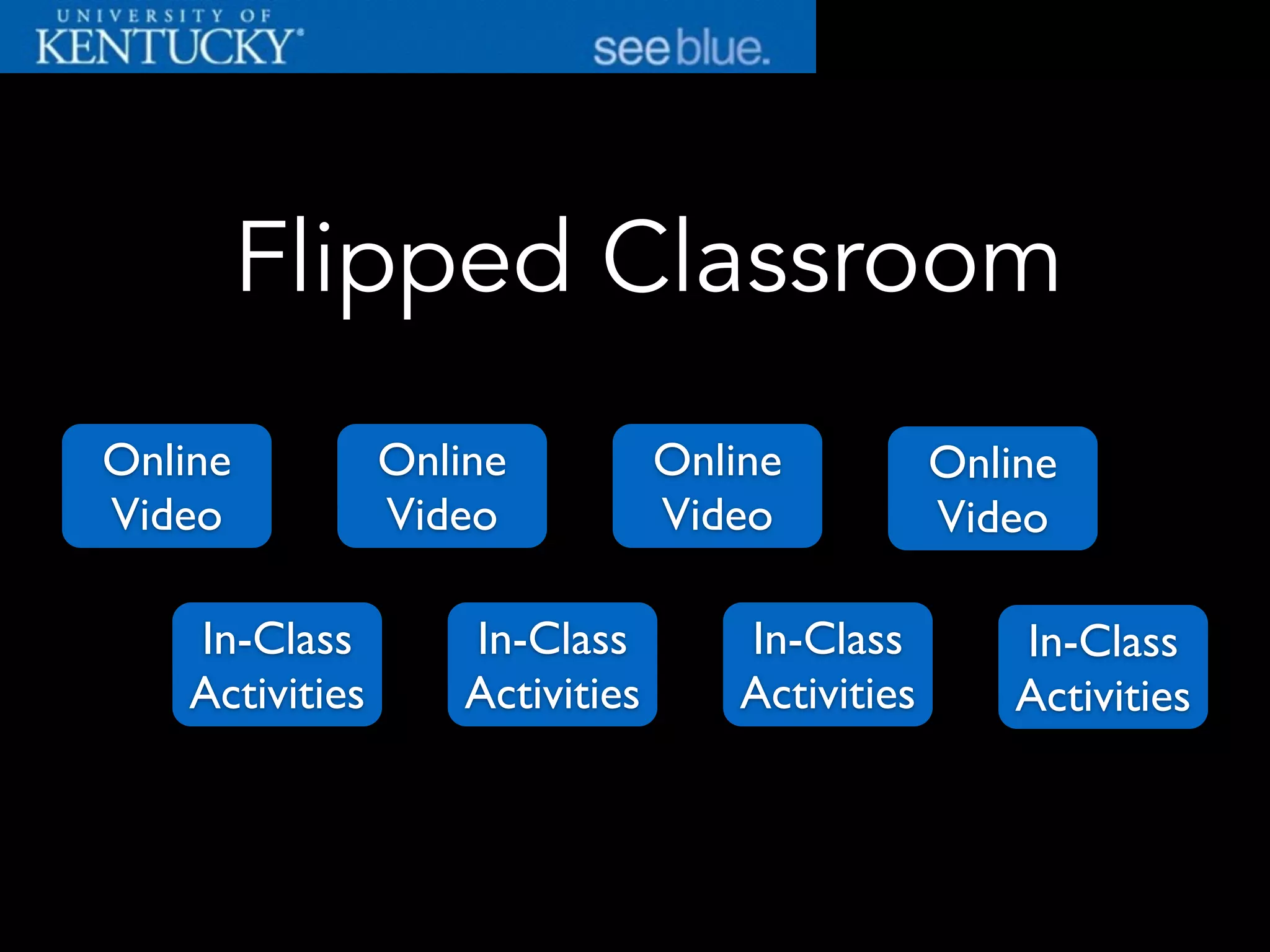
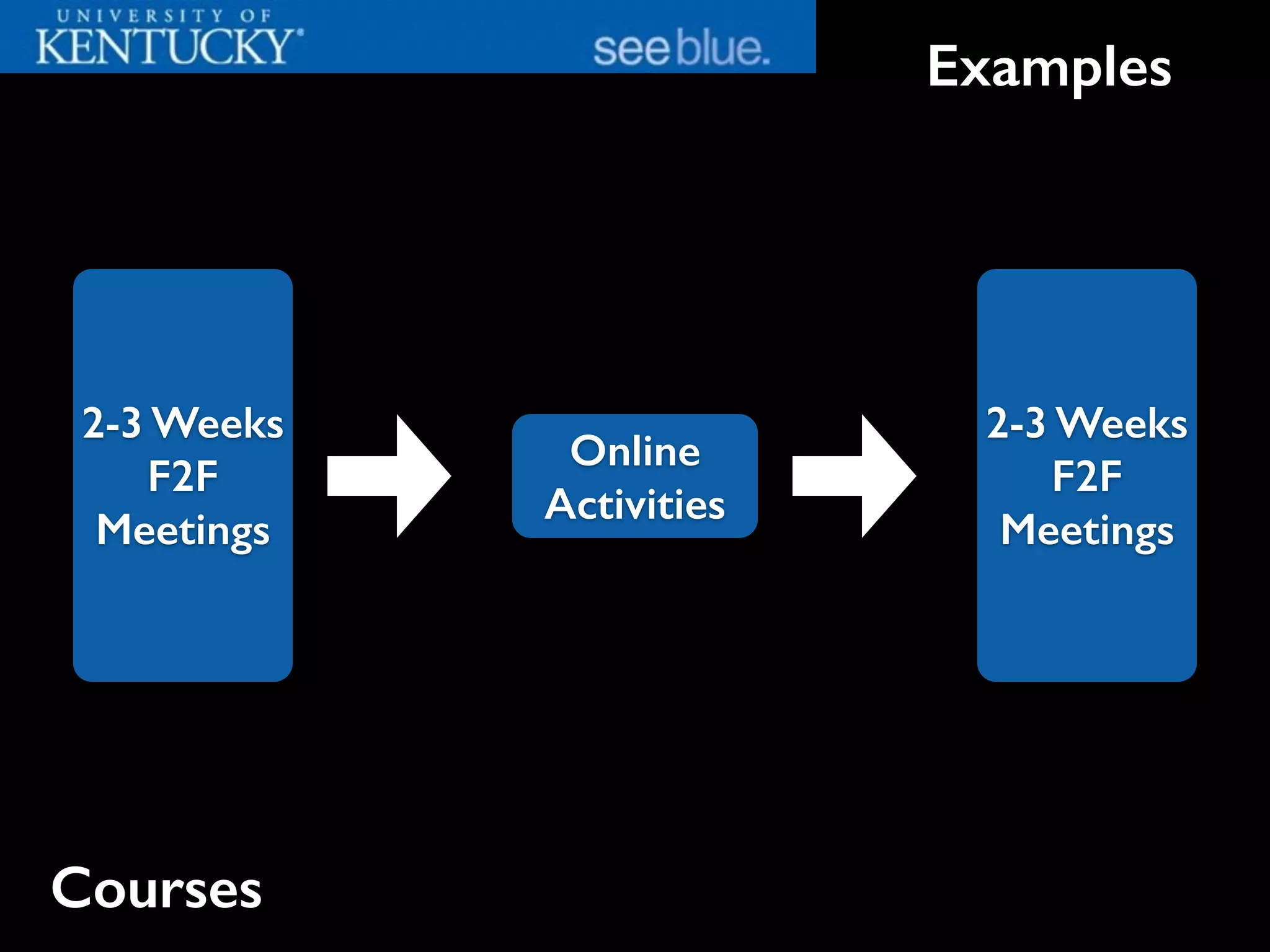
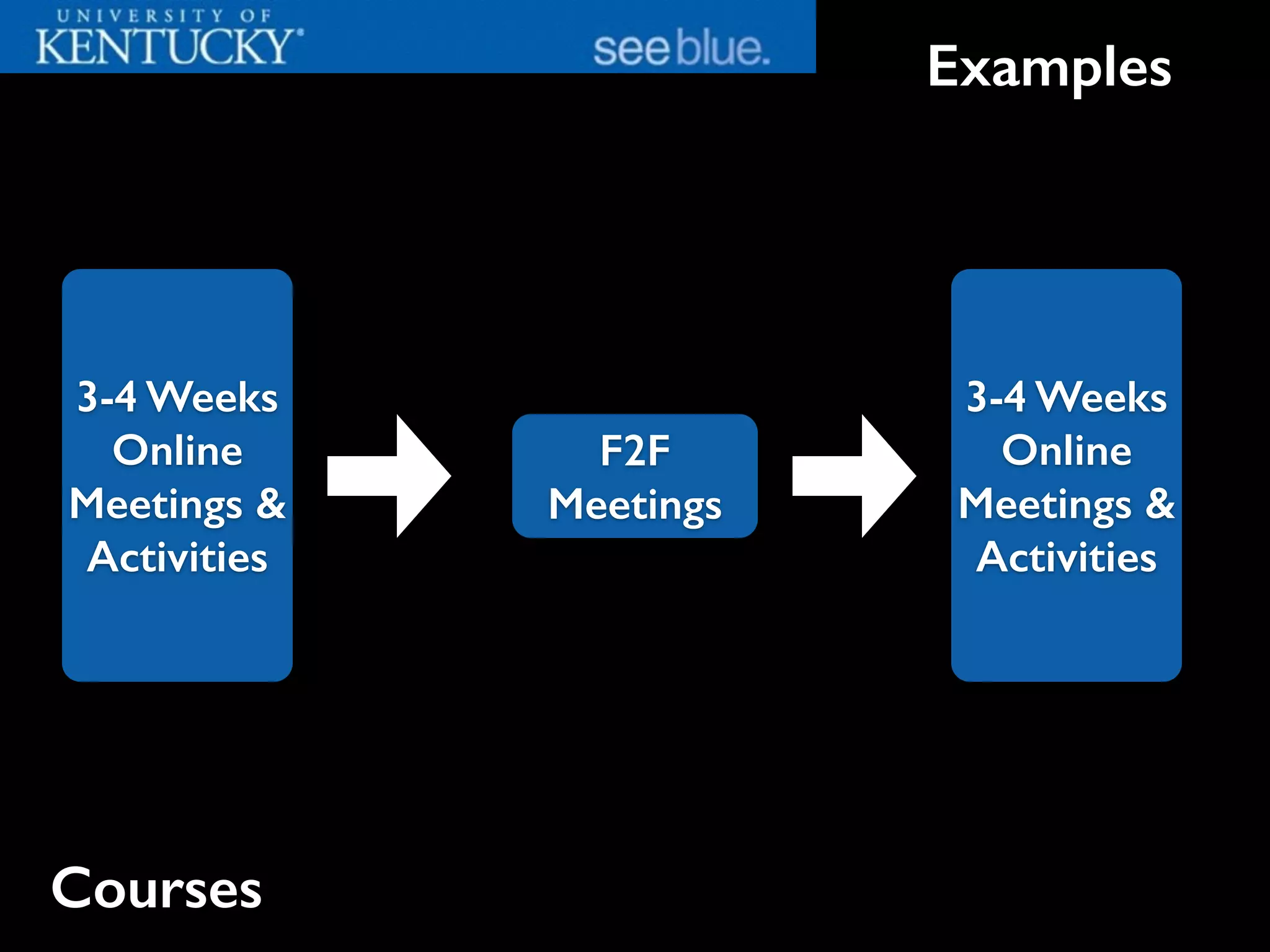
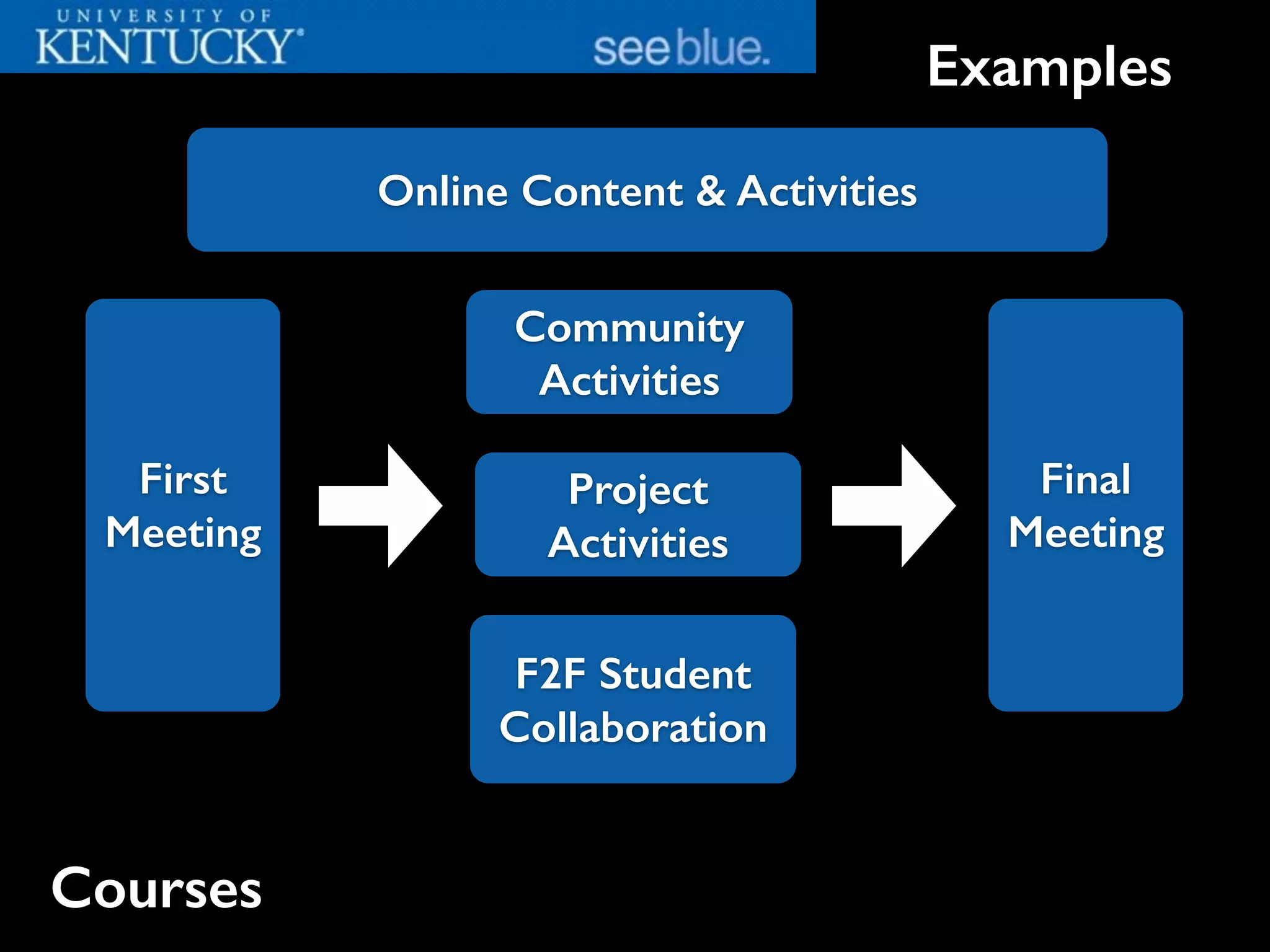
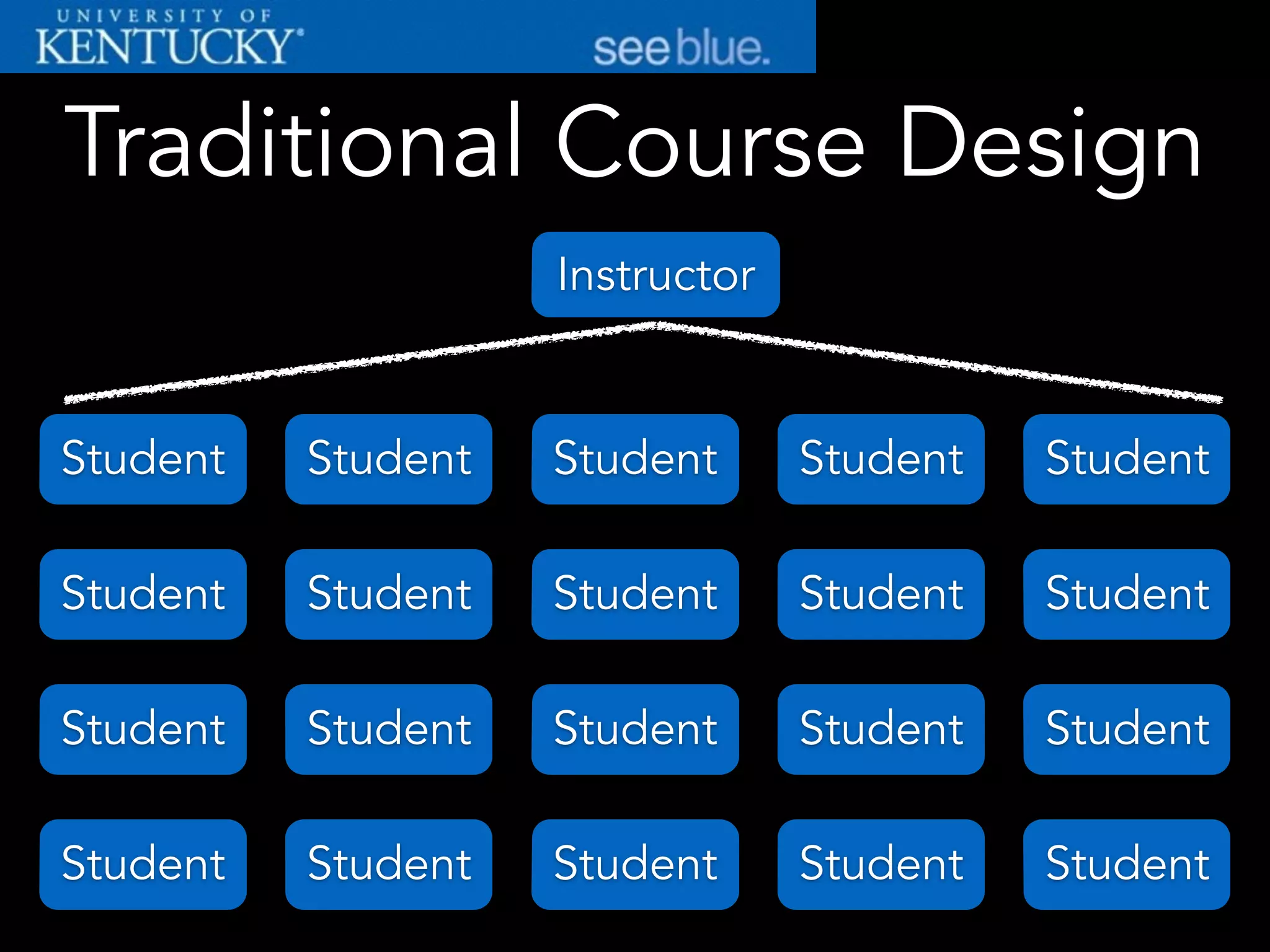
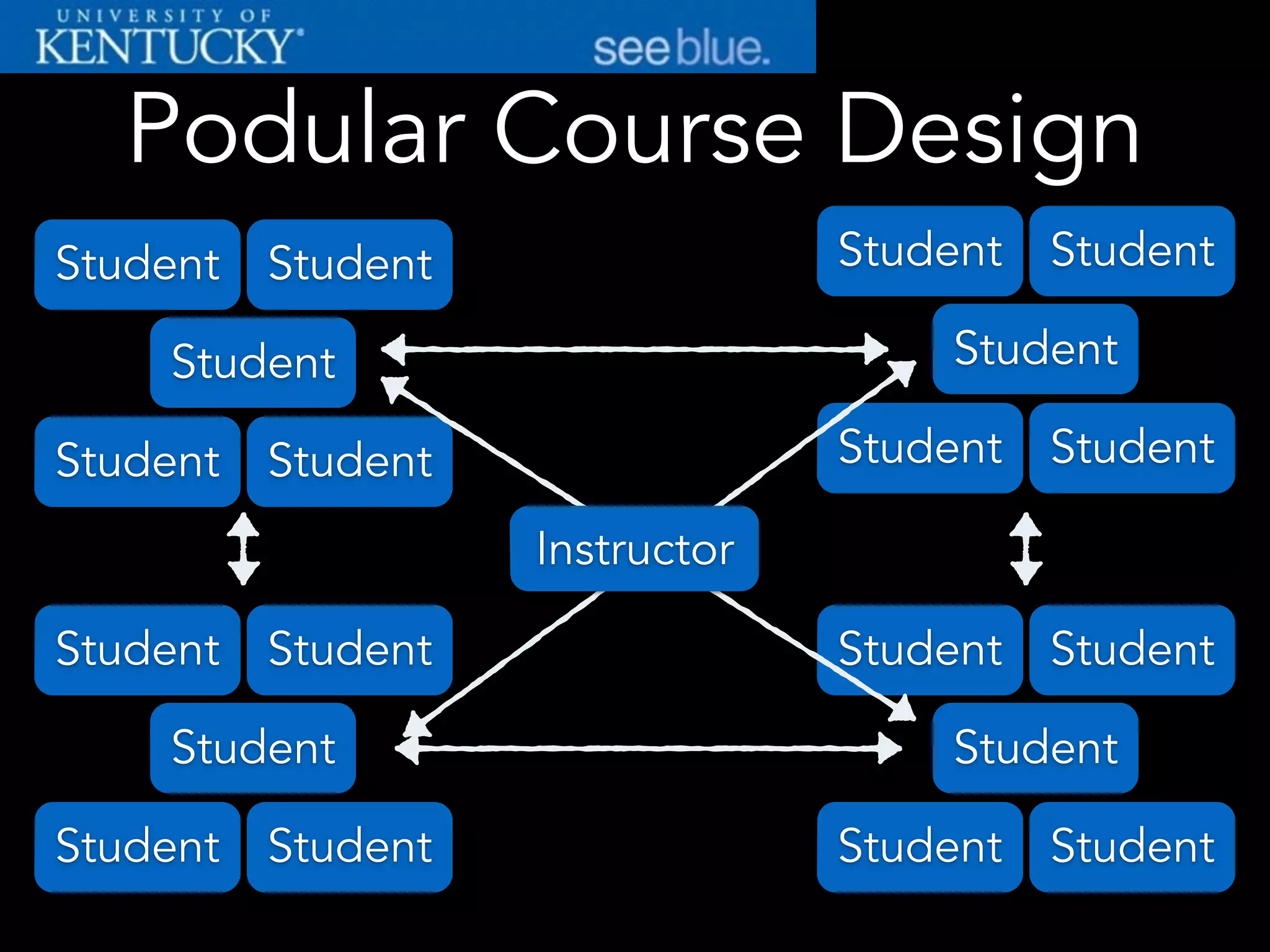
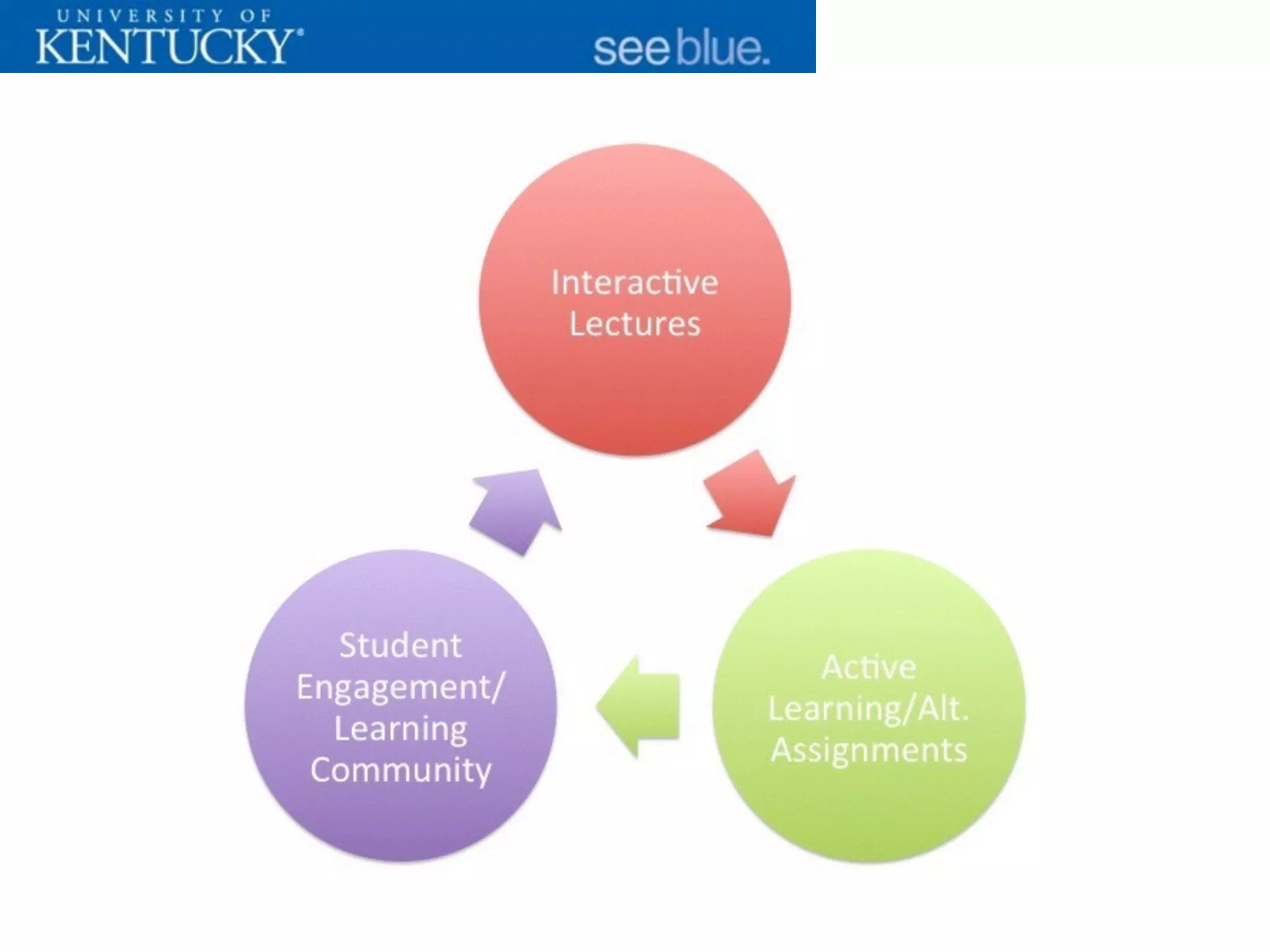
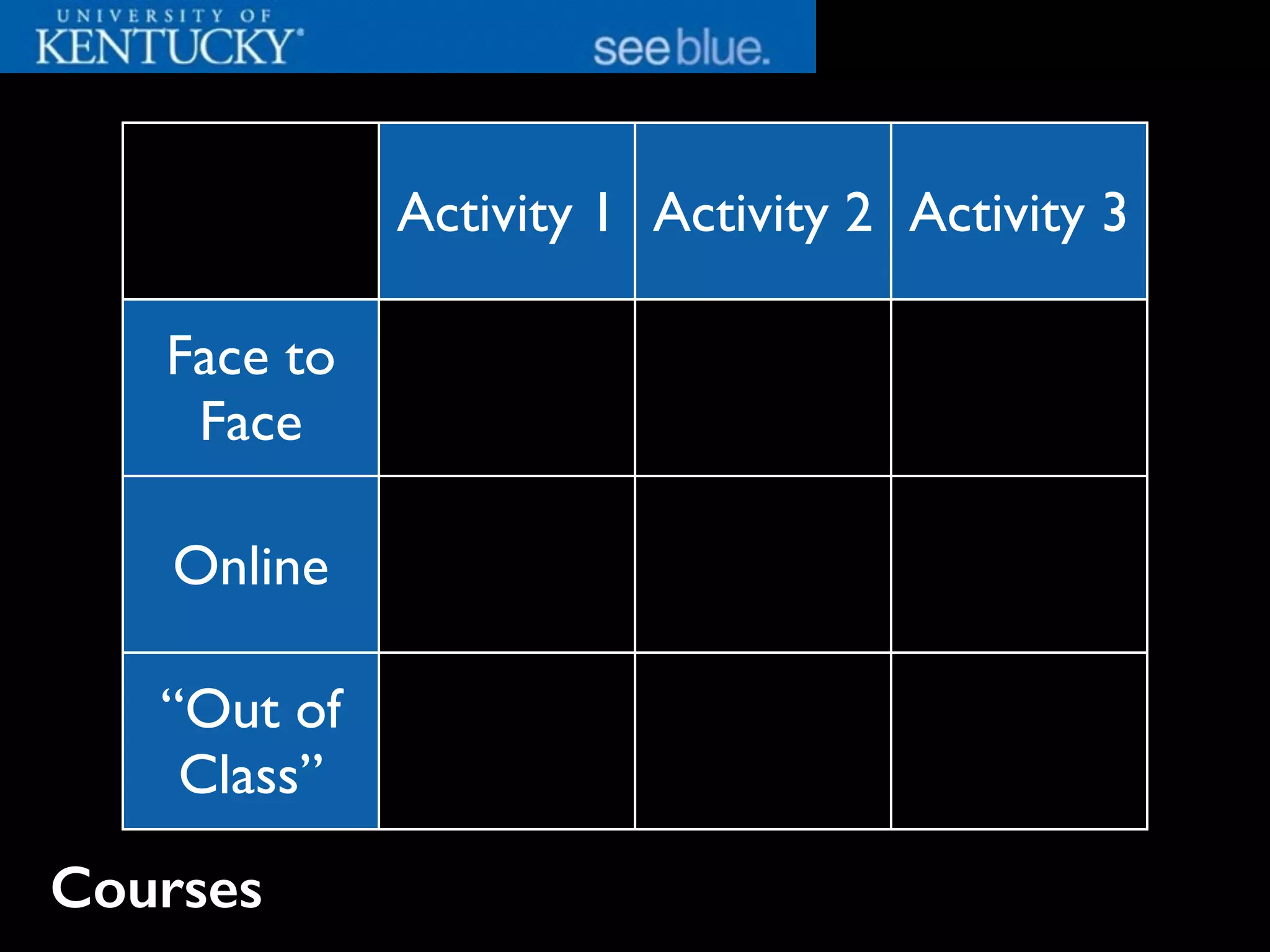
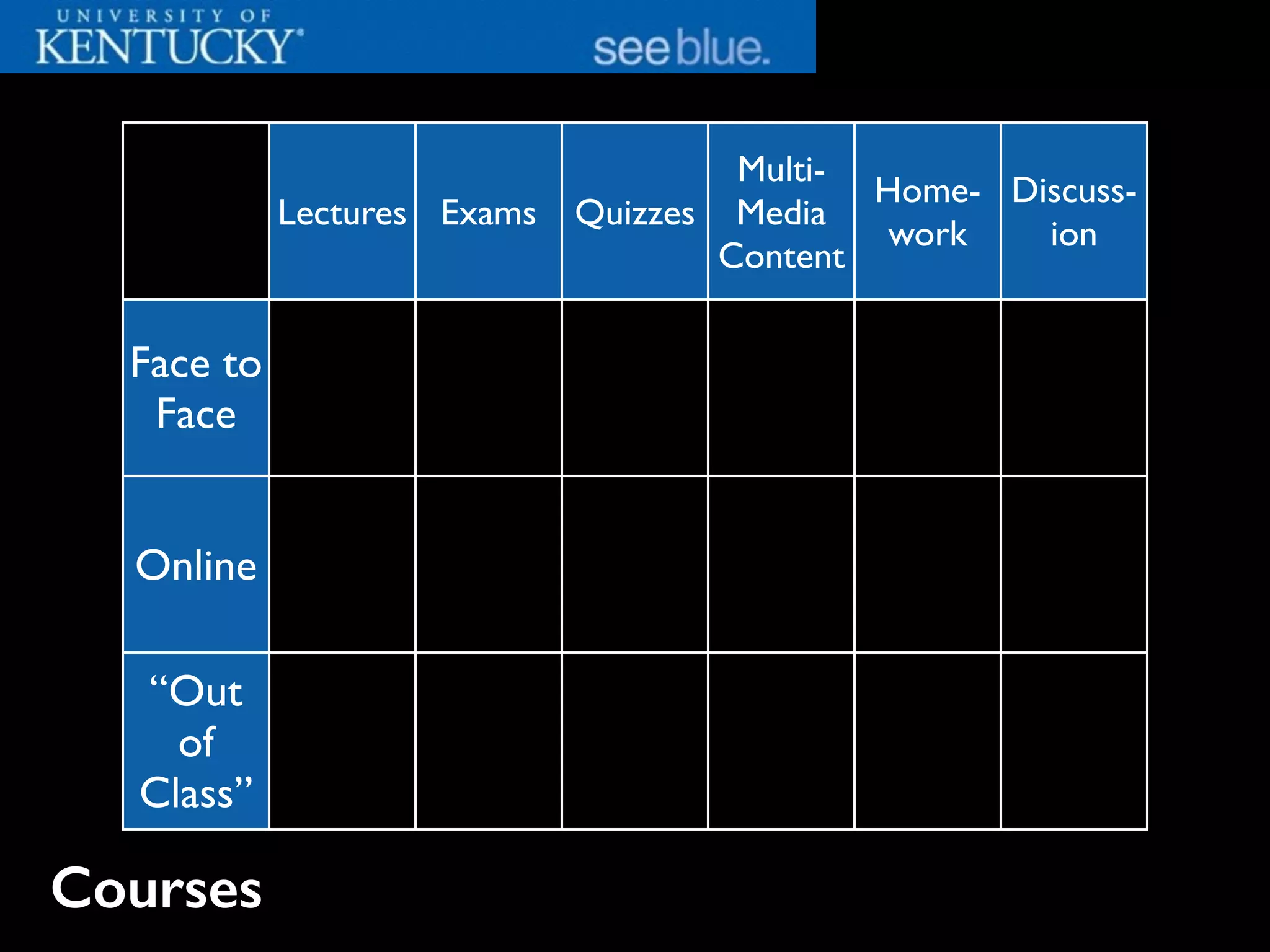


This document discusses hybrid course design. It begins by defining different types of hybrid courses, such as blended, flipped, and replacement models. It then discusses whether hybrid courses should be synchronous or asynchronous. Various technologies that can be used are presented, including learning management systems, lecture tools, synchronous video options, and social media. Different pedagogical approaches for hybrid courses like active learning and problem-based learning are also covered. Examples of hybrid course structures such as the flipped classroom model and models combining online and face-to-face meetings are provided. The document concludes by discussing podular course design and comparing it to traditional course design.


