USING COGNITIVE
      APPRENTICESHIP TO
       PROVIDE FACULTY
          DEVELOPMENT
          IN THE USE OF
      BLENDED LEARNING
Carrianne Hayslett
Ed O’Sullivan
Heidi Schweizer
Janna Wrench
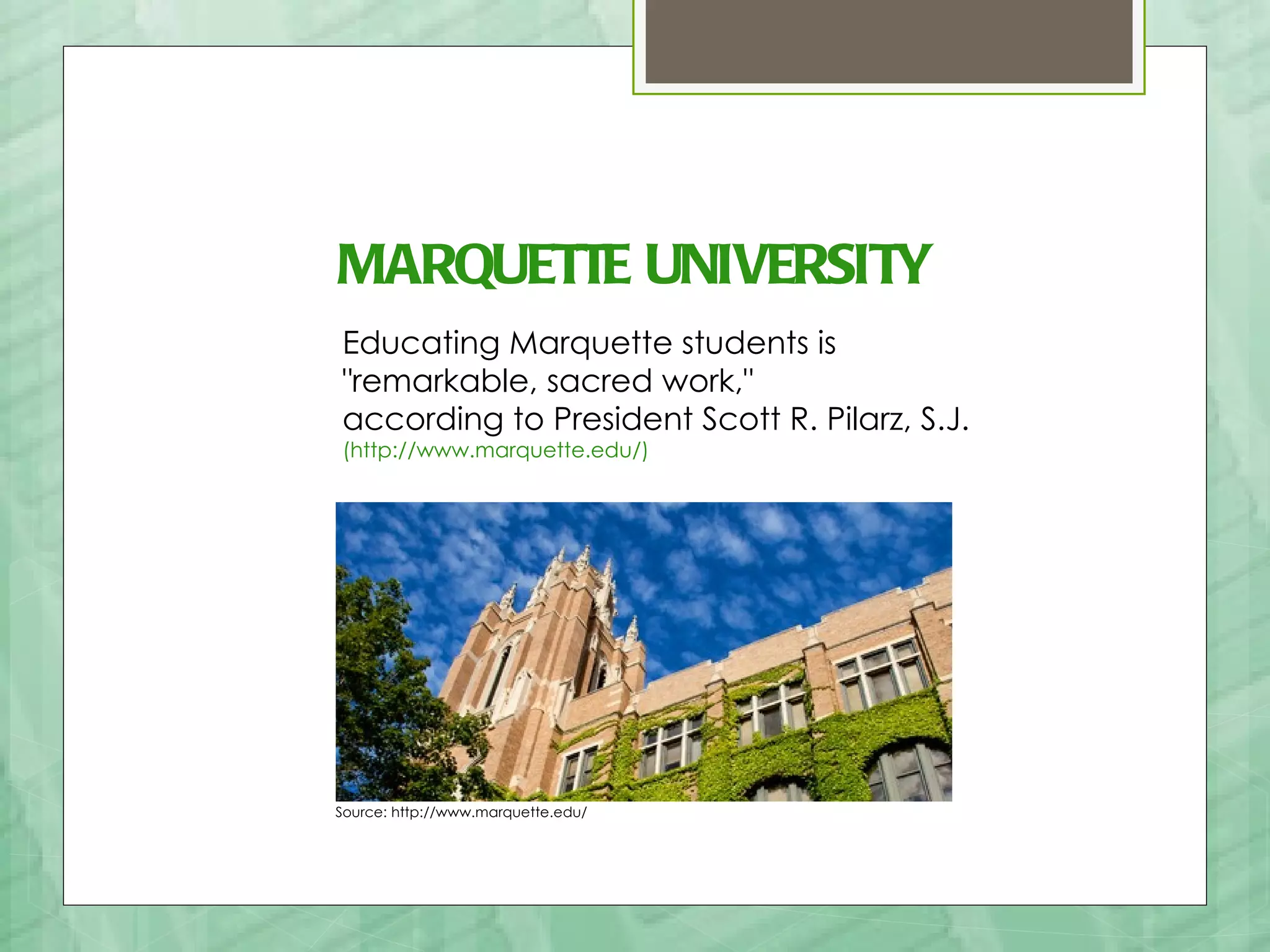
MARQUETTE UNIVERSITY
Educating Marquette students is
"remarkable, sacred work,"
according to President Scott R. Pilarz, S.J.
(http://www.marquette.edu/)


Source: http://www.marquette.edu/
Enrollment:
 Approximately 8,400 undergraduate and 3,600 graduate and
professional students; nearly all states and 68 countries represented.

Undergraduate programs:
116 majors and 65 minors and pre-professional programs in dentistry,
law and medicine

Postgraduate programs:
50 doctoral and master's degree programs, more than 30 graduate
certificate programs, and a School of Dentistry and Law School

Faculty:
More than 1,100 (almost 700 full time)
(See About Marguette http://www.marquette.edu/)
BLENDED LEARNING
 Blended Learning may become the
 educational delivery method of choice
 in higher education.
 (Bonk, Kim, & Zeng, 2006)
( cont’ d)
 Ina survey of 300 colleges and universities,
  EDUCAUSE found hybrid instruction used
  more widely, 80% of surveyed.
  (Hayslett, O’Sullivan, Schweizer & Wrench, 2009, p. 93)
MARQUETTE UNIVERSITY
                    COURSE DEFINITIONS
 F2F  Classes with web facilitated to deliver
  1-29% of course content.
 Hybrid (Blended) Classes to deliver 30-79% of
  course content.
 Online Classes to deliver 80% or more of
  course content.
(Hayslett, et al, 2009, p. 94)
REASONS FOR BLENDED LEARNING
 Students   report high levels of learning and
  satisfaction.
  (Campos, & Harasim, 1999)

 Instructors         may employ additional instruction
  tools.
  (Dzuiban, Hartman, & Moskal, 2004)

 Students         better able to direct own learning.
  (Bhatti, Tubaisahat, & El-Qawasmeh, 2005)
CHALLENGES OF IMPLEMENTATION
 Students          not familiar with online instruction
  tools .
  (Hayslett, O’Sullivan, Schweizer & Wrench, 2009, p. 94)

 Students          may lack self-regulation.
  (Schunk, & Zimmerman, (Eds.). 1998).

 Instructor
           of hybrid classes are more likely to
  require multimedia classrooms.
  (Dzuiban, Hartman, & Moskal, 2004)
ROLE OF FACULTY DEVELOPMENT
 Some  form of organized support to help
 faculty members develop.
 (Sorcinelli, Austin, Eddy, & Beach, 2006)
 “Without  faculty development, faculty may be
 even less likely to incorporate technology into
 their instruction…”
 (Hayslett et al, 2009, p. 96)


 Faculty
       development providers must shift the
 pedagogical foundations.
 (Hayslett et al, 2009, p. 96)
COGNITIVE APPRENTICESHIP
 Develop cognitive skills, rather
  than manual skills.
  (Hayslett et al, 2009, p. 96)


 Teach learners to process
  information.
  (Collins, Brown, & Newman 1989)
COGNITIVE APPRENTICESHIP
 PROCESSES

   Modeling
   Coaching
   Scaffolding
   Articulation
   Reflection
   Exploration

    (Hayslett et al, 2009, p. 98)
DESIGNING AND TEACHING A HYBRID
            COURSE
 Six 1 ½ hour F2F course time
 Six online modules
 Discussion forum
 Assignments
 Activities
 Resources

 (Hayslett et al, 2009, p. 98)
 Course was open to all faculty.
 Eleven disciplines represented in class.
 Taught by panel of instructors.

  (Hayslett et al, 2009, p. 101)
MARQUETTE HYBRID COURSE SATISFIED
COGNITVE APPRENTICESHIP PROCESSES
Modeling –
Hybrid course teaching
how to teach hybrid
courses.
Coaching –
Course set-up as peer-
to-peer course.
Scaffolding–
Availability of instructors
throughout class either
F2F, online, office hours
or discussion groups.
Articulation- Reciprocal
Teaching that elicits an
articulation of ideas.
Reflection-
Multiple opportunities to
reflect on their own
practice.
(Hayslett, et al, 2009, p. 102)
COURSE FEEDBACK

Feedback was conducted with semi-structured
interviews with selected participants conducted
by a non-team member.
(Hayslett et al, 2009, p. 105)
PARTICIPANT FEEDBACK
 Course  and instruction superior.
 Would recommend course to others.
 60% agreed with hybrid to teach hybrid
  format.
 90% found components to model in their own
  courses.
 Largest feedback agreeing with level of
  support given in the learning process.
(Hayslett et al, 2009, pp. 105-107)
HYBRID
COURSE
 FOCUS

   ON
 ACTIVE
LEARNING
COGNITIVE
APPRENTICESHIP
PEDOGOGY


A Student-Centered
Pedagogy
(Hayslett et al, 2009, p. 109)
SUGGESTED COURSE IMPROVEMENTS
 Student award or credit.
 More student accountability.
 Include more technology.
 Provide more support.
(Hayslett et al, 2009, pp. 110-112)
CONCLUSION

Designing and
Teaching a
Hybrid Course
affected change
in faculty’s
instructional
practice.
(Hayslett et al, 2009, p.114)
References


Bhatti, A., Tubaisahat, A., & El-Qawasmeh, E. (2005). Using technology-mediated learning environment
to overcome social and cultural limitations in higher education. Issues in Informing Science and
InformationTechnology, 2, 67-76.

Bonk, C., Kim, K., & Zeng, T. (2006). Future directions of blended learning in higher education and
workplace learning settings. In C. J Bonk & C. R. Graham, (Eds.), Handbook of Blended Learning: Global
Perspectives, Local Designs (pp. 550-567). San Francisco, CA: Pfeiffer Publishing.

Campos, M., & Harasim, L. (1999). Virtual-U: Results and challenges of unique field trials. The
Technology Source. Retrieved February 4, 2009, from http://technologysource.org/article/virtualu/

Collins, A., Brown, J. S., & Newman S. E. (1989). Cognitive apprenticeship: Teaching the crafts or
reading, writing, and mathematics. In L. B. Resnick (Ed.), Knowing, learning, and instruction: Essays in
honor of Robert Glaser. Hillsdale, NJ: Lawrence Erlbaum.

Dzuiban, C. D., Hartman, J. L., & Moskal, P. D. (2004). Blended learning. Educause Research Bulletin,
2004(7), 1-12.

Hayslett, C., O’Sullivan, E., Schweizer & Wrench, J., (2009) Using Cognitive Apprenticeship to Provide
Faculty Development in the Use of Blended Learning. Journal of the Research Center for Educational
Technology (RCET) Vol. 5, No. 2, Summer 2009, 92-117)

Schunk, D. H, & Zimmerman, B. J. (Eds.). (1998). Self-regulated learning: From teaching to self-
reflective practice. New York: The Guilford Press.

Sorcinelli, M. D., Austin, A. E., Eddy, P. L., & Beach, A. L. (2006). Creating the future of faculty
development. Boston, MA: Anker Publishing Co.

Cognitive apprenticeship2

  • 1.
    USING COGNITIVE APPRENTICESHIP TO PROVIDE FACULTY DEVELOPMENT IN THE USE OF BLENDED LEARNING Carrianne Hayslett Ed O’Sullivan Heidi Schweizer Janna Wrench
  • 2.
    MARQUETTE UNIVERSITY Educating Marquettestudents is "remarkable, sacred work," according to President Scott R. Pilarz, S.J. (http://www.marquette.edu/) Source: http://www.marquette.edu/
  • 3.
    Enrollment: Approximately 8,400undergraduate and 3,600 graduate and professional students; nearly all states and 68 countries represented. Undergraduate programs: 116 majors and 65 minors and pre-professional programs in dentistry, law and medicine Postgraduate programs: 50 doctoral and master's degree programs, more than 30 graduate certificate programs, and a School of Dentistry and Law School Faculty: More than 1,100 (almost 700 full time) (See About Marguette http://www.marquette.edu/)
  • 4.
    BLENDED LEARNING  BlendedLearning may become the educational delivery method of choice in higher education. (Bonk, Kim, & Zeng, 2006)
  • 5.
    ( cont’ d) Ina survey of 300 colleges and universities, EDUCAUSE found hybrid instruction used more widely, 80% of surveyed. (Hayslett, O’Sullivan, Schweizer & Wrench, 2009, p. 93)
  • 6.
    MARQUETTE UNIVERSITY COURSE DEFINITIONS  F2F Classes with web facilitated to deliver 1-29% of course content.  Hybrid (Blended) Classes to deliver 30-79% of course content.  Online Classes to deliver 80% or more of course content. (Hayslett, et al, 2009, p. 94)
  • 7.
    REASONS FOR BLENDEDLEARNING  Students report high levels of learning and satisfaction. (Campos, & Harasim, 1999)  Instructors may employ additional instruction tools. (Dzuiban, Hartman, & Moskal, 2004)  Students better able to direct own learning. (Bhatti, Tubaisahat, & El-Qawasmeh, 2005)
  • 8.
    CHALLENGES OF IMPLEMENTATION Students not familiar with online instruction tools . (Hayslett, O’Sullivan, Schweizer & Wrench, 2009, p. 94)  Students may lack self-regulation. (Schunk, & Zimmerman, (Eds.). 1998).  Instructor of hybrid classes are more likely to require multimedia classrooms. (Dzuiban, Hartman, & Moskal, 2004)
  • 9.
    ROLE OF FACULTYDEVELOPMENT  Some form of organized support to help faculty members develop. (Sorcinelli, Austin, Eddy, & Beach, 2006)
  • 10.
     “Without faculty development, faculty may be even less likely to incorporate technology into their instruction…” (Hayslett et al, 2009, p. 96)  Faculty development providers must shift the pedagogical foundations. (Hayslett et al, 2009, p. 96)
  • 11.
    COGNITIVE APPRENTICESHIP  Developcognitive skills, rather than manual skills. (Hayslett et al, 2009, p. 96)  Teach learners to process information. (Collins, Brown, & Newman 1989)
  • 12.
    COGNITIVE APPRENTICESHIP PROCESSES  Modeling  Coaching  Scaffolding  Articulation  Reflection  Exploration (Hayslett et al, 2009, p. 98)
  • 13.
    DESIGNING AND TEACHINGA HYBRID COURSE  Six 1 ½ hour F2F course time  Six online modules  Discussion forum  Assignments  Activities  Resources (Hayslett et al, 2009, p. 98)
  • 14.
     Course wasopen to all faculty.  Eleven disciplines represented in class.  Taught by panel of instructors. (Hayslett et al, 2009, p. 101)
  • 15.
    MARQUETTE HYBRID COURSESATISFIED COGNITVE APPRENTICESHIP PROCESSES Modeling – Hybrid course teaching how to teach hybrid courses. Coaching – Course set-up as peer- to-peer course. Scaffolding– Availability of instructors throughout class either F2F, online, office hours or discussion groups.
  • 16.
    Articulation- Reciprocal Teaching thatelicits an articulation of ideas. Reflection- Multiple opportunities to reflect on their own practice. (Hayslett, et al, 2009, p. 102)
  • 17.
    COURSE FEEDBACK Feedback wasconducted with semi-structured interviews with selected participants conducted by a non-team member. (Hayslett et al, 2009, p. 105)
  • 18.
    PARTICIPANT FEEDBACK  Course and instruction superior.  Would recommend course to others.  60% agreed with hybrid to teach hybrid format.  90% found components to model in their own courses.  Largest feedback agreeing with level of support given in the learning process. (Hayslett et al, 2009, pp. 105-107)
  • 19.
    HYBRID COURSE FOCUS ON ACTIVE LEARNING
  • 20.
  • 21.
    SUGGESTED COURSE IMPROVEMENTS Student award or credit.  More student accountability.  Include more technology.  Provide more support. (Hayslett et al, 2009, pp. 110-112)
  • 22.
    CONCLUSION Designing and Teaching a HybridCourse affected change in faculty’s instructional practice. (Hayslett et al, 2009, p.114)
  • 23.
    References  Bhatti, A., Tubaisahat,A., & El-Qawasmeh, E. (2005). Using technology-mediated learning environment to overcome social and cultural limitations in higher education. Issues in Informing Science and InformationTechnology, 2, 67-76. Bonk, C., Kim, K., & Zeng, T. (2006). Future directions of blended learning in higher education and workplace learning settings. In C. J Bonk & C. R. Graham, (Eds.), Handbook of Blended Learning: Global Perspectives, Local Designs (pp. 550-567). San Francisco, CA: Pfeiffer Publishing. Campos, M., & Harasim, L. (1999). Virtual-U: Results and challenges of unique field trials. The Technology Source. Retrieved February 4, 2009, from http://technologysource.org/article/virtualu/ Collins, A., Brown, J. S., & Newman S. E. (1989). Cognitive apprenticeship: Teaching the crafts or reading, writing, and mathematics. In L. B. Resnick (Ed.), Knowing, learning, and instruction: Essays in honor of Robert Glaser. Hillsdale, NJ: Lawrence Erlbaum. Dzuiban, C. D., Hartman, J. L., & Moskal, P. D. (2004). Blended learning. Educause Research Bulletin, 2004(7), 1-12. Hayslett, C., O’Sullivan, E., Schweizer & Wrench, J., (2009) Using Cognitive Apprenticeship to Provide Faculty Development in the Use of Blended Learning. Journal of the Research Center for Educational Technology (RCET) Vol. 5, No. 2, Summer 2009, 92-117) Schunk, D. H, & Zimmerman, B. J. (Eds.). (1998). Self-regulated learning: From teaching to self- reflective practice. New York: The Guilford Press. Sorcinelli, M. D., Austin, A. E., Eddy, P. L., & Beach, A. L. (2006). Creating the future of faculty development. Boston, MA: Anker Publishing Co.