Humic Substances Present In water
Hydrology presentation
SubmittedTo: DR Zakir Hussain.
What are Humic Substances?
Humic substances are major
components of natural organic
matter (NOM) in the soil as well as
geologic organic deposits such as
lake sediments, peat, brown coals
and shales.
NOM:
It is the matter composed of organic compounds that has come
from the remains of the animals and plants and their waste
products in the environment.
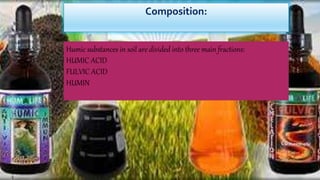
Humic substances in soil are divided into three main fractions:
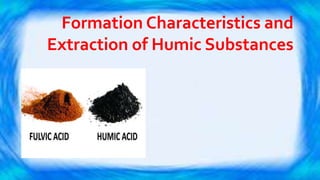
HUMIC ACID
FULVIC ACID
HUMIN
Composition:
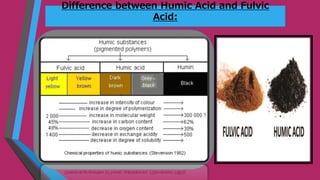
Difference between Humic Acid and Fulvic
Acid:
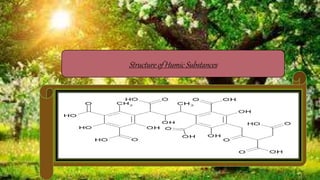
Structure of Humic Substances
Formation Characteristics and
Extraction of Humic Substances
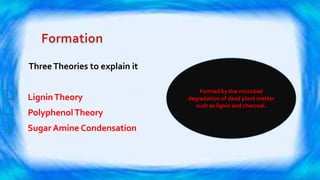
ThreeTheories to explain it
 LigninTheory
 PolyphenolTheory
 Sugar Amine Condensation
Formed by the microbial
degradation of dead plant matter
such as lignin and charcoal.
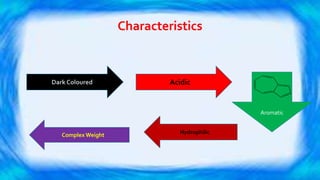
Characteristics
fDark Coloured Acidic
Aromatic
HydrophilicComplex Weight
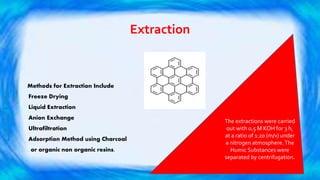
Methods for Extraction Include
 Freeze Drying
 Liquid Extraction
 Anion Exchange
 Ultrafiltration
 Adsorption Method using Charcoal
or organic non organic resins.
Extraction
The extractions were carried
out with 0.5 M KOH for 3 h,
at a ratio of 1:20 (m/v) under
a nitrogen atmosphere.The
Humic Substances were
separated by centrifugation.
“Measure of dissolved oxygen required to decompose the organic
matter in water biologically’”
 Normally, it is measured over 5 days.
 Rapid waters can rapidly replenish Oxygen supply due to its fast
flow. Lakes are less efficient at doing this.
 Pure water BOD = 1 ppm
 Polluted water BOD = 5 ppm or above
 Trace organics can be detected using gas
chromatography, although this is made difficult
by the sheer number of compounds to be
detected.
 They are removed from drinking water supplies
using activated carbon filters, or sometimes
oxidation by ozone.
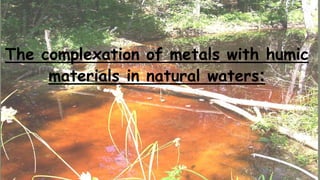
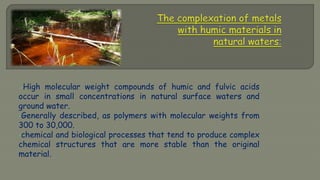
The complexation of metals with humic
materials in natural waters:
High molecular weight compounds of humic and fulvic acids
occur in small concentrations in natural surface waters and
ground water.
Generally described, as polymers with molecular weights from
300 to 30,000.
chemical and biological processes that tend to produce complex
chemical structures that are more stable than the original
material.
one of the more
important characteristics
of humic substances is
their ability to form
water soluble and water
in soluble complexes with
metal ions and hydrous
oxides and to interact
with clay minerals and
various organic
compounds.
the stability
constants of their
complexes with
ca,mg,co,ni,cu,zn,c
d and hg have
been determined
at pH 8.0
In fresh water more than 90% of the copper and
mercury was found to be complexed by humic materials.
In sea water >99% of the humic material is complexed
by calcium and magnesium because of their relatively
high concentrations.
The metals may be transported in flowing ground
water, followed by destruction of the metal humic
substance bound at elevated temperature, and this is
thought to give rise to the formation of ore deposits.
 The dissociation behavior
of two combined fulvic,
humic acid extracts was
studied and it was found
that the dissociation of
the humic varied in a
predictable manner with
pH.Using a carboxyl
content of 10 μeq/ mg
humic organic carbon, and
mass action quotient
calculated from sample
pH,the ionic balances of
three highly coloured
Nova Scotia rivers were
estimated.
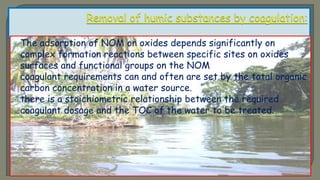
 The adsorption of NOM on oxides depends significantly on
complex formation reactions between specific sites on oxides
surfaces and functional groups on the NOM
 coagulant requirements can and often are set by the total organic
carbon concentration in a water source.
 there is a stoichiometric relationship between the required
coagulant dosage and the TOC of the water to be treated.
Impact of humic substances on human
Humic acid
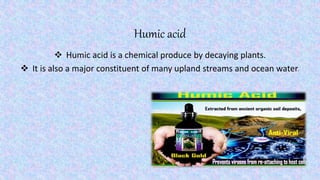
 Humic acid is a chemical produce by decaying plants.
 It is also a major constituent of many upland streams and ocean water.
BENEFITS OF HUMIC ACID
 Humic acid is use for stimulating the immune system.
 Humic acid is also for treating acute infection , chronic infection and Latent
infections.
Bad effect of humic acid
 Humic acid when present in drinking water can react with the chemical used in the
chlorination process to form disinfection by product such as dihaloacetonitriles.
Fulvic acid
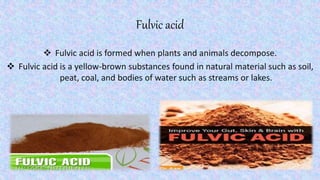
 Fulvic acid is formed when plants and animals decompose.
 Fulvic acid is a yellow-brown substances found in natural material such as soil,
peat, coal, and bodies of water such as streams or lakes.
Benefits of fulvic acid People take fulvic acid by mouth for brain disorder such as Alzeimers diseases as well as
respiratory tract infections cancer ,fatigue heavy metal toxicity and preventing condition in
which the body tissues do not receive enough oxygen.
Bad effect of fulvic acid
 The anti-inflammatory properties of the substance reduce the itching associated with the
skin condition.
 Fulvic acid might block reactions in the body that cause allergy symptoms.

Humic Substances in water

  • 1.
    Humic Substances PresentIn water Hydrology presentation SubmittedTo: DR Zakir Hussain.
  • 2.
    What are HumicSubstances? Humic substances are major components of natural organic matter (NOM) in the soil as well as geologic organic deposits such as lake sediments, peat, brown coals and shales.
  • 3.
    NOM: It is thematter composed of organic compounds that has come from the remains of the animals and plants and their waste products in the environment.
  • 4.
    Humic substances insoil are divided into three main fractions: HUMIC ACID FULVIC ACID HUMIN Composition:
  • 5.
    Difference between HumicAcid and Fulvic Acid:
  • 6.
  • 7.
  • 8.
    ThreeTheories to explainit  LigninTheory  PolyphenolTheory  Sugar Amine Condensation Formed by the microbial degradation of dead plant matter such as lignin and charcoal.
  • 9.
  • 10.
    Methods for ExtractionInclude  Freeze Drying  Liquid Extraction  Anion Exchange  Ultrafiltration  Adsorption Method using Charcoal or organic non organic resins. Extraction The extractions were carried out with 0.5 M KOH for 3 h, at a ratio of 1:20 (m/v) under a nitrogen atmosphere.The Humic Substances were separated by centrifugation.
  • 11.
    “Measure of dissolvedoxygen required to decompose the organic matter in water biologically’”  Normally, it is measured over 5 days.  Rapid waters can rapidly replenish Oxygen supply due to its fast flow. Lakes are less efficient at doing this.  Pure water BOD = 1 ppm  Polluted water BOD = 5 ppm or above
  • 14.
     Trace organicscan be detected using gas chromatography, although this is made difficult by the sheer number of compounds to be detected.  They are removed from drinking water supplies using activated carbon filters, or sometimes oxidation by ozone.
  • 15.
    The complexation ofmetals with humic materials in natural waters:
  • 16.
    High molecular weightcompounds of humic and fulvic acids occur in small concentrations in natural surface waters and ground water. Generally described, as polymers with molecular weights from 300 to 30,000. chemical and biological processes that tend to produce complex chemical structures that are more stable than the original material.
  • 17.
    one of themore important characteristics of humic substances is their ability to form water soluble and water in soluble complexes with metal ions and hydrous oxides and to interact with clay minerals and various organic compounds. the stability constants of their complexes with ca,mg,co,ni,cu,zn,c d and hg have been determined at pH 8.0
  • 18.
    In fresh watermore than 90% of the copper and mercury was found to be complexed by humic materials. In sea water >99% of the humic material is complexed by calcium and magnesium because of their relatively high concentrations. The metals may be transported in flowing ground water, followed by destruction of the metal humic substance bound at elevated temperature, and this is thought to give rise to the formation of ore deposits.
  • 19.
     The dissociationbehavior of two combined fulvic, humic acid extracts was studied and it was found that the dissociation of the humic varied in a predictable manner with pH.Using a carboxyl content of 10 μeq/ mg humic organic carbon, and mass action quotient calculated from sample pH,the ionic balances of three highly coloured Nova Scotia rivers were estimated.
  • 20.
     The adsorptionof NOM on oxides depends significantly on complex formation reactions between specific sites on oxides surfaces and functional groups on the NOM  coagulant requirements can and often are set by the total organic carbon concentration in a water source.  there is a stoichiometric relationship between the required coagulant dosage and the TOC of the water to be treated.
  • 21.
    Impact of humicsubstances on human
  • 22.
    Humic acid  Humicacid is a chemical produce by decaying plants.  It is also a major constituent of many upland streams and ocean water.
  • 23.
    BENEFITS OF HUMICACID  Humic acid is use for stimulating the immune system.  Humic acid is also for treating acute infection , chronic infection and Latent infections. Bad effect of humic acid  Humic acid when present in drinking water can react with the chemical used in the chlorination process to form disinfection by product such as dihaloacetonitriles.
  • 24.
    Fulvic acid  Fulvicacid is formed when plants and animals decompose.  Fulvic acid is a yellow-brown substances found in natural material such as soil, peat, coal, and bodies of water such as streams or lakes.
  • 25.
    Benefits of fulvicacid People take fulvic acid by mouth for brain disorder such as Alzeimers diseases as well as respiratory tract infections cancer ,fatigue heavy metal toxicity and preventing condition in which the body tissues do not receive enough oxygen. Bad effect of fulvic acid  The anti-inflammatory properties of the substance reduce the itching associated with the skin condition.  Fulvic acid might block reactions in the body that cause allergy symptoms.