Collection and Analysis of Aquatic Humic Substances From Surface Waters, Zohair KhanCollection and Analysis of Aquatic Humic Substances From Surface Waters, Zohair Khan
((zkhan20@masonlive.gmu.eduzkhan20@masonlive.gmu.edu) and Gregory D. Foster () and Gregory D. Foster (gfogfoster@gmu.edu), Department ofster@gmu.edu), Department of
Chemistry and Biochemistry, George Mason University, Fairfax, VA 22030Chemistry and Biochemistry, George Mason University, Fairfax, VA 22030
AbstractAbstract
Aquatic humic substances (AHS) are macromolecular organic acids that areAquatic humic substances (AHS) are macromolecular organic acids that are
found in lakes and rivers. AHS represent a major fraction of dissolved organicfound in lakes and rivers. AHS represent a major fraction of dissolved organic
carbon (DOC) in natural waters (~50%) and have a wide diversity of chemicalcarbon (DOC) in natural waters (~50%) and have a wide diversity of chemical
structure depending on their carbon sources, regional climate and hydrologicstructure depending on their carbon sources, regional climate and hydrologic
conditions. An extraction column was developed to isolate AHS from water toconditions. An extraction column was developed to isolate AHS from water to
provide AHS material for detailed study and characterization. In addition, aprovide AHS material for detailed study and characterization. In addition, a
permanganate titrametric method was developed to quanitfy DOC in waterpermanganate titrametric method was developed to quanitfy DOC in water
samples. The DOC method show a relative precision of 10% among six watersamples. The DOC method show a relative precision of 10% among six water
samples collected in the northern Virginia region. Further, a systematic error ofsamples collected in the northern Virginia region. Further, a systematic error of
33% was found through the analysis of Aldrich Humic Acid reference material.33% was found through the analysis of Aldrich Humic Acid reference material.
Refinements are being made to the made to the permanganate analysis of DOCRefinements are being made to the made to the permanganate analysis of DOC
to improve precision and accuracy.to improve precision and accuracy.
ReferencesReferences
Hedges, J. .; Oades, J. . Organic Geochemistry 1997, 27 (7-8), 319.
Tinsley, I. J. J. Chemical concepts in pollutant behavior, 2nd ed.; Wiley,
John & Sons: United States, 2004.
Thurman, E. M.; Malcolm, R. L. Environmental Science & Technology 1981,
15 (4), 463.
Tsuda, K.; Takata, A.; Shirai, H.; Kozaki, K.; Fujitake, N. Analytical
Sciences 2012, 28 (10), 1017.
Weishaar, JL, Aiken, GR, Bergamaschi, BA, Fram, BS. Fujii, R and Mopper, K.
Environ. Sci. Technol., 2003, 37, 4702.
ObjectivesObjectives
In attempt to characterize AHS throughout the Potomac River watershed ourIn attempt to characterize AHS throughout the Potomac River watershed our
goal was to isolate and measure the concentrations of dissolved organicgoal was to isolate and measure the concentrations of dissolved organic
matter (DOC) in a number of water bodies that differ in hydrology andmatter (DOC) in a number of water bodies that differ in hydrology and
organic matter sources. The specific goals of the study were toorganic matter sources. The specific goals of the study were to
1.1. Design and construct an extraction column to isolate AHS from waterDesign and construct an extraction column to isolate AHS from water
samples. The column contains a solid sorbent that will efficiently extract AHSsamples. The column contains a solid sorbent that will efficiently extract AHS
from water.from water.
2. Develop a titrametric method to measure DOC and quantify AHS in water2. Develop a titrametric method to measure DOC and quantify AHS in water
samples. There is no method available in the Environmental Chemistrysamples. There is no method available in the Environmental Chemistry
Laboratory that can quantitatively measure the concentrations of DOC inLaboratory that can quantitatively measure the concentrations of DOC in
natural waters, which is currently a critical need in many ongoing studies.natural waters, which is currently a critical need in many ongoing studies.
ConclusionsConclusions
• The %RSD in water sample measurements decreased with analyst experience
showing that familiarity and larger sample sizes will certainly improve precision
results.
• Because Aldrich Humic Acid contains some inorganic material a more pure
reference standard will likely improve accuracy. The significantly lower DOC
measurements indicated this is likely to be the case.
IntroductionIntroduction
Aquatic humic substances (AHS) are macromolecular organic acids that occur inAquatic humic substances (AHS) are macromolecular organic acids that occur in
natural waters (rain, streams, lakes and oceans) and are derived primarily fromnatural waters (rain, streams, lakes and oceans) and are derived primarily from
the diagenesis of decaying plant tissues (Hedges and Oades 1997). AHS occurthe diagenesis of decaying plant tissues (Hedges and Oades 1997). AHS occur
in water at concentrations ranging from 0.1 (rainwater) to 50 ppm (peat bogs)in water at concentrations ranging from 0.1 (rainwater) to 50 ppm (peat bogs)
and play an important role in the redox reactions (e.g., photolysis), sorption,and play an important role in the redox reactions (e.g., photolysis), sorption,
transport, and the bioavailability of organic micro-pollutants in natural waters.transport, and the bioavailability of organic micro-pollutants in natural waters.
AHS are comprised primarily of fulvic acids (MW 500-2,000 amu) and humicAHS are comprised primarily of fulvic acids (MW 500-2,000 amu) and humic
acids (MW 2,000 to 100,000 amu). The general structural formula of humic acidacids (MW 2,000 to 100,000 amu). The general structural formula of humic acid
is shown in Fig. 1.is shown in Fig. 1.
Results and DiscussionResults and Discussion
Humic Acid Column and ExtractionHumic Acid Column and Extraction
The LC extraction system was constructed but not fully tested. Additional modification is needThe LC extraction system was constructed but not fully tested. Additional modification is need
to avoid backpressure problems. The DAX-8 resin was cleaned for use with differentto avoid backpressure problems. The DAX-8 resin was cleaned for use with different
solutions: 0.1 M NaOH; 1:1 methanol + water solution; 0.1 M acetonitrile and 0.1 M HClsolutions: 0.1 M NaOH; 1:1 methanol + water solution; 0.1 M acetonitrile and 0.1 M HCl
extractions were performed consecutively. The resin wash process was done to clean theextractions were performed consecutively. The resin wash process was done to clean the
resin prior to extraction of surface water. Hence, the LC system is under continuedresin prior to extraction of surface water. Hence, the LC system is under continued
development.development.
Permanganate Analysis of DOCPermanganate Analysis of DOC
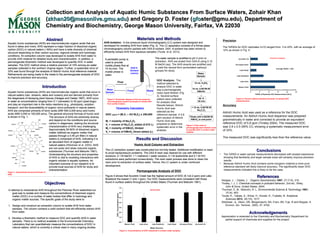
Figure 4 shows that Accotink Creek has the highest amount of DOC (6.1±0.2 ppm) and LakeFigure 4 shows that Accotink Creek has the highest amount of DOC (6.1±0.2 ppm) and Lake
Braddock the lowest (1.2±0.1 ppm). Our DOC measurements were consistent with thoseBraddock the lowest (1.2±0.1 ppm). Our DOC measurements were consistent with those
found in surface waters throughout the United States (Thurman and Malcolm 1981).found in surface waters throughout the United States (Thurman and Malcolm 1981).
AcknowledgementsAcknowledgements
Appreciation is extended to the Chemistry and Biochemistry Department for
partial support of chemicals and supplies for the project.
The structure of AHS are extremely diverse,The structure of AHS are extremely diverse,
and depend on the conditions and sourceand depend on the conditions and source
carbon in diagenesis, making the structuralcarbon in diagenesis, making the structural
characterization of AHS very challenging.characterization of AHS very challenging.
Approximately 50-60% of dissolved organicApproximately 50-60% of dissolved organic
matter (defined as organic matter thatmatter (defined as organic matter that
passes through a 0.45 ÎĽm filter) in naturalpasses through a 0.45 ÎĽm filter) in natural
waters is composed of AHS, indicating it iswaters is composed of AHS, indicating it is
an abundant form of organic matter inan abundant form of organic matter in
natural waters (natural waters (Weishaar et al. 2003). AHS. AHS
are non-polar and straw coloured organicare non-polar and straw coloured organic
substances (Thurman and Malcolm 1981).substances (Thurman and Malcolm 1981).
Understanding the structure and propertiesUnderstanding the structure and properties
of AHS is vital to modeling interactions withof AHS is vital to modeling interactions with
organic solutes in aquatic systems. Anorganic solutes in aquatic systems. An
important outcome of our research is toimportant outcome of our research is to
provide local sources of AHS for study andprovide local sources of AHS for study and
characterization.characterization.
The water sample is acidified to pH 3The water sample is acidified to pH 3 prior to
extraction. AHS are eluted from DAX-8 using 0.10
M NaOH (aq). The AHS eluents are acidified and
to yield the neutral form (protonated carboxyl
groups) for study.
PumpWater
Sample
Waste
DAX-8
Sorbent
column
Figure 2. Schematic diagram of the low pressure
chromatography system developed to isolate AHS
from surface waters.
Figure 1. Generalized structural formula of
AHS.
Water
Sample
10 mL H2SO4
+
10 mL 0.00750 M
KMnO4
85 o
C
30 min
+ 10 mL 0.00750 M
Na2C2O4
Titrate with 0.00250 M
KMnO4 to end-point
Figure 3. Flow chart of
permanganate back titration used
to quantify DOC in surface water
samples
DOC Analysis: The
method selected to
analyze DOC in water
was a permanganate
redox back titration (Fig.
3). Several surface
waters were collected
for analysis (See
Results below). Aldrich
Humic Acid was
selected as the
reference sample. A 5.8
ppm solution of Aldrich
Humic Acid was
prepared to determine
systematic error in the
analysis.
Titrametric Calculation
DOC (ppm) = (M1V1 – 5/2 M2V2) x 250,000
M1 = molarity of Na2C2O4
V1 = volume of Na2C2O4 added (0.010 L)
M2 = molarity of KMnO4 titrated
V2 = volume of KMnO4 titrant added (L)
Precision
The %RSDs for DOC replicates (n=3) ranged from 3 to 20%, with an average of
10% as shown in Fig. 5.
Accuracy
Aldrich Humic Acid was used as a reference for the DOC
measurements. An Aldrich Humic Acid disperson was prepared
gravimetrically in water and corrected to provide an equivalent
reference DOC of 5.8 ppm (Tinsley 2004). The measured DOC
was 3.9 ± 0.5 (95% CI), showing a systematic measurement error
of 33%.
The measured DOC was significantly less than the reference value.
0 5 10 15 20 25
Mason Pond
Lake Anne
Lake Braddock
Lake Royal
Occoquan River
Accotink Crk
%RSD of Replicate DOC Measurements (N=3)
Average %RSD = 10%
Precision Analysis
Figure 5. Percent relative standard deviation of sample DOC
measurements.
Figure 4. Concentrations of DOC measured in surface water samples.
Materials and MethodsMaterials and Methods
AHS Isolation:AHS Isolation: A low pressure liquid chromatography (LC) system was designed andA low pressure liquid chromatography (LC) system was designed and
developed for isolating AHS from water (Fig. 2). The LC apparatus consists of a Kimax glassdeveloped for isolating AHS from water (Fig. 2). The LC apparatus consists of a Kimax glass
chromatography column packed with DAX-8 sorbent. DAX -8 sorbent has been shown tochromatography column packed with DAX-8 sorbent. DAX -8 sorbent has been shown to
efficiently extract AHS from aqueous samples (efficiently extract AHS from aqueous samples (Tsuda et al. 2012)..
A peristaltic pump isA peristaltic pump is
used to provideused to provide
mobile phase flow atmobile phase flow at
15 mL/min. The15 mL/min. The
mobile phase ismobile phase is
water.water.
Flow

ZKhan poster spring 2016

  • 1.
    Collection and Analysisof Aquatic Humic Substances From Surface Waters, Zohair KhanCollection and Analysis of Aquatic Humic Substances From Surface Waters, Zohair Khan ((zkhan20@masonlive.gmu.eduzkhan20@masonlive.gmu.edu) and Gregory D. Foster () and Gregory D. Foster (gfogfoster@gmu.edu), Department ofster@gmu.edu), Department of Chemistry and Biochemistry, George Mason University, Fairfax, VA 22030Chemistry and Biochemistry, George Mason University, Fairfax, VA 22030 AbstractAbstract Aquatic humic substances (AHS) are macromolecular organic acids that areAquatic humic substances (AHS) are macromolecular organic acids that are found in lakes and rivers. AHS represent a major fraction of dissolved organicfound in lakes and rivers. AHS represent a major fraction of dissolved organic carbon (DOC) in natural waters (~50%) and have a wide diversity of chemicalcarbon (DOC) in natural waters (~50%) and have a wide diversity of chemical structure depending on their carbon sources, regional climate and hydrologicstructure depending on their carbon sources, regional climate and hydrologic conditions. An extraction column was developed to isolate AHS from water toconditions. An extraction column was developed to isolate AHS from water to provide AHS material for detailed study and characterization. In addition, aprovide AHS material for detailed study and characterization. In addition, a permanganate titrametric method was developed to quanitfy DOC in waterpermanganate titrametric method was developed to quanitfy DOC in water samples. The DOC method show a relative precision of 10% among six watersamples. The DOC method show a relative precision of 10% among six water samples collected in the northern Virginia region. Further, a systematic error ofsamples collected in the northern Virginia region. Further, a systematic error of 33% was found through the analysis of Aldrich Humic Acid reference material.33% was found through the analysis of Aldrich Humic Acid reference material. Refinements are being made to the made to the permanganate analysis of DOCRefinements are being made to the made to the permanganate analysis of DOC to improve precision and accuracy.to improve precision and accuracy. ReferencesReferences Hedges, J. .; Oades, J. . Organic Geochemistry 1997, 27 (7-8), 319. Tinsley, I. J. J. Chemical concepts in pollutant behavior, 2nd ed.; Wiley, John & Sons: United States, 2004. Thurman, E. M.; Malcolm, R. L. Environmental Science & Technology 1981, 15 (4), 463. Tsuda, K.; Takata, A.; Shirai, H.; Kozaki, K.; Fujitake, N. Analytical Sciences 2012, 28 (10), 1017. Weishaar, JL, Aiken, GR, Bergamaschi, BA, Fram, BS. Fujii, R and Mopper, K. Environ. Sci. Technol., 2003, 37, 4702. ObjectivesObjectives In attempt to characterize AHS throughout the Potomac River watershed ourIn attempt to characterize AHS throughout the Potomac River watershed our goal was to isolate and measure the concentrations of dissolved organicgoal was to isolate and measure the concentrations of dissolved organic matter (DOC) in a number of water bodies that differ in hydrology andmatter (DOC) in a number of water bodies that differ in hydrology and organic matter sources. The specific goals of the study were toorganic matter sources. The specific goals of the study were to 1.1. Design and construct an extraction column to isolate AHS from waterDesign and construct an extraction column to isolate AHS from water samples. The column contains a solid sorbent that will efficiently extract AHSsamples. The column contains a solid sorbent that will efficiently extract AHS from water.from water. 2. Develop a titrametric method to measure DOC and quantify AHS in water2. Develop a titrametric method to measure DOC and quantify AHS in water samples. There is no method available in the Environmental Chemistrysamples. There is no method available in the Environmental Chemistry Laboratory that can quantitatively measure the concentrations of DOC inLaboratory that can quantitatively measure the concentrations of DOC in natural waters, which is currently a critical need in many ongoing studies.natural waters, which is currently a critical need in many ongoing studies. ConclusionsConclusions • The %RSD in water sample measurements decreased with analyst experience showing that familiarity and larger sample sizes will certainly improve precision results. • Because Aldrich Humic Acid contains some inorganic material a more pure reference standard will likely improve accuracy. The significantly lower DOC measurements indicated this is likely to be the case. IntroductionIntroduction Aquatic humic substances (AHS) are macromolecular organic acids that occur inAquatic humic substances (AHS) are macromolecular organic acids that occur in natural waters (rain, streams, lakes and oceans) and are derived primarily fromnatural waters (rain, streams, lakes and oceans) and are derived primarily from the diagenesis of decaying plant tissues (Hedges and Oades 1997). AHS occurthe diagenesis of decaying plant tissues (Hedges and Oades 1997). AHS occur in water at concentrations ranging from 0.1 (rainwater) to 50 ppm (peat bogs)in water at concentrations ranging from 0.1 (rainwater) to 50 ppm (peat bogs) and play an important role in the redox reactions (e.g., photolysis), sorption,and play an important role in the redox reactions (e.g., photolysis), sorption, transport, and the bioavailability of organic micro-pollutants in natural waters.transport, and the bioavailability of organic micro-pollutants in natural waters. AHS are comprised primarily of fulvic acids (MW 500-2,000 amu) and humicAHS are comprised primarily of fulvic acids (MW 500-2,000 amu) and humic acids (MW 2,000 to 100,000 amu). The general structural formula of humic acidacids (MW 2,000 to 100,000 amu). The general structural formula of humic acid is shown in Fig. 1.is shown in Fig. 1. Results and DiscussionResults and Discussion Humic Acid Column and ExtractionHumic Acid Column and Extraction The LC extraction system was constructed but not fully tested. Additional modification is needThe LC extraction system was constructed but not fully tested. Additional modification is need to avoid backpressure problems. The DAX-8 resin was cleaned for use with differentto avoid backpressure problems. The DAX-8 resin was cleaned for use with different solutions: 0.1 M NaOH; 1:1 methanol + water solution; 0.1 M acetonitrile and 0.1 M HClsolutions: 0.1 M NaOH; 1:1 methanol + water solution; 0.1 M acetonitrile and 0.1 M HCl extractions were performed consecutively. The resin wash process was done to clean theextractions were performed consecutively. The resin wash process was done to clean the resin prior to extraction of surface water. Hence, the LC system is under continuedresin prior to extraction of surface water. Hence, the LC system is under continued development.development. Permanganate Analysis of DOCPermanganate Analysis of DOC Figure 4 shows that Accotink Creek has the highest amount of DOC (6.1±0.2 ppm) and LakeFigure 4 shows that Accotink Creek has the highest amount of DOC (6.1±0.2 ppm) and Lake Braddock the lowest (1.2±0.1 ppm). Our DOC measurements were consistent with thoseBraddock the lowest (1.2±0.1 ppm). Our DOC measurements were consistent with those found in surface waters throughout the United States (Thurman and Malcolm 1981).found in surface waters throughout the United States (Thurman and Malcolm 1981). AcknowledgementsAcknowledgements Appreciation is extended to the Chemistry and Biochemistry Department for partial support of chemicals and supplies for the project. The structure of AHS are extremely diverse,The structure of AHS are extremely diverse, and depend on the conditions and sourceand depend on the conditions and source carbon in diagenesis, making the structuralcarbon in diagenesis, making the structural characterization of AHS very challenging.characterization of AHS very challenging. Approximately 50-60% of dissolved organicApproximately 50-60% of dissolved organic matter (defined as organic matter thatmatter (defined as organic matter that passes through a 0.45 μm filter) in naturalpasses through a 0.45 μm filter) in natural waters is composed of AHS, indicating it iswaters is composed of AHS, indicating it is an abundant form of organic matter inan abundant form of organic matter in natural waters (natural waters (Weishaar et al. 2003). AHS. AHS are non-polar and straw coloured organicare non-polar and straw coloured organic substances (Thurman and Malcolm 1981).substances (Thurman and Malcolm 1981). Understanding the structure and propertiesUnderstanding the structure and properties of AHS is vital to modeling interactions withof AHS is vital to modeling interactions with organic solutes in aquatic systems. Anorganic solutes in aquatic systems. An important outcome of our research is toimportant outcome of our research is to provide local sources of AHS for study andprovide local sources of AHS for study and characterization.characterization. The water sample is acidified to pH 3The water sample is acidified to pH 3 prior to extraction. AHS are eluted from DAX-8 using 0.10 M NaOH (aq). The AHS eluents are acidified and to yield the neutral form (protonated carboxyl groups) for study. PumpWater Sample Waste DAX-8 Sorbent column Figure 2. Schematic diagram of the low pressure chromatography system developed to isolate AHS from surface waters. Figure 1. Generalized structural formula of AHS. Water Sample 10 mL H2SO4 + 10 mL 0.00750 M KMnO4 85 o C 30 min + 10 mL 0.00750 M Na2C2O4 Titrate with 0.00250 M KMnO4 to end-point Figure 3. Flow chart of permanganate back titration used to quantify DOC in surface water samples DOC Analysis: The method selected to analyze DOC in water was a permanganate redox back titration (Fig. 3). Several surface waters were collected for analysis (See Results below). Aldrich Humic Acid was selected as the reference sample. A 5.8 ppm solution of Aldrich Humic Acid was prepared to determine systematic error in the analysis. Titrametric Calculation DOC (ppm) = (M1V1 – 5/2 M2V2) x 250,000 M1 = molarity of Na2C2O4 V1 = volume of Na2C2O4 added (0.010 L) M2 = molarity of KMnO4 titrated V2 = volume of KMnO4 titrant added (L) Precision The %RSDs for DOC replicates (n=3) ranged from 3 to 20%, with an average of 10% as shown in Fig. 5. Accuracy Aldrich Humic Acid was used as a reference for the DOC measurements. An Aldrich Humic Acid disperson was prepared gravimetrically in water and corrected to provide an equivalent reference DOC of 5.8 ppm (Tinsley 2004). The measured DOC was 3.9 ± 0.5 (95% CI), showing a systematic measurement error of 33%. The measured DOC was significantly less than the reference value. 0 5 10 15 20 25 Mason Pond Lake Anne Lake Braddock Lake Royal Occoquan River Accotink Crk %RSD of Replicate DOC Measurements (N=3) Average %RSD = 10% Precision Analysis Figure 5. Percent relative standard deviation of sample DOC measurements. Figure 4. Concentrations of DOC measured in surface water samples. Materials and MethodsMaterials and Methods AHS Isolation:AHS Isolation: A low pressure liquid chromatography (LC) system was designed andA low pressure liquid chromatography (LC) system was designed and developed for isolating AHS from water (Fig. 2). The LC apparatus consists of a Kimax glassdeveloped for isolating AHS from water (Fig. 2). The LC apparatus consists of a Kimax glass chromatography column packed with DAX-8 sorbent. DAX -8 sorbent has been shown tochromatography column packed with DAX-8 sorbent. DAX -8 sorbent has been shown to efficiently extract AHS from aqueous samples (efficiently extract AHS from aqueous samples (Tsuda et al. 2012).. A peristaltic pump isA peristaltic pump is used to provideused to provide mobile phase flow atmobile phase flow at 15 mL/min. The15 mL/min. The mobile phase ismobile phase is water.water. Flow