Humanistic-Existential Therapy
By Me
What is Humanistic-Existential
Therapy?
• It suggests that psychological distress comes
from things like feelings of loneliness,
alienation, and an inability to find meaning
and fulfilment in life.
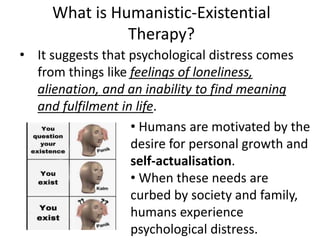
• Humans are motivated by the
desire for personal growth and
self-actualisation.
• When these needs are
curbed by society and family,
humans experience
psychological distress.
Self-Actualisation
• It is defined as an innate force that moves the
person to become more complex, balanced
and integrated.
• In other words, achieving complexity and
balance without being fragmented; being the
same person despite having different
experiences.
• Frustration of self-actualisation can cause
distress in the same way lack of food and
water can.
Healing
• It occurs when the client is able to see and remove the
obstacles to self-actualisation in their life.
• Self-actualisation requires free emotional expression.
• The family and society curb emotional
expression, as they fear free expression
can harm society by unleashing
destructive forces. (Raven Teen
Titans???)
• This leads to destructive behaviours
and negative emotions by thwarting
emotional integration.
Characteristics
• Creating a permissive, non-judgemental and
accepting atmosphere where the clients
emotions can be freely expressed; complexity,
balance and integration can be acheived.
• The basic assumption is that the client has
free will, and is responsible for their
behaviours.
• The therapist is just a facilitator and guide; the
client is responsible for the success of therapy.
Aims
• The chief aim of the therapy is
to expand the client’s
awareness.
• Healing takes place by
understanding the unique
personal experience of the
client.
• The client initiates the process
of self-growth through which
healing takes place.
“That’s all Folks!”
I mean, no one probably listened to any of this lmao

Humanistic-Existential Therapy

  • 1.
  • 2.
    What is Humanistic-Existential Therapy? •It suggests that psychological distress comes from things like feelings of loneliness, alienation, and an inability to find meaning and fulfilment in life. • Humans are motivated by the desire for personal growth and self-actualisation. • When these needs are curbed by society and family, humans experience psychological distress.
  • 3.
    Self-Actualisation • It isdefined as an innate force that moves the person to become more complex, balanced and integrated. • In other words, achieving complexity and balance without being fragmented; being the same person despite having different experiences. • Frustration of self-actualisation can cause distress in the same way lack of food and water can.
  • 4.
    Healing • It occurswhen the client is able to see and remove the obstacles to self-actualisation in their life. • Self-actualisation requires free emotional expression. • The family and society curb emotional expression, as they fear free expression can harm society by unleashing destructive forces. (Raven Teen Titans???) • This leads to destructive behaviours and negative emotions by thwarting emotional integration.
  • 5.
    Characteristics • Creating apermissive, non-judgemental and accepting atmosphere where the clients emotions can be freely expressed; complexity, balance and integration can be acheived. • The basic assumption is that the client has free will, and is responsible for their behaviours. • The therapist is just a facilitator and guide; the client is responsible for the success of therapy.
  • 6.
    Aims • The chiefaim of the therapy is to expand the client’s awareness. • Healing takes place by understanding the unique personal experience of the client. • The client initiates the process of self-growth through which healing takes place.
  • 7.
    “That’s all Folks!” Imean, no one probably listened to any of this lmao