© 2017 NAVER LABS. All rights reserved.
Matthias Gallé
Naver Labs Europe
@mgalle
Human-Centric Machine Learning
Rakuten Technology Conference 2017
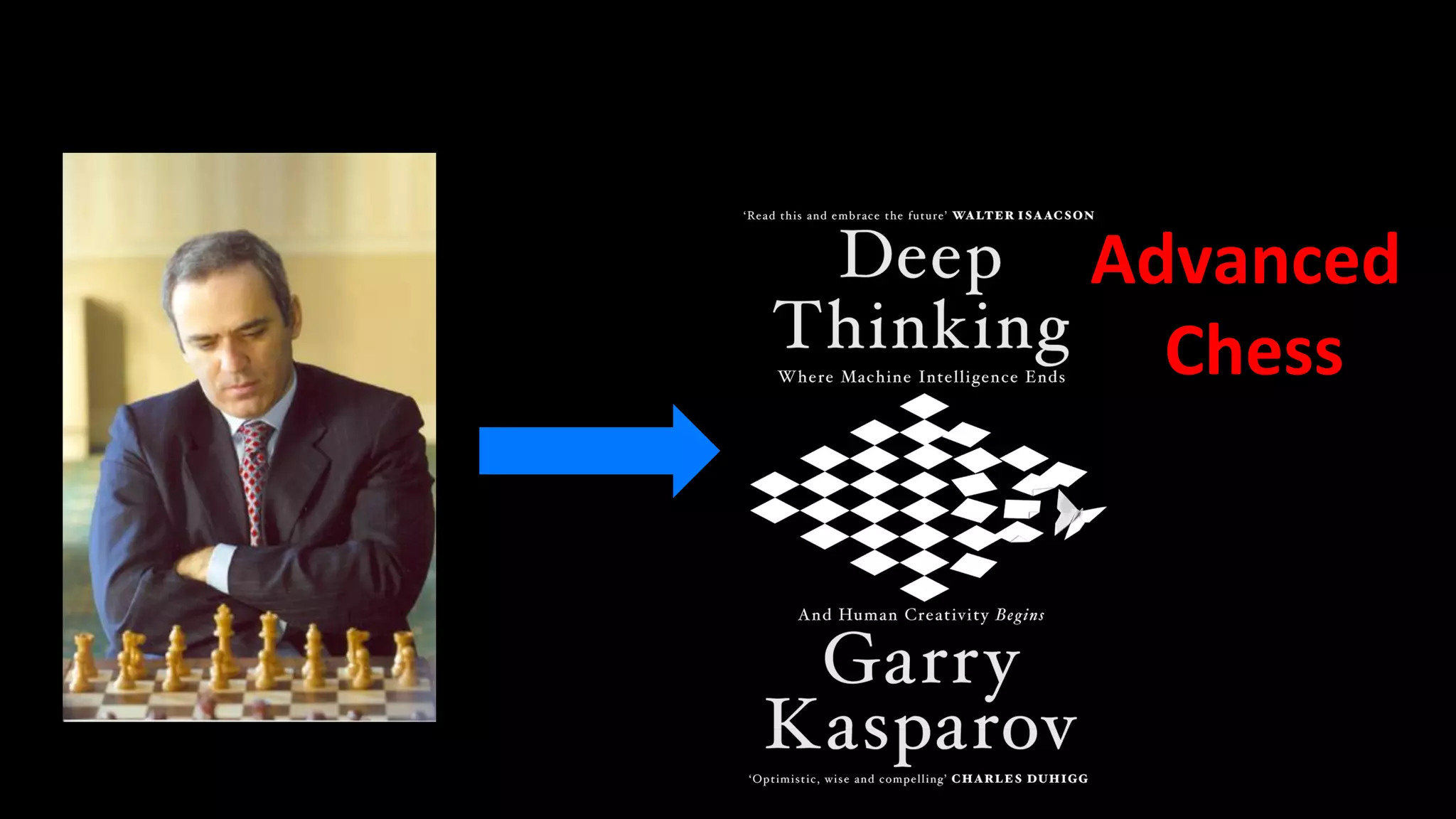
Advanced
Chess
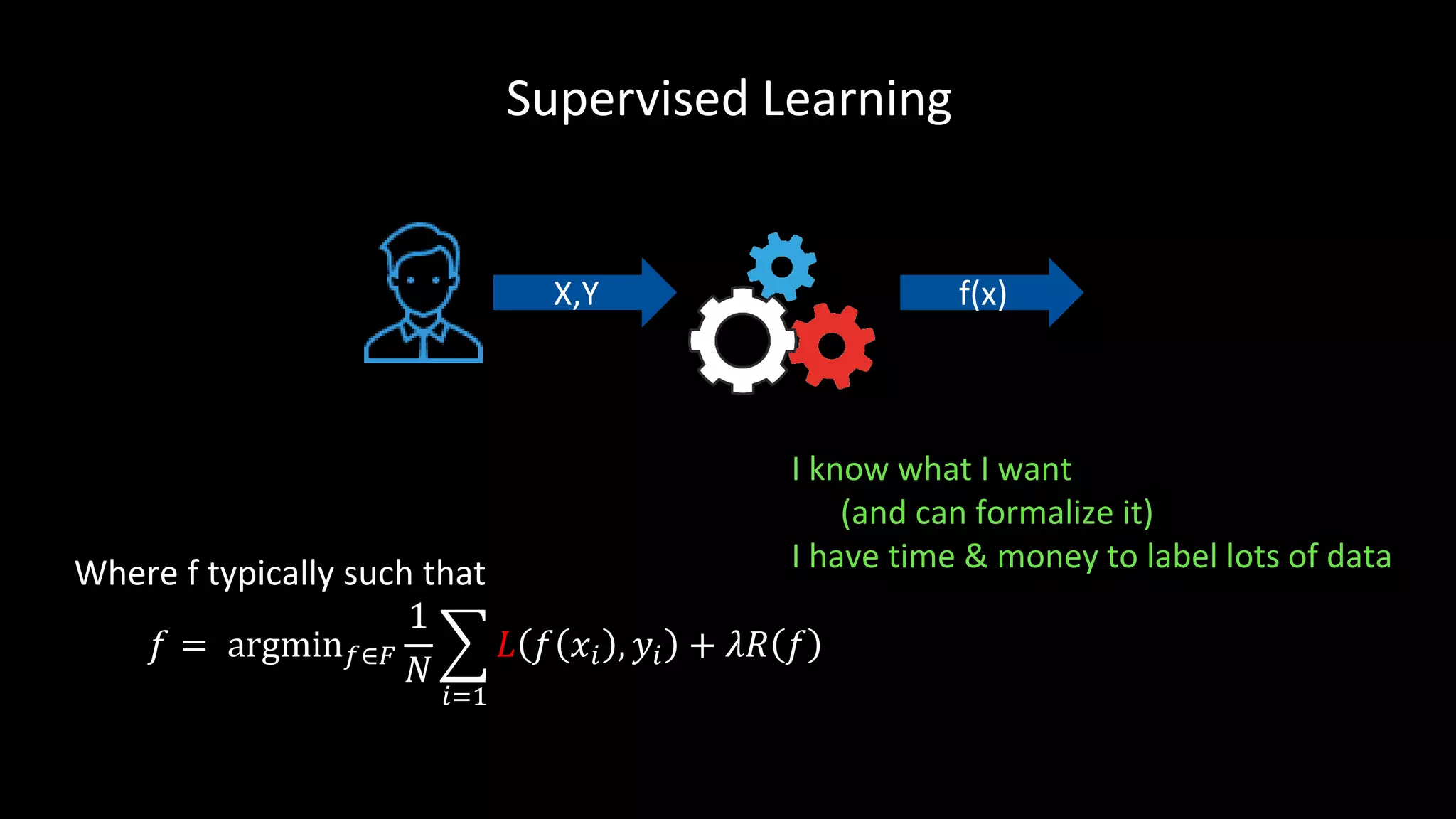
Supervised Learning
Where f typically such that
𝑓 = argmin 𝑓∈𝐹
1
𝑁
෍
𝑖=1
𝐿 𝑓 𝑥𝑖 , 𝑦𝑖 + 𝜆𝑅 𝑓
I know what I want
(and can formalize it)
I have time & money to label lots of data
X,Y f(x)
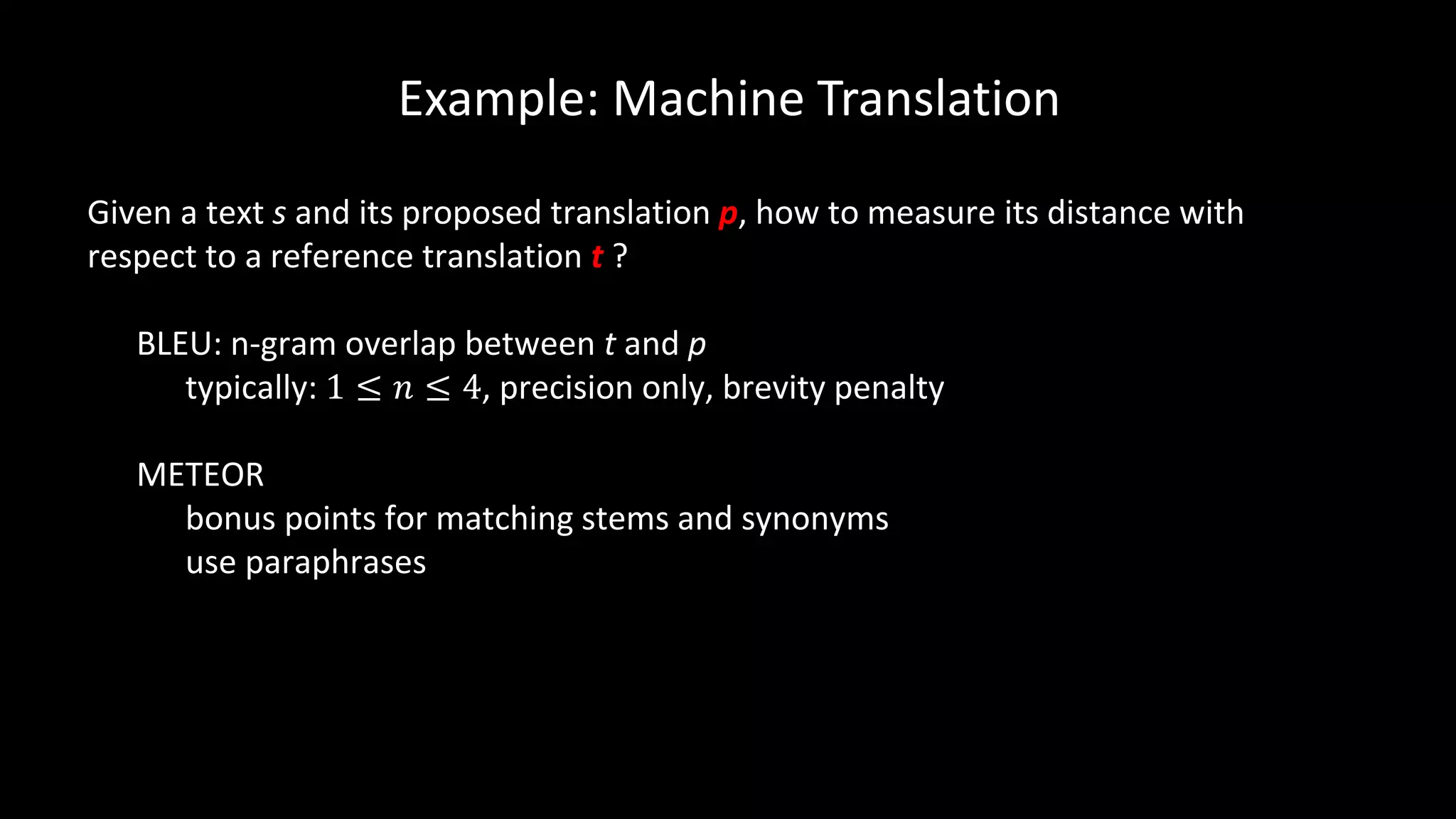
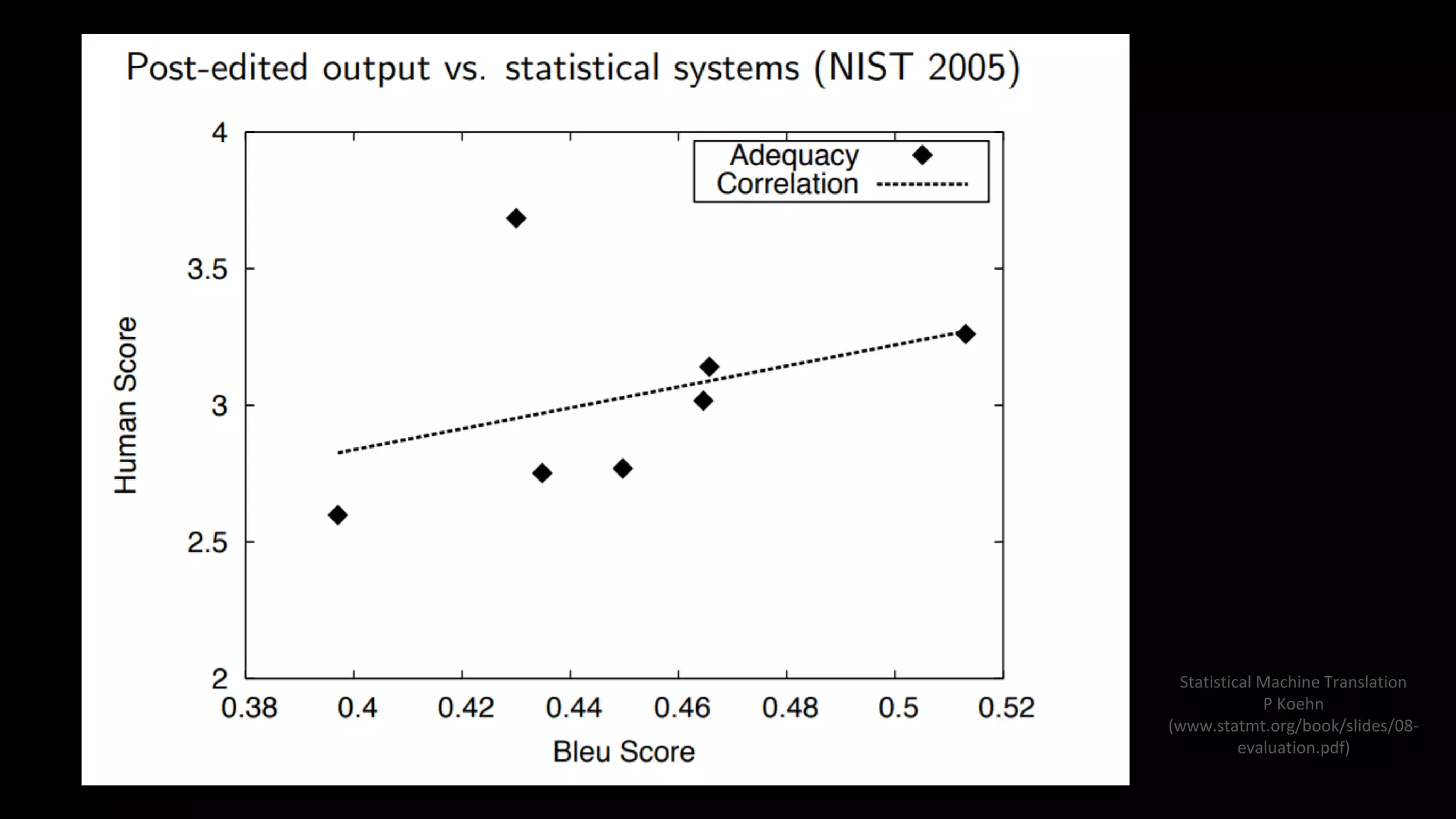
Example: Machine Translation
Given a text s and its proposed translation p, how to measure its distance with
respect to a reference translation t ?
BLEU: n-gram overlap between t and p
typically: 1 ≤ 𝑛 ≤ 4, precision only, brevity penalty
METEOR
bonus points for matching stems and synonyms
use paraphrases
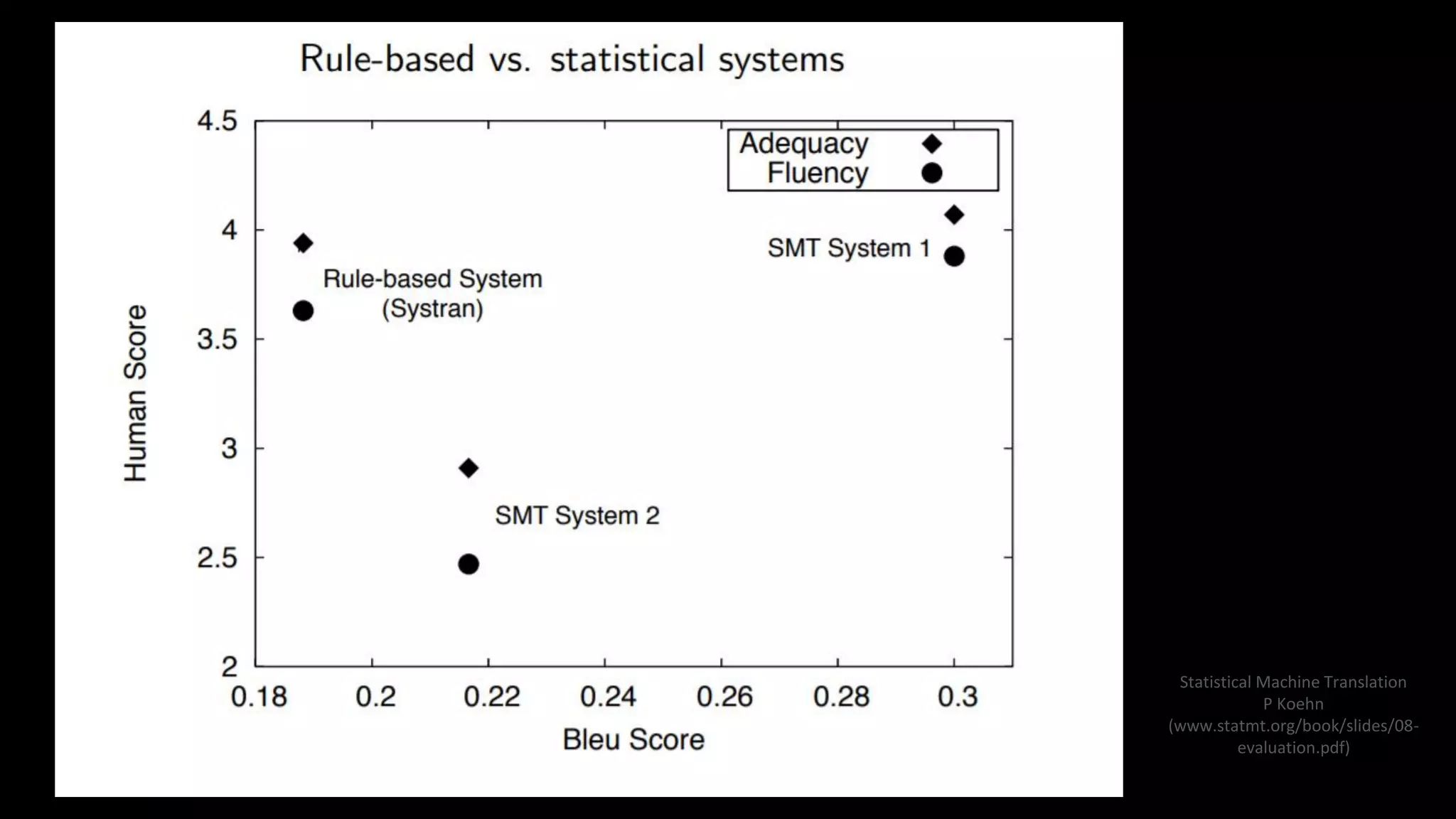
Statistical Machine Translation
P Koehn
(www.statmt.org/book/slides/08-
evaluation.pdf)
Consequences of not formalizing correctly
Users do not use your model
Computer-Assisted Translation used rule-based systems for years
Ad-hoc solutions
Quality Prediction
Automatic Post Edition
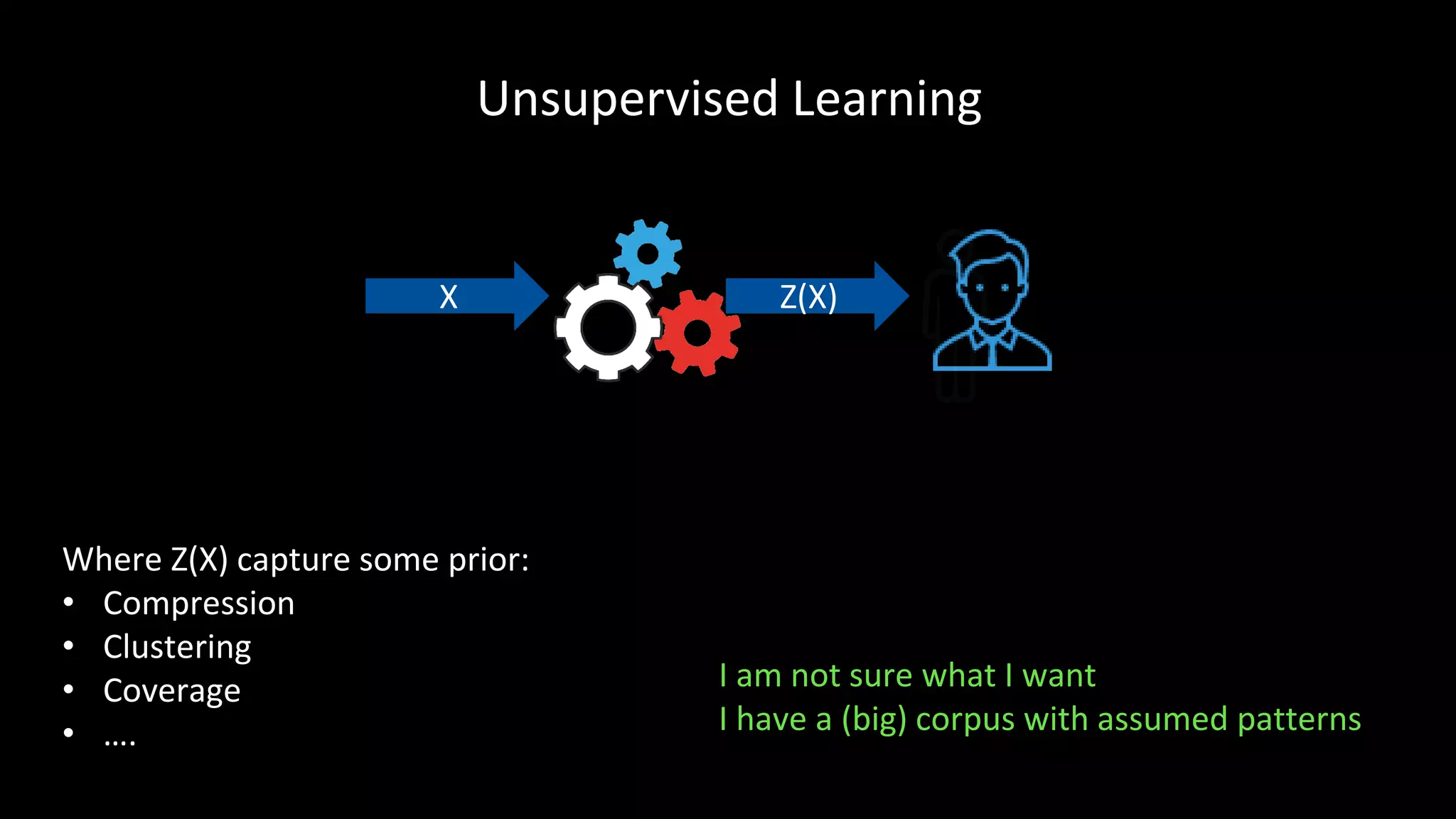
Unsupervised Learning
Where Z(X) capture some prior:
• Compression
• Clustering
• Coverage
• ….
I am not sure what I want
I have a (big) corpus with assumed patterns
X Z(X)
Example: Exploratory Search
Whenever your task is:
• Ill-defined:
– Broad / under-specified
– Multi-faceted
• Dynamic:
– Searcher’s understanding inadequate at the beginning
– Searcher’s understanding evolves as results are gradually retrieved.
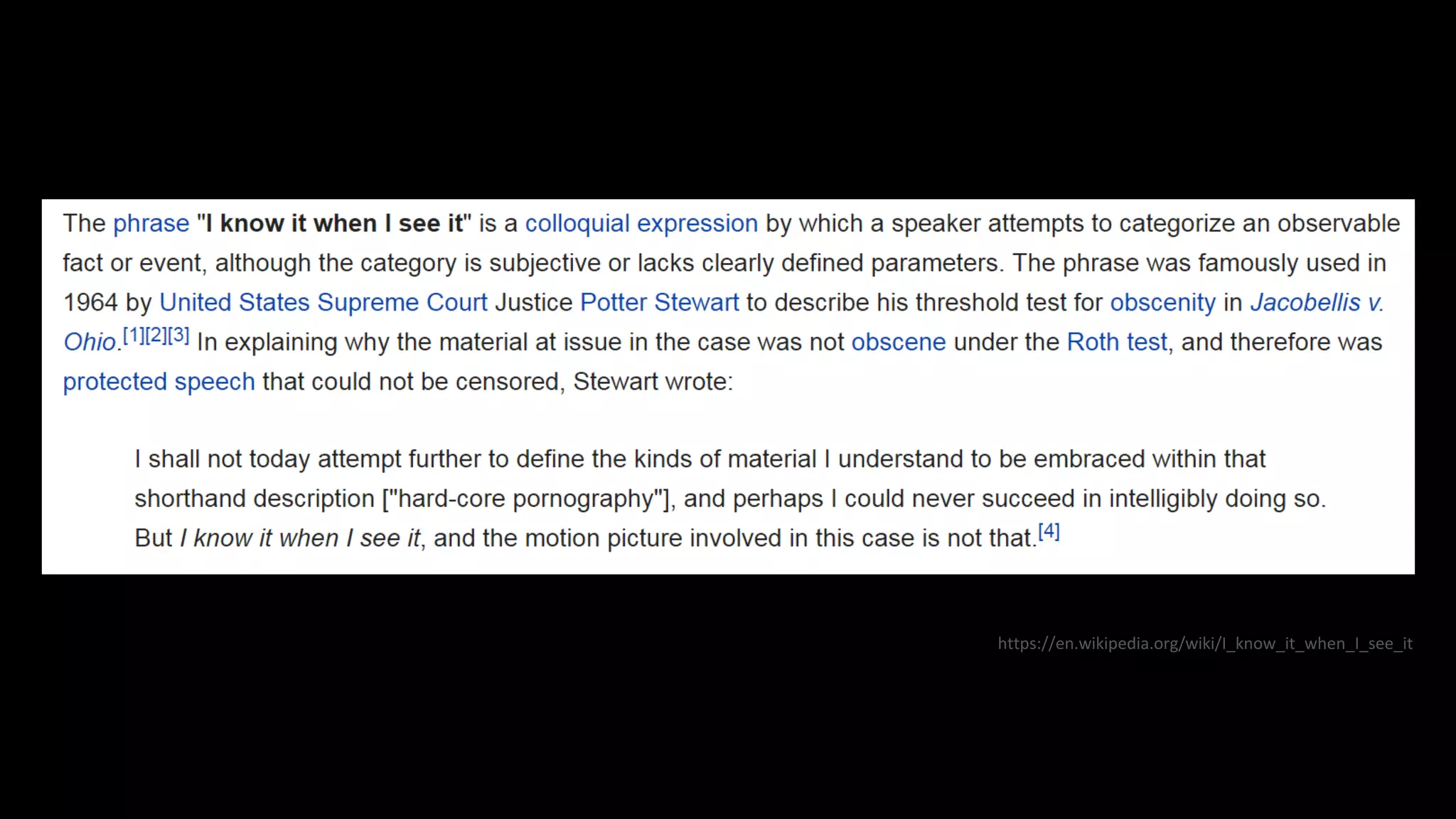
The answer to what you search is “I know it when I see it”
https://en.wikipedia.org/wiki/I_know_it_when_I_see_it
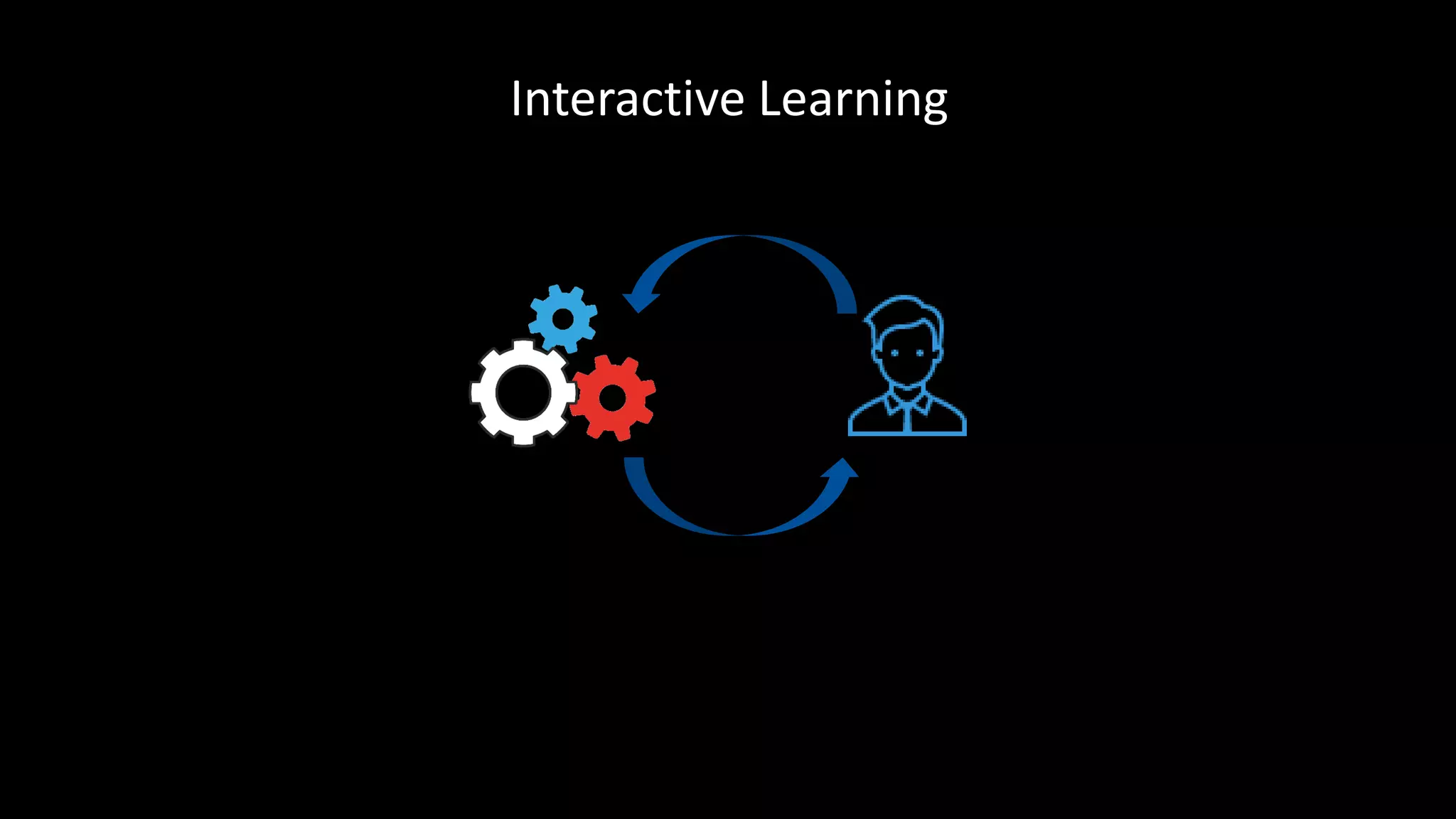
Interactive Learning
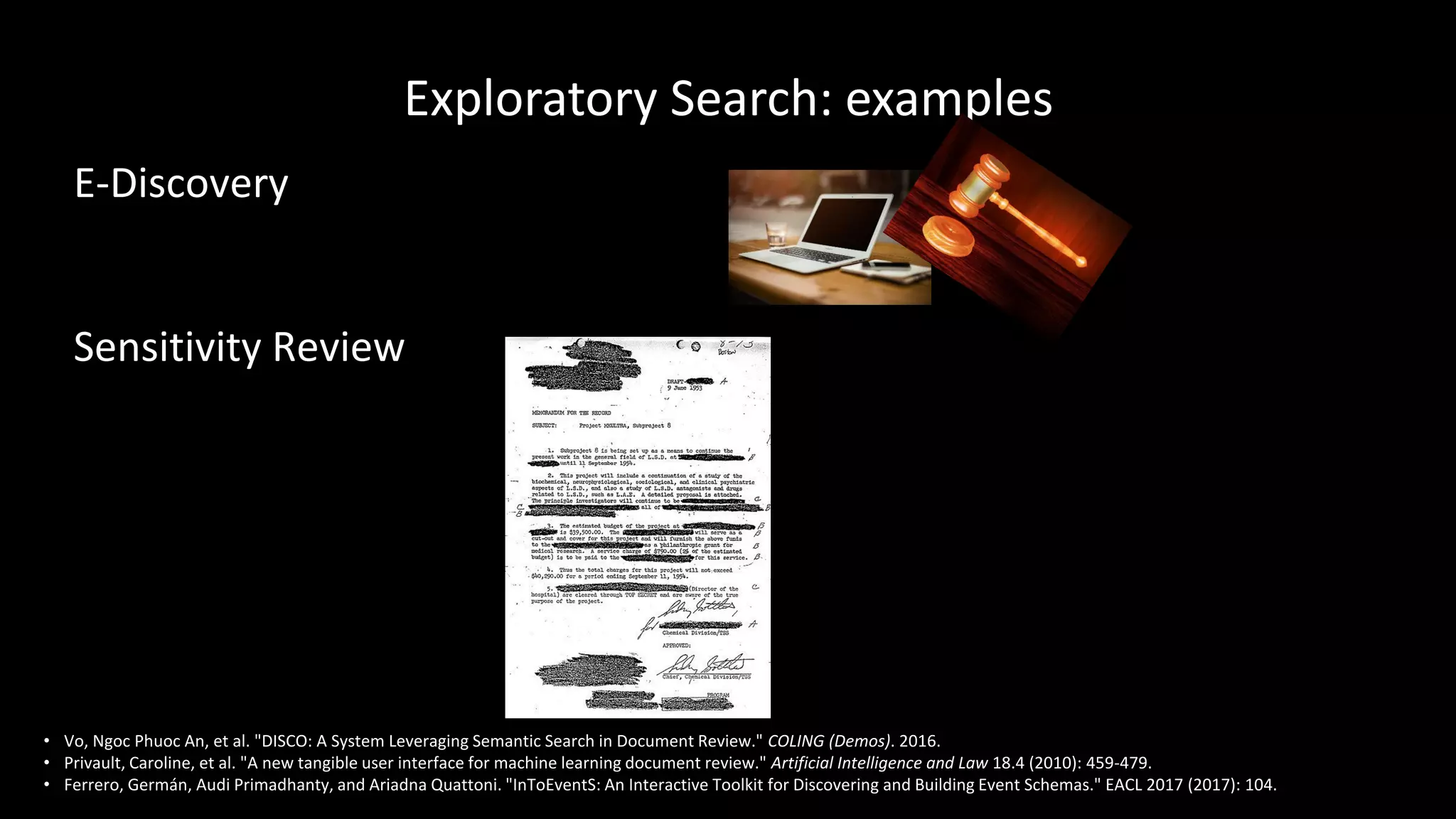
Exploratory Search: examples
E-Discovery
Sensitivity Review
• Vo, Ngoc Phuoc An, et al. "DISCO: A System Leveraging Semantic Search in Document Review." COLING (Demos). 2016.
• Privault, Caroline, et al. "A new tangible user interface for machine learning document review." Artificial Intelligence and Law 18.4 (2010): 459-479.
• Ferrero, Germán, Audi Primadhanty, and Ariadna Quattoni. "InToEventS: An Interactive Toolkit for Discovering and Building Event Schemas." EACL 2017 (2017): 104.
Example: Active Learning
Give initiative to the algorithm
allow action of type: “please, label instance x”
Cognitive effort of labeling a document 3-5x higher than labelling a word [1]
Feature labelling:
• type(feedback) ≠ type(label)
• information load of a word label is small
• word sense disambiguation
[1] Raghavan, Hema, Omid Madani, and Rosie Jones. "Active learning with feedback on features and instances." Journal of
Machine Learning Research7.Aug (2006): 1655-1686.
Conclusion
If you really want to solve a problem, don’t be prisoner of your
performance indicator
Ask yourself:
1. Does it really capture success?
does it align with human judgment?
2. What does the [machine | human] best?
3. Can you remove the burden from humans by smarter algorithms?
Further reading & Acknowledgments
Jean-Michel RendersMarc Dymetman Ariadna Quattoni
http://www.europe.naverlabs.com/Blog
Q&A
© 2017 NAVER LABS. All rights reserved.
Appendix
© 2017 NAVER LABS. All rights reserved.
Statistical Machine Translation
P Koehn
(www.statmt.org/book/slides/08-
evaluation.pdf)

Human-Centric Machine Learning

  • 1.
    © 2017 NAVERLABS. All rights reserved. Matthias Gallé Naver Labs Europe @mgalle Human-Centric Machine Learning Rakuten Technology Conference 2017
  • 2.
  • 3.
    Supervised Learning Where ftypically such that 𝑓 = argmin 𝑓∈𝐹 1 𝑁 ෍ 𝑖=1 𝐿 𝑓 𝑥𝑖 , 𝑦𝑖 + 𝜆𝑅 𝑓 I know what I want (and can formalize it) I have time & money to label lots of data X,Y f(x)
  • 4.
    Example: Machine Translation Givena text s and its proposed translation p, how to measure its distance with respect to a reference translation t ? BLEU: n-gram overlap between t and p typically: 1 ≤ 𝑛 ≤ 4, precision only, brevity penalty METEOR bonus points for matching stems and synonyms use paraphrases
  • 5.
    Statistical Machine Translation PKoehn (www.statmt.org/book/slides/08- evaluation.pdf)
  • 6.
    Consequences of notformalizing correctly Users do not use your model Computer-Assisted Translation used rule-based systems for years Ad-hoc solutions Quality Prediction Automatic Post Edition
  • 7.
    Unsupervised Learning Where Z(X)capture some prior: • Compression • Clustering • Coverage • …. I am not sure what I want I have a (big) corpus with assumed patterns X Z(X)
  • 8.
    Example: Exploratory Search Wheneveryour task is: • Ill-defined: – Broad / under-specified – Multi-faceted • Dynamic: – Searcher’s understanding inadequate at the beginning – Searcher’s understanding evolves as results are gradually retrieved. The answer to what you search is “I know it when I see it”
  • 9.
  • 10.
  • 11.
    Exploratory Search: examples E-Discovery SensitivityReview • Vo, Ngoc Phuoc An, et al. "DISCO: A System Leveraging Semantic Search in Document Review." COLING (Demos). 2016. • Privault, Caroline, et al. "A new tangible user interface for machine learning document review." Artificial Intelligence and Law 18.4 (2010): 459-479. • Ferrero, Germán, Audi Primadhanty, and Ariadna Quattoni. "InToEventS: An Interactive Toolkit for Discovering and Building Event Schemas." EACL 2017 (2017): 104.
  • 12.
    Example: Active Learning Giveinitiative to the algorithm allow action of type: “please, label instance x” Cognitive effort of labeling a document 3-5x higher than labelling a word [1] Feature labelling: • type(feedback) ≠ type(label) • information load of a word label is small • word sense disambiguation [1] Raghavan, Hema, Omid Madani, and Rosie Jones. "Active learning with feedback on features and instances." Journal of Machine Learning Research7.Aug (2006): 1655-1686.
  • 13.
    Conclusion If you reallywant to solve a problem, don’t be prisoner of your performance indicator Ask yourself: 1. Does it really capture success? does it align with human judgment? 2. What does the [machine | human] best? 3. Can you remove the burden from humans by smarter algorithms?
  • 14.
    Further reading &Acknowledgments Jean-Michel RendersMarc Dymetman Ariadna Quattoni http://www.europe.naverlabs.com/Blog
  • 15.
    Q&A © 2017 NAVERLABS. All rights reserved.
  • 16.
    Appendix © 2017 NAVERLABS. All rights reserved.
  • 17.
    Statistical Machine Translation PKoehn (www.statmt.org/book/slides/08- evaluation.pdf)