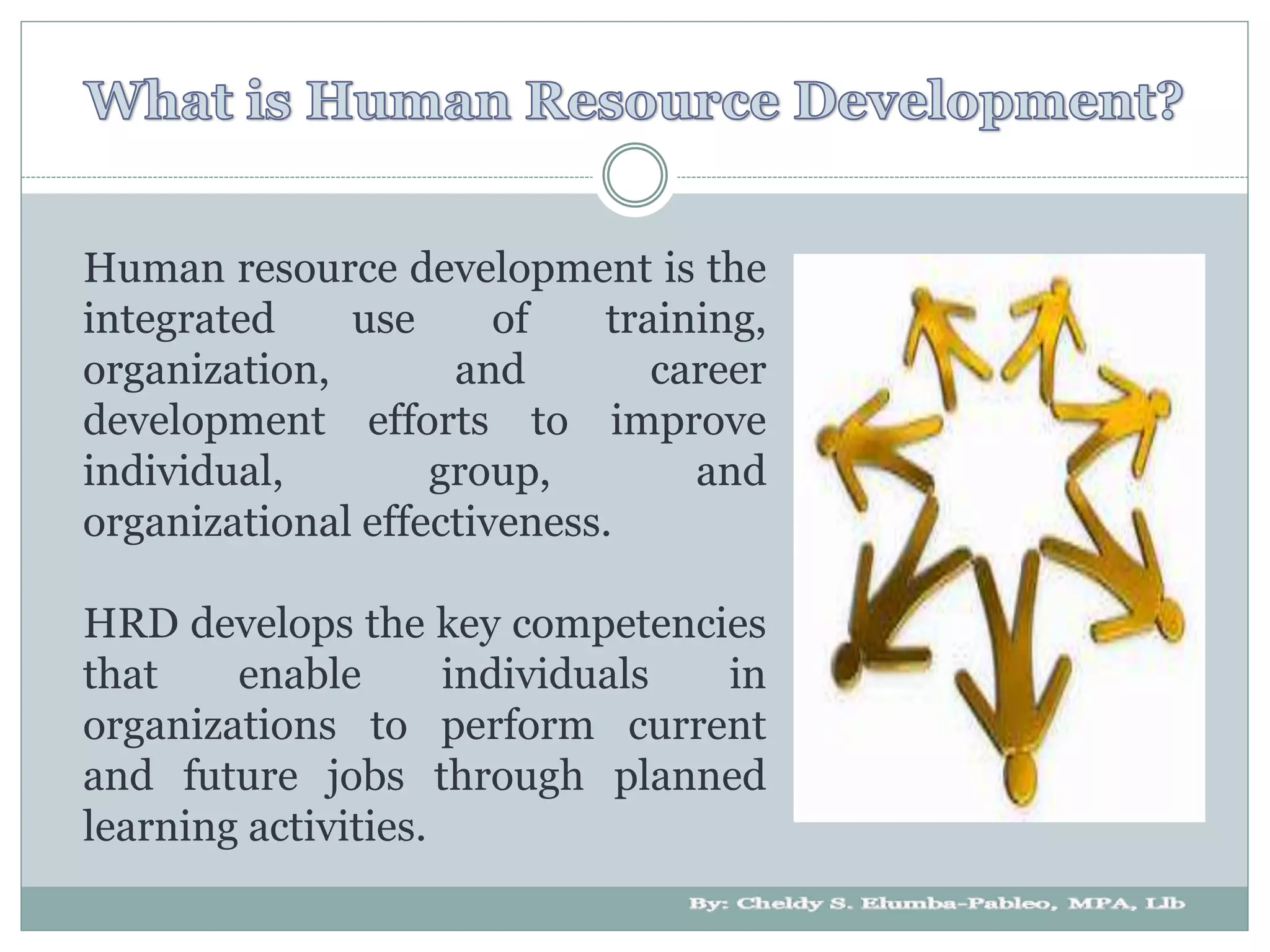
Human resource development is the
integrated use of training,
organization, and career
development efforts to improve
individual, group, and
organizational effectiveness.
HRD develops the key competencies
that enable individuals in
organizations to perform current
and future jobs through planned
learning activities.
Human resources development can be viewed, in some
ways, in the same manner that a coach views his athletic
team. While a coach may recruit players who already
have some skill and ability, the point of continued
practice is to strengthen those skills and abilities and
make even better athletes.
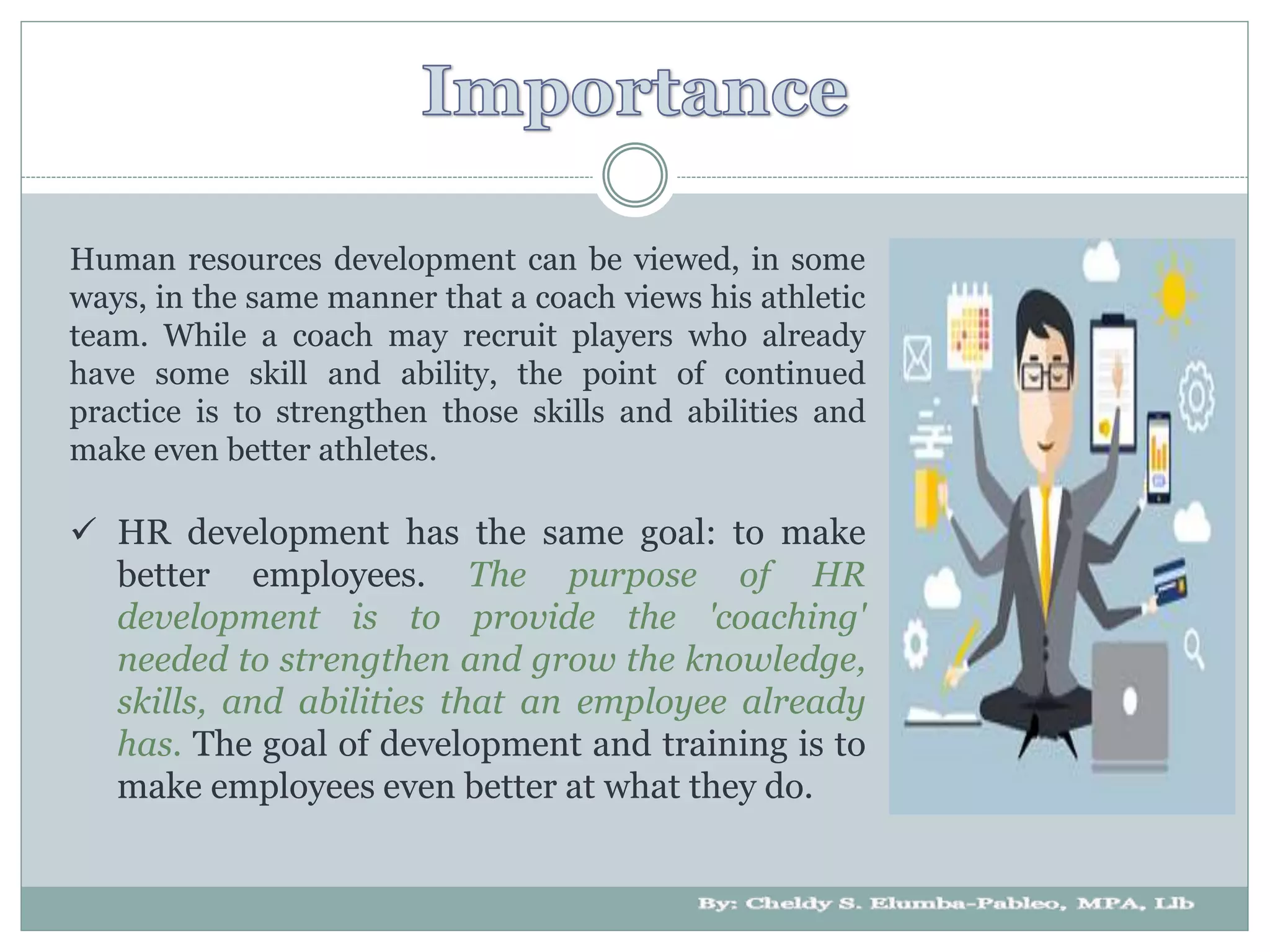
 HR development has the same goal: to make
better employees. The purpose of HR
development is to provide the 'coaching'
needed to strengthen and grow the knowledge,
skills, and abilities that an employee already
has. The goal of development and training is to
make employees even better at what they do.
Human resources development usually begins as soon as an employee is hired and
continues throughout that employee's tenure with the organization
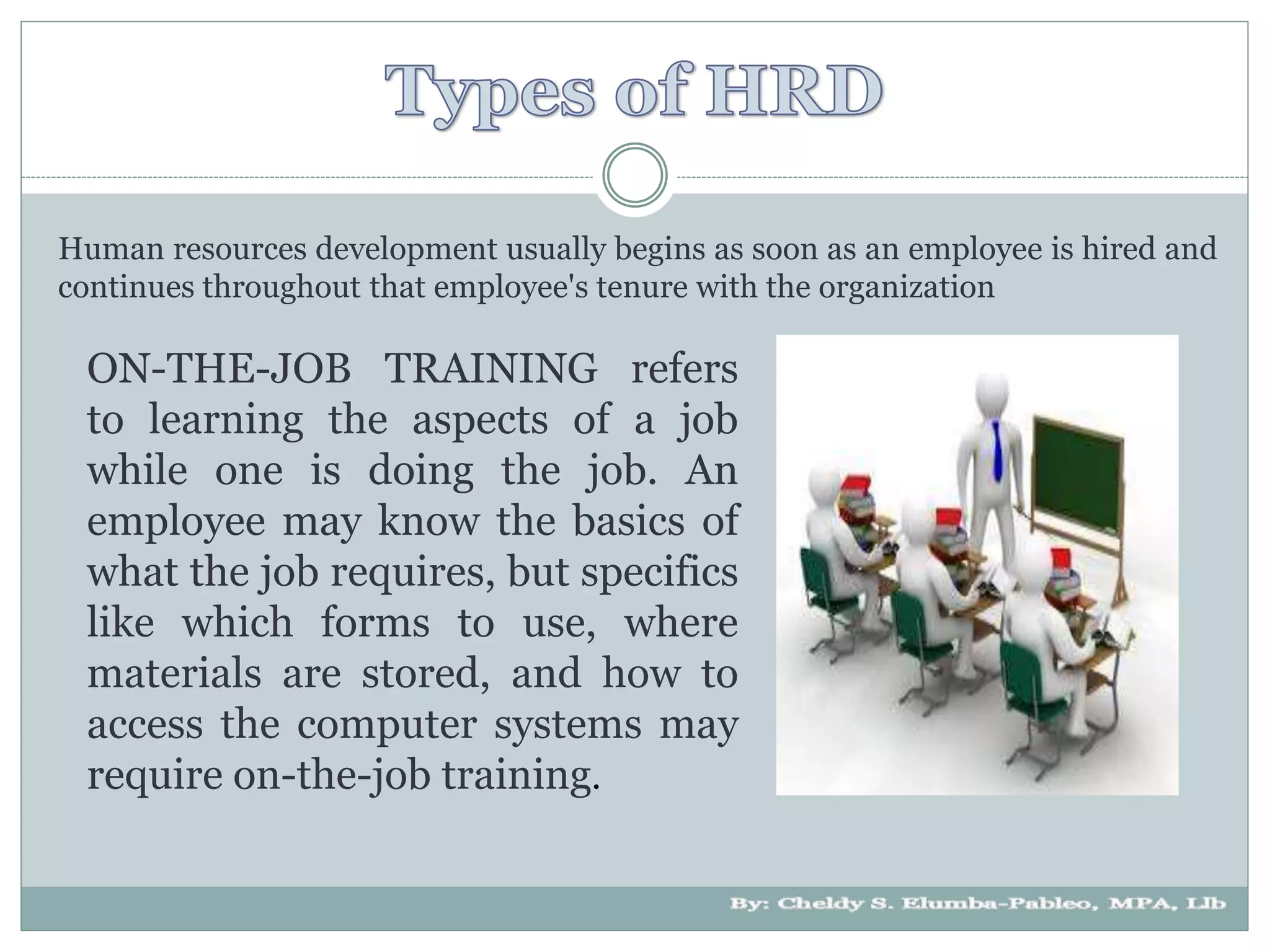
ON-THE-JOB TRAINING refers
to learning the aspects of a job
while one is doing the job. An
employee may know the basics of
what the job requires, but specifics
like which forms to use, where
materials are stored, and how to
access the computer systems may
require on-the-job training.
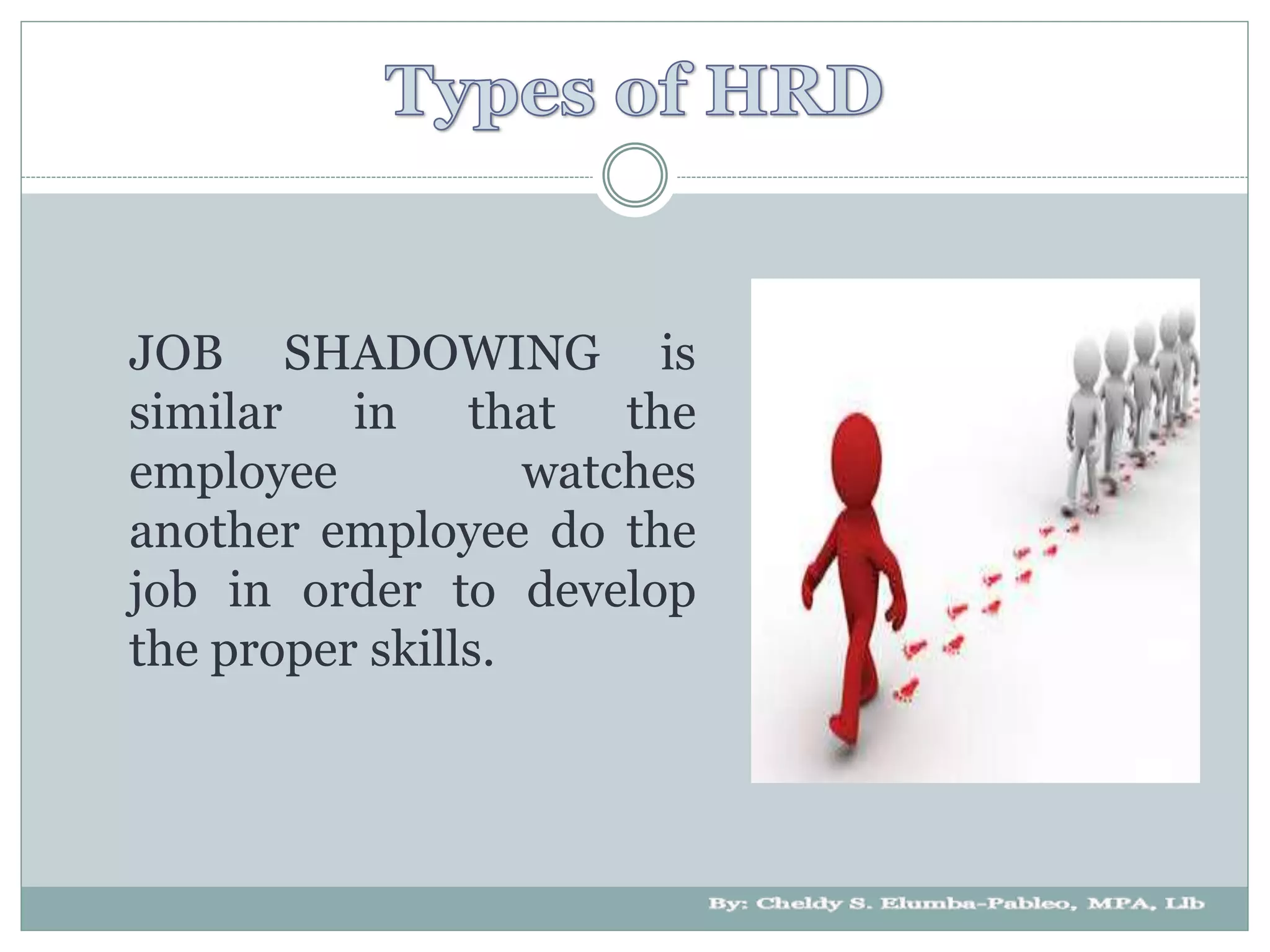
JOB SHADOWING is
similar in that the
employee watches
another employee do the
job in order to develop
the proper skills.
Another form of development is
INTELLECTUAL OR
PROFESSIONAL DEVELOPMENT,
which includes college or
certification courses or job-specific
trainings and seminars related to
how to do one's job better.
Many organizations invest heavily in
providing training and development
to their employees in order to
increase their knowledge and skills.
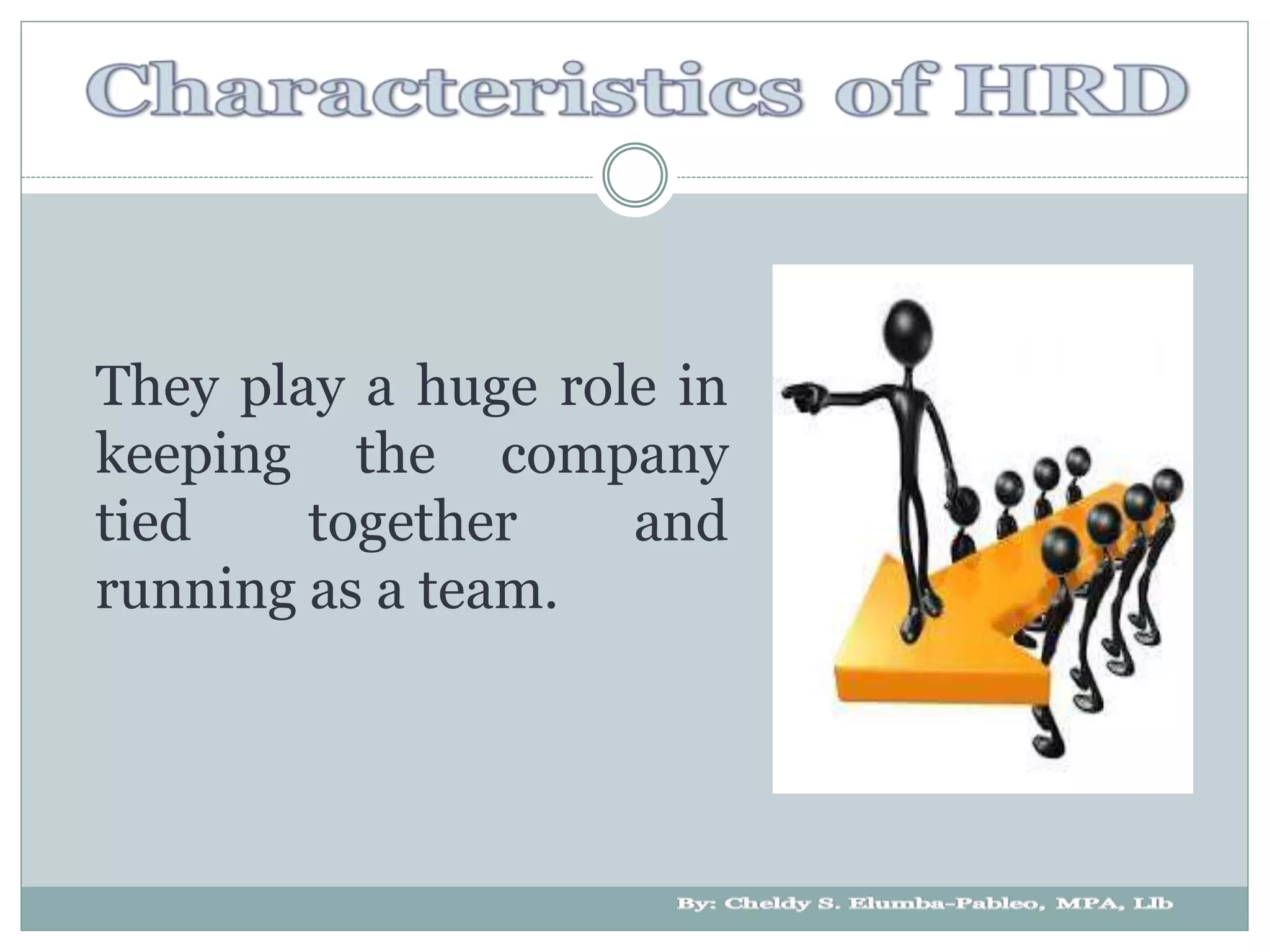
They play a huge role in
keeping the company
tied together and
running as a team.
1. TRAINING-New hires
need to be trained how to do
their job, and occasionally,
current employees need
additional training, perhaps
to advance in their career or
to learn new skills for their
current position.
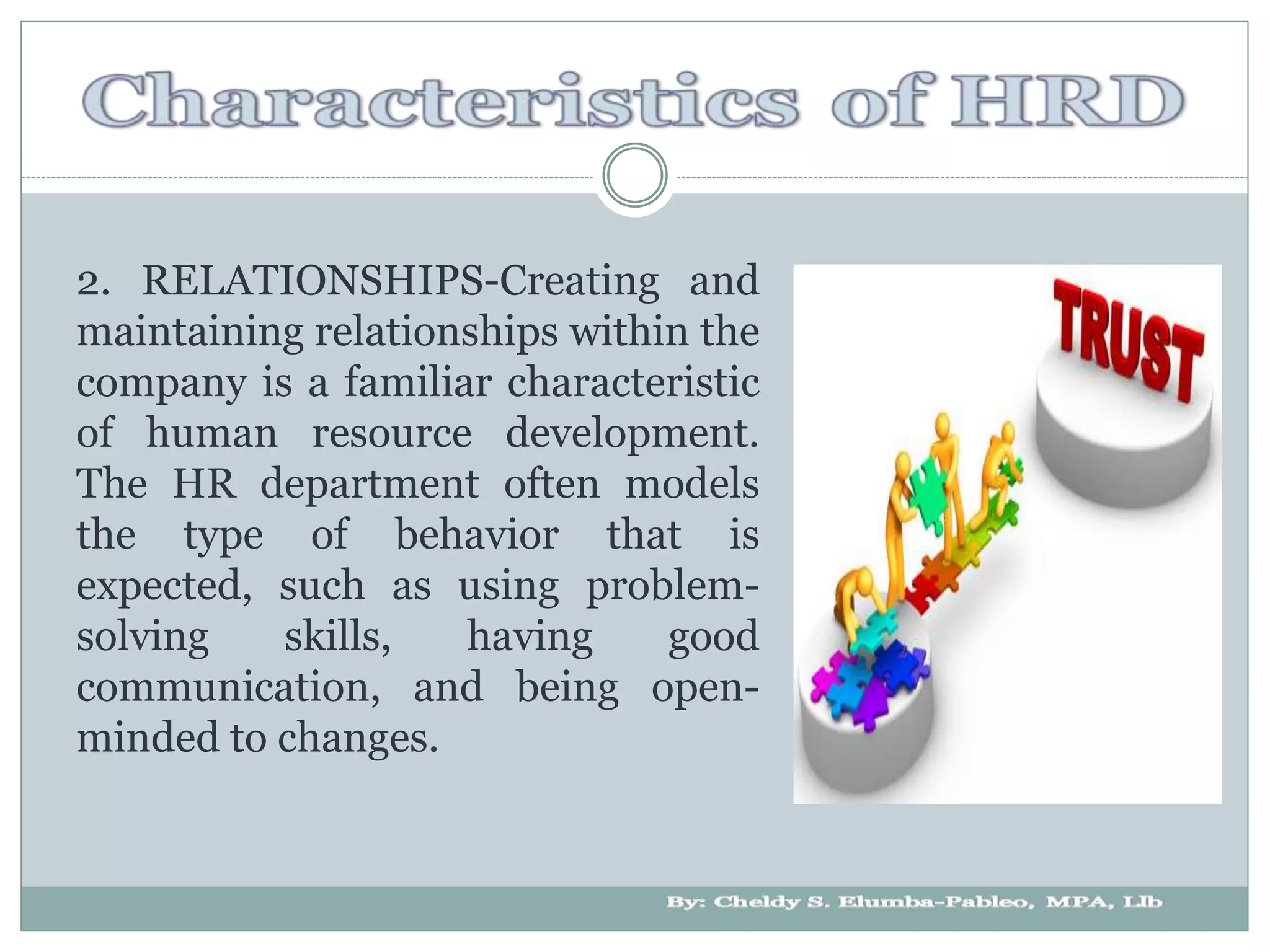
2. RELATIONSHIPS-Creating and
maintaining relationships within the
company is a familiar characteristic
of human resource development.
The HR department often models
the type of behavior that is
expected, such as using problem-
solving skills, having good
communication, and being open-
minded to changes.
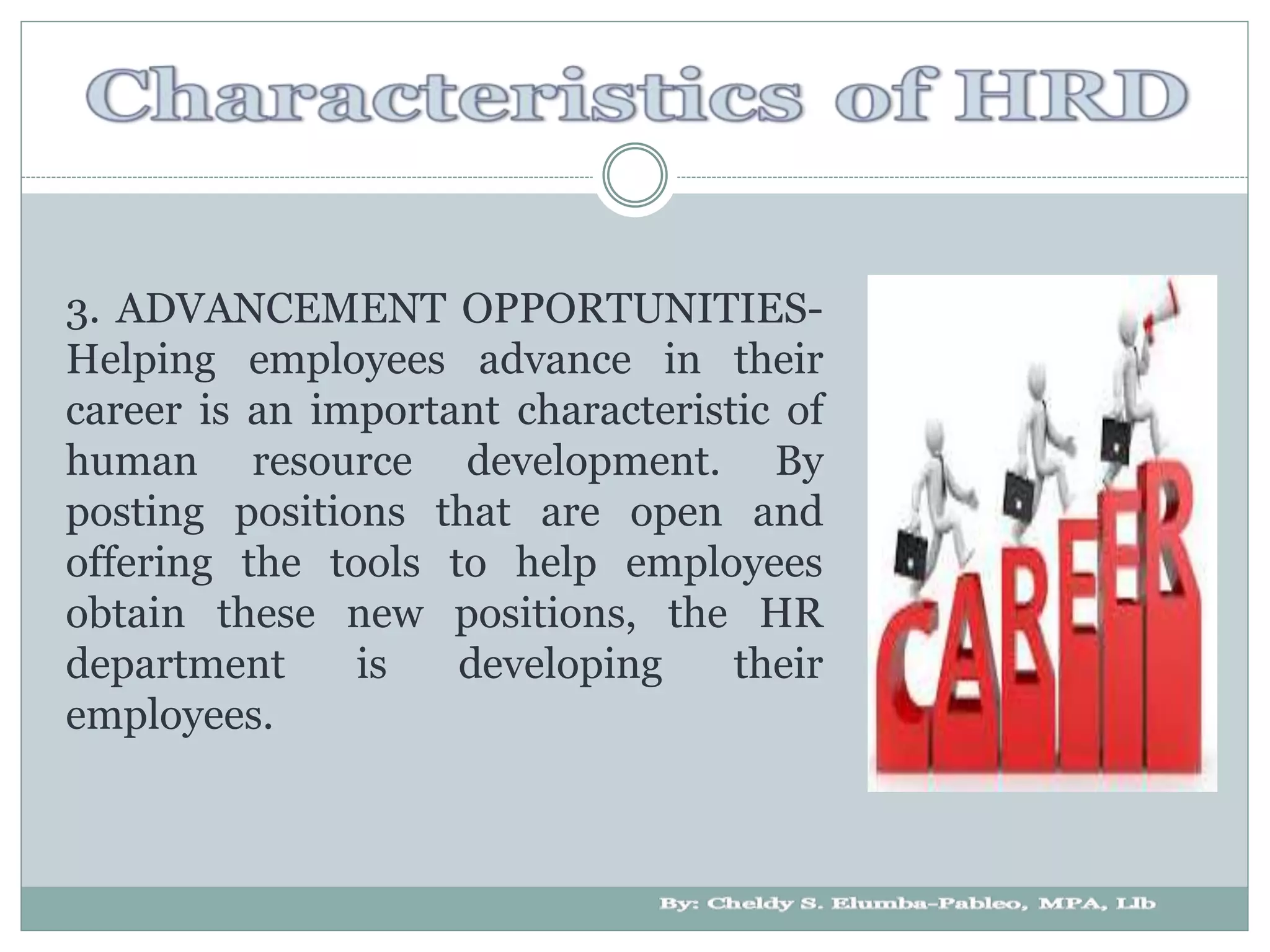
3. ADVANCEMENT OPPORTUNITIES-
Helping employees advance in their
career is an important characteristic of
human resource development. By
posting positions that are open and
offering the tools to help employees
obtain these new positions, the HR
department is developing their
employees.
4. PROBLEM SOLVING- the
human resource department is
active in solving problems. This
means they have the skills to
help with conflict resolution.
THANK YOUFOR READING!
CHELDHAYE

Human resource development

  • 2.
    Human resource developmentis the integrated use of training, organization, and career development efforts to improve individual, group, and organizational effectiveness. HRD develops the key competencies that enable individuals in organizations to perform current and future jobs through planned learning activities.
  • 3.
    Human resources developmentcan be viewed, in some ways, in the same manner that a coach views his athletic team. While a coach may recruit players who already have some skill and ability, the point of continued practice is to strengthen those skills and abilities and make even better athletes.  HR development has the same goal: to make better employees. The purpose of HR development is to provide the 'coaching' needed to strengthen and grow the knowledge, skills, and abilities that an employee already has. The goal of development and training is to make employees even better at what they do.
  • 4.
    Human resources developmentusually begins as soon as an employee is hired and continues throughout that employee's tenure with the organization ON-THE-JOB TRAINING refers to learning the aspects of a job while one is doing the job. An employee may know the basics of what the job requires, but specifics like which forms to use, where materials are stored, and how to access the computer systems may require on-the-job training.
  • 5.
    JOB SHADOWING is similarin that the employee watches another employee do the job in order to develop the proper skills.
  • 6.
    Another form ofdevelopment is INTELLECTUAL OR PROFESSIONAL DEVELOPMENT, which includes college or certification courses or job-specific trainings and seminars related to how to do one's job better. Many organizations invest heavily in providing training and development to their employees in order to increase their knowledge and skills.
  • 7.
    They play ahuge role in keeping the company tied together and running as a team.
  • 8.
    1. TRAINING-New hires needto be trained how to do their job, and occasionally, current employees need additional training, perhaps to advance in their career or to learn new skills for their current position.
  • 9.
    2. RELATIONSHIPS-Creating and maintainingrelationships within the company is a familiar characteristic of human resource development. The HR department often models the type of behavior that is expected, such as using problem- solving skills, having good communication, and being open- minded to changes.
  • 10.
    3. ADVANCEMENT OPPORTUNITIES- Helpingemployees advance in their career is an important characteristic of human resource development. By posting positions that are open and offering the tools to help employees obtain these new positions, the HR department is developing their employees.
  • 11.
    4. PROBLEM SOLVING-the human resource department is active in solving problems. This means they have the skills to help with conflict resolution.
  • 13.